Char Dham
Yatra: In
search of Gods
in Himalayas
• Some call it the ‘rejuvenation of mind, body
and soul’ and for some others, it is just an
escape from the city’s clutter to get close to
Mother Nature and admire its beauty and
serene landscapes. Whatever the reason,
Char Dham Yatra is a must not just for Hindus
because of its religious significance but for
everybody who want to relish and get
drenched in the beauty of nature.
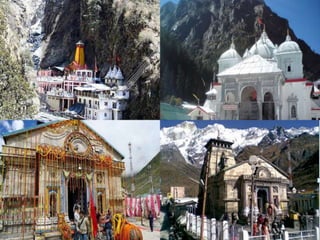
• However, today Char Dham yatra often refers
to Yamunotri, Gangotri, Kedarnath and
Badrinath in the Himalayan region of
Garhwal in Uttarakhand. It is believed that a
visit to the Char Dham, washes away all sins
and helps a person achieve ‘moksha’
(freedom from the cycle of life and death).
• While Kedarnath is home to Lord Shiva and
Badrinath to Lord Vishnu, Yamunotri and
Gangotri represent Yamuna and Ganga
respectively, both of whom are considered
divine mothers since they are credited with
bringing up and supporting the Indian
civilization.
•
Yamunotri
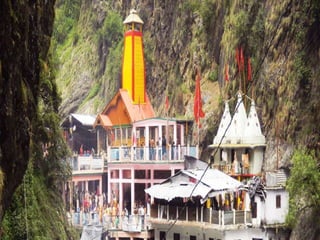
• The first stop of the Char Dham yatra is the holy abode of
Goddess Yamuna – the daughter of Sun God and
consciousness, Sangya – since this is the westernmost shrine
in the Garhwal Himalayas.
•
Champasar Glacier on the Kalind Parvat (Kalind means the
Sun) at a height of 4,421 m above sea level is the actual
source of River Yamuna, also called Kalindi. However, since
the approach to this frozen lake of ice is extremely difficult,
the Yamunotri temple was built by Maharaja Pratap Shah of
Tehri Garhwal on the foot of this hill along the
Banderpoonch Mountain.
•
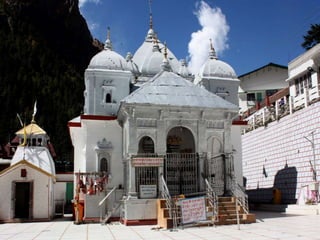
Gangotri
• Gangotri, the next stop in the Char Dham journey, has a rich
historical past. According to mythology, King Bhagiratha
prayed for thousands of years to Lord Brahma and Lord
Shiva, who then allowed River Ganges – also called
Bhagirathi – to descend from heaven to earth to absolve
Bhagiratha’s predecessors of their sins.
•
However, since earth would have been completely destroyed
because of the ferocious force of water coming from heaven,
Lord Shiva held her in his locks before she landed on earth.
Jalamagna Shivalinga, which is a natural rock shivalinga
submerged in the river, is said to be the place where Lord
Shiva held her. It is visible only in winters when the water
levels recede.
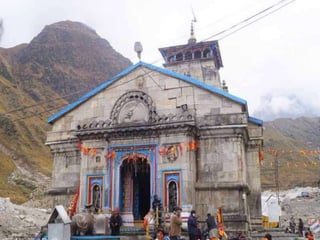
Kedarnath
• Renowned as one of the 12 Jyotirlingas in India,
Kedarnath is located at an altitude of 3581 metres,
about 240 km from Rishikesh. The Jyotirlingas are
shrines where Lord Shiva is worshipped in the form
of pillar of light.
• Nestled in the Rudraprayag district of Uttarakhand,
Kedarnath is one of the most secluded destinations
amongst the Char Dhams. Accessible only through a
14 km uphill trek from Gaurikund, the place is
located near Mandakini River amidst majestic
snow-clad mountains with breathtaking locales.
Badrinath
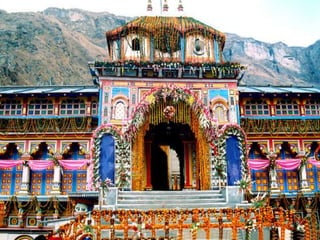
• The holy abode of Lord Vishnu – Badrinath – is one of the
holiest Hindu shrines in India.
• Mythology says that Lord Vishnu came to meditate at this
place called ‘Badri van’ or berry garden, after Narada chided
him for being engrossed in worldly pleasures. His consort,
Goddess Lakshmi, transformed herself into a ‘Badri’ plant in
order to provide shade and to protect the Lord from the
harmful rays of the Sun. Lord Vishnu became extremely
happy with this loving gesture and promised that this place
would always be known by her name. Hence, the place came
to be known as ‘Badrinath’.
Char dham yatra
Char dham yatra

Char dham yatra

  • 1.
    Char Dham Yatra: In searchof Gods in Himalayas
  • 2.
    • Some callit the ‘rejuvenation of mind, body and soul’ and for some others, it is just an escape from the city’s clutter to get close to Mother Nature and admire its beauty and serene landscapes. Whatever the reason, Char Dham Yatra is a must not just for Hindus because of its religious significance but for everybody who want to relish and get drenched in the beauty of nature.
  • 4.
    • However, todayChar Dham yatra often refers to Yamunotri, Gangotri, Kedarnath and Badrinath in the Himalayan region of Garhwal in Uttarakhand. It is believed that a visit to the Char Dham, washes away all sins and helps a person achieve ‘moksha’ (freedom from the cycle of life and death).
  • 6.
    • While Kedarnathis home to Lord Shiva and Badrinath to Lord Vishnu, Yamunotri and Gangotri represent Yamuna and Ganga respectively, both of whom are considered divine mothers since they are credited with bringing up and supporting the Indian civilization. •
  • 8.
    Yamunotri • The firststop of the Char Dham yatra is the holy abode of Goddess Yamuna – the daughter of Sun God and consciousness, Sangya – since this is the westernmost shrine in the Garhwal Himalayas. • Champasar Glacier on the Kalind Parvat (Kalind means the Sun) at a height of 4,421 m above sea level is the actual source of River Yamuna, also called Kalindi. However, since the approach to this frozen lake of ice is extremely difficult, the Yamunotri temple was built by Maharaja Pratap Shah of Tehri Garhwal on the foot of this hill along the Banderpoonch Mountain. •
  • 10.
    Gangotri • Gangotri, thenext stop in the Char Dham journey, has a rich historical past. According to mythology, King Bhagiratha prayed for thousands of years to Lord Brahma and Lord Shiva, who then allowed River Ganges – also called Bhagirathi – to descend from heaven to earth to absolve Bhagiratha’s predecessors of their sins. • However, since earth would have been completely destroyed because of the ferocious force of water coming from heaven, Lord Shiva held her in his locks before she landed on earth. Jalamagna Shivalinga, which is a natural rock shivalinga submerged in the river, is said to be the place where Lord Shiva held her. It is visible only in winters when the water levels recede.
  • 12.
    Kedarnath • Renowned asone of the 12 Jyotirlingas in India, Kedarnath is located at an altitude of 3581 metres, about 240 km from Rishikesh. The Jyotirlingas are shrines where Lord Shiva is worshipped in the form of pillar of light. • Nestled in the Rudraprayag district of Uttarakhand, Kedarnath is one of the most secluded destinations amongst the Char Dhams. Accessible only through a 14 km uphill trek from Gaurikund, the place is located near Mandakini River amidst majestic snow-clad mountains with breathtaking locales.
  • 14.
    Badrinath • The holyabode of Lord Vishnu – Badrinath – is one of the holiest Hindu shrines in India. • Mythology says that Lord Vishnu came to meditate at this place called ‘Badri van’ or berry garden, after Narada chided him for being engrossed in worldly pleasures. His consort, Goddess Lakshmi, transformed herself into a ‘Badri’ plant in order to provide shade and to protect the Lord from the harmful rays of the Sun. Lord Vishnu became extremely happy with this loving gesture and promised that this place would always be known by her name. Hence, the place came to be known as ‘Badrinath’.