CHAPTER THREE
Theories, Modelsand Approaches to
Rural Development
3.1 Lewis’s Model of Economic Development with Unlimited
Supply of Labor
The well-known development economist Arthur Lewis put forward
his model of Economic Development with Unlimited Supplies of Labor
in 1954.
According to him, a given economy has dual economic structure.
1. Modern manufacturing industrial sector
This sector uses reproducible capital
Production is for market and profits
There is modern methods of industrial organization, and labor is
employed on wage basis
2.
2. Agricultural sector:
it is assumed to represent the subsistence or
traditional sector.
– This sector uses non-reproducible land on self-
employment basis (family base without payment)
– Output is produced mainly for self-consumption with
inferior techniques of production
– This sector containing surplus labor in the form of
disguised unemployment
• Therefore, as long as high population exists in rural
areas, the marginal productivity in agriculture is taken
to be zero where as the average productivity is
assumed to be positive and equal to the bare
subsistence level
3.
In the modernsector however, the productivity or
output per head is assumed to be much higher than
that in agriculture due to low population density.
Thus, the demand for labor is high in modern sectors of
urban areas.
In addition to this, since laborers are hiring on wage
payment and output is producing for profits, the
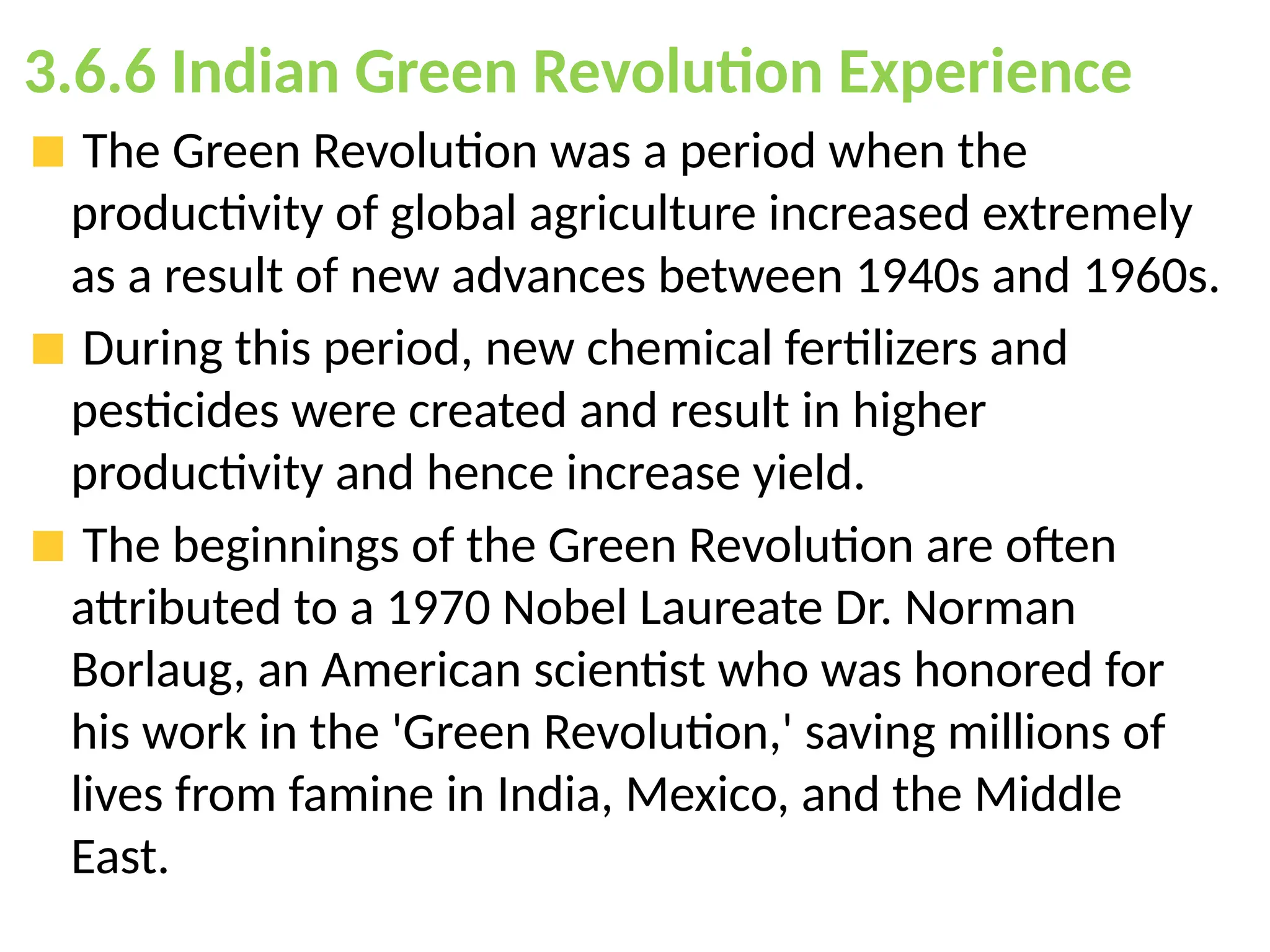
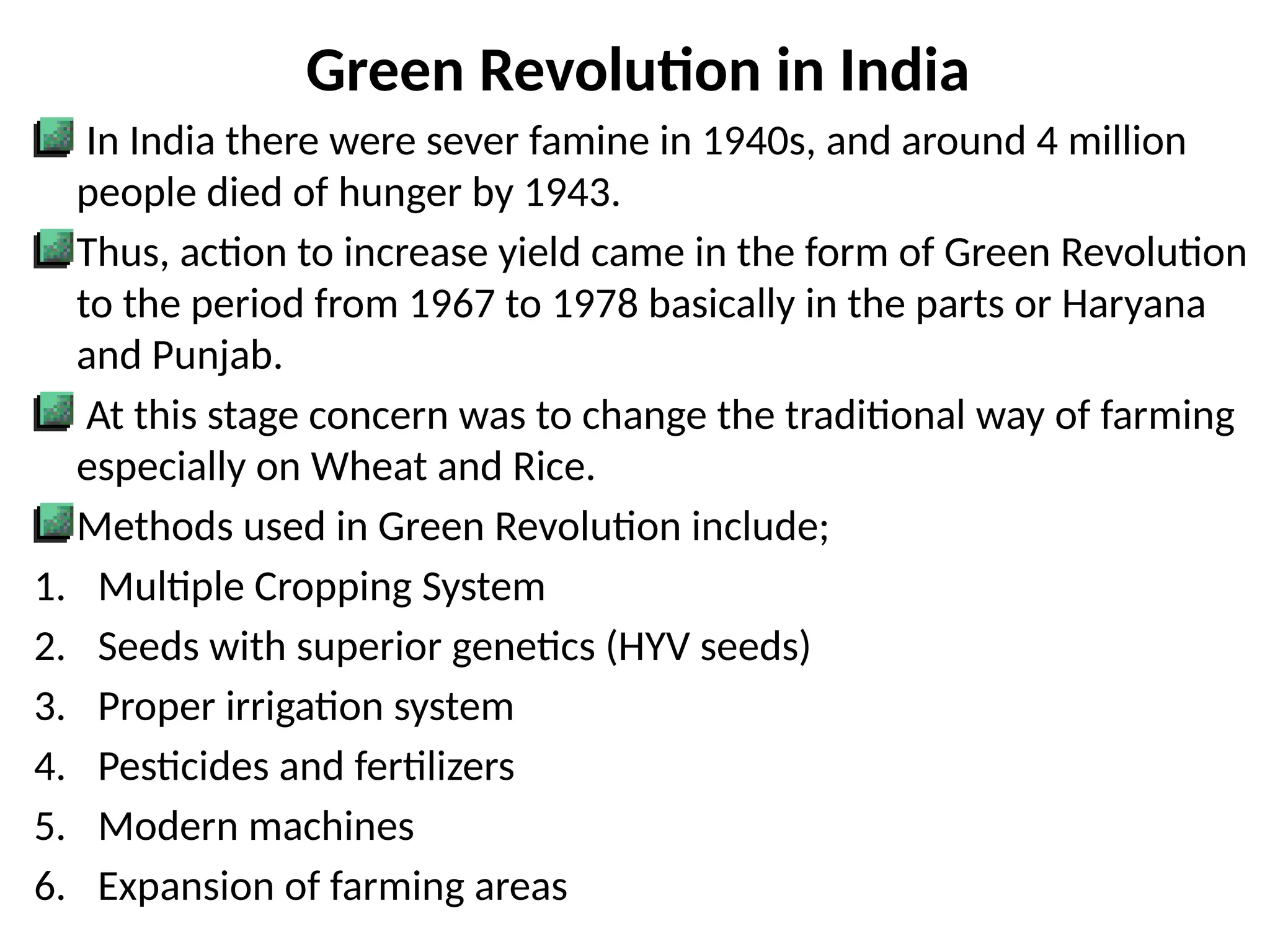
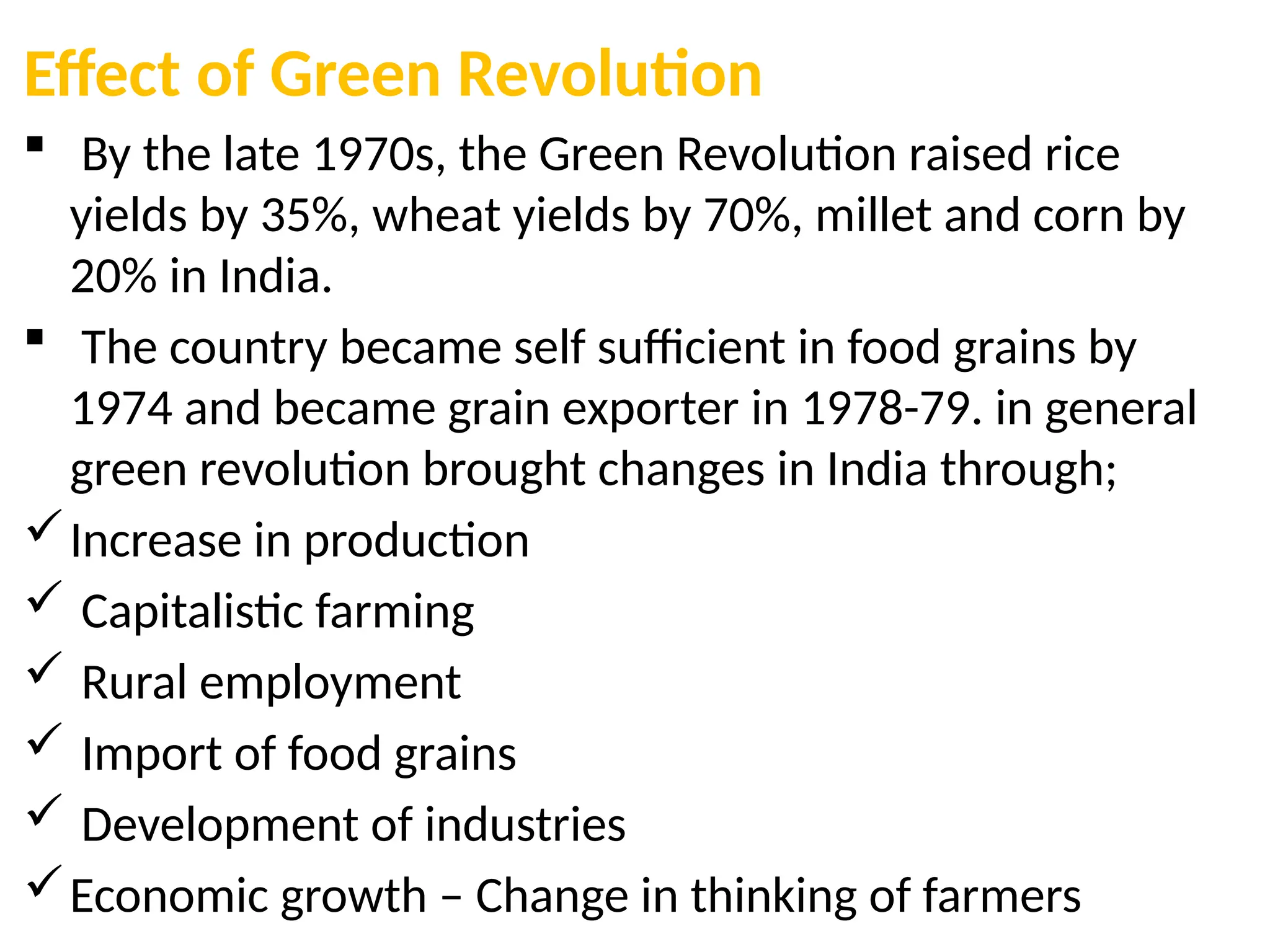
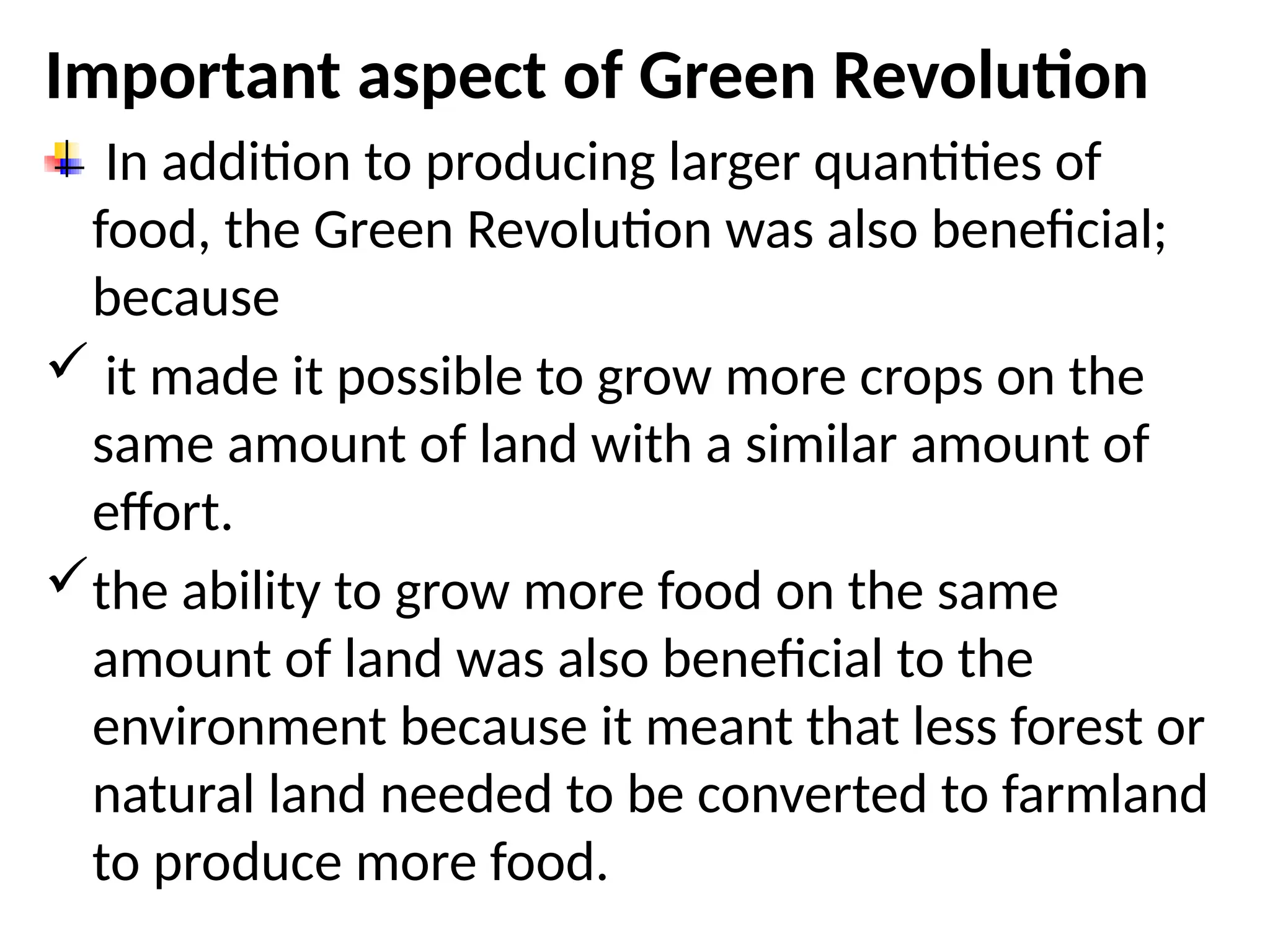
modern urban industrial sectors will draw surplus labor
from the subsistence agricultural sector.
According to Lewis, given unlimited supply of surplus
labor from rural agricultural sector to urban industrial
sector, the wage rate in the modern sector is
determined by the average productivity in the
agriculture and assumed to be constant.
4.
• However thewage rate is assumed to be constant,
Lewis suggest that, urban wages have to be at least
30% higher than average rural income.
• This is in order to attract laborers from countryside to
the urban industries as well as for meeting the higher
cost of urban living.
• In this setting, the model shows how the expansion in
the industrial investment and production (capital
accumulation) outside agriculture will generate
sufficient employment opportunities so as to absorb
all the surplus labor from agriculture and elsewhere.
• The process of expansion and capital accumulation in
the modern sector and the absorption of labor by it.
5.
• To sumup, Lewis model with unlimited supply of
labor illustrates that, high wage rate in modern
sectors will attract and absorb the surplus labor in
the agricultural sector and this leads to the
increment in the profits of the industrial sectors.
• Profits in turn are the main source of capital
formation.
• The greater the share of profits in national income,
the greater the rate of savings, capital
accumulation and further expansion through
investment.
6.
• The processof transferring surplus labor from
agriculture to industry (modern sector) and
reinvestment of profits helps;
to change the productivity of backward agrarian
economy
to create industrialized modern economy which in turn
helps the reduction of unemployment
Although the Lewis two-sector development model is
simple and important in analyzing the agricultural and
industrial sectors linkages, it roughly reflects the
historical experience of economic growth in the west and
some of its key assumptions do not fit the institutional
and economic realities of most contemporary developing
countries.
7.
The main shortcomingsof this theory are:
1. It is difficult to assume, there is high unemployment
(labor surplus) in rural areas and full employment in
urban areas. In most developing countries the reverse is
true.
There is seasonal labor shortage in agricultural sectors
even in densely populated areas. So, unlimited supply of
labor is not realistic.
In addition, even if the productivity in rural area is low in
relative to urban areas due to high population, it is not
zero.
2. There is no guarantee that the capitalist will reinvest its
profit. If it did, it may use labor-saving technologies. So, the
creation of employment for surplus labor cannot be met.
8.
3. This modelassumes, fixed wage rate in the modern sector
by assuming competitive labour market.
In reality however, labour market is not competitive.
For example, labour unions may have monopoly power over labour
supply and hence they can raise the wage rate. At high wage rate, firms
demand less labour. As a result the absorption of surplus labour again
cannot be met.
4. In developing countries, the mobilization of labor from
agriculture to industrial sector is not an easy task. This is due
to;
extremely low capacity of modern sectors in absorbing all surplus labor
traditional practice and customs of the community
the problem of housing and high cost of living in urban sector, and so on
5. Lewis model neglect the importance agricultural sector in
absorbing surplus labor.
9.
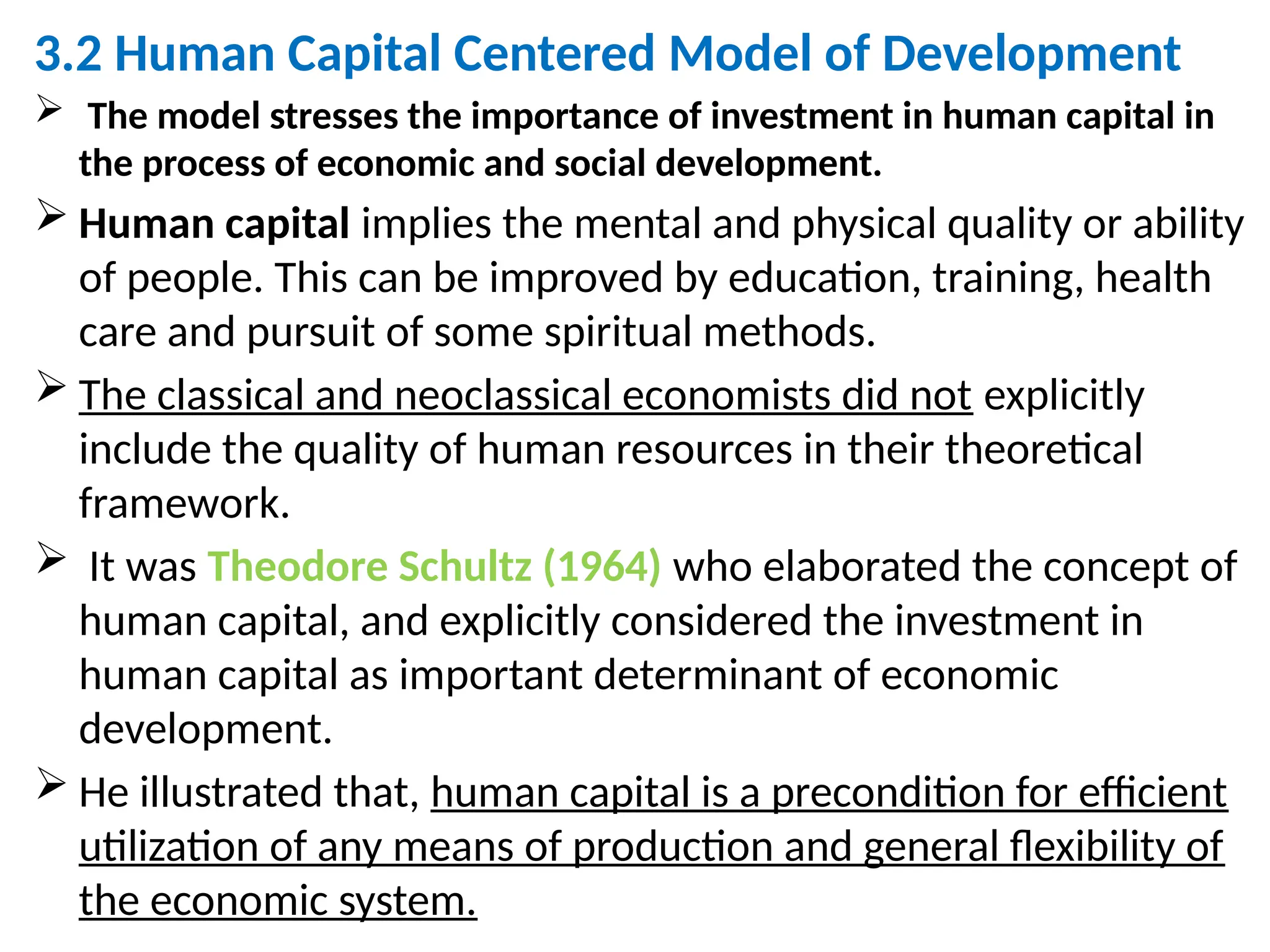
3.2 Human CapitalCentered Model of Development
The model stresses the importance of investment in human capital in
the process of economic and social development.
Human capital implies the mental and physical quality or ability
of people. This can be improved by education, training, health
care and pursuit of some spiritual methods.
The classical and neoclassical economists did not explicitly
include the quality of human resources in their theoretical
framework.
It was Theodore Schultz (1964) who elaborated the concept of
human capital, and explicitly considered the investment in
human capital as important determinant of economic
development.
He illustrated that, human capital is a precondition for efficient
utilization of any means of production and general flexibility of
the economic system.
10.
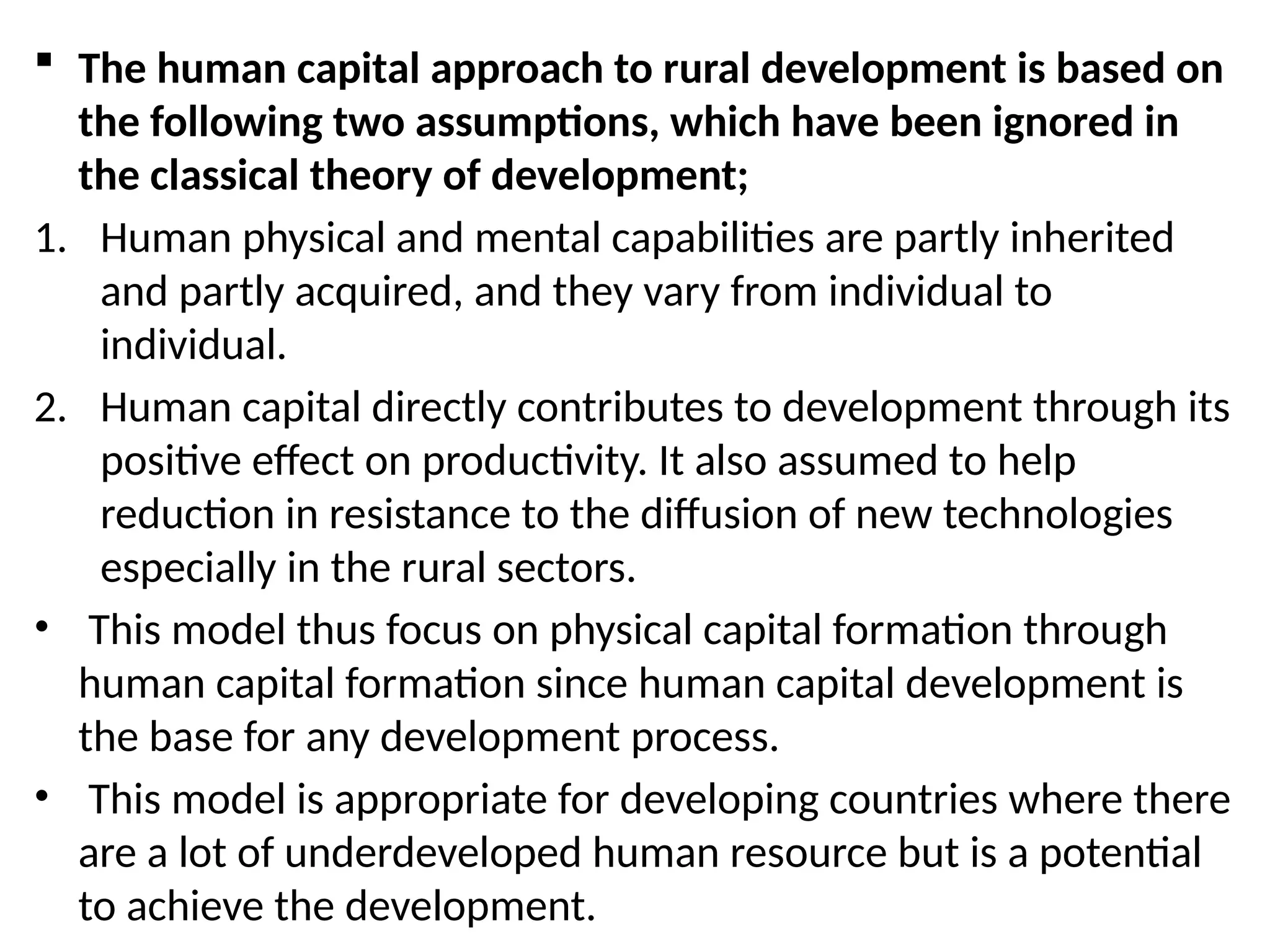
The humancapital approach to rural development is based on
the following two assumptions, which have been ignored in
the classical theory of development;
1. Human physical and mental capabilities are partly inherited
and partly acquired, and they vary from individual to
individual.
2. Human capital directly contributes to development through its
positive effect on productivity. It also assumed to help
reduction in resistance to the diffusion of new technologies
especially in the rural sectors.
• This model thus focus on physical capital formation through
human capital formation since human capital development is
the base for any development process.
• This model is appropriate for developing countries where there
are a lot of underdeveloped human resource but is a potential
to achieve the development.
11.
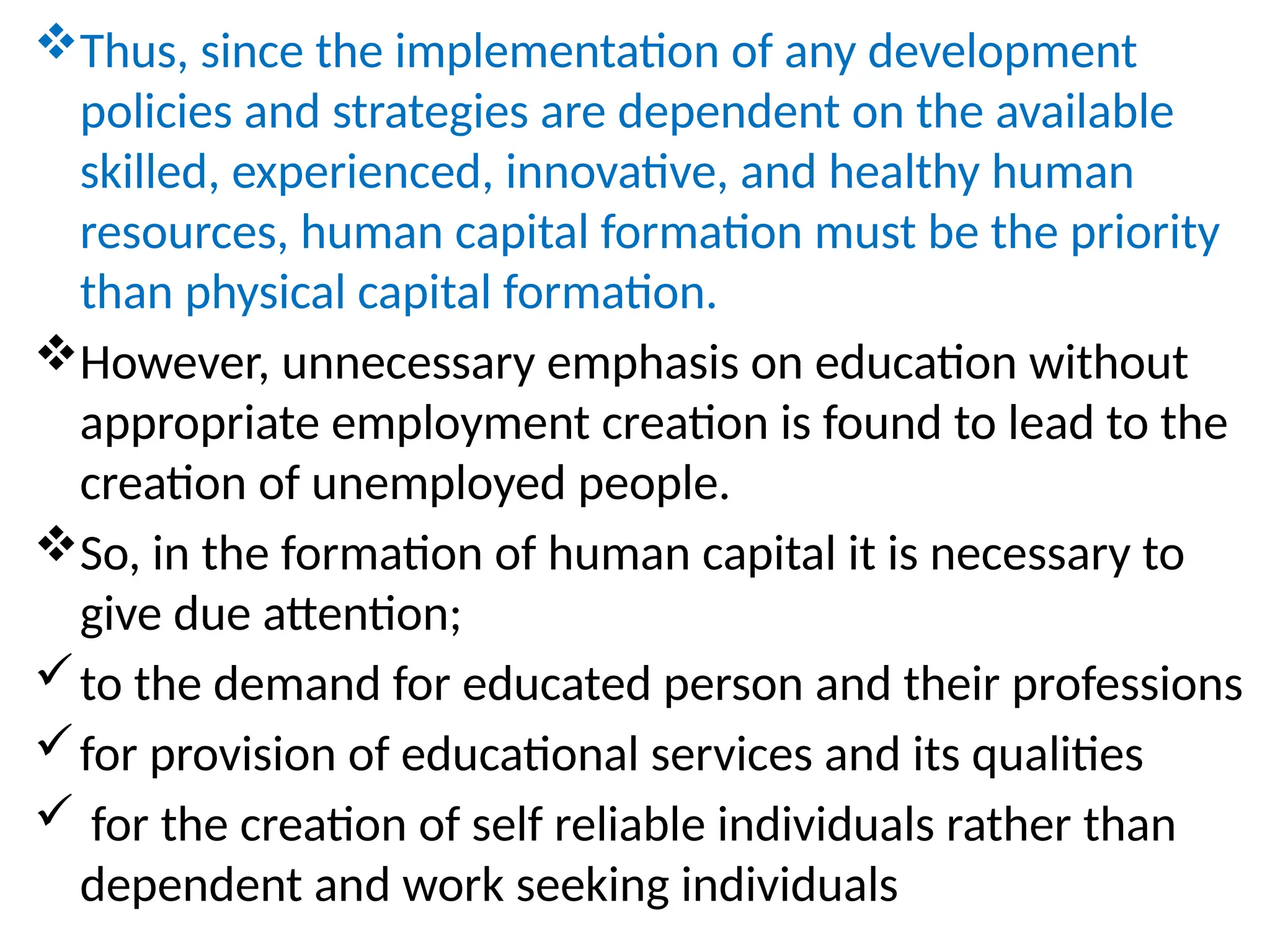
Thus, since theimplementation of any development
policies and strategies are dependent on the available
skilled, experienced, innovative, and healthy human
resources, human capital formation must be the priority
than physical capital formation.
However, unnecessary emphasis on education without
appropriate employment creation is found to lead to the
creation of unemployed people.
So, in the formation of human capital it is necessary to
give due attention;
to the demand for educated person and their professions
for provision of educational services and its qualities
for the creation of self reliable individuals rather than
dependent and work seeking individuals
12.
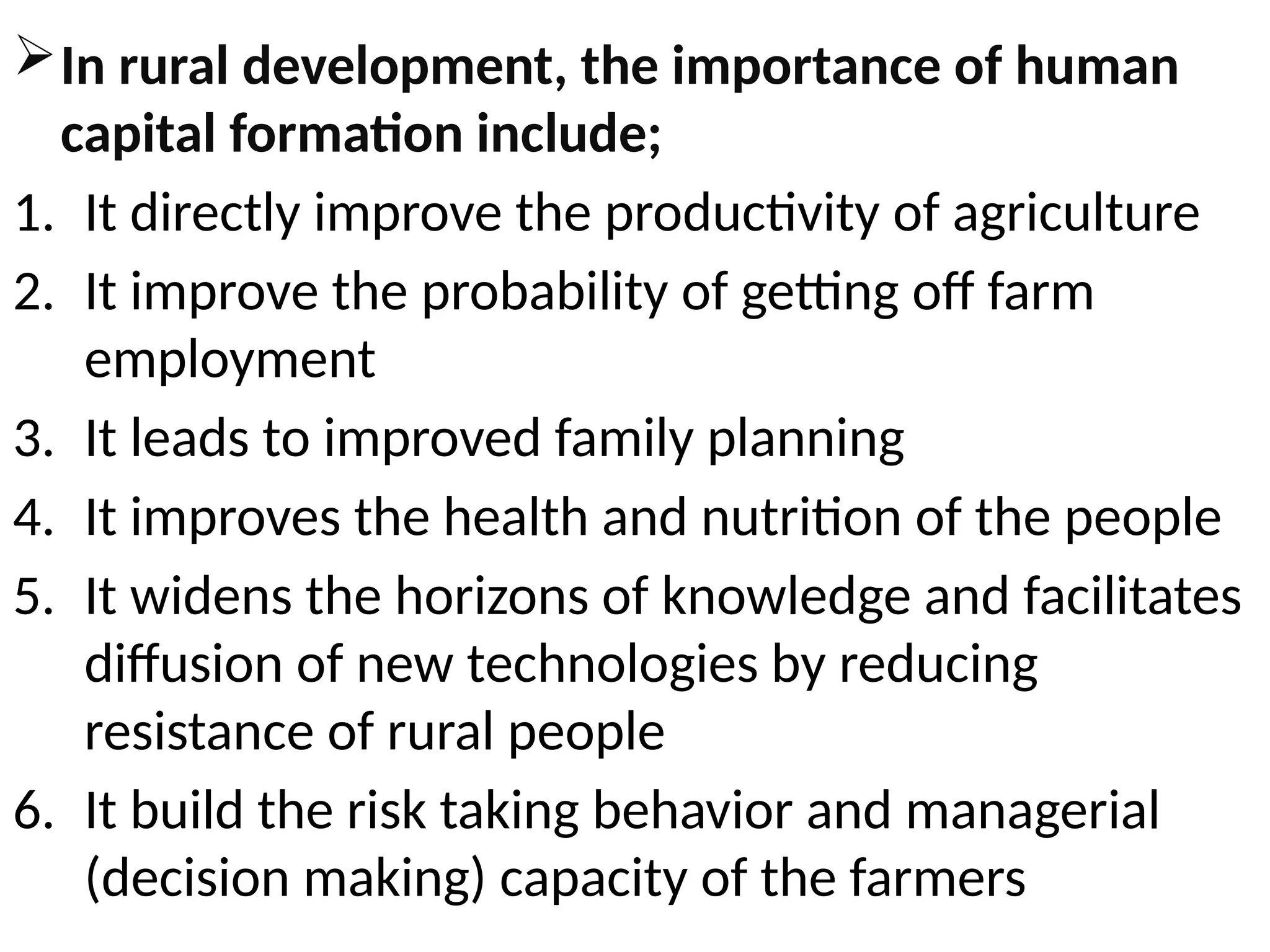
In rural development,the importance of human
capital formation include;
1. It directly improve the productivity of agriculture
2. It improve the probability of getting off farm
employment
3. It leads to improved family planning
4. It improves the health and nutrition of the people
5. It widens the horizons of knowledge and facilitates
diffusion of new technologies by reducing
resistance of rural people
6. It build the risk taking behavior and managerial
(decision making) capacity of the farmers
13.
3.3 Uni-modal Approach/theory/
The central element of a Uni-modal approach is the development
and diffusion of highly divisible innovations that promote output
growth through wide spread increase in the productivity of land and
labor in the agricultural sector.
For Uni-modal approach, agricultural transformation on
the basis of small-scale peasant farms. The strategy aims at
the progressive modernization of the entire agriculture
sector (e.g. Japan and Taiwan).
Uni-modal approach of development theory focus on the
progressive modernization (transformation) of the entire agricultural
sector based on widespread use of a sequence of technological
innovations which compatible with the socioeconomic structure and
demographic characteristics of the society.
It helps to exploit the large potential that exists in the rural economy.
That is, it makes possible to raise the productivity of the agricultural
sector by improving of resource uses (use of labor and land).
14.
In Uni-modaltheories, institutional innovations are
essential to achieve the rural development through
efficient uses of the existing resources. That is,
Creation and provision of cooperative services in order
to increase the negotiation power of farmers in the
market
Creation of microfinance institutions to facilitate access
to credit
Creation and use of civic societies and local community
participation in order to participate the potential human
resource
Development of research centers and extension
services to generate and diffuse modern way of
production and resource use are important.
15.
3.4 Bi- modaltheory (approach)
• Agriculturalists are differentiated and have distinct
classes. There are large scale farmers (agricultural
capitalist), small scale farmers, and land less agricultural
employees
• Bi-modal approach is a modernization strategy that
focus on the transformation of resources to the highly
commercialized sub-sector.
• Bimodal theory focuses on the necessity of the
development of large-scale farm units to agricultural
development.
• According to this theory, agrarian change in can be
achieved by creating capitalist farmers and agricultural
wage laborers.
16.
Advocates of thisapproach argue that, large scale
farms have strong advantage over small scale
farms. These advantages are related to technical,
financial, and marketing economies. For example,
large scale farmers have production economies of
scale which related to:
The use of modern and advanced machines
Benefit from high level labor specialization
Better utilization of their farm capacity
Take advantage of research and development
17.
Large farms alsobenefit from marketing scale economies
such as transport, storage, information collection and
capacity to build social capital and capacity to bargain for
fair price.
In addition, large farms have capital market economies.
That is they do not seek to have external finance, if they
want they can easily access it at lower interest rate to
finance their expenditure which is not possible to small
farms.
Thus, bimodal theory states that, large farm scale is
important for the improvement of the agricultural sector.
Thus, peasant farming should be turned to capitalist
farming since it helps employment creation even for small
peasants and landless society through agricultural laborer
on payment.
18.
Moreover, given highproductivity and efficiency, the
resource allocation will be efficient. That is, peasant will be
able to enjoy the fruit of his/her labor.
In addition, much of the produced agricultural surplus will
be marketed for the generation of profits which helps to
achieve economic growth and development .
According to this approach, once economic growth is
achieved, it is possible to create employment opportunities
by expanding industrial sectors even when labor-saving
technologies are used in the agricultural sectors.
However, the process of creating large farms may create
high income inequality, and also it leads to landless
peasants which may result in higher unemployment since
it is difficult for the industrial sectors to absorb all surplus
labor.
19.
If the non-agricultural(industry) sector does not develop
and fails to absorb the labor force displaced from
agriculture due to mechanization, it can create economic
and social problems.
These further result in political power imbalance between
the rich capitalists and poor peasants.
In addition, there is no guarantee and practical evidences
that illustrates large farms are productive and efficient
than small farms in all aspects.
The application of this approach may also leads to the
exploitation and improper utilization of resources.
This approach of rural development is difficult to apply
especially in developing countries. Its application is
limited to the existing lack of human and physical capital.
20.
3.5 The ClassicalSchool
The economists of the late 18th
and early 19th
century where
their primary concern was the conditions of economic
growth
This was the period of the 'Industrial Revolution' in Europe
The Classical economists-including A. Smith, Robert Malthus,
D. Ricardo, John Stuart Mill and Karl Marx- lived through the
period of take-off into sustained growth.
An interesting element was the concept of circularity that
characterized the interrelationship between technology,
investment and profit. (Tech depends on Inv’t and Inv’t
depends on Profit and profit depends on Tech.)
They did not directly focus their attention on development or
rural development rather economic growth would naturally
lead to development.
21.
3.6 The ModernizationTheory
Agricultural dev’t thinking until mid 1970s was dominated by the
concept of this modernization theory.
focuses on the introduction of new western technology and
management practices, sometimes accompanied by changes in size
and structure of landholdings, with the intention of copying patterns
of agricultural dev’t which had evolved in DCs
Characteristic concepts of modernization
They dichotomized world in to two; modern and traditional
The rural economy in LDCs is traditional dominated by traditional or
peasant farming or subsistence oriented agriculture, poor markets
and handicrafts
To them, the traditional economy and agriculture need to be
transformed into modem large-scale market-oriented agriculture
employing modern technology transferred from developed countries
So, Transfer is the central concept of modernization perspective
22.
The transformationprocess is facilitated by transfer of know-
how, technologies, and institutional models
The emphasis is, therefore, on transferring technologies and
institutions rather than on strengthening and improving
what already exists.
The transfers include for example:
– Material transfer - chemical inputs, genetic materials etc.
– Cultivation practices (e.g. rice transplanting)
– Know-how and fixed designs (blueprints) for technology,
institutions or approaches to research.
– Technology generation capacity through institution
building and technical assistance
Criticisms of modernization theory
The transfer is not as such simple within the contexts of receiver
countries. There is some ignorance that producers and farmers in
developing countries are experimenting in their own way for
adaptation.
23.
3.7 The DependencyTheory
To this school, the source of underdevelopment for LDCs are
the development of DCs.
So, LDCs should isolate themselves from the dependency of
DCs
Developed capitalist world changed the colonized nations into
sources of cheap inputs to production in the capitalist nations
and markets for products, hindering and distorting the
development way of LDCs
Aids from DCs to LDCs are vehicles to make them dependent
and food aid is used as political weapon.
Developing countries can develop only by breaking their links
with the developed countries
Criticisms
Difficult to be independent at once for LDCs
Asian Tigers achieved development though largely dependent
on DCs
24.
3.8 Rosenstein Rodan’sTheory of Big Push
It is based on the framework of modernization
A “bit by bit” investment never attain growth and
development
A big quantum of investment is a necessary to attain dev’t
(Big-push)
This implies that the dev’t process is a series of
discontinuous 'jumps', and each jump requires a 'big push‘
Isolated and small efforts may not add up to sufficient
impact on growth
Criticism
The resources required to give the 'big push' are of such a
high order, that a developing country like Ethiopia cannot
afford them.
25.
3.9 Leibenstein’s 'Critical
MinimumEffort Thesis‘
The opposite of Rodan’s Theory of Big Push
There is a critical minimum stimulant
investment to transfer the economy in to
sustained growth
So, no need of investing more rather fulfill
this critical minimum then the economy can
stimulate itself and attain sustained dev’t
Applicable to LDCs unlike to Big-push
theory
26.
3.6 Models ofAgricultural Development
A number of agricultural development models were
developed and introduced by economists to give detail
analysis about the ways to bring agricultural development.
Those models are important and can give policy
alternatives for the decision makers in designing and
implementing agricultural policies and strategies.
In this section, we will see the following five important
models.
1. The frontier model
2. The resource conservation model
3. The urban-industrial impact model
4. The diffusion model
5. The high pay-off input model
27.
3.6.1 The frontierModel
This model also known as resource expansion model. It
suggest that, increase in agricultural production occurs as a
result of the expansion in area cultivated.
The model assumes that, surplus land and labor capacity
will enable peasant producers to expand production
rapidly under the stimulus of new markets even if they will
have poor technology.
That is, underutilized natural resources should be exploited
to generate growth in agricultural output.
Population pressure resulting in the intensification of land
use in the existing villages should followed by innovator
settlement programs and the establishment of new villages,
and the opening up of forest or Jungle land to cultivation.
28.
Example:
The opening ofnew continents such as North America,
South America and Australia has created new settlement
for European countries centuries ago.
Similar events were also seen in Asia and Africa, and to
some extent in the case of Ethiopia in Derg and current
regime settlement programs.
The major problems (criticisms) of the model are:
It doesn’t give any emphasis to the sustainability of
natural resources.
It also doesn’t give due attention for the generation and
use of new technologies and agricultural inputs in
increasing production and productivity on small farm
land.
29.
3.6.2 The ResourceConservation Model
The conservation model developed at the time of
English agricultural revolution of 18th century. It
supported by English economists such as Malthus,
David Ricardo and John Stuart Mill.
The model is based on two assumptions:
1. the model assumes that land and other natural
resources for agricultural production is scarce
2. it also assumes that soil exhaustion to occur
which result in reduction in production.
30.
This model suggestthat, high priority should be
given to;
―resource-saving agricultural crop production that
struggles to achieve acceptable profits together
with high and sustainable production levels.
―maintaining soil productivity at its present level/to
return soil to its original productive capacity/; and
this can be realized through integrated crop-
livestock husbandry since livestock will provide
fertilizers.
This model also focus on the conservation of
biodiversity, organic and pollution free agricultural
product production.
31.
Criticism of themodel
This model explains the importance of resource
conservation strategy for the sustainable development.
It also illustrates the importance of pollution free
healthy environment and the production of organic
agricultural products.
Besides to these importance, this model doesn’t
explain the importance of industrial inputs in
increasing production.
The production of organic fertilizer takes time and
requires the balance between crop and livestock
production. Imbalance between the two will causes
difficulty in getting enough supply.
32.
3.6.3 The urban-industrial impact model
Urban-industrial impact model asserts that, the urban
industrial developments stimulates agricultural
development since the demand for food as well as
industrial raw materials is become higher.
According to this model, urban centers create markets
for the agricultural products and act as a motive force
behind the emergence of agricultural growth around
areas with proximity to urban centers.
Moreover, the model emphasizes the inherent
complementarities between industry and agriculture.
In addition to the creation of market for agricultural
products, industrial sector supports the agriculture sector
through production and provision of agricultural inputs.
33.
Development policesbased on the urban-industrial
impact on agricultural development appear to have
limited scope in the poorest of the less developed
countries.
A. It may causes the problem of imbalance development
between urban surrounding areas and areas far away
from urban centers.
B. However urban industrial area helps in absorbing
growing excess labor force from rural areas, it may
cause the problem of housing, sanitation, and requires
high cost to provide social services and utilities.
C. The technology necessary for rapid agricultural growth
is not available.
34.
3.6.4 The diffusionmodel
The model suggests that, the diffusion of better
husbandry techniques and practices and of crop and
livestock varieties has been a major source of
productivity in agriculture.
In stead of generating new techniques and practices,
this model illustrates the importance of effective
dissemination of existing experiences and technical
knowledge to narrow dispersion in productivity among
individual farmers and among regions.
However, this model doesn’t give any attention for the
importance of the generation of new technologies and
practices in assuring rapid growth in agricultural output.
35.
3.6.5 The HighPay-Off Input Model
This model is also known as the transformation
approach or the quick-fix approach and focuses on
two aspects:
1. how to create and provide to farmers the new,
higher-payoff technology embodied in capital
equipment and other inputs
2. how to increase the productivity
The model suggests that, economic growth from the
agricultural sector of a poor country depends upon
the availability, distribution and adoption of modern
high-pay off inputs (fertilizers, higher yielding seeds,
technology, skilled human resource).
36.
In order toprovide those productive inputs and
technologies, there is a need to invest on;
1. agricultural experiment stations to produce new
technical knowledge,
2. industrial sector to develop, produce and market new
technical inputs, and
3. education to train farmers to increase their knowledge
on the use of modern agricultural factors effectively.
Criticism
The model is incomplete. The mechanism by which
resources are allocated among education, research, and
other alternative public and private sector economic
activities is not fully incorporated into the model.
37.
3.6.6 Indian GreenRevolution Experience
The Green Revolution was a period when the
productivity of global agriculture increased extremely
as a result of new advances between 1940s and 1960s.
During this period, new chemical fertilizers and
pesticides were created and result in higher
productivity and hence increase yield.
The beginnings of the Green Revolution are often
attributed to a 1970 Nobel Laureate Dr. Norman
Borlaug, an American scientist who was honored for
his work in the 'Green Revolution,' saving millions of
lives from famine in India, Mexico, and the Middle
East.
38.
Green Revolution inIndia
In India there were sever famine in 1940s, and around 4 million
people died of hunger by 1943.
Thus, action to increase yield came in the form of Green Revolution
to the period from 1967 to 1978 basically in the parts or Haryana
and Punjab.
At this stage concern was to change the traditional way of farming
especially on Wheat and Rice.
Methods used in Green Revolution include;
1. Multiple Cropping System
2. Seeds with superior genetics (HYV seeds)
3. Proper irrigation system
4. Pesticides and fertilizers
5. Modern machines
6. Expansion of farming areas
39.
Effect of GreenRevolution
By the late 1970s, the Green Revolution raised rice
yields by 35%, wheat yields by 70%, millet and corn by
20% in India.
The country became self sufficient in food grains by
1974 and became grain exporter in 1978-79. in general
green revolution brought changes in India through;
Increase in production
Capitalistic farming
Rural employment
Import of food grains
Development of industries
Economic growth – Change in thinking of farmers
40.
Important aspect ofGreen Revolution
In addition to producing larger quantities of
food, the Green Revolution was also beneficial;
because
it made it possible to grow more crops on the
same amount of land with a similar amount of
effort.
the ability to grow more food on the same
amount of land was also beneficial to the
environment because it meant that less forest or
natural land needed to be converted to farmland
to produce more food.