• Engineering Economy Simplified
• Presented by: (Your Name)
Chapter 8 - Rate of Return Analysis: Multiple
Alternatives
• Objective: Learn how to choose the best
investment from multiple options using the
Rate of Return (ROR) method.
• - Compare mutually exclusive alternatives
• - Use Incremental ROR (Δi*) to guide decisions
• - Understand when to accept or reject options
Introduction
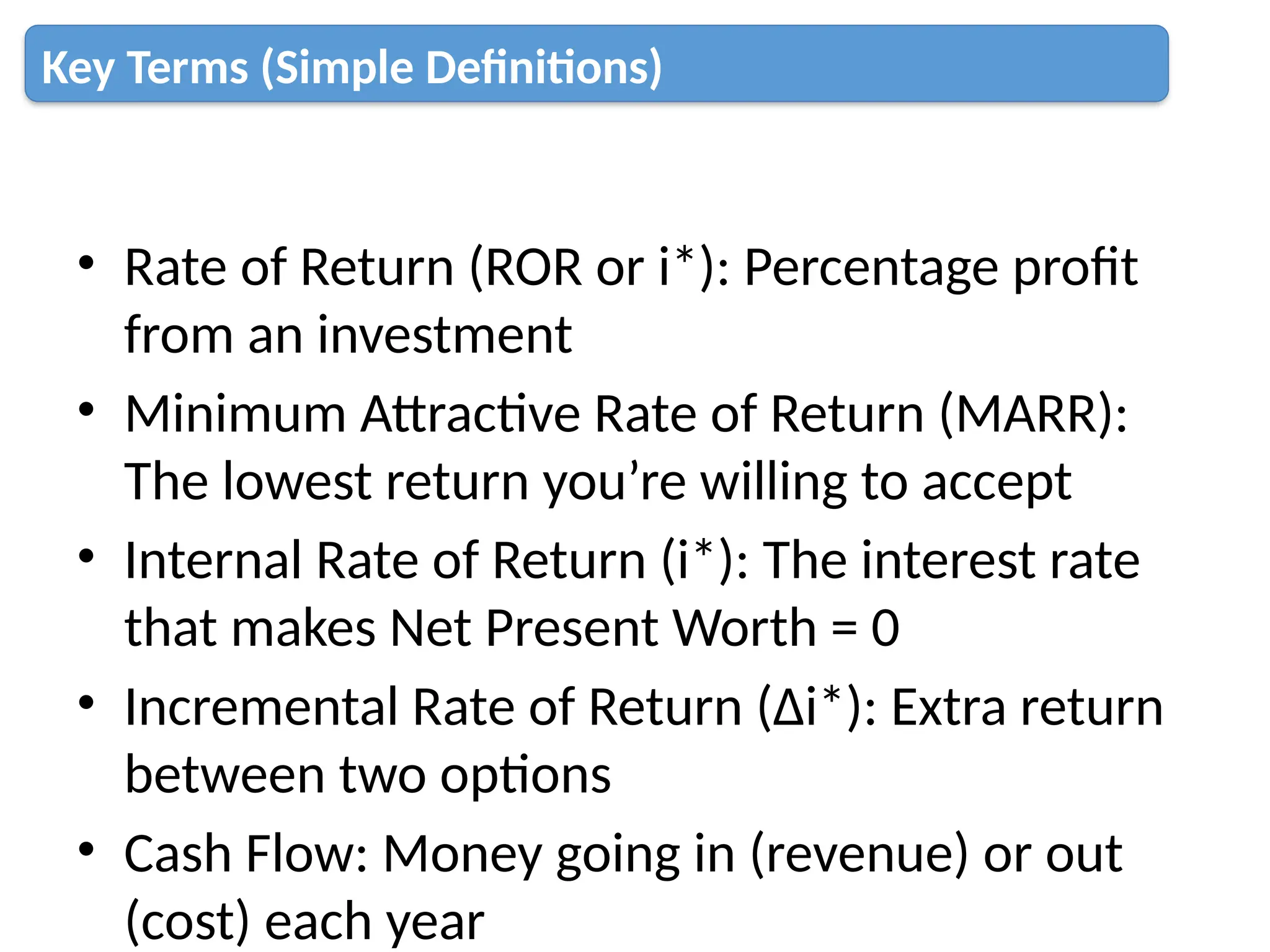
• Rate of Return (ROR or i*): Percentage profit
from an investment
• Minimum Attractive Rate of Return (MARR):
The lowest return you’re willing to accept
• Internal Rate of Return (i*): The interest rate
that makes Net Present Worth = 0
• Incremental Rate of Return (Δi*): Extra return
between two options
• Cash Flow: Money going in (revenue) or out
(cost) each year
Key Terms (Simple Definitions)
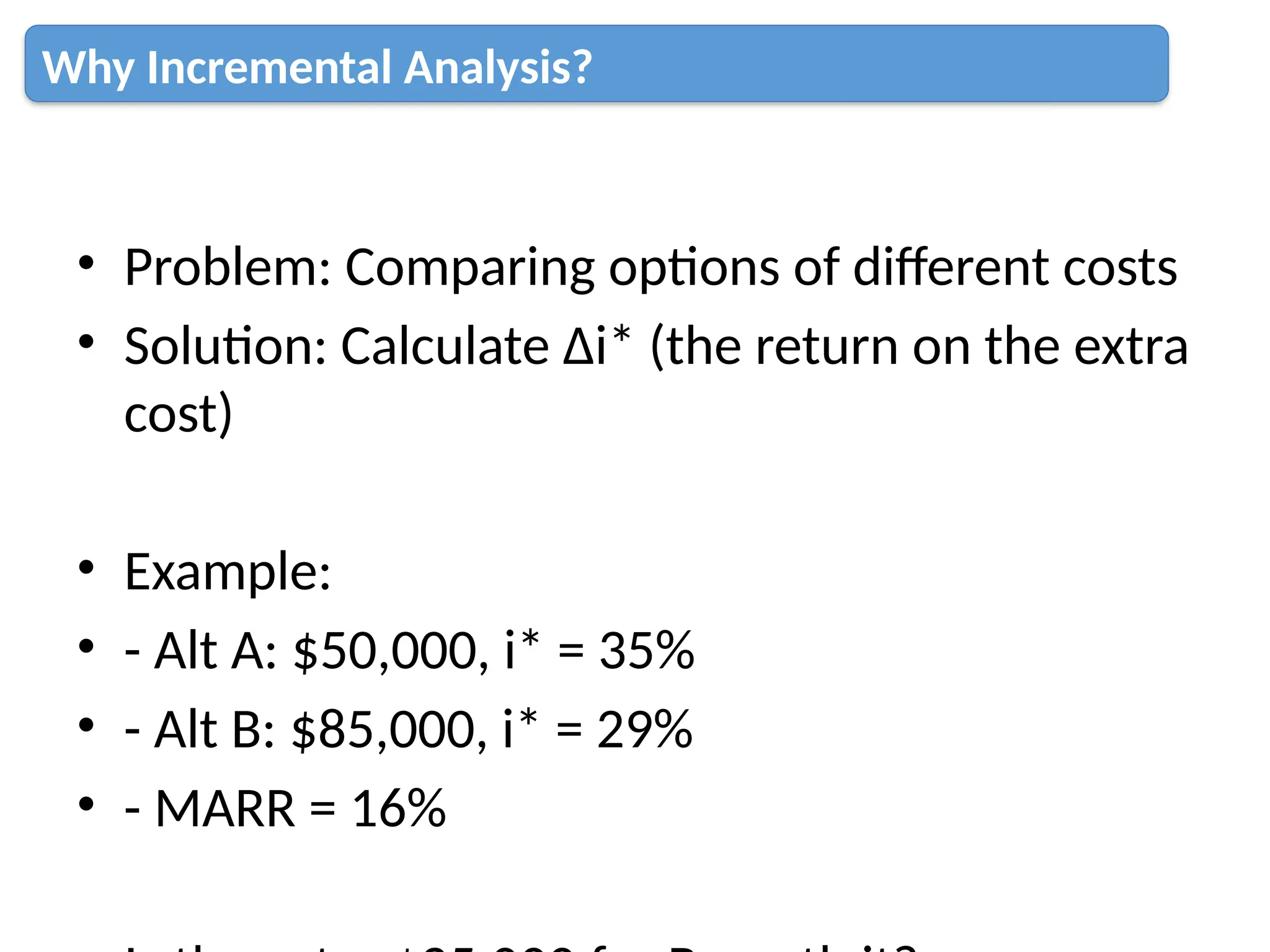
• Problem: Comparing options of different costs
• Solution: Calculate Δi* (the return on the extra
cost)
• Example:
• - Alt A: $50,000, i* = 35%
• - Alt B: $85,000, i* = 29%
• - MARR = 16%
Why Incremental Analysis?
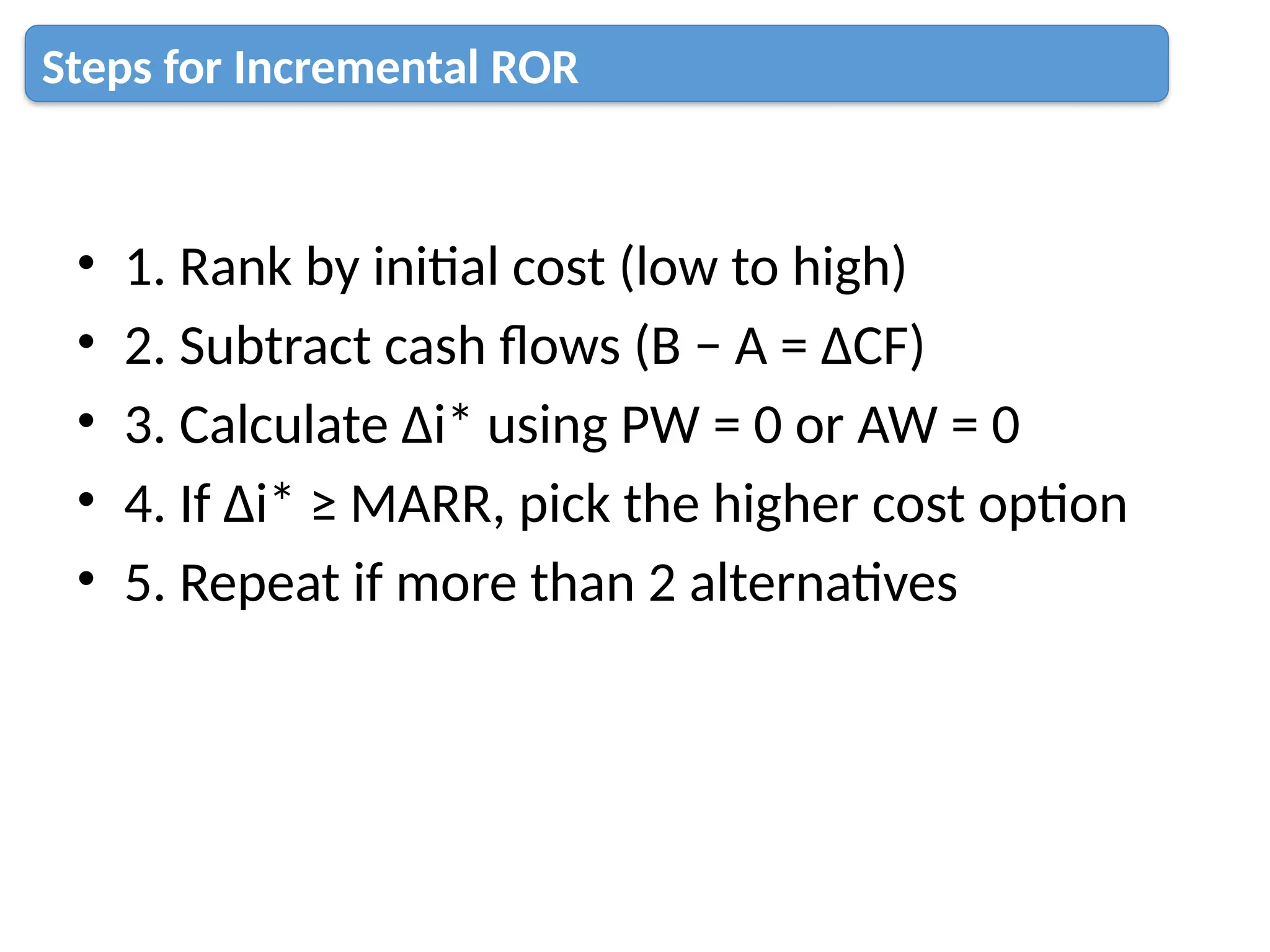
• 1. Rank by initial cost (low to high)
• 2. Subtract cash flows (B − A = ΔCF)
• 3. Calculate Δi* using PW = 0 or AW = 0
• 4. If Δi* ≥ MARR, pick the higher cost option
• 5. Repeat if more than 2 alternatives
Steps for Incremental ROR
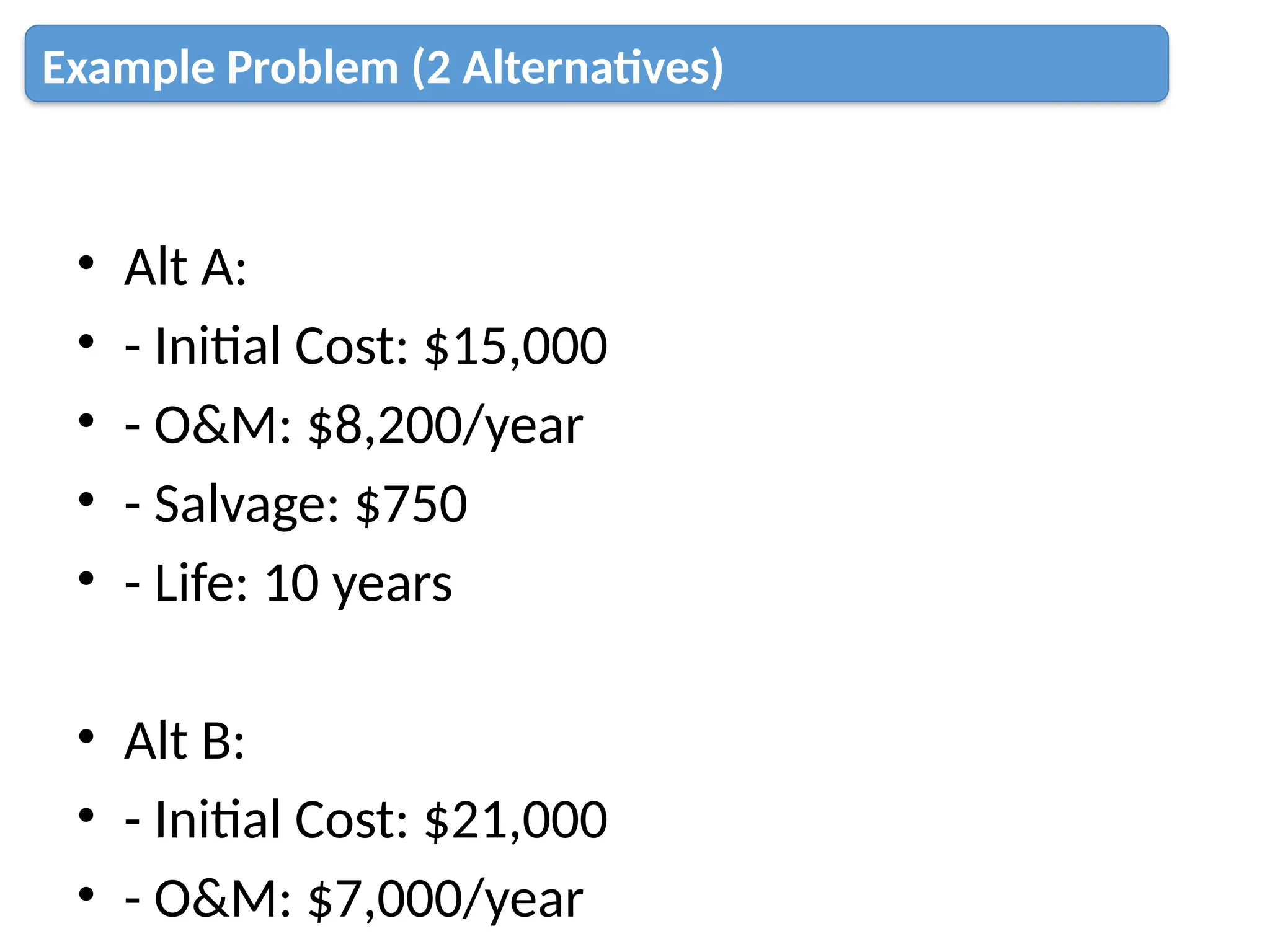
• Alt A:
• - Initial Cost: $15,000
• - O&M: $8,200/year
• - Salvage: $750
• - Life: 10 years
• Alt B:
• - Initial Cost: $21,000
• - O&M: $7,000/year
Example Problem (2 Alternatives)
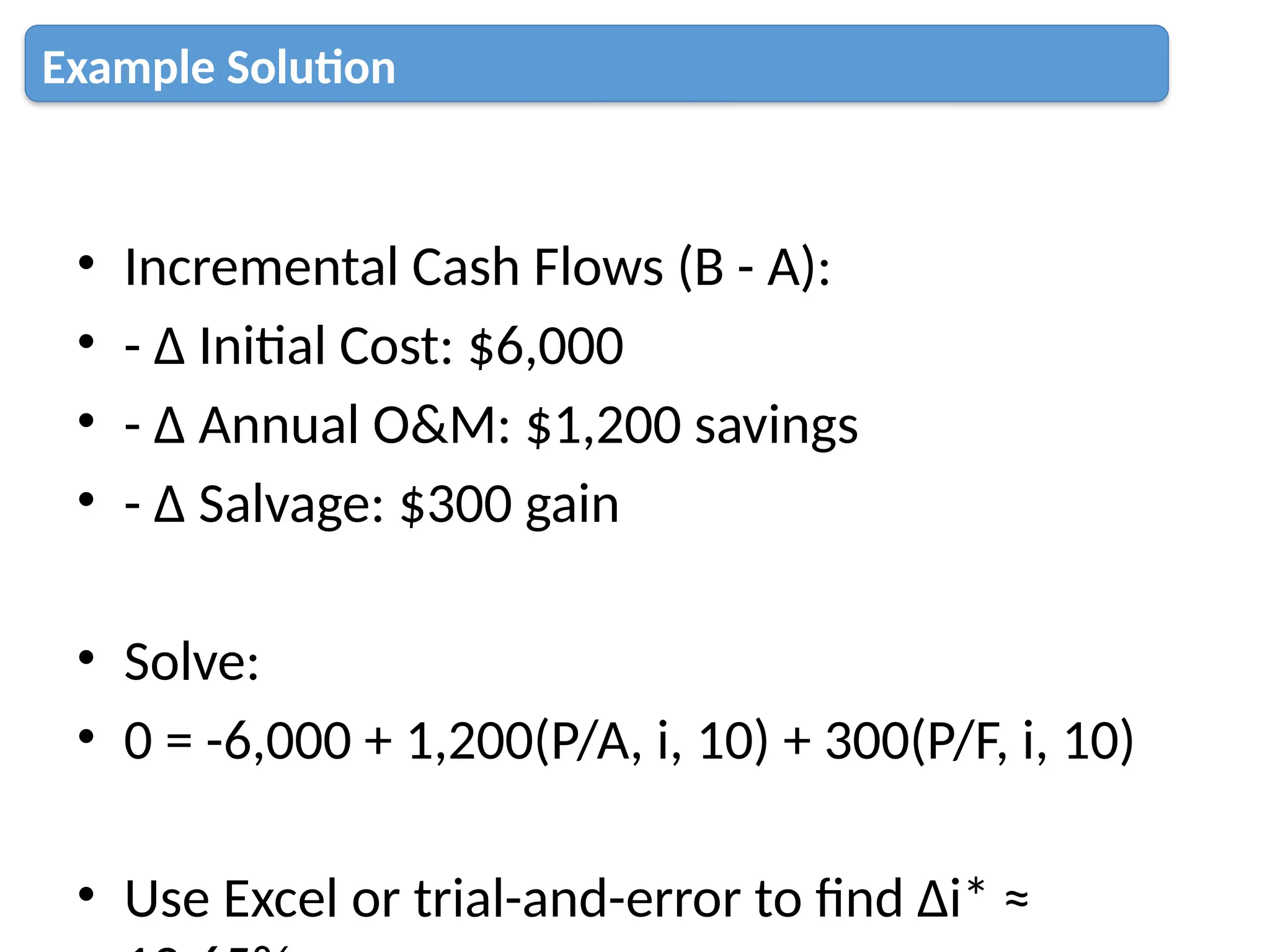
• Incremental Cash Flows (B - A):
• - Δ Initial Cost: $6,000
• - Δ Annual O&M: $1,200 savings
• - Δ Salvage: $300 gain
• Solve:
• 0 = -6,000 + 1,200(P/A, i, 10) + 300(P/F, i, 10)
• Use Excel or trial-and-error to find Δi* ≈
Example Solution
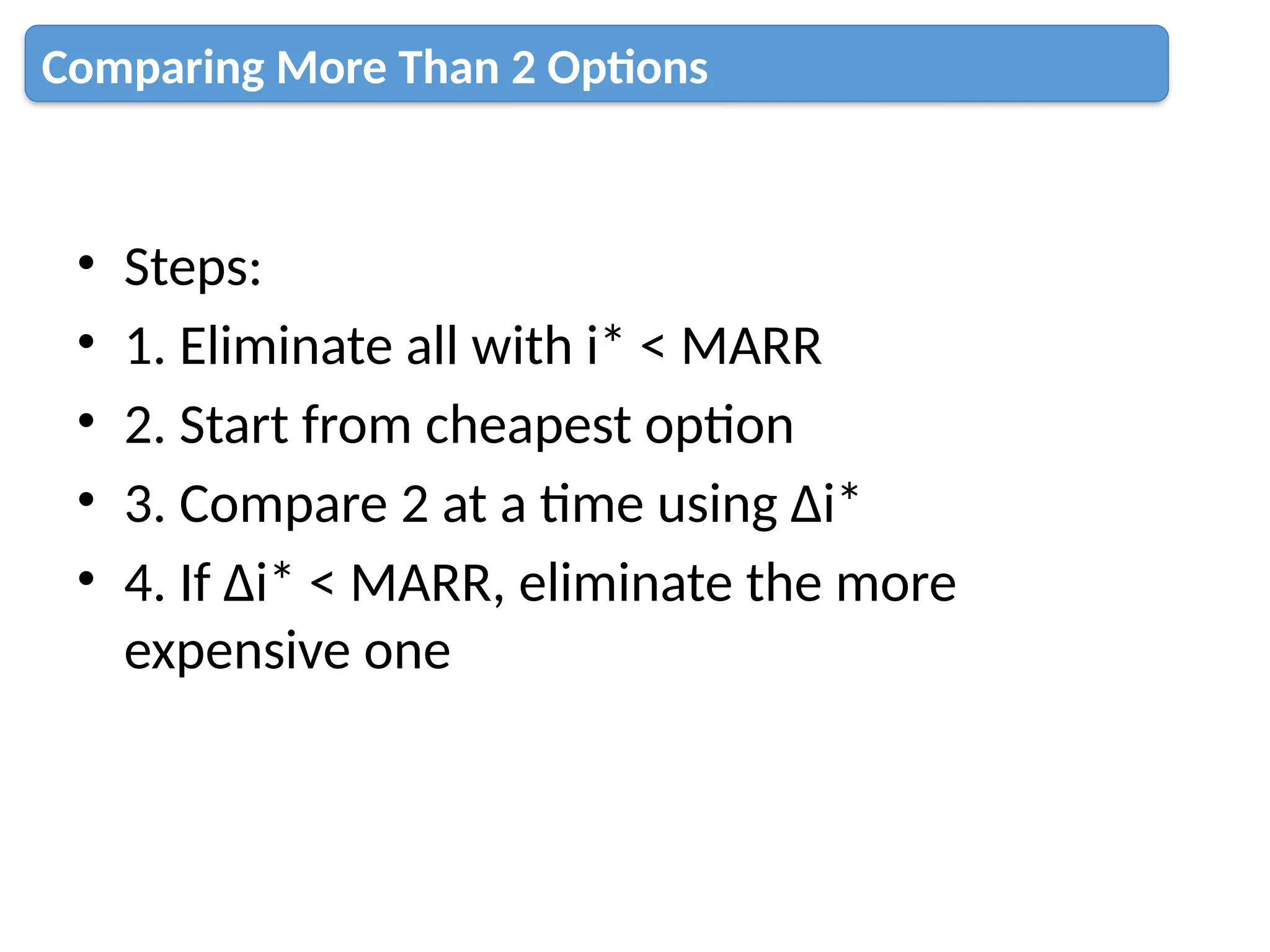
• Steps:
• 1. Eliminate all with i* < MARR
• 2. Start from cheapest option
• 3. Compare 2 at a time using Δi*
• 4. If Δi* < MARR, eliminate the more
expensive one
Comparing More Than 2 Options
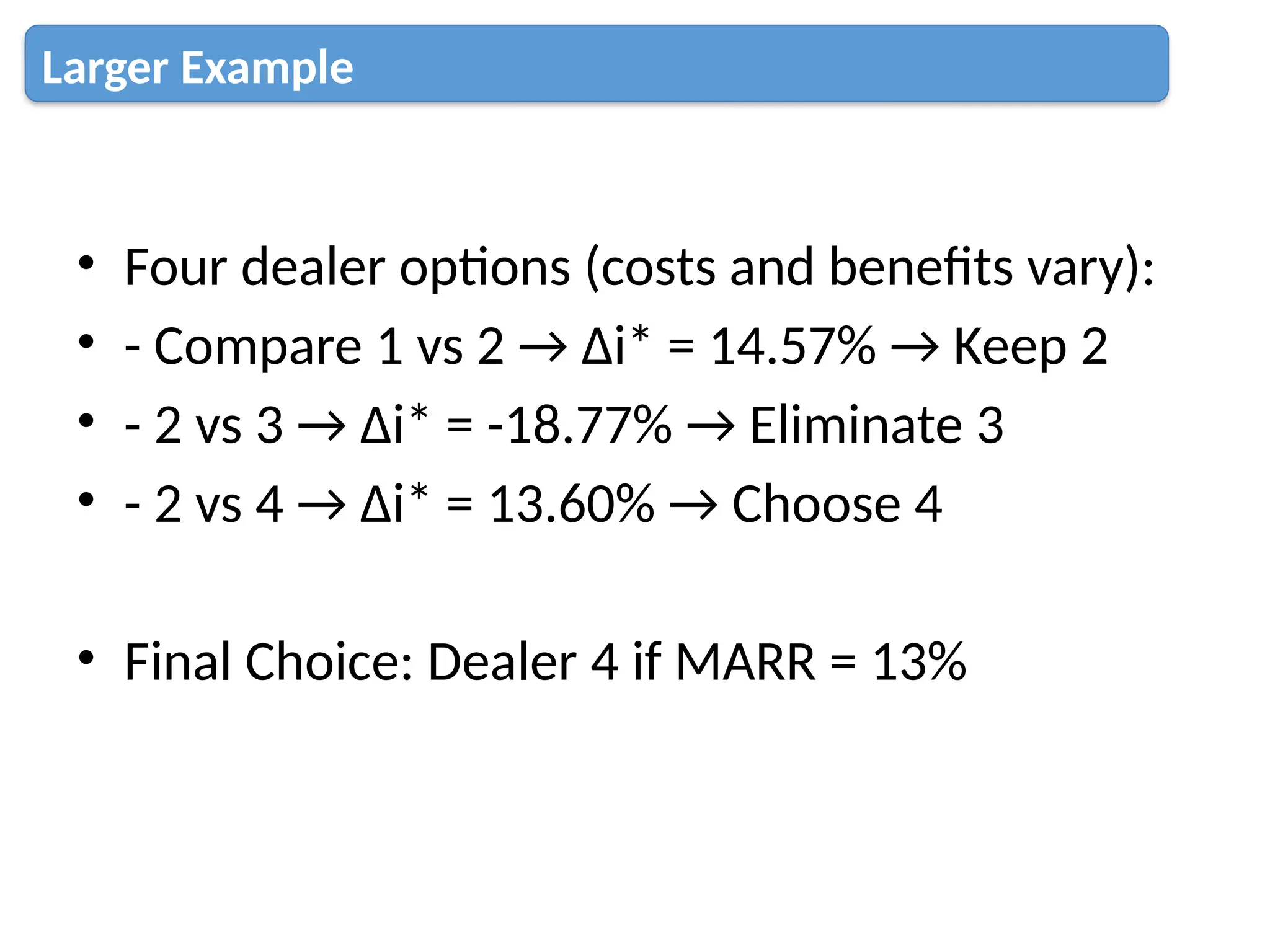
• Four dealer options (costs and benefits vary):
• - Compare 1 vs 2 → Δi* = 14.57% → Keep 2
• - 2 vs 3 → Δi* = -18.77% → Eliminate 3
• - 2 vs 4 → Δi* = 13.60% → Choose 4
• Final Choice: Dealer 4 if MARR = 13%
Larger Example
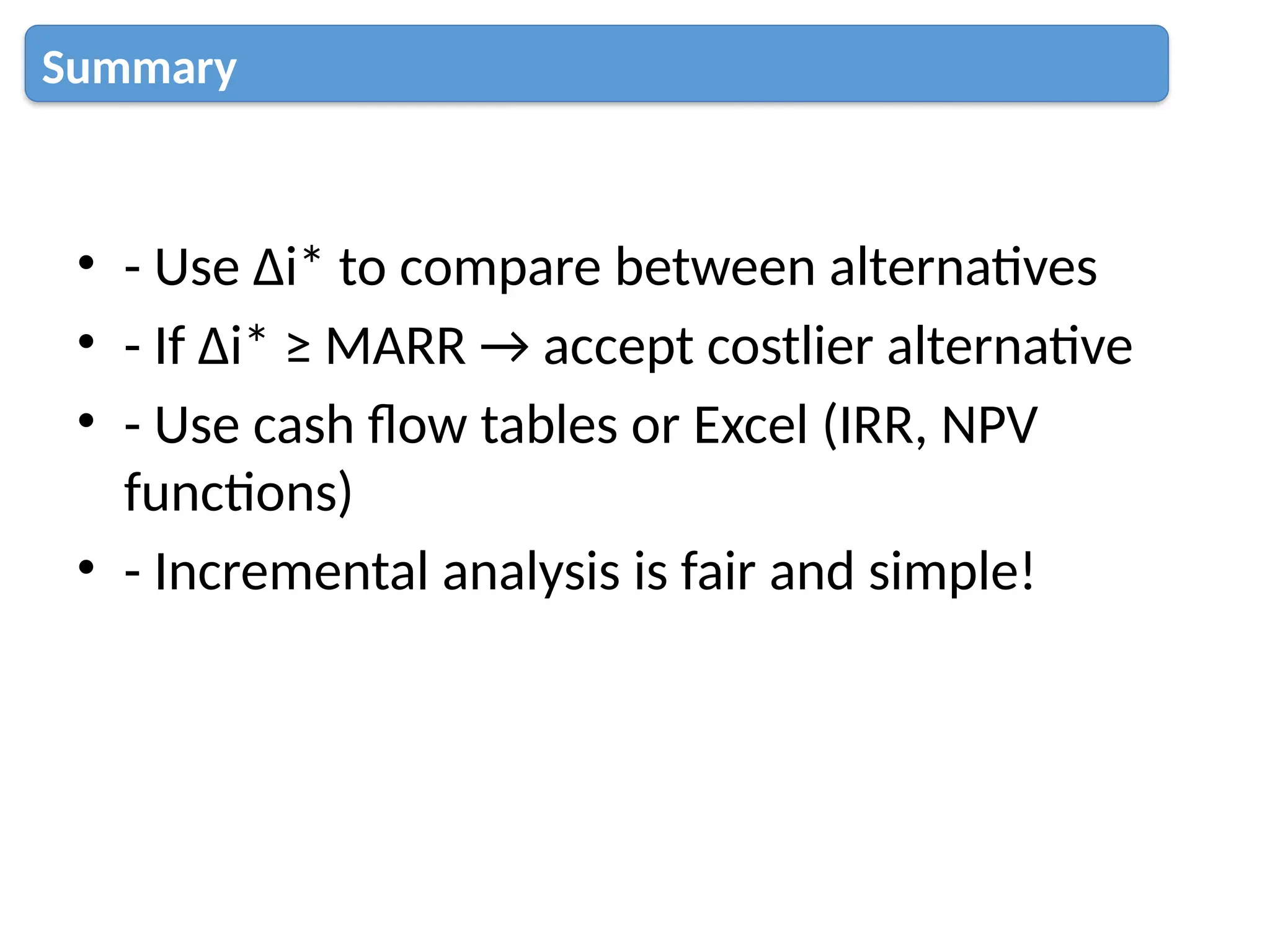
• - Use Δi* to compare between alternatives
• - If Δi* ≥ MARR → accept costlier alternative
• - Use cash flow tables or Excel (IRR, NPV
functions)
• - Incremental analysis is fair and simple!
Summary
• - Always compare using equal service lives
• - Be careful with multiple IRRs
• - Combine with PW or AW for double-checking
Bonus Tips
• Questions?
• Prepared by: (Your Name)
Thank You!
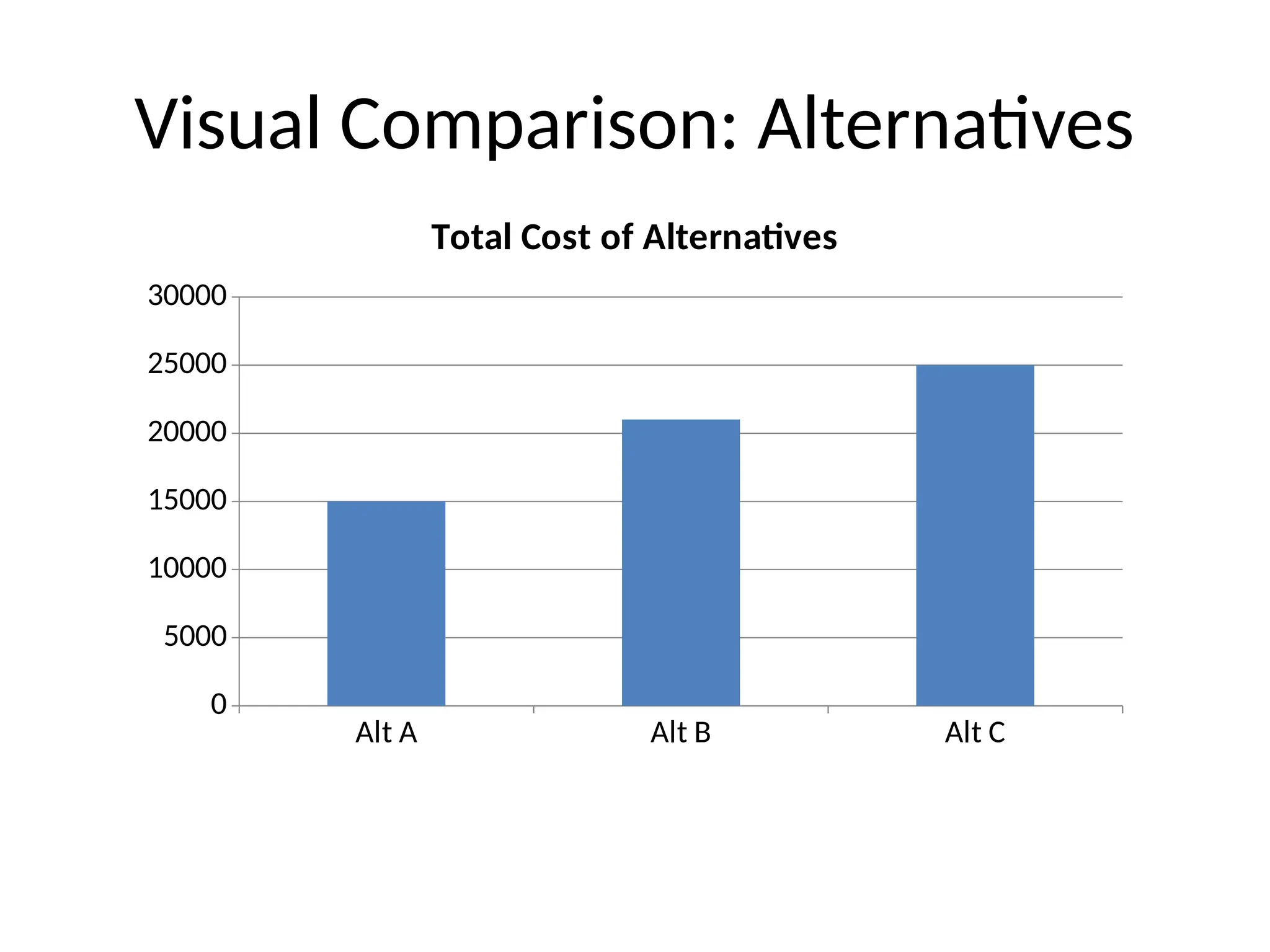
Visual Comparison: Alternatives
Alt A Alt B Alt C
0
5000
10000
15000
20000
25000
30000
Total Cost of Alternatives

Chapter_8_ROR_Visual_Enhanced_Presentation.pptx

  • 1.
    • Engineering EconomySimplified • Presented by: (Your Name) Chapter 8 - Rate of Return Analysis: Multiple Alternatives
  • 2.
    • Objective: Learnhow to choose the best investment from multiple options using the Rate of Return (ROR) method. • - Compare mutually exclusive alternatives • - Use Incremental ROR (Δi*) to guide decisions • - Understand when to accept or reject options Introduction
  • 3.
    • Rate ofReturn (ROR or i*): Percentage profit from an investment • Minimum Attractive Rate of Return (MARR): The lowest return you’re willing to accept • Internal Rate of Return (i*): The interest rate that makes Net Present Worth = 0 • Incremental Rate of Return (Δi*): Extra return between two options • Cash Flow: Money going in (revenue) or out (cost) each year Key Terms (Simple Definitions)
  • 4.
    • Problem: Comparingoptions of different costs • Solution: Calculate Δi* (the return on the extra cost) • Example: • - Alt A: $50,000, i* = 35% • - Alt B: $85,000, i* = 29% • - MARR = 16% Why Incremental Analysis?
  • 5.
    • 1. Rankby initial cost (low to high) • 2. Subtract cash flows (B − A = ΔCF) • 3. Calculate Δi* using PW = 0 or AW = 0 • 4. If Δi* ≥ MARR, pick the higher cost option • 5. Repeat if more than 2 alternatives Steps for Incremental ROR
  • 6.
    • Alt A: •- Initial Cost: $15,000 • - O&M: $8,200/year • - Salvage: $750 • - Life: 10 years • Alt B: • - Initial Cost: $21,000 • - O&M: $7,000/year Example Problem (2 Alternatives)
  • 7.
    • Incremental CashFlows (B - A): • - Δ Initial Cost: $6,000 • - Δ Annual O&M: $1,200 savings • - Δ Salvage: $300 gain • Solve: • 0 = -6,000 + 1,200(P/A, i, 10) + 300(P/F, i, 10) • Use Excel or trial-and-error to find Δi* ≈ Example Solution
  • 8.
    • Steps: • 1.Eliminate all with i* < MARR • 2. Start from cheapest option • 3. Compare 2 at a time using Δi* • 4. If Δi* < MARR, eliminate the more expensive one Comparing More Than 2 Options
  • 9.
    • Four dealeroptions (costs and benefits vary): • - Compare 1 vs 2 → Δi* = 14.57% → Keep 2 • - 2 vs 3 → Δi* = -18.77% → Eliminate 3 • - 2 vs 4 → Δi* = 13.60% → Choose 4 • Final Choice: Dealer 4 if MARR = 13% Larger Example
  • 10.
    • - UseΔi* to compare between alternatives • - If Δi* ≥ MARR → accept costlier alternative • - Use cash flow tables or Excel (IRR, NPV functions) • - Incremental analysis is fair and simple! Summary
  • 11.
    • - Alwayscompare using equal service lives • - Be careful with multiple IRRs • - Combine with PW or AW for double-checking Bonus Tips
  • 12.
    • Questions? • Preparedby: (Your Name) Thank You!
  • 13.
    Visual Comparison: Alternatives AltA Alt B Alt C 0 5000 10000 15000 20000 25000 30000 Total Cost of Alternatives