Economics Chapter One Notes What is Economics?
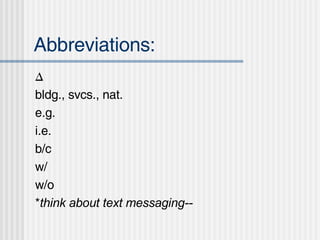
Abbreviations: ∆ bldg., svcs., nat. e.g. i.e. b/c w/ w/o * think about text messaging--
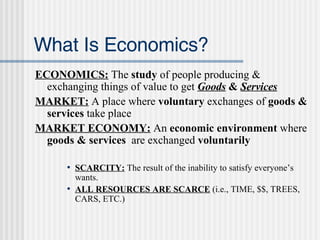
What Is Economics? ECONOMICS:   The  study  of people producing & exchanging things of value to get   Goods  &  Services MARKET:   A place where  voluntary  exchanges of  goods & services  take place MARKET ECONOMY:   An  economic environment  where  goods & services  are exchanged  voluntarily SCARCITY:  The result of the inability to satisfy everyone’s wants. ALL RESOURCES ARE SCARCE   (i.e., TIME, $$, TREES, CARS, ETC.)
RESOURCES:   basic elements used to produce goods and svcs.  There are  4  basic types: NATURAL RESOURCES:  Unaltered gifts of nature (trees, minerals, water, etc.) HUMAN RESOURCES:   Labor; physical and mental efforts exerted by people to create goods & svcs. CAPITAL RESOURCES:   Bldgs., tools, machines people use to create goods & svcs. (also known as  overhead) ENTREPRENEURSHIP:  Imaginative thinking, willingness to take risks, mgmt. & org. skills needed to operate an innovative business.
BASIC PRINCIPLES OF ECON. OPPORTUNITY COST:   ALWAYS   the best alternative you give up when making a choice. Giving up basketball shoes to buy a TV-  Opp. Cost = Shoes TRADE-OFFS:   b/c resources scarce, must choose some things over others.  This is a: TRADE-OFF — the process of determining your opportunity cost (e.g., shoes for TV)
Basic Principles, (cont’d.) MACROECONOMICS:   The “Big Picture:” Issues such as unemployment, poverty, budgets, etc. MICROECONOMICS:  “ Individual Issues:” Personal finance, indiv. consumerism, etc. How macro issues like unemployment, productivity affect people.
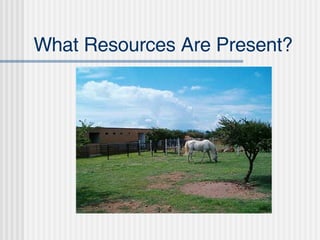
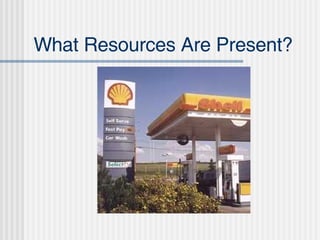
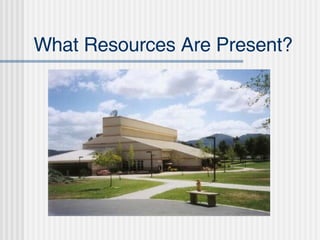
What Resources Are Present?

Chapter1

  • 1.
    Economics Chapter OneNotes What is Economics?
  • 2.
    Abbreviations: ∆ bldg.,svcs., nat. e.g. i.e. b/c w/ w/o * think about text messaging--
  • 3.
    What Is Economics?ECONOMICS: The study of people producing & exchanging things of value to get Goods & Services MARKET: A place where voluntary exchanges of goods & services take place MARKET ECONOMY: An economic environment where goods & services are exchanged voluntarily SCARCITY: The result of the inability to satisfy everyone’s wants. ALL RESOURCES ARE SCARCE (i.e., TIME, $$, TREES, CARS, ETC.)
  • 4.
    RESOURCES: basic elements used to produce goods and svcs.  There are 4 basic types: NATURAL RESOURCES: Unaltered gifts of nature (trees, minerals, water, etc.) HUMAN RESOURCES: Labor; physical and mental efforts exerted by people to create goods & svcs. CAPITAL RESOURCES: Bldgs., tools, machines people use to create goods & svcs. (also known as overhead) ENTREPRENEURSHIP: Imaginative thinking, willingness to take risks, mgmt. & org. skills needed to operate an innovative business.
  • 5.
    BASIC PRINCIPLES OFECON. OPPORTUNITY COST: ALWAYS the best alternative you give up when making a choice. Giving up basketball shoes to buy a TV- Opp. Cost = Shoes TRADE-OFFS: b/c resources scarce, must choose some things over others. This is a: TRADE-OFF — the process of determining your opportunity cost (e.g., shoes for TV)
  • 6.
    Basic Principles, (cont’d.)MACROECONOMICS: The “Big Picture:” Issues such as unemployment, poverty, budgets, etc. MICROECONOMICS: “ Individual Issues:” Personal finance, indiv. consumerism, etc. How macro issues like unemployment, productivity affect people.
  • 7.
  • 8.
  • 9.