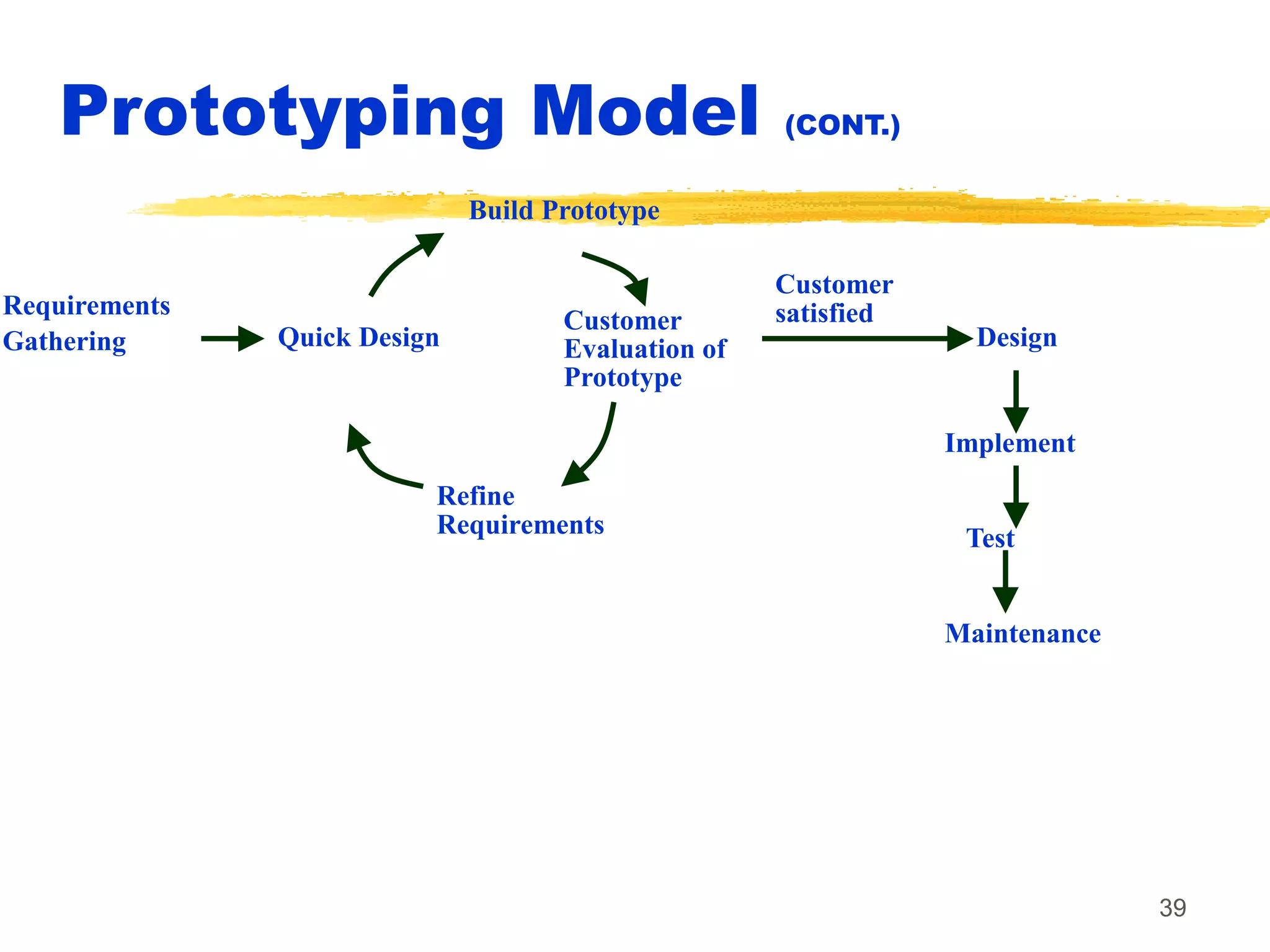
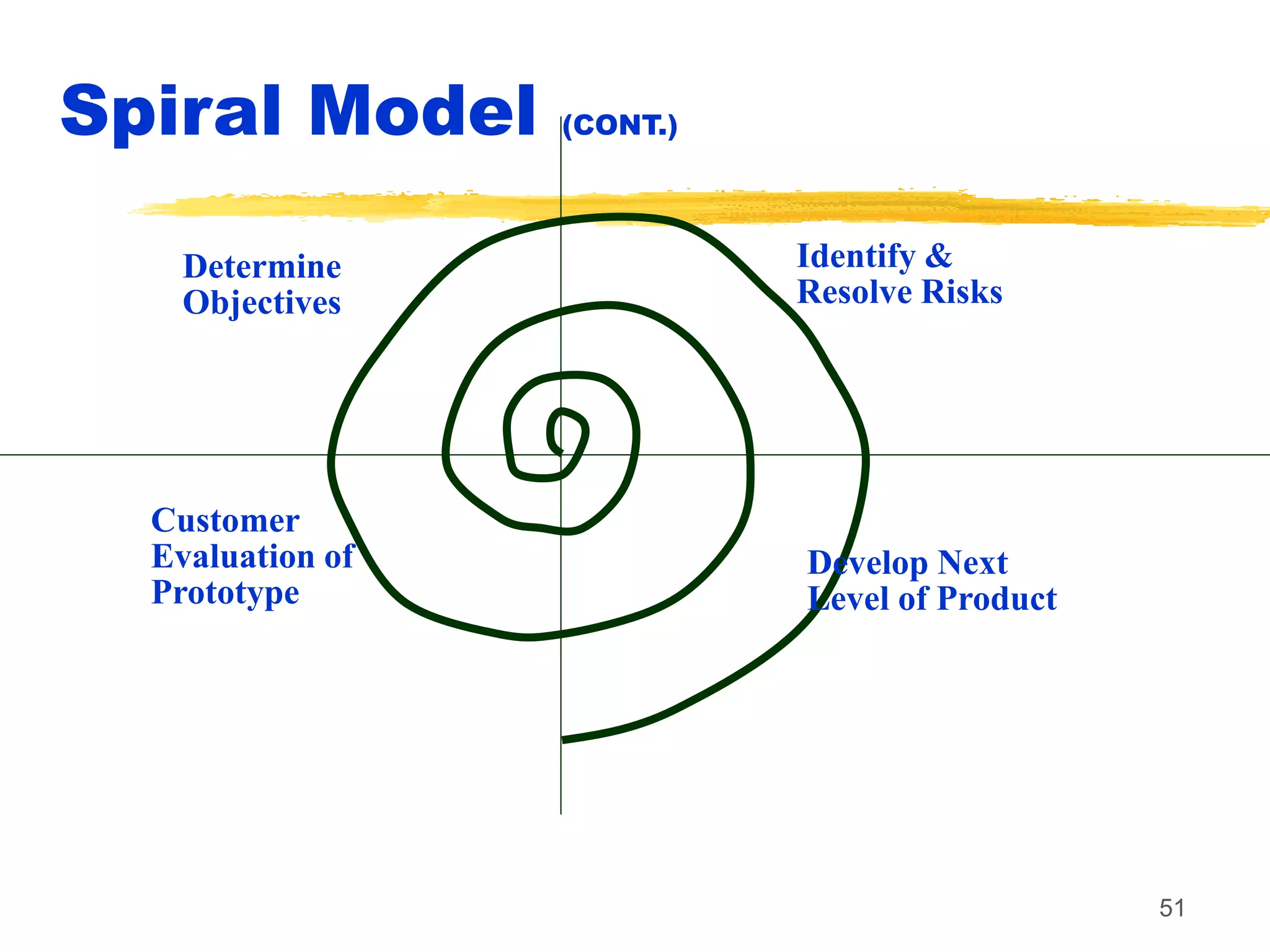
The document discusses various software development life cycle models, including the classical waterfall model, iterative waterfall model, prototyping model, evolutionary model, and spiral model. The classical waterfall model divides the life cycle into sequential phases such as requirements, design, implementation, testing, and maintenance. The iterative waterfall model adds feedback loops to allow reworking of phases if defects are found. The prototyping model uses prototypes to refine requirements before full development. The evolutionary model incrementally develops modules in successive versions. The spiral model represents phases as loops to iteratively address risks through prototyping.