Chapter 1
 Introduction to virus

          Prepared by
Miss Putri Shareen Binti Rosman
Learning Objective

      Differentiate a virus from a bacterium.
       Identify the viral components
       Briefly discuss the viral morphology
1.1 Definition of viruses
• Are infectious agents that are too small to be seen with a light
 microscope .
• Acellular (absence of nucleus, organelles, cytoplasm,plasma
 membrane).
• No ATP generating metabolism

• Do not undergo binary fission

• Sensitive to interferon
1.2 General Characteristics of Viruses
• Obligatory intracellular parasites
• Contain DNA or RNA
• Contain a protein coat
• Some are enclosed by an envelope
• Some viruses have spikes
• Most viruses infect only specific types of cells
 in one host
• Host range is determined by specific host attachment sites and
 cellular factors
1.2 General characteristics
• Viruses replicate through replication of their nucleic acid and
 synthesis of the viral protein.
• Viruses do not multiply in chemically defined media

• Some viruses have enzymes inside the virion. All ss- RNA viruses with
 negative polarity have the enzyme transcriptase ( RNA dependent
 RNA polymerase) inside virions.
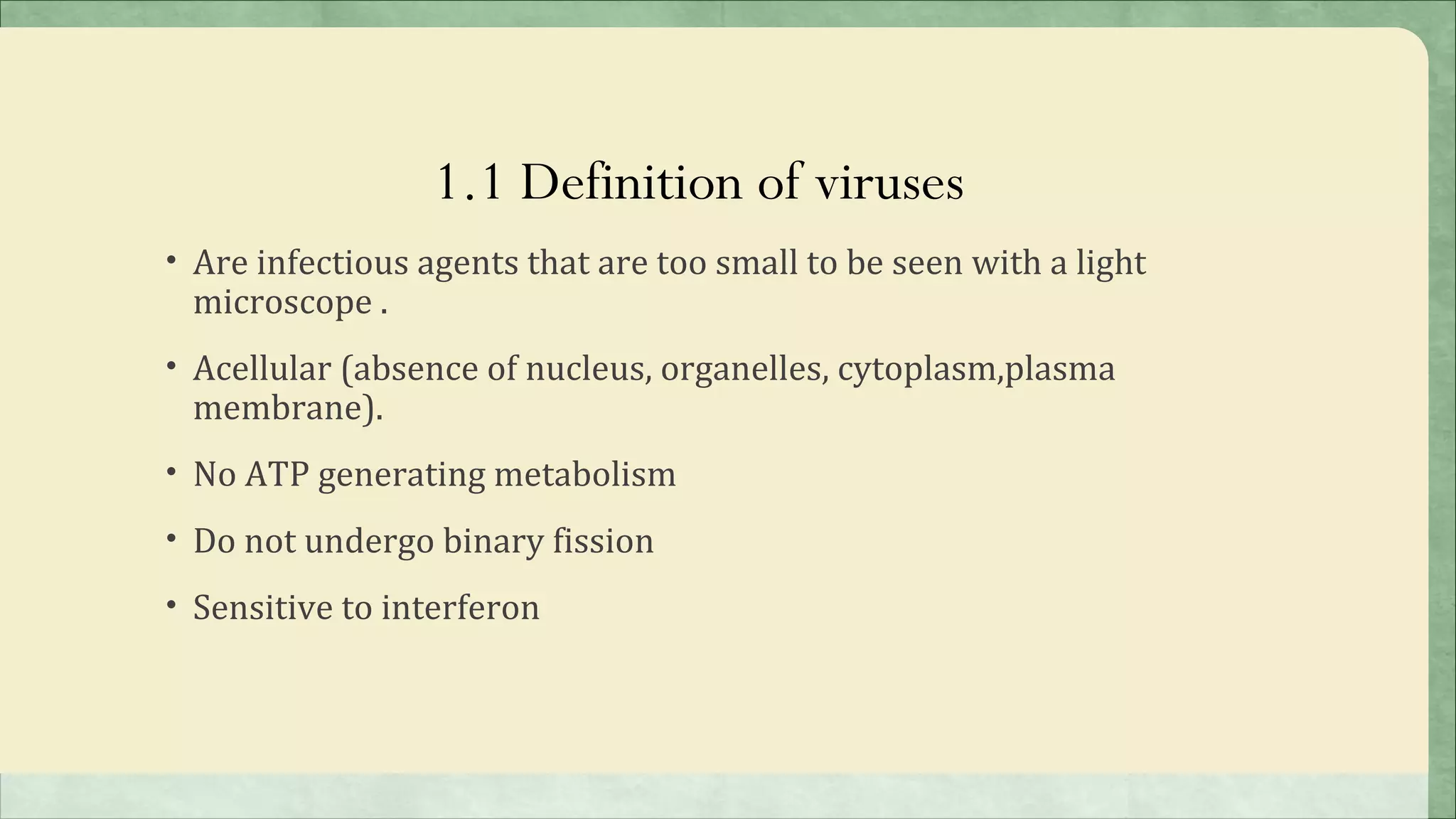
• Retroviruses and hepatitis B virus contain the enzyme reverse
 transcriptase.
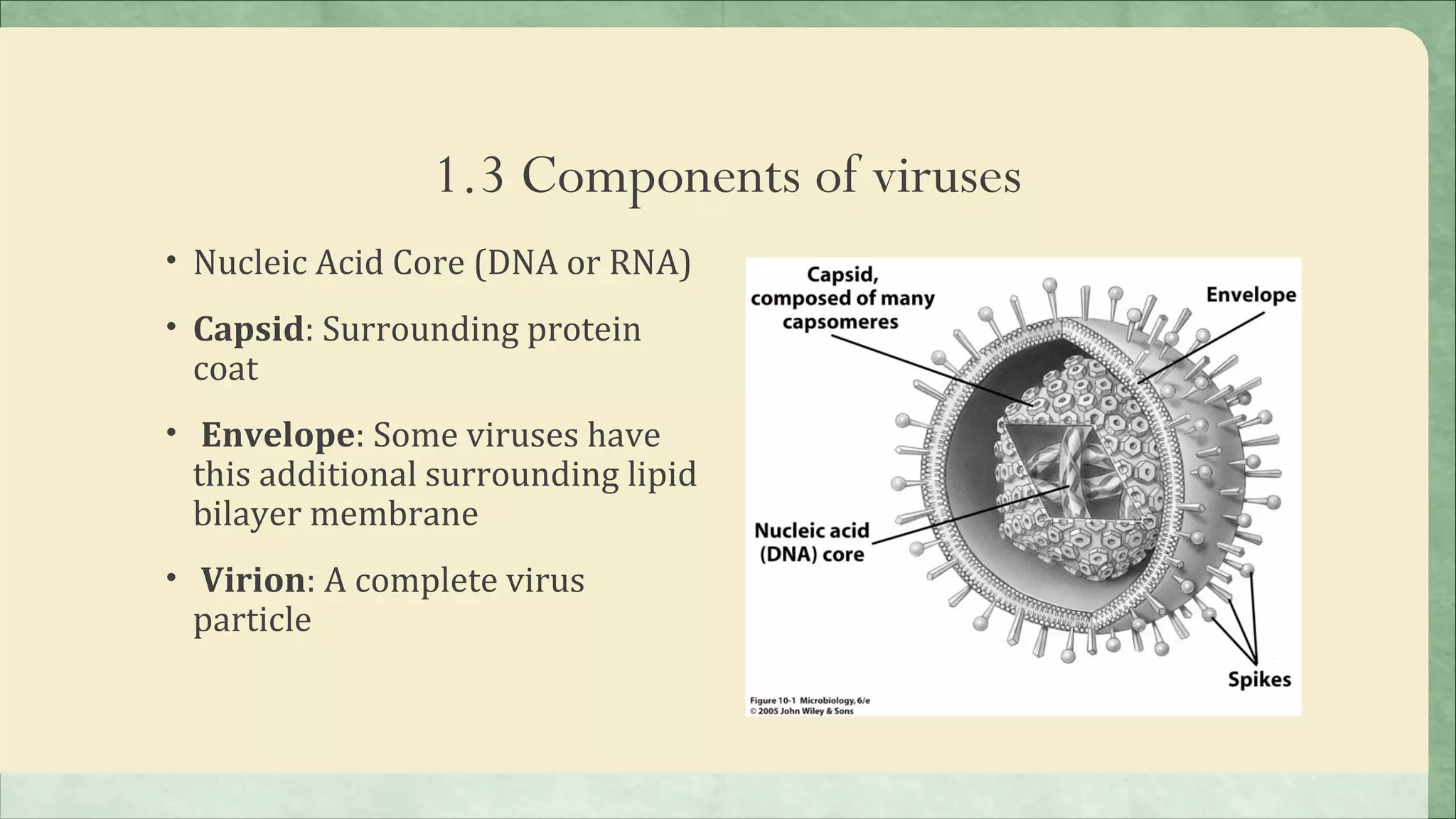
1.3 Components of viruses
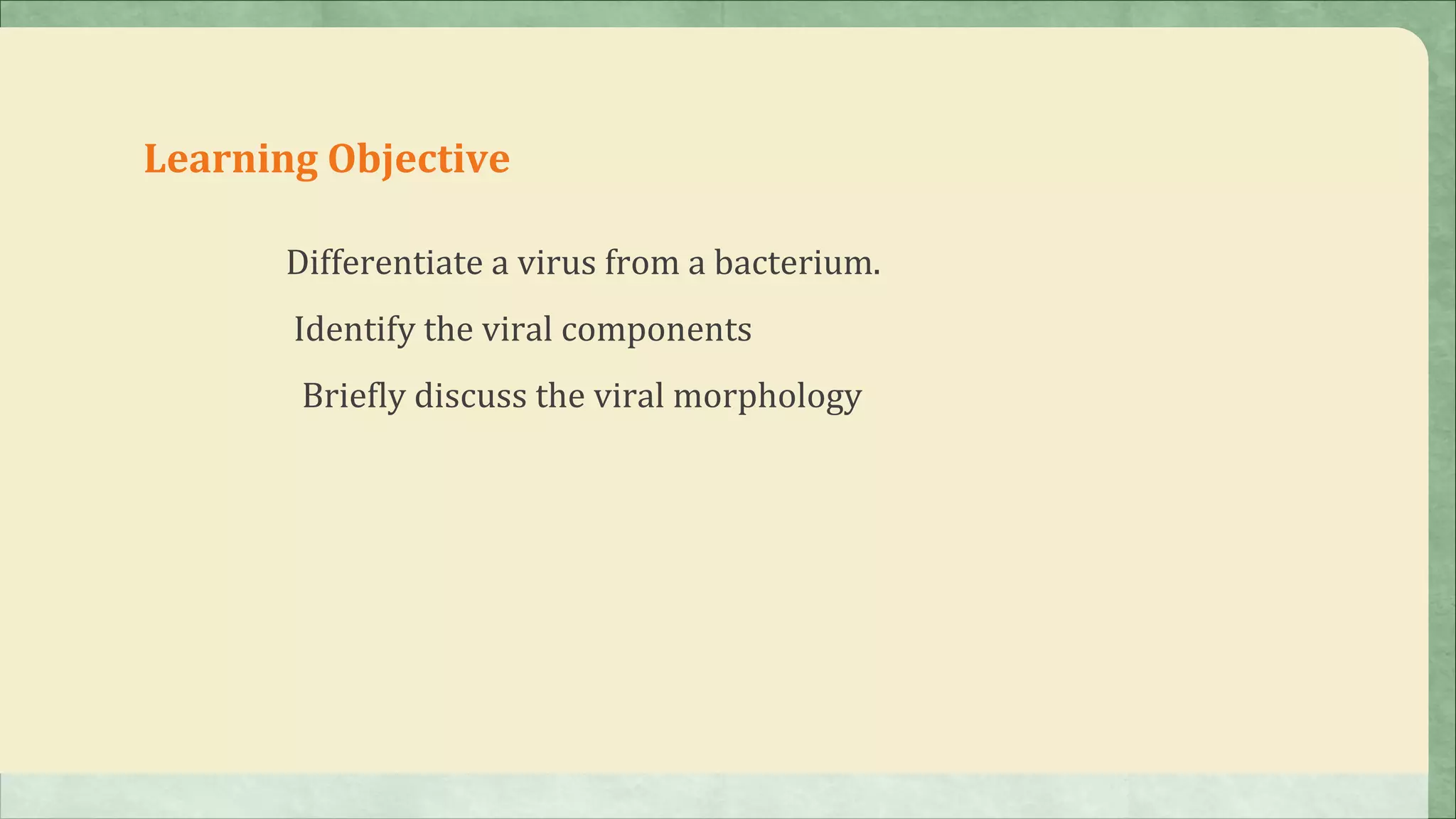
• Nucleic Acid Core (DNA or RNA)

• Capsid: Surrounding protein
 coat
• Envelope: Some viruses have
 this additional surrounding lipid
 bilayer membrane
• Virion: A complete virus
 particle
Function
Viruses use their nucleic acids (genome) to replicate themselves in host cells
Capsids also play a key role in the attachment of some viruses. Each capsid is
 composed of protein subunits called capsomeres.
Enveloped viruses have a typical bilayer membrane outside their capsids and
 acquire their envelope after they are assembled in a host cell and “bud”
 through host’s membrane. Helps to protect from drying (enhances
 transmission),makes virus more susceptible to chemical agents that
 dissolve lipids and helps to attach to host cell membrane.
Nucleocapsid comprises the viral genome together with the capsid
Naked: viruses with a nucleocapsid and no envelope


Spikes: projections that extend from the viral envelope that may aid in
 attachment to the host cell


Glycoprotein: these surface projections serve to attach virions to specific
 receptor sites on susceptible host cell surfaces
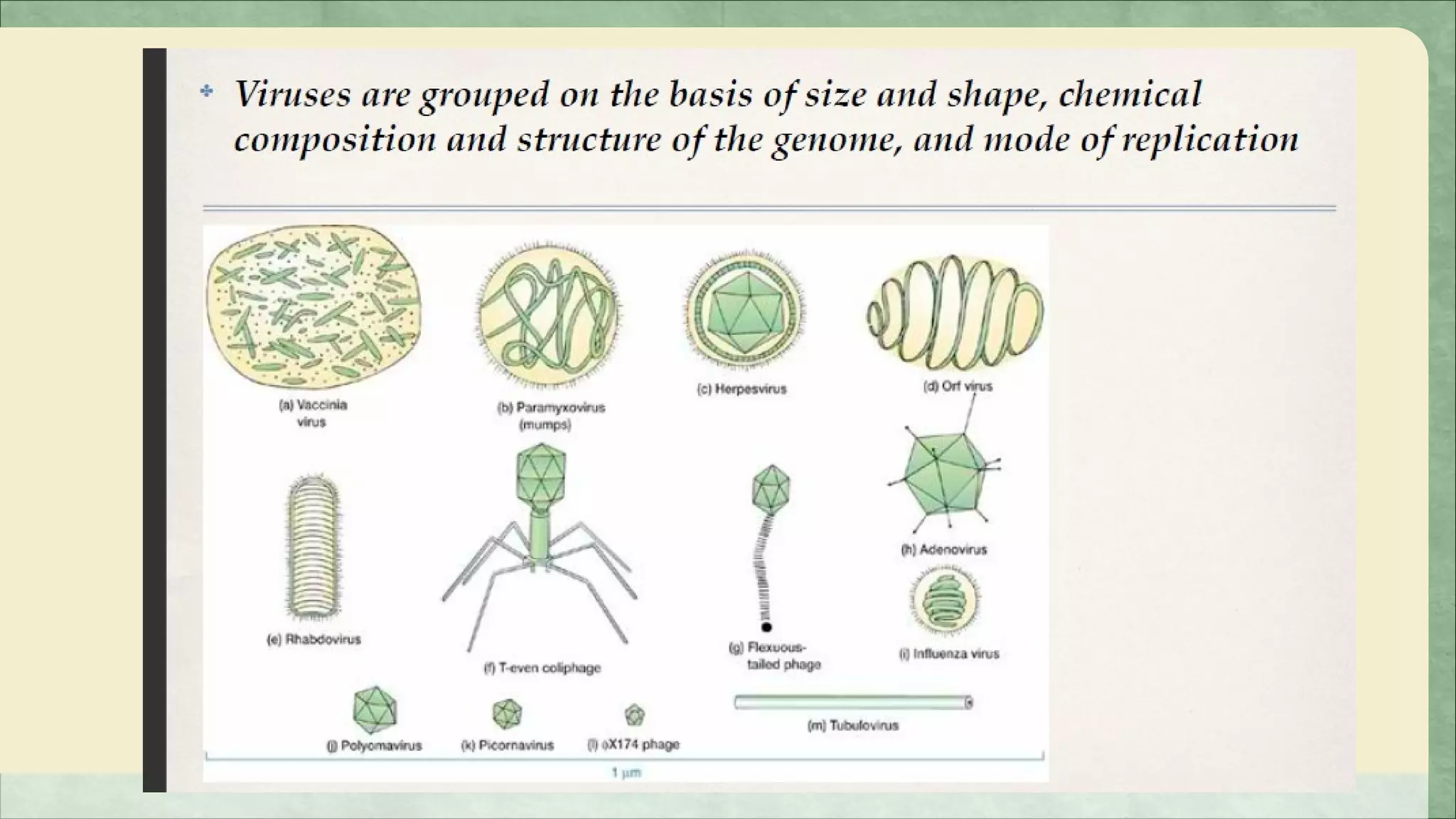
1.4 Viral morphology
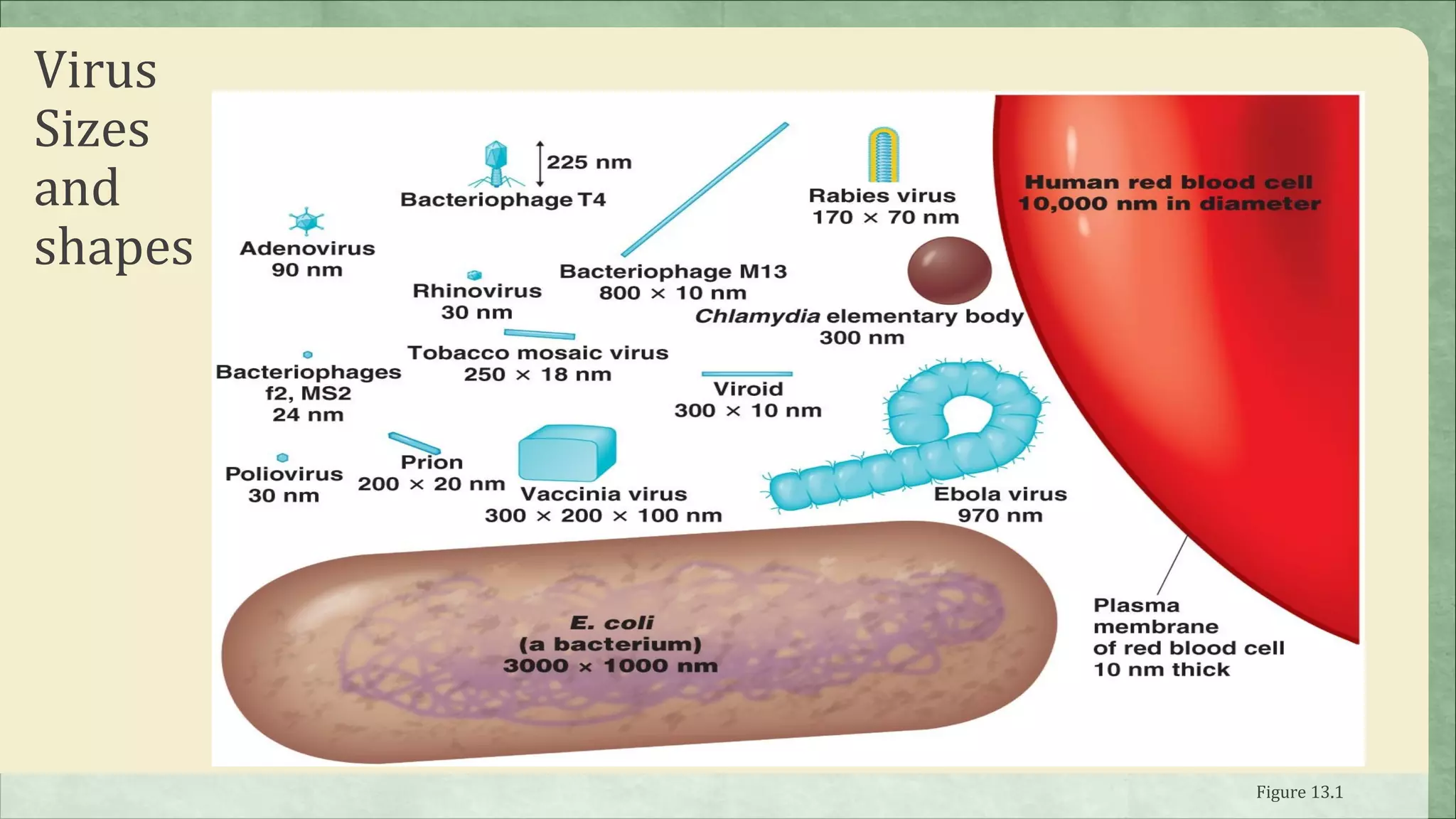
Virus
Sizes
and
shapes


         Figure 13.1
1.4 Viral morphology
• Polyhedral viruses

• Enveloped viruses

• Helical viruses

• Complex viruses
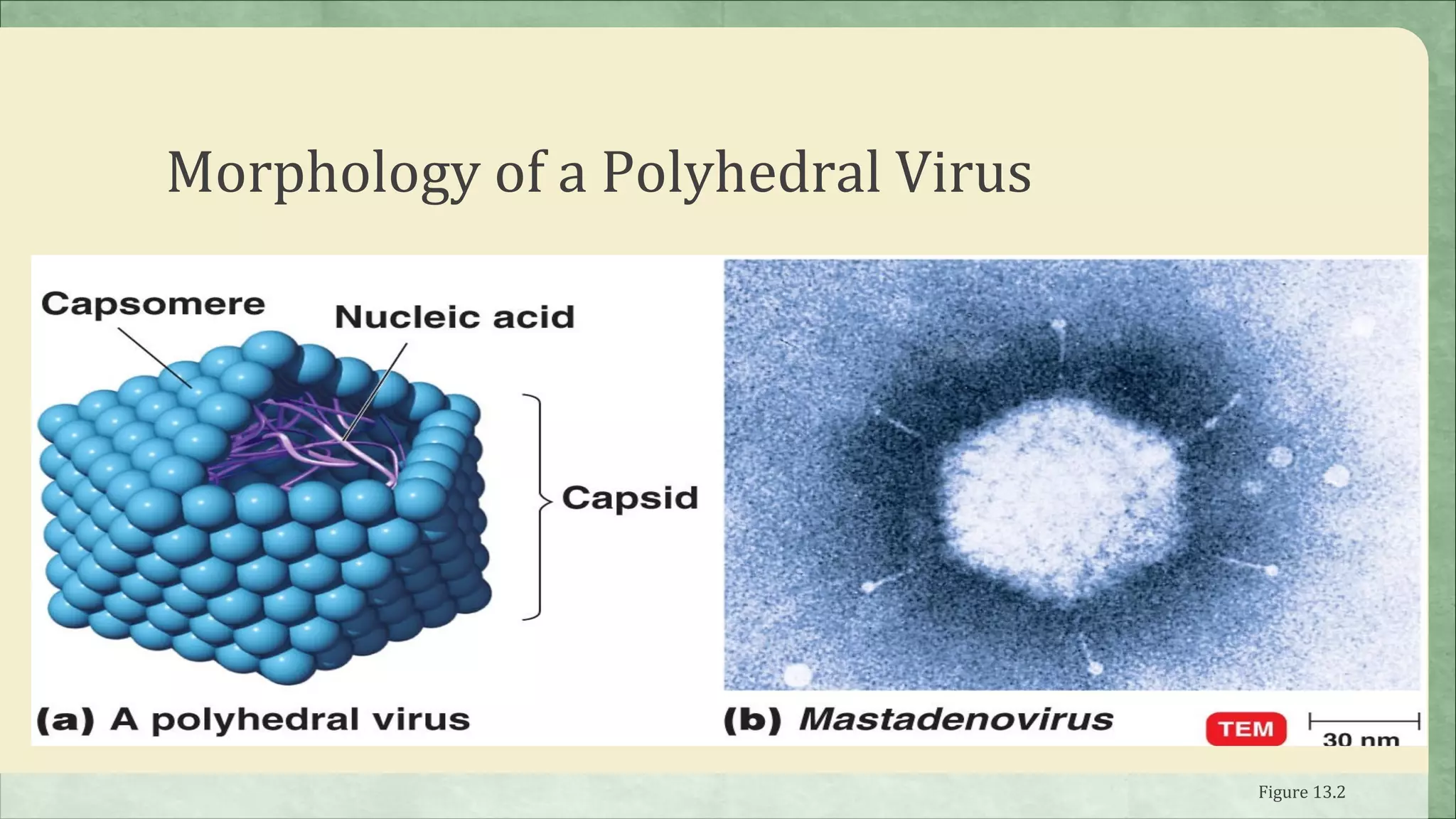
Morphology of a Polyhedral Virus


                                   Figure 13.2
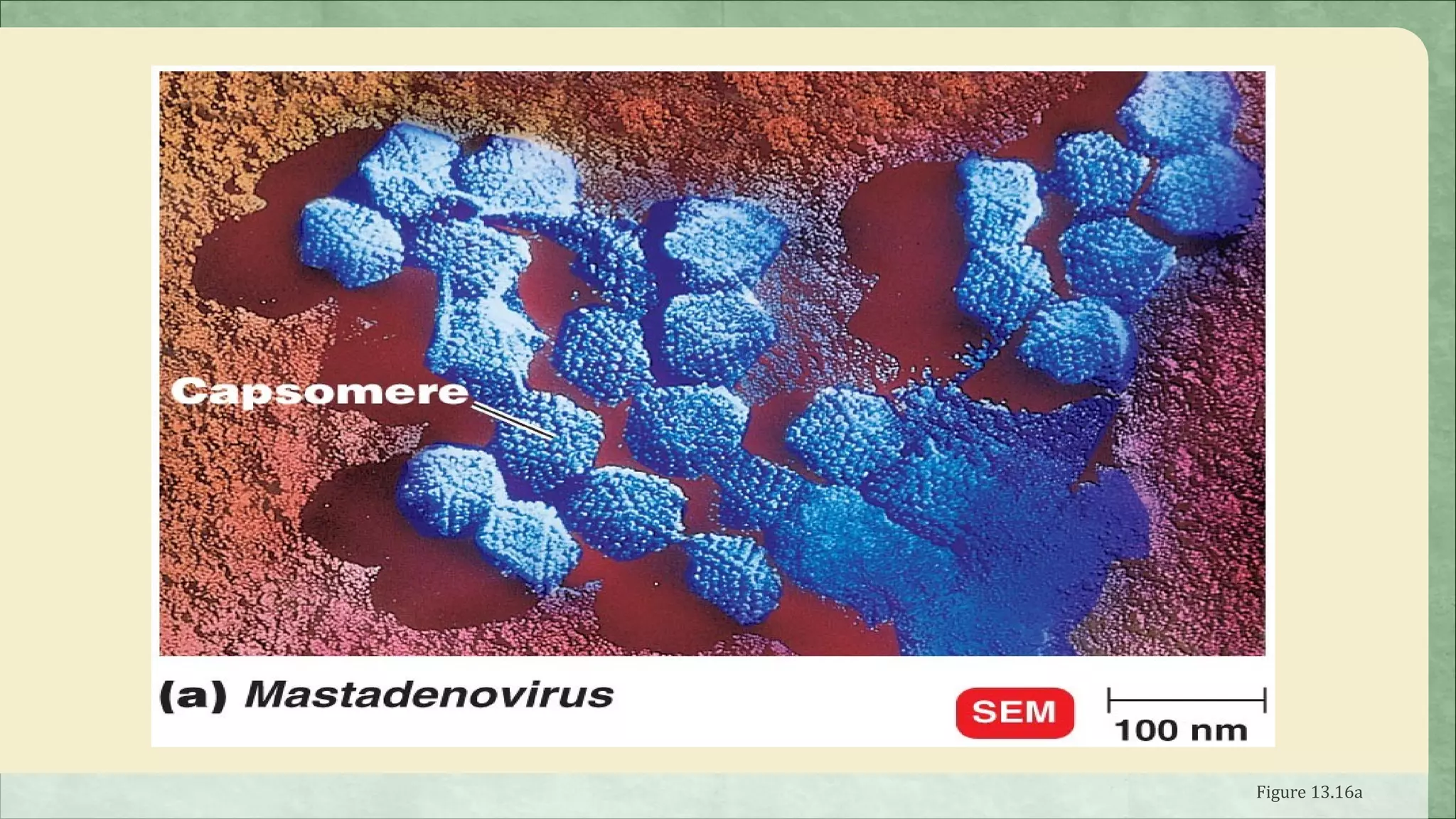
Polyhedral Viruses


                     Figure 13.16a
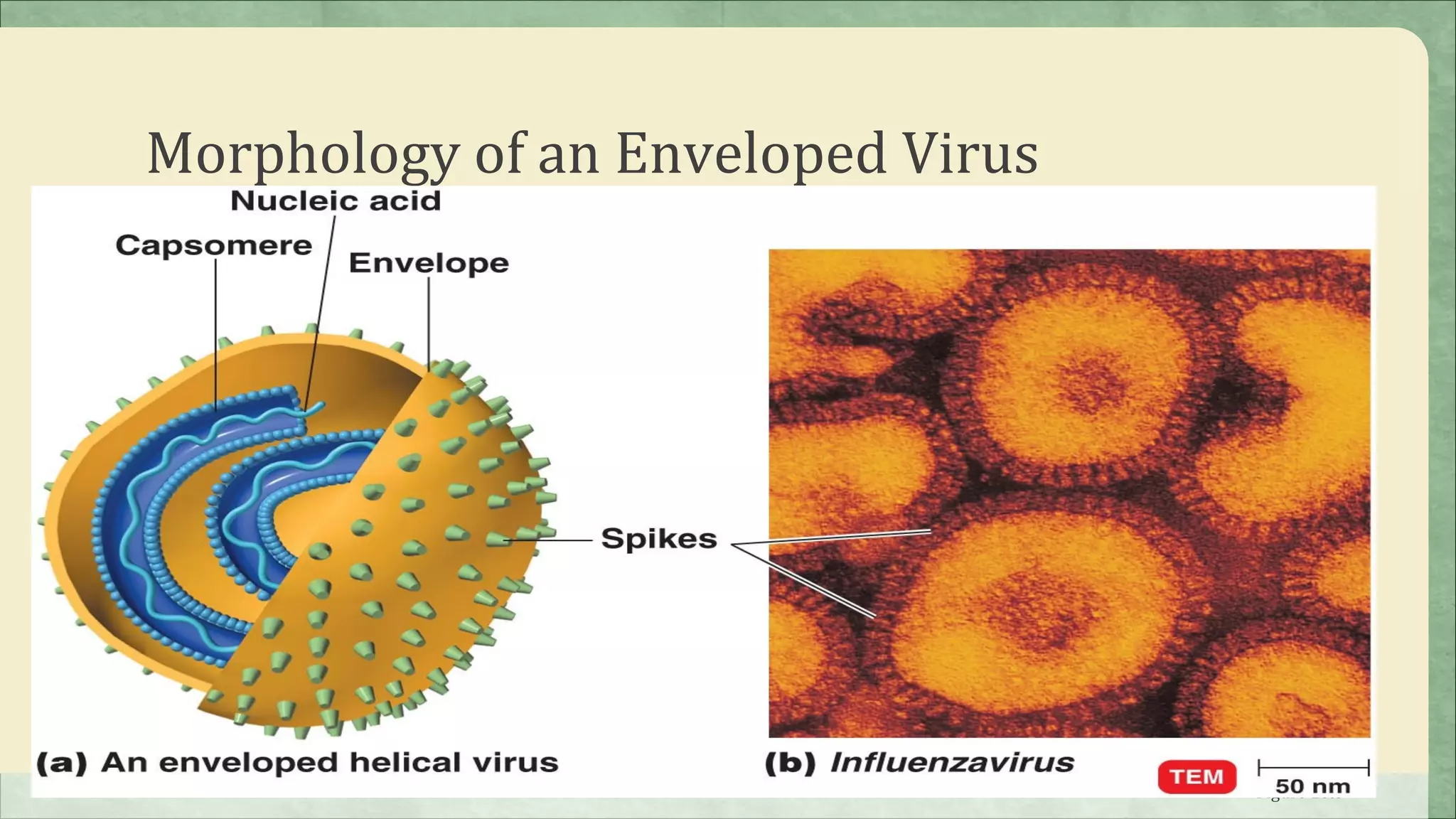
Morphology of an Enveloped Virus


                                   Figure 13.3
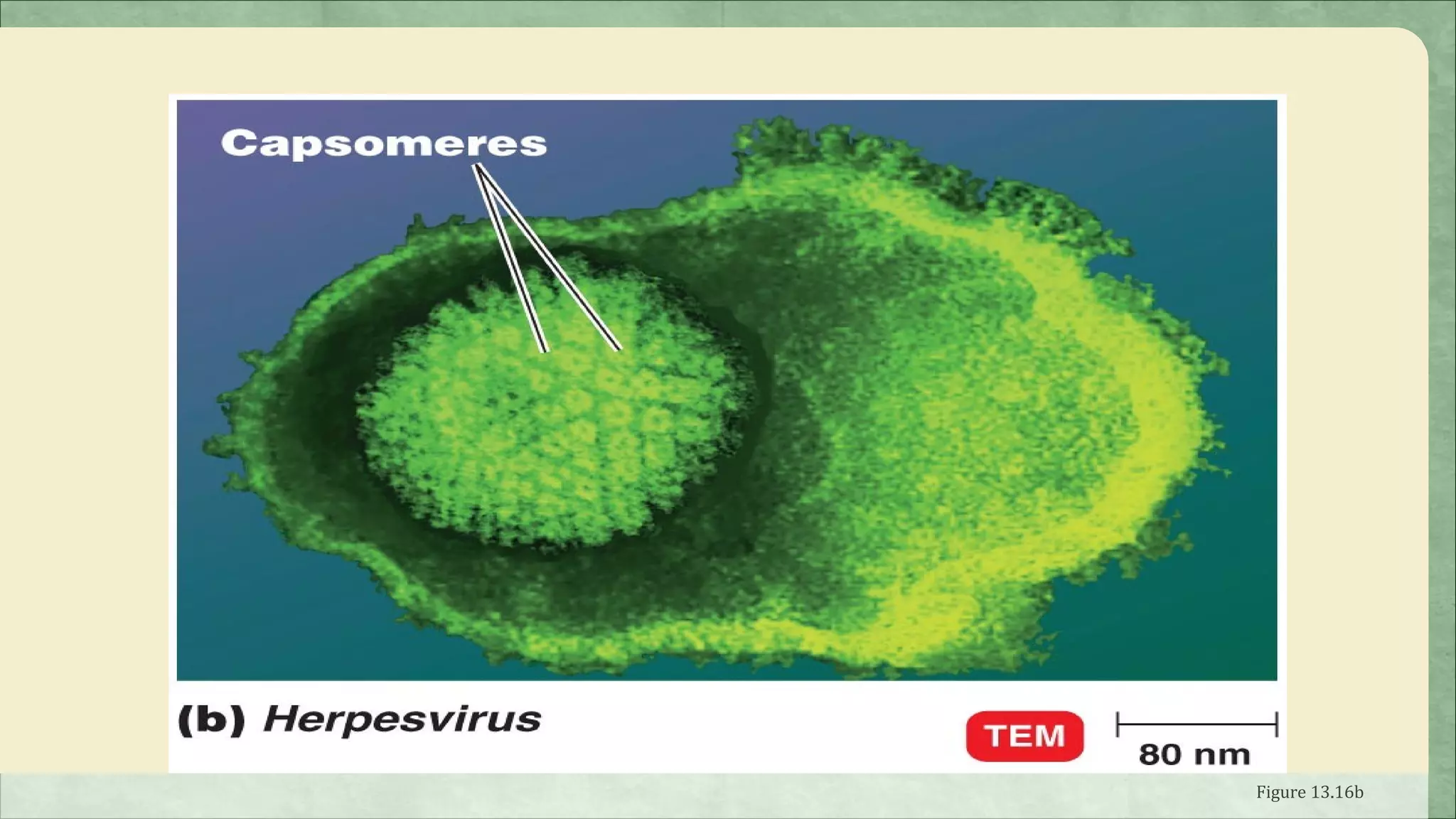
Enveloped Viruses


                    Figure 13.16b
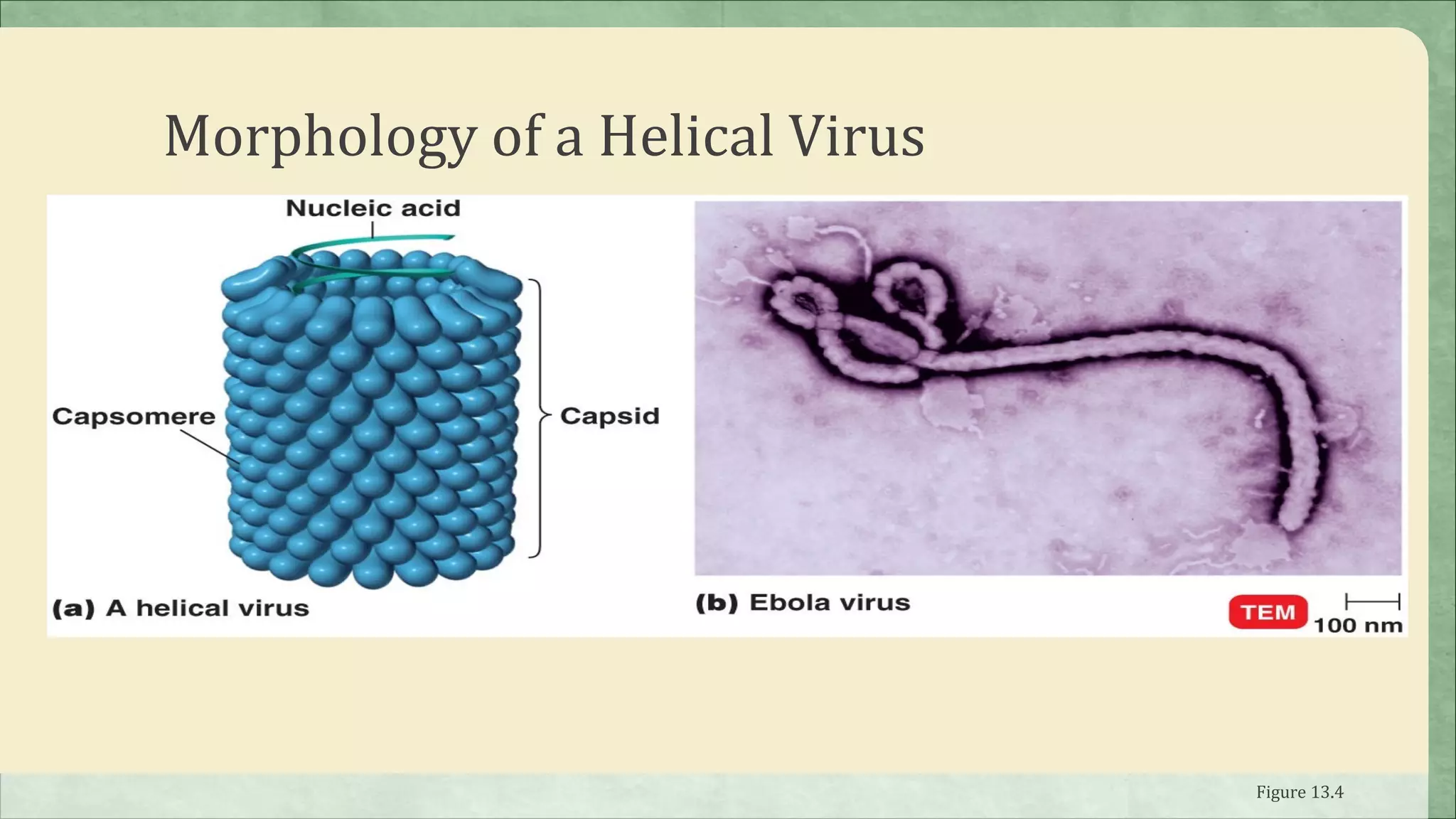
Morphology of a Helical Virus


                                Figure 13.4
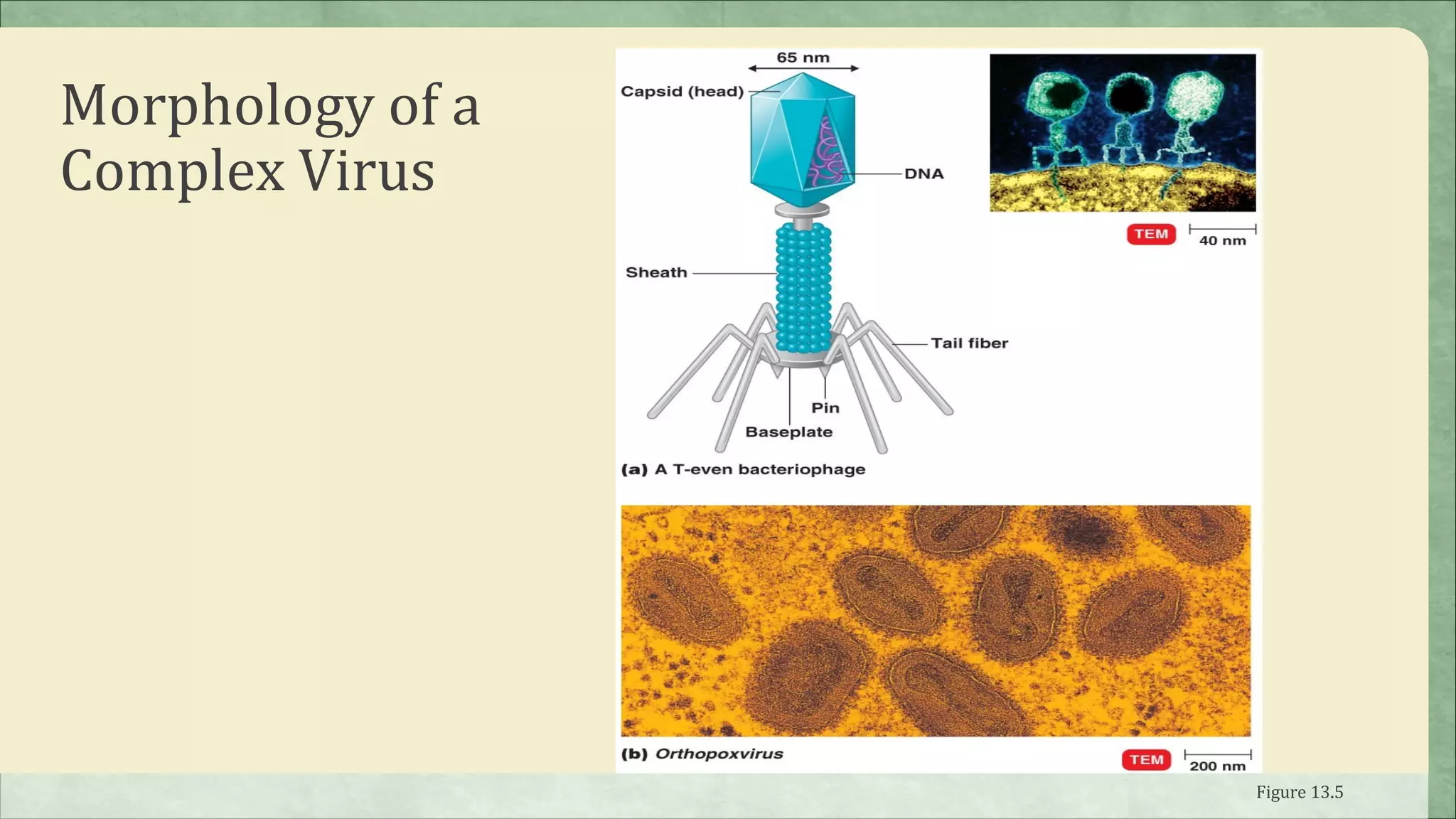
Morphology of a
Complex Virus


                  Figure 13.5
Viral shape
• Helical capsid: consists of a ribbonlike protein that
forms a spiral around the nucleic acid
• Polyhedral capsid: many-sided, and one of the most
common polyhedral capsid shapes is the icosahedron
• Some viruses have a bullet-shaped capsid and some are
spherical
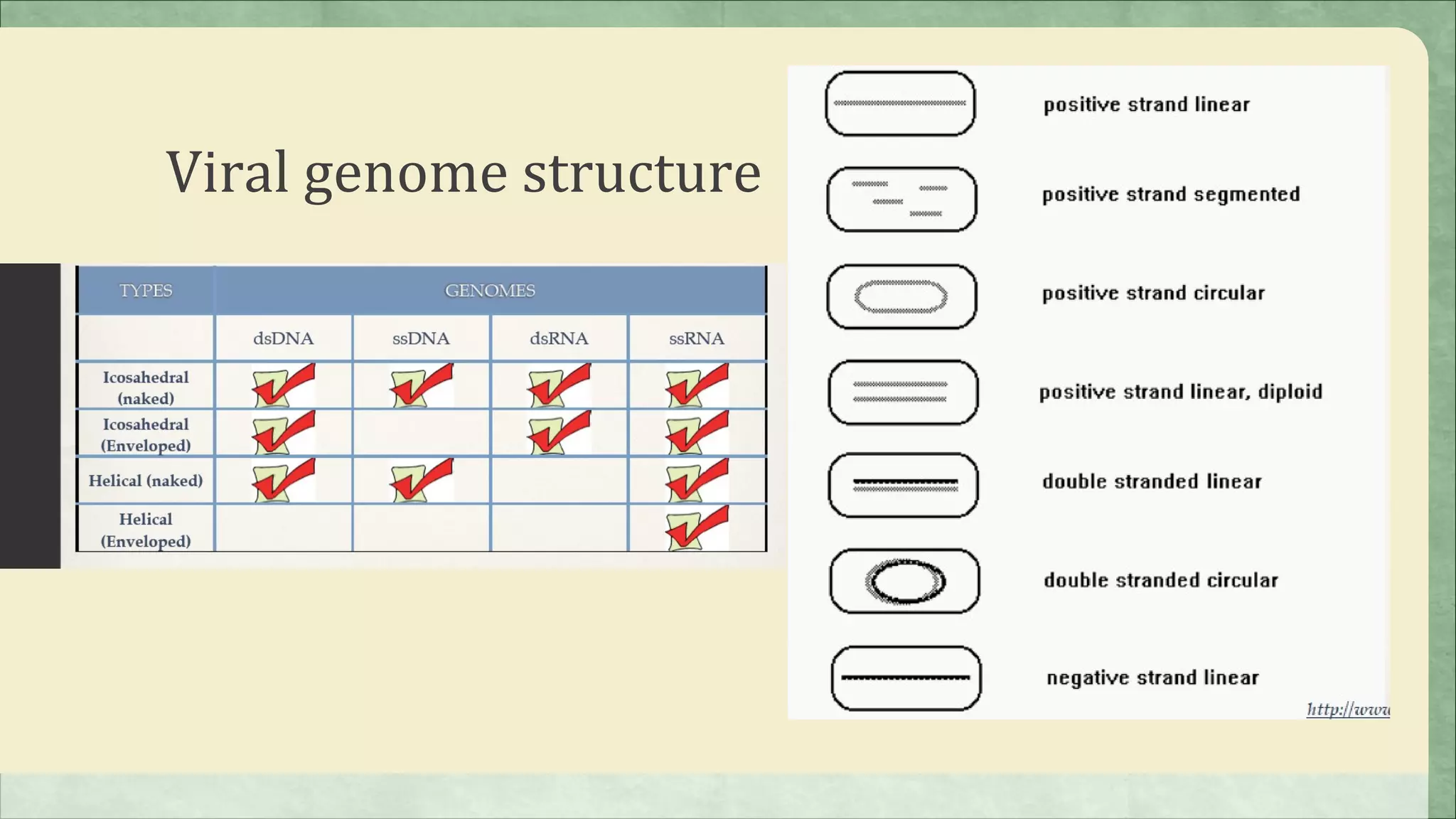
Viral genome structure
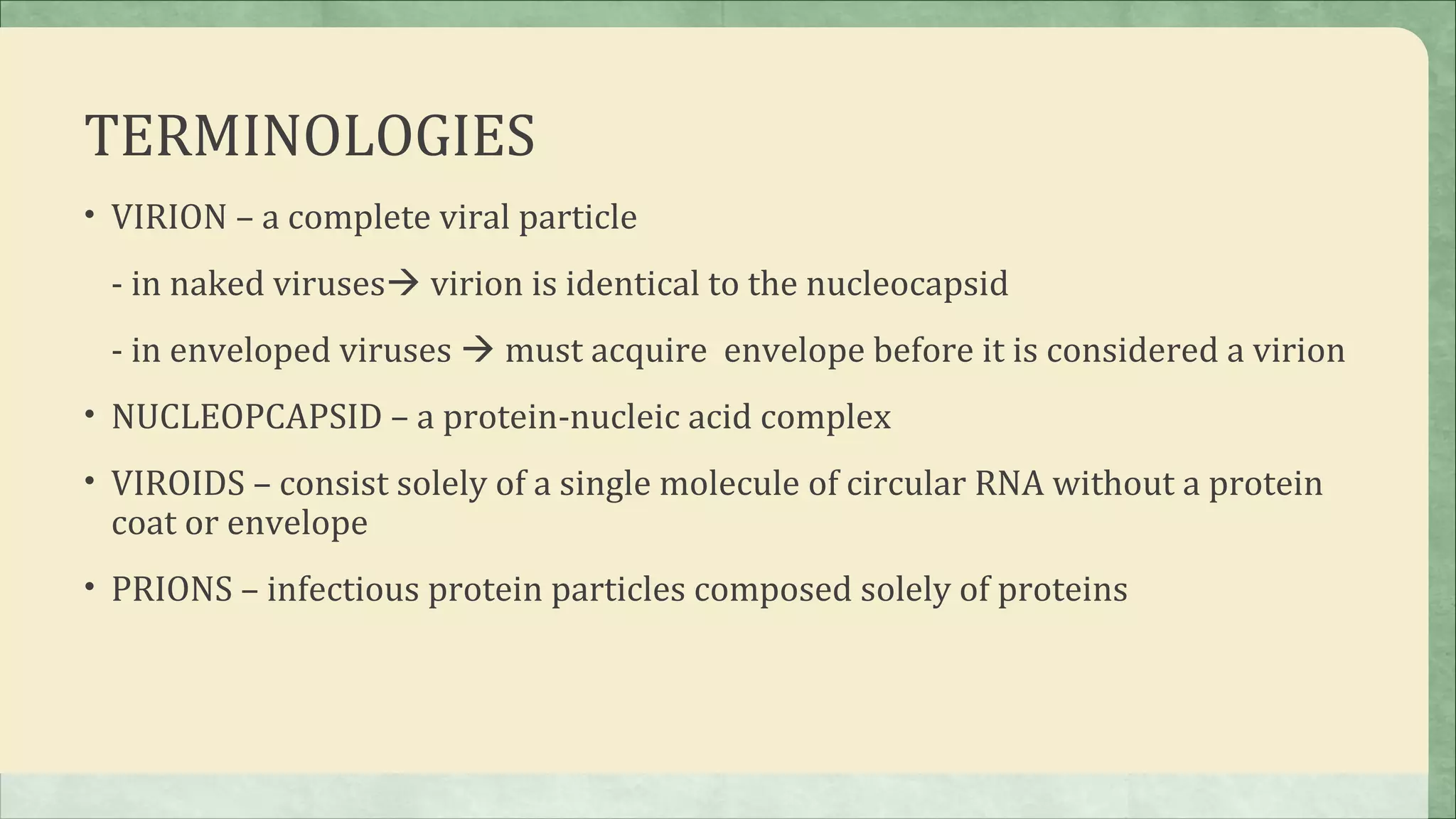
TERMINOLOGIES
• VIRION – a complete viral particle

 - in naked viruses virion is identical to the nucleocapsid
 - in enveloped viruses  must acquire envelope before it is considered a virion
• NUCLEOPCAPSID – a protein-nucleic acid complex

• VIROIDS – consist solely of a single molecule of circular RNA without a protein
 coat or envelope
• PRIONS – infectious protein particles composed solely of proteins
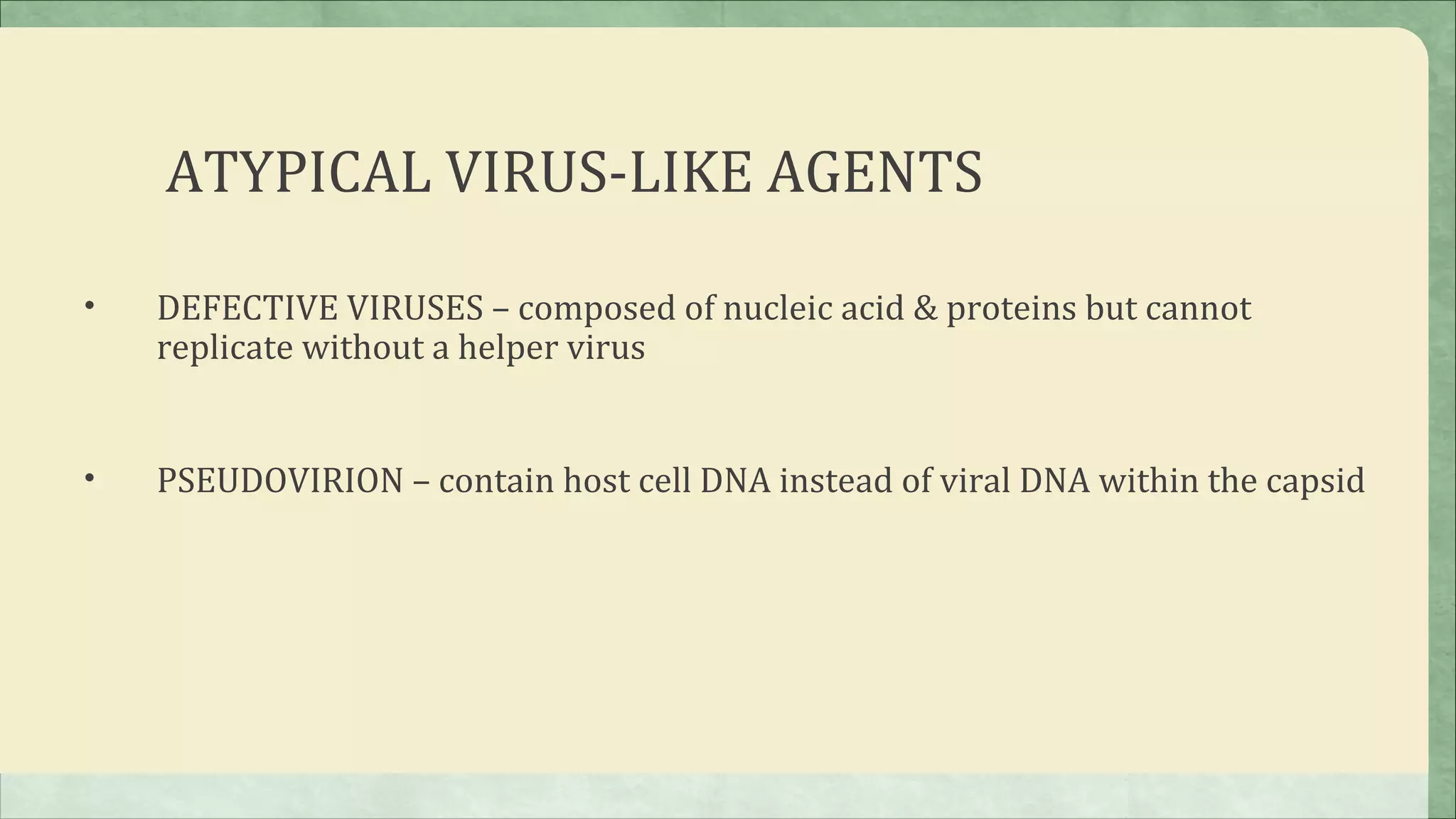
ATYPICAL VIRUS-LIKE AGENTS

•   DEFECTIVE VIRUSES – composed of nucleic acid & proteins but cannot
    replicate without a helper virus


•   PSEUDOVIRION – contain host cell DNA instead of viral DNA within the capsid
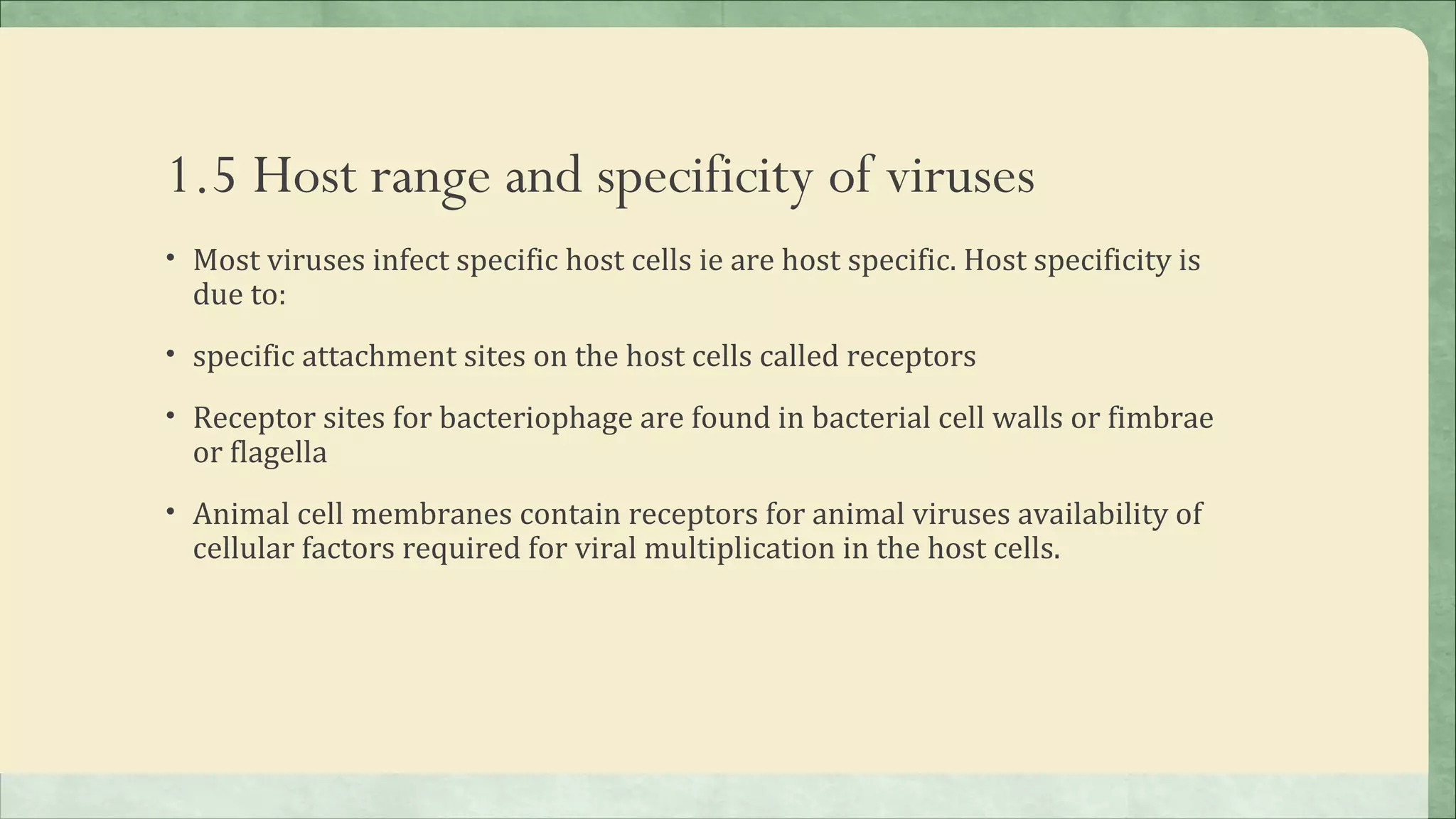
1.5 Host range and specificity of viruses
• Most viruses infect specific host cells ie are host specific. Host specificity is
  due to:
• specific attachment sites on the host cells called receptors

• Receptor sites for bacteriophage are found in bacterial cell walls or fimbrae
  or flagella
• Animal cell membranes contain receptors for animal viruses availability of
  cellular factors required for viral multiplication in the host cells.
• The end

Chapter 1 introduction to virus

  • 1.
    Chapter 1 Introductionto virus Prepared by Miss Putri Shareen Binti Rosman
  • 2.
    Learning Objective Differentiate a virus from a bacterium. Identify the viral components Briefly discuss the viral morphology
  • 3.
    1.1 Definition ofviruses • Are infectious agents that are too small to be seen with a light microscope . • Acellular (absence of nucleus, organelles, cytoplasm,plasma membrane). • No ATP generating metabolism • Do not undergo binary fission • Sensitive to interferon
  • 4.
    1.2 General Characteristicsof Viruses • Obligatory intracellular parasites • Contain DNA or RNA • Contain a protein coat • Some are enclosed by an envelope • Some viruses have spikes • Most viruses infect only specific types of cells in one host • Host range is determined by specific host attachment sites and cellular factors
  • 5.
    1.2 General characteristics •Viruses replicate through replication of their nucleic acid and synthesis of the viral protein. • Viruses do not multiply in chemically defined media • Some viruses have enzymes inside the virion. All ss- RNA viruses with negative polarity have the enzyme transcriptase ( RNA dependent RNA polymerase) inside virions. • Retroviruses and hepatitis B virus contain the enzyme reverse transcriptase.
  • 6.
    1.3 Components ofviruses • Nucleic Acid Core (DNA or RNA) • Capsid: Surrounding protein coat • Envelope: Some viruses have this additional surrounding lipid bilayer membrane • Virion: A complete virus particle
  • 7.
    Function Viruses use theirnucleic acids (genome) to replicate themselves in host cells Capsids also play a key role in the attachment of some viruses. Each capsid is composed of protein subunits called capsomeres. Enveloped viruses have a typical bilayer membrane outside their capsids and acquire their envelope after they are assembled in a host cell and “bud” through host’s membrane. Helps to protect from drying (enhances transmission),makes virus more susceptible to chemical agents that dissolve lipids and helps to attach to host cell membrane. Nucleocapsid comprises the viral genome together with the capsid
  • 8.
    Naked: viruses witha nucleocapsid and no envelope Spikes: projections that extend from the viral envelope that may aid in attachment to the host cell Glycoprotein: these surface projections serve to attach virions to specific receptor sites on susceptible host cell surfaces
  • 9.
  • 11.
  • 12.
    1.4 Viral morphology •Polyhedral viruses • Enveloped viruses • Helical viruses • Complex viruses
  • 13.
    Morphology of aPolyhedral Virus Figure 13.2
  • 14.
    Polyhedral Viruses Figure 13.16a
  • 15.
    Morphology of anEnveloped Virus Figure 13.3
  • 16.
    Enveloped Viruses Figure 13.16b
  • 17.
    Morphology of aHelical Virus Figure 13.4
  • 18.
    Morphology of a ComplexVirus Figure 13.5
  • 19.
    Viral shape • Helicalcapsid: consists of a ribbonlike protein that forms a spiral around the nucleic acid • Polyhedral capsid: many-sided, and one of the most common polyhedral capsid shapes is the icosahedron • Some viruses have a bullet-shaped capsid and some are spherical
  • 20.
  • 21.
    TERMINOLOGIES • VIRION –a complete viral particle - in naked viruses virion is identical to the nucleocapsid - in enveloped viruses  must acquire envelope before it is considered a virion • NUCLEOPCAPSID – a protein-nucleic acid complex • VIROIDS – consist solely of a single molecule of circular RNA without a protein coat or envelope • PRIONS – infectious protein particles composed solely of proteins
  • 22.
    ATYPICAL VIRUS-LIKE AGENTS • DEFECTIVE VIRUSES – composed of nucleic acid & proteins but cannot replicate without a helper virus • PSEUDOVIRION – contain host cell DNA instead of viral DNA within the capsid
  • 23.
    1.5 Host rangeand specificity of viruses • Most viruses infect specific host cells ie are host specific. Host specificity is due to: • specific attachment sites on the host cells called receptors • Receptor sites for bacteriophage are found in bacterial cell walls or fimbrae or flagella • Animal cell membranes contain receptors for animal viruses availability of cellular factors required for viral multiplication in the host cells.
  • 24.