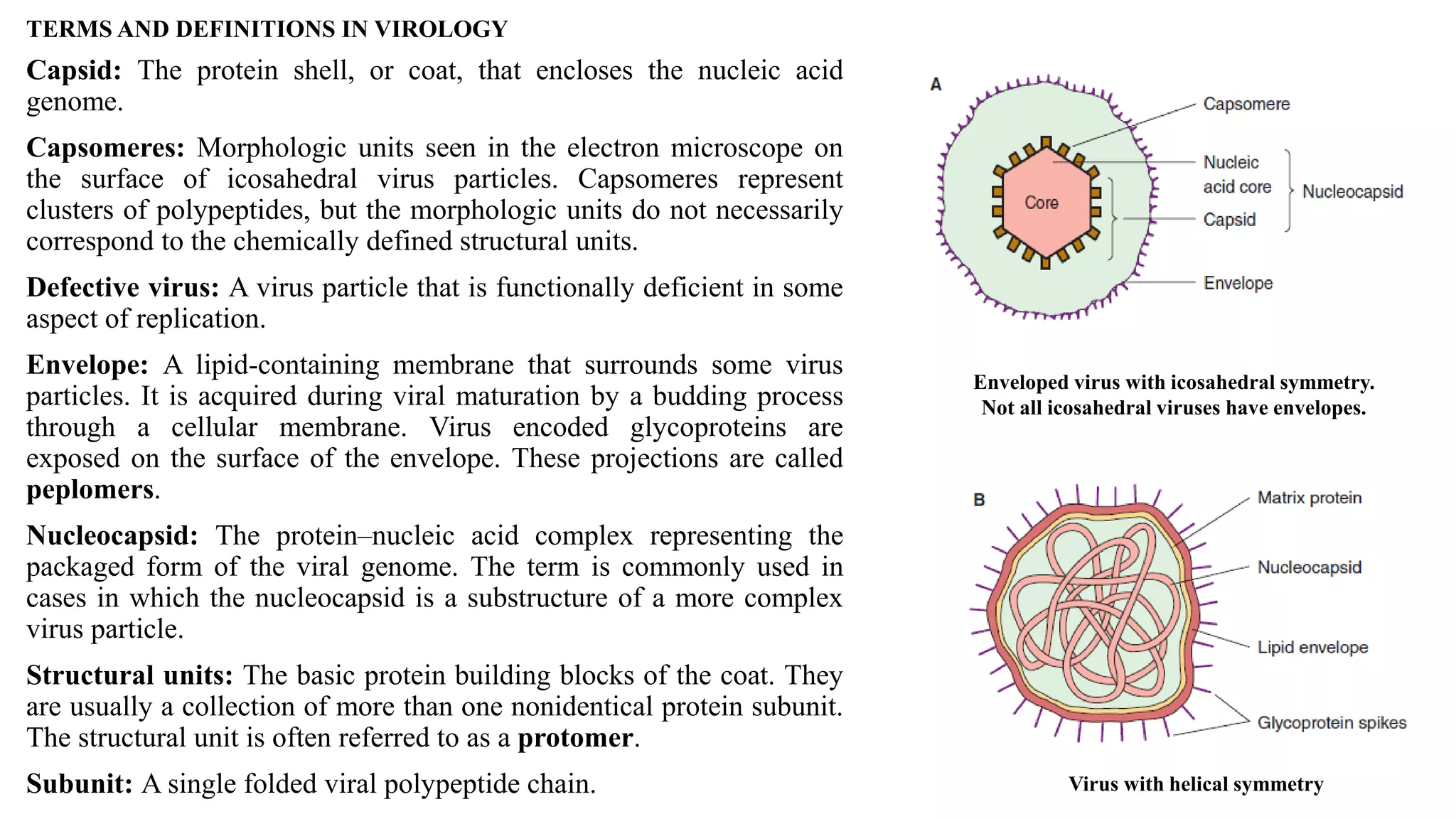
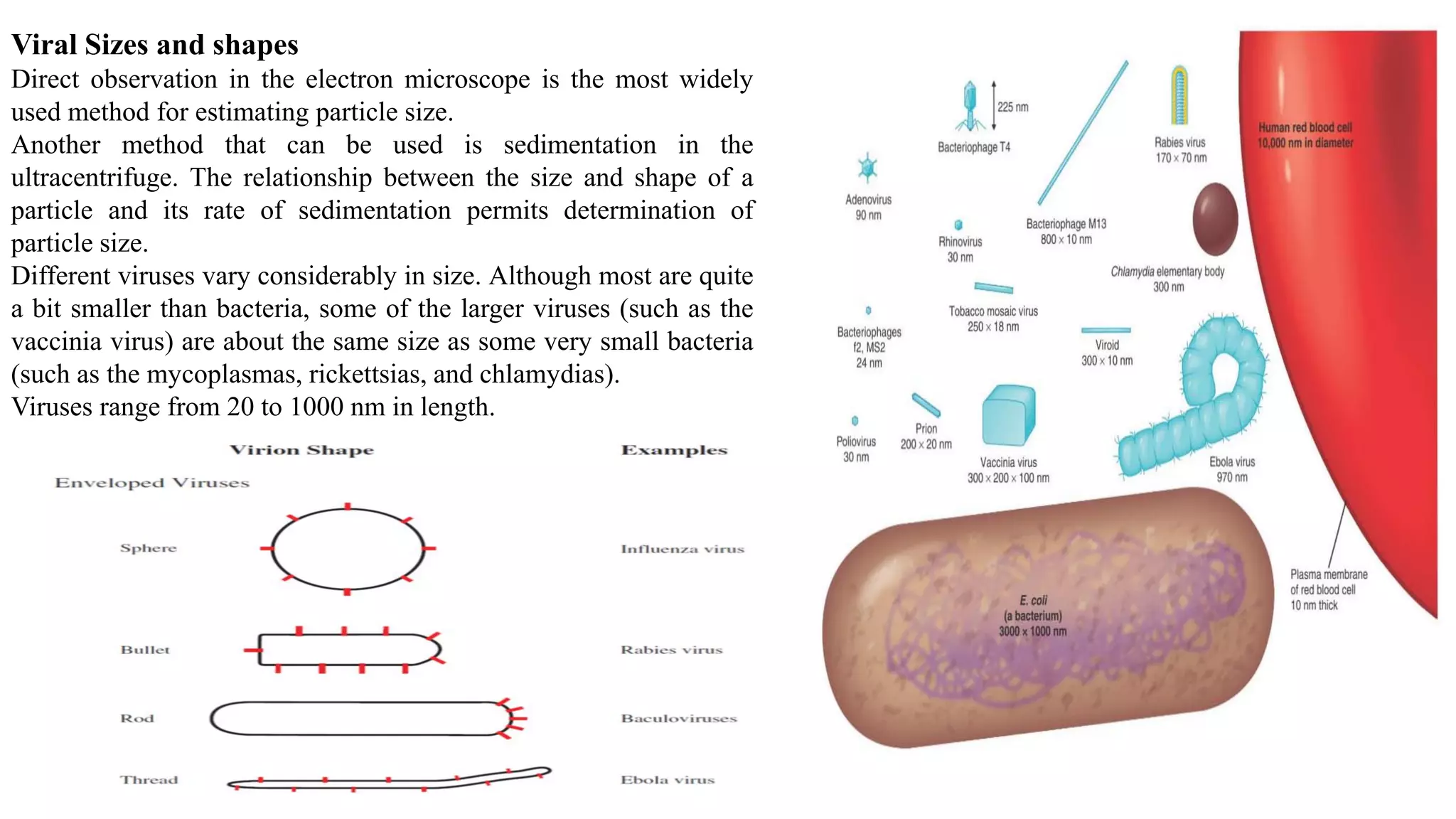
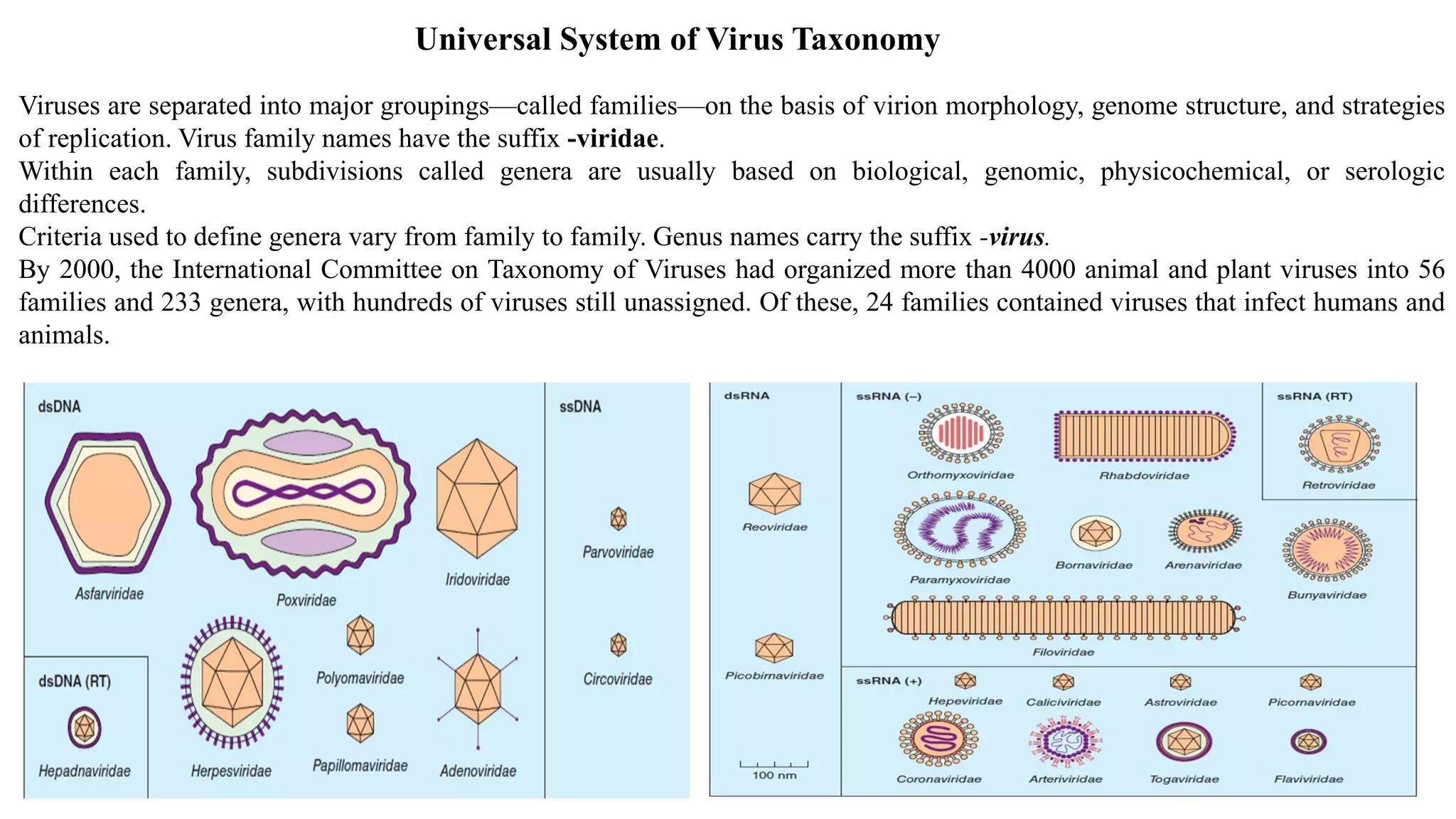
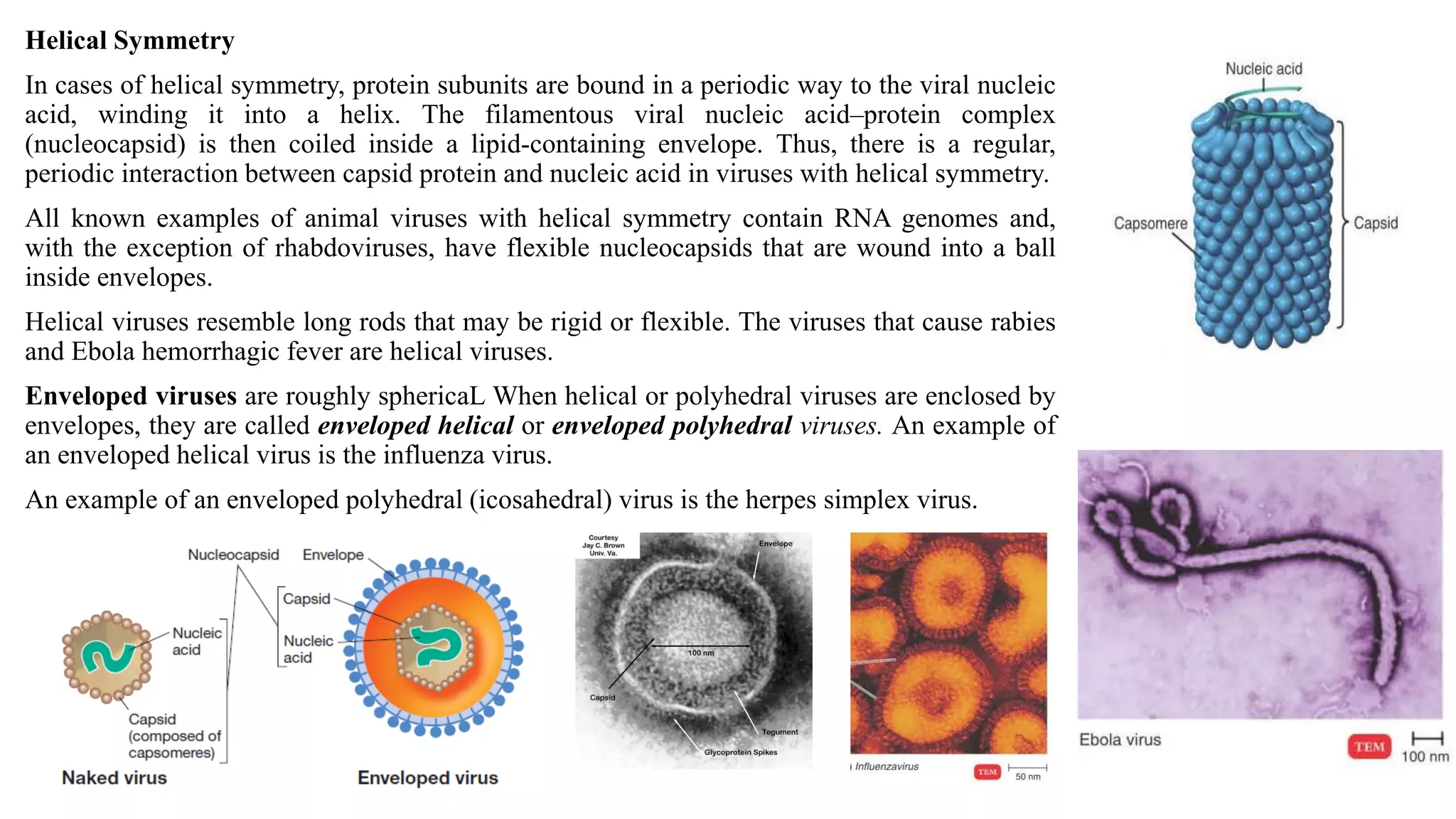
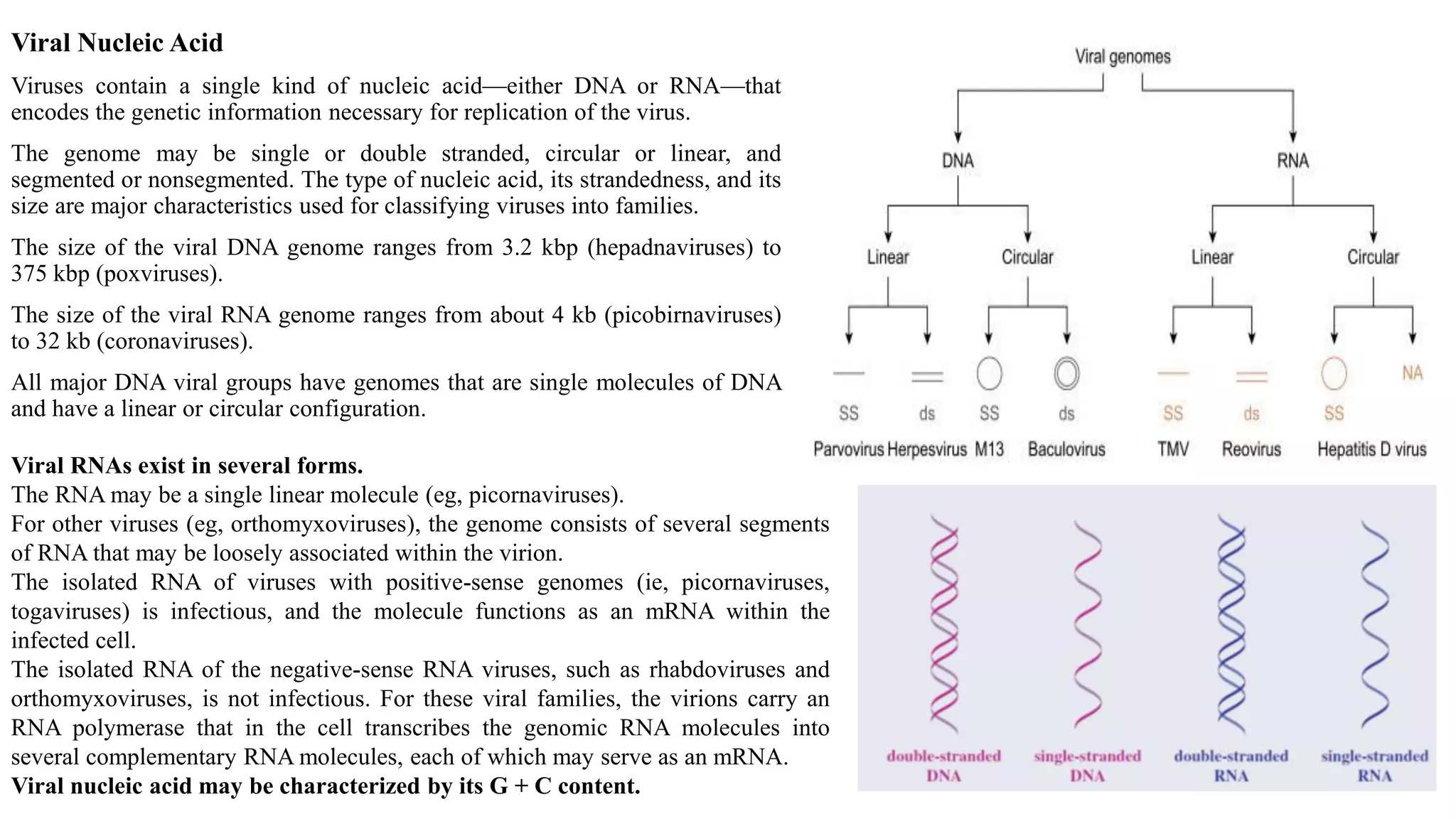
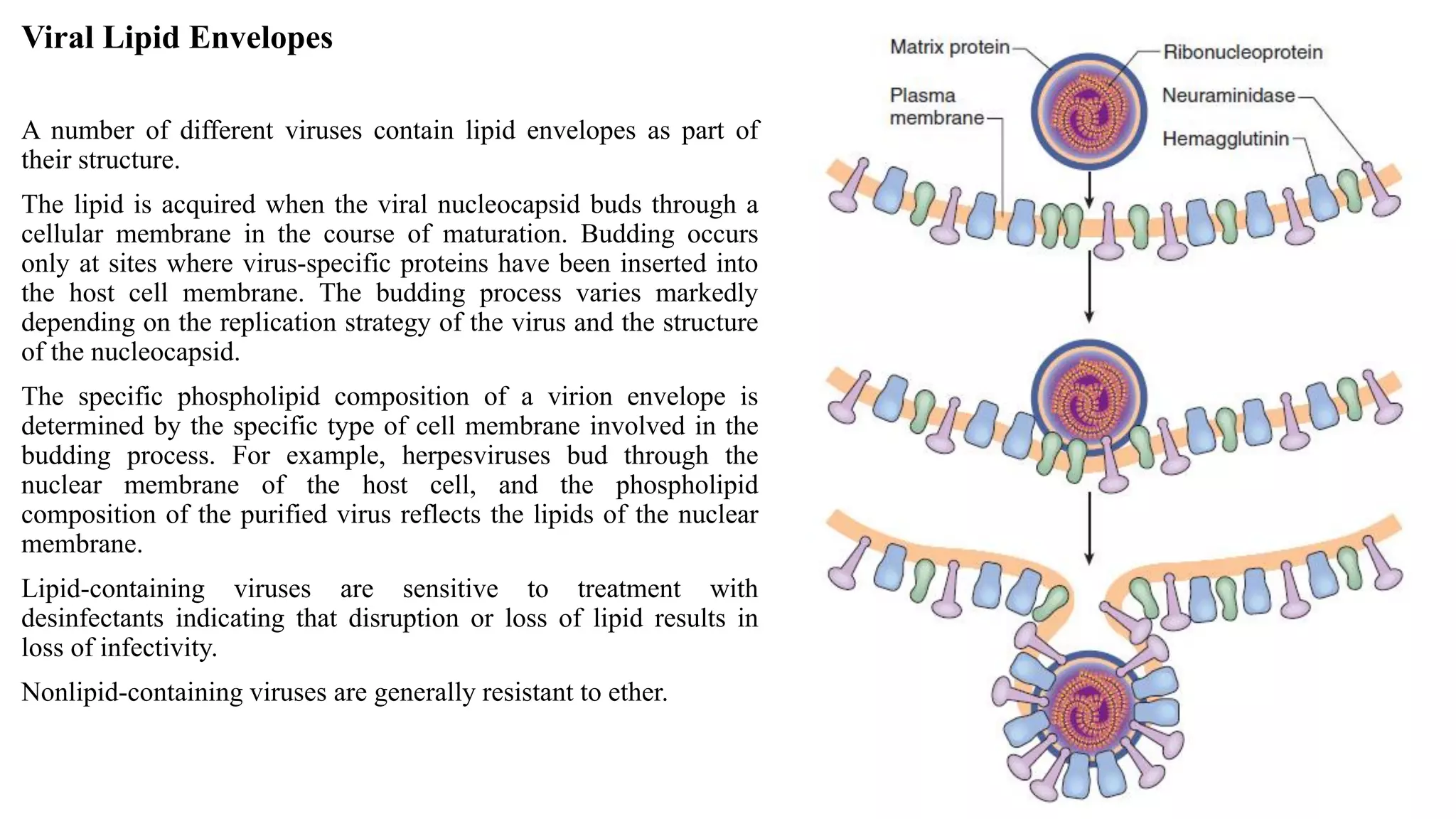
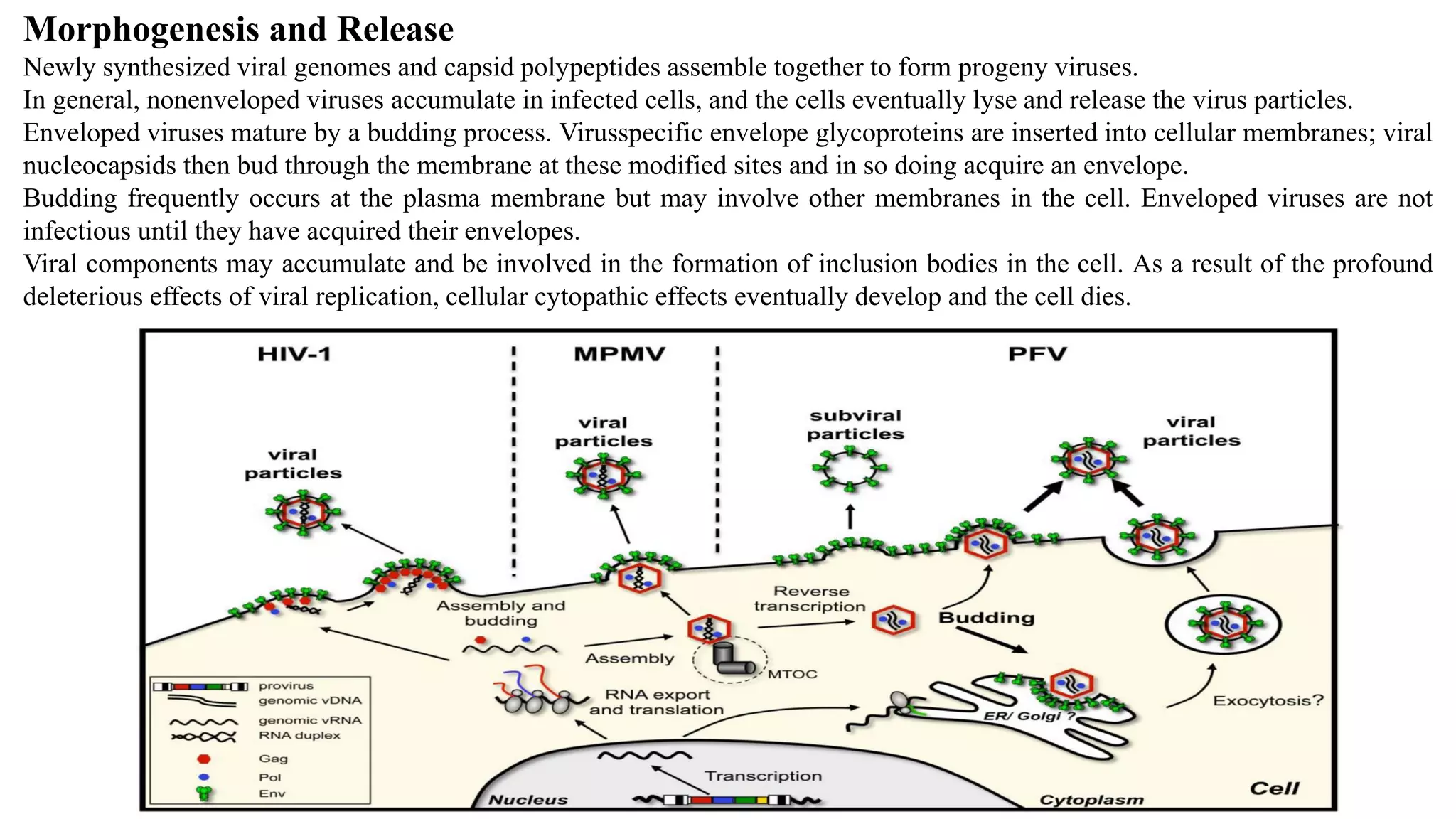
Viruses range greatly in size and structure. They contain nucleic acid that is protected by a protein coat called a capsid. Some viruses have an additional lipid envelope surrounding the capsid that is acquired from the host cell. The capsid can have icosahedral or helical symmetry. Viruses require a living host cell to replicate and hijack the host's cellular machinery to produce new virus particles. Their structure allows them to infect host cells and their genetic material provides instructions to commandeer the host's resources for viral replication.