CHAIN OF INFECTION:
The chain of infection is the process
by which a pathogen spreads from
one host to the next.
The spread of an infection within a community is
described as a “chain,” several interconnected steps
that describe how a pathogen moves about.
HISTORY OF INFECTION CONTROL
• Infection control refers to the policy and procedures
implemented to control and minimize the dissemination
of infections in hospitals and other healthcare settings
with the main purpose of reducing infection rates.
• Infection control as a formal entity was established in
the early 1950s in the United States. By the late 1950s
and 1960s, a small number of hospitals began to
recognize healthcare-associated infections (HAIs) and
implemented some of the infection control concepts.
• This activity reviews the types of infection control
methods and their indications and highlights the role of
the interprofessional team in following principles of
infection control to improve outcomes.
FATHER OF INFECTION CONTROL:
contribution was recognized
20 years after his death as the medical
world became more receptive and wiser
after germ theory of disease by Louis
Pasteur and concept of antisepsis by Joseph
Lister. was hailed as the
the “
and
SOURCE OF INFECTION
• Nose, mouth, or eyes to hands to others: Germs can
spread to the hands by sneezing, coughing, or rubbing
the eyes and then can be transferred to other family
members or friends. ...
• Hands to food ...
• Food to hands to food ...
• Infected child to hands to other children ...
• Animals to people...
• The term "germs" refers to the microscopic bacteria,
viruses, fungi, and protozoa that can cause disease......
HOW CHAIN OF REACTION ARE
TRANSMITTED?
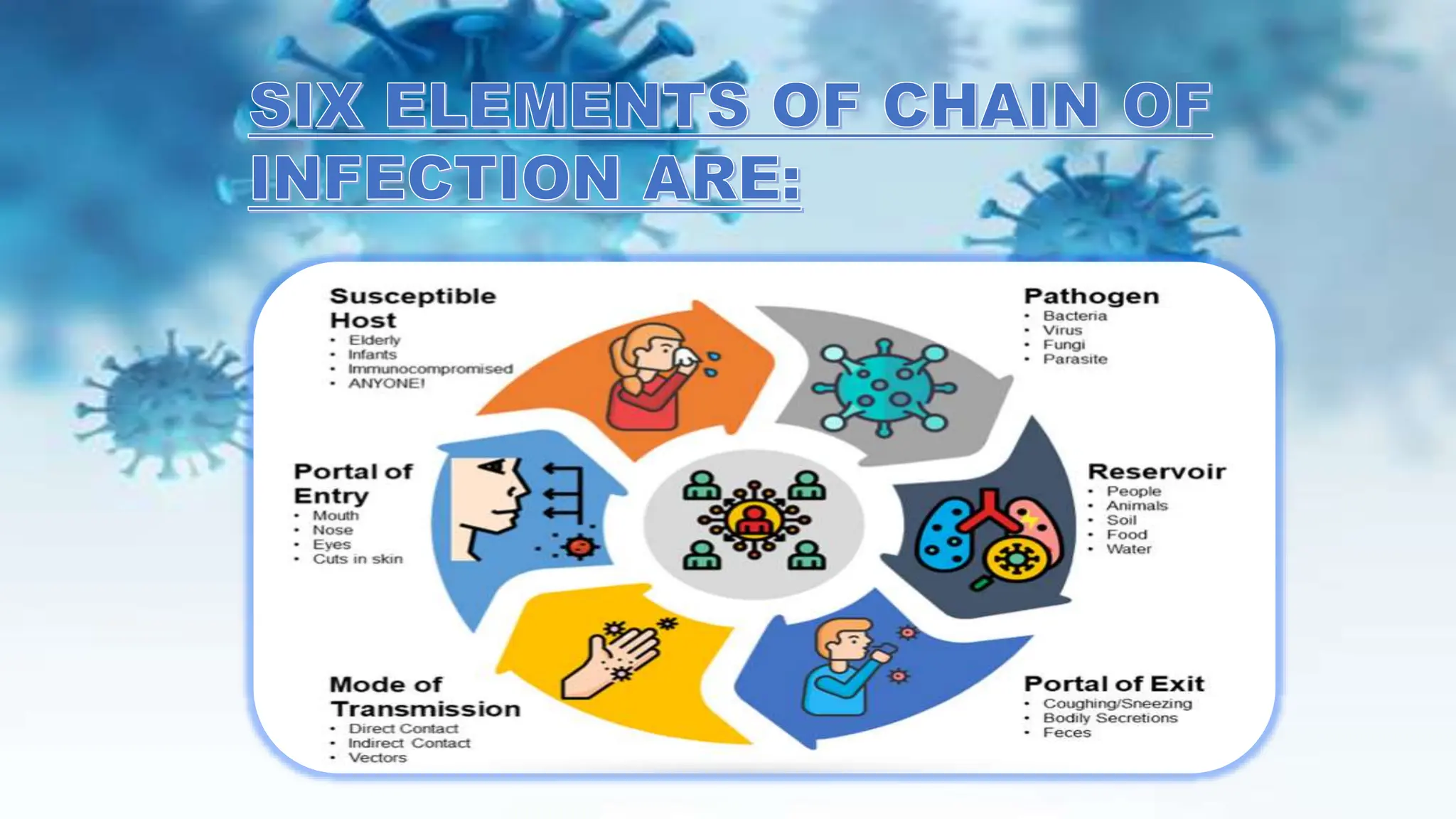
There are two types of transmission:
• Direct transmission:
Direct transmission tends to be instantaneous and occurs
when there is direct contact with the infectious agent.
Example: Skin,Injury
• Indirect transmission:
Indirect transmission tends to be non-instantaneous and
occurs when there is not any direct contact with the
infectious agent.
Examples: Food,Water
chain of infection presesntation including elements.pptx

chain of infection presesntation including elements.pptx

  • 2.
    CHAIN OF INFECTION: Thechain of infection is the process by which a pathogen spreads from one host to the next. The spread of an infection within a community is described as a “chain,” several interconnected steps that describe how a pathogen moves about.
  • 6.
    HISTORY OF INFECTIONCONTROL • Infection control refers to the policy and procedures implemented to control and minimize the dissemination of infections in hospitals and other healthcare settings with the main purpose of reducing infection rates. • Infection control as a formal entity was established in the early 1950s in the United States. By the late 1950s and 1960s, a small number of hospitals began to recognize healthcare-associated infections (HAIs) and implemented some of the infection control concepts. • This activity reviews the types of infection control methods and their indications and highlights the role of the interprofessional team in following principles of infection control to improve outcomes.
  • 7.
    FATHER OF INFECTIONCONTROL: contribution was recognized 20 years after his death as the medical world became more receptive and wiser after germ theory of disease by Louis Pasteur and concept of antisepsis by Joseph Lister. was hailed as the the “ and
  • 8.
    SOURCE OF INFECTION •Nose, mouth, or eyes to hands to others: Germs can spread to the hands by sneezing, coughing, or rubbing the eyes and then can be transferred to other family members or friends. ... • Hands to food ... • Food to hands to food ... • Infected child to hands to other children ... • Animals to people... • The term "germs" refers to the microscopic bacteria, viruses, fungi, and protozoa that can cause disease......
  • 9.
    HOW CHAIN OFREACTION ARE TRANSMITTED? There are two types of transmission: • Direct transmission: Direct transmission tends to be instantaneous and occurs when there is direct contact with the infectious agent. Example: Skin,Injury • Indirect transmission: Indirect transmission tends to be non-instantaneous and occurs when there is not any direct contact with the infectious agent. Examples: Food,Water