1/9/2013
CHM 101


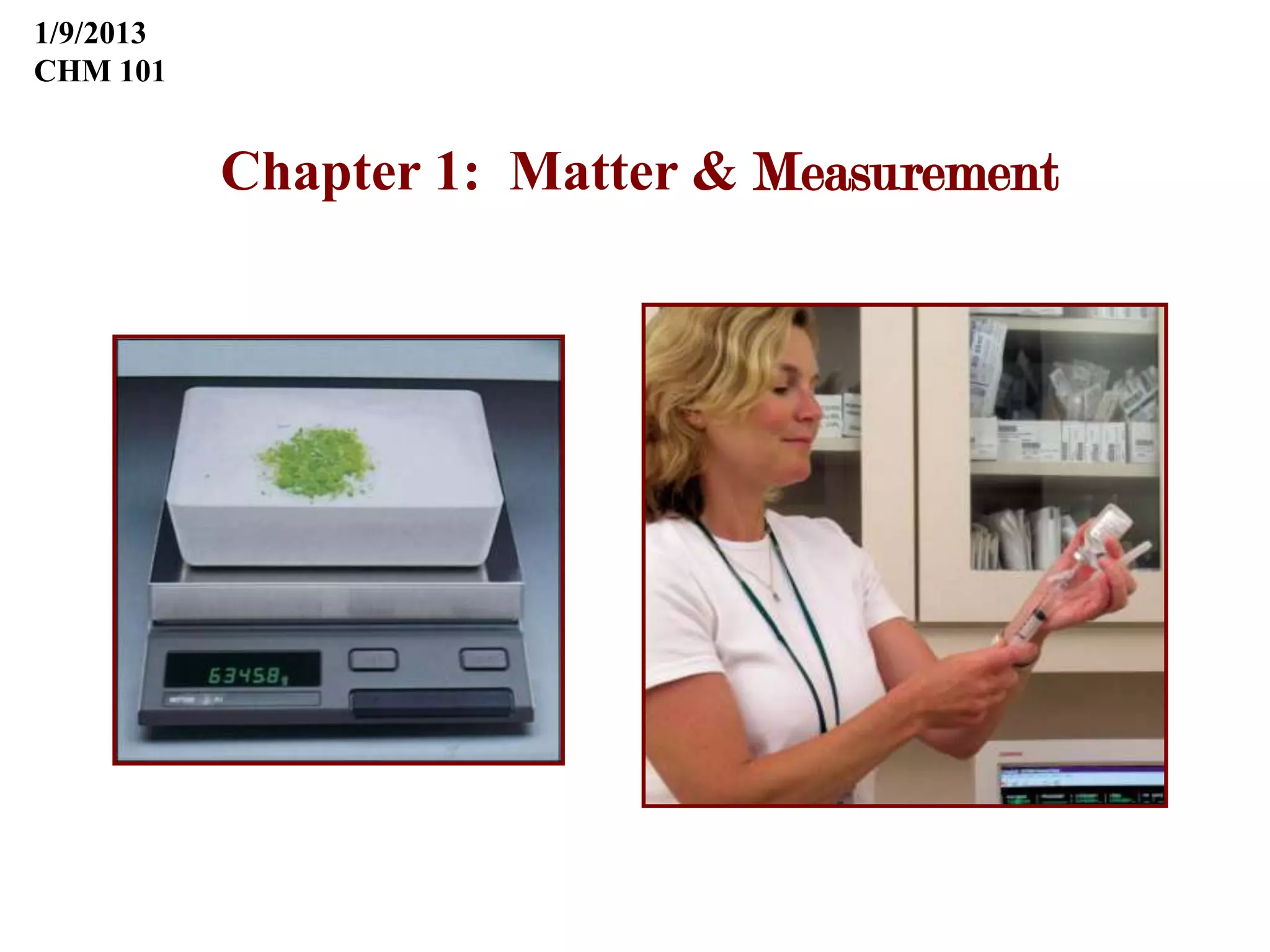
           Chapter 1: Matter & Measurement
Classifying Matter
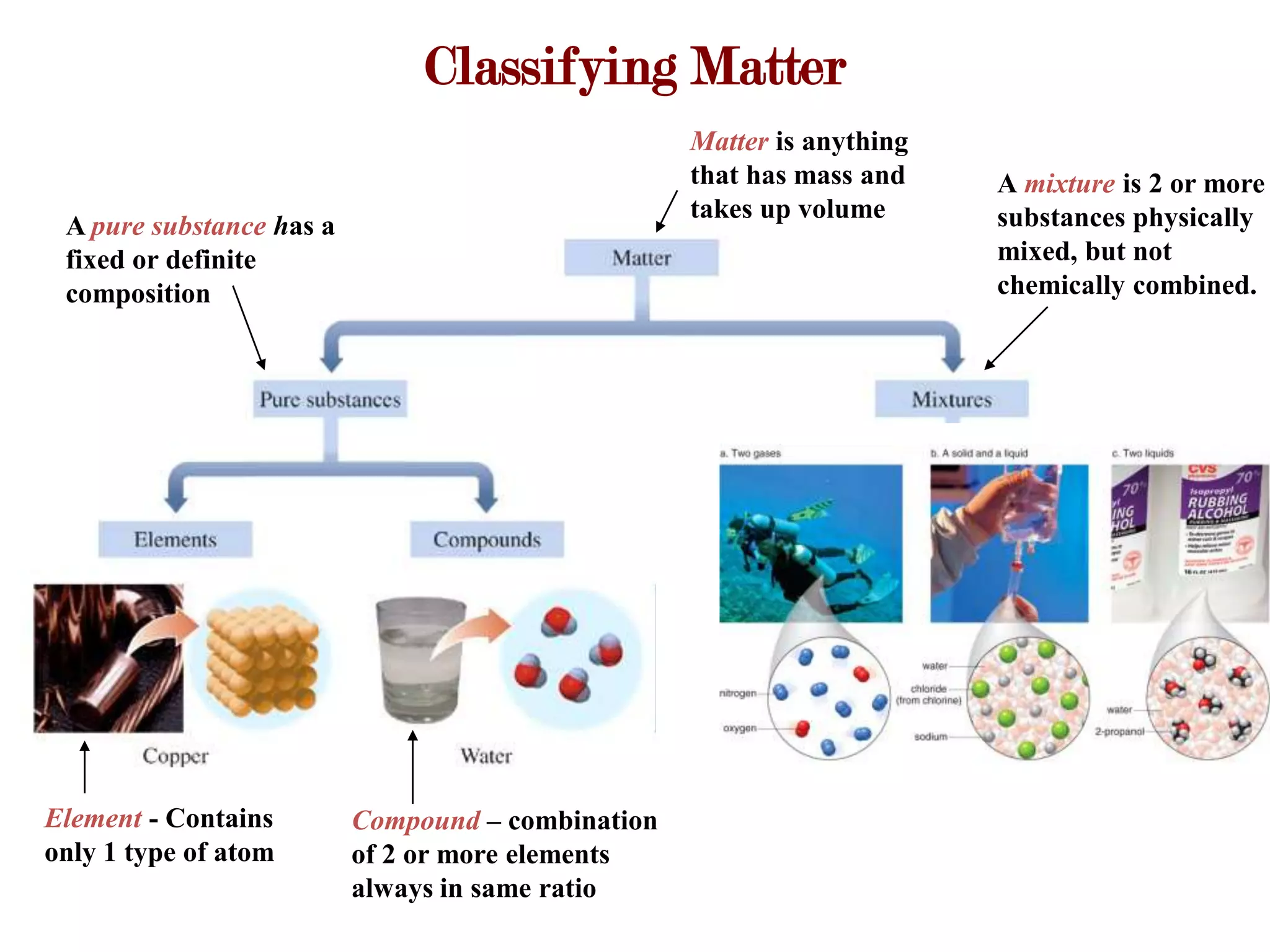
                                                   Matter is anything
                                                   that has mass and    A mixture is 2 or more
                                                   takes up volume      substances physically
 A pure substance has a
 fixed or definite                                                      mixed, but not
 composition                                                            chemically combined.


Element - Contains        Compound – combination
only 1 type of atom       of 2 or more elements
                          always in same ratio
Classifying Matter
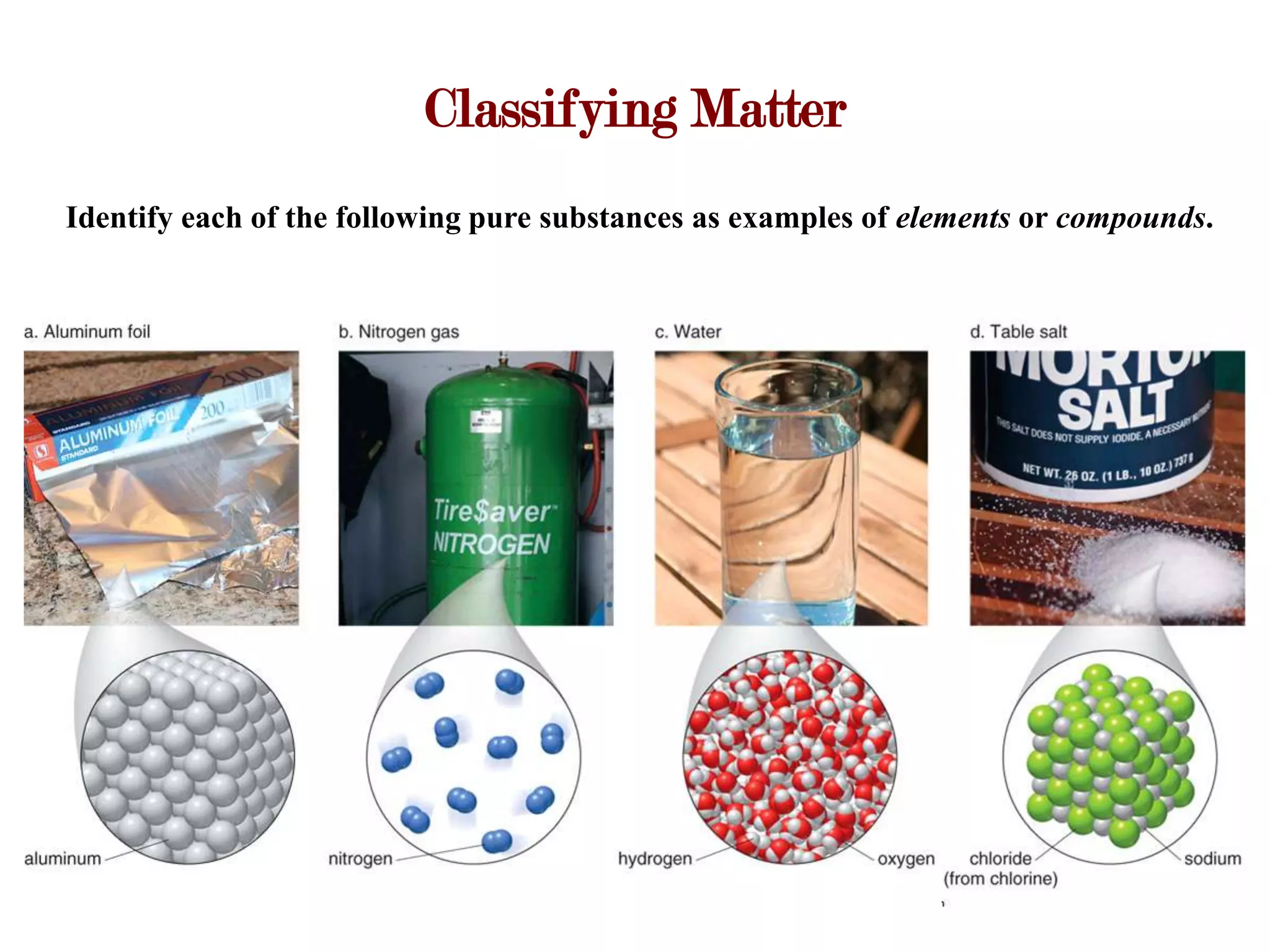
Identify each of the following pure substances as examples of elements or compounds.
States of Matter
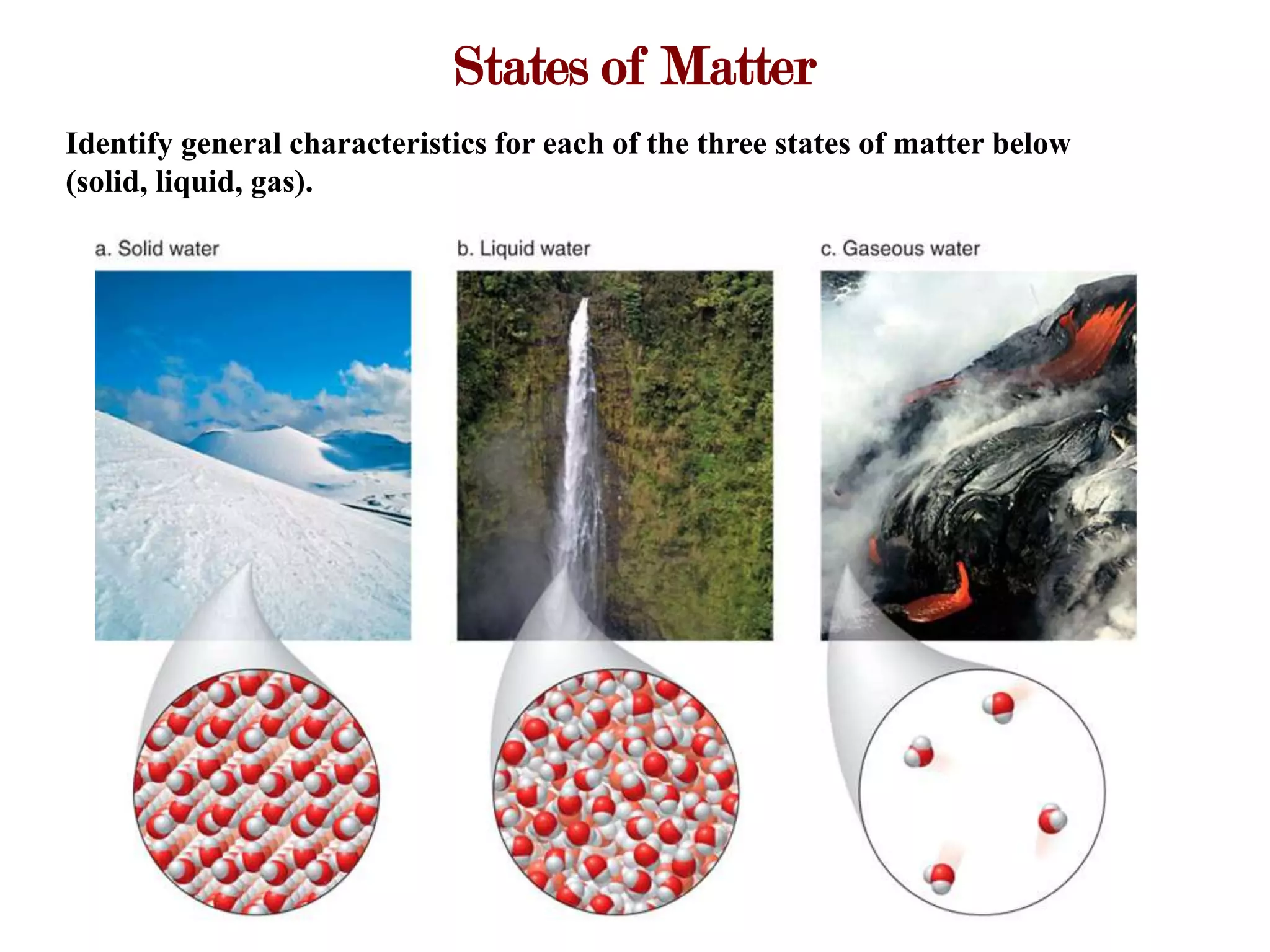
Identify general characteristics for each of the three states of matter below
(solid, liquid, gas).
Properties of Matter
Physical Changes
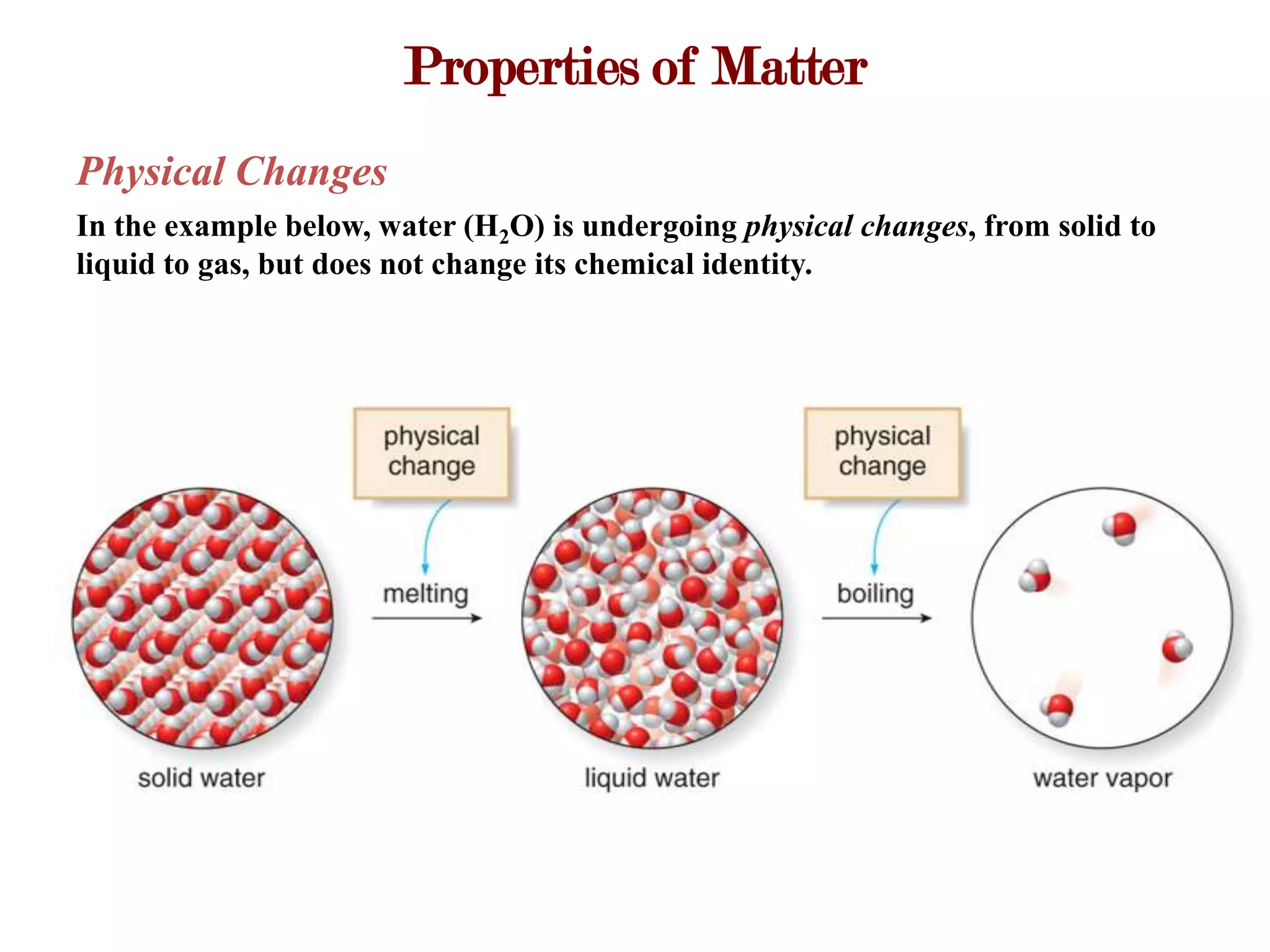
In the example below, water (H2O) is undergoing physical changes, from solid to
liquid to gas, but does not change its chemical identity.
Properties of Matter
Chemical properties identify a substance based on reactions with other substances.


       Sodium (Na) (and other Group 1A Alkali metals) is known to react
       violently with water (H2O).

                                    2Na (s) + 2H2O (l)  2NaOH + H2 (g)


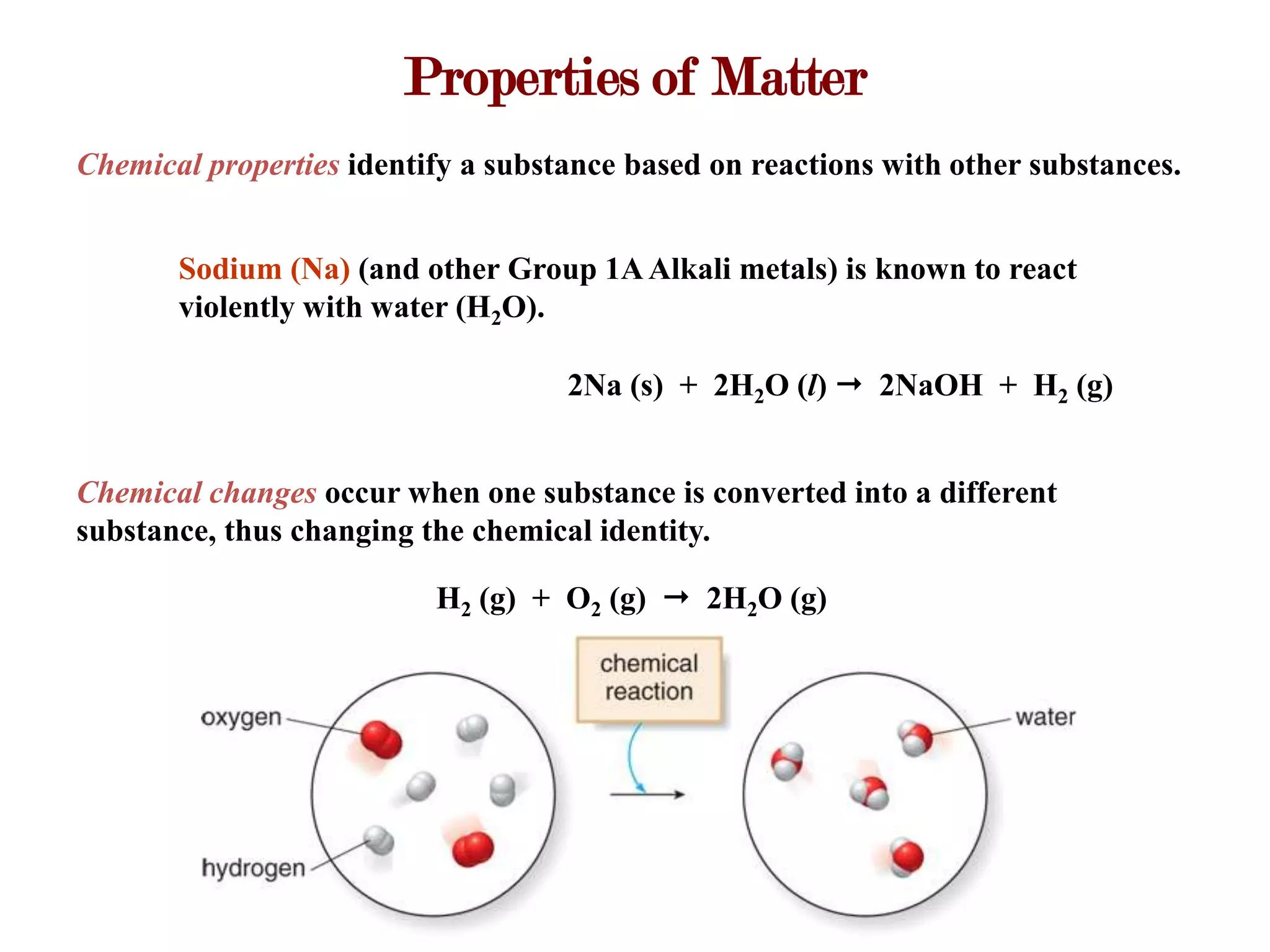
Chemical changes occur when one substance is converted into a different
substance, thus changing the chemical identity.

                          H2 (g) + O2 (g)  2H2O (g)
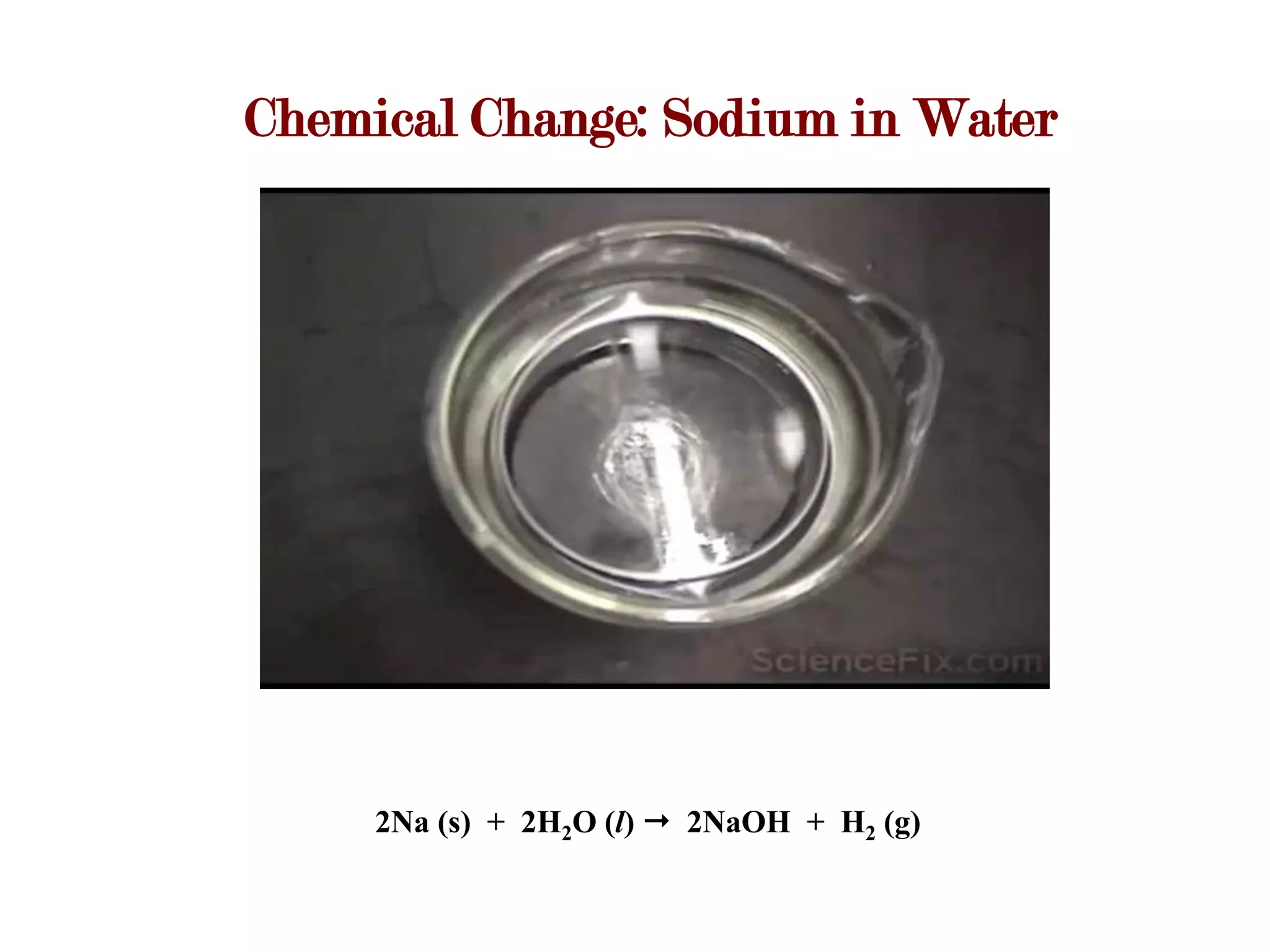
Chemical Change: Sodium in Water


     2Na (s) + 2H2O (l)  2NaOH + H2 (g)
Measurements
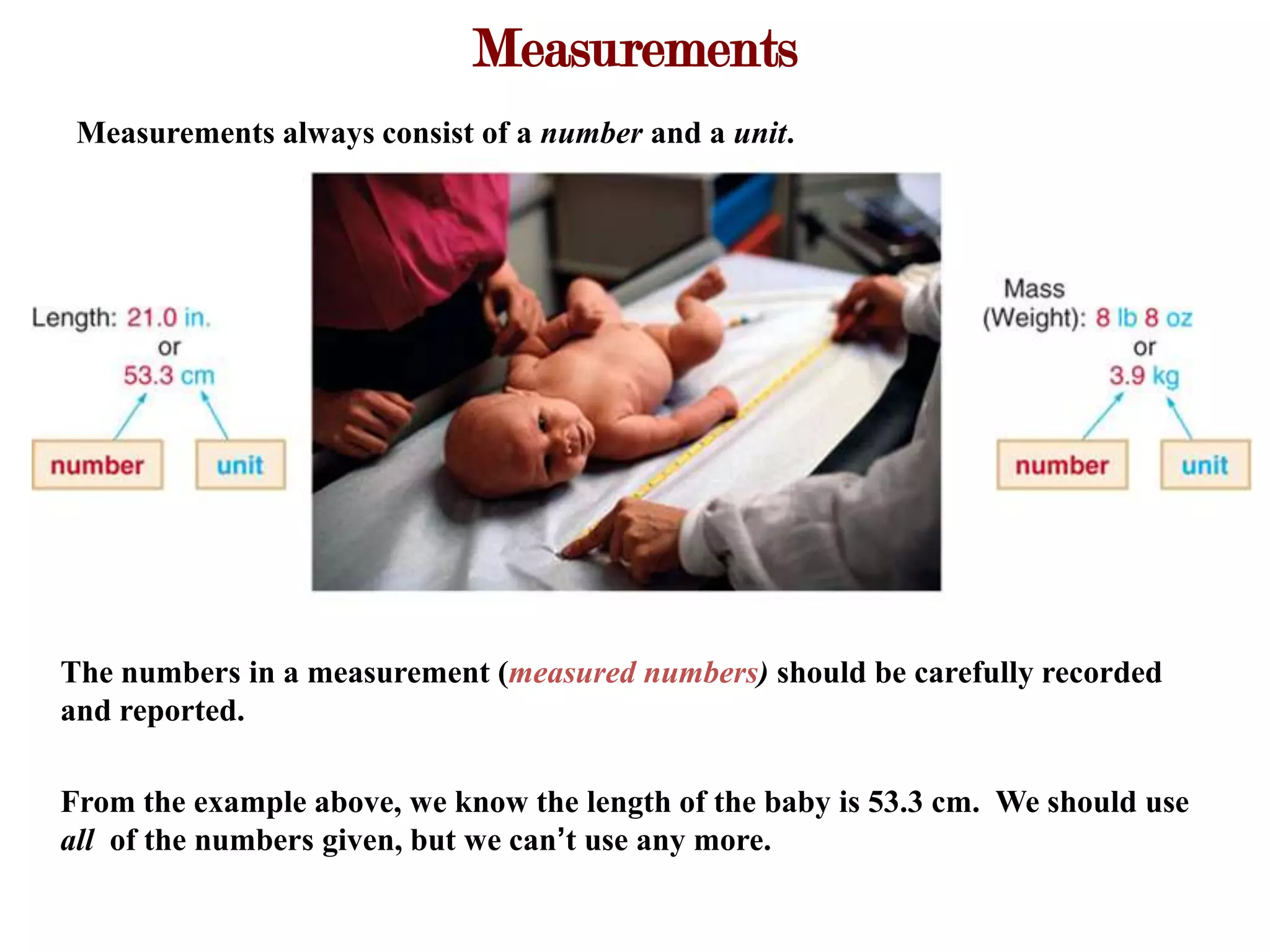
 Measurements always consist of a number and a unit.


The numbers in a measurement (measured numbers) should be carefully recorded
and reported.

From the example above, we know the length of the baby is 53.3 cm. We should use
all of the numbers given, but we can’t use any more.
Units of Measurement


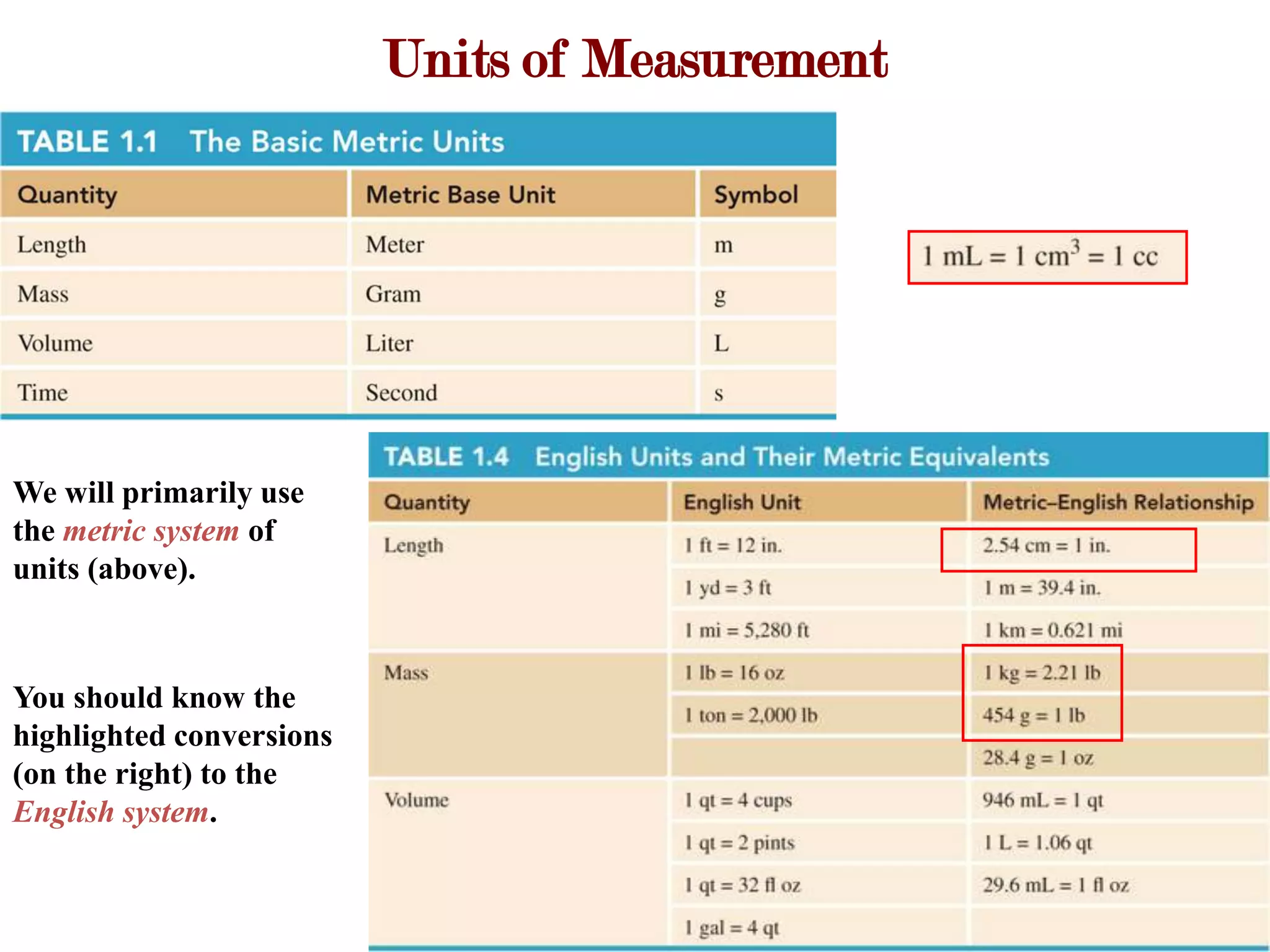
We will primarily use
the metric system of
units (above).


You should know the
highlighted conversions
(on the right) to the
English system.
Units of Measurement

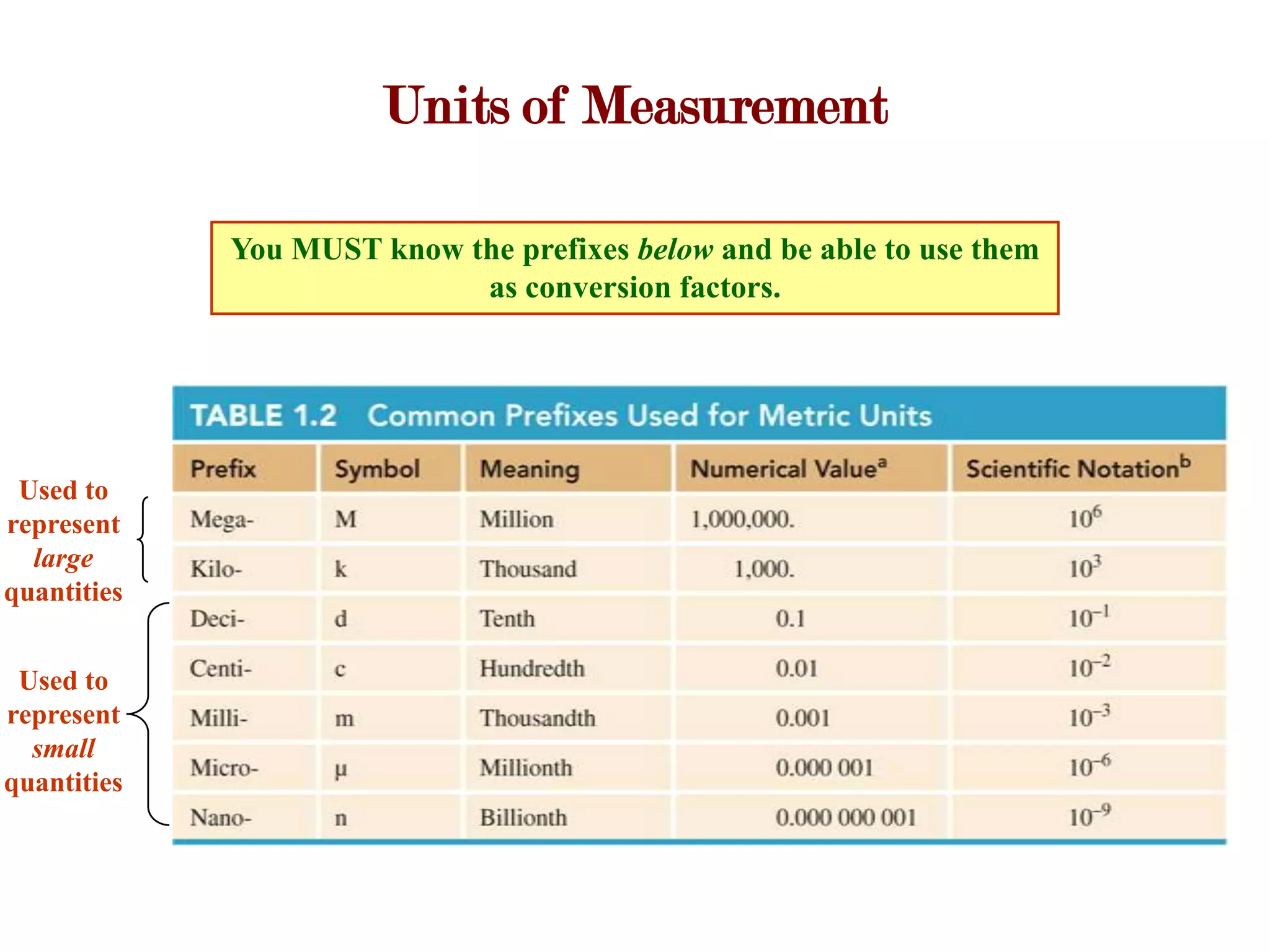
             You MUST know the prefixes below and be able to use them
                            as conversion factors.


 Used to
represent
  large
quantities


 Used to
represent
  small
quantities
Precision in Measurements
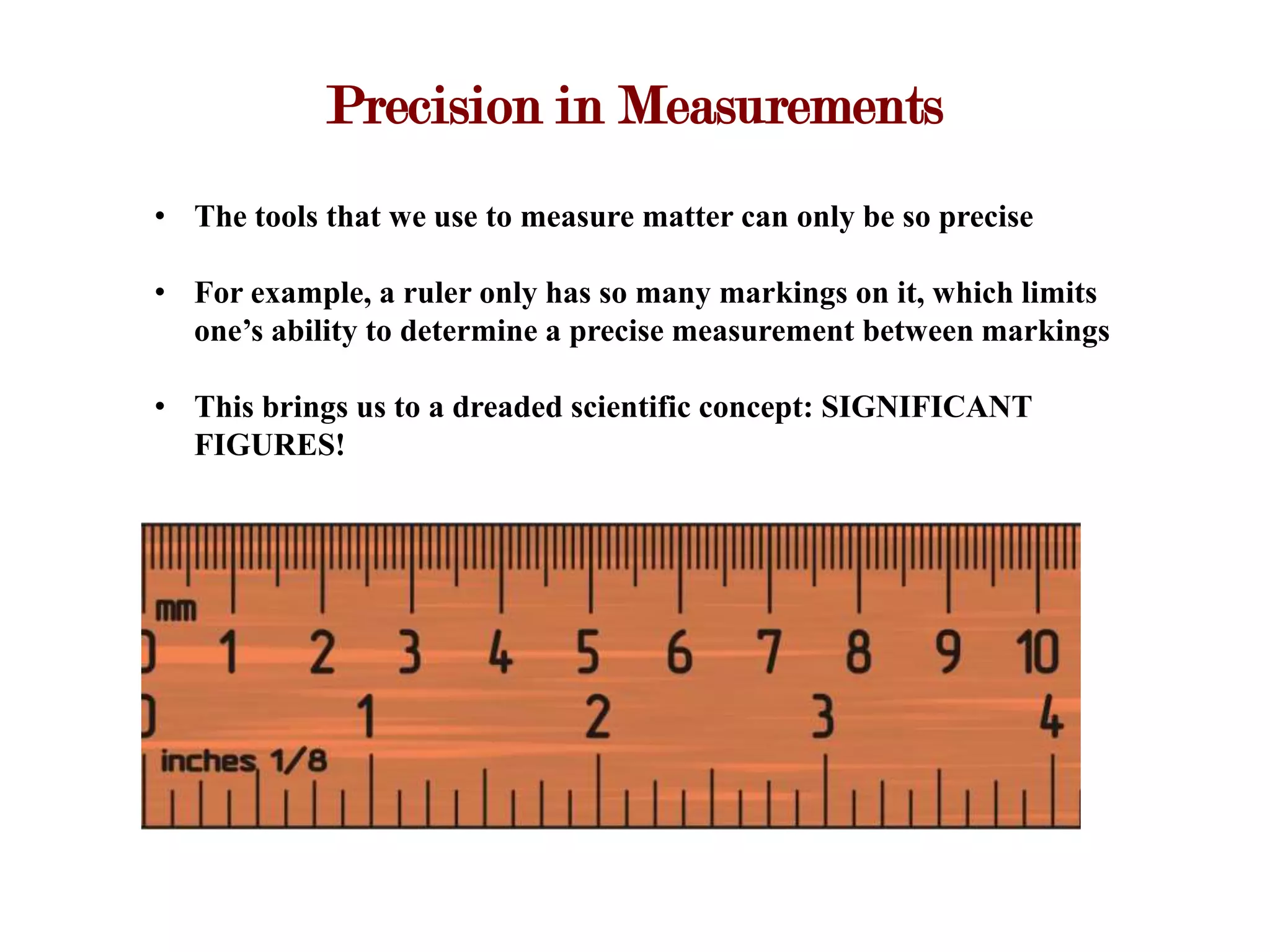
• The tools that we use to measure matter can only be so precise

• For example, a ruler only has so many markings on it, which limits
  one’s ability to determine a precise measurement between markings

• This brings us to a dreaded scientific concept: SIGNIFICANT
  FIGURES!
Significant Figures
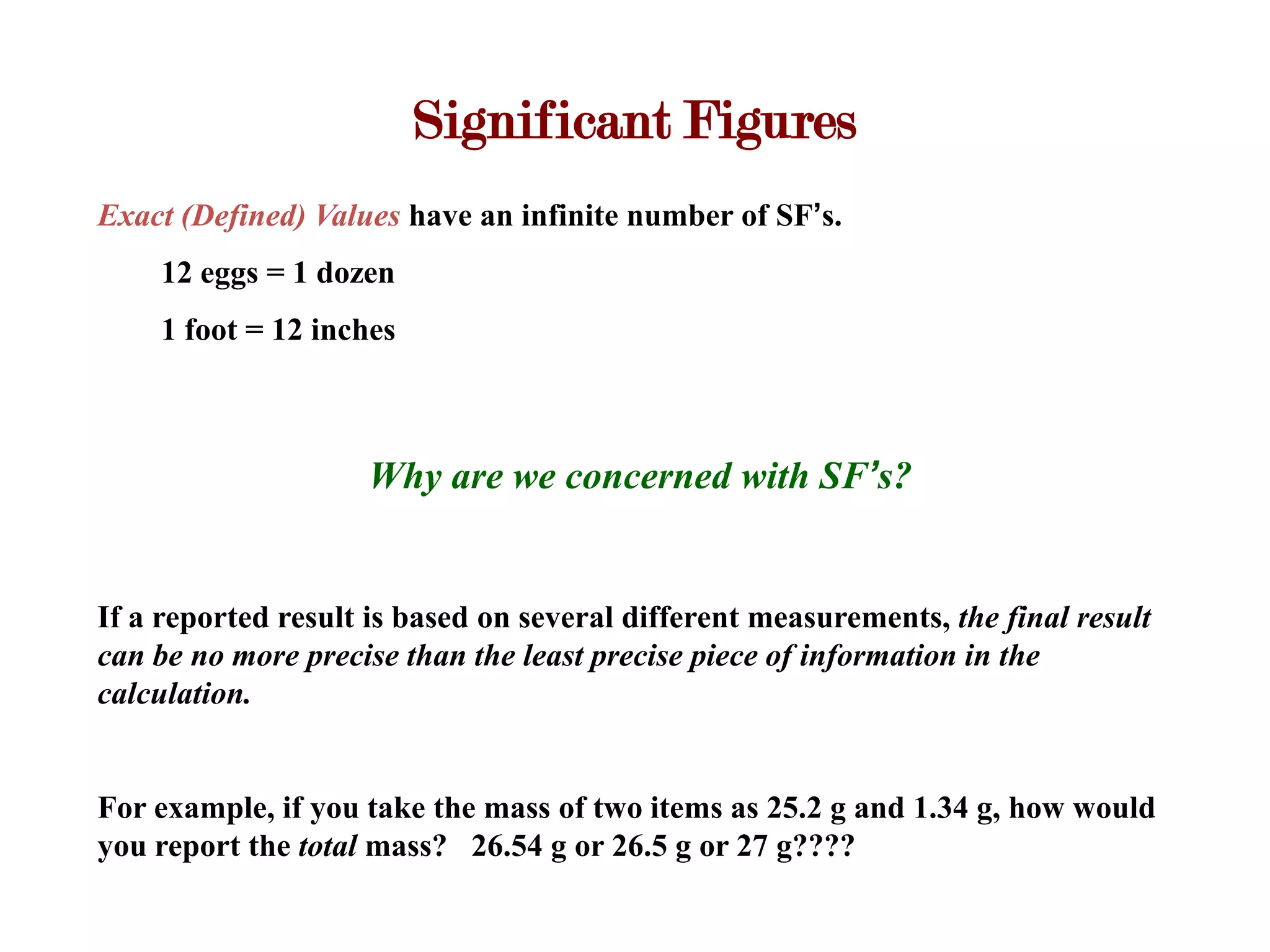
Exact (Defined) Values have an infinite number of SF’s.
    12 eggs = 1 dozen
    1 foot = 12 inches


                    Why are we concerned with SF’s?


If a reported result is based on several different measurements, the final result
can be no more precise than the least precise piece of information in the
calculation.


For example, if you take the mass of two items as 25.2 g and 1.34 g, how would
you report the total mass? 26.54 g or 26.5 g or 27 g????
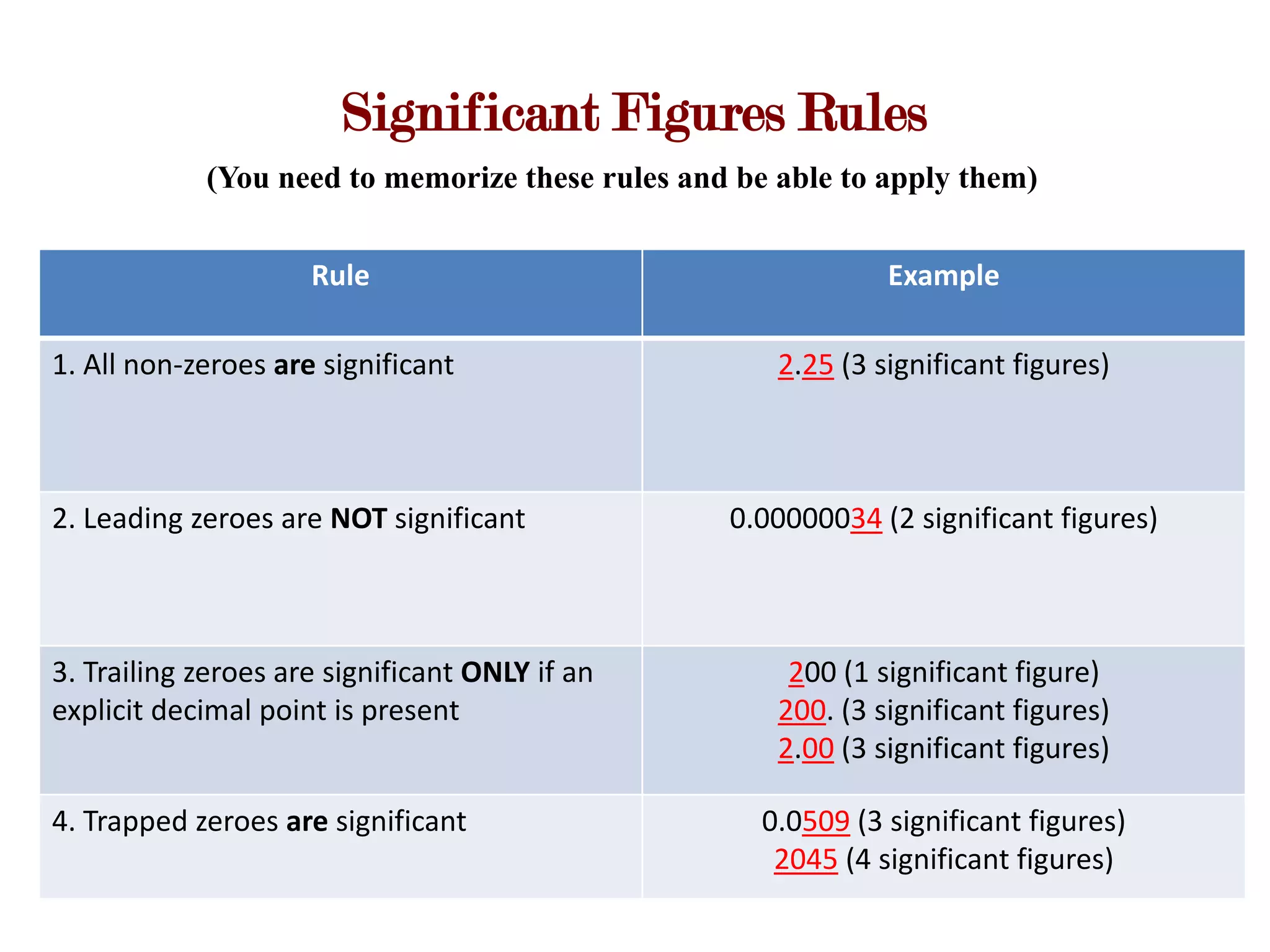
Significant Figures Rules
            (You need to memorize these rules and be able to apply them)


                     Rule                                     Example

1. All non-zeroes are significant                    2.25 (3 significant figures)


2. Leading zeroes are NOT significant            0.00000034 (2 significant figures)


3. Trailing zeroes are significant ONLY if an         200 (1 significant figure)
explicit decimal point is present                    200. (3 significant figures)
                                                     2.00 (3 significant figures)

4. Trapped zeroes are significant                   0.0509 (3 significant figures)
                                                     2045 (4 significant figures)
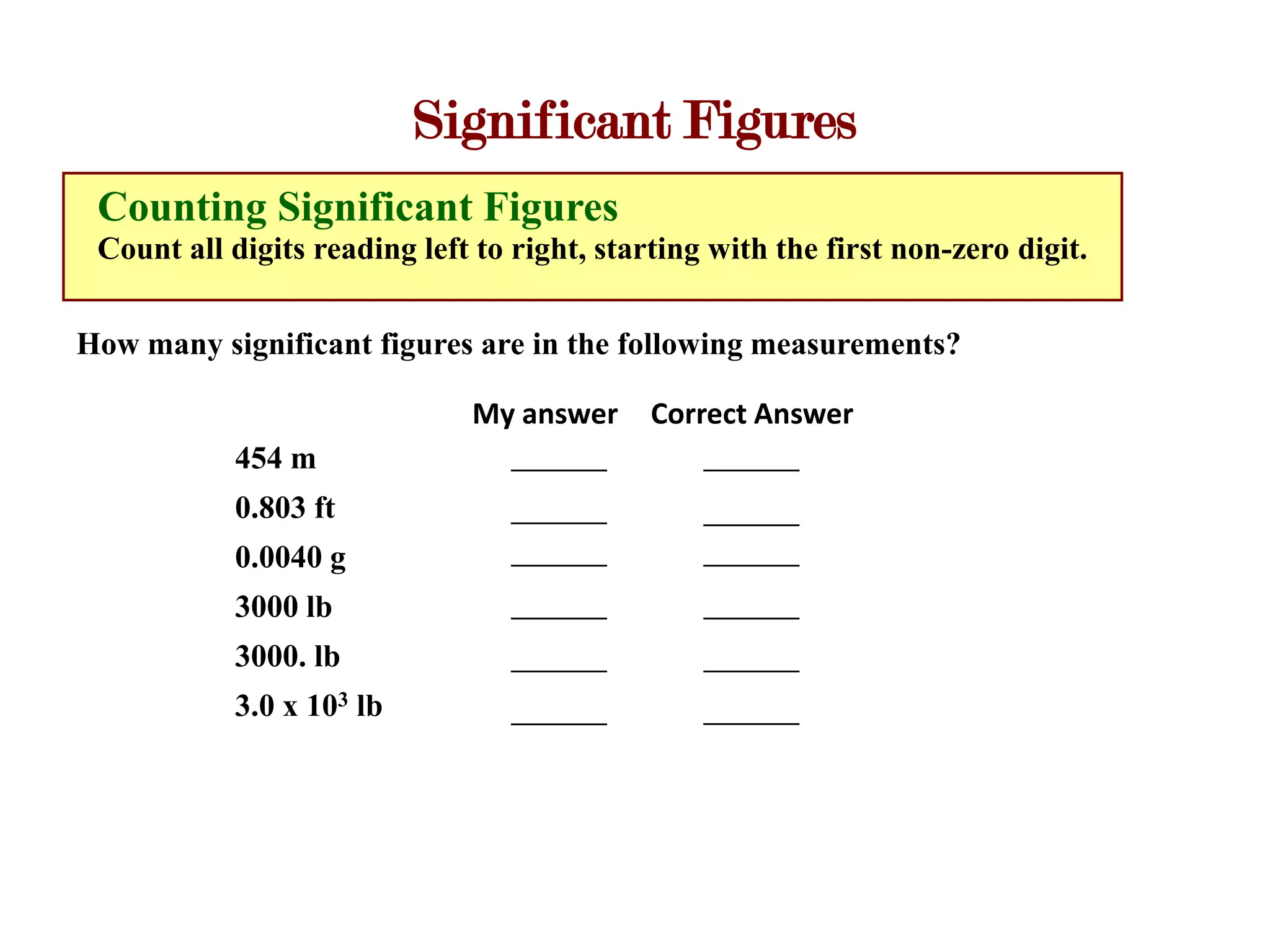
Significant Figures
 Counting Significant Figures
 Count all digits reading left to right, starting with the first non-zero digit.

How many significant figures are in the following measurements?

                              My answer      Correct Answer
           454 m
           0.803 ft
           0.0040 g
           3000 lb
           3000. lb
           3.0 x 10³ lb
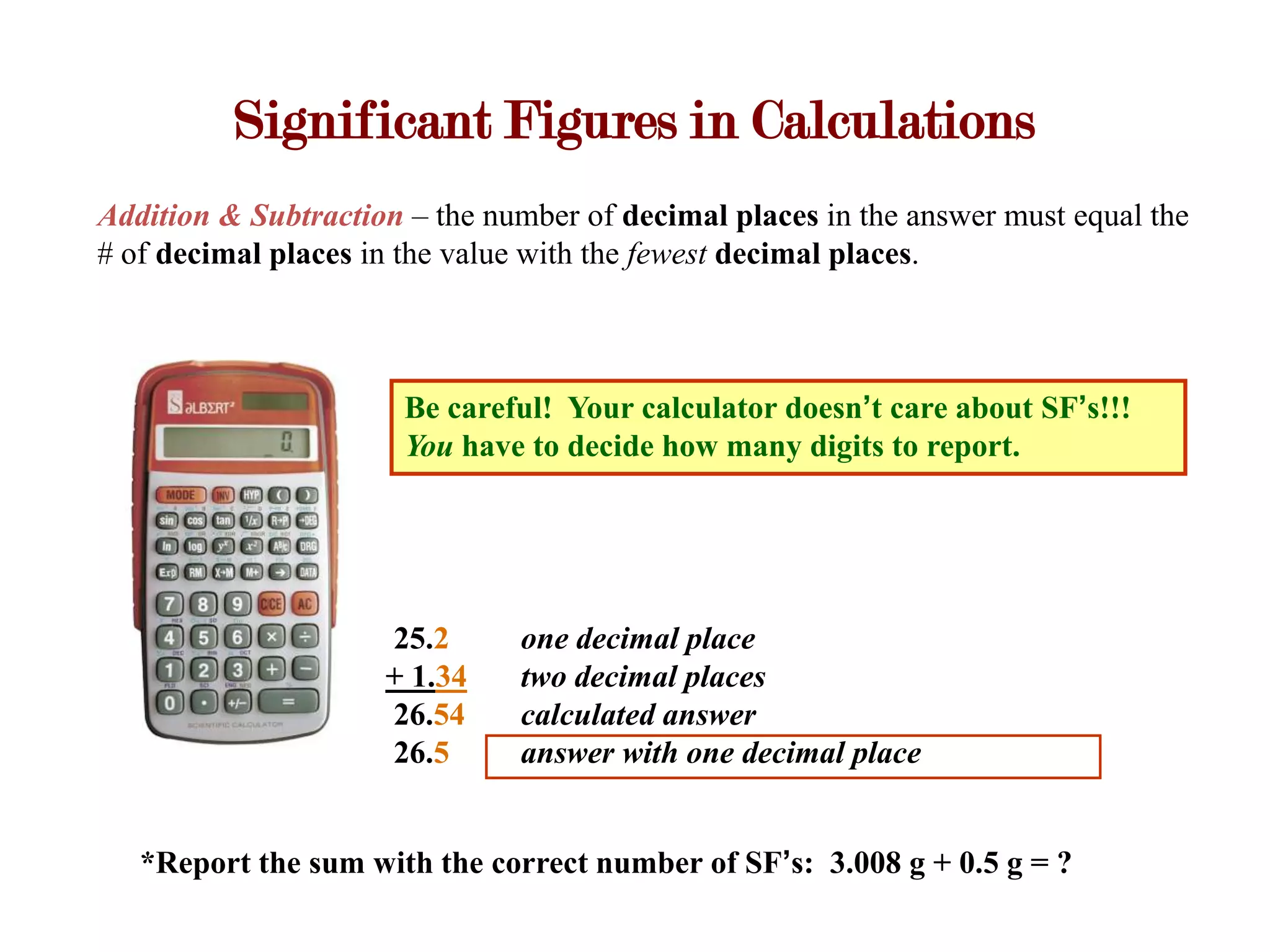
Significant Figures in Calculations
Addition & Subtraction – the number of decimal places in the answer must equal the
# of decimal places in the value with the fewest decimal places.


                       Be careful! Your calculator doesn’t care about SF’s!!!
                       You have to decide how many digits to report.


                     25.2      one decimal place
                     + 1.34    two decimal places
                     26.54     calculated answer
                     26.5      answer with one decimal place


   *Report the sum with the correct number of SF’s: 3.008 g + 0.5 g = ?
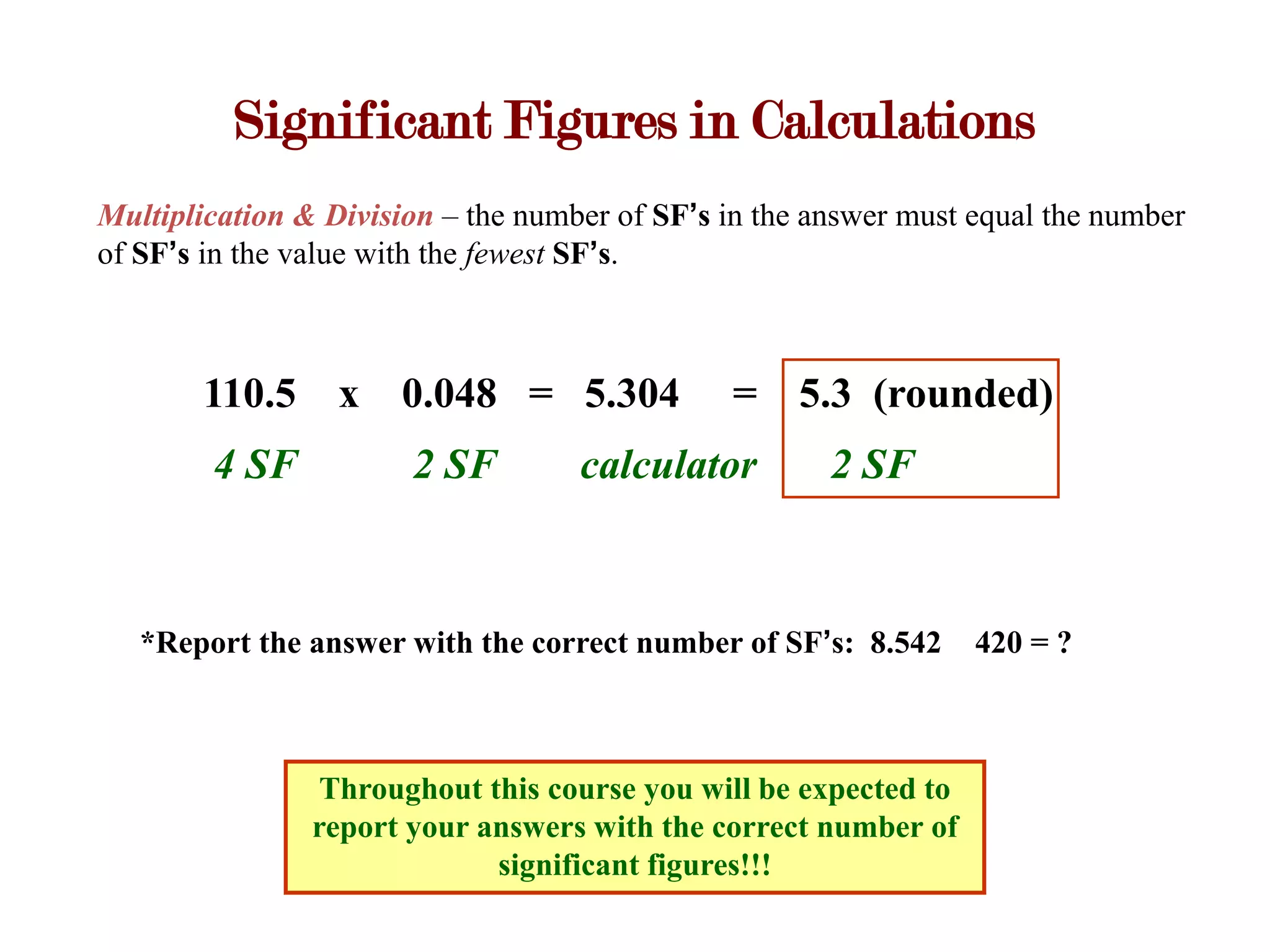
Significant Figures in Calculations
Multiplication & Division – the number of SF’s in the answer must equal the number
of SF’s in the value with the fewest SF’s.


       110.5 x        0.048 = 5.304            = 5.3 (rounded)
        4 SF           2 SF         calculator         2 SF


   *Report the answer with the correct number of SF’s: 8.542      420 = ?


                 Throughout this course you will be expected to
                report your answers with the correct number of
                             significant figures!!!
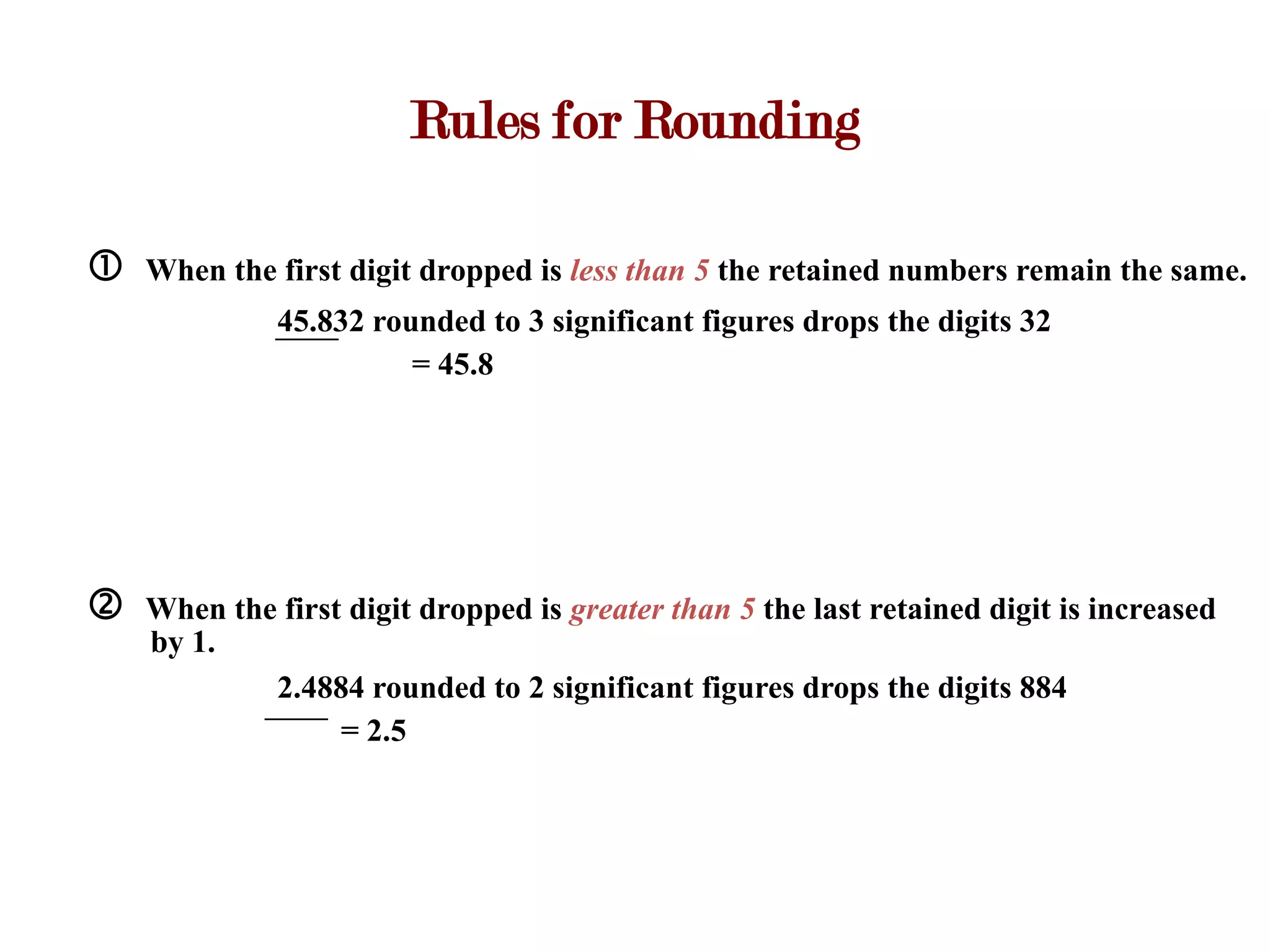
Rules for Rounding

   When the first digit dropped is less than 5 the retained numbers remain the same.
              45.832 rounded to 3 significant figures drops the digits 32
                        = 45.8


   When the first digit dropped is greater than 5 the last retained digit is increased
    by 1.
            2.4884 rounded to 2 significant figures drops the digits 884
                  = 2.5
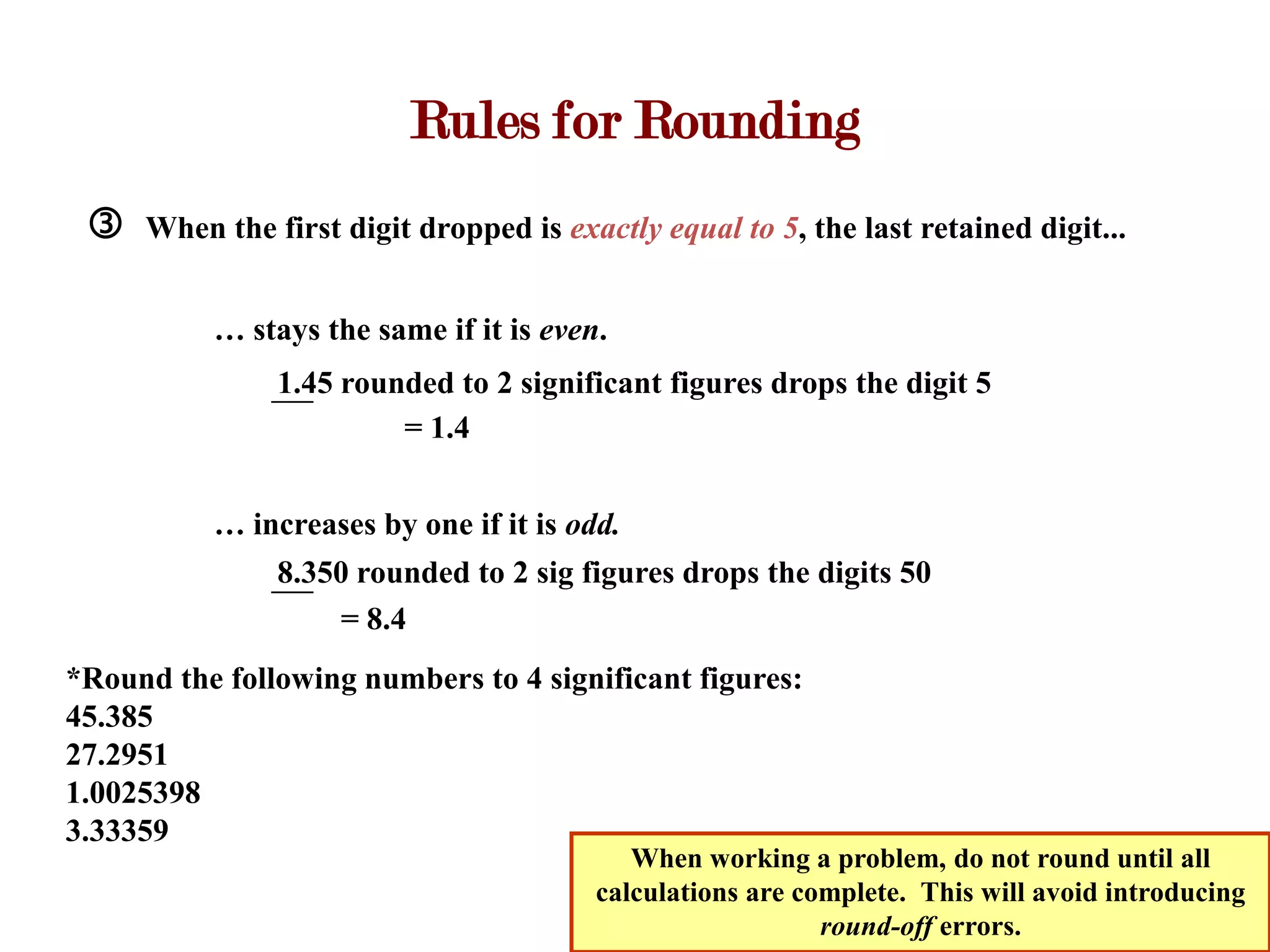
Rules for Rounding
    When the first digit dropped is exactly equal to 5, the last retained digit...


          … stays the same if it is even.
               1.45 rounded to 2 significant figures drops the digit 5
                        = 1.4


          … increases by one if it is odd.
               8.350 rounded to 2 sig figures drops the digits 50
                   = 8.4
*Round the following numbers to 4 significant figures:
45.385
27.2951
1.0025398
3.33359
                                           When working a problem, do not round until all
                                        calculations are complete. This will avoid introducing
                                                           round-off errors.

Ch.1 lecture a

  • 1.
    1/9/2013 CHM 101 Chapter 1: Matter & Measurement
  • 2.
    Classifying Matter Matter is anything that has mass and A mixture is 2 or more takes up volume substances physically A pure substance has a fixed or definite mixed, but not composition chemically combined. Element - Contains Compound – combination only 1 type of atom of 2 or more elements always in same ratio
  • 3.
    Classifying Matter Identify eachof the following pure substances as examples of elements or compounds.
  • 4.
    States of Matter Identifygeneral characteristics for each of the three states of matter below (solid, liquid, gas).
  • 5.
    Properties of Matter PhysicalChanges In the example below, water (H2O) is undergoing physical changes, from solid to liquid to gas, but does not change its chemical identity.
  • 6.
    Properties of Matter Chemicalproperties identify a substance based on reactions with other substances. Sodium (Na) (and other Group 1A Alkali metals) is known to react violently with water (H2O). 2Na (s) + 2H2O (l)  2NaOH + H2 (g) Chemical changes occur when one substance is converted into a different substance, thus changing the chemical identity. H2 (g) + O2 (g)  2H2O (g)
  • 7.
    Chemical Change: Sodiumin Water 2Na (s) + 2H2O (l)  2NaOH + H2 (g)
  • 8.
    Measurements Measurements alwaysconsist of a number and a unit. The numbers in a measurement (measured numbers) should be carefully recorded and reported. From the example above, we know the length of the baby is 53.3 cm. We should use all of the numbers given, but we can’t use any more.
  • 9.
    Units of Measurement Wewill primarily use the metric system of units (above). You should know the highlighted conversions (on the right) to the English system.
  • 10.
    Units of Measurement You MUST know the prefixes below and be able to use them as conversion factors. Used to represent large quantities Used to represent small quantities
  • 11.
    Precision in Measurements •The tools that we use to measure matter can only be so precise • For example, a ruler only has so many markings on it, which limits one’s ability to determine a precise measurement between markings • This brings us to a dreaded scientific concept: SIGNIFICANT FIGURES!
  • 12.
    Significant Figures Exact (Defined)Values have an infinite number of SF’s. 12 eggs = 1 dozen 1 foot = 12 inches Why are we concerned with SF’s? If a reported result is based on several different measurements, the final result can be no more precise than the least precise piece of information in the calculation. For example, if you take the mass of two items as 25.2 g and 1.34 g, how would you report the total mass? 26.54 g or 26.5 g or 27 g????
  • 13.
    Significant Figures Rules (You need to memorize these rules and be able to apply them) Rule Example 1. All non-zeroes are significant 2.25 (3 significant figures) 2. Leading zeroes are NOT significant 0.00000034 (2 significant figures) 3. Trailing zeroes are significant ONLY if an 200 (1 significant figure) explicit decimal point is present 200. (3 significant figures) 2.00 (3 significant figures) 4. Trapped zeroes are significant 0.0509 (3 significant figures) 2045 (4 significant figures)
  • 14.
    Significant Figures CountingSignificant Figures Count all digits reading left to right, starting with the first non-zero digit. How many significant figures are in the following measurements? My answer Correct Answer 454 m 0.803 ft 0.0040 g 3000 lb 3000. lb 3.0 x 10³ lb
  • 15.
    Significant Figures inCalculations Addition & Subtraction – the number of decimal places in the answer must equal the # of decimal places in the value with the fewest decimal places. Be careful! Your calculator doesn’t care about SF’s!!! You have to decide how many digits to report. 25.2 one decimal place + 1.34 two decimal places 26.54 calculated answer 26.5 answer with one decimal place *Report the sum with the correct number of SF’s: 3.008 g + 0.5 g = ?
  • 16.
    Significant Figures inCalculations Multiplication & Division – the number of SF’s in the answer must equal the number of SF’s in the value with the fewest SF’s. 110.5 x 0.048 = 5.304 = 5.3 (rounded) 4 SF 2 SF calculator 2 SF *Report the answer with the correct number of SF’s: 8.542 420 = ? Throughout this course you will be expected to report your answers with the correct number of significant figures!!!
  • 17.
    Rules for Rounding  When the first digit dropped is less than 5 the retained numbers remain the same. 45.832 rounded to 3 significant figures drops the digits 32 = 45.8  When the first digit dropped is greater than 5 the last retained digit is increased by 1. 2.4884 rounded to 2 significant figures drops the digits 884 = 2.5
  • 18.
    Rules for Rounding  When the first digit dropped is exactly equal to 5, the last retained digit... … stays the same if it is even. 1.45 rounded to 2 significant figures drops the digit 5 = 1.4 … increases by one if it is odd. 8.350 rounded to 2 sig figures drops the digits 50 = 8.4 *Round the following numbers to 4 significant figures: 45.385 27.2951 1.0025398 3.33359 When working a problem, do not round until all calculations are complete. This will avoid introducing round-off errors.