1
Learning Objectives
This chapter will explain:
Organizational charts
Simple hierarchical structures
The main leadership styles
The benefits of membership of a trade union.
2
What is organizational
structure?
Organizational structure refers to the levels of
management and division of possibilities within an
organization
Chain of Command – The structure in an organization
which allows instructions to be passed down from senior
management to lower levels of management.
3
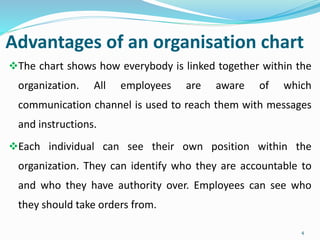
Advantages of an organisation chart
The chart shows how everybody is linked together within the
organization. All employees are aware of which
communication channel is used to reach them with messages
and instructions.
Each individual can see their own position within the
organization. They can identify who they are accountable to
and who they have authority over. Employees can see who
they should take orders from.
4
Cont---
It shows the links and relationships between different
departments within the organization.
Everyone is in a department and this gives them a sense
of belonging.
5
Chain of command and span of
control
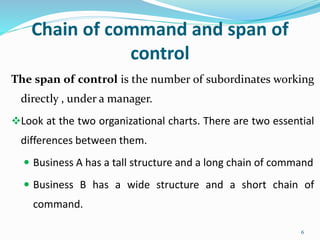
The span of control is the number of subordinates working
directly , under a manager.
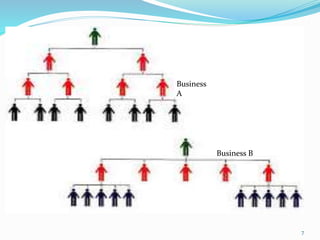
Look at the two organizational charts. There are two essential
differences between them.
 Business A has a tall structure and a long chain of command
 Business B has a wide structure and a short chain of
command.
6
7
Business
A
Business B
Advantages of short chains of
command
 Communication is quicker and more accurate. Each message
has fewer levels to pass through before reaching the
intended destination.
 Top managers are less remote from the lower level of the
hierarchy. These top managers should be more in touch with
people below them as there are fewer management levels
to get to know.
8
CONT..
 Spans of control will be wider. This means that each
manager is responsible for more subordinates.
9
Roles, responsibilities and inter-
relationships between people in
organisations
10
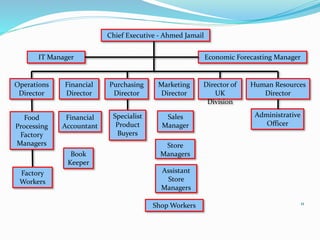
11
Store
Managers
Administrative
Officer
Shop Workers
Assistant
Store
Managers
Sales
Manager
Chief Executive - Ahmed Jamail
Specialist
Product
Buyers
IT Manager Economic Forecasting Manager
Operations
Director
Financial
Director
Purchasing
Director
Marketing
Director
Director of
UK
Division
Human Resources
Director
Food
Processing
Factory
Managers
Factory
Workers
Financial
Accountant
Book
Keeper
Line Managers and Staff Managers
Line Managers – They have direct responsibility over
people below them in the hierarchy of a business.
Staff Managers - Specialists who provide support,
information and assistance to line managers.
12
The Role and functions of
Management
Planning: Planning for the future of the organization
involves setting aims or targets, e.g.: ‘we should plan to
increase sales of our new fruit juice range by 50% in the
next 3 years’.
13
Organizing
Organizing : A manager cannot do everything. Tasks must
be delegated to others in the organization. These people
must have the resources to be able to do these tasks
successfully, . It is therefore the manager’s responsibility to
organize people and resources effectively.
14
Coordinating
Coordination : This means ‘bringing together’. A manager
may be very good at planning and organizing but may
have failed to ‘bring people in the organization together’.
Commanding : Many people think that this is all that
managers do! In fact, the task of management is more
concerned with guiding, leading and supervising people
than just telling them what to do – although this is
important too.
15
Controlling
Controlling: This is a never-ending task of management.
Managers must try to measure and evaluate the work of
all individuals and groups to make sure they are on target,
There is little point in planning and organizing if managers
then fail to check that the original aims are being met.
16
PART TWO
17
Delegation
Delegation – Giving a subordinate the authority to
perform particular tasks.
18
Advantages of delegation for the
manager
Managers cannot do every job themselves
Managers are less likely to make mistakes if some of
the tasks are being performed by their subordinates.
Managers can measure the success of their staff more
easily. They can see how well they have done in
performing the tasks delegated to them.
19
Advantages of delegation for the
subordinate
The work becomes more interesting and rewarding
The employee feels more important and believes that
trust is being put in them to perform a job well.
Delegation helps to train workers and they can then
make progress in the organization, giving them career
opportunities.
20
Why might a manager not
delegate?
 Despite the advantages of delegation, there are some
managers who are reluctant to delegate.
 Some may be afraid that the subordinates might fail
and the manager wants to control everything by
themselves.
CONT..
 Also, there is a risk that the subordinates might do a
better job than the manager! This could make the
manager feel very insecure.
 There needs to be an increase in trust in order to
reduce control over workers
22
23
Why is it important to have good
managers?
A good manager should:
 Motivate employees
 Give guidance and advice to employees they manage
 Inspire employees they manage to achieve more than
they thought possible
 Manage resources effectively and keep costs under
control
 Increase profitability of the business.
24
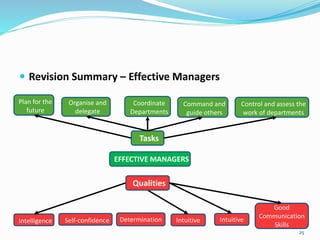
 Revision Summary – Effective Managers
25
Intuitive
Coordinate
Departments
Plan for the
future
Intelligence
Tasks
Self-confidence Determination
Organise and
delegate
Command and
guide others
Control and assess the
work of departments
Qualities
Good
Communication
Skills
Intuitive
EFFECTIVE MANAGERS
Styles of Leadership
There are different approaches to leadership that are
adopted and these can be summarized into three main
leadership styles.
Autocratic leadership
Democratic leadership
Laissez-faire leadership
26
Cont---
Autocratic Leadership - Where the manager expects to
be in charge of the business and to have their orders
followed. (See book)
Democratic Leadership - Gets employees involved in the
decision-making process. (See book)
Laissez-faire – Makes the broad objectives of the
business known to employees, but then they are left to
make their own decisions and organize their own work.
(See book)
27
Trade Union and Closed Shop
Trade Union – A group of workers who have joined
together to ensure their interests are protected.
Closed Shop – All employees must be a member of the
same trade union.
28
Revision Summary – Benefits of
joining a Trade Union
 See your book
29

CH07 Organization and management.pptx

  • 1.
  • 2.
    Learning Objectives This chapterwill explain: Organizational charts Simple hierarchical structures The main leadership styles The benefits of membership of a trade union. 2
  • 3.
    What is organizational structure? Organizationalstructure refers to the levels of management and division of possibilities within an organization Chain of Command – The structure in an organization which allows instructions to be passed down from senior management to lower levels of management. 3
  • 4.
    Advantages of anorganisation chart The chart shows how everybody is linked together within the organization. All employees are aware of which communication channel is used to reach them with messages and instructions. Each individual can see their own position within the organization. They can identify who they are accountable to and who they have authority over. Employees can see who they should take orders from. 4
  • 5.
    Cont--- It shows thelinks and relationships between different departments within the organization. Everyone is in a department and this gives them a sense of belonging. 5
  • 6.
    Chain of commandand span of control The span of control is the number of subordinates working directly , under a manager. Look at the two organizational charts. There are two essential differences between them.  Business A has a tall structure and a long chain of command  Business B has a wide structure and a short chain of command. 6
  • 7.
  • 8.
    Advantages of shortchains of command  Communication is quicker and more accurate. Each message has fewer levels to pass through before reaching the intended destination.  Top managers are less remote from the lower level of the hierarchy. These top managers should be more in touch with people below them as there are fewer management levels to get to know. 8
  • 9.
    CONT..  Spans ofcontrol will be wider. This means that each manager is responsible for more subordinates. 9
  • 10.
    Roles, responsibilities andinter- relationships between people in organisations 10
  • 11.
    11 Store Managers Administrative Officer Shop Workers Assistant Store Managers Sales Manager Chief Executive- Ahmed Jamail Specialist Product Buyers IT Manager Economic Forecasting Manager Operations Director Financial Director Purchasing Director Marketing Director Director of UK Division Human Resources Director Food Processing Factory Managers Factory Workers Financial Accountant Book Keeper
  • 12.
    Line Managers andStaff Managers Line Managers – They have direct responsibility over people below them in the hierarchy of a business. Staff Managers - Specialists who provide support, information and assistance to line managers. 12
  • 13.
    The Role andfunctions of Management Planning: Planning for the future of the organization involves setting aims or targets, e.g.: ‘we should plan to increase sales of our new fruit juice range by 50% in the next 3 years’. 13
  • 14.
    Organizing Organizing : Amanager cannot do everything. Tasks must be delegated to others in the organization. These people must have the resources to be able to do these tasks successfully, . It is therefore the manager’s responsibility to organize people and resources effectively. 14
  • 15.
    Coordinating Coordination : Thismeans ‘bringing together’. A manager may be very good at planning and organizing but may have failed to ‘bring people in the organization together’. Commanding : Many people think that this is all that managers do! In fact, the task of management is more concerned with guiding, leading and supervising people than just telling them what to do – although this is important too. 15
  • 16.
    Controlling Controlling: This isa never-ending task of management. Managers must try to measure and evaluate the work of all individuals and groups to make sure they are on target, There is little point in planning and organizing if managers then fail to check that the original aims are being met. 16
  • 17.
  • 18.
    Delegation Delegation – Givinga subordinate the authority to perform particular tasks. 18
  • 19.
    Advantages of delegationfor the manager Managers cannot do every job themselves Managers are less likely to make mistakes if some of the tasks are being performed by their subordinates. Managers can measure the success of their staff more easily. They can see how well they have done in performing the tasks delegated to them. 19
  • 20.
    Advantages of delegationfor the subordinate The work becomes more interesting and rewarding The employee feels more important and believes that trust is being put in them to perform a job well. Delegation helps to train workers and they can then make progress in the organization, giving them career opportunities. 20
  • 21.
    Why might amanager not delegate?  Despite the advantages of delegation, there are some managers who are reluctant to delegate.  Some may be afraid that the subordinates might fail and the manager wants to control everything by themselves.
  • 22.
    CONT..  Also, thereis a risk that the subordinates might do a better job than the manager! This could make the manager feel very insecure.  There needs to be an increase in trust in order to reduce control over workers 22
  • 23.
  • 24.
    Why is itimportant to have good managers? A good manager should:  Motivate employees  Give guidance and advice to employees they manage  Inspire employees they manage to achieve more than they thought possible  Manage resources effectively and keep costs under control  Increase profitability of the business. 24
  • 25.
     Revision Summary– Effective Managers 25 Intuitive Coordinate Departments Plan for the future Intelligence Tasks Self-confidence Determination Organise and delegate Command and guide others Control and assess the work of departments Qualities Good Communication Skills Intuitive EFFECTIVE MANAGERS
  • 26.
    Styles of Leadership Thereare different approaches to leadership that are adopted and these can be summarized into three main leadership styles. Autocratic leadership Democratic leadership Laissez-faire leadership 26
  • 27.
    Cont--- Autocratic Leadership -Where the manager expects to be in charge of the business and to have their orders followed. (See book) Democratic Leadership - Gets employees involved in the decision-making process. (See book) Laissez-faire – Makes the broad objectives of the business known to employees, but then they are left to make their own decisions and organize their own work. (See book) 27
  • 28.
    Trade Union andClosed Shop Trade Union – A group of workers who have joined together to ensure their interests are protected. Closed Shop – All employees must be a member of the same trade union. 28
  • 29.
    Revision Summary –Benefits of joining a Trade Union  See your book 29