CHAPTER 3
Anoop Saini
BUSINESS ENVIRONMENT
MEANING
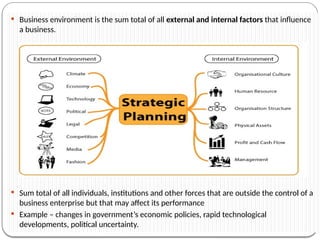
 Business environment is the sum total of all external and internal factors that influence
a business.
 Sum total of all individuals, institutions and other forces that are outside the control of a
business enterprise but that may affect its performance
 Example – changes in government’s economic policies, rapid technological
developments, political uncertainty.
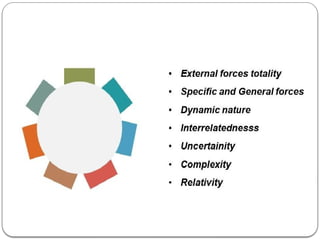
1. Totality of external forces: BE is the sum totals of all those
factors which are available outside the business and which the
business has no control. E.g. –Business has no control over
Government Policies.
2. Specific and general forces: Specific forces means investors,
customers, competitors and suppliers. General forces such as social,
political, legal and technological conditions . Any changes in these
two factors affect the business directly or indirectly
3. Inter-relatedness: Different parts of business are inter-related to
each other Ex- As customer awareness on Health increase they
demand healthy products such as Diet Coke, olive oil etc
4. Dynamic nature: Business environment keeps on changing, the
business should also change its methods, rules, as environment
changes. For ex – changes in new technology, shift in consumer
preferences
FEATURES/NATURE/CHARACTERISTICS OF BUSINESS ENVIRONMENT
FEATURES/NATURE/CHARACTERISTICS OF BUSINESS
ENVIRONMENT
5. Uncertainty: it is very difficult to predict future when environment
changes are taking place too quickly. EX- Dell company
manufactures 1lakh monitors, however customers are now
demanding LED screen laptops, hence it is a loss to the company
and such situations cannot be predicted
6. Complexity: Business environment is too complex, and not easily
understood. Ex- It is difficult for the business to understand the
market & consumer behaviour.
7. Relativity: It differs from country to country and even region to
region. Ex- In Europe people prefer to buy Warm clothes due to
Cold climate, however in India people buy both Warm clothes &
cotton clothes due to its tropical climate
1. It enables the firm to identify opportunities: By
analysing the environment the business can take up
opportunity in the market. For Ex- ICICI BANK took the
COVID 19 opportunity and created new Covid Insurance
policy & sold to its customers.
2. It helps the firm to identify threats and early warning
signals- The Business manager should find if there are
any problems that may arise and follow the
environment closely. Ex- Maruti company finds that
TOYOTA company will launch a low budget family car in
India, and this affects Maruti’s business hence it should
find a solution.
3. It helps in tapping useful resources: Business enterprise
assembles various resources called inputs like finance,
machines, raw materials, power and water, labour, etc.
SIGNIFICANCE/IMPORTANCE OF BUSINESS ENVIRONMENT
4. It helps in coping with rapid changes: environment is
dynamic it keeps on changing hence the managers
should cope up with any problems in the business and
adapt to the changes. EX- due to COVID crisis the local
vegetable vendors had problems since their business
was shut down however it made a tie up with BBMP to
deliver vegetable online through what's app booking
5. It helps in assisting in planning and policy formulation:
Business environment helps to set up policies and
frame plans for the business.
6. It helps in improving performance: By observing the
market closely the managers can take decisions that
helps the company’s growth & performance. EX-
Government has reduced EXPORT TAX ON TEA hence
BRU – HLL company decided to manufacture & sell Tea.
SIGNIFICANCE/IMPORTANCE OF BUSINESS ENVIRONMENT
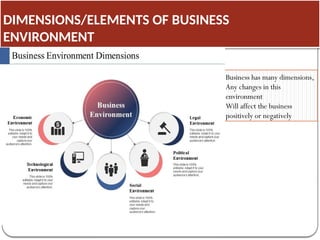
DIMENSIONS/ELEMENTS OF BUSINESS
ENVIRONMENT
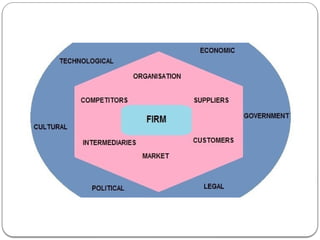
Business has many dimensions,
Any changes in this
environment
Will affect the business
positively or negatively
Elements / Dimensions /Types of Business Environment
1. ECONOMIC ENVIRONMENT
Business needs to monitor the economy closely.
Economic Environment includes -
•INTEREST RATES BY BANKS- if Loan rate is less business can borrow more, if interest is high it
will borrow less
•INFLATION RATES- refers to rise in the price of goods .
If price is high business sales are low
If price is less then business sales are high
It increase the various costs of business
• CHANGES IN INCOME – If consumers income is high they buy more hence it is profitable to
the business.
If peoples income is low then they buy less hence it affects the business
•VALUE OF RUPEE- If value of rupee is less then it is beneficial to export business. The firms
can export goods to other countries and earn higher income however if rupee value is more
then it discourages outside counties to not buy from India .
•Hence any changes in the economic environment of our country will affect the business
directly or indirectly
2. SOCIAL ENVIRONMENT
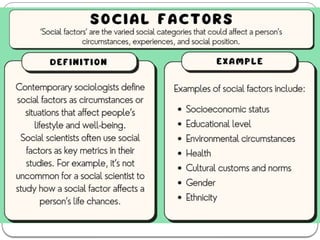
 Social environment includes social factors in our society like customs,
traditions, values, beliefs, poverty, literacy, life expectancy rate etc.
 The social structure and the values that a society cherishes have a n
influence on the functioning of business firms.
 For example, during festive seasons there is an increase in the
demand for new clothes, sweets, fruits, flower, etc
 During Christmas There is demand for Santa Clause clothes, cakes &
toys hence such business earns higher profits.
 Northern Parts of India mostly consume vegetarian food hence
business firms selling Non-Veg products cannot earn profits in this
region due to socio-cultural background of people
 Hindus do not consume Cow meat hence business cannot sell them
such products. Hence it affects the business.
3. TECHNOLOGICAL ENVIRONMENT
 Scientific improvements and innovations.
 New ways of producing goods and
services and new methods and
techniques.
 For example, recent technological,
advances in computers – monitors to
LED/LCD – touch pad screens.
 Medical field- manual operation to laser
 Typewriters- computers
 Telecommunication- video calling, mail &
web meetings
 Fountain pens to ballpoint
 New technology will keep the business
up-to-date and helps to manage
competition.
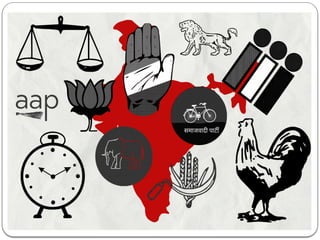
4. POLITICAL ENVIRONMENT
 Includes political conditions -general stability and peace in the
country.
 Attitudes of government representatives -towards business.
 Business Success depends on stable conditions of Government- if
government changes - they change the law – it affects the
business operations.
 Political Threats & problems to business Ex. Forcing business to
favor In terms of politicians.
 Political instability can shake confidence among investors.
 For example, even after opening up of our economy in 1991,
foreign companies found it extremely difficult to cut through the
bureaucratic red tape to get permits for doing business in India.
5. LEGAL ENVIRONMENT
 Legal environment includes various legislations –Rules/ regulations passed by the
Government., orders issued by government authorities, court judgments &
decisions.
 It is compulsory for the management to obey the laws of the government.
Therefore, management should have knowledge of rules and regulations framed
by the Government.
 If business is not aware of rules and regulations and violate those, it may face
troubles.
 Examples of Laws & Acts – Indian Partnership Act, Companies Act etc.
 For example, the advertisement of alcoholic beverages is prohibited.
Advertisements, including packets of cigarettes carry the statutory warning
‘Cigarette smoking is injurious to health’ etc.
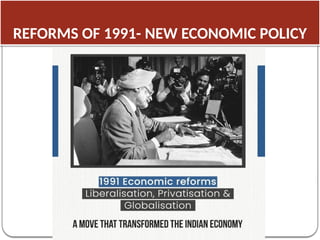
REFORMS OF 1991- NEW ECONOMIC POLICY
ECONOMIC ENVIRONMENT IN INDIA- REFORMS OF
1991- NEW ECONOMIC POLICY
 The economic planning of India did not go as expected hence in 1991, India could
not repay the debt / balance for the imports made and this led a serious foreign
exchange crisis and rising of prices.
 As Government of India wanted to improve this condition it
announced a new industrial policy in July 1991. The broad features
of this policy were as follows:
a. The Government reduced the number of industries under
compulsory licensing to six.
b. Disinvestment (with drawl of money from Government companies
suffering losses) was carried out in case of many public sector
industrial enterprises.
Economic reforms cont..
c. Policy towards foreign capital was liberalised. (no strict policy)
The share of foreign equity participation was increased and in
many activities 100 per cent Foreign Direct Investment (FDI) was
permitted.
d. Automatic permission was now granted for technology
agreements with foreign companies.
e. Foreign Investment Promotion Board (FIPB) was set up to
promote and foreign investment in India.
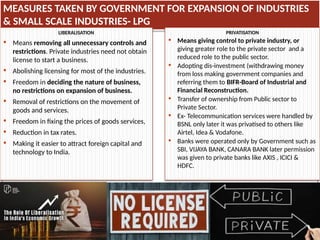
MEASURES TAKEN BY GOVERNMENT FOR EXPANSION OF INDUSTRIES
& SMALL SCALE INDUSTRIES- LPG
LIBERALISATION
 Means removing all unnecessary controls and
restrictions. Private industries need not obtain
license to start a business.
 Abolishing licensing for most of the industries.
 Freedom in deciding the nature of business,
no restrictions on expansion of business.
 Removal of restrictions on the movement of
goods and services.
 Freedom in fixing the prices of goods services,
 Reduction in tax rates.
 Making it easier to attract foreign capital and
technology to India.
PRIVATISATION
 Means giving control to private industry, or
giving greater role to the private sector and a
reduced role to the public sector.
 Adopting dis-investment (withdrawing money
from loss making government companies and
referring them to BIFR-Board of Industrial and
Financial Reconstruction.
 Transfer of ownership from Public sector to
Private Sector.
 Ex- Telecommunication services were handled by
BSNL only later it was privatised to others like
Airtel, Idea & Vodafone.
 Banks were operated only by Government such as
SBI, VIJAYA BANK, CANARA BANK later permission
was given to private banks like AXIS , ICICI &
HDFC.
Globalisation:
 Means the integration of the various economies of the
world towards one economy.
 Opening our doors to the other companies in the world.
 Permission to International companies to invest or start
business in INDIA
 EX- Audi, Kia, Mc.Donalds, KFC, Zara etc. Till 1991, the
Government of India had followed a policy of strictly
policy on imports. These regulations were with
respect to:
a. licensing of imports.
b. Tariff restrictions and
c. Quantitative restrictions.
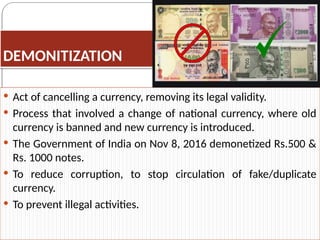
DEMONITIZATION
 Act of cancelling a currency, removing its legal validity.
 Process that involved a change of national currency, where old
currency is banned and new currency is introduced.
 The Government of India on Nov 8, 2016 demonetized Rs.500 &
Rs. 1000 notes.
 To reduce corruption, to stop circulation of fake/duplicate
currency.
 To prevent illegal activities.
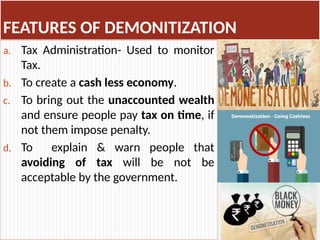
FEATURES OF DEMONITIZATION
a. Tax Administration- Used to monitor
Tax.
b. To create a cash less economy.
c. To bring out the unaccounted wealth
and ensure people pay tax on time, if
not them impose penalty.
d. To explain & warn people that
avoiding of tax will be not be
acceptable by the government.
IMPACT OF GOVERNMENT POLICY CHANGES ON BUSINESS AND INDUSTRY
a. Increasing competition: since the government reduced license
system it led many foreign companies to enter Indian Markets and
entry of foreign firms, competition for Indian firms has increased
especially in service industries like telecommunications, airlines,
banking, insurance, etc. (Ex- Vodafone, Emirates, Citi bank, AXA
insurance)
b. More demanding customers: Customers today have become more
demanding because they are well-informed. Increased competition
in the market gives the customers w`ider choice in purchasing better
quality of goods and services.
c. Rapidly changing technological environment: competition forces
business to update technology and improve products and it
increases cost , The rapidly changing technological environment
creates tough challenges before smaller firms.
Contd..
d. Necessity for change: After 1991, the market forces have
become turbulent as a result of which the enterprises
have to continuously modify their operations.
e. Need for developing human resource: Indian enterprises
do not have quality trained employees. The new market
conditions require people with higher competence and greater
commitment.
f. Market orientation: Earlier firms used to produce first and
go to the market for sale later. Now the firms need to
understand what are the demands & needs of a market hence
the firms have to study and analyse the market first and
produce goods accordingly.
ACTIVITY
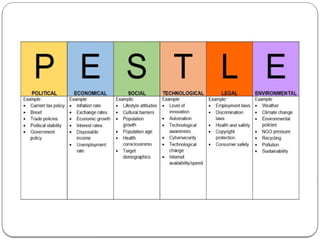
I. In an A4 Sheet write all the points related to PESTLE with
examples. (Explain in points not paragraph).
II. Draw a flow chart or a mind map of the entire chapter.
Prepared by Anoop Singh Saini

Ch 3 BE (1).pptx.........................

  • 1.
  • 3.
    MEANING  Business environmentis the sum total of all external and internal factors that influence a business.  Sum total of all individuals, institutions and other forces that are outside the control of a business enterprise but that may affect its performance  Example – changes in government’s economic policies, rapid technological developments, political uncertainty.
  • 4.
    1. Totality ofexternal forces: BE is the sum totals of all those factors which are available outside the business and which the business has no control. E.g. –Business has no control over Government Policies. 2. Specific and general forces: Specific forces means investors, customers, competitors and suppliers. General forces such as social, political, legal and technological conditions . Any changes in these two factors affect the business directly or indirectly 3. Inter-relatedness: Different parts of business are inter-related to each other Ex- As customer awareness on Health increase they demand healthy products such as Diet Coke, olive oil etc 4. Dynamic nature: Business environment keeps on changing, the business should also change its methods, rules, as environment changes. For ex – changes in new technology, shift in consumer preferences FEATURES/NATURE/CHARACTERISTICS OF BUSINESS ENVIRONMENT
  • 5.
    FEATURES/NATURE/CHARACTERISTICS OF BUSINESS ENVIRONMENT 5.Uncertainty: it is very difficult to predict future when environment changes are taking place too quickly. EX- Dell company manufactures 1lakh monitors, however customers are now demanding LED screen laptops, hence it is a loss to the company and such situations cannot be predicted 6. Complexity: Business environment is too complex, and not easily understood. Ex- It is difficult for the business to understand the market & consumer behaviour. 7. Relativity: It differs from country to country and even region to region. Ex- In Europe people prefer to buy Warm clothes due to Cold climate, however in India people buy both Warm clothes & cotton clothes due to its tropical climate
  • 7.
    1. It enablesthe firm to identify opportunities: By analysing the environment the business can take up opportunity in the market. For Ex- ICICI BANK took the COVID 19 opportunity and created new Covid Insurance policy & sold to its customers. 2. It helps the firm to identify threats and early warning signals- The Business manager should find if there are any problems that may arise and follow the environment closely. Ex- Maruti company finds that TOYOTA company will launch a low budget family car in India, and this affects Maruti’s business hence it should find a solution. 3. It helps in tapping useful resources: Business enterprise assembles various resources called inputs like finance, machines, raw materials, power and water, labour, etc. SIGNIFICANCE/IMPORTANCE OF BUSINESS ENVIRONMENT
  • 8.
    4. It helpsin coping with rapid changes: environment is dynamic it keeps on changing hence the managers should cope up with any problems in the business and adapt to the changes. EX- due to COVID crisis the local vegetable vendors had problems since their business was shut down however it made a tie up with BBMP to deliver vegetable online through what's app booking 5. It helps in assisting in planning and policy formulation: Business environment helps to set up policies and frame plans for the business. 6. It helps in improving performance: By observing the market closely the managers can take decisions that helps the company’s growth & performance. EX- Government has reduced EXPORT TAX ON TEA hence BRU – HLL company decided to manufacture & sell Tea. SIGNIFICANCE/IMPORTANCE OF BUSINESS ENVIRONMENT
  • 9.
    DIMENSIONS/ELEMENTS OF BUSINESS ENVIRONMENT Businesshas many dimensions, Any changes in this environment Will affect the business positively or negatively
  • 10.
    Elements / Dimensions/Types of Business Environment 1. ECONOMIC ENVIRONMENT Business needs to monitor the economy closely. Economic Environment includes - •INTEREST RATES BY BANKS- if Loan rate is less business can borrow more, if interest is high it will borrow less •INFLATION RATES- refers to rise in the price of goods . If price is high business sales are low If price is less then business sales are high It increase the various costs of business • CHANGES IN INCOME – If consumers income is high they buy more hence it is profitable to the business. If peoples income is low then they buy less hence it affects the business •VALUE OF RUPEE- If value of rupee is less then it is beneficial to export business. The firms can export goods to other countries and earn higher income however if rupee value is more then it discourages outside counties to not buy from India . •Hence any changes in the economic environment of our country will affect the business directly or indirectly
  • 12.
    2. SOCIAL ENVIRONMENT Social environment includes social factors in our society like customs, traditions, values, beliefs, poverty, literacy, life expectancy rate etc.  The social structure and the values that a society cherishes have a n influence on the functioning of business firms.  For example, during festive seasons there is an increase in the demand for new clothes, sweets, fruits, flower, etc  During Christmas There is demand for Santa Clause clothes, cakes & toys hence such business earns higher profits.  Northern Parts of India mostly consume vegetarian food hence business firms selling Non-Veg products cannot earn profits in this region due to socio-cultural background of people  Hindus do not consume Cow meat hence business cannot sell them such products. Hence it affects the business.
  • 14.
    3. TECHNOLOGICAL ENVIRONMENT Scientific improvements and innovations.  New ways of producing goods and services and new methods and techniques.  For example, recent technological, advances in computers – monitors to LED/LCD – touch pad screens.  Medical field- manual operation to laser  Typewriters- computers  Telecommunication- video calling, mail & web meetings  Fountain pens to ballpoint  New technology will keep the business up-to-date and helps to manage competition.
  • 16.
    4. POLITICAL ENVIRONMENT Includes political conditions -general stability and peace in the country.  Attitudes of government representatives -towards business.  Business Success depends on stable conditions of Government- if government changes - they change the law – it affects the business operations.  Political Threats & problems to business Ex. Forcing business to favor In terms of politicians.  Political instability can shake confidence among investors.  For example, even after opening up of our economy in 1991, foreign companies found it extremely difficult to cut through the bureaucratic red tape to get permits for doing business in India.
  • 18.
    5. LEGAL ENVIRONMENT Legal environment includes various legislations –Rules/ regulations passed by the Government., orders issued by government authorities, court judgments & decisions.  It is compulsory for the management to obey the laws of the government. Therefore, management should have knowledge of rules and regulations framed by the Government.  If business is not aware of rules and regulations and violate those, it may face troubles.  Examples of Laws & Acts – Indian Partnership Act, Companies Act etc.  For example, the advertisement of alcoholic beverages is prohibited. Advertisements, including packets of cigarettes carry the statutory warning ‘Cigarette smoking is injurious to health’ etc.
  • 21.
    REFORMS OF 1991-NEW ECONOMIC POLICY
  • 22.
    ECONOMIC ENVIRONMENT ININDIA- REFORMS OF 1991- NEW ECONOMIC POLICY  The economic planning of India did not go as expected hence in 1991, India could not repay the debt / balance for the imports made and this led a serious foreign exchange crisis and rising of prices.  As Government of India wanted to improve this condition it announced a new industrial policy in July 1991. The broad features of this policy were as follows: a. The Government reduced the number of industries under compulsory licensing to six. b. Disinvestment (with drawl of money from Government companies suffering losses) was carried out in case of many public sector industrial enterprises.
  • 23.
    Economic reforms cont.. c.Policy towards foreign capital was liberalised. (no strict policy) The share of foreign equity participation was increased and in many activities 100 per cent Foreign Direct Investment (FDI) was permitted. d. Automatic permission was now granted for technology agreements with foreign companies. e. Foreign Investment Promotion Board (FIPB) was set up to promote and foreign investment in India.
  • 24.
    MEASURES TAKEN BYGOVERNMENT FOR EXPANSION OF INDUSTRIES & SMALL SCALE INDUSTRIES- LPG LIBERALISATION  Means removing all unnecessary controls and restrictions. Private industries need not obtain license to start a business.  Abolishing licensing for most of the industries.  Freedom in deciding the nature of business, no restrictions on expansion of business.  Removal of restrictions on the movement of goods and services.  Freedom in fixing the prices of goods services,  Reduction in tax rates.  Making it easier to attract foreign capital and technology to India. PRIVATISATION  Means giving control to private industry, or giving greater role to the private sector and a reduced role to the public sector.  Adopting dis-investment (withdrawing money from loss making government companies and referring them to BIFR-Board of Industrial and Financial Reconstruction.  Transfer of ownership from Public sector to Private Sector.  Ex- Telecommunication services were handled by BSNL only later it was privatised to others like Airtel, Idea & Vodafone.  Banks were operated only by Government such as SBI, VIJAYA BANK, CANARA BANK later permission was given to private banks like AXIS , ICICI & HDFC.
  • 25.
    Globalisation:  Means theintegration of the various economies of the world towards one economy.  Opening our doors to the other companies in the world.  Permission to International companies to invest or start business in INDIA  EX- Audi, Kia, Mc.Donalds, KFC, Zara etc. Till 1991, the Government of India had followed a policy of strictly policy on imports. These regulations were with respect to: a. licensing of imports. b. Tariff restrictions and c. Quantitative restrictions.
  • 26.
    DEMONITIZATION  Act ofcancelling a currency, removing its legal validity.  Process that involved a change of national currency, where old currency is banned and new currency is introduced.  The Government of India on Nov 8, 2016 demonetized Rs.500 & Rs. 1000 notes.  To reduce corruption, to stop circulation of fake/duplicate currency.  To prevent illegal activities.
  • 27.
    FEATURES OF DEMONITIZATION a.Tax Administration- Used to monitor Tax. b. To create a cash less economy. c. To bring out the unaccounted wealth and ensure people pay tax on time, if not them impose penalty. d. To explain & warn people that avoiding of tax will be not be acceptable by the government.
  • 28.
    IMPACT OF GOVERNMENTPOLICY CHANGES ON BUSINESS AND INDUSTRY a. Increasing competition: since the government reduced license system it led many foreign companies to enter Indian Markets and entry of foreign firms, competition for Indian firms has increased especially in service industries like telecommunications, airlines, banking, insurance, etc. (Ex- Vodafone, Emirates, Citi bank, AXA insurance) b. More demanding customers: Customers today have become more demanding because they are well-informed. Increased competition in the market gives the customers w`ider choice in purchasing better quality of goods and services. c. Rapidly changing technological environment: competition forces business to update technology and improve products and it increases cost , The rapidly changing technological environment creates tough challenges before smaller firms.
  • 29.
    Contd.. d. Necessity forchange: After 1991, the market forces have become turbulent as a result of which the enterprises have to continuously modify their operations. e. Need for developing human resource: Indian enterprises do not have quality trained employees. The new market conditions require people with higher competence and greater commitment. f. Market orientation: Earlier firms used to produce first and go to the market for sale later. Now the firms need to understand what are the demands & needs of a market hence the firms have to study and analyse the market first and produce goods accordingly.
  • 30.
    ACTIVITY I. In anA4 Sheet write all the points related to PESTLE with examples. (Explain in points not paragraph). II. Draw a flow chart or a mind map of the entire chapter.
  • 31.
    Prepared by AnoopSingh Saini