I. Overview: - The Immune System
II. Introduction: - Monoclonal
Antibodies
• The Perfect World • The Real World
COL
D
FL
U
CHICKEN
POX
STOMAC
H UPSET
HELP
ME !
HELP !
HELP
ME!
THE IMMUNE SYSTEM
DEFINITION: - The integrated body system of organs, tissues,
cells & cell products that differentiates self from non – self &
neutralizes potentially pathogenic organisms.
(The American Heritage Stedman's Medical Dictionary)
The Latin term “IMMUNIS” means EXEMPT, referring to
protection against foreign agents.
The Immune System consists of
1. Innate Immunity Primary Response
2. Acquired Immunity Secondary Response
ANATOMY OF THE IMMUNE SYSTEM
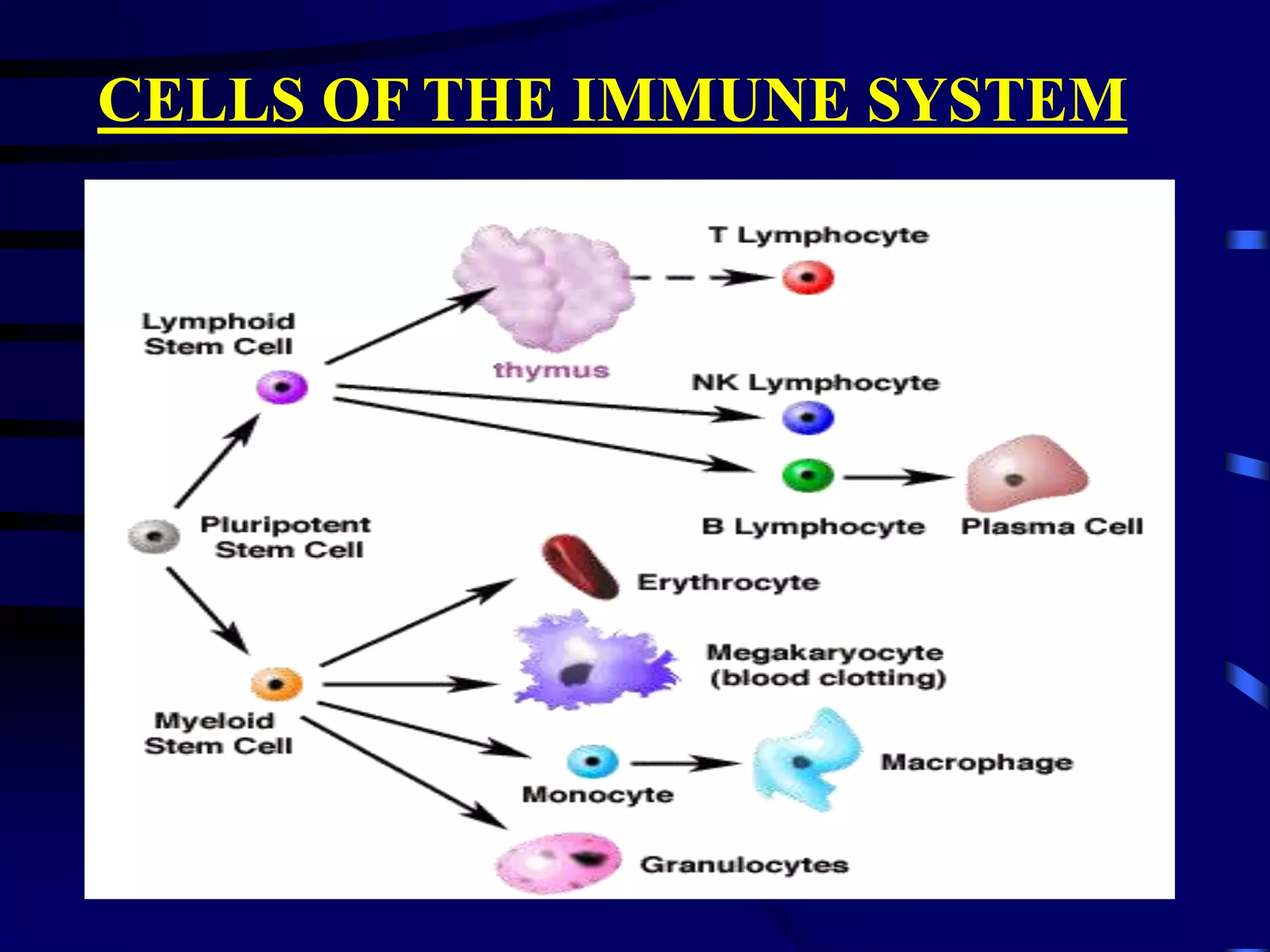
CELLS OF THE IMMUNE SYSTEM
BECOMES
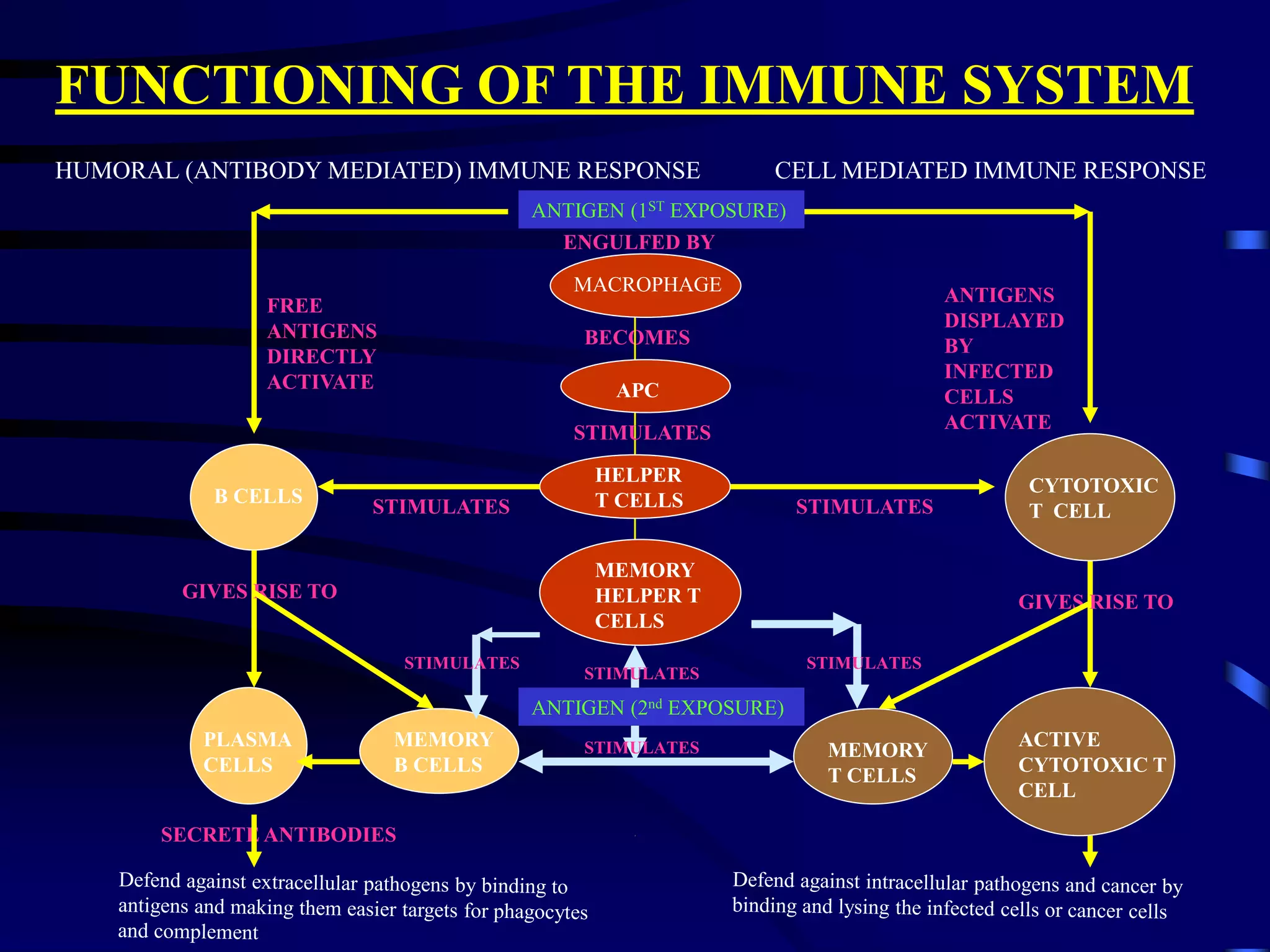
FUNCTIONING OF THE IMMUNE SYSTEM
HUMORAL (ANTIBODY MEDIATED) IMMUNE RESPONSE CELL MEDIATED IMMUNE RESPONSE
ANTIGEN (1ST EXPOSURE)
ANTIGENS
DISPLAYED
BY
INFECTED
CELLS
ACTIVATE
CYTOTOXIC
T CELL
GIVES RISE TO
ACTIVE
CYTOTOXIC T
CELL
ENGULFED BY
STIMULATES
MACROPHAGE
APC
HELPER
T CELLS STIMULATES
MEMORY
HELPER T
CELLS
MEMORY
T CELLS
MEMORY
B CELLS
PLASMA
CELLS
STIMULATES STIMULATES
B CELLS
FREE
ANTIGENS
DIRECTLY
ACTIVATE
STIMULATES
GIVES RISE TO
SECRETE ANTIBODIES
STIMULATES
ANTIGEN (2nd EXPOSURE)
STIMULATES
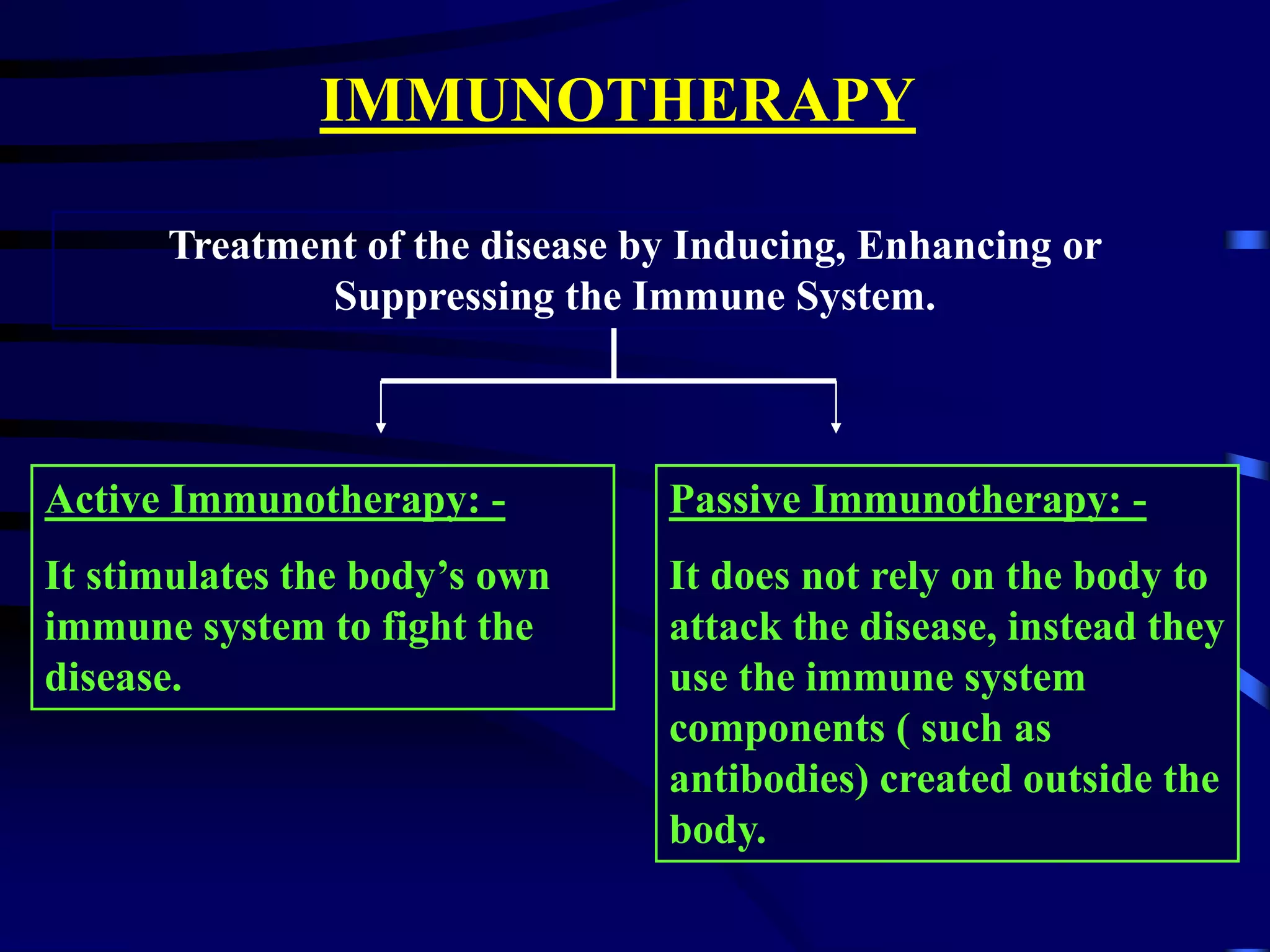
IMMUNOTHERAPY
Treatment of the disease by Inducing, Enhancing or
Suppressing the Immune System.
Active Immunotherapy: -
It stimulates the body’s own
immune system to fight the
disease.
Passive Immunotherapy: -
It does not rely on the body to
attack the disease, instead they
use the immune system
components ( such as
antibodies) created outside the
body.
PRODUCTION OF MONOCLONAL ANTIBODY
HYBRIDOMA TECHNOLOGY
EVOLUTION OF MONOCLONAL ANTIBODY
1. TRANSGENIC
DNA SPLICING / GENE KNOCK
OUT
2. LIBRARIES
a.BACTERIOPHAGE
b. mRNA
c. Cell Surface
ENGINNERED ANTIBODIES
FDAAPPROVED MONOCLONAL ANTIBODIES
H
2003
Psoriasis
Raptiva™
Genentech/Xoma
C
1997
Non-Hodgkin’s Lymphoma
Rituxan®
BiogenIdec/Genentech/Roche
M
2003
Non-Hodgkin’s Lymphoma
Bexxar®
Corixa/GlaxoSmithKline
C
2004
Colorectal Cancer
Erbitux ™
BMS/ImClone Systems
H
2003
Asthma
Xolair®
Novartis/Genentech/Tanox
PD
2002
Rheumatoid Arthritis
Humira™
Abbott/CAT
H
2001
Chronic Lymphocytic
Leukemia
Campath®
Schering /ILEX Oncology
H
2000
Acute Myleoid Leukemia
Mylotarg™
Wyeth
C
1998
Acute Transplant Rejection
Simulect®
Novartis
C
1998
Crohn’s, Rheumatoid Arthritis
Remicade®
J & J
H
H
1998
2004
Breast Cancer
Colorectal Cancer
Herceptin®
Avastin ®
Genentech/Roche
H
1998
Viral Respiratory Disease
Synagis®
MedImmune/Abbott
H
1997
Acute Transplant Rejection
Zenapax®
PDLI
M
2002
Non-Hodgkin’s Lymphoma
Zevalin™
BiogenIdec
C
1994
Acute Cardiac Conditions
ReoPro®
J&J/Eli Lilly
M
1986
Organ Transplant Rejection
Orthoclone-OKT®
Ortho Biotech
Antibody
Type (2)
Date of
FDA
Approval
Indications
Name of Product(1)
Company Name
Applications of Monoclonal
Antibodies
• Diagnostic Applications
Biosensors & Microarrays
• Therapeutic Applications
Transplant rejection Muronomab-CD3
Cardiovascular disease Abciximab
Cancer Rituximab
Infectious Diseases Palivizumab
Inflammatory disease Infliximab
• Clinical Applications
Purification of drugs, Imaging the target
• Future Applications
Fight against Bioterrorism
Market Analysis & Forecast
• Industry participants forecast of the market vary
widely, however, a consensus is emerging that
the market should reach US$26 billion by the end
of the decade. This is a conservative estimate
implying an average annual growth rate of 18%.
• By 2008, mAbs should account for 32 percent of
all revenue in the biotech market
• 100 mAb Expected By 2010
• mAb contributing to the in vitro diagnostics
market expected to be worth $34 Billion this year
Why should we be interested ?
• mAbs drive the development of multibillion dollar
biotechnology industry.
• Many of the leading pharmaceutical companies
have entered the mAb sector, attracted by quicker
and less costly development, higher success rates,
premium pricing, and a potentially reduced threat
from generics
• The outlook for monoclonal antibody therapeutics
is healthy. The ongoing success of existing
products, combined with a bulging pipeline of new
products awaiting approval and limited generic
erosion, point towards robust growth in this
segment
PAUL EHRLICH
“…. I TRUST, THAT
WE NO LONGER
FIND OURSELVES
LOST ON A
BOUNDLESS SEA,
BUT THAT WE HAVE
ALREADY CAUGHT
A DISTINCT
GLIMPSE OF THE
LAND WHERE WE
HOPE, NAY, WHICH
WE EXPECT, WILL
TEILD RICH
TREASURES FOR
BIOLOGY AND
THERAPEUTICS”

cells of immune system.ppt

  • 1.
    I. Overview: -The Immune System II. Introduction: - Monoclonal Antibodies
  • 2.
    • The PerfectWorld • The Real World COL D FL U CHICKEN POX STOMAC H UPSET HELP ME ! HELP ! HELP ME!
  • 3.
    THE IMMUNE SYSTEM DEFINITION:- The integrated body system of organs, tissues, cells & cell products that differentiates self from non – self & neutralizes potentially pathogenic organisms. (The American Heritage Stedman's Medical Dictionary) The Latin term “IMMUNIS” means EXEMPT, referring to protection against foreign agents. The Immune System consists of 1. Innate Immunity Primary Response 2. Acquired Immunity Secondary Response
  • 4.
    ANATOMY OF THEIMMUNE SYSTEM
  • 5.
    CELLS OF THEIMMUNE SYSTEM
  • 6.
    BECOMES FUNCTIONING OF THEIMMUNE SYSTEM HUMORAL (ANTIBODY MEDIATED) IMMUNE RESPONSE CELL MEDIATED IMMUNE RESPONSE ANTIGEN (1ST EXPOSURE) ANTIGENS DISPLAYED BY INFECTED CELLS ACTIVATE CYTOTOXIC T CELL GIVES RISE TO ACTIVE CYTOTOXIC T CELL ENGULFED BY STIMULATES MACROPHAGE APC HELPER T CELLS STIMULATES MEMORY HELPER T CELLS MEMORY T CELLS MEMORY B CELLS PLASMA CELLS STIMULATES STIMULATES B CELLS FREE ANTIGENS DIRECTLY ACTIVATE STIMULATES GIVES RISE TO SECRETE ANTIBODIES STIMULATES ANTIGEN (2nd EXPOSURE) STIMULATES
  • 7.
    IMMUNOTHERAPY Treatment of thedisease by Inducing, Enhancing or Suppressing the Immune System. Active Immunotherapy: - It stimulates the body’s own immune system to fight the disease. Passive Immunotherapy: - It does not rely on the body to attack the disease, instead they use the immune system components ( such as antibodies) created outside the body.
  • 8.
    PRODUCTION OF MONOCLONALANTIBODY HYBRIDOMA TECHNOLOGY
  • 9.
    EVOLUTION OF MONOCLONALANTIBODY 1. TRANSGENIC DNA SPLICING / GENE KNOCK OUT 2. LIBRARIES a.BACTERIOPHAGE b. mRNA c. Cell Surface
  • 10.
  • 11.
    FDAAPPROVED MONOCLONAL ANTIBODIES H 2003 Psoriasis Raptiva™ Genentech/Xoma C 1997 Non-Hodgkin’sLymphoma Rituxan® BiogenIdec/Genentech/Roche M 2003 Non-Hodgkin’s Lymphoma Bexxar® Corixa/GlaxoSmithKline C 2004 Colorectal Cancer Erbitux ™ BMS/ImClone Systems H 2003 Asthma Xolair® Novartis/Genentech/Tanox PD 2002 Rheumatoid Arthritis Humira™ Abbott/CAT H 2001 Chronic Lymphocytic Leukemia Campath® Schering /ILEX Oncology H 2000 Acute Myleoid Leukemia Mylotarg™ Wyeth C 1998 Acute Transplant Rejection Simulect® Novartis C 1998 Crohn’s, Rheumatoid Arthritis Remicade® J & J H H 1998 2004 Breast Cancer Colorectal Cancer Herceptin® Avastin ® Genentech/Roche H 1998 Viral Respiratory Disease Synagis® MedImmune/Abbott H 1997 Acute Transplant Rejection Zenapax® PDLI M 2002 Non-Hodgkin’s Lymphoma Zevalin™ BiogenIdec C 1994 Acute Cardiac Conditions ReoPro® J&J/Eli Lilly M 1986 Organ Transplant Rejection Orthoclone-OKT® Ortho Biotech Antibody Type (2) Date of FDA Approval Indications Name of Product(1) Company Name
  • 12.
    Applications of Monoclonal Antibodies •Diagnostic Applications Biosensors & Microarrays • Therapeutic Applications Transplant rejection Muronomab-CD3 Cardiovascular disease Abciximab Cancer Rituximab Infectious Diseases Palivizumab Inflammatory disease Infliximab • Clinical Applications Purification of drugs, Imaging the target • Future Applications Fight against Bioterrorism
  • 13.
    Market Analysis &Forecast • Industry participants forecast of the market vary widely, however, a consensus is emerging that the market should reach US$26 billion by the end of the decade. This is a conservative estimate implying an average annual growth rate of 18%. • By 2008, mAbs should account for 32 percent of all revenue in the biotech market • 100 mAb Expected By 2010 • mAb contributing to the in vitro diagnostics market expected to be worth $34 Billion this year
  • 14.
    Why should webe interested ? • mAbs drive the development of multibillion dollar biotechnology industry. • Many of the leading pharmaceutical companies have entered the mAb sector, attracted by quicker and less costly development, higher success rates, premium pricing, and a potentially reduced threat from generics • The outlook for monoclonal antibody therapeutics is healthy. The ongoing success of existing products, combined with a bulging pipeline of new products awaiting approval and limited generic erosion, point towards robust growth in this segment
  • 15.
    PAUL EHRLICH “…. ITRUST, THAT WE NO LONGER FIND OURSELVES LOST ON A BOUNDLESS SEA, BUT THAT WE HAVE ALREADY CAUGHT A DISTINCT GLIMPSE OF THE LAND WHERE WE HOPE, NAY, WHICH WE EXPECT, WILL TEILD RICH TREASURES FOR BIOLOGY AND THERAPEUTICS”