Catch
a
Butterfly
Catch
a
Butterfly
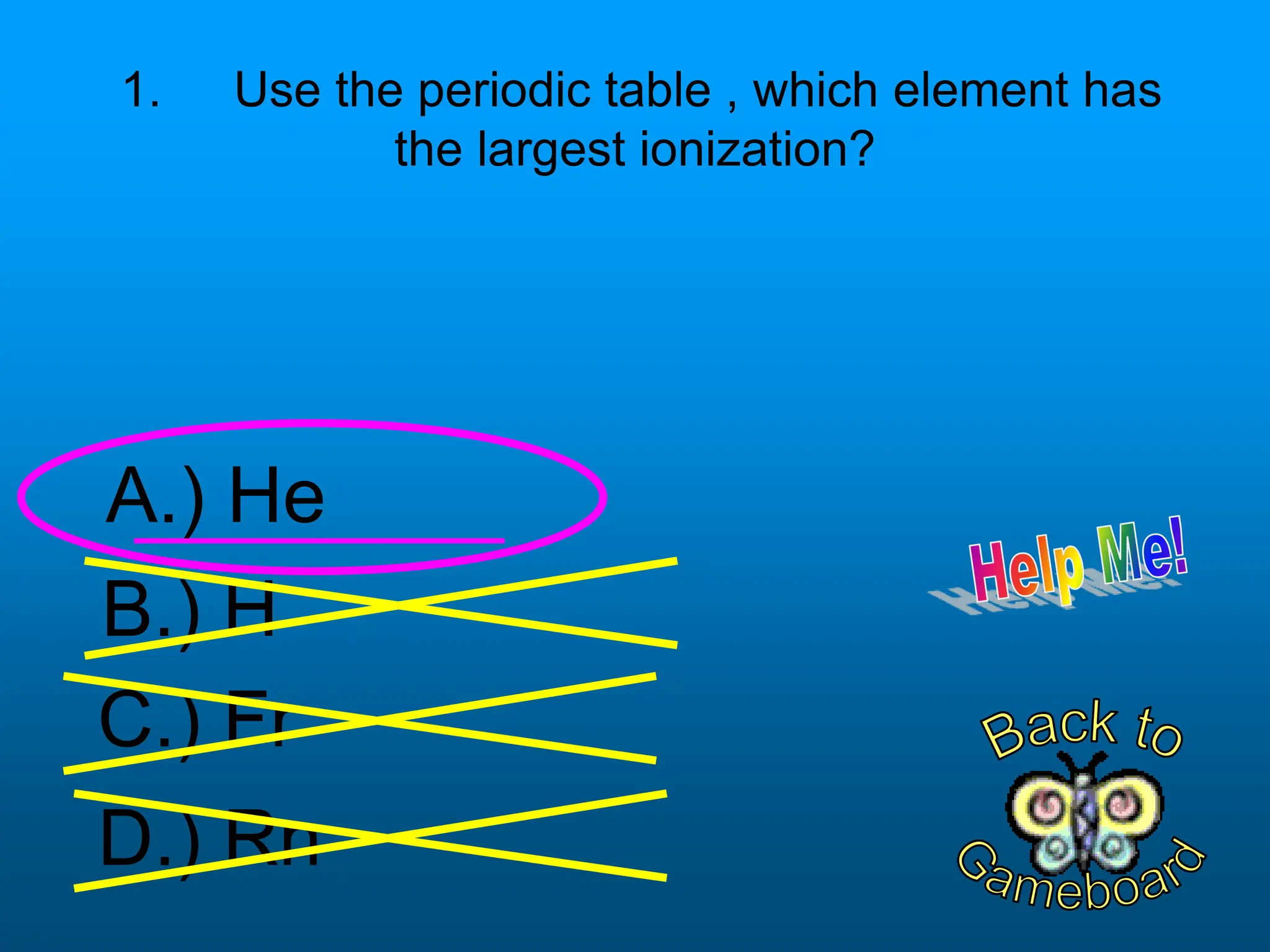
A.) He
B.) H
C.) Fr
D.) Rn
1. Use the periodic table , which element has
the largest ionization?
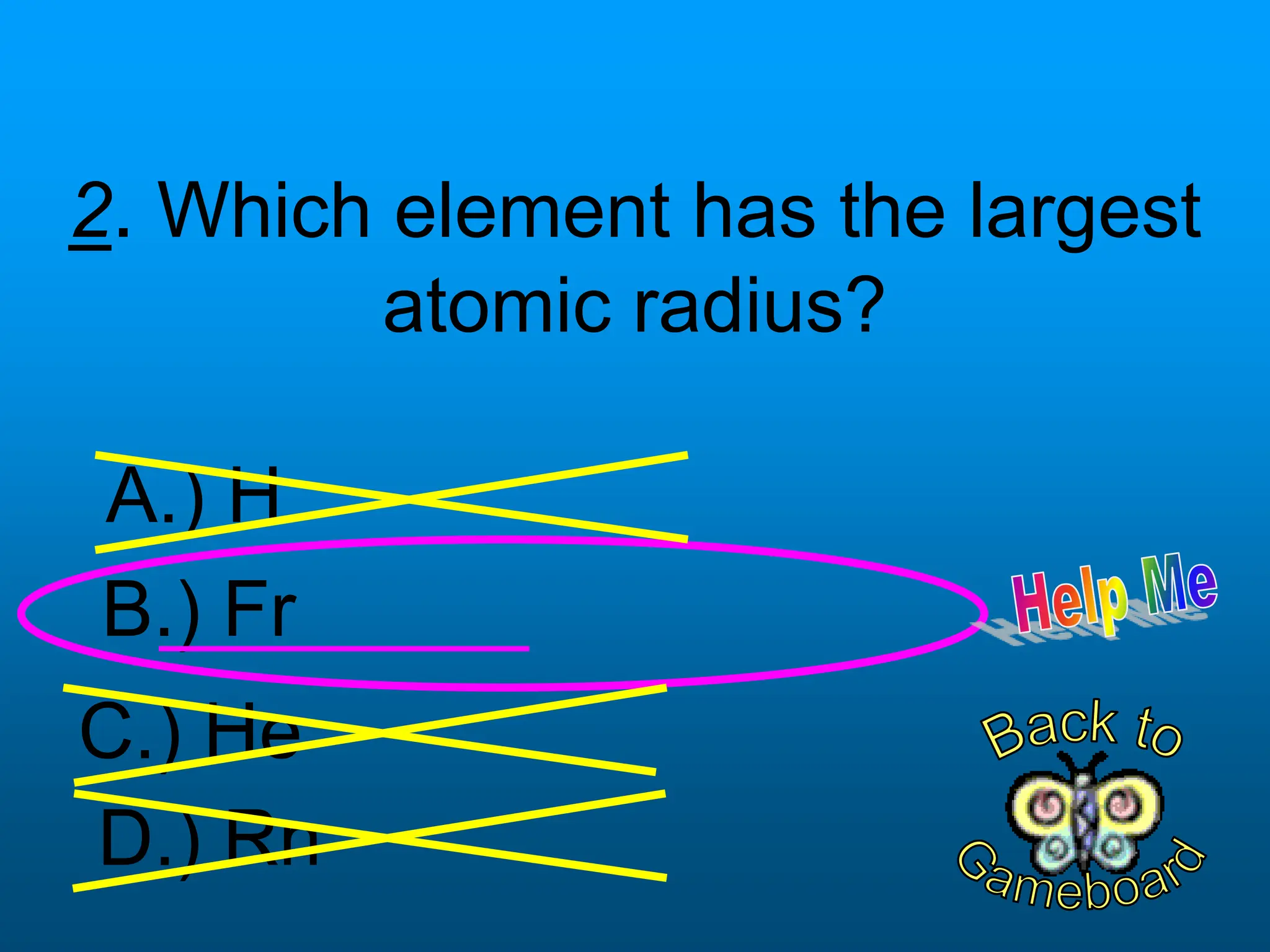
2. Which element has the largest
atomic radius?
A.) H
B.) Fr
C.) He
D.) Rn
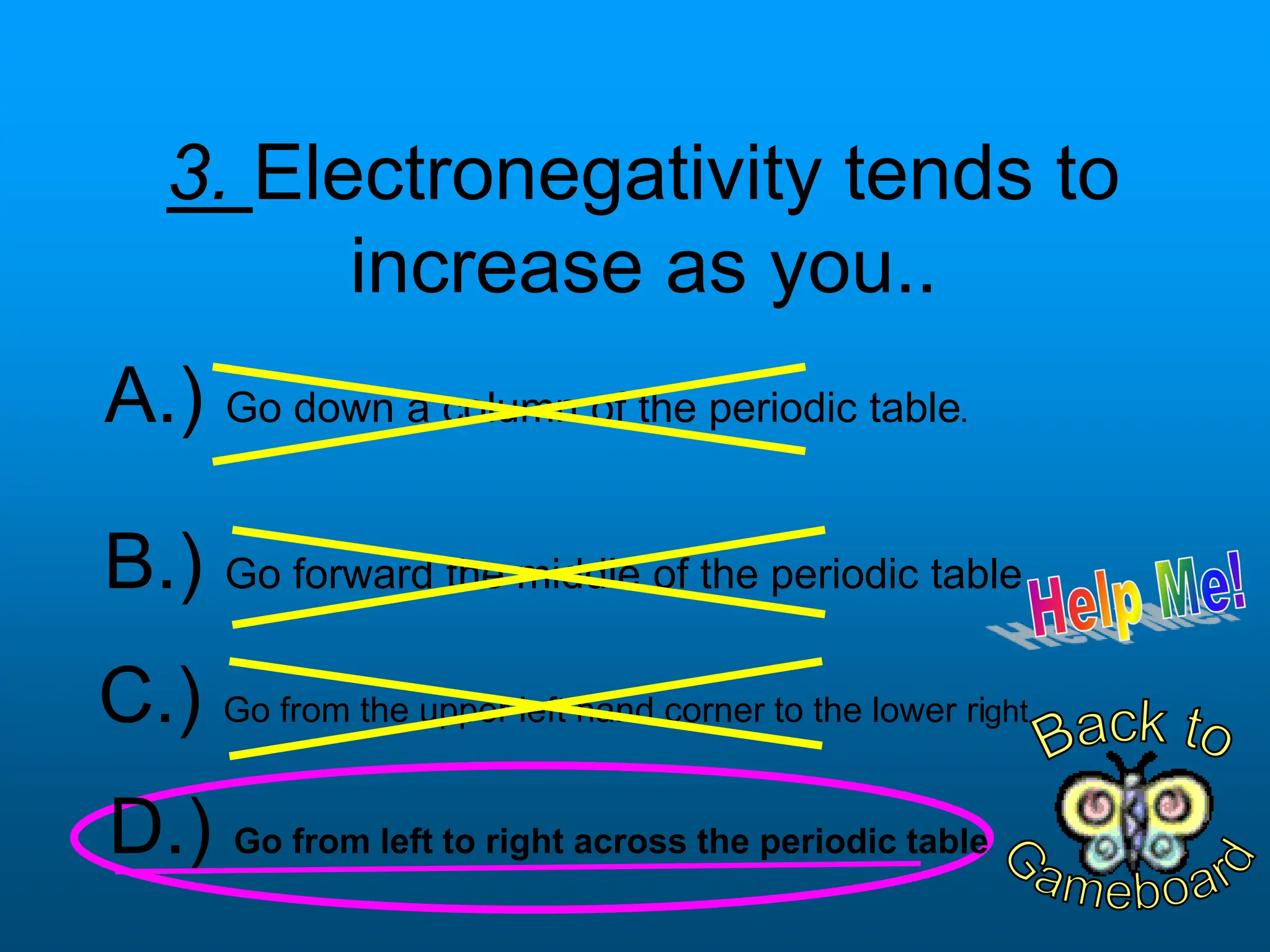
3. Electronegativity tends to
increase as you..
D.) Go from left to right across the periodic table
B.) Go forward the middle of the periodic table
C.) Go from the upper left hand corner to the lower right
A.) Go down a column of the periodic table.
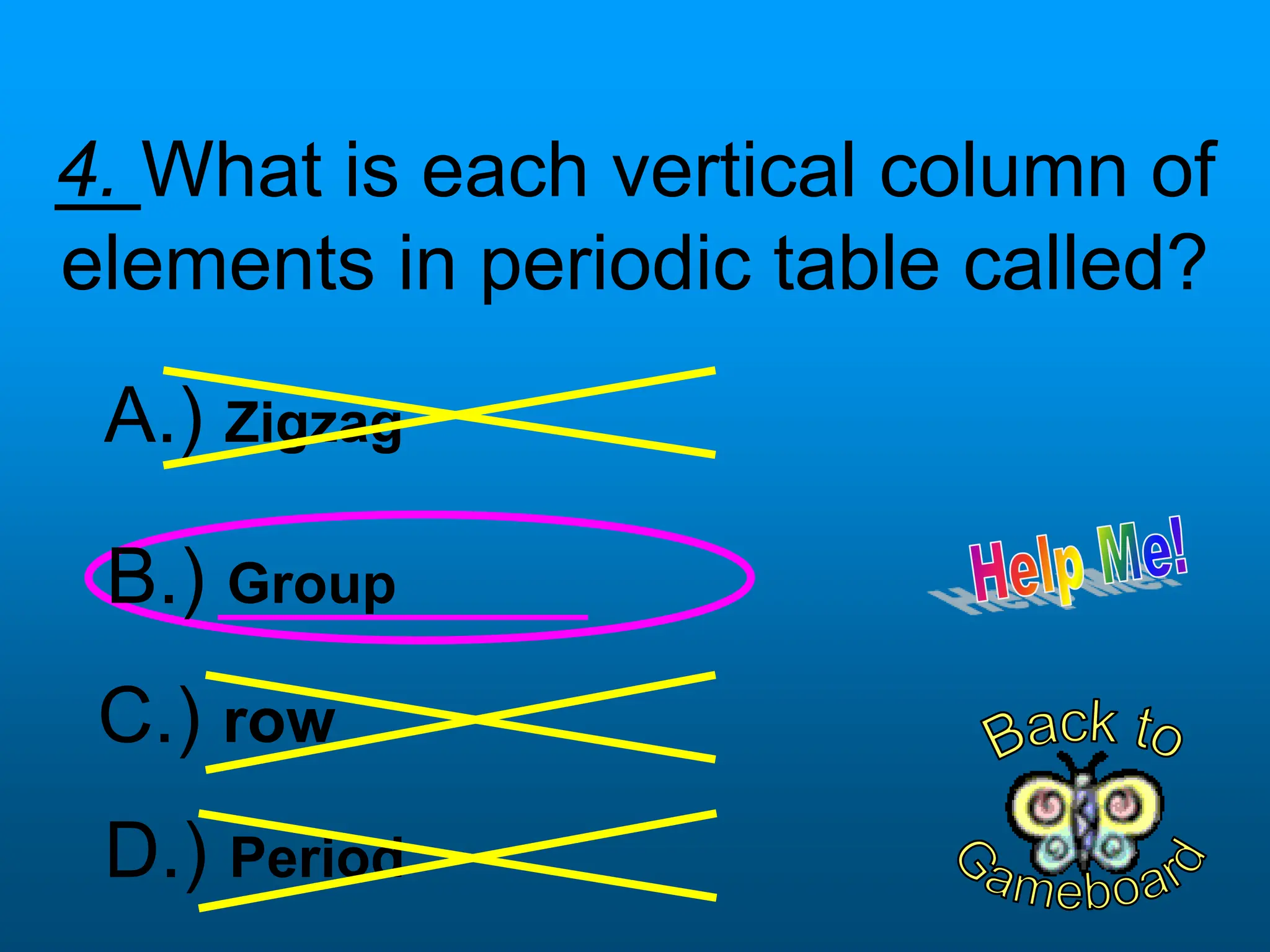
4. What is each vertical column of
elements in periodic table called?
D.) Period
B.) Group
C.) row
A.) Zigzag
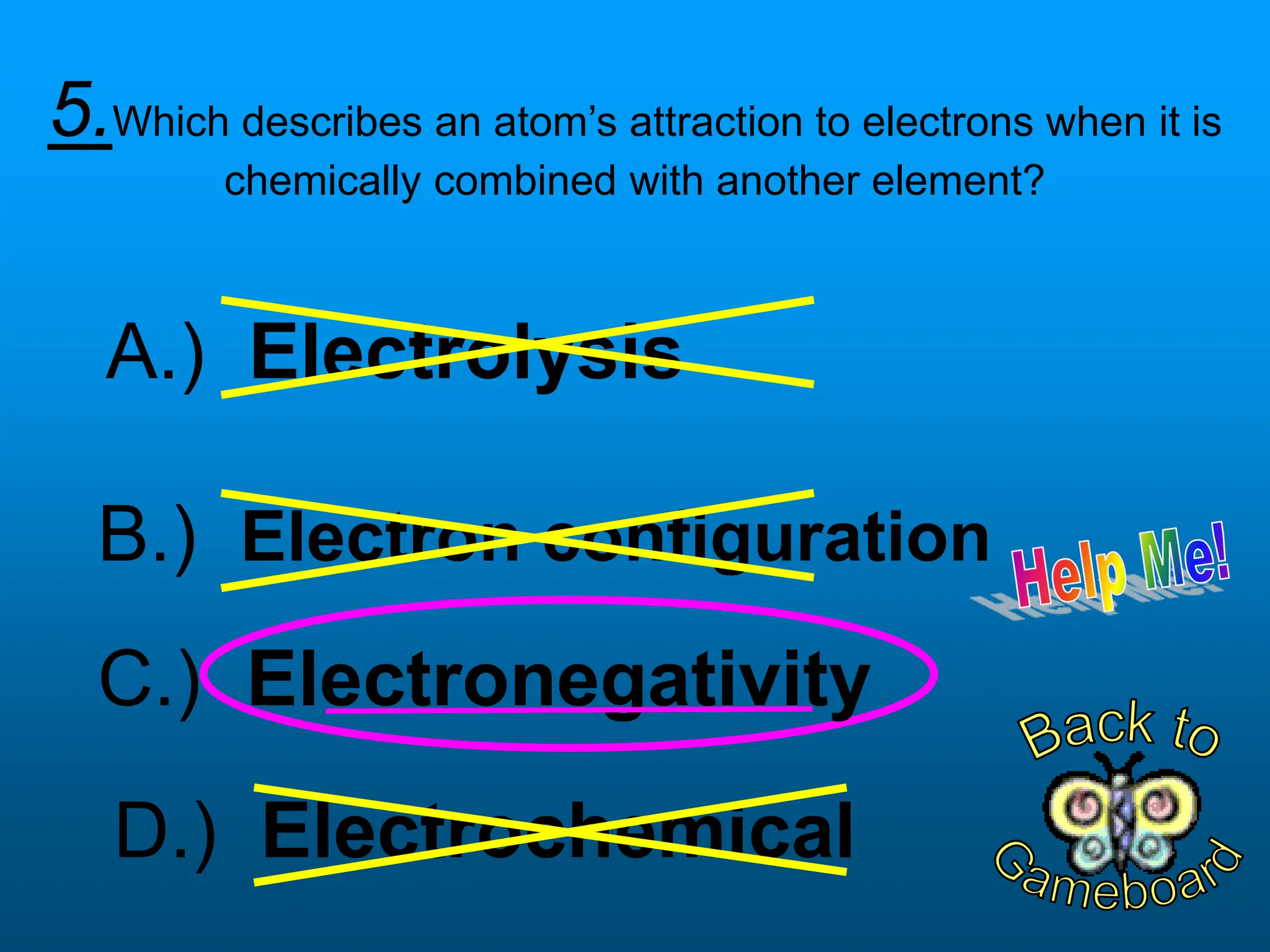
5.Which describes an atom’s attraction to electrons when it is
chemically combined with another element?
D.) Electrochemical
B.) Electron configuration
C.) Electronegativity
A.) Electrolysis
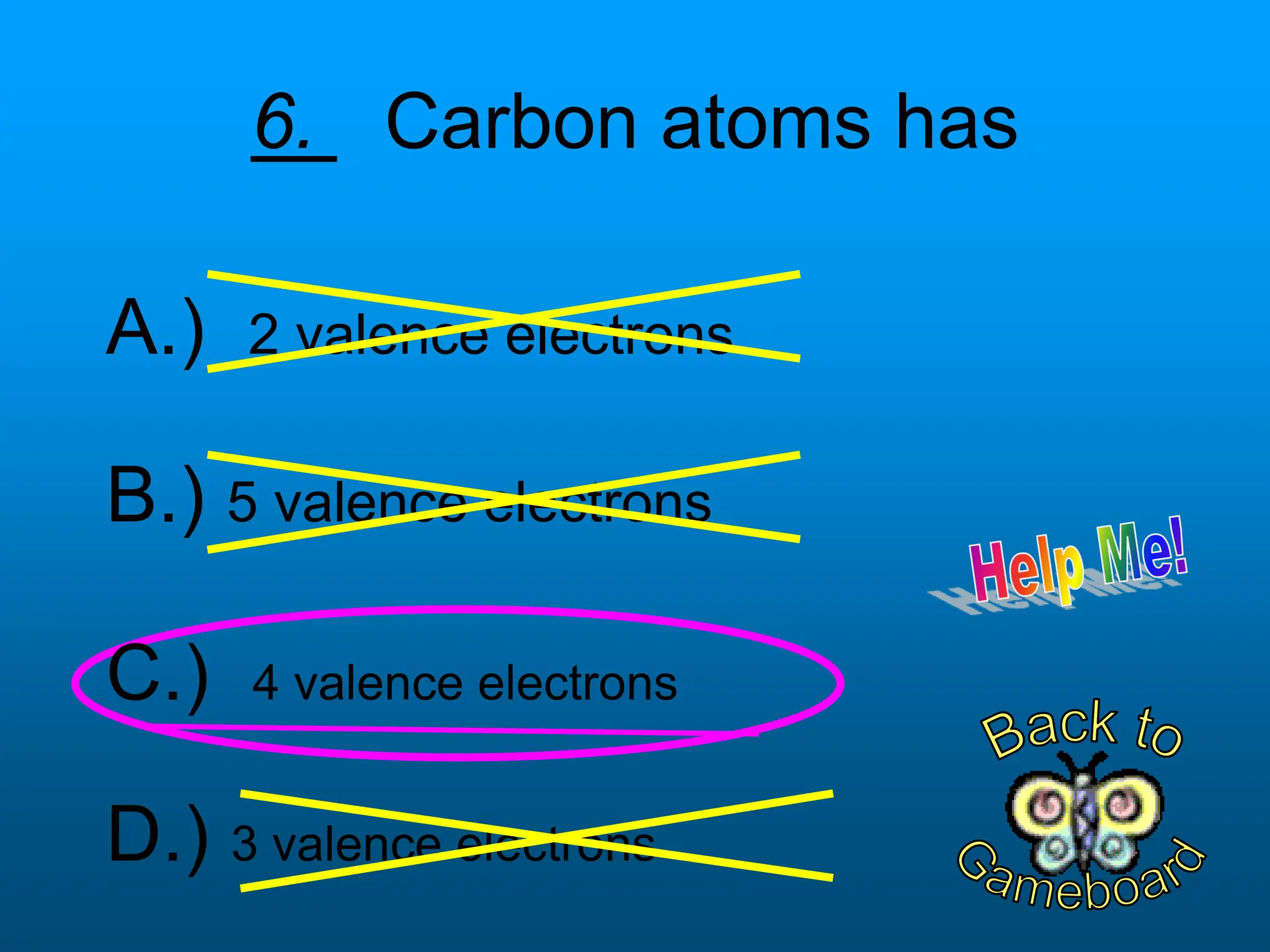
6. Carbon atoms has
D.) 3 valence electrons
B.) 5 valence electrons
C.) 4 valence electrons
A.) 2 valence electrons
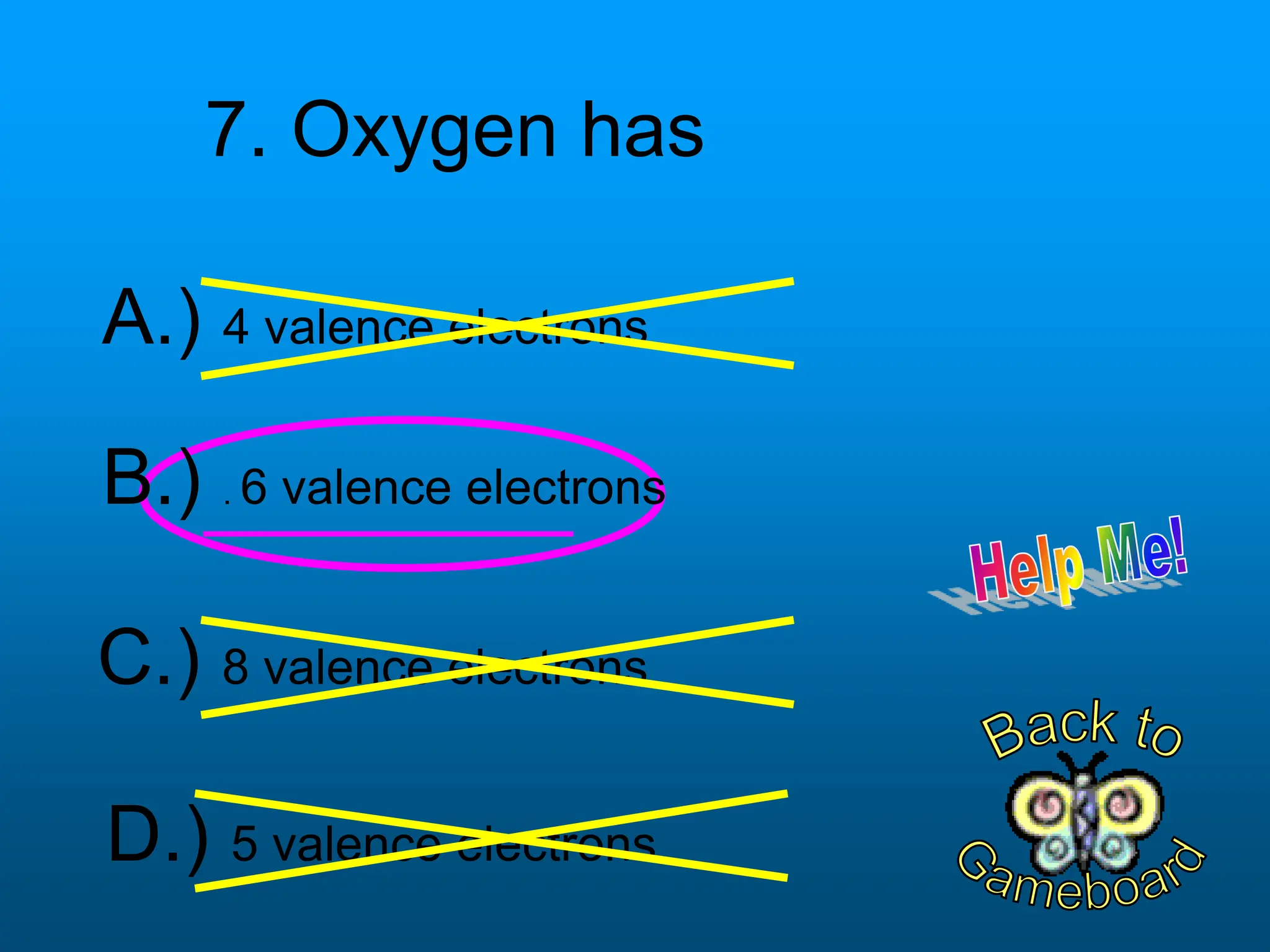
7. Oxygen has
D.) 5 valence electrons
B.) . 6 valence electrons
C.) 8 valence electrons
A.) 4 valence electrons
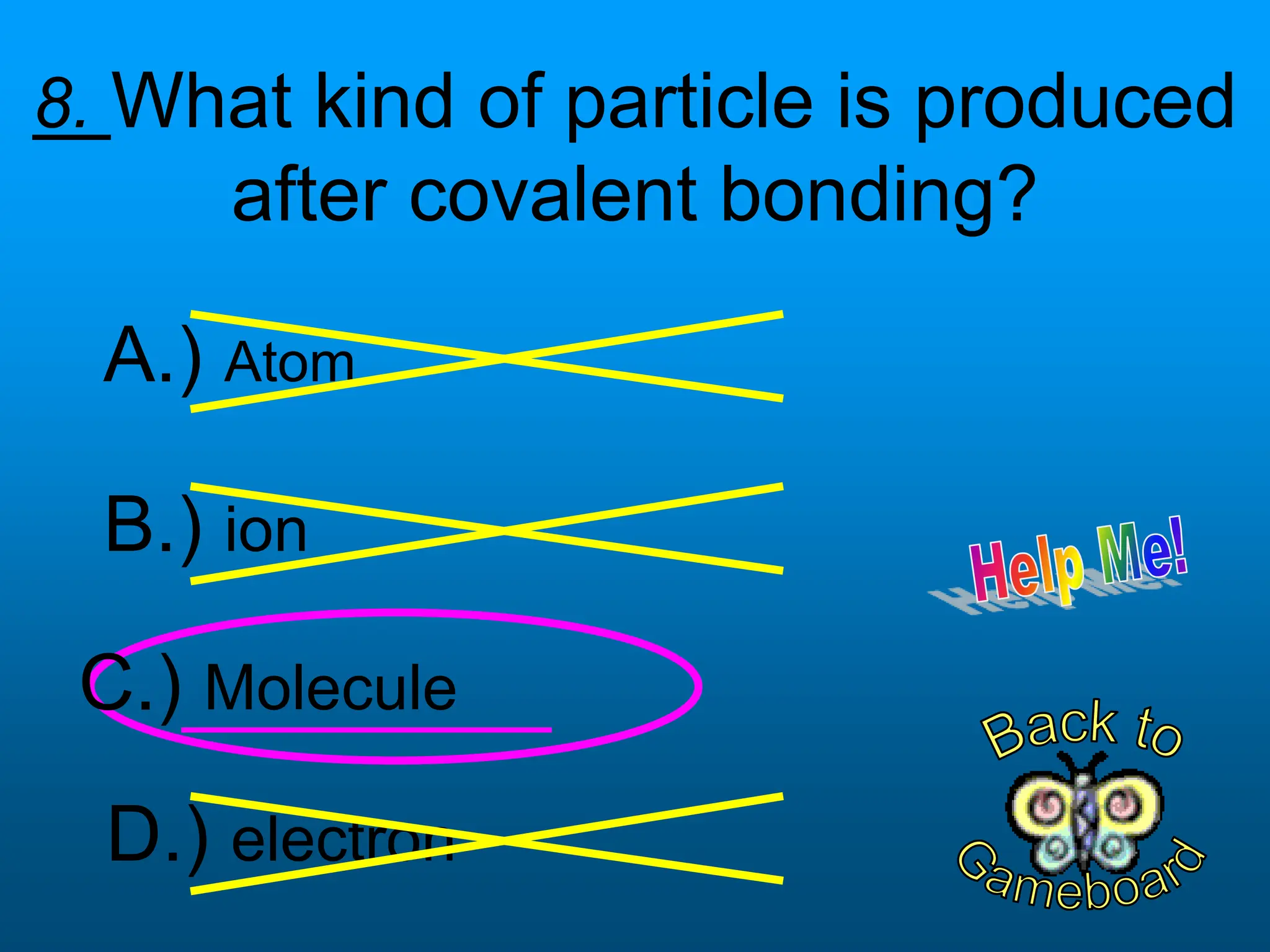
8. What kind of particle is produced
after covalent bonding?
D.) electron
B.) ion
C.) Molecule
A.) Atom
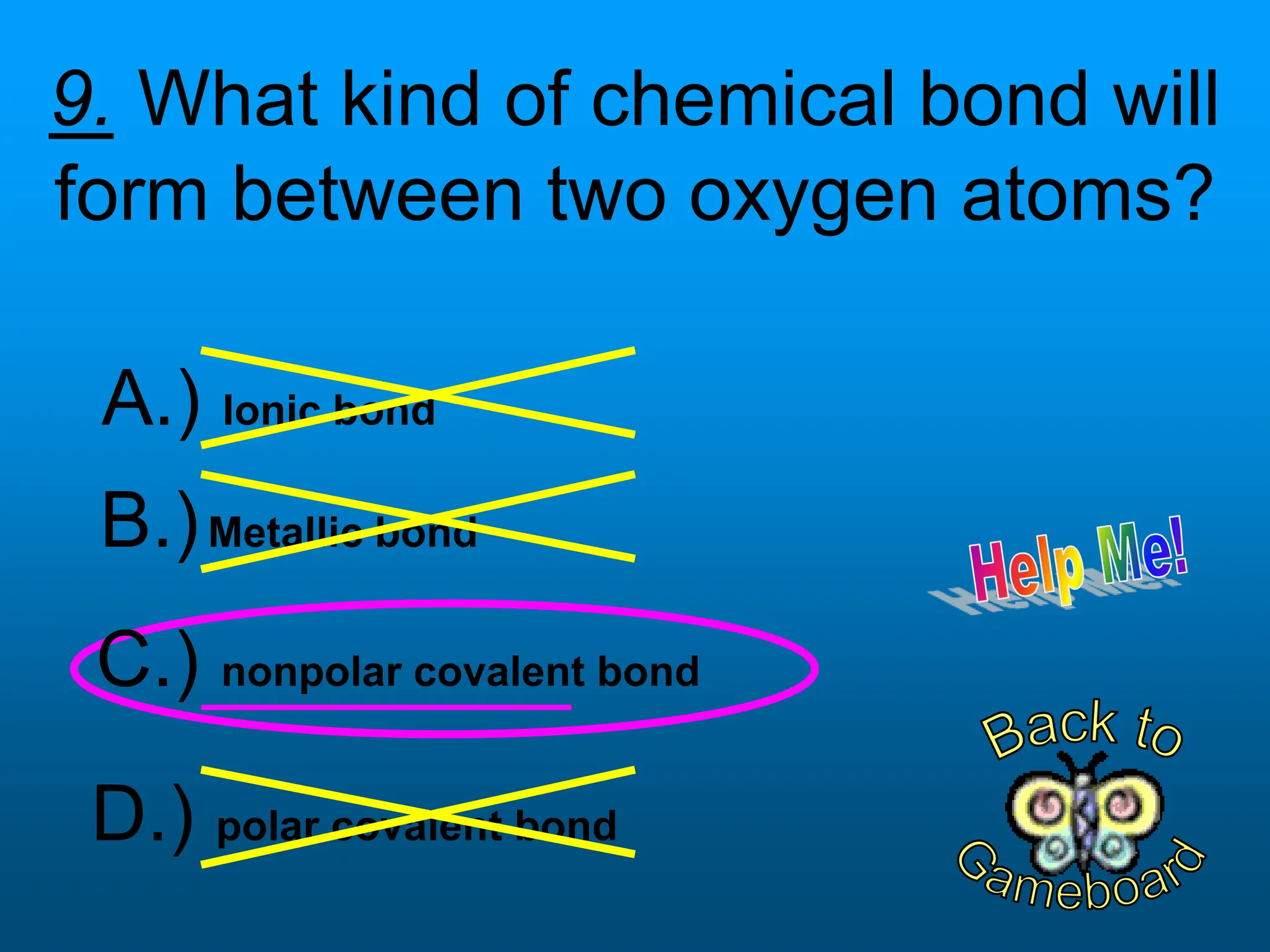
9. What kind of chemical bond will
form between two oxygen atoms?
D.) polar covalent bond
B.)Metallic bond
C.) nonpolar covalent bond
A.) Ionic bond
END

Catch a Butterfly - chemical bonding.ppt

  • 1.
  • 3.
    A.) He B.) H C.)Fr D.) Rn 1. Use the periodic table , which element has the largest ionization?
  • 4.
    2. Which elementhas the largest atomic radius? A.) H B.) Fr C.) He D.) Rn
  • 5.
    3. Electronegativity tendsto increase as you.. D.) Go from left to right across the periodic table B.) Go forward the middle of the periodic table C.) Go from the upper left hand corner to the lower right A.) Go down a column of the periodic table.
  • 6.
    4. What iseach vertical column of elements in periodic table called? D.) Period B.) Group C.) row A.) Zigzag
  • 7.
    5.Which describes anatom’s attraction to electrons when it is chemically combined with another element? D.) Electrochemical B.) Electron configuration C.) Electronegativity A.) Electrolysis
  • 8.
    6. Carbon atomshas D.) 3 valence electrons B.) 5 valence electrons C.) 4 valence electrons A.) 2 valence electrons
  • 9.
    7. Oxygen has D.)5 valence electrons B.) . 6 valence electrons C.) 8 valence electrons A.) 4 valence electrons
  • 10.
    8. What kindof particle is produced after covalent bonding? D.) electron B.) ion C.) Molecule A.) Atom
  • 11.
    9. What kindof chemical bond will form between two oxygen atoms? D.) polar covalent bond B.)Metallic bond C.) nonpolar covalent bond A.) Ionic bond
  • 12.