Case Study of
Taxi Business
By Jploft Solutions Pvt. Ltd.
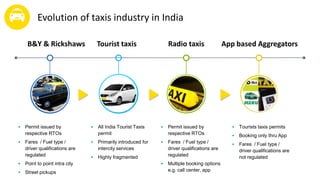
B&Y & Rickshaws Tourist taxis Radio taxis App based Aggregators
 Permit issued by
respective RTOs
 Fares / Fuel type /
driver qualifications are
regulated
 Point to point intra city
 Street pickups
 All India Tourist Taxis
permit
 Primarily introduced for
intercity services
 Highly fragmented
 Permit issued by
respective RTOs
 Fares / Fuel type /
driver qualifications are
regulated
 Multiple booking options
e.g. call center, app
 Tourists taxis permits
 Booking only thru App
 Fares / Fuel type /
driver qualifications are
not regulated
Evolution of taxis industry in India
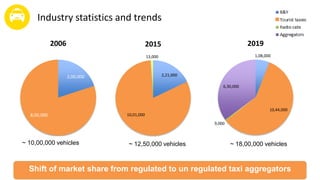
Industry statistics and trends
2,00,000
8,00,000
2006
2,21,000
10,01,000
13,000
2015
1,08,000
10,44,000
9,000
6,30,000
2019
~ 10,00,000 vehicles ~ 18,00,000 vehicles~ 12,50,000 vehicles
Shift of market share from regulated to un regulated taxi aggregators
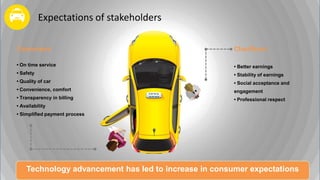
Chauffeurs
• Better earnings
• Stability of earnings
• Social acceptance and
engagement
• Professional respect
Consumers
• On time service
• Safety
• Quality of car
• Convenience, comfort
• Transparency in billing
• Availability
• Simplified payment process
Technology advancement has led to increase in consumer expectations
Expectations of stakeholders
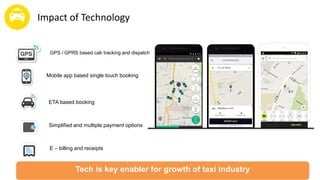
Impact of Technology
GPS / GPRS based cab tracking and dispatch
ETA based booking
Simplified and multiple payment options
E – billing and receipts
Mobile app based single touch booking
Tech is key enabler for growth of taxi industry
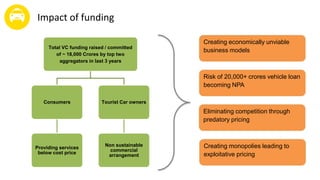
Impact of funding
Total VC funding raised / committed
of ~ 18,000 Crores by top two
aggregators in last 3 years
Consumers
Providing services
below cost price
Tourist Car owners
Non sustainable
commercial
arrangement
Creating economically unviable
business models
Risk of 20,000+ crores vehicle loan
becoming NPA
Eliminating competition through
predatory pricing
Creating monopolies leading to
exploitative pricing
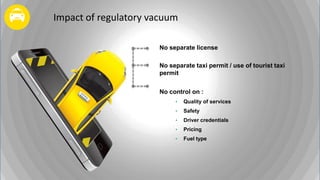
Impact of regulatory vacuum
No separate license
No separate taxi permit / use of tourist taxi
permit
No control on :
• Quality of services
• Safety
• Driver credentials
• Pricing
• Fuel type
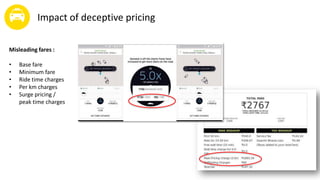
Impact of deceptive pricing
Misleading fares :
• Base fare
• Minimum fare
• Ride time charges
• Per km charges
• Surge pricing /
peak time charges
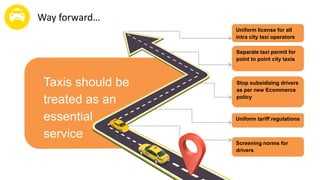
Taxis should be
treated as an
essential
service
Way forward…
Uniform tariff regulations
Stop subsidizing drivers
as per new Ecommerce
policy
Separate taxi permit for
point to point city taxis
Uniform license for all
intra city taxi operators
Screening norms for
drivers
Case study for taxi mobile application development

Case study for taxi mobile application development

  • 1.
    Case Study of TaxiBusiness By Jploft Solutions Pvt. Ltd.
  • 2.
    B&Y & RickshawsTourist taxis Radio taxis App based Aggregators  Permit issued by respective RTOs  Fares / Fuel type / driver qualifications are regulated  Point to point intra city  Street pickups  All India Tourist Taxis permit  Primarily introduced for intercity services  Highly fragmented  Permit issued by respective RTOs  Fares / Fuel type / driver qualifications are regulated  Multiple booking options e.g. call center, app  Tourists taxis permits  Booking only thru App  Fares / Fuel type / driver qualifications are not regulated Evolution of taxis industry in India
  • 3.
    Industry statistics andtrends 2,00,000 8,00,000 2006 2,21,000 10,01,000 13,000 2015 1,08,000 10,44,000 9,000 6,30,000 2019 ~ 10,00,000 vehicles ~ 18,00,000 vehicles~ 12,50,000 vehicles Shift of market share from regulated to un regulated taxi aggregators
  • 4.
    Chauffeurs • Better earnings •Stability of earnings • Social acceptance and engagement • Professional respect Consumers • On time service • Safety • Quality of car • Convenience, comfort • Transparency in billing • Availability • Simplified payment process Technology advancement has led to increase in consumer expectations Expectations of stakeholders
  • 5.
    Impact of Technology GPS/ GPRS based cab tracking and dispatch ETA based booking Simplified and multiple payment options E – billing and receipts Mobile app based single touch booking Tech is key enabler for growth of taxi industry
  • 6.
    Impact of funding TotalVC funding raised / committed of ~ 18,000 Crores by top two aggregators in last 3 years Consumers Providing services below cost price Tourist Car owners Non sustainable commercial arrangement Creating economically unviable business models Risk of 20,000+ crores vehicle loan becoming NPA Eliminating competition through predatory pricing Creating monopolies leading to exploitative pricing
  • 7.
    Impact of regulatoryvacuum No separate license No separate taxi permit / use of tourist taxi permit No control on : • Quality of services • Safety • Driver credentials • Pricing • Fuel type
  • 8.
    Impact of deceptivepricing Misleading fares : • Base fare • Minimum fare • Ride time charges • Per km charges • Surge pricing / peak time charges
  • 9.
    Taxis should be treatedas an essential service Way forward… Uniform tariff regulations Stop subsidizing drivers as per new Ecommerce policy Separate taxi permit for point to point city taxis Uniform license for all intra city taxi operators Screening norms for drivers