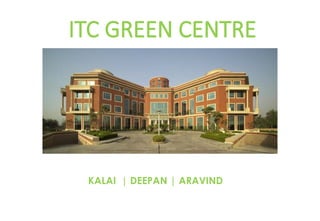
ITC GREEN CENTRE
KALAI | DEEPAN | ARAVIND
The ITC Green Centre, which is the
head­quarters of the ITC's hotel
division, has been recertified LEED
Platinum by the US Green Building
Council.
The ITC Green Centre is now the
world's highest ranked USGBC
LEED EB rated green building.
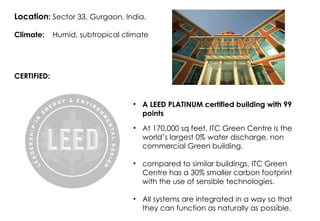
Location: Sector 33, Gurgaon, India.
Climate: Humid, subtropical climate
CERTIFIED:
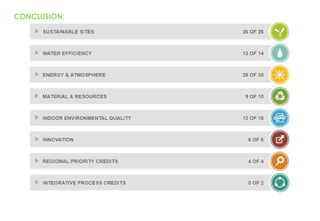
• A LEED PLATINUM certified building with 99
points
• At 170,000 sq feet, ITC Green Centre is the
world’s largest 0% water discharge, non
commercial Green building.
• compared to similar buildings, ITC Green
Centre has a 30% smaller carbon footprint
with the use of sensible technologies.
• All systems are integrated in a way so that
they can function as naturally as possible.
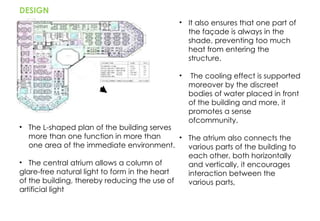
• The L-shaped plan of the building serves
more than one function in more than
one area of the immediate environment.
• The central atrium allows a column of
glare-free natural light to form in the heart
of the building, thereby reducing the use of
artificial light
• It also ensures that one part of
the façade is always in the
shade, preventing too much
heat from entering the
structure.
• The cooling effect is supported
moreover by the discreet
bodies of water placed in front
of the building and more, it
promotes a sense
ofcommunity.
• The atrium also connects the
various parts of the building to
each other, both horizontally
and vertically, it encourages
interaction between the
various parts,
DESIGN
WATER EFFICIENCY
Harvest 100% of the rain that falls on
the building, and recycle 100% of all
the water used in the building
including waste water.
Use of waterless urinals in the
building. The urinals use biological
blocks containing particular bacteria
that reduce odour problems and
blockages in the urinals that saves 3
lakhs litres of water per annum.
Annually, storm water pits recharged
ground water by around 5500
kilolitres, and sewage treatment
plant recycled 6900 kilolitres of water
in total, limiting costs but more
importantly water use tremendously.
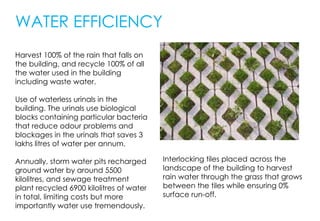
Interlocking tiles placed across the
landscape of the building to harvest
rain water through the grass that grows
between the tiles while ensuring 0%
surface run-off.
MATERIALS AND RESOURCE
 Over 40% of the materials used in the construction of ITC Green Centre was
available within 800 kilometres of the building site, which is not only cost
effective but also offers the chance of easy renewal.
 More than 10% of materials used to make work-stations, cabinets, conference
tables, wall panels and door frames was refurbished or salvaged from other
building sites.
 Over 10% of our construction material, such as glass, ceramic tiles,
steel and aluminium, used in the building are recycled.
 There are storage bins on every floor of ITC Green Centre for
recyclable materials like paper, cardboard, glass, plastic and metals,
affirming commitment to ‘reduce, reuse and recycle’ and making it a
point of everyday practice.
CONCLUSION:
CONCLUSION:
ITC is the world’s largest ‘Water Positive’ corporation. The amount of rainwater
harvest regularly exceeds the total amount of water consumed by the
company’s units.
 The ‘zero discharge’ objective helps reduce fresh water intake.
 It minimizes energy consumption, brings down indirect CO2 emissions and
eliminates effluent pollution.

Case study for GREEN BUILDING by team.pptx

  • 1.
    ITC GREEN CENTRE KALAI| DEEPAN | ARAVIND
  • 2.
    The ITC GreenCentre, which is the head­quarters of the ITC's hotel division, has been recertified LEED Platinum by the US Green Building Council. The ITC Green Centre is now the world's highest ranked USGBC LEED EB rated green building.
  • 3.
    Location: Sector 33,Gurgaon, India. Climate: Humid, subtropical climate CERTIFIED: • A LEED PLATINUM certified building with 99 points • At 170,000 sq feet, ITC Green Centre is the world’s largest 0% water discharge, non commercial Green building. • compared to similar buildings, ITC Green Centre has a 30% smaller carbon footprint with the use of sensible technologies. • All systems are integrated in a way so that they can function as naturally as possible.
  • 4.
    • The L-shapedplan of the building serves more than one function in more than one area of the immediate environment. • The central atrium allows a column of glare-free natural light to form in the heart of the building, thereby reducing the use of artificial light • It also ensures that one part of the façade is always in the shade, preventing too much heat from entering the structure. • The cooling effect is supported moreover by the discreet bodies of water placed in front of the building and more, it promotes a sense ofcommunity. • The atrium also connects the various parts of the building to each other, both horizontally and vertically, it encourages interaction between the various parts, DESIGN
  • 7.
    WATER EFFICIENCY Harvest 100%of the rain that falls on the building, and recycle 100% of all the water used in the building including waste water. Use of waterless urinals in the building. The urinals use biological blocks containing particular bacteria that reduce odour problems and blockages in the urinals that saves 3 lakhs litres of water per annum. Annually, storm water pits recharged ground water by around 5500 kilolitres, and sewage treatment plant recycled 6900 kilolitres of water in total, limiting costs but more importantly water use tremendously. Interlocking tiles placed across the landscape of the building to harvest rain water through the grass that grows between the tiles while ensuring 0% surface run-off.
  • 8.
    MATERIALS AND RESOURCE Over 40% of the materials used in the construction of ITC Green Centre was available within 800 kilometres of the building site, which is not only cost effective but also offers the chance of easy renewal.  More than 10% of materials used to make work-stations, cabinets, conference tables, wall panels and door frames was refurbished or salvaged from other building sites.  Over 10% of our construction material, such as glass, ceramic tiles, steel and aluminium, used in the building are recycled.  There are storage bins on every floor of ITC Green Centre for recyclable materials like paper, cardboard, glass, plastic and metals, affirming commitment to ‘reduce, reuse and recycle’ and making it a point of everyday practice.
  • 9.
  • 10.
    CONCLUSION: ITC is theworld’s largest ‘Water Positive’ corporation. The amount of rainwater harvest regularly exceeds the total amount of water consumed by the company’s units.  The ‘zero discharge’ objective helps reduce fresh water intake.  It minimizes energy consumption, brings down indirect CO2 emissions and eliminates effluent pollution.