Introduction & CaseStudies
his presentation covers a series of projects that
focus on water generation, as well as the
implementation of sustainable solutions for water
reuse and recycling.
Some projects around the world that promote
sustainability:
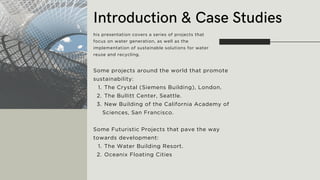
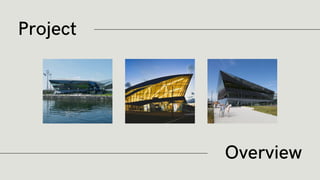
The Crystal (Siemens Building), London.
1.
The Bullitt Center, Seattle.
2.
New Building of the California Academy of
Sciences, San Francisco.
3.
Some Futuristic Projects that pave the way
towards development:
The Water Building Resort.
1.
Oceanix Floating Cities
2.
3.
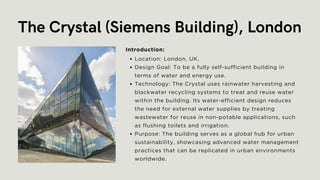
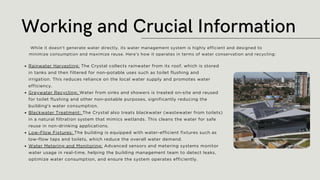
The Crystal (SiemensBuilding), London
Location: London, UK.
Design Goal: To be a fully self-sufficient building in
terms of water and energy use.
Technology: The Crystal uses rainwater harvesting and
blackwater recycling systems to treat and reuse water
within the building. Its water-efficient design reduces
the need for external water supplies by treating
wastewater for reuse in non-potable applications, such
as flushing toilets and irrigation.
Purpose: The building serves as a global hub for urban
sustainability, showcasing advanced water management
practices that can be replicated in urban environments
worldwide.
Introduction:
Working and CrucialInformation
While it doesn't generate water directly, its water management system is highly efficient and designed to
minimize consumption and maximize reuse. Here’s how it operates in terms of water conservation and recycling:
Rainwater Harvesting: The Crystal collects rainwater from its roof, which is stored
in tanks and then filtered for non-potable uses such as toilet flushing and
irrigation. This reduces reliance on the local water supply and promotes water
efficiency.
Greywater Recycling: Water from sinks and showers is treated on-site and reused
for toilet flushing and other non-potable purposes, significantly reducing the
building's water consumption.
Blackwater Treatment: The Crystal also treats blackwater (wastewater from toilets)
in a natural filtration system that mimics wetlands. This cleans the water for safe
reuse in non-drinking applications.
Low-Flow Fixtures: The building is equipped with water-efficient fixtures such as
low-flow taps and toilets, which reduce the overall water demand.
Water Metering and Monitoring: Advanced sensors and metering systems monitor
water usage in real-time, helping the building management team to detect leaks,
optimize water consumption, and ensure the system operates efficiently.
6.
Programme Analysis
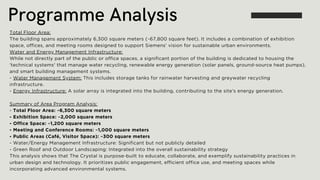
Total FloorArea:
The building spans approximately 6,300 square meters (~67,800 square feet). It includes a combination of exhibition
space, offices, and meeting rooms designed to support Siemens’ vision for sustainable urban environments.
Water and Energy Management Infrastructure:
While not directly part of the public or office spaces, a significant portion of the building is dedicated to housing the
'technical systems' that manage water recycling, renewable energy generation (solar panels, ground-source heat pumps),
and smart building management systems.
- Water Management System: This includes storage tanks for rainwater harvesting and greywater recycling
infrastructure.
- Energy Infrastructure: A solar array is integrated into the building, contributing to the site’s energy generation.
Summary of Area Program Analysis:
- Total Floor Area: ~6,300 square meters
- Exhibition Space: ~2,000 square meters
- Office Space: ~1,200 square meters
- Meeting and Conference Rooms: ~1,000 square meters
- Public Areas (Café, Visitor Space): ~300 square meters
- Water/Energy Management Infrastructure: Significant but not publicly detailed
- Green Roof and Outdoor Landscaping: Integrated into the overall sustainability strategy
This analysis shows that The Crystal is purpose-built to educate, collaborate, and exemplify sustainability practices in
urban design and technology. It prioritizes public engagement, efficient office use, and meeting spaces while
incorporating advanced environmental systems.
7.
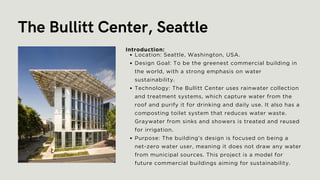
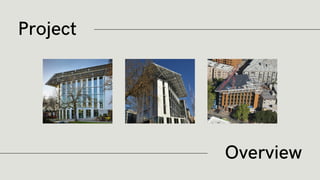
The Bullitt Center,Seattle
Location: Seattle, Washington, USA.
Design Goal: To be the greenest commercial building in
the world, with a strong emphasis on water
sustainability.
Technology: The Bullitt Center uses rainwater collection
and treatment systems, which capture water from the
roof and purify it for drinking and daily use. It also has a
composting toilet system that reduces water waste.
Graywater from sinks and showers is treated and reused
for irrigation.
Purpose: The building's design is focused on being a
net-zero water user, meaning it does not draw any water
from municipal sources. This project is a model for
future commercial buildings aiming for sustainability.
Introduction:
Rainwater Harvesting:
Collects rainwaterfrom the roof into a 56,000-gallon cistern for building use.
Water Filtration & Treatment:
Filters and treats rainwater with UV disinfection and carbon filtration to meet drinking
water standards.
Net-Zero Water System:
Aims to use only water collected and treated on-site, achieving net-zero water use.
Greywater Recycling:
Treats greywater from sinks and showers for reuse in toilet flushing and irrigation.
Composting Toilets:
Uses waterless composting toilets, reducing water consumption and processing waste
sustainably.
Living Building Challenge:
Complies with the Living Building Challenge standards for net-zero water.
Water Efficiency:
Equipped with low-flow fixtures to minimize water usage across the building.
Working and Crucial Information
The Bullitt Center in Seattle, often referred to as the "greenest commercial building in the world," showcases an
innovative and highly efficient approach to water generation and management.
10.
Programme Analysis
Total FloorArea:
The Bullitt Center has a total floor area of approximately 50,000 square feet (~4,645 square meters). The building
consists of multiple floors, each designed for specific uses.
Sustainability Features:
Living Building Challenge Compliance: The building incorporates various sustainability features, including:
Net-zero energy systems, which ensure that the building generates as much energy as it consumes.
Water systems that achieve net-zero water use through rainwater harvesting and greywater recycling.
Education on Sustainability: The design emphasises transparency and education about sustainable practices, with
many features visible and integrated into the daily experience of building occupants.
Summary of Area Program Analysis:
Total Floor Area: ~50,000 square feet (~4,645 square meters)
Office Space: ~30,000 square feet (~2,787 square meters)
Exhibition and Educational Space: ~1,500 square feet (~139 square meters)
Meeting and Conference Facilities: ~5,000 square feet (~464 square meters)
Common Areas and Amenities: Includes breakout spaces, kitchens, and a rooftop garden.
Mechanical and Technical Spaces: Support for energy management and water systems.
Sustainability Features: Designed to comply with the Living Building Challenge and promote net-zero energy and
water use.
The Bullitt Center is not just an office building but a holistic environment that embodies sustainable practices, promotes
community engagement, and serves as an educational resource for the public and industry professionals alike.
11.
California Academy ofSciences
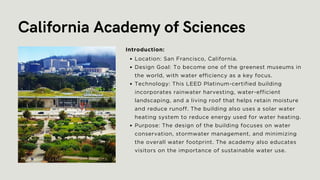
Location: San Francisco, California.
Design Goal: To become one of the greenest museums in
the world, with water efficiency as a key focus.
Technology: This LEED Platinum-certified building
incorporates rainwater harvesting, water-efficient
landscaping, and a living roof that helps retain moisture
and reduce runoff. The building also uses a solar water
heating system to reduce energy used for water heating.
Purpose: The design of the building focuses on water
conservation, stormwater management, and minimizing
the overall water footprint. The academy also educates
visitors on the importance of sustainable water use.
Introduction:
Rainwater Harvesting:
Collects rainwaterfrom the green roof and other surfaces into an underground cistern to
reduce reliance on municipal water.
Water Filtration and Treatment:
Harvested rainwater is filtered and treated for non-potable uses, such as irrigation and
toilet flushing.
Net-Zero Water Use:
Aims for net-zero water by efficiently managing collected rainwater and minimising overall
water consumption.
Greywater Recycling:
Implements a system to treat greywater from sinks and showers for reuse in toilet flushing.
Stormwater Management:
Uses permeable paving and bioswales to capture and filter stormwater, promoting natural
infiltration and reducing flooding.
Education and Research:
Serves as an educational resource, demonstrating innovative water management practices
and conducting research on sustainability.
Working and Crucial Information
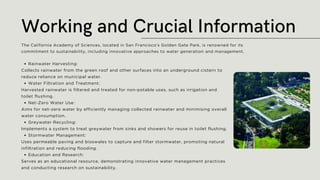
The California Academy of Sciences, located in San Francisco's Golden Gate Park, is renowned for its
commitment to sustainability, including innovative approaches to water generation and management.
14.
Programme Analysis
Total FloorArea:
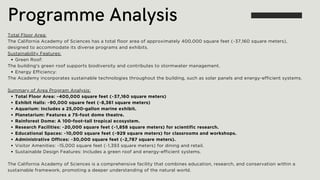
The California Academy of Sciences has a total floor area of approximately 400,000 square feet (~37,160 square meters),
designed to accommodate its diverse programs and exhibits.
Sustainability Features:
Green Roof:
The building's green roof supports biodiversity and contributes to stormwater management.
Energy Efficiency:
The Academy incorporates sustainable technologies throughout the building, such as solar panels and energy-efficient systems.
Summary of Area Program Analysis:
Total Floor Area: ~400,000 square feet (~37,160 square meters)
Exhibit Halls: ~90,000 square feet (~8,361 square meters)
Aquarium: Includes a 25,000-gallon marine exhibit.
Planetarium: Features a 75-foot dome theatre.
Rainforest Dome: A 100-foot-tall tropical ecosystem.
Research Facilities: ~20,000 square feet (~1,858 square meters) for scientific research.
Educational Spaces: ~10,000 square feet (~929 square meters) for classrooms and workshops.
Administrative Offices: ~30,000 square feet (~2,787 square meters).
Visitor Amenities: ~15,000 square feet (~1,393 square meters) for dining and retail.
Sustainable Design Features: Includes a green roof and energy-efficient systems.
The California Academy of Sciences is a comprehensive facility that combines education, research, and conservation within a
sustainable framework, promoting a deeper understanding of the natural world.
15.
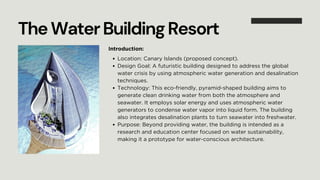
Location: Canary Islands(proposed concept).
Design Goal: A futuristic building designed to address the global
water crisis by using atmospheric water generation and desalination
techniques.
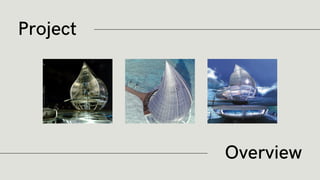
Technology: This eco-friendly, pyramid-shaped building aims to
generate clean drinking water from both the atmosphere and
seawater. It employs solar energy and uses atmospheric water
generators to condense water vapor into liquid form. The building
also integrates desalination plants to turn seawater into freshwater.
Purpose: Beyond providing water, the building is intended as a
research and education center focused on water sustainability,
making it a prototype for water-conscious architecture.
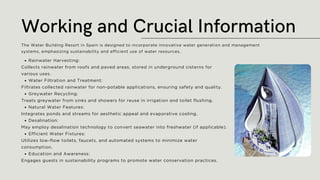
TheWaterBuildingResort
Introduction:
Rainwater Harvesting:
Collects rainwaterfrom roofs and paved areas, stored in underground cisterns for
various uses.
Water Filtration and Treatment:
Filtrates collected rainwater for non-potable applications, ensuring safety and quality.
Greywater Recycling:
Treats greywater from sinks and showers for reuse in irrigation and toilet flushing.
Natural Water Features:
Integrates ponds and streams for aesthetic appeal and evaporative cooling.
Desalination:
May employ desalination technology to convert seawater into freshwater (if applicable).
Efficient Water Fixtures:
Utilizes low-flow toilets, faucets, and automated systems to minimize water
consumption.
Education and Awareness:
Engages guests in sustainability programs to promote water conservation practices.
Working and Crucial Information
The Water Building Resort in Spain is designed to incorporate innovative water generation and management
systems, emphasizing sustainability and efficient use of water resources.
18.
Programme Analysis
Total FloorArea:
The Water Building Resort encompasses a total floor area of approximately 100,000 square feet (~9,290 square meters),
integrating various facilities and amenities.
Sustainability Features:
Water Management Facilities:
Space for water treatment and recycling systems, encompassing approximately 2,000 square feet (~186 square meters) for
managing harvested rainwater and greywater.
Green Roof and Landscaped Areas:
Outdoor spaces are designed to enhance biodiversity and manage stormwater, covering around 15,000 square feet (~1,393
square meters).
Summary of Area Program Analysis:
Total Floor Area: ~100,000 square feet (~9,290 square meters)
Guest Accommodations: ~70% of total area (approx. 100-150 rooms)
Common Areas: Lobby (5,000 sq ft), Dining (10,000 sq ft), Bars (3,000 sq ft)
Wellness Facilities: Spa (10,000 sq ft), Pools (5,000 sq ft)
Conference Spaces: Meeting Rooms (7,000 sq ft), Banquet Hall (8,000 sq ft)
Sustainability Features: Water management (2,000 sq ft), Green Roof and Landscaped Areas (15,000 sq ft)
Staff and Administrative Areas: Staff Quarters (3,000 sq ft), Administrative Offices (5,000 sq ft)
The Water Building Resort is designed to offer a blend of comfort and sustainability, providing guests with an eco-friendly
experience while promoting responsible water management practices.
19.
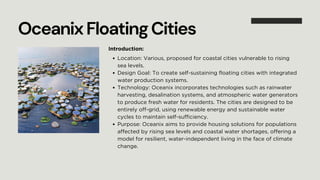
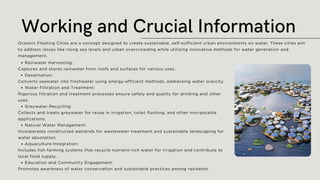
OceanixFloatingCities
Introduction:
Location: Various, proposedfor coastal cities vulnerable to rising
sea levels.
Design Goal: To create self-sustaining floating cities with integrated
water production systems.
Technology: Oceanix incorporates technologies such as rainwater
harvesting, desalination systems, and atmospheric water generators
to produce fresh water for residents. The cities are designed to be
entirely off-grid, using renewable energy and sustainable water
cycles to maintain self-sufficiency.
Purpose: Oceanix aims to provide housing solutions for populations
affected by rising sea levels and coastal water shortages, offering a
model for resilient, water-independent living in the face of climate
change.
Rainwater Harvesting:
Captures andstores rainwater from roofs and surfaces for various uses.
Desalination:
Converts seawater into freshwater using energy-efficient methods, addressing water scarcity.
Water Filtration and Treatment:
Rigorous filtration and treatment processes ensure safety and quality for drinking and other
uses.
Greywater Recycling:
Collects and treats greywater for reuse in irrigation, toilet flushing, and other non-potable
applications.
Natural Water Management:
Incorporates constructed wetlands for wastewater treatment and sustainable landscaping for
water absorption.
Aquaculture Integration:
Includes fish farming systems that recycle nutrient-rich water for irrigation and contribute to
local food supply.
Education and Community Engagement:
Promotes awareness of water conservation and sustainable practices among residents.
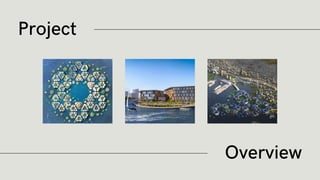
Working and Crucial Information
Oceanix Floating Cities are a concept designed to create sustainable, self-sufficient urban environments on water. These cities aim
to address issues like rising sea levels and urban overcrowding while utilizing innovative methods for water generation and
management.
22.
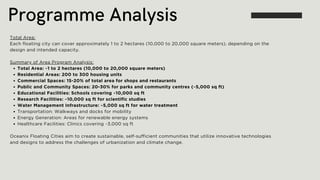
Programme Analysis
Total Area:
Eachfloating city can cover approximately 1 to 2 hectares (10,000 to 20,000 square meters), depending on the
design and intended capacity.
Summary of Area Program Analysis:
Total Area: ~1 to 2 hectares (10,000 to 20,000 square meters)
Residential Areas: 200 to 300 housing units
Commercial Spaces: 15-20% of total area for shops and restaurants
Public and Community Spaces: 20-30% for parks and community centres (~5,000 sq ft)
Educational Facilities: Schools covering ~10,000 sq ft
Research Facilities: ~10,000 sq ft for scientific studies
Water Management Infrastructure: ~5,000 sq ft for water treatment
Transportation: Walkways and docks for mobility
Energy Generation: Areas for renewable energy systems
Healthcare Facilities: Clinics covering ~3,000 sq ft
Oceanix Floating Cities aim to create sustainable, self-sufficient communities that utilize innovative technologies
and designs to address the challenges of urbanization and climate change.
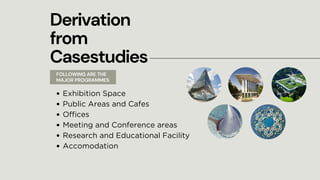
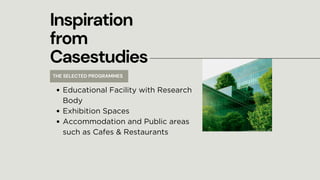
Educational Facility withResearch Body
The facility aims to foster research and educate future generations about emerging
trends in sustainability. It is dedicated to promoting and implementing initiatives that
support the global preservation of nature and identifying suitable alternatives to
meet the growing demands of humanity.
Exhibition Spaces
These spaces are designed to showcase contemporary advancements and practices
in sustainability, raising awareness of the critical importance of conservation and
preservation through a sustainable approach.
Accommodation and Public Areas (Cafés and Restaurants)
These areas are intended to immerse visitors in the ecosystem, providing them with
an opportunity to engage with modern research and educational efforts. By
highlighting ongoing trends in sustainability, these spaces contribute to a collective
effort to enhance environmental stewardship and improve the world for future
generations.
Hydro-Sanctum Area Programme
26.
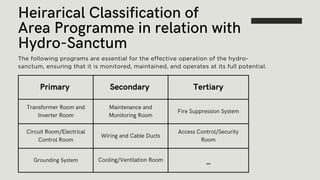
Primary Secondary Tertiary
TransformerRoom and
Inverter Room
Maintenance and
Monitoring Room
Fire Suppression System
Circuit Room/Electrical
Control Room
Wiring and Cable Ducts
Access Control/Security
Room
Grounding System Cooling/Ventilation Room _
Heirarical Classification of
Area Programme in relation with
Hydro-Sanctum
The following programs are essential for the effective operation of the hydro-
sanctum, ensuring that it is monitored, maintained, and operates at its full potential.
27.
Classifying the componentsinto Primary, Secondary, and Tertiary categories based on their function and criticality within a
power or electrical system:
Primary Systems (Critical for Core Operation):
Transformer Room and Inverter Room
1.
These are core components that handle the conversion and distribution of electrical power, essential for system
functionality.
2. Circuit Room/Electrical Control Room
This room houses the control systems for electrical circuits, directly affecting power flow and system safety.
3. Grounding System
This is crucial for electrical safety, protecting both equipment and personnel from electrical faults.
Secondary Systems (Support the Primary Systems):
Maintenance and Monitoring Room
1.
Supports the smooth operation of the primary systems by facilitating monitoring, control, and troubleshooting.
2. Wiring and Cable Ducts
These are essential for connectivity but are considered secondary since they support the transfer of power rather than
directly generating or converting it.
3. Cooling/Ventilation for Equipment
Supports the primary systems by maintaining optimal temperatures for equipment, preventing overheating and ensuring
longevity.
Tertiary Systems (Peripheral Support Functions):
Fire Suppression System
1.
While crucial for safety, this is a tertiary system as it supports emergency situations rather than day-to-day operations.
2. Access Control/Security Room
Supports security and monitoring of the system, playing a vital role in safeguarding the facility but does not directly impact
power generation or conversion.