Emerging Best Practices in Siting Housing First
                        A Collection of Case Studies


      UNIVERSITY OF COLORADO DENVER | SPRING 2012
                                   image: Massachusetts Housing and Shelter Alliance
Case Studies in Siting Housing First | 1


                                TABLE OF CONTENTS
EMERGING BEST PRACTICES IN HOUSING FIRST...................................................... 2
THE BUD CLARK COMMONS: PORTLAND OR.......................................................... 8
THE RENAISSANCE: DENVER, CO......................................................................... 15
EMERSON NORTH: MINNEAPOLIS, MN................................................................. 22
THE CUYAHOGA COUNTY INITIATIVE: CLEVELAND, OH........................................ 28
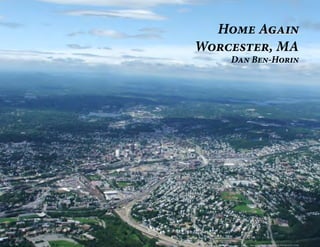
HOME AGAIN: WORCESTER, MA......................................................................... 35
LOGAN PLACE: PORTLAND, ME........................................................................... 43

      The case studies in Housing First were produced by members of the Spring 2012 graduate planning seminar in
    Locational Disputes in the Masters of Urban and Regional Planning Program at the University of Colorado Denver.
                     For additional information on Housing First Initiatives Nationwide, please go to:
                                        http://dylanswebsitetobecreated.weebly.com

       For more information, please contact Associate Professor Bruce Goldstein at bruce.goldstein@ucdenver.edu.

                   (CC) Each of the Case Studies in Siting Housing First Projects is licensed under a
                   Creative Commons Attribution-NonCommercial-NoDerivs 3.0 Unported License.
Housing First Best Practices
                  Phillip Supino


                      image: http://host.madison.com
Case Studies in Siting Housing First | 3


Abstract                                                              Discussion
         The scope of this memorandum is limited to groups            Researching online resources, non-profit organizations, public
providing national, industry-standard best practices for housing      agencies and personal interviews, it is clear that despite the
first facility siting and opposition mitigation techniques and a      presence of some useful resources, there is not an industry
compilation of best practices common to the relevant                  standard set of best-practices for siting housing first facilities in
documents. Despite some constraints, there are a variety of           urban and suburban areas. The resources that may be called best
generally accepted best-practice resources available to housing       practices guides to establishing housing first facilities are useful
first proponents. Within this body of research, there are some        but uncoordinated with similar documents produced by other
recommendations common to each document that amount to                organizations, despite covering the same topics and providing
consensus-based best practices. These resources may serve as a        comparable recommendations. Despite this lack of
template for groups nation-wide who seek to establish housing         coordination, close examination of the relevant documents
first facilities.                                                     reveals some essential common themes and practices. The
         This memorandum will demonstrate that there are best         industry would be well served to coordinate these findings and
practice resources available to housing first proponents who          proven techniques and compile a housing first development
wish to develop facilities while avoiding organized opposition to     guide to assist in future projects nation wide.
their projects. The available resources are produced by private               There are a number of government agencies and private
and government organizations and are typically made available         organizations engaged in establishment of housing first facilities
to the public on the organizations’ websites in on-line resource      or providing consultative services to housing first proponents.
libraries containing a wide variety of other materials related to     The relevant federal government agencies include: The
the organizations’ mission. The resources are typically free          Department of Housing and Urban Development (HUD), The
documents geared toward industry professionals and                    U.S. Interagency Council on Homelessness (ICH), The
academics. The assistance provided is limited in scope and            Department of Health and Human Services (HHS) and the
coordination. But the body of research from the numerous              Department of Veterans Affairs (VA). Relevant national level
housing first facilities in operation around the county, as well as   private and non-profit organizations include: The Corporation
outside groups advocating for housing first, is growing and           for Supportive Housing (CSH), Pathways to Housing (PH), The
informative. The resources provided by housing first                  Supportive Housing Network (SHN), The National Alliance to
organizations are similar in scope and methodology while              End Homelessness (NAEH), The National Law Center on
lacking in coordination. Taken together, the body of research         Homelessness and Poverty (NLCHP) and the Homeless
and guidelines provides a useful set of tools for housing first       Resource Center (HRC). While these lists are not
proponents to avoid locational disputes.                              comprehensive, the agencies and groups included are among the
                                                                      most active in establishing housing first facilities or providing
                                                                      consultation and information to housing first proponents
                                                                      around the country. In addition to these groups, there are
Case Studies in Siting Housing First | 4


countless State and Local agencies and organizations that                     The national organization that provides a close
participate in the development, funding, establishment and            equivalent to best practice guidelines and consultations is the
management of housing first facilities but fall outside of the        Corporation for Supportive Housing. The CSH maintains an
scope of this memorandum.                                             extensive database of resources for housing first groups. The
         In interviews and internet-based research, groups            materials cover a wide range of topics related to housing first
engaged in the creation of housing first facilities reported some     development issues. The wide range of resources made available
formal coordination or consultation with like groups during the       on the CSH website provide a comprehensive guide to the
planning and implementation phases of their projects. 1 Despite       myriad community engagement, siting and establishment issues
strong national organizations lobbying for the funding and            faced by housing first proponents.4 These documents provide
establishment of housing first programs and facilities, there is      some basic tools and techniques for siting a housing first
relatively little in the way of coordinated planning, assistance or   development while minimizing opposition, which will be
literature regarding best practices for community engagement,         discussed in greater detail below.
site selection and mitigation of NIMBY opposition.                            Jordan Press, Director of Federal Policy for the CSH,
         The most common technique used by housing first              indicated that he was unaware of nationally accepted best
groups to obtain information and best practice guidance for           practices.5 He went on to say that the consultation services
establishing facilities is through discussion with similar groups     provided by his and other organizations are meant to be best-
already involved in these activities. In an interview with Bill       practices guidance tailored to the unique needs of their clients.
Hobson, Executive Director of the Seattle-based Downtown              Mr. Press also indicated that there are a handful of national
Emercengy Services Center (DESC), he indicated that as an             housing first conferences held annually, where industry
industry leader in housing first projects, he regularly consults      professionals from the public and private sector exchange ideas
groups seeking to establish facilities in other jurisdictions. 2      and information. The Pathways to Housing Conference is the
While he provides verbal consultation, the DESC does not              largest of these, and locational disputes and community
provide a set of comprehensive best practices to those seeking        engagement are topics covered regularly at the conference. 6
assistance. Additionally, Mr. Hobson was unaware of any
nationally known guide to facility establishment or mitigating
locational opposition.3

1   McDivitt, Kay Moshier. Personal Interview, 25 April, 2012
2   Hobson, Bill. Personal Interview, 16 April, 2012
3   Hobson, Bill. Personal Interview, 16 April, 2012
4   McDivitt, Kay Moshier. Personal Interview, 25 April, 2012
5   Press, Jordan. Personal Interview, 13 April, 2012
6   Press, Jordan. Personal Interview, 13 April, 2012
Case Studies in Siting Housing First | 5


However, materials and transcripts from that conference are not                properties in the New York metro area. The guide and toolkit
yet available.                                                                 break down the best practices for establishing facilities and
         The federal Interagency Council on Homelessness                       techniques for mitigating opposition. The step-by-step guide
coordinates between various federal agencies including HUD,                    directly addresses issues like combating NIMBY-ism, media and
HHS and the VA. The Council maintains an extensive database                    public outreach techniques, facility management, good
of resources for housing first and similar homeless advocacy                   neighbor policies, messaging and other methods for building
groups. The database includes primers for housing first                        community support for facilities. The toolkit provides literature,
proponents on topics such as community engagement,                             case studies and scripts meant to supplement the guide and
combating NIMBY-ism and site selection for facilities. While                   provide useful tools for housing first proponents.
the documents do not represent an attempt to compile or                                Both documents are made available on the group’s
recommend industry best practices, the resource database                       website. The Network offers consulting services to other
provided by the ICH is an excellent starting place for proponent               organizations, and like Seattle’s DESC, the group engages in
groups seeking to establish housing first facilities.7                         informal consultations at the request of other groups. The guide
         The HUD website offers another federal government                     and toolkit are a strong attempt by the Network to provide a
level online guide for groups seeking to establish housing first               comprehensive best-practices guide, and the documents could
facilities. Called the Homelessness Resource Exchange, the                     serve as a model for a national effort in the future. Any group
guide differs from other online resources in that it is a step-by-             engaged in the development of housing first facilities should
step guide rather than a database of collected resources from                  consult the Network and their online resources early in the
other sources. The guide directly addresses citing conflict and                development process.
NIMBY-opposition mitigation, as well as guidelines for                                 The National Alliance to End Homelessness coordinates
financing and management of housing first facilities.8 While the               with other national-level advocacy groups and local-level
depth of the material is limited, the assistance provided by the               facility proponents to promote supportive housing models
Homelessness Resource Exchange is an effective primer for                      nation-wide. In a discussion of the utility of national policy and
those engaging housing first development and management.                       best practices for supportive housing, Kay Moshier McDivitt,
         The most comprehensive guides for housing first                       Capacity Building Director for the NAEH, stated: “The NAEH
proponents is “Building Support for Supportive Housing” and                    does not support a unified national policy for the development
the “Supportive Housing Toolkit” provided by the New York                      of supportive housing facilities. Development policy should be
City-based Supportive Housing Network. The private                             tailor to site-specific circumstances.”9 However, she went on to
organization maintains a number of supportive housing                          say that there are general best practices, accepted industry wide,

7   Interagency Council on Homelessness, Home Page: http://www.usich.gov/
8   Department of Housing and Urban Development, Home Page: www.hudhre.info/
9   McDivitt, Kay Moshier. Personal Interview, 25 April, 2012
Case Studies in Siting Housing First | 6


that are essential for housing first proponents to incorporate                                 • Create a draft plan, vetted by all relevant stakeholders, before
into their development plans. She cited the CSH and SHN                                           engaging the public to ensure the project appears well
guides as being good starting points for potential proponents of                                  organized to the concerned public;
new facilities.                                                                                • Educate supportive and interested parties and isolate the
          While there is no singular best practices guide nationally                              opposition;
available and widely accepted as the go-to guide for housing                                   • Consult attorneys and government administrators to gain a
first proponents, there are a number of useful tools available                                    comprehensive understanding of the legal landscape before
from both public and private sources. Groups interested in                                        proceeding with a selected location;
establishing housing first facilities are well served to conduct                               • Avoid selecting locations that require use or zoning variances
internet-based research to discover the relevant agencies and                                     and thus, public hearings;
groups included in this memorandum. Between the                                                         The housing first community would benefit from
publications made available on the groups’ websites and                                        development of a comprehensive guide for proponents’ future
through consultation with housing first proponents in other                                    use.10 This effort would ensure that groups seeking to establish
areas, a consensus on some of the essential best practices                                     housing first facilities utilize proven, effective practices for
emerges.                                                                                       community engagement, location selection and mitigation of
          Through analysis of the relevant publications and online                             NIMBY opposition to their projects. Until that effort is
resources, a consensus emerges among the various groups as to                                  completed, the resources and recommendations outlined in this
the best practices for development and mitigation of NIMBY                                     memorandum provide a useful starting point for future housing
opposition. S ome of the common techniques and                                                 first developments nation wide.
recommendations among the various resources include:
• Avoid selecting locations where the primary land use type is                                 Conclusion
   well-established residences;                                                                There are organizations that provide literature and consulting
• Avoid clustering projects in areas with existing homeless                                    on community engagement, siting and mitigating NIMBY
   facilities;                                                                                 locational disputes over housing first facilities. There are
• Engage the impacted public early and often;                                                  relatively few industry-wide best practice resources to help
• Identify key political, social, financial and technical                                      proponents and organizations effectively plan for community
   stakeholders;                                                                               engagement, siting and mitigation of locational disputes related
• Seek to build a coalition of supportive community leaders,                                   to Housing First facilities. However, the available resources
   residents and stakeholders;                                                                 share a number of commonalities that amount to a consensus
• Keep the coalition engaged and empowered to ensure it works                                  on development best practices. Collectively, the available
   in concert with project proponents;

10   Bauman, Tristia: Attorney, National Law Center for Homelessness and Poverty. Personal Interview, 24 April, 2012
Case Studies in Siting Housing First | 7


resources are useful tools for housing first proponents who seek
to establish facilities accepted by the surrounding community.
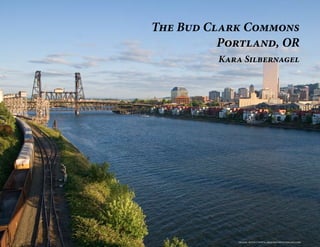
The Bud Clark Commons
          Portland, OR
         Kara Silbernagel


            image: http://www.aroundthesunblog.com
Case Studies in Siting Housing First | 9


Abstract                                                             3. Concentrate resources on programs that offer measurable
         On June 2, 2011, Portland, Oregon opened a multi-               results.
faceted homeless facility in the heart of the city. The Bud Clark              Inherent within the Home Again plan, as outlined with
Commons, the cornerstone of Portland’s 10-year plan to end           these three key principles, is a “housing first” methodology to
homelessness, provides tiered services to people experiencing        end homelessness and develop a comprehensive homeless
homelessness (Home Again, 2005). Within the 10-year plan,            facility. At the cornerstone of the plan was the Bud Clark
Portland identified three critical services that helps individuals   Commons (BCC), originally known as the Resource Access
achieve stability and end homelessness; shelter services, access     Center. The BCC was developed from an innovative partnership
to resources, and most importantly, stable housing. The Bud          with the City of Portland’s Housing Bureau, Multnomah
Clark Commons is the linchpin of the plan by providing all           County, Home Forward (previously the Housing Authority of
three services to individuals within the same building. The          Portland) and local service provider, Transition Projects, Inc.
facility is a LEED-Platinum building that houses a resource day      While Portland Housing Bureau, Multnomah County were key
center, men’s shelter and 130 studio apartments. These               players in siting the facility, Home Forward and Transition
apartments provide permanent housing to the most vulnerable,         Projects are instrumental in the management and day-to-day
chronically homeless populations under the Housing First             operations of the facility.
model. The following case study looks at the innovative                        The first floor of the building houses a 90-bed men’s
partnerships between the City of Portland, Multnomah County,         shelter, with the second and third floors hosting a Resource Day
service providers, business associations and citizen groups to       Center. The Day Center provides resources such as mental
successfully site and design the facility while keeping sight of     health, veteran services, eye care and social security services to
the overarching goal: helping individuals overcome personal          anyone in the community seeking assistance. The remainder of
and social barriers to achieve stability.                            the building is made up of 130 Housing First studio apartments
                                                                     that provides permanent housing to chronically homeless
Discussion                                                           individuals who suffer from personal barriers such as mental
       In 2005, the City of Portland, Oregon and Multnomah           illness or drug abuse. See Appendix A for a layout of the facility.
County developed “Home Again – A 10-year plan to end
homelessness in Portland and Multnomah County.” The 10-year          Appetite for Collaboration
plan addresses several issues throughout Portland and                        Portland has a strong history for collaboration and civic
Multnomah County, highlighting three key goals:                      engagement. Critical to these civic engagement efforts is the
1. Focus on the most chronically homeless populations.               Office of Neighborhood Involvement, a bureau within city
2. Streamline access to existing services in order to prevent        government. In Portland there are 95 distinct neighborhood
   and reduce other homelessness.                                    associations recognized by the City and actively involved
Case Studies in Siting Housing First | 10


community government. Whether private or public, any new                                   housing typically do not have the means to support businesses
development, deed or permit must notify and engage with                                    and retail. Without a balanced housing market, the community
appropriate neighborhood association(s) prior to receiving                                 could not sustain a vibrant business district. Owners would
approval from City Council.1 This process allows community                                 leave the neighborhood, creating a windfall for the community.2
members to voice their concerns and provide valuable feedback                                      At the onset of the siting process, members of the
to City officials to better shape development in Portland.                                 community, specifically OTCT were unhappy with the location
        The Bud Clark Commons is sited at the juncture of Old                              and many argued the City ignored the Vision Plan and its goals
Town China Town Neighborhood and Pearl District in                                         for balance in the community. Members felt the City was
downtown Portland. Historically known as the “skid row” of                                 placing an unjust burden on the Old Town Chinatown
Portland, Old Town Chinatown (OTCT) is the common                                          neighborhood. While residents and business owners accepted
gathering location for people suffering from homelessness,                                 that the community needed to provide services to the homeless,
mental illnesses, drug addition and other illnesses. In an effort                          they felt adding additional low-income housing was shifting the
to help individuals overcome such barriers, several human                                  balance and creating an unsustainable community.
service providers have located to the neighborhood over the                                        In addition, OTCT Vice Chair, Nancy Stowell recalls at
years. Local service providers, such as Transition Projects have                           the beginning of the siting process that the Bud Clark
been providing men’s and women’s shelters, meals and social                                Commons was not the only development being proposed. There
services to the homeless in OTCT for years. As a staple fixture                            were multiple low-income and affordable housing developments
in the community, many of these service providers are not only                             under consideration which only increased the community’s
businesses, but they are also active, engaged community                                    concern about an unbalanced neighborhood. Through the siting
members participating in neighborhood associations.                                        and design process, the City and project partners actively
        Approximately 30 years ago, the Old Town Chinatown                                 engaged with residents and businesses to address their concerns
Neighborhood Association adopted a Vision Plan for the                                     and ensure the facility would not inhibit the value of the
community. Due to the neighborhood’s longstanding reputation                               neighborhood, but rather sustain and contribute to a safe,
as “skid row” residents were determined to address the issues                              healthy community.
facing the area and develop a plan to create a vibrant, safe, and
healthy community. Rather than try to clean-up and eradicate                               Case Study
the neighborhood of its nuisances, OTCT embraced and                                       Phase I: Location
integrated the diversity of the area in their plan. The Vision Plan                                The Bud Clark Commons facility is located in OTCT,
set out goals to balance low-income, poverty residences with                               just south of the Portland Union Station, and borders the Pearl
market rate and above housing. Residents of low-income                                     District neighborhood – a historically higher income,

1   Office of Neighborhood Involvement (http://www.portlandonline.com/oni/)
2   Stowell, Nancy. Vice Chair of Old Town China Town Neighborhood Association. Interviewed 4.17.12
Case Studies in Siting Housing First | 11


destination neighborhood. The specific space was a vacant lot                              renewal block. The other half of the block would be set aside for
owned by the Portland Development Commission (PDC), the                                    redevelopment and market-rate housing. This resolution,
urban renewal agency for the City charged with developing                                  coupled with the fact that the intent of the 10-year Home Again
projects to meet the City’s housing, economic and                                          homeless plan was always intended to site the facility in Old
redevelopment priorities. In 2008, City Council transferred the                            Town Chinatown, helped to alleviate tensions between
block from the PDC to the Portland Housing Authority to                                    community members and service providers. Citizens moved
develop the site for the Bud Clark Commons.3 The siting                                    beyond opposition and entered into a collaborative decision
resolution outlines an alternative block if the NW Irving block                            making process with the site developers to ensure the facility
is deemed inadequate, due to an environmental assessment or                                simultaneously addressed homeless needs in the neighborhood,
cost. This alternative block is still located within OTCT                                  as well as community member concerns.
neighborhood – demonstrating the City’s plan to develop the
facility that is the cornerstone of the 10-year plan within OTCT.                          Phase II: Design
The resolution also outlines that the Office of Neighborhood                                       The Portland Housing Board and Home Forward
Involvement must help facilitate a good neighborhood                                       created a Community Advisory Committee (CAC) to
agreement between all agencies and neighbors, “as required by                              participate in the development and design of the facility. Local
City Policy.”                                                                              residents from neighborhood associations, business association
         As mentioned above, there was high interest from                                  representatives, service providers and individuals who had
community members in the siting of the facility. To address                                previously been homeless and could speak on behalf of those
community concerns, the Old Town Chinatown Visions                                         currently suffering from homelessness served on the CAC. For
committee hosted twelve meetings between 2007 and 2008. One                                two years, the advisory committee, with leadership from Home
of the top concerns from these meetings was the housing                                    Forward, worked with the designers and architects to create an
imbalance it would create in the neighborhood, as well as that                             engaging design that reflected the values of the community.5
the siting may impede future redevelopment of the Broadway                                         The advisory committee provided crucial perspectives
Corridor – a significant city project to promote redevelopment                             on pieces ranging from exterior design, aesthetics to overall
in downtown Portland.4 As a compromise for both resident and                               community impacts. For example, the CAC helped problem
business concerns, the PDC and Portland Housing Bureau                                     solve a common concern, queuing. Oftentimes, individuals
agreed the facility would only be on half of PDC-owned urban                               queue in front of facilities, blocking sidewalks, littering and in


3   Resource Access Center (RAC) Resolution, 2008. http://www.homeforward.org/system/files/docs/developments/RAC-sitingresolution.pdf
4   Portland Development Commission Resolution, 2008. http://www.homeforward.org/system/files/docs/developments/RAC-PDC-resolutionblockU.pdf
5   Allen, Kate. Senior Policy Advisor, Portland Housing Bureau. Interviewed 3.31.12
Case Studies in Siting Housing First | 12


some instances, exhibiting disruptive behavior. To resolve                             sparked the idea for the Good Neighbor Agreement, Kate Allen,
queuing tensions, the Bud Clark Commons only allows                                    Senior Policy Advisor stated it is a common practice in Portland
individuals to queue within the facilities courtyard. Not only                         and required by City policy for certain developments, such as
does this provide a safer, cleaner environment for the                                 this one.8 While neighborhood agreements and processes differ
community, it also provides a safe, protected environment for                          depending on circumstances, it is common for the City’s
the homeless, especially during times of bad weather when lines                        Neighborhood Involvement Bureau to facilitate neighborhood
are the longest.6 CAC members were also concerned about how                            agreements, oftentimes between business development and
the design of the facility may impede future redevelopment on                          neighborhoods. The idea to develop a neighborhood agreement
the remainder of the block. This was agreed upon by all parties                        was always planned to be a part of the siting process.
and helped foster the design of the ground floor in ways that                                   Many of the stakeholders that participated in the
supported the functionality of the building without creating                           Community Advisory Council were the same as those that
problems for residents or the Portland Police Bureau.”7 Through                        participated in the Good Neighborhood Agreement (GNA)
two design workshops multiple Community Advisory                                       negotiations. However, GNA stakeholders represented a larger
Committee meetings, the architects were able to incorporate the                        congregation of community stakeholders than those that
needs and concerns of all the stakeholders into the facility.                          participated in the CAC. In addition, Transition Projects
        Additionally, the Community Advisory Committee also                            identified homeless representatives to also participate in the
played vital roles in securing permits, receiving authorization                        process. As part of the GNA negotiations, future Bud Clark
and financing for the facility. Representatives from the CAC                           Commons residence were engaged in the process to build
provided vital testimony for City Council throughout the                               community and help residents take responsibility for their
process, including the Resolution process transferring                                 home. The impact from their participation can be seen in the
ownership of the block, approving the design of the facility and                       GNA. When neighbors saw that residents were engaged and
eventual development. Again, reiterating the collaborative                             taking a stake in their combined community, there was a large
decision framework.                                                                    shift from an “us versus them” to an “us” mantra.5
                                                                                                To effectively enter into a neighborhood agreement, the
Good Neighbor Agreement Development Process                                            City paid for a professional facilitator to manage the
       Once the Bud Clark Commons secured funding and                                  discussions. This allowed representatives from the Portland
began to move forward with building the facility, the Portland                         Housing Bureau, Home Forward and Transitions Project to
Housing Bureau initiated a community engagement process to                             participate as stakeholders, rather than a facilitator.
develop a Good Neighbor Agreement. When asked what                                     Representatives of these agencies were largely leadership and

6   Home Forward (www.homeforward.org)
7   Design Workshop Notes, 2008. http://www.homeforward.org/system/files/docs/developments/RAC-DesignWorkshop-SummaryNotes053108.pdf
8   Allen, Kate. Senior Policy Advisor, Portland Housing Bureau. Interviewed 3.31.12
Case Studies in Siting Housing First | 13


Board Members. Staff from these agencies served mostly as                              Good Neighbor Agreement Impacts
resources to address questions, rather than participate in the                                 In the end, the Good Neighbor Agreement is simply not
Siting Committee.                                                                      just a paper of signatures. Rather it outlines, in detail, how the
         As a staff resource present at these GNA negotiations,                        community, businesses, and Bud Clark residents can mitigate
Ms. Allen lauded the role of the facilitator. The facilitator was                      concerns and conflicts moving forward.10 The GNA provides
critical in rephrasing comments and concerns into constructive                         protocols for addressing any safety or disturbance concerns.
criticisms and a common platform. This helped mitigate the role                                Rather than allowing any circumstance to escalate, the
of emotions and allowed the stakeholders to effectively and                            Good Neighbor Agreement encourages any persons with a
efficiently address concerns. It created a comfortable, safe                           concern to call representatives. This helps to address concerns
environment, free to be critical while remaining respectful of                         immediately and proactively respond. The GNA also includes a
others.9 In the end, the stakeholders were working towards a                           detailed call list of stakeholders which, according to Ms. Allen,
common goal, rather than complete opposition.                                          has been instrumental in the operations of the facility. This
         As part of the GNA negotiations, the Portland Housing                         allows person-to-person connections, rather than simply feeling
Bureau developed an outreach and communication plan to                                 that a concern may not be addressed.
effectively engage as many residents, business owners and other                                Another aspect of the Good Neighbor Agreement also
stakeholders as possible. It is clear that Portland Housing                            includes the Operating Rules for Bud Clark Commons
Authority went beyond generally accepted engagement for this                           residents. This inclusion into the Agreement allows community
process. Rather than simply posting public meetings in legal                           members to see that BCC residents are also held to a high safety
sections of newspapers, PHA compiled a complete PowerPoint                             standard and they are responsible for maintaining a safe and
presentation that was available on their website, went into the                        clean neighborhood as well. This helps ensure the weight of the
community, and hosted a GNA signature party once the                                   community is equally dispersed among neighborhood residents
negotiations were complete. This outreach fostered the idea that                       and businesses, agency partners and Bud Clark Commons
negotiations were not a one-step process that ended at a one-                          residents.
time meeting. Rather, it was an iterative process that depended                                In efforts to continue community development with all
on the stakeholders to carry-out the GNA once the facility was                         the stakeholders, neighborhood associations invite residents to
built. For a complete list of stakeholders see the Good                                participate in their quarterly meetings. In addition, service
Neighborhood Agreement, Appendix B.                                                    provider representatives also participate in meetings. As both
                                                                                       Ms. Allen and Ms. Stowell reiterated to me, the residents at the
                                                                                       Bud Clark Commons are not isolated, but rather part of a


9   Allen, Kate. Senior Policy Advisor, Portland Housing Bureau. Interviewed 3.31.12
10   Good Neighbor Agreement – Appendix B
Case Studies in Siting Housing First | 14


community, which can be just as vital to attaining housing           balances housing market. Through thoughtful and articulate
stability as housing itself.                                         meetings, project partners and community stakeholders were
                                                                     able to site, design and operate a facility to tackle homelessness
Conclusion                                                           and provide a value-added benefit to the neighborhood.
        While the Bud Clark Commons Housing Facility                         What lessons can North Boulder Alliance and Boulder
initially received community push back, through a                    Housing Partners learn from the Bud Clark Commons? It is
comprehensive community engagement process and                       evident that community engagement is embedded in the City of
collaborative decision making, the facility was successfully sited   Portland. There were strong expectations that community
in its intended location. While some of the efforts from the         members would be integrated into the process. But is that not so
project partners were innovative and transparent, such as the        different from the culture in Boulder? Boulder also has a strong
Community Advisory Committee that was involved from the              tradition of transparency and engagement that is often
beginning, the City of Portland has historically fostered a          correlated to Portland. Moving forward the City of Boulder may
transparent, collaborative process between city government and       develop regulated procedures that foster a civil civic
residents. For over thirty years, Portland has officially            engagement process. Provide a platform for neighborhood
recognized neighborhood associations and created policies and        associations to be heard, such as a Neighborhood Involvement
regulations that regularly involve community members. This           Bureau. This not only benefits community members, but it also
environment for collaboration and transparency created a high        outlines a process for all developers. Planners and developers
level of expectations on part of both residents and project          can plan for methods to alleviate opposition and conflicts,
partners to ensure the Bud Clark Commons met the needs and           rather than address more common claims, which is that the
concerns of stakeholders.                                            community wasn’t heard. Boulder Housing Alliance can learn
        In looking at the Bud Clark Commons process, we can          from Old Town Chinatown and adopt a vision plan for the
learn from their community engagement to ensure successful           community. The homeless providers are not leaving the
housing services in the City of Boulder. While common                neighborhood. The facility is going to be built. It is time to work
opposition to the Boulder Housing First facility is that one         with the city, engage with the homeless population so they are
community is bearing the burden of services for the entire city,     also part of the community, and adopt policies for future
the Old Town Chinatown neighborhood association accepted             development so the burden can be address immediately.
this role within Portland. In addition, several years prior to
developing the facility, the City highlighted that the cornerstone
to ending homelessness would be providing services within Old
Town Chinatown. Guided by a decades-old Vision Plan that is
formally recognized by City Council, OTCT addressed the issue
head-on. Community Advisory Committee members addressed
specific concerns related to business sustainability and a
The Renaissance
     Denver, CO
    Dylan Grabowski

    image: http://100besteverything.com
Case Studies in Siting Housing First | 16


Abstract                                                                                          Housing First is “a model under which hard-core
         In 2004 Denver, Colorado adopted a ten-year plan to                              homeless people were placed in housing and immediately
end homelessness in order to receive federal fiscal aid, and                              steered into treatment for mental illness and substance abuse.”1
further fund a permanent housing model initiated by Denver                                A Cost-Benefit Analysis and Program Report created by the
Housing First Collaborative (est. 2001). Following the model                              Colorado Coalition for the Homeless (CCH) on December 11,
Denver pioneered in the early 2000‘s, multiple Housing First                              2006, portrays the positive economic associations attached to
facilities have since been developed using the federal aid.                               Denver’s Housing First program. The study was conducted over
Housing First is a form of permanent housing that removes the                             a 24-month period, and found that compared to the investment
chronically homeless from living on the streets, regardless of                            costs of providing temporary or transitional housing and
substance abuse or mental health issues. This case study will                             supportive services, there is a net cost savings to tax-payers of
look at the relationship between the developer and                                        $4,745 per homeless person in a Housing First facility.
neighborhood communities. It will entail the siting process of                                    Renaissance at Civic Center is Denver’s first Housing
these types of facilities, how the communities were engaged, and                          First facility. There have since been multiple facilities developed
the success of said relationships and facilities.                                         throughout the immediate metropolitan region. Such facilities
Background                                                                                include Renaissance 88 in Thornton, CO, as well as, Off
         Denver’s Road Home (DRH) is the result of a                                      Broadway Lofts and Renaissance Uptown in Denver, CO. The
collaborative effort to stop and prevent homelessness, as well as                         Housing First model has been successful for Denver, and has
the author of the goals set in Denver’s Ten Year Plan to End                              decreased the amount of money taxpayers spend on social
Homelessness. A few of the eight goals in the ten year plan                               services used by the chronically homeless. Post-entry into the
include 1.) providing permanent and transitional housing, 2.)                             Housing First program, rates in detox, incarceration, emergency
providing better services, and 3.) enhancing community                                    room visits, inpatient, and shelter costs have all decreased for
awareness and coordinated response. (Ten Year Plan to End                                 the formerly homeless residents.
Homelessness, 2006) Since 2005, DRH has provided nearly
2,000 units of housing, prevented 5,500 individuals from                                  Discussion
becoming homeless, and placed 5,200 individuals in part or full-                                  Denver’s first Housing First facility, Renaissance Civic
time jobs. (Denver’s Road Home Funder Collaborative, 2011)                                Center, is located on the eastern periphery of Denver’s central
Housing First is one of the initiatives that was detailed within                          business district. Surrounding the neighborhood is an array of
the ten year plan and provides permanent housing solutions.                               office buildings and parking lots, which made this siting process
                                                                                          unique. With a small amount of neighbors to oppose its


1Denver Commission to End Homelessness. (2006) Ten Year Plan to End Homelessness: A Report to the Citizens of Denver. Denver, CO: Author. Retrieved from “http://
www.endhomelessness.org/content/article/detail/659”
Case Studies in Siting Housing First | 17


siting,there was little need for community engagement.                                       to other services is available. The largest factor in siting a facility
Colorado Coalition for the Homeless purchased the building                                   is access to health and mental services, public transportation,
from the YMCA in 2001 with minimal opposition as the 167                                     jobs, and retail. Renaissance Uptown’s location is ideal due to its
units were facing the risk of loss.2 Today, it is a 216 unit                                 proximity to the Stout Street Clinic, which is CCH’s most visited
residence that shares the first floor with the YMCA, where                                   homeless clinic service.
summer camps are held seasonally. An effort to gather                                                The role of urban planners in the siting was minimal.
information about the siting process from the director of the                                City Councilwoman Jeanne Robb of District 6 noted in a
16th Street Housing First program, James Ginsburg, was stunted                               Capitol Hill Newsletter that “MS-3 zoning is in place for the site,
as he was unable to be reached. Typically, Housing First facilities                          it is unlikely that City Council will be called to take any action
are not sited in areas with business and parking lots as the                                 on the project. Only design review by the Planning Department
predominant neighbors. Thus, there was no ‘community benefit’                                should be necessary.”4
or ‘good neighbor’ agreement found on record. The next case
will demonstrate how dynamics change when a facility is sited                                The Developer and Property Acquisition
in an established neighborhood.                                                                      Colorado Coalition for the Homeless is a non-profit
                                                                                             organization established in 1984, their aim is to end and prevent
Case: The Renaissance Uptown                                                                 homelessness. When purchasing sites for permanent housing,
         The siting process for Renaissance Uptown began in                                  CCH will use zoning rights that allow for dense, mixed-use
June of 2008 with the first community meeting led by the                                     living situations. The properties are acquired upfront prior to
Colorado Coalition for the Homeless. In January of 2011 the                                  gaining approval from the neighborhood. Economically, this is
doors for this LEED certified facility, located on Colfax Ave. and                           the best method for purchasing land. If an entity in the
Pearl St., were opened to new residents. It’s a 98-unit residential                          neighborhood discovers details of the purchase, a second buyer
facility, with commercial/retail space on the first floor that                               may potentially be offered who would be willing to purchase the
provides job training for residents.3                                                        site for more money. After the land has been purchased, the
         A location for permanent housing is chosen based on                                 developer creates blueprints and plans for the building and
the needs of the population being addressed. The chronically                                 presents the information in tangible displays to the community.5
homeless will likely be placed in an urban setting, where access                             Once the community has been informed to CCH’s plans for a

2What We Do: Renaissance at Civic Center Apartments. (n.d.). Colorado Coalition for the Homeless. Retrieved from “http://www.coloradocoalition.org/what_we_do/
what_we_do_housing/what_we_do_civic_center.aspx
3Martin, Vanessa. “CCH details ‘Renaissance Uptown Lofts’.” Life on Capitol Hill [Denver] n.d. 2. Web. <http://www.lifeoncaphill.com/index.php?
option=com_content&task=view&id=6&Itemid=6>
4Martin, Vanessa. “CCH details ‘Renaissance Uptown Lofts’.” Life on Capitol Hill [Denver] n.d. 2. Web. <http://www.lifeoncaphill.com/index.php?
option=com_content&task=view&id=6&Itemid=6>
5   Windsor Interview, 2012
Case Studies in Siting Housing First | 18


development, the developer asks for an invitation to                                         activity.”6 In the instance of the Renaissance Uptown, the Colfax
neighborhood and community organizations monthly meetings.                                   BID held no objection to the development proposal and no
The Neighborhood Association: Capitol Hill United                                            businesses vociferously objected the facility. Attempts made to
Neighborhoods (CHUN).                                                                        interview the executive director of CBID were met with no
        CHUN is a neighborhood association that has been                                     success.
representing Capitol Hill and its residents for over 31 years. As a                                   The main opponents of a Housing First facility will
registered neighborhood association, they act democratically to                              usually be the neighbors or neighborhood associations in close
involve all who care and will participate to improve the quality                             proximity to the permanent housing facility. While Roger
of life in greater Capitol Hill. Acting as a neighborhood                                    Armstrong stated, “CHUN’s mission is to support diverse
advocate, CHUN will represent its resident’s ideas to City                                   housing opportunities,”7 neighbors and Councilwoman
Council, State Legislature, and administrative agencies. The                                 Madison were concerned about the concentration of the 1,000
group is important to mention because they were a key                                        already existing low-income units within a quarter-mile radius
stakeholder in the development of the Renaissance Uptown. The                                of the site.8 Other concerns involved the physical aspect of the
neighborhood associations Executive Director is Roger                                        new facility, such as building design, proper zoning, retail
Armstrong.                                                                                   spaces, parking spaces, and number of units. A key issue for the
                                                                                             neighborhood regarding development was the building’s façade,
Engaging the Community                                                                       as it was labeled a historic site by CHUN‘s Historic Preservation
         Community engagement is an important aspect in siting                               Committee.9 The best way to address fears community members
a facility, and should be done early in the process for optimal                              may have about negative externalities associated with a Housing
results. Typically supporters of permanent housing facilities                                First facility in their neighborhood is to take them on a tour of
within communities are the businesses and business                                           an already existing facility.
organizations. In an interview Bill Windsor, Housing Director                                         Colorado Coalition for the Homeless’ Housing Direct,
for CCH, made the statement, “good partners who usually                                      Bill Windsor, uses the Renaissance at Civic Center facility as the
support permanent housing facilities are businesses… [they]                                  primary example for community members who may express
realize that development of [Housing First] facilities brings                                concern for having such a facility located in the vicinity. The
commercial activity to the area, and enhances economic                                       Coalition will provide uneasy community members tours of this


6   Windsor Interview, 2012
7   Armstrong Interview, 2012
8Martin, Vanessa. “CCH details ‘Renaissance Uptown Lofts’.” Life on Capitol Hill [Denver] n.d. 2. Web. <http://www.lifeoncaphill.com/index.php?
option=com_content&task=view&id=6&Itemid=6>
9Martin, Vanessa. “CCH details ‘Renaissance Uptown Lofts’.” Life on Capitol Hill [Denver] n.d. 2. Web. <http://www.lifeoncaphill.com/index.php?
option=com_content&task=view&id=6&Itemid=6>
Case Studies in Siting Housing First | 19


facility, as well as, introduce them to neighbors of the existing                       the retail space were a 7/11, and Pizza Fusion, a pizzeria. Pizza
facility to quell fears. Windsor was pleased to highlight the fact                      Fusion is owned by a subsidiary of CCH, and is a place Housing
that the YMCA serves as a children’s camp during the summer,                            First residents are able to receive job training. Third, an
and that no child has ever been harmed by the residents living                          Advisory Panel was created for on-going communication
above.10                                                                                between the developer and neighborhood. “After meeting with
          To address the variety of concerns held by neighbors,                         local associations during the development phase, CCH will offer
the Colorado Coalition for Homeless held a community                                    an invitation to join an advisory group. The advisory group is a
meeting June 24, 2008 regarding the development of                                      collaboration of community members, neighborhood
Renaissance Uptown. Parties at the table included City                                  associations, and the developer that meets regularly after the
Councilwomen Jeanne Robb and Carla Madison, CHUN, The                                   Housing First facility is developed and is fully functioning.”11
Unsinkables (an anti-crime community group in Capitol Hill),                                    Armstrong thought the developer had properly
and CCH. The meeting served as an opportunity for all parties                           addressed the neighborhood and community in development of
to provide input into the buildings development.                                        Renaissance Uptown. During the siting process, “CHUN
                                                                                        worked with developers and the community, to bring both
Outcome                                                                                 together what the developer wanted to do and address the
        The outcome of the community meeting held in 2008                               neighborhood’s concerns.”12 The community did not oppose the
lead to a good neighbor agreement held between the developer                            project. In fact, John Parvensky, Executive Director of CCH
and the neighborhood. The agreement was constructed by CCH                              received a “Homelessness and Affordable Housing Good
and addresses the community’s specific concerns regarding                               Neighbor Award” from CHUN in January of 2011. Armstrong
Renaissance Uptown.                                                                     was quoted, “You and your organization have been pioneers in
        First, concerns of the historic façade were addressed by                        creating affordable housing and services to the homeless that
the architect, Humphries Poli Architects. The firm constructed a                        sensitively integrate into and compliment the communities they
building model that replicated and would still maintain the                             are located in.”13
1923 façade. Second, requirements were made for the addition
of retail spaces on the first floor. CCH relayed the task of                            Construction of Good Neighbor Agreements
parking spaces and type of business to those who bought their                                  For construction of a good neighbor agreement the
way into the units. Major commercial activity that bought into                          developer and community representatives (neighborhood


10   Windsor Interview, 2012
11   Windsor Interview, 2012
12   Armstrong Interview, 2012
 Capitol Hill United Neighborhoods (CHUN) Honors Colorado Coalition for the Homeless During Annual Awards Dinner. (2011, January 6). Colorado Coalition for the
13

Homeless. Retrieved from “http://www.coloradocoalition.org/media/news_releases/chun-award.aspx”
Case Studies in Siting Housing First | 20


association) need to engage in a discussion, reciprocating equal                                           which is a signal that any neighborhood input is
and respectful communication. DenverINC is a neighborhood                                                  irrelevant. Neighbors generally oppose any projects that
association comprised of over 100 neighborhoods whose                                                      they perceive are “sneaking in,” even if no contact is
mission is “to advocate for Denver citizens by bringing together,                                          legally required. Early contact disarms much
infor ming and emp ower ing D enver neig hb orho o d                                                       opposition.
organizations to actively engage in addressing City issues.”14                                        2.   Honest communication. Misleading statements or
Michael Henry, Chair on the Zoning and Planning Committee                                                  partial truths poison relationships with neighbors.
of DenverINC, urged enhancing developer and neighborhood                                              3.   Thoughtful explanation of the need for such a
association’s relations through a good neighbor agreement.                                                 development in this neighborhood, the type of persons
“Good Neighbor Agreements are instruments that provide a                                                   targeted to be served and the general size of the
vehicle for community organizations and a [developer] to                                                   development
recognize and formalize their roles within a locality. The                                            4.   Recognition that some neighborhoods rightfully believe
purpose of these agreements is to foster sustainable                                                       that they are over-saturated with housing for special
development in a community by reconciling economic                                                         populations, coupled with a genuine effort to locate in
development with the community's welfare, including the health                                             areas that are not over-saturated.
of its environment and its individual members.”15 Henry told a                                        5.   Continuing contact with immediate neighbors and
story of a siting process gone awry in a siting of a Five Points                                           neighborhood groups as plans and construction
neighborhood permanent housing facility. The developer didn’t                                              progress. If plans change, that should be discussed with
initially engage the community and used an authoritative tone                                              neighbors.
when discussing the plans for the facility’s development. The                                         6.   Genuine attempt to work with entire community and
relationship was later salvaged after six to eight months of                                               not try to pit one community group against another.
battling by entering into a good neighbor agreement. Outlined                                         7.   Willingness to enter into a written “good neighbor
below are Henry’s steps to success for good neighbor relations                                             a g re e m e nt” w it h i m m e d i at e n e i g hb or s an d
in affordable housing communities:                                                                         neighborhood groups. The most frequent and legitimate
     1. Early contact with immediate neighbors and adjacent                                                subjects of such an agreement are:
         neighborhood organizations. Usually a city or county                                              a) description and/or drawings of the form and
         planning department will be able to identify key contact                                             architecture of the building. Obviously, neighbors
         persons for neighborhood groups. The first contact                                                   want a development that is attractive and that
         should be well before the design plans are finalized.                                                generally fits into the context of the neighborhood.
         Neighbors are resentful if developers unveil final plans,

14   INC Mission Statement. (n.d.). DenverINC. Retrieved from “http://www.denverinc.org/about-us/mission/”
15   Lewis, Sanford, and Diane Henkels. 1996. Good neighbor agreements: A tool for environmental and social justice. Social Justice 23 (4): 134-51.
Case Studies in Siting Housing First | 21


            b) description of the income-level and/or type of         in the development process very early on. The developer was
                individuals to be ser ved. (Note that most            open to hearing their insights into physical design and
                neighborhoods much prefer mixed-income persons        operations of the facility. This process allowed residents to
                or families)                                          accept the facility, as they were given the amount of engagement
            c) description of how residents will be selected and/or   necessary to locate permanent housing their community. To
                screened                                              address the fears a community may have in regards to this type
            d) description of how the property will be maintained,    of development, provide tours of existing facilities and arrange
                landscaped, etc                                       meetings with that facility’s neighbors to better understand
            e) description of level of staffing for the project.      some fears may be unfounded. These scheduled visits will
                Generally, neighbors prefer at least one resident     provide opportunity to show worried residents that Housing
                manager or staff at all times.                        First facilities, indeed, are not going to degrade the
            f) description of how security will be maintained         neighborhood.
            g) description of what controls will be in place to                Opportunities for open discussion must be available as
                remove a dangerous or disruptive tenant – such as a   exhibited in the Renaissance Uptown case, via community
                no-crime lease agreement                              meetings and the induction of an advisory panel. Another
            h) agreement to meet every few months after the           important factor for communities facing a new permanent
                opening to discuss any possible issues – possibly     housing facility is the perception of social enhancement. This
                through a designated neighborhood advisory group      idea is illustrated when residents are able to understand, “[a]
             i) communication to neighbors of contact information     benefit to the community is that these permanent housing
                for the manager in case issues arise                  facilities are addressing the roots of homelessness. By providing
        8. Open house for neighbors soon after the facility opens     a place for people to live, there will be fewer homeless folks
        9. Participation by the manager and residents in              sleeping in the neighborhoods, alleys, and in front of businesses.
           neighborhood association meetings and activities.          Also, by providing help for the homeless, fewer tax payer dollars
                                                                      will be spent on police, court costs, jail, mental health services,
Conclusion                                                            and negative externalities associated with homelessness.”16 If a
       CCH, the developer, engaged the community after the            community is heard, and in return are able to understand such
site had been purchased and had developed a plan for a                housing facilities can be a win-win situation, they will be more
Housing First facility. The community was introduced to the           likely to work alongside the developer.
development plans during a community meeting, and was
provided the opportunity to express their thoughts. Success
came from the fact that residents of Capitol Hill were engaged

16   Windsor Interview, 2012
Emerson North
Minneapolis, MN
   Annalisa McDaniel


          image: http://limorentalmn.com
Case Studies in Siting Housing First | 23


Introduction                                                                          within the state, are creatively seeking solutions to end
        The following report provides an account of a recent site                     homelessness in their jurisdictions. Hennepin County is
location dispute in Minneapolis, Minnesota. The report                                following the Housing First strategy provide safe homes for
provides examples of strategies that have eased local opposition                      chronically homeless individuals and families. In Minneapolis,
to a proposed multifamily development that includes Housing                           Housing First units are located in developments that include a
First units. This paper analyzes the actions of the Plymouth                          combination of supportive housing, workforce or market rate
Church Neighborhood Foundation (PCNF), a nonprofit                                    units.
developer, and the Northside Residents Redevelopment Council                                   Unlike other areas throughout the country, neither
(NRRC), the Near North/Willard-Hay neighborhood                                       Hennepin County nor Minneapolis Housing Authority
organization, during the beginning phases of the Emerson                              constructs Housing First facilities. The County partners with
North multifamily development. PCNF has proactively engaged                           housing service providers, community landlords, business, faith
the community from the beginning, and as a result the                                 and advocacy leaders to provide housing first units for
developer has received community support for their project                            individuals and families .3
despite initial pushback from some community members.                                          Under Minnesota's Group Residential Housing (GRH)
                                                                                      Statute, the State subsidizes, or often times fully covers, rent
Discussion                                                                            payments for chronically homeless individuals. Individuals
         In 2006 the state of Minnesota, along with over 300                          qualify for support due to metal health issues, disabilities,
states, cities, and counties throughout the Nation, created a ten-                    addiction, Native American heritage, or are single women with
year plan to end homelessness.1 Heading Home Hennepin is a                            children. Many nonprofit and religious organizations that
component of the statewide plan that is specifically focused on                       provide housing for the homeless and develop Housing First
Hennepin County and Minneapolis, its largest city. Housing                            facilities receive their tenants' monthly rent payments directly
First is a cornerstone of the ten-year plan. Prevention, outreach,                    from the State of Minnesota.
service delivery improvement, self-support capacity building,                                  Construction of new housing units is absolutely essential
and systems improvements are additional strategies to address                         because the state is actively trying to address homelessness and
homelessness emphasized in the plan.2                                                 move homeless individuals and families in to safe, clean, and
         The ambitious plan puts Hennepin County at the                               well-kept housing. Despite the demand, affordable/workforce
forefront of the movement to end homelessness. The State of                           housing facilities, homeless shelters, and Housing First facilities
Minnesota, as well as the counties and local municipalities

1Hennepin County and City of Minneapolis Commission to End Homelessness. (2006). Heading Home Hennepin: The Ten-Year Plan to End Homelessness in Minneapolis and
Hennepin County.
2Hennepin County and City of Minneapolis Commission to End Homelessness. (2006). Heading Home Hennepin: The Ten-Year Plan to End Homelessness in Minneapolis and
Hennepin County.
3   Hennepin County. (2012). Hennepin County Fact Sheet, Housing First Partnership.
Case Studies in Siting Housing First | 24


are invariably magnets for controversy and are often difficult to                                tornado. The site is surrounded by residential land uses and is
site.                                                                                            located a block from West Broadway Avenue, a major
        On May 22, 2011 a tornado damaged 500 units of                                           commercial corridor.
affordable housing stock in the North Minneapolis                                                         The development is located in the Near North
neighborhood. The damaged housing units were predominantly                                       Minneapolis neighborhood, which is racially and ethnically
older, inefficient duplex and multiunit houses. The Emerson                                      diverse. Near North Minneapolis has traditionally been a
North development was proposed in June 2011 as a direct                                          working class neighborhood. Residents have a lower average
response to the loss of affordable housing units in the                                          household income than the City of Minneapolis as a whole.
neighborhood. Plymouth Church Neighborhood Foundation                                            The residents of the Old Highland neighborhood directly
owns a parcel of land at 1800-1826 Emerson Avenue North in                                       surrounding the Emerson North development site are more
the neighborhood damaged by the tornado. An old grocery                                          affluent compared to the larger neighborhood and are
store is currently located on the project site and houses an                                     predominantly white. Homeowners in Old Highland have
operating day center for homeless families.                                                      invested significantly in renovating their large Victorian homes.
        Emerson North was initially proposed as a 48-unit                                        The residents are well organized and many are active in the
apartment complex, the number of units has since been reduced                                    Democratic Party.6 Democratic U.S. Congressman Keith Ellison
to 41. Twelve units are reserved for formerly homeless families                                  is a resident of the neighborhood and a supporter of the project.
and preference will be given to families affected by the tornado.4                               PCNF's Community Engagement Strategy
In Minneapolis, approval for supportive housing requires only a                                           Plymouth Church Neighborhood Foundation is a
conditional use permit. Supportive housing is a use by right in                                  nonprofit faith based housing developer. Through its work,
the majority of residential and commercial districts including                                   PCNF has gained the support of many congregations in the
the area where Emerson North is proposed.5 The parcels are                                       Twin Cities area. Because PCNF is well connected with
currently zoned for moderate density housing and the day                                         churches, the first stages of community outreach began with
center is therefore a nonconforming use. (A nonconforming use                                    Near North neighborhood congregations. After initial outreach
is a use that is not allowed by right and requires a zoning                                      was conducted, six churches came together to create a task-force
variance or a special use permit to operate.)                                                    dedicated to moving the Emerson North project forward. The
        PCNF viewed their property as an ideal location for a                                    participating congregations were multi-racial and multi-faith
development that combined the existing day center, permanent                                     and included a Catholic Church, an African American Mosque,
housing units for formerly homeless families using the day                                       an African American Pentecostal Church, a Missionary Baptist
center, and workforce housing to help those affect by the                                        Church, and a Presbyterian Church. PCNF made an effort to

4   PCNF. (2012). Emerson North. Retrieved April 1, 2012, from Plymouth Church Neighborhood Foundation: http://plymouthfoundation.org/housing/emerson-north
5   Smoley, J. (2012, April 13). City Planner, City of Minneapolis. (A. McDaniel, Interviewer)
6   Israel, I. (2012, April 17). Interim Director, Northside Residents Redevelopment Council. (A. McDaniel, Interviewer)
Case Studies in Siting Housing First | 25


gain the support of congregations that reflected the diversity of                           services and Emerson North would further burden the
the neighborhood. Later in the process, local church leaders                                neighborhood. The addition of over 200 new tenants was also
helped encourage greater community participation. Church                                    concerning to existing residents of the neighborhood, they
leaders were able to convey to their congregations the                                      viewed the development as too large.9
importance of attending community meetings in support of                                            After receiving opposition from the nearest residents
Emerson North.                                                                              and support from the overall neighborhood, the NRRC Board
         P C N F appro a c h e d t h e Nor t hs i d e R e s i d e nt s                      decided to neither support nor oppose the development. The
Redevelopment Council in August 2011 and asked the group to                                 Board took a neutral stance with the caveat that they would
submit a letter of support for Emerson North to the City of                                 support the project if PCNF would enter into a legally binding
Minneapolis. A letter of support was needed to receive grants                               Community Benefits Agreement (CBA). As PCNF is committed
from the City and Low Income Housing Tax Credits allocated                                  to constructing housing to help end homelessness, the
by Minnesota Housing Finance Agency. NRRC arranged a                                        developer agreed to negotiate with NRRC in order to gain the
community meeting in September 2011 to assess support for the                               neighborhood organization's support.
project. Residents of the Old Highland neighborhood voted 44                                        According to Allison Johnson, Congregational
to 11 in opposition to the project.7 According to Ishmael                                   Partnership Organizer with PCNF, a subcommittee was formed
Israel, the Interim Director of NRRC, the residents nearest to                              to negotiate the CBA. The subcommittee held over ten meetings
the project were the least supportive and the most organized.                               and dedicated hundreds of hours to the negotiation process.10
Residents of the larger neighborhood voted 85 to 20 in support                              The CBA was negotiated with the help of a third party, the
of the development.8                                                                        Alliance for Metropolitan Stability. The Alliance for
         The vocal minority skewed the broader neighborhood's                               Metropolitan Stability promotes local participation in
position on the project. The opposition group suggested that                                development and helps communities link development with
new owner-occupied units should be developed instead of                                     localizes benefits.11 The Alliance for Metropolitan Stability has
rental units. Many residents of Old Highland believed that their                            advised other nonprofit groups, and a facilitator from the
neighborhood was home to more than their fair share of social

7Northside Residents Redevelopment Council. (2011, October 3). September Board Meeting Minutes (unofficial). Retrieved April 13, 2011, from Northside Residents
Redevelopment Council website: http://nrrc.org/2011/10/04/september-board- meeting-minutes-unofficial/
8Northside Residents Redevelopment Council. (2011, October 3). September Board Meeting Minutes (unofficial). Retrieved April 13, 2011, from Northside Residents
Redevelopment Council website: http://nrrc.org/2011/10/04/september-board- meeting-minutes-unofficial/
9Northside Residents Redevelopment Council. (2011, October 3). September Board Meeting Minutes (unofficial). Retrieved April 13, 2011, from Northside Residents
Redevelopment Council website: http://nrrc.org/2011/10/04/september-board- meeting-minutes-unofficial/
10   Johnson, A. (2012, April 18). Congregational Partnership Organizer, Plymouth Church Neighborhood Foundation. (A. McDaniel, Interviewer)
 Alliance for Metropolitan Stability. (2008, October 10). Community Benefit Agreements. Retrieved April 18, 2012, from Alliance for Metropolitan Stability
11

website: http://www.metrostability.org/campaigns/article.php?sid=Test
Case Studies in Siting Housing First | 26


organization guided NRRC and PCNF through the CBA                                                In the end, the board member's vote in support of Emerson
negotiation process.                                                                             North was needed for NRRC to accept the CBA.
         The developer's willingness to negotiate a CBA has been                                         A draft of the Community Benefits Agreement was
the key factor in garnering neighborhood support for the                                         accepted by the NRRC Board at a meeting that took place on
project. A draft of the Community Benefits Agreement is                                          April 16, 2012. Approximately 100 people attended the meeting,
attached in the Appendix. Several items were negotiated during                                   and the majority of attendants supported the development.13
the process. The number of units was reduced from 48 to 41 to                                            Minneapolis Ward 6 City Councilman Robert Lilligren
better integrate with the neighborhood's exiting character.                                      is an important stakeholder that was absent during the
Minority and women owned business requirements for                                               negotiation process. U.S. Congressman Keith Ellison was a vocal
construction and operation of Emerson North were increased.                                      supporter of Emerson North, but the NRRC felt it needed the
         The CBA contains more than developer concessions,                                       support of their councilperson as well. Alliance Housing
NRRC has a responsibility to maintain engagement with the                                        Incorporated Director Herb Frey stated outright in an interview
developer and identify potential tenants that were displaced by                                  that a councilperson's support can make or break a project.14
the tornado. A lasting affect of the CBA is the creation of an                                   Cultivating support in City Council is critical for the success of
Advisory Group to include representation from NRRC, a                                            both nonprofit housing developers and neighborhood
neighbor at large, a PCNF staff person, the property manager,                                    associations.
and a tenant. Maintaining a relationship between all parties is
critical to the project's long-term success and acceptance. The                                  Conclusion
Advisory Group is required to meet at least once a year for                                              PCNF's approach to community engagement is what
thirty years.                                                                                    helped them gain neighborhood support for their project.
         The process of negotiating the CBA helped change the                                    Engaging with a diverse group of stakeholders was a successful
opinion of some community members and NRRC Board                                                 strategy for the developer. The support of local religious leaders
members. One particular board member was initially very                                          helped increase the number of residents that attended public
vocally opposed to the development. Participating in the                                         meetings in support of the project. Continuing the existing
negotiation process and building trust with the developer                                        relationship with local congregations will also help the
through communication changed this particular individual's                                       developer maintain contact with the neighborhood after the
stance from opposed to the project to in favor of the project.12                                 project is completed.


12   Israel, I. (2012, April 17). Interim Director, Northside Residents Redevelopment Council. (A. McDaniel, Interviewer)
13   Johnson, A. (2012, April 18). Congregational Partnership Organizer, Plymouth Church Neighborhood Foundation. (A. McDaniel, Interviewer)
14   Frey, H. (2012, April 10). Director, Alliance Housing Incorporated. (A. McDaniel, Interviewer)
Case Studies in Siting Housing First | 27


        While some developers prefer to fly under the radar and                             need full community support to move the project through the
site supportive housing and Housing First units in                                          entitlement process. Nevertheless, the developer was willing to
neighborhoods with low property values and concentrated                                     dedicate significant resources to the negotiation process. PCNF
poverty, PCNF makes it a priority to place affordable and                                   did not have to reduce the number of units in the building, but
supportive housing units in all neighborhoods.15 This strategy,                             they did so to appease the public. Meaningful engagement
which mirrors the City of Minneapolis' overall strategy, requires                           between the developer and the neighborhood organization
PCNF to have a clearly articulated response to objections                                   created a beneficial result for both parties. This will not be a
regarding increased concentration of poverty. Congressman                                   one-off success for the community; rather the neighborhood
Ellison addressed this concern at a public meeting held about                               organization is now more empowered to participate in the
Emerson North. By supporting housing for the homeless and                                   development process. NRRC is in the process of creating
providing safe places for homeless families to live, the                                    statewide Community Benefits Agreement Council to aid other
community is helping to break the cycle of poverty and                                      nonprofit neighborhood associations in Minnesota. By creating
ultimately de-concentrating poverty. When the homeless have a                               a framework for Community Benefits Agreements, NRRC
place to live, they are taken off the street and have the                                   hopes to empower other community groups and help them
opportunity to lift themselves out of poverty. When people are                              understand that they can play a meaningful role in development
safely housed, they are no longer homeless; therefore they do                               that occurs in their neighborhoods.
not increase the concentration of homelessness.
        This concept should be communicated effectively to the
community at the beginning of any siting process, and the
importance of messaging should not be understated. Individuals
are not destined to always be poor or homeless, individuals are
experiencing homelessness and poverty. PCNF admitted this
message was overlooked and undervalued even though they
believe they tried to explain it to neighborhood residents.16 The
more time that passed, the harder the message was to convey.
PCNF had to make a concerted effort to explain this mission to
the community.
        A final factor that contributed to neighborhood
acceptance of Emerson North was the willingness of the
developer to negotiate with the community. PCNF likely did not

15   Johnson, A. (2012, April 18). Congregational Partnership Organizer, Plymouth Church Neighborhood Foundation. (A. McDaniel, Interviewer)
16   Johnson, A. (2012, April 18). Congregational Partnership Organizer, Plymouth Church Neighborhood Foundation. (A. McDaniel, Interviewer)
The Cuyahoga County
Housing First Initiative
         Cleveland, OH
               Evan Carver


                image: http://storagelocations.com
Case Studies in Siting Housing First | 29


Abstract                                                                                       cities and charitable organizations try to deal with the ever-
         Ralph DePalma poses in front of his modest kitchen, a                                 increasing problem of chronic homelessness. While many
few photos of family members tacked to the cabinets behind                                     people can agree that their fellow citizens should have shelter, it
him. His close-cropped beard and plain t-shirt betray a modest                                 is much more difficult to agree on how and especially where to
self-confidence. During a prior economic downturn, Ralph lost                                  provide this shelter. This paper attempts to shed more light on
his job and then his suburban home, and wound up on the                                        the Housing First Initiative in Cleveland, both its successes and
streets. For three years, Ralph was homeless. But now he lives in                              failures, and to focus on the process of intelligently choosing
this studio apartment at South Pointe Commons, an 82-unit                                      sites, winning political support, and engaging neighbors. It is
building that is part of Cleveland’s Housing First Initiative.                                 hoped that other communities will look to Cleveland, where
Housing First literally “saved my life,” says Ralph. And the                                   successes outnumber failures, and take useful lessons in order to
effects on the neighborhood of this $12.2 million investment are                               avoid conflict and further their efforts to end chronic
visibly evident everywhere, in the new South Pointe Commons                                    homelessness.
complex itself, a combination of rehabilitated townhouses and a
brand new building with a café on the ground floor, and in the                                 Discussion
surrounding area where neighbors have improved their own                                               The public housing movement in the United States dates
homes in response.1                                                                            to the 1920s and 1930s. Ohio, especially Cleveland, with its
         A few miles away, in the diverse Ohio City                                            dense population of vulnerable industrial workers, was among
neighborhood, former councilwoman Helen Smith does not like                                    the first places to recognize the need for public housing. In
the idea of a facility like South Pointe moving in. Ohio City                                  1933, Cleveland hosted the first national conference on housing,
already has its share of homeless services, and it is revitalizing                             and Ohio state representative Ernest Bohn was named the first
on its own, she claims. Other locals point out that homeless                                   President of the National Association of Housing Officials. The
people already congregate in Frank Novak Park; bringing more                                   same year, the Cleveland Housing Authority was created, the
to the area would only exacerbate the problem.2                                                first of its kind in the nation.3 Throughout the subsequent
         This tension – with success stories like South Pointe on                              decades, the Cleveland remained both a place with serious
one side, and resistance from local residents on the other – has                               public housing needs as well as test case for new approaches to
arisen repeatedly across Cleveland and across the country as                                   address those needs. Many mayors, including notably Carl


1Joe Frolik. 22 August 2011. “Permanent supportive housing is more than a place for people to live; it’s a chance to reconnect.” Cleveland Plain Dealer. Accessed online: http://
www.cleveland.com/opinion/index.ssf/2011/08/permanent_supportive_housing_i.html
2Joe Frolik. 22 August 2011. “Permanent supportive housing is more than a place for people to live; it’s a chance to reconnect.” Cleveland Plain Dealer. Accessed online: http://
www.cleveland.com/opinion/index.ssf/2011/08/permanent_supportive_housing_i.html
3   William Donahue Ellis. 1998. The Cuyahoga. Cleveland, Ohio: MSL Academic.
Case Studies in Siting Housing First | 30


Stokes, Cleveland’s first black mayor, and current mayor Frank                             treatment, PSH is colloquially called housing first.) Enterprise
G. Jackson, have made urban revitalization central to their                                brought together a coalition of several large, well-established
campaigns and tenures.4 Equally important is Cleveland’s long                              charitable service organizations in the area. The Sisters of
history of grass roots, neighborhood-level social justice                                  Charity Foundation of Greater Cleveland would provide most of
activism, most obvious in block groups, which can focus on                                 the initial funding; the Cleveland Housing Network (CHN)
issues like living conditions, housing, community organization,                            would serve as lead property developer; EDEN, Inc., would be
and safety. Especially since the 1960s, inspired by the election of                        co-developer and would manage the property; Mental Health
Mayor Stokes and the world-wide social movements of the time,                              Services, Inc. (MHS), would be the in-house service provider.
this kind of highly localized involvement in neighborhood                                  Since 2003, the coalition, known as the Housing First Initiative,
social issues has characterized the city’s struggle against                                has built seven facilities, housing over 500 residents, and plans
postindustrial urban decay. It is against this 80-year history of                          to house a total of 1,000 within the next few years.
activism and political involvement that the “Housing First”                                        The nature of this coalition is central to what is now
concept came to Cleveland.                                                                 among the most successful PSH programs in the country. Each
                                                                                           of the partners has a history of successful work in the region,
The Housing First Initiative in Cleveland: A Robust Coalition                              and each has a degree of prestige in the public eye because of
         Following years of research nationwide on permanent                               this. By demonstrating that the best organizations would be
supportive housing (PSH), the first efforts to implement a                                 involved, and that each would focus on its specialty, funding
similar model in Cleveland began in 2001. Enterprise Housing                               sources and the public could be reassured of performance and
Solutions, Inc., a national non-profit dedicated to housing,                               accountability. Most importantly in terms of public engagement
partnered with the Sisters of Charity Foundation to explore the                            was the presence of Enterprise as organizer. Kate Monter
feasibility of a program that placed chronically homeless                                  Durban of CHN explains, “The beauty of having Enterprise take
individuals directly into a permanent apartment space. At the                              the lead, is that they would be on doing the research, the
same time, research specific to Cleveland demonstrated the                                 evidence-based practice, the public outreach, taking people to
value of housing individuals directly, prior to any temporary                              Chicago and New York [to tour similar facilities]. It helped to
housing or the mental or substance interventions commonly                                  have some breathing room”.6
required.5 (Because of the way it gives primacy to shelter above


4Case Western Reserve University. 1997. Encyclopedia of Cleveland History. Cleveland, Ohio: Case Western Reserve University. Accessed online: http://ech.case.edu/ech-cgi/
article.pl?id=BEJ1
5Susan Hertzler Burkholder and Kathryn Wertheim Hexter. 2002. “Housing first: Demonstrating the need for permanent supportive housing.” Cleveland State University.
(unpublished).
6   interview, 16 April 2012
Case Studies in Siting Housing First | 31


Choosing the Right Site: Three Cases and Many Lessons                                                For the council members, the Initiative would
3010 Euclid Avenue                                                                          emphasize economic benefits. A new building is often an
         The first site targeted by the Housing First Initiative was                        investment of at least $10 million, an undeniable anchor
at 3010 Euclid Avenue, close to the campuses of Cleveland State                             development in any neighborhood, and even more so in a
University and Cuyahoga Community College as well as the                                    neighborhood like Detroit Shoreway. Some neighborhoods do
Sisters of Charity Hospital. Opposition quickly surfaced. The                               not have other compelling options for revitalization. As much as
Initiative did not have support from the local councilperson,                               some locals might rather have a luxury residential building, as
and thus had trouble gaining the support of the local                                       CHN representative Kate Monter Durban put it, “The condo
community.7 The site had to be abandoned.                                                   people just aren’t coming.” Councilman Matt Zone was won
         The Initiative had not recognized how important the                                over by these arguments and preceded to help the Initiative with
local councilperson’s influence is in Cleveland. While block                                its community outreach.
groups and other neighborhood organizations have tremendous                                          For community members, the focus was education
organizational capacity, the ward representative on the city                                about PSH. Community meetings and block group meetings
council wields great power of the pulpit. With his or her                                   were primary occasions for presenting information, but door-
endorsement, residents, businesses, and other political                                     to-door canvassing was also important. The Initiative educated
representatives tend to fall in line behind a project or initiative.                        locals about the efficacy of the PSH approach, but also
In the future, the Initiative would have to work harder to ensure                           emphasized the reliability and accountability of the service
the backing of the councilperson.                                                           providers. Entrance to the building is tightly controlled, staff is
                                                                                            on-site 24 hours a day, and there is always someone to answer a
Emerald Commons                                                                             call from a concerned neighbor. The Initiative also emphasized
       A second targeted site, in the Detroit Shoreway                                      the peripheral safety improvements for the neighborhood, such
neighborhood on Cleveland’s west side, became the first facility                            as the benefits of having exterior cameras that would help cut
to be successfully realized. The Initiative hired a consulting                              down on any unwanted street activity around the rest of the
team, lead by Andy Goodman and Edge Research, which                                         block where the facility is located. It was also important that the
determined that while some council members already                                          facility itself fit in as much as possible, both in terms of usage
supported the idea of PSH, they were leery of hosting a facility                            and architectural context; the Initiative therefore took to
in their own ward. Goodman conducted focus groups with                                      involving the community in the design process, informally at
community members on messaging, and helped the Initiative                                   first but through a community advisory committee in siting
develop marketing materials to help convince both citizens and                              subsequent facilities in other neighborhoods.
representatives of the value of a local PSH facility.


7Tom Albanese, Judith Feins, Nichole Fiore, and Emily Holt (Abt Associates, Inc.). 2010. “Phase One Process Evaluation of the Cuyahoga County Housing First Initiative.”
Bethesda, Md.
Case Studies in Siting Housing First | 32


Ohio City                                                              the site, the city had held a design charette to get public input on
         Since Emerald Commons opened in 2003, the Housing             the revitalization of the neighborhood. Since no mention was
First Initiative opened six other facilities and provided stable       made of the PSH facility, which had not been optioned by CHN,
housing to nearly 500 formerly homeless Clevelanders. With             some community members felt “the charette had been a
this sterling track record, in late 2011 they targeted a location in   charade.”9 Following the formal announcement, the Initiative
Ohio City, a diverse, gentrifying area in central Cleveland. Ohio      only had several weeks to rally support before the proposal
City has a long history of both inadequate housing and mission-        would go to the state housing board, which would decide
driven, social justice advocates migrating from other parts of         whether to grant the project the essential federal low income
the city.8 But it also has seen less altruistic gentrification, and    housing tax credit.
there is a sense among some that “they’re doing the city a huge                 Despite this inauspicious start, the Initiative and Ohio
favor by bringing themselves and their money into a                    City, Inc., whose leadership wanted the facility, undertook the
community, and they believe they should be able to say who             same community outreach tactics as employed at prior sites in
their neighbors are.”                                                  Cleveland: orchestrating tours of existing facilities, convening
         The specific location was to be on the site of a derelict     with local business owners, visiting block club meetings to talk
Hollywood Video building. Not only is the building                     one-on-one, engaging locals in the design process. According to
unoccupied, its suburban style is out of context with the mixed-       Luis Hernandez, this outreach was quite successful. “A lot of
use buildings on the main streets and the row houses that              residents changed their mind once they toured a facility and got
characterize the rest of the neighborhood. In short, the location      to know what it was. We would talk to occupants, have these
was ripe for intelligent reuse. The proposed site was close to the     really awesome encounters, and hear these really awesome
boundary between two council wards. While both Councilman              stories.” The opposition maintained that the street was too busy;
Zone, whose ward closely bordered the proposed site and who            that Ohio City already had its fair share of supportive services;
by now had become among the city’s most outspoken PSH                  that the area was already improving on its own and did not need
advocates, and Councilman Joe Cimperman, in whose ward the             this investment. Even the collaborative design process was
facility would actually be located, were strongly in support of        fraught. “The problem is they have a lot of architects in Ohio
the facility, it met heavy local resistance. For one, there            City!” explains Joe Frolik. Ultimately, the Ohio City, Inc., board
happened to be some former statewide elected office holders on         voted narrowly in support of the facility.
the board of Ohio City, Inc., the most powerful neighborhood                    Yet when the proposal went before the state board, it was
organization, and they sided with the opposition. There was            denied funding. The board is not required to explain its
some unfortunate timing to the proposal, as well. Only a few           reasoning, so it will never be entirely clear why this proposal
weeks before the Initiative announced its intention to develop         failed. Proponents suspect the decision had more to do with the

8   Luis Hernandez, interview, 11 April 2012
9   Joe Frolik, interview, 11 April 2012
Case Studies in Siting Housing First | 33


fact that Cleveland has gotten a lot of federal money in recent       has a ward-based governance structure, which, in contrast to
years and the board wanted to distribute future funds more            cities with at-large representatives, confers tremendous power
evenly throughout the state. Despite support from local               over neighborhood political discourse to the ward
politicians and a majority of the neighbors, there will be no new     representative. This power is both pulpit power, to set the
housing first facility in Ohio City in the near future.               agenda, but is also real in that the council has ultimate say over
                                                                      issues like rezoning. As Monter Durban put it, “Until we have
The Dynamics of Engagement                                            local support from the council person, we don’t have anything.”
        The numerous successful facilities built by the Cuyahoga      While other cities may not have the same power dynamics at
County Housing First Initiative, along with a couple notable          play, there is no question that strong political support is
failures, describe together a compelling strategy for siting and      necessary for successful citation – and that having a politician
developing PSH in complex neighborhood situations. This               against a project kills it immediately. And it is not necessary a
strategy has four key components: the coalition and its               simple matter, even in a city with a climate as favorable to PSH
leadership; securing political support; intelligent site selection;   as Cleveland has become. Each case will require a council
community education and engagement; and timing.                       person seriously considering the implications of bringing even a
                                                                      proposal for a facility to the public. “The political capital each of
Coalition and Leadership                                              these guys was willing to put on the line was incredible,” says
        The importance of a strong coalition was mentioned            Monter Durban.
above, but it is worth reemphasizing. In order to present a
compelling case to a public that is not familiar with PSH, it is      Intelligent Site Selection
important that recognizable and respected existing partners be                 Early on, the Initiative developed relatively strict criteria
involved. But is essential to first get these partners on board.      for its sites in order to assure the best outcomes for occupants:
Since the PSH approach is still relatively new, many service          there must be public transit very close, all necessary services
providers will need to be convinced of its efficacy. In Cleveland,    must be on-site or very close, all necessary amenities like
Enterprise brought in specialists from other cities like New York     grocery stores must be within a short bus ride, other housing
and Chicago to hold forums with stakeholders. Written research        facilities should not be too close yet it should be in a part of
is important to educating potential coalition members, but so is      town where potential occupants want to live, to name only a few
the opportunity for direct dialogue.                                  examples. Beyond these basic criteria, the Initiative takes a more
                                                                      sophisticated approach to picking a site for development. Given
Political Support                                                     the importance of the ward-based governance, the Initiative
        Potentially the most important factor then becomes            usually begins the site selection process with the council
getting the support of the council person. Cleveland’s recent         member. Sometimes the Initiative identifies a general area
mayors have all been advocates of PSH as part of city health, but     where a facility is desired, other times a council member
the mayor is less important in specific site selection. Cleveland     approaches Enterprise requesting a facility for his ward. This is
Case Studies in Siting Housing First | 34


in accord with PSH as being a part of neighborhood                    during the initial outreach phase. The situation is different at
improvement. “The best places tend to be areas where this             each location, but at one the Initiative helped build a
investment will make a positive difference,” explains Monter          community garden near the facility and continues to help
Durban. “We look for the upward [-moving] areas, those in-            maintain it; at another, they orchestrate programming for a
between areas. We can’t go to the best areas, and we won’t go to      nearby park (e.g., volley ball games).10 Housing programs in
the worst.”                                                           other parts of the country have used binding “good neighbor”
        Typically four or five sites rise to the top very quickly,    agreements, but these have never been necessary in Cleveland.
after which the developer begins seriously exploring the real         Coalition members feel this is because the outreach and
estate options. Only when an option is secured on a specific site,    education measures have been so effective that a lasting trust,
will it be announced publicly. And given the importance of            one that does not need to be formalized in writing, has been
maintaining the performance record of PSH, it is essential not        built between the providers and neighbors.
to compromise on location. Each location will serve as an
advertisement for future locations, so it is essential that each be   Timing
held to the highest standards.                                                Given how sensitive the “optics” of a PSH facility
                                                                      proposal are, and how long it takes to cultivate political and
Community Engagement                                                  community support, timing is a central consideration for the
         Once a specific site is optioned and a proposal              Initiative. Knowing a neighborhood’s current economic
announced, the community engagement process begins in                 situation is crucial. “Five years ago this project would not have
earnest. While the council member will be essential to this           seen the light of day in Ohio City,” said Hernandez, explaining
process, the Initiative and, in the case of Ohio City, supportive     that during that boom, the neighborhood was adding lots of
local groups will do most of the leg work. This includes the          market-rate housing and would have seen a PSH facility as
facility tours described above as well as strategic hand selling      detrimental to growth. As also evident in the case of Ohio City,
techniques. Ohio City Inc.’s Luis Hernandez visited the smaller       the developer needs to know what else has been going on in
block club meetings “to meet people where they are” and have a        neighborhood visioning recently, in order to avoid the
real conversation. Avoiding the rancor of a large public meeting      appearance of back-room dealing or conspiracy. And the
is key. Hernandez distributed further educational materials           developer needs to allow sufficient time to do all the legwork
directly to influential community figures. These materials tend       involved in education: holding private meetings with business
to take a casual, FAQ-style format and focus on addressing a          people, leading facility tours, going to each block group meeting
citizen’s potential concerns about effects on the neighborhood.       in person. Enterprise’s Jennifer Eppich says that, in the future,
         The community engagement process does not end with           all their projects will require at least six to nine months lead
approval of a facility, and it is important to emphasize this         time before the final funding application made the state.

10   Frolik and Eppich interviews
Case Studies in Siting Housing First | 35


                                                                    Solutions, Inc., sums it all by saying that engagement matters
Conclusion                                                          more than anything. “Don’t get caught up in design,” she says.
         The four lessons for engagement distilled from the case    “Make sure you can educate your local business community,
study of Cleveland and outlined above share a unifying theme:       your local investment community, and your political leadership.
context. The developer of a permanent supportive housing            Get a champion on board as early as possible.”
facility must know, and be willing to work with, the local                   These lessons in contextual engagement are of course
context. Everything from the economic climate to political          difficult to apply; each context is different. But differences may
power dynamics to neighborhood physical and demographic             not be impossible to overcome. Boulder has a different history
characteristics will impact how – or if – a facility is built.      with housing needs, but definitely has an activist community.
         The interview subjects from the Cuyahoga County case       North Boulder may not be as ripe for revitalization as parts of
study offered further examples of context, as well as specific      Cleveland, but certain arguments about the stability of housing
advice for other communities looking to expand a PSH                prices and the peripheral affects of increased security are
program. The Plain Dealer’s Joe Frolik recommends both              relevant to any community. Boulder’s governing structure may
knowing your community and having a vision for how you are          not place as much power in city council members, but this does
going to help energize it, such as with the previously mentioned    not mean that political support will not be essential to bringing
park activities. Kate Monter Durban, of the Cleveland Housing       permanent supportive housing to Boulder. Given the
Network, stresses the importance of having an elected official in   undeniable success of the model in treating chronic
support. Since there will always be some pushback from some         homelessness, permanent supportive housing will most likely
vocal minority, you need to know that someone in the public         come to Boulder at some point. There are certainly individuals
realm will support you. Ohio City Inc.’c Luis Hernandez             in Boulder like Rafael DePalma, the resident of Cleveland’s
recommends being very attentive to who in the community you         South Pointe Commons, individuals who have tripped on one of
engage and how. There will always be a handful of people who        the cracks of the modern economy, but who, with a little
are adamantly opposed to any kind of facility; “do not waste        stability in the form of a proper home, will pick themselves up
your time” attempting to convert people who will never be           again. With some coordination and collaboration, a city with as
converted. Instead focus on the larger group of people that is      much social and economic strength as Boulder should be able to
merely uninformed and therefore slightly uneasy. Meet those         construct permanent supportive housing facilities and, in doing
people face-to-face and explain to them how good it is for the      so, give its most vulnerable citizens a chance to lead better lives.
neighborhood and show that housing prices do not drop. Take
them to visit a facility and have them talk to occupants about
their positive experiences. After the tours, sit down with the
neighbors for a discussion to show them that you want to
answer their questions and that there will always be someone
there to address their concerns. Jennifer Eppich, of Enterprise
Home Again
Worcester, MA
    Dan Ben-Horin


       image: http://getfoundquick.com
Case Studies in Siting Housing First | 36


Abstract                                                                                  community presents a risk to their quality of life and levels of
        Home Again is a Housing First project based in                                    safety.1
Worcester, MA, that emerged from a collaboration of five
established homeless services providers. The five organizations,                          Discussion
Community Healthlink (CHL), Disma’s House, the Henry Lee                                          Home Again states that “only a home ends
Willis Center, Jeremiah's Inn and the People in Peril Shelter,                            homelessness.” This is a simple vision of the program which
created a Steering Committee in late 2006 to address increasing                           aims to end chronic homelessness in the Worcester area by
homelessness in the area. Through their initial meetings, they                            providing housing utilizing a housing first model. In January of
                                                                                          2007, the collaboration of five area homeless service providers
determined that rather than remedy the area’s homeless
                                                                                          submitted a grant proposal to the Health Foundation of Central
problem with isolated services, they should seek out a solution.
                                                                                          Massachusetts (HCFM). The group, adopted the name
This solution takes a systematic approach, by providing
                                                                                          Comprehensive Homeless Assessment and Intervention
chronically homeless individuals with homes first, then
                                                                                          Network (CHAIN), crafted a mission statement: to work to
addressing the specific issues that lead to homelessness.
                                                                                          reduce and prevent homelessness in Greater Worcester by
        Home Again is a network of supportive housing units
                                                                                          offering chronically homeless people, and those at-risk of
utilizing a Housing First Model. This model provides
                                                                                          becoming chronically homeless, permanent homes and
chronically homeless individuals with permanent homes and
                                                                                          community-based support services.
support services with the goals of achieving housing stability
and improving the health and welfare of their clients. Because                                    During this time, Worcester’s City Manager’s Task
the clients of Housing First projects are the homeless, siting of                         Force on Homelessness was charged with developing a plan to
such facilities are often met with community resistance due to                            end homelessness in the city. The Home Again project
the stigmatization of these individuals as dangerous or                                   addressed many of the goals outlined in this plan. Home Again
undesirable, as local communities feel their quality of life would                        was approved for funding, for both the planning phase and an
be diminished. The Steering Committee was aware that                                      18-month model program through HFCM. These key elements
obtaining community support would be difficult, and therefore                             allowed the Home Again program to open its doors as planned
set forth a plan that centered around comprehensive project                               in 2008. The project consists of one aggregate housing facility,
transparency. Opposition was channeled through a local                                    named the Spencer House, and several scattered sites
community group, the Nob Hill Neighborhood Association,                                   throughout the city.
who openly voiced their concerns regarding the project. The
Association felt that the siting of a Housing First facility in their


1Glista, Kelly. (2008). No welcome mat on Nob Hill. Residents: “Too many unknowns.” Worcester Telegram and Gazette. Retrieved April 14, 2012 from http://www.hfcm.org/
June-3-2008--Worcester-Telegram--Gazette/555.
Case Studies in Siting Housing First | 37


Community Profile                                                                         the PIP Shelter within three years of the implementation, and
         In 2006, the collaborative group, CHAIN, identified 120                          transition clients of the shelter to programs using a Housing
individuals in Worcester that can be characterized as chronically                         First Model.3
homeless. Prior to Home Again, if an individual in Worcester
looked to end his or her homelessness, they would seek                                    Existing Legislation
assistance from Community Healthlink (CHL). CHL is a                                              Home Again cited specific state and federal regulations
Worcester-based homeless services provider with a proud                                   that allowed them to successfully develop their project. These
history of providing quality services, as well as one of the key                          regulations prohibit discrimination against the siting of facilities
organizers in the Home Again planning and siting process.                                 such as Home Again. The Federal Fair Housing Act as well as
Their program, the Homeless Outreach and Advisory Project                                 the Americans with Disabilities Act prohibit discrimination in
(HOAP), assesses the individual’s needs and offers Standard                               housing against the disabled. Moreover, the Dover Amendment
Care services. Standard Care services consist of outreach, case                           to the Massachusetts Constitution states that: “Imposing land-
management, emergency shelters, and possibly temporary                                    use requirements on congregate living arrangements among
housing.2 Recognizing that the root cause of homelessness is the                          non-related persons with disabilities shall constitute
lack of a stable home, CHAIN looked to create a Housing First                             discrimination.”4 Through the Home Again siting process,
program in Worcester based on other successful programs                                   CHAIN believed that the Spencer House would fall under these
nationwide. Home Again was the first Housing First Program                                protections.
to be installed in Worcester, but there have been other similar
facilities located in the city. As part of the plan outlined by                           Neighborhood Resistance
CHAIN, full implementation of Home Again was to alleviate                                         Local resistance was channeled through the Nob Hill
some of the occupancy of the local homeless shelter, the People                           Neighborhood Association, who opposed the Home Again
in Peril (PIP) Shelter. An objective outlined in the City                                 project because of the unnecessary risk that it would bring to
                                                                                          the community. Susan McCool, President of the Nob Hill
Manager’s Three Year Plan to End Homelessness was to phase


2Baughman, Allyson, & Rothman, Emily F. (2009). Evaluation Report. Home Again 21-Month Outcome Evaluation (January 1, 2008 - September 30, 2009). Retrieved April 16,
2012 from http://www.homeagaincentralma.org/CMS/Images/Home%20Again
3City Manager’s Task Force on Homelessness. (2008). Three Year Plan to End Homelessness in Worcester. Retrieved April 14, 2012 from http:// www.worcesterma.gov/uploads/
c4/58/c45857c1c7f6591de58ac372a5c7eb3c/three- year-plan.pdf.
4The 187th General Court of the Commonwealth of Massachusetts. General Laws. Retrieved April 14, 2012 from http://www.malegislature.gov/Laws/GeneralLaws/PartI/TitleVII/
Chapter40a/Section3.
Case Studies in Siting Housing First | 38


Association during the opening of Home Again, stated that the                                  Ekstrom, Director of CHL, said that she was not willing to meet
problem with the plan set forth by CHL was that there were too                                 with groups larger than 15. She reasoned that these large
many unknowns.5 The neighborhood association did not                                           m e e t i n g s c r e at e d h o s t i l e c o n d i t i o n s w h i c h w e r e
oppose the project, but they did feel that it would be better                                  counterproductive. Many community members were disturbed
suited in a different community." Among the association’s top                                  by this policy.
concerns was that residents of the Spencer House would be                                                Home Again officials were absent from most of the Nob
allowed to drink alcohol in their apartments. Some of the                                      Hill Association community meetings. Jim Savage stated after
                                                                                               one such meeting: “Community Healthlink prefers to meet with
group’s other concerns included the introduction of
                                                                                               a handful of residents at a time. Our meeting was open to all.”7
“unsympathetic homeless” individuals into the neighborhood.
                                                                                               Community meetings provide an avenue for both opponents
Local resident and Nob Hill Association spokesperson Jim
                                                                                               and proponents to relay pertinent project information. While
Savage writes: “We don’t know if potential residents will beg,                                 CHL did not see benefit from large community meetings, these
drink, burn cigarettes, or urinate and vomit in public.”6                                      meetings were still occurring without their presence. The lack of
Residents also voiced concerns over the inclusion of Level 2 and                               a voice for Home Again at these meetings created an
Level 3 sex offenders in the Spencer House and the lack of an                                  environment that may have fostered the distribution of
employee resident in the facility 24 hours a day. Some of the                                  misinformation regarding the Housing First project.
Association’s claims were unjustified, and due to intense
publicity surrounding the project, there may have been a large                                 A Lack of Early Political Support
amount of incorrect information circulating among the public.                                          Early in the planning process, Home Again did not have
         The Home Again team claimed to maintain complete                                      the support of the City Manager, even though he was
transparency throughout the planning process, but how did                                      developing a plan to end homelessness at the same time. The
they fail to relay accurate information to the only neighborhood                               Task Force on Homelessness filed the Three-Year Plan to End
group in which the Spencer House was to be sited? One of                                       Homelessness in Worcester in November of 2007, but failed to
pitfalls in CHAIN’s community strategy may have been their                                     establish the Commission on Homeless until July 1, 2008. It was
reluctance to engage in large community meetings. Deborah                                      during this lag that community opposition against Home Again


5Glista, Kelly. (2008). No welcome mat on Nob Hill. Residents: “Too many unknowns.” Worcester Telegram and Gazette. Retrieved April 14, 2012 from http://www.hfcm.org/
June-3-2008--Worcester-Telegram--Gazette/555.
6Carmark, Grace, & Savage, Jim. (2008). Housing First: An effective fix...or an invitation for trouble? Worcester Telegram and Gazette. Retrieved April 14, 2012 from http://
www.hfcm.org/April-4-2008--Worcester-Telegram--Gazette/545.
7Carmark, Grace, & Savage, Jim. (2008). Housing First: An effective fix...or an invitation for trouble? Worcester Telegram and Gazette. Retrieved April 14, 2012 from http://
www.hfcm.org/April-4-2008--Worcester-Telegram--Gazette/545.
Case Studies in Siting Housing First | 39


was greatest, and a lack of political support may have increased                               economic conditions, many of the larger homes became too
opponent resistance. Michael Gilleberto, the City Manager’s                                    expensive to afford as single family homes. Some of these
Staff Assistant for Operations, spoke at a gathering in April of                               houses have been converted to apartments or businesses. The
2008 and stated that due to lacking information, the city cannot                               Spencer House itself was a defunct group home that was vacant
support the project. He went on to express his regrets about the                               at the time of siting. Although empty, the building maintained
Home Again project, noting that it went ahead before                                           its identity in the community as a social services facility, and
                                                                                               neighbors often referred to the building as “The Group Home.”
recommendations of the City Manager’s Task Force on
                                                                                                        Several factors contributed to promoting the Spencer
Homelessness have been implemented. The City Manager also
                                                                                               House location. The location was already zoned appropriately
claimed that they were unsure if the Spencer House will have
                                                                                               for its use as a Housing First complex, so there was no need for
any effect on the homeless population of the city. Amid these
                                                                                               any variances or special permits. Also, there were no conflicting
hesitations, the City Manager never did oppose the Home Again
                                                                                               facilities that may cause siting issues, such as schools or bars
project formally, and stated that “[they] were unable to do so
                                                                                               nearby that can cause additional community opposition. Nob
because of provisions of the Dover Amendment and the Federal
                                                                                               Hill Association member Jim Savage even stated that it was
Fair Housing Act.”8
                                                                                               fortunate that CHL chose to restore the historic building, but he
                                                                                               did feel it needed to be for a more worthy cause. 9 Deb Ekstrom
Location is Key
                                                                                               remarked that the most important factor contributing to the
        The success of the Home Again project may be
                                                                                               success of the project was the location.10
attributed to location. It is sited in a previously vacant building
in a middle class residential neighborhood of Lincoln Estates/
Elm Park in Worcester. The neighborhood does have a historic
district and an esteemed history within Worcester, but due to


8Hammel, Lee. (2008). Home meets resistance: Neighbors oppose group home plan. Worcester Telegram and Gazette. Retrieved April 14, 2012 from http://www.hfcm.org/
April-3-2008--Worcester-Telegram--Gazette--544.
97 Carmark, Grace, & Savage, Jim. (2008). Housing First: An effective fix...or an invitation for trouble? Worcester Telegram and Gazette. Retrieved April 14, 2012 from http://
www.hfcm.org/April-4-2008--Worcester-Telegram--Gazette/545.
10   personal communication, 04/24/2012
Case Studies in Siting Housing First | 40


Home Again Community Strategy                                                                  their project’s goals. Home Again contracted a Boston-based
        At the core of Home Again’s community strategy was a                                   public relations firm Denterlein in December of 2006, with the
communication plan based on a set of principles created during                                 hope of increasing public awareness and gaining support with
the initial planning phase (See Appendix 2). The goal of                                       the local community. One of their first tasks was the completion
these principles is to “provide the community with the factual                                 of a website on which concerned citizens could learn facts
information needed to understand the project, while                                            regarding the Housing First process. Denterlein continued to
simultaneously limiting the spread of misinformation, political                                conduct area-wide studies to discover community acceptance of
grandstanding and abusive remarks.”11 As expected, the Home                                    Housing First and increase awareness about the effectiveness of
Again project was met with community resistance. Opposition                                    such programs. Denterlein officials remarked, that once the
peaked soon after the 18-month assessment completed, before                                    Worcester area had adequate information about Home Again,
Home Again was to admit residents. Deborah Ekstrom                                             they grew more supportive of the program. Denterlein’s staff
described the scene as “ugly,” and stated: “People are always                                  implemented a series of community gatherings to communicate
going to be afraid of these projects.”12 Home Again felt that the                              project details and answer questions. The intention of these
best way to counter resistance was through education, and Ms.                                  gatherings was to inform local citizens of not only the benefits
Ekstrom remarked, “It’s an open door communication policy.”13                                  of Housing First to the Home Again clients, but to provide
Grace Carmark, executive director of the Central Massachusetts                                 citizens with information distinguishing programs like Home
Housing Alliance stated: “We need to change the existing                                       Again from traditional homeless services. Case studies were
paradigm for communications with the community.”14 The team                                    highlighted that show the net cost savings of Housing First. One
felt that by remaining open and honest about the program’s                                     specific study highlighted was conducted by the Colorado
goals and intentions, will they begin to generate community                                    Coalition for the Homeless, and shows a cost savings of $31,545
support.                                                                                       per person over a 24 month period in a Housing First Program.
        Early in the planning and siting process, Home Again                                           Home Again also recognized that in order to receive
concluded that success depended upon the effective delivery of                                 community acceptance, they needed to gain the support of local


 Carmark, Grace, & Savage, Jim. (2008). Housing First: An effective fix...or an invitation for trouble? Worcester Telegram and Gazette. Retrieved April 14, 2012 from http://
11

www.hfcm.org/April-4-2008--Worcester-Telegram--Gazette/545.
12   personal communication, 04/09/2012
13Glista, Kelly. (2008). No welcome mat on Nob Hill. Residents: “Too many unknowns.” Worcester Telegram and Gazette. Retrieved April 14, 2012 from http://www.hfcm.org/
June-3-2008--Worcester-Telegram--Gazette/555.
 Carmark, Grace, & Savage, Jim. (2008). Housing First: An effective fix...or an invitation for trouble? Worcester Telegram and Gazette. Retrieved April 14, 2012 from http://
14

www.hfcm.org/April-4-2008--Worcester-Telegram--Gazette/545.
Case Studies in Siting Housing First | 41


business and political leaders. The Steering Committee aimed to                               recognize some of the neighborhood’s concerns in order to
identify local “do-gooders.” The strategy was to inform these                                 open as planned. City Councilor Barbara G. Haller stated: “The
individuals first about the project’s vision and goals. As these                              neighborhood seems to feel they got the consideration they
individuals became more aware of all the benefits of Home                                     have been looking for.”17 Through the months of negotiations,
Again, they were able to communicate with others, increasing                                  the two sides agreed that the facility should ban all sex offenders
overall community acceptance. As Deborah Ekstrom explained:                                   and have staff available on premises at the Spencer House 24
“It was our general habit to let our local leaders know specific                              hours a day, at least until the City declares the program stable.
details first. These individuals became our strongest                                         Additionally, regulations were added to ban drinking in all
advocates.”15 “Once leaders in the Worcester area had access to                               common areas of the facility, and possession of any illegal
more information about Home Again, and saw the efforts made                                   substances is grounds for immediate removal from the program.
to be as informative and transparent as possible, they grew more
supportive of the project.”16 The Home Again team was quick to                                Conclusion
support the use of Good Neighbor Agreements as a tool to                                               The successful siting of the Home Again project can be
display professionalism within the community (See Appendix                                    attributed to the several factors, but those factors may not have
3). These agreements serve as a non-binding contract between                                  been in alignment with what the developer initially thought.
the site developer and the community organization. From a                                     Home Again hoped that a communication plan outlined by
developer’s perspective, the paramount goals of these                                         their guiding principles would allow for a smooth siting of the
agreements are to show community groups that the developer is                                 facility. This strategy showed that the developer was willing
committed to maintain complete transparency throughout the                                    share all project plans with the community, but nowhere in their
process, ensure the safety of all community residents and ensure                              strategy was there any recognition of community desires. Once
that facility residents behave appropriately.                                                 the Home Again team acknowledged the community requests,
                                                                                              the project began to move forward. Developers cannot merely
Community Negotiations                                                                        be transparent with project goals and objectives, they must be
        After several months of community meetings and                                        willing to listen to the concerns of the local community and
negotiations, Home Again opened in November of 2008. Three                                    accommodate those concerns if possible.
men initially moved in, with two to three additional tenants to                                        It may be difficult for a developer to find the balance
be introduced each month following. Home Again did need to                                    between appeasing the wishes of the local community and


15   personal communication, 04/09/2012
16   Home Again Project Case Study. (2008) Retrieved April 14, 2012 from http:// www.denterlein.com/site/study/home-again-project-2/.
17Hammel, Lee. (2008). Spencer House opens its doors. Worcester Telegram & Gazette. Retrieved April 23, 2012 from http://www.telegram.com/article/20081128/NEWS/
811280619.
Case Studies in Siting Housing First | 42


building a facility as initially intended. Too much recognition of
community desires can cause projects to be unfeasible. To little
recognition and a project would never break ground. Each
individual case requires individual attention. Home Again gave
in to certain requests and remained resolute on others. All
committee decisions needed to be agreed upon collectively. Ms.
Ekstrom noted that a firm resolve among the Steering
Committee contributed to a successful siting. Developers need
to be prepared and willing to withstand local opposition.18
         It was not only firm resolve and careful negotiations that
contributed to a successful siting, as existing legislation allowed
for protections to be placed on the facility. Moreover, an
intelligent placement of the Spencer House facility did not give
the community much leverage for opposition. Often times
zoning or permitting restrictions can add significant delays to
the siting process.
         As neighbors became more aware of the goals and
benefits of the program, they became more supportive, but
memories of the conflict are still fresh. Since the Home Again
Program began admitting residents in 2008, there has only been
one reported incident at the Spencer House involving
neighbors, and this incident fueled neighborhood opposition to
the facility. Opposition was met swiftly with an immediate
resolution by Home Again staff. Local Councilwoman Barbara
Haller said that the community is beginning to show signs of
optimism towards their new neighbors.19 In the years since,
Home Again has made significant improvements to the issues of
homelessness in Worcester, but the community may never
completely embrace the facility’s presence.

18   personal communication, 04/24/2012
 Hammel, Lee. (2008). Home meets resistance: Neighbors oppose group home plan. Worcester Telegram and Gazette. Retrieved April 14, 2012 from http://www.hfcm.org/
19

April-3-2008--Worcester-Telegram--Gazette--544
Logan Place
Portland, ME
  Matthew Farrar

        image: http://williamrush.org
Case Studies in Siting Housing First | 44


Abstract                                                                                     siting that led to a successful outcome. The discussion of Logan
         Housing First is an innovative approach aimed at                                    Place is intended to offer Boulder Housing Partners with ideas
bringing an end to homelessness in the United States. The                                    for the siting of future Housing First projects in Boulder.
fundamental concept of Housing First is to provide permanent,
supportive housing for the “chronically homeless,” defined by                                Discussion
the US Department of Housing and Urban Development                                                   The City of Portland, Maine is a community of 66,194
(HUD) as “…unaccompanied disabled individual[s] who [have]                                   (U.S. Census Bureau, 2010) people located along the coast of the
been continuously homeless for over one year.” Unlike                                        Atlantic ocean, in the southern tip of Maine. Portland is a fairly
traditional homeless shelters, which only offer temporary                                    well-educated community. 43.2 % of the City’s residents, 25 and
housing solution, Housing First facilities provide homeless                                  older, have received a Bachelor’s degree of higher.1 The average
individuals with an opportunity for permanent residency. In                                  per capita income in Portland, from 2006-2010, was $27,794.2
addition, Housing First facilities typically offer on-site, social                                   Logan Place (located at 52 Fredric Street, Portland,
services to residents. These services may include substance                                  Maine) was the first Housing First project in the state of Maine.
abuse counseling or mental health services.                                                  Logan Place was developed by Avesta Housing (non-profit
         In some community’s Housing First facilities have been                              development agency that has worked in Maine since 1972).
a source of “NIMBY” (Not in My Backyard) conflict. Members                                   Avesta Housing worked in collaboration with Preble Street
of the local community express concerns over the implications                                (non-profit supportive service provider that has worked in
of siting these types of facilities in their neighborhood. The                               Maine since 1975) on the project. Once the facility was
Housing First project proposed by Boulder Housing Partners at                                constructed, Preble Street was to take on the responsibility of
1175 Lee Hill Drive in Boulder, Colorado is an example of a                                  operating the facility and providing on-site, supportive services
facility that faced an unfavorable response from the local                                   to residents of the facility. Logan Place first opened its doors on
community. Neighbors raised concerns over the proposed                                       March 24, 2005 and offered 30 single occupancy apartments to
location and what they perceived as a concentration of homeless                              homeless individuals in the City of Portland. Logan Place
facilities in their neighborhood. In addition, the community                                 continues to operate successfully to this day.
criticized the community outreach that Boulder Housing
Partners conducted during the project.                                                       Location
         The following case study provides an analysis of Logan                                     Avesta Housing and Preble Street searched the City of
Place, the first Housing First project in Maine. The case study                              Portland for over a year to identify a site that they felt was
offers insight into different characteristics of a Housing First                             appropriate for a Housing First facility. Key elements in their

1 U.S. Census Bureau. (2010). “Selected Social Characteristics in the United States. 2006-2010 American Community Survey 5-Year Estimates.” Retrieved April 26, 2012, from http://
factfinder2.census.gov/faces/tableservices/jsf/pages/productview.xhtml?pid=ACS_10_5YR_DP02.
2 U.S. Census Bureau. (2010). “Selected Social Characteristics in the United States. 2006-2010 American Community Survey 5-Year Estimates.” Retrieved April 26, 2012, from http://
factfinder2.census.gov/faces/tableservices/jsf/pages/productview.xhtml?pid=ACS_10_5YR_DP02.
Case Studies in Siting Housing First | 45


search for a site included: finding a location that was within       community outreach outside of the standard site plan review
walking distance of existing services (i.e. public bus service and   and public hearing process.
local grocery stores); finding a neighborhood that was                       Although the City did not have special requirements for
compatible with a multi-unit project; and finding a location that    community outreach, Avesta Housing and Preble Street felt that
was away from Portland’s downtown, where existing homeless           it was important to encourage active, public participation and
facilities were located. In an interview with Jon Bradley,           have a neighborhood oriented siting process for the Logan Place
Associate Director of Preble Street, it was stated that Logan        project. To ensure transparency, the community was provided
Place had to be located within walking distance of existing          with accurate information early on, as well as throughout the
services otherwise individuals from Portland’s homeless              siting process. Avesta Housing and Preble Street took on the
community would not live there. In another interview, Debora         responsibility of organizing and running numerous
Keller, Director of Programs – Development Division at Avesta        neighborhood meetings. These meetings ser ved as
Housing, explained that the site for Logan Place had to be           opportunities for the community to bring up concerns or issues
located in a neighborhood that was compatible with a multi-          they had with the project. These meetings also served as an
family development. Locating the facility in a single family         opportunity for Avesta Housing and Preble Street to educate the
neighborhood would have been inappropriate. Ms. Keller also          community about Housing First and the Logan Place project.
explained that Avesta Housing wanted to avoid a further              Pizza was offered as an added bonus for those who attended
concentration of homeless facilities in the City’s downtown area.    these meetings. In addition to neighborhood meetings, a phone
The site that Avesta Housing and Preble Street chose for Logan       service was set up so that community members had another
Place was an underutilized parcel, which had historically been       opportunity to express concerns or have any additional
used as a homeless encampment site, at the end of a dead end         questions answered.
street. The site was within walking distance of both local bus               Avesta Housing and Preble Street made a point of
routes and retail opportunities.                                     responding to concerns brought up during the community
                                                                     outreach process. It was important that the community felt that
Community Engagement                                                 Avesta Housing and Preble Street valued their opinions and that
        At the time Logan Place was proposed, the Land Use           they were willing to work with the community to address their
code for the City of Portland had zoning, which permitted            concerns. Avesta Housing and Preble Street didn’t want it to
emergency homeless shelters. However, because Logan Place            seem as if they were holding meetings just for the sake of
was a permanent housing facility that zoning was not applicable      holding meetings. An example of a concern the community
to the project. The City of Portland addressed Logan Place as a      raised was the potential impact Logan Place would have on local
multi-family development but required that the project meet          traffic. Avesta Housing and Preble Street had a traffic study
certain criteria under the City’s “Conditional or Contract           prepared in order to respond to this concern.
Zoning” regulations before the project would be approved. The                Community outreach for Logan Place also included
City did not have any conditions that required special               working to bolster the Libbytown neighborhood association
Case Studies in Siting Housing First | 46


(Libbytown is the neighborhood that Logan Place is located in).                             time.” 3 The police chief ’s skepticism quickly turned to advocacy
Staff members from both Avesta Housing and Preble Street                                    once he was presented with the data highlighting the benefits of
served on the association. The goal of serving on the                                       Logan Place. “…the very vocal police chief at the time initially
neighborhood association was to organize and strengthen the                                 raised major concerns about the project, concerns that changed
association. These efforts exhibited Avesta Housing and Preble                              to support when he reviewed statistics regarding police contacts
Street’s investment in making the neighborhood a better place                               with tenants at the new 30 unit project.”4 The support from the
for all residents.                                                                          local police department has played an important role in the
                                                                                            continued success at Logan Place. In addition, advocacy on
Key Partnerships                                                                            behalf of the Portland police department had a significant
        During the interview with Debora Keller, she                                        impact during the siting of Florence House, another Housing
emphasized the importance of the partnership between Avesta                                 First facility that was recently developed in Portland by Avesta
Housing and Preble Street. This partnership was instrumental in                             Housing and Preble Street.
the successful outcome of the Logan Place project. Both                                              As was mentioned previously, Logan Place was built on a
organizations had a long history (roughly thirty years) of                                  parcel that had been historically used as a homeless
working with Portland’s community. Given their history with                                 encampment site. Residents in the neighborhood witnessed
the local community, both organizations had a large group of                                firsthand the benefits of taking homeless individuals off the
core supporters, who advocated on their behalf. Supporters                                  street and providing them with permanent, supportive housing.
advocated that both Avesta Housing and Preble Street were                                   Observing the benefits of Housing First has turned neighbors of
good organizations to work with.                                                            Logan Place into advocates for Housing First projects in
        During the siting process for Logan Place, the police                               Portland. Much like the advocacy on behalf of the police
chief in Portland expressed skepticism about the project. The                               department, neighborhood testimony was an important
police chief was concerned that the facility would increase                                 component of the siting of Florence House. “At Planning Board
criminal activity in the neighborhood. A study was conducted                                Hearings, opposition from potential neighbors was countered
that followed residents of Logan Place for a year before and a                              by neighbors of Logan Place…”5
year after they were housed at Logan Place. “The study showed
a 70% decrease in health care costs, a 74% decrease in costs
related to emergency room visits, and an 88% decrease in jail

3Fannie Mae Foundation. (2007). “Avesta Housing Development Corporation. Portland, Maine.” Retrieved March 30, 2012, from http://funderstogether.org/downloads/docs/
2007_maxwell_awards/avesta.pdf.
4McLaughlin, T. C., & Bradley, J. “Preble Street’s Florence House: How Research and Advocacy Made it Possible.” Housing First Partners Conference, March 2012, New Orleans,
Louisiana. Unpublished conference paper, 2012.
5McLaughlin, T. C., & Bradley, J. “Preble Street’s Florence House: How Research and Advocacy Made it Possible.” Housing First Partners Conference, March 2012, New Orleans,
Louisiana. Unpublished conference paper, 2012.
Case Studies in Siting Housing First | 47


Continued Success                                                                            activity in the neighborhood and will report any suspicious
         The goal of Logan Place was to work with the local                                  behavior to the Portland police department. In addition, Avesta
community to make the neighborhood a better place to live.                                   Housing and Preble Street have set up a phone line for
The success of Logan Place relies on maintaining a good                                      neighbors of Logan Place to call with any concerns or issues
relationship with residents in the neighborhood.                                             they have with the facility.
         After Logan Place opened in 2005, Avesta Housing and
Preble Street found that certain aspects of the facility’s operation                         Conclusion
had to be modified in order to maintain good standing with                                           The analysis of Logan Place in Portland, Maine provides
neighbors. Initially, residents of Logan Place had the ability to                            some useful insights into an approach to Housing First siting.
“buzz” visitors in through the building’s security doors. It was                             Finding an appropriate location for a facility, early community
found that visitors were causing issues at the facility, as well as                          engagement, utilizing studies regarding the benefits of Housing
within the neighborhood. Residents had difficulty turning away                               First and continued outreach in the neighborhood are some of
visitors so they approached the staff at Logan Place and                                     the key components that led to a successful outcome in
requested that the staff take over the responsibility of “buzzing”                           Portland, Maine.
visitors into Logan Place. Modification of the facility’s visitation                                 Avesta Housing and Preble Street worked very hard to
policy made a significant impact on the problems that the                                    find an appropriate site for the facility. Avoiding further
facility, as well as the local community, had been dealing with.                             concentration of homeless facilities in Portland’s downtown,
Paying attention to issues and tweaking procedures and policies,                             finding a location that was accessible to existing services and
as needed, is important to the continued success of Logan Place.                             finding a neighborhood with a similar, multi-family context
         Engagement with neighbors is another way in which                                   were essential to the selection of a site for Logan Place. In
residents and staff at Logan Place are working to maintain a                                 addition, the site for the facility had an existing homeless
good relationship with Portland’s community. It is important for                             population. Placing the facility in an area where homeless
tenants to have opportunities to become familiar and potentially                             individuals already resided offered an opportunity to take these
establish relationships with residents in the neighborhood.                                  individuals off of the street and provide them with permanent
Logan Place will hold community cookouts and plant flowers                                   housing.
along the local streets in an effort to show their commitment to                                     Engaging the community from the beginning of a siting
making the neighborhood a nice place to live. Residents have                                 process is another key takeaway from the Logan Place siting
been encouraged to attend neighborhood association meetings                                  process. If an organization waits to engage the community, the
and some have even joined the association. “Some residents                                   community may feel that the project is too far along and be
have already joined the fledgling Libbytown Neighborhood                                     upset that their input was ignored during the early stages of the
Association.”6 Staff at Logan Place helps to keep an eye on                                  siting process. In addition, if a project is too far along,

6   Bouchard, K. (2005, May 23). “Unruly new neighbors.” Portland Press Herald. Retrieved March 30, 2012, from http://www.freerepublic.com/focus/f-news/1408614/posts.
Case Studies in Siting Housing First | 48


community members may feel that even if they have an
opportunity to offer feedback it will be ignored because the
project is too close to completion. Along those same lines, the
organization developing a Housing First project has to be
willing to negotiate with a community and tailor aspects of the
project to address community input. This demonstrates that the
developer values the community’s input.
          Studies are available that explain the benefits of Housing
First projects. In Portland, data regarding the direct benefits
from Logan Place helped to change the mind of the police chief.
Through this process, Avesta Housing and Preble Street gained a
powerful advocate for future Housing First projects. A
developer considering a Housing First project should utilize
existing Housing First to help reinforce the argument that these
types of facilities are beneficial, not only to residents of the
facility, but the community as a whole.
          Continued community outreach after a facility is
constructed is another important component of a successful
Housing First project. Organizations should continue to actively
engage the local community and provide opportunities for
neighbors to interact with residents of a facility. Providing
opportunities for neighbors and facility residents to develop
relationships provides residents of the facility with the ability to
integrate into the local community. Instead of having being
labeled as a homeless individual living at a facility, residents will
be recognized as member of a community, someone with a
name and a face.

Case Studies

  • 1.
    Emerging Best Practicesin Siting Housing First A Collection of Case Studies UNIVERSITY OF COLORADO DENVER | SPRING 2012 image: Massachusetts Housing and Shelter Alliance
  • 2.
    Case Studies inSiting Housing First | 1 TABLE OF CONTENTS EMERGING BEST PRACTICES IN HOUSING FIRST...................................................... 2 THE BUD CLARK COMMONS: PORTLAND OR.......................................................... 8 THE RENAISSANCE: DENVER, CO......................................................................... 15 EMERSON NORTH: MINNEAPOLIS, MN................................................................. 22 THE CUYAHOGA COUNTY INITIATIVE: CLEVELAND, OH........................................ 28 HOME AGAIN: WORCESTER, MA......................................................................... 35 LOGAN PLACE: PORTLAND, ME........................................................................... 43 The case studies in Housing First were produced by members of the Spring 2012 graduate planning seminar in Locational Disputes in the Masters of Urban and Regional Planning Program at the University of Colorado Denver. For additional information on Housing First Initiatives Nationwide, please go to: http://dylanswebsitetobecreated.weebly.com For more information, please contact Associate Professor Bruce Goldstein at bruce.goldstein@ucdenver.edu. (CC) Each of the Case Studies in Siting Housing First Projects is licensed under a Creative Commons Attribution-NonCommercial-NoDerivs 3.0 Unported License.
  • 3.
    Housing First BestPractices Phillip Supino image: http://host.madison.com
  • 4.
    Case Studies inSiting Housing First | 3 Abstract Discussion The scope of this memorandum is limited to groups Researching online resources, non-profit organizations, public providing national, industry-standard best practices for housing agencies and personal interviews, it is clear that despite the first facility siting and opposition mitigation techniques and a presence of some useful resources, there is not an industry compilation of best practices common to the relevant standard set of best-practices for siting housing first facilities in documents. Despite some constraints, there are a variety of urban and suburban areas. The resources that may be called best generally accepted best-practice resources available to housing practices guides to establishing housing first facilities are useful first proponents. Within this body of research, there are some but uncoordinated with similar documents produced by other recommendations common to each document that amount to organizations, despite covering the same topics and providing consensus-based best practices. These resources may serve as a comparable recommendations. Despite this lack of template for groups nation-wide who seek to establish housing coordination, close examination of the relevant documents first facilities. reveals some essential common themes and practices. The This memorandum will demonstrate that there are best industry would be well served to coordinate these findings and practice resources available to housing first proponents who proven techniques and compile a housing first development wish to develop facilities while avoiding organized opposition to guide to assist in future projects nation wide. their projects. The available resources are produced by private There are a number of government agencies and private and government organizations and are typically made available organizations engaged in establishment of housing first facilities to the public on the organizations’ websites in on-line resource or providing consultative services to housing first proponents. libraries containing a wide variety of other materials related to The relevant federal government agencies include: The the organizations’ mission. The resources are typically free Department of Housing and Urban Development (HUD), The documents geared toward industry professionals and U.S. Interagency Council on Homelessness (ICH), The academics. The assistance provided is limited in scope and Department of Health and Human Services (HHS) and the coordination. But the body of research from the numerous Department of Veterans Affairs (VA). Relevant national level housing first facilities in operation around the county, as well as private and non-profit organizations include: The Corporation outside groups advocating for housing first, is growing and for Supportive Housing (CSH), Pathways to Housing (PH), The informative. The resources provided by housing first Supportive Housing Network (SHN), The National Alliance to organizations are similar in scope and methodology while End Homelessness (NAEH), The National Law Center on lacking in coordination. Taken together, the body of research Homelessness and Poverty (NLCHP) and the Homeless and guidelines provides a useful set of tools for housing first Resource Center (HRC). While these lists are not proponents to avoid locational disputes. comprehensive, the agencies and groups included are among the most active in establishing housing first facilities or providing consultation and information to housing first proponents around the country. In addition to these groups, there are
  • 5.
    Case Studies inSiting Housing First | 4 countless State and Local agencies and organizations that The national organization that provides a close participate in the development, funding, establishment and equivalent to best practice guidelines and consultations is the management of housing first facilities but fall outside of the Corporation for Supportive Housing. The CSH maintains an scope of this memorandum. extensive database of resources for housing first groups. The In interviews and internet-based research, groups materials cover a wide range of topics related to housing first engaged in the creation of housing first facilities reported some development issues. The wide range of resources made available formal coordination or consultation with like groups during the on the CSH website provide a comprehensive guide to the planning and implementation phases of their projects. 1 Despite myriad community engagement, siting and establishment issues strong national organizations lobbying for the funding and faced by housing first proponents.4 These documents provide establishment of housing first programs and facilities, there is some basic tools and techniques for siting a housing first relatively little in the way of coordinated planning, assistance or development while minimizing opposition, which will be literature regarding best practices for community engagement, discussed in greater detail below. site selection and mitigation of NIMBY opposition. Jordan Press, Director of Federal Policy for the CSH, The most common technique used by housing first indicated that he was unaware of nationally accepted best groups to obtain information and best practice guidance for practices.5 He went on to say that the consultation services establishing facilities is through discussion with similar groups provided by his and other organizations are meant to be best- already involved in these activities. In an interview with Bill practices guidance tailored to the unique needs of their clients. Hobson, Executive Director of the Seattle-based Downtown Mr. Press also indicated that there are a handful of national Emercengy Services Center (DESC), he indicated that as an housing first conferences held annually, where industry industry leader in housing first projects, he regularly consults professionals from the public and private sector exchange ideas groups seeking to establish facilities in other jurisdictions. 2 and information. The Pathways to Housing Conference is the While he provides verbal consultation, the DESC does not largest of these, and locational disputes and community provide a set of comprehensive best practices to those seeking engagement are topics covered regularly at the conference. 6 assistance. Additionally, Mr. Hobson was unaware of any nationally known guide to facility establishment or mitigating locational opposition.3 1 McDivitt, Kay Moshier. Personal Interview, 25 April, 2012 2 Hobson, Bill. Personal Interview, 16 April, 2012 3 Hobson, Bill. Personal Interview, 16 April, 2012 4 McDivitt, Kay Moshier. Personal Interview, 25 April, 2012 5 Press, Jordan. Personal Interview, 13 April, 2012 6 Press, Jordan. Personal Interview, 13 April, 2012
  • 6.
    Case Studies inSiting Housing First | 5 However, materials and transcripts from that conference are not properties in the New York metro area. The guide and toolkit yet available. break down the best practices for establishing facilities and The federal Interagency Council on Homelessness techniques for mitigating opposition. The step-by-step guide coordinates between various federal agencies including HUD, directly addresses issues like combating NIMBY-ism, media and HHS and the VA. The Council maintains an extensive database public outreach techniques, facility management, good of resources for housing first and similar homeless advocacy neighbor policies, messaging and other methods for building groups. The database includes primers for housing first community support for facilities. The toolkit provides literature, proponents on topics such as community engagement, case studies and scripts meant to supplement the guide and combating NIMBY-ism and site selection for facilities. While provide useful tools for housing first proponents. the documents do not represent an attempt to compile or Both documents are made available on the group’s recommend industry best practices, the resource database website. The Network offers consulting services to other provided by the ICH is an excellent starting place for proponent organizations, and like Seattle’s DESC, the group engages in groups seeking to establish housing first facilities.7 informal consultations at the request of other groups. The guide The HUD website offers another federal government and toolkit are a strong attempt by the Network to provide a level online guide for groups seeking to establish housing first comprehensive best-practices guide, and the documents could facilities. Called the Homelessness Resource Exchange, the serve as a model for a national effort in the future. Any group guide differs from other online resources in that it is a step-by- engaged in the development of housing first facilities should step guide rather than a database of collected resources from consult the Network and their online resources early in the other sources. The guide directly addresses citing conflict and development process. NIMBY-opposition mitigation, as well as guidelines for The National Alliance to End Homelessness coordinates financing and management of housing first facilities.8 While the with other national-level advocacy groups and local-level depth of the material is limited, the assistance provided by the facility proponents to promote supportive housing models Homelessness Resource Exchange is an effective primer for nation-wide. In a discussion of the utility of national policy and those engaging housing first development and management. best practices for supportive housing, Kay Moshier McDivitt, The most comprehensive guides for housing first Capacity Building Director for the NAEH, stated: “The NAEH proponents is “Building Support for Supportive Housing” and does not support a unified national policy for the development the “Supportive Housing Toolkit” provided by the New York of supportive housing facilities. Development policy should be City-based Supportive Housing Network. The private tailor to site-specific circumstances.”9 However, she went on to organization maintains a number of supportive housing say that there are general best practices, accepted industry wide, 7 Interagency Council on Homelessness, Home Page: http://www.usich.gov/ 8 Department of Housing and Urban Development, Home Page: www.hudhre.info/ 9 McDivitt, Kay Moshier. Personal Interview, 25 April, 2012
  • 7.
    Case Studies inSiting Housing First | 6 that are essential for housing first proponents to incorporate • Create a draft plan, vetted by all relevant stakeholders, before into their development plans. She cited the CSH and SHN engaging the public to ensure the project appears well guides as being good starting points for potential proponents of organized to the concerned public; new facilities. • Educate supportive and interested parties and isolate the While there is no singular best practices guide nationally opposition; available and widely accepted as the go-to guide for housing • Consult attorneys and government administrators to gain a first proponents, there are a number of useful tools available comprehensive understanding of the legal landscape before from both public and private sources. Groups interested in proceeding with a selected location; establishing housing first facilities are well served to conduct • Avoid selecting locations that require use or zoning variances internet-based research to discover the relevant agencies and and thus, public hearings; groups included in this memorandum. Between the The housing first community would benefit from publications made available on the groups’ websites and development of a comprehensive guide for proponents’ future through consultation with housing first proponents in other use.10 This effort would ensure that groups seeking to establish areas, a consensus on some of the essential best practices housing first facilities utilize proven, effective practices for emerges. community engagement, location selection and mitigation of Through analysis of the relevant publications and online NIMBY opposition to their projects. Until that effort is resources, a consensus emerges among the various groups as to completed, the resources and recommendations outlined in this the best practices for development and mitigation of NIMBY memorandum provide a useful starting point for future housing opposition. S ome of the common techniques and first developments nation wide. recommendations among the various resources include: • Avoid selecting locations where the primary land use type is Conclusion well-established residences; There are organizations that provide literature and consulting • Avoid clustering projects in areas with existing homeless on community engagement, siting and mitigating NIMBY facilities; locational disputes over housing first facilities. There are • Engage the impacted public early and often; relatively few industry-wide best practice resources to help • Identify key political, social, financial and technical proponents and organizations effectively plan for community stakeholders; engagement, siting and mitigation of locational disputes related • Seek to build a coalition of supportive community leaders, to Housing First facilities. However, the available resources residents and stakeholders; share a number of commonalities that amount to a consensus • Keep the coalition engaged and empowered to ensure it works on development best practices. Collectively, the available in concert with project proponents; 10 Bauman, Tristia: Attorney, National Law Center for Homelessness and Poverty. Personal Interview, 24 April, 2012
  • 8.
    Case Studies inSiting Housing First | 7 resources are useful tools for housing first proponents who seek to establish facilities accepted by the surrounding community.
  • 9.
    The Bud ClarkCommons Portland, OR Kara Silbernagel image: http://www.aroundthesunblog.com
  • 10.
    Case Studies inSiting Housing First | 9 Abstract 3. Concentrate resources on programs that offer measurable On June 2, 2011, Portland, Oregon opened a multi- results. faceted homeless facility in the heart of the city. The Bud Clark Inherent within the Home Again plan, as outlined with Commons, the cornerstone of Portland’s 10-year plan to end these three key principles, is a “housing first” methodology to homelessness, provides tiered services to people experiencing end homelessness and develop a comprehensive homeless homelessness (Home Again, 2005). Within the 10-year plan, facility. At the cornerstone of the plan was the Bud Clark Portland identified three critical services that helps individuals Commons (BCC), originally known as the Resource Access achieve stability and end homelessness; shelter services, access Center. The BCC was developed from an innovative partnership to resources, and most importantly, stable housing. The Bud with the City of Portland’s Housing Bureau, Multnomah Clark Commons is the linchpin of the plan by providing all County, Home Forward (previously the Housing Authority of three services to individuals within the same building. The Portland) and local service provider, Transition Projects, Inc. facility is a LEED-Platinum building that houses a resource day While Portland Housing Bureau, Multnomah County were key center, men’s shelter and 130 studio apartments. These players in siting the facility, Home Forward and Transition apartments provide permanent housing to the most vulnerable, Projects are instrumental in the management and day-to-day chronically homeless populations under the Housing First operations of the facility. model. The following case study looks at the innovative The first floor of the building houses a 90-bed men’s partnerships between the City of Portland, Multnomah County, shelter, with the second and third floors hosting a Resource Day service providers, business associations and citizen groups to Center. The Day Center provides resources such as mental successfully site and design the facility while keeping sight of health, veteran services, eye care and social security services to the overarching goal: helping individuals overcome personal anyone in the community seeking assistance. The remainder of and social barriers to achieve stability. the building is made up of 130 Housing First studio apartments that provides permanent housing to chronically homeless Discussion individuals who suffer from personal barriers such as mental In 2005, the City of Portland, Oregon and Multnomah illness or drug abuse. See Appendix A for a layout of the facility. County developed “Home Again – A 10-year plan to end homelessness in Portland and Multnomah County.” The 10-year Appetite for Collaboration plan addresses several issues throughout Portland and Portland has a strong history for collaboration and civic Multnomah County, highlighting three key goals: engagement. Critical to these civic engagement efforts is the 1. Focus on the most chronically homeless populations. Office of Neighborhood Involvement, a bureau within city 2. Streamline access to existing services in order to prevent government. In Portland there are 95 distinct neighborhood and reduce other homelessness. associations recognized by the City and actively involved
  • 11.
    Case Studies inSiting Housing First | 10 community government. Whether private or public, any new housing typically do not have the means to support businesses development, deed or permit must notify and engage with and retail. Without a balanced housing market, the community appropriate neighborhood association(s) prior to receiving could not sustain a vibrant business district. Owners would approval from City Council.1 This process allows community leave the neighborhood, creating a windfall for the community.2 members to voice their concerns and provide valuable feedback At the onset of the siting process, members of the to City officials to better shape development in Portland. community, specifically OTCT were unhappy with the location The Bud Clark Commons is sited at the juncture of Old and many argued the City ignored the Vision Plan and its goals Town China Town Neighborhood and Pearl District in for balance in the community. Members felt the City was downtown Portland. Historically known as the “skid row” of placing an unjust burden on the Old Town Chinatown Portland, Old Town Chinatown (OTCT) is the common neighborhood. While residents and business owners accepted gathering location for people suffering from homelessness, that the community needed to provide services to the homeless, mental illnesses, drug addition and other illnesses. In an effort they felt adding additional low-income housing was shifting the to help individuals overcome such barriers, several human balance and creating an unsustainable community. service providers have located to the neighborhood over the In addition, OTCT Vice Chair, Nancy Stowell recalls at years. Local service providers, such as Transition Projects have the beginning of the siting process that the Bud Clark been providing men’s and women’s shelters, meals and social Commons was not the only development being proposed. There services to the homeless in OTCT for years. As a staple fixture were multiple low-income and affordable housing developments in the community, many of these service providers are not only under consideration which only increased the community’s businesses, but they are also active, engaged community concern about an unbalanced neighborhood. Through the siting members participating in neighborhood associations. and design process, the City and project partners actively Approximately 30 years ago, the Old Town Chinatown engaged with residents and businesses to address their concerns Neighborhood Association adopted a Vision Plan for the and ensure the facility would not inhibit the value of the community. Due to the neighborhood’s longstanding reputation neighborhood, but rather sustain and contribute to a safe, as “skid row” residents were determined to address the issues healthy community. facing the area and develop a plan to create a vibrant, safe, and healthy community. Rather than try to clean-up and eradicate Case Study the neighborhood of its nuisances, OTCT embraced and Phase I: Location integrated the diversity of the area in their plan. The Vision Plan The Bud Clark Commons facility is located in OTCT, set out goals to balance low-income, poverty residences with just south of the Portland Union Station, and borders the Pearl market rate and above housing. Residents of low-income District neighborhood – a historically higher income, 1 Office of Neighborhood Involvement (http://www.portlandonline.com/oni/) 2 Stowell, Nancy. Vice Chair of Old Town China Town Neighborhood Association. Interviewed 4.17.12
  • 12.
    Case Studies inSiting Housing First | 11 destination neighborhood. The specific space was a vacant lot renewal block. The other half of the block would be set aside for owned by the Portland Development Commission (PDC), the redevelopment and market-rate housing. This resolution, urban renewal agency for the City charged with developing coupled with the fact that the intent of the 10-year Home Again projects to meet the City’s housing, economic and homeless plan was always intended to site the facility in Old redevelopment priorities. In 2008, City Council transferred the Town Chinatown, helped to alleviate tensions between block from the PDC to the Portland Housing Authority to community members and service providers. Citizens moved develop the site for the Bud Clark Commons.3 The siting beyond opposition and entered into a collaborative decision resolution outlines an alternative block if the NW Irving block making process with the site developers to ensure the facility is deemed inadequate, due to an environmental assessment or simultaneously addressed homeless needs in the neighborhood, cost. This alternative block is still located within OTCT as well as community member concerns. neighborhood – demonstrating the City’s plan to develop the facility that is the cornerstone of the 10-year plan within OTCT. Phase II: Design The resolution also outlines that the Office of Neighborhood The Portland Housing Board and Home Forward Involvement must help facilitate a good neighborhood created a Community Advisory Committee (CAC) to agreement between all agencies and neighbors, “as required by participate in the development and design of the facility. Local City Policy.” residents from neighborhood associations, business association As mentioned above, there was high interest from representatives, service providers and individuals who had community members in the siting of the facility. To address previously been homeless and could speak on behalf of those community concerns, the Old Town Chinatown Visions currently suffering from homelessness served on the CAC. For committee hosted twelve meetings between 2007 and 2008. One two years, the advisory committee, with leadership from Home of the top concerns from these meetings was the housing Forward, worked with the designers and architects to create an imbalance it would create in the neighborhood, as well as that engaging design that reflected the values of the community.5 the siting may impede future redevelopment of the Broadway The advisory committee provided crucial perspectives Corridor – a significant city project to promote redevelopment on pieces ranging from exterior design, aesthetics to overall in downtown Portland.4 As a compromise for both resident and community impacts. For example, the CAC helped problem business concerns, the PDC and Portland Housing Bureau solve a common concern, queuing. Oftentimes, individuals agreed the facility would only be on half of PDC-owned urban queue in front of facilities, blocking sidewalks, littering and in 3 Resource Access Center (RAC) Resolution, 2008. http://www.homeforward.org/system/files/docs/developments/RAC-sitingresolution.pdf 4 Portland Development Commission Resolution, 2008. http://www.homeforward.org/system/files/docs/developments/RAC-PDC-resolutionblockU.pdf 5 Allen, Kate. Senior Policy Advisor, Portland Housing Bureau. Interviewed 3.31.12
  • 13.
    Case Studies inSiting Housing First | 12 some instances, exhibiting disruptive behavior. To resolve sparked the idea for the Good Neighbor Agreement, Kate Allen, queuing tensions, the Bud Clark Commons only allows Senior Policy Advisor stated it is a common practice in Portland individuals to queue within the facilities courtyard. Not only and required by City policy for certain developments, such as does this provide a safer, cleaner environment for the this one.8 While neighborhood agreements and processes differ community, it also provides a safe, protected environment for depending on circumstances, it is common for the City’s the homeless, especially during times of bad weather when lines Neighborhood Involvement Bureau to facilitate neighborhood are the longest.6 CAC members were also concerned about how agreements, oftentimes between business development and the design of the facility may impede future redevelopment on neighborhoods. The idea to develop a neighborhood agreement the remainder of the block. This was agreed upon by all parties was always planned to be a part of the siting process. and helped foster the design of the ground floor in ways that Many of the stakeholders that participated in the supported the functionality of the building without creating Community Advisory Council were the same as those that problems for residents or the Portland Police Bureau.”7 Through participated in the Good Neighborhood Agreement (GNA) two design workshops multiple Community Advisory negotiations. However, GNA stakeholders represented a larger Committee meetings, the architects were able to incorporate the congregation of community stakeholders than those that needs and concerns of all the stakeholders into the facility. participated in the CAC. In addition, Transition Projects Additionally, the Community Advisory Committee also identified homeless representatives to also participate in the played vital roles in securing permits, receiving authorization process. As part of the GNA negotiations, future Bud Clark and financing for the facility. Representatives from the CAC Commons residence were engaged in the process to build provided vital testimony for City Council throughout the community and help residents take responsibility for their process, including the Resolution process transferring home. The impact from their participation can be seen in the ownership of the block, approving the design of the facility and GNA. When neighbors saw that residents were engaged and eventual development. Again, reiterating the collaborative taking a stake in their combined community, there was a large decision framework. shift from an “us versus them” to an “us” mantra.5 To effectively enter into a neighborhood agreement, the Good Neighbor Agreement Development Process City paid for a professional facilitator to manage the Once the Bud Clark Commons secured funding and discussions. This allowed representatives from the Portland began to move forward with building the facility, the Portland Housing Bureau, Home Forward and Transitions Project to Housing Bureau initiated a community engagement process to participate as stakeholders, rather than a facilitator. develop a Good Neighbor Agreement. When asked what Representatives of these agencies were largely leadership and 6 Home Forward (www.homeforward.org) 7 Design Workshop Notes, 2008. http://www.homeforward.org/system/files/docs/developments/RAC-DesignWorkshop-SummaryNotes053108.pdf 8 Allen, Kate. Senior Policy Advisor, Portland Housing Bureau. Interviewed 3.31.12
  • 14.
    Case Studies inSiting Housing First | 13 Board Members. Staff from these agencies served mostly as Good Neighbor Agreement Impacts resources to address questions, rather than participate in the In the end, the Good Neighbor Agreement is simply not Siting Committee. just a paper of signatures. Rather it outlines, in detail, how the As a staff resource present at these GNA negotiations, community, businesses, and Bud Clark residents can mitigate Ms. Allen lauded the role of the facilitator. The facilitator was concerns and conflicts moving forward.10 The GNA provides critical in rephrasing comments and concerns into constructive protocols for addressing any safety or disturbance concerns. criticisms and a common platform. This helped mitigate the role Rather than allowing any circumstance to escalate, the of emotions and allowed the stakeholders to effectively and Good Neighbor Agreement encourages any persons with a efficiently address concerns. It created a comfortable, safe concern to call representatives. This helps to address concerns environment, free to be critical while remaining respectful of immediately and proactively respond. The GNA also includes a others.9 In the end, the stakeholders were working towards a detailed call list of stakeholders which, according to Ms. Allen, common goal, rather than complete opposition. has been instrumental in the operations of the facility. This As part of the GNA negotiations, the Portland Housing allows person-to-person connections, rather than simply feeling Bureau developed an outreach and communication plan to that a concern may not be addressed. effectively engage as many residents, business owners and other Another aspect of the Good Neighbor Agreement also stakeholders as possible. It is clear that Portland Housing includes the Operating Rules for Bud Clark Commons Authority went beyond generally accepted engagement for this residents. This inclusion into the Agreement allows community process. Rather than simply posting public meetings in legal members to see that BCC residents are also held to a high safety sections of newspapers, PHA compiled a complete PowerPoint standard and they are responsible for maintaining a safe and presentation that was available on their website, went into the clean neighborhood as well. This helps ensure the weight of the community, and hosted a GNA signature party once the community is equally dispersed among neighborhood residents negotiations were complete. This outreach fostered the idea that and businesses, agency partners and Bud Clark Commons negotiations were not a one-step process that ended at a one- residents. time meeting. Rather, it was an iterative process that depended In efforts to continue community development with all on the stakeholders to carry-out the GNA once the facility was the stakeholders, neighborhood associations invite residents to built. For a complete list of stakeholders see the Good participate in their quarterly meetings. In addition, service Neighborhood Agreement, Appendix B. provider representatives also participate in meetings. As both Ms. Allen and Ms. Stowell reiterated to me, the residents at the Bud Clark Commons are not isolated, but rather part of a 9 Allen, Kate. Senior Policy Advisor, Portland Housing Bureau. Interviewed 3.31.12 10 Good Neighbor Agreement – Appendix B
  • 15.
    Case Studies inSiting Housing First | 14 community, which can be just as vital to attaining housing balances housing market. Through thoughtful and articulate stability as housing itself. meetings, project partners and community stakeholders were able to site, design and operate a facility to tackle homelessness Conclusion and provide a value-added benefit to the neighborhood. While the Bud Clark Commons Housing Facility What lessons can North Boulder Alliance and Boulder initially received community push back, through a Housing Partners learn from the Bud Clark Commons? It is comprehensive community engagement process and evident that community engagement is embedded in the City of collaborative decision making, the facility was successfully sited Portland. There were strong expectations that community in its intended location. While some of the efforts from the members would be integrated into the process. But is that not so project partners were innovative and transparent, such as the different from the culture in Boulder? Boulder also has a strong Community Advisory Committee that was involved from the tradition of transparency and engagement that is often beginning, the City of Portland has historically fostered a correlated to Portland. Moving forward the City of Boulder may transparent, collaborative process between city government and develop regulated procedures that foster a civil civic residents. For over thirty years, Portland has officially engagement process. Provide a platform for neighborhood recognized neighborhood associations and created policies and associations to be heard, such as a Neighborhood Involvement regulations that regularly involve community members. This Bureau. This not only benefits community members, but it also environment for collaboration and transparency created a high outlines a process for all developers. Planners and developers level of expectations on part of both residents and project can plan for methods to alleviate opposition and conflicts, partners to ensure the Bud Clark Commons met the needs and rather than address more common claims, which is that the concerns of stakeholders. community wasn’t heard. Boulder Housing Alliance can learn In looking at the Bud Clark Commons process, we can from Old Town Chinatown and adopt a vision plan for the learn from their community engagement to ensure successful community. The homeless providers are not leaving the housing services in the City of Boulder. While common neighborhood. The facility is going to be built. It is time to work opposition to the Boulder Housing First facility is that one with the city, engage with the homeless population so they are community is bearing the burden of services for the entire city, also part of the community, and adopt policies for future the Old Town Chinatown neighborhood association accepted development so the burden can be address immediately. this role within Portland. In addition, several years prior to developing the facility, the City highlighted that the cornerstone to ending homelessness would be providing services within Old Town Chinatown. Guided by a decades-old Vision Plan that is formally recognized by City Council, OTCT addressed the issue head-on. Community Advisory Committee members addressed specific concerns related to business sustainability and a
  • 16.
    The Renaissance Denver, CO Dylan Grabowski image: http://100besteverything.com
  • 17.
    Case Studies inSiting Housing First | 16 Abstract Housing First is “a model under which hard-core In 2004 Denver, Colorado adopted a ten-year plan to homeless people were placed in housing and immediately end homelessness in order to receive federal fiscal aid, and steered into treatment for mental illness and substance abuse.”1 further fund a permanent housing model initiated by Denver A Cost-Benefit Analysis and Program Report created by the Housing First Collaborative (est. 2001). Following the model Colorado Coalition for the Homeless (CCH) on December 11, Denver pioneered in the early 2000‘s, multiple Housing First 2006, portrays the positive economic associations attached to facilities have since been developed using the federal aid. Denver’s Housing First program. The study was conducted over Housing First is a form of permanent housing that removes the a 24-month period, and found that compared to the investment chronically homeless from living on the streets, regardless of costs of providing temporary or transitional housing and substance abuse or mental health issues. This case study will supportive services, there is a net cost savings to tax-payers of look at the relationship between the developer and $4,745 per homeless person in a Housing First facility. neighborhood communities. It will entail the siting process of Renaissance at Civic Center is Denver’s first Housing these types of facilities, how the communities were engaged, and First facility. There have since been multiple facilities developed the success of said relationships and facilities. throughout the immediate metropolitan region. Such facilities Background include Renaissance 88 in Thornton, CO, as well as, Off Denver’s Road Home (DRH) is the result of a Broadway Lofts and Renaissance Uptown in Denver, CO. The collaborative effort to stop and prevent homelessness, as well as Housing First model has been successful for Denver, and has the author of the goals set in Denver’s Ten Year Plan to End decreased the amount of money taxpayers spend on social Homelessness. A few of the eight goals in the ten year plan services used by the chronically homeless. Post-entry into the include 1.) providing permanent and transitional housing, 2.) Housing First program, rates in detox, incarceration, emergency providing better services, and 3.) enhancing community room visits, inpatient, and shelter costs have all decreased for awareness and coordinated response. (Ten Year Plan to End the formerly homeless residents. Homelessness, 2006) Since 2005, DRH has provided nearly 2,000 units of housing, prevented 5,500 individuals from Discussion becoming homeless, and placed 5,200 individuals in part or full- Denver’s first Housing First facility, Renaissance Civic time jobs. (Denver’s Road Home Funder Collaborative, 2011) Center, is located on the eastern periphery of Denver’s central Housing First is one of the initiatives that was detailed within business district. Surrounding the neighborhood is an array of the ten year plan and provides permanent housing solutions. office buildings and parking lots, which made this siting process unique. With a small amount of neighbors to oppose its 1Denver Commission to End Homelessness. (2006) Ten Year Plan to End Homelessness: A Report to the Citizens of Denver. Denver, CO: Author. Retrieved from “http:// www.endhomelessness.org/content/article/detail/659”
  • 18.
    Case Studies inSiting Housing First | 17 siting,there was little need for community engagement. to other services is available. The largest factor in siting a facility Colorado Coalition for the Homeless purchased the building is access to health and mental services, public transportation, from the YMCA in 2001 with minimal opposition as the 167 jobs, and retail. Renaissance Uptown’s location is ideal due to its units were facing the risk of loss.2 Today, it is a 216 unit proximity to the Stout Street Clinic, which is CCH’s most visited residence that shares the first floor with the YMCA, where homeless clinic service. summer camps are held seasonally. An effort to gather The role of urban planners in the siting was minimal. information about the siting process from the director of the City Councilwoman Jeanne Robb of District 6 noted in a 16th Street Housing First program, James Ginsburg, was stunted Capitol Hill Newsletter that “MS-3 zoning is in place for the site, as he was unable to be reached. Typically, Housing First facilities it is unlikely that City Council will be called to take any action are not sited in areas with business and parking lots as the on the project. Only design review by the Planning Department predominant neighbors. Thus, there was no ‘community benefit’ should be necessary.”4 or ‘good neighbor’ agreement found on record. The next case will demonstrate how dynamics change when a facility is sited The Developer and Property Acquisition in an established neighborhood. Colorado Coalition for the Homeless is a non-profit organization established in 1984, their aim is to end and prevent Case: The Renaissance Uptown homelessness. When purchasing sites for permanent housing, The siting process for Renaissance Uptown began in CCH will use zoning rights that allow for dense, mixed-use June of 2008 with the first community meeting led by the living situations. The properties are acquired upfront prior to Colorado Coalition for the Homeless. In January of 2011 the gaining approval from the neighborhood. Economically, this is doors for this LEED certified facility, located on Colfax Ave. and the best method for purchasing land. If an entity in the Pearl St., were opened to new residents. It’s a 98-unit residential neighborhood discovers details of the purchase, a second buyer facility, with commercial/retail space on the first floor that may potentially be offered who would be willing to purchase the provides job training for residents.3 site for more money. After the land has been purchased, the A location for permanent housing is chosen based on developer creates blueprints and plans for the building and the needs of the population being addressed. The chronically presents the information in tangible displays to the community.5 homeless will likely be placed in an urban setting, where access Once the community has been informed to CCH’s plans for a 2What We Do: Renaissance at Civic Center Apartments. (n.d.). Colorado Coalition for the Homeless. Retrieved from “http://www.coloradocoalition.org/what_we_do/ what_we_do_housing/what_we_do_civic_center.aspx 3Martin, Vanessa. “CCH details ‘Renaissance Uptown Lofts’.” Life on Capitol Hill [Denver] n.d. 2. Web. <http://www.lifeoncaphill.com/index.php? option=com_content&task=view&id=6&Itemid=6> 4Martin, Vanessa. “CCH details ‘Renaissance Uptown Lofts’.” Life on Capitol Hill [Denver] n.d. 2. Web. <http://www.lifeoncaphill.com/index.php? option=com_content&task=view&id=6&Itemid=6> 5 Windsor Interview, 2012
  • 19.
    Case Studies inSiting Housing First | 18 development, the developer asks for an invitation to activity.”6 In the instance of the Renaissance Uptown, the Colfax neighborhood and community organizations monthly meetings. BID held no objection to the development proposal and no The Neighborhood Association: Capitol Hill United businesses vociferously objected the facility. Attempts made to Neighborhoods (CHUN). interview the executive director of CBID were met with no CHUN is a neighborhood association that has been success. representing Capitol Hill and its residents for over 31 years. As a The main opponents of a Housing First facility will registered neighborhood association, they act democratically to usually be the neighbors or neighborhood associations in close involve all who care and will participate to improve the quality proximity to the permanent housing facility. While Roger of life in greater Capitol Hill. Acting as a neighborhood Armstrong stated, “CHUN’s mission is to support diverse advocate, CHUN will represent its resident’s ideas to City housing opportunities,”7 neighbors and Councilwoman Council, State Legislature, and administrative agencies. The Madison were concerned about the concentration of the 1,000 group is important to mention because they were a key already existing low-income units within a quarter-mile radius stakeholder in the development of the Renaissance Uptown. The of the site.8 Other concerns involved the physical aspect of the neighborhood associations Executive Director is Roger new facility, such as building design, proper zoning, retail Armstrong. spaces, parking spaces, and number of units. A key issue for the neighborhood regarding development was the building’s façade, Engaging the Community as it was labeled a historic site by CHUN‘s Historic Preservation Community engagement is an important aspect in siting Committee.9 The best way to address fears community members a facility, and should be done early in the process for optimal may have about negative externalities associated with a Housing results. Typically supporters of permanent housing facilities First facility in their neighborhood is to take them on a tour of within communities are the businesses and business an already existing facility. organizations. In an interview Bill Windsor, Housing Director Colorado Coalition for the Homeless’ Housing Direct, for CCH, made the statement, “good partners who usually Bill Windsor, uses the Renaissance at Civic Center facility as the support permanent housing facilities are businesses… [they] primary example for community members who may express realize that development of [Housing First] facilities brings concern for having such a facility located in the vicinity. The commercial activity to the area, and enhances economic Coalition will provide uneasy community members tours of this 6 Windsor Interview, 2012 7 Armstrong Interview, 2012 8Martin, Vanessa. “CCH details ‘Renaissance Uptown Lofts’.” Life on Capitol Hill [Denver] n.d. 2. Web. <http://www.lifeoncaphill.com/index.php? option=com_content&task=view&id=6&Itemid=6> 9Martin, Vanessa. “CCH details ‘Renaissance Uptown Lofts’.” Life on Capitol Hill [Denver] n.d. 2. Web. <http://www.lifeoncaphill.com/index.php? option=com_content&task=view&id=6&Itemid=6>
  • 20.
    Case Studies inSiting Housing First | 19 facility, as well as, introduce them to neighbors of the existing the retail space were a 7/11, and Pizza Fusion, a pizzeria. Pizza facility to quell fears. Windsor was pleased to highlight the fact Fusion is owned by a subsidiary of CCH, and is a place Housing that the YMCA serves as a children’s camp during the summer, First residents are able to receive job training. Third, an and that no child has ever been harmed by the residents living Advisory Panel was created for on-going communication above.10 between the developer and neighborhood. “After meeting with To address the variety of concerns held by neighbors, local associations during the development phase, CCH will offer the Colorado Coalition for Homeless held a community an invitation to join an advisory group. The advisory group is a meeting June 24, 2008 regarding the development of collaboration of community members, neighborhood Renaissance Uptown. Parties at the table included City associations, and the developer that meets regularly after the Councilwomen Jeanne Robb and Carla Madison, CHUN, The Housing First facility is developed and is fully functioning.”11 Unsinkables (an anti-crime community group in Capitol Hill), Armstrong thought the developer had properly and CCH. The meeting served as an opportunity for all parties addressed the neighborhood and community in development of to provide input into the buildings development. Renaissance Uptown. During the siting process, “CHUN worked with developers and the community, to bring both Outcome together what the developer wanted to do and address the The outcome of the community meeting held in 2008 neighborhood’s concerns.”12 The community did not oppose the lead to a good neighbor agreement held between the developer project. In fact, John Parvensky, Executive Director of CCH and the neighborhood. The agreement was constructed by CCH received a “Homelessness and Affordable Housing Good and addresses the community’s specific concerns regarding Neighbor Award” from CHUN in January of 2011. Armstrong Renaissance Uptown. was quoted, “You and your organization have been pioneers in First, concerns of the historic façade were addressed by creating affordable housing and services to the homeless that the architect, Humphries Poli Architects. The firm constructed a sensitively integrate into and compliment the communities they building model that replicated and would still maintain the are located in.”13 1923 façade. Second, requirements were made for the addition of retail spaces on the first floor. CCH relayed the task of Construction of Good Neighbor Agreements parking spaces and type of business to those who bought their For construction of a good neighbor agreement the way into the units. Major commercial activity that bought into developer and community representatives (neighborhood 10 Windsor Interview, 2012 11 Windsor Interview, 2012 12 Armstrong Interview, 2012 Capitol Hill United Neighborhoods (CHUN) Honors Colorado Coalition for the Homeless During Annual Awards Dinner. (2011, January 6). Colorado Coalition for the 13 Homeless. Retrieved from “http://www.coloradocoalition.org/media/news_releases/chun-award.aspx”
  • 21.
    Case Studies inSiting Housing First | 20 association) need to engage in a discussion, reciprocating equal which is a signal that any neighborhood input is and respectful communication. DenverINC is a neighborhood irrelevant. Neighbors generally oppose any projects that association comprised of over 100 neighborhoods whose they perceive are “sneaking in,” even if no contact is mission is “to advocate for Denver citizens by bringing together, legally required. Early contact disarms much infor ming and emp ower ing D enver neig hb orho o d opposition. organizations to actively engage in addressing City issues.”14 2. Honest communication. Misleading statements or Michael Henry, Chair on the Zoning and Planning Committee partial truths poison relationships with neighbors. of DenverINC, urged enhancing developer and neighborhood 3. Thoughtful explanation of the need for such a association’s relations through a good neighbor agreement. development in this neighborhood, the type of persons “Good Neighbor Agreements are instruments that provide a targeted to be served and the general size of the vehicle for community organizations and a [developer] to development recognize and formalize their roles within a locality. The 4. Recognition that some neighborhoods rightfully believe purpose of these agreements is to foster sustainable that they are over-saturated with housing for special development in a community by reconciling economic populations, coupled with a genuine effort to locate in development with the community's welfare, including the health areas that are not over-saturated. of its environment and its individual members.”15 Henry told a 5. Continuing contact with immediate neighbors and story of a siting process gone awry in a siting of a Five Points neighborhood groups as plans and construction neighborhood permanent housing facility. The developer didn’t progress. If plans change, that should be discussed with initially engage the community and used an authoritative tone neighbors. when discussing the plans for the facility’s development. The 6. Genuine attempt to work with entire community and relationship was later salvaged after six to eight months of not try to pit one community group against another. battling by entering into a good neighbor agreement. Outlined 7. Willingness to enter into a written “good neighbor below are Henry’s steps to success for good neighbor relations a g re e m e nt” w it h i m m e d i at e n e i g hb or s an d in affordable housing communities: neighborhood groups. The most frequent and legitimate 1. Early contact with immediate neighbors and adjacent subjects of such an agreement are: neighborhood organizations. Usually a city or county a) description and/or drawings of the form and planning department will be able to identify key contact architecture of the building. Obviously, neighbors persons for neighborhood groups. The first contact want a development that is attractive and that should be well before the design plans are finalized. generally fits into the context of the neighborhood. Neighbors are resentful if developers unveil final plans, 14 INC Mission Statement. (n.d.). DenverINC. Retrieved from “http://www.denverinc.org/about-us/mission/” 15 Lewis, Sanford, and Diane Henkels. 1996. Good neighbor agreements: A tool for environmental and social justice. Social Justice 23 (4): 134-51.
  • 22.
    Case Studies inSiting Housing First | 21 b) description of the income-level and/or type of in the development process very early on. The developer was individuals to be ser ved. (Note that most open to hearing their insights into physical design and neighborhoods much prefer mixed-income persons operations of the facility. This process allowed residents to or families) accept the facility, as they were given the amount of engagement c) description of how residents will be selected and/or necessary to locate permanent housing their community. To screened address the fears a community may have in regards to this type d) description of how the property will be maintained, of development, provide tours of existing facilities and arrange landscaped, etc meetings with that facility’s neighbors to better understand e) description of level of staffing for the project. some fears may be unfounded. These scheduled visits will Generally, neighbors prefer at least one resident provide opportunity to show worried residents that Housing manager or staff at all times. First facilities, indeed, are not going to degrade the f) description of how security will be maintained neighborhood. g) description of what controls will be in place to Opportunities for open discussion must be available as remove a dangerous or disruptive tenant – such as a exhibited in the Renaissance Uptown case, via community no-crime lease agreement meetings and the induction of an advisory panel. Another h) agreement to meet every few months after the important factor for communities facing a new permanent opening to discuss any possible issues – possibly housing facility is the perception of social enhancement. This through a designated neighborhood advisory group idea is illustrated when residents are able to understand, “[a] i) communication to neighbors of contact information benefit to the community is that these permanent housing for the manager in case issues arise facilities are addressing the roots of homelessness. By providing 8. Open house for neighbors soon after the facility opens a place for people to live, there will be fewer homeless folks 9. Participation by the manager and residents in sleeping in the neighborhoods, alleys, and in front of businesses. neighborhood association meetings and activities. Also, by providing help for the homeless, fewer tax payer dollars will be spent on police, court costs, jail, mental health services, Conclusion and negative externalities associated with homelessness.”16 If a CCH, the developer, engaged the community after the community is heard, and in return are able to understand such site had been purchased and had developed a plan for a housing facilities can be a win-win situation, they will be more Housing First facility. The community was introduced to the likely to work alongside the developer. development plans during a community meeting, and was provided the opportunity to express their thoughts. Success came from the fact that residents of Capitol Hill were engaged 16 Windsor Interview, 2012
  • 23.
    Emerson North Minneapolis, MN Annalisa McDaniel image: http://limorentalmn.com
  • 24.
    Case Studies inSiting Housing First | 23 Introduction within the state, are creatively seeking solutions to end The following report provides an account of a recent site homelessness in their jurisdictions. Hennepin County is location dispute in Minneapolis, Minnesota. The report following the Housing First strategy provide safe homes for provides examples of strategies that have eased local opposition chronically homeless individuals and families. In Minneapolis, to a proposed multifamily development that includes Housing Housing First units are located in developments that include a First units. This paper analyzes the actions of the Plymouth combination of supportive housing, workforce or market rate Church Neighborhood Foundation (PCNF), a nonprofit units. developer, and the Northside Residents Redevelopment Council Unlike other areas throughout the country, neither (NRRC), the Near North/Willard-Hay neighborhood Hennepin County nor Minneapolis Housing Authority organization, during the beginning phases of the Emerson constructs Housing First facilities. The County partners with North multifamily development. PCNF has proactively engaged housing service providers, community landlords, business, faith the community from the beginning, and as a result the and advocacy leaders to provide housing first units for developer has received community support for their project individuals and families .3 despite initial pushback from some community members. Under Minnesota's Group Residential Housing (GRH) Statute, the State subsidizes, or often times fully covers, rent Discussion payments for chronically homeless individuals. Individuals In 2006 the state of Minnesota, along with over 300 qualify for support due to metal health issues, disabilities, states, cities, and counties throughout the Nation, created a ten- addiction, Native American heritage, or are single women with year plan to end homelessness.1 Heading Home Hennepin is a children. Many nonprofit and religious organizations that component of the statewide plan that is specifically focused on provide housing for the homeless and develop Housing First Hennepin County and Minneapolis, its largest city. Housing facilities receive their tenants' monthly rent payments directly First is a cornerstone of the ten-year plan. Prevention, outreach, from the State of Minnesota. service delivery improvement, self-support capacity building, Construction of new housing units is absolutely essential and systems improvements are additional strategies to address because the state is actively trying to address homelessness and homelessness emphasized in the plan.2 move homeless individuals and families in to safe, clean, and The ambitious plan puts Hennepin County at the well-kept housing. Despite the demand, affordable/workforce forefront of the movement to end homelessness. The State of housing facilities, homeless shelters, and Housing First facilities Minnesota, as well as the counties and local municipalities 1Hennepin County and City of Minneapolis Commission to End Homelessness. (2006). Heading Home Hennepin: The Ten-Year Plan to End Homelessness in Minneapolis and Hennepin County. 2Hennepin County and City of Minneapolis Commission to End Homelessness. (2006). Heading Home Hennepin: The Ten-Year Plan to End Homelessness in Minneapolis and Hennepin County. 3 Hennepin County. (2012). Hennepin County Fact Sheet, Housing First Partnership.
  • 25.
    Case Studies inSiting Housing First | 24 are invariably magnets for controversy and are often difficult to tornado. The site is surrounded by residential land uses and is site. located a block from West Broadway Avenue, a major On May 22, 2011 a tornado damaged 500 units of commercial corridor. affordable housing stock in the North Minneapolis The development is located in the Near North neighborhood. The damaged housing units were predominantly Minneapolis neighborhood, which is racially and ethnically older, inefficient duplex and multiunit houses. The Emerson diverse. Near North Minneapolis has traditionally been a North development was proposed in June 2011 as a direct working class neighborhood. Residents have a lower average response to the loss of affordable housing units in the household income than the City of Minneapolis as a whole. neighborhood. Plymouth Church Neighborhood Foundation The residents of the Old Highland neighborhood directly owns a parcel of land at 1800-1826 Emerson Avenue North in surrounding the Emerson North development site are more the neighborhood damaged by the tornado. An old grocery affluent compared to the larger neighborhood and are store is currently located on the project site and houses an predominantly white. Homeowners in Old Highland have operating day center for homeless families. invested significantly in renovating their large Victorian homes. Emerson North was initially proposed as a 48-unit The residents are well organized and many are active in the apartment complex, the number of units has since been reduced Democratic Party.6 Democratic U.S. Congressman Keith Ellison to 41. Twelve units are reserved for formerly homeless families is a resident of the neighborhood and a supporter of the project. and preference will be given to families affected by the tornado.4 PCNF's Community Engagement Strategy In Minneapolis, approval for supportive housing requires only a Plymouth Church Neighborhood Foundation is a conditional use permit. Supportive housing is a use by right in nonprofit faith based housing developer. Through its work, the majority of residential and commercial districts including PCNF has gained the support of many congregations in the the area where Emerson North is proposed.5 The parcels are Twin Cities area. Because PCNF is well connected with currently zoned for moderate density housing and the day churches, the first stages of community outreach began with center is therefore a nonconforming use. (A nonconforming use Near North neighborhood congregations. After initial outreach is a use that is not allowed by right and requires a zoning was conducted, six churches came together to create a task-force variance or a special use permit to operate.) dedicated to moving the Emerson North project forward. The PCNF viewed their property as an ideal location for a participating congregations were multi-racial and multi-faith development that combined the existing day center, permanent and included a Catholic Church, an African American Mosque, housing units for formerly homeless families using the day an African American Pentecostal Church, a Missionary Baptist center, and workforce housing to help those affect by the Church, and a Presbyterian Church. PCNF made an effort to 4 PCNF. (2012). Emerson North. Retrieved April 1, 2012, from Plymouth Church Neighborhood Foundation: http://plymouthfoundation.org/housing/emerson-north 5 Smoley, J. (2012, April 13). City Planner, City of Minneapolis. (A. McDaniel, Interviewer) 6 Israel, I. (2012, April 17). Interim Director, Northside Residents Redevelopment Council. (A. McDaniel, Interviewer)
  • 26.
    Case Studies inSiting Housing First | 25 gain the support of congregations that reflected the diversity of services and Emerson North would further burden the the neighborhood. Later in the process, local church leaders neighborhood. The addition of over 200 new tenants was also helped encourage greater community participation. Church concerning to existing residents of the neighborhood, they leaders were able to convey to their congregations the viewed the development as too large.9 importance of attending community meetings in support of After receiving opposition from the nearest residents Emerson North. and support from the overall neighborhood, the NRRC Board P C N F appro a c h e d t h e Nor t hs i d e R e s i d e nt s decided to neither support nor oppose the development. The Redevelopment Council in August 2011 and asked the group to Board took a neutral stance with the caveat that they would submit a letter of support for Emerson North to the City of support the project if PCNF would enter into a legally binding Minneapolis. A letter of support was needed to receive grants Community Benefits Agreement (CBA). As PCNF is committed from the City and Low Income Housing Tax Credits allocated to constructing housing to help end homelessness, the by Minnesota Housing Finance Agency. NRRC arranged a developer agreed to negotiate with NRRC in order to gain the community meeting in September 2011 to assess support for the neighborhood organization's support. project. Residents of the Old Highland neighborhood voted 44 According to Allison Johnson, Congregational to 11 in opposition to the project.7 According to Ishmael Partnership Organizer with PCNF, a subcommittee was formed Israel, the Interim Director of NRRC, the residents nearest to to negotiate the CBA. The subcommittee held over ten meetings the project were the least supportive and the most organized. and dedicated hundreds of hours to the negotiation process.10 Residents of the larger neighborhood voted 85 to 20 in support The CBA was negotiated with the help of a third party, the of the development.8 Alliance for Metropolitan Stability. The Alliance for The vocal minority skewed the broader neighborhood's Metropolitan Stability promotes local participation in position on the project. The opposition group suggested that development and helps communities link development with new owner-occupied units should be developed instead of localizes benefits.11 The Alliance for Metropolitan Stability has rental units. Many residents of Old Highland believed that their advised other nonprofit groups, and a facilitator from the neighborhood was home to more than their fair share of social 7Northside Residents Redevelopment Council. (2011, October 3). September Board Meeting Minutes (unofficial). Retrieved April 13, 2011, from Northside Residents Redevelopment Council website: http://nrrc.org/2011/10/04/september-board- meeting-minutes-unofficial/ 8Northside Residents Redevelopment Council. (2011, October 3). September Board Meeting Minutes (unofficial). Retrieved April 13, 2011, from Northside Residents Redevelopment Council website: http://nrrc.org/2011/10/04/september-board- meeting-minutes-unofficial/ 9Northside Residents Redevelopment Council. (2011, October 3). September Board Meeting Minutes (unofficial). Retrieved April 13, 2011, from Northside Residents Redevelopment Council website: http://nrrc.org/2011/10/04/september-board- meeting-minutes-unofficial/ 10 Johnson, A. (2012, April 18). Congregational Partnership Organizer, Plymouth Church Neighborhood Foundation. (A. McDaniel, Interviewer) Alliance for Metropolitan Stability. (2008, October 10). Community Benefit Agreements. Retrieved April 18, 2012, from Alliance for Metropolitan Stability 11 website: http://www.metrostability.org/campaigns/article.php?sid=Test
  • 27.
    Case Studies inSiting Housing First | 26 organization guided NRRC and PCNF through the CBA In the end, the board member's vote in support of Emerson negotiation process. North was needed for NRRC to accept the CBA. The developer's willingness to negotiate a CBA has been A draft of the Community Benefits Agreement was the key factor in garnering neighborhood support for the accepted by the NRRC Board at a meeting that took place on project. A draft of the Community Benefits Agreement is April 16, 2012. Approximately 100 people attended the meeting, attached in the Appendix. Several items were negotiated during and the majority of attendants supported the development.13 the process. The number of units was reduced from 48 to 41 to Minneapolis Ward 6 City Councilman Robert Lilligren better integrate with the neighborhood's exiting character. is an important stakeholder that was absent during the Minority and women owned business requirements for negotiation process. U.S. Congressman Keith Ellison was a vocal construction and operation of Emerson North were increased. supporter of Emerson North, but the NRRC felt it needed the The CBA contains more than developer concessions, support of their councilperson as well. Alliance Housing NRRC has a responsibility to maintain engagement with the Incorporated Director Herb Frey stated outright in an interview developer and identify potential tenants that were displaced by that a councilperson's support can make or break a project.14 the tornado. A lasting affect of the CBA is the creation of an Cultivating support in City Council is critical for the success of Advisory Group to include representation from NRRC, a both nonprofit housing developers and neighborhood neighbor at large, a PCNF staff person, the property manager, associations. and a tenant. Maintaining a relationship between all parties is critical to the project's long-term success and acceptance. The Conclusion Advisory Group is required to meet at least once a year for PCNF's approach to community engagement is what thirty years. helped them gain neighborhood support for their project. The process of negotiating the CBA helped change the Engaging with a diverse group of stakeholders was a successful opinion of some community members and NRRC Board strategy for the developer. The support of local religious leaders members. One particular board member was initially very helped increase the number of residents that attended public vocally opposed to the development. Participating in the meetings in support of the project. Continuing the existing negotiation process and building trust with the developer relationship with local congregations will also help the through communication changed this particular individual's developer maintain contact with the neighborhood after the stance from opposed to the project to in favor of the project.12 project is completed. 12 Israel, I. (2012, April 17). Interim Director, Northside Residents Redevelopment Council. (A. McDaniel, Interviewer) 13 Johnson, A. (2012, April 18). Congregational Partnership Organizer, Plymouth Church Neighborhood Foundation. (A. McDaniel, Interviewer) 14 Frey, H. (2012, April 10). Director, Alliance Housing Incorporated. (A. McDaniel, Interviewer)
  • 28.
    Case Studies inSiting Housing First | 27 While some developers prefer to fly under the radar and need full community support to move the project through the site supportive housing and Housing First units in entitlement process. Nevertheless, the developer was willing to neighborhoods with low property values and concentrated dedicate significant resources to the negotiation process. PCNF poverty, PCNF makes it a priority to place affordable and did not have to reduce the number of units in the building, but supportive housing units in all neighborhoods.15 This strategy, they did so to appease the public. Meaningful engagement which mirrors the City of Minneapolis' overall strategy, requires between the developer and the neighborhood organization PCNF to have a clearly articulated response to objections created a beneficial result for both parties. This will not be a regarding increased concentration of poverty. Congressman one-off success for the community; rather the neighborhood Ellison addressed this concern at a public meeting held about organization is now more empowered to participate in the Emerson North. By supporting housing for the homeless and development process. NRRC is in the process of creating providing safe places for homeless families to live, the statewide Community Benefits Agreement Council to aid other community is helping to break the cycle of poverty and nonprofit neighborhood associations in Minnesota. By creating ultimately de-concentrating poverty. When the homeless have a a framework for Community Benefits Agreements, NRRC place to live, they are taken off the street and have the hopes to empower other community groups and help them opportunity to lift themselves out of poverty. When people are understand that they can play a meaningful role in development safely housed, they are no longer homeless; therefore they do that occurs in their neighborhoods. not increase the concentration of homelessness. This concept should be communicated effectively to the community at the beginning of any siting process, and the importance of messaging should not be understated. Individuals are not destined to always be poor or homeless, individuals are experiencing homelessness and poverty. PCNF admitted this message was overlooked and undervalued even though they believe they tried to explain it to neighborhood residents.16 The more time that passed, the harder the message was to convey. PCNF had to make a concerted effort to explain this mission to the community. A final factor that contributed to neighborhood acceptance of Emerson North was the willingness of the developer to negotiate with the community. PCNF likely did not 15 Johnson, A. (2012, April 18). Congregational Partnership Organizer, Plymouth Church Neighborhood Foundation. (A. McDaniel, Interviewer) 16 Johnson, A. (2012, April 18). Congregational Partnership Organizer, Plymouth Church Neighborhood Foundation. (A. McDaniel, Interviewer)
  • 29.
    The Cuyahoga County HousingFirst Initiative Cleveland, OH Evan Carver image: http://storagelocations.com
  • 30.
    Case Studies inSiting Housing First | 29 Abstract cities and charitable organizations try to deal with the ever- Ralph DePalma poses in front of his modest kitchen, a increasing problem of chronic homelessness. While many few photos of family members tacked to the cabinets behind people can agree that their fellow citizens should have shelter, it him. His close-cropped beard and plain t-shirt betray a modest is much more difficult to agree on how and especially where to self-confidence. During a prior economic downturn, Ralph lost provide this shelter. This paper attempts to shed more light on his job and then his suburban home, and wound up on the the Housing First Initiative in Cleveland, both its successes and streets. For three years, Ralph was homeless. But now he lives in failures, and to focus on the process of intelligently choosing this studio apartment at South Pointe Commons, an 82-unit sites, winning political support, and engaging neighbors. It is building that is part of Cleveland’s Housing First Initiative. hoped that other communities will look to Cleveland, where Housing First literally “saved my life,” says Ralph. And the successes outnumber failures, and take useful lessons in order to effects on the neighborhood of this $12.2 million investment are avoid conflict and further their efforts to end chronic visibly evident everywhere, in the new South Pointe Commons homelessness. complex itself, a combination of rehabilitated townhouses and a brand new building with a café on the ground floor, and in the Discussion surrounding area where neighbors have improved their own The public housing movement in the United States dates homes in response.1 to the 1920s and 1930s. Ohio, especially Cleveland, with its A few miles away, in the diverse Ohio City dense population of vulnerable industrial workers, was among neighborhood, former councilwoman Helen Smith does not like the first places to recognize the need for public housing. In the idea of a facility like South Pointe moving in. Ohio City 1933, Cleveland hosted the first national conference on housing, already has its share of homeless services, and it is revitalizing and Ohio state representative Ernest Bohn was named the first on its own, she claims. Other locals point out that homeless President of the National Association of Housing Officials. The people already congregate in Frank Novak Park; bringing more same year, the Cleveland Housing Authority was created, the to the area would only exacerbate the problem.2 first of its kind in the nation.3 Throughout the subsequent This tension – with success stories like South Pointe on decades, the Cleveland remained both a place with serious one side, and resistance from local residents on the other – has public housing needs as well as test case for new approaches to arisen repeatedly across Cleveland and across the country as address those needs. Many mayors, including notably Carl 1Joe Frolik. 22 August 2011. “Permanent supportive housing is more than a place for people to live; it’s a chance to reconnect.” Cleveland Plain Dealer. Accessed online: http:// www.cleveland.com/opinion/index.ssf/2011/08/permanent_supportive_housing_i.html 2Joe Frolik. 22 August 2011. “Permanent supportive housing is more than a place for people to live; it’s a chance to reconnect.” Cleveland Plain Dealer. Accessed online: http:// www.cleveland.com/opinion/index.ssf/2011/08/permanent_supportive_housing_i.html 3 William Donahue Ellis. 1998. The Cuyahoga. Cleveland, Ohio: MSL Academic.
  • 31.
    Case Studies inSiting Housing First | 30 Stokes, Cleveland’s first black mayor, and current mayor Frank treatment, PSH is colloquially called housing first.) Enterprise G. Jackson, have made urban revitalization central to their brought together a coalition of several large, well-established campaigns and tenures.4 Equally important is Cleveland’s long charitable service organizations in the area. The Sisters of history of grass roots, neighborhood-level social justice Charity Foundation of Greater Cleveland would provide most of activism, most obvious in block groups, which can focus on the initial funding; the Cleveland Housing Network (CHN) issues like living conditions, housing, community organization, would serve as lead property developer; EDEN, Inc., would be and safety. Especially since the 1960s, inspired by the election of co-developer and would manage the property; Mental Health Mayor Stokes and the world-wide social movements of the time, Services, Inc. (MHS), would be the in-house service provider. this kind of highly localized involvement in neighborhood Since 2003, the coalition, known as the Housing First Initiative, social issues has characterized the city’s struggle against has built seven facilities, housing over 500 residents, and plans postindustrial urban decay. It is against this 80-year history of to house a total of 1,000 within the next few years. activism and political involvement that the “Housing First” The nature of this coalition is central to what is now concept came to Cleveland. among the most successful PSH programs in the country. Each of the partners has a history of successful work in the region, The Housing First Initiative in Cleveland: A Robust Coalition and each has a degree of prestige in the public eye because of Following years of research nationwide on permanent this. By demonstrating that the best organizations would be supportive housing (PSH), the first efforts to implement a involved, and that each would focus on its specialty, funding similar model in Cleveland began in 2001. Enterprise Housing sources and the public could be reassured of performance and Solutions, Inc., a national non-profit dedicated to housing, accountability. Most importantly in terms of public engagement partnered with the Sisters of Charity Foundation to explore the was the presence of Enterprise as organizer. Kate Monter feasibility of a program that placed chronically homeless Durban of CHN explains, “The beauty of having Enterprise take individuals directly into a permanent apartment space. At the the lead, is that they would be on doing the research, the same time, research specific to Cleveland demonstrated the evidence-based practice, the public outreach, taking people to value of housing individuals directly, prior to any temporary Chicago and New York [to tour similar facilities]. It helped to housing or the mental or substance interventions commonly have some breathing room”.6 required.5 (Because of the way it gives primacy to shelter above 4Case Western Reserve University. 1997. Encyclopedia of Cleveland History. Cleveland, Ohio: Case Western Reserve University. Accessed online: http://ech.case.edu/ech-cgi/ article.pl?id=BEJ1 5Susan Hertzler Burkholder and Kathryn Wertheim Hexter. 2002. “Housing first: Demonstrating the need for permanent supportive housing.” Cleveland State University. (unpublished). 6 interview, 16 April 2012
  • 32.
    Case Studies inSiting Housing First | 31 Choosing the Right Site: Three Cases and Many Lessons For the council members, the Initiative would 3010 Euclid Avenue emphasize economic benefits. A new building is often an The first site targeted by the Housing First Initiative was investment of at least $10 million, an undeniable anchor at 3010 Euclid Avenue, close to the campuses of Cleveland State development in any neighborhood, and even more so in a University and Cuyahoga Community College as well as the neighborhood like Detroit Shoreway. Some neighborhoods do Sisters of Charity Hospital. Opposition quickly surfaced. The not have other compelling options for revitalization. As much as Initiative did not have support from the local councilperson, some locals might rather have a luxury residential building, as and thus had trouble gaining the support of the local CHN representative Kate Monter Durban put it, “The condo community.7 The site had to be abandoned. people just aren’t coming.” Councilman Matt Zone was won The Initiative had not recognized how important the over by these arguments and preceded to help the Initiative with local councilperson’s influence is in Cleveland. While block its community outreach. groups and other neighborhood organizations have tremendous For community members, the focus was education organizational capacity, the ward representative on the city about PSH. Community meetings and block group meetings council wields great power of the pulpit. With his or her were primary occasions for presenting information, but door- endorsement, residents, businesses, and other political to-door canvassing was also important. The Initiative educated representatives tend to fall in line behind a project or initiative. locals about the efficacy of the PSH approach, but also In the future, the Initiative would have to work harder to ensure emphasized the reliability and accountability of the service the backing of the councilperson. providers. Entrance to the building is tightly controlled, staff is on-site 24 hours a day, and there is always someone to answer a Emerald Commons call from a concerned neighbor. The Initiative also emphasized A second targeted site, in the Detroit Shoreway the peripheral safety improvements for the neighborhood, such neighborhood on Cleveland’s west side, became the first facility as the benefits of having exterior cameras that would help cut to be successfully realized. The Initiative hired a consulting down on any unwanted street activity around the rest of the team, lead by Andy Goodman and Edge Research, which block where the facility is located. It was also important that the determined that while some council members already facility itself fit in as much as possible, both in terms of usage supported the idea of PSH, they were leery of hosting a facility and architectural context; the Initiative therefore took to in their own ward. Goodman conducted focus groups with involving the community in the design process, informally at community members on messaging, and helped the Initiative first but through a community advisory committee in siting develop marketing materials to help convince both citizens and subsequent facilities in other neighborhoods. representatives of the value of a local PSH facility. 7Tom Albanese, Judith Feins, Nichole Fiore, and Emily Holt (Abt Associates, Inc.). 2010. “Phase One Process Evaluation of the Cuyahoga County Housing First Initiative.” Bethesda, Md.
  • 33.
    Case Studies inSiting Housing First | 32 Ohio City the site, the city had held a design charette to get public input on Since Emerald Commons opened in 2003, the Housing the revitalization of the neighborhood. Since no mention was First Initiative opened six other facilities and provided stable made of the PSH facility, which had not been optioned by CHN, housing to nearly 500 formerly homeless Clevelanders. With some community members felt “the charette had been a this sterling track record, in late 2011 they targeted a location in charade.”9 Following the formal announcement, the Initiative Ohio City, a diverse, gentrifying area in central Cleveland. Ohio only had several weeks to rally support before the proposal City has a long history of both inadequate housing and mission- would go to the state housing board, which would decide driven, social justice advocates migrating from other parts of whether to grant the project the essential federal low income the city.8 But it also has seen less altruistic gentrification, and housing tax credit. there is a sense among some that “they’re doing the city a huge Despite this inauspicious start, the Initiative and Ohio favor by bringing themselves and their money into a City, Inc., whose leadership wanted the facility, undertook the community, and they believe they should be able to say who same community outreach tactics as employed at prior sites in their neighbors are.” Cleveland: orchestrating tours of existing facilities, convening The specific location was to be on the site of a derelict with local business owners, visiting block club meetings to talk Hollywood Video building. Not only is the building one-on-one, engaging locals in the design process. According to unoccupied, its suburban style is out of context with the mixed- Luis Hernandez, this outreach was quite successful. “A lot of use buildings on the main streets and the row houses that residents changed their mind once they toured a facility and got characterize the rest of the neighborhood. In short, the location to know what it was. We would talk to occupants, have these was ripe for intelligent reuse. The proposed site was close to the really awesome encounters, and hear these really awesome boundary between two council wards. While both Councilman stories.” The opposition maintained that the street was too busy; Zone, whose ward closely bordered the proposed site and who that Ohio City already had its fair share of supportive services; by now had become among the city’s most outspoken PSH that the area was already improving on its own and did not need advocates, and Councilman Joe Cimperman, in whose ward the this investment. Even the collaborative design process was facility would actually be located, were strongly in support of fraught. “The problem is they have a lot of architects in Ohio the facility, it met heavy local resistance. For one, there City!” explains Joe Frolik. Ultimately, the Ohio City, Inc., board happened to be some former statewide elected office holders on voted narrowly in support of the facility. the board of Ohio City, Inc., the most powerful neighborhood Yet when the proposal went before the state board, it was organization, and they sided with the opposition. There was denied funding. The board is not required to explain its some unfortunate timing to the proposal, as well. Only a few reasoning, so it will never be entirely clear why this proposal weeks before the Initiative announced its intention to develop failed. Proponents suspect the decision had more to do with the 8 Luis Hernandez, interview, 11 April 2012 9 Joe Frolik, interview, 11 April 2012
  • 34.
    Case Studies inSiting Housing First | 33 fact that Cleveland has gotten a lot of federal money in recent has a ward-based governance structure, which, in contrast to years and the board wanted to distribute future funds more cities with at-large representatives, confers tremendous power evenly throughout the state. Despite support from local over neighborhood political discourse to the ward politicians and a majority of the neighbors, there will be no new representative. This power is both pulpit power, to set the housing first facility in Ohio City in the near future. agenda, but is also real in that the council has ultimate say over issues like rezoning. As Monter Durban put it, “Until we have The Dynamics of Engagement local support from the council person, we don’t have anything.” The numerous successful facilities built by the Cuyahoga While other cities may not have the same power dynamics at County Housing First Initiative, along with a couple notable play, there is no question that strong political support is failures, describe together a compelling strategy for siting and necessary for successful citation – and that having a politician developing PSH in complex neighborhood situations. This against a project kills it immediately. And it is not necessary a strategy has four key components: the coalition and its simple matter, even in a city with a climate as favorable to PSH leadership; securing political support; intelligent site selection; as Cleveland has become. Each case will require a council community education and engagement; and timing. person seriously considering the implications of bringing even a proposal for a facility to the public. “The political capital each of Coalition and Leadership these guys was willing to put on the line was incredible,” says The importance of a strong coalition was mentioned Monter Durban. above, but it is worth reemphasizing. In order to present a compelling case to a public that is not familiar with PSH, it is Intelligent Site Selection important that recognizable and respected existing partners be Early on, the Initiative developed relatively strict criteria involved. But is essential to first get these partners on board. for its sites in order to assure the best outcomes for occupants: Since the PSH approach is still relatively new, many service there must be public transit very close, all necessary services providers will need to be convinced of its efficacy. In Cleveland, must be on-site or very close, all necessary amenities like Enterprise brought in specialists from other cities like New York grocery stores must be within a short bus ride, other housing and Chicago to hold forums with stakeholders. Written research facilities should not be too close yet it should be in a part of is important to educating potential coalition members, but so is town where potential occupants want to live, to name only a few the opportunity for direct dialogue. examples. Beyond these basic criteria, the Initiative takes a more sophisticated approach to picking a site for development. Given Political Support the importance of the ward-based governance, the Initiative Potentially the most important factor then becomes usually begins the site selection process with the council getting the support of the council person. Cleveland’s recent member. Sometimes the Initiative identifies a general area mayors have all been advocates of PSH as part of city health, but where a facility is desired, other times a council member the mayor is less important in specific site selection. Cleveland approaches Enterprise requesting a facility for his ward. This is
  • 35.
    Case Studies inSiting Housing First | 34 in accord with PSH as being a part of neighborhood during the initial outreach phase. The situation is different at improvement. “The best places tend to be areas where this each location, but at one the Initiative helped build a investment will make a positive difference,” explains Monter community garden near the facility and continues to help Durban. “We look for the upward [-moving] areas, those in- maintain it; at another, they orchestrate programming for a between areas. We can’t go to the best areas, and we won’t go to nearby park (e.g., volley ball games).10 Housing programs in the worst.” other parts of the country have used binding “good neighbor” Typically four or five sites rise to the top very quickly, agreements, but these have never been necessary in Cleveland. after which the developer begins seriously exploring the real Coalition members feel this is because the outreach and estate options. Only when an option is secured on a specific site, education measures have been so effective that a lasting trust, will it be announced publicly. And given the importance of one that does not need to be formalized in writing, has been maintaining the performance record of PSH, it is essential not built between the providers and neighbors. to compromise on location. Each location will serve as an advertisement for future locations, so it is essential that each be Timing held to the highest standards. Given how sensitive the “optics” of a PSH facility proposal are, and how long it takes to cultivate political and Community Engagement community support, timing is a central consideration for the Once a specific site is optioned and a proposal Initiative. Knowing a neighborhood’s current economic announced, the community engagement process begins in situation is crucial. “Five years ago this project would not have earnest. While the council member will be essential to this seen the light of day in Ohio City,” said Hernandez, explaining process, the Initiative and, in the case of Ohio City, supportive that during that boom, the neighborhood was adding lots of local groups will do most of the leg work. This includes the market-rate housing and would have seen a PSH facility as facility tours described above as well as strategic hand selling detrimental to growth. As also evident in the case of Ohio City, techniques. Ohio City Inc.’s Luis Hernandez visited the smaller the developer needs to know what else has been going on in block club meetings “to meet people where they are” and have a neighborhood visioning recently, in order to avoid the real conversation. Avoiding the rancor of a large public meeting appearance of back-room dealing or conspiracy. And the is key. Hernandez distributed further educational materials developer needs to allow sufficient time to do all the legwork directly to influential community figures. These materials tend involved in education: holding private meetings with business to take a casual, FAQ-style format and focus on addressing a people, leading facility tours, going to each block group meeting citizen’s potential concerns about effects on the neighborhood. in person. Enterprise’s Jennifer Eppich says that, in the future, The community engagement process does not end with all their projects will require at least six to nine months lead approval of a facility, and it is important to emphasize this time before the final funding application made the state. 10 Frolik and Eppich interviews
  • 36.
    Case Studies inSiting Housing First | 35 Solutions, Inc., sums it all by saying that engagement matters Conclusion more than anything. “Don’t get caught up in design,” she says. The four lessons for engagement distilled from the case “Make sure you can educate your local business community, study of Cleveland and outlined above share a unifying theme: your local investment community, and your political leadership. context. The developer of a permanent supportive housing Get a champion on board as early as possible.” facility must know, and be willing to work with, the local These lessons in contextual engagement are of course context. Everything from the economic climate to political difficult to apply; each context is different. But differences may power dynamics to neighborhood physical and demographic not be impossible to overcome. Boulder has a different history characteristics will impact how – or if – a facility is built. with housing needs, but definitely has an activist community. The interview subjects from the Cuyahoga County case North Boulder may not be as ripe for revitalization as parts of study offered further examples of context, as well as specific Cleveland, but certain arguments about the stability of housing advice for other communities looking to expand a PSH prices and the peripheral affects of increased security are program. The Plain Dealer’s Joe Frolik recommends both relevant to any community. Boulder’s governing structure may knowing your community and having a vision for how you are not place as much power in city council members, but this does going to help energize it, such as with the previously mentioned not mean that political support will not be essential to bringing park activities. Kate Monter Durban, of the Cleveland Housing permanent supportive housing to Boulder. Given the Network, stresses the importance of having an elected official in undeniable success of the model in treating chronic support. Since there will always be some pushback from some homelessness, permanent supportive housing will most likely vocal minority, you need to know that someone in the public come to Boulder at some point. There are certainly individuals realm will support you. Ohio City Inc.’c Luis Hernandez in Boulder like Rafael DePalma, the resident of Cleveland’s recommends being very attentive to who in the community you South Pointe Commons, individuals who have tripped on one of engage and how. There will always be a handful of people who the cracks of the modern economy, but who, with a little are adamantly opposed to any kind of facility; “do not waste stability in the form of a proper home, will pick themselves up your time” attempting to convert people who will never be again. With some coordination and collaboration, a city with as converted. Instead focus on the larger group of people that is much social and economic strength as Boulder should be able to merely uninformed and therefore slightly uneasy. Meet those construct permanent supportive housing facilities and, in doing people face-to-face and explain to them how good it is for the so, give its most vulnerable citizens a chance to lead better lives. neighborhood and show that housing prices do not drop. Take them to visit a facility and have them talk to occupants about their positive experiences. After the tours, sit down with the neighbors for a discussion to show them that you want to answer their questions and that there will always be someone there to address their concerns. Jennifer Eppich, of Enterprise
  • 37.
    Home Again Worcester, MA Dan Ben-Horin image: http://getfoundquick.com
  • 38.
    Case Studies inSiting Housing First | 36 Abstract community presents a risk to their quality of life and levels of Home Again is a Housing First project based in safety.1 Worcester, MA, that emerged from a collaboration of five established homeless services providers. The five organizations, Discussion Community Healthlink (CHL), Disma’s House, the Henry Lee Home Again states that “only a home ends Willis Center, Jeremiah's Inn and the People in Peril Shelter, homelessness.” This is a simple vision of the program which created a Steering Committee in late 2006 to address increasing aims to end chronic homelessness in the Worcester area by homelessness in the area. Through their initial meetings, they providing housing utilizing a housing first model. In January of 2007, the collaboration of five area homeless service providers determined that rather than remedy the area’s homeless submitted a grant proposal to the Health Foundation of Central problem with isolated services, they should seek out a solution. Massachusetts (HCFM). The group, adopted the name This solution takes a systematic approach, by providing Comprehensive Homeless Assessment and Intervention chronically homeless individuals with homes first, then Network (CHAIN), crafted a mission statement: to work to addressing the specific issues that lead to homelessness. reduce and prevent homelessness in Greater Worcester by Home Again is a network of supportive housing units offering chronically homeless people, and those at-risk of utilizing a Housing First Model. This model provides becoming chronically homeless, permanent homes and chronically homeless individuals with permanent homes and community-based support services. support services with the goals of achieving housing stability and improving the health and welfare of their clients. Because During this time, Worcester’s City Manager’s Task the clients of Housing First projects are the homeless, siting of Force on Homelessness was charged with developing a plan to such facilities are often met with community resistance due to end homelessness in the city. The Home Again project the stigmatization of these individuals as dangerous or addressed many of the goals outlined in this plan. Home Again undesirable, as local communities feel their quality of life would was approved for funding, for both the planning phase and an be diminished. The Steering Committee was aware that 18-month model program through HFCM. These key elements obtaining community support would be difficult, and therefore allowed the Home Again program to open its doors as planned set forth a plan that centered around comprehensive project in 2008. The project consists of one aggregate housing facility, transparency. Opposition was channeled through a local named the Spencer House, and several scattered sites community group, the Nob Hill Neighborhood Association, throughout the city. who openly voiced their concerns regarding the project. The Association felt that the siting of a Housing First facility in their 1Glista, Kelly. (2008). No welcome mat on Nob Hill. Residents: “Too many unknowns.” Worcester Telegram and Gazette. Retrieved April 14, 2012 from http://www.hfcm.org/ June-3-2008--Worcester-Telegram--Gazette/555.
  • 39.
    Case Studies inSiting Housing First | 37 Community Profile the PIP Shelter within three years of the implementation, and In 2006, the collaborative group, CHAIN, identified 120 transition clients of the shelter to programs using a Housing individuals in Worcester that can be characterized as chronically First Model.3 homeless. Prior to Home Again, if an individual in Worcester looked to end his or her homelessness, they would seek Existing Legislation assistance from Community Healthlink (CHL). CHL is a Home Again cited specific state and federal regulations Worcester-based homeless services provider with a proud that allowed them to successfully develop their project. These history of providing quality services, as well as one of the key regulations prohibit discrimination against the siting of facilities organizers in the Home Again planning and siting process. such as Home Again. The Federal Fair Housing Act as well as Their program, the Homeless Outreach and Advisory Project the Americans with Disabilities Act prohibit discrimination in (HOAP), assesses the individual’s needs and offers Standard housing against the disabled. Moreover, the Dover Amendment Care services. Standard Care services consist of outreach, case to the Massachusetts Constitution states that: “Imposing land- management, emergency shelters, and possibly temporary use requirements on congregate living arrangements among housing.2 Recognizing that the root cause of homelessness is the non-related persons with disabilities shall constitute lack of a stable home, CHAIN looked to create a Housing First discrimination.”4 Through the Home Again siting process, program in Worcester based on other successful programs CHAIN believed that the Spencer House would fall under these nationwide. Home Again was the first Housing First Program protections. to be installed in Worcester, but there have been other similar facilities located in the city. As part of the plan outlined by Neighborhood Resistance CHAIN, full implementation of Home Again was to alleviate Local resistance was channeled through the Nob Hill some of the occupancy of the local homeless shelter, the People Neighborhood Association, who opposed the Home Again in Peril (PIP) Shelter. An objective outlined in the City project because of the unnecessary risk that it would bring to the community. Susan McCool, President of the Nob Hill Manager’s Three Year Plan to End Homelessness was to phase 2Baughman, Allyson, & Rothman, Emily F. (2009). Evaluation Report. Home Again 21-Month Outcome Evaluation (January 1, 2008 - September 30, 2009). Retrieved April 16, 2012 from http://www.homeagaincentralma.org/CMS/Images/Home%20Again 3City Manager’s Task Force on Homelessness. (2008). Three Year Plan to End Homelessness in Worcester. Retrieved April 14, 2012 from http:// www.worcesterma.gov/uploads/ c4/58/c45857c1c7f6591de58ac372a5c7eb3c/three- year-plan.pdf. 4The 187th General Court of the Commonwealth of Massachusetts. General Laws. Retrieved April 14, 2012 from http://www.malegislature.gov/Laws/GeneralLaws/PartI/TitleVII/ Chapter40a/Section3.
  • 40.
    Case Studies inSiting Housing First | 38 Association during the opening of Home Again, stated that the Ekstrom, Director of CHL, said that she was not willing to meet problem with the plan set forth by CHL was that there were too with groups larger than 15. She reasoned that these large many unknowns.5 The neighborhood association did not m e e t i n g s c r e at e d h o s t i l e c o n d i t i o n s w h i c h w e r e oppose the project, but they did feel that it would be better counterproductive. Many community members were disturbed suited in a different community." Among the association’s top by this policy. concerns was that residents of the Spencer House would be Home Again officials were absent from most of the Nob allowed to drink alcohol in their apartments. Some of the Hill Association community meetings. Jim Savage stated after one such meeting: “Community Healthlink prefers to meet with group’s other concerns included the introduction of a handful of residents at a time. Our meeting was open to all.”7 “unsympathetic homeless” individuals into the neighborhood. Community meetings provide an avenue for both opponents Local resident and Nob Hill Association spokesperson Jim and proponents to relay pertinent project information. While Savage writes: “We don’t know if potential residents will beg, CHL did not see benefit from large community meetings, these drink, burn cigarettes, or urinate and vomit in public.”6 meetings were still occurring without their presence. The lack of Residents also voiced concerns over the inclusion of Level 2 and a voice for Home Again at these meetings created an Level 3 sex offenders in the Spencer House and the lack of an environment that may have fostered the distribution of employee resident in the facility 24 hours a day. Some of the misinformation regarding the Housing First project. Association’s claims were unjustified, and due to intense publicity surrounding the project, there may have been a large A Lack of Early Political Support amount of incorrect information circulating among the public. Early in the planning process, Home Again did not have The Home Again team claimed to maintain complete the support of the City Manager, even though he was transparency throughout the planning process, but how did developing a plan to end homelessness at the same time. The they fail to relay accurate information to the only neighborhood Task Force on Homelessness filed the Three-Year Plan to End group in which the Spencer House was to be sited? One of Homelessness in Worcester in November of 2007, but failed to pitfalls in CHAIN’s community strategy may have been their establish the Commission on Homeless until July 1, 2008. It was reluctance to engage in large community meetings. Deborah during this lag that community opposition against Home Again 5Glista, Kelly. (2008). No welcome mat on Nob Hill. Residents: “Too many unknowns.” Worcester Telegram and Gazette. Retrieved April 14, 2012 from http://www.hfcm.org/ June-3-2008--Worcester-Telegram--Gazette/555. 6Carmark, Grace, & Savage, Jim. (2008). Housing First: An effective fix...or an invitation for trouble? Worcester Telegram and Gazette. Retrieved April 14, 2012 from http:// www.hfcm.org/April-4-2008--Worcester-Telegram--Gazette/545. 7Carmark, Grace, & Savage, Jim. (2008). Housing First: An effective fix...or an invitation for trouble? Worcester Telegram and Gazette. Retrieved April 14, 2012 from http:// www.hfcm.org/April-4-2008--Worcester-Telegram--Gazette/545.
  • 41.
    Case Studies inSiting Housing First | 39 was greatest, and a lack of political support may have increased economic conditions, many of the larger homes became too opponent resistance. Michael Gilleberto, the City Manager’s expensive to afford as single family homes. Some of these Staff Assistant for Operations, spoke at a gathering in April of houses have been converted to apartments or businesses. The 2008 and stated that due to lacking information, the city cannot Spencer House itself was a defunct group home that was vacant support the project. He went on to express his regrets about the at the time of siting. Although empty, the building maintained Home Again project, noting that it went ahead before its identity in the community as a social services facility, and neighbors often referred to the building as “The Group Home.” recommendations of the City Manager’s Task Force on Several factors contributed to promoting the Spencer Homelessness have been implemented. The City Manager also House location. The location was already zoned appropriately claimed that they were unsure if the Spencer House will have for its use as a Housing First complex, so there was no need for any effect on the homeless population of the city. Amid these any variances or special permits. Also, there were no conflicting hesitations, the City Manager never did oppose the Home Again facilities that may cause siting issues, such as schools or bars project formally, and stated that “[they] were unable to do so nearby that can cause additional community opposition. Nob because of provisions of the Dover Amendment and the Federal Hill Association member Jim Savage even stated that it was Fair Housing Act.”8 fortunate that CHL chose to restore the historic building, but he did feel it needed to be for a more worthy cause. 9 Deb Ekstrom Location is Key remarked that the most important factor contributing to the The success of the Home Again project may be success of the project was the location.10 attributed to location. It is sited in a previously vacant building in a middle class residential neighborhood of Lincoln Estates/ Elm Park in Worcester. The neighborhood does have a historic district and an esteemed history within Worcester, but due to 8Hammel, Lee. (2008). Home meets resistance: Neighbors oppose group home plan. Worcester Telegram and Gazette. Retrieved April 14, 2012 from http://www.hfcm.org/ April-3-2008--Worcester-Telegram--Gazette--544. 97 Carmark, Grace, & Savage, Jim. (2008). Housing First: An effective fix...or an invitation for trouble? Worcester Telegram and Gazette. Retrieved April 14, 2012 from http:// www.hfcm.org/April-4-2008--Worcester-Telegram--Gazette/545. 10 personal communication, 04/24/2012
  • 42.
    Case Studies inSiting Housing First | 40 Home Again Community Strategy their project’s goals. Home Again contracted a Boston-based At the core of Home Again’s community strategy was a public relations firm Denterlein in December of 2006, with the communication plan based on a set of principles created during hope of increasing public awareness and gaining support with the initial planning phase (See Appendix 2). The goal of the local community. One of their first tasks was the completion these principles is to “provide the community with the factual of a website on which concerned citizens could learn facts information needed to understand the project, while regarding the Housing First process. Denterlein continued to simultaneously limiting the spread of misinformation, political conduct area-wide studies to discover community acceptance of grandstanding and abusive remarks.”11 As expected, the Home Housing First and increase awareness about the effectiveness of Again project was met with community resistance. Opposition such programs. Denterlein officials remarked, that once the peaked soon after the 18-month assessment completed, before Worcester area had adequate information about Home Again, Home Again was to admit residents. Deborah Ekstrom they grew more supportive of the program. Denterlein’s staff described the scene as “ugly,” and stated: “People are always implemented a series of community gatherings to communicate going to be afraid of these projects.”12 Home Again felt that the project details and answer questions. The intention of these best way to counter resistance was through education, and Ms. gatherings was to inform local citizens of not only the benefits Ekstrom remarked, “It’s an open door communication policy.”13 of Housing First to the Home Again clients, but to provide Grace Carmark, executive director of the Central Massachusetts citizens with information distinguishing programs like Home Housing Alliance stated: “We need to change the existing Again from traditional homeless services. Case studies were paradigm for communications with the community.”14 The team highlighted that show the net cost savings of Housing First. One felt that by remaining open and honest about the program’s specific study highlighted was conducted by the Colorado goals and intentions, will they begin to generate community Coalition for the Homeless, and shows a cost savings of $31,545 support. per person over a 24 month period in a Housing First Program. Early in the planning and siting process, Home Again Home Again also recognized that in order to receive concluded that success depended upon the effective delivery of community acceptance, they needed to gain the support of local Carmark, Grace, & Savage, Jim. (2008). Housing First: An effective fix...or an invitation for trouble? Worcester Telegram and Gazette. Retrieved April 14, 2012 from http:// 11 www.hfcm.org/April-4-2008--Worcester-Telegram--Gazette/545. 12 personal communication, 04/09/2012 13Glista, Kelly. (2008). No welcome mat on Nob Hill. Residents: “Too many unknowns.” Worcester Telegram and Gazette. Retrieved April 14, 2012 from http://www.hfcm.org/ June-3-2008--Worcester-Telegram--Gazette/555. Carmark, Grace, & Savage, Jim. (2008). Housing First: An effective fix...or an invitation for trouble? Worcester Telegram and Gazette. Retrieved April 14, 2012 from http:// 14 www.hfcm.org/April-4-2008--Worcester-Telegram--Gazette/545.
  • 43.
    Case Studies inSiting Housing First | 41 business and political leaders. The Steering Committee aimed to recognize some of the neighborhood’s concerns in order to identify local “do-gooders.” The strategy was to inform these open as planned. City Councilor Barbara G. Haller stated: “The individuals first about the project’s vision and goals. As these neighborhood seems to feel they got the consideration they individuals became more aware of all the benefits of Home have been looking for.”17 Through the months of negotiations, Again, they were able to communicate with others, increasing the two sides agreed that the facility should ban all sex offenders overall community acceptance. As Deborah Ekstrom explained: and have staff available on premises at the Spencer House 24 “It was our general habit to let our local leaders know specific hours a day, at least until the City declares the program stable. details first. These individuals became our strongest Additionally, regulations were added to ban drinking in all advocates.”15 “Once leaders in the Worcester area had access to common areas of the facility, and possession of any illegal more information about Home Again, and saw the efforts made substances is grounds for immediate removal from the program. to be as informative and transparent as possible, they grew more supportive of the project.”16 The Home Again team was quick to Conclusion support the use of Good Neighbor Agreements as a tool to The successful siting of the Home Again project can be display professionalism within the community (See Appendix attributed to the several factors, but those factors may not have 3). These agreements serve as a non-binding contract between been in alignment with what the developer initially thought. the site developer and the community organization. From a Home Again hoped that a communication plan outlined by developer’s perspective, the paramount goals of these their guiding principles would allow for a smooth siting of the agreements are to show community groups that the developer is facility. This strategy showed that the developer was willing committed to maintain complete transparency throughout the share all project plans with the community, but nowhere in their process, ensure the safety of all community residents and ensure strategy was there any recognition of community desires. Once that facility residents behave appropriately. the Home Again team acknowledged the community requests, the project began to move forward. Developers cannot merely Community Negotiations be transparent with project goals and objectives, they must be After several months of community meetings and willing to listen to the concerns of the local community and negotiations, Home Again opened in November of 2008. Three accommodate those concerns if possible. men initially moved in, with two to three additional tenants to It may be difficult for a developer to find the balance be introduced each month following. Home Again did need to between appeasing the wishes of the local community and 15 personal communication, 04/09/2012 16 Home Again Project Case Study. (2008) Retrieved April 14, 2012 from http:// www.denterlein.com/site/study/home-again-project-2/. 17Hammel, Lee. (2008). Spencer House opens its doors. Worcester Telegram & Gazette. Retrieved April 23, 2012 from http://www.telegram.com/article/20081128/NEWS/ 811280619.
  • 44.
    Case Studies inSiting Housing First | 42 building a facility as initially intended. Too much recognition of community desires can cause projects to be unfeasible. To little recognition and a project would never break ground. Each individual case requires individual attention. Home Again gave in to certain requests and remained resolute on others. All committee decisions needed to be agreed upon collectively. Ms. Ekstrom noted that a firm resolve among the Steering Committee contributed to a successful siting. Developers need to be prepared and willing to withstand local opposition.18 It was not only firm resolve and careful negotiations that contributed to a successful siting, as existing legislation allowed for protections to be placed on the facility. Moreover, an intelligent placement of the Spencer House facility did not give the community much leverage for opposition. Often times zoning or permitting restrictions can add significant delays to the siting process. As neighbors became more aware of the goals and benefits of the program, they became more supportive, but memories of the conflict are still fresh. Since the Home Again Program began admitting residents in 2008, there has only been one reported incident at the Spencer House involving neighbors, and this incident fueled neighborhood opposition to the facility. Opposition was met swiftly with an immediate resolution by Home Again staff. Local Councilwoman Barbara Haller said that the community is beginning to show signs of optimism towards their new neighbors.19 In the years since, Home Again has made significant improvements to the issues of homelessness in Worcester, but the community may never completely embrace the facility’s presence. 18 personal communication, 04/24/2012 Hammel, Lee. (2008). Home meets resistance: Neighbors oppose group home plan. Worcester Telegram and Gazette. Retrieved April 14, 2012 from http://www.hfcm.org/ 19 April-3-2008--Worcester-Telegram--Gazette--544
  • 45.
    Logan Place Portland, ME Matthew Farrar image: http://williamrush.org
  • 46.
    Case Studies inSiting Housing First | 44 Abstract siting that led to a successful outcome. The discussion of Logan Housing First is an innovative approach aimed at Place is intended to offer Boulder Housing Partners with ideas bringing an end to homelessness in the United States. The for the siting of future Housing First projects in Boulder. fundamental concept of Housing First is to provide permanent, supportive housing for the “chronically homeless,” defined by Discussion the US Department of Housing and Urban Development The City of Portland, Maine is a community of 66,194 (HUD) as “…unaccompanied disabled individual[s] who [have] (U.S. Census Bureau, 2010) people located along the coast of the been continuously homeless for over one year.” Unlike Atlantic ocean, in the southern tip of Maine. Portland is a fairly traditional homeless shelters, which only offer temporary well-educated community. 43.2 % of the City’s residents, 25 and housing solution, Housing First facilities provide homeless older, have received a Bachelor’s degree of higher.1 The average individuals with an opportunity for permanent residency. In per capita income in Portland, from 2006-2010, was $27,794.2 addition, Housing First facilities typically offer on-site, social Logan Place (located at 52 Fredric Street, Portland, services to residents. These services may include substance Maine) was the first Housing First project in the state of Maine. abuse counseling or mental health services. Logan Place was developed by Avesta Housing (non-profit In some community’s Housing First facilities have been development agency that has worked in Maine since 1972). a source of “NIMBY” (Not in My Backyard) conflict. Members Avesta Housing worked in collaboration with Preble Street of the local community express concerns over the implications (non-profit supportive service provider that has worked in of siting these types of facilities in their neighborhood. The Maine since 1975) on the project. Once the facility was Housing First project proposed by Boulder Housing Partners at constructed, Preble Street was to take on the responsibility of 1175 Lee Hill Drive in Boulder, Colorado is an example of a operating the facility and providing on-site, supportive services facility that faced an unfavorable response from the local to residents of the facility. Logan Place first opened its doors on community. Neighbors raised concerns over the proposed March 24, 2005 and offered 30 single occupancy apartments to location and what they perceived as a concentration of homeless homeless individuals in the City of Portland. Logan Place facilities in their neighborhood. In addition, the community continues to operate successfully to this day. criticized the community outreach that Boulder Housing Partners conducted during the project. Location The following case study provides an analysis of Logan Avesta Housing and Preble Street searched the City of Place, the first Housing First project in Maine. The case study Portland for over a year to identify a site that they felt was offers insight into different characteristics of a Housing First appropriate for a Housing First facility. Key elements in their 1 U.S. Census Bureau. (2010). “Selected Social Characteristics in the United States. 2006-2010 American Community Survey 5-Year Estimates.” Retrieved April 26, 2012, from http:// factfinder2.census.gov/faces/tableservices/jsf/pages/productview.xhtml?pid=ACS_10_5YR_DP02. 2 U.S. Census Bureau. (2010). “Selected Social Characteristics in the United States. 2006-2010 American Community Survey 5-Year Estimates.” Retrieved April 26, 2012, from http:// factfinder2.census.gov/faces/tableservices/jsf/pages/productview.xhtml?pid=ACS_10_5YR_DP02.
  • 47.
    Case Studies inSiting Housing First | 45 search for a site included: finding a location that was within community outreach outside of the standard site plan review walking distance of existing services (i.e. public bus service and and public hearing process. local grocery stores); finding a neighborhood that was Although the City did not have special requirements for compatible with a multi-unit project; and finding a location that community outreach, Avesta Housing and Preble Street felt that was away from Portland’s downtown, where existing homeless it was important to encourage active, public participation and facilities were located. In an interview with Jon Bradley, have a neighborhood oriented siting process for the Logan Place Associate Director of Preble Street, it was stated that Logan project. To ensure transparency, the community was provided Place had to be located within walking distance of existing with accurate information early on, as well as throughout the services otherwise individuals from Portland’s homeless siting process. Avesta Housing and Preble Street took on the community would not live there. In another interview, Debora responsibility of organizing and running numerous Keller, Director of Programs – Development Division at Avesta neighborhood meetings. These meetings ser ved as Housing, explained that the site for Logan Place had to be opportunities for the community to bring up concerns or issues located in a neighborhood that was compatible with a multi- they had with the project. These meetings also served as an family development. Locating the facility in a single family opportunity for Avesta Housing and Preble Street to educate the neighborhood would have been inappropriate. Ms. Keller also community about Housing First and the Logan Place project. explained that Avesta Housing wanted to avoid a further Pizza was offered as an added bonus for those who attended concentration of homeless facilities in the City’s downtown area. these meetings. In addition to neighborhood meetings, a phone The site that Avesta Housing and Preble Street chose for Logan service was set up so that community members had another Place was an underutilized parcel, which had historically been opportunity to express concerns or have any additional used as a homeless encampment site, at the end of a dead end questions answered. street. The site was within walking distance of both local bus Avesta Housing and Preble Street made a point of routes and retail opportunities. responding to concerns brought up during the community outreach process. It was important that the community felt that Community Engagement Avesta Housing and Preble Street valued their opinions and that At the time Logan Place was proposed, the Land Use they were willing to work with the community to address their code for the City of Portland had zoning, which permitted concerns. Avesta Housing and Preble Street didn’t want it to emergency homeless shelters. However, because Logan Place seem as if they were holding meetings just for the sake of was a permanent housing facility that zoning was not applicable holding meetings. An example of a concern the community to the project. The City of Portland addressed Logan Place as a raised was the potential impact Logan Place would have on local multi-family development but required that the project meet traffic. Avesta Housing and Preble Street had a traffic study certain criteria under the City’s “Conditional or Contract prepared in order to respond to this concern. Zoning” regulations before the project would be approved. The Community outreach for Logan Place also included City did not have any conditions that required special working to bolster the Libbytown neighborhood association
  • 48.
    Case Studies inSiting Housing First | 46 (Libbytown is the neighborhood that Logan Place is located in). time.” 3 The police chief ’s skepticism quickly turned to advocacy Staff members from both Avesta Housing and Preble Street once he was presented with the data highlighting the benefits of served on the association. The goal of serving on the Logan Place. “…the very vocal police chief at the time initially neighborhood association was to organize and strengthen the raised major concerns about the project, concerns that changed association. These efforts exhibited Avesta Housing and Preble to support when he reviewed statistics regarding police contacts Street’s investment in making the neighborhood a better place with tenants at the new 30 unit project.”4 The support from the for all residents. local police department has played an important role in the continued success at Logan Place. In addition, advocacy on Key Partnerships behalf of the Portland police department had a significant During the interview with Debora Keller, she impact during the siting of Florence House, another Housing emphasized the importance of the partnership between Avesta First facility that was recently developed in Portland by Avesta Housing and Preble Street. This partnership was instrumental in Housing and Preble Street. the successful outcome of the Logan Place project. Both As was mentioned previously, Logan Place was built on a organizations had a long history (roughly thirty years) of parcel that had been historically used as a homeless working with Portland’s community. Given their history with encampment site. Residents in the neighborhood witnessed the local community, both organizations had a large group of firsthand the benefits of taking homeless individuals off the core supporters, who advocated on their behalf. Supporters street and providing them with permanent, supportive housing. advocated that both Avesta Housing and Preble Street were Observing the benefits of Housing First has turned neighbors of good organizations to work with. Logan Place into advocates for Housing First projects in During the siting process for Logan Place, the police Portland. Much like the advocacy on behalf of the police chief in Portland expressed skepticism about the project. The department, neighborhood testimony was an important police chief was concerned that the facility would increase component of the siting of Florence House. “At Planning Board criminal activity in the neighborhood. A study was conducted Hearings, opposition from potential neighbors was countered that followed residents of Logan Place for a year before and a by neighbors of Logan Place…”5 year after they were housed at Logan Place. “The study showed a 70% decrease in health care costs, a 74% decrease in costs related to emergency room visits, and an 88% decrease in jail 3Fannie Mae Foundation. (2007). “Avesta Housing Development Corporation. Portland, Maine.” Retrieved March 30, 2012, from http://funderstogether.org/downloads/docs/ 2007_maxwell_awards/avesta.pdf. 4McLaughlin, T. C., & Bradley, J. “Preble Street’s Florence House: How Research and Advocacy Made it Possible.” Housing First Partners Conference, March 2012, New Orleans, Louisiana. Unpublished conference paper, 2012. 5McLaughlin, T. C., & Bradley, J. “Preble Street’s Florence House: How Research and Advocacy Made it Possible.” Housing First Partners Conference, March 2012, New Orleans, Louisiana. Unpublished conference paper, 2012.
  • 49.
    Case Studies inSiting Housing First | 47 Continued Success activity in the neighborhood and will report any suspicious The goal of Logan Place was to work with the local behavior to the Portland police department. In addition, Avesta community to make the neighborhood a better place to live. Housing and Preble Street have set up a phone line for The success of Logan Place relies on maintaining a good neighbors of Logan Place to call with any concerns or issues relationship with residents in the neighborhood. they have with the facility. After Logan Place opened in 2005, Avesta Housing and Preble Street found that certain aspects of the facility’s operation Conclusion had to be modified in order to maintain good standing with The analysis of Logan Place in Portland, Maine provides neighbors. Initially, residents of Logan Place had the ability to some useful insights into an approach to Housing First siting. “buzz” visitors in through the building’s security doors. It was Finding an appropriate location for a facility, early community found that visitors were causing issues at the facility, as well as engagement, utilizing studies regarding the benefits of Housing within the neighborhood. Residents had difficulty turning away First and continued outreach in the neighborhood are some of visitors so they approached the staff at Logan Place and the key components that led to a successful outcome in requested that the staff take over the responsibility of “buzzing” Portland, Maine. visitors into Logan Place. Modification of the facility’s visitation Avesta Housing and Preble Street worked very hard to policy made a significant impact on the problems that the find an appropriate site for the facility. Avoiding further facility, as well as the local community, had been dealing with. concentration of homeless facilities in Portland’s downtown, Paying attention to issues and tweaking procedures and policies, finding a location that was accessible to existing services and as needed, is important to the continued success of Logan Place. finding a neighborhood with a similar, multi-family context Engagement with neighbors is another way in which were essential to the selection of a site for Logan Place. In residents and staff at Logan Place are working to maintain a addition, the site for the facility had an existing homeless good relationship with Portland’s community. It is important for population. Placing the facility in an area where homeless tenants to have opportunities to become familiar and potentially individuals already resided offered an opportunity to take these establish relationships with residents in the neighborhood. individuals off of the street and provide them with permanent Logan Place will hold community cookouts and plant flowers housing. along the local streets in an effort to show their commitment to Engaging the community from the beginning of a siting making the neighborhood a nice place to live. Residents have process is another key takeaway from the Logan Place siting been encouraged to attend neighborhood association meetings process. If an organization waits to engage the community, the and some have even joined the association. “Some residents community may feel that the project is too far along and be have already joined the fledgling Libbytown Neighborhood upset that their input was ignored during the early stages of the Association.”6 Staff at Logan Place helps to keep an eye on siting process. In addition, if a project is too far along, 6 Bouchard, K. (2005, May 23). “Unruly new neighbors.” Portland Press Herald. Retrieved March 30, 2012, from http://www.freerepublic.com/focus/f-news/1408614/posts.
  • 50.
    Case Studies inSiting Housing First | 48 community members may feel that even if they have an opportunity to offer feedback it will be ignored because the project is too close to completion. Along those same lines, the organization developing a Housing First project has to be willing to negotiate with a community and tailor aspects of the project to address community input. This demonstrates that the developer values the community’s input. Studies are available that explain the benefits of Housing First projects. In Portland, data regarding the direct benefits from Logan Place helped to change the mind of the police chief. Through this process, Avesta Housing and Preble Street gained a powerful advocate for future Housing First projects. A developer considering a Housing First project should utilize existing Housing First to help reinforce the argument that these types of facilities are beneficial, not only to residents of the facility, but the community as a whole. Continued community outreach after a facility is constructed is another important component of a successful Housing First project. Organizations should continue to actively engage the local community and provide opportunities for neighbors to interact with residents of a facility. Providing opportunities for neighbors and facility residents to develop relationships provides residents of the facility with the ability to integrate into the local community. Instead of having being labeled as a homeless individual living at a facility, residents will be recognized as member of a community, someone with a name and a face.