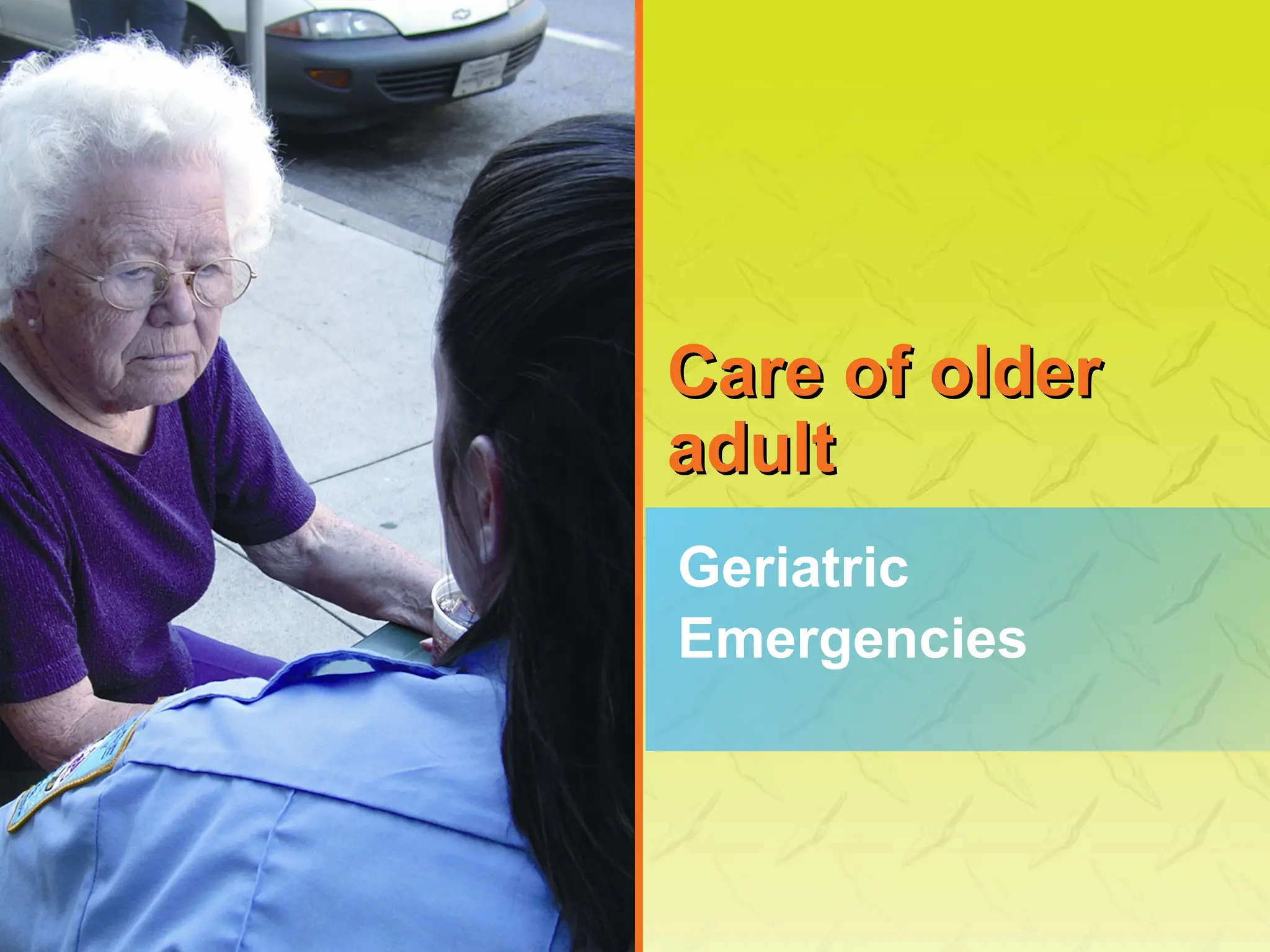
Care of older
Care of older
adult
adult
Geriatric
Emergencies
Generational Considerations
(1 of 2)
• It is important to understand and appreciate
how the life of an elderly person might differ
from yours.
• It takes time and patience to interact with an
elderly person.
– Treat the patient with respect.
Generational Considerations
(2 of 2)
• Make every attempt to avoid ageism.
– Not all older people have dementia.
– Not all older people are hard of hearing.
– Not all older people are sedentary or immobile.
Communication and Older
Adults (1 of 2)
• Good verbal communication skills are
essential.
• Communication techniques
– Identify yourself.
– Avoid showing frustration and impatience.
– Look directly at the patient at eye level.
– Speak slowly and distinctly.
Communication and Older
Adults (2 of 2)
• Communication techniques (cont’d)
– Have one person talk to the patient and ask
only one question at a time.
– Do not assume that all older patients are hard of
hearing.
– Give the patient time to respond.
– Listen to the answer.
– Explain what you will do before you do it.
Common Complaints and the Leading
Causes of Death in Elderly People
(1 of 2)
• The changing physiology of geriatric
patients can predispose this population to a
host of problems not seen in youth.
– Hip fractures are common.
– More likely to occur when bones are weakened
by osteoporosis or infection
– Sedentary behavior can lead to pneumonia and
blood clots.
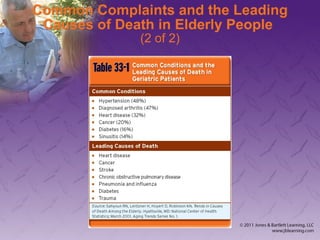
Common Complaints and the Leading
Causes of Death in Elderly People
(2 of 2)
Special Considerations in Assessing a
Geriatric Medical Patient (1 of 2)
• Assessing an elderly person can be
challenging because of:
– Communication issues
– Hearing and vision deficits
– Alterations in consciousness
– Complicated medical histories
– Effects of medications
Special Considerations in Assessing a
Geriatric Medical Patient (2 of 2)
• Patient assessment steps
– Scene size-up (place)
– Primary assessment
– History taking
– Secondary assessment
– Reassessment
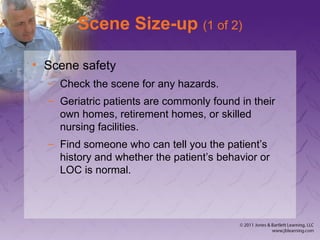
Scene Size-up (1 of 2)
• Scene safety
– Check the scene for any hazards.
– Geriatric patients are commonly found in their
own homes, retirement homes, or skilled
nursing facilities.
– Find someone who can tell you the patient’s
history and whether the patient’s behavior or
LOC is normal.
Scene Size-up (2 of 2)
• Mechanism of injury/nature of illness
– The NOI may be difficult to determine in older
people who may have an altered mental status
or dementia.
– Complaints may be vague.
– Chest pain, shortness of breath, and altered
LOC should always be considered serious.
Primary Assessment (1 of 6)
• Address life threats.
• Determine the transport priority.
• Form a general impression.
– You should be able to tell if the patient is
generally in stable or unstable condition.
– Use the AVPU scale to determine the patient’s
level of consciousness.
– AVPU alert, verbal, pain, and unresponsive.
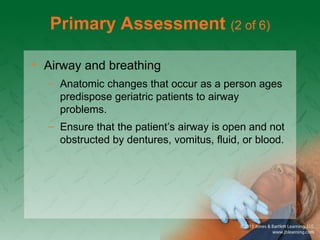
Primary Assessment (2 of 6)
• Airway and breathing
– Anatomic changes that occur as a person ages
predispose geriatric patients to airway
problems.
– Ensure that the patient’s airway is open and not
obstructed by dentures, vomitus, fluid, or blood.
Primary Assessment (3 of 6)
• Airway and breathing (cont’d)
– Suction may be necessary.
– Anatomic changes affect a person’s ability to
breathe effectively.
– Loss of mechanisms that protect the upper
airway cause a decreased ability to clear
secretions.
– Airway and breathing issues should be treated
with oxygen as soon as possible.
Primary Assessment (4 of 6)
• Circulation
– Poor perfusion is a serious issue in an older
adult.
– Physiologic changes may negatively affect
circulation.
– Vascular changes and circulatory compromise
might make it difficult to feel a pulse.
Primary Assessment (5 of 6)
• Transport decision
– Any complaints that compromise the ABCs
should result in prompt transportation.
– Determine conditions that are life threatening.
– Treat them to the best of your ability.
– Provide transport to priority patients.
Primary Assessment (6 of 6)
• Priority patients are those who have:
– Poor general impression
– Airway or breathing problems
– Acute altered level of consciousness
– Shock
– Severe pain
– Uncontrolled bleeding
History Taking (1 of 2)
• Investigate the chief complaint.
– Find and account for all medications.
– Obtain a thorough patient history.
– Determine early whether the altered LOC is
acute or chronic.
– Multiple disease processes and multiple and/or
vague complaints can make assessment
complicated.
History Taking (2 of 2)
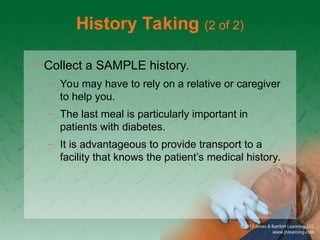
• Collect a SAMPLE history.
– You may have to rely on a relative or caregiver
to help you.
– The last meal is particularly important in
patients with diabetes.
– It is advantageous to provide transport to a
facility that knows the patient’s medical history.
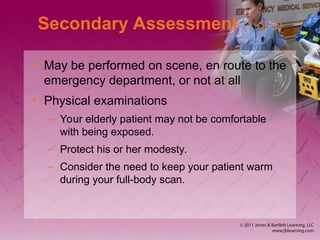
Secondary Assessment (1 of 3)
• May be performed on scene, en route to the
emergency department, or not at all
• Physical examinations
– Your elderly patient may not be comfortable
with being exposed.
– Protect his or her modesty.
– Consider the need to keep your patient warm
during your full-body scan.
Secondary Assessment (2 of 3)
• Vital signs
– The heart rate should be in the normal adult
range but may be compromised by medications
such as beta-blockers.
– Weaker and irregular pulses are common.
– Circulatory compromise may make it difficult to
feel a radial pulse; consider other pulse points.
Secondary Assessment (3 of 3)
• Vital signs (cont’d)
– Blood pressure tends to be higher.
– Capillary refill is not a good assessment.
– The respiratory rate should be in the same
range as in a younger adult.
– Be sure to auscultate breath sounds.
– Carefully assess pulse oximetry data.
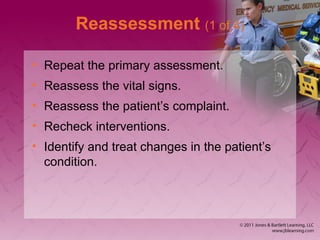
Reassessment (1 of 4)
• Repeat the primary assessment.
• Reassess the vital signs.
• Reassess the patient’s complaint.
• Recheck interventions.
• Identify and treat changes in the patient’s
condition.
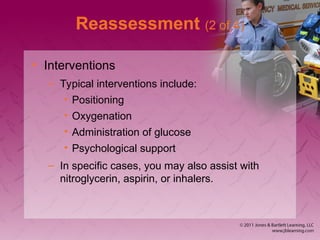
Reassessment (2 of 4)
• Interventions
– Typical interventions include:
• Positioning
• Oxygenation
• Administration of glucose
• Psychological support
– In specific cases, you may also assist with
nitroglycerin, aspirin, or inhalers.
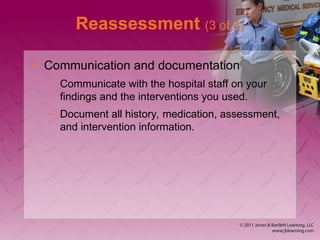
Reassessment (3 of 4)
• Communication and documentation
– Communicate with the hospital staff on your
findings and the interventions you used.
– Document all history, medication, assessment,
and intervention information.
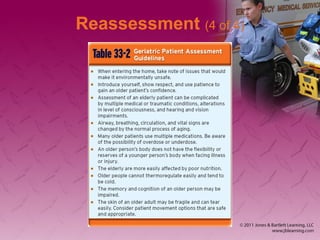
Reassessment (4 of 4)
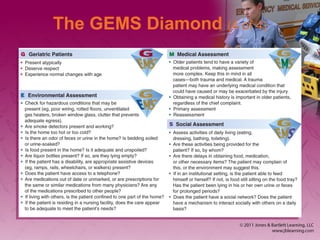
The GEMS Diamond (1 of 4)
• Created to help you remember what is
different about older patients
– Not intended to be a format for the approach to
geriatric patients
– Not intended to replace the ABCs of care
– Serves as an acronym for the issues to be
considered when assessing every older patient
The GEMS Diamond (2 of 4)
• Geriatric patient
– Older patients may present atypically.
• Environmental assessment
– The environment can help give clues to the
patient’s condition and the cause of the
emergency.
• Medical assessment
– Obtain a thorough medical history.
The GEMS Diamond (3 of 4)
• Social assessment
– Older people may have less of a social network.
– They may also need assistance with activities of
daily living.
– Consider obtaining information pamphlets about
some of the agencies for older people in your
area.
The GEMS Diamond (4 of 4)
Changes in the Body (1 of 2)
• The aging process is accompanied by
changes in physiologic function.
– All tissues in the body undergo aging.
– The decrease in the functional capacity of
various organ systems is normal but can affect
the way in which a patient responds to illness.
Changes in the Body (2 of 2)
• Normal changes should not be mistaken for
signs of illness.
• Genuine symptoms should not be attributed
to “just getting old.”
Changes in the Respiratory
System (1 of 8)
• Older adults can be predisposed to
respiratory illness.
– Airway musculature becomes weakened.
– The alveoli in the lung tissue become enlarged
and the elasticity decreases.
– The body’s chemoreceptors slow with age.
Changes in the Respiratory
System (2 of 8)
• Pneumonia
– Inflammation/infection of the lung from bacterial,
viral, or fungal causes
– Leading cause of death from infection in
Americans older than age 65 years
– Wear respiratory protection when you are
assessing a patient with a potentially infectious
respiratory disease.
Changes in the Respiratory
System (3 of 8)
• Pneumonia (cont’d)
– A patient is more likely to have pneumonia if he
or she:
• Is institutionalized
• Has chronic disease processes
• Has immune system compromise
• Has a history of COPD or cancer
• Has a history of inhaled toxins or aspiration of
material in the lung
Changes in the Respiratory
System (4 of 8)
• Pneumonia (cont’d)
– The patient may present with:
• Cyanosis and pallor
• Dry skin
• Possible fever
• Increased skin turgor
• Pale, dry mucosa
• Tachycardia or hypotension
• Diminished breath sounds
Changes in the Respiratory
System (5 of 8)
• Pulmonary embolism
– Condition that causes a sudden blockage of an
artery by a venous clot
– A patient will generally complain of symptoms of
chest pain.
Changes in the Respiratory
System (6 of 8)
• Pulmonary embolism (cont’d)
– Risk factors include:
• Recent surgery
• History of blood clots
• Obesity
• Recent long-distance travel
• Sedentary behavior
• Other conditions that render the patient
bedridden
Changes in the Respiratory
System (7 of 8)
• Pulmonary embolism (cont’d)
– Patients present with:
• Tachycardia
• Sudden onset of dyspnea
• Shoulder, back, or chest pain
• Cough
• Syncope in patients in whom the clot is larger
• Anxiety
Changes in the Respiratory
System (8 of 8)
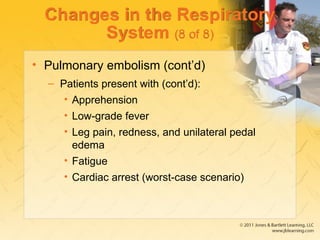
• Pulmonary embolism (cont’d)
– Patients present with (cont’d):
• Apprehension
• Low-grade fever
• Leg pain, redness, and unilateral pedal
edema
• Fatigue
• Cardiac arrest (worst-case scenario)
Changes in the Cardiovascular
System (1 of 5)
• The heart hypertrophies with age.
• Cardiac output declines.
• Arteriosclerosis contributes to systolic
hypertension.
• Many people tend to limit physical activity
and exercise as they grow older.
Changes in the Cardiovascular
System (2 of 5)
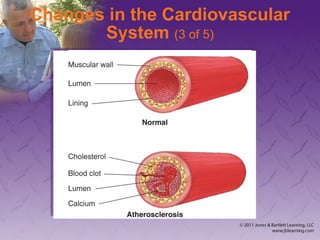
• Geriatric patients are at risk for
atherosclerosis, an accumulation of fatty
material in the arteries.
– Major complications include myocardial
infarction and stroke.
– Affects more than 60% of people older than 65
years
Changes in the Cardiovascular
System (3 of 5)
Changes in the Cardiovascular
System (4 of 5)
• Older people are also at an increased risk
for aneurysm, an abnormal, blood-filled
dilation of the blood vessel wall.
– Blood vessels become stiff.
– Heart valves become stiff and degenerate.
– Heart rate becomes too fast, too slow, or too
erratic.
Changes in the Cardiovascular
System (5 of 5)
• Another vessel-related problem is called
venous status.
– Loss of proper function of the veins in the legs
that would normally carry blood back to the
heart
– Causes blood clots
– People usually exhibit edema of the legs and
ankles.
Heart Attack (Myocardial
Infarction) (1 of 4)
• The classic signs of a heart attack are often
not present in geriatric patients.
– “Silent” heart attacks are particularly common in
women and people with diabetes.
Heart Attack (Myocardial
Infarction) (2 of 4)
• Serious symptoms include:
– Dyspnea
– Epigastric and abdominal pain
– Nausea and vomiting
– Weakness, dizziness, light-headedness, and
syncope
– Fatigue
– Confusion
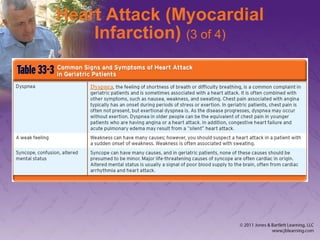
Heart Attack (Myocardial
Infarction) (3 of 4)
Heart Attack (Myocardial
Infarction) (4 of 4)
• Other signs and symptoms include:
– Issues with circulation
– Diaphoresis
– Pale, cyanotic mottled skin
– Adventitious or decreased breath sounds
– Increased peripheral edema
Heart Failure (1 of 4)
• The heart is not able to maintain cardiac
output that meets the needs of the body.
• Patient risk factors include:
– Hypertension
– A history of coronary artery disease
– Atrial fibrillation
Heart Failure (2 of 4)
• With left-sided heart failure, fluid backs up
into the lungs.
– Causes a condition called pulmonary edema
and shortness of breath
• Right-sided heart failure occurs when the
fluid backs up into the body.
– Causes jugular vein distention, fluid in the
abdomen, and an enlarged liver
Heart Failure (3 of 4)
• Associated signs and symptoms
– Dyspnea on exertion
– Paroxysmal nocturnal dyspnea
– Tachypnea
– Use of accessory muscles
– Anxiousness
– Fatigue
Heart Failure (4 of 4)
• Signs and symptoms (cont’d)
– Associated chest pain
– Diaphoretic and cyanotic skin
– Crackles, wheezing, or rales
– Tachycardia
– Hypertension
Stroke (1 of 4)
• Leading cause of death in the elderly
• Preventable risk factors: smoking, obesity,
and a sedentary lifestyle
• Less preventable causes: high cholesterol
and hypertension
• Uncontrollable factors: cardiac disease and
atrial fibrillation
Stroke (2 of 4)
• Signs and symptoms
– Acute altered level of consciousness
– Numbness, weakness, or paralysis on one side
of the body
– Slurred speech
– Difficulty speaking (aphasia)
– Visual disturbances
Stroke (3 of 4)
• Signs and symptoms (cont’d)
– Headache and dizziness
– Incontinence
– Seizure
• Hemorrhagic strokes are less common and
more likely to be fatal.
– Broken blood vessel causes bleeding into the
brain.
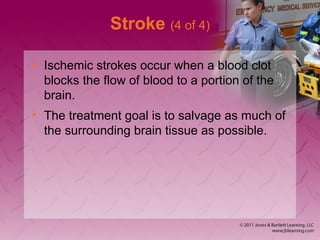
Stroke (4 of 4)
• Ischemic strokes occur when a blood clot
blocks the flow of blood to a portion of the
brain.
• The treatment goal is to salvage as much of
the surrounding brain tissue as possible.
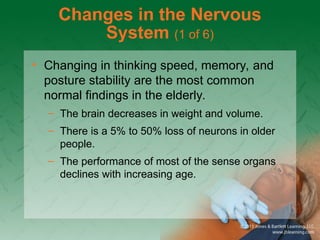
Changes in the Nervous
System (1 of 6)
• Changing in thinking speed, memory, and
posture stability are the most common
normal findings in the elderly.
– The brain decreases in weight and volume.
– There is a 5% to 50% loss of neurons in older
people.
– The performance of most of the sense organs
declines with increasing age.
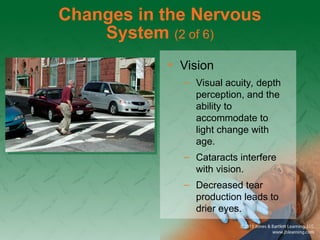
Changes in the Nervous
System (2 of 6)
• Vision
– Visual acuity, depth
perception, and the
ability to
accommodate to
light change with
age.
– Cataracts interfere
with vision.
– Decreased tear
production leads to
drier eyes.
Changes in the Nervous
System (3 of 6)
• Vision (cont’d)
– Inability to differentiate colors
– Decreased night vision
– Inability to see up close (presbyopia)
– Other diseases:
• Glaucoma
• Macular degeneration
• Retinal detachment
Changes in the Nervous
System (4 of 6)
• Hearing
– Hearing problems cause changes in the inner
ear, make hearing high-frequency sounds
difficult, and cause problems with balance,
making falls more likely.
– Presbycusis is a gradual hearing loss.
– Heredity and long-term exposure to loud noises
are the main factors that contribute to hearing
loss.
Changes in the Nervous
System (5 of 6)
• Taste
– Decrease in the number of taste buds
– The negative result might be lessened interest
in eating, which can lead to:
• Weight loss
• Malnutrition
• Complaints of fatigue
Changes in the Nervous
System (6 of 6)
• Touch
– Decreased sense of touch and pain perception
from the loss of the end nerve fibers
– This loss can create situations in which an older
person may be injured and not know it.
– Decreased sensation of hot and cold
Dementia (1 of 3)
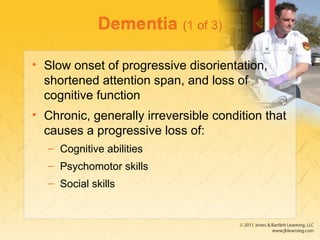
• Slow onset of progressive disorientation,
shortened attention span, and loss of
cognitive function
• Chronic, generally irreversible condition that
causes a progressive loss of:
– Cognitive abilities
– Psychomotor skills
– Social skills
Dementia (2 of 3)
• Dementia is the result of many neurologic
diseases, and may be caused by:
– Alzheimer disease
– Cerebrovascular accidents
– Genetic factors
Dementia (3 of 3)
• On assessment, patients may:
– Have short- and long-term memory loss
– Have a decreased attention span
– Be unable to perform daily routines
– Show a decreased ability to communicate
– Appear confused or angry
– Have impaired judgment
– Be unable to vocalize pain
Delirium (1 of 3)
• Sudden change in mental status,
consciousness, or cognitive processes
• Marked by the inability to focus, think
logically, and maintain attention
• Affects 15% to 50% of hospitalized people
aged 70 years or older
• Acute anxiety may be present.
Delirium (2 of 3)
• This condition is generally the result of a
reversible physical ailment, such as tumors
or fever, or metabolic causes.
• In the history, look for:
– Intoxication or withdrawal from alcohol
– Withdrawal from sedatives
– Certain medical conditions
Delirium (3 of 3)
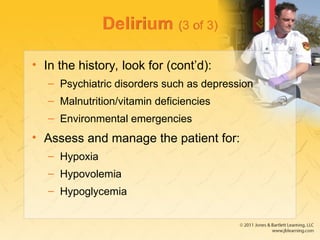
• In the history, look for (cont’d):
– Psychiatric disorders such as depression
– Malnutrition/vitamin deficiencies
– Environmental emergencies
• Assess and manage the patient for:
– Hypoxia
– Hypovolemia
– Hypoglycemia
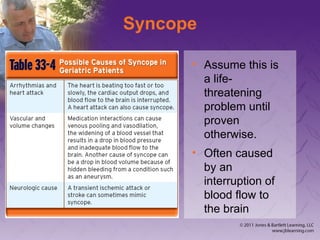
Syncope
• Assume this is
a life-
threatening
problem until
proven
otherwise.
• Often caused
by an
interruption of
blood flow to
the brain
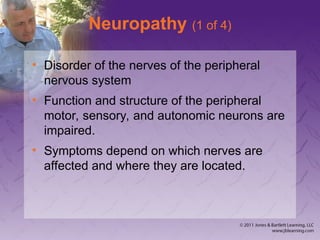
Neuropathy (1 of 4)
• Disorder of the nerves of the peripheral
nervous system
• Function and structure of the peripheral
motor, sensory, and autonomic neurons are
impaired.
• Symptoms depend on which nerves are
affected and where they are located.
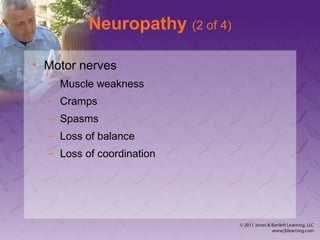
Neuropathy (2 of 4)
• Motor nerves
– Muscle weakness
– Cramps
– Spasms
– Loss of balance
– Loss of coordination
Neuropathy (3 of 4)
• Sensory nerves
– Tingling
– Numbness
– Itching
– Pain
– Burning, freezing, or extreme sensitivity to touch
Neuropathy (4 of 4)
• Autonomic nerves
– Changes in blood pressure and heart rate
– Constipation
– Bladder and sexual dysfunction
Changes in the
Gastrointestinal System (1 of 5)
• Reduction in the volume of saliva
• Dental loss
• Gastric secretions are reduced.
• Changes in gastric motility occur.
• Incidence of certain diseases involving the
bowel increases.
• Blood flow to the liver declines.
Changes in the
Gastrointestinal System (2 of 5)
• Age-related changes in the GI system:
– Issues with dental problems
– Decrease in saliva and sense of taste
– Poor muscle tone of the sphincter between the
esophagus and stomach
– Decrease in hydrochloric acid
– Alterations in absorption of nutrients
– Weakening of the rectal sphincter
Changes in the
Gastrointestinal System (3 of 5)
• Serious GI issues that affect elder people
are:
– GI bleeding
– Inflammation
– Infection
– Obstruction of the upper and lower GI tract
Changes in the
Gastrointestinal System (4 of 5)
• Specific GI problems that are more common
in older patients include:
– Diverticulitis
– Bleeding in the upper and lower GI system
– Peptic ulcer disease
– Gallbladder disease
– Bowel obstruction
Changes in the
Gastrointestinal System (5 of 5)
• In general, patients with GI issues will
present with:
– Hematemesis (bloody vomitus)
– Melena (dark, tarry stool)
– Dyspepsia (indigestion)
– Hepatomegaly (enlarged liver)
– Constipation
– Diarrhea
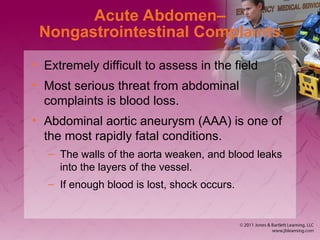
Acute Abdomen–
Nongastrointestinal Complaints
• Extremely difficult to assess in the field
• Most serious threat from abdominal
complaints is blood loss.
• Abdominal aortic aneurysm (AAA) is one of
the most rapidly fatal conditions.
– The walls of the aorta weaken, and blood leaks
into the layers of the vessel.
– If enough blood is lost, shock occurs.
Changes in the Renal System
(1 of 4)
• Age brings changes in the kidneys.
– Reduction in renal function
– Reduction in renal blood flow
– Tubule degeneration
• Changes in the genitourinary system:
– Decreased bladder capacity
– Decline in sphincter muscle control
Changes in the Renal System
(2 of 4)
• Changes in the genitourinary system
(cont’d):
– Decline in voiding senses
– Increase in nocturnal voiding
– Benign prostatic hypertrophy (enlarged
prostate)
Changes in the Renal System
(3 of 4)
• Incontinence is not a normal part of aging
and can lead to skin irritation, skin
breakdown, and urinary tract infections.
– Stress incontinence occurs during activities
such as coughing, laughing, sneezing, lifting,
and exercise.
– Urge incontinence is triggered by hot or cold
fluids, running water, or thinking about going to
the bathroom.
Changes in the Renal System
(4 of 4)
• The opposite of incontinence is urinary
retention or difficulty urinating.
– In men, enlargement of the prostate can place
pressure on the urethra, making voiding difficult.
– Bladder and urinary tract infections can also
cause inflammation.
Changes in the Endocrine
System (1 of 4)
• Most of the signs and symptoms people
experience are attributed to the process of
aging and include:
– Slower heart rate
– Fatigue
– Drier skin and hair
– Cold intolerance
– Weight gain
Changes in the Endocrine
System (2 of 4)
• Other endocrine changes include:
– An increase in the secretion of antidiuretic
hormone, causing fluid imbalance
– Increases in the levels of norepinephrine,
possibly having a harmful effect on the
cardiovascular system
– A reduction in pancreatic beta cell secretion,
causing hyperglycemia
Changes in the Endocrine
System (3 of 4)
• Hyperosmolar hyperglycemic nonketotic
coma (HHNC) is a type 2 diabetic
complication in elderly people.
• On assessment, you may see:
– Warm, flushed skin
– Poor skin turgor
– Pale, dry, oral mucosa
– Furrowed tongue
Changes in the Endocrine
System (4 of 4)
• Assessment of the patient should include:
– Obtaining blood pressure
– Distal pulses
– Auscultation of breath sounds to detect
adventitious noises
– Determination of temperature
Changes in the Immune
System
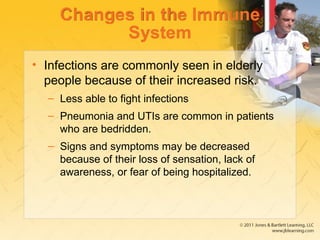
• Infections are commonly seen in elderly
people because of their increased risk.
– Less able to fight infections
– Pneumonia and UTIs are common in patients
who are bedridden.
– Signs and symptoms may be decreased
because of their loss of sensation, lack of
awareness, or fear of being hospitalized.
Changes in the
Musculoskeletal System (1 of 5)
• Decrease in bone mass
– Especially in postmenopausal women
– Bones become more brittle and tend to break
more easily.
• Joints lose their flexibility.
• A decrease in the amount of muscle mass
often results in less strength.
Changes in the
Musculoskeletal System (2 of 5)
• Changes in physical abilities can affect
older adults’ confidence in mobility.
– Muscle fibers become smaller and fewer.
– Motor neurons decline in number.
– Strength declines.
– Ligaments and cartilage of the joints lose their
elasticity.
– Cartilage goes through degenerative change.
Changes in the
Musculoskeletal System (3 of 5)
• Osteoporosis is characterized by a
decrease in bone mass leading to reduction
in bone strength and greater susceptibility
to fracture.
• Extent of bone loss depends on:
– Genetics
– Smoking
– Level of activity
Changes in the
Musculoskeletal System (4 of 5)
• Extent of bone loss depends on (cont’d):
– Diet
– Alcohol consumption
– Hormonal factors
– Body weight
Changes in the
Musculoskeletal System (5 of 5)
• Osteoarthritis is a progressive disease of
the joints that destroys cartilage, promotes
the formation of bone spurs in joints, and
leads to joint stiffness.
– Results from wear and tear
– Affects 35% to 45% of the population older than
65 years
– Affects joints in the hands, knees, hips, and
spine
Changes in Skin (1 of 3)
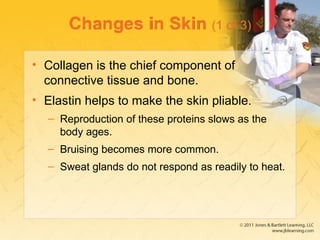
• Collagen is the chief component of
connective tissue and bone.
• Elastin helps to make the skin pliable.
– Reproduction of these proteins slows as the
body ages.
– Bruising becomes more common.
– Sweat glands do not respond as readily to heat.
Changes in Skin (2 of 3)
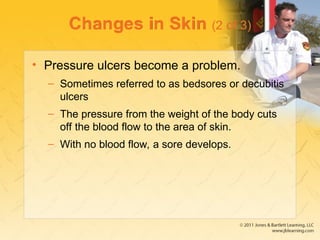
• Pressure ulcers become a problem.
– Sometimes referred to as bedsores or decubitis
ulcers
– The pressure from the weight of the body cuts
off the blood flow to the area of skin.
– With no blood flow, a sore develops.
Changes in Skin (3 of 3)
• Stages of development:
– Stage I: Nonblanching redness with damage
under the skin
– Stage II: Blister or ulcer that can affect the
dermis and epidermis
– Stage III: Invasion of the fat layer through to the
fascia
– Stage IV: Invasion to muscle or bone
Toxicology (1 of 3)
• The elderly are more susceptible to toxicity
because of:
– Decreased kidney function
– Altered gastrointestinal absorption
– Decreased vascular flow in liver
Toxicology (2 of 3)
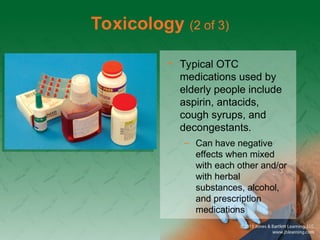
• Typical OTC
medications used by
elderly people include
aspirin, antacids,
cough syrups, and
decongestants.
– Can have negative
effects when mixed
with each other and/or
with herbal
substances, alcohol,
and prescription
medications
Toxicology (3 of 3)
• Polypharmacy refers to the use of multiple
prescription medications by one patient.
– Negative effects can include overdosing and
negative medication interaction.
– Medication noncompliance occurs due to:
• Financial challenges
• A motor inability to open caps
• Impaired cognitive, vision, and hearing ability
Psychiatric Emergencies (1 of 3)
• Depression is not part of normal aging.
– Occurs in about 6% of the population older than
65 years
– Treatable with medication and therapy
– Associated with a high suicide rate
– Risk factors include:
• A history of depression
• Chronic disease
• Loss (function, independence, significant
other)
Psychiatric Emergencies (2 of 3)
• For most older people, the later years are
ones of fulfillment and satisfaction.
• For others, later life is characterized by:
– Physical pain
– Psychological distress
– Doubts about the significance of life’s
accomplishments
Psychiatric Emergencies (3 of 3)
• For others, later life is characterized by
(cont’d):
– Financial concerns
– Loss of loved ones
– Dissatisfaction with living conditions
– Seemingly unbearable disability
Depression (1 of 2)
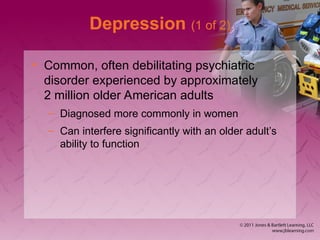
• Common, often debilitating psychiatric
disorder experienced by approximately
2 million older American adults
– Diagnosed more commonly in women
– Can interfere significantly with an older adult’s
ability to function
Depression (2 of 2)
• The following conditions contribute to the
onset of significant depression:
– Substance abuse
– Isolation
– Prescription medication use
– Chronic medical condition
Suicide (1 of 2)
• Older men have the highest suicide rate of
any age group in the United States.
– Older persons choose much more lethal means
than younger victims.
– Generally have diminished recuperative
capacity to survive an attempt
Suicide (2 of 2)
• Common predisposing events and
conditions include:
– Death of a loved one
– Physical illness
– Depression and hopelessness
– Alcohol abuse
– Alcohol dependence
– Loss of meaningful life roles
Trauma and Geriatric Patients
(1 of 8)
• These conditions create risk and complicate
assessment:
– Slower homeostatic compensatory mechanisms
– Limited physiologic reserves
– Normal effects of aging on the body
– Existing medical issues
Trauma and Geriatric Patients
(2 of 8)
• Physical findings in an older adult may be
more subtle and more easily missed.
– Mechanisms are much more minimal.
– Recuperation from trauma is longer and often
less successful.
– Many injuries are undertriaged and
undertreated.
Trauma and Geriatric Patients
(3 of 8)
• Factors that affect the elderly while driving
include:
– Distraction or confusion
– Decreased hearing and vision
– Equilibrium disorders
– Decreased mobility and reaction times
– Impairment by medications
– Conditions such as hypoglycemia
Trauma and Geriatric Patients
(4 of 8)
• Falls are some of the more common MOIs
for elderly people.
– Safety and environment factors:
• Poor lighting
• Loose floor coverings
• Lack of handrails
Trauma and Geriatric Patients
(5 of 8)
• Falls (cont’d)
– Physiologic factors include:
• Vision and balance issues
• Decreased visual acuity
• Decreased strength
Trauma and Geriatric Patients
(6 of 8)
• Elderly people are more likely to experience
burns because of AMS, inattention, and a
compromised neurologic status.
– Risk of mortality is increased when:
• Preexisting medical conditions exist
• The immune system is weakened
• Fluid replacement is complicated by renal
compromise
Trauma and Geriatric Patients
(7 of 8)
• There is higher mortality from penetrating
trauma in older adults, especially in the
case of gunshot wounds.
– Penetrating trauma can easily cause serious
internal bleeding.
– Trauma can also be caused by abuse.
Trauma and Geriatric Patients
(8 of 8)
• Anatomic changes and trauma
– Changes in pulmonary, cardiovascular,
neurologic, and musculoskeletal systems make
older patients more susceptible to trauma.
– A geriatric patient’s overall physical condition
may lessen the ability of the body to
compensate for the effects of even simple
injuries.
Special Considerations in Assessing
Geriatric Trauma Patients
• Patient assessment steps
– Scene size-up
– Primary assessment
– History taking
– Secondary assessment
– Reassessment
Scene Size-up (1 of 2)
• Scene safety
– Ensure your own safety.
– Take standard precautions.
– Consider the number of patients.
– Determine if you need additional or specialized
resources.
Scene Size-up (2 of 2)
• Mechanism of injury/nature of illness
– Look for clues that indicate your patient’s
traumatic incident may have been preceded by
a medical incident.
– Bystander information may help.
– MOI is important in establishing whether an
injury is considered critical, and it affects
treatment and transport considerations.
Primary Assessment (1 of 4)
• Address life threats.
• Determine the transport priority.
• Form a general impression.
– You should be able to tell if the patient is
generally in stable or unstable condition.
– Determining neurologic status may be difficult
without the patient’s baseline.
– Use AVPU for posttraumatic status.
Primary Assessment (2 of 4)
• Airway and breathing
– If the patient is talking to you, the airway is
patent.
– Patients who have noisy respirations have
airway compromise.
– Older patients may have a diminished ability to
cough, so suctioning is important.
– Assess for the presence of dentures.
Primary Assessment (3 of 4)
• Circulation
– Manage any external bleeding immediately.
– Older patients can more easily go into shock.
– Patients who were hypertensive prior to injury
may have a normal BP when they are actually
in shock.
Primary Assessment (4 of 4)
• Transport decision
– Physiologic changes secondary to aging can
worsen the effects of trauma.
– Older people do not heal from trauma as easily
as do younger adults.
– Consider trauma center transport for geriatric
patients if there is the potential for a serious
injury.
History Taking
• Investigate the chief complaint.
– Considerations in your assessment must
include past medical conditions, even if they are
not currently acute or symptomatic.
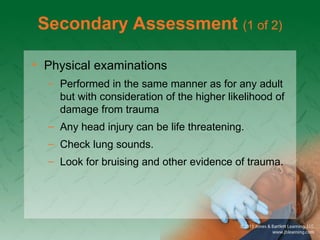
Secondary Assessment (1 of 2)
• Physical examinations
– Performed in the same manner as for any adult
but with consideration of the higher likelihood of
damage from trauma
– Any head injury can be life threatening.
– Check lung sounds.
– Look for bruising and other evidence of trauma.
Secondary Assessment (2 of 2)
• Vital signs
– Assess the pulse, blood pressure, and skin
signs.
– Capillary refill is unreliable because of
compromised circulation.
– Remember that some elderly people take beta-
blockers.
Reassessment (1 of 2)
• Repeat the primary assessment.
– A geriatric patient has a higher likelihood of
decompensating after trauma.
• Interventions
– Broken bones are common and should be
splinted.
– Do not force a patient with joint flexion or
kyphosis into a “normal” position.
Reassessment (2 of 2)
• Interventions (cont’d)
– In hip and pelvic fractures, do not log roll.
– Provide blankets and heat to prevent
hypothermia.
• Communications and documentation
– Communication can be challenging.
– Document assessment, treatment, and
reassessment.
Falls and Trauma (1 of 6)
• Falls may result from:
– Fainting
– Cardiac rhythm disturbance
– Medication interaction
• Whenever you assess a fall patient, find out
why the fall occurred.
– Consider that the fall may have been caused by
a medical condition.
Falls and Trauma (2 of 6)
• As a result of osteoporosis, older patients
are prone to fractures, especially of the hip.
– Contributing factors include:
• Stresses of ordinary activity
• A standing fall
• Vitamin D and calcium deficiencies
• Metabolic bone diseases
• Tumors
Falls and Trauma (3 of 6)
• Elderly patients with osteoporosis are also
at risk for pelvic fractures.
• With age, the spine stiffens as a result of
shrinkage of disk spaces, and vertebrae
become brittle.
– Compression fractures of the spine occur.
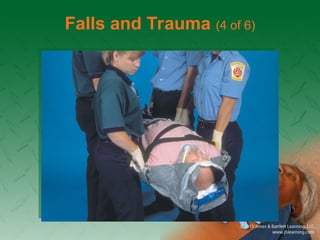
Falls and Trauma (4 of 6)
Falls and Trauma (5 of 6)
• Because brain tissue shrinks with age, older
patients are more likely to sustain closed
head injuries.
– Acute subdural hematomas are among the
deadliest of all head injuries.
– Serious head injuries are often missed because
the mechanism may seem relatively minor.
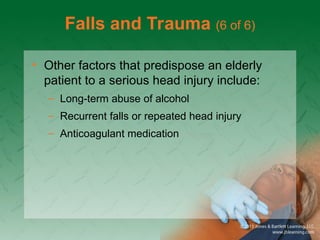
Falls and Trauma (6 of 6)
• Other factors that predispose an elderly
patient to a serious head injury include:
– Long-term abuse of alcohol
– Recurrent falls or repeated head injury
– Anticoagulant medication
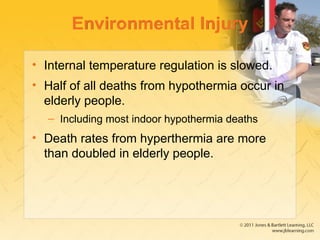
Environmental Injury
• Internal temperature regulation is slowed.
• Half of all deaths from hypothermia occur in
elderly people.
– Including most indoor hypothermia deaths
• Death rates from hyperthermia are more
than doubled in elderly people.
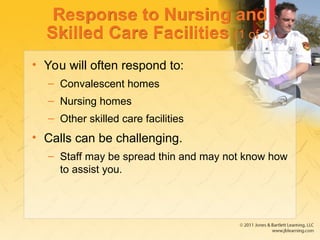
Response to Nursing and
Skilled Care Facilities (1 of 3)
• You will often respond to:
– Convalescent homes
– Nursing homes
– Other skilled care facilities
• Calls can be challenging.
– Staff may be spread thin and may not know how
to assist you.
Response to Nursing and
Skilled Care Facilities (2 of 3)
• Infection control needs to be a high priority
for EMTs.
– Methicillin-resistant Staphylococcus aureus
(MRSA) infections are common.
– Many infections in hospitals are caused by
vancomycin-resistant enterococci.
– The respiratory syncytial virus causes an
infection of the upper and lower respiratory
tracts.
Response to Nursing and
Skilled Care Facilities (3 of 3)
• Infection control (cont’d)
– Clostridium difficile is a bacterium responsible
for the most common cause of hospital-acquired
infectious diarrhea.
– You should be cognizant of potential airborne
pathogens.
Dying Patients
• More patients are choosing to die at home
rather than in a hospital.
– Dying patients receive palliative care.
– Be understanding, sensitive, and
compassionate.
– Determine if the family wishes for the patient to
go to the hospital or stay in the home.
Advance Directives (1 of 5)
• Specific legal papers that direct relatives
and caregivers about what kind of medical
treatment may be given to patients who
cannot speak for themselves
– Mentally competent adults and emancipated
minors have the right to consent to or decline
treatment.
Advance Directives (2 of 5)
• A competent adult is one who:
– Is older than 18 years
– Is alert
– Is not intoxicated
– Understands the consequences of his or her
decision
Advance Directives (3 of 5)
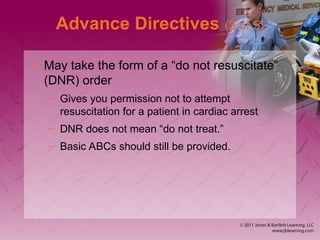
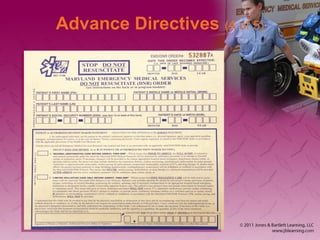
• May take the form of a “do not resuscitate”
(DNR) order
– Gives you permission not to attempt
resuscitation for a patient in cardiac arrest
– DNR does not mean “do not treat.”
– Basic ABCs should still be provided.
Advance Directives (4 of 5)
Advance Directives (5 of 5)
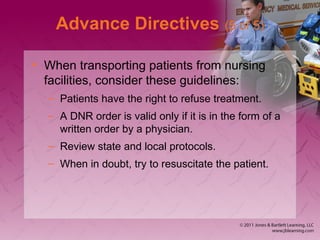
• When transporting patients from nursing
facilities, consider these guidelines:
– Patients have the right to refuse treatment.
– A DNR order is valid only if it is in the form of a
written order by a physician.
– Review state and local protocols.
– When in doubt, try to resuscitate the patient.
Elder Abuse and Neglect (1 of 7)
• Any action on the part of an older person’s
family member, caregiver, or other
associated person that takes advantage of
the older person’s:
– Person
– Property
– Emotional state
Elder Abuse and Neglect (2 of 7)
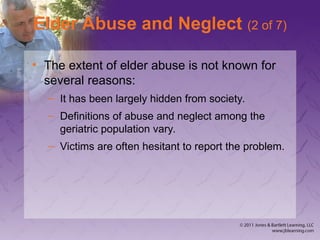
• The extent of elder abuse is not known for
several reasons:
– It has been largely hidden from society.
– Definitions of abuse and neglect among the
geriatric population vary.
– Victims are often hesitant to report the problem.
Elder Abuse and Neglect (3 of 7)
• The physical and emotional signs of abuse
are often overlooked or not accurately
identified.
• Elder abuse occurs more often in women
older than 75 years.
• Abusers of older people are often products
of child abuse themselves.
Elder Abuse and Neglect (4 of 7)
• Try to obtain an explanation of what
happened.
• Suspect abuse when answers are
concealed or avoided.
• Suspect abuse when you are given
unbelievable answers.
Elder Abuse and Neglect (5 of 7)
• Information that may be important in
assessing abuse includes:
– Repeated visits to the ED or clinic
– A history of being accident-prone
– Soft-tissue injuries
– Unbelievable or vague explanations of injuries
– Psychosomatic complaints
Elder Abuse and Neglect (6 of 7)
• Information that may be important in
assessing abuse includes (cont’d):
– Chronic pain without medical explanation
– Self-destructive behavior
– Eating and sleep disorders
– Depression or a lack of energy
– Substance and/or sexual abuse history
Elder Abuse and Neglect (7 of 7)
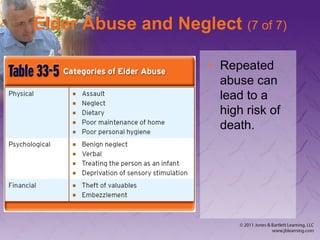
• Repeated
abuse can
lead to a
high risk of
death.
Signs of Physical Abuse (1 of 4)
• Inflicted bruises are usually found on:
– Buttocks and lower back, genitals, and inner
thighs
– Cheeks or earlobes
– Neck
– Upper lip
– Inside the mouth
Signs of Physical Abuse (2 of 4)
• Typical abuse from burns is caused by
contact with:
– Cigarettes
– Matches
– Heated metal
– Forced immersion in hot liquids
– Chemicals
– Electrical power sources
Signs of Physical Abuse (3 of 4)
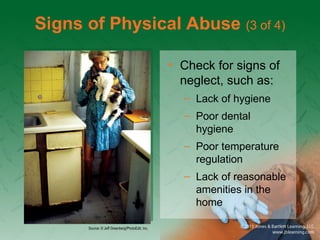
• Check for signs of
neglect, such as:
– Lack of hygiene
– Poor dental
hygiene
– Poor temperature
regulation
– Lack of reasonable
amenities in the
home
Source: © Jeff Greenberg/PhotoEdit, Inc.
Signs of Physical Abuse (4 of 4)
• Regard injuries to the genitals or rectum
with no reported trauma as evidence of
sexual abuse in any patient.
– Geriatric patients with AMS may never be able
to report sexual abuse.
– Many women do not report cases of sexual
abuse because of shame and the pressure to
forget.

care old. pateint which the need what need

  • 1.
    Care of older Careof older adult adult Geriatric Emergencies
  • 2.
    Generational Considerations (1 of2) • It is important to understand and appreciate how the life of an elderly person might differ from yours. • It takes time and patience to interact with an elderly person. – Treat the patient with respect.
  • 3.
    Generational Considerations (2 of2) • Make every attempt to avoid ageism. – Not all older people have dementia. – Not all older people are hard of hearing. – Not all older people are sedentary or immobile.
  • 4.
    Communication and Older Adults(1 of 2) • Good verbal communication skills are essential. • Communication techniques – Identify yourself. – Avoid showing frustration and impatience. – Look directly at the patient at eye level. – Speak slowly and distinctly.
  • 5.
    Communication and Older Adults(2 of 2) • Communication techniques (cont’d) – Have one person talk to the patient and ask only one question at a time. – Do not assume that all older patients are hard of hearing. – Give the patient time to respond. – Listen to the answer. – Explain what you will do before you do it.
  • 6.
    Common Complaints andthe Leading Causes of Death in Elderly People (1 of 2) • The changing physiology of geriatric patients can predispose this population to a host of problems not seen in youth. – Hip fractures are common. – More likely to occur when bones are weakened by osteoporosis or infection – Sedentary behavior can lead to pneumonia and blood clots.
  • 7.
    Common Complaints andthe Leading Causes of Death in Elderly People (2 of 2)
  • 8.
    Special Considerations inAssessing a Geriatric Medical Patient (1 of 2) • Assessing an elderly person can be challenging because of: – Communication issues – Hearing and vision deficits – Alterations in consciousness – Complicated medical histories – Effects of medications
  • 9.
    Special Considerations inAssessing a Geriatric Medical Patient (2 of 2) • Patient assessment steps – Scene size-up (place) – Primary assessment – History taking – Secondary assessment – Reassessment
  • 10.
    Scene Size-up (1of 2) • Scene safety – Check the scene for any hazards. – Geriatric patients are commonly found in their own homes, retirement homes, or skilled nursing facilities. – Find someone who can tell you the patient’s history and whether the patient’s behavior or LOC is normal.
  • 11.
    Scene Size-up (2of 2) • Mechanism of injury/nature of illness – The NOI may be difficult to determine in older people who may have an altered mental status or dementia. – Complaints may be vague. – Chest pain, shortness of breath, and altered LOC should always be considered serious.
  • 12.
    Primary Assessment (1of 6) • Address life threats. • Determine the transport priority. • Form a general impression. – You should be able to tell if the patient is generally in stable or unstable condition. – Use the AVPU scale to determine the patient’s level of consciousness. – AVPU alert, verbal, pain, and unresponsive.
  • 13.
    Primary Assessment (2of 6) • Airway and breathing – Anatomic changes that occur as a person ages predispose geriatric patients to airway problems. – Ensure that the patient’s airway is open and not obstructed by dentures, vomitus, fluid, or blood.
  • 14.
    Primary Assessment (3of 6) • Airway and breathing (cont’d) – Suction may be necessary. – Anatomic changes affect a person’s ability to breathe effectively. – Loss of mechanisms that protect the upper airway cause a decreased ability to clear secretions. – Airway and breathing issues should be treated with oxygen as soon as possible.
  • 15.
    Primary Assessment (4of 6) • Circulation – Poor perfusion is a serious issue in an older adult. – Physiologic changes may negatively affect circulation. – Vascular changes and circulatory compromise might make it difficult to feel a pulse.
  • 16.
    Primary Assessment (5of 6) • Transport decision – Any complaints that compromise the ABCs should result in prompt transportation. – Determine conditions that are life threatening. – Treat them to the best of your ability. – Provide transport to priority patients.
  • 17.
    Primary Assessment (6of 6) • Priority patients are those who have: – Poor general impression – Airway or breathing problems – Acute altered level of consciousness – Shock – Severe pain – Uncontrolled bleeding
  • 18.
    History Taking (1of 2) • Investigate the chief complaint. – Find and account for all medications. – Obtain a thorough patient history. – Determine early whether the altered LOC is acute or chronic. – Multiple disease processes and multiple and/or vague complaints can make assessment complicated.
  • 19.
    History Taking (2of 2) • Collect a SAMPLE history. – You may have to rely on a relative or caregiver to help you. – The last meal is particularly important in patients with diabetes. – It is advantageous to provide transport to a facility that knows the patient’s medical history.
  • 20.
    Secondary Assessment (1of 3) • May be performed on scene, en route to the emergency department, or not at all • Physical examinations – Your elderly patient may not be comfortable with being exposed. – Protect his or her modesty. – Consider the need to keep your patient warm during your full-body scan.
  • 21.
    Secondary Assessment (2of 3) • Vital signs – The heart rate should be in the normal adult range but may be compromised by medications such as beta-blockers. – Weaker and irregular pulses are common. – Circulatory compromise may make it difficult to feel a radial pulse; consider other pulse points.
  • 22.
    Secondary Assessment (3of 3) • Vital signs (cont’d) – Blood pressure tends to be higher. – Capillary refill is not a good assessment. – The respiratory rate should be in the same range as in a younger adult. – Be sure to auscultate breath sounds. – Carefully assess pulse oximetry data.
  • 23.
    Reassessment (1 of4) • Repeat the primary assessment. • Reassess the vital signs. • Reassess the patient’s complaint. • Recheck interventions. • Identify and treat changes in the patient’s condition.
  • 24.
    Reassessment (2 of4) • Interventions – Typical interventions include: • Positioning • Oxygenation • Administration of glucose • Psychological support – In specific cases, you may also assist with nitroglycerin, aspirin, or inhalers.
  • 25.
    Reassessment (3 of4) • Communication and documentation – Communicate with the hospital staff on your findings and the interventions you used. – Document all history, medication, assessment, and intervention information.
  • 26.
  • 27.
    The GEMS Diamond(1 of 4) • Created to help you remember what is different about older patients – Not intended to be a format for the approach to geriatric patients – Not intended to replace the ABCs of care – Serves as an acronym for the issues to be considered when assessing every older patient
  • 28.
    The GEMS Diamond(2 of 4) • Geriatric patient – Older patients may present atypically. • Environmental assessment – The environment can help give clues to the patient’s condition and the cause of the emergency. • Medical assessment – Obtain a thorough medical history.
  • 29.
    The GEMS Diamond(3 of 4) • Social assessment – Older people may have less of a social network. – They may also need assistance with activities of daily living. – Consider obtaining information pamphlets about some of the agencies for older people in your area.
  • 30.
  • 31.
    Changes in theBody (1 of 2) • The aging process is accompanied by changes in physiologic function. – All tissues in the body undergo aging. – The decrease in the functional capacity of various organ systems is normal but can affect the way in which a patient responds to illness.
  • 32.
    Changes in theBody (2 of 2) • Normal changes should not be mistaken for signs of illness. • Genuine symptoms should not be attributed to “just getting old.”
  • 33.
    Changes in theRespiratory System (1 of 8) • Older adults can be predisposed to respiratory illness. – Airway musculature becomes weakened. – The alveoli in the lung tissue become enlarged and the elasticity decreases. – The body’s chemoreceptors slow with age.
  • 34.
    Changes in theRespiratory System (2 of 8) • Pneumonia – Inflammation/infection of the lung from bacterial, viral, or fungal causes – Leading cause of death from infection in Americans older than age 65 years – Wear respiratory protection when you are assessing a patient with a potentially infectious respiratory disease.
  • 35.
    Changes in theRespiratory System (3 of 8) • Pneumonia (cont’d) – A patient is more likely to have pneumonia if he or she: • Is institutionalized • Has chronic disease processes • Has immune system compromise • Has a history of COPD or cancer • Has a history of inhaled toxins or aspiration of material in the lung
  • 36.
    Changes in theRespiratory System (4 of 8) • Pneumonia (cont’d) – The patient may present with: • Cyanosis and pallor • Dry skin • Possible fever • Increased skin turgor • Pale, dry mucosa • Tachycardia or hypotension • Diminished breath sounds
  • 37.
    Changes in theRespiratory System (5 of 8) • Pulmonary embolism – Condition that causes a sudden blockage of an artery by a venous clot – A patient will generally complain of symptoms of chest pain.
  • 38.
    Changes in theRespiratory System (6 of 8) • Pulmonary embolism (cont’d) – Risk factors include: • Recent surgery • History of blood clots • Obesity • Recent long-distance travel • Sedentary behavior • Other conditions that render the patient bedridden
  • 39.
    Changes in theRespiratory System (7 of 8) • Pulmonary embolism (cont’d) – Patients present with: • Tachycardia • Sudden onset of dyspnea • Shoulder, back, or chest pain • Cough • Syncope in patients in whom the clot is larger • Anxiety
  • 40.
    Changes in theRespiratory System (8 of 8) • Pulmonary embolism (cont’d) – Patients present with (cont’d): • Apprehension • Low-grade fever • Leg pain, redness, and unilateral pedal edema • Fatigue • Cardiac arrest (worst-case scenario)
  • 41.
    Changes in theCardiovascular System (1 of 5) • The heart hypertrophies with age. • Cardiac output declines. • Arteriosclerosis contributes to systolic hypertension. • Many people tend to limit physical activity and exercise as they grow older.
  • 42.
    Changes in theCardiovascular System (2 of 5) • Geriatric patients are at risk for atherosclerosis, an accumulation of fatty material in the arteries. – Major complications include myocardial infarction and stroke. – Affects more than 60% of people older than 65 years
  • 43.
    Changes in theCardiovascular System (3 of 5)
  • 44.
    Changes in theCardiovascular System (4 of 5) • Older people are also at an increased risk for aneurysm, an abnormal, blood-filled dilation of the blood vessel wall. – Blood vessels become stiff. – Heart valves become stiff and degenerate. – Heart rate becomes too fast, too slow, or too erratic.
  • 45.
    Changes in theCardiovascular System (5 of 5) • Another vessel-related problem is called venous status. – Loss of proper function of the veins in the legs that would normally carry blood back to the heart – Causes blood clots – People usually exhibit edema of the legs and ankles.
  • 46.
    Heart Attack (Myocardial Infarction)(1 of 4) • The classic signs of a heart attack are often not present in geriatric patients. – “Silent” heart attacks are particularly common in women and people with diabetes.
  • 47.
    Heart Attack (Myocardial Infarction)(2 of 4) • Serious symptoms include: – Dyspnea – Epigastric and abdominal pain – Nausea and vomiting – Weakness, dizziness, light-headedness, and syncope – Fatigue – Confusion
  • 48.
  • 49.
    Heart Attack (Myocardial Infarction)(4 of 4) • Other signs and symptoms include: – Issues with circulation – Diaphoresis – Pale, cyanotic mottled skin – Adventitious or decreased breath sounds – Increased peripheral edema
  • 50.
    Heart Failure (1of 4) • The heart is not able to maintain cardiac output that meets the needs of the body. • Patient risk factors include: – Hypertension – A history of coronary artery disease – Atrial fibrillation
  • 51.
    Heart Failure (2of 4) • With left-sided heart failure, fluid backs up into the lungs. – Causes a condition called pulmonary edema and shortness of breath • Right-sided heart failure occurs when the fluid backs up into the body. – Causes jugular vein distention, fluid in the abdomen, and an enlarged liver
  • 52.
    Heart Failure (3of 4) • Associated signs and symptoms – Dyspnea on exertion – Paroxysmal nocturnal dyspnea – Tachypnea – Use of accessory muscles – Anxiousness – Fatigue
  • 53.
    Heart Failure (4of 4) • Signs and symptoms (cont’d) – Associated chest pain – Diaphoretic and cyanotic skin – Crackles, wheezing, or rales – Tachycardia – Hypertension
  • 54.
    Stroke (1 of4) • Leading cause of death in the elderly • Preventable risk factors: smoking, obesity, and a sedentary lifestyle • Less preventable causes: high cholesterol and hypertension • Uncontrollable factors: cardiac disease and atrial fibrillation
  • 55.
    Stroke (2 of4) • Signs and symptoms – Acute altered level of consciousness – Numbness, weakness, or paralysis on one side of the body – Slurred speech – Difficulty speaking (aphasia) – Visual disturbances
  • 56.
    Stroke (3 of4) • Signs and symptoms (cont’d) – Headache and dizziness – Incontinence – Seizure • Hemorrhagic strokes are less common and more likely to be fatal. – Broken blood vessel causes bleeding into the brain.
  • 57.
    Stroke (4 of4) • Ischemic strokes occur when a blood clot blocks the flow of blood to a portion of the brain. • The treatment goal is to salvage as much of the surrounding brain tissue as possible.
  • 58.
    Changes in theNervous System (1 of 6) • Changing in thinking speed, memory, and posture stability are the most common normal findings in the elderly. – The brain decreases in weight and volume. – There is a 5% to 50% loss of neurons in older people. – The performance of most of the sense organs declines with increasing age.
  • 59.
    Changes in theNervous System (2 of 6) • Vision – Visual acuity, depth perception, and the ability to accommodate to light change with age. – Cataracts interfere with vision. – Decreased tear production leads to drier eyes.
  • 60.
    Changes in theNervous System (3 of 6) • Vision (cont’d) – Inability to differentiate colors – Decreased night vision – Inability to see up close (presbyopia) – Other diseases: • Glaucoma • Macular degeneration • Retinal detachment
  • 61.
    Changes in theNervous System (4 of 6) • Hearing – Hearing problems cause changes in the inner ear, make hearing high-frequency sounds difficult, and cause problems with balance, making falls more likely. – Presbycusis is a gradual hearing loss. – Heredity and long-term exposure to loud noises are the main factors that contribute to hearing loss.
  • 62.
    Changes in theNervous System (5 of 6) • Taste – Decrease in the number of taste buds – The negative result might be lessened interest in eating, which can lead to: • Weight loss • Malnutrition • Complaints of fatigue
  • 63.
    Changes in theNervous System (6 of 6) • Touch – Decreased sense of touch and pain perception from the loss of the end nerve fibers – This loss can create situations in which an older person may be injured and not know it. – Decreased sensation of hot and cold
  • 64.
    Dementia (1 of3) • Slow onset of progressive disorientation, shortened attention span, and loss of cognitive function • Chronic, generally irreversible condition that causes a progressive loss of: – Cognitive abilities – Psychomotor skills – Social skills
  • 65.
    Dementia (2 of3) • Dementia is the result of many neurologic diseases, and may be caused by: – Alzheimer disease – Cerebrovascular accidents – Genetic factors
  • 66.
    Dementia (3 of3) • On assessment, patients may: – Have short- and long-term memory loss – Have a decreased attention span – Be unable to perform daily routines – Show a decreased ability to communicate – Appear confused or angry – Have impaired judgment – Be unable to vocalize pain
  • 67.
    Delirium (1 of3) • Sudden change in mental status, consciousness, or cognitive processes • Marked by the inability to focus, think logically, and maintain attention • Affects 15% to 50% of hospitalized people aged 70 years or older • Acute anxiety may be present.
  • 68.
    Delirium (2 of3) • This condition is generally the result of a reversible physical ailment, such as tumors or fever, or metabolic causes. • In the history, look for: – Intoxication or withdrawal from alcohol – Withdrawal from sedatives – Certain medical conditions
  • 69.
    Delirium (3 of3) • In the history, look for (cont’d): – Psychiatric disorders such as depression – Malnutrition/vitamin deficiencies – Environmental emergencies • Assess and manage the patient for: – Hypoxia – Hypovolemia – Hypoglycemia
  • 70.
    Syncope • Assume thisis a life- threatening problem until proven otherwise. • Often caused by an interruption of blood flow to the brain
  • 71.
    Neuropathy (1 of4) • Disorder of the nerves of the peripheral nervous system • Function and structure of the peripheral motor, sensory, and autonomic neurons are impaired. • Symptoms depend on which nerves are affected and where they are located.
  • 72.
    Neuropathy (2 of4) • Motor nerves – Muscle weakness – Cramps – Spasms – Loss of balance – Loss of coordination
  • 73.
    Neuropathy (3 of4) • Sensory nerves – Tingling – Numbness – Itching – Pain – Burning, freezing, or extreme sensitivity to touch
  • 74.
    Neuropathy (4 of4) • Autonomic nerves – Changes in blood pressure and heart rate – Constipation – Bladder and sexual dysfunction
  • 75.
    Changes in the GastrointestinalSystem (1 of 5) • Reduction in the volume of saliva • Dental loss • Gastric secretions are reduced. • Changes in gastric motility occur. • Incidence of certain diseases involving the bowel increases. • Blood flow to the liver declines.
  • 76.
    Changes in the GastrointestinalSystem (2 of 5) • Age-related changes in the GI system: – Issues with dental problems – Decrease in saliva and sense of taste – Poor muscle tone of the sphincter between the esophagus and stomach – Decrease in hydrochloric acid – Alterations in absorption of nutrients – Weakening of the rectal sphincter
  • 77.
    Changes in the GastrointestinalSystem (3 of 5) • Serious GI issues that affect elder people are: – GI bleeding – Inflammation – Infection – Obstruction of the upper and lower GI tract
  • 78.
    Changes in the GastrointestinalSystem (4 of 5) • Specific GI problems that are more common in older patients include: – Diverticulitis – Bleeding in the upper and lower GI system – Peptic ulcer disease – Gallbladder disease – Bowel obstruction
  • 79.
    Changes in the GastrointestinalSystem (5 of 5) • In general, patients with GI issues will present with: – Hematemesis (bloody vomitus) – Melena (dark, tarry stool) – Dyspepsia (indigestion) – Hepatomegaly (enlarged liver) – Constipation – Diarrhea
  • 80.
    Acute Abdomen– Nongastrointestinal Complaints •Extremely difficult to assess in the field • Most serious threat from abdominal complaints is blood loss. • Abdominal aortic aneurysm (AAA) is one of the most rapidly fatal conditions. – The walls of the aorta weaken, and blood leaks into the layers of the vessel. – If enough blood is lost, shock occurs.
  • 81.
    Changes in theRenal System (1 of 4) • Age brings changes in the kidneys. – Reduction in renal function – Reduction in renal blood flow – Tubule degeneration • Changes in the genitourinary system: – Decreased bladder capacity – Decline in sphincter muscle control
  • 82.
    Changes in theRenal System (2 of 4) • Changes in the genitourinary system (cont’d): – Decline in voiding senses – Increase in nocturnal voiding – Benign prostatic hypertrophy (enlarged prostate)
  • 83.
    Changes in theRenal System (3 of 4) • Incontinence is not a normal part of aging and can lead to skin irritation, skin breakdown, and urinary tract infections. – Stress incontinence occurs during activities such as coughing, laughing, sneezing, lifting, and exercise. – Urge incontinence is triggered by hot or cold fluids, running water, or thinking about going to the bathroom.
  • 84.
    Changes in theRenal System (4 of 4) • The opposite of incontinence is urinary retention or difficulty urinating. – In men, enlargement of the prostate can place pressure on the urethra, making voiding difficult. – Bladder and urinary tract infections can also cause inflammation.
  • 85.
    Changes in theEndocrine System (1 of 4) • Most of the signs and symptoms people experience are attributed to the process of aging and include: – Slower heart rate – Fatigue – Drier skin and hair – Cold intolerance – Weight gain
  • 86.
    Changes in theEndocrine System (2 of 4) • Other endocrine changes include: – An increase in the secretion of antidiuretic hormone, causing fluid imbalance – Increases in the levels of norepinephrine, possibly having a harmful effect on the cardiovascular system – A reduction in pancreatic beta cell secretion, causing hyperglycemia
  • 87.
    Changes in theEndocrine System (3 of 4) • Hyperosmolar hyperglycemic nonketotic coma (HHNC) is a type 2 diabetic complication in elderly people. • On assessment, you may see: – Warm, flushed skin – Poor skin turgor – Pale, dry, oral mucosa – Furrowed tongue
  • 88.
    Changes in theEndocrine System (4 of 4) • Assessment of the patient should include: – Obtaining blood pressure – Distal pulses – Auscultation of breath sounds to detect adventitious noises – Determination of temperature
  • 89.
    Changes in theImmune System • Infections are commonly seen in elderly people because of their increased risk. – Less able to fight infections – Pneumonia and UTIs are common in patients who are bedridden. – Signs and symptoms may be decreased because of their loss of sensation, lack of awareness, or fear of being hospitalized.
  • 90.
    Changes in the MusculoskeletalSystem (1 of 5) • Decrease in bone mass – Especially in postmenopausal women – Bones become more brittle and tend to break more easily. • Joints lose their flexibility. • A decrease in the amount of muscle mass often results in less strength.
  • 91.
    Changes in the MusculoskeletalSystem (2 of 5) • Changes in physical abilities can affect older adults’ confidence in mobility. – Muscle fibers become smaller and fewer. – Motor neurons decline in number. – Strength declines. – Ligaments and cartilage of the joints lose their elasticity. – Cartilage goes through degenerative change.
  • 92.
    Changes in the MusculoskeletalSystem (3 of 5) • Osteoporosis is characterized by a decrease in bone mass leading to reduction in bone strength and greater susceptibility to fracture. • Extent of bone loss depends on: – Genetics – Smoking – Level of activity
  • 93.
    Changes in the MusculoskeletalSystem (4 of 5) • Extent of bone loss depends on (cont’d): – Diet – Alcohol consumption – Hormonal factors – Body weight
  • 94.
    Changes in the MusculoskeletalSystem (5 of 5) • Osteoarthritis is a progressive disease of the joints that destroys cartilage, promotes the formation of bone spurs in joints, and leads to joint stiffness. – Results from wear and tear – Affects 35% to 45% of the population older than 65 years – Affects joints in the hands, knees, hips, and spine
  • 95.
    Changes in Skin(1 of 3) • Collagen is the chief component of connective tissue and bone. • Elastin helps to make the skin pliable. – Reproduction of these proteins slows as the body ages. – Bruising becomes more common. – Sweat glands do not respond as readily to heat.
  • 96.
    Changes in Skin(2 of 3) • Pressure ulcers become a problem. – Sometimes referred to as bedsores or decubitis ulcers – The pressure from the weight of the body cuts off the blood flow to the area of skin. – With no blood flow, a sore develops.
  • 97.
    Changes in Skin(3 of 3) • Stages of development: – Stage I: Nonblanching redness with damage under the skin – Stage II: Blister or ulcer that can affect the dermis and epidermis – Stage III: Invasion of the fat layer through to the fascia – Stage IV: Invasion to muscle or bone
  • 98.
    Toxicology (1 of3) • The elderly are more susceptible to toxicity because of: – Decreased kidney function – Altered gastrointestinal absorption – Decreased vascular flow in liver
  • 99.
    Toxicology (2 of3) • Typical OTC medications used by elderly people include aspirin, antacids, cough syrups, and decongestants. – Can have negative effects when mixed with each other and/or with herbal substances, alcohol, and prescription medications
  • 100.
    Toxicology (3 of3) • Polypharmacy refers to the use of multiple prescription medications by one patient. – Negative effects can include overdosing and negative medication interaction. – Medication noncompliance occurs due to: • Financial challenges • A motor inability to open caps • Impaired cognitive, vision, and hearing ability
  • 101.
    Psychiatric Emergencies (1of 3) • Depression is not part of normal aging. – Occurs in about 6% of the population older than 65 years – Treatable with medication and therapy – Associated with a high suicide rate – Risk factors include: • A history of depression • Chronic disease • Loss (function, independence, significant other)
  • 102.
    Psychiatric Emergencies (2of 3) • For most older people, the later years are ones of fulfillment and satisfaction. • For others, later life is characterized by: – Physical pain – Psychological distress – Doubts about the significance of life’s accomplishments
  • 103.
    Psychiatric Emergencies (3of 3) • For others, later life is characterized by (cont’d): – Financial concerns – Loss of loved ones – Dissatisfaction with living conditions – Seemingly unbearable disability
  • 104.
    Depression (1 of2) • Common, often debilitating psychiatric disorder experienced by approximately 2 million older American adults – Diagnosed more commonly in women – Can interfere significantly with an older adult’s ability to function
  • 105.
    Depression (2 of2) • The following conditions contribute to the onset of significant depression: – Substance abuse – Isolation – Prescription medication use – Chronic medical condition
  • 106.
    Suicide (1 of2) • Older men have the highest suicide rate of any age group in the United States. – Older persons choose much more lethal means than younger victims. – Generally have diminished recuperative capacity to survive an attempt
  • 107.
    Suicide (2 of2) • Common predisposing events and conditions include: – Death of a loved one – Physical illness – Depression and hopelessness – Alcohol abuse – Alcohol dependence – Loss of meaningful life roles
  • 108.
    Trauma and GeriatricPatients (1 of 8) • These conditions create risk and complicate assessment: – Slower homeostatic compensatory mechanisms – Limited physiologic reserves – Normal effects of aging on the body – Existing medical issues
  • 109.
    Trauma and GeriatricPatients (2 of 8) • Physical findings in an older adult may be more subtle and more easily missed. – Mechanisms are much more minimal. – Recuperation from trauma is longer and often less successful. – Many injuries are undertriaged and undertreated.
  • 110.
    Trauma and GeriatricPatients (3 of 8) • Factors that affect the elderly while driving include: – Distraction or confusion – Decreased hearing and vision – Equilibrium disorders – Decreased mobility and reaction times – Impairment by medications – Conditions such as hypoglycemia
  • 111.
    Trauma and GeriatricPatients (4 of 8) • Falls are some of the more common MOIs for elderly people. – Safety and environment factors: • Poor lighting • Loose floor coverings • Lack of handrails
  • 112.
    Trauma and GeriatricPatients (5 of 8) • Falls (cont’d) – Physiologic factors include: • Vision and balance issues • Decreased visual acuity • Decreased strength
  • 113.
    Trauma and GeriatricPatients (6 of 8) • Elderly people are more likely to experience burns because of AMS, inattention, and a compromised neurologic status. – Risk of mortality is increased when: • Preexisting medical conditions exist • The immune system is weakened • Fluid replacement is complicated by renal compromise
  • 114.
    Trauma and GeriatricPatients (7 of 8) • There is higher mortality from penetrating trauma in older adults, especially in the case of gunshot wounds. – Penetrating trauma can easily cause serious internal bleeding. – Trauma can also be caused by abuse.
  • 115.
    Trauma and GeriatricPatients (8 of 8) • Anatomic changes and trauma – Changes in pulmonary, cardiovascular, neurologic, and musculoskeletal systems make older patients more susceptible to trauma. – A geriatric patient’s overall physical condition may lessen the ability of the body to compensate for the effects of even simple injuries.
  • 116.
    Special Considerations inAssessing Geriatric Trauma Patients • Patient assessment steps – Scene size-up – Primary assessment – History taking – Secondary assessment – Reassessment
  • 117.
    Scene Size-up (1of 2) • Scene safety – Ensure your own safety. – Take standard precautions. – Consider the number of patients. – Determine if you need additional or specialized resources.
  • 118.
    Scene Size-up (2of 2) • Mechanism of injury/nature of illness – Look for clues that indicate your patient’s traumatic incident may have been preceded by a medical incident. – Bystander information may help. – MOI is important in establishing whether an injury is considered critical, and it affects treatment and transport considerations.
  • 119.
    Primary Assessment (1of 4) • Address life threats. • Determine the transport priority. • Form a general impression. – You should be able to tell if the patient is generally in stable or unstable condition. – Determining neurologic status may be difficult without the patient’s baseline. – Use AVPU for posttraumatic status.
  • 120.
    Primary Assessment (2of 4) • Airway and breathing – If the patient is talking to you, the airway is patent. – Patients who have noisy respirations have airway compromise. – Older patients may have a diminished ability to cough, so suctioning is important. – Assess for the presence of dentures.
  • 121.
    Primary Assessment (3of 4) • Circulation – Manage any external bleeding immediately. – Older patients can more easily go into shock. – Patients who were hypertensive prior to injury may have a normal BP when they are actually in shock.
  • 122.
    Primary Assessment (4of 4) • Transport decision – Physiologic changes secondary to aging can worsen the effects of trauma. – Older people do not heal from trauma as easily as do younger adults. – Consider trauma center transport for geriatric patients if there is the potential for a serious injury.
  • 123.
    History Taking • Investigatethe chief complaint. – Considerations in your assessment must include past medical conditions, even if they are not currently acute or symptomatic.
  • 124.
    Secondary Assessment (1of 2) • Physical examinations – Performed in the same manner as for any adult but with consideration of the higher likelihood of damage from trauma – Any head injury can be life threatening. – Check lung sounds. – Look for bruising and other evidence of trauma.
  • 125.
    Secondary Assessment (2of 2) • Vital signs – Assess the pulse, blood pressure, and skin signs. – Capillary refill is unreliable because of compromised circulation. – Remember that some elderly people take beta- blockers.
  • 126.
    Reassessment (1 of2) • Repeat the primary assessment. – A geriatric patient has a higher likelihood of decompensating after trauma. • Interventions – Broken bones are common and should be splinted. – Do not force a patient with joint flexion or kyphosis into a “normal” position.
  • 127.
    Reassessment (2 of2) • Interventions (cont’d) – In hip and pelvic fractures, do not log roll. – Provide blankets and heat to prevent hypothermia. • Communications and documentation – Communication can be challenging. – Document assessment, treatment, and reassessment.
  • 128.
    Falls and Trauma(1 of 6) • Falls may result from: – Fainting – Cardiac rhythm disturbance – Medication interaction • Whenever you assess a fall patient, find out why the fall occurred. – Consider that the fall may have been caused by a medical condition.
  • 129.
    Falls and Trauma(2 of 6) • As a result of osteoporosis, older patients are prone to fractures, especially of the hip. – Contributing factors include: • Stresses of ordinary activity • A standing fall • Vitamin D and calcium deficiencies • Metabolic bone diseases • Tumors
  • 130.
    Falls and Trauma(3 of 6) • Elderly patients with osteoporosis are also at risk for pelvic fractures. • With age, the spine stiffens as a result of shrinkage of disk spaces, and vertebrae become brittle. – Compression fractures of the spine occur.
  • 131.
  • 132.
    Falls and Trauma(5 of 6) • Because brain tissue shrinks with age, older patients are more likely to sustain closed head injuries. – Acute subdural hematomas are among the deadliest of all head injuries. – Serious head injuries are often missed because the mechanism may seem relatively minor.
  • 133.
    Falls and Trauma(6 of 6) • Other factors that predispose an elderly patient to a serious head injury include: – Long-term abuse of alcohol – Recurrent falls or repeated head injury – Anticoagulant medication
  • 134.
    Environmental Injury • Internaltemperature regulation is slowed. • Half of all deaths from hypothermia occur in elderly people. – Including most indoor hypothermia deaths • Death rates from hyperthermia are more than doubled in elderly people.
  • 135.
    Response to Nursingand Skilled Care Facilities (1 of 3) • You will often respond to: – Convalescent homes – Nursing homes – Other skilled care facilities • Calls can be challenging. – Staff may be spread thin and may not know how to assist you.
  • 136.
    Response to Nursingand Skilled Care Facilities (2 of 3) • Infection control needs to be a high priority for EMTs. – Methicillin-resistant Staphylococcus aureus (MRSA) infections are common. – Many infections in hospitals are caused by vancomycin-resistant enterococci. – The respiratory syncytial virus causes an infection of the upper and lower respiratory tracts.
  • 137.
    Response to Nursingand Skilled Care Facilities (3 of 3) • Infection control (cont’d) – Clostridium difficile is a bacterium responsible for the most common cause of hospital-acquired infectious diarrhea. – You should be cognizant of potential airborne pathogens.
  • 138.
    Dying Patients • Morepatients are choosing to die at home rather than in a hospital. – Dying patients receive palliative care. – Be understanding, sensitive, and compassionate. – Determine if the family wishes for the patient to go to the hospital or stay in the home.
  • 139.
    Advance Directives (1of 5) • Specific legal papers that direct relatives and caregivers about what kind of medical treatment may be given to patients who cannot speak for themselves – Mentally competent adults and emancipated minors have the right to consent to or decline treatment.
  • 140.
    Advance Directives (2of 5) • A competent adult is one who: – Is older than 18 years – Is alert – Is not intoxicated – Understands the consequences of his or her decision
  • 141.
    Advance Directives (3of 5) • May take the form of a “do not resuscitate” (DNR) order – Gives you permission not to attempt resuscitation for a patient in cardiac arrest – DNR does not mean “do not treat.” – Basic ABCs should still be provided.
  • 142.
  • 143.
    Advance Directives (5of 5) • When transporting patients from nursing facilities, consider these guidelines: – Patients have the right to refuse treatment. – A DNR order is valid only if it is in the form of a written order by a physician. – Review state and local protocols. – When in doubt, try to resuscitate the patient.
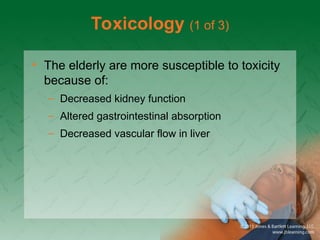
  • 144.
    Elder Abuse andNeglect (1 of 7) • Any action on the part of an older person’s family member, caregiver, or other associated person that takes advantage of the older person’s: – Person – Property – Emotional state
  • 145.
    Elder Abuse andNeglect (2 of 7) • The extent of elder abuse is not known for several reasons: – It has been largely hidden from society. – Definitions of abuse and neglect among the geriatric population vary. – Victims are often hesitant to report the problem.
  • 146.
    Elder Abuse andNeglect (3 of 7) • The physical and emotional signs of abuse are often overlooked or not accurately identified. • Elder abuse occurs more often in women older than 75 years. • Abusers of older people are often products of child abuse themselves.
  • 147.
    Elder Abuse andNeglect (4 of 7) • Try to obtain an explanation of what happened. • Suspect abuse when answers are concealed or avoided. • Suspect abuse when you are given unbelievable answers.
  • 148.
    Elder Abuse andNeglect (5 of 7) • Information that may be important in assessing abuse includes: – Repeated visits to the ED or clinic – A history of being accident-prone – Soft-tissue injuries – Unbelievable or vague explanations of injuries – Psychosomatic complaints
  • 149.
    Elder Abuse andNeglect (6 of 7) • Information that may be important in assessing abuse includes (cont’d): – Chronic pain without medical explanation – Self-destructive behavior – Eating and sleep disorders – Depression or a lack of energy – Substance and/or sexual abuse history
  • 150.
    Elder Abuse andNeglect (7 of 7) • Repeated abuse can lead to a high risk of death.
  • 151.
    Signs of PhysicalAbuse (1 of 4) • Inflicted bruises are usually found on: – Buttocks and lower back, genitals, and inner thighs – Cheeks or earlobes – Neck – Upper lip – Inside the mouth
  • 152.
    Signs of PhysicalAbuse (2 of 4) • Typical abuse from burns is caused by contact with: – Cigarettes – Matches – Heated metal – Forced immersion in hot liquids – Chemicals – Electrical power sources
  • 153.
    Signs of PhysicalAbuse (3 of 4) • Check for signs of neglect, such as: – Lack of hygiene – Poor dental hygiene – Poor temperature regulation – Lack of reasonable amenities in the home Source: © Jeff Greenberg/PhotoEdit, Inc.
  • 154.
    Signs of PhysicalAbuse (4 of 4) • Regard injuries to the genitals or rectum with no reported trauma as evidence of sexual abuse in any patient. – Geriatric patients with AMS may never be able to report sexual abuse. – Many women do not report cases of sexual abuse because of shame and the pressure to forget.