Carbon sequestration is the process of capturing and storing atmospheric carbon dioxide (CO₂) to mitigate or defer climate change. It’s a critical strategy in the fight against global warming, and it comes in several forms:
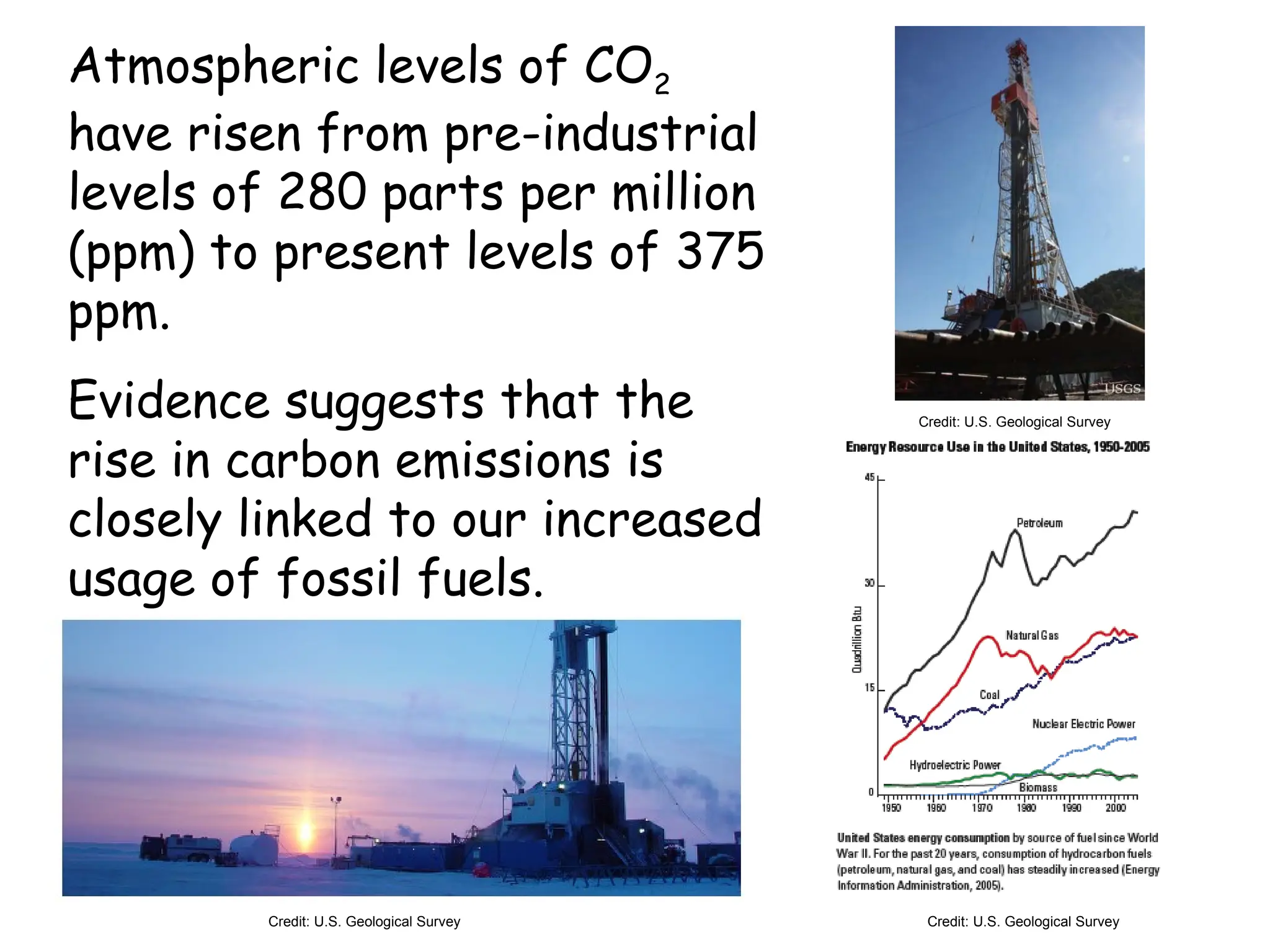
Atmospheric levels ofCO2
have risen from pre-industrial
levels of 280 parts per million
(ppm) to present levels of 375
ppm.
Evidence suggests that the
rise in carbon emissions is
closely linked to our increased
usage of fossil fuels.
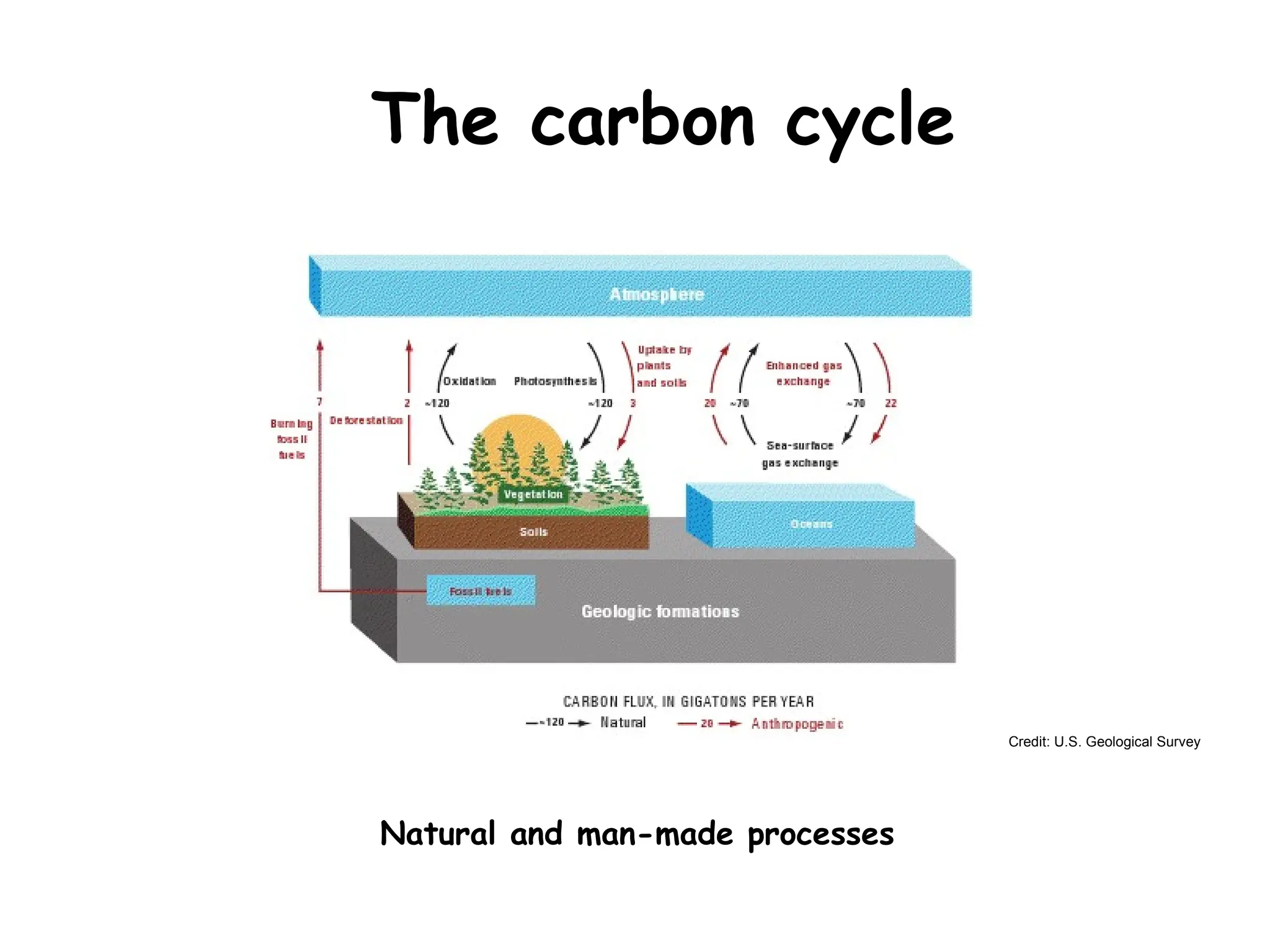
Credit: U.S. Geological Survey Credit: U.S. Geological Survey
Credit: U.S. Geological Survey
4.
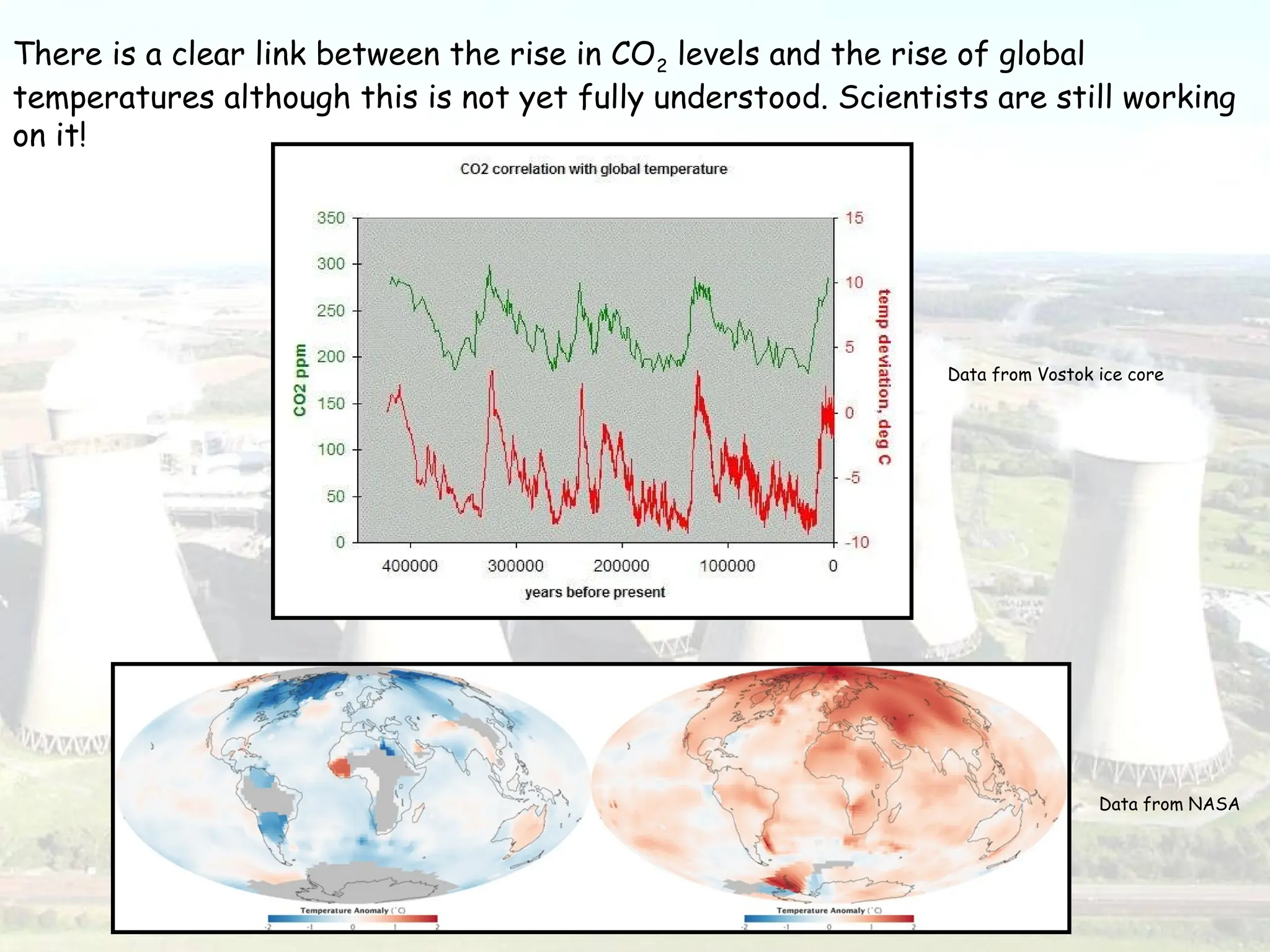
There is aclear link between the rise in CO2 levels and the rise of global
temperatures although this is not yet fully understood. Scientists are still working
on it!
Data from Vostok ice core
Data from NASA
5.
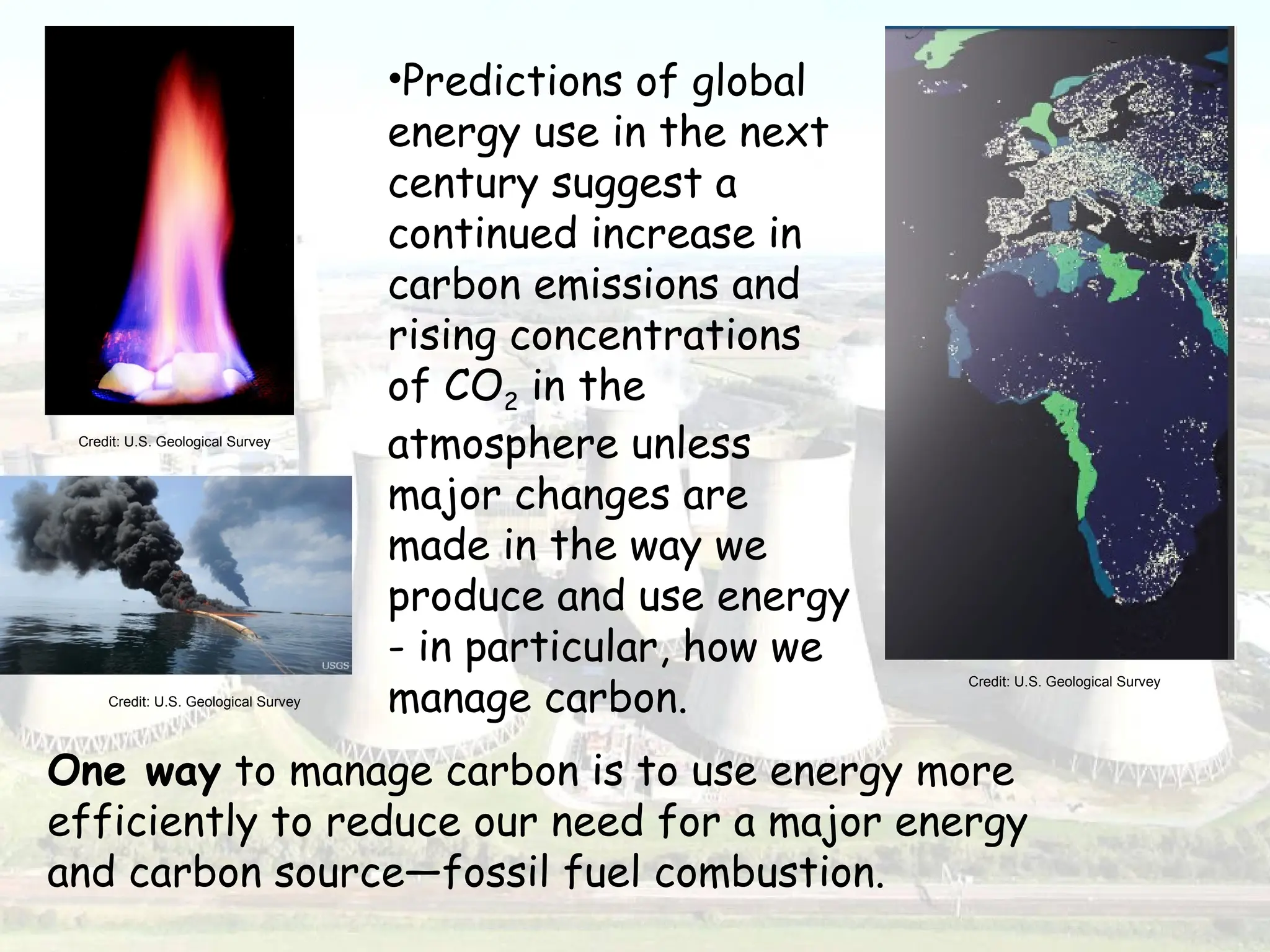
•Predictions of global
energyuse in the next
century suggest a
continued increase in
carbon emissions and
rising concentrations
of CO2 in the
atmosphere unless
major changes are
made in the way we
produce and use energy
- in particular, how we
manage carbon.
One way to manage carbon is to use energy more
efficiently to reduce our need for a major energy
and carbon source—fossil fuel combustion.
Credit: U.S. Geological Survey
Credit: U.S. Geological Survey
Credit: U.S. Geological Survey
6.
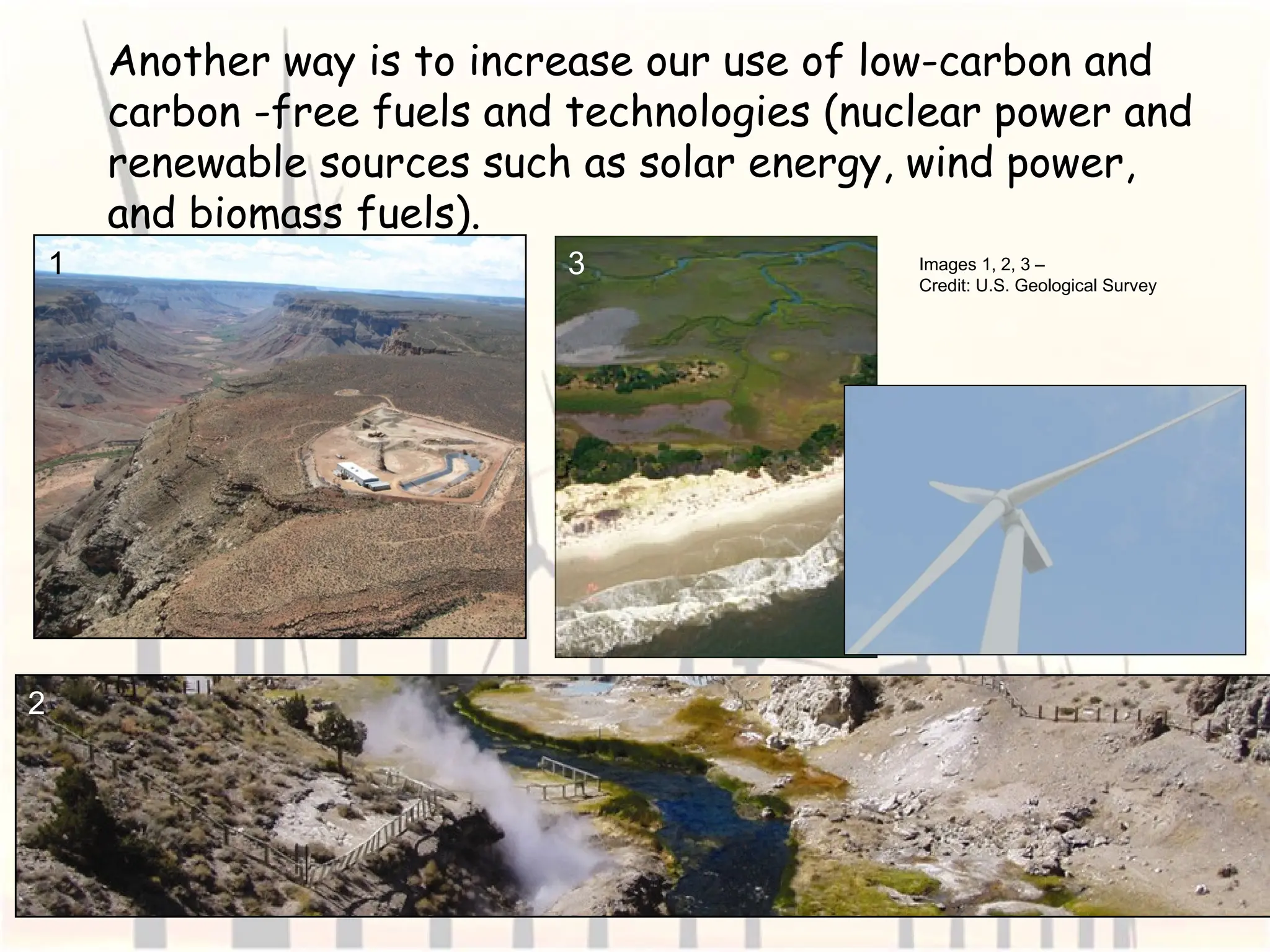
Another way isto increase our use of low-carbon and
carbon -free fuels and technologies (nuclear power and
renewable sources such as solar energy, wind power,
and biomass fuels).
Images 1, 2, 3 –
Credit: U.S. Geological Survey
1
2
3
7.
The newest wayto manage carbon is
through…….
“carbon sequestration”
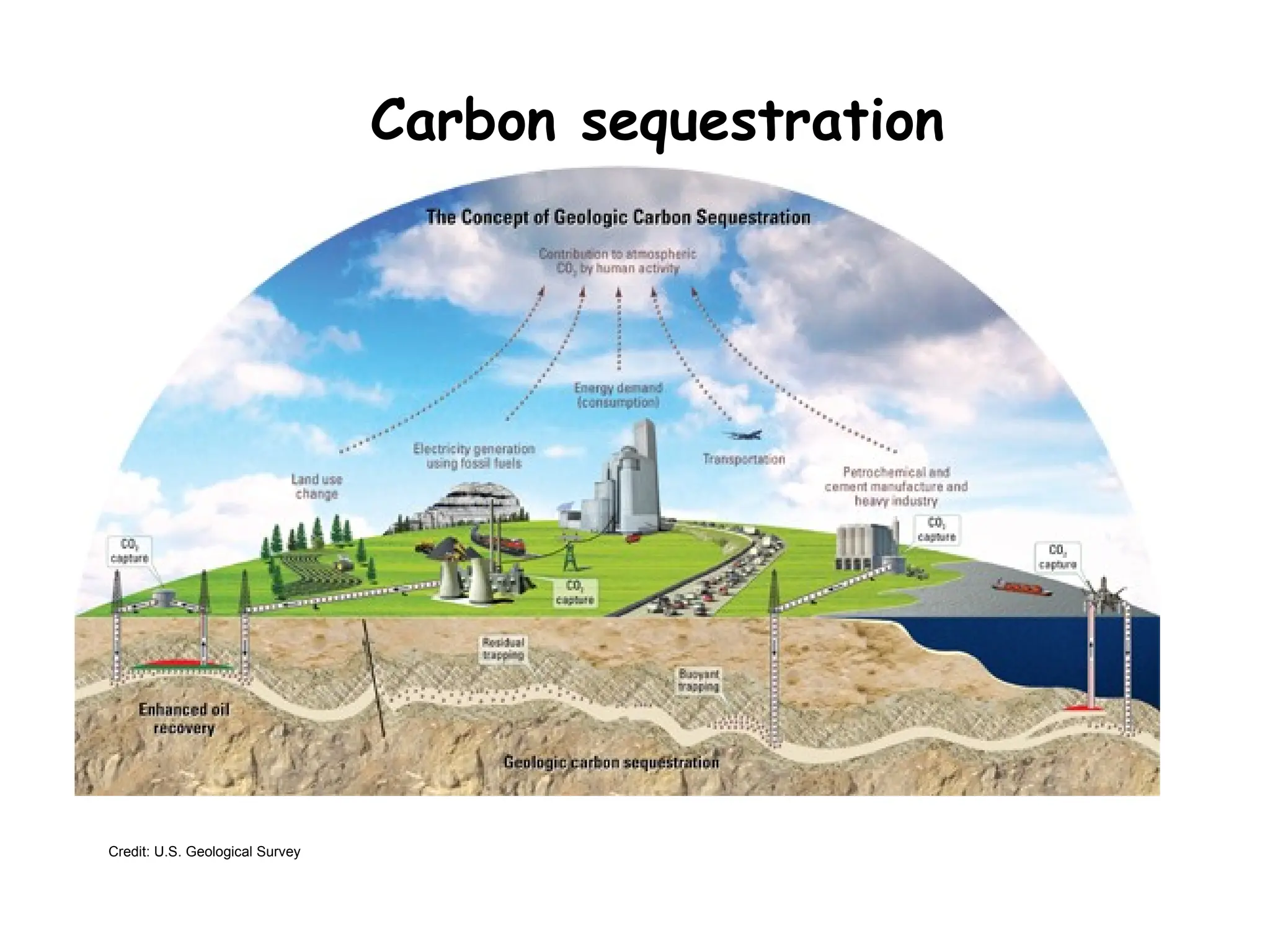
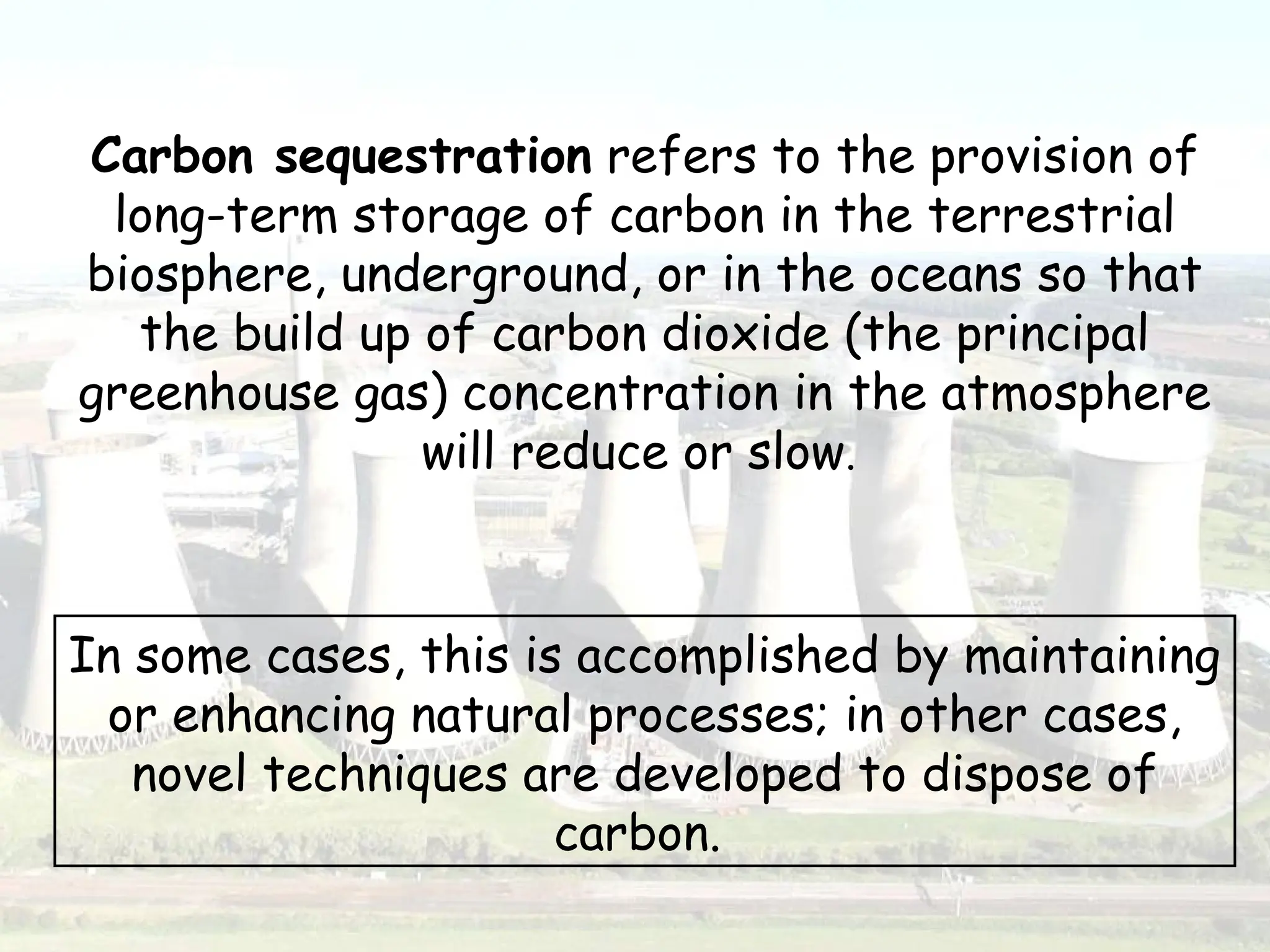
Carbon sequestration refersto the provision of
long-term storage of carbon in the terrestrial
biosphere, underground, or in the oceans so that
the build up of carbon dioxide (the principal
greenhouse gas) concentration in the atmosphere
will reduce or slow.
In some cases, this is accomplished by maintaining
or enhancing natural processes; in other cases,
novel techniques are developed to dispose of
carbon.
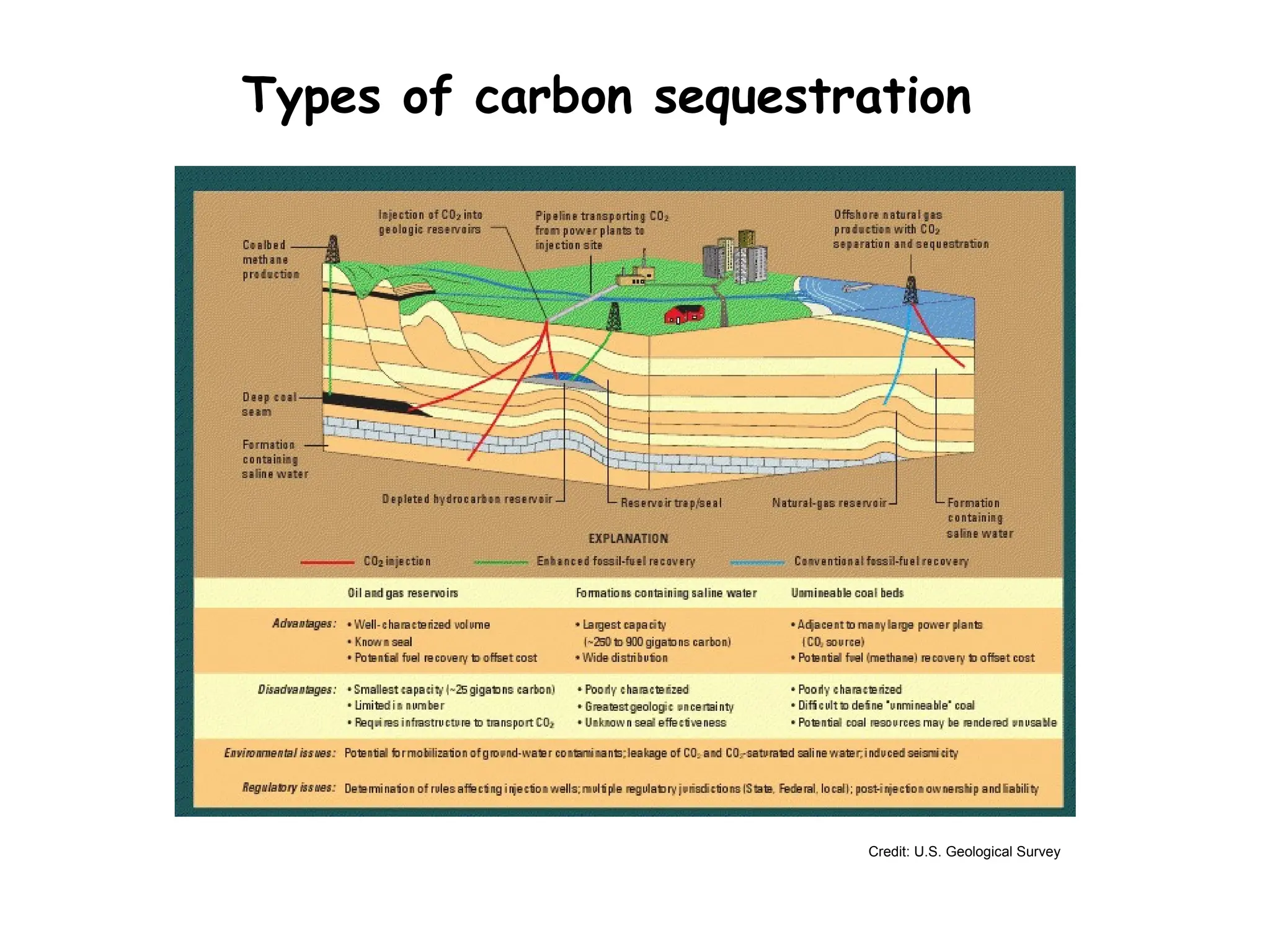
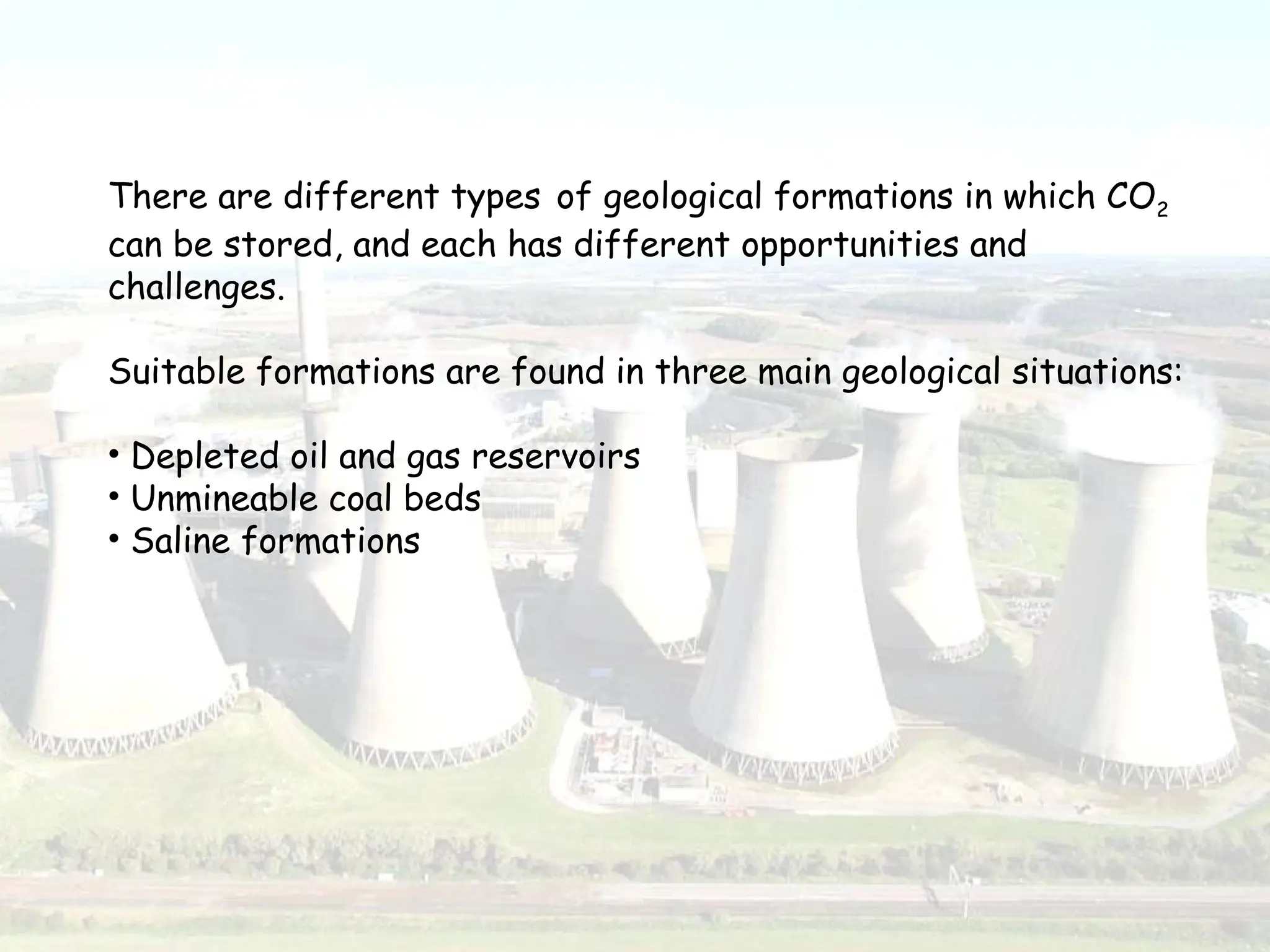
There are differenttypes of geological formations in which CO2
can be stored, and each has different opportunities and
challenges.
Suitable formations are found in three main geological situations:
• Depleted oil and gas reservoirs
• Unmineable coal beds
• Saline formations
12.
1. Depleted oiland gas reservoirs as possible CO2 repositories.
Locations considered for CO2 storage are layers of permeable and
porous rock deep underground that are “capped” by a layer or multiple
layers of non-porous/permeable rock above them.
ie. These are the same places where “oil and gas” are found !!!!!!
13.
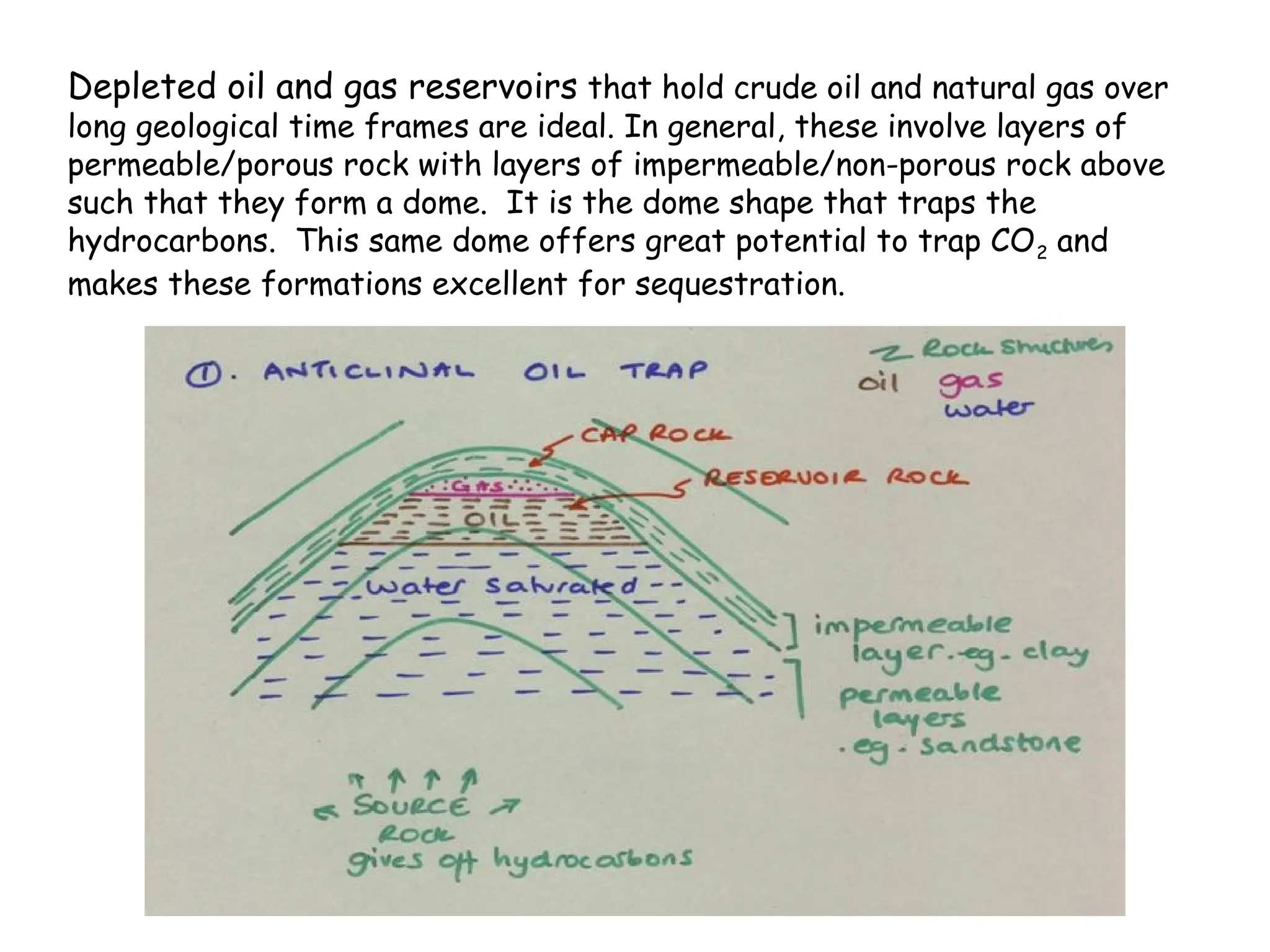
Depleted oil andgas reservoirs that hold crude oil and natural gas over
long geological time frames are ideal. In general, these involve layers of
permeable/porous rock with layers of impermeable/non-porous rock above
such that they form a dome. It is the dome shape that traps the
hydrocarbons. This same dome offers great potential to trap CO2 and
makes these formations excellent for sequestration.
14.
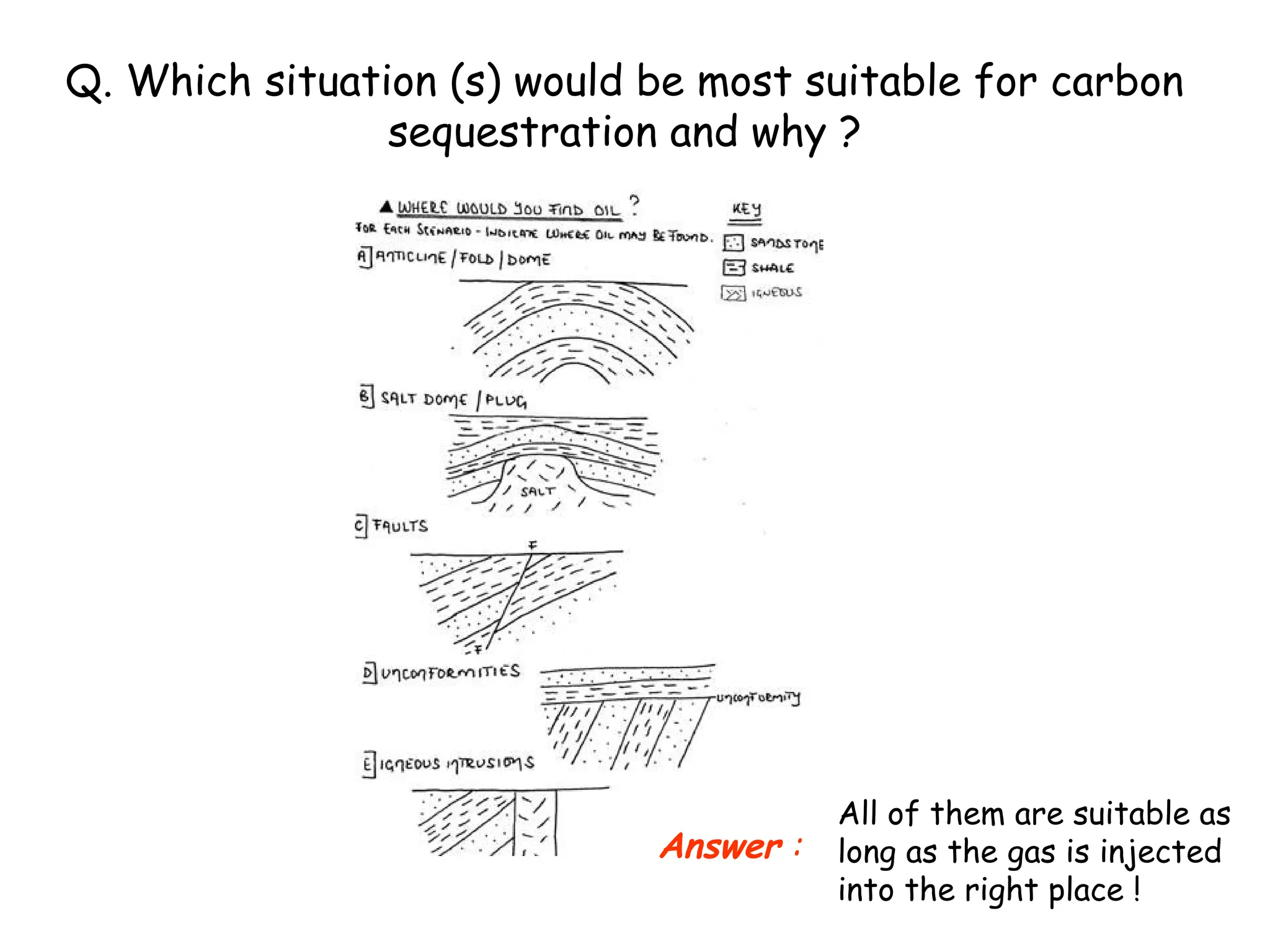
Q. Which situation(s) would be most suitable for carbon
sequestration and why ?
Answer :
All of them are suitable as
long as the gas is injected
into the right place !
15.
There are othermechanisms for CO2 trapping as well:
CO2 molecules can dissolve in brine, react with minerals to form
solid carbonates, or adsorb in the pores of the porous rock.
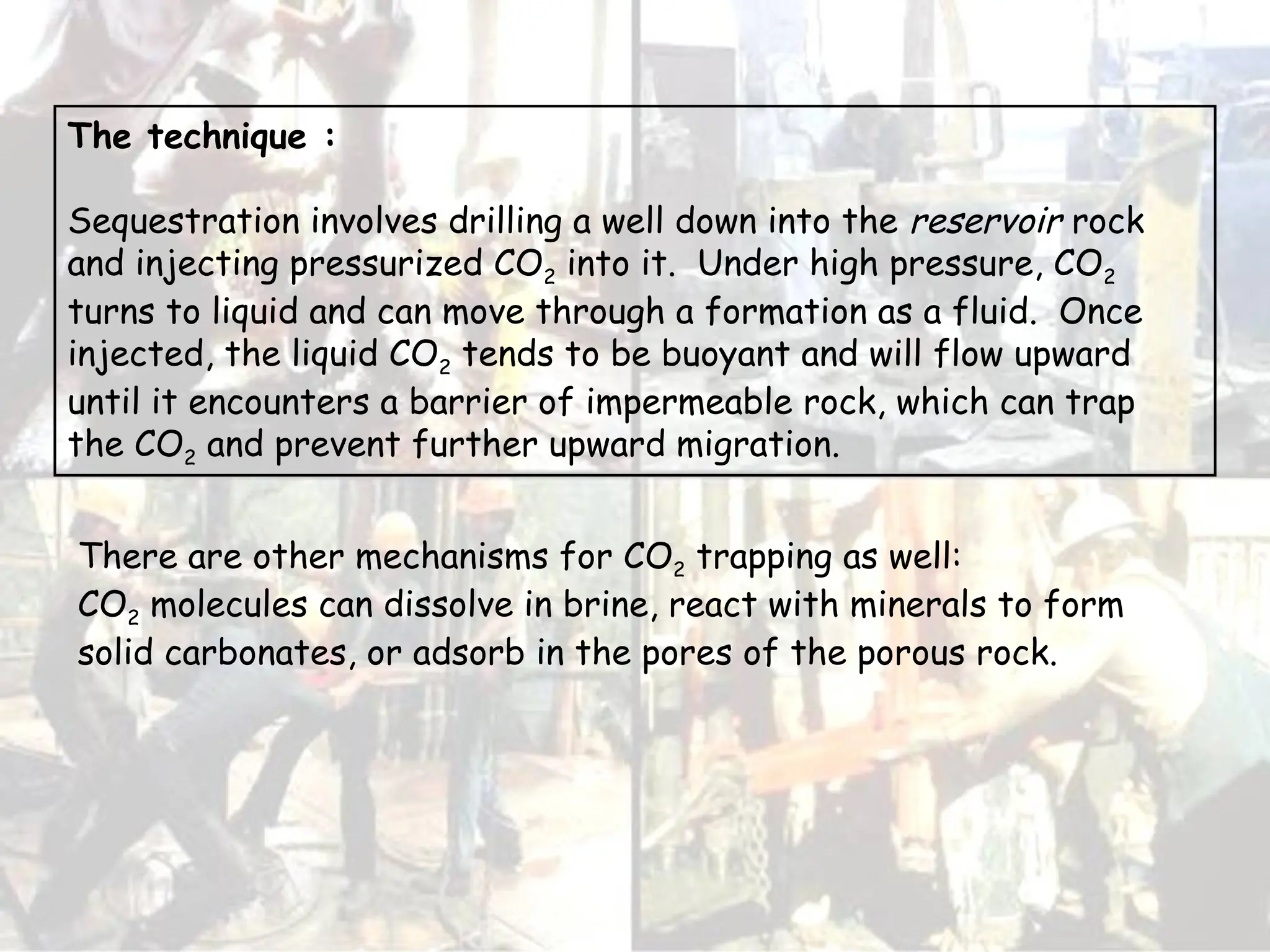
The technique :
Sequestration involves drilling a well down into the reservoir rock
and injecting pressurized CO2 into it. Under high pressure, CO2
turns to liquid and can move through a formation as a fluid. Once
injected, the liquid CO2 tends to be buoyant and will flow upward
until it encounters a barrier of impermeable rock, which can trap
the CO2 and prevent further upward migration.
16.
The degree towhich a specific underground formation is amenable
to CO2 storage can be difficult to discern.
Research is aimed at developing the ability to characterise a
formation before CO2-injection to be able to predict its CO2
storage capacity.
Another area of research is the development of CO2 injection
techniques that achieve broad dispersion of CO2 throughout the
formation, overcome low diffusion rates, and avoid fracturing the
cap rock.
Site characterisation and injection techniques are inter-related
because improved formation characterisation will help determine
the best injection procedure.
17.
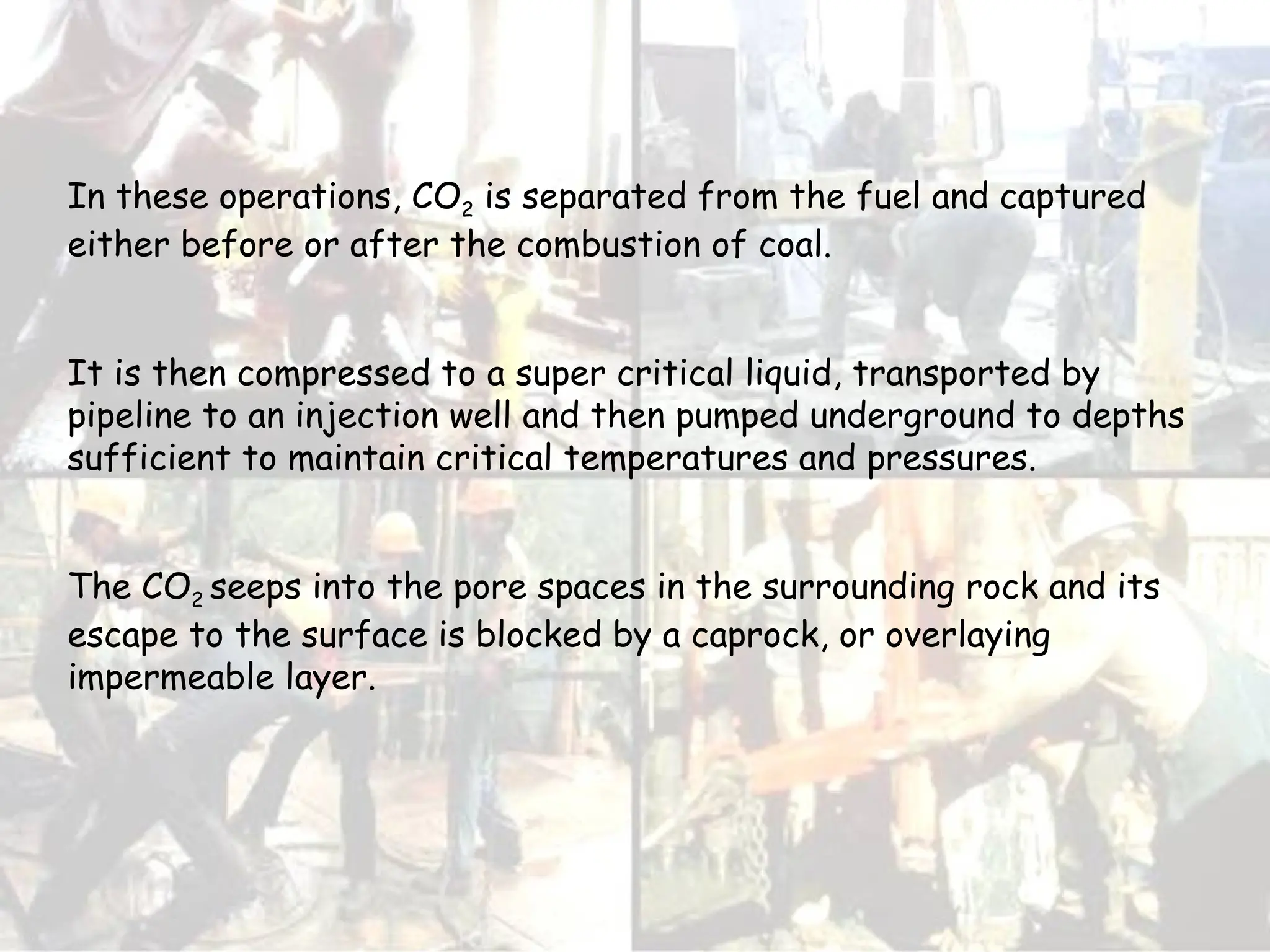
In these operations,CO2 is separated from the fuel and captured
either before or after the combustion of coal.
It is then compressed to a super critical liquid, transported by
pipeline to an injection well and then pumped underground to depths
sufficient to maintain critical temperatures and pressures.
The CO2 seeps into the pore spaces in the surrounding rock and its
escape to the surface is blocked by a caprock, or overlaying
impermeable layer.
18.
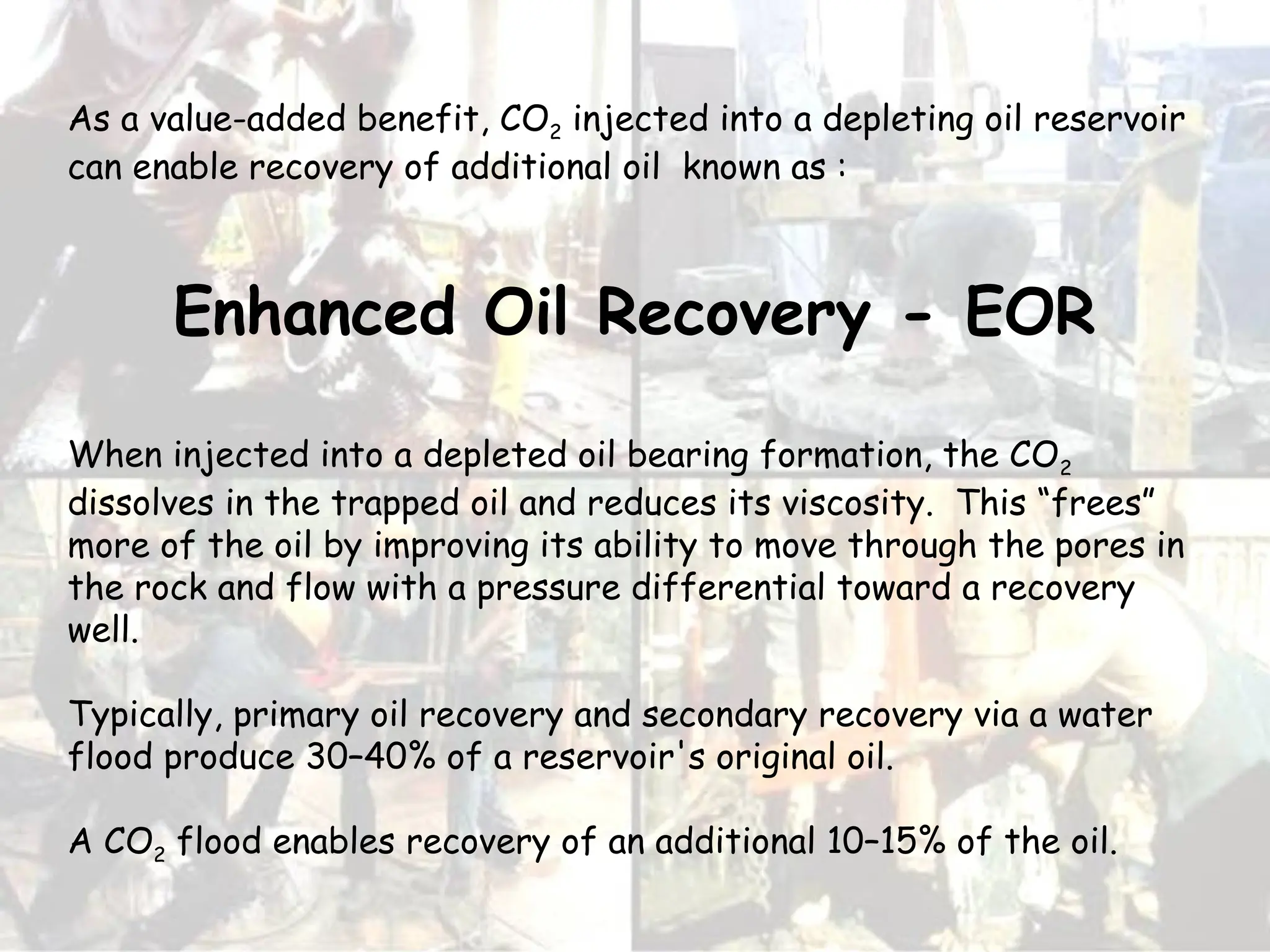
As a value-addedbenefit, CO2 injected into a depleting oil reservoir
can enable recovery of additional oil known as :
Enhanced Oil Recovery - EOR
When injected into a depleted oil bearing formation, the CO2
dissolves in the trapped oil and reduces its viscosity. This “frees”
more of the oil by improving its ability to move through the pores in
the rock and flow with a pressure differential toward a recovery
well.
Typically, primary oil recovery and secondary recovery via a water
flood produce 30–40% of a reservoir's original oil.
A CO2 flood enables recovery of an additional 10–15% of the oil.
19.
2. Unmineable coalseams.
Unmineable coal seams are too deep or too thin to be mined
economically.
All coals have varying amounts of methane adsorbed onto pore
surfaces, and wells can be drilled into unmineable coal beds to recover
this coal bed methane (CBM).
Initial CBM recovery methods, dewatering and depressurisation, leave a
fair amount of CBM in the reservoir. Additional CBM recovery can be
achieved by sweeping the coal bed with nitrogen.
CO2 offers an alternative to nitrogen. It preferentially adsorbs onto
the surface of the coal, releasing the methane. Two or three molecules
of CO2 are adsorbed for each molecule of methane released, thereby
providing an excellent storage sink for CO2.
20.
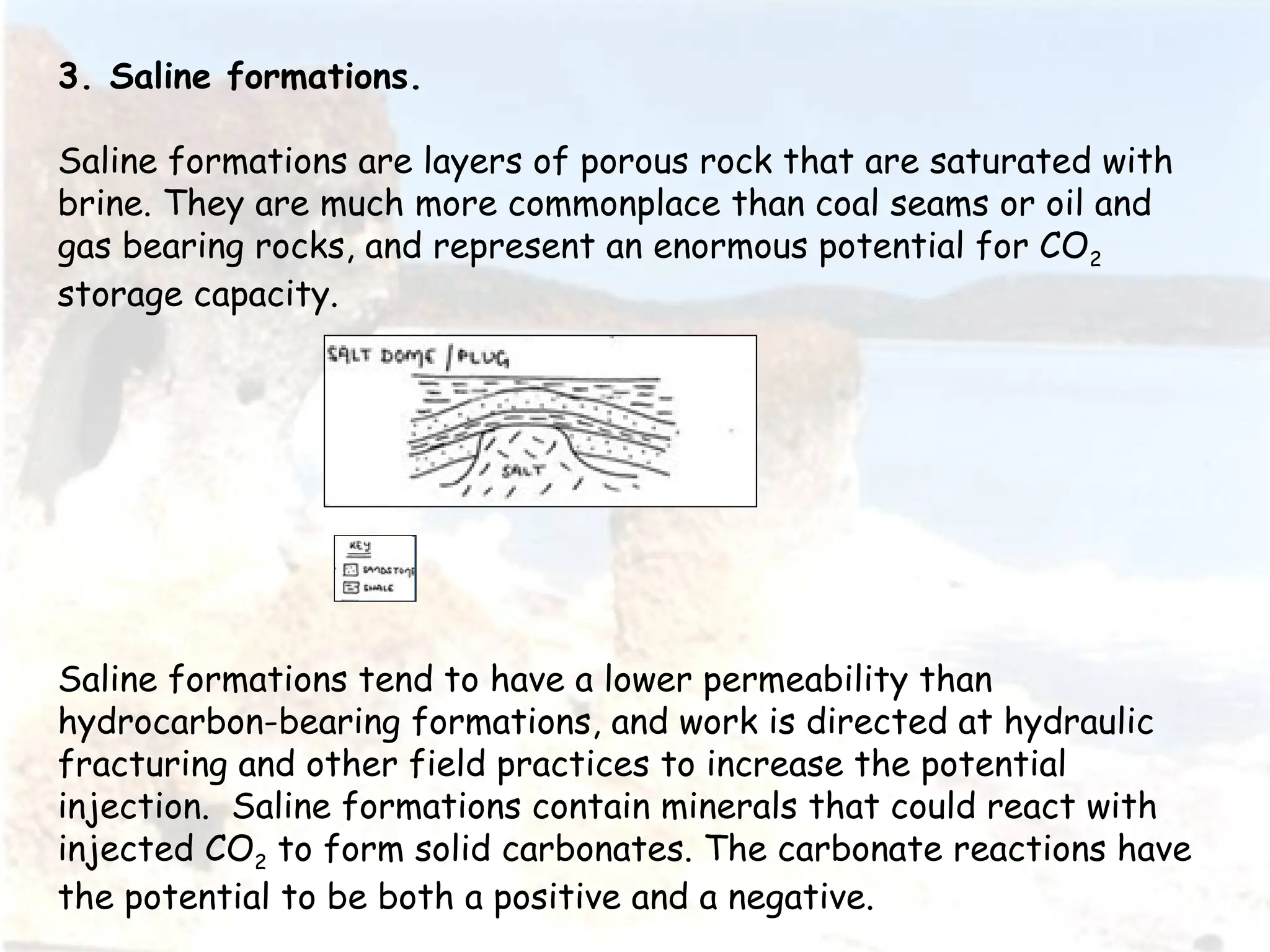
3. Saline formations.
Salineformations are layers of porous rock that are saturated with
brine. They are much more commonplace than coal seams or oil and
gas bearing rocks, and represent an enormous potential for CO2
storage capacity.
Saline formations tend to have a lower permeability than
hydrocarbon-bearing formations, and work is directed at hydraulic
fracturing and other field practices to increase the potential
injection. Saline formations contain minerals that could react with
injected CO2 to form solid carbonates. The carbonate reactions have
the potential to be both a positive and a negative.
21.
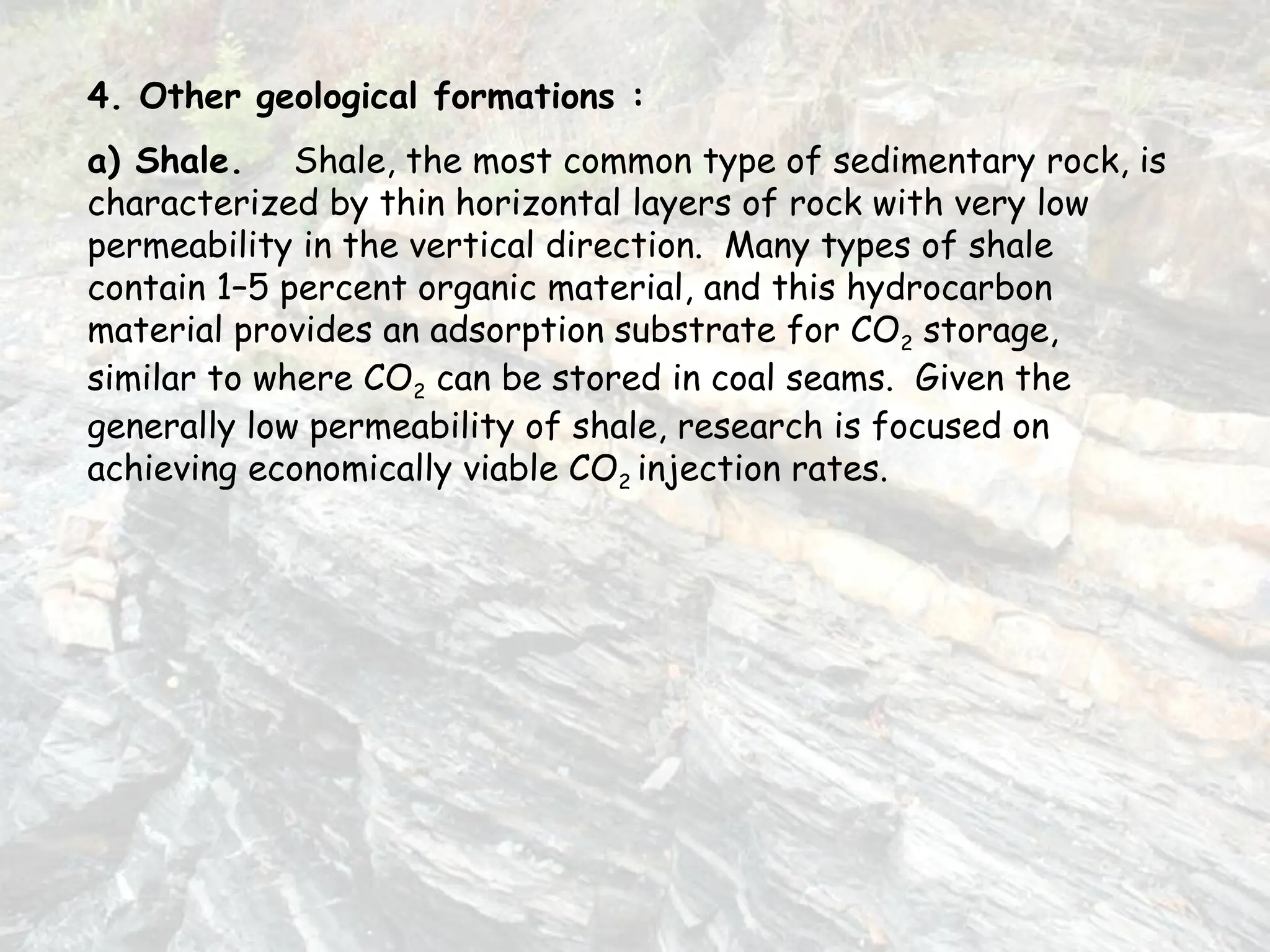
4. Other geologicalformations :
a) Shale. Shale, the most common type of sedimentary rock, is
characterized by thin horizontal layers of rock with very low
permeability in the vertical direction. Many types of shale
contain 1–5 percent organic material, and this hydrocarbon
material provides an adsorption substrate for CO2 storage,
similar to where CO2 can be stored in coal seams. Given the
generally low permeability of shale, research is focused on
achieving economically viable CO2 injection rates.
22.
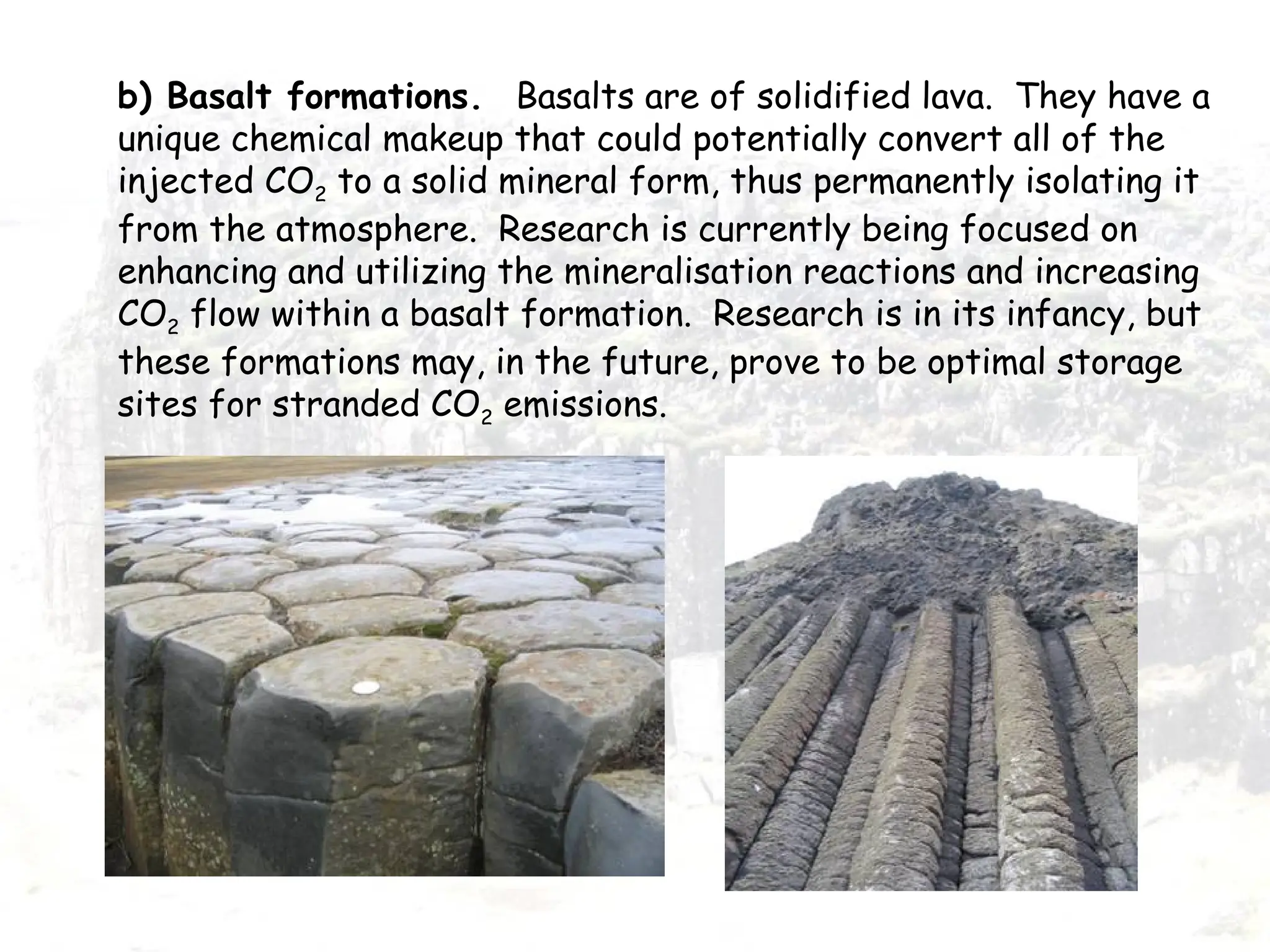
b) Basalt formations.Basalts are of solidified lava. They have a
unique chemical makeup that could potentially convert all of the
injected CO2 to a solid mineral form, thus permanently isolating it
from the atmosphere. Research is currently being focused on
enhancing and utilizing the mineralisation reactions and increasing
CO2 flow within a basalt formation. Research is in its infancy, but
these formations may, in the future, prove to be optimal storage
sites for stranded CO2 emissions.
23.
5) Other options:
a) Terrestrial and Marine Ecosystems
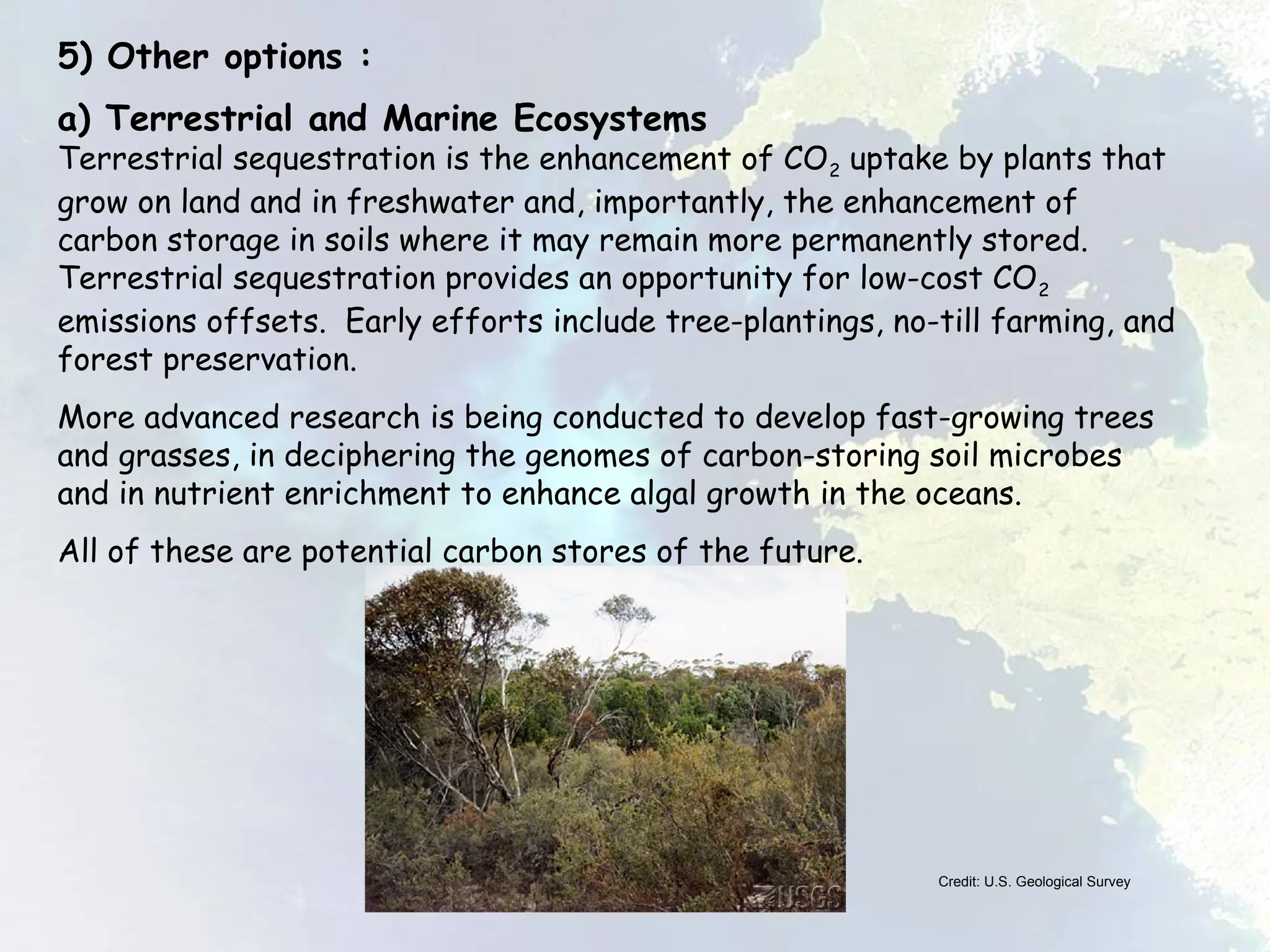
Terrestrial sequestration is the enhancement of CO2 uptake by plants that
grow on land and in freshwater and, importantly, the enhancement of
carbon storage in soils where it may remain more permanently stored.
Terrestrial sequestration provides an opportunity for low-cost CO2
emissions offsets. Early efforts include tree-plantings, no-till farming, and
forest preservation.
More advanced research is being conducted to develop fast-growing trees
and grasses, in deciphering the genomes of carbon-storing soil microbes
and in nutrient enrichment to enhance algal growth in the oceans.
All of these are potential carbon stores of the future.
Credit: U.S. Geological Survey
24.
b) Carbon CaptureTechnologies
A new coal-based generation technology known as Integrated Gasification
Combined Cycle Process offers promise as a pathway to capture CO2
before combustion at coal plants and sequester it downstream. IGCC
plants are able to capture emissions more cost-effectively than methods
currently used at more conventional plants—such as supercritical
pulverized coal—because they do not rely on direct combustion and
instead convert coal feedstocks using gasification. The current carbon
capture rate for IGCC plants is believed to be around 85 percent.
Efforts are underway to develop capture technologies for traditional
pulverized coal power plants. At these plants, CO2 would need to be captured
from flue gases after combustion through a chilled ammonia or amine
stripping process. CO2 capture at conventional plants is likely to be more
costly than at IGCC plants but has advantages, particularly in the re-fit of
existing plants.