Canada
 CANADA
 Canada is a country occupying most of
northern North America, extending from the
Atlantic Ocean in the east to the Pacific
Ocean in the west and northward into the
Arctic Ocean.
 It is the world's second largest country by
total area 9,984,670 km2, and shares land
borders with the United States to the south
and northwest.
 The land occupied by Canada was
inhabited for millennia by various groups of
aboriginal people.
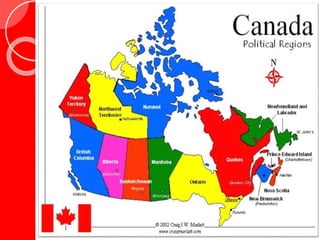
 Canada is a federation composed of ten
provinces and three territories.
 Western Canada consists of British Columbia
and the three Prairie provinces (Alberta,
Saskatchewan, and Manitoba).
 Central Canada consists of Quebec and
Ontario.
 Atlantic Canada consists of the three Maritime
provinces (New Brunswick, Prince Edward
Island, and Nova Scotia), along with
Newfoundland and Labrador.
 Three territories (Yukon, Northwest Territories,
and Nunavut) make up Northern Canada.
Provinces have more autonomy than
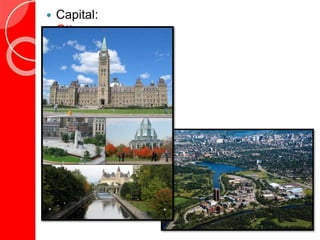
 Capital:
Ottawa
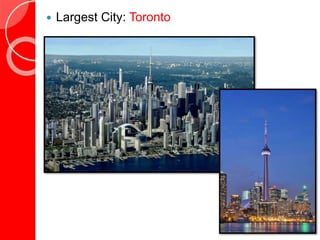
 Largest City: Toronto
 History of Canada
 The name Canada comes from a St.
Lawrence Iroquoian word, kanata, meaning
“village” or “settlement”.
 The most common alternative theory
suggested that the name originated when
Spanish or Portuguese explorers, having
explored the northern part of the continent
and unable to find gold and silver, wrote el
cabo de nada
("Cape Nothing"), acá nada, aqui nada or
cánada ("nothing here") on that part of their
maps.
 An alternative explanation favoured by
philologist Marshall Elliott linked the name to
the Spanish word cañada, meaning "glen" or
European colonization
 The first known attempt at European
colonization began when Norsemen settled
Newfoundland around 1000 AD. No further
European exploration occurred until 1497,
when Italian seafarer John Cabot explored
and claimed Canada's Atlantic coast in the
name of King Henry VII of England. In
1534, French explorer Jacques
Cartier explored the Saint Lawrence River,
where, on July 24, he planted a 10-metre
(33 ft) cross bearing the words "Long Live
the King of France" and took possession of
the territory (known as the colony
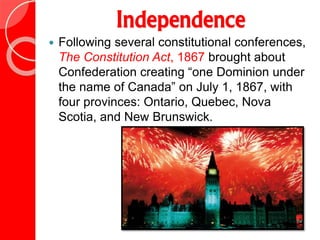
Independence
 Following several constitutional conferences,
The Constitution Act, 1867 brought about
Confederation creating “one Dominion under
the name of Canada” on July 1, 1867, with
four provinces: Ontario, Quebec, Nova
Scotia, and New Brunswick.
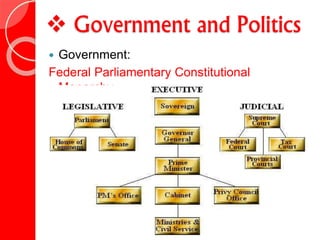
 Government and Politics
 Government:
Federal Parliamentary Constitutional
Monarchy
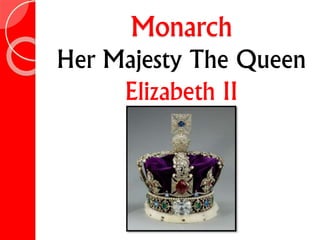
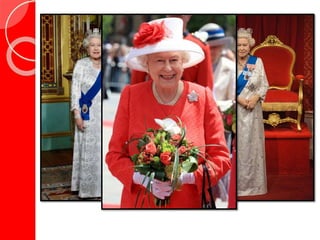
Monarch
Her Majesty The Queen
Elizabeth II
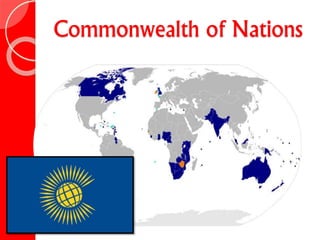
Commonwealth of Nations
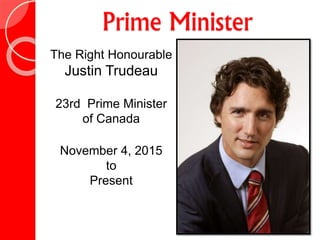
Prime Minister
The Right Honourable
Justin Trudeau
23rd Prime Minister
of Canada
November 4, 2015
to
Present
Multiculturalism is often cited as one of Canada's
significant accomplishments, and a key distinguishing
element of Canadian identity.
 Culture
 Religion
Canada is religiously diverse, encompassing a wide
range of beliefs and customs. Canada has no official
church, and the government is officially committed
to religious pluralism.
 Languages
A multitude of languages are used by
Canadians with English and French
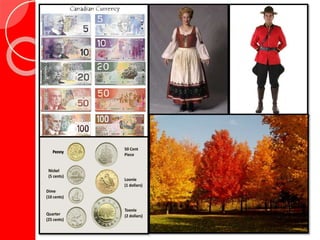
 Currency
Canadian Dollar $$$$
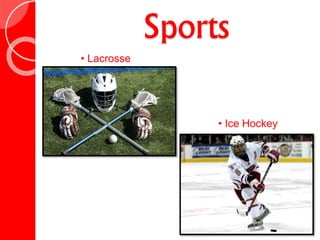
Sports
• Lacrosse
• Ice Hockey
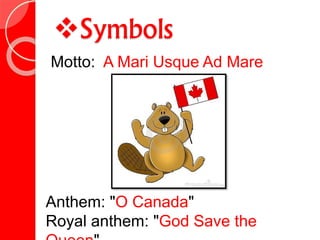
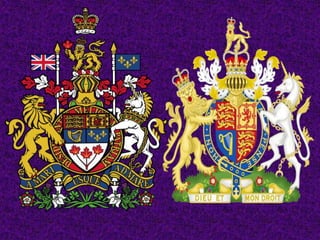
Symbols
Anthem: "O Canada"
Royal anthem: "God Save the
Motto: A Mari Usque Ad Mare
TOURIST
DESTINATIONS
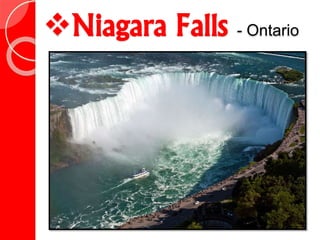
Niagara Falls - Ontario
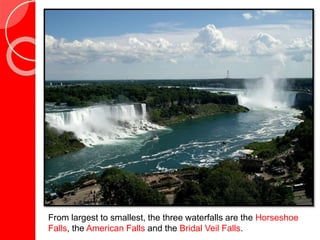
From largest to smallest, the three waterfalls are the Horseshoe
Falls, the American Falls and the Bridal Veil Falls.
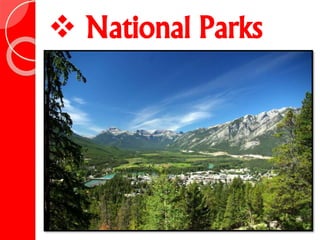
 National Parks
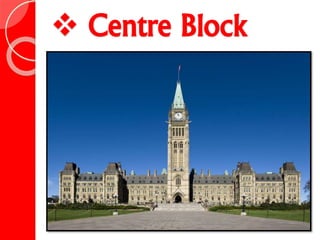
 Centre Block
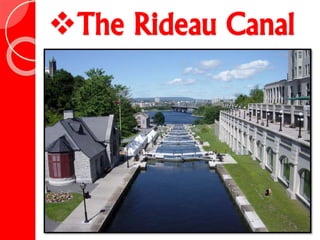
The Rideau Canal
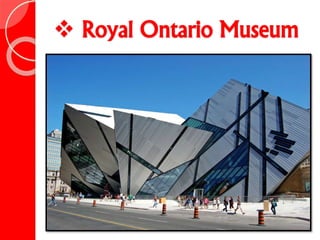
 Royal Ontario Museum
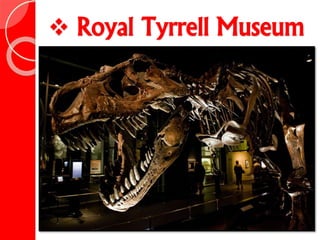
 Royal Tyrrell Museum
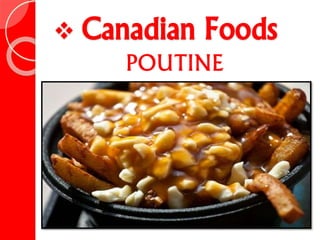
 Canadian Foods
POUTINE
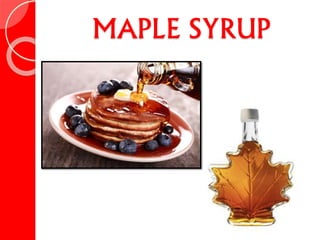
MAPLE SYRUP
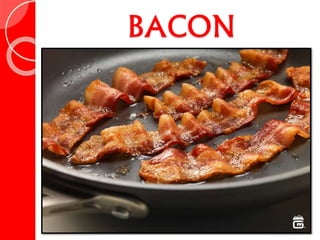
BACON
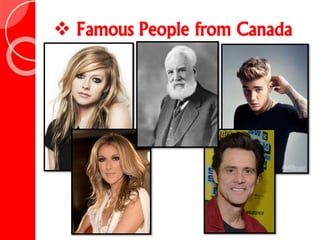
 Famous People from Canada
THANK YOU

canadaRR

  • 1.
  • 2.
     CANADA  Canadais a country occupying most of northern North America, extending from the Atlantic Ocean in the east to the Pacific Ocean in the west and northward into the Arctic Ocean.  It is the world's second largest country by total area 9,984,670 km2, and shares land borders with the United States to the south and northwest.  The land occupied by Canada was inhabited for millennia by various groups of aboriginal people.
  • 3.
     Canada isa federation composed of ten provinces and three territories.  Western Canada consists of British Columbia and the three Prairie provinces (Alberta, Saskatchewan, and Manitoba).  Central Canada consists of Quebec and Ontario.  Atlantic Canada consists of the three Maritime provinces (New Brunswick, Prince Edward Island, and Nova Scotia), along with Newfoundland and Labrador.  Three territories (Yukon, Northwest Territories, and Nunavut) make up Northern Canada. Provinces have more autonomy than
  • 5.
  • 6.
  • 7.
     History ofCanada  The name Canada comes from a St. Lawrence Iroquoian word, kanata, meaning “village” or “settlement”.  The most common alternative theory suggested that the name originated when Spanish or Portuguese explorers, having explored the northern part of the continent and unable to find gold and silver, wrote el cabo de nada ("Cape Nothing"), acá nada, aqui nada or cánada ("nothing here") on that part of their maps.  An alternative explanation favoured by philologist Marshall Elliott linked the name to the Spanish word cañada, meaning "glen" or
  • 8.
    European colonization  Thefirst known attempt at European colonization began when Norsemen settled Newfoundland around 1000 AD. No further European exploration occurred until 1497, when Italian seafarer John Cabot explored and claimed Canada's Atlantic coast in the name of King Henry VII of England. In 1534, French explorer Jacques Cartier explored the Saint Lawrence River, where, on July 24, he planted a 10-metre (33 ft) cross bearing the words "Long Live the King of France" and took possession of the territory (known as the colony
  • 9.
    Independence  Following severalconstitutional conferences, The Constitution Act, 1867 brought about Confederation creating “one Dominion under the name of Canada” on July 1, 1867, with four provinces: Ontario, Quebec, Nova Scotia, and New Brunswick.
  • 10.
     Government andPolitics  Government: Federal Parliamentary Constitutional Monarchy
  • 11.
    Monarch Her Majesty TheQueen Elizabeth II
  • 13.
  • 14.
    Prime Minister The RightHonourable Justin Trudeau 23rd Prime Minister of Canada November 4, 2015 to Present
  • 15.
    Multiculturalism is oftencited as one of Canada's significant accomplishments, and a key distinguishing element of Canadian identity.  Culture  Religion Canada is religiously diverse, encompassing a wide range of beliefs and customs. Canada has no official church, and the government is officially committed to religious pluralism.  Languages A multitude of languages are used by Canadians with English and French  Currency Canadian Dollar $$$$
  • 17.
  • 18.
    Symbols Anthem: "O Canada" Royalanthem: "God Save the Motto: A Mari Usque Ad Mare
  • 20.
  • 21.
  • 22.
    From largest tosmallest, the three waterfalls are the Horseshoe Falls, the American Falls and the Bridal Veil Falls.
  • 23.
  • 24.
  • 25.
  • 26.
  • 27.
  • 28.
  • 29.
  • 30.
  • 31.
     Famous Peoplefrom Canada
  • 32.

Editor's Notes

  • #29 Poutine is a Canadian dish, originating in the province of Quebec, made with french fries and cheese curds topped with a light brown gravy.