Residential
                                                                                             By allowing rainwater to infiltrate rather than enter

                                                                                                                                                       Mosquitoes
                                                                                             the stormwater system, we can reduce the peak


                                            Building
                                                                                             flows during rainfall events which reduces flooding
                                                                                             and erosion in downstream creeks and streams.
                                                                                             There are many benefits of creating a rain garden.


                                            a Rain Garden
                                                                                             Rain gardens can help:                                    Mosquitoes should not be a problem in a properly
                                                                                             •	      reduce	flooding	on	neighbouring	property          designed rain garden. Mosquitoes require a
                                                                                                                                                       minimum of four days of standing water to lay and
                                                                                             •	      reduce	erosion	in	creeks	and	streams              hatch eggs. A properly designed rain garden should
                                                                                                                                                       only have surface water present for 1-2 days. Rain
                                                                                             •	      filter	out	pollutants	before	they	reach	the		
                                                                                                                                                       gardens also provide habitat for beneficial insects
                                                                                                     storm drain and enter our waterways
                                                                                                                                                       like dragonflies, which are natural predators of
                                                                                             •	      recharge	aquifers                                 mosquitoes.

                                                                                             •	      provide	habitat	for	beneficial	insects,	birds		
                                                                                                     and wildlife.


Disclaimer
This sheet contains general principles
only and they may not be appropriate for
every property or project. Use common
sense when building your rain garden.
You assume the risk and are responsible
for any modifications to your property or
drainage flow, for legal compliance, and
for necessary permits and authorizations.
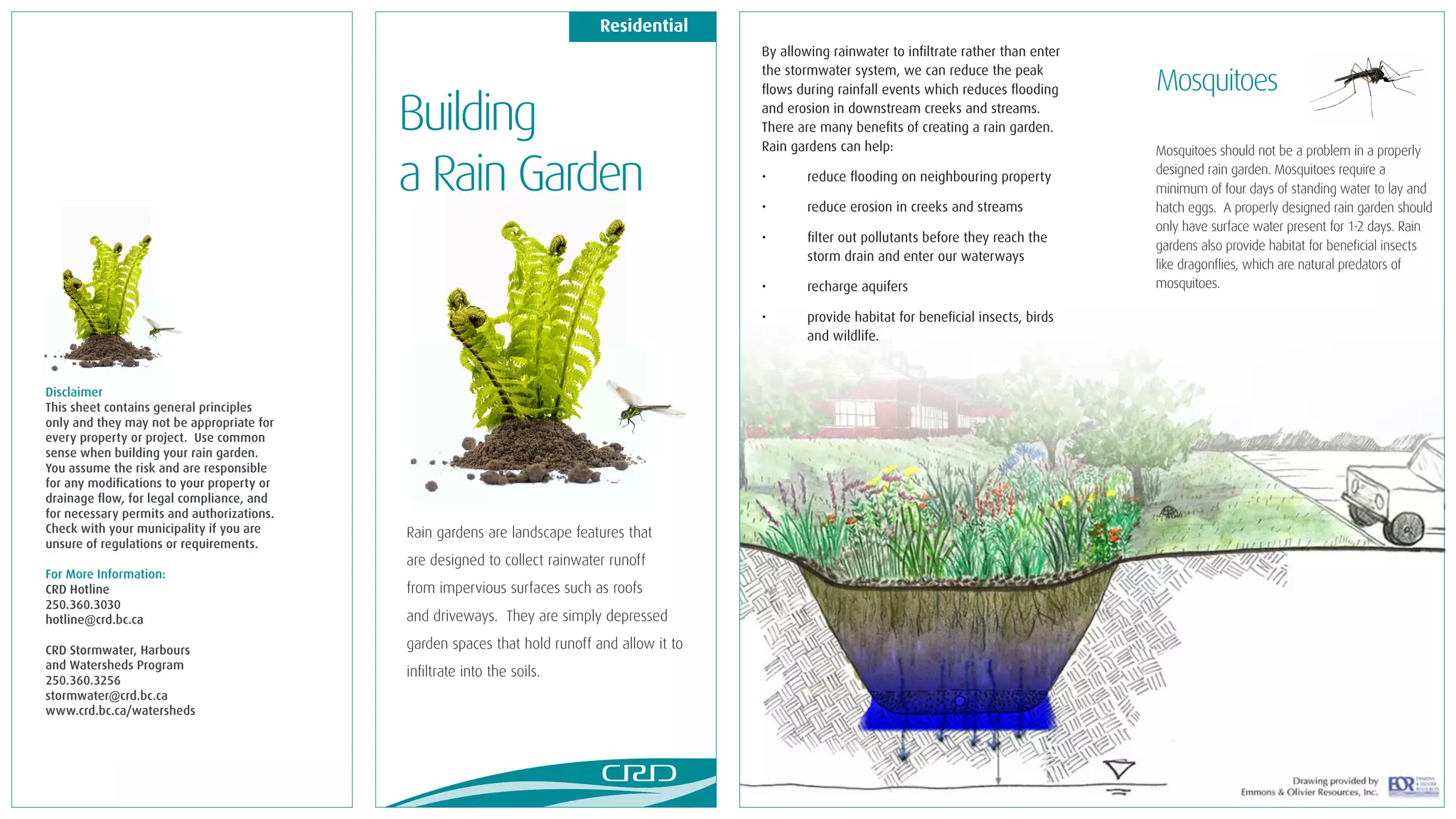
Check with your municipality if you are     Rain gardens are landscape features that
unsure of regulations or requirements.
                                            are designed to collect rainwater runoff
For More Information:
CRD Hotline                                 from impervious surfaces such as roofs
250.360.3030
hotline@crd.bc.ca                           and driveways. They are simply depressed

CRD Stormwater, Harbours                    garden spaces that hold runoff and allow it to
and Watersheds Program
                                            infiltrate into the soils.
250.360.3256
stormwater@crd.bc.ca
www.crd.bc.ca/watersheds
Cross Section Of A Rain Garden


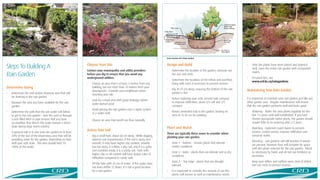
Steps To Building A                                           Choose Your Site
                                                              Contact your municipality and utility providers
                                                                                                                                    Design and Build
                                                                                                                                    •	   Determine the location of the garden, measure out
                                                                                                                                                                                                •	   After the plants have been placed and watered
                                                                                                                                                                                                     well, cover the entire rain garden with composted

Rain Garden                                                   before you dig to ensure that you avoid any
                                                              underground utilities.
                                                                                                                                         the size and mark.
                                                                                                                                                                                                •	
                                                                                                                                                                                                     mulch.
                                                                                                                                                                                                     For plant lists, see
                                                                                                                                    •	   Determine the locations of the inflow and overflow,
                                                                                                                                                                                                     www.crd.bc.ca/raingardens
                                                              •	   Choose an area that is at least 3 metres from any                     lining with rocks if necessary to prevent erosion.
Determine Sizing                                                   building, but not more than 10 metres from your
                                                                                                                                    •	   Dig 45-75 cm deep, ensuring the bottom of the rain
                                                                   downspouts. Consider your neighbours when                                                                                    Maintaining Your Rain Garden
•	   Determine the roof and/or driveway area that will                                                                                   garden is flat.
                                                                   choosing your site.
     be draining to the rain garden.
                                                                                                                                    •	   Before replacing your soils, amend with compost        It is important to maintain your rain garden, just like any
                                                              •	   Look for a level area with good drainage where
•	   Measure the area you have available for the rain                                                                                    to improve infiltration, about 2/3 soil and 1/3        other garden area. Regular maintenance will ensure
                                                                   water doesn’t pool.
     garden.                                                                                                                             compost.                                               that the rain garden performs well and looks good.
                                                              •	   Avoid placing the rain garden over a septic system
•	   Determine the path that the rain water will follow                                                                             •	   Return amended soils to the garden, leaving an         •	   Watering - Water the new plants regularly for the
                                                                   or a water well.
     to get to the rain garden – over the yard or through                                                                                area of 15-30 cm for ponding.                               first 1-3 years until well established. If you have
     a rock filled ditch or pipe (ensure that you have        •	   Choose an area that runoff can flow naturally.                                                                                    chosen appropriate native plants, the garden should
     an overflow that directs the water toward a storm                                                                                                                                               require little to no watering after 2-3 years.
     drain during large storm events).                                                                                              Plant and Mulch                                             •	   Mulching – replenish mulch layers to prevent
                                                              Assess Your Soil                                                                                                                       erosion, control weeds, improve infiltration and
•	   A general rule is to size your rain garden to at least                                                                         There are typically three zones to consider when
     20% of the size of the impervious area that will be      •	   Dig a small hole, about 60 cm deep. While digging,                                                                                conserve water.
                                                                                                                                    planting your rain garden.
     providing water for the garden, depending on how              observe soil characteristics: if the soil is sticky and
                                                                                                                                                                                                •	   Weeding – rain gardens will still function if weeds
     well your soils drain. This area should hold 70-              smooth, it may have higher clay content; smooth                  •	   Zone 1 – bottom – choose plants that tolerate
                                                                                                                                                                                                     are present, however they will compete for space
     100% of the water.                                            but not sticky, it is likely a silty soil; and if it is gritty        wetter conditions.
                                                                                                                                                                                                     with the plants selected for the rain garden. Weed
                                                                   and crumbles easily, it is a sandy soil. Soils with
                                                                                                                                    •	   Zone 2 – sides – plants that can tolerate wet or dry        as necessary by hand, and do not use fertilizers or
                                                                   higher clay or silt content will have slower rates of
                                                                                                                                         conditions.                                                 pesticides.
                                                                   infiltration compared to sandy soils.
                                                                                                                                    •	   Zone 3 - Top edge – plants that are drought            •	   Keep your inflow and outflow areas clear of debris,
                                                              •	   Fill the hole with 20 cm of water. If the water does
                                                                                                                                         tolerant.                                                   and use rocks to prevent erosion.
                                                                   not drain within 12 hours, it is not a good location
                                                                   for a rain garden.                                               •	   It is important to consider the amount of sun the
                                                                                                                                         plants will receive as well as maintenance needs.

Canada: BC: Building a Rain Garden

  • 1.
    Residential By allowing rainwater to infiltrate rather than enter Mosquitoes the stormwater system, we can reduce the peak Building flows during rainfall events which reduces flooding and erosion in downstream creeks and streams. There are many benefits of creating a rain garden. a Rain Garden Rain gardens can help: Mosquitoes should not be a problem in a properly • reduce flooding on neighbouring property designed rain garden. Mosquitoes require a minimum of four days of standing water to lay and • reduce erosion in creeks and streams hatch eggs. A properly designed rain garden should only have surface water present for 1-2 days. Rain • filter out pollutants before they reach the gardens also provide habitat for beneficial insects storm drain and enter our waterways like dragonflies, which are natural predators of • recharge aquifers mosquitoes. • provide habitat for beneficial insects, birds and wildlife. Disclaimer This sheet contains general principles only and they may not be appropriate for every property or project. Use common sense when building your rain garden. You assume the risk and are responsible for any modifications to your property or drainage flow, for legal compliance, and for necessary permits and authorizations. Check with your municipality if you are Rain gardens are landscape features that unsure of regulations or requirements. are designed to collect rainwater runoff For More Information: CRD Hotline from impervious surfaces such as roofs 250.360.3030 hotline@crd.bc.ca and driveways. They are simply depressed CRD Stormwater, Harbours garden spaces that hold runoff and allow it to and Watersheds Program infiltrate into the soils. 250.360.3256 stormwater@crd.bc.ca www.crd.bc.ca/watersheds
  • 2.
    Cross Section OfA Rain Garden Steps To Building A Choose Your Site Contact your municipality and utility providers Design and Build • Determine the location of the garden, measure out • After the plants have been placed and watered well, cover the entire rain garden with composted Rain Garden before you dig to ensure that you avoid any underground utilities. the size and mark. • mulch. For plant lists, see • Determine the locations of the inflow and overflow, www.crd.bc.ca/raingardens • Choose an area that is at least 3 metres from any lining with rocks if necessary to prevent erosion. Determine Sizing building, but not more than 10 metres from your • Dig 45-75 cm deep, ensuring the bottom of the rain downspouts. Consider your neighbours when Maintaining Your Rain Garden • Determine the roof and/or driveway area that will garden is flat. choosing your site. be draining to the rain garden. • Before replacing your soils, amend with compost It is important to maintain your rain garden, just like any • Look for a level area with good drainage where • Measure the area you have available for the rain to improve infiltration, about 2/3 soil and 1/3 other garden area. Regular maintenance will ensure water doesn’t pool. garden. compost. that the rain garden performs well and looks good. • Avoid placing the rain garden over a septic system • Determine the path that the rain water will follow • Return amended soils to the garden, leaving an • Watering - Water the new plants regularly for the or a water well. to get to the rain garden – over the yard or through area of 15-30 cm for ponding. first 1-3 years until well established. If you have a rock filled ditch or pipe (ensure that you have • Choose an area that runoff can flow naturally. chosen appropriate native plants, the garden should an overflow that directs the water toward a storm require little to no watering after 2-3 years. drain during large storm events). Plant and Mulch • Mulching – replenish mulch layers to prevent Assess Your Soil erosion, control weeds, improve infiltration and • A general rule is to size your rain garden to at least There are typically three zones to consider when 20% of the size of the impervious area that will be • Dig a small hole, about 60 cm deep. While digging, conserve water. planting your rain garden. providing water for the garden, depending on how observe soil characteristics: if the soil is sticky and • Weeding – rain gardens will still function if weeds well your soils drain. This area should hold 70- smooth, it may have higher clay content; smooth • Zone 1 – bottom – choose plants that tolerate are present, however they will compete for space 100% of the water. but not sticky, it is likely a silty soil; and if it is gritty wetter conditions. with the plants selected for the rain garden. Weed and crumbles easily, it is a sandy soil. Soils with • Zone 2 – sides – plants that can tolerate wet or dry as necessary by hand, and do not use fertilizers or higher clay or silt content will have slower rates of conditions. pesticides. infiltration compared to sandy soils. • Zone 3 - Top edge – plants that are drought • Keep your inflow and outflow areas clear of debris, • Fill the hole with 20 cm of water. If the water does tolerant. and use rocks to prevent erosion. not drain within 12 hours, it is not a good location for a rain garden. • It is important to consider the amount of sun the plants will receive as well as maintenance needs.