Calculating the True Cost (and Return) of a Nurture Program 
As the CMO or marketing manager of a SaaS company, it is your 
responsibility to develop profitable marketing and sales programs. 
8QIRUWXQDWHOWKLVSURFHVVIRUPDQFRPSDQLHVLVDFRPSOH[D΍DLUWKDW 
UHOLHVRQDQDUUDRIPHWULFVPDQRIZKLFKDUHGLɝFXOWWRWUDFNDVWKHDUH 
constantly changing. In this brief on calculating the true cost and return of a 
nurture program, we will highlight common nurture programs, outline associated 
costs, and present an approach to forecasting your return. 
Common SaaS Nurture Campaigns 
As the market matures, SaaS companies are becoming increasingly diverse. This 
diversity makes it almost impossible to generalize what Software as a Service 
encompasses, but there are a few marketing and sales oriented nurture campaigns 
WKDWPRVWFRPSDQLHVFDQEHQHȴWIURP 
1) Those designed to support a user post-purchase. Designed to increase: 
ÏUser satisfaction 
ÏNumber of accounts (seats) 
ÏLifetime value (LTV) 
2) Programs to help guide a user from a free trial to a paying subscription. 
ÏProgress users into paying customers (subscriptions) 
Ï+LJKOLJKWWKHYDOXHRIDIXOOSDLG
6DD6R΍HULQJ 
ÏDemonstrate usability and interface 
ÏPresent successful use cases 
3) Nurture campaigns for SaaS products with a higher entry barrier (cost). 
ÏDesigned to educate users as they work towards purchase.
Calculating 
Your Cost 
7 8 9 
4 5 6 
- 
C ± ÷ x 
MC M+ M - MR 
+ 
1 2 3 
0 . = 
For each of these campaigns, a common set of metrics helps calculate the true cost. 
A comprehensive measurement will include the cost of employee time, tools used, 
DVVHWFUHDWLRQDQGSURPRWLRQ)RUHFDVWLQJWKHVHFRVWVDQGRXUUHWXUQLVFULWLFDODV 
it will help identify a break even point - how much revenue or how many leads a 
VSHFLȴFFDPSDLJQQHHGVWRDFKLHYHLQRUGHUWRH[FHHGLWVLQYHVWPHQW 
For SaaS companies, there is 
generally an exponentially larger 
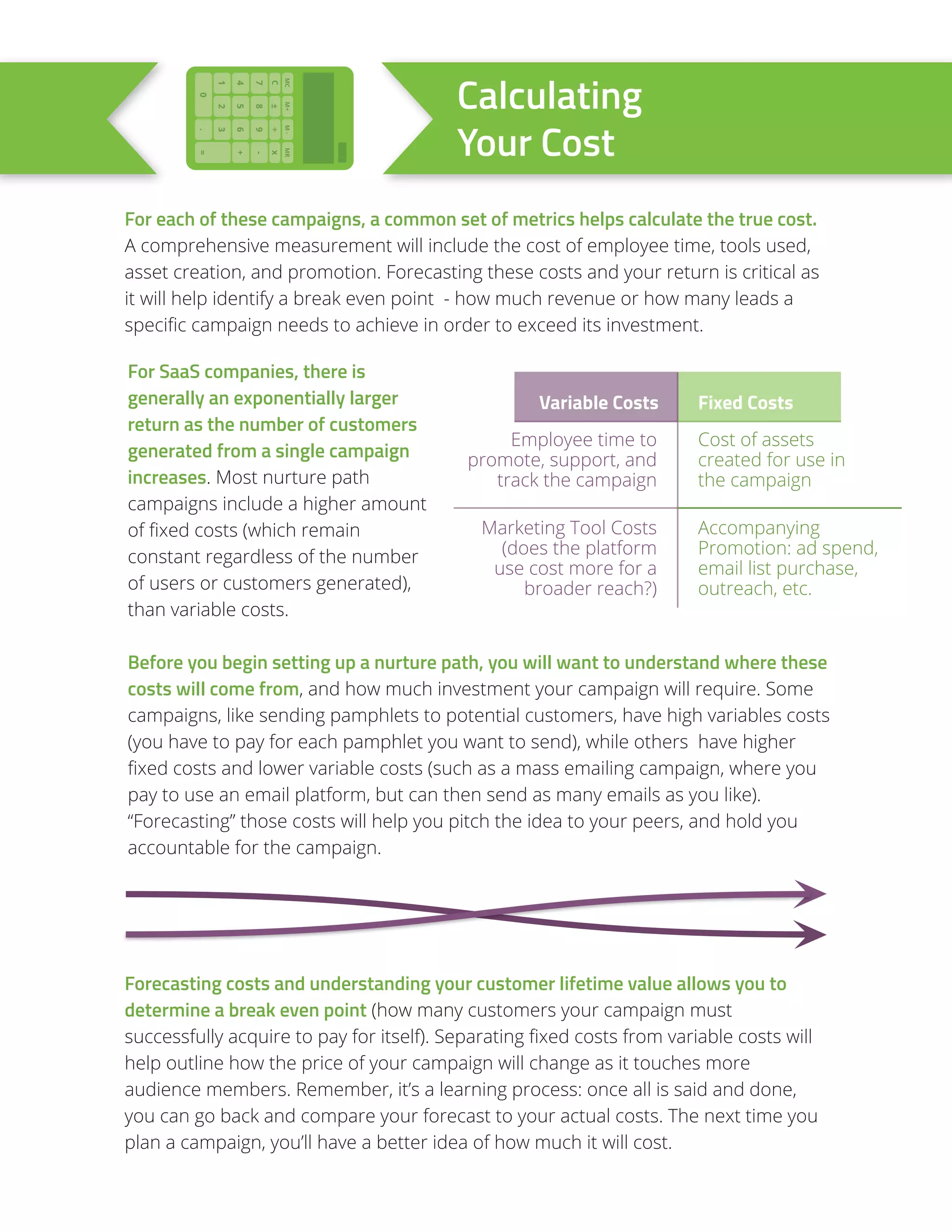
Variable Costs Fixed Costs 
return as the number of customers 
generated from a single campaign 
Employee time to 
promote, support, and 
increases. Most nurture path 
track the campaign 
campaigns include a higher amount 
RIȴ[HGFRVWVZKLFKUHPDLQ 
Marketing Tool Costs 
constant regardless of the number 
(does the platform 
use cost more for a 
of users or customers generated), 
broader reach?) 
than variable costs. 
Before you begin setting up a nurture path, you will want to understand where these 
costs will come fromDQGKRZPXFKLQYHVWPHQWRXUFDPSDLJQZLOOUHTXLUH6RPH 
campaigns, like sending pamphlets to potential customers, have high variables costs 
(you have to pay for each pamphlet you want to send), while others have higher 
ȴ[HGFRVWVDQGORZHUYDULDEOHFRVWVVXFKDVDPDVVHPDLOLQJFDPSDLJQZKHUHRX 
pay to use an email platform, but can then send as many emails as you like). 
Ȋ)RUHFDVWLQJȋWKRVHFRVWVZLOOKHOSRXSLWFKWKHLGHDWRRXUSHHUVDQGKROGRX 
accountable for the campaign. 
Cost of assets 
created for use in 
the campaign 
Accompanying 
Promotion: ad spend, 
email list purchase, 
outreach, etc. 
Forecasting costs and understanding your customer lifetime value allows you to 
determine a break even point (how many customers your campaign must 
VXFFHVVIXOODFTXLUHWRSDIRULWVHOI
6HSDUDWLQJȴ[HGFRVWVIURPYDULDEOHFRVWVZLOO 
help outline how the price of your campaign will change as it touches more 
audience members. Remember, it’s a learning process: once all is said and done, 
you can go back and compare your forecast to your actual costs. The next time you 
plan a campaign, you’ll have a better idea of how much it will cost.

Calculating the true cost (and return) of a nurture program

  • 1.
    Calculating the TrueCost (and Return) of a Nurture Program As the CMO or marketing manager of a SaaS company, it is your responsibility to develop profitable marketing and sales programs. 8QIRUWXQDWHOWKLVSURFHVVIRUPDQFRPSDQLHVLVDFRPSOH[D΍DLUWKDW UHOLHVRQDQDUUDRIPHWULFVPDQRIZKLFKDUHGLɝFXOWWRWUDFNDVWKHDUH constantly changing. In this brief on calculating the true cost and return of a nurture program, we will highlight common nurture programs, outline associated costs, and present an approach to forecasting your return. Common SaaS Nurture Campaigns As the market matures, SaaS companies are becoming increasingly diverse. This diversity makes it almost impossible to generalize what Software as a Service encompasses, but there are a few marketing and sales oriented nurture campaigns WKDWPRVWFRPSDQLHVFDQEHQHȴWIURP 1) Those designed to support a user post-purchase. Designed to increase: ÏUser satisfaction ÏNumber of accounts (seats) ÏLifetime value (LTV) 2) Programs to help guide a user from a free trial to a paying subscription. ÏProgress users into paying customers (subscriptions) Ï+LJKOLJKWWKHYDOXHRIDIXOOSDLG
  • 2.
    6DD6R΍HULQJ ÏDemonstrate usabilityand interface ÏPresent successful use cases 3) Nurture campaigns for SaaS products with a higher entry barrier (cost). ÏDesigned to educate users as they work towards purchase.
  • 3.
    Calculating Your Cost 7 8 9 4 5 6 - C ± ÷ x MC M+ M - MR + 1 2 3 0 . = For each of these campaigns, a common set of metrics helps calculate the true cost. A comprehensive measurement will include the cost of employee time, tools used, DVVHWFUHDWLRQDQGSURPRWLRQ)RUHFDVWLQJWKHVHFRVWVDQGRXUUHWXUQLVFULWLFDODV it will help identify a break even point - how much revenue or how many leads a VSHFLȴFFDPSDLJQQHHGVWRDFKLHYHLQRUGHUWRH[FHHGLWVLQYHVWPHQW For SaaS companies, there is generally an exponentially larger Variable Costs Fixed Costs return as the number of customers generated from a single campaign Employee time to promote, support, and increases. Most nurture path track the campaign campaigns include a higher amount RIȴ[HGFRVWVZKLFKUHPDLQ Marketing Tool Costs constant regardless of the number (does the platform use cost more for a of users or customers generated), broader reach?) than variable costs. Before you begin setting up a nurture path, you will want to understand where these costs will come fromDQGKRZPXFKLQYHVWPHQWRXUFDPSDLJQZLOOUHTXLUH6RPH campaigns, like sending pamphlets to potential customers, have high variables costs (you have to pay for each pamphlet you want to send), while others have higher ȴ[HGFRVWVDQGORZHUYDULDEOHFRVWVVXFKDVDPDVVHPDLOLQJFDPSDLJQZKHUHRX pay to use an email platform, but can then send as many emails as you like). Ȋ)RUHFDVWLQJȋWKRVHFRVWVZLOOKHOSRXSLWFKWKHLGHDWRRXUSHHUVDQGKROGRX accountable for the campaign. Cost of assets created for use in the campaign Accompanying Promotion: ad spend, email list purchase, outreach, etc. Forecasting costs and understanding your customer lifetime value allows you to determine a break even point (how many customers your campaign must VXFFHVVIXOODFTXLUHWRSDIRULWVHOI
  • 4.
    6HSDUDWLQJȴ[HGFRVWVIURPYDULDEOHFRVWVZLOO help outlinehow the price of your campaign will change as it touches more audience members. Remember, it’s a learning process: once all is said and done, you can go back and compare your forecast to your actual costs. The next time you plan a campaign, you’ll have a better idea of how much it will cost.
  • 5.
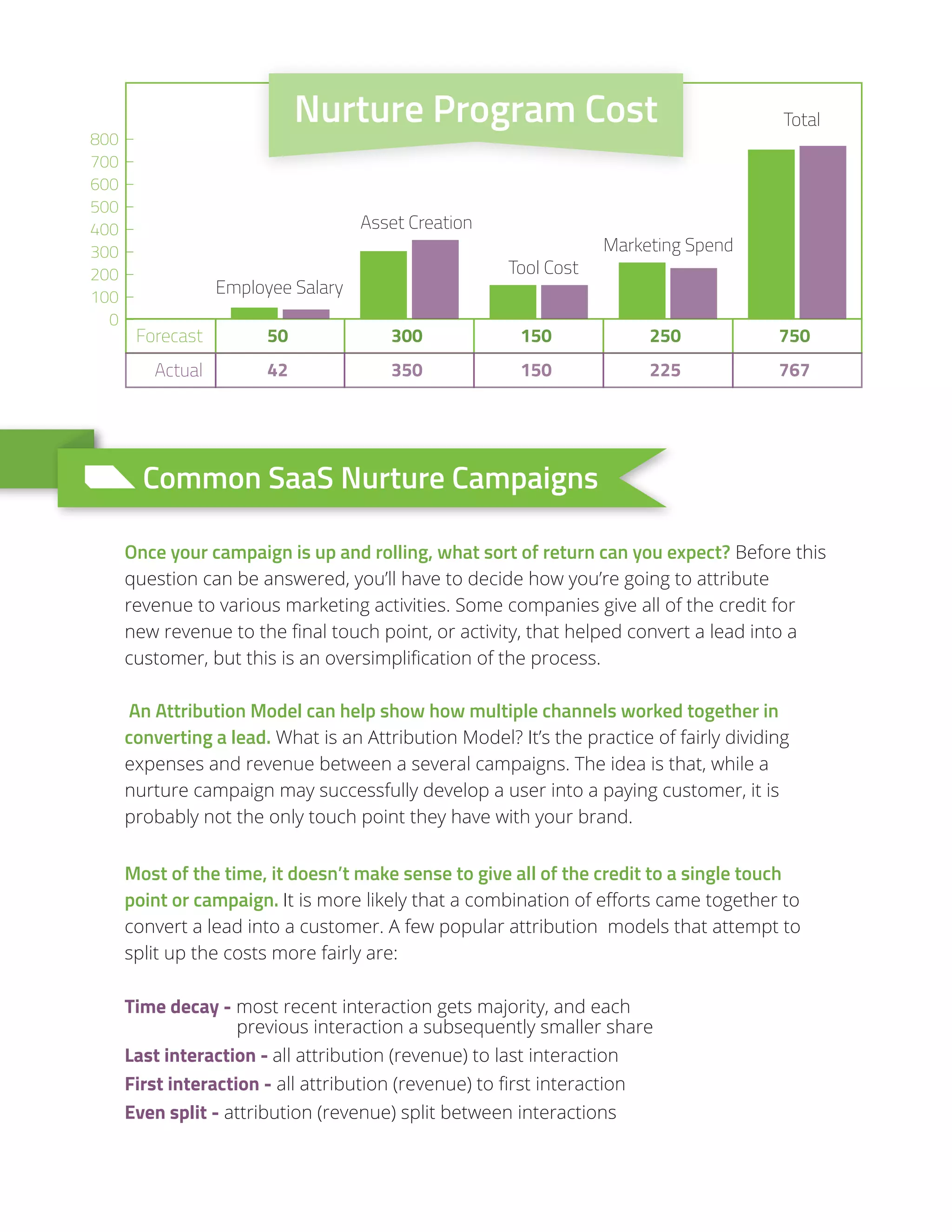
    Nurture Program Cost Employee Salary Asset Creation Tool Cost Common SaaS Nurture Campaigns Marketing Spend Once your campaign is up and rolling, what sort of return can you expect? Before this TXHVWLRQFDQEHDQVZHUHGRXȇOOKDYHWRGHFLGHKRZRXȇUHJRLQJWRDWWULEXWH revenue to various marketing activities. Some companies give all of the credit for QHZUHYHQXHWRWKHȴQDOWRXFKSRLQWRUDFWLYLWWKDWKHOSHGFRQYHUWDOHDGLQWRD FXVWRPHUEXWWKLVLVDQRYHUVLPSOLȴFDWLRQRIWKHSURFHVV An Attribution Model can help show how multiple channels worked together in converting a lead. What is an Attribution Model? It’s the practice of fairly dividing expenses and revenue between a several campaigns. The idea is that, while a nurture campaign may successfully develop a user into a paying customer, it is probably not the only touch point they have with your brand. Most of the time, it doesn’t make sense to give all of the credit to a single touch point or campaign. ΖWLVPRUHOLNHOWKDWDFRPELQDWLRQRIH΍RUWVFDPHWRJHWKHUWR convert a lead into a customer. A few popular attribution models that attempt to split up the costs more fairly are: Time decay - most recent interaction gets majority, and each SUHYLRXVLQWHUDFWLRQDVXEVHTXHQWOVPDOOHUVKDUH Last interaction - all attribution (revenue) to last interaction First interaction -DOODWWULEXWLRQUHYHQXH
  • 6.
    WRȴUVWLQWHUDFWLRQ Even split- attribution (revenue) split between interactions Total 800 700 600 500 400 300 200 100 0 _ _ _ _ _ _ _ _ _ Forecast Actual 50 300 150 250 750 42 350 150 225 767
  • 7.
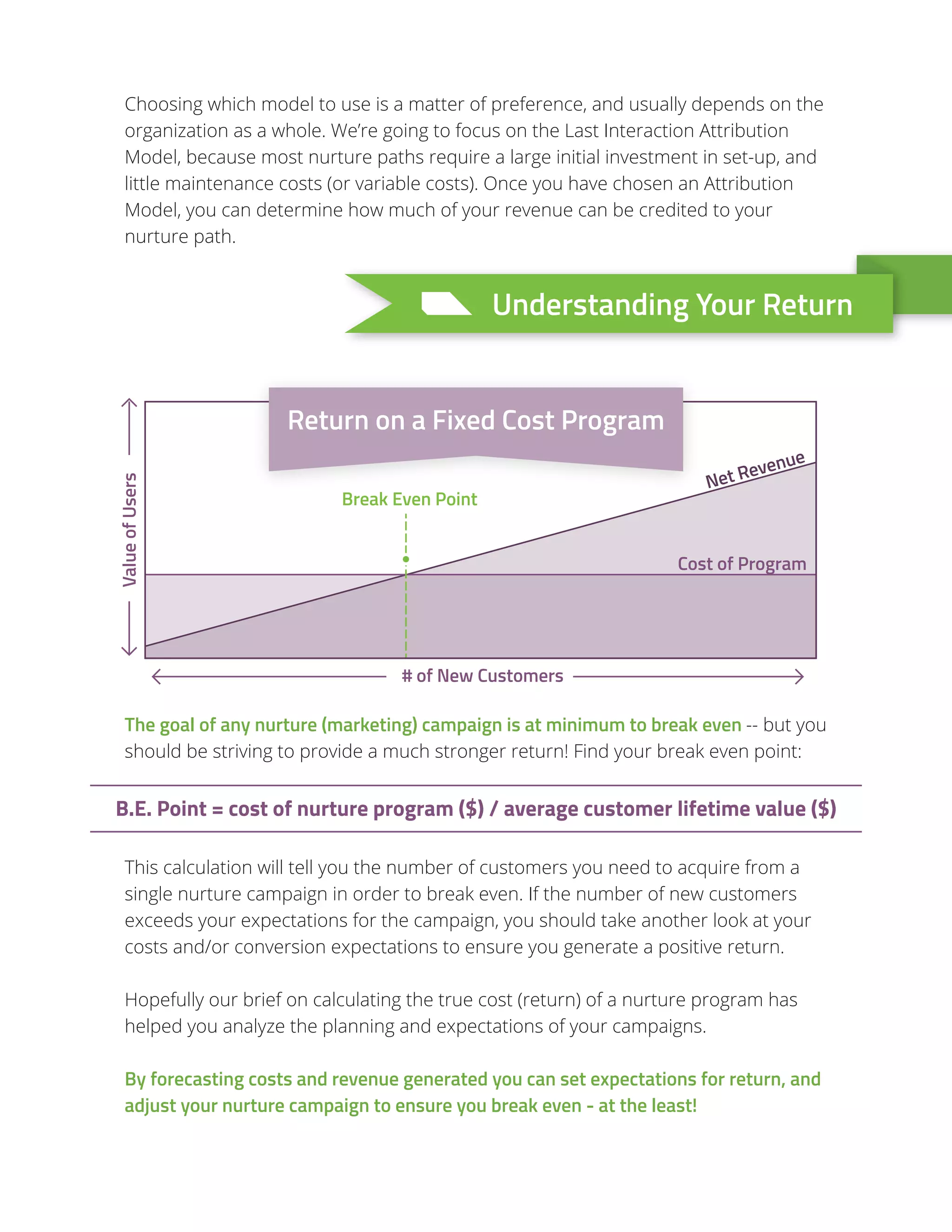
    Choosing which modelto use is a matter of preference, and usually depends on the organization as a whole. We’re going to focus on the Last Interaction Attribution 0RGHOEHFDXVHPRVWQXUWXUHSDWKVUHTXLUHDODUJHLQLWLDOLQYHVWPHQWLQVHWXSDQG little maintenance costs (or variable costs). Once you have chosen an Attribution Model, you can determine how much of your revenue can be credited to your nurture path. Understanding Your Return Return on a Fixed Cost Program Break Even Point # of New Customers Net Revenue Cost of Program Value of Users The goal of any nurture (marketing) campaign is at minimum to break even -- but you VKRXOGEHVWULYLQJWRSURYLGHDPXFKVWURQJHUUHWXUQ)LQGRXUEUHDNHYHQSRLQW B.E. Point = cost of nurture program ($) / average customer lifetime value ($) 7KLVFDOFXODWLRQZLOOWHOORXWKHQXPEHURIFXVWRPHUVRXQHHGWRDFTXLUHIURPD single nurture campaign in order to break even. If the number of new customers exceeds your expectations for the campaign, you should take another look at your costs and/or conversion expectations to ensure you generate a positive return. Hopefully our brief on calculating the true cost (return) of a nurture program has helped you analyze the planning and expectations of your campaigns. By forecasting costs and revenue generated you can set expectations for return, and adjust your nurture campaign to ensure you break even - at the least!