Explore the full ebook collection and download it now at textbookfull.com
CAEW Corporate Reporting Study Manual 2018th
Edition Icaew
https://textbookfull.com/product/caew-corporate-reporting-
study-manual-2018th-edition-icaew/
OR CLICK HERE
DOWLOAD EBOOK
Browse and Get More Ebook Downloads Instantly at https://textbookfull.com
Click here to visit textbookfull.com and download textbook now
Your digital treasures (PDF, ePub, MOBI) await
Download instantly and pick your perfect format...
Read anywhere, anytime, on any device!
ICAEW Corporate Reporting Study Manual 2018th Edition
Icaew
https://textbookfull.com/product/icaew-corporate-reporting-study-
manual-2018th-edition-icaew/
textbookfull.com
ICAEW Accounting Study Manual 2020 Thirteenth Edition
Institute Of Chartered Accountants In England And Wales
https://textbookfull.com/product/icaew-accounting-study-
manual-2020-thirteenth-edition-institute-of-chartered-accountants-in-
england-and-wales/
textbookfull.com
Corporate Financial Reporting and Analysis: A Global
Perspective 4th Edition S. David Young
https://textbookfull.com/product/corporate-financial-reporting-and-
analysis-a-global-perspective-4th-edition-s-david-young/
textbookfull.com
Wiley Cpaexcel Exam Review 2018 Study Guide Financial
Accounting And Reporting wiley Cpa Exam Review Financial
Accounting And Reporting 1st Edition Wiley
https://textbookfull.com/product/wiley-cpaexcel-exam-
review-2018-study-guide-financial-accounting-and-reporting-wiley-cpa-
exam-review-financial-accounting-and-reporting-1st-edition-wiley/
textbookfull.com
Oslo Manual 2018 Guidelines for collecting reporting and
using data on innovation 4th Edition Oecd
https://textbookfull.com/product/oslo-manual-2018-guidelines-for-
collecting-reporting-and-using-data-on-innovation-4th-edition-oecd/
textbookfull.com
Integrated Reporting and Corporate Governance: Boards,
Long-Term Value Creation, and the New Accountability 1st
Edition Laura Girella
https://textbookfull.com/product/integrated-reporting-and-corporate-
governance-boards-long-term-value-creation-and-the-new-
accountability-1st-edition-laura-girella/
textbookfull.com
Australian taxation study manual 2018 questions and
suggested solutions Devos
https://textbookfull.com/product/australian-taxation-study-
manual-2018-questions-and-suggested-solutions-devos/
textbookfull.com
Study Guide and Solutions Manual for Organic Chemistry 5th
Edition Maitland Jones Jr.
https://textbookfull.com/product/study-guide-and-solutions-manual-for-
organic-chemistry-5th-edition-maitland-jones-jr/
textbookfull.com
The Discrete Math Workbook A Companion Manual for
Practical Study Sergei Kurgalin
https://textbookfull.com/product/the-discrete-math-workbook-a-
companion-manual-for-practical-study-sergei-kurgalin/
textbookfull.com
733
CHAPTER 16
Financial instruments:
recognition and
measurement
Introduction
Topic List
1 Introduction and overview of earlier studies
2 Recognition and derecognition
3 Measurement and impairment
4 Application of IFRS 13 to financial instruments
5 Derivatives
6 Embedded derivatives
7 IFRS 9 Financial Instruments and current developments
Summary and Self-test
Technical reference
Answers to Interactive questions
Answers to Self-test
Corporate Reporting
734
Introduction
Learning objectives Tick off
 Determine and calculate how different bases for recognising, measuring and classifying
financial assets and financial liabilities can impact upon reported performance and position
 Evaluate the impact of accounting policies and choice in respect of financing decisions for
example hedge accounting and fair values
 Explain and appraise accounting standards that relate to an entity's financing activities
which include: financial instruments; leasing; cash flows; borrowing costs; and
government grants
 Identify and explain current and emerging issues in corporate reporting
Specific syllabus references for this chapter are: 1(e), 4(a), 4(c), 4(d)
Financial instruments: recognition and measurement 735
C
H
A
P
T
E
R
16
1 Introduction and overview of earlier studies
Section overview
 This section gives a chapter overview and summarises the material covered at Professional Level in
order to consolidate student knowledge before more advanced issues are covered.
 IAS 39 Financial Instruments: Recognition and Measurement
– A financial instrument should initially be measured at fair value, usually including transaction
costs.
– Subsequent remeasurement depends on how the financial asset or financial liability is
classified.
– Financial assets and liabilities should be measured either at fair value or at amortised cost.
– IAS 39 contains detailed requirements regarding the derecognition of financial instruments.
– Financial assets (other than assets recognised at fair value through profit or loss, and fair
value can be measured reliably) should be reviewed at each reporting date for objective
evidence of impairment.
 IFRS 9 Financial Instruments
– Simplifies the requirements of IAS 39.
– Issued in 2014, but IAS 39 remains the main examinable standard on recognition and
measurement of financial instruments. However, it is important to have an awareness of IFRS 9,
particularly in terms of how future accounting periods may be affected.
1.1 Introduction
The purpose of this chapter is to provide thorough coverage of the accounting treatment of financial
instruments. The main presentation and disclosure requirements as detailed in IAS 32 Financial
Instruments: Presentation and IFRS 7 Financial Instruments: Disclosures together with certain aspects of
recognition and measurement of IAS 39 Financial Instruments: Recognition and Measurement have already
been covered at Professional Level. This chapter extends the coverage of recognition and derecognition
of financial assets and liabilities, and their initial and subsequent measurement and impairment, and
finally discusses particular issues relating to the definition of derivatives and the accounting treatment of
derivatives and embedded derivatives.
1.2 Summary of material covered at Professional Level
The accounting treatment of financial instruments is covered at Professional Level. The emphasis at that
level is on presentation and disclosure and less on recognition and measurement. The main points
covered at Professional Level can be summarised as follows:
(a) A financial instrument is any contract that gives rise to a financial asset of one entity and a
financial liability or equity instrument of another entity.
(b) An equity instrument is any contract that evidences a residual interest in the assets of another
entity after deducting all of its liabilities.
(c) A financial asset is any asset that is cash, an equity instrument of another entity, a contract that
(subject to certain conditions) will or may be settled in the entity's own equity instruments or a
contractual right:
(i) to receive cash or another financial asset from another entity; or
(ii) to exchange financial assets or financial liabilities with another entity under conditions that are
potentially favourable to the entity.
Corporate Reporting
736
(d) Financial assets are classified into one of four categories:
 Financial assets at fair value through profit or loss
 Held-to-maturity investments
 Loans and receivables
 Available-for-sale financial assets
(e) A financial liability is any liability that is a contract that (subject to certain conditions) will or may
be settled in the entity's own equity instruments or a contractual obligation:
(i) To deliver cash or another financial asset to another entity; or
(ii) To exchange financial assets or financial liabilities with another entity under conditions that
are potentially unfavourable to the entity.
(f) Financial liabilities are classified into one of two categories:
 Financial liabilities at fair value through profit or loss
 Other financial liabilities
(g) A derivative is a financial instrument or other contract (such as an option) with all three of the
following characteristics:
(i) Its value changes in response to the change in a specified interest rate, financial instrument
price, commodity price, foreign exchange rate, index of prices or rates, credit rating or credit
index, or other variable, provided in the case of a non-financial variable that the variable is not
specific to a party to the contract (sometimes called the 'underlying').
(ii) It requires no initial net investment or an initial net investment that is smaller than would be
required for other types of contracts that would be expected to have a similar response to
changes in market factors.
(iii) It is settled at a future date.
(h) At the time it issues a financial instrument, an entity should classify it or its component parts
according to the substance of the contract under which it is being issued.
(i) A compound financial instrument (that is, one that has features of both debt and equity) should
be split into its component parts according to their substance at the date that it is issued.
(j) Interest, dividends, losses or gains relating to a financial instrument (or a component) that is a
financial liability should be recognised as income or expense in profit or loss.
(k) Dividend distributions paid to holders of an equity instrument should be debited directly to
equity, net of any related income tax benefit. These should be presented in the statement of
changes in equity.
(l) If an entity reacquires its own shares ('treasury shares'), the amount paid should be deducted
directly from equity and no gain or loss should be recognised on the transaction.
(m) A financial asset or a financial liability should be recognised when an entity becomes a party to
the contractual provisions of the instrument.
(n) Financial assets and financial liabilities should generally be presented as separate items in the
statement of financial position. No offsetting is allowed except where it is required because an
entity has a legally enforceable right to set off recognised amounts and the entity intends to settle
on a net basis, or to realise the asset and settle the liability simultaneously.
(o) Financial assets and financial liabilities should be initially recognised at fair value plus or minus, in
certain circumstances, any directly attributable transaction costs, such as fees.
(p) A financial asset should be derecognised when the contractual rights to the cash flows from the
asset expire or the entity transfers the rights to those cash flows in such a way that it transfers
substantially all the risks and rewards of ownership. A financial liability should be derecognised
where an entity discharges the obligations in a contract or the obligations expire.
(q) Written explanations as well as numerical disclosures are required to provide users of the financial
statements with an understanding of the effect the financial instruments have had on an entity's
financial position and performance, and the nature and extent of risks arising from the
financial instruments.
Financial instruments: recognition and measurement 737
C
H
A
P
T
E
R
16
Interactive question 1: Classification of equity instruments
Are there circumstances in which an investment in equity should be classified as a held-to-maturity
investment?
See Answer at the end of this chapter.
Interactive question 2: Classification
During the financial year ended 28 February 20X5, Dennis issued the two financial instruments
described below.
Requirement
For each of the instruments, identify whether it should be classified as a financial liability or as part of
equity, explaining the reason for your choice.
(a) Redeemable preference shares with a coupon rate of 8%. The shares are redeemable on
28 February 20X9 at a premium of 10%.
(b) A grant of share options to senior executives. The options may be exercised from 28 February 20X8.
See Answer at the end of this chapter.
Interactive question 3: Transactions covered by IAS 39
Should the following be recognised under IAS 39?
(a) A guarantee to replace or repair goods sold by a business in the normal course of business
(b) A firm commitment (order) to purchase a specific quantity of cocoa beans for use in manufacturing
(c) A forward contract to purchase cocoa beans at a specified price and quantity on a specified date
See Answer at the end of this chapter.
1.3 Overview of accounting treatment of financial assets and liabilities
IAS 39 follows a mixed measurement model under which some financial instruments are carried at fair
value while others are carried at amortised cost, and some gains or losses are recognised in profit or loss
and others in other comprehensive income.
The following two tables summarise the accounting treatment of each category of financial asset and
financial liability under IAS 39, provided they have not been designated as hedged items. The
accounting treatment of hedged items follows different rules and these are discussed in the next
chapter.
Summary of accounting treatment of assets
Asset
category Description
Measurement
after initial
recognition
Gains
and losses
Financial assets at
fair value through
profit or loss
Any financial asset which is held for the
purpose of selling in the short term (held for
trading) or, in limited circumstances, is
designated under this heading.
Fair value In profit or loss
Corporate Reporting
738
Asset
category Description
Measurement
after initial
recognition
Gains
and losses
Available-for-sale
financial assets
Non-derivative financial assets designated as
available for sale or not classified under any of
the other three headings.
Fair value In other
comprehensive
income, except
that investment
income,
impairment losses
and foreign
exchange gains
and losses are in
profit or loss
Loans and
receivables
Non-derivative financial assets with fixed or
determinable payments that are:
 Not quoted in an active market
 Not designated as at fair value through
profit or loss
 Not held for trading or designated as
available for sale
(ie, loans and receivables are none of the
above)
Amortised cost In profit or loss
Held-to-maturity
investments
Non-derivative financial assets with fixed or
determinable payments and fixed maturity that
an entity has the positive intention and ability
to hold to maturity and are not
designated/classified under any of the other
three headings.
Amortised cost In profit or loss
Note: These categories are simplified under IFRS 9 (see section 7). It is important to have an awareness
of IFRS 9, but IAS 39 remains the main examinable standard, so the IAS 39 categories should be used in
questions unless asked specifically for the IFRS 9 ones.
Interactive question 4: Convertible bonds
RP issued £4 million 5% convertible bonds on 1 October 20X8 for £3.9 million. The bonds have a four
year term and are redeemable at par. At the time the bonds were issued the prevailing market rate for
similar debt without conversion rights was 7%. The effective interest rate associated with the bonds is
7% and the liability is measured, in accordance with IAS 39 Financial Instruments: Recognition and
Measurement, at amortised cost. The interest due was paid and recorded within finance costs during the
year.
Requirement
Prepare the accounting entries to record the issue of the convertible bonds and to record the
adjustment required in respect of the interest expense on the bonds for the year ended
30 September 20X9.
See Answer at the end of this chapter.
Financial instruments: recognition and measurement 739
C
H
A
P
T
E
R
16
Interactive question 5: Classification and measurement
Financial instrument (a)
DG acquired 500,000 shares in HJ, a listed entity, for £3.50 per share on 28 May 20X9. The costs
associated with the purchase were £15,000 and were included in the cost of the investment. The
directors plan to realise this investment before the end of 20X9. The investment was designated on
acquisition as held for trading. There has been no further adjustment made to the investment since the
date of purchase. The shares were trading at £3.65 each on 30 June 20X9.
Financial instrument (b)
DG purchased a bond with a par value of £5 million on 1 July 20X8. The bond carries a 5% coupon, payable
annually in arrears and is redeemable on 30 June 20Y3 at £5.8 million. DG fully intends to hold the bond
until the redemption date. The bond was purchased at a 10% discount. The effective interest rate on the
bond is 10.26%. The interest due for the year was received and credited to investment income in the
statement of profit or loss.
Requirement
Explain how financial instruments (a) and (b) should be classified, initially measured and subsequently
measured. Prepare any journal entries required to correct the accounting treatment for the year to
30 June 20X9.
See Answer at the end of this chapter.
Interactive question 6: Recording and measurement
(a) MNB acquired an investment in a debt instrument on 1 January 20X0 at its par value of £3 million.
Transaction costs relating to the acquisition were £200,000. The investment earns a fixed annual
return of 6%, which is received in arrears. The principal amount will be repaid to MNB in four
years' time at a premium of £400,000. The investment has been correctly classified as held to
maturity. The investment has an effective interest rate of approximately 7.05%.
Requirement
(i) Explain how this financial instrument will be initially recorded and subsequently measured in
the financial statements of MNB, in accordance with IAS 39 Financial Instruments: Recognition
and Measurement.
(ii) Calculate the amounts that would be included in MNB's financial statements for the year to
31 December 20X0 in respect of this financial instrument.
(b) MNB acquired 100,000 shares in AB on 25 October 20X0 for £3 per share. The investment resulted
in MNB holding 5% of the equity shares of AB. The related transaction costs were £12,000. AB's
shares were trading at £3.40 on 31 December 20X0. The investment has been classified as held for
trading.
Requirement
Prepare the journal entries to record the initial and subsequent measurement of this financial
instrument in the financial statements of MNB for the year to 31 December 20X0.
See Answer at the end of this chapter.
Corporate Reporting
740
Interactive question 7: Bonds and shares
(a) QWE issued 10 million 5% five-year convertible £1 bonds on 1 January 20X0. The proceeds of
£10 million were credited to non-current liabilities and debited to bank. The 5% interest paid has
been charged to finance costs in the year to 31 December 20X0.
The market rate of interest for a similar bond with a five-year term but no conversion terms is 7%.
Requirement
Explain and demonstrate how this convertible instrument would be initially measured in
accordance with IAS 32 Financial Instruments: Presentation and subsequently measured in
accordance with IAS 39 Financial Instruments: Recognition and Measurement in the financial
statements for the year ended 31 December 20X0.
(b) The directors of QWE want to avoid increasing the gearing of the entity. They plan to issue
5 million 6% cumulative redeemable £1 preference shares in 20X1.
Requirement
Explain how the preference shares would be classified in accordance with IAS 32 Financial
Instruments: Presentation, and the impact that this issue will have on the gearing of QWE.
See Answer at the end of this chapter.
Interactive question 8: Bonds
The Myntech Company issued 100,000, £1,000 par value bonds to the market at par on 1 July 20X0.
The bonds pay a semi-annual rate of interest of 3% based on nominal value. Interest payments are
made on 31 December and 30 June.
The financial institution that organised the placement charged £80,000 and there were other associated
fees that amounted to £20,000.
The effective semi-annual return on the bonds, taking into account the issue costs, has been calculated
at 3.0117%.
The bonds are quoted on a public stock exchange and, due to a persistent rise in market interest rates,
were quoted at £996.40 on 31 December 20X0 and £989.50 on 31 December 20X1.
Requirement
Calculate the carrying amount of the bonds in the financial statements of Myntech as at
31 December 20X1. Present your answer to the nearest £1,000.
See Answer at the end of this chapter.
Summary of accounting treatment of liabilities
Liability
category Description
Measurement
after initial
recognition
Gains
and losses
Financial liabilities
at fair value
through profit or
loss
Any financial liability which is held for the
purpose of selling in the short term (held for
trading) or, in limited circumstances, is
designated under this heading.
Fair value In profit or loss
Other liabilities Financial liabilities that are not classified as at
fair value through profit or loss.
Amortised cost In profit or loss
Financial instruments: recognition and measurement 741
C
H
A
P
T
E
R
16
2 Recognition and derecognition
Section overview
This section deals with certain aspects of recognition and derecognition and includes the guidelines of
the standard.
2.1 Introduction
IAS 39 requires that a financial asset or a financial liability should be recognised by an entity in its
statement of financial position when the entity becomes a party to the contractual provisions of the
financial asset or financial liability.
IAS 39 also requires that a financial asset or financial liability should be derecognised; that is, removed,
from an entity's statement of financial position, when the entity ceases to be a party to the financial
instrument's contractual provisions.
The recognition of financial instruments is in general more straightforward than derecognition and
IAS 39 pays more attention to establishing rules for the latter.
2.2 Initial recognition
In most cases, the date on which an entity becomes a party to a financial instrument's contractual
obligations is fairly obvious. For example, unconditional receivables are recognised as assets when an
entity acquires the legal right to receive cash.
An important consequence of recognition on becoming party to contractual provisions is that all
derivatives should be recognised in the statement of financial position.
When an entity enters into a derivative transaction involving a contract that is recognised under IAS 39
as a financial instrument, it should be recognised when the entity enters into the contract, not when the
transaction stipulated by the derivative contract occurs. For example, the purchase of a six-month
forward contract with a zero fair value at its inception exposes the entity to risks and rewards due to
changes in the value of the underlying and it should therefore be recognised when the contract is
initiated.
2.3 Regular way transactions
Most financial markets set out regulations for 'regular way' transactions whereby purchases and sales are
contractually deliverable (and therefore settled) on a specified date. Settlement date is later than the
contractual date of the transaction (the 'trade date'). A regular way purchase or sale is the acquisition or
disposal of a financial asset under a contract requiring delivery within a specified time frame. The time
frame may be established through regulation or simply convention in the market.
Regular way purchases and sales of financial instruments should be recognised using either the trade
date or the settlement date. The method chosen should be applied consistently for each of the four
classes of financial asset. A contract for a derivative is not a regular way contract since it can be settled
on a net basis.
For purchases, trade date accounting requires the recognition of an asset and the liability to pay for it
at the trade date. After initial recognition the financial asset is subsequently measured either at
amortised cost or at fair value depending on its initial classification. For sales of financial assets, the asset
is derecognised and the receivable from the buyer together with any gain or loss on disposal are
recognised on the trade date.
With settlement date accounting, an asset purchased is not recognised until the date on which it is
received. Movements in fair value of the contract between the trade date and settlement date are
recognised in the same way as the acquired asset. That is, for assets carried at cost or amortised cost,
the change in value is not recognised; for assets classified as assets at fair value through profit or loss,
the change is recognised in profit or loss; and for available-for-sale assets, the change is recognised in
other comprehensive income. For sales of financial instruments, the asset is derecognised and the
Corporate Reporting
742
receivable from the buyer, together with any gain or loss on disposal, are recognised on the day that it
is delivered by the entity. Any change in the fair value of the asset between the trade date and
settlement date is not recognised, as the sale price is agreed at the trade date, making subsequent
changes in fair value irrelevant from the seller's perspective.
Worked example: Regular way purchase of a financial asset
An entity entered into a contractual commitment on 27 December 20X4 to purchase a financial asset
for £1,000. On 31 December 20X4, the entity's reporting date, the fair value was £1,005. The
transaction was settled on 5 January 20X5 when the fair value was £1,007. The entity has classified the
asset as at fair value through profit or loss.
Requirement
How should the transactions be accounted for under trade date accounting and settlement date
accounting?
Solution
Trade date accounting
 On 27 December 20X4, the entity should recognise the financial asset and the liability to the
counterparty at £1,000.
 At 31 December 20X4, the financial asset should be remeasured to £1,005 and a gain of £5
recognised in profit or loss.
 On 5 January 20X5, the liability to the counterparty of £1,000 will be paid in cash. The fair value of
the financial asset should be remeasured to £1,007 and a further gain of £2 recognised in profit or
loss.
Settlement date accounting
 No transaction should be recognised on 27 December 20X4.
 On 31 December 20X4, a receivable of £5 should be recognised (equal to the fair value movement
since the trade date) and the gain recognised in profit or loss.
 On 5 January 20X5, the financial asset should be recognised at its fair value of £1,007. The
receivable should be derecognised, the payment of cash to the counterparty recognised and the
further gain of £2 recognised in profit or loss.
Interactive question 9: Regular way sale of a financial asset
An entity acquired an asset on 1 January 20X4 for £1,000. On 27 December 20X4, it entered into a
contract to sell the asset for £1,100. On 31 December 20X4, the entity's reporting date, the fair value of
the asset was £1,104. The transaction was settled on 5 January 20X5. The entity classified the asset as
available for sale.
Requirement
How should the transactions be accounted for under trade date accounting and settlement date
accounting?
See Answer at the end of this chapter.
In practice, many entities use settlement date accounting but apply it to the actual date of settlement
rather than when payment is due.
Financial instruments: recognition and measurement 743
C
H
A
P
T
E
R
16
2.4 Derecognition of financial assets
2.4.1 Criteria for derecognition
Derecognition is the removal of a previously recognised financial instrument from an entity's statement
of financial position.
An entity should derecognise a financial asset when:
(a) the contractual rights to the cash flows from the financial asset expire; or
(b) the entity transfers substantially all the risks and rewards of ownership of the financial asset to
another party.
Derecognition of a financial asset is often straightforward, as the above criteria can be implemented
easily. For example, a trade receivable should be derecognised when an entity collects payment. The
collection of payment signifies the end of any exposure to risks or any continuing involvement.
However, more complex transactions may involve the transfer of legal title to another entity but only a
partial transfer of risks and rewards, so that the original owner of the asset is still exposed to some of the
risks and rewards of owning the asset. This is discussed further below.
Worked example: Risks and rewards
Can you think of an example of a sale of a financial asset in which:
(a) An entity has transferred substantially all the risks and rewards of ownership?
(b) An entity has retained substantially all the risks and rewards of ownership?
Solution
IAS 39 includes the following examples:
(a) (i) An unconditional sale of a financial asset
(ii) A sale of a financial asset together with an option to repurchase the financial asset at its fair
value at the time of repurchase; because any repurchase is at the then fair value, all risks and
rewards of ownership are with the buying party
(b) (i) A sale and repurchase transaction where the repurchase price is a fixed price or at the sale
price plus a lender's return
(ii) A sale of a financial asset together with a total return swap that transfers the market risk
exposure back to the entity
2.4.2 Accounting treatment
On derecognition of a financial asset the difference between the carrying amount and any
consideration received should be recognised in profit or loss. Any accumulated gains or losses that
have been recognised in other comprehensive income should also be reclassified to profit or loss
on derecognition of the asset.
Worked example: Derecognition
The Polyact Company purchased £60,000 of shares, which were classified as held for trading. Later that
year Polyact sold 50% of the shares for £40,000.
Requirement
What is the amount of the gain or loss on the disposal to be recognised in profit or loss?
Solution
On derecognition of a financial asset the difference between the carrying amount and any consideration
received should be recognised in profit or loss. On the assumption that the asset was not remeasured
during the year, the carrying amount of 50% of the asset is £30,000. The proceeds from the sale of 50%
of the asset are £40,000, yielding a gain of £10,000 to be recognised in profit or loss.
Corporate Reporting
744
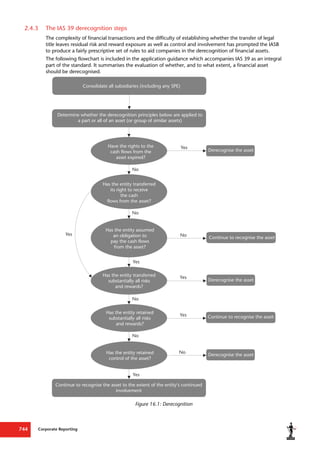
2.4.3 The IAS 39 derecognition steps
The complexity of financial transactions and the difficulty of establishing whether the transfer of legal
title leaves residual risk and reward exposure as well as control and involvement has prompted the IASB
to produce a fairly prescriptive set of rules to aid companies in the derecognition of financial assets.
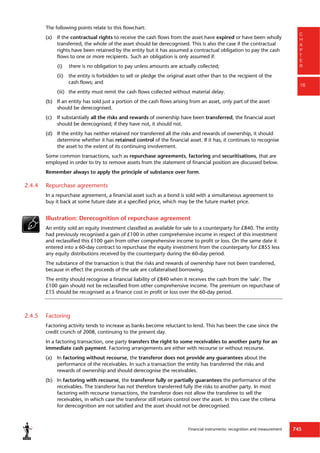
The following flowchart is included in the application guidance which accompanies IAS 39 as an integral
part of the standard. It summarises the evaluation of whether, and to what extent, a financial asset
should be derecognised.
Consolidate all subsidiaries (including any SPE)
Determine whether the derecognition principles below are applied to
a part or all of an asset (or group of similar assets)
Have the rights to the
cash flows from the
asset expired?
Has the entity transferred
its right to receive
the cash
flows from the asset?
Has the entity assumed
an obligation to
pay the cash flows
from the asset?
Has the entity transferred
substantially all risks
and rewards?
Has the entity retained
substantially all risks
and rewards?
Has the entity retained
control of the asset?
Continue to recognise the asset to the extent of the entity’s continued
involvement
Continue to recognise the asset
Derecognise the asset
Continue to recognise the asset
Derecognise the asset
Yes
Yes
Yes
Yes
No
No
No
No
No
No
Yes
Yes
Derecognise the asset
Figure 16.1: Derecognition
Financial instruments: recognition and measurement 745
C
H
A
P
T
E
R
16
The following points relate to this flowchart:
(a) If the contractual rights to receive the cash flows from the asset have expired or have been wholly
transferred, the whole of the asset should be derecognised. This is also the case if the contractual
rights have been retained by the entity but it has assumed a contractual obligation to pay the cash
flows to one or more recipients. Such an obligation is only assumed if:
(i) there is no obligation to pay unless amounts are actually collected;
(ii) the entity is forbidden to sell or pledge the original asset other than to the recipient of the
cash flows; and
(iii) the entity must remit the cash flows collected without material delay.
(b) If an entity has sold just a portion of the cash flows arising from an asset, only part of the asset
should be derecognised.
(c) If substantially all the risks and rewards of ownership have been transferred, the financial asset
should be derecognised; if they have not, it should not.
(d) If the entity has neither retained nor transferred all the risks and rewards of ownership, it should
determine whether it has retained control of the financial asset. If it has, it continues to recognise
the asset to the extent of its continuing involvement.
Some common transactions, such as repurchase agreements, factoring and securitisations, that are
employed in order to try to remove assets from the statement of financial position are discussed below.
Remember always to apply the principle of substance over form.
2.4.4 Repurchase agreements
In a repurchase agreement, a financial asset such as a bond is sold with a simultaneous agreement to
buy it back at some future date at a specified price, which may be the future market price.
Illustration: Derecognition of repurchase agreement
An entity sold an equity investment classified as available for sale to a counterparty for £840. The entity
had previously recognised a gain of £100 in other comprehensive income in respect of this investment
and reclassified this £100 gain from other comprehensive income to profit or loss. On the same date it
entered into a 60-day contract to repurchase the equity investment from the counterparty for £855 less
any equity distributions received by the counterparty during the 60-day period.
The substance of the transaction is that the risks and rewards of ownership have not been transferred,
because in effect the proceeds of the sale are collateralised borrowing.
The entity should recognise a financial liability of £840 when it receives the cash from the 'sale'. The
£100 gain should not be reclassified from other comprehensive income. The premium on repurchase of
£15 should be recognised as a finance cost in profit or loss over the 60-day period.
2.4.5 Factoring
Factoring activity tends to increase as banks become reluctant to lend. This has been the case since the
credit crunch of 2008, continuing to the present day.
In a factoring transaction, one party transfers the right to some receivables to another party for an
immediate cash payment. Factoring arrangements are either with recourse or without recourse.
(a) In factoring without recourse, the transferor does not provide any guarantees about the
performance of the receivables. In such a transaction the entity has transferred the risks and
rewards of ownership and should derecognise the receivables.
(b) In factoring with recourse, the transferor fully or partially guarantees the performance of the
receivables. The transferor has not therefore transferred fully the risks to another party. In most
factoring with recourse transactions, the transferor does not allow the transferee to sell the
receivables, in which case the transferor still retains control over the asset. In this case the criteria
for derecognition are not satisfied and the asset should not be derecognised.
Corporate Reporting
746
Illustration: Factoring without recourse
Entity A carries in its statement of financial position receivables measured at £10 million. It sells the
receivables in a factoring transaction without recourse to Entity B for £8.5 million of cash.
Entity A should derecognise the receivables, as it has transferred the risks and rewards to Entity B. The
loss of £1.5 million should be recognised in profit or loss.
Illustration: Factoring with full recourse
Entity A carries in its statement of financial position receivables measured at £10 million. It sells the
receivables in a factoring transaction with full recourse to Entity B for £8.5 million of cash. Entity A
guarantees to reimburse Entity B in cash if the receivables realise less than £8.5 million.
In this example Entity A has transferred the right to receive the receivables to Entity B but it has not
transferred all the risks. The asset should not be derecognised. The cash received should be credited to a
liability account (in essence a loan from the factor).
2.4.6 Securitisations
Securitisation is the process whereby an originator packages pools of, for instance, loans, receivables or
the rights to future income streams that it owns and then sells the packages. Investors buy the
repackaged assets by providing finance in the form of securities or loans which are secured on the
underlying pool and its associated income stream. Securitisation thereby converts the originator's illiquid
assets into liquid assets.
Illustration: Securitisation
Some football clubs have needed to raise cash quickly to buy players. They have therefore obtained
immediate cash which has been securitised to the lender by the rights to the income from the first
tranche of future season ticket sales.
Another example is a bank that has extended mortgages to individuals. It will receive cash flows in
future in the form of interest payments. However, it cannot demand early repayment of the mortgages.
If, however, it sells the rights to the interest cash flows from the mortgages to a third party, it could
convert the income stream into an immediate lump sum (therefore, receiving today the present value of
a future cash flow).
Securitisation often involves the use of a structured entity (SE) to acquire the originator's receivables or
loans. The SE issues debt to third parties to raise the finance to repay the originator.
Illustration: Structured entities
The banking crisis of 2008 was caused partly by securitisation of sub-prime mortgages and the use of
structured entities.
Whether the securitised assets will be derecognised depends on whether the SE has assumed all the risks
and rewards of the ownership of the assets and whether the originator has ceded control of the assets to
the SE.
If the SE is a mere extension of the originator and it continues to be controlled by the originator, then
the SE should be consolidated and any securitised assets should continue to be recognised in the group
accounts. Securitisation will not in this case lead to derecognition.
Even when the SE is not controlled by the originator, the risks and rewards of ownership will not have
passed completely to the SE if the lenders to the SE require recourse to the originator to provide security
for their debt.
Financial instruments: recognition and measurement 747
C
H
A
P
T
E
R
16
A key aspect of whether risk is transferred would be whether the originator retains the risk of bad debts.
Thus if the originator sells 90% of a package to the SE and retains 10%, then it is arguable that
substantially all risks and rewards of ownership have been transferred. If, however, the originator
transfers the 90% package but agrees to retain all the bad debt risk of the entire portfolio, then risks and
rewards have not been transferred and the loan package should not be derecognised.
The derecognition criteria will be met if the SE is not under the control of the originator and there are
no guarantees provided by the originator. In this case the derecognition takes the package of loans out
of the group accounts and the group recognises cash received instead. The benefit then is that it
improves the credit rating of the originator, as cash is a better asset than the package of mortgages.
Securitisation has had a bad name since 2008, when the repackaging of sub-prime loans was partly
responsible for the crises in some US banks.
2.5 Derecognition of financial liabilities
The principle remains that the substance of transactions should be accounted for, not just their form.
An entity should derecognise a financial liability when it is extinguished ie, when the obligation
specified in the contract is discharged or cancelled or expires.
Illustration: Extinguishing a financial liability
Entity A has borrowed £10 million from a bank to invest in commercial development. However, due to
the recession the shops built did not yield the expected rental income and Entity A cannot service the
debt. It negotiates with the bank to transfer the ownership of the development to the bank in
settlement of the outstanding debt. The market value of the development is £7 million. The
development's carrying amount was £7 million as it was measured at fair value.
As a result of the transfer, Entity A should extinguish the liability but it should also recognise a gain of
£3 million in profit or loss, arising from the difference between the carrying amount of the liability
(£10m) and the value of the development (£7m) that was transferred to the bank.
2.6 Partial derecognition of financial assets and financial liabilities
It is possible for only part of a financial asset or liability to be derecognised. This is the case if the part
comprises:
(a) only specifically identified cash flows; or
(b) only a fully proportionate (pro rata) share of the total cash flows.
For example, if an entity holds a bond, it has the right to two separate sets of cash inflows: those
relating to the principal and those relating to the interest. It could sell the right to receive the interest to
another party while retaining the right to receive the principal.
On derecognition, the amount to be included in profit or loss for the year is calculated as follows:
£ £
Carrying amount of asset/liability (or the portion of asset/liability) transferred X
Less: Proceeds received/paid X
Any cumulative gain or loss on a financial asset recognised in other
comprehensive income
X
(X)
Difference to profit or loss X
Where only part of a financial asset is derecognised, the carrying amount of the asset should be
allocated between the part retained and the part transferred based on their relative fair values on the
date of transfer. A gain or loss should be recognised based on the proceeds for the portion transferred.
Corporate Reporting
748
Interactive question 10: Sale of cash flows debt instrument
During the year ended 31 December 20X0, Jones sold to a third party the right to receive the interest
cash flows on a fixed maturity debt instrument it holds and will continue to legally own up to the date
of maturity. The debt instrument is quoted in an active stock market. The entity has no obligation to
compensate the third party for any cash flows not received.
Requirement
Discuss whether the debt instrument should be derecognised.
See Answer at the end of this chapter.
Interactive question 11: Derecognition of financial assets and liabilities
Discuss whether the following financial instruments should be derecognised.
(a) AB Co sells an investment in shares, but retains a call option to repurchase those shares at any time
at a price equal to the market value current at the date of repurchase.
(b) CD Co sells an investment in shares and enters into a 'total return swap' with the buyer. Under a
'total return swap' arrangement, the buyer returns any increases in value to the seller, and the seller
compensates the buyer for any decrease in value plus interest.
(c) EF Co enters into a stocklending agreement where an investment is lent to a third party for a fixed
period of time for a fee.
(d) GH Co sells title to some of its receivables to a debt factor for an immediate cash payment of 90%
of their value. The terms of the agreement are that GH Co has to compensate the factor for any
amounts not recovered by the factor after six months.
See Answer at the end of this chapter.
2.7 Exchange or modification of debt
If a new loan is agreed between a borrower and a lender, or the two parties agree revised terms for an
existing loan, the accounting depends on whether the original liability should be derecognised and a
new liability recognised, or whether the original liability should be treated as modified.
A new liability should be recognised if the new terms are substantially different from the old terms. The
terms are substantially different if the present value of the cash flows under the new terms, including
any fees payable/receivable, discounted at the original effective interest rate, is 10% or more different
from the present value of the remaining cash flows under the original terms. There is said to be an
'extinguishment' of the old liability. In these circumstances:
 The difference between the carrying amount extinguished and the consideration paid should be
recognised in profit or loss.
 The fees payable/receivable should be recognised as part of that gain or loss.
If the difference between the two present values is below this cut-off point, there is said to be a
modification of the terms. In these circumstances:
 The existing liability is not derecognised.
 Its carrying amount is adjusted by the fees payable/receivable and amortised over the remaining
term of the modified liability.
Financial instruments: recognition and measurement 749
C
H
A
P
T
E
R
16
3 Measurement and impairment
Section overview
This section deals with certain aspects of initial and subsequent measurement of financial instruments,
especially the treatment of transaction costs and of valuation methods when fair values are not
available.
3.1 Introduction
It was noted earlier that financial assets and financial liabilities should initially be measured at fair
value (cost). Subsequently:
 Financial assets should be remeasured to fair value, unless they are loans and receivables, held-to-
maturity investments or financial assets whose value cannot be reliably measured.
 Financial liabilities should be remeasured to amortised cost unless they are at fair value through
profit or loss.
Note: IFRS 9 modifies the rules (see section 7) but IAS 39 remains the extant standard, so you need to
know the IAS 39 rules.
3.2 Initial measurement
Financial instruments should initially be measured at the fair value of the consideration given or
received (ie, cost) plus (in most cases) transaction costs that are directly attributable to the
acquisition or issue of the financial instrument.
The exception to this rule is where a financial instrument is at fair value through profit or loss. In this
case transaction costs are immediately recognised in profit or loss.
The fair value of the consideration is normally the transaction price or market prices. If market prices are
not reliable, the fair value may be estimated using a valuation technique (for example, by discounting
cash flows).
The categories for financial instruments are important because they determine how a particular
instrument should be measured subsequent to initial recognition. The definitions given in section 1 of
this chapter are now set in fuller detail.
Definitions
A financial asset or liability at fair value through profit or loss is one which meets either of the
following conditions:
(a) It is classified as held for trading. A financial asset or liability is classified as held for trading if it is:
(i) acquired or incurred principally for the purpose of selling or repurchasing it in the near term;
(ii) part of a portfolio of identified financial instruments that are managed together and for which
there is evidence of a recent actual pattern of short-term profit-taking; or
(iii) a derivative (unless it is a designated and effective hedging instrument – see the next
chapter).
(b) Upon initial recognition it is designated by the entity as at fair value through profit or loss. An
entity may only use this designation in severely restricted circumstances ie,:
(i) where it eliminates or significantly reduces a measurement or recognition inconsistency
('accounting mismatch') that would otherwise arise; and
(ii) where a group of financial assets/liabilities is managed and its performance is evaluated on
a fair value basis.
Corporate Reporting
750
Held-to-maturity investments are non-derivative financial assets with fixed or determinable payments
and fixed maturity that an entity has the positive intent and ability to hold to maturity other than:
(a) those that the entity upon initial recognition designates as at fair value through profit or loss;
(b) those that the entity designates as available for sale; or
(c) those that meet the definition of loans and receivables.
Loans and receivables are non-derivative financial assets with fixed or determinable payments that are
not quoted in an active market, other than:
(a) those that the entity intends to sell immediately or in the near term, which should be classified as
held for trading and those that the entity upon initial recognition designates as at fair value
through profit or loss;
(b) those that the entity upon initial recognition designates as available for sale; or
(c) those for which the holder may not recover substantially all of the initial investment, other than
because of credit deterioration, which shall be classified as available for sale.
An interest acquired in a pool of assets that are not loans or receivables (for example, an interest in a
mutual fund or a similar fund) is not a loan or a receivable.
Available-for-sale financial assets are those non-derivative financial assets that are designated as
available for sale or are not classified as:
(a) loans and receivables;
(b) held-to-maturity investments; or
(c) financial assets at fair value through profit or loss. (IAS 39)
Worked example: Fair value of interest-free loan
Entity A is a new business which can borrow money at 12%. As part of an initiative to build a closer
working relationship with Entity A, Entity B lends it £20,000 for three years on an interest-free basis.
Requirement
How should the loan be accounted for by Entity B?
Solution
The initial fair value of the loan should be determined by discounting the £20,000 receivable in three
years' time to its present value, using the interest rate applicable to Entity A. The present value is
£14,235 (20,000/1.12
3
) and the remaining £5,765 should immediately be recognised as an expense in
profit or loss.
Each year Entity B should recognise finance income of 12% on the balance of the loan, increasing the
loan's carrying amount by the amount recognised in profit or loss.
3.3 Transaction costs
Transaction costs are defined as the incremental costs that are directly attributable to the acquisition,
issue or disposal of a financial asset or liability. Transaction costs should be added to the initial fair value
except for financial assets and financial liabilities classified as at fair value through profit or loss where
they should be recognised in profit or loss. The detailed requirements of IAS 39 are set out below:
 For financial instruments that are measured at fair value through profit or loss, transaction costs
should not be added to the fair value measurement at initial recognition. They are expensed when
incurred.
 For other financial assets, transaction costs, for example fees and commissions, should be added to
the amount initially recognised.
 For other financial liabilities, directly related costs of issuing debt should be deducted from the
amount of debt initially recognised.
Financial instruments: recognition and measurement 751
C
H
A
P
T
E
R
16
 For financial instruments that are carried at amortised cost (such as held-to-maturity
investments, loans and receivables, and financial liabilities that are not at fair value through
profit or loss) transaction costs should be included in the calculation of amortised cost using the
effective interest method and amortised through profit or loss over the life of the instrument. In
practice, many entities write off the transaction costs on a straight-line method. While not in
accordance with IAS 39, they claim that the difference is immaterial.
 For available-for-sale financial assets, transaction costs should be recognised in other
comprehensive income as part of a change in fair value at the next remeasurement. If an available-
for-sale financial asset does not have fixed or determinable payments and has an indefinite life, the
transaction costs are reclassified to profit or loss when the asset is derecognised or becomes
impaired. If an available-for-sale financial asset has fixed or determinable payments and does not
have an indefinite life, the transaction costs are amortised to profit or loss using the effective
interest method.
Transaction costs expected to be incurred on transfer or disposal of a financial instrument should not be
included in the remeasurement of the financial instrument to fair value.
It is not uncommon for explicit transaction costs to be immaterial and for market traders to trade
financial instruments by offering bid and offer/ask prices. In such circumstances the transaction costs are
effectively within the bid-ask price spread.
Worked example: Transaction costs 1
An entity acquires a financial asset in an active market for £52. This was the offer price at the time of the
transaction. The bid price at that time was £50.
Requirement
At what amount should the asset initially be recognised?
Solution
IAS 39 effectively treats the bid-offer spread as a transaction cost. If the financial instrument is classified
as at fair value through profit or loss, the notional transaction cost of £2 should be recognised as an
expense and the financial asset initially recognised at £50. If the instrument is classified under any other
category, the transaction cost should be added to the fair value and the financial asset initially
recognised at £52.
Worked example: Transaction costs 2
An entity acquires an available-for-sale (AFS) financial asset at its fair value of £50. Purchase commission
of £3 is also payable. At the end of the entity's financial year, the asset's quoted market price is £55. If
the asset was to be sold, a commission of £3 would be payable.
Requirement
At what amount should the asset be recognised initially and at the end of the financial year?
Solution
As the asset is classified as AFS, the entity should initially recognise the financial asset at its fair value plus
the transaction costs; that is, at £53. At the end of the entity's financial year, the asset should be
remeasured at £55 (the commission of £3 payable on a sale is not taken into account). The change in
fair value of £2 should be recognised in other comprehensive income.
3.4 Subsequent measurement of financial assets
After initial recognition loans and receivables and held-to-maturity (HTM) investments should be
remeasured at amortised cost using the effective interest method.
Certain investments in equity instruments should be measured at cost. These are equity investments
that do not have a quoted market price in an active market and whose fair value cannot be reliably
Corporate Reporting
752
measured, together with derivatives that are linked to and must be settled by delivery of such unquoted
equity instruments.
All other financial assets should be remeasured to fair value, without any deduction for transaction
costs that may be incurred on sale or other disposal.
Definitions
The amortised cost of a financial asset or financial liability is the amount at which the financial asset or
liability is measured at initial recognition minus principal repayments, plus or minus the cumulative
amortisation using the effective interest method of any difference between that initial amount and the
maturity amount, and minus any write down (directly or through the use of an allowance account) for
impairment or uncollectability.
Effective interest method: A method of calculating the amortised cost of a financial instrument and of
allocating the interest income or interest expense over the relevant period.
Effective interest rate: The rate that exactly discounts estimated future cash payments or receipts
through the expected life of the financial instrument to the net carrying amount of the financial asset or
liability.
Gains and losses on remeasurement should be recognised as follows:
(a) Changes in the carrying amount of financial assets at fair value through profit or loss should be
recognised in profit or loss.
(b) Changes in the carrying amount of loans and receivables and HTM investments should be
recognised in profit or loss. Changes arise when these financial assets are derecognised or impaired
and through the amortisation process.
(c) In respect of AFS financial assets:
(i) Impairment losses and foreign exchange differences should be recognised in profit or loss.
(ii) Interest on an interest-bearing asset should be calculated using the effective interest method
and recognised in profit or loss.
(iii) All other gains and losses should be recognised in other comprehensive income and held in a
separate component in equity. On derecognition, either through sale or impairment, gains
and losses previously recognised in other comprehensive income should be reclassified to
profit or loss, becoming part of the gain or loss on derecognition.
Note: IFRS 9 simplifies the categories (see section 7). While IAS 39 remains the extant standard, some
knowledge of IFRS 9 is required, and it may be examinable.
Worked example: Financial liability
In the year ended 31 December 20X0, Smith entered into a contractual commitment to make a variable
rate loan to a customer beginning on 1 January 20X1 for a fixed period at 1% less than the rate at
which the entity (not the customer) can borrow money.
Requirement
Explain the accounting treatment for the above transaction in accordance with IAS 39.
Solution
The commitment to provide a loan to the customer appears to have been entered into at less than
market interest rates, given that the rate is lower than that at which the entity can borrow money on the
market. A commitment to provide a loan at less than market interest rates represents a financial liability.
This is because the entity has an obligation to pay more interest on financing the loan than it will receive
from the customer.
The commitment was entered into during 20X0 and is initially measured at its fair value. Interest income
is recognised on this amount using the effective interest method under IAS 18 Revenue.
Financial instruments: recognition and measurement 753
C
H
A
P
T
E
R
16
At the year end, the liability is increased to its IAS 37 provision valuation ('the best estimate of the
expenditure required to settle the present obligation') if this amount exceeds the amount of the initial
fair value recognised less amounts already amortised to profit or loss using the effective interest rate.
Any difference is charged to profit or loss.
Interactive question 12: IAS 39
Which of the following can be held at amortised cost under IAS 39?
(1) A trade receivable
(2) 6% debentures issued by the reporting company on 1 January 20X1 and repayable at a premium
of 20% after three years
(3) An interest rate option
(4) Investment in the redeemable preference shares of another company
A (1) and (2) only
B (2) and (4) only
C (2), (3) and (4) only
D (1), (2) and (4) only
See Answer at the end of this chapter.
Worked example: Measurement of HTM asset
On 1 January 20X4 an entity subscribed for a £20,000 5% bond, interest being payable annually in
arrears. The bond was issued at a discount of 5% and was redeemed at a premium of 5% on
31 December 20X6. The effective interest rate of the financial instrument was calculated as 8.49%. As a
result in changes in general interest rates, the fair value of the bond was £19,400 at 31 December 20X4
and £20,400 at 31 December 20X5.
Requirements
Calculate the amounts to be recognised in the entity's financial statements for each of the three years
ended 31 December 20X6 if:
(a) The asset was classified as HTM
(b) The asset was classified as AFS
Solution
(a) A HTM investment should be measured at amortised cost using the effective interest method. The
amounts in the financial statements should be determined as follows.
Statement of
financial
Interest at
8.49% effective
Cash received
at 5% of
Statement of
financial
position carrying rate recognised £20,000 position carrying
Year amount b/f in profit or loss nominal value amount c/f
£ £ £ £
20X4 19,000 1,613 (1,000) 19,613
20X5 19,613 1,665 (1,000) 20,278
20X6 20,278 1,722 (22,000)* 0
* Includes redemption of £20,000 × 105% = £21,000.
(b) The interest on an AFS financial asset should be recognised in profit or loss using the effective
interest method. The carrying amount should then be remeasured to fair value with changes being
recognised in other comprehensive income.
Corporate Reporting
754
Carrying
amount Interest as Cash flow Fair value
Carrying
amount
Year b/f before as before change (bal fig) c/f
£ £ £ £ £
20X4 19,000 1,613 (1,000) (213) 19,400
20X5 19,400 1,665 (1,000) 335 20,400
20X6 20,400 1,722 (22,000) (122) 0
Included in other comprehensive income is a debit of £213 in 20X4 for the loss in fair value, a credit of
£335 in 20X5 for the gain in fair value and a debit in 20X6 as the cumulative gain is removed.
When shares ('old shares') classified as AFS are exchanged for other shares ('new shares'), perhaps as a
result of a takeover, any gains or losses on the old shares previously recognised in other comprehensive
income should be reclassified from other comprehensive income to profit or loss and the new shares
should be measured at their fair value.
Worked example: Exchange of shares
ABC acquires a small number of shares in DEF for their fair value of £100; the shares are quoted on a
securities exchange and ABC classifies them as AFS. One year later, their fair value has risen to £110 and
a gain of £10 is recognised in other comprehensive income. The following year GHI, a larger
competitor, acquires DEF for an offer that values ABC's shareholding at £150. The consideration is
satisfied by ABC receiving new equity shares in GHI.
Requirement
How should the acquisition of the shares in GHI be recognised?
Solution
The transaction requires the derecognition of the shares in DEF. A profit on disposal of £50 should be
recognised in profit or loss, comprising the £40 gain since the remeasurement plus the £10 reclassified
from other comprehensive income. The shares in GHI should initially be measured at £150.
3.5 Classification and reclassification
3.5.1 Classification
Financial assets and financial liabilities should be classified at the time of their initial recognition.
For a financial asset to be classified as a held-to-maturity investment it must meet the specified narrow
criteria. The entity must have a positive intent and a demonstrated ability to hold the investment to
maturity. These conditions are not met in the following circumstances:
(a) The entity intends to hold the financial asset for an undefined period.
(b) The entity stands ready to sell the financial asset in response to changes in interest rates or risks,
liquidity needs and similar factors (unless these situations could not possibly have been reasonably
anticipated).
(c) The issuer has the right to settle the financial asset at an amount significantly below its amortised
cost (because this right will almost certainly be exercised).
(d) The entity does not have the financial resources available to continue to finance the investment
until maturity.
(e) The entity is subject to an existing legal or other constraint that could frustrate its intention to hold
the financial asset to maturity.
An equity instrument cannot meet the criteria for classification as held to maturity, because it has no
fixed maturity.
Any financial asset may be designated as available for sale.
Financial instruments: recognition and measurement 755
C
H
A
P
T
E
R
16
3.5.2 Reclassification
Reclassification into another category is not allowed for assets or liabilities at fair value through profit or
loss (but see the amended rules in the next paragraph).
Other financial assets may be reclassified if circumstances change. For example, if in respect of held-to-
maturity investments there is a change of intention or ability to hold to maturity, it is no longer
appropriate for such investments to continue in the same category. They should instead be reclassified
as available for sale and measured at their then fair value. Any gain or loss on reclassification should be
recognised in other comprehensive income.
There is a penalty for reclassifying (or indeed selling) a held-to-maturity investment:
(a) All remaining held-to-maturity investments should also be classified as available for sale and
remeasured to fair value.
(b) No investment may be classified as held to maturity if there has been a reclassification or sale
during the current financial year or during the two preceding financial years. The held-to-maturity
classification is said to be tainted.
This penalty is applied unless:
(a) the amount reclassified/sold is insignificant compared to the total amount of held-to-maturity
investments; or
(b) the reclassification or sale was within three months of maturity, or after the entity has collected
substantially all the amounts of the original principal, or was the result of an event beyond the
entity's control and which could not reasonably have been anticipated.
Worked example: Reclassifying financial assets
On 1 January 20X4, an entity classifies a portfolio of 10 six-year bonds as HTM investments. On
30 June 20X5, the entity sells six of the assets for their fair value of £16 each. At that date the amortised
cost of each financial asset using the effective interest method was £12. On 1 January 20X8, the fair
value of each financial asset was £21. The entity has a 31 December reporting date.
Requirement
How should the above be accounted for?
Solution
The HTM category is tainted on 30 June 20X5 when the entity sells more than an insignificant amount
(in this case 60%) of the HTM financial assets. At that date, the remaining financial assets should be
reclassified as AFS. They should be measured at £64 (4 × £16) and the gain of £16 (4 × (£16 – £12))
recognised in other comprehensive income.
The category of HTM investments is unavailable for classification for the remainder of the 20X5 financial
year and the two following financial years. The financial assets may be reclassified as HTM on
1 January 20X8 when the classification is cleansed. On that date, the fair value of £84 (4 × £21)
becomes the new amortised cost and the total gain of £36 (4 × (£21 – £12)) recognised in other
comprehensive income should be amortised to profit or loss over the remaining two-year term to
maturity, using the effective interest rate method.
3.6 Amended reclassification rules
Changes introduced in 2008 permit entities to reclassify non-derivative financial assets out of the 'fair
value through profit or loss' and 'AFS' categories in limited circumstances. Additional disclosures are
required.
In 2008, the IASB published amendments to IAS 39 Financial Instruments: Recognition and Measurement
and IFRS 7 Financial Instruments: Disclosures. The IASB had come under pressure to bring the
reclassification of financial assets into line with US GAAP, thus creating a 'level playing field'. The
amendments are effective retrospectively from 1 July 2008.
Corporate Reporting
756
3.6.1 Scope
The amendment only applies to reclassification of some non-derivative financial assets recognised in
accordance with IAS 39. Reclassification is not permitted for financial liabilities, derivatives and financial
assets that are designated as at fair value through profit or loss (FVTPL) on initial recognition under the
'fair value option'.
The amendments therefore only permit reclassification of debt and equity financial assets subject to
meeting specified criteria. They do not permit reclassification into FVTPL.
3.6.2 Criteria for reclassification out of fair value through profit or loss and available for sale
The criteria vary depending on whether the asset would have met the definition of 'loans and
receivables' if it had not been classified as FVTPL or AFS on initial recognition.
(a) If a debt instrument would have met the definition of loans and receivables, had it not been
required to be classified as held for trading at initial recognition, it may be reclassified out of FVTPL
provided the entity has the intention and ability to hold the asset for the foreseeable future
or until maturity.
(b) If a debt instrument was classified as AFS, but would have met the definition of loans and
receivables if it had not been designated as AFS, it may be reclassified to the loans and receivables
category provided the entity has the intention and ability to hold the asset for the
foreseeable future or until maturity.
(c) Other debt instruments or any equity instruments may be reclassified from FVTPL to AFS or, in the
case of debt instruments only, from FVTPL to HTM if the asset is no longer held for selling in the
short term.
3.6.3 Measurement at the reclassification date
Reclassified assets must be measured at fair value at the date of reclassification.
(a) Previously recognised gains and losses cannot be reversed.
(b) The fair value at the date of reclassification becomes the new cost, or amortised cost of the
financial asset.
3.6.4 Measurement after the reclassification date
After the reclassification date, the normal IAS 39 requirements apply. For example, in the case of
financial assets measured at amortised cost, a new effective interest rate will be determined. If a fixed
rate debt instrument is reclassified as loans and receivables and held to maturity, this effective interest
rate will be used as the discount rate for future impairment calculations.
For assets reclassified out of AFS, amounts previously recognised in other comprehensive income must
be reclassified to profit or loss.
Reclassified debt instruments are treated differently. If, after the instrument has been reclassified, an
entity increases its estimate of recoverability of future cash flows, the carrying amount is not adjusted
upwards (in accordance with existing IAS 39 rules). Instead, a new effective interest rate must be
applied from that date on. This enables the increase in recoverability of cash flows to be recognised
over the expected life of the financial asset.
3.6.5 Disclosures
IFRS 7 Financial Instruments: Disclosures has been amended to require additional disclosures for
reclassifications that fall within the scope of the above amendments. They relate to the amounts
reclassified in and out of each category, the fair values of reclassified assets, fair value gains or losses
recognised in the period of reclassification and any new effective interest rate.
3.6.6 Reclassification in action: Deutsche Bank
One of the first companies to take advantage of the change was Deutsche Bank. For illustrative
purposes, here is the relevant extract from the Annual Report for the year ended 31 December 2008:
Financial instruments: recognition and measurement 757
C
H
A
P
T
E
R
16
Following the amendments to IAS 39 and IFRS 7, the Group reclassified certain trading assets and
financial assets available for sale to loans and receivables. The Group identified assets, eligible under the
amendments, for which at the reclassification date it had a clear change of intent and ability to hold for
the foreseeable future rather than to exit or trade in the short term. The disclosures below detail the
impact of the reclassifications to the Group.
In the third quarter of 2008, reclassifications were made with effect from 1 July 2008 at fair value at that
date. As the consolidated financial statements for the year ended 31 December 2008 were prepared,
adjustments relating to the reclassified assets as disclosed previously in the Group's interim report as of
30 September 2008 were made to correct immaterial errors. Disclosure within this note has been
adjusted for the impact of these items.
The following table shows carrying values and fair values of the assets reclassified at 1 July 2008.
1 July 2008 31 December 2008
Carrying value Carrying value Fair value
€m €m €m
Trading assets reclassified to loans 12,677 12,865 11,059
Financial assets AFS reclassified to loans 11,354 10,787 8,628
Note: IFRS 9 restricts reclassification further (see section 7). While IAS 39 remains the extant standard,
some knowledge of IFRS 9 is required, and it may be examinable.
3.7 Subsequent measurement of financial liabilities
Financial liabilities at FVTPL should be remeasured at fair value, excluding disposal costs, and any
change in fair value should be recognised in profit or loss.
All other financial liabilities should be remeasured at amortised cost using the effective interest method.
Where a liability is carried at amortised cost, a gain or loss is recognised in profit or loss when the
financial liability is derecognised or through the amortisation process.
Any difference is charged to profit or loss.
Interactive question 13: Financial liability
Chipping Co is preparing its financial statements for the year ended 30 September 20X5.
Chipping raised a loan with Norton bank of £40 million on 1 October 20X4. The market interest rate of
8% per annum is to be paid annually in arrears and the principal is to be repaid in 10 years' time. The
terms of the loan allow Chipping to redeem the loan after seven years by paying the interest to be
charged over the seven year period, plus a penalty of £4 million and the principal of £40 million. The
effective interest rate of the repayment option is 9.1%. The directors of Chipping are currently
restructuring the funding of the company and are in initial discussions with the bank about the
possibility of repaying the loan within the next financial year.
The directors of Chipping are uncertain about the accounting treatment for the current loan agreement
and whether the loan can be shown as a current liability because of the discussions with the bank and as
yet it has not been accounted for. How will profit be affected if it is expected that the loan is repaid
early?
Requirement
Show the appropriate treatment of the loan, together with workings showing how the figures are
derived, and stating any effect on profit for the year if the treatment needs to be corrected.
See Answer at the end of this chapter.
Corporate Reporting
758
Worked example: Measurement at amortised cost
Artemis Co purchased £10 million 8% debentures at par on 1 January 20X5 when the market rate of
interest was 8%. Interest is paid annually on 31 December. The debentures are redeemable at par on
31 December 20X6.
Requirement
Show the charge or credit to profit or loss for the years to 31 December 20X5 and 20X6 if the
debentures are HTM. Also show the statement of financial position amounts at these dates.
Solution
HTM assets are measured at amortised cost with gains and losses recognised in profit or loss.
20X5 20X6
£'000 £'000
Statement of profit or loss and other comprehensive income
Interest income 800 800
Statement of financial position
Financial asset 10,000 –
WORKINGS
£'000
Cash – 1.1.20X5 10,000
Effective interest at 8% (same as nominal, as no discount or premium to be
amortised)
800
Coupon received (nominal interest 8%  10m) (800)
At 31.12.20X5 10,000
Effective interest at 8% 800
Coupon and capital received ((8%  10m) + 10m) (10,800)
At 31.12.20X6 0
Interactive question 14: Financial instruments – valuation of bonds
(a) Graben Co purchases a bond for £441,014 on 1 January 20X1. It will be redeemed on
31 December 20X4 for £600,000. The bond will be HTM and carries no coupon.
Requirement
Using the table below, calculate the measurement of the bond for the statement of financial position
as at 31 December 20X1 and the finance income to be recognised in profit or loss for that year.
Compound sum of £1: (1 + r)
n
Year 2% 4% 6% 8% 10% 12% 14%
1 1.0200 1.0400 1.0600 1.0800 1.1000 1.1200 1.1400
2 1.0404 1.0816 1.1236 1.1664 1.2100 1.2544 1.2996
3 1.0612 1.1249 1.1910 1.2597 1.3310 1.4049 1.4815
4 1.0824 1.1699 1.2625 1.3605 1.4641 1.5735 1.6890
5 1.1041 1.2167 1.3382 1.4693 1.6105 1.7623 1.9254
(b) Baldie Co issues 4,000 convertible bonds on 1 January 20X2 at par. Each bond is redeemable three
years later at its par value of £500 per bond, which is its nominal value.
The bonds pay interest annually in arrears at an interest rate (based on nominal value) of 5%. Each
bond can be converted at the maturity date into 30 £1 shares.
The prevailing market interest rate for three-year bonds that have no right of conversion is 9%.
Cumulative three-year annuity factors:
5% 2.723
9% 2.531
Requirement
Calculate the amounts to be recognised at 1 January 20X2.
See Answer at the end of this chapter.
Financial instruments: recognition and measurement 759
C
H
A
P
T
E
R
16
Worked example: Debt instrument with fixed rate
An entity issues irredeemable debt instruments at their par value of £5 million with an 8% coupon, the
market rate for such instruments.
Requirement
Explain how these instruments should be measured on initial recognition and subsequently.
Solution
These instruments should initially be measured at their fair value of £5 million.
There is no evidence that these instruments were issued for trading purposes, so they should
subsequently be measured at amortised cost. Because they are irredeemable, there is no maturity
amount to be compared with the amount initially recognised, so there is no difference to be amortised
to profit or loss. They should always be carried at £5 million.
Worked example: Perpetual debt instrument with decreasing interest rate
Requirement
If the stated interest rate on a perpetual debt instrument decreases over time, would amortised cost
equal the principal amount in each period?
Solution
No. From an economic perspective, the interest payments are repayments of the principal amount. For
example, the interest rate may be stated as 16% for the first 10 years and as 0% in subsequent periods.
In that case the initial recognised amount is amortised to 0 over the first 10 years.
3.8 Fair value measurement issues
The definition and determination of fair value is crucial, given its importance as a measurement principle
for certain financial instruments. The definition of fair value in IAS 39 is consistent with that in IFRS 13
Fair Value Measurement (see Chapter 2, section 4): it is the price that would be received to sell an asset
or paid to transfer a liability in an orderly transaction between market participants at the measurement
date.
The application of IFRS 13 to financial instruments is covered in section 4.
IAS 39 provides a hierarchy of approaches for the determination of the fair value based on the following:
 The quoted price of an instrument that trades in an active market
 Valuation techniques for instruments that do not trade in active markets
Unquoted equity instruments and their derivatives which cannot be measured reliably at fair value
should be measured at cost.
For instruments that trade in active markets, dealers often quote two prices, such as 315p – 317p. The
315p price is the price at which the dealers will buy (the bid price) and the 317p price is the price at
which they will sell (the offer or ask price).
IAS 39 specifies that the quoted price that should be used for measurement purposes is as follows:
Instrument held Instrument to be acquired
Financial asset Bid Ask (but adjust for transaction costs)
Financial liability Ask Bid
Corporate Reporting
760
Worked example: Measurement of financial asset
An entity purchases 10,000 units of a financial asset which is quoted at 198p – 200p and pays
commission totalling 3p per unit. At the entity's first subsequent year end, the market quotes the
financial asset at 218p – 220p and it would cost 6p per unit to dispose of it.
Requirements
Explain how this financial asset should be measured on initial recognition and at the subsequent year
end assuming it is classified as:
(a) A financial asset at fair value through profit or loss
(b) An available-for-sale financial asset
(c) A held-to-maturity investment
Solution
(a) A financial asset at fair value through profit or loss
On initial recognition the asset should be measured at fair value. For financial assets treated as at
FVTPL, IAS 39 regards the bid price as the fair value. The bid-offer spread is considered as a
transaction cost and, along with any other transaction costs, is recognised as an expense in profit
or loss. So the asset should be measured at £19,800 (10,000 × 198p bid price) and the £500
(10,000 × 5p) transaction costs recognised as an expense. (Transaction costs comprise both
commission of 3p per unit and the bid-offer spread of 2p per unit.)
At the year end no account should be taken of the potential disposal costs, so the asset should be
remeasured at the 218p bid price, so £21,800, with the £2,000 gain in fair value being recognised
in profit or loss.
(b) An available-for-sale financial asset
For an available-for-sale financial asset the bid-offer spread is considered as a transaction cost, but
(along with other transaction costs) is added to the fair value (bid price) of the financial asset
(rather than being treated as an expense as for FVTPL assets). On initial recognition the asset
should therefore be measured at fair value with the addition of the transaction costs. So the asset
should be measured at £20,300 (10,000 × (198p bid price + 5p transaction costs)).
At the year end no account should be taken of the potential disposal costs, so the asset should be
remeasured at the 218p bid price, so £21,800, with the £1,500 gain in fair value being recognised
in other comprehensive income.
(c) A held-to-maturity investment
On initial recognition the asset should be measured in the same way as if it was an available-for-
sale financial asset, so it is recognised at £20,300.
It should subsequently be remeasured at amortised cost (there is insufficient information to be able
to calculate this).
Interactive question 15: Pompeii
On 1 January 20X6 The Pompeii Company purchased 7% bonds at par with nominal value of £500,000,
classifying them as at fair value through profit or loss.
The fair values of Pompeii's holding of the bonds (before the sale referred to below) have been:
At 1 January 20X6 £500,000
At 31 December 20X6 £560,000
At 31 December 20X7 £600,000
Interest on the bonds is payable on 31 December each year.
On 31 December 20X7 Pompeii sold one quarter of its holding of the bonds ex-interest for £150,000.
Transaction costs incurred on the sale were £6,000.
Financial instruments: recognition and measurement 761
C
H
A
P
T
E
R
16
Requirement
Calculate the total amount to be recognised in profit or loss in respect of this financial asset in Pompeii's
financial statements for the year ending 31 December 20X7.
See Answer at the end of this chapter.
Interactive question 16: Forstar
On 1 January 20X6, The Forstar Company purchased 500,000 ordinary shares in The Pokurukuru
Company, a company quoted on an active market, designating them as available-for-sale financial
assets.
The fair values of Forstar's holding of the shares (before the sale referred to below) have been:
At 1 January 20X6 £500,000
At 31 December 20X6 £560,000
At 31 December 20X7 £600,000
Pokurukuru does not pay any dividends.
On 31 December 20X7 Forstar sold one quarter of its holding of the shares for £150,000. Transaction
costs incurred on the sale were £4,000.
Requirement
Calculate the total amounts to be recognised in profit or loss and in other comprehensive income in
respect of this financial asset in Forstar's financial statements for the year ending 31 December 20X7.
See Answer at the end of this chapter.
Interactive question 17: Greentree
Greentree Co had the following transactions in financial instruments in the year ended 31 December 20X2:
(a) Purchased 4% debentures in MT Co on 1 January 20X2 (their issue date) for £100,000 as an
investment. Greentree decided to hold them until their redemption after six years at a premium of 17%.
Transaction costs of £2,000 were incurred on purchase. The internal rate of return of the bond is 6%.
(b) Entered into a speculative interest rate option costing £7,000 on 1 September 20X2 to borrow
£5,000,000 from GF Bank commencing 31 March 20X3 for six months at 5.5%. Value of the
option at 31 December 20X2 was £13,750.
(c) Purchased 25,000 shares in EG Co in 20X1 for £2.00 each as an available-for-sale financial asset.
Transaction costs on purchase or sale are 1% of the purchase/sale price. The share price on
31 December 20X1 was quoted at £2.25 – £2.28. Greentree sold the shares on 20 December 20X2
for £2.62 each.
(d) Sold some shares in BW Co 'short' (ie, sold shares that were not yet owned) on 22 December 20X2
for £24,000 (the market price of the shares on that date) to be delivered on 10 January 20X3. The
market price of the shares at 31 December 20X2 was £28,000.
Requirement
Show the accounting treatment of these transactions and relevant extracts from the financial statements
for the year ended 31 December 20X2.
See Answer at the end of this chapter.
Use of mid-market prices
The standard does not permit the use of mid-market prices (average of bid and offer prices) for
valuation purposes. The reason is that to do so would be to recognise early the gains or losses between
the bid/offer price and mid-market price.
The only case where mid-market prices can be used is when an entity holds assets and liabilities with
offsetting market risks. In those circumstances the entity may use mid-market prices as a basis for
Another Random Document on
Scribd Without Any Related Topics
Talking of nationalities, you will further observe that these ships all
fly the Union Jack. But they are crowded with American soldiers.
There must be thousands of these soldiers. They swarm everywhere
—bunched on deck, peering through portholes, or plastering the
rigging like an overflow of mustard sauce, which in truth they are.
They are more than that. They are a portent. They are a symbol.
They are a testimonial—to the Kaiser; for has not that indefatigable
bungler by his own efforts brought about a long-overdue
understanding between all the English-speaking people in the world?
Above all, they are a direct answer to a particular challenge.
A few weeks ago the Men at the Top in Germany got together and
held what is known in military circles as a pow-wow. A condensed
report of their deliberations would have read something like this:
“Yes, Majesty, the Good Old German God is undoubtedly on the
side of our Army. Still, the fact remains that we have not yet
achieved anything, after three-and-a-half years of war, really worth
while.… Belgium, Serbia, Roumania, Russia? Yes, no doubt. Each of
those countries has now received the true reward of her stupidity
and presumption; but none of them ever offered any serious
difficulty from a military point of view, except Russia; and the credit
for her collapse was due far more to our internal agents than to our
external military pressure.… No, Hindenburg, I haven’t forgotten
Tannenberg; but you haven’t done very much since then (except get
gold nails knocked into yourself), and what you have accomplished
has been chiefly under—ahem!—my direction.… No, no, I am not
really pinning orchids on myself—not yet, anyway. I am merely
trying to be candid and frank: in short, I am reminding you that you
are only a figurehead. You know what irreverent people call you
—‘General What-do-you-Say!’
“… Yes, Your Imperial Highness, your consummate generalship at
Verdun undoubtedly achieved an historic victory over the French; but
you will forgive me for pointing out that your casualties were at least
twice as numerous as theirs, and that the ground which you
captured has since been regained.… Submarines? My good Von
Capelle, your submarines are as obsolete as our late lamented friend
Von Tirpitz. Justify my statement? In a moment.… Yes, Majesty, the
British Army failed utterly to break our line at the Somme, but they
and the French took seventy thousand of our best troops prisoner,
and we had to execute a ‘strategic’ retirement which lost us about a
thousand square miles of French soil. Not much of a performance for
the German Army—the German Army—to put up against a mob of
half-trained mercenaries! We managed to delude our people into the
belief that we had scored a great military triumph in so doing, but
the German nation, excellent though their discipline is, are not likely
to go on swallowing that stuff forever. You know that, better than
most, Hertling! Bethmann-Hollweg knew it too: he was no match for
Liebknecht, although he did lock him up.…
“And what of the situation since the Somme? Haig is within ten
miles of Ostend, and has captured practically the whole of the
Paschendaele Ridge.… The Eastern Front? Nothing matters in this
war except the Western Front. What are we going to do about
that?… Your Majesty will assume supreme command? Splendid!…
And break the Western Front? Colossal! That was just what I was
about to suggest. Now for the plan of campaign, which I do not
doubt Your Majesty has already sketched out.… Perhaps Your
Majesty will permit Hindenburg and myself to remain here a few
moments longer, while you unfold it? We need not detain His
Imperial Highness the Crown Prince. He is the man of Action: his
task will come later. (For Heaven’s sake, Von Hertling, get him out of
here, or our two military geniuses will be at loggerheads in five
minutes!)
“… And now, Majesty, you suggest—?… That is a superb plan; but
it appears to me—I mean, to Hindenburg—that you—we—are rating
one of the nations opposed to us too lightly.… Yes, Your Majesty, I
know you are going to stand no nonsense from them after the War,
—in fact, you warned their Ambassador, most properly, if I may say
so, to that effect,—but would it not be a good move, just as a
preliminary, to stand no nonsense from them during the War?… Too
far away? They can’t get over? Well—here are the approximate
numbers of the American troops already in France. And there are a
lot of them in England too.… Rather surprising? Yes. Indeed, quite a
creditable feat for an unwarlike nation. I shall show these figures to
Von Capelle: it will justify what I said about his submarines: in fact,
it will annoy him extremely. And there are more coming. They are
pouring over faster and faster. I shall tell him that too.… But the
Americans have had no experience of intensive warfare? And they
have fallen behind with their constructive programme—aeroplanes
and artillery? Quite so. And, therefore, taking these facts into
consideration, I—Hindenburg—Your Majesty will doubtless decide
that our only chance is to concentrate in overwhelming strength,
here and now, against one of the two enemy forces at present
opposed to us, and destroy that force in detail before the Americans
can throw any considerable body of troops into the line.…
Expensive? Undoubtedly.… No one has ever succeeded during this
War in breaking a properly organized trenchline? Agreed; but only
because no one has yet been able or willing to pay the necessary
price. The British might have done it on the Somme, but Haig was
too squeamish about the lives of his men. British generals are
handicapped in their military dispositions by a public opinion which
happily does not exist in our enlightened Fatherland. I—Hin—Your
Majesty can afford to do it. With all these unemployed Divisions from
the Russian Front, we can go to the limit in the matter of
casualties.… How many? Well, I think we can afford to lose a million
men—say a million.… Yes, indeed, Majesty, your heart must bleed at
the prospect; but after all, it is for the ultimate good of Humanity.…
‘One cannot make omelettes without breaking eggs?’ Admirable!
Your Majesty’s felicity of phrase shows no falling off, I perceive. And
yet the Americans talk of their Woodrow Wilson! Besides, it will be a
million less to make trouble for Us after the War. Now, I suppose we
are all agreed on the foe to be crushed?… The British? Naturally. The
British! The time has come to drive them into the sea. Haig has
recently extended his line twenty-eight miles—rather reluctantly, too.
He has had to send troops to Italy, and he had heavy casualties in
Belgium last autumn. Twenty-seven thousand killed, in fact. Still,
without a supreme commander, you cannot blame the various Allied
leaders for ‘passing the buck’ to one another, as the Yankees say. We
can accumulate troops on his front—veterans from Russia—sufficient
to outnumber him by at least three to one. That should suffice, if we
stand by our decision about casualties. We will strike hard at his new
positions, before his artillery has had time to register thoroughly. We
will annihilate his front system of trenches by an intensive
bombardment, while our new long-range gas-shells take his rest-
billets by surprise and demoralize his Divisional and Corps Reserves.
And I think, Majesty, that we have been a little punctilious about
things like the Red Cross. After all, hospitals are a mere sentimental
handicap to the efficient waging of war. Our new bombing
aeroplanes might be instructed to deal faithfully with these,
especially as the fool English have organized no preparation for their
defence. Yes, I—we—Your Majesty will drive the whole pack of them
into the sea this time! The French, isolated, can then be handled at
leisure; and with Calais, Boulogne, and Havre in our hands the
Americans will find that they have come too late. In fact, we can
pick them off as they arrive. Thus it is that Your Majesty, like Cæsar
and Napoleon, separates his enemies and then destroys them one
by one.… Divide et Impera! Exactly! Most happily put, Your Majesty!”
And it was so—up to a point. Ludendorff’s plan was adopted. The
necessary concentration of troops was effected with admirable
secrecy and promptitude, and the parallel enterprises of sweeping
the British Army into the sea and expending a million German lives
were duly inaugurated. The latter undertaking succeeded better than
the former: the line sagged and wavered; it was pushed here and
there; but it never broke. Still, the strain was terrible, as news
arrived of Monchy gone, Wytschaete gone, Messines gone, Kemmel
gone; of Bapaume, Albert, Armentières, Bailleul, all gone—little hills
and little towns all of them, but big and precious in certain
unimportant eyes because of their associations. But the worst news
never arrived. Instead, there came one morning the tale of an all-
day assault by the Hun, delivered in mass from Meteren to
Voormezeele, every wave of which had been broken and hurled back
by impregnable rocks of French and British infantry. So disastrous
was the failure of that tremendous lunge that the enemy drew off
with his dead and his shame for several weeks, and the non-stop run
to Calais was withdrawn from the time-table until further notice.
But the matter could not be left here. The Boche had laid a
terrible stake on the table, and was bound to redeem it or perish.
Plainly he would try again—maybe at some fresh point; but again.
Already there were mutterings of trouble on the French Front. That
he would break the line—the line which he had failed to break at
Verdun in 1916, and at Ypres in 1914—seemed incredible; but he
might succeed in straining it beyond the limits of perfect recovery;
and if that happened, Ludendorff’s boast that America would arrive
too late might be justified.
Hence the present Armada. It is only one of many. Transports
have been crossing the Atlantic for months now, but never upon
such a scale as this. There are thousands of soldiers in this convoy
alone—men physically splendid, with nearly a year’s training behind
them. They are going over—Over There—in answer to the call.
Russia has stepped out of the scale, so America must step in at once
if Prussianism is to kick the beam. Here they are—a sight to quicken
the pulse—the New World hastening to redress the balance of the
Old.
CHAPTER TWO
SHIP’S COMPANY
However, we have not reached our destination yet; which is just
as well, for at present we are fully occupied in assimilating our new
surroundings. To tell the truth, some of us have a good deal to
assimilate. There is young Boone Cruttenden, for instance.
Little more than a year ago he was preparing to settle down in his
ancestral home in Kentucky, there to prop the declining years of an
octogenarian parent, Colonel Harvey Cruttenden, known in far-back
Confederate days as one of General Sam Wheeler’s hardest-riding
disciples. But President Wilson had upset the plans of Boone
Cruttenden for all time, by inviting him and certain others to step
forward and help make the World Safe for Democracy. Boone was
one of the first to accept the invitation.
Several strenuous months at a training-camp of the Reserve
Officers’ Training Corps followed, and in due course he found
himself, with a gilded metal strip on either shoulder, communicating
his slender knowledge of the art of war to drafted persons who
possessed no knowledge of the subject at all—just as thousands of
other young men of the right spirit were doing all over the country,
and just as thousands of other young men of similar spirit had been
doing for more than three years in another country three thousand
miles away.
“It was something fierce at first,” he confided to Miss Frances
Lane, a United States Army nurse, proceeding, in company with
ninety-nine others, to a Base Hospital in France.
By rights Miss Lane and her companions should not have been
taking chances on a transport at all. She should have been crossing
the Atlantic in a stately white-painted hospital ship, with the Red
Cross emblazoned on its sides, immune by all the laws of God and
Man from hostile attack. But the Red Cross makes the Hun see red.
Therefore it is found safer in these days to adjust life-jackets over
the splints and bandages of wounded men and send them across the
water, together with the indomitable sisterhood which tends them,
protected by something that makes a more intelligible appeal to
Kultur than the mere symbol of Christianity.
“It was something fierce,” repeated Boone Cruttenden.
“Tell me!” commanded Miss Lane, with an air of authority which
Boone found extremely attractive.
“Well, in the training-camps the main proposition was to make the
boys understand what they were there for. They were full of
enthusiasm, but very few of them had taken any interest in the early
part of the war, and we were all a long way from Europe, anyhow.
They were willing enough to fight, but naturally they wanted to
know what they were fighting for. Even when we told them, they
weren’t too wise. Two or three men of my company could neither
read nor write; another man knew the name of his home town, but
not the name of his State. The map of Europe was nothing in his
young life. Then, lots of them thought we were going to fight the
Yankees again, and whip them this time!”
Boone’s eyes flashed, and for a moment he forgot all about
European complications. He was his father’s son all through. But a
certain tensity in the atmosphere recalled him to realities.
“I guess you aren’t a Southerner?” he observed apologetically.
“Massachusetts,” replied Miss Lane coldly.
Boone Cruttenden offered a laboured expression of regret, and
proceeded:
“Then they didn’t like saluting, or obeying orders on the jump.
Neither did I, for that matter. It seemed undemocratic.”
“So it is,” affirmed Miss Lane sturdily.
“Well, I don’t know. We certainly made much quicker progress
with our training once we had gotten the idea. Our instructors were
very particular about it, too—both French and British. There was an
English sergeant—well, the boys used to come running a hundred
yards to see him salute an officer. I tell you, it tickled them to death,
at first. Next thing, they were all trying to do it too.”
“What was it like?”
Boone rose from his seat upon the deck, stiffened his young
muscles, and offered a very creditable reproduction of the epileptic
salute of the British Guardsman.
“Like that,” he said.
“I’m not surprised they ran,” commented Miss Lane.
“Still,” continued Boone appreciatively, “that sergeant was a bird.
At the start, we regarded him as a pure vaudeville act. He talked just
like a stage Englishman, for one thing. For another, a German bullet
had gone right through his face—in at one cheek and out at the
other—and that didn’t help make a William Jennings Bryan of him.
But William J. had nothing on him; neither had Will Rogers, for that
matter. He would stand there in front of us and put over a line of
stuff that made everybody weak with laughing—everybody, that is,
except the fellow he was talking to. I shall never forget the first
morning we held an Officers’ Instruction Class. There were about
forty of us. Old man Duckett—that was his name; Sergeant
Instructor Duckett—marched us around, and put us through our
paces. We meant to show him something—we were a chesty bunch
in those days—so we gave him what we imagined was a first-class
West Point show. (Not that any of us had been at West Point.) When
we had done enough, he lined us up, and said: ‘Well, gentlemen, I
have run over your points, and before dismissin’ the parade I should
like to say that I only wish the President of the United States was
here to see you. If he did catch sight of you, I know that his first
words would be—”Thank Gawd, from the bottom of my heart, we’ve
got a Navy!“’”
To Boone and Miss Lane now enter others. (This is a trial to which
Master Boone is growing accustomed, for Miss Lane is quite the
prettiest girl on the ship.) Among them we note one Jim Nichols,
who, previous to America’s entry into the War, has worked upon the
New Orleans Cotton Exchange “ever since he can remember.” There
is also Major Powers, wearing the ribbon of the Spanish War medal.
There are two Naval officers, crossing over to pursue submarines.
Until they begin, Miss Lane makes a very pleasant substitute. And
there is a British officer who walks with a limp—Captain Norton—
returning from a spell of duty as Military Instructor in a Texas
training-camp.
Miss Lane, with the instinct of a true hostess, turns to the
stranger.
“We were talking about our rookies, Captain,” she announces.
“How did they compare with your Kitchener’s Army?”
“Very much the same, Miss Lane, in the early days. Fish out of the
water, all of them. We had all sorts—miners, shipbuilders, farm-
hands, railway-men, newspaper-boys—and not one of them knew
the smallest thing about soldiering. They knew pretty well everything
else, I admit. The ranks were chock-full of experts—engineers,
plumbers, electricians, glass-blowers, printers, musicians. I
remember one of my men put himself down as an ‘egg-tester’—
whatever that may be! An actor, perhaps. But hardly one of them
knew his right foot from his left when it came to forming fours.”
“Same here,” said Major Powers. “My first consignment of drafted
men was a mixture of mountaineers from Tennessee—moonshiners,
most of them—and East-Side Jews from New York. (I wonder who
the blue-eyed boy at Washington was who mixed ’em!) The
moonshiners looked the hardest lot of cases you ever set eyes on:
they hated discipline worse than poison; and an officer was about as
popular with them as a skunk at a picnic. But they were as easy as
pie: they were scared to death half the time, by—what do you
think?”
“The water-wagon?” suggested a voice.
“No—of getting lost! They could have found their way blindfold
over their own hills back home; but they had never lived on a street
before, and those huge camps had them paralyzed. They said the
huts were all exactly alike—which was true enough—and not one of
them would stray fifty yards from his own for fear he would not find
it again. Curious, isn’t it?”
“Yes. Almost exactly what happened with our Scottish
Highlanders,” said Norton. “But they took quite kindly to city life in
the end. Regular clubmen, in fact. What about your East-Siders?”
“They were a more difficult proposition,” said Powers. “In the first
place, they didn’t want to fight at all, whereas the moonshiners did.
In fact, the moonshiners didn’t care whom they fought, so long as
they fought somebody. They were like the Irishman who asked: ‘Is
this a private fight, or can anybody join in?’ But the East-Siders were
different. Their discipline was right enough: in fact, the average
East-Side rookie usually acted towards an officer as if he wanted to
sell him something. But they were city birds, born and bred. They
were accustomed to behave well when a cop was in sight; but once
around the corner you could not have trusted them with their own
salary. They didn’t like country life, and they didn’t like the dark.
They were never really happy away from a street with illuminated
signs on it—and there aren’t many of those in Texas. If you put one
of the bunch on sentry duty by himself in a lonely place, like as not
he’d get so scared he’d go skating around the outskirts of the camp
looking for cover. I once rounded up four of my sentries from
different posts, all together in one pool-room. But discipline has
them nicely fixed now. By the way, you heard the story of the Jew
doughboy whose friends recommended him to take a Commission?”
“No. Tell me!” commanded Miss Lane.
“He refused, on the ground that it would be too difficult to collect.
He said he might not be able to keep tally of all the Germans he
killed: besides, his General might not believe him. Anyway, he
preferred a straight salary! Tell us some more of your experiences,
Captain.”
“They were much the same as yours,” said Norton. “The trouble
with Kitchener’s Army was that practically every member of the rank-
and-file enlisted under the firm belief that Kitchener would simply
hand him a rifle and ammunition and pack him off right away to the
Front—whatever that might be—to shoot the Kaiser. Their
experiences during the first six months—chiefly a course of
instruction in obedience and sobriety—was a bit of a jolt to them.
But discipline told in the end. To-day I believe most of them would
rather have a strict officer than an officer they could do what they
liked with. Leniency usually means inefficiency; and inefficiency at
the top of things usually means irregular meals and regular
casualties for the men underneath!”
“What do you include under discipline, Captain?” enquired that
upholder of personal liberty, Miss Lane, suspiciously.
“Little things, chiefly—things that don’t seem to matter much.
Shaving, and tidiness—”
“What, in a trench?” asked several young officers. But Major
Powers nodded his head approvingly.
“That is just what most of us ask who don’t know,” he said. “But I
have seen enough service to have learned one thing, and that is that
a dirty soldier is a bad soldier, all the world over. If a man is
encouraged to neglect his personal appearance, he starts to neglect
his work—gets careless with the cleaning of his rifle, and so forth. If
a man takes no pride in his appearance, he takes no pride in his
duty. The other way round, the best soldier is the soldier who keeps
himself smart.”
“That is just what I think,” interpolated Miss Lane, virtuously. (She
had succeeded during the Major’s homily in surreptitiously
powdering her nose, and felt ready to take Florence Nightingale’s
place at a moment’s notice.)
“We certainly found it so,” said Norton. “In fact, after a short
experience of trench warfare we revived all the old peace-time
stunts. The order was given that every man in the trenches was to
be shaved by a certain hour each day. (Of course, if the Boche
attacked in mass, the ceremony was liable to postponement.) In
billets behind the line every one was expected to make himself as
smart as possible—brush his uniform, shine his shoes, and so on.
The band played for an hour every evening. Saluting and other little
ceremonies like that were insisted on. These things all together had
a tremendous effect. I don’t know why, but it was so. For one thing,
it made life behind the lines more tolerable—more refreshing. In the
line itself, it made officers more concise in giving their orders, and
men more alert and intelligent in carrying them out. In fact, the
greater the fuss a regiment made about its appearance—‘eye-wash,’
we called it—the better its work in the field.”
“Things worked out that way with us too, even in home training,”
corroborated Powers.
“So I noticed. I was in four or five big camps, in different States,
and I found that the rate of progress in training varied almost
directly with the discipline.”
“Which camp did you like best?”
The British officer turned to Miss Lane, and shook his head. “No,
you don’t, Miss Lane!” he replied. “I belong to the most tactless race
in the world, but I know enough to keep out of trouble of that kind!
I had a gorgeous time in all of them.”
At this point a timely bugle blew for boat drill, and the harassed
veteran stumped off.
Boat drill occurs at frequent intervals, and is still sufficient of a
novelty to be regarded as an amusement.
By all, that is, except the habitués—the crew, the stewards, and
that anæmic race of troglodytes which only emerges from the lower
depths of the ship under the stress of great emergency—the army of
dish-washers and potato-peelers. These fall in at their posts with the
half-ashamed self-consciousness of big boys who have been
compelled by an undiscriminating hostess to participate in children’s
games. They grin sheepishly, shiver ostentatiously in the fresh
breeze, and offer profane but amusing comments in an undertone to
one another.
But few of the present passengers have ever been on board a ship
before. Indeed, many of us never saw the ocean until last week. War
and its appurtenances are for the present a game, full of interesting
surprises and wonderful thrills. It is surprising, for instance, however
good your appetite may have been in camp, to find how much more
you can eat on board ship; and it is thrilling, if you happen to be a
rustic beauty from a very small town in Central Iowa, to find yourself
dancing the one-step, in a life-jacket, with a total stranger in
uniform, upon an undulating deck to the music of a full military
band.
So most of us have entered upon the business with all the
misguided enthusiasm of the gentleman who once blacked himself
all over to play “Othello.” Some of us sleep in our clothes; others
carry all their valuables about their person; not a few donned patent
life-saving contraptions before we cleared Sandy Hook. But no one
appears the least nervous: there is a pleasurable excitement about
everything. And we listen with intense respect to the blood-curdling
reminiscences of the crew, particularly the stewards. All our cabin
stewards have been torpedoed at least three times, and every single
one of them was on board the Lusitania when she was sunk. The
survivors of the Lusitania must be almost as numerous by this time
as the original ship’s company of the Mayflower.
CHAPTER THREE
THE LOWER DECK
If you clamber down the accommodation ladder on to the well-
deck amidships, you will find yourself in a world which will enable
you to contemplate War from yet another angle.
For a guide and director I can confidently recommend Mr. Al
Thompson, late of Springfield, Illinois—“No, sir, not Massachusetts!”
he will be careful to inform you—now a seasoned ornament of a
Trench Mortar Battery.
“We sure are one dandy outfit,” he observes modestly. “Two
hundred roughnecks! I’ll make you known to a few. There’s Eddie
Gillette: you seen him box last night, out on the forward deck there?
Yep? Well, you certainly seen something!”
We certainly had. Boxing is an ideal pastime for a large, virile, and
closely packed community, for several reasons. In the first place, it
requires very little space. A twelve-foot ring will do: indeed, towards
the end of an exciting bout the combatants can—or must—make
shift with mere elbow-room. In the second, the novice extracts quite
as much exercise and excitement from the sport as the expert—
possibly more. Thirdly and most important, boxing fulfils the cardinal
principle of providing for the greatest good of the greatest number,
because it affords far more undiluted happiness to the spectators
than to the performers. Last night, for instance, when Mr. Hank
Magraw (weight two hundred pounds), a gladiator mainly
conspicuous for unruffled urbanity and entire ignorance of the rules
of boxing, growing a trifle restive under the cumulative effect of
three consecutive taps upon the point of the chin from an opponent
half his size, suddenly gathered that gentleman into his arms and
endeavoured to stuff him down one of those trumpet-mouthed
ventilators which lead to the stokehold, the spectators voiced their
appreciation by a vociferous encore.
A wonderful sight these spectators are. They are banked up all
around the well-deck, forming a deep pit, in the bottom of which
two boxers gyrate, clash, and recoil like nutshells in a whirlpool. Tier
upon tier they rise—with their long, lean, American bodies, and
tense, brown, American faces—seated in concentric circles on the
deck itself, perched on hatches and deck-houses and sky-lights,
clinging to davits and ventilators, or hanging in clusters from the
rigging—all yelling themselves hoarse.
The “announcer”—one Buck Stamper—stands for the moment at
the bottom of the vortex. With each of his muscular arms he
encircles the shrinking figure of a competitor, and introduces the pair
to the audience.
“Boys,” he bellows, in a voice which must be easily audible in the
surrounding transports, “one of the English officers up there has
come across with—with—a ten-shilling certificate”—he releases one
of his protégés in order to display a pink-and-white British treasury
note—“to be awarded to the winner of this bout.”
There is a little polite applause. Then a stentorian voice enquires:
“How much is that—in money?”
There is a great roar of laughter. The announcer retires, to seek
an expert financier. A British marine enlightens him, and he
announces:
“’Bout two dollars-and-a-half. On my right I have Ikey Zingbaum,
of the Field Ambulance—”
The immediate conjunction of Ikey Zingbaum and two-and-a-half
dollars appeals to the crowd’s sense of humour. When they have
recovered, Buck Stamper proceeds:
“On my left”—he thrusts forward a smooth-chinned, pink-cheeked,
lusty, country lad—“Miss Sissy Smithers, what has got in among the
boys by mistake!”
Amid yells of delight the blushing Sissy shakes hands with his
tallow-faced opponent, and falls promptly upon his neck. The pair,
locked in a complicated embrace, circle slowly round the ring, feebly
patting one another on the back. At the urgent suggestion of the
spectators the referee separates them, caustically observing that this
is a fight and not a fox-trot. For a short time they stand uneasily
apart; then Ikey Zingbaum, stimulated possibly by his supporters’
constant references to the ten-shilling certificate, leans suddenly
forward and boxes his opponent’s ears. Miss Sissy, stung into
indignant activity, lunges out with all his strength and counters fairly
and squarely in the pit of Ikey’s stomach. Mr. Zingbaum shuts up like
a footrule, and shoots stern-foremost into the thick of the audience.
He is extracted amid shouts of laughter, groaning horribly, and
receives first aid from a dozen willing but inexperienced hands.
Presently he recovers sufficiently far to be informed that he has
been awarded the match—on a foul. Miss Sissy, not ill-pleased with
himself, modestly disappears.
“Yes,” continued Al Thompson, “you seen something. Was you
there when Eddie Gillette fit that duck what we call Coca-Kola? No?
I’m sorry. Coca-Kola’s a Turk. Comes from Turkey, I mean. Las’
winter, when he was fighting around the Bowery, he would eat raw
meat whenever he could get it. Said it kept him kinder fit. Anyway,
he was put up las’ night against Eddie Gillette. We picked on Ed
because he was the best man in the Trench Mortar Section, and
Coca-Kola had been winning out all the time for the Machine
Gunners, where he belonged, and they was blowing some. Ed was
giving away more than seventeen pounds of weight, besides which
the Turk was the sort of guy that if he was short of money he would
go up to a person an’ say: ‘You give me two bits and I’ll let you hit
me on the jaw any place you like!’ That was the kind of lobster
Coca-Kola was, and gives you some sort of an idea what Ed was up
against!
“The match was to be ten rounds of two minutes each. There was
five dollars donated by an officer for the winner, and some powerful
side-bets. But it was all over in one round. Eddie started by rushing
in and giving the Turk a silly little tap on the nose. That seemed to
get the Turk’s goat, for he went for Eddie like a cyclone, and rushed
him all around the ring for maybe a minute. At the end of that he
gave him a blow on the body that laid him flat on the deck. We all
thought Eddie was gone for sure. The time-keeper had counted up
to five before he come to life at all. Then he began to recover, very
slow. At ‘seven’ he rolled over on his face. The Turk, reckoning that
Eddie was too dopy to go on any more, just straddled around in the
middle of the ring, looking up to the deck above for the officer that
was donating the five bucks. But at ‘nine’ Eddie was on his feet
again, like a streak. No one hardly saw him get up. All they did see
was Eddie soak the Turk under the point of the jaw—which was well
up in the air at the time. Coca-Kola fairly knocked a groan out of the
deck when he struck it. It took them two hours to bring him round.
Gee, but it was some soak! Some of the Machine Gun boys cut open
Eddie’s glove after, because they suspicioned he might have a chunk
of lead there. But there weren’t nothing there. No, sir! Nothing but
Eddie’s little old punch!”
We are presented both to the victorious Eddie and the dethroned
masticator of raw meat. The latter is inclined to be taciturn; but the
former, true to national use and custom, is quite ready to be
interviewed.
Yes, this is his first trip across, but he is not seasick, and does not
expect to be. Reason; he has spent twelve years on the Great Lakes,
and a man that can stand the up-and-down convulsions of, say, Lake
Michigan during a winter storm, need not fear the spacious roll of
the Atlantic.
“There’s a ten-thousand-ton ship has went down there before
now,” says Eddie, referring apparently to Lake Michigan, “just
because them twisty seas has sheered the heads clean off her bolts
and opened her up. Kinder ripped her, I guess. Every October
owners raises the pay of all hands on them ships fifteen per cent—
raises it voluntary.”
“Why?”
“Because the whole bunch would quit if they didn’t!”
This does not sound like a very convincing example of the
voluntary system; but the great are permitted to be inconsistent. Mr.
Gillette, proceeding, considers that life on board this ship is
tolerable, but the food monotonous. Another gentleman, chewing
tobacco, now joins the symposium. He is introduced as Joe
McCarthy, of Oklahoma.
“You said it!” he announces, referring apparently to the food
question. “Especially the coffee. The stuff they serve on board this
packet ain’t got no kick to it.”
He is reminded that he has passed out of the coffee belt, and that
he is approaching a land of tea-drinkers.
“Tea or coffee,” he rejoins, with the dogged persistence of the
professional grumbler, “it don’t make no difference to me. And
another thing. This yer travelling by sea is a lonesome business. Give
me a railroad! There you can look out of the window of the car and
see folks waving their hands to you; and presents of candy at the
deepo, and everything. While this”—he flings a disparaging glance
over the heaving Atlantic—“this is all the same, all the time!”
“Well, Joe,” explains the fair-minded Al Thompson, “I guess we
got to travel to Europe this way, seeing there ain’t no railroad across
—leastways not at present.”
But Mr. McCarthy refuses to be comforted.
“Europe!” he exclaims. “There y’ are! Europe—four thousand miles
from America! Some folks must be darned anxious for war, if they
got to send us four thousand miles to find it!”
This last sentiment produces a distinct sensation. It is adjudged by
those who hear it to border on pro-Germanism. Heads turn sharply
in Joe’s direction. A certain licence is permitted to professional
grouchers; but “knocking” the Cause is the one thing that the New
Crusaders will not permit.
That simple-hearted American, Al Thompson, conveys the
necessary reproof, in a manner which more highly-placed
diplomatists might envy.
“Listen, Joe,” he remarks: “that stuff don’t go here. I know you
been mighty seasick, and you’re sore on the food, and the
monotony, and the other little glooms that come around on a slow
trip like this. But whenever I git sore on things just now, like we all
do, I just remember them dirty bums over there marching through
Belgium with little babies on their bayonets; and then—well, all I
care about is getting over there and killing any guy that calls himself
a Dutchman. Let me kill a few of them first—and, even if they kill me
after, I should worry!”
CHAPTER FOUR
THE DANGER ZONE
There are many other types on board. Here is one at your elbow.
He is a sentry, on Number Nine post. His duties appear to be
confined to scrutinizing the ocean for periscopes. This is not a very
arduous task, for we are not in the danger zone at present. Indeed,
a good deal of this sentry’s time appears to be spent in gazing over
the taffrail towards the setting sun—towards America. Possibly he
ought to be straining his eyes towards France. But we are all human,
especially the American soldier boy, and this boy is unaffectedly and
avowedly homesick. Jim Cleaver’s thoughts at the present moment
are nowhere near Number Nine post; they are centred upon a little
township called Potsdam, far away. This sounds good and blood-
thirsty: unfortunately this particular Potsdam is not in Prussia, but
“way up” somewhere in the State of New York; and Jim’s
imagination is concerned less with the House of Hohenzollern than
with the House of Cleaver—particularly the feminine portion thereof.
Moreover, it happens to be Sunday evening; and we all know what
that means.
At the other corner of the deck stands Antonio. That is not his real
name, but no matter. He will inform you that he has already crossed
the ocean—once. A brief exercise in mental arithmetic will presently
cause you to realize that Antonio cannot have been born in America.
This is so. He crossed over ten years ago, in the steerage of an
Austrian Lloyd liner, outward bound from Trieste, on his way from
the sunny but unremunerative plains of Lombardy, in search of a
mysterious Eldorado called Harlem, New York. And now here he is,
aged twenty-six, picked out by the groping hand of the Selective
Draft, on his way back again, to help rend those same plains (among
others) from the Hun and restore them to their rightful owners. He is
quite cheerful at the prospect, though he would sooner be with the
Italian Army than with the American. Not that he is lacking in
patriotism towards the land of his adoption, but—
“I gotta two brother over there,” he explains. “Besides, here I
gotta talka da Ingleese. Alla same, I feela fine!”
Antonio is not the only man who is going back with a personal
interest in the European situation. On a coil of rope on the well-
deck, broad-faced and Turanian, sits another young man. If
Antonio’s real name is difficult to pronounce, this man’s is out of
range altogether; for he is a Russian. He is addressed indifferently as
Clambakovitch or Roughneckski.
“I live fifty miles from German border,” he says. “I come over here
seven years ago: I go through Berlin and sail from Hamburg. Now
the Germans have my home. I do not hear from my people for three
years. So now I go home—through Berlin again!”
“And after that?”
After that, Clambakovitch Roughneckski’s plans are perfectly
definite. He is coming back to America—for good. Already he is
wedded to the soil of Pennsylvania. Antonio’s views are the same.
The affection of her children for America is a wonderful thing.
Domestic or imported, it makes no matter. To the native-born
American, America is still the little country—the little strip of
coastline—which stood up successfully to a dunder-headed monarch
in days when men did not govern themselves: to the naturalized
American, America is the land which gave him his first real taste of
personal liberty. Each cherishes America to-day—the one because he
helped to make her free, the other because she has made him free.
We are in the danger zone now. It is difficult to realize that
thrilling circumstance, because no one seems to worry at all.
The same games of shuffle-board, bull-board, chess, checkers,
and bridge are in progress; each day sees the same guard-
mountings, parades, and inspections; off duty, the same quantity of
tobacco and chewing-gum is being consumed. Only if the ship is
brought up short by a heavy sea, or an iron door clangs suddenly in
some distant stokehold, are we conscious of any tension at all. For a
moment heads are turned, or conversation breaks. But that is all. A
year ago, old hands tell us, things were different. There really was
cause for nervousness. But now, we are escorted, we are well-
armed, and the worst we need fear is a few hours in the boats.
There is much speculation as to our destination. Is it the Mersey;
the Clyde; Queenstown? Or France direct? Where are we now,
anyway? Each noon, when the ship’s officers appear upon the bridge
in a body, and perform mysterious sun-worshipping rites with
sextants, the amateur experts look knowing, and refer darkly to
probable latitudes and longitudes. One, diagnosing the present
commotion of billows as a “ground-swell,” announces positively that
we are just off the Bay of Biscay. Another, basing his conclusions
upon the lengthening hours of daylight and the presence in our
wake of certain sea-birds (herring-gulls, really) which he describes
as “penguins,” announces confidently that we are now well within
the Arctic Circle and will ultimately fetch a compass to Aberdeen, via
Iceland. The battle rages between these two extremes: probably a
carefully worked-out average of opinion would bring us somewhere
near the truth. Gunners are quite familiar with the process: they call
it “bracketing.” But it does not matter. The real fun will begin when
we sight land, and the authorities upon the subject start in to
identify it.
Another night has passed, and the question is settled. We have
sighted land, and are informed that we may expect to make our port
to-night. It is a breathless summer morning, and our great ships,
which looked forlorn and insignificant amid the ocean wastes,
appear to have swelled a good deal during the night. Certainly we
form a stately pageant, for our escorting forces have been
augmented. Destroyers are beating the bounds, nosey little patrol-
boats thread their way in and out of the flotilla; silver-grey monsters
float above our heads in the blue, occasionally descending to dip a
suspicious nose towards the glittering wavelets. One of them dives
down gracefully to within hailing distance of our own ship. It is a
sublime moment. A thousand Stetsons are waved in welcome, and
an earnest query—the spontaneous greeting of Young America to
Old England—is roared from one of our portholes:
“Say, you got any beer up there?”
At the forward end of the boat-deck Boone Cruttenden and Miss
Lane were leaning over the rail, in that confidential conjunction
invariable in all young couples, whether in war or peace, on the last
day of a voyage. Boone’s blue eyes surveyed the scene around him,
and glowed.
“It makes you think a bit!” he exclaimed. “Here we are, thousands
of us Americans, on board British ships, being convoyed into a
British port by the British Navy. I wish the old Kaiser was here! And I
wish some of our folks at home who are asking what the British
Navy is doing in this war could be here too! They might learn then
what is meant by the freedom of the seas!”
“Still,” complained the youthful seeker after sensation, Miss Lane,
“I did hope that we might have seen just one little submarine.”
It is hard to refuse some people anything—especially American
girls of twenty-three. Miss Lane’s wish was promptly gratified. A few
hundred yards away, right in the middle of the convoy, there was
suddenly protruded from the unruffled surface of the ocean a few
feet of something grey, slender, and perpendicular—something
which, after a hurried and perfunctory survey of the situation, retired
unobtrusively whence it came. But not before it had been seen, and
welcomed. For a brief minute shells burst around it, machine guns
pattered imprecations over it, bombs descended upon it from the
heavens above, and depth-charges detonated in the waters beneath.
The convoy altered its formation, as prudence dictated. But nothing
further happened. Calm reigned once more upon the face of the
waters.
“Some little surprise for him, I guess,” said Cruttenden. “Lying on
the bottom, and just came up for a look around! He did not expect
to poke his periscope into this hornet’s nest, I should say. I wonder if
anything hit him. I guess not: he was too slick. But you had your
thrill right enough, Miss Lane!”
Miss Lane sighed rapturously.
“The censor has just got to pass that when I write home,” she
announced.
Late that evening we made our port. On our way in we passed a
British cruiser, coaling. The band was playing, as is usual during
coaling. Our tall ship slid past in the dusk, undemonstratively, almost
surreptitiously. One of the tragedies of modern warfare lies in its
anonymity. You may not display your true colours or advertise your
presence anywhere—even to your friends. So we crept past. But a
sailor can read ships as a landsman reads books. The cruiser’s band
stopped suddenly, right in the middle of a tune, and in two minutes
the cruiser’s sides, rigging, and tops were crowded with half-naked,
coal-grimed humanity yelling themselves hoarse to the roaring
multitude on the liner.
“Listen!” shouted Boone Cruttenden into his companion’s ear, as a
fresh burst of sound added itself to the tumult; “their band has
struck up again. Can you hear it?”
“No! Yes, I do now. I guess it’s ‘God Save the King,’ or one of
those tunes.”
But Miss Lane was wrong. Suddenly the cheering died away for a
moment, and the band made itself heard, joyfully and triumphantly,
for the first time.
And the tune it played was “Over There.”
“Oh, gee!” said Miss Lane, with a sob in her voice. “Oh, gee!”
CHAPTER FIVE
TERRA INCOGNITA
We have not yet reached France, but we have discovered England.
It is a small island, and the visitor must be prepared for a primitive
civilization—for instance, The Saturday Evening Post costs at least
fifteen cents—but it offers a fruitful and interesting field for
exploration.
Our debarkation was not attended by any marked popular
demonstration. Some of us were inclined to resent the omission as
savouring of insular aloofness. But now we know the real reason. We
are not supposed to be here. We are a dead secret. The port in
which we disembarked has no name. Its inhabitants are plunged into
an official trance. Therefore it would hardly be reasonable to expect
the insensible population of an anonymous city to proffer a civic
welcome to American soldiers who are officially invisible anyway.
However, by a fortunate accident at the moment of our arrival, a
band of musicians happened to be discoursing melody on the wharf,
including such airs as “The Star-Spangled Banner” and “Dixie.”
Moreover, a group of British Staff Officers groped their way on board
our imperceptible vessel and greeted us cordially. They furthermore
presented to every man of us copies of a letter written by King
George with his own hand, bidding us welcome to his realm and
expressing a wish that it were possible for him to shake hands with
each one of us in person. Scores of copies of that letter are now
already on their way home to America—the first souvenir of the War.
Thereafter we were packed into a child’s train, drawn by a toy
engine, and conveyed at a surprising pace through a country of
green fields, cut up into checker-board squares by hedges and
Welcome to our website – the ideal destination for book lovers and
knowledge seekers. With a mission to inspire endlessly, we offer a
vast collection of books, ranging from classic literary works to
specialized publications, self-development books, and children's
literature. Each book is a new journey of discovery, expanding
knowledge and enriching the soul of the reade
Our website is not just a platform for buying books, but a bridge
connecting readers to the timeless values of culture and wisdom. With
an elegant, user-friendly interface and an intelligent search system,
we are committed to providing a quick and convenient shopping
experience. Additionally, our special promotions and home delivery
services ensure that you save time and fully enjoy the joy of reading.
Let us accompany you on the journey of exploring knowledge and
personal growth!
textbookfull.com


CAEW Corporate Reporting Study Manual 2018th Edition Icaew

  • 1.
    Explore the fullebook collection and download it now at textbookfull.com CAEW Corporate Reporting Study Manual 2018th Edition Icaew https://textbookfull.com/product/caew-corporate-reporting- study-manual-2018th-edition-icaew/ OR CLICK HERE DOWLOAD EBOOK Browse and Get More Ebook Downloads Instantly at https://textbookfull.com Click here to visit textbookfull.com and download textbook now
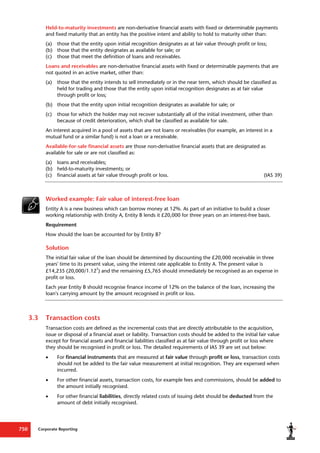
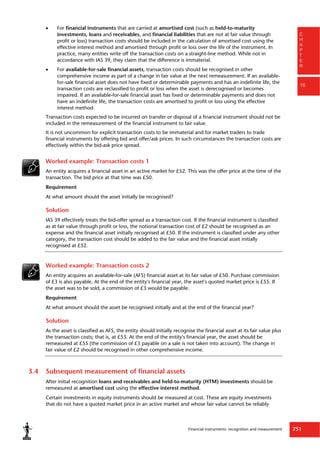
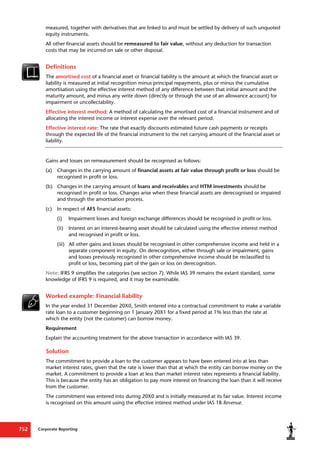
  • 2.
    Your digital treasures(PDF, ePub, MOBI) await Download instantly and pick your perfect format... Read anywhere, anytime, on any device! ICAEW Corporate Reporting Study Manual 2018th Edition Icaew https://textbookfull.com/product/icaew-corporate-reporting-study- manual-2018th-edition-icaew/ textbookfull.com ICAEW Accounting Study Manual 2020 Thirteenth Edition Institute Of Chartered Accountants In England And Wales https://textbookfull.com/product/icaew-accounting-study- manual-2020-thirteenth-edition-institute-of-chartered-accountants-in- england-and-wales/ textbookfull.com Corporate Financial Reporting and Analysis: A Global Perspective 4th Edition S. David Young https://textbookfull.com/product/corporate-financial-reporting-and- analysis-a-global-perspective-4th-edition-s-david-young/ textbookfull.com Wiley Cpaexcel Exam Review 2018 Study Guide Financial Accounting And Reporting wiley Cpa Exam Review Financial Accounting And Reporting 1st Edition Wiley https://textbookfull.com/product/wiley-cpaexcel-exam- review-2018-study-guide-financial-accounting-and-reporting-wiley-cpa- exam-review-financial-accounting-and-reporting-1st-edition-wiley/ textbookfull.com
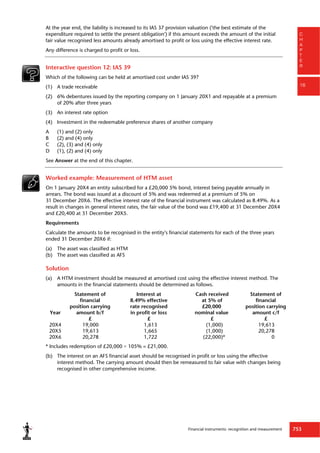
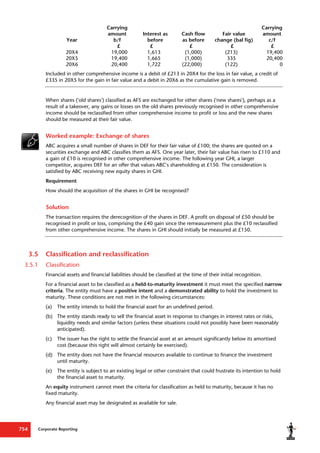
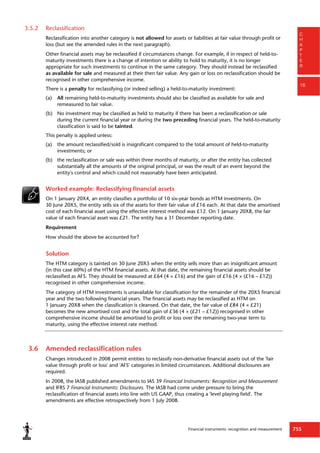
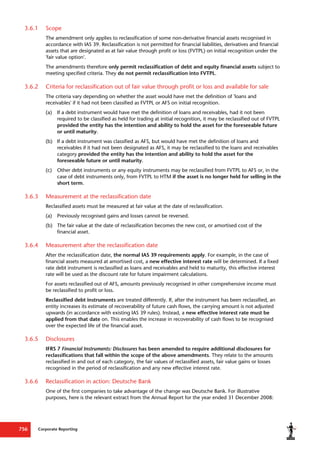
  • 3.
    Oslo Manual 2018Guidelines for collecting reporting and using data on innovation 4th Edition Oecd https://textbookfull.com/product/oslo-manual-2018-guidelines-for- collecting-reporting-and-using-data-on-innovation-4th-edition-oecd/ textbookfull.com Integrated Reporting and Corporate Governance: Boards, Long-Term Value Creation, and the New Accountability 1st Edition Laura Girella https://textbookfull.com/product/integrated-reporting-and-corporate- governance-boards-long-term-value-creation-and-the-new- accountability-1st-edition-laura-girella/ textbookfull.com Australian taxation study manual 2018 questions and suggested solutions Devos https://textbookfull.com/product/australian-taxation-study- manual-2018-questions-and-suggested-solutions-devos/ textbookfull.com Study Guide and Solutions Manual for Organic Chemistry 5th Edition Maitland Jones Jr. https://textbookfull.com/product/study-guide-and-solutions-manual-for- organic-chemistry-5th-edition-maitland-jones-jr/ textbookfull.com The Discrete Math Workbook A Companion Manual for Practical Study Sergei Kurgalin https://textbookfull.com/product/the-discrete-math-workbook-a- companion-manual-for-practical-study-sergei-kurgalin/ textbookfull.com
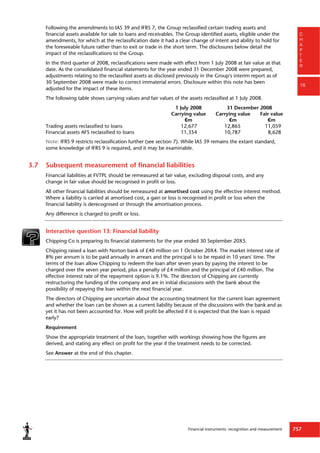
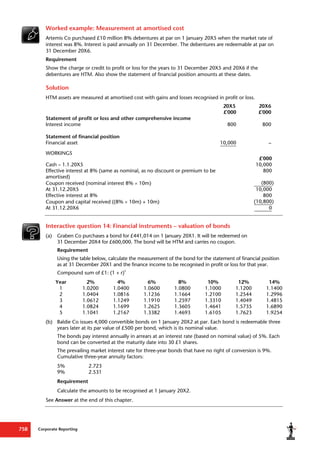
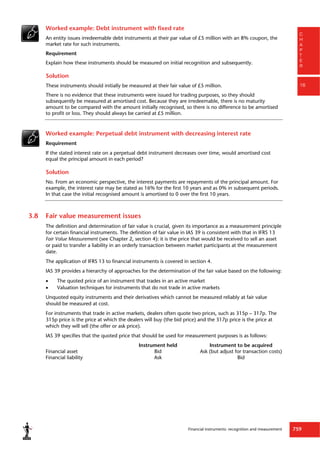
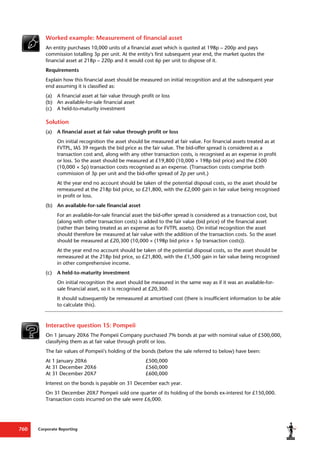
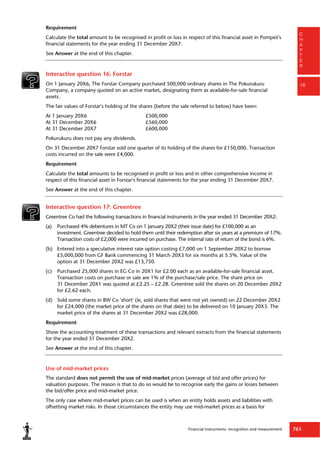
  • 5.
    733 CHAPTER 16 Financial instruments: recognitionand measurement Introduction Topic List 1 Introduction and overview of earlier studies 2 Recognition and derecognition 3 Measurement and impairment 4 Application of IFRS 13 to financial instruments 5 Derivatives 6 Embedded derivatives 7 IFRS 9 Financial Instruments and current developments Summary and Self-test Technical reference Answers to Interactive questions Answers to Self-test
  • 6.
    Corporate Reporting 734 Introduction Learning objectivesTick off  Determine and calculate how different bases for recognising, measuring and classifying financial assets and financial liabilities can impact upon reported performance and position  Evaluate the impact of accounting policies and choice in respect of financing decisions for example hedge accounting and fair values  Explain and appraise accounting standards that relate to an entity's financing activities which include: financial instruments; leasing; cash flows; borrowing costs; and government grants  Identify and explain current and emerging issues in corporate reporting Specific syllabus references for this chapter are: 1(e), 4(a), 4(c), 4(d)
  • 7.
    Financial instruments: recognitionand measurement 735 C H A P T E R 16 1 Introduction and overview of earlier studies Section overview  This section gives a chapter overview and summarises the material covered at Professional Level in order to consolidate student knowledge before more advanced issues are covered.  IAS 39 Financial Instruments: Recognition and Measurement – A financial instrument should initially be measured at fair value, usually including transaction costs. – Subsequent remeasurement depends on how the financial asset or financial liability is classified. – Financial assets and liabilities should be measured either at fair value or at amortised cost. – IAS 39 contains detailed requirements regarding the derecognition of financial instruments. – Financial assets (other than assets recognised at fair value through profit or loss, and fair value can be measured reliably) should be reviewed at each reporting date for objective evidence of impairment.  IFRS 9 Financial Instruments – Simplifies the requirements of IAS 39. – Issued in 2014, but IAS 39 remains the main examinable standard on recognition and measurement of financial instruments. However, it is important to have an awareness of IFRS 9, particularly in terms of how future accounting periods may be affected. 1.1 Introduction The purpose of this chapter is to provide thorough coverage of the accounting treatment of financial instruments. The main presentation and disclosure requirements as detailed in IAS 32 Financial Instruments: Presentation and IFRS 7 Financial Instruments: Disclosures together with certain aspects of recognition and measurement of IAS 39 Financial Instruments: Recognition and Measurement have already been covered at Professional Level. This chapter extends the coverage of recognition and derecognition of financial assets and liabilities, and their initial and subsequent measurement and impairment, and finally discusses particular issues relating to the definition of derivatives and the accounting treatment of derivatives and embedded derivatives. 1.2 Summary of material covered at Professional Level The accounting treatment of financial instruments is covered at Professional Level. The emphasis at that level is on presentation and disclosure and less on recognition and measurement. The main points covered at Professional Level can be summarised as follows: (a) A financial instrument is any contract that gives rise to a financial asset of one entity and a financial liability or equity instrument of another entity. (b) An equity instrument is any contract that evidences a residual interest in the assets of another entity after deducting all of its liabilities. (c) A financial asset is any asset that is cash, an equity instrument of another entity, a contract that (subject to certain conditions) will or may be settled in the entity's own equity instruments or a contractual right: (i) to receive cash or another financial asset from another entity; or (ii) to exchange financial assets or financial liabilities with another entity under conditions that are potentially favourable to the entity.
  • 8.
    Corporate Reporting 736 (d) Financialassets are classified into one of four categories:  Financial assets at fair value through profit or loss  Held-to-maturity investments  Loans and receivables  Available-for-sale financial assets (e) A financial liability is any liability that is a contract that (subject to certain conditions) will or may be settled in the entity's own equity instruments or a contractual obligation: (i) To deliver cash or another financial asset to another entity; or (ii) To exchange financial assets or financial liabilities with another entity under conditions that are potentially unfavourable to the entity. (f) Financial liabilities are classified into one of two categories:  Financial liabilities at fair value through profit or loss  Other financial liabilities (g) A derivative is a financial instrument or other contract (such as an option) with all three of the following characteristics: (i) Its value changes in response to the change in a specified interest rate, financial instrument price, commodity price, foreign exchange rate, index of prices or rates, credit rating or credit index, or other variable, provided in the case of a non-financial variable that the variable is not specific to a party to the contract (sometimes called the 'underlying'). (ii) It requires no initial net investment or an initial net investment that is smaller than would be required for other types of contracts that would be expected to have a similar response to changes in market factors. (iii) It is settled at a future date. (h) At the time it issues a financial instrument, an entity should classify it or its component parts according to the substance of the contract under which it is being issued. (i) A compound financial instrument (that is, one that has features of both debt and equity) should be split into its component parts according to their substance at the date that it is issued. (j) Interest, dividends, losses or gains relating to a financial instrument (or a component) that is a financial liability should be recognised as income or expense in profit or loss. (k) Dividend distributions paid to holders of an equity instrument should be debited directly to equity, net of any related income tax benefit. These should be presented in the statement of changes in equity. (l) If an entity reacquires its own shares ('treasury shares'), the amount paid should be deducted directly from equity and no gain or loss should be recognised on the transaction. (m) A financial asset or a financial liability should be recognised when an entity becomes a party to the contractual provisions of the instrument. (n) Financial assets and financial liabilities should generally be presented as separate items in the statement of financial position. No offsetting is allowed except where it is required because an entity has a legally enforceable right to set off recognised amounts and the entity intends to settle on a net basis, or to realise the asset and settle the liability simultaneously. (o) Financial assets and financial liabilities should be initially recognised at fair value plus or minus, in certain circumstances, any directly attributable transaction costs, such as fees. (p) A financial asset should be derecognised when the contractual rights to the cash flows from the asset expire or the entity transfers the rights to those cash flows in such a way that it transfers substantially all the risks and rewards of ownership. A financial liability should be derecognised where an entity discharges the obligations in a contract or the obligations expire. (q) Written explanations as well as numerical disclosures are required to provide users of the financial statements with an understanding of the effect the financial instruments have had on an entity's financial position and performance, and the nature and extent of risks arising from the financial instruments.
  • 9.
    Financial instruments: recognitionand measurement 737 C H A P T E R 16 Interactive question 1: Classification of equity instruments Are there circumstances in which an investment in equity should be classified as a held-to-maturity investment? See Answer at the end of this chapter. Interactive question 2: Classification During the financial year ended 28 February 20X5, Dennis issued the two financial instruments described below. Requirement For each of the instruments, identify whether it should be classified as a financial liability or as part of equity, explaining the reason for your choice. (a) Redeemable preference shares with a coupon rate of 8%. The shares are redeemable on 28 February 20X9 at a premium of 10%. (b) A grant of share options to senior executives. The options may be exercised from 28 February 20X8. See Answer at the end of this chapter. Interactive question 3: Transactions covered by IAS 39 Should the following be recognised under IAS 39? (a) A guarantee to replace or repair goods sold by a business in the normal course of business (b) A firm commitment (order) to purchase a specific quantity of cocoa beans for use in manufacturing (c) A forward contract to purchase cocoa beans at a specified price and quantity on a specified date See Answer at the end of this chapter. 1.3 Overview of accounting treatment of financial assets and liabilities IAS 39 follows a mixed measurement model under which some financial instruments are carried at fair value while others are carried at amortised cost, and some gains or losses are recognised in profit or loss and others in other comprehensive income. The following two tables summarise the accounting treatment of each category of financial asset and financial liability under IAS 39, provided they have not been designated as hedged items. The accounting treatment of hedged items follows different rules and these are discussed in the next chapter. Summary of accounting treatment of assets Asset category Description Measurement after initial recognition Gains and losses Financial assets at fair value through profit or loss Any financial asset which is held for the purpose of selling in the short term (held for trading) or, in limited circumstances, is designated under this heading. Fair value In profit or loss
  • 10.
    Corporate Reporting 738 Asset category Description Measurement afterinitial recognition Gains and losses Available-for-sale financial assets Non-derivative financial assets designated as available for sale or not classified under any of the other three headings. Fair value In other comprehensive income, except that investment income, impairment losses and foreign exchange gains and losses are in profit or loss Loans and receivables Non-derivative financial assets with fixed or determinable payments that are:  Not quoted in an active market  Not designated as at fair value through profit or loss  Not held for trading or designated as available for sale (ie, loans and receivables are none of the above) Amortised cost In profit or loss Held-to-maturity investments Non-derivative financial assets with fixed or determinable payments and fixed maturity that an entity has the positive intention and ability to hold to maturity and are not designated/classified under any of the other three headings. Amortised cost In profit or loss Note: These categories are simplified under IFRS 9 (see section 7). It is important to have an awareness of IFRS 9, but IAS 39 remains the main examinable standard, so the IAS 39 categories should be used in questions unless asked specifically for the IFRS 9 ones. Interactive question 4: Convertible bonds RP issued £4 million 5% convertible bonds on 1 October 20X8 for £3.9 million. The bonds have a four year term and are redeemable at par. At the time the bonds were issued the prevailing market rate for similar debt without conversion rights was 7%. The effective interest rate associated with the bonds is 7% and the liability is measured, in accordance with IAS 39 Financial Instruments: Recognition and Measurement, at amortised cost. The interest due was paid and recorded within finance costs during the year. Requirement Prepare the accounting entries to record the issue of the convertible bonds and to record the adjustment required in respect of the interest expense on the bonds for the year ended 30 September 20X9. See Answer at the end of this chapter.
  • 11.
    Financial instruments: recognitionand measurement 739 C H A P T E R 16 Interactive question 5: Classification and measurement Financial instrument (a) DG acquired 500,000 shares in HJ, a listed entity, for £3.50 per share on 28 May 20X9. The costs associated with the purchase were £15,000 and were included in the cost of the investment. The directors plan to realise this investment before the end of 20X9. The investment was designated on acquisition as held for trading. There has been no further adjustment made to the investment since the date of purchase. The shares were trading at £3.65 each on 30 June 20X9. Financial instrument (b) DG purchased a bond with a par value of £5 million on 1 July 20X8. The bond carries a 5% coupon, payable annually in arrears and is redeemable on 30 June 20Y3 at £5.8 million. DG fully intends to hold the bond until the redemption date. The bond was purchased at a 10% discount. The effective interest rate on the bond is 10.26%. The interest due for the year was received and credited to investment income in the statement of profit or loss. Requirement Explain how financial instruments (a) and (b) should be classified, initially measured and subsequently measured. Prepare any journal entries required to correct the accounting treatment for the year to 30 June 20X9. See Answer at the end of this chapter. Interactive question 6: Recording and measurement (a) MNB acquired an investment in a debt instrument on 1 January 20X0 at its par value of £3 million. Transaction costs relating to the acquisition were £200,000. The investment earns a fixed annual return of 6%, which is received in arrears. The principal amount will be repaid to MNB in four years' time at a premium of £400,000. The investment has been correctly classified as held to maturity. The investment has an effective interest rate of approximately 7.05%. Requirement (i) Explain how this financial instrument will be initially recorded and subsequently measured in the financial statements of MNB, in accordance with IAS 39 Financial Instruments: Recognition and Measurement. (ii) Calculate the amounts that would be included in MNB's financial statements for the year to 31 December 20X0 in respect of this financial instrument. (b) MNB acquired 100,000 shares in AB on 25 October 20X0 for £3 per share. The investment resulted in MNB holding 5% of the equity shares of AB. The related transaction costs were £12,000. AB's shares were trading at £3.40 on 31 December 20X0. The investment has been classified as held for trading. Requirement Prepare the journal entries to record the initial and subsequent measurement of this financial instrument in the financial statements of MNB for the year to 31 December 20X0. See Answer at the end of this chapter.
  • 12.
    Corporate Reporting 740 Interactive question7: Bonds and shares (a) QWE issued 10 million 5% five-year convertible £1 bonds on 1 January 20X0. The proceeds of £10 million were credited to non-current liabilities and debited to bank. The 5% interest paid has been charged to finance costs in the year to 31 December 20X0. The market rate of interest for a similar bond with a five-year term but no conversion terms is 7%. Requirement Explain and demonstrate how this convertible instrument would be initially measured in accordance with IAS 32 Financial Instruments: Presentation and subsequently measured in accordance with IAS 39 Financial Instruments: Recognition and Measurement in the financial statements for the year ended 31 December 20X0. (b) The directors of QWE want to avoid increasing the gearing of the entity. They plan to issue 5 million 6% cumulative redeemable £1 preference shares in 20X1. Requirement Explain how the preference shares would be classified in accordance with IAS 32 Financial Instruments: Presentation, and the impact that this issue will have on the gearing of QWE. See Answer at the end of this chapter. Interactive question 8: Bonds The Myntech Company issued 100,000, £1,000 par value bonds to the market at par on 1 July 20X0. The bonds pay a semi-annual rate of interest of 3% based on nominal value. Interest payments are made on 31 December and 30 June. The financial institution that organised the placement charged £80,000 and there were other associated fees that amounted to £20,000. The effective semi-annual return on the bonds, taking into account the issue costs, has been calculated at 3.0117%. The bonds are quoted on a public stock exchange and, due to a persistent rise in market interest rates, were quoted at £996.40 on 31 December 20X0 and £989.50 on 31 December 20X1. Requirement Calculate the carrying amount of the bonds in the financial statements of Myntech as at 31 December 20X1. Present your answer to the nearest £1,000. See Answer at the end of this chapter. Summary of accounting treatment of liabilities Liability category Description Measurement after initial recognition Gains and losses Financial liabilities at fair value through profit or loss Any financial liability which is held for the purpose of selling in the short term (held for trading) or, in limited circumstances, is designated under this heading. Fair value In profit or loss Other liabilities Financial liabilities that are not classified as at fair value through profit or loss. Amortised cost In profit or loss
  • 13.
    Financial instruments: recognitionand measurement 741 C H A P T E R 16 2 Recognition and derecognition Section overview This section deals with certain aspects of recognition and derecognition and includes the guidelines of the standard. 2.1 Introduction IAS 39 requires that a financial asset or a financial liability should be recognised by an entity in its statement of financial position when the entity becomes a party to the contractual provisions of the financial asset or financial liability. IAS 39 also requires that a financial asset or financial liability should be derecognised; that is, removed, from an entity's statement of financial position, when the entity ceases to be a party to the financial instrument's contractual provisions. The recognition of financial instruments is in general more straightforward than derecognition and IAS 39 pays more attention to establishing rules for the latter. 2.2 Initial recognition In most cases, the date on which an entity becomes a party to a financial instrument's contractual obligations is fairly obvious. For example, unconditional receivables are recognised as assets when an entity acquires the legal right to receive cash. An important consequence of recognition on becoming party to contractual provisions is that all derivatives should be recognised in the statement of financial position. When an entity enters into a derivative transaction involving a contract that is recognised under IAS 39 as a financial instrument, it should be recognised when the entity enters into the contract, not when the transaction stipulated by the derivative contract occurs. For example, the purchase of a six-month forward contract with a zero fair value at its inception exposes the entity to risks and rewards due to changes in the value of the underlying and it should therefore be recognised when the contract is initiated. 2.3 Regular way transactions Most financial markets set out regulations for 'regular way' transactions whereby purchases and sales are contractually deliverable (and therefore settled) on a specified date. Settlement date is later than the contractual date of the transaction (the 'trade date'). A regular way purchase or sale is the acquisition or disposal of a financial asset under a contract requiring delivery within a specified time frame. The time frame may be established through regulation or simply convention in the market. Regular way purchases and sales of financial instruments should be recognised using either the trade date or the settlement date. The method chosen should be applied consistently for each of the four classes of financial asset. A contract for a derivative is not a regular way contract since it can be settled on a net basis. For purchases, trade date accounting requires the recognition of an asset and the liability to pay for it at the trade date. After initial recognition the financial asset is subsequently measured either at amortised cost or at fair value depending on its initial classification. For sales of financial assets, the asset is derecognised and the receivable from the buyer together with any gain or loss on disposal are recognised on the trade date. With settlement date accounting, an asset purchased is not recognised until the date on which it is received. Movements in fair value of the contract between the trade date and settlement date are recognised in the same way as the acquired asset. That is, for assets carried at cost or amortised cost, the change in value is not recognised; for assets classified as assets at fair value through profit or loss, the change is recognised in profit or loss; and for available-for-sale assets, the change is recognised in other comprehensive income. For sales of financial instruments, the asset is derecognised and the
  • 14.
    Corporate Reporting 742 receivable fromthe buyer, together with any gain or loss on disposal, are recognised on the day that it is delivered by the entity. Any change in the fair value of the asset between the trade date and settlement date is not recognised, as the sale price is agreed at the trade date, making subsequent changes in fair value irrelevant from the seller's perspective. Worked example: Regular way purchase of a financial asset An entity entered into a contractual commitment on 27 December 20X4 to purchase a financial asset for £1,000. On 31 December 20X4, the entity's reporting date, the fair value was £1,005. The transaction was settled on 5 January 20X5 when the fair value was £1,007. The entity has classified the asset as at fair value through profit or loss. Requirement How should the transactions be accounted for under trade date accounting and settlement date accounting? Solution Trade date accounting  On 27 December 20X4, the entity should recognise the financial asset and the liability to the counterparty at £1,000.  At 31 December 20X4, the financial asset should be remeasured to £1,005 and a gain of £5 recognised in profit or loss.  On 5 January 20X5, the liability to the counterparty of £1,000 will be paid in cash. The fair value of the financial asset should be remeasured to £1,007 and a further gain of £2 recognised in profit or loss. Settlement date accounting  No transaction should be recognised on 27 December 20X4.  On 31 December 20X4, a receivable of £5 should be recognised (equal to the fair value movement since the trade date) and the gain recognised in profit or loss.  On 5 January 20X5, the financial asset should be recognised at its fair value of £1,007. The receivable should be derecognised, the payment of cash to the counterparty recognised and the further gain of £2 recognised in profit or loss. Interactive question 9: Regular way sale of a financial asset An entity acquired an asset on 1 January 20X4 for £1,000. On 27 December 20X4, it entered into a contract to sell the asset for £1,100. On 31 December 20X4, the entity's reporting date, the fair value of the asset was £1,104. The transaction was settled on 5 January 20X5. The entity classified the asset as available for sale. Requirement How should the transactions be accounted for under trade date accounting and settlement date accounting? See Answer at the end of this chapter. In practice, many entities use settlement date accounting but apply it to the actual date of settlement rather than when payment is due.
  • 15.
    Financial instruments: recognitionand measurement 743 C H A P T E R 16 2.4 Derecognition of financial assets 2.4.1 Criteria for derecognition Derecognition is the removal of a previously recognised financial instrument from an entity's statement of financial position. An entity should derecognise a financial asset when: (a) the contractual rights to the cash flows from the financial asset expire; or (b) the entity transfers substantially all the risks and rewards of ownership of the financial asset to another party. Derecognition of a financial asset is often straightforward, as the above criteria can be implemented easily. For example, a trade receivable should be derecognised when an entity collects payment. The collection of payment signifies the end of any exposure to risks or any continuing involvement. However, more complex transactions may involve the transfer of legal title to another entity but only a partial transfer of risks and rewards, so that the original owner of the asset is still exposed to some of the risks and rewards of owning the asset. This is discussed further below. Worked example: Risks and rewards Can you think of an example of a sale of a financial asset in which: (a) An entity has transferred substantially all the risks and rewards of ownership? (b) An entity has retained substantially all the risks and rewards of ownership? Solution IAS 39 includes the following examples: (a) (i) An unconditional sale of a financial asset (ii) A sale of a financial asset together with an option to repurchase the financial asset at its fair value at the time of repurchase; because any repurchase is at the then fair value, all risks and rewards of ownership are with the buying party (b) (i) A sale and repurchase transaction where the repurchase price is a fixed price or at the sale price plus a lender's return (ii) A sale of a financial asset together with a total return swap that transfers the market risk exposure back to the entity 2.4.2 Accounting treatment On derecognition of a financial asset the difference between the carrying amount and any consideration received should be recognised in profit or loss. Any accumulated gains or losses that have been recognised in other comprehensive income should also be reclassified to profit or loss on derecognition of the asset. Worked example: Derecognition The Polyact Company purchased £60,000 of shares, which were classified as held for trading. Later that year Polyact sold 50% of the shares for £40,000. Requirement What is the amount of the gain or loss on the disposal to be recognised in profit or loss? Solution On derecognition of a financial asset the difference between the carrying amount and any consideration received should be recognised in profit or loss. On the assumption that the asset was not remeasured during the year, the carrying amount of 50% of the asset is £30,000. The proceeds from the sale of 50% of the asset are £40,000, yielding a gain of £10,000 to be recognised in profit or loss.
  • 16.
    Corporate Reporting 744 2.4.3 TheIAS 39 derecognition steps The complexity of financial transactions and the difficulty of establishing whether the transfer of legal title leaves residual risk and reward exposure as well as control and involvement has prompted the IASB to produce a fairly prescriptive set of rules to aid companies in the derecognition of financial assets. The following flowchart is included in the application guidance which accompanies IAS 39 as an integral part of the standard. It summarises the evaluation of whether, and to what extent, a financial asset should be derecognised. Consolidate all subsidiaries (including any SPE) Determine whether the derecognition principles below are applied to a part or all of an asset (or group of similar assets) Have the rights to the cash flows from the asset expired? Has the entity transferred its right to receive the cash flows from the asset? Has the entity assumed an obligation to pay the cash flows from the asset? Has the entity transferred substantially all risks and rewards? Has the entity retained substantially all risks and rewards? Has the entity retained control of the asset? Continue to recognise the asset to the extent of the entity’s continued involvement Continue to recognise the asset Derecognise the asset Continue to recognise the asset Derecognise the asset Yes Yes Yes Yes No No No No No No Yes Yes Derecognise the asset Figure 16.1: Derecognition
  • 17.
    Financial instruments: recognitionand measurement 745 C H A P T E R 16 The following points relate to this flowchart: (a) If the contractual rights to receive the cash flows from the asset have expired or have been wholly transferred, the whole of the asset should be derecognised. This is also the case if the contractual rights have been retained by the entity but it has assumed a contractual obligation to pay the cash flows to one or more recipients. Such an obligation is only assumed if: (i) there is no obligation to pay unless amounts are actually collected; (ii) the entity is forbidden to sell or pledge the original asset other than to the recipient of the cash flows; and (iii) the entity must remit the cash flows collected without material delay. (b) If an entity has sold just a portion of the cash flows arising from an asset, only part of the asset should be derecognised. (c) If substantially all the risks and rewards of ownership have been transferred, the financial asset should be derecognised; if they have not, it should not. (d) If the entity has neither retained nor transferred all the risks and rewards of ownership, it should determine whether it has retained control of the financial asset. If it has, it continues to recognise the asset to the extent of its continuing involvement. Some common transactions, such as repurchase agreements, factoring and securitisations, that are employed in order to try to remove assets from the statement of financial position are discussed below. Remember always to apply the principle of substance over form. 2.4.4 Repurchase agreements In a repurchase agreement, a financial asset such as a bond is sold with a simultaneous agreement to buy it back at some future date at a specified price, which may be the future market price. Illustration: Derecognition of repurchase agreement An entity sold an equity investment classified as available for sale to a counterparty for £840. The entity had previously recognised a gain of £100 in other comprehensive income in respect of this investment and reclassified this £100 gain from other comprehensive income to profit or loss. On the same date it entered into a 60-day contract to repurchase the equity investment from the counterparty for £855 less any equity distributions received by the counterparty during the 60-day period. The substance of the transaction is that the risks and rewards of ownership have not been transferred, because in effect the proceeds of the sale are collateralised borrowing. The entity should recognise a financial liability of £840 when it receives the cash from the 'sale'. The £100 gain should not be reclassified from other comprehensive income. The premium on repurchase of £15 should be recognised as a finance cost in profit or loss over the 60-day period. 2.4.5 Factoring Factoring activity tends to increase as banks become reluctant to lend. This has been the case since the credit crunch of 2008, continuing to the present day. In a factoring transaction, one party transfers the right to some receivables to another party for an immediate cash payment. Factoring arrangements are either with recourse or without recourse. (a) In factoring without recourse, the transferor does not provide any guarantees about the performance of the receivables. In such a transaction the entity has transferred the risks and rewards of ownership and should derecognise the receivables. (b) In factoring with recourse, the transferor fully or partially guarantees the performance of the receivables. The transferor has not therefore transferred fully the risks to another party. In most factoring with recourse transactions, the transferor does not allow the transferee to sell the receivables, in which case the transferor still retains control over the asset. In this case the criteria for derecognition are not satisfied and the asset should not be derecognised.
  • 18.
    Corporate Reporting 746 Illustration: Factoringwithout recourse Entity A carries in its statement of financial position receivables measured at £10 million. It sells the receivables in a factoring transaction without recourse to Entity B for £8.5 million of cash. Entity A should derecognise the receivables, as it has transferred the risks and rewards to Entity B. The loss of £1.5 million should be recognised in profit or loss. Illustration: Factoring with full recourse Entity A carries in its statement of financial position receivables measured at £10 million. It sells the receivables in a factoring transaction with full recourse to Entity B for £8.5 million of cash. Entity A guarantees to reimburse Entity B in cash if the receivables realise less than £8.5 million. In this example Entity A has transferred the right to receive the receivables to Entity B but it has not transferred all the risks. The asset should not be derecognised. The cash received should be credited to a liability account (in essence a loan from the factor). 2.4.6 Securitisations Securitisation is the process whereby an originator packages pools of, for instance, loans, receivables or the rights to future income streams that it owns and then sells the packages. Investors buy the repackaged assets by providing finance in the form of securities or loans which are secured on the underlying pool and its associated income stream. Securitisation thereby converts the originator's illiquid assets into liquid assets. Illustration: Securitisation Some football clubs have needed to raise cash quickly to buy players. They have therefore obtained immediate cash which has been securitised to the lender by the rights to the income from the first tranche of future season ticket sales. Another example is a bank that has extended mortgages to individuals. It will receive cash flows in future in the form of interest payments. However, it cannot demand early repayment of the mortgages. If, however, it sells the rights to the interest cash flows from the mortgages to a third party, it could convert the income stream into an immediate lump sum (therefore, receiving today the present value of a future cash flow). Securitisation often involves the use of a structured entity (SE) to acquire the originator's receivables or loans. The SE issues debt to third parties to raise the finance to repay the originator. Illustration: Structured entities The banking crisis of 2008 was caused partly by securitisation of sub-prime mortgages and the use of structured entities. Whether the securitised assets will be derecognised depends on whether the SE has assumed all the risks and rewards of the ownership of the assets and whether the originator has ceded control of the assets to the SE. If the SE is a mere extension of the originator and it continues to be controlled by the originator, then the SE should be consolidated and any securitised assets should continue to be recognised in the group accounts. Securitisation will not in this case lead to derecognition. Even when the SE is not controlled by the originator, the risks and rewards of ownership will not have passed completely to the SE if the lenders to the SE require recourse to the originator to provide security for their debt.
  • 19.
    Financial instruments: recognitionand measurement 747 C H A P T E R 16 A key aspect of whether risk is transferred would be whether the originator retains the risk of bad debts. Thus if the originator sells 90% of a package to the SE and retains 10%, then it is arguable that substantially all risks and rewards of ownership have been transferred. If, however, the originator transfers the 90% package but agrees to retain all the bad debt risk of the entire portfolio, then risks and rewards have not been transferred and the loan package should not be derecognised. The derecognition criteria will be met if the SE is not under the control of the originator and there are no guarantees provided by the originator. In this case the derecognition takes the package of loans out of the group accounts and the group recognises cash received instead. The benefit then is that it improves the credit rating of the originator, as cash is a better asset than the package of mortgages. Securitisation has had a bad name since 2008, when the repackaging of sub-prime loans was partly responsible for the crises in some US banks. 2.5 Derecognition of financial liabilities The principle remains that the substance of transactions should be accounted for, not just their form. An entity should derecognise a financial liability when it is extinguished ie, when the obligation specified in the contract is discharged or cancelled or expires. Illustration: Extinguishing a financial liability Entity A has borrowed £10 million from a bank to invest in commercial development. However, due to the recession the shops built did not yield the expected rental income and Entity A cannot service the debt. It negotiates with the bank to transfer the ownership of the development to the bank in settlement of the outstanding debt. The market value of the development is £7 million. The development's carrying amount was £7 million as it was measured at fair value. As a result of the transfer, Entity A should extinguish the liability but it should also recognise a gain of £3 million in profit or loss, arising from the difference between the carrying amount of the liability (£10m) and the value of the development (£7m) that was transferred to the bank. 2.6 Partial derecognition of financial assets and financial liabilities It is possible for only part of a financial asset or liability to be derecognised. This is the case if the part comprises: (a) only specifically identified cash flows; or (b) only a fully proportionate (pro rata) share of the total cash flows. For example, if an entity holds a bond, it has the right to two separate sets of cash inflows: those relating to the principal and those relating to the interest. It could sell the right to receive the interest to another party while retaining the right to receive the principal. On derecognition, the amount to be included in profit or loss for the year is calculated as follows: £ £ Carrying amount of asset/liability (or the portion of asset/liability) transferred X Less: Proceeds received/paid X Any cumulative gain or loss on a financial asset recognised in other comprehensive income X (X) Difference to profit or loss X Where only part of a financial asset is derecognised, the carrying amount of the asset should be allocated between the part retained and the part transferred based on their relative fair values on the date of transfer. A gain or loss should be recognised based on the proceeds for the portion transferred.
  • 20.
    Corporate Reporting 748 Interactive question10: Sale of cash flows debt instrument During the year ended 31 December 20X0, Jones sold to a third party the right to receive the interest cash flows on a fixed maturity debt instrument it holds and will continue to legally own up to the date of maturity. The debt instrument is quoted in an active stock market. The entity has no obligation to compensate the third party for any cash flows not received. Requirement Discuss whether the debt instrument should be derecognised. See Answer at the end of this chapter. Interactive question 11: Derecognition of financial assets and liabilities Discuss whether the following financial instruments should be derecognised. (a) AB Co sells an investment in shares, but retains a call option to repurchase those shares at any time at a price equal to the market value current at the date of repurchase. (b) CD Co sells an investment in shares and enters into a 'total return swap' with the buyer. Under a 'total return swap' arrangement, the buyer returns any increases in value to the seller, and the seller compensates the buyer for any decrease in value plus interest. (c) EF Co enters into a stocklending agreement where an investment is lent to a third party for a fixed period of time for a fee. (d) GH Co sells title to some of its receivables to a debt factor for an immediate cash payment of 90% of their value. The terms of the agreement are that GH Co has to compensate the factor for any amounts not recovered by the factor after six months. See Answer at the end of this chapter. 2.7 Exchange or modification of debt If a new loan is agreed between a borrower and a lender, or the two parties agree revised terms for an existing loan, the accounting depends on whether the original liability should be derecognised and a new liability recognised, or whether the original liability should be treated as modified. A new liability should be recognised if the new terms are substantially different from the old terms. The terms are substantially different if the present value of the cash flows under the new terms, including any fees payable/receivable, discounted at the original effective interest rate, is 10% or more different from the present value of the remaining cash flows under the original terms. There is said to be an 'extinguishment' of the old liability. In these circumstances:  The difference between the carrying amount extinguished and the consideration paid should be recognised in profit or loss.  The fees payable/receivable should be recognised as part of that gain or loss. If the difference between the two present values is below this cut-off point, there is said to be a modification of the terms. In these circumstances:  The existing liability is not derecognised.  Its carrying amount is adjusted by the fees payable/receivable and amortised over the remaining term of the modified liability.
  • 21.
    Financial instruments: recognitionand measurement 749 C H A P T E R 16 3 Measurement and impairment Section overview This section deals with certain aspects of initial and subsequent measurement of financial instruments, especially the treatment of transaction costs and of valuation methods when fair values are not available. 3.1 Introduction It was noted earlier that financial assets and financial liabilities should initially be measured at fair value (cost). Subsequently:  Financial assets should be remeasured to fair value, unless they are loans and receivables, held-to- maturity investments or financial assets whose value cannot be reliably measured.  Financial liabilities should be remeasured to amortised cost unless they are at fair value through profit or loss. Note: IFRS 9 modifies the rules (see section 7) but IAS 39 remains the extant standard, so you need to know the IAS 39 rules. 3.2 Initial measurement Financial instruments should initially be measured at the fair value of the consideration given or received (ie, cost) plus (in most cases) transaction costs that are directly attributable to the acquisition or issue of the financial instrument. The exception to this rule is where a financial instrument is at fair value through profit or loss. In this case transaction costs are immediately recognised in profit or loss. The fair value of the consideration is normally the transaction price or market prices. If market prices are not reliable, the fair value may be estimated using a valuation technique (for example, by discounting cash flows). The categories for financial instruments are important because they determine how a particular instrument should be measured subsequent to initial recognition. The definitions given in section 1 of this chapter are now set in fuller detail. Definitions A financial asset or liability at fair value through profit or loss is one which meets either of the following conditions: (a) It is classified as held for trading. A financial asset or liability is classified as held for trading if it is: (i) acquired or incurred principally for the purpose of selling or repurchasing it in the near term; (ii) part of a portfolio of identified financial instruments that are managed together and for which there is evidence of a recent actual pattern of short-term profit-taking; or (iii) a derivative (unless it is a designated and effective hedging instrument – see the next chapter). (b) Upon initial recognition it is designated by the entity as at fair value through profit or loss. An entity may only use this designation in severely restricted circumstances ie,: (i) where it eliminates or significantly reduces a measurement or recognition inconsistency ('accounting mismatch') that would otherwise arise; and (ii) where a group of financial assets/liabilities is managed and its performance is evaluated on a fair value basis.
  • 22.
    Corporate Reporting 750 Held-to-maturity investmentsare non-derivative financial assets with fixed or determinable payments and fixed maturity that an entity has the positive intent and ability to hold to maturity other than: (a) those that the entity upon initial recognition designates as at fair value through profit or loss; (b) those that the entity designates as available for sale; or (c) those that meet the definition of loans and receivables. Loans and receivables are non-derivative financial assets with fixed or determinable payments that are not quoted in an active market, other than: (a) those that the entity intends to sell immediately or in the near term, which should be classified as held for trading and those that the entity upon initial recognition designates as at fair value through profit or loss; (b) those that the entity upon initial recognition designates as available for sale; or (c) those for which the holder may not recover substantially all of the initial investment, other than because of credit deterioration, which shall be classified as available for sale. An interest acquired in a pool of assets that are not loans or receivables (for example, an interest in a mutual fund or a similar fund) is not a loan or a receivable. Available-for-sale financial assets are those non-derivative financial assets that are designated as available for sale or are not classified as: (a) loans and receivables; (b) held-to-maturity investments; or (c) financial assets at fair value through profit or loss. (IAS 39) Worked example: Fair value of interest-free loan Entity A is a new business which can borrow money at 12%. As part of an initiative to build a closer working relationship with Entity A, Entity B lends it £20,000 for three years on an interest-free basis. Requirement How should the loan be accounted for by Entity B? Solution The initial fair value of the loan should be determined by discounting the £20,000 receivable in three years' time to its present value, using the interest rate applicable to Entity A. The present value is £14,235 (20,000/1.12 3 ) and the remaining £5,765 should immediately be recognised as an expense in profit or loss. Each year Entity B should recognise finance income of 12% on the balance of the loan, increasing the loan's carrying amount by the amount recognised in profit or loss. 3.3 Transaction costs Transaction costs are defined as the incremental costs that are directly attributable to the acquisition, issue or disposal of a financial asset or liability. Transaction costs should be added to the initial fair value except for financial assets and financial liabilities classified as at fair value through profit or loss where they should be recognised in profit or loss. The detailed requirements of IAS 39 are set out below:  For financial instruments that are measured at fair value through profit or loss, transaction costs should not be added to the fair value measurement at initial recognition. They are expensed when incurred.  For other financial assets, transaction costs, for example fees and commissions, should be added to the amount initially recognised.  For other financial liabilities, directly related costs of issuing debt should be deducted from the amount of debt initially recognised.
  • 23.
    Financial instruments: recognitionand measurement 751 C H A P T E R 16  For financial instruments that are carried at amortised cost (such as held-to-maturity investments, loans and receivables, and financial liabilities that are not at fair value through profit or loss) transaction costs should be included in the calculation of amortised cost using the effective interest method and amortised through profit or loss over the life of the instrument. In practice, many entities write off the transaction costs on a straight-line method. While not in accordance with IAS 39, they claim that the difference is immaterial.  For available-for-sale financial assets, transaction costs should be recognised in other comprehensive income as part of a change in fair value at the next remeasurement. If an available- for-sale financial asset does not have fixed or determinable payments and has an indefinite life, the transaction costs are reclassified to profit or loss when the asset is derecognised or becomes impaired. If an available-for-sale financial asset has fixed or determinable payments and does not have an indefinite life, the transaction costs are amortised to profit or loss using the effective interest method. Transaction costs expected to be incurred on transfer or disposal of a financial instrument should not be included in the remeasurement of the financial instrument to fair value. It is not uncommon for explicit transaction costs to be immaterial and for market traders to trade financial instruments by offering bid and offer/ask prices. In such circumstances the transaction costs are effectively within the bid-ask price spread. Worked example: Transaction costs 1 An entity acquires a financial asset in an active market for £52. This was the offer price at the time of the transaction. The bid price at that time was £50. Requirement At what amount should the asset initially be recognised? Solution IAS 39 effectively treats the bid-offer spread as a transaction cost. If the financial instrument is classified as at fair value through profit or loss, the notional transaction cost of £2 should be recognised as an expense and the financial asset initially recognised at £50. If the instrument is classified under any other category, the transaction cost should be added to the fair value and the financial asset initially recognised at £52. Worked example: Transaction costs 2 An entity acquires an available-for-sale (AFS) financial asset at its fair value of £50. Purchase commission of £3 is also payable. At the end of the entity's financial year, the asset's quoted market price is £55. If the asset was to be sold, a commission of £3 would be payable. Requirement At what amount should the asset be recognised initially and at the end of the financial year? Solution As the asset is classified as AFS, the entity should initially recognise the financial asset at its fair value plus the transaction costs; that is, at £53. At the end of the entity's financial year, the asset should be remeasured at £55 (the commission of £3 payable on a sale is not taken into account). The change in fair value of £2 should be recognised in other comprehensive income. 3.4 Subsequent measurement of financial assets After initial recognition loans and receivables and held-to-maturity (HTM) investments should be remeasured at amortised cost using the effective interest method. Certain investments in equity instruments should be measured at cost. These are equity investments that do not have a quoted market price in an active market and whose fair value cannot be reliably
  • 24.
    Corporate Reporting 752 measured, togetherwith derivatives that are linked to and must be settled by delivery of such unquoted equity instruments. All other financial assets should be remeasured to fair value, without any deduction for transaction costs that may be incurred on sale or other disposal. Definitions The amortised cost of a financial asset or financial liability is the amount at which the financial asset or liability is measured at initial recognition minus principal repayments, plus or minus the cumulative amortisation using the effective interest method of any difference between that initial amount and the maturity amount, and minus any write down (directly or through the use of an allowance account) for impairment or uncollectability. Effective interest method: A method of calculating the amortised cost of a financial instrument and of allocating the interest income or interest expense over the relevant period. Effective interest rate: The rate that exactly discounts estimated future cash payments or receipts through the expected life of the financial instrument to the net carrying amount of the financial asset or liability. Gains and losses on remeasurement should be recognised as follows: (a) Changes in the carrying amount of financial assets at fair value through profit or loss should be recognised in profit or loss. (b) Changes in the carrying amount of loans and receivables and HTM investments should be recognised in profit or loss. Changes arise when these financial assets are derecognised or impaired and through the amortisation process. (c) In respect of AFS financial assets: (i) Impairment losses and foreign exchange differences should be recognised in profit or loss. (ii) Interest on an interest-bearing asset should be calculated using the effective interest method and recognised in profit or loss. (iii) All other gains and losses should be recognised in other comprehensive income and held in a separate component in equity. On derecognition, either through sale or impairment, gains and losses previously recognised in other comprehensive income should be reclassified to profit or loss, becoming part of the gain or loss on derecognition. Note: IFRS 9 simplifies the categories (see section 7). While IAS 39 remains the extant standard, some knowledge of IFRS 9 is required, and it may be examinable. Worked example: Financial liability In the year ended 31 December 20X0, Smith entered into a contractual commitment to make a variable rate loan to a customer beginning on 1 January 20X1 for a fixed period at 1% less than the rate at which the entity (not the customer) can borrow money. Requirement Explain the accounting treatment for the above transaction in accordance with IAS 39. Solution The commitment to provide a loan to the customer appears to have been entered into at less than market interest rates, given that the rate is lower than that at which the entity can borrow money on the market. A commitment to provide a loan at less than market interest rates represents a financial liability. This is because the entity has an obligation to pay more interest on financing the loan than it will receive from the customer. The commitment was entered into during 20X0 and is initially measured at its fair value. Interest income is recognised on this amount using the effective interest method under IAS 18 Revenue.
  • 25.
    Financial instruments: recognitionand measurement 753 C H A P T E R 16 At the year end, the liability is increased to its IAS 37 provision valuation ('the best estimate of the expenditure required to settle the present obligation') if this amount exceeds the amount of the initial fair value recognised less amounts already amortised to profit or loss using the effective interest rate. Any difference is charged to profit or loss. Interactive question 12: IAS 39 Which of the following can be held at amortised cost under IAS 39? (1) A trade receivable (2) 6% debentures issued by the reporting company on 1 January 20X1 and repayable at a premium of 20% after three years (3) An interest rate option (4) Investment in the redeemable preference shares of another company A (1) and (2) only B (2) and (4) only C (2), (3) and (4) only D (1), (2) and (4) only See Answer at the end of this chapter. Worked example: Measurement of HTM asset On 1 January 20X4 an entity subscribed for a £20,000 5% bond, interest being payable annually in arrears. The bond was issued at a discount of 5% and was redeemed at a premium of 5% on 31 December 20X6. The effective interest rate of the financial instrument was calculated as 8.49%. As a result in changes in general interest rates, the fair value of the bond was £19,400 at 31 December 20X4 and £20,400 at 31 December 20X5. Requirements Calculate the amounts to be recognised in the entity's financial statements for each of the three years ended 31 December 20X6 if: (a) The asset was classified as HTM (b) The asset was classified as AFS Solution (a) A HTM investment should be measured at amortised cost using the effective interest method. The amounts in the financial statements should be determined as follows. Statement of financial Interest at 8.49% effective Cash received at 5% of Statement of financial position carrying rate recognised £20,000 position carrying Year amount b/f in profit or loss nominal value amount c/f £ £ £ £ 20X4 19,000 1,613 (1,000) 19,613 20X5 19,613 1,665 (1,000) 20,278 20X6 20,278 1,722 (22,000)* 0 * Includes redemption of £20,000 × 105% = £21,000. (b) The interest on an AFS financial asset should be recognised in profit or loss using the effective interest method. The carrying amount should then be remeasured to fair value with changes being recognised in other comprehensive income.
  • 26.
    Corporate Reporting 754 Carrying amount Interestas Cash flow Fair value Carrying amount Year b/f before as before change (bal fig) c/f £ £ £ £ £ 20X4 19,000 1,613 (1,000) (213) 19,400 20X5 19,400 1,665 (1,000) 335 20,400 20X6 20,400 1,722 (22,000) (122) 0 Included in other comprehensive income is a debit of £213 in 20X4 for the loss in fair value, a credit of £335 in 20X5 for the gain in fair value and a debit in 20X6 as the cumulative gain is removed. When shares ('old shares') classified as AFS are exchanged for other shares ('new shares'), perhaps as a result of a takeover, any gains or losses on the old shares previously recognised in other comprehensive income should be reclassified from other comprehensive income to profit or loss and the new shares should be measured at their fair value. Worked example: Exchange of shares ABC acquires a small number of shares in DEF for their fair value of £100; the shares are quoted on a securities exchange and ABC classifies them as AFS. One year later, their fair value has risen to £110 and a gain of £10 is recognised in other comprehensive income. The following year GHI, a larger competitor, acquires DEF for an offer that values ABC's shareholding at £150. The consideration is satisfied by ABC receiving new equity shares in GHI. Requirement How should the acquisition of the shares in GHI be recognised? Solution The transaction requires the derecognition of the shares in DEF. A profit on disposal of £50 should be recognised in profit or loss, comprising the £40 gain since the remeasurement plus the £10 reclassified from other comprehensive income. The shares in GHI should initially be measured at £150. 3.5 Classification and reclassification 3.5.1 Classification Financial assets and financial liabilities should be classified at the time of their initial recognition. For a financial asset to be classified as a held-to-maturity investment it must meet the specified narrow criteria. The entity must have a positive intent and a demonstrated ability to hold the investment to maturity. These conditions are not met in the following circumstances: (a) The entity intends to hold the financial asset for an undefined period. (b) The entity stands ready to sell the financial asset in response to changes in interest rates or risks, liquidity needs and similar factors (unless these situations could not possibly have been reasonably anticipated). (c) The issuer has the right to settle the financial asset at an amount significantly below its amortised cost (because this right will almost certainly be exercised). (d) The entity does not have the financial resources available to continue to finance the investment until maturity. (e) The entity is subject to an existing legal or other constraint that could frustrate its intention to hold the financial asset to maturity. An equity instrument cannot meet the criteria for classification as held to maturity, because it has no fixed maturity. Any financial asset may be designated as available for sale.
  • 27.
    Financial instruments: recognitionand measurement 755 C H A P T E R 16 3.5.2 Reclassification Reclassification into another category is not allowed for assets or liabilities at fair value through profit or loss (but see the amended rules in the next paragraph). Other financial assets may be reclassified if circumstances change. For example, if in respect of held-to- maturity investments there is a change of intention or ability to hold to maturity, it is no longer appropriate for such investments to continue in the same category. They should instead be reclassified as available for sale and measured at their then fair value. Any gain or loss on reclassification should be recognised in other comprehensive income. There is a penalty for reclassifying (or indeed selling) a held-to-maturity investment: (a) All remaining held-to-maturity investments should also be classified as available for sale and remeasured to fair value. (b) No investment may be classified as held to maturity if there has been a reclassification or sale during the current financial year or during the two preceding financial years. The held-to-maturity classification is said to be tainted. This penalty is applied unless: (a) the amount reclassified/sold is insignificant compared to the total amount of held-to-maturity investments; or (b) the reclassification or sale was within three months of maturity, or after the entity has collected substantially all the amounts of the original principal, or was the result of an event beyond the entity's control and which could not reasonably have been anticipated. Worked example: Reclassifying financial assets On 1 January 20X4, an entity classifies a portfolio of 10 six-year bonds as HTM investments. On 30 June 20X5, the entity sells six of the assets for their fair value of £16 each. At that date the amortised cost of each financial asset using the effective interest method was £12. On 1 January 20X8, the fair value of each financial asset was £21. The entity has a 31 December reporting date. Requirement How should the above be accounted for? Solution The HTM category is tainted on 30 June 20X5 when the entity sells more than an insignificant amount (in this case 60%) of the HTM financial assets. At that date, the remaining financial assets should be reclassified as AFS. They should be measured at £64 (4 × £16) and the gain of £16 (4 × (£16 – £12)) recognised in other comprehensive income. The category of HTM investments is unavailable for classification for the remainder of the 20X5 financial year and the two following financial years. The financial assets may be reclassified as HTM on 1 January 20X8 when the classification is cleansed. On that date, the fair value of £84 (4 × £21) becomes the new amortised cost and the total gain of £36 (4 × (£21 – £12)) recognised in other comprehensive income should be amortised to profit or loss over the remaining two-year term to maturity, using the effective interest rate method. 3.6 Amended reclassification rules Changes introduced in 2008 permit entities to reclassify non-derivative financial assets out of the 'fair value through profit or loss' and 'AFS' categories in limited circumstances. Additional disclosures are required. In 2008, the IASB published amendments to IAS 39 Financial Instruments: Recognition and Measurement and IFRS 7 Financial Instruments: Disclosures. The IASB had come under pressure to bring the reclassification of financial assets into line with US GAAP, thus creating a 'level playing field'. The amendments are effective retrospectively from 1 July 2008.
  • 28.
    Corporate Reporting 756 3.6.1 Scope Theamendment only applies to reclassification of some non-derivative financial assets recognised in accordance with IAS 39. Reclassification is not permitted for financial liabilities, derivatives and financial assets that are designated as at fair value through profit or loss (FVTPL) on initial recognition under the 'fair value option'. The amendments therefore only permit reclassification of debt and equity financial assets subject to meeting specified criteria. They do not permit reclassification into FVTPL. 3.6.2 Criteria for reclassification out of fair value through profit or loss and available for sale The criteria vary depending on whether the asset would have met the definition of 'loans and receivables' if it had not been classified as FVTPL or AFS on initial recognition. (a) If a debt instrument would have met the definition of loans and receivables, had it not been required to be classified as held for trading at initial recognition, it may be reclassified out of FVTPL provided the entity has the intention and ability to hold the asset for the foreseeable future or until maturity. (b) If a debt instrument was classified as AFS, but would have met the definition of loans and receivables if it had not been designated as AFS, it may be reclassified to the loans and receivables category provided the entity has the intention and ability to hold the asset for the foreseeable future or until maturity. (c) Other debt instruments or any equity instruments may be reclassified from FVTPL to AFS or, in the case of debt instruments only, from FVTPL to HTM if the asset is no longer held for selling in the short term. 3.6.3 Measurement at the reclassification date Reclassified assets must be measured at fair value at the date of reclassification. (a) Previously recognised gains and losses cannot be reversed. (b) The fair value at the date of reclassification becomes the new cost, or amortised cost of the financial asset. 3.6.4 Measurement after the reclassification date After the reclassification date, the normal IAS 39 requirements apply. For example, in the case of financial assets measured at amortised cost, a new effective interest rate will be determined. If a fixed rate debt instrument is reclassified as loans and receivables and held to maturity, this effective interest rate will be used as the discount rate for future impairment calculations. For assets reclassified out of AFS, amounts previously recognised in other comprehensive income must be reclassified to profit or loss. Reclassified debt instruments are treated differently. If, after the instrument has been reclassified, an entity increases its estimate of recoverability of future cash flows, the carrying amount is not adjusted upwards (in accordance with existing IAS 39 rules). Instead, a new effective interest rate must be applied from that date on. This enables the increase in recoverability of cash flows to be recognised over the expected life of the financial asset. 3.6.5 Disclosures IFRS 7 Financial Instruments: Disclosures has been amended to require additional disclosures for reclassifications that fall within the scope of the above amendments. They relate to the amounts reclassified in and out of each category, the fair values of reclassified assets, fair value gains or losses recognised in the period of reclassification and any new effective interest rate. 3.6.6 Reclassification in action: Deutsche Bank One of the first companies to take advantage of the change was Deutsche Bank. For illustrative purposes, here is the relevant extract from the Annual Report for the year ended 31 December 2008:
  • 29.
    Financial instruments: recognitionand measurement 757 C H A P T E R 16 Following the amendments to IAS 39 and IFRS 7, the Group reclassified certain trading assets and financial assets available for sale to loans and receivables. The Group identified assets, eligible under the amendments, for which at the reclassification date it had a clear change of intent and ability to hold for the foreseeable future rather than to exit or trade in the short term. The disclosures below detail the impact of the reclassifications to the Group. In the third quarter of 2008, reclassifications were made with effect from 1 July 2008 at fair value at that date. As the consolidated financial statements for the year ended 31 December 2008 were prepared, adjustments relating to the reclassified assets as disclosed previously in the Group's interim report as of 30 September 2008 were made to correct immaterial errors. Disclosure within this note has been adjusted for the impact of these items. The following table shows carrying values and fair values of the assets reclassified at 1 July 2008. 1 July 2008 31 December 2008 Carrying value Carrying value Fair value €m €m €m Trading assets reclassified to loans 12,677 12,865 11,059 Financial assets AFS reclassified to loans 11,354 10,787 8,628 Note: IFRS 9 restricts reclassification further (see section 7). While IAS 39 remains the extant standard, some knowledge of IFRS 9 is required, and it may be examinable. 3.7 Subsequent measurement of financial liabilities Financial liabilities at FVTPL should be remeasured at fair value, excluding disposal costs, and any change in fair value should be recognised in profit or loss. All other financial liabilities should be remeasured at amortised cost using the effective interest method. Where a liability is carried at amortised cost, a gain or loss is recognised in profit or loss when the financial liability is derecognised or through the amortisation process. Any difference is charged to profit or loss. Interactive question 13: Financial liability Chipping Co is preparing its financial statements for the year ended 30 September 20X5. Chipping raised a loan with Norton bank of £40 million on 1 October 20X4. The market interest rate of 8% per annum is to be paid annually in arrears and the principal is to be repaid in 10 years' time. The terms of the loan allow Chipping to redeem the loan after seven years by paying the interest to be charged over the seven year period, plus a penalty of £4 million and the principal of £40 million. The effective interest rate of the repayment option is 9.1%. The directors of Chipping are currently restructuring the funding of the company and are in initial discussions with the bank about the possibility of repaying the loan within the next financial year. The directors of Chipping are uncertain about the accounting treatment for the current loan agreement and whether the loan can be shown as a current liability because of the discussions with the bank and as yet it has not been accounted for. How will profit be affected if it is expected that the loan is repaid early? Requirement Show the appropriate treatment of the loan, together with workings showing how the figures are derived, and stating any effect on profit for the year if the treatment needs to be corrected. See Answer at the end of this chapter.
  • 30.
    Corporate Reporting 758 Worked example:Measurement at amortised cost Artemis Co purchased £10 million 8% debentures at par on 1 January 20X5 when the market rate of interest was 8%. Interest is paid annually on 31 December. The debentures are redeemable at par on 31 December 20X6. Requirement Show the charge or credit to profit or loss for the years to 31 December 20X5 and 20X6 if the debentures are HTM. Also show the statement of financial position amounts at these dates. Solution HTM assets are measured at amortised cost with gains and losses recognised in profit or loss. 20X5 20X6 £'000 £'000 Statement of profit or loss and other comprehensive income Interest income 800 800 Statement of financial position Financial asset 10,000 – WORKINGS £'000 Cash – 1.1.20X5 10,000 Effective interest at 8% (same as nominal, as no discount or premium to be amortised) 800 Coupon received (nominal interest 8%  10m) (800) At 31.12.20X5 10,000 Effective interest at 8% 800 Coupon and capital received ((8%  10m) + 10m) (10,800) At 31.12.20X6 0 Interactive question 14: Financial instruments – valuation of bonds (a) Graben Co purchases a bond for £441,014 on 1 January 20X1. It will be redeemed on 31 December 20X4 for £600,000. The bond will be HTM and carries no coupon. Requirement Using the table below, calculate the measurement of the bond for the statement of financial position as at 31 December 20X1 and the finance income to be recognised in profit or loss for that year. Compound sum of £1: (1 + r) n Year 2% 4% 6% 8% 10% 12% 14% 1 1.0200 1.0400 1.0600 1.0800 1.1000 1.1200 1.1400 2 1.0404 1.0816 1.1236 1.1664 1.2100 1.2544 1.2996 3 1.0612 1.1249 1.1910 1.2597 1.3310 1.4049 1.4815 4 1.0824 1.1699 1.2625 1.3605 1.4641 1.5735 1.6890 5 1.1041 1.2167 1.3382 1.4693 1.6105 1.7623 1.9254 (b) Baldie Co issues 4,000 convertible bonds on 1 January 20X2 at par. Each bond is redeemable three years later at its par value of £500 per bond, which is its nominal value. The bonds pay interest annually in arrears at an interest rate (based on nominal value) of 5%. Each bond can be converted at the maturity date into 30 £1 shares. The prevailing market interest rate for three-year bonds that have no right of conversion is 9%. Cumulative three-year annuity factors: 5% 2.723 9% 2.531 Requirement Calculate the amounts to be recognised at 1 January 20X2. See Answer at the end of this chapter.
  • 31.
    Financial instruments: recognitionand measurement 759 C H A P T E R 16 Worked example: Debt instrument with fixed rate An entity issues irredeemable debt instruments at their par value of £5 million with an 8% coupon, the market rate for such instruments. Requirement Explain how these instruments should be measured on initial recognition and subsequently. Solution These instruments should initially be measured at their fair value of £5 million. There is no evidence that these instruments were issued for trading purposes, so they should subsequently be measured at amortised cost. Because they are irredeemable, there is no maturity amount to be compared with the amount initially recognised, so there is no difference to be amortised to profit or loss. They should always be carried at £5 million. Worked example: Perpetual debt instrument with decreasing interest rate Requirement If the stated interest rate on a perpetual debt instrument decreases over time, would amortised cost equal the principal amount in each period? Solution No. From an economic perspective, the interest payments are repayments of the principal amount. For example, the interest rate may be stated as 16% for the first 10 years and as 0% in subsequent periods. In that case the initial recognised amount is amortised to 0 over the first 10 years. 3.8 Fair value measurement issues The definition and determination of fair value is crucial, given its importance as a measurement principle for certain financial instruments. The definition of fair value in IAS 39 is consistent with that in IFRS 13 Fair Value Measurement (see Chapter 2, section 4): it is the price that would be received to sell an asset or paid to transfer a liability in an orderly transaction between market participants at the measurement date. The application of IFRS 13 to financial instruments is covered in section 4. IAS 39 provides a hierarchy of approaches for the determination of the fair value based on the following:  The quoted price of an instrument that trades in an active market  Valuation techniques for instruments that do not trade in active markets Unquoted equity instruments and their derivatives which cannot be measured reliably at fair value should be measured at cost. For instruments that trade in active markets, dealers often quote two prices, such as 315p – 317p. The 315p price is the price at which the dealers will buy (the bid price) and the 317p price is the price at which they will sell (the offer or ask price). IAS 39 specifies that the quoted price that should be used for measurement purposes is as follows: Instrument held Instrument to be acquired Financial asset Bid Ask (but adjust for transaction costs) Financial liability Ask Bid
  • 32.
    Corporate Reporting 760 Worked example:Measurement of financial asset An entity purchases 10,000 units of a financial asset which is quoted at 198p – 200p and pays commission totalling 3p per unit. At the entity's first subsequent year end, the market quotes the financial asset at 218p – 220p and it would cost 6p per unit to dispose of it. Requirements Explain how this financial asset should be measured on initial recognition and at the subsequent year end assuming it is classified as: (a) A financial asset at fair value through profit or loss (b) An available-for-sale financial asset (c) A held-to-maturity investment Solution (a) A financial asset at fair value through profit or loss On initial recognition the asset should be measured at fair value. For financial assets treated as at FVTPL, IAS 39 regards the bid price as the fair value. The bid-offer spread is considered as a transaction cost and, along with any other transaction costs, is recognised as an expense in profit or loss. So the asset should be measured at £19,800 (10,000 × 198p bid price) and the £500 (10,000 × 5p) transaction costs recognised as an expense. (Transaction costs comprise both commission of 3p per unit and the bid-offer spread of 2p per unit.) At the year end no account should be taken of the potential disposal costs, so the asset should be remeasured at the 218p bid price, so £21,800, with the £2,000 gain in fair value being recognised in profit or loss. (b) An available-for-sale financial asset For an available-for-sale financial asset the bid-offer spread is considered as a transaction cost, but (along with other transaction costs) is added to the fair value (bid price) of the financial asset (rather than being treated as an expense as for FVTPL assets). On initial recognition the asset should therefore be measured at fair value with the addition of the transaction costs. So the asset should be measured at £20,300 (10,000 × (198p bid price + 5p transaction costs)). At the year end no account should be taken of the potential disposal costs, so the asset should be remeasured at the 218p bid price, so £21,800, with the £1,500 gain in fair value being recognised in other comprehensive income. (c) A held-to-maturity investment On initial recognition the asset should be measured in the same way as if it was an available-for- sale financial asset, so it is recognised at £20,300. It should subsequently be remeasured at amortised cost (there is insufficient information to be able to calculate this). Interactive question 15: Pompeii On 1 January 20X6 The Pompeii Company purchased 7% bonds at par with nominal value of £500,000, classifying them as at fair value through profit or loss. The fair values of Pompeii's holding of the bonds (before the sale referred to below) have been: At 1 January 20X6 £500,000 At 31 December 20X6 £560,000 At 31 December 20X7 £600,000 Interest on the bonds is payable on 31 December each year. On 31 December 20X7 Pompeii sold one quarter of its holding of the bonds ex-interest for £150,000. Transaction costs incurred on the sale were £6,000.
  • 33.
    Financial instruments: recognitionand measurement 761 C H A P T E R 16 Requirement Calculate the total amount to be recognised in profit or loss in respect of this financial asset in Pompeii's financial statements for the year ending 31 December 20X7. See Answer at the end of this chapter. Interactive question 16: Forstar On 1 January 20X6, The Forstar Company purchased 500,000 ordinary shares in The Pokurukuru Company, a company quoted on an active market, designating them as available-for-sale financial assets. The fair values of Forstar's holding of the shares (before the sale referred to below) have been: At 1 January 20X6 £500,000 At 31 December 20X6 £560,000 At 31 December 20X7 £600,000 Pokurukuru does not pay any dividends. On 31 December 20X7 Forstar sold one quarter of its holding of the shares for £150,000. Transaction costs incurred on the sale were £4,000. Requirement Calculate the total amounts to be recognised in profit or loss and in other comprehensive income in respect of this financial asset in Forstar's financial statements for the year ending 31 December 20X7. See Answer at the end of this chapter. Interactive question 17: Greentree Greentree Co had the following transactions in financial instruments in the year ended 31 December 20X2: (a) Purchased 4% debentures in MT Co on 1 January 20X2 (their issue date) for £100,000 as an investment. Greentree decided to hold them until their redemption after six years at a premium of 17%. Transaction costs of £2,000 were incurred on purchase. The internal rate of return of the bond is 6%. (b) Entered into a speculative interest rate option costing £7,000 on 1 September 20X2 to borrow £5,000,000 from GF Bank commencing 31 March 20X3 for six months at 5.5%. Value of the option at 31 December 20X2 was £13,750. (c) Purchased 25,000 shares in EG Co in 20X1 for £2.00 each as an available-for-sale financial asset. Transaction costs on purchase or sale are 1% of the purchase/sale price. The share price on 31 December 20X1 was quoted at £2.25 – £2.28. Greentree sold the shares on 20 December 20X2 for £2.62 each. (d) Sold some shares in BW Co 'short' (ie, sold shares that were not yet owned) on 22 December 20X2 for £24,000 (the market price of the shares on that date) to be delivered on 10 January 20X3. The market price of the shares at 31 December 20X2 was £28,000. Requirement Show the accounting treatment of these transactions and relevant extracts from the financial statements for the year ended 31 December 20X2. See Answer at the end of this chapter. Use of mid-market prices The standard does not permit the use of mid-market prices (average of bid and offer prices) for valuation purposes. The reason is that to do so would be to recognise early the gains or losses between the bid/offer price and mid-market price. The only case where mid-market prices can be used is when an entity holds assets and liabilities with offsetting market risks. In those circumstances the entity may use mid-market prices as a basis for
  • 34.
    Another Random Documenton Scribd Without Any Related Topics
  • 35.
    Talking of nationalities,you will further observe that these ships all fly the Union Jack. But they are crowded with American soldiers. There must be thousands of these soldiers. They swarm everywhere —bunched on deck, peering through portholes, or plastering the rigging like an overflow of mustard sauce, which in truth they are. They are more than that. They are a portent. They are a symbol. They are a testimonial—to the Kaiser; for has not that indefatigable bungler by his own efforts brought about a long-overdue understanding between all the English-speaking people in the world? Above all, they are a direct answer to a particular challenge. A few weeks ago the Men at the Top in Germany got together and held what is known in military circles as a pow-wow. A condensed report of their deliberations would have read something like this: “Yes, Majesty, the Good Old German God is undoubtedly on the side of our Army. Still, the fact remains that we have not yet achieved anything, after three-and-a-half years of war, really worth while.… Belgium, Serbia, Roumania, Russia? Yes, no doubt. Each of those countries has now received the true reward of her stupidity and presumption; but none of them ever offered any serious difficulty from a military point of view, except Russia; and the credit for her collapse was due far more to our internal agents than to our external military pressure.… No, Hindenburg, I haven’t forgotten Tannenberg; but you haven’t done very much since then (except get gold nails knocked into yourself), and what you have accomplished has been chiefly under—ahem!—my direction.… No, no, I am not really pinning orchids on myself—not yet, anyway. I am merely trying to be candid and frank: in short, I am reminding you that you are only a figurehead. You know what irreverent people call you —‘General What-do-you-Say!’ “… Yes, Your Imperial Highness, your consummate generalship at Verdun undoubtedly achieved an historic victory over the French; but you will forgive me for pointing out that your casualties were at least twice as numerous as theirs, and that the ground which you captured has since been regained.… Submarines? My good Von
  • 36.
    Capelle, your submarinesare as obsolete as our late lamented friend Von Tirpitz. Justify my statement? In a moment.… Yes, Majesty, the British Army failed utterly to break our line at the Somme, but they and the French took seventy thousand of our best troops prisoner, and we had to execute a ‘strategic’ retirement which lost us about a thousand square miles of French soil. Not much of a performance for the German Army—the German Army—to put up against a mob of half-trained mercenaries! We managed to delude our people into the belief that we had scored a great military triumph in so doing, but the German nation, excellent though their discipline is, are not likely to go on swallowing that stuff forever. You know that, better than most, Hertling! Bethmann-Hollweg knew it too: he was no match for Liebknecht, although he did lock him up.… “And what of the situation since the Somme? Haig is within ten miles of Ostend, and has captured practically the whole of the Paschendaele Ridge.… The Eastern Front? Nothing matters in this war except the Western Front. What are we going to do about that?… Your Majesty will assume supreme command? Splendid!… And break the Western Front? Colossal! That was just what I was about to suggest. Now for the plan of campaign, which I do not doubt Your Majesty has already sketched out.… Perhaps Your Majesty will permit Hindenburg and myself to remain here a few moments longer, while you unfold it? We need not detain His Imperial Highness the Crown Prince. He is the man of Action: his task will come later. (For Heaven’s sake, Von Hertling, get him out of here, or our two military geniuses will be at loggerheads in five minutes!) “… And now, Majesty, you suggest—?… That is a superb plan; but it appears to me—I mean, to Hindenburg—that you—we—are rating one of the nations opposed to us too lightly.… Yes, Your Majesty, I know you are going to stand no nonsense from them after the War, —in fact, you warned their Ambassador, most properly, if I may say so, to that effect,—but would it not be a good move, just as a preliminary, to stand no nonsense from them during the War?… Too far away? They can’t get over? Well—here are the approximate
  • 37.
    numbers of theAmerican troops already in France. And there are a lot of them in England too.… Rather surprising? Yes. Indeed, quite a creditable feat for an unwarlike nation. I shall show these figures to Von Capelle: it will justify what I said about his submarines: in fact, it will annoy him extremely. And there are more coming. They are pouring over faster and faster. I shall tell him that too.… But the Americans have had no experience of intensive warfare? And they have fallen behind with their constructive programme—aeroplanes and artillery? Quite so. And, therefore, taking these facts into consideration, I—Hindenburg—Your Majesty will doubtless decide that our only chance is to concentrate in overwhelming strength, here and now, against one of the two enemy forces at present opposed to us, and destroy that force in detail before the Americans can throw any considerable body of troops into the line.… Expensive? Undoubtedly.… No one has ever succeeded during this War in breaking a properly organized trenchline? Agreed; but only because no one has yet been able or willing to pay the necessary price. The British might have done it on the Somme, but Haig was too squeamish about the lives of his men. British generals are handicapped in their military dispositions by a public opinion which happily does not exist in our enlightened Fatherland. I—Hin—Your Majesty can afford to do it. With all these unemployed Divisions from the Russian Front, we can go to the limit in the matter of casualties.… How many? Well, I think we can afford to lose a million men—say a million.… Yes, indeed, Majesty, your heart must bleed at the prospect; but after all, it is for the ultimate good of Humanity.… ‘One cannot make omelettes without breaking eggs?’ Admirable! Your Majesty’s felicity of phrase shows no falling off, I perceive. And yet the Americans talk of their Woodrow Wilson! Besides, it will be a million less to make trouble for Us after the War. Now, I suppose we are all agreed on the foe to be crushed?… The British? Naturally. The British! The time has come to drive them into the sea. Haig has recently extended his line twenty-eight miles—rather reluctantly, too. He has had to send troops to Italy, and he had heavy casualties in Belgium last autumn. Twenty-seven thousand killed, in fact. Still, without a supreme commander, you cannot blame the various Allied
  • 38.
    leaders for ‘passingthe buck’ to one another, as the Yankees say. We can accumulate troops on his front—veterans from Russia—sufficient to outnumber him by at least three to one. That should suffice, if we stand by our decision about casualties. We will strike hard at his new positions, before his artillery has had time to register thoroughly. We will annihilate his front system of trenches by an intensive bombardment, while our new long-range gas-shells take his rest- billets by surprise and demoralize his Divisional and Corps Reserves. And I think, Majesty, that we have been a little punctilious about things like the Red Cross. After all, hospitals are a mere sentimental handicap to the efficient waging of war. Our new bombing aeroplanes might be instructed to deal faithfully with these, especially as the fool English have organized no preparation for their defence. Yes, I—we—Your Majesty will drive the whole pack of them into the sea this time! The French, isolated, can then be handled at leisure; and with Calais, Boulogne, and Havre in our hands the Americans will find that they have come too late. In fact, we can pick them off as they arrive. Thus it is that Your Majesty, like Cæsar and Napoleon, separates his enemies and then destroys them one by one.… Divide et Impera! Exactly! Most happily put, Your Majesty!” And it was so—up to a point. Ludendorff’s plan was adopted. The necessary concentration of troops was effected with admirable secrecy and promptitude, and the parallel enterprises of sweeping the British Army into the sea and expending a million German lives were duly inaugurated. The latter undertaking succeeded better than the former: the line sagged and wavered; it was pushed here and there; but it never broke. Still, the strain was terrible, as news arrived of Monchy gone, Wytschaete gone, Messines gone, Kemmel gone; of Bapaume, Albert, Armentières, Bailleul, all gone—little hills and little towns all of them, but big and precious in certain unimportant eyes because of their associations. But the worst news never arrived. Instead, there came one morning the tale of an all- day assault by the Hun, delivered in mass from Meteren to Voormezeele, every wave of which had been broken and hurled back
  • 39.
    by impregnable rocksof French and British infantry. So disastrous was the failure of that tremendous lunge that the enemy drew off with his dead and his shame for several weeks, and the non-stop run to Calais was withdrawn from the time-table until further notice. But the matter could not be left here. The Boche had laid a terrible stake on the table, and was bound to redeem it or perish. Plainly he would try again—maybe at some fresh point; but again. Already there were mutterings of trouble on the French Front. That he would break the line—the line which he had failed to break at Verdun in 1916, and at Ypres in 1914—seemed incredible; but he might succeed in straining it beyond the limits of perfect recovery; and if that happened, Ludendorff’s boast that America would arrive too late might be justified. Hence the present Armada. It is only one of many. Transports have been crossing the Atlantic for months now, but never upon such a scale as this. There are thousands of soldiers in this convoy alone—men physically splendid, with nearly a year’s training behind them. They are going over—Over There—in answer to the call. Russia has stepped out of the scale, so America must step in at once if Prussianism is to kick the beam. Here they are—a sight to quicken the pulse—the New World hastening to redress the balance of the Old.
  • 40.
    CHAPTER TWO SHIP’S COMPANY However,we have not reached our destination yet; which is just as well, for at present we are fully occupied in assimilating our new surroundings. To tell the truth, some of us have a good deal to assimilate. There is young Boone Cruttenden, for instance. Little more than a year ago he was preparing to settle down in his ancestral home in Kentucky, there to prop the declining years of an octogenarian parent, Colonel Harvey Cruttenden, known in far-back Confederate days as one of General Sam Wheeler’s hardest-riding disciples. But President Wilson had upset the plans of Boone Cruttenden for all time, by inviting him and certain others to step forward and help make the World Safe for Democracy. Boone was one of the first to accept the invitation. Several strenuous months at a training-camp of the Reserve Officers’ Training Corps followed, and in due course he found himself, with a gilded metal strip on either shoulder, communicating his slender knowledge of the art of war to drafted persons who possessed no knowledge of the subject at all—just as thousands of other young men of the right spirit were doing all over the country, and just as thousands of other young men of similar spirit had been doing for more than three years in another country three thousand miles away. “It was something fierce at first,” he confided to Miss Frances Lane, a United States Army nurse, proceeding, in company with ninety-nine others, to a Base Hospital in France. By rights Miss Lane and her companions should not have been taking chances on a transport at all. She should have been crossing the Atlantic in a stately white-painted hospital ship, with the Red
  • 41.
    Cross emblazoned onits sides, immune by all the laws of God and Man from hostile attack. But the Red Cross makes the Hun see red. Therefore it is found safer in these days to adjust life-jackets over the splints and bandages of wounded men and send them across the water, together with the indomitable sisterhood which tends them, protected by something that makes a more intelligible appeal to Kultur than the mere symbol of Christianity. “It was something fierce,” repeated Boone Cruttenden. “Tell me!” commanded Miss Lane, with an air of authority which Boone found extremely attractive. “Well, in the training-camps the main proposition was to make the boys understand what they were there for. They were full of enthusiasm, but very few of them had taken any interest in the early part of the war, and we were all a long way from Europe, anyhow. They were willing enough to fight, but naturally they wanted to know what they were fighting for. Even when we told them, they weren’t too wise. Two or three men of my company could neither read nor write; another man knew the name of his home town, but not the name of his State. The map of Europe was nothing in his young life. Then, lots of them thought we were going to fight the Yankees again, and whip them this time!” Boone’s eyes flashed, and for a moment he forgot all about European complications. He was his father’s son all through. But a certain tensity in the atmosphere recalled him to realities. “I guess you aren’t a Southerner?” he observed apologetically. “Massachusetts,” replied Miss Lane coldly. Boone Cruttenden offered a laboured expression of regret, and proceeded: “Then they didn’t like saluting, or obeying orders on the jump. Neither did I, for that matter. It seemed undemocratic.” “So it is,” affirmed Miss Lane sturdily.
  • 42.
    “Well, I don’tknow. We certainly made much quicker progress with our training once we had gotten the idea. Our instructors were very particular about it, too—both French and British. There was an English sergeant—well, the boys used to come running a hundred yards to see him salute an officer. I tell you, it tickled them to death, at first. Next thing, they were all trying to do it too.” “What was it like?” Boone rose from his seat upon the deck, stiffened his young muscles, and offered a very creditable reproduction of the epileptic salute of the British Guardsman. “Like that,” he said. “I’m not surprised they ran,” commented Miss Lane. “Still,” continued Boone appreciatively, “that sergeant was a bird. At the start, we regarded him as a pure vaudeville act. He talked just like a stage Englishman, for one thing. For another, a German bullet had gone right through his face—in at one cheek and out at the other—and that didn’t help make a William Jennings Bryan of him. But William J. had nothing on him; neither had Will Rogers, for that matter. He would stand there in front of us and put over a line of stuff that made everybody weak with laughing—everybody, that is, except the fellow he was talking to. I shall never forget the first morning we held an Officers’ Instruction Class. There were about forty of us. Old man Duckett—that was his name; Sergeant Instructor Duckett—marched us around, and put us through our paces. We meant to show him something—we were a chesty bunch in those days—so we gave him what we imagined was a first-class West Point show. (Not that any of us had been at West Point.) When we had done enough, he lined us up, and said: ‘Well, gentlemen, I have run over your points, and before dismissin’ the parade I should like to say that I only wish the President of the United States was here to see you. If he did catch sight of you, I know that his first words would be—”Thank Gawd, from the bottom of my heart, we’ve got a Navy!“’”
  • 43.
    To Boone andMiss Lane now enter others. (This is a trial to which Master Boone is growing accustomed, for Miss Lane is quite the prettiest girl on the ship.) Among them we note one Jim Nichols, who, previous to America’s entry into the War, has worked upon the New Orleans Cotton Exchange “ever since he can remember.” There is also Major Powers, wearing the ribbon of the Spanish War medal. There are two Naval officers, crossing over to pursue submarines. Until they begin, Miss Lane makes a very pleasant substitute. And there is a British officer who walks with a limp—Captain Norton— returning from a spell of duty as Military Instructor in a Texas training-camp. Miss Lane, with the instinct of a true hostess, turns to the stranger. “We were talking about our rookies, Captain,” she announces. “How did they compare with your Kitchener’s Army?” “Very much the same, Miss Lane, in the early days. Fish out of the water, all of them. We had all sorts—miners, shipbuilders, farm- hands, railway-men, newspaper-boys—and not one of them knew the smallest thing about soldiering. They knew pretty well everything else, I admit. The ranks were chock-full of experts—engineers, plumbers, electricians, glass-blowers, printers, musicians. I remember one of my men put himself down as an ‘egg-tester’— whatever that may be! An actor, perhaps. But hardly one of them knew his right foot from his left when it came to forming fours.” “Same here,” said Major Powers. “My first consignment of drafted men was a mixture of mountaineers from Tennessee—moonshiners, most of them—and East-Side Jews from New York. (I wonder who the blue-eyed boy at Washington was who mixed ’em!) The moonshiners looked the hardest lot of cases you ever set eyes on: they hated discipline worse than poison; and an officer was about as popular with them as a skunk at a picnic. But they were as easy as pie: they were scared to death half the time, by—what do you think?”
  • 44.
    “The water-wagon?” suggesteda voice. “No—of getting lost! They could have found their way blindfold over their own hills back home; but they had never lived on a street before, and those huge camps had them paralyzed. They said the huts were all exactly alike—which was true enough—and not one of them would stray fifty yards from his own for fear he would not find it again. Curious, isn’t it?” “Yes. Almost exactly what happened with our Scottish Highlanders,” said Norton. “But they took quite kindly to city life in the end. Regular clubmen, in fact. What about your East-Siders?” “They were a more difficult proposition,” said Powers. “In the first place, they didn’t want to fight at all, whereas the moonshiners did. In fact, the moonshiners didn’t care whom they fought, so long as they fought somebody. They were like the Irishman who asked: ‘Is this a private fight, or can anybody join in?’ But the East-Siders were different. Their discipline was right enough: in fact, the average East-Side rookie usually acted towards an officer as if he wanted to sell him something. But they were city birds, born and bred. They were accustomed to behave well when a cop was in sight; but once around the corner you could not have trusted them with their own salary. They didn’t like country life, and they didn’t like the dark. They were never really happy away from a street with illuminated signs on it—and there aren’t many of those in Texas. If you put one of the bunch on sentry duty by himself in a lonely place, like as not he’d get so scared he’d go skating around the outskirts of the camp looking for cover. I once rounded up four of my sentries from different posts, all together in one pool-room. But discipline has them nicely fixed now. By the way, you heard the story of the Jew doughboy whose friends recommended him to take a Commission?” “No. Tell me!” commanded Miss Lane. “He refused, on the ground that it would be too difficult to collect. He said he might not be able to keep tally of all the Germans he killed: besides, his General might not believe him. Anyway, he
  • 45.
    preferred a straightsalary! Tell us some more of your experiences, Captain.” “They were much the same as yours,” said Norton. “The trouble with Kitchener’s Army was that practically every member of the rank- and-file enlisted under the firm belief that Kitchener would simply hand him a rifle and ammunition and pack him off right away to the Front—whatever that might be—to shoot the Kaiser. Their experiences during the first six months—chiefly a course of instruction in obedience and sobriety—was a bit of a jolt to them. But discipline told in the end. To-day I believe most of them would rather have a strict officer than an officer they could do what they liked with. Leniency usually means inefficiency; and inefficiency at the top of things usually means irregular meals and regular casualties for the men underneath!” “What do you include under discipline, Captain?” enquired that upholder of personal liberty, Miss Lane, suspiciously. “Little things, chiefly—things that don’t seem to matter much. Shaving, and tidiness—” “What, in a trench?” asked several young officers. But Major Powers nodded his head approvingly. “That is just what most of us ask who don’t know,” he said. “But I have seen enough service to have learned one thing, and that is that a dirty soldier is a bad soldier, all the world over. If a man is encouraged to neglect his personal appearance, he starts to neglect his work—gets careless with the cleaning of his rifle, and so forth. If a man takes no pride in his appearance, he takes no pride in his duty. The other way round, the best soldier is the soldier who keeps himself smart.” “That is just what I think,” interpolated Miss Lane, virtuously. (She had succeeded during the Major’s homily in surreptitiously powdering her nose, and felt ready to take Florence Nightingale’s place at a moment’s notice.)
  • 46.
    “We certainly foundit so,” said Norton. “In fact, after a short experience of trench warfare we revived all the old peace-time stunts. The order was given that every man in the trenches was to be shaved by a certain hour each day. (Of course, if the Boche attacked in mass, the ceremony was liable to postponement.) In billets behind the line every one was expected to make himself as smart as possible—brush his uniform, shine his shoes, and so on. The band played for an hour every evening. Saluting and other little ceremonies like that were insisted on. These things all together had a tremendous effect. I don’t know why, but it was so. For one thing, it made life behind the lines more tolerable—more refreshing. In the line itself, it made officers more concise in giving their orders, and men more alert and intelligent in carrying them out. In fact, the greater the fuss a regiment made about its appearance—‘eye-wash,’ we called it—the better its work in the field.” “Things worked out that way with us too, even in home training,” corroborated Powers. “So I noticed. I was in four or five big camps, in different States, and I found that the rate of progress in training varied almost directly with the discipline.” “Which camp did you like best?” The British officer turned to Miss Lane, and shook his head. “No, you don’t, Miss Lane!” he replied. “I belong to the most tactless race in the world, but I know enough to keep out of trouble of that kind! I had a gorgeous time in all of them.” At this point a timely bugle blew for boat drill, and the harassed veteran stumped off. Boat drill occurs at frequent intervals, and is still sufficient of a novelty to be regarded as an amusement. By all, that is, except the habitués—the crew, the stewards, and that anæmic race of troglodytes which only emerges from the lower depths of the ship under the stress of great emergency—the army of dish-washers and potato-peelers. These fall in at their posts with the
  • 47.
    half-ashamed self-consciousness ofbig boys who have been compelled by an undiscriminating hostess to participate in children’s games. They grin sheepishly, shiver ostentatiously in the fresh breeze, and offer profane but amusing comments in an undertone to one another. But few of the present passengers have ever been on board a ship before. Indeed, many of us never saw the ocean until last week. War and its appurtenances are for the present a game, full of interesting surprises and wonderful thrills. It is surprising, for instance, however good your appetite may have been in camp, to find how much more you can eat on board ship; and it is thrilling, if you happen to be a rustic beauty from a very small town in Central Iowa, to find yourself dancing the one-step, in a life-jacket, with a total stranger in uniform, upon an undulating deck to the music of a full military band. So most of us have entered upon the business with all the misguided enthusiasm of the gentleman who once blacked himself all over to play “Othello.” Some of us sleep in our clothes; others carry all their valuables about their person; not a few donned patent life-saving contraptions before we cleared Sandy Hook. But no one appears the least nervous: there is a pleasurable excitement about everything. And we listen with intense respect to the blood-curdling reminiscences of the crew, particularly the stewards. All our cabin stewards have been torpedoed at least three times, and every single one of them was on board the Lusitania when she was sunk. The survivors of the Lusitania must be almost as numerous by this time as the original ship’s company of the Mayflower.
  • 48.
    CHAPTER THREE THE LOWERDECK If you clamber down the accommodation ladder on to the well- deck amidships, you will find yourself in a world which will enable you to contemplate War from yet another angle. For a guide and director I can confidently recommend Mr. Al Thompson, late of Springfield, Illinois—“No, sir, not Massachusetts!” he will be careful to inform you—now a seasoned ornament of a Trench Mortar Battery. “We sure are one dandy outfit,” he observes modestly. “Two hundred roughnecks! I’ll make you known to a few. There’s Eddie Gillette: you seen him box last night, out on the forward deck there? Yep? Well, you certainly seen something!” We certainly had. Boxing is an ideal pastime for a large, virile, and closely packed community, for several reasons. In the first place, it requires very little space. A twelve-foot ring will do: indeed, towards the end of an exciting bout the combatants can—or must—make shift with mere elbow-room. In the second, the novice extracts quite as much exercise and excitement from the sport as the expert— possibly more. Thirdly and most important, boxing fulfils the cardinal principle of providing for the greatest good of the greatest number, because it affords far more undiluted happiness to the spectators than to the performers. Last night, for instance, when Mr. Hank Magraw (weight two hundred pounds), a gladiator mainly conspicuous for unruffled urbanity and entire ignorance of the rules of boxing, growing a trifle restive under the cumulative effect of three consecutive taps upon the point of the chin from an opponent half his size, suddenly gathered that gentleman into his arms and endeavoured to stuff him down one of those trumpet-mouthed
  • 49.
    ventilators which leadto the stokehold, the spectators voiced their appreciation by a vociferous encore. A wonderful sight these spectators are. They are banked up all around the well-deck, forming a deep pit, in the bottom of which two boxers gyrate, clash, and recoil like nutshells in a whirlpool. Tier upon tier they rise—with their long, lean, American bodies, and tense, brown, American faces—seated in concentric circles on the deck itself, perched on hatches and deck-houses and sky-lights, clinging to davits and ventilators, or hanging in clusters from the rigging—all yelling themselves hoarse. The “announcer”—one Buck Stamper—stands for the moment at the bottom of the vortex. With each of his muscular arms he encircles the shrinking figure of a competitor, and introduces the pair to the audience. “Boys,” he bellows, in a voice which must be easily audible in the surrounding transports, “one of the English officers up there has come across with—with—a ten-shilling certificate”—he releases one of his protégés in order to display a pink-and-white British treasury note—“to be awarded to the winner of this bout.” There is a little polite applause. Then a stentorian voice enquires: “How much is that—in money?” There is a great roar of laughter. The announcer retires, to seek an expert financier. A British marine enlightens him, and he announces: “’Bout two dollars-and-a-half. On my right I have Ikey Zingbaum, of the Field Ambulance—” The immediate conjunction of Ikey Zingbaum and two-and-a-half dollars appeals to the crowd’s sense of humour. When they have recovered, Buck Stamper proceeds: “On my left”—he thrusts forward a smooth-chinned, pink-cheeked, lusty, country lad—“Miss Sissy Smithers, what has got in among the boys by mistake!”
  • 50.
    Amid yells ofdelight the blushing Sissy shakes hands with his tallow-faced opponent, and falls promptly upon his neck. The pair, locked in a complicated embrace, circle slowly round the ring, feebly patting one another on the back. At the urgent suggestion of the spectators the referee separates them, caustically observing that this is a fight and not a fox-trot. For a short time they stand uneasily apart; then Ikey Zingbaum, stimulated possibly by his supporters’ constant references to the ten-shilling certificate, leans suddenly forward and boxes his opponent’s ears. Miss Sissy, stung into indignant activity, lunges out with all his strength and counters fairly and squarely in the pit of Ikey’s stomach. Mr. Zingbaum shuts up like a footrule, and shoots stern-foremost into the thick of the audience. He is extracted amid shouts of laughter, groaning horribly, and receives first aid from a dozen willing but inexperienced hands. Presently he recovers sufficiently far to be informed that he has been awarded the match—on a foul. Miss Sissy, not ill-pleased with himself, modestly disappears. “Yes,” continued Al Thompson, “you seen something. Was you there when Eddie Gillette fit that duck what we call Coca-Kola? No? I’m sorry. Coca-Kola’s a Turk. Comes from Turkey, I mean. Las’ winter, when he was fighting around the Bowery, he would eat raw meat whenever he could get it. Said it kept him kinder fit. Anyway, he was put up las’ night against Eddie Gillette. We picked on Ed because he was the best man in the Trench Mortar Section, and Coca-Kola had been winning out all the time for the Machine Gunners, where he belonged, and they was blowing some. Ed was giving away more than seventeen pounds of weight, besides which the Turk was the sort of guy that if he was short of money he would go up to a person an’ say: ‘You give me two bits and I’ll let you hit me on the jaw any place you like!’ That was the kind of lobster Coca-Kola was, and gives you some sort of an idea what Ed was up against! “The match was to be ten rounds of two minutes each. There was five dollars donated by an officer for the winner, and some powerful side-bets. But it was all over in one round. Eddie started by rushing
  • 51.
    in and givingthe Turk a silly little tap on the nose. That seemed to get the Turk’s goat, for he went for Eddie like a cyclone, and rushed him all around the ring for maybe a minute. At the end of that he gave him a blow on the body that laid him flat on the deck. We all thought Eddie was gone for sure. The time-keeper had counted up to five before he come to life at all. Then he began to recover, very slow. At ‘seven’ he rolled over on his face. The Turk, reckoning that Eddie was too dopy to go on any more, just straddled around in the middle of the ring, looking up to the deck above for the officer that was donating the five bucks. But at ‘nine’ Eddie was on his feet again, like a streak. No one hardly saw him get up. All they did see was Eddie soak the Turk under the point of the jaw—which was well up in the air at the time. Coca-Kola fairly knocked a groan out of the deck when he struck it. It took them two hours to bring him round. Gee, but it was some soak! Some of the Machine Gun boys cut open Eddie’s glove after, because they suspicioned he might have a chunk of lead there. But there weren’t nothing there. No, sir! Nothing but Eddie’s little old punch!” We are presented both to the victorious Eddie and the dethroned masticator of raw meat. The latter is inclined to be taciturn; but the former, true to national use and custom, is quite ready to be interviewed. Yes, this is his first trip across, but he is not seasick, and does not expect to be. Reason; he has spent twelve years on the Great Lakes, and a man that can stand the up-and-down convulsions of, say, Lake Michigan during a winter storm, need not fear the spacious roll of the Atlantic. “There’s a ten-thousand-ton ship has went down there before now,” says Eddie, referring apparently to Lake Michigan, “just because them twisty seas has sheered the heads clean off her bolts and opened her up. Kinder ripped her, I guess. Every October owners raises the pay of all hands on them ships fifteen per cent— raises it voluntary.” “Why?”
  • 52.
    “Because the wholebunch would quit if they didn’t!” This does not sound like a very convincing example of the voluntary system; but the great are permitted to be inconsistent. Mr. Gillette, proceeding, considers that life on board this ship is tolerable, but the food monotonous. Another gentleman, chewing tobacco, now joins the symposium. He is introduced as Joe McCarthy, of Oklahoma. “You said it!” he announces, referring apparently to the food question. “Especially the coffee. The stuff they serve on board this packet ain’t got no kick to it.” He is reminded that he has passed out of the coffee belt, and that he is approaching a land of tea-drinkers. “Tea or coffee,” he rejoins, with the dogged persistence of the professional grumbler, “it don’t make no difference to me. And another thing. This yer travelling by sea is a lonesome business. Give me a railroad! There you can look out of the window of the car and see folks waving their hands to you; and presents of candy at the deepo, and everything. While this”—he flings a disparaging glance over the heaving Atlantic—“this is all the same, all the time!” “Well, Joe,” explains the fair-minded Al Thompson, “I guess we got to travel to Europe this way, seeing there ain’t no railroad across —leastways not at present.” But Mr. McCarthy refuses to be comforted. “Europe!” he exclaims. “There y’ are! Europe—four thousand miles from America! Some folks must be darned anxious for war, if they got to send us four thousand miles to find it!” This last sentiment produces a distinct sensation. It is adjudged by those who hear it to border on pro-Germanism. Heads turn sharply in Joe’s direction. A certain licence is permitted to professional grouchers; but “knocking” the Cause is the one thing that the New Crusaders will not permit.
  • 53.
    That simple-hearted American,Al Thompson, conveys the necessary reproof, in a manner which more highly-placed diplomatists might envy. “Listen, Joe,” he remarks: “that stuff don’t go here. I know you been mighty seasick, and you’re sore on the food, and the monotony, and the other little glooms that come around on a slow trip like this. But whenever I git sore on things just now, like we all do, I just remember them dirty bums over there marching through Belgium with little babies on their bayonets; and then—well, all I care about is getting over there and killing any guy that calls himself a Dutchman. Let me kill a few of them first—and, even if they kill me after, I should worry!”
  • 54.
    CHAPTER FOUR THE DANGERZONE There are many other types on board. Here is one at your elbow. He is a sentry, on Number Nine post. His duties appear to be confined to scrutinizing the ocean for periscopes. This is not a very arduous task, for we are not in the danger zone at present. Indeed, a good deal of this sentry’s time appears to be spent in gazing over the taffrail towards the setting sun—towards America. Possibly he ought to be straining his eyes towards France. But we are all human, especially the American soldier boy, and this boy is unaffectedly and avowedly homesick. Jim Cleaver’s thoughts at the present moment are nowhere near Number Nine post; they are centred upon a little township called Potsdam, far away. This sounds good and blood- thirsty: unfortunately this particular Potsdam is not in Prussia, but “way up” somewhere in the State of New York; and Jim’s imagination is concerned less with the House of Hohenzollern than with the House of Cleaver—particularly the feminine portion thereof. Moreover, it happens to be Sunday evening; and we all know what that means. At the other corner of the deck stands Antonio. That is not his real name, but no matter. He will inform you that he has already crossed the ocean—once. A brief exercise in mental arithmetic will presently cause you to realize that Antonio cannot have been born in America. This is so. He crossed over ten years ago, in the steerage of an Austrian Lloyd liner, outward bound from Trieste, on his way from the sunny but unremunerative plains of Lombardy, in search of a mysterious Eldorado called Harlem, New York. And now here he is, aged twenty-six, picked out by the groping hand of the Selective Draft, on his way back again, to help rend those same plains (among others) from the Hun and restore them to their rightful owners. He is
  • 55.
    quite cheerful atthe prospect, though he would sooner be with the Italian Army than with the American. Not that he is lacking in patriotism towards the land of his adoption, but— “I gotta two brother over there,” he explains. “Besides, here I gotta talka da Ingleese. Alla same, I feela fine!” Antonio is not the only man who is going back with a personal interest in the European situation. On a coil of rope on the well- deck, broad-faced and Turanian, sits another young man. If Antonio’s real name is difficult to pronounce, this man’s is out of range altogether; for he is a Russian. He is addressed indifferently as Clambakovitch or Roughneckski. “I live fifty miles from German border,” he says. “I come over here seven years ago: I go through Berlin and sail from Hamburg. Now the Germans have my home. I do not hear from my people for three years. So now I go home—through Berlin again!” “And after that?” After that, Clambakovitch Roughneckski’s plans are perfectly definite. He is coming back to America—for good. Already he is wedded to the soil of Pennsylvania. Antonio’s views are the same. The affection of her children for America is a wonderful thing. Domestic or imported, it makes no matter. To the native-born American, America is still the little country—the little strip of coastline—which stood up successfully to a dunder-headed monarch in days when men did not govern themselves: to the naturalized American, America is the land which gave him his first real taste of personal liberty. Each cherishes America to-day—the one because he helped to make her free, the other because she has made him free. We are in the danger zone now. It is difficult to realize that thrilling circumstance, because no one seems to worry at all. The same games of shuffle-board, bull-board, chess, checkers, and bridge are in progress; each day sees the same guard- mountings, parades, and inspections; off duty, the same quantity of
  • 56.
    tobacco and chewing-gumis being consumed. Only if the ship is brought up short by a heavy sea, or an iron door clangs suddenly in some distant stokehold, are we conscious of any tension at all. For a moment heads are turned, or conversation breaks. But that is all. A year ago, old hands tell us, things were different. There really was cause for nervousness. But now, we are escorted, we are well- armed, and the worst we need fear is a few hours in the boats. There is much speculation as to our destination. Is it the Mersey; the Clyde; Queenstown? Or France direct? Where are we now, anyway? Each noon, when the ship’s officers appear upon the bridge in a body, and perform mysterious sun-worshipping rites with sextants, the amateur experts look knowing, and refer darkly to probable latitudes and longitudes. One, diagnosing the present commotion of billows as a “ground-swell,” announces positively that we are just off the Bay of Biscay. Another, basing his conclusions upon the lengthening hours of daylight and the presence in our wake of certain sea-birds (herring-gulls, really) which he describes as “penguins,” announces confidently that we are now well within the Arctic Circle and will ultimately fetch a compass to Aberdeen, via Iceland. The battle rages between these two extremes: probably a carefully worked-out average of opinion would bring us somewhere near the truth. Gunners are quite familiar with the process: they call it “bracketing.” But it does not matter. The real fun will begin when we sight land, and the authorities upon the subject start in to identify it. Another night has passed, and the question is settled. We have sighted land, and are informed that we may expect to make our port to-night. It is a breathless summer morning, and our great ships, which looked forlorn and insignificant amid the ocean wastes, appear to have swelled a good deal during the night. Certainly we form a stately pageant, for our escorting forces have been augmented. Destroyers are beating the bounds, nosey little patrol- boats thread their way in and out of the flotilla; silver-grey monsters float above our heads in the blue, occasionally descending to dip a suspicious nose towards the glittering wavelets. One of them dives
  • 57.
    down gracefully towithin hailing distance of our own ship. It is a sublime moment. A thousand Stetsons are waved in welcome, and an earnest query—the spontaneous greeting of Young America to Old England—is roared from one of our portholes: “Say, you got any beer up there?” At the forward end of the boat-deck Boone Cruttenden and Miss Lane were leaning over the rail, in that confidential conjunction invariable in all young couples, whether in war or peace, on the last day of a voyage. Boone’s blue eyes surveyed the scene around him, and glowed. “It makes you think a bit!” he exclaimed. “Here we are, thousands of us Americans, on board British ships, being convoyed into a British port by the British Navy. I wish the old Kaiser was here! And I wish some of our folks at home who are asking what the British Navy is doing in this war could be here too! They might learn then what is meant by the freedom of the seas!” “Still,” complained the youthful seeker after sensation, Miss Lane, “I did hope that we might have seen just one little submarine.” It is hard to refuse some people anything—especially American girls of twenty-three. Miss Lane’s wish was promptly gratified. A few hundred yards away, right in the middle of the convoy, there was suddenly protruded from the unruffled surface of the ocean a few feet of something grey, slender, and perpendicular—something which, after a hurried and perfunctory survey of the situation, retired unobtrusively whence it came. But not before it had been seen, and welcomed. For a brief minute shells burst around it, machine guns pattered imprecations over it, bombs descended upon it from the heavens above, and depth-charges detonated in the waters beneath. The convoy altered its formation, as prudence dictated. But nothing further happened. Calm reigned once more upon the face of the waters. “Some little surprise for him, I guess,” said Cruttenden. “Lying on the bottom, and just came up for a look around! He did not expect
  • 58.
    to poke hisperiscope into this hornet’s nest, I should say. I wonder if anything hit him. I guess not: he was too slick. But you had your thrill right enough, Miss Lane!” Miss Lane sighed rapturously. “The censor has just got to pass that when I write home,” she announced. Late that evening we made our port. On our way in we passed a British cruiser, coaling. The band was playing, as is usual during coaling. Our tall ship slid past in the dusk, undemonstratively, almost surreptitiously. One of the tragedies of modern warfare lies in its anonymity. You may not display your true colours or advertise your presence anywhere—even to your friends. So we crept past. But a sailor can read ships as a landsman reads books. The cruiser’s band stopped suddenly, right in the middle of a tune, and in two minutes the cruiser’s sides, rigging, and tops were crowded with half-naked, coal-grimed humanity yelling themselves hoarse to the roaring multitude on the liner. “Listen!” shouted Boone Cruttenden into his companion’s ear, as a fresh burst of sound added itself to the tumult; “their band has struck up again. Can you hear it?” “No! Yes, I do now. I guess it’s ‘God Save the King,’ or one of those tunes.” But Miss Lane was wrong. Suddenly the cheering died away for a moment, and the band made itself heard, joyfully and triumphantly, for the first time. And the tune it played was “Over There.” “Oh, gee!” said Miss Lane, with a sob in her voice. “Oh, gee!”
  • 59.
    CHAPTER FIVE TERRA INCOGNITA Wehave not yet reached France, but we have discovered England. It is a small island, and the visitor must be prepared for a primitive civilization—for instance, The Saturday Evening Post costs at least fifteen cents—but it offers a fruitful and interesting field for exploration. Our debarkation was not attended by any marked popular demonstration. Some of us were inclined to resent the omission as savouring of insular aloofness. But now we know the real reason. We are not supposed to be here. We are a dead secret. The port in which we disembarked has no name. Its inhabitants are plunged into an official trance. Therefore it would hardly be reasonable to expect the insensible population of an anonymous city to proffer a civic welcome to American soldiers who are officially invisible anyway. However, by a fortunate accident at the moment of our arrival, a band of musicians happened to be discoursing melody on the wharf, including such airs as “The Star-Spangled Banner” and “Dixie.” Moreover, a group of British Staff Officers groped their way on board our imperceptible vessel and greeted us cordially. They furthermore presented to every man of us copies of a letter written by King George with his own hand, bidding us welcome to his realm and expressing a wish that it were possible for him to shake hands with each one of us in person. Scores of copies of that letter are now already on their way home to America—the first souvenir of the War. Thereafter we were packed into a child’s train, drawn by a toy engine, and conveyed at a surprising pace through a country of green fields, cut up into checker-board squares by hedges and
  • 60.
    Welcome to ourwebsite – the ideal destination for book lovers and knowledge seekers. With a mission to inspire endlessly, we offer a vast collection of books, ranging from classic literary works to specialized publications, self-development books, and children's literature. Each book is a new journey of discovery, expanding knowledge and enriching the soul of the reade Our website is not just a platform for buying books, but a bridge connecting readers to the timeless values of culture and wisdom. With an elegant, user-friendly interface and an intelligent search system, we are committed to providing a quick and convenient shopping experience. Additionally, our special promotions and home delivery services ensure that you save time and fully enjoy the joy of reading. Let us accompany you on the journey of exploring knowledge and personal growth! textbookfull.com