The Electromagnetic
Spectrum
What is the Electromagnetic Spectrum
• The electromagnetic spectrum is the complete spectrum (or continuum) of all
forms of “light”
• An electromagnetic wave consist of electric and magnetic fields which vibrate –
thus making waves.
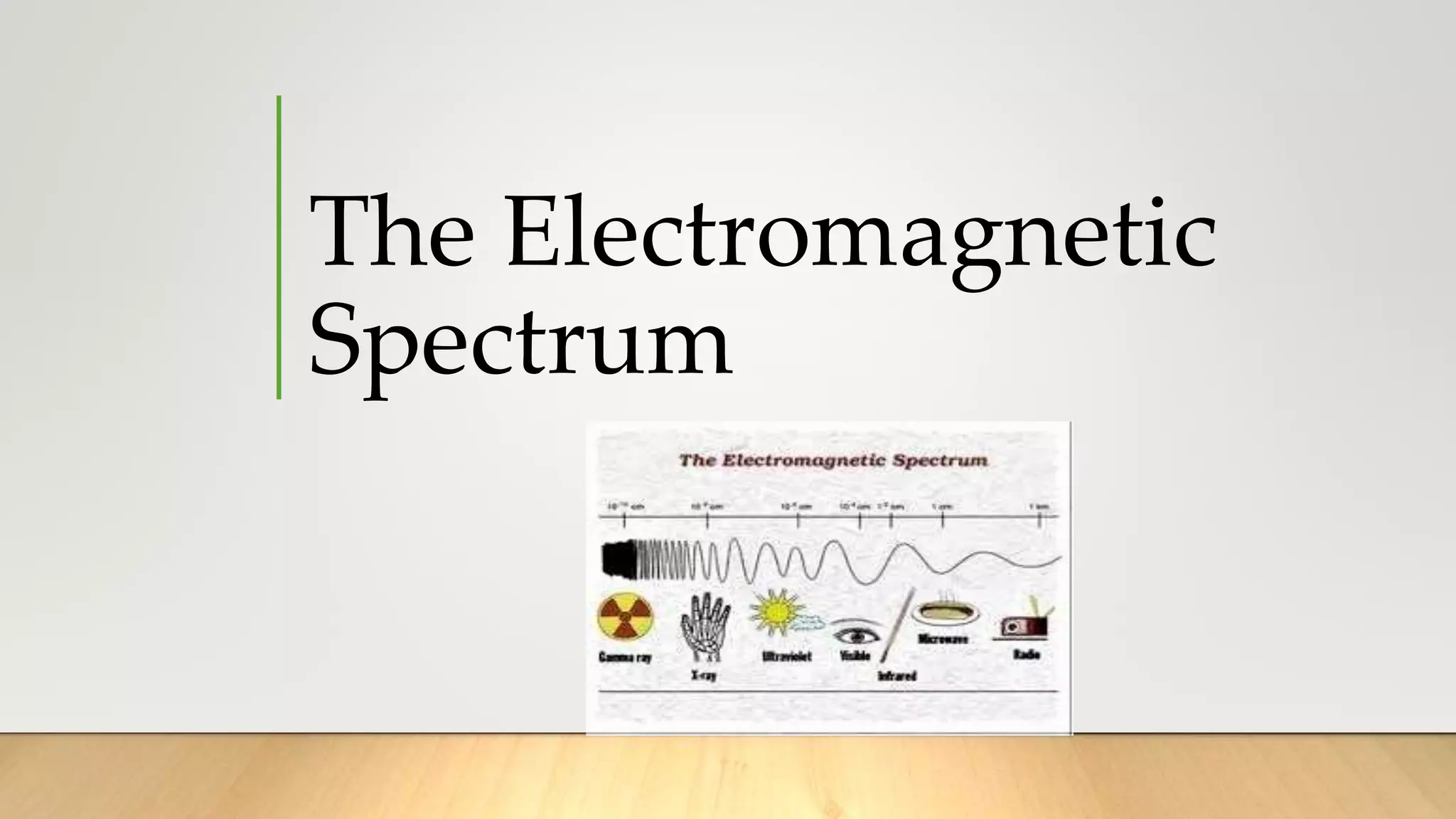
The Electromagnetic spectrum consist of:
• Radio waves
• Microwaves
• Infrared waves
• Visible light waves
• X-rays
• Gamma rays
Waves
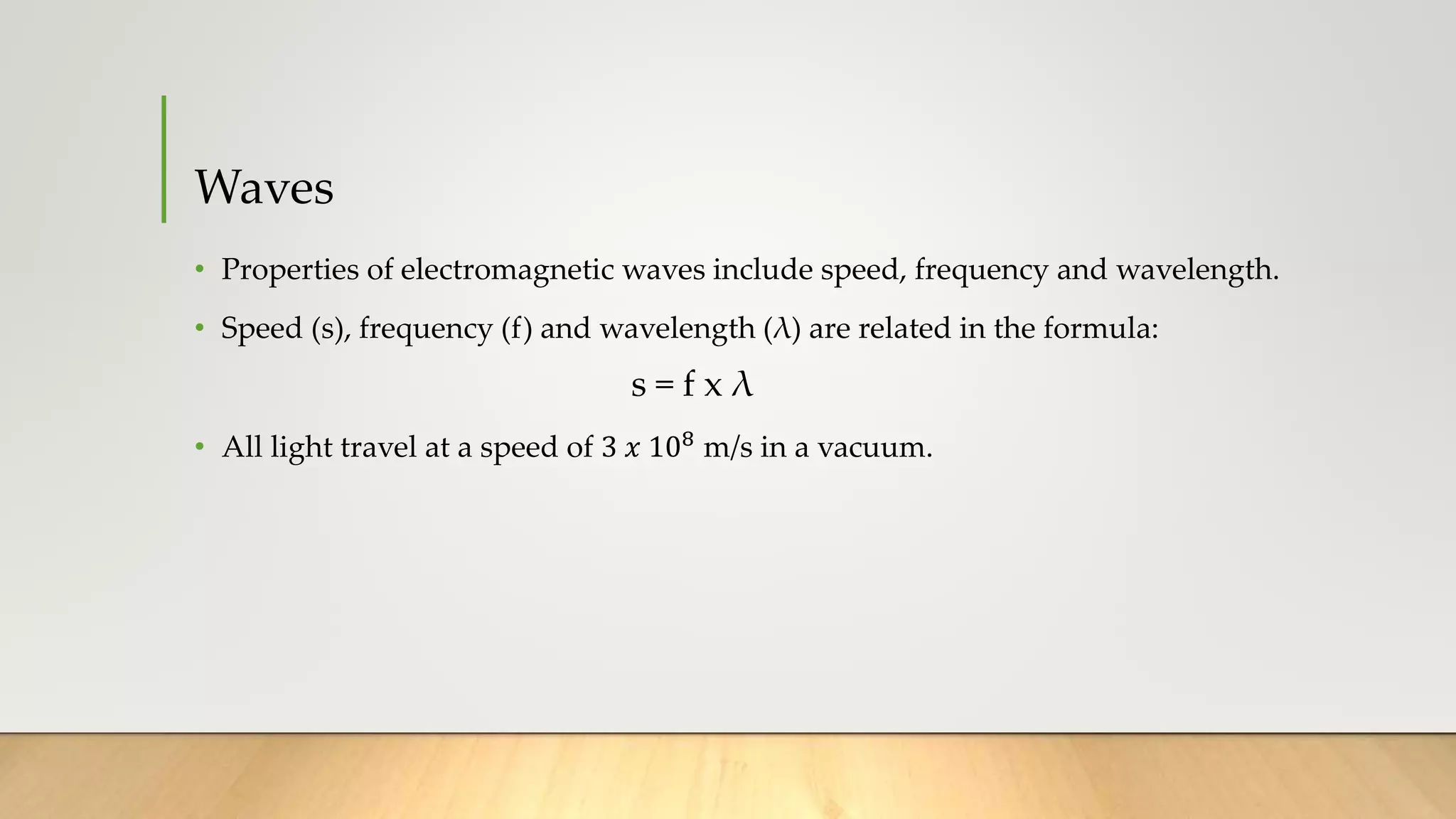
• Properties of electromagnetic waves include speed, frequency and wavelength.
• Speed (s), frequency (f) and wavelength (λ) are related in the formula:
s = f x λ
• All light travel at a speed of 3 𝑥 108
m/s in a vacuum.
Wavelength, Frequency, Energy
• Electromagnetic wave characteristics:
 Short wavelengths have a high frequency
 Long wavelengths have a low frequency
• Electromagnetic waves and Energy:
 High frequency waves have high energy
 Low frequency waves have low energy
Wavelength, Frequency, Energy
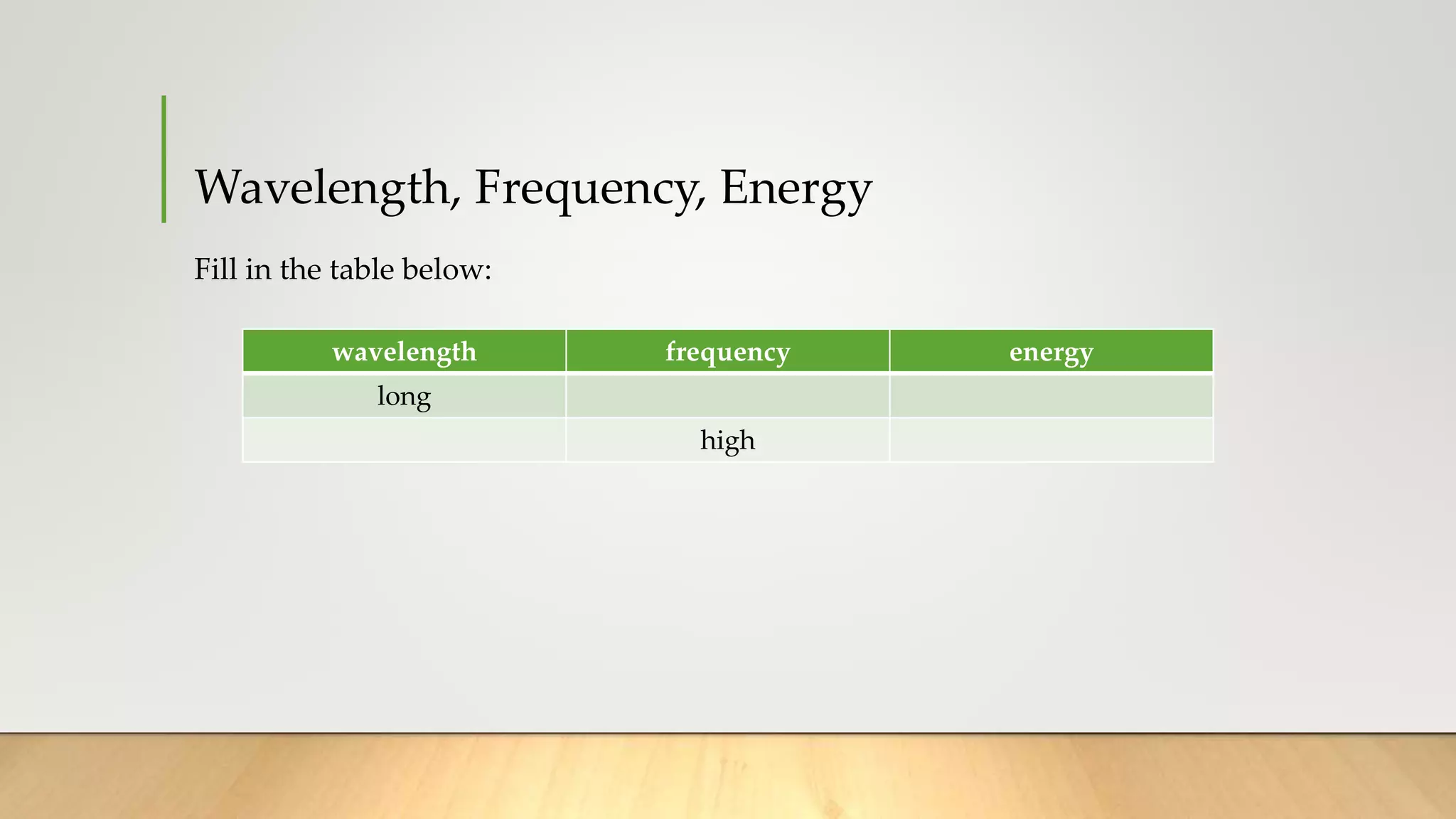
Fill in the table below:
wavelength frequency energy
long
high
Types of Electromagnetic Waves
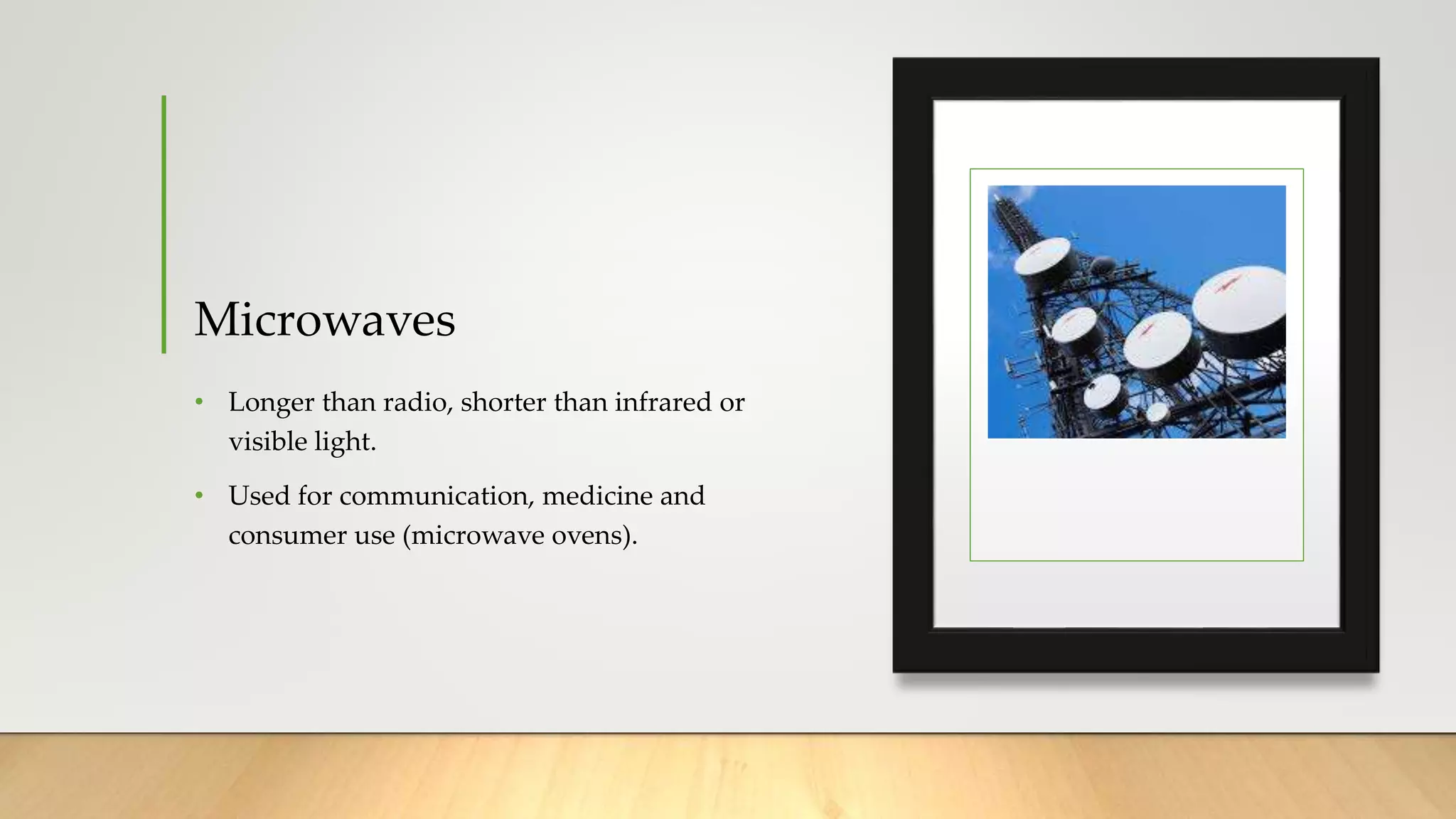
Microwaves
• Longer than radio, shorter than infrared or
visible light.
• Used for communication, medicine and
consumer use (microwave ovens).
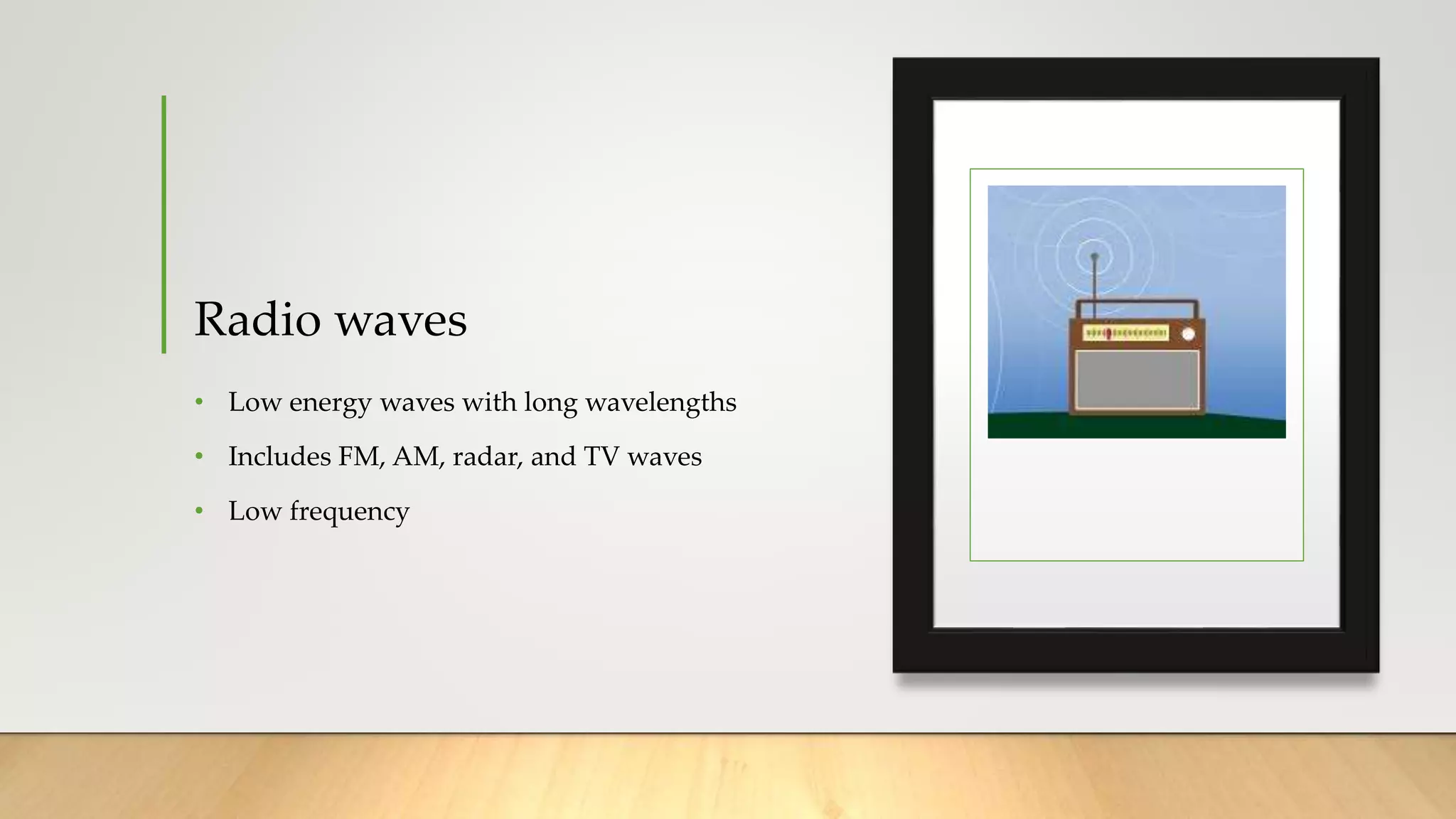
Radio waves
• Low energy waves with long wavelengths
• Includes FM, AM, radar, and TV waves
• Low frequency
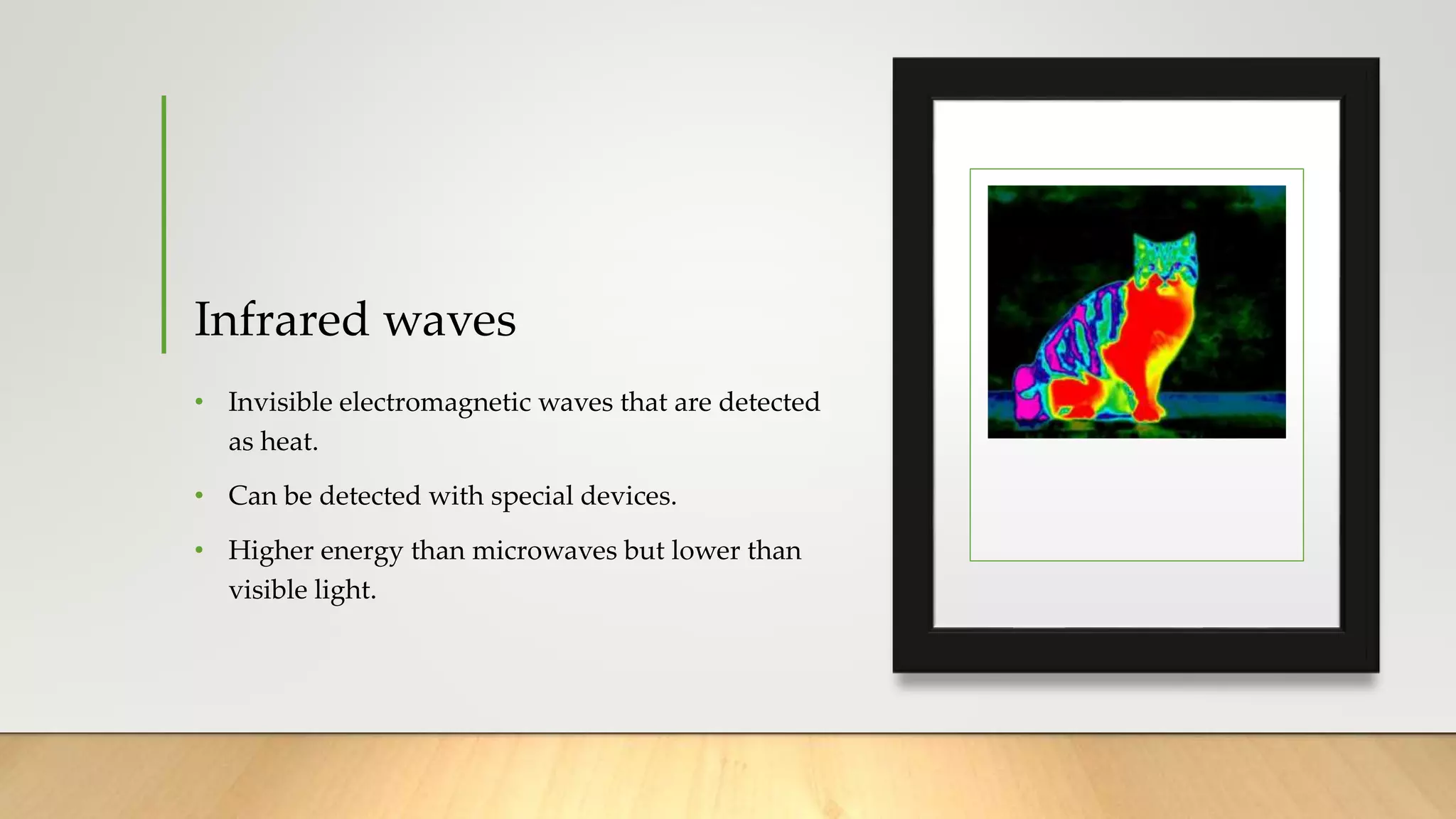
Infrared waves
• Invisible electromagnetic waves that are detected
as heat.
• Can be detected with special devices.
• Higher energy than microwaves but lower than
visible light.
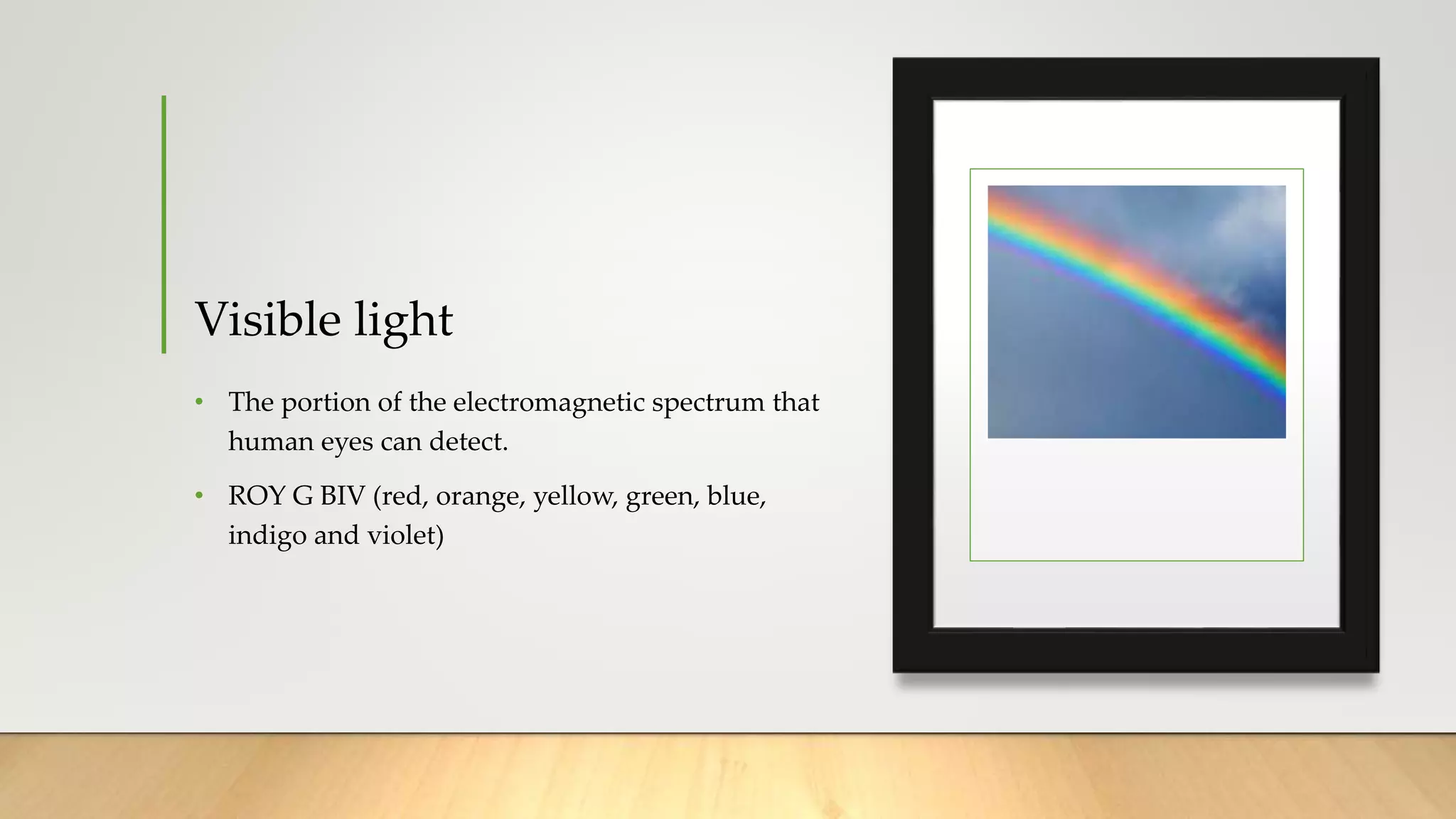
Visible light
• The portion of the electromagnetic spectrum that
human eyes can detect.
• ROY G BIV (red, orange, yellow, green, blue,
indigo and violet)
Ultraviolet waves
• Higher energy than light waves
• Can cause skin cancer and blindness in human.
• Used in tanning beds and sterilizing equipment.
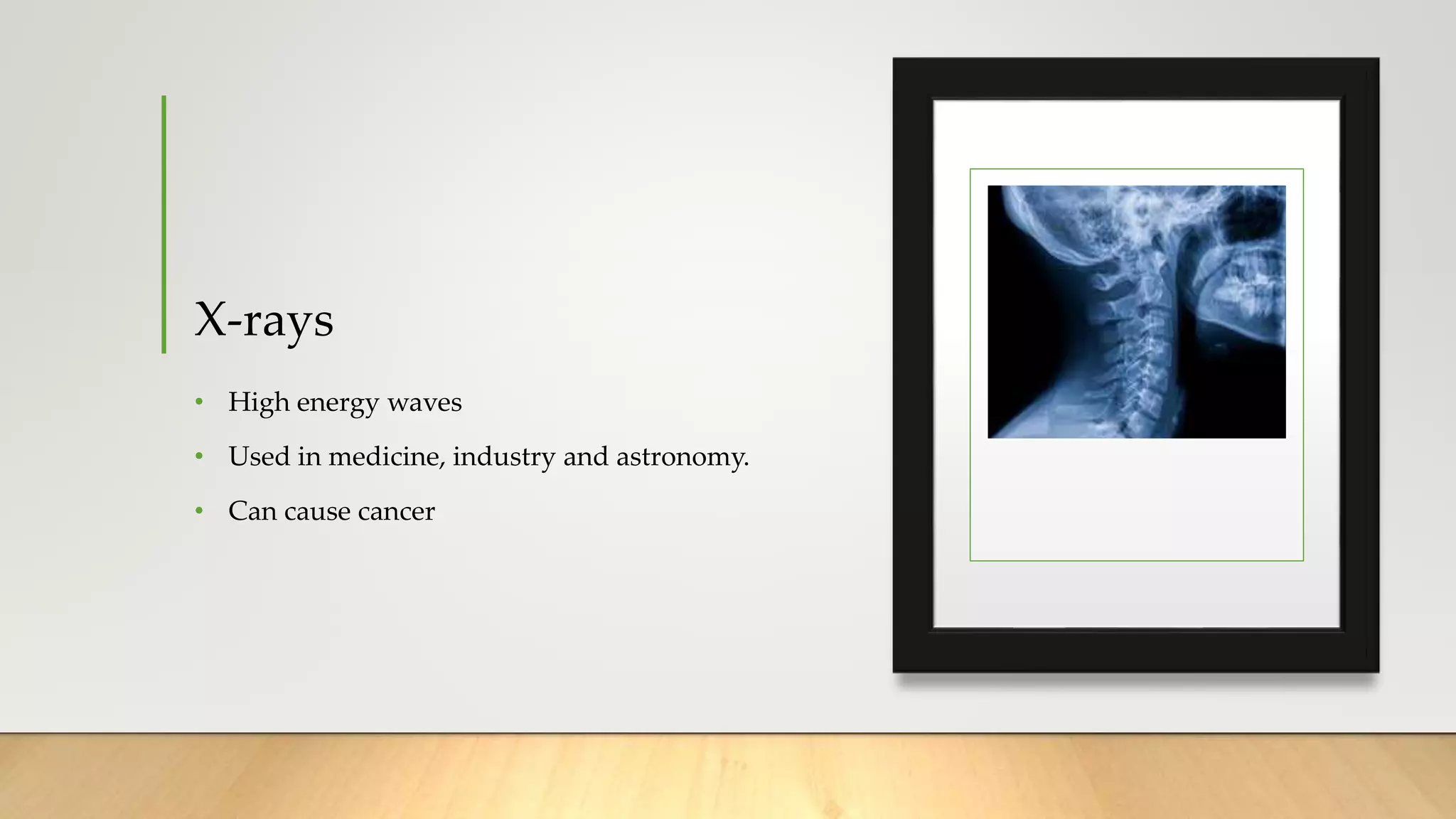
X-rays
• High energy waves
• Used in medicine, industry and astronomy.
• Can cause cancer
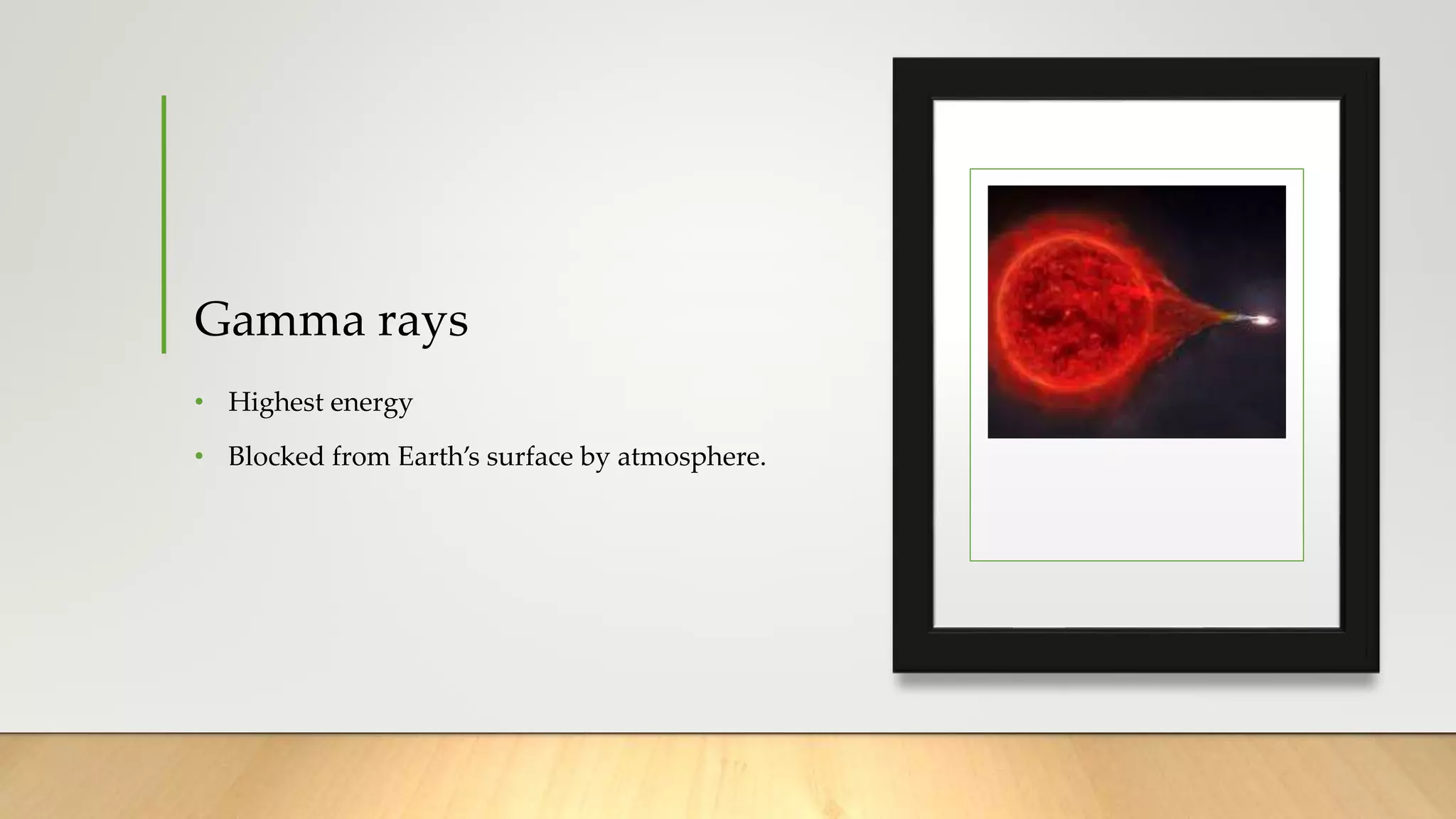
Gamma rays
• Highest energy
• Blocked from Earth’s surface by atmosphere.
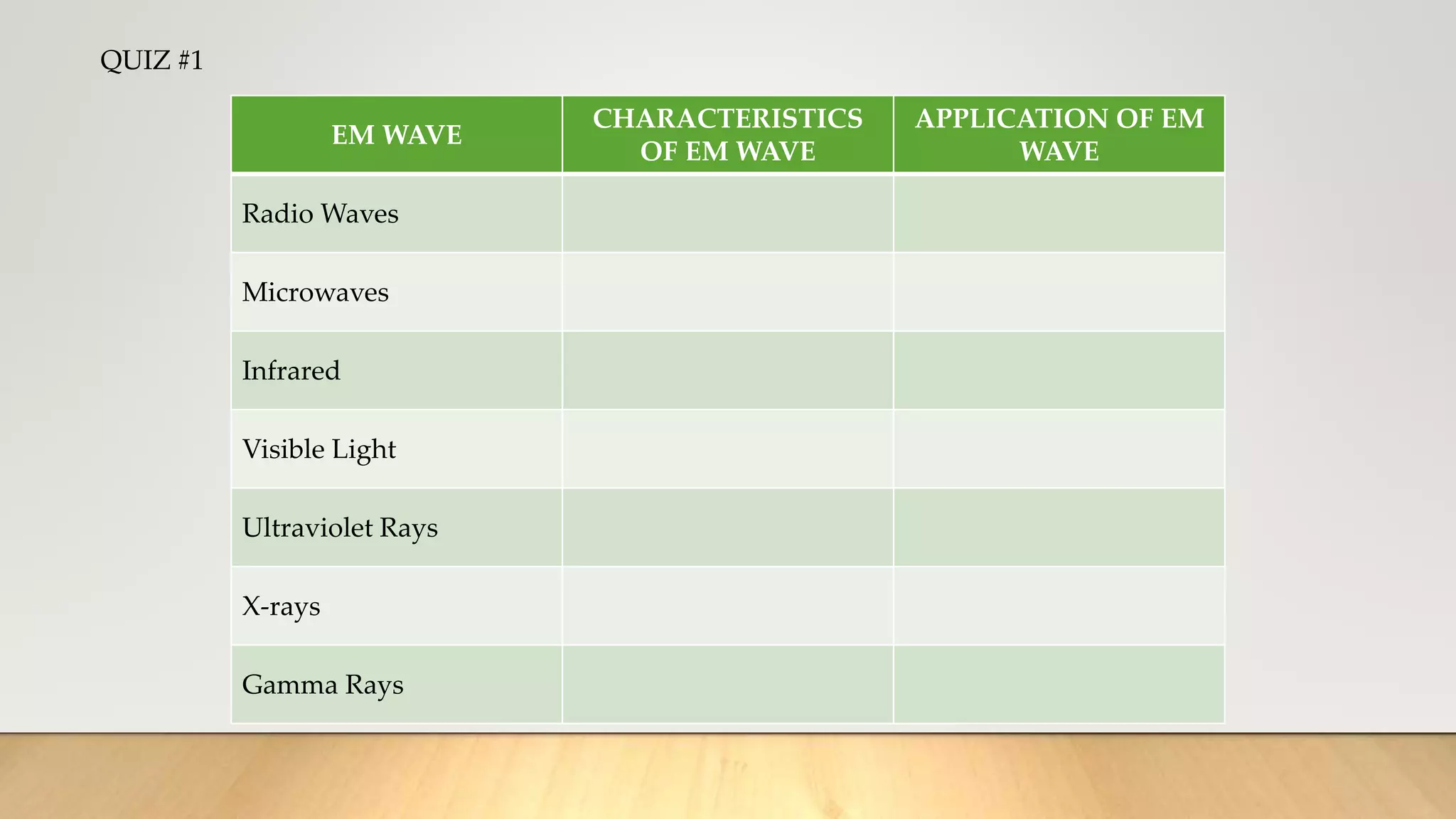
EM WAVE
CHARACTERISTICS
OF EM WAVE
APPLICATION OF EM
WAVE
Radio Waves
Microwaves
Infrared
Visible Light
Ultraviolet Rays
X-rays
Gamma Rays
QUIZ #1
Assignment:
1. Give five example of EM waves that we encounter in everyday life and give a
brief explanation.
Thank you !

The Electromagnetic Spectrum.pptx

  • 1.
  • 2.
    What is theElectromagnetic Spectrum • The electromagnetic spectrum is the complete spectrum (or continuum) of all forms of “light” • An electromagnetic wave consist of electric and magnetic fields which vibrate – thus making waves.
  • 3.
    The Electromagnetic spectrumconsist of: • Radio waves • Microwaves • Infrared waves • Visible light waves • X-rays • Gamma rays
  • 4.
    Waves • Properties ofelectromagnetic waves include speed, frequency and wavelength. • Speed (s), frequency (f) and wavelength (λ) are related in the formula: s = f x λ • All light travel at a speed of 3 𝑥 108 m/s in a vacuum.
  • 5.
    Wavelength, Frequency, Energy •Electromagnetic wave characteristics:  Short wavelengths have a high frequency  Long wavelengths have a low frequency • Electromagnetic waves and Energy:  High frequency waves have high energy  Low frequency waves have low energy
  • 6.
    Wavelength, Frequency, Energy Fillin the table below: wavelength frequency energy long high
  • 7.
  • 8.
    Microwaves • Longer thanradio, shorter than infrared or visible light. • Used for communication, medicine and consumer use (microwave ovens).
  • 9.
    Radio waves • Lowenergy waves with long wavelengths • Includes FM, AM, radar, and TV waves • Low frequency
  • 10.
    Infrared waves • Invisibleelectromagnetic waves that are detected as heat. • Can be detected with special devices. • Higher energy than microwaves but lower than visible light.
  • 11.
    Visible light • Theportion of the electromagnetic spectrum that human eyes can detect. • ROY G BIV (red, orange, yellow, green, blue, indigo and violet)
  • 12.
    Ultraviolet waves • Higherenergy than light waves • Can cause skin cancer and blindness in human. • Used in tanning beds and sterilizing equipment.
  • 13.
    X-rays • High energywaves • Used in medicine, industry and astronomy. • Can cause cancer
  • 14.
    Gamma rays • Highestenergy • Blocked from Earth’s surface by atmosphere.
  • 15.
    EM WAVE CHARACTERISTICS OF EMWAVE APPLICATION OF EM WAVE Radio Waves Microwaves Infrared Visible Light Ultraviolet Rays X-rays Gamma Rays QUIZ #1
  • 16.
    Assignment: 1. Give fiveexample of EM waves that we encounter in everyday life and give a brief explanation.
  • 17.