BUSI 604
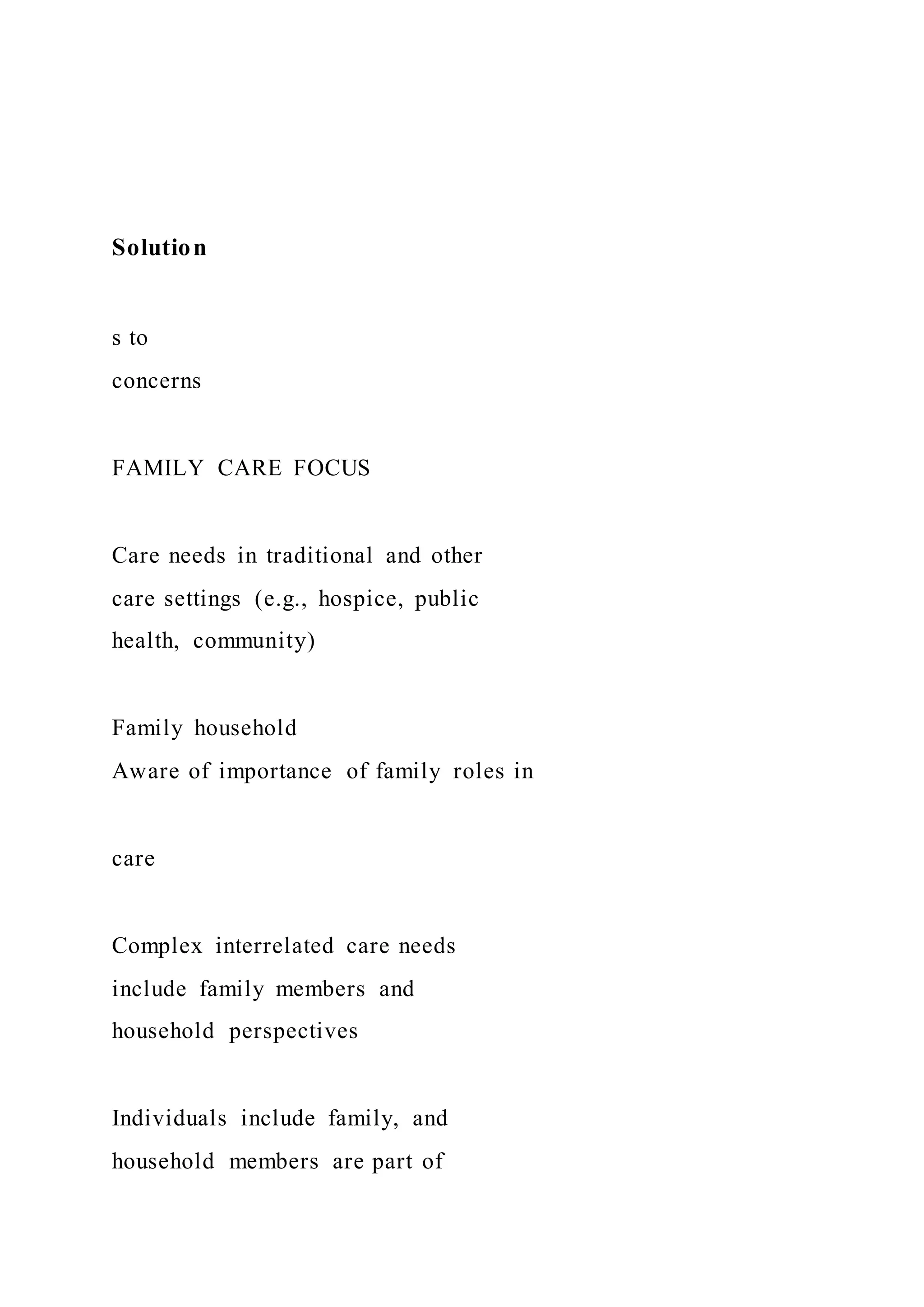
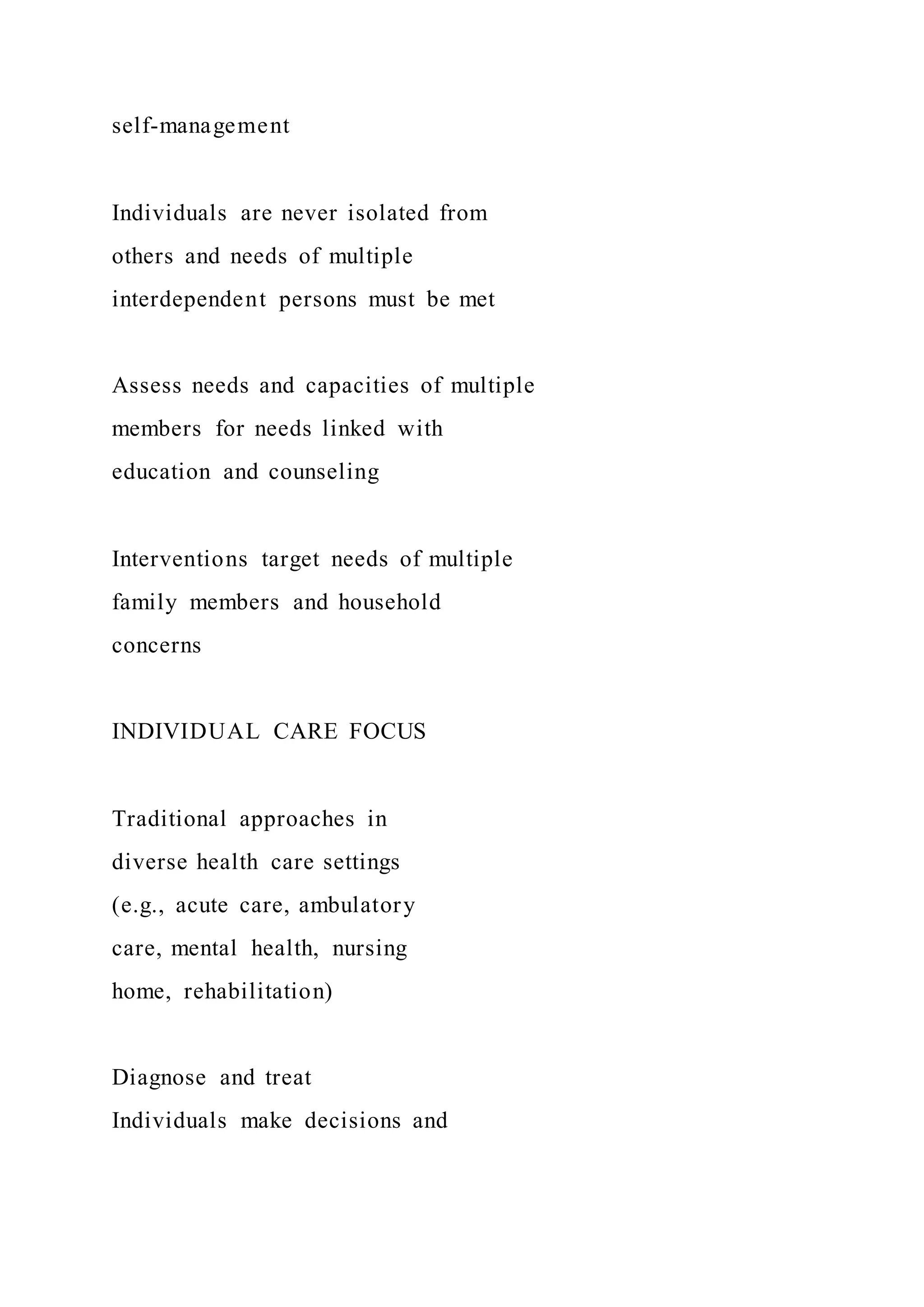
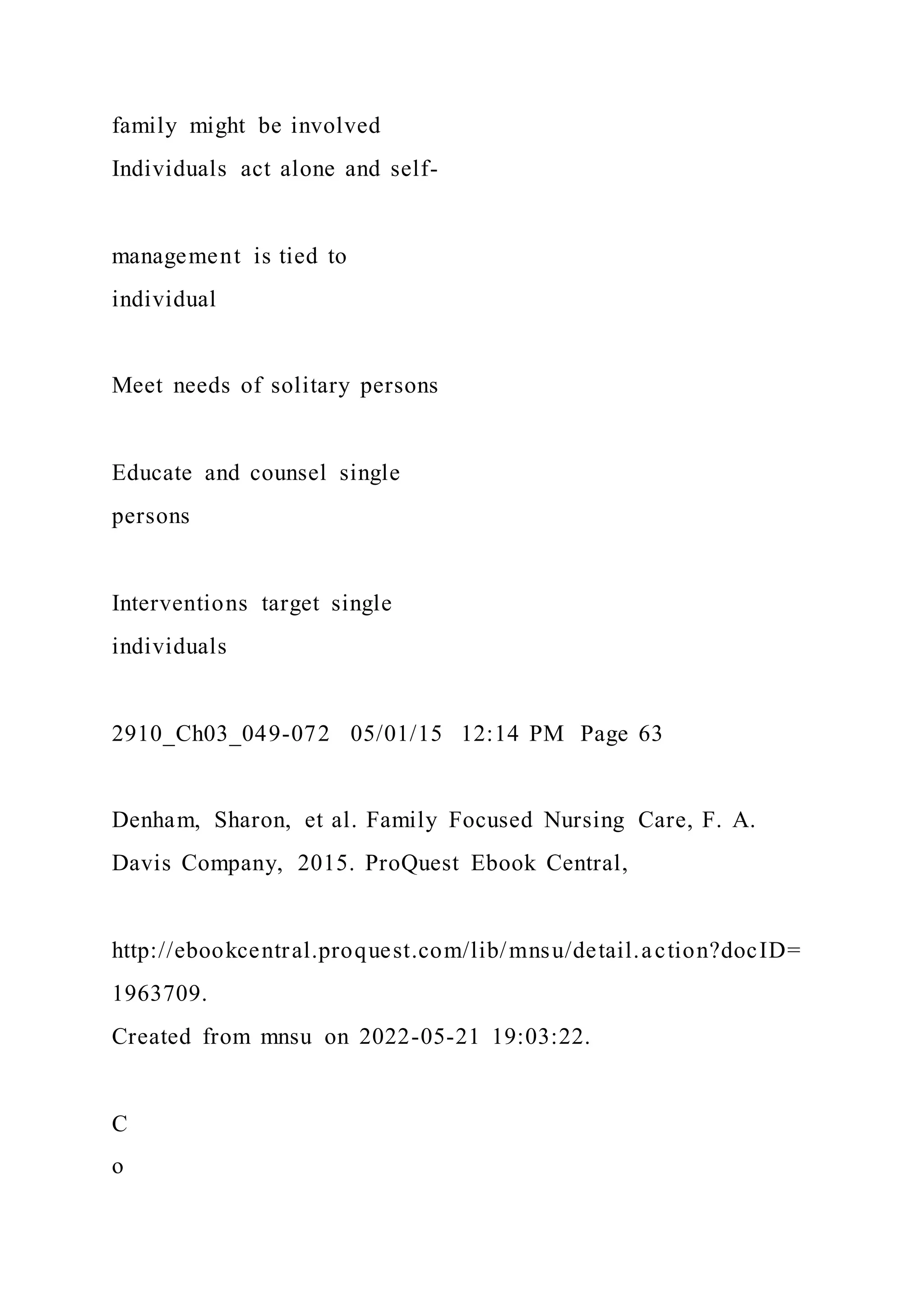
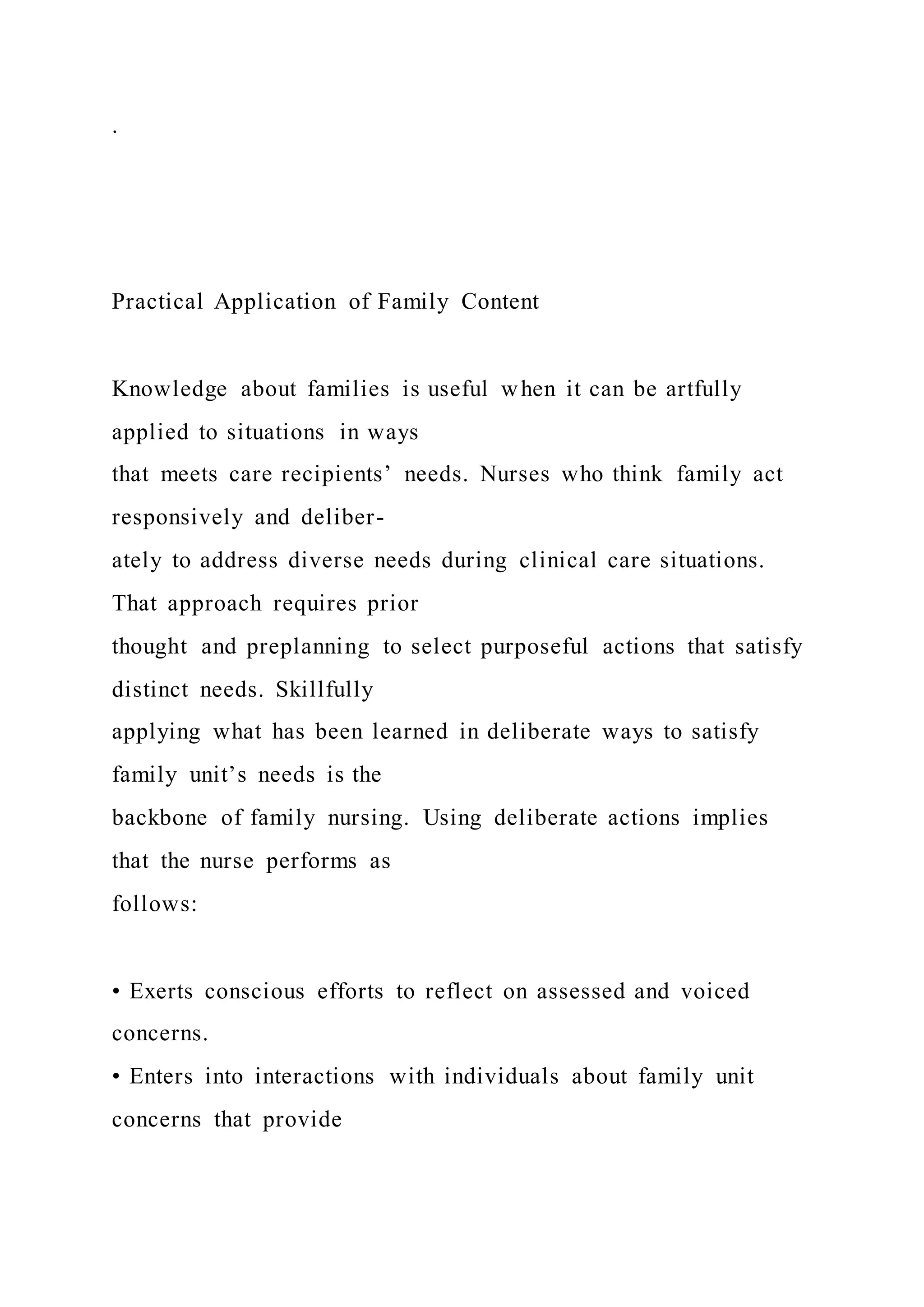
Discussion Assignment Instructions
Instructions
The student will complete 4 Discussions in this course.
As you read the chapters assigned to each week, you will find
some concepts more interesting and applicable to your personal
or work situation than others. Review the key terms listed in the
assigned chapters; then, choose a key term that you wish to
write on for your thread.
Include the exact key term you selected in your thread’s subject
line.
Thread (600 words minimum)
After you have successfully chosen the key term that interests
you the most, research a minimum of 5 recent international
business/management articles that relate to the concept on
which you wish to focus your research. Articles must be found
in reputable professional and/or scholarly journals and/or
business/trade journals that deal with the content of the course
(i.e., not blogs, Wikipedia, newspapers, etc.). After reading the
articles, select the 1 article that you wish to discuss.
It is highly recommended that you use Liberty University’s
Jerry Falwell Library online resources. A link is provided in the
Discussion Assignment Resources. A librarian is available to
assist you in all matters pertaining to conducting your research,
including what constitutes a scholarly article.
Your thread must be placed in the Discussion textbox and
adhere precisely to the following headings and format:
1. Key Termand Why You Are Interested in It (100 words
minimum)
After reading the textbook, specifically state why you are
interested in conducting further research on this key term (e.g.,
academic curiosity, application to a current issue related to
employment, or any other professional rationale). Include a
substantive reason, not simply a phrase.
2. Explanation of the Key Term(100 words minimum)
Provide a clear and concise overview of the essentials relevant
to understanding this key term.
3. Major Article Summary(200 words minimum)
Using your own words, provide a clear and concise summary of
the article, including the major points and conclusions.
4. Discussion
In your own words, discuss each of the following points:
a. How the cited work relates to your above explanation AND
how it relates specifically to the content of the assigned
module. This part of your thread provides evidence that you
have extended your understanding of this key term beyond the
textbook readings. (100 words minimum)
b. How the cited work relates to the other 4 works you
researched. This part of your thread provides evidence that you
have refined your research key term to a coherent and
specialized aspect of the key term, rather than a random
selection of works on the key term. The idea here is to prove
that you have focused your research and that all works cited are
related in some manner to each other rather than simply a
collection of the first 5 results from your Internet search. (100
words minimum)
5. References
A minimum of 3 recent articles (as described above), in current
APA format, must be included and must contain persistent links
so others may have instant access. In the event that formatting
is lost or corrupted when submitting the thread, attach the
Microsoft Word document to your thread as evidence that your
work was completed in the proper format. Please see the
appropriate instruction link in the Discussion Assignment
Resources for more information on creating persistent links.
Replies (300 words total - 100 words minimum, per reply)
Additionally, you will reply to a minimum of 3 other
classmates’ threads. Thus, you will have submitted substantive
written responses to a minimum of 3 other classmates’ threads.
What is Substantive Interaction?
· The School of Business is committed to the collaborative
learning model. In this course, collaborative learning requires
each student to read and spend time reflecting on other's
postings, and then respond in a substantive manner to the
postings of others. In composing substantive responses, you
can do several things, such as:
· compare/contrast the findings of others with your research;
· compare how the findings of others relate and add to the
concepts learned in the required readings; and/or
· share additional empirical knowledge regarding global
business -- or international experiences you may have had --
relative to the postings of others.
· The collaborative learning model requires substantive
interaction between students on a weekly basis. Consider the
Discussion as equivalent to being in a class, thus maintain
professional communication standards at all times (no “IM”
shorthand or informal jargon, please).
Page 2 of 2
NURS 362 Summer 2022
Week
Family Topic
Assigned Content/Readings
Thought/Discussion Topic
Written Assignments/
Meetings
Module 1
Week 1
May 16
Introduction
Background Understandings of Family and Societal Care
George Maverick audio
Watch the three video clips in order:
Video 1: Brief with Family Focus
Video 2: Simulation with Family Focus
Video 3: Simulation without Familiy Focus
Kaakinen*, Coehlo, Steele, & Robinson (2018) Ch. 1
Denham*, Eggenberger, Young, & Krumwiede (2015) Ch. 1 &
12
Bell (2011)
*Reading list will just use first author name
Individual, Family and Societal Care
Foundations for Thinking Family
Look for posted orientation video on D2L explaining basics of
course syllabus, calendar, and assignments. Please ask if further
questions after listening and reading documents thoroughly.
Thanks!
Free Write #1 regarding healthy families due
May 22nd
Group Discussion in D2L – Week 1
For each week, your initial posting is due by 11:59 p.m. on
Wednesday and 2 responses to your peers by 11:59 p.m. on
Sunday. Remember to include citations and references to
support your comments.
1. Introduction Thread – Help your classmates to get to know
you as a person, nurse, and family member. Share aspects of
yourself in a posting--For example, Tell us about your family of
origin. Tell us about your current family (remember that if you
do not have biologic members present in your life, friends as
family may apply to you. Pictures of you and your family? What
is the work of family? What are your future family goals? What
piques your interest in this course and family focused nursing
care?
2. Reflect on an illness experience in your own family or a
family you know. Describe the struggles the family experienced
with the illness. Consider the biological, social, psychological,
or spiritual factors that influenced the management and coping
of the family. Based on your experience pose a nursing
approach that may have been helpful to the family. Use your
readings to support your analysis and response.
3. What is your definition of family and family health?
4. Describe your family health experience utilizing the 3 family
health domains (contextual, functional, and structural).
5. Describe your family’s health routines. Identify some barrier s
or challenges for families not developing or maintaining health
routines
6. To introduce family nursing practice and give you a
background on how to care for the family unit, please watch
video clips of our former nursing students caring for George
Maverick in our simulation suite on the Mankato campus.
Observe the similarities/differences seen between the individual
focus (video 1) vs. family focused care (video 2).
7. Thinking Family - Address the health inequities or health
disparities: Does the basic premise of family focused nursing
care hold true: When the health of one family is improved, the
health of society has also been improved.
Week 2
May 23
Background & Understandings of Family Nursing
Theoretical Foundations for Family Nursing
Family Structure, Function, Process
Aspects of Health
Kaakinen (2018) Ch. 2, 3 & 6
Denham (2015) Ch. 2, 3 & 7
Khalili (2007)
Duhamel, Dupuis, & Wright (2009)
Foundation for ‘Thinking Family’
Family as Unit of Care or Context?
Family Nursing Theory
Denham’s Core Processes
Health Routines
Free Write #2 regarding
family during acute care experience due May 29th
Group Discussion in D2L – Week 2
1. What are the barriers/challenges described in your readings
that you also face in your environments as you attempt to
provide family focused nursing? (e.g. family as client, family as
context, family as barrier, family as caring process, family as
resource)
2. Review the power point: "Family Nursing Background and
Understandings." Reflect on nursing practice that views family
as the unit of care and nursing practice that views family as
contextual to the individual patient. Do you believe that current
nursing practice most often views family as the unit of care or
family as a context to the situation? How do these two views
differ?
3. Develop 5 questions focusing on one of Denham’s Core
Processes. Interview a client in your workplace or within your
community and describe their answers to your questions.
Identify family routines and factors related to family health
routines.
4. From the Khalili article, what were the most significant
aspects of the illness transition for the family? What resources
did the family need/want? What were the barriers and
facilitators to obtaining the needed resources or supports? What
may have changed in the care situation for the family if the
family would have been viewed as the unit of care?
5. Using one of the family theories/frameworks described in the
literature reflect on an illness experience in a family. (You can
reflect on a family you have cared for in your nursing practice.)
Consider how family structure, function, and process influenced
the family health experience and outcomes. Analyze the
experience from a family theory/framework perspective.
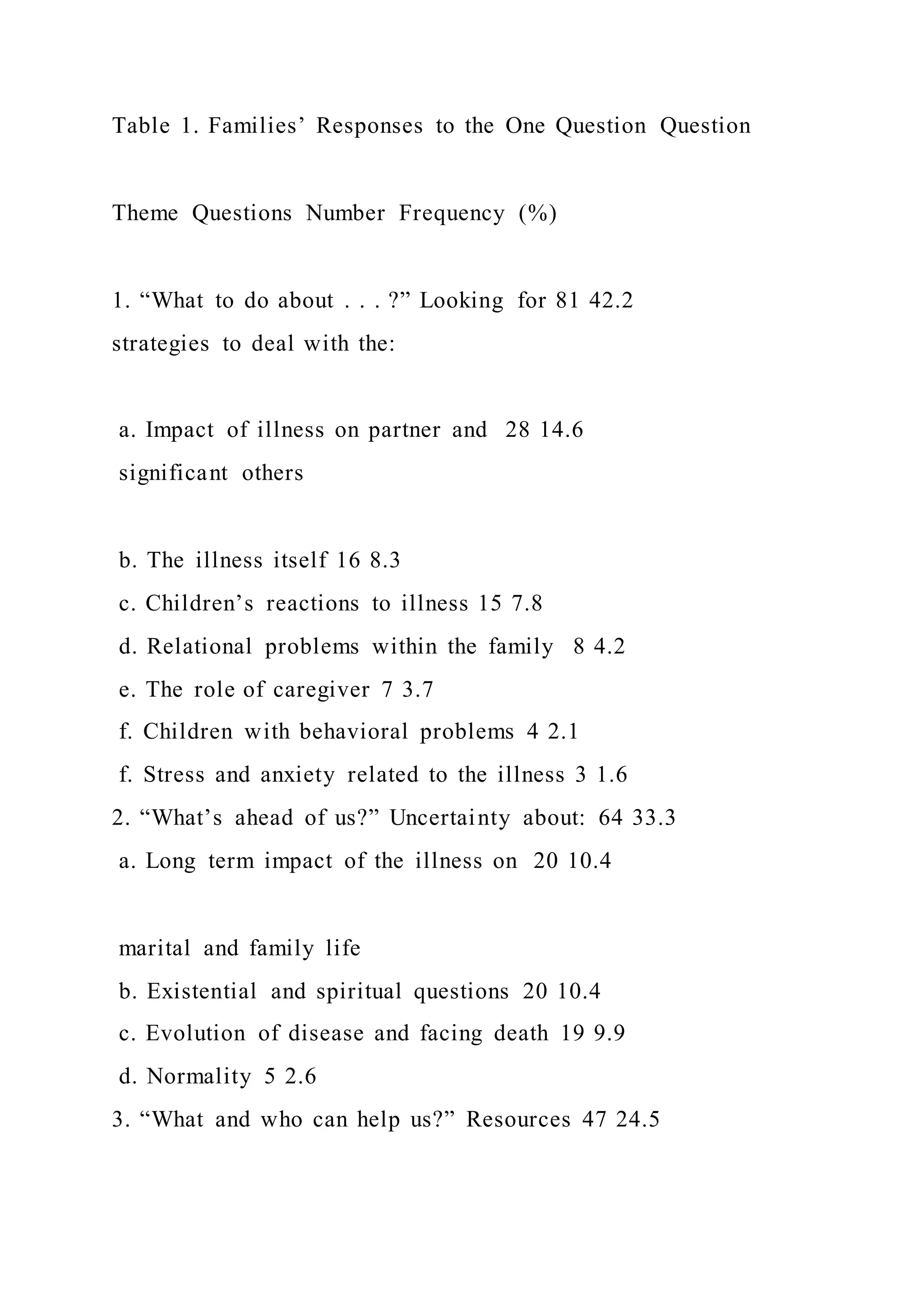
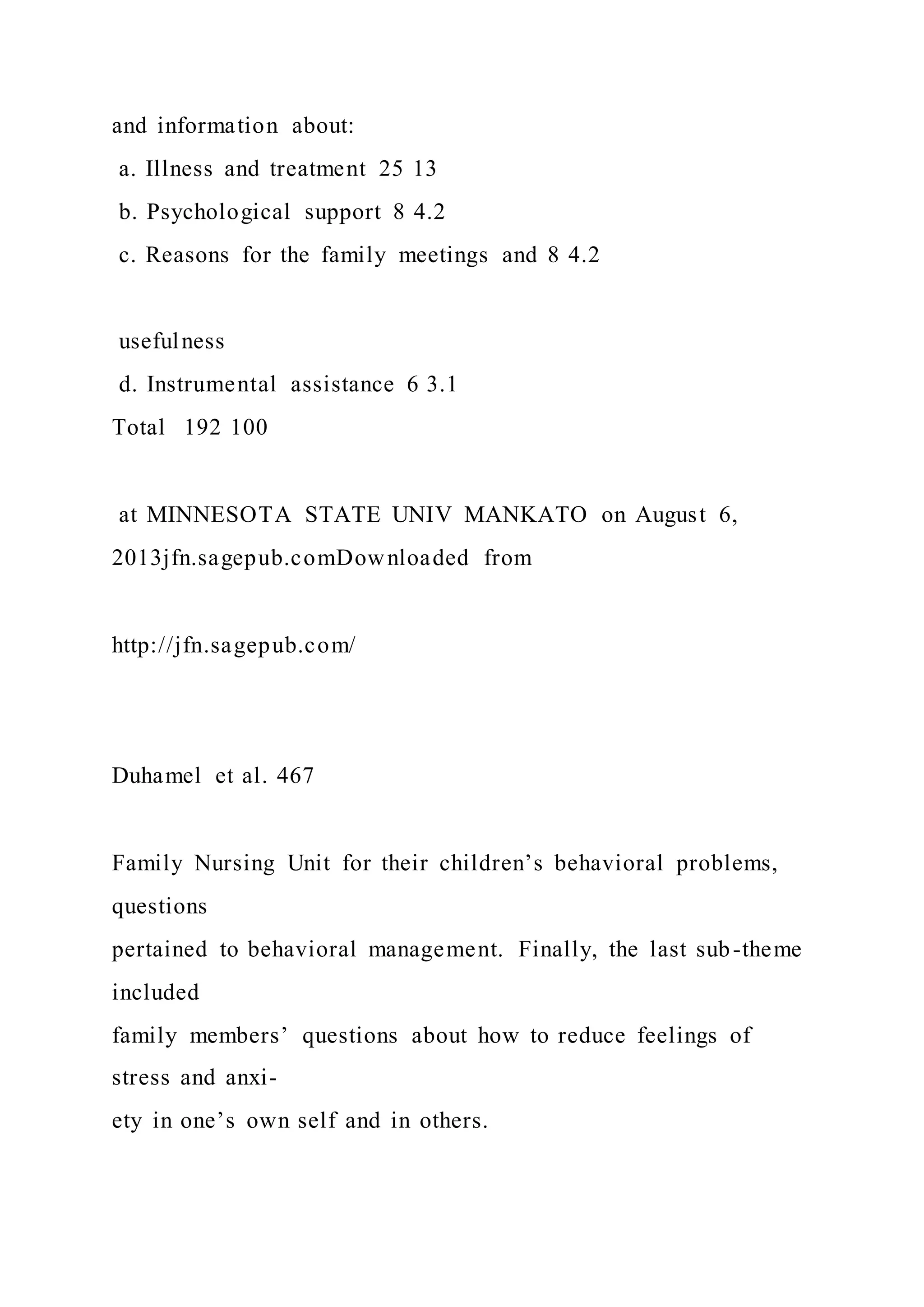
6. Use your reading on a One Question Question by Duhamel et
al. (2009) to practice this questioning strategy with a family.
Share your reflections and outcomes.
Module 2
Week 3
May 30
Family Construct
Share examples from the book to describe Denham’s Core
Processes
Fault in Our Stars (Green, 2012)
Read The book and complete the Family Constructs Grid
Post & Discuss
Fault in Our Stars Book Discussion
Free write # 3 regarding family in crisis or trauma experience
due
June 5th
Complete First Family Visit
Family Assessment-this is just a guideline to keep you on track-
it is not literally due.
Group Discussion in D2L – Week 3
Read Green (2012) and fill out the family construct grid in
relation to Green (2012) located in Module 2. Please note, the
grid is only to guide your thinking and discussion posts. Please
post your grid and any relevant commentary about which family
nursing concepts seem most pertinent.
The focus for this week is the Fault in Our Stars book
discussion by John Green. I am providing the following list of
questions to jump start the book discussion. You don’t need to
answer all of the questions. This is meant to be a free-flowing
conversation, and I expect each of you will add your questions
throughout the discussion.
Each of you can tell us how you experienced the book and pick
one of the questions below to answer if these help focus your
thoughts.
1. John Green uses the voice of a teenage girl to tell this story.
Why do you think he choose to do this? Was it effective? How
would it have been different if he had told the story from a
different voice? How does voice relate to family nursing
practice?
2. What does the title, Fault in Our Stars, mean?
3. How would you describe the two main characters, Hazel and
Gus?
4. How do Hazel and Gus relate to their cancer?
5. At one point in the book, Hazel states, “Cancer books suck.”
What is she really meaning?
6. How do Hazel and Gus change, in spirit, over the course of
the novel?
7. Why is “An Imperial Affliction” written by Peter Van Houten
Hazel’s favorite book?
8. How many of you looked to see if, “An Imperial Affliction”
was an actual book?
9. What do you think about the author Peter Van Houten?
10. Why it was so important for Hazel and Gus to learn what
happens after the heroine dies in the An Imperial Affli ction?
Week 4
June 6
Annotated Bibliography
Read syllabus for assignment instructions. Below are several
reputable websites that explain how to prepare an annotated
bibliography.
https://guides.library.cornell.edu/annotatedbibliography
http://library.ucsc.edu/ref/howto/annotated.html
https://owl.purdue.edu/owl/general_writing/common_writing_as
signments/annotated_bibliographies/index.html
Annotated Bibliography
June 12th
Please upload your Annotated Bibliography.
Review and provide feedback for two individual's Annotated
Bibliography.
Incorporate the feedback you receive from your peers into your
final Annotated Bibliography.
Week 5
June 13
Family Chronic Illness Experience
Family Construct
Share examples from the book to describes Denham’s Core
Processes
Genetics & Genomics
Genova (2009) Still Alice
Read the book and complete the Family Constructs Grid
Post and Discuss
Kaakinen (2018) Ch. 10 & 11
Denham (2015) Ch. 8, 9 & 13
Svavarsdottir (2006)
Alzheimer’s disease fact sheet:
http://www.nia.nih.gov/alzheimers/publication/alzheimers-
disease-genetics-fact-sheet
Bennet (2008) This is a very complex and technical article.
Read through it for the general ideas presented about the history
and uses of genetic mapping.
Family Coping with Chronic Illness
Family Suffering
Still Alice Book Discussion
Free Write # 4 regarding
family during a chronic illness experience
June 19th
Complete Second Family Visit
Family Intervention - this is just a guideline to keep you on
track-it is not literally due.
Group Discussion in D2L – Week 5
1. Svavarsdottir conducted an integrative review about Nordic
families with children who are chronically ill. Three exemplar
family cases were described. How can nurses be empathetically
connected to these families? In Figure 1, Svavarsdottir (2006),
shows how family daily activities, family relations and family
health are interconnected. Describe how the family’s quality of
life is affected if one or more of these 3 factors were hindered.
What may be some suggestions to help these families boost their
quality of life? Feel free to share any experiences in your career
where you were empathetically connected to a family and
helped boost their quality of life.
2. From your readings and your own experience, identify and
discuss five needs of families during a crisis experience.
3. Develop a three generation pedigree to assess your personal
family history information using the following website
https://phgkb.cdc.gov/FHH/html/index.html The pedigree
should represent three generations (student, parents,
grandparents). Complete your family history, save it, and view
your history grid and genogram. Share your insights into your
family health with your group (you do not need to post the
pedigree itself).
4. The Bennet article is a helpful resource for pedigree and
genogram symbols when you start diagramming genograms in
Module 3.
5. Read the genomics case study and Alzheimer’s fact sheet.
Module 3
Week 6
June 20
Family Assessment & Interview
Denham (2015) Ch. 4 & 5
Review Kaakinen (2018) Ch. 5 & 8
Duhamel, Dupuis, & Wright (2009)
Family System Strengths Stressors Inventory pdf on D2L
Family Assessment
and Interview
Family Assessment and Interventions in Practice
Complete Third Family Visit
Family Evaluation -this is just a guideline to keep you on track-
it is not literally due.
Group Discussion in D2L – Week 6
1. What is your perspective on key elements of family
assessment, based on your text readings? Develop and post the
family interview guide you plan on using for the family
interview. What underlying framework supports your interview
guide (Calgary Family Assessment Model (CFAM), described in
Wright and Leahey A Guide to Family Assessment and
Intervention, Family System Strengths Stressors Inventory
(FS3I)? See PDF attachment on D2L
2. Discuss family assessment in your groups. Discussion may
include why family assessment is important or how assessment
approaches and structure may differ across settings. Discuss
barriers, personal or institutional, to engaging in family
assessment.
3. Create and upload the Family Nursing Tools: Genogram,
Ecomap, Circular Conversation, and Attachment Diagram.
{Make sure the name of your family members are changed to
protect their identity.
Module 4
Week 7
June 27
Family Assessment and Interventions in Practice
Family Interventions
Review Kaakinen (2018) Ch. 10 & 11
Denham (2015) Ch. 11, 14 & 15
Wiegand (2008)
Review Video in Module 1: Simulation SEE Model
Video: Debriefing SEE Model with Family Constructs and
Family Nursing Actions
Refer to the following chapters to identify nursing
interventions:
Kaakinen (2018) Ch. 12-17
Denham (2015) Ch. 10, 11, 12, 13, & 14
Family Level Nursing Approaches
Upload draft Family Nursing Project into discussion thread this
week
Please upload your Family Nursing Project.
Review and provide feedback for two individual's Family
Nursing Project.
Incorporate the feedback you receive from your peers into your
final Family Nursing Project paper.
Module 4
Week 8
July 4
Family Nursing Policy
Review Denham (2015) Ch. 12
Family nursing interventions and approaches
Family Nursing Project due July 10th
July 10th is the last day to submit graded assignments.
Group Discussion in D2L – Week 8
1.
2. 1. Based upon your readings and your family interview paper
experience, what policies (community, institution, statewide,
nationwide, global, unit-based, etc.) would you want to put into
practice to support the use of the family nursing interventions?
2.
3. 2, Consider your readings and discussions this semester
(textbook, personal annotated bibliography, articles, postings,
etc.). What family nursing interventions/approaches do you
propose to support the family health and illness experience and
advance family nursing practice? Post at least 5 nursing
interventions/approaches (include citations and references).
3.
4. 3. Choose a policy at your institution and review it from a
family friendly perspective. What did you see? Are there
improvements you could suggest?
4.
5. 4. Contact your risk manager or quality and safety nurse to
learn whether or not family is used as an indicator within your
institution. If yes, find out why and how the institution is
measuring the family indicator. If no, propose why the
institution needs to focus on family and how a family focused
nursing practice could be implemented.
Family Nursing : Background and Understandings
Sandra K. Eggenberger, RN, PhD
Professor
School of Nursing MSUM
Family Health Care NursingArt and Science
Way of Thinking about Family and Working with Family
Philosophy and a Practice
(Harmon Hanson, 2005)
Family NursingScientific Discipline Based on
TheorySpecialtyGrowing Body of KnowledgeBuilding Family
Nursing Science Through ResearchDeveloping and Testing
Theories that Improve Nursing and Family Interactions in
Health and IllnessSupporting Practice and Influencing Social
Policy
(Harmon Hanson, 2005)
Origins of Family NursingPrehistoric Times (Harmon, Hanson
& Boyd, 1996)
Caring for Ill Individuals that were bonded to othersFlor ence
Nightingale (Eggenberger, 2005)
Efforts to care for families of soldiers who returned from
Crimean WarDepression and World War II
Nursing Practice moved from Homes to Hospitals during
depression and World War II
Family NursingHospital development caused families to be
excluded and nursing care became individual focused In 1950’s
critical care areas developed and became more technologically
and medically-oriented with a limited attention to family
needsFamily in adult illness is often viewed as contextual to
individual needs (Eggenberger, 2005)Family nursing scholars
developing and building a body of knowledge in recent years
BUT in infancy stages of developmentFamily theory is in early
stages of development (Baumann, 2000)
Concerns
Research describes deficiencies in family nursing care with
illness (Chesla & Stannard, 1997; Gilliss & Knafl, 1999;
Hupcey, 1998; Soderstrom, Benzein, & Saveman, 2003 )Few
nurse educators skilled in family care contributes to lack of
knowledgeLack of nursing theory of family contributes to lack
of nursing interventions (Craft & Willadsen, 1992)Very few
nursing interventions tested so limited evidence-based family
care (Chesla, 1996)
Professional Organization beginning to further address
FamilyInternational Council of Nurses published The Family
Nurse: Frameworks for Practice (2001)American Association of
Critical Care Nurses (2002) address family careAmerican
Association of Emergency Room Nurses position statement on
family presence during invasive procedures (2001)
Major Historical Contributors to Family Theory and
ModelsFamily Social Science TheoriesFamily Therapy
TheoriesFamily Nursing Theories
Family Theories
Family Systems Concepts
View system as a whole-rather than parts
Relationships of sub and supra system
Example: patient (sub) nurse (supra)
Interdependence and Mutual influence
Interaction among themselves and environment
Symbolic InteractionismShared meanings – humans/families act
on the basis of the meanings that things haveMeanings arise is
the process of interaction between themInterpretation process
modifies meaningInteractions is central to this theory
Human Ecological Theory
Family ecosystem in interaction with environment
Environment is a physical, social, economic, political, aesthetic,
and structural surroundings
Family Social Conflict Theory
Social conflict is a basic element of human social life
Individual (needs, values, goals, and resources) conflict with
others in the family
Power is a central issue
Family DevelopmentStages and Events
Marriage, Birth, Death Events
Roles at different stages
Transitions at with different events
Life Course Family Process and Transitions Within Families
and Across time
Construct Meaning-Events are given meaning through social
interaction
Family interaction gives meaning to events
Chaos TheoryFamily develop patterns and rhythms
Underlying order exists
Events may be bifurcation points where the family pattern can
change significantly
Developing Family Nursing Theories to Advance Family
Nursing Family Health : A Framework for Nursing Sharon
DenhamFamily Health System Model
Kathryn Anderson and Patricia TomlinsonCalgary Family
Assessment Model
Lorraine M. Wright & Maureen Leahey
Collaboration with Janice Bell
Denham Family Health FrameworkAssumptions: Family health
can be understood through a person-process-context model over
the life courseIndividual and family health are affected by
interaction of systems Context has potential to potential and
negate family healthFamily health composed of complex
interactions between family and contextual systems that can
maximize or minimize the process of becoming for a family as a
wholeDesign Family Interventions based on understanding
family contexts and family process (See next 3 slides)
Family Contextual Assessment
Family Interactions: Individual, Family, Community
Denham Family ProcessesCaregiving-attention and actions
linked to health and illness needsCathexis-emotional bond
between individual and familyCelebration-family traditions
commemorate special timesChange-dynamic and nonlinear
process of altering modifying form, direction, and
outcomeCommunication-socialization, interactions, and
meanings Connectedness-partnering linkages of family
Coordination-cooperative sharing of resources, skills, and
information
(Denham, 2003)
Family Health System Model
Family health as a holistic process that incorporates wellness
and illness in interaction with the environmentFamily health
incorporates health of the collective family and the interaction
of the individual with the collectiveNursing practice directed
toward four realms of the family experience
Interactive Processes
Developmental Processes
Coping Processes
Integrity Processes (Anderson & Tomlinson, 2000)
Description of Realms of Experience
Family Interactive Processes
relationships, communication, social support
Family Developmental Processes
stages and transitions of individual and family
Family Coping Processes
managing resources, problem solving, adaptation to stress and
crisis
Family Integrity Processes
shared meanings of experiences, identity, boundaries
(See diagram next slide)
Calgary Family Assessment Model (CFAM) Theoretical
foundations in postmodernism, systems, cybernetics,
communication, change and cognition Acknowledges
understanding of different realitiesProvides a framework for
assessing and working with families to resolve issues
Categories of Family Life (CFAM)Three Categories with
subcategories
1. Structural Dimension
internal-who is in family and how are they connected
external-who does family relate to outside
context-relevant background
race, class, finances, religion, environment
2. Developmental Dimension
family life cycle
stages and tasks
attachments
CFAM categories (continued)
3. Functional Dimension
instrumental-routine ADL
expressive-emotional communication
nonverbal
circular communication
problem solving
roles
influence and power
beliefs
alliances
(See diagram on next slide)
Calgary Family Intervention ModelInterventions rooted in the
assessmentCFIM is a strengths-based, resiliency-orientated
modelEfforts to develop strategies for family health
promotionNurse assesses and then intervenes to facilitate
changeInterventions designed to promote, improve, or sustain
functioning in any or all of three domainsInterventions are
grounded in understanding the importance of the family’s
beliefs
Questions to Ponder
Reflect on nursing practice that views family as the unit of care
and practice that views family as contextual to the individual
patient.Do you believe that current nursing practice most often
views family as the unit of care or family as a context to the
situation? How do these two perspectives differ? Which
perspective do you believe would be optimal for the patient
and/or family? Why? Which perspective guides your practice?
Why? How do you wish you practiced nursing care? Why?
Question 2
Describe an illness experience using one of the family
theories/frameworks
Question 3
What family policy in your work setting do you think needs to
be developed or modified, based on what you have learned in
your reading?
Selected ReferencesAnderson, K. H. (2000). The Family Health
System approach to family system’s nursing. Journal of Family
Nursing, 6( 2), 10o3-119.Baumann, S. L. (2000). Family
nursing: Theory-anemic, nursing theory-deprived. Nursing
Science Quarterly, 13(4), 285-290.Benner, P., Hooper-
Kyriakidis, P., & Stannard, D. (1999). Clinical wisdom and
interventions in critical care. Philadelphia: W. B.
Saunders.Boss, P. (1988). Family stress management. Newbury
Park, CA: Sage Publications.Boss, P. G., Doherty, W. J.,
LaRossa, R., Schumm, W. R., & Steinmetz, S. K. (Eds.). (1993).
Sourcebook of family theories and methods: A contextual
approach. New York: Plenum Press.Carr, J. M. (1997). The
family’s experience of vigilance: Challenges for nursing.
Holistic Nursing Practice, 11(4), 82-89.
Chesla, C. A. (1991). Parents’ caring practices with
schizophrenic offspring. Qualitative Health Research, 1(4), 446-
468.Chesla, C. A. (1995). Hermeneutic phenomenology: An
approach to understanding families. Journal of Family Nursing,
1(1), 63-78.Chesla, C. A. (1996). Reconciling technologic and
family care in critical-care nursing. Image: Journal of Nursing
Scholarship, 28(3), 199-203.Chesla, C. A., & Stannard, D.
(1997). Breakdown in the nursing care of families in the ICU.
American Journal of Critical Care, 6(1), 64-71.Craft, M. J., &
Willadsen, J. A. (1992). Interventions related to family. Nursing
Clinics of North America, 27(2), 517-541.Denham, S. (2003).
Family health: A framework for nursing. Philadelphia, PA: F.A.
DavisEichhorn, D. J., Meyers, T. A., Guzzetta, C. E., Clark, A.
P., Klein, J. D., Taliaferro, E., & Calvin, A. O. (2001). Family
presence during invasive procedures and resuscitation: Hearing
the voice of the patient. American Journal of Nursing, 101 (5),
48-55. Gilliss, C. L., & Knafl, K. A. (1999). Nursing care of
families in non-normative transitions: The state of science and
practice. In A. S. Hinshaw, S. L. Feetham, & J. L. F. Shaver
(Eds.), Handbook of clinical nursing research (pp. 231-249).
Thousand Oaks, CA: Sage Pub.
Gilliss, C. L., Neuhaus, J. M., & Hauck, W. W. (1990).
Improved family functioning after cardiac surgery: A
randomized trial. Heart & Lung, 19(6), 648-654.Giuliano, K. K.,
Giuliano, A. J., Bloniasz, E., Quirk, P. A., & Wood, J. (2000).
A quality-improvement approach to meeting the needs of
critically ill patients and their families. Dimensions of Critical
Care Nursing, 19(1), 30-34.Hanson, S. M. H. (2001). Family
health care nursing: An introduction. In S. M. H. Hanson (Eds.),
Family health care nursing: Theory, practice, and research (2nd
ed.). (pp. 3-35). Philadelphia, PA: F. A. Davis
Company.Hanson, S. M. H. (2001). Family health care nursing:
Theory, practice, and research
(2nd ed.). Philadelphia, PA: F A Davis Publishers.Hartrick, G.
(1998). A critical pedagogy for family nursing. Journal of
Nursing Education, 37(2), 80-84.Hartrick, G. A., & Lindsey, A.
E. (1995). The lived experience of family: A contextual
approach to family nursing practice. Journal of Family Nursing,
1(2), 148-170.Houck, G. M. & Kodadek, S. M. (2001). Research
in families and family nursing. In S. M. H. Hanson (Ed.),
Family health care nursing: Theory, practice, and research (2nd
ed.). (pp. 60-77). Philadephia, PA: F. A. Davis.Hupcey, J. E.
(1998). Establishing the nurse-family relationship in the
intensive care unit. Western Journal of Nursing Research, 20(2),
180-194.Hupcey, J. E. (1999). Looking out for the patient and
ourselves-the process of family integration into the ICU.
Journal of Clinical Nursing, 8, 253-262.Koller, P.A. (1991).
Family needs and coping strategies during illness crisis. AACN
Clinical Issues in Critical Care Nursing, 2(2), 338-345.Wright,
L.M., & Leahey, M. (2005). Nurses and Families: A guide to
family assessment and intervention (4th ed.). Philadephia, PA:
F.A. Davis
Using Family Theory to
Guide Nursing Practice
Sonja J. Meiers
C H A P T E R 7
C H A P T E R O B J E C T I V E S
1. Discuss ways in which family theories guide family nursing
practice.
2. Consider differences in the ways that nurses’ personal
experiences influence individual and family-
focused care in nursing practice.
3. Identify several different family theories that nurses can use
to guide nursing practice.
4. Describe how nurses use knowledge of family coping, family
development, family interaction, and
family integrity to set goals for nursing care and guide nursing
actions.
C H A P T E R C O N C E P T S
● Calgary Family Intervention
Model
● Family coping
● Family development
● Family Health Model
● Family Health Systems Model
● Family identity
● Family integrity
● Family Management Model
● Family nursing theory
● Family science
● Family theory
● Family therapy
● Illness Beliefs Model
● Stress
Introduction
Family theories, whether family science, family therapy, or
family nursing theories, are useful
in guiding nurses’ ideas about thinking family and practicing
innovative family-focused care.
Family theories help nurses move beyond what they know from
personal experiences of
their own families. Personal family experiences are powerful
influences on perceptions,
biases, and assumptions about family. Family theories can help
nurses expand thinking and
provide templates for more holistic assessment. In addition, use
of family theories can
encourage nurses to consider broader possibilities for family-
focused nursing actions than
are known from their personal family lives.
This chapter presents examples of how theoretical perspectives
can be used to guide
family-focused thinking and actions. Core elements of family
science and family therapy
theories are described and differentiated from family nursing
theories. Finally this chapter
165
2910_Ch07_165-194 06/01/15 11:44 AM Page 165
Denham, Sharon, et al. Family Focused Nursing Care, F. A.
Davis Company, 2015. ProQuest Ebook Central,
http://ebookcentral.proquest.com/lib/mnsu/detail.action?docID=
1963709.
Created from mnsu on 2022-05-22 16:42:01.
C
o
p
yr
ig
h
t
©
2
0
1
5
.
F
.
A
.
D
a
vi
s
C
o
m
p
a
n
y.
A
ll
ri
g
h
ts
r
e
se
rv
e
d
.
demonstrates how existing family science, family therapy, and
family nursing theories and
models can guide family-focused nursing actions when
considering the realms of family
coping, development, interaction, and integrity.
Family Theories: What They Are and How They Help
The family, as a system, socially constructs its reality (Reiss,
1987). When families initially
form and then later add members, they seldom fully plan the
future or see future challenges.
Risks and threats to the family system happen when unintended
events occur in families.
Life happens. Life events influence choices and decisions.
Families evolve and develop
boundaries that are open to influences from the outside, closed
to such influences, or flexible
(Olson & Gorall, 2003). This fluctuation can depend upon the
situation, but also on family
roles, goals, and purposes. Family boundaries also differ and
may change over time. Atten-
tion needs to be given to boundaries. Behaviors such as
touching, hugging, and personal
distance signal some information about these boundaries. A
family might be predominately
opened or closed, but stress can cause the family to take a
contrary position until the stressor
is decreased or suffering is lessened. For instance, a family may
appear open to others, but
this openness might be due to one member with an especially
extroverted personality. If this
person becomes critically ill, more introverted family members
might be less welcoming.
Nurses’ understandings about family systems have grown over
time. An early family nursing
theory contributed by Marilyn Friedman drew upon ideas of
structural-functional systems
and family development theories (Friedman, 1981). Friedman
suggested that family is an
open system that interacts with a variety of societal institutions
(e.g., health care, education,
religion). Her family assessment ideas are widely taught in
nursing classes across the world.
Family Science
Family scientists and family nursing professionals base their
ideas and recommendations
for family care on observations of family life and member
interactions. These theories are
mainly concerned with the ways that families function, develop,
and interact with environ-
ments. Nurses are mostly concerned with what occurs around
families’ health and illness
experiences. Family theories developed by family scientists,
when used by nurses, are gen-
erally viewed as borrowed theories. Nurses use family science
theories to understand com-
plex family member interactions and the varied dynamics that
influence health and illness
(McEwin & Wills, 2011). Family science has enhanced
discovery of approaches to family
nursing care. Social science theories largely focus on the form
or structure of families (e.g.,
nuclear, single parent, cohabiting), ways members interact to
accomplish needed functions
(e.g., parenting, socialization, economics), and developmental
tasks (e.g., young versus mid-
dle age or older families). Those ideas are often only loosely
relevant to nursing practice.
For example, a nurse assesses a family’s type and finds that it is
a cohabiting family. This
helps the nurse know who to include in parenting tasks if the
mother is acutely ill. However,
theories about family type and evidence about effectiveness of
the cohabiting parents may
not be especially useful at the time of a critical illness or to
direct care.
The family satisfies certain core societal functions such as in
the nurture and protection
of children or the provision of stable economics. Another core
function of families is fos-
tering societal survival by producing new members to replace
dying members and social-
izing these new members to eventually enacting adult roles.
Families also transmit shared
norms and values from one generation to the next. To meet
these functional needs, families
are structured in ways that use differentiated roles such as
parent, child, economic provider,
and home organizer.
166 CHAPTER 7 ● Using Family Theory to Guide Nursing
Practice
2910_Ch07_165-194 06/01/15 11:44 AM Page 166
Denham, Sharon, et al. Family Focused Nursing Care, F. A.
Davis Company, 2015. ProQuest Ebook Central,
http://ebookcentral.proquest.com/lib/mnsu/detail.action?docID=
1963709.
Created from mnsu on 2022-05-22 16:42:01.
C
o
p
yr
ig
h
t
©
2
0
1
5
.
F
.
A
.
D
a
vi
s
C
o
m
p
a
n
y.
A
ll
ri
g
h
ts
r
e
se
rv
e
d
.
Think about your own family. What roles does each person
serve? What happens if a
member does not fulfill an expected role? Think about a crisis
or acute situation, when
surgery or an intensive care stay in the hospital is required.
What happens within the fam-
ily? Who is filling usual roles? How might families di ffer in
needs? Suppose a mother caring
for an autistic child is unexpectedly hospitalized as a result of
an automobile accident.
What stressors might she and her family have? Can an
individual crisis become a family
crisis? Family science theories can be used to consider the
complexity of what needs to be
assessed and can guide nursing actions in organized and
purposeful ways.
Family Therapy
Family therapy aims to understand relationships and
interactions within family groups rather
than merely considering needs of single individuals. Nurses
need some knowledge from what
is known about family therapy even though they are not
involved in psychotherapy. Nurses
need to know how to sensitively collaborate within the family to
meet family expectations.
Family therapy usually involves several family meetings and is
focused on resolving problems
within the family. Family-focused nursing differs from this
type of intense family therapy.
Nurses with family therapy backgrounds use family therapy
theories to contribute knowledge
for family-focused nursing (Wright & Leahy, 2013). Yet, family
therapy theories cannot
always adequately guide nursing actions when it comes to
health and illness.
Usefulness of Family Nursing Theories and Models
Using family nursing theories to guide nursing actions begins
with careful assessment of
situations involving those seeking care. Nurses who work with
families recognize the in-
terdependence of families with other social units and larger
communities. Nurses who think
family assess family needs and capacities for supporting health
and illness. Family nursing
theories provide perspectives for planning, implementing, and
evaluating care (Box 7.1).
Theories are like road maps; they suggest paths of action or
directions to a desired des-
tination. A mapped destination can be compared to a desired
goal or outcome. Assessment
data provide specific information about things to consider in
choosing destinations and
directions. Assessment continues along the path to the
destination and ensures that the
CHAPTER 7 ● Using Family Theory to Guide Nursing Practice
167
BOX 7-1
Usefulness of Family Theories
Family theories can suggest ways nurses can:
● Empathize with and interpret family members’ strengths and
limitations.
● Comprehend the family and community context that
influences needs and outcomes.
● Collaborate or partner with family units throughout the
health or illness experience.
Family nursing practice, like most other aspects of nursing
practice, requires the nurse to have a
cadre of strategies in the nursing practice toolkit:
● Scientific or evidence-based knowledge
● Experience with various methods of communicating
● Skills for interacting in culturally sensitive ways
● Theoretical ideas for forming and directing nursing practice
● Artful ways to partner with individuals and family members
whenever and wherever nursing
care is provided
2910_Ch07_165-194 06/01/15 11:44 AM Page 167
Denham, Sharon, et al. Family Focused Nursing Care, F. A.
Davis Company, 2015. ProQuest Ebook Central,
http://ebookcentral.proquest.com/lib/mnsu/detail.action?docID=
1963709.
Created from mnsu on 2022-05-22 16:42:01.
C
o
p
yr
ig
h
t
©
2
0
1
5
.
F
.
A
.
D
a
vi
s
C
o
m
p
a
n
y.
A
ll
ri
g
h
ts
r
e
se
rv
e
d
.
target point is reached in an efficient and timely way. Theories
equip nurses with particular
mind-sets that can help them think about their actions in
coherent ways. Along the path
to meeting goals, nurses make meaningful discoveries about
family fears, uncertainties,
and strengths that can be used in work with families (Meiers &
Tomlinson, 2003).
Planned strategies for reaching goals need to be analyzed to see
which strategies best fit
with the family. For instance, if you were taking a trip, you
might consider the type and
size of luggage, what things to take along, best ways to travel,
and how much money will
be needed. Planning for family care uses the same process.
Moving from a novice nurse
to an experienced one takes time and effort (Benner, 1982).
Beginning nurses learn basic
tasks through direct instruction. As they become experts within
the clinical context, they
develop an intuitive grasp of clinical nursing practice. Family-
focused nursing can seem
incredibly challenging to the novice, but becomes less daunting
with experience. Theory
can guide family-focused practice, redirect courses of action
when needed, and help nurses
use nurse-family relationships to clarify ideas and employ the
best actions in timely ways.
Family Nursing Theories and Models
Family nursing science addresses broad ideas to help nurses
understand how families influence
and are influenced by illness experiences and the ways members
support others, increase
healing, and decrease suffering (Wright & Bell, 2009). Family
nursing theories can enhance
understanding about the family process to promote well -being
and health and manage ways
illness events affect families. Five family nursing theories or
models that guide nursing actions
are presented in the following section. Each theory provides a
unique framework or way to
think about family-focused nursing practice. Family nurses can
use theories and models to guide
partnerships with families.
Calgary Family Intervention Model
Wright and Leahey (2013) developed the Calgary Family
Assessment Model (CFAM) and
the companion model, the Calgary Family Intervention Model
(CFIM). These models have
led the way for family nursing practice worldwide by helping
nurses identify family
strengths, resources, and actions to take in situations of health
and illness. The CFAM sug-
gests that illness situations have concerns primarily focused on
a particular member, but
the situation is best evaluated when related problems are linked
within the larger family
context. The CFAM guides the nurse to assess family
developmental stages, structure, and
function to gain the relevant information for guiding nursing
actions. The CFIM is strength
based and resiliency based with the goal of supporting optimal
family functioning. CFIM-
guided nursing actions promote, improve, or sustain family
functioning in the cognitive,
affective, and functional domains associated with family life
(Box 7.2). Nursing actions
are tailored to family needs and an area of family functioning is
identified for action. The
CFIM can guide actions across a range of health promotion and
illness situations.
Family Health System Model
The Family Health System Model (FHS) considers family health
and informally guides
family nursing practice (Anderson & Tomlinson, 1992). Thi s
model assumes that family
health is systemic, process based, and includes individual and
family unit interactions.
The health of the individual affects the whole family. Changes
in health demand or imply
needed changes in member roles, household resource demands,
or alterations in daily
168 CHAPTER 7 ● Using Family Theory to Guide Nursing
Practice
2910_Ch07_165-194 06/01/15 11:44 AM Page 168
Denham, Sharon, et al. Family Focused Nursing Care, F. A.
Davis Company, 2015. ProQuest Ebook Central,
http://ebookcentral.proquest.com/lib/mnsu/detail.action?docID=
1963709.
Created from mnsu on 2022-05-22 16:42:01.
C
o
p
yr
ig
h
t
©
2
0
1
5
.
F
.
A
.
D
a
vi
s
C
o
m
p
a
n
y.
A
ll
ri
g
h
ts
r
e
se
rv
e
d
.
activities. These changes influence the individual and the family
simultaneously. The FHS
proposes that family health and illness events include
biopsychosocial aspects along with
contextual systems. The goal is to achieve optimal responses in
five realms and assessment
in these realms can inform nursing actions (Box 7.3).
This model also suggests that it is impossible to separate family
health into truly inde-
pendent realms because they interact and are deeply
intertwined. Nurses can use these
realms to guide thinking and clinical practice in integrated
ways. Individual family members
and the family unit are viewed as a whole. This approach to
nursing practice uses a com-
prehensive family assessment to address health and illness
concerns (Anderson, 2000). For
example, the nurse using the FHS would plan nursing actions
that simultaneously consider
the developmental task of becoming a new parent, of learning to
interact with health care
providers of a medically fragile child, the concurrent stress of
family financial concerns,
and the value of maintaining family privacy. The family-
focused nurse is alert to the delicate
intertwining and stressful nature of this situation.
Family Management Style Framew ork
The Family Management Style Framework (FMSF) is based
upon ideas about the family’s
response to childhood chronic illness (Knafl & Deatrick, 1990).
This model has been
CHAPTER 7 ● Using Family Theory to Guide Nursing Practice
169
BOX 7-2
Using the Calgary Family Intervention Model (CFIM)
Several nursing actions may be guided by the CFIM:
● Commending family and individual strengths
● Offering information and opinions
● Validating or normalizing responses
● Encouraging the telling of illness narratives
● Drawing forth family support
● Encouraging family members to be caregivers and offering
caregiver support
● Encouraging respite
● Devising rituals
Source: Wright, L., & Leahy, M. (2013). Nurses and families: A
guide to family assessment and intervention (6th ed.).
Philadelphia: F. A. Davis.
BOX 7-3
Aspects of the Family Health Systems (FHS) Model
The FHS model identifies five realms of the family health
experience:
● Interactive processes such as relationships, communication,
support, nurture, other roles
● Developmental processes such as family transitions, task
completion, individual development
● Coping processes such as problem solving, resource use,
handling of stress and crisis
● Integrity processes such as values, beliefs, identity, rituals,
and spirituality
● Health processes such as health beliefs and behaviors,
illness stressors, caretaking
Source: Anderson, K. A., & Tomlinson, P. S. (1992). The family
health system as an emerging paradigmatic view for
nursing. Image: J ournal of Nursing S cholarship, 2 4 , 57–63.
2910_Ch07_165-194 06/01/15 11:44 AM Page 169
Denham, Sharon, et al. Family Focused Nursing Care, F. A.
Davis Company, 2015. ProQuest Ebook Central,
http://ebookcentral.proquest.com/lib/mnsu/detail.action?docID=
1963709.
Created from mnsu on 2022-05-22 16:42:01.
C
o
p
yr
ig
h
t
©
2
0
1
5
.
F
.
A
.
D
a
vi
s
C
o
m
p
a
n
y.
A
ll
ri
g
h
ts
r
e
se
rv
e
d
.
refined over the past two decades (Knafl & Deatrick, 2003,
2006) and has three major
components—the definition of the situation, management
behaviors, and perceived con-
sequences. The Family Management Measure (FaMM)
developed from this model meas-
ures ways families manage caring for a child with a chronic
illness condition and how this
care management fits into everyday family life (Knafl et al.,
2009). Take time to review
Box 7.4 as it provides additional information about Dr. Kathy
Knafl, an important
American family nurse leader. Box 7.5 describes more about Dr.
Janet Deatrick, an expert
working with children and their families. Family members are
viewed as important persons
who shape and manage children’s chronic conditions and
incorporate chronic illness man-
agement into family life. The three components of this model
shape the ways family mem-
bers manage efforts. Families managing childhood chronic
diseases do so in five different
styles: thriving, accommodating, enduring, struggling, and
floundering. Nurses working
with families with young children or teens can use this theory to
identify factors that sup-
port or impede optimal care of the child and support family
functioning as illness care is
provided, recognizing that the care approaches needed by
families will be diverse and cul-
turally distinct. For instance, three different families with
female 7-year-olds with leukemia
are likely to approach care needs and manage situations
differently.
Illness B eliefs Model
The Illness Beliefs Model (Wright & Bell, 2009) was developed
as a clinical practice
model to use in family care. The model is used to identify and
enhance the therapeutic
ways nurses help families who are suffering in their experience
of serious illness. It is
170 CHAPTER 7 ● Using Family Theory to Guide Nursing
Practice
BOX 7-4
Family Tree
K athleen K nafl, PhD, FAAN (United States)
Kathleen Knafl, PhD, FAAN, a Professor and Associate Dean
for Research and Frances Hill Fox
Distinguished Professor at the University of North Carolina at
Chapel Hill, is a renowned scholar.
Dr. Knafl has developed a program of research focused on
describing distinct patterns of family
response to the challenges presented by childhood chronic
conditions leading to descriptions of
family management styles that can influence family outcomes.
She has explored the interplay
between the ways family members define disease conditions and
manage family life in the context
of a child’s chronic condition. She is widely published and
recognized as an expert in family and
research methods.
Dr. Knafl serves as a consultant to universities and mentors
other researchers. She sits on editorial
boards for Research in Nursing and Health, Nursing O utlook ,
and the J ournal of Family Nursing and
serves as a consultant to the National Institutes of Health,
universities, and researchers. She was
intricately involved in the formation of the International Family
Nursing Association (IFNA) and
instrumental in organizing the first IFNA conference in
Minneapolis, Minnesota, in June 2013 and
continues to serve as a leader in this organization, among
others.
In collaboration with her colleagues, Janet Deatrick, RN, PhD,
FAAN, and Agatha Gallo, RN, PhD,
FAAN, she worked to develop the Family Management Measure
(FaMM) , a valid and reliable
measure of how families manage a child’s chronic condition
that will foster the development of
interventions that support the quality of life of families living
with a chronic illness. Dr. Knafl has long
believed that nurses and other health care professionals can play
pivotal roles in helping families
adapt to a child’s chronic condition. She emphasizes that we
must understand the different ways
families manage a child’s chronic conditions, relationships
between family management styles, and
child and family outcomes.
2910_Ch07_165-194 06/01/15 11:44 AM Page 170
Denham, Sharon, et al. Family Focused Nursing Care, F. A.
Davis Company, 2015. ProQuest Ebook Central,
http://ebookcentral.proquest.com/lib/mnsu/detail.action?docID=
1963709.
Created from mnsu on 2022-05-22 16:42:01.
C
o
p
yr
ig
h
t
©
2
0
1
5
.
F
.
A
.
D
a
vi
s
C
o
m
p
a
n
y.
A
ll
ri
g
h
ts
r
e
se
rv
e
d
.
used to discover family core and value-laden beliefs that may
constrain or facilitate health
or healing. Constraining beliefs are those that are self-
sabotaging to health and may be
debilitating. For instance, a belief that one is completely
responsible for care of an illness,
accident, or injury can influence engagement of family
caregivers. Similarly, in a family
that feels suffering is deserved and to be endured, the family
may not seek outside help
in times of need. Once beliefs are identified, they can be
discussed with family members
and might direct ways to collaborate and solve problems. The
Illness Beliefs Model can
be used to create therapeutic conversations that uncover and
challenge constraining
beliefs. It can also be used to facilitate beliefs that lead to more
healthful actions. The
nurse carefully listens to what is said, observes nonverbal
actions, and identifies with the
family what is needed.
Family Health Model
The Family Health Model (FHM), described earlier in Chapter
2, is used throughout this text-
book to demonstrate ways health and illness are intricately
linked with individual, family, and
community lives (Denham, 2003). This theory explains or
predicts some ways ecological ideas
can influence family health and illness and describes ways
interdependent member interactions
influence outcomes. The family household niche, a central
aspect of the FHM, is where:
• Family health is potentially produced or threatened.
• Individuals are socialized about health and illness.
• Rituals and routine patterns with health potentials and threats
are practiced.
CHAPTER 7 ● Using Family Theory to Guide Nursing Practice
171
BOX 7-5
Family Tree
Janet Deatrick , PhD, RN, FAAN (United States)
Dr. Janet Deatrick, a Professor of Nursing at the University of
Pennsylvania’s School of Nursing in
Philadelphia, Pennsylvania, has served as the Co-Director of the
Center for Health Equity Research.
Dr. Deatrick is an expert in advanced practice pediatric nursing
and caring for children with chronic
conditions such as cancer. In 1995, she received the Christian
and Mary Lindback Award for
Distinguished Teaching. In 1997 she was recognized for her
contributions to nursing research and
she won the Excellence in Nursing Research Award from the
Society of Pediatric Nurses.
Her efforts to explain children’s and family’s involvement in
health-related decisions and careful
observations of family management of childhood illness provide
invaluable information to clinicians.
Her theory-based efforts provide direction for pediatric nursing
and research. She is well respected
for her methodological expertise in qualitative, mixed methods,
and family research. Current
research focuses on caregivers and adolescent and young adult
survivors of childhood brain tumors
living at home with their parents. This research extends family
management into oncology
populations and provides a family context to caregiving
research.
She has been the Principal Investigator for a series of studies
funded by the Oncology Nursing
Society Foundation and National Institutes of Health/National
Institute of Nursing Research
(NIH/NINR) regarding caregiver and survivor perception of
family management and quality of life.
Results will be used to develop interventions to enhance
caregiver’s perceived competence and
survivor’s quality of life. Dr. Deatrick’s research collaborations
with Dr. Kathleen A. Knafl has helped to
develop the Family Management Measure (FaMM). This
measure systematically recognizes
multidimensional family processes involved in disease
management for children with serious health
problems. Dr. Deatrick has supported the development, mission,
and conferences of the International
Family Nursing Association.
2910_Ch07_165-194 06/01/15 11:44 AM Page 171
Denham, Sharon, et al. Family Focused Nursing Care, F. A.
Davis Company, 2015. ProQuest Ebook Central,
http://ebookcentral.proquest.com/lib/mnsu/detail.action?docID=
1963709.
Created from mnsu on 2022-05-22 16:42:01.
C
o
p
yr
ig
h
t
©
2
0
1
5
.
F
.
A
.
D
a
vi
s
C
o
m
p
a
n
y.
A
ll
ri
g
h
ts
r
e
se
rv
e
d
.
The domains of the FHM, contextual, functional, and structural,
provide ways to view how
complex systems influence multimember households’ responses
to health and illness over time.
The three domains suggest areas to assess; ways to identify,
plan, and implement nursing ac-
tions; and methods for evaluating care outcomes. For example,
the core processes—caregiving,
cathexis, celebration, change, communication, connectedness,
and coordination—are ways
to think family and plan nursing actions. The core processes are
explained in more depth in
Chapter 14. Nurses who think family can use the FHM to
address multiple household factors
that come into play with health or illness. For example, Mr.
Smith is a long-time employee of
Amazon. He has received a promotion to manage an outlet store
in a rural area. After only
living in an urban area, he is uncertain what the move will mean
for his family. The promotion
means a large pay increase and an opportunity to move up in the
company, but his wife has
lupus and regularly sees a specialist in their current community.
She has had flare-ups over
the past few months and he is worried about her changing care
providers. The move means
finding a new specialist and the nearest one will be an hour
drive. If he decides to move and
his wife is admitted to the hospital where you work, the FHM
can help you understand the
family’s multiple stressors and plan ways to best address care
needs.
Major Realms of Family Science Important
for Family-Focused Care
The realms of family coping, development, interactions, and
integrity are areas that must
be considered when thinking family. These realms are relevant
to family nursing practice
(Anderson & Tomlinson, 1992) and are common areas of
consideration across family sci-
ence, family therapy, and family nursing theories and models.
Regardless of the theory or
model chosen to guide assessment and to guide nursing actions,
consideration of these
realms can broaden family-focused nursing practice. Various
approaches can be taken to
family-focused care while considering these major realms.
Family Coping
Family losses are central to stressful events (Boss, 2003).
Illness places great demands
on individuals and family capacities as stressors pile up and
vulnerability increases
(Kaakinen, Coehlo, Steele, Tabacco, & Hanson, 2015). Material
and emotional resources
can be severely strained by the stress of illness experiences.
Usual ways of managing may
be ineffective when unexpected events occur or severe long-
term illness is experienced.
Even families that usually manage daily stressors well may be
poorly equipped to handle
crisis, illness consequences, or permanent disabilities. Daily
family life presents many
areas to balance and it can be challenging to manage normal
health-promoting measures
or other changes, especially when multiple crises are occurring
simultaneously.
Nurses may observe only a small portion of a family’s illness
experience and may be
oblivious to the extensive or long-term effects of illnesses that
remain after the acute episode
is over. Families are often ill prepared to cope with chronic
conditions, accidents that cause
lasting changes, or terminal diagnoses. Nurses often focus on
the immediate tasks of care
delivery, but may be blinded to the troubling effects a situation
has on the family unit. It
often seems easier to attend to technology and teach about
medication use, for instance,
than attend to coping challenges for families.
Paying attention to emotional, functional, social, or resource
difficulties in family coping
is different from the more familiar nursing tasks of providing
acute care. Illness can
have an aftermath that extends far beyond the present. Injuries,
terminal illness, and birth
172 CHAPTER 7 ● Using Family Theory to Guide Nursing
Practice
2910_Ch07_165-194 06/01/15 11:44 AM Page 172
Denham, Sharon, et al. Family Focused Nursing Care, F. A.
Davis Company, 2015. ProQuest Ebook Central,
http://ebookcentral.proquest.com/lib/mnsu/detail.action?docID=
1963709.
Created from mnsu on 2022-05-22 16:42:01.
C
o
p
yr
ig
h
t
©
2
0
1
5
.
F
.
A
.
D
a
vi
s
C
o
m
p
a
n
y.
A
ll
ri
g
h
ts
r
e
se
rv
e
d
.
anomalies are often unexpected and alter the family’s future and
sometimes the family’s
identity in irreversible and tragic ways. To understand and
support family coping, it is help-
ful for the nurse to learn the following:
• Usual actions or responses to sudden unknown or difficult
events
• The ways members have cared for one another in past
troubling times
• Strategies they have used successfully to handle other difficult
problems
How families manage stress provides insight into possible
solutions for other troubling
times. Stress can disturb the equilibrium or balance that most
families try to achieve. Man-
aging stress often requires problem-solving skills of multiple-
member households. Stress is
often viewed from past personal experiences and perceptions.
Thus, persons from a single
family can experience shared experiences differently.
Unexpected events can create strains
and demands for which families are ill prepared and have no
previous experience.
Managing Family Stress
Family stress occurs when the family unit is challenged by an
environment that overwhelms
collective resources and threatens member well-being and
health (Boss, 2003). Hill (1971),
one of the original family stress researchers, proposed the
ABCX model. In this theory, the
“A” factor pertains to the stressor or the provoking event that
places pressure for change
on the family system. Illness is often a stressor. The “B” factor
represents the strengths and
resources of the system that enable the family to deal with
stressors (e.g., financial, cogni-
tive, social support needs). The “C” factor is the meaning or
perception of the event
for the family. The meaning a particular family gives an event
influences their perceptions.
Reactions are based on perceptions of what is or might occur
rather than the reality of the
event. The “X” factor is the outcome of the “ABC” process; the
outcome can be viewed
as low to high stress or a crisis. Family resources, the B factors,
are critical because they
influence the ways family members manage the stress factors
(McCubbin, McCubbin,
Thompson, & Futrell (1998). Individual and family problem-
solving abilities, communi-
cation patterns, flexibility, cohesion, and boundary clarity are
some of the resources that
influence family stress management (Kaakinen et al., 2015).
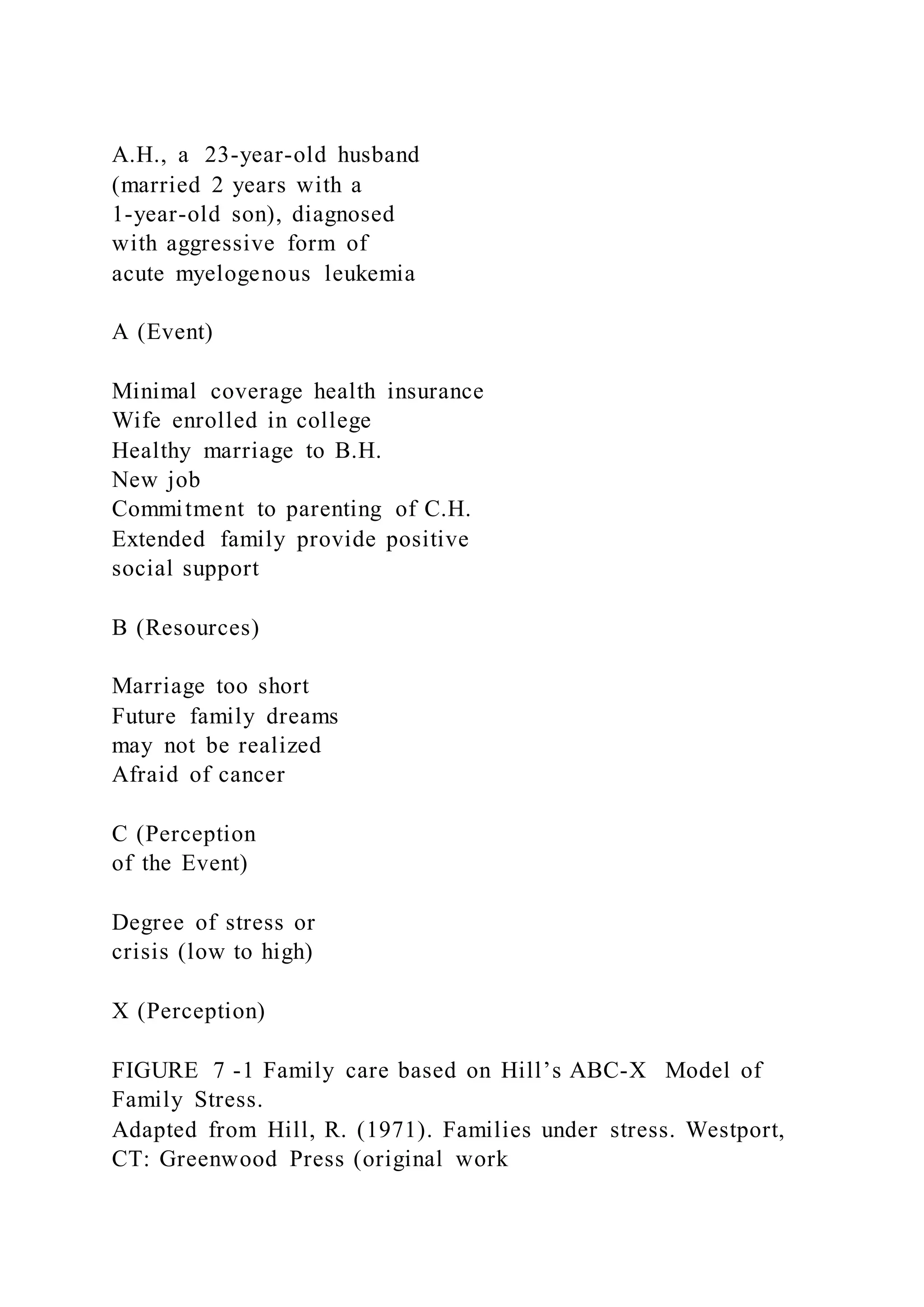
Figure 7.1 depicts the way the ABCX theory might work in the
following situation. A
23-year-old husband (A. H.) and father is diagnosed with an
aggressive form of acute myel-
ogenous leukemia (AML). Think about his hospitalization and
isolation in a bone marrow
unit away from his child and other family members (the A
factor). The strengths and re-
sources of supportive parents, his faith community, the joy of
being a parent of a 1-year-
old (C. H.), and a happy marriage to B. H. are positive B
factors. However, the lack of full
health insurance coverage and worries about high out-of-pocket
costs are negative B fac-
tors. The AML diagnosis is a perceived threat to this short
marriage, new parenting role,
and future plans, dreams, and family goals (the C factors). The
resulting X factor may be
the high stress as a result of the perception of threat to the
integrity of the family. In daily
work, nurses frequently meet families coping with high stress X
factors yet may not com-
prehend the meaning of the stress to the family.
McCubbin and Patterson (1983) further developed Hill’s (1971)
ABCX model by adding
the notion that family stressor pileup occurs when unresolved
aspects of an initial stressor
accumulate. An accumulation of stressful events limits abilities
to resolve one problem
before another event occurs. Thus, family resources are
depleted. An example might be a
family with a child diagnosed with cystic fibrosis who
experiences frequent critical exacer-
bations requiring repeated hospitalizations. At the same time, an
older sibling is experiencing
bullying in school. The mother loses her job, which is the only
job that has the needed health
insurance. Pileup is a frequent occurrence in families with aging
or younger persons and
CHAPTER 7 ● Using Family Theory to Guide Nursing Practice
173
2910_Ch07_165-194 06/01/15 11:44 AM Page 173
Denham, Sharon, et al. Family Focused Nursing Care, F. A.
Davis Company, 2015. ProQuest Ebook Central,
http://ebookcentral.proquest.com/lib/mnsu/detail.action?docID=
1963709.
Created from mnsu on 2022-05-22 16:42:01.
C
o
p
yr
ig
h
t
©
2
0
1
5
.
F
.
A
.
D
a
vi
s
C
o
m
p
a
n
y.
A
ll
ri
g
h
ts
r
e
se
rv
e
d
.
families with chronically ill family members. Technological
advancements and innovative
new therapies mean that today’s families are living with
uncertainties and tenuous situations
of illness and it’s not clearly visible unless a family assessment
is done. Families that com-
municate easily with one another and have satisfactorily
resolved problems in the past are
likely to have a more effective toolkit for managing stress than
others. Families with fragile
communication or ongoing conflict might find resolving their
coping difficulties hopeless.
N ursing C are to E nh ance Family C op ing
A goal for family-focused nursing is to assist persons and
families in decreasing the
stress linked with health and illness experiences and to help
them find supports to en-
hance healing, manage care situations, and promote family
health. The important topic
of support is covered in Chapter 15. Identifying forms of family
stress and coping during
clinical experiences is important for providing family-focused
nursing care (McCubbin
et al., 1998b). Practical ways to solve problems and support
networks are to mediate
the negative stress effects and enhance well-being (Hupcey,
1999; Peterson & Bredow,
2004). Caregiving strategies, such as planning, monitoring,
protecting, inquiring, vigi-
lance, and balancing, assist family units in meeting life
demands as they manage illness
symptoms (Eggenberger, Krumwiede, Meiers, Bliesmer, &
Earle, 2004). Family inquiry
into the illness trajectory or treatment helps a family develop
illness perspectives and
174 CHAPTER 7 ● Using Family Theory to Guide Nursing
Practice
A.H., a 23-year-old husband
(married 2 years with a
1-year-old son), diagnosed
with aggressive form of
acute myelogenous leukemia
A (Event)
Minimal coverage health insurance
Wife enrolled in college
Healthy marriage to B.H.
New job
Commitment to parenting of C.H.
Extended family provide positive
social support
B (Resources)
Marriage too short
Future family dreams
may not be realized
Afraid of cancer
C (Perception
of the Event)
Degree of stress or
crisis (low to high)
X (Perception)
FIGURE 7 -1 Family care based on Hill’s ABC-X Model of
Family Stress.
Adapted from Hill, R. (1971). Families under stress. Westport,
CT: Greenwood Press (original work
published 1949).
2910_Ch07_165-194 06/01/15 11:44 AM Page 174
Denham, Sharon, et al. Family Focused Nursing Care, F. A.
Davis Company, 2015. ProQuest Ebook Central,
http://ebookcentral.proquest.com/lib/mnsu/detail.action?docID=
1963709.
Created from mnsu on 2022-05-22 16:42:01.
C
o
p
yr
ig
h
t
©
2
0
1
5
.
F
.
A
.
D
a
vi
s
C
o
m
p
a
n
y.
A
ll
ri
g
h
ts
r
e
se
rv
e
d
.
actions that enable them to create a protective environment
(Meiers, Eggenberger,
Krumwiede, Bliesmer, & Earle, 2009).
Family-focused nurses encourage growth and support for family
coping linked with
illness by preparing families to use strategies that reduce stress.
Health education, counsel-
ing, and coaching to support coping of specific families are
tools family nurses use. For in-
stance, teaching and informing parents of a medically fragile
child to organize the medical
care area in the child’s bedroom can reduce the stress of finding
things, reduce the illness
reminders scattered through the house, and meet safety needs.
Nursing care helps the family
to have as normal a family life as possible.
Nurses can use research findings about strengths and resiliency
to help families navigate
through life transitions, crisis, and stress (McCubbin,
McCubbin, Thompson, & Fromer,
1998a). Have you ever wondered why some people manage
better than others? Have you met
families that successfully manage problems and grow from
stressful events while others dete-
riorate? Knowledge about a family’s strengths and resiliency
factors can help nurses establish
relevant nursing actions to identify and support existing
strengths. For example, A. H. gains
joy and a high level of satisfaction from being with his 1-year-
old child. Even though he is in
protective isolation for treatment of AML, finding ways for him
to remain connected could
be health producing and stress reducing. Perhaps regul ar visual
and audio connection
(e.g., Skype, Face Time) through use of a computer,
smartphone, or tablet would be helpful.
Table 7.1 provides some other ideas for specific nursing actions
to support A. H. and his
family’s coping using various perspectives from the five
nursing models described earlier.
CHAPTER 7 ● Using Family Theory to Guide Nursing Practice
175
TABLE 7 -1 Nursing A ctions to Support Family Coping Based
on Family Models
FAMILY NURSING MODEL K EY MODEL CONCEPTS
POSSIBLE NURSING ACTIONS
Calgary Family Intervention
Model
(Wright & Leahey, 2013)
Family Health System
Model (FHS)
(Anderson & Tomlinson, 1992)
Family Management Style
Framework (FMSF)
(K nafl et al., 2009)
• Provide literature to address
uncertainties about care and
community resources.
• Commend family strengths: “ Your
family seems to work very well
together to meet your challenges.”
• Identify specific questions of
concern and collaborate to
identify possible options for
solutions.
• Help family members to
understand why various members
might be coping differently.
• Arrange time for a family
conference.
• Identify ways spirituality or faith
may play important roles in
healing processes.
• Guide the parents in conveying
information about family
member condition to siblings,
friends, church members, and
extended family.
• Discuss perceptions of illness
events.
Support the cognitive
domain of family
functioning.
Support five processes (i.e.,
interactive, developmental,
coping, integrity, health).
Identify important aspects of
the family’s definition of
the situation, management
of behaviors, and
perceived consequences of
the condition on family life.
C o n t in u e d
2910_Ch07_165-194 06/01/15 11:44 AM Page 175
Denham, Sharon, et al. Family Focused Nursing Care, F. A.
Davis Company, 2015. ProQuest Ebook Central,
http://ebookcentral.proquest.com/lib/mnsu/detail.action?docID=
1963709.
Created from mnsu on 2022-05-22 16:42:01.
C
o
p
yr
ig
h
t
©
2
0
1
5
.
F
.
A
.
D
a
vi
s
C
o
m
p
a
n
y.
A
ll
ri
g
h
ts
r
e
se
rv
e
d
.
Family Health Model
(Denham, 2003)
Illness Beliefs Model
(Wright & Bell, 2009).
Consider another situation. Suppose a small child is
hospitalized after a severe insulin
reaction that resulted in a seizure, broken teeth, and a skeletal
injury from the fall that
occurred during the seizure. His parents are extremely
frightened as nothing like this has
ever happened before. The nurse uses the Family Management
Style Framework to assess
coping and the plan of care (Knafl & Deatrick, 2003, 2006).
What can the nurse do to
identify the important aspects of the family’s perceptions of the
situation? Can the nurse
guide the parents to diabetes-related care management
information that can be conveyed
to extended family, school teachers, and school friends? How
can the nurse learn the fam-
ily’s typical management style? Think about one of the other
family models previously dis-
cussed; what approaches might this model suggest? The Family
Health Model (Denham,
2003) might encourage the nurse to use the structural domain
and think about family
health routines. The nurse might spend time doing health
teaching specifically around diet
or physical activity to prevent future insulin reactions. A
family-focused nurse could affirm
the family’s positive behaviors and seek ways to build on
family strengths.
Family Development
Family development is another area relevant to family-focused
nursing practice. Nurses
learn about various individual human developmental theories
such as those of Maslow
(1954), Piaget (1967), and Erickson (1950), but receive less
education regarding family
development theories (Table 7.2). Similar to individual
development, family development
describes stages or phases with associated tasks to be
accomplished (Carter & McGoldrick,
1999; Duvall, 1977).
176 CHAPTER 7 ● Using Family Theory to Guide Nursing
Practice
TABLE 7 -1 Nursing A ctions to Support Family Coping Based
on Family Models— cont’d
FAMILY NURSING MODEL K EY MODEL CONCEPTS
POSSIBLE NURSING ACTIONS
• Affirm management behaviors.
• Acknowledge fears and trauma
caused by illness events
throughout management of the
chronic illness.
• Provide information about
specific pain management
techniques and fatigue
management strategies.
• Listen to concerns of anticipatory
grief.
• Draw on the support of the church
community for respite care so that
couple time is preserved.
• Create a trusting, calm
environment that invites open
expression of family members’
fears, anger, suffering and
sadness, and beliefs about the
illness experiences.
• Commend family members for
positive actions taken.
• Invite questions and take time to
carefully answer them.
Address core processes
(e.g., caregiving and
cathexis).
Foster conversations of
affirmation and affection.
2910_Ch07_165-194 06/01/15 11:44 AM Page 176
Denham, Sharon, et al. Family Focused Nursing Care, F. A.
Davis Company, 2015. ProQuest Ebook Central,
http://ebookcentral.proquest.com/lib/mnsu/detail.action?docI D=
1963709.
Created from mnsu on 2022-05-22 16:42:01.
C
o
p
yr
ig
h
t
©
2
0
1
5
.
F
.
A
.
D
a
vi
s
C
o
m
p
a
n
y.
A
ll
ri
g
h
ts
r
e
se
rv
e
d
.
CHAPTER 7 ● Using Family Theory to Guide Nursing Practice
177
TABLE 7 -2 Middle Class North A merican Family L ife Cy
cle
STAGE TASK OF STAGE RELATIONAL STANCE OF THE
NURSE
1.
2.
3.
4.
5.
6.
Source: Adapted from Carter, B., & McGoldrick, M. (1999). T
h e e x p an d e d family life c yc le : In d iv id u al, family an
d s o c ial
p e r s p e c t iv e s (3rd ed.). Boston: Allyn & Bacon.
Encourage independent decision making
about health, lifestyle choices, intimate
peer relationships, work and financial
independence.
Support the new couple in their process of
constructing new family health routines.
Co-construct plans and action strategies
with the family that promote healthy
family lifestyles that meet unique child
and family development needs.
Assist families in negotiating new family
goals that integrate independence of
adolescents. Counsel families on
strategies for safe care of and resources
for family elders.
Encourage families to establish new forms
of relationships from parent to adult to
adult to adult as they consider various
health and illness-related needs.
Suggest creation of traditions and rituals
that help families stay connected
through shifting roles and identify ways
these might be health or illness related.
Accept emotional and
financial responsibility
for self.
Commit to new transitional
family system.
Accept new members born
or adopted into the
family system.
Increase flexibility of family
boundaries (e.g., children’s
growing independence,
grandparent’s increasing
frailties).
Accept the exits from and
entries into the family
system.
Accept and adapt to the
shifting of generational
roles.
Leaving home
as single
young adults
J oining of
families
through
marriage: the
new couple
Families with
young
children
Families with
adolescents
Launching
children and
moving on
Families in later
life
Family L if e C ourse
Family units and the members who compose them mature and
develop over time through
various developmental stages of family life (Bianchi & Casper,
2005). Developmental theories
often leave gaps about such issues as launching family members
at older ages into adulthood,
when children leave home but return later with or without
offspring, elders moving in with
adult children, and the uncertain implications of aging family
constellations living longer. In
the past, individuals found life partners, had children, and lived
together in a separate house-
hold until death. Marriage disruption, increased nonmarital
cohabitation, out-of-wedlock
childbirths, and multigenerational households alter the family
landscape. Social mobility and
migration create sometimes less than ideal geographical
separations for many families. More
research evidence is needed about these challenges to family
development.
Family Life Course Theories consider that individuals transition
from one stage of life to
another (Bengston & Allen, 1993). This perspective involves the
ideas of time, context, process,
and other factors (Box 7.6). In Family Life Course Theory,
early life events have implications
for future life. Family life course is more about the evolutions
families go through than fixed
stages and expectations of those stages. These evolutions take
in the total experience rather
than a sequential ordering of age-linked events. Life course
transitions can cause family conflict
2910_Ch07_165-194 06/01/15 11:44 AM Page 177
Denham, Sharon, et al. Family Focused Nursing Care, F. A.
Davis Company, 2015. ProQuest Ebook Central,
http://ebookcentral.proquest.com/lib/mnsu/detail.action?docID=
1963709.
Created from mnsu on 2022-05-22 16:42:01.
C
o
p
yr
ig
h
t
©
2
0
1
5
.
F
.
A
.
D
a
vi
s
C
o
m
p
a
n
y.
A
ll
ri
g
h
ts
r
e
se
rv
e
d
.
and disturbances. Think about your personal life course, which
is likely briefer and different
from that of your parents or grandparents. Variations among
past state, current situation, and
future hopes can affect responses to personal or family crisis.
Talk to someone older and get
a sense of how generational differences color the life course and
help explain actions taken.
Families try to manage conflict and disturbances by decreasing
chaos and disorganiza-
tion. Family-focused nurses realize that life course transitions
affect life management. Some
families can adjust roles more easily than others. Think about
the transition from being
childless to being a parent. Once this change occurs and if the
child tragically dies, the par-
ent is unlikely to return to the same state of childlessness
experienced before the birth.
Many perspectives in this growing field still need to be
explored, such as relationships of
internal family dynamics and causal relationships,
psychological processes, and social in-
teractions. Social policies and preventive interventions need to
consider what is experienced
during these life course transitions (Mayer, 2009).
U ncertainty of th e L if e C ourse
Over time, families with children go through transitions. The
empty nest might occur as chil-
dren leave home and establish families in a different household.
Some families have numerous
life transitions at the same time (e.g., divorce, remarriage,
parenting younger children, launch-
ing young adults, giving birth, caring for elder kinfolk).
Families experience transitional points
at disparate points in time. Many transitions do not fit neatly
into past ideas of family devel-
opment stages. Life events occur along a time trajectory linked
with others in an extended
family cohort across generations and time. How families
change, operationalize daily lives,
or structure their time to nurture and protect members is
strongly influenced by the family’s
context and place in history (McCubbin et al., 1998b). Current
experiences influence future
behaviors. When nurses think family, they consider member
placement and note life aspects
that will influence care, well-being, and resources needed by
those seeking care. A nurse’s re-
lational stance with those seeking care should acknowledge “not
knowing” and curiosity
about the family’s developmental story (Wright & Leahey,
2013).
G oals to E nh ance Family D evelop ment
In the developmental realm, family nurses aim to support
individual and unit development
throughout the life course (Table 7.3). A life course transitional
approach can be useful.
For instance, when caring for a family in which a 15-year-old
son is learning to manage
his diabetes independently, his father might be drawn away
regularly to care for his
73-year-old paternal grandfather with dementia. The nurse can
assist the family in
178 CHAPTER 7 ● Using Family Theory to Guide Nursing
Practice
BOX 7-6
Concepts in Life Course Theory
Life course theory principally involves the following ideas:
● Life changes are considered over a lifetime, not just at
particular episodes.
● Lives are considered across a large series of cohorts rather
than by a single family lineage.
● Lives are considered across life domains (e.g., work and
family).
● Development is linked to personal characteristics, individual
actions, cultural frames, and
institutional structures.
● Lives are lived in the context of others (e.g., couples,
families, cohorts).
Source: Mayer, K. U. (2009). New directions in life course
research. Annual Review of S ociology, 3 5 , 413–433. doi:
10.1146/annurev.soc.34.040507.134619
2910_Ch07_165-194 06/01/15 11:44 AM Page 178
Denham, Sharon, et al. Family Focused Nursing Care, F. A.
Davis Company, 2015. ProQuest Ebook Central,
http://ebookcentral.proquest.com/lib/mnsu/detail.action?docID=
1963709.
Created from mnsu on 2022-05-22 16:42:01.
C
o
p
yr
ig
h
t
©
2
0
1
5
.
F
.
A
.
D
a
vi
s
C
o
m
p
a
n
y.
A
ll
ri
g
h
ts
r
e
se
rv
e
d
.
CHAPTER 7 ● Using Family Theory to Guide Nursing Practice
179
Calgary Family Intervention
Model (Wright & Leahey, 2013)
Family Health System
Model (FHS)
(Tomlinson, Peden-McAlpine,
& Sherman, 2012)
Family Management Style
Framework (FMSF)
(K nafl et al., 2009)
Family Health Model
(Denham, 2003)
TABLE 7 -3 Nursing A ctions T h at Support Family
Development
FAMILY NURSING MODEL K EY CONCEPTS NURSING
ACTIONS
• Ask, “ What could your son do that
would help you know how to
help him manage his diabetes? ”
and “ How long do you think you
will be able to help your father
manage living at home? ”
• Use questions to facilitate
conversation and encourage the
family to reflect upon possible
impending changes from various
member perspectives.
• Make commendations as
appropriate.
• Consider ways families interact as
they mature and evolve over time.
• Identify which of the five
processes are most affected by
the developmental changes
within the family.
• Identify which member processes
require priority attention at any
one time.
• Invite the adult father to share his
views of the grandfather with
dementia and the extent to which
those views focus on normality
(e.g., life not challenged by needs
of dementia) or dementia-related
deficits (e.g., abilities, activities,
and life compromised by
dementia).
• Follow up with a focus on the
resources and abilities needed to
assist the teenage son in
maintaining normality in the face
of managing diabetes (e.g.,
abilities to balance among
activity, food, and insulin).
• Compare, contrast, and
commend for thriving in this
difficult context.
• Facilitate a conversation to discover
the abiding family goals: “ Within
the next year, what do you hope to
accomplish as a family? ” and “ What
are your most significant health
needs as a family? ”
Support behavioral
functioning throughout
developmental
transitions.
Support five family
processes (i.e.,
interactive,
developmental, coping,
integrity, health) as the
members mature.
Consider the implications
of the complexities of
family life and parenting
goals as needs of both
teenager and an elderly
grandfather are
considered while son
adjusts to care needs of
a diabetes diagnosis.
Coordination processes
C o n t in u e d
2910_Ch07_165-194 06/01/15 11:44 AM Page 179
Denham, Sharon, et al. Family Focused Nursing Care, F. A.
Davis Company, 2015. ProQuest Ebook Central,
http://ebookcentral.proquest.com/lib/mnsu/detail.action?docID=
1963709.
Created from mnsu on 2022-05-22 16:42:01.
C
o
p
yr
ig
h
t
©
2
0
1
5
.
F
.
A
.
D
a
vi
s
C
o
m
p
a
n
y.
A
ll
ri
g
h
ts
r
e
se
rv
e
d
.
negotiating practical family goals and help integrate
independence for the teenage son while
counseling the father on strategies for safe care and resources
for the aging grandfather.
Developing families will likely inhabit a variety of households
in various geographical lo-
cations over time and form unique attachments. Life events that
occur in various places can
influence individual life courses, which may or may not
remarkably affect the family unit. As
advocates, family nurses can be aware of the sociopolitical and
economic environments of the
communities where they are employed and seek ways to
strengthen the context that influences
family development (Denham, 2003). From this perspective,
community-minded, family-
focused nurses might advocate for after-school child care, anti-
bullying policies, and contexts
that support healthy eating and physical activity. An
occupational health nurse can advocate
for work safety policies that protect family members so that
they can continue to econom-
ically provide for the family. Nurses who think family identify
and address developmental
concerns in the care they provide.
Family Interactions
Family interactions are dynamic, but at the same time have
some consistency of pattern. Family
interactions establish, build, and maintain relationships and are
used to meet family goals and
needs (Anderson & Tomlinson, 1992). Family interactions
evolve over time and through life
180 CHAPTER 7 ● Using Family Theory to Guide Nursing
Practice
Illness Beliefs Model
(Wright & Bell, 2009).
TABLE 7 -3 Nursing A ctions T h at Support Family
Development— cont’ d
FAMILY NURSING MODEL K EY MODEL CONCEPTS
POSSIBLE NURSING ACTIONS
• Based upon the common family
goals, discern from the family the
abilities and skills they believe
they will need to accomplish
these goals.
• Set goals and identify ways the
family can work together as a
team to accomplish them.
• Talk together about ways to
evaluate whether goals have
been met.
• Construct a family genogram
and ecomap together that will
reveal the illnesses across the
generations.
• Identify resources that can be
drawn upon for support and
information.
• Ask the questions: “ What is one
characteristic that you most
appreciate about [your father]
[your son] [your grandfather]? ” and
follow up with “ Who do you count
on most for support these days? ”
• Remain curious about the answers.
Focus the conversation to build on
the family’s strengths and ability to
problem solve together.
Create a collaborative
relationship and remove
obstacles to change.
2910_Ch07_165-194 06/01/15 11:44 AM Page 180
Denham, Sharon, et al. Family Focused Nursing Care, F. A.
Davis Company, 2015. ProQuest Ebook Central,
http://ebookcentral.proquest.com/lib/mnsu/detail.action?docID=
1963709.
Created from mnsu on 2022-05-22 16:42:01.
C
o
p
yr
ig
h
t
©
2
0
1
5
.
F
.
A
.
D
a
vi
s
C
o
m
p
a
n
y.
A
ll
ri
g
h
ts
r
e
se
rv
e
d
.
course transitions (Cowan & Cowan, 2003). These interactions
include verbal and nonverbal
communication, nurturance patterns, and expressions of
intimacy (Anderson & Tomlinson,
1992). Family members provide mutual support when their
interactions are satisfactory. The
larger community provides supports and barriers for family
units. Box 7.7 provides a case
study for you to consider nurse partnerships with individuals
and their families. Take some
time to reflect about the best answers to the questions about a
family-focused perspective.
Family E x osystems
The family household is the principal place where members
interact in interdependent ways
and interface with their many environments (Bubolz & Sontag,
1993; Denham, 2003). On
a grand scale, one can imagine that family units are in some
ways interdependent with all
the world’s people. For example, go through your closet and
examine the labels on clothes.
See where the items are produced and consider how you are
intricately connected with
persons the world over. Family units are continually influenced
by many forces outside
household boundaries. The word exosystem is used in
ecological theory to describe the
CHAPTER 7 ● Using Family Theory to Guide Nursing Practice
181
BOX 7-7
Family Circle
Travis was born prematurely and discharged to go home at 4
months with his parents and 7-year-
old twin siblings Brianna and Troy and a 4-year-old sister,
Janie. Travis’s primary health problems are
bronchopulmonary dysplasia, oral aversion, pulmonary arterial
hypertension, and right-sided cardiac
failure. He is receiving home low-flow oxygen therapy by nasal
cannula, furosemide (Lasix) and
digoxin medication therapy, occupational therapy for the oral
aversion, and feedings by
percutaneous endoscope gastrostomy (PEG) tube. You are the
home care nurse who provides
direct care for the child overnight on weekends and during
parent’s workdays. Travis is now
6 months old. His parents work at a local factory. Some days
they are on the same schedule and
some days they have few overlapping hours. On some days
Brianna and Troy are home for a portion
of your shift. Janie is sometimes there when Mom or Dad is
doing household tasks. You notice Janie
is engaging in activities that do not seem safe for her age level
(e.g., riding her tricycle on a country
road, climbing the kitchen counter to retrieve a sharp knife,
playing in the wading pool outside for
long periods unattended). When Janie is near Travis, her speech
is loud and it is difficult to calm
Travis. Meanwhile, Travis is not gaining weight and is lagging
in achieving developmental
milestones. Mom and Dad are struggling with household bills
and are considering filing for
bankruptcy.
Q uestions from a traditional perspective:
1. What are the nursing problems you are managing for
Travis?
2. What are the nursing actions you consider important to
improve Travis’s growth and
development?
3. What are your goals for Travis’s care?
Q uestions from a family-focused perspective:
1. What model or models of family-focused care do you
believe could be helpful for Travis’s
family that would best support his growth and development?
2. What are your goals for this family’s care from the different
perspectives of the five family
nursing models presented in this chapter?
3. What are the key concepts of concern regarding family
coping, family development, family
interaction, and family integrity for Travis’s family?
4. List the proposed nursing actions you consider most
important in the realms of family coping,
family development, family interaction, and family integrity?
2910_Ch07_165-194 06/01/15 11:44 AM Page 181
Denham, Sharon, et al. Family Focused Nursing Care, F. A.
Davis Company, 2015. ProQuest Ebook Central,
http://ebookcentral.proquest.com/lib/mnsu/detail.action?docID=
1963709.
Created from mnsu on 2022-05-22 16:42:01.
C
o
p
yr
ig
h
t
©
2
0
1
5
.
F
.
A
.
D
a
vi
s
C
o
m
p
a
n
y.
A
ll
ri
g
h
ts
r
e
se
rv
e
d
.
settings wherein a person may not actively participate but is
still affected. For example, a
parent’s employer might alter the costs and services of health
care insurance available to
employees and families. These decisions greatly influence the
members, but these members
are not a part of the decisions made. Families interact with
many social structures that af-
fect their lives even when they are not noticed.
Family relationships affect members’ health-seeking behaviors
and family caregiving during
illness. Individual personality, knowledge, motivation, and self-
efficacy are some factors that
can influence care behaviors. Some families faced with a
stressful situation may disagree loudly
and argue with great intensity when they disagree. These
arguments may be usual communi-
cation patterns for a particular family, but upsetting to the nurse
hearing the boisterous debate.
Other families may be sullen, speak little, or seem overtly
courteous and respectful of one an-
other. Nurses observe outward behaviors, but these actions only
reveal some parts of the family
relationship. Observations might not always indicate how a
family truly values its members
or reveal how care is provided. Member roles influence
individual actions. For instance, in an
immigrant family from Sudan the mother expresses care for her
family through traditional
cooking and baking to retain memories of the country of origin.
Family-focused nurses know
that the behavioral patterns are tied to roles and values. The
nurse does not usually aim to
alter roles, but to understand and help family units use them
beneficially in member care. For
example, the family-focused nurse works with the mother in a
Sudanese family to design a
family-level intervention to improve nutrition that incorporates
new information about low-
fat cooking methods (Epstein, Ryan, Bishop, Miller, & Keitner,
2003).
Family C ommunication
Nurses need to know how family members communicate with
one another. Communication
is essential to relaying biomedical information and helping
families with self-care or care
management. Some messages are factual or intended to inform,
but others are emotional.
Family communication conveys beliefs and values linked with
the past, present, and future.
Language is used to share relevant information. Families have
unique interpretative patterns
developed over time that help members understand meanings.
Nurses might not understand
nonverbal family cues but can notice whether they seem
congruent with what is said. Families
often have their own language through which they privately
share things. For example, Amish
family members often live in the midst of an American or
English community but hold very
different ideas about appropriate behaviors. They interact with
those outside their sect or
community but hold unique ideas about electricity, automobiles,
and technologies. They be-
have differently than those in the mainstream. Intentional
minimal use of motorized vehicles,
varying educational forms, and faith guide their lifestyles from
birth to death. Family-focused
nurses caring for the Amish will need to interact in some
different ways. Listen to your emo-
tional responses to families and recognize that there are likely
reasons why a family is atten-
tive, anxious, hostile, or withdrawn during care situations
(Wright & Leahy, 2013).
Family Sup p ort
Families and communities frequently provide support to one
another when a crisis occurs.
For example, if a family has a member diagnosed with cancer,
extended family, friends,
and others might reach out and offer supports. A series of fund-
raising events to raise money
for medical costs might be organized. Where you live matters,
and family and social
resources may or may not be well met by agencies. When
supports are lacking, those with
inadequate resources can experience great despair. Amish
families, for instance, do not usu-
ally have health care insurance and are largely self-employed.
They depend upon one another
for support. Family health is affected by whether members
interact in health-producing or
182 CHAPTER 7 ● Using Family Theory to Guide Nursing
Practice
2910_Ch07_165-194 06/01/15 11:44 AM Page 182
Denham, Sharon, et al. Family Focused Nursing Care, F. A.
Davis Company, 2015. ProQuest Ebook Central,
http://ebookcentral.proquest.com/lib/mnsu/detail.action?docID=
1963709.
Created from mnsu on 2022-05-22 16:42:01.
C
o
p
yr
ig
h
t
©
2
0
1
5
.
F
.
A
.
D
a
vi
s
C
o
m
p
a
n
y.
A
ll
ri
g
h
ts
r
e
se
rv
e
d
.
health-negating ways as they live and interact outside the view
of nurses and other health
care professionals (Denham, 2003). Through the individual -
nurse-family relationship, sup-
portive partnerships aimed at providing for individual and
family needs can be formed.
G oals to E nh ance Family Interaction
Family-focused nurses purposely think family and use
intentional actions to assist individ-
uals and family units to strengthen their capacities and face life
transitions linked with
health and illness. Nurses who think family set goals that
support families in constructing
life patterns that enhance health and manage illness. Nurses can
use therapeutic conversa-
tions as they collaborate and co-evolve with the family during
care experiences (Benzein
& Saveman, 2008). Therapeutic conversations facilitate
reciprocity, or mutual give and
take, as nurses and families share opinions and values. This
partnership focuses on the care
responsibilities that best support identified family needs.
When nurses think family and caring actions are co-constructed,
they are meaningful to
the nurse, the individual needing care, and the family unit
(Meiers & Tomlinson, 2003).
Co-construction of meaning is central to caring in the family
health experience; it is devel-
oped through caring interactions and partnerships. These
interactions help the nurse to
know the family and advocate for their identified needs using an
existential and intentional
perspective (Meiers & Brauer, 2008). This means the nurse
respects the humanity of each
person and recognizes they are self-determining and have free
will (Gadow, 1989). The nurse
in partnership practice with families seeks to understand the
family’s point of view of the
world to inform nursing action. Family goals are set to reach
mutually agreed upon out-
comes. The family-focused nurse using this approach is,
“someone you can share things
with . . . who feels concern . . . , but doesn’t put the pressure on
you . . . so you just kind of
relax and . . . know that there are other people close by that care
...” (Meiers, 2002, p. 60).
Table 7.4 provides ideas for building therapeutic individual-
family-nurse relationships.
CHAPTER 7 ● Using Family Theory to Guide Nursing Practice
183
TABLE 7 -4 Nursing A ctions to Influence Family H ealth
Beliefs T h rough
Family Interactions
NURSING RELATIONAL SPECIFIC NURSING
ACTION GOALS SUBCONCEPTS STANCE ACTIONS
Recognize the
power of
co-constructed
meanings.
Create a context
for an ongoing
collaborative
relationship.
Prepare the environment:
Introduce yourself, offer the
appropriate physical
greeting (e.g., eye contact,
handshake, smile).
Prepare for the session:
• Outline goals for the
interaction (e.g., I would like
to discuss how I can be most
helpful to you with choosing
healthy eating approaches).
• Approach the nurse-
family interaction as
the major form of co-
construction.
• Nurse authenticity
facilitates insight.
• Caring actions hold
potential for
enhancing the family
health experience.
Approach meetings
with the goal of
developing a
therapeutic alliance.
Nurse-family
interactions
(verbal and
nonverbal)
implicitly
influence
interdependen
t and
dependent
future.
First impressions
are long
lasting.
C o n t in u e d
2910_Ch07_165-194 06/01/15 11:44 AM Page 183
Denham, Sharon, et al. Family Focused Nursing Care, F. A.
Davis Company, 2015. ProQuest Ebook Central,
http://ebookcentral.proquest.com/lib/mnsu/detail.action?docID=
1963709.
Created from mnsu on 2022-05-22 16:42:01.
C
o
p
yr
ig
h
t
©
2
0
1
5
.
F
.
A
.
D
a
vi
s
C
o
m
p
a
n
y.
A
ll
ri
g
h
ts
r
e
se
rv
e
d
.
184 CHAPTER 7 ● Using Family Theory to Guide Nursing
Practice
TABLE 7 -4 Nursing A ctions to Influence Family H ealth
Beliefs T h rough
Family Interactions— cont’ d
NURSING RELATIONAL SPECIFIC NURSING
ACTION GOALS SUBCONCEPTS STANCE ACTIONS
• Offer a plan for your time
together (e.g., Today, I would
like us to get to know each
other; help me understand
who is in your family and a bit
about your family health
background).
• Offer ideas for the timeline for
meetings (e.g., I will spend
about 1 hour with you today
and then an hour every
2 weeks).
Ask the following questions:
• Have you previously sought
help as a family for healthy
eating ideas?
• What is the worst advice that
you have been given by a
provider about healthy
eating?
• What is the best advice you
have been offered by a
provider about healthy
eating?
Create the genogram (and
ecomap, if appropriate):
Ask the names, ages,
occupations, & health
concerns of family members.
Follow questions in the
instance of illness:
• What is the one characteristic
that best describes X?
• What have you come to
appreciate most about your
XXX since this illness began?
Follow with questions for
health promoting actions:
• Who do you count on the
most for support these days?
• Is there anyone else that you
consider to be like “ family” ?
• Are there any particular
religious or spiritual or cultural
beliefs that are helpful or not
helpful to your or your family’s
health?
Manners matter.
2910_Ch07_165-194 06/01/15 11:44 AM Page 184
Denham, Sharon, et al. Family Focused Nursing Care, F. A.
Davis Company, 2015. ProQuest Ebook Central,
http://ebookcentral.proquest.com/lib/mnsu/detail.action?docID=
1963709.
Created from mnsu on 2022-05-22 16:42:01.
C
o
p
yr
ig
h
t
©
2
0
1
5
.
F
.
A
.
D
a
vi
s
C
o
m
p
a
n
y.
A
ll
ri
g
h
ts
r
e
se
rv
e
d
.
CHAPTER 7 ● Using Family Theory to Guide Nursing Practice
185
Focus the
therapeutic
conversation.
Remove
obstacles to
change needed
in the health
care situation.
TABLE 7 -4 Nursing A ctions to Influence Family H ealth
Beliefs T h rough
Family Interactions— cont’ d
NURSING RELATIONAL SPECIFIC NURSING
ACTION GOALS SUBCONCEPTS STANCE ACTIONS
End the session with the
following:
• Have you had a chance to tell
your story?
• Is this way of working a good
fit for you?
• How are you hoping that we
can be of most help to you?
• What is causing you the
biggest challenge these days?
• What are you hoping we could
talk about today?
• If you could have just one
question answered in our
work today, what would it be?
• Clearly address any nonverbal
or verbal behavior that
suggests there has been
coercion to participate or
signs of disinterest or
resentment.
• We cannot proceed as if this is
a helping session because we
need to talk about [ the
situation] .
• What should we do about
this?
• Then proceed to co-construct
a solution with which all can
move forward.
• I would be interested in
knowing what is troubling you
today.
• Listen and try to understand
the situation.
• Acknowledge and clarify any
misconceptions.
Ask these questions if not
already used:
• What is the worst advice that
you have been offered by a
provider about healthy
eating?
• What is the best advice you
have been offered by a
provider about healthy
eating?
Adopt an attitude of
constant vigilance
against the idea that
you have any
degree of certainty
about the family’s
perception.
Approach the situation
with the courage to
identify issues that
are implicit and not
within the realm of
usual social
conversation, things
that might impede
therapeutic
conversation.
Acknowledge and talk
about any strong
emotions that seem
to be present.
Proceed from the
perspective that the
family’s beliefs and
expectations about
the therapeutic
process may be
unclear.
Discover the
family’s
perceptions
and clarify the
therapeutic
work.
A family member
who does not
want to be
present or is
present under
duress can be
an obstacle.
A family member
who is
dissatisfied can
be an obstacle.
Unclear
expectations
about the
therapeutic
conversation
can be an
obstacle.
C o n t in u e d
2910_Ch07_165-194 06/01/15 11:44 AM Page 185
Denham, Sharon, et al. Family Focused Nursing Care, F. A.
Davis Company, 2015. ProQuest Ebook Central,
http://ebookcentral.proquest.com/lib/mnsu/detail.action?docID=
1963709.
Created from mnsu on 2022-05-22 16:42:01.
C
o
p
yr
ig
h
t
©
2
0
1
5
.
F
.
A
.
D
a
vi
s
C
o
m
p
a
n
y.
A
ll
ri
g
h
ts
r
e
se
rv
e
d
.
186 CHAPTER 7 ● Using Family Theory to Guide Nursing
Practice
Source: Meiers, S. J ., & Tomlinson, P. S. (2003). Family-nurse
co-construction of meaning: A central phenomenon of
family caring. S c an d in av ian J o u r n al o f C ar in g S c ie
n c e s , 1 7 ( 2 ) , 193–2 01.
Wright, L. M., & Bell, J . M. (2009). Creating a context for
changing beliefs. In L. M. Wright & J . M. Bell (Eds.), B e lie
fs an d
illn e s s : A mo d e l o f h e alin g (pp. 143– 178). Calgary,
Alberta, Canada: 4th Floor Press.
TABLE 7 -4 Nursing A ctions to Influence Family H ealth
Beliefs T h rough
Family Interactions— cont’ d
NURSING RELATIONAL SPECIFIC NURSING
ACTION GOALS SUBCONCEPTS STANCE ACTIONS
• Probe the idea that there has
been a lack of fit between family
and provider expectations.
• Affirm the fact that the family
is the expert about their
experience.
• Support the family’s decision
not to continue with care by a
specific provider if the fit is
not right for them.
How can I/we be helpful to you
in a way that is different than
other providers?
Ask the referring person to
have the family speak
directly with you to set the
initial contact time and
purpose.
Seek to learn about
the family’s previous
experiences within
the health care
system.
Honor family
relationships with
other health care
providers.
Encourage family self-
referral to give the
family opportunity
to clarify their
perspective.
Previous negative
experiences
with health
care providers
can be an
obstacle.
Simultaneous
involvement
with multiple
health care
providers can
be an obstacle.
Unrealistic or
unknown
expectations of
the referring
person about
care or
treatment can
be obstacles.
Family Integrity
The family integrity realm is the final area to explore. The term
integrity refers to strength,
solidarity, stability, and wholeness. Elements of family integrity
are linked with family iden-
tity, values, boundaries, and health beliefs (Anderson &
Tomlinson, 1992). Families create
and maintain integrity through a variety of means and seek to
retain it as they interact
with larger societal systems (Box 7.8).
Family B oundaries
Family systems can be described along a cohesion continuum
from disengaged, to engaged,
to enmeshed or along an adaptability continuum from rigid to
flexible (Olson, Russell, &
Sprenkle, 1989). Things that complement family identity are
beneficial but those that com-
pete can create conflict and discord. For instance, family
members can get caught between
family and caregiving system boundaries. Families that might
have been viewed as strong
for years may be splintered, as responsibilities for care of an
aged parent compete with
needs to support children in school activities. Family
disagreements can occur. A young
2910_Ch07_165-194 06/01/15 11:44 AM Page 186
Denham, Sharon, et al. Family Focused Nursing Care, F. A.
Davis Company, 2015. ProQuest Ebook Central,
http://ebookcentral.proquest.com/lib/mnsu/detail.action?docID=
1963709.
Created from mnsu on 2022-05-22 16:42:01.
C
o
p
yr
ig
h
t
©
2
0
1
5
.
F
.
A
.
D
a
vi
s
C
o
m
p
a
n
y.
A
ll
ri
g
h
ts
r
e
se
rv
e
d
.
teen insists she wants a visible tattoo because friends have
gotten them. Parents do not
want to allow the outside world to negatively influence their
family ways. Nurses who
think family consider family boundary issues in their practice.
As nurses involve family
dyads (e.g., parent-child, sibling-sibling, husband-wife), the
goal is to create care
approaches to respect existing system beliefs and practices and
maintain integrity or
wholeness of the family (Tomlinson, Peden-McAlpine, &
Sherman, 2011).
Families create boundaries that determine “who is in” and “who
is out,” which describes
who is or isn’t included in the family circle of care and decision
making. Family-focused
nurses are attentive to the ways persons receiving care define
family. Family boundaries
are often renegotiated over time. This change is not always the
result of conscious effort
but might evolve from trial and error as attempts are made to
reach valued goals. Family
members may have boundaries with one another as well as with
those outside the family.
Siblings often set boundaries for one another. Nurses working
with families need to be sen-
sitive to what boundaries exist and what they mean. Who gets
told the good or bad news
in a health care situation is influenced by family boundaries.
Family Identity
Family identity involves common, mostly shared perceptions,
goals, and values about who
members are in relationship to others. Family identity
influences unit behaviors, relation-
ships with the external world, and internal interactions with
each other. Wright and Leahy
(2013) state “as a family thinketh, so it is.” For instance, a
family may see itself as “busy”
and make choices based on current involvements. Families may
demonstrate a range of
behaviors that identify their commitment and loyalty to each
other. A big brother may step
in when children bully his younger brother.
The family’s shared identity is linked to the family’s history.
For example, a Sudanese
family may have a history as political refugees, and traumatic
experiences and great loss
CHAPTER 7 ● Using Family Theory to Guide Nursing Practice
187
BOX 7-8
Basic Family System Tenets
Family systems theorists propose the following basic tenets that
are linked with integrity of these
unique family systems:
● A family system is a set of interrelationships of
interdependent persons who mutually
influence each other; what happens to one component influences
all other components.
● A family system has a hierarchy of components (e.g.,
subsystems, systems, suprasystems,
exosystems).
● Family systems are surrounded by permeable boundaries that
interface with larger
environments.
● Family boundaries vary in permeability; some boundaries
are open, others are closed, and
some are more flexible.
● Family systems take things in and have outputs that cross its
boundaries.
● Family systems use a variety of means to reach the goals to
communicate with one another
and manipulate information relevant to family identity.
● Feedback loops regulate the family system, and information
exchange occurs among system
components, the system, and its multiple environments.
Source: Whitchurch, G. G., & Constantine, L. L. (1993). In P.
Boss, W. Doherty, R. LaRossa, W. R. Schumm, &
S. K. Steinmetz (Eds.), S ourceb ook of family theories and
methods: A contex tual approach (pp. 325–352). New York:
Plenum.
2910_Ch07_165-194 06/01/15 11:44 AM Page 187
Denham, Sharon, et al. Family Focused Nursing Care, F. A.
Davis Company, 2015. ProQuest Ebook Central,
http://ebookcentral.proquest.com/lib/mnsu/detail.action?docID=
1963709.
Created from mnsu on 2022-05-22 16:42:01.
C
o
p
yr
ig
h
t
©
2
0
1
5
.
F
.
A
.
D
a
vi
s
C
o
m
p
a
n
y.
A
ll
ri
g
h
ts
r
e
se
rv
e
d
.
may have occurred during that time. Even in a different
environment, the family might
find it difficult to trust those outside the immediate family.
Outsiders include nurses and
other health care providers. The nurse caring for such a family
must invest time and gain
their trust. Without trust, counsel may go unheeded.
Family values are connected to family identity and influence
priorities. For instance,
time given to physical activity in families differs. Some
families value growth and change,
and others resist it. Family identity plays roles in determining
power structures and de-
cision making. For instance, parental power can be used to
control children or to
strengthen their spirits and encourage personal choices. Family
identity often guides
choices of personal relationships. For example, if a family
values getting regular physical
activity, young adults are likely to choose physically active
friends. Nurses who think
family know when issues concerning family identity might need
to be assessed and be
included in a care plan. In some communities, the nurse might
need to work with com-
munity elders to discern community-held beliefs about family
identities and values.
Family H ealth R outines and R ituals
Family values can shape stories about health experiences and
influence the behaviors, rou-
tines, and rituals of family health. Knowing about health beliefs
helps family nurses better
understand reasons for decisions and actions, especially when a
new or ambiguous situation
is faced (Antonovsky & Sourani, 1988; Reiss, 1987). Rolland
(2003) identified some beliefs
for nurses to inquire about:
• Causes of illness influenced by and outcomes of usual family
life
• Meanings attached to symptoms linked with religion or culture
• Influences of prior generations
• Anticipated points of difficulty in managing an illness or
promoting health
Family health beliefs influence health-seeking behaviors and
family health routines.
Health-related activities such as adhering to immunization
schedules, going to the doctor,
implementing dietary changes, and maintaining hygiene are
influenced by family health
beliefs (Denham, 2003). Health beliefs are influenced by the
family’s culture, values, edu-
cation, and history, which are all linked to family integrity.
Family health routines are the usual daily activities (e.g., sleep,
physical activity, diet) that
promote or attend to health or illness care needs in daily life
and are shaped by health beliefs
and other family factors (Denham, 2003). Routines help families
maintain member integrity
and support the household production of health. Family health
routines are shaped by val-
ues, attitudes, family influences, sociocultural mores, and faith.
Rituals tied to traditions,
celebration, and commemoration of special occasions can also
influence some routines.
Family-focused nurses recognize that they are temporary guests
as they work with family
health routines and honor family integrity (Denham, 2003;
Tomlinson, Peden-McAlpine,
& Sherman, 2011). More needs to be learned about the ways
nursing interventions can
make important differences for the health of individual members
(Box 7.9).
G oals to E nh ance Family Integrity
Family nurses consider family integrity in terms of family
interactions, boundaries, identity,
and routines. Nurses who think family know that care involves
more than merely telling others
what to do. Caring actions employ strategies that use trusting
relationships to meet goals.
Family-focused nurses avoid a “one size fits all” approach and
communicate through specific
messages for each family’s needs and situations. For example,
Todd, a 5-year-old boy, was
lying on the sidewalk in front of the family’s home after a hit-
and-run motorcycle accident.
188 CHAPTER 7 ● Using Family Theory to Guide Nursing
Practice
2910_Ch07_165-194 06/01/15 11:44 AM Page 188
Denham, Sharon, et al. Family Focused Nursing Care, F. A.
Davis Company, 2015. ProQuest Ebook Central,
http://ebookcentral.proquest.com/lib/mnsu/detail.action?docID=
1963709.
Created from mnsu on 2022-05-22 16:42:01.
C
o
p
yr
ig
h
t
©
2
0
1
5
.
F
.
A
.
D
a
vi
s
C
o
m
p
a
n
y.
A
ll
ri
g
h
ts
r
e
se
rv
e
d
.
His father was working in the yard at the time of the accident.
He called for emergency
help. He accompanied the child to the emergency department.
Todd was admitted to the
pediatric intensive care unit (PICU). His mother was en route
from an out-of-town business
trip and could not be reached. Todd suffered multiple skeletal
fractures and a possible spinal
injury. In the opinion of the PICU diagnostic team, Todd needed
a contrast MRI (magnetic
resonance imaging) to determine the presence and extent of the
spinal injury. However, because
of the nature of the injury and the need for sedation, the MRI
was considered a high-risk
procedure. Todd had lost a considerable amount of blood and
needed a blood transfusion.
Dad was the sole decision maker and was having a difficult time
deciding whether to have
the MRI or blood transfusion done. Table 7.5 provides some
suggestions for appropriate
nursing actions that can support family integrity in this
situation. The five family nursing mod-
els explained earlier in this chapter suggest various ways to
consider family integrity and
approach family care.
CHAPTER 7 ● Using Family Theory to Guide Nursing Practice
189
BOX 7-9
Evidence-Based Family Nursing
Global changes in health care are needed to reduce the costs of
that care. Increased demands on
nurses and other health professionals call for some changes in
the health care systems. Short
hospital stays and intense care needs, along with early
discharge, call for shifts in the ways nursing is
done. Family members need information, skills, and support to
adequately provide quality
coordinated care. A children’s hospital in Iceland has been
testing family interventions to identify
and better respond to family needs. As new knowledge is
identified and evidence of best practice
becomes available, questions about how to translate this
knowledge into clinical practice are often
unanswered. The best ways to provide family nursing in a
systematic way are a concern because
there has been little evaluation of the effects of family nursing
interventions on family relationships
and family outcomes. A study investigated the effects of a short
therapeutic conversation to see if
it made differences in the ways families perceived support
(Svavarsdó ttir & Sigurdardottir, 2011).
Thirty families of hospitalized children were randomly divided
into a control group and an
intervention group. All took part in a 15-minute or less
therapeutic conversation. Those in the
intervention group also participated in an average 25-minute
family interview in which the nurse
drew a genogram and an ecomap with help from the family.
Therapeutic questions were used: What
is the greatest challenge your family is facing? Who is suffering
most? What one question do you
need answered? Also, tailored questions about the specific
child’s condition were asked. After this
interview those in the intervention group completed
questionnaires while the child was still an
inpatient (time 1). They then completed the surveys again on the
fifth day after discharge (time 2).
Those in the control group also completed surveys during the
inpatient stay and again on the fifth
day after discharge. Of those who started the study, 13
intervention and 11 control families
completed all surveys. No significant difference was found on
perceived family support between the
experimental or control group at the beginning of the study or
after the 15-minute therapeutic
conversation. Those in the experimental or intervention group
reported better family support after
the 25-minute intervention than did the control group. Also,
those in the intervention group
experienced a significantly higher level of family and cognitive
support after this intervention
compared to before the intervention. Perceptions of family
collaboration and problem-solving skills
were the same in the intervention and control groups. Findings
indicated that family intervention
makes some differences, but more study about family practices
that create efficient and valued
outcomes is needed.
Source: Svavarsdó ttir, E. K., & Sigurdardottir, A. O. (2011).
Implementing family nursing in general pediatric nursing
practice: The circularity between knowledge translation and
clinical practice. In E. K. Svavarsdó ttir & H. Jó nsdó ttir
(Eds.), Family nursing in action. Reykjavik, Iceland: University
of Iceland Press (pp. 161–184).
2910_Ch07_165-194 06/01/15 11:44 AM Page 189
Denham, Sharon, et al. Family Focused Nursing Care, F. A.
Davis Company, 2015. ProQuest Ebook Central,
http://ebookcentral.proquest.com/lib/mnsu/detail.action?docID=
1963709.
Created from mnsu on 2022-05-22 16:42:01.
C
o
p
yr
ig
h
t
©
2
0
1
5
.
F
.
A
.
D
a
vi
s
C
o
m
p
a
n
y.
A
ll
ri
g
h
ts
r
e
se
rv
e
d
.
190 CHAPTER 7 ● Using Family Theory to Guide Nursing
Practice
TABLE 7 -5 Nursing A ctions to Support Family Integrity
Based on Family Models
FAMILY NURSING MODEL K EY CONCEPTS NURSING
ACTIONS
Calgary Family
Intervention Model
(Wright & Leahey, 2013)
Family Health System
Model (FHS)
(Tomlinson,
Peden-McAlpine,
& Sherman, 2012)
Family Management
Style Framework (FMSF)
(K nafl et al., 2009)
Family Health Model
(Denham, 2003)
Acknowledge the difficulty this must be
causing the father and the threat
posed by this injury to the family
unit. State, “ This must be difficult and
frightening for you. How are you
doing, especially without your wife
here? Would you like to share what
your thoughts were as this was
happening? Is there someone I can
call for you who could support you
right now; a family member, friend or
your clergy person? ”
Assist the father in enacting his
parenting role. For instance, state,
“ Your son may not be awake and or
respond to you right now, but you
can help him by sitting here at the
bedside, touching his face, his arms,
giving him a hug and kiss, and
talking to him. He needs your
strength and we are pretty sure he
will sense your presence. If there are
specific things you can do to help
with his care, we invite you to do so
if that is acceptable to you.”
During moments of critical care it might
not seem obvious to address family
management. In this case, the father
might be inexperienced with some
nurturing roles. However, as time goes
by and both parents are available,
strategies for care management will
likely need to be identified.
Confirm parental roles and the
uncertainty of the situation; show
curiosity about normal family
activities. For instance, state, “ You
are being strong for your son right
now; this is important. What would
your wife do if she were here?
Would it be helpful for us to keep a
few notes for her about what is
happening so she can catch up
when she arrives? What are you
most concerned about her missing?
Could we keep a journal for her and
your son? ”
Support the affective
domain of family
functioning.
Strengthen family
boundaries, roles, values,
meaning.
Not always applicable to a
critical illness situation
Connected family
processes, meanings of
external environments,
and family routines
2910_Ch07_165-194 06/01/15 11:44 AM Page 190
Denham, Sharon, et al. Family Focused Nursing Care, F. A.
Davis Company, 2015. ProQuest Ebook Central,
http://ebookcentral.proquest.com/lib/mnsu/detail.action?docID=
1963709.
Created from mnsu on 2022-05-22 16:42:01.
C
o
p
yr
ig
h
t
©
2
0
1
5
.
F
.
A
.
D
a
vi
s
C
o
m
p
a
n
y.
A
ll
ri
g
h
ts
r
e
se
rv
e
d
.
Illness Beliefs Model
(Wright & Bell, 2009)
CHAPTER 7 ● Using Family Theory to Guide Nursing Practice
191
TABLE 7 -5 Nursing A ctions to Support Family Integrity
Based
on Family Models— cont’ d
FAMILY NURSING MODEL K EY CONCEPTS NURSING
ACTIONS
Strengthen facilitating beliefs and
challenge constraining beliefs.
Interpret what is happening
physiologically and medically. Explain
goals of medical care. Allow the
father to share his feelings about the
accident. See what questions about
care need answers, clarify errors in
understanding the situation.
Intersection of family
member beliefs, cultural
values of those needing
care and the health care
providers linked with
suffering
Chapter Summary
Various theories can guide the delivery of family-focused
nursing care. Theories provide
perspectives and ways to think about approaching care. Family
science and family therapy
theories and models suggest ideas about how nursing actions
can be aligned with care
needs. Several family nursing theories have been identified as
ways to think about different
care approaches. Nurses who think family use theories to
intentionally select nursing ac-
tions to meet family goals. Collaborative individual-nurse-
family relationships are formed
to plan actions that meet goals relevant to the health or illness
need. In family-focused
care, nurses give attention to family realms of concern (i.e.,
family coping, family develop-
ment, family interaction, family integrity). These realms can be
assessed and then plans of
care determined. Nursing actions are intentional, respect the
family experience, and address
meaningful concerns from the family unit perspective.
REFERENCES
Anderson, K. (2000). The Family Health System approach to
family systems nursing. Journal of
Family Nursing, 6(2), 103–119.
Anderson, K. A., & Tomlinson, P. S. (1992). The family health
system as an emerging paradigmatic
view for nursing. Image: Journal of Nursing Scholarship, 24,
57–63.
Antonovsky, A., & Sourani, T. (1988). Family sense of
coherence and family adaptation. Journal of
Marriage and the Family, 50, 79–92.
Bengston, V. L., & Allen, K. R. (1993). The life course
perspective applied to families over time. In
P. Boss, W. J. Doherty, R. LaRossa, W. R. Schumm, & S. K.
Steinmetz (Eds.), Sourcebook of family
theories and methods: A contextual approach (pp. 469–499).
New York: Plenum.
Benner, P. (1982). From novice to expert. American Journal of
Nursing, 82(3), 402–407.
Benzein, E., & Saveman, B. (2008). Health-promoting
conversations about hope and suffering with
couples in palliative care. International Journal of Palliative
Nursing, 14, 439–445.
Bianchi, S. M., & Casper, L. M. (2005). Explanations of family
change: A family demographic
perspective. In V. L. Bengston, A. C. Acock, K. R. Allen, P.
Dilworth-Anderson, & D. M. Klein
(Eds.), Sourcebook of family theory and research (pp. 93–103).
Thousand Oaks, CA: Sage.
Boss, P. (2003). Family stress management (2nd ed.). Newbury
Park: Sage.
Boss, P., Doherty, W., LaRossa, R., Schumm, W. R., &
Steinmetz, S. K. (Eds.). (1993). Sourcebook
of family theories and methods: A contextual approach. New
York: Plenum.
Bubolz, M. M., & Sontag, M. S. (1993). Human ecology theory.
In P. G. Boss, W. J. Doherty, R.
LaRossa, W. R. Schumm, & S. K. Steinmetz (Eds.), Sourcebook
of family theories and methods: A
contextual approach (pp. 419–448). New York: Plenum.
2910_Ch07_165-194 06/01/15 11:44 AM Page 191
Denham, Sharon, et al. Family Focused Nursing Care, F. A.
Davis Company, 2015. ProQuest Ebook Central,
http://ebookcentral.proquest.com/lib/mnsu/detail.action?docID=
1963709.
Created from mnsu on 2022-05-22 16:42:01.
C
o
p
yr
ig
h
t
©
2
0
1
5
.
F
.
A
.
D
a
vi
s
C
o
m
p
a
n
y.
A
ll
ri
g
h
ts
r
e
se
rv
e
d
.
Carter, B., & McGoldrick, M (1999). The expanded family life
cycle: Individual, family and social per-
spectives (3rd ed.). Boston: Allyn & Bacon.
Cowan, P. A., & Cowan, C. P. (2003). Normative family
transitions, normal processes and healthy
child development. In F. Walsh (Ed.), Normal family processes
(3rd ed., pp. 424–459). New York:
Guilford Press.
Denham, S. A. (2003). Family health: A framework for nursing.
Philadelphia: F. A. Davis.
Duvall, E. M. (1977). Marriage and family development (5th
ed.). Philadelphia: Lippincott.
Eggenberger, S. K., Krumwiede, N. K., Meiers, S. J., Bliesmer,
M., & Earle, P. (2004). Family caring
strategies in neutropenia. Clinical Journal of Oncology Nursing,
8(6), 617–620.
Epstein, N. B, Ryan, C. E., Bishop, D. S., Miller, I. W., &
Keitner, G. I. (2003). The McMaster
Model: A view of healthy family functioning. In F. Walsh
(Ed.), Normal family processes (3rd
ed., pp. 581–607). New York: Guilford Press.
Erickson, E. H. (1950). Childhood and society. New York:
Norton.
Friedman, M. M. (1981). Family nursing: Theory and
assessment. New York: Appleton-Century-
Crofts.
Gadow, S. (1989) An ethical case for patient self-determination.
Seminars in Oncology Nursing, 2,
99–101.
Hill, R. (1971). Families under stress. Westport, CT:
Greenwood Press. (Original work published 1949.)
Hupcey, J. (1999). Looking out for the patient and ourselves—
the process of family integration into
the ICU. Journal of Clinical Nursing, 8, 253–262.
Kaakinen, J. R., Coehlo, D. P., Steele, R., Tabacco, A., &
Hanson, S. H. H. (2015). Family health
care nursing: Theory, practice, and research. Philadelphia: F. A.
Davis.
Knafl, K., & Deatrick, J. (1990). Family management behaviors:
Concept synthesis. Journal of
Pediatric Nursing, 5, 15–22.
Knafl, K., & Deatrick, J. (2003). Further refinement of the
family management style framework.
Journal of Family Nursing, 9, 232–256.
doi:10.101177/1074840703255435
Knafl, K., & Deatrick, J. (2006). Family management style and
the challenge of moving from
conceptualization to measurement. Journal of the Association of
Pediatric Oncology, 23, 12–18.
Knafl, K., Deatrick, J. A., Gallo, A., Dixon, J., Grey, M., Knafl,
G., & O’Malley, J. (2009). Assess-
ment of the psychometric properties of the Family Measurement
Measure. Journal of Pediatric
Psychology, 36(5), 494–505. doi:10.1093/jpepsy/jsp034
Maslow, A. (1954). Motivation and personality. New York:
Harper.
Mayer, K. U. (2009). New directions in life course research.
Annual Review of Sociology, 35,
413–433. doi:10.1146/annurev.soc.34.040507. 134619
McCubbin, H. I., McCubbin, M., Thompson, E. A., & Fromer, J.
E. (Eds.). (1998a). Resiliency in
ethnic minority families: Native and immigrant families (Vol.
1). Thousand Oaks, CA: Sage.
McCubbin, H., McCubbin, M., Thompson, E., & Futrell, J.
(Eds.). (1998b). Stress, coping, and
health in families: Sense of coherence and resiliency. Resiliency
in families series (Vol. 1). Thousand
Oaks, CA: Sage.
McCubbin, H. I., & Patterson, J. M. (1983). The family stress
process: The double ABCX model of
adjustment and adaptation. In H. I. McCubbin, M. B. Sussman,
& J. M. Patterson (Eds.), Social
stress and the family: Advanced and developments in family
stress theory and research (pp. 7–37).
New York: Haworth.
McEwin, M., & Wills, E. M. (2011). Theoretical basis for
nursing. Philadelphia: Lippincott Williams
& Wilkins.
Meiers, S. J. (2002). Family-nurse co-construction of meaning:
Caring in the family health experience
(doctoral dissertation). Retrieved from UMI Order AAI3041946.
Meiers, S. J., & Brauer, D. J. (2008). Existential caring in the
family health experience: A proposed
conceptualization. Scandinavian Journal of Caring Sciences, 22,
110–117.
Meiers, S., Eggenberger, S., Krumwiede, N., Bliesmer, M., &
Earle, P. (2009). Enduring acts of
balance: Rural families creating health. In H. Lee (Ed.),
Conceptual basis for rural nursing
(3rd ed.). New York: Springer.
Meiers, S. J., & Tomlinson, P. S. (2003). Family-nurse co-
construction of meaning: A central
phenomenon of family caring. Scandinavian Journal of Caring
Sciences, 17, 193–201.
192 CHAPTER 7 ● Using Family Theory to Guide Nursing
Practice
2910_Ch07_165-194 06/01/15 11:44 AM Page 192
Denham, Sharon, et al. Family Focused Nursing Care, F. A.
Davis Company, 2015. ProQuest Ebook Central,
http://ebookcentral.proquest.com/lib/mnsu/detail.action?docID=
1963709.
Created from mnsu on 2022-05-22 16:42:01.
C
o
p
yr
ig
h
t
©
2
0
1
5
.
F
.
A
.
D
a
vi
s
C
o
m
p
a
n
y.
A
ll
ri
g
h
ts
r
e
se
rv
e
d
.
Olson, D. H., & Gorall, D. M. (2003). Circumplex model of
marital and family systems. In F. Walsh
(Ed.), Normal family processes (3rd ed., pp. 514–547). New
York: Guilford.
Olson, D. H., Russell, C. S., & Sprenkle, D. H. (Eds.). (1989).
Circumplex model: Systemic assessment
and treatment of families. New York: Haworth.
Peterson, S. J., & Bredow, T. S. (2004). Middle range theories:
Application to nursing research.
Philadelphia: Lippincott William & Wilkins.
Piaget, J. (1967). Biology and knowledge. Chicago: University
Press.
Reiss, D. (1987). The family’s construction of reality.
Cambridge, MA: Harvard University Press.
Rolland, J. S. (2003). Mastering family challenges in serious
illness and disability. In F. Walsh (Ed.),
Normal family processes (3rd ed., pp. 460–489). New York:
Guilford.
Svavarsdóttir, E. K., & Sigurdardottir, A. O. (2011).
Implementing family nursing in general pediatric
nursing practice: The circularity between knowledge translation
and clinical practice. E. K.
Svavarsdóttir & H. Jónsdóttir (Eds.), Family nursing in action,
(pp. 161–184). Reykjavik, Iceland:
University of Iceland Press.
Tomlinson, P. S., Peden-McAlpine, C., & Sherman, S. (2011). A
family systems nursing intervention
model for paediatric health crisis. Journal of Advanced Nursing,
68(3), 705–714. doi:10.1111/j.1365-
2648.2011.05825.x
Whitchurch, G. G., & Constantine, L. L. (1993). In P. Boss, W.
Doherty, R. LaRossa, W. R. Schumm,
& S. K. Steinmetz (Eds.), Sourcebook of family theories and
methods: A contextual approach
(pp. 325–352). New York: Plenum.
Wright, L., & Bell, J. (2009). Beliefs and illness: A model for
healing. Calgary, Alberta, Canada:
4th Floor Press.
Wright, L., & Leahy, M. (2013). Nurses and families: A guide
to family assessment and intervention
(6th ed.). Philadelphia: F. A. Davis.
CHAPTER 7 ● Using Family Theory to Guide Nursing Practice
193
2910_Ch07_165-194 06/01/15 11:44 AM Page 193
Denham, Sharon, et al. Family Focused Nursing Care, F. A.
Davis Company, 2015. ProQuest Ebook Central,
http://ebookcentral.proquest.com/lib/mnsu/detail.action?docID=
1963709.
Created from mnsu on 2022-05-22 16:42:01.
C
o
p
yr
ig
h
t
©
2
0
1
5
.
F
.
A
.
D
a
vi
s
C
o
m
p
a
n
y.
A
ll
ri
g
h
ts
r
e
se
rv
e
d
.
2910_Ch07_165-194 06/01/15 11:44 AM Page 194
Denham, Sharon, et al. Family Focused Nursing Care, F. A.
Davis Company, 2015. ProQuest Ebook Central,
http://ebookcentral.proquest.com/lib/mnsu/detail.action?docID=
1963709.
Created from mnsu on 2022-05-22 16:42:01.
C
o
p
yr
ig
h
t
©
2
0
1
5
.
F
.
A
.
D
a
vi
s
C
o
m
p
a
n
y.
A
ll
ri
g
h
ts
r
e
se
rv
e
d
.
Thinking Family to
Guide Nursing Actions
Sharon A. Denham
C H A P T E R 3
C H A P T E R O B J E C T I V E S
1. Identify various perspectives linked with health and illness.
2. Differentiate among the terms healthy, unhealthy, and
societal health.
3. Describe ways in which nurses think family to deliver
family-focused care.
4. Discuss ways in which thinking family improves individual,
family, and societal health.
C H A P T E R C O N C E P T S
● Biomedical model
● Health care
● Illness
● Interdisciplinary practice
● Nursing roles
● Public health nursing
● Scope of nursing
● Social Policy Statement
● Societal health
● Theoretical perspectives
Introduction
The world of health care is changing. Health care costs keep
rising and many argue about
the best approach for health care reform. The Affordable Health
Care Act continues to be
debated. Health care programs based on need rather than ability
to pay, as practiced in
Canada and Europe, are continually being reformed as these
countries wrestle with the grow-
ing costs. Nursing practice the world over is influenced by each
nation's health care policies.
If nursing is to reach a place where practice can confidently
meet societal health care needs,
then changes are needed in some of the care approaches nurses
use. Nurses have primarily
been taught to focus on individual care needs. This perspective
too often ignores the at-home
family and household experiences and the societal linked health
and illness risks. This chapter
provides some ways to consider societal health and its meanings
for individuals and families.
New directions for thinking family in care delivery are
described (Fig. 3.1).
Differentiating Among Health and Illness Perspectives
Health is a value or a desirable quality that allows a person to
be capable of activities
that add worth, quality, and enjoyment to daily life. We all want
to avoid illness, health
49
2910_Ch03_049-072 05/01/15 12:13 PM Page 49
Denham, Sharon, et al. Family Focused Nursing Care, F. A.
Davis Company, 2015. ProQuest Ebook Central,
http://ebookcentral.proquest.com/lib/mnsu/detail.action?docID=
1963709.
Created from mnsu on 2022-05-21 19:03:22.
C
o
p
yr
ig
h
t
©
2
0
1
5
.
F
.
A
.
D
a
vi
s
C
o
m
p
a
n
y.
A
ll
ri
g
h
ts
r
e
se
rv
e
d
.
threats, and injuries that lead to disease. Being healthy allows
us to accomplish many
meaningful things. It can be difficult to agree on health norms
when a single standard for
evaluation is unavailable. We live in a perplexing time with
changes coming rapidly from
every direction, a time of need for radical innovations that
offers great opportunity. An
amazing array of health enhancements (e.g., braces, glasses,
contact lenses, cataract sur-
gery, plastic surgery, gastric bypass) is available, yet many of
these advances were unimag-
inable less than 50 years ago.
Health care is often considered to entail diagnosis, treatments,
tests, and drugs. Impor-
tant things that might help avoid being ill, such as sleep, dietary
changes, physical activity,
and stress management, are often ignored. We might say that
health and disease begin at
a level difficult to see. Are our bodies really like a 3D print of
how we live? What does it
mean to live a full, joyful, and authentic life? Some think
spirituality and faith are important
for the body and the mind. Some say that being physically able
is important but then drive
around a parking lot several times to get the closest parking
place. Many engage in risky
behaviors (e.g., tobacco use, overeating, sedentary lifestyle).
People often think that disease
or illness can be fixed. Nurses mostly see people with medical
problems.
Health allows us to be active and do many things. However, the
meaning of normal or
excellent health is not always clear. Health care consumers
often hear confusing media
messages. Ideas about norms differ, and it is often difficult to
establish a single standard.
In 1947, the World Health Organization (WHO) defined health
as a state of complete
physical, mental, and social well-being and not merely the
absence of diseases. Capabilities
that have a continuum of function (e.g., vision, sleep, and
mobility) are difficult to measure.
Some attributes are naturally altered with age. How does one
measure a dynamic quality
such as health? Even wellness has variability—optimal wellness
to lower level wellness.
Persons afflicted by the same disease do not suffer in the same
ways. People with disabilities
are not equally impaired. Healing and rehabilitation occur at
various paces. It is not always
easy to discuss disease rates, mortality, quality of life years, or
environment. Persons in one
geographical region may have health advantages not enjoyed by
others. Genetic factors
differ. Many health alterations are only identified over time.
Some cultural and ethnic
groups have norms viewed as abnormal in other places. We
must take care not to confuse
happiness and well-being with longevity and health. Good
health does not guarantee a
longer or better life. Living longer does not equal good health.
Rethinking the Ways We Define Health
Health and illness have multiple dimensions. Nurses might ask,
Who is healthy? Who is
sick? How do we decide who is and who is not healthy?
Advanced technology (e.g., imaging,
50 CHAPTER 3 ● Thinking Family to Guide Nursing Actions
FIGURE 3 -1 Thinking family.
2910_Ch03_049-072 05/01/15 12:14 PM Page 50
Denham, Sharon, et al. Family Focused Nursing Care, F. A.
Davis Company, 2015. ProQuest Ebook Central,
http://ebookcentral.proquest.com/lib/mnsu/detail.action?docID=
1963709.
Created from mnsu on 2022-05-21 19:03:22.
C
o
p
yr
ig
h
t
©
2
0
1
5
.
F
.
A
.
D
a
vi
s
C
o
m
p
a
n
y.
A
ll
ri
g
h
ts
r
e
se
rv
e
d
.
genetic screenings) is used to identify medical conditions that
we cannot always cure. Di-
agnosis confirms that someone is ill, but when did the sickness
begin? If a person has a
chronic condition (e.g., diabetes, hypertension, heart disease,
cancer), does this mean he is
unhealthy? What factors cause people to see themselves as sick
or well? A medical problem
might imply that a special diet is needed, but is this person ill?
Someone with a common
cold might say she is sick and unable to attend school, go to
work, or complete usual tasks.
Ways in which individuals and family units interpret symptoms
differ. These points of view
can be extremely different from those of nurses or other health
professionals. Judgments
about who is sick or well differ widely.
Perhaps nurses need to discuss health and illness in different
terms. What would happen
if we spoke less about things related to medical care delivery
(e.g., hospitals, physicians,
technology, pharmaceuticals) and more about social
determinants of health (e.g., environ-
ment, water, sanitation, employment, housing, social justice)?
Suppose issues were discussed
in more measurable terms. For example, would it be better to
spend less on repairing people
after they are ill and more on keeping people healthy? It is good
for nurses to understand
some things about the ways money is spent for health care and
its implications for families
(Box 3.1).
Nursing Actions Related to Societal Health
What does health mean to large groups or broad populations?
People often attend to their
activities of daily living without giving great thought to health.
Yet many actions relate
to individual, family, and societal health. Some needs are basic
(e.g., food, shelter, sleep,
mobility). Others are aligned with quality of life (e.g., stress,
hope to fulfill dreams,
achievement, self-worth). In the United States, the aging
populations have Medicare
hospice benefits for end-of-life care. Growing numbers of aged
persons over the next
decade may need long-term care for chronic disorders that
meets care needs at home.
Caregivers will be needed more than ever. Older adults have
different concerns than
younger ones, and more attention will be needed for geriatric
care and alternative care
arrangements that include family (Scitovsky, 2005). Providing
for the costs and needs of
family members as they care for dependent family members 24
hours a day, 7 days a week,
might be more critical than payment for brief primary care
visits. Eight essential care
dimensions have been identified that primarily relate to acute
care settings (Box 3.2). Five
CHAPTER 3 ● Thinking Family to Guide Nursing Actions 51
BOX 3-1
Evidence Ab out Changing Costs for Medical Care
A decade-old study that examined Medicare outlays in the last
year of life in 8,000 deaths found that
little change had occurred over the prior 20 years, as 27.4% of
medical expenditures were incurred in
the last year of life (Hogan, Lunney, Gabel, & Lynn, 2001).
Most persons had at least four significant
health problems in the year of their death. Medicare
expenditures largely included persons with
heart disease, cancer, stroke, chronic obstructive pulmonary
disease, pneumonia, or dementia. A
surprising finding from this study was that minorities living in
high poverty areas or factors viewed as
social determinants of health were likely to have 28% per
capita higher Medicare spending costs
than those who did not. In this study, about 50% of those
diagnosed with cancer were likely to use
hospice care, yet only 10% of all others used it. However, 40%
of the Medicare beneficiaries spent
some of their last life year in a nursing home, where many
deaths occurred. These findings indicate
that the high cost of death largely has to do with caring for
severe illness, dealing with functional
impairment, and covering nursing home expenditures.
2910_Ch03_049-072 05/01/15 12:14 PM Page 51
Denham, Sharon, et al. Family Focused Nursing Care, F. A.
Davis Company, 2015. ProQuest Ebook Central,
http://ebookcentral.proquest.com/lib/mnsu/detail.action?docID=
1963709.
Created from mnsu on 2022-05-21 19:03:22.
C
o
p
yr
ig
h
t
©
2
0
1
5
.
F
.
A
.
D
a
vi
s
C
o
m
p
a
n
y.
A
ll
ri
g
h
ts
r
e
se
rv
e
d
.
primary drivers of exceptional family-centered inpatient
hospital care experiences are
identified as follows (Bailey, Conway, Zipper, & Watson,
2011):
• Leadership demonstrates a culture focused on patient- and
family-centered care.
• Staff and care providers are fully engaged in patient- and
family-centered care.
• Respectful partnerships among care providers enable them to
anticipate and respond
to needs (e.g., information, comfort, emotional, spiritual).
• Health care delivery is reliable and competent.
• Evidence-based care is practiced.
When physicians discuss end-of-life choices with cancer
patients, their health care
costs are much lower in the last week of life (Zhang et al.,
2009). Yet, many dying persons
never get referred to hospice. More than a third of those
referred spend only 7 days
enrolled, and many would benefit greatly from aspects of care
management lasting longer
(Jennings, Ryndes, D’Onofrio, & Baily, 2010). Hospice care
offers several things that
families desire:
• Response to human consequences of profound illness (e.g.,
comfort, safety, support,
choice)
• Continuity of caregiving among settings and providers
• Response to evolving community needs (e.g., multiple
diseases, children, prisoners,
rural residents, bereaved)
Dying persons and their families want autonomy and dignity.
Things like responses to
suffering, compassion, and vigilance at the end of life are
important.
Concerns about societal health might consider what forms of
care delivery are most cost
effective in supporting family needs. What does society need
when it comes to such prob-
lems as cognitive dysfunction, mental illness, long-term
disability, genetic disorders, or the
homeless? Political leaders’ debates should include pressing
family and societal health
needs. For example, the obesity crisis is of great concern. About
33.8% of U.S. adults are
52 CHAPTER 3 ● Thinking Family to Guide Nursing Actions
BOX 3-2
Patient-Centered Care
In the late 1980s, the Picker Commonwealth Program for
Patient-Centered Care and the Picker
Institute identified important care dimensions: care access;
respect for values and preferences; care
coordination; information, communication, and education;
physical comfort; emotional support;
involvement of family and friends; appropriate preparation for
discharge and care transition. Care
needed includes the following things:
● Effective treatments provided by trusted staff
● Patient involvement in decisions and respect for their
preferences
● Rapid access to reliable health care advice
● Clear and understandable information that supports self-care
● Physical comfort in a safe and clean environment
● Emotional support and empathy
● Involvement of family and friends
● Continuity of care with carefully managed transitions
Source: Gerteis, M., Edgman-Levitan, S., Daley, J., &
Delbanco, T. L. (Eds.). (2002). Through the patient’s eyes:
U nderstanding and promoting patient- centered care. San
Francisco: Jossey-Bass.
2910_Ch03_049-072 05/01/15 12:14 PM Page 52
Denham, Sharon, et al. Family Focused Nursing Care, F. A.
Davis Company, 2015. ProQuest Ebook Central,
http://ebookcentral.proquest.com/lib/mnsu/detail.action?docID=
1963709.
Created from mnsu on 2022-05-21 19:03:22.
C
o
p
yr
ig
h
t
©
2
0
1
5
.
F
.
A
.
D
a
vi
s
C
o
m
p
a
n
y.
A
ll
ri
g
h
ts
r
e
se
rv
e
d
.
overweight or obese (Centers for Disease Control and
Prevention [CDC], 2011). Obesity
is a growing problem for other countries as well. Growing
numbers of young children are
at risk for becoming obese and even morbidly obese. Obesity is
linked with heart disease,
stroke, hypertension, type 2 diabetes, and some forms of cancer.
Medical costs linked with
obesity are in the billions, with obese persons spending $1,429
more annually for health
care than those of normal weight (Finkelstein, Trogdon, Cohen,
& Dietz, 2009). Others
have found that obesity raises medical costs even higher
($2,826 in 2005 dollars), with
estimates that annual treatment costs are about 16.5% of the
national spending budget on
medical care (Cawley & Meyerhoefer, 2010). Another study
about relationships between
middle-aged individuals, Medicare costs, and mortality found
that obese persons at
45 years of age had a smaller chance of surviving to age 65
(Cai, Lubitz, Flegal, & Pamuk,
2010). Obese persons had lifetime Medicare expenditures of
$163,000 compared to
$117,000 for those at normal weight. Left unchecked, by 2030,
it is predicted that
obesity-related medical costs could rise to $48 billion to $66
billion a year in the United
States (Wang et al., 2011). This is a great deal of money!
Increased lifetime costs will sub-
stantially increase the overall Medicare expenditures for today’s
middle-age population.
We are still learning about the full magnitude these costs will
have on employment,
disability, and health insurance.
In the 1990s, the World Health Organization began warning that
the growing burden
of obesity was becoming a global epidemic for industrialized
nations and developing coun-
tries. More still needs to be known about a global food system
of processed, inexpensive,
and commercially marketed items to children and adults. Nurses
and the general public
are often unaware of public health measures that might be used
to reverse this still-growing
epidemic. Some solutions rest outside the health care industry,
but clinicians might make
important differences. For example, lifestyle choices, the built
environment, leadership
capacities, prevention, public policy, and government
interventions offer alternative
approaches to the obesity problem. Coordinated actions are
needed to solve a problem of
this magnitude. Nurses who think family can help by looking
beyond primary care settings
and finding ways to address this concern.
While concerns grow about obesity, malnutrition and starvation
are also growing
problems. Inadequate nutrition affects physical, cognitive, and
behavioral development.
It can also cause irritability, lead to fatigue, and lessen the
ability to concentrate. Not
only is hunger a concern for people who are homeless and
unemployed, but it is faced
daily by families with inadequate incomes. Families often must
choose between food
and other basic needs (e.g., rent, utilities, and medical care). In
2014, Feed the Children
reports that more than 17 million U.S. households face not
having enough food for
everyone in the family. Nurses who think family consider the
health and illness of family
units and the larger society, not merely individuals.
Think Family and Improve Societal Health
Health has many points of view. Physical health is usually
discussed, but mental and societal
health are often ignored. Societal health includes wealth
distribution, equal opportunity,
human rights, and ways people get along with each other.
Health can be discussed as moti-
vation, attitude, moral principles, or availability of care
providers, systems, or programs.
Societal health has been defined by such terms as
employability, marital satisfaction, socia-
bility, and community involvement (Renne, 1974). Evidence
shows relationships between
social networks and health status (Haas, Schaefer, & Kornienko,
2010; Song, 2011;
Umberson & Montez, 2010). Societal health has effects on
individual and family health.
CHAPTER 3 ● Thinking Family to Guide Nursing Actions 53
2910_Ch03_049-072 05/01/15 12:14 PM Page 53
Denham, Sharon, et al. Family Focused Nursing Care, F. A.
Davis Company, 2015. ProQuest Ebook Central,
http://ebookcentral.proquest.com/lib/mnsu/detail.action?docID=
1963709.
Created from mnsu on 2022-05-21 19:03:22.
C
o
p
yr
ig
h
t
©
2
0
1
5
.
F
.
A
.
D
a
vi
s
C
o
m
p
a
n
y.
A
ll
ri
g
h
ts
r
e
se
rv
e
d
.
American veterans from the Iraq and Afghanistan wars number
2.3 million; 20% or
more of them suffer from post-traumatic stress syndrome
(PTSD) or depression, 19% of
them might have traumatic brain injury (TBI), and perhaps 7%
or more have both. Alcohol
and drug abuse are problems for others (U.S. Department of
Veterans Affairs, 2014). These
injuries are often accompanied by other physical disabilities.
Veteran families from many
wars experience trauma, suffering, and challenges that last a
lifetime. Homelessness and
suicide are other factors faced by many veteran families.
Philosophy can provide other ways to consider social aspects of
health. For example,
health can imply abilities to adapt to changing environments,
social situations, or
surroundings (Dubos, 1987). Health is linked with relationships;
it is an adaptive
process, and is a socially constructed reality (Illich, 1975).
Social groups attend to things
they prize, things viewed as needed or attainable (e.g., car seat
belts, infant seats, drug,
alcohol, or tobacco use). Health can be discussed in terms of
suffering and recovery.
Some find individual suffering valuable, others don’t. Health
can be medicalized
with prescribed treatments that ignore the potentials of things
the human spirit can
accomplish.
People live interdependent lives with connections to social
institutions. Do we really act
on our own volition? Or are we continually influenced by
household, neighborhood, and
societal factors? So, what health indicators should we measure?
What social factors are
linked to family and individual health? Individuals and families
are bound to the places
where they live, learn, work, play, and pray. Social
determinants influence thinking about
health and are linked with life experiences (e.g., birth,
development, live, work, age). Access
to nutritious foods, quality housing, health care services,
physical activity, workplace
environment, and educational opportunity are social
determinants of health. They affect
everyday lives. An ecological point of view encourages one to
see connections between
society, individual, and family health.
Financial Costs of Health Care
Health factors can be influenced by one’s culture or nation. For
example, even though
Canada is part of North America some cultural perspectives
differ from those in America
(Box 3.3). The United States is one of the wealthiest nations in
the world and spends more
money on health care than any other country. Yet, the United
States has growing health
disadvantages with higher mortality rates and inferior health
from birth (Woolf & Laudan,
54 CHAPTER 3 ● Thinking Family to Guide Nursing Actions
BOX 3-3
Canadian Perspective of Societal Needs for Medical Care
The Royal College of Physicians and Surgeons of Canada
(2011) agrees that when it comes to
medicine, societal needs have both quantitative and qualitative
perspectives. Q uantitative needs are
addressed by having the appropriate type and mix of physicians.
These characteristics largely
represent the public’s interest and role of educational
institutions. Q ualitative needs have to do with
the adequacy of the physicians’ knowledge, skills, attitudes, and
willingness to assume the roles
needed by diverse societies. Similar observations can also be
made about nurses and other health
care professionals. Professional competencies needed by
population groups are often culturally
specific responses to societal needs, social determinants of
health, and the burden of illness.
Although health systems play roles, policy choices that
influence distribution of money, power, and
resources at local, national, and global levels are extremely
influential. Social concerns often result in
legislation or laws that greatly influence the health of a society.
2910_Ch03_049-072 05/01/15 12:14 PM Page 54
Denham, Sharon, et al. Family Focused Nursing Care, F. A.
Davis Company, 2015. ProQuest Ebook Central,
http://ebookcentral.proquest.com/lib/mnsu/detail.actio n?docID=
1963709.
Created from mnsu on 2022-05-21 19:03:22.
C
o
p
yr
ig
h
t
©
2
0
1
5
.
F
.
A
.
D
a
vi
s
C
o
m
p
a
n
y.
A
ll
ri
g
h
ts
r
e
se
rv
e
d
.
2013). When compared with peer countries, the United States
fares worse in nine areas of
health (birth outcomes, injuries and homicides, teen pregnancy
and sexually transmitted
infections, HIV and AIDS, drug-related deaths, obesity and
diabetes, heart disease, chronic
lung disease, disability) than some other nations. These health
problems affect all age
groups until after 75 years and are of particular concern for
persons up to 50 years. Several
reasons for the concerns were found:
• Fragmented health care; weak public health and primary care;
and a significant
segment of uninsured people
• High-calorie consumption; abuse of prescription and illicit
drugs; traffic accidents;
more firearms; more sexual activity (earlier, more partners,
riskier practices)
• Higher poverty rates; pace of education is falling behind
• Stark differences in land use (distance from food sources,
residential segregation by
socioeconomic status)
Although U.S. health care spending is almost 2.5 times higher
than that of other nations,
adoption of health information technology has lagged behind
(Organization for Economic
Cooperation and Development, 2011). In the United States, the
government plays a large
role in financing health spending and spends more than any
other developed country.
Some might say that the United States is an illness profit
industry. Health care and hos-
pital cost finances have evolved without clear pricing formulas
or attention to wide cost
variations across geographical settings (Reinhart, 2006). Few
Americans truly understand
the complex payment systems. Nurses and other professional s
are uncertain about the ways
costs are derived and have a difficult time making sense of
medical expenses. Some people
pay far more for medical care than others. Health care spending
involves more than just
making everybody’s insurance cheaper; it is also pertains to
cutting unnecessary spending
and paying for needed things in equitable ways.
Health Care Reform
Health care reform is needed. Dissatisfaction with current
processes abound, yet the best
ways to restructure things continue to be argued. The
Affordable Health Care Act was
intended to hold insurance companies more accountable, lower
health care costs, offer
health care choices, and improve care quality (Box 3.4). The
Affordable Health Care Act
is intended to improve quality of care and the population’s
health, but also to reduce costs
of quality care. Yet, this reform does little to alter the ways care
services are delivered.
Family nurses can lead the change in ways care is provided.
Nurses who think family can
CHAPTER 3 ● Thinking Family to Guide Nursing Actions 55
BOX 3-4
Affordab le Health Care Act
The Affordable Health Care Act established a National Strategy
for Q uality Improvement in Health
Care (U.S. Department of Health and Human Services, 2011)
that has set these priorities:
● Make health care safer by reducing harm caused in care
delivery.
● Ensure that patients and families are engaged as partners in
their care.
● Promote the most effective prevention and treatment
practices for leading causes of death
(e.g., cardiovascular disease).
● Enable communities to promote wide use of best practices to
enable healthy living.
● Make quality care more affordable for all by developing and
using new health care delivery
models.
2910_Ch03_049-072 05/01/15 12:14 PM Page 55
Denham, Sharon, et al. Family Focused Nursing Care, F. A.
Davis Company, 2015. ProQuest Ebook Central,
http://ebookcentral.proquest.com/lib/mnsu/detail.action?docID=
1963709.
Created from mnsu on 2022-05-21 19:03:22.
C
o
p
yr
ig
h
t
©
2
0
1
5
.
F
.
A
.
D
a
vi
s
C
o
m
p
a
n
y.
A
ll
ri
g
h
ts
r
e
se
rv
e
d
.
identify needs of family units and plan care to truly satisfy
unique care needs. A culture of
health innovation is essential if acute and home care is to
support safe practice, health eq-
uity, and comprehensive needs. Nurses who think family can
provide leadership in rethink-
ing the ways coordinated care is delivered across care settings.
Nurses’ Roles in Societal Health
Nurses who think family can ask: What forms of health care are
most needed to promote
societal health? A compelling body of evidence suggests that
some old ideas need to be
reexamined to meet present and future needs. Are biophysical
needs the only concern?
How can psychological and emotional needs also be considered?
What can be done to
provide better care for families and society? How can nurses
use integrative medicine?
What roles can nurses play in partnerships and interprofessional
care? How can nurses
better evaluate whether quality care has been delivered? Many
things are of great concern,
but which are within the scope of nursing practice? What would
society consider effective
nursing practice? In what ways can nurses use critical thinking,
clinical judgments, and
moral reasoning to set priorities for nursing care delivery?
As one thinks family, nurses must be able to gather, analyze,
and synthesize information
from a variety of sources. Options and implications need to be
weighed. What happens if
you act one way instead of another? Thinking family employs
intentional actions, evaluates
needs, and weighs costs and benefits of actions taken. Societal
health is linked with the
places people live and what they do in their households.
Increasing evidence shows that
geography matters and needs are influenced by where people
live (Behringer & Friedell,
2006; Cummins, Curtis, Diez-Roux, & Macintyre, 2007). Noting
where people live (e.g.,
rural, suburban, urban) and related concerns (e.g., isolated,
dangerous, natural disasters)
gives important information.
Reform in moving from a disease management focus to a
sustained healing network is
needed. Nurses have long had a social contract with the public
(Box 3.5). The Social Policy
Statement suggests that nurses need to lead in some care
processes and be therapeutic
collaborators in others (American Nurses Association, 2010).
Collaborators can assist
individuals, families, and communities in ways that satisfy care
needs outside traditional
medical delivery sites. Nurses who think family might seek
answers to these questions:
How can I be prepared to meet individual and family needs? As
a nurse, what does society
expect from me? What does the social contract imply about
nursing roles? Proactive re-
sponses to these questions can lead in new directions.
56 CHAPTER 3 ● Thinking Family to Guide Nursing Actions
BOX 3-5
American Nurses Association Social Policy Statement
As early as 1995, the American Nurses Association’s Social
Policy Statement described family as a
target for nursing care. The Social Policy Statement is a
contract that acknowledges the care
mechanisms to be incorporated into practice. Ideas included in
this contract are public
accountability, professional social responsibilities, appropriate
stewardship, and a valued scope of
practice dedicated to meeting the needs of the society served.
The 2010 revision of this contract
reaffirms the importance of social roots and nursing’s societal
commitments at all levels of practice
and educational settings. The scope of nursing practice includes
concerns about educational
content of nursing programs, clinical practice experiences,
varied nursing roles, and population
needs.
2910_Ch03_049-072 05/01/15 12:14 PM Page 56
Denham, Sharon, et al. Family Focused Nursing Care, F. A.
Davis Company, 2015. ProQuest Ebook Central,
http://ebookcentral.proquest.com/lib/mnsu/detail.action?docID=
1963709.
Created from mnsu on 2022-05-21 19:03:22.
C
o
p
yr
ig
h
t
©
2
0
1
5
.
F
.
A
.
D
a
vi
s
C
o
m
p
a
n
y.
A
ll
ri
g
h
ts
r
e
se
rv
e
d
.
Needs of a Nation’s Families
Well-functioning societies need healthy people. So, a big
question is how can the family
units that make up a society be healthier? What do families need
most? In what ways do
the needs of individuals and families differ from those of
society? What can nurses do bet-
ter? How do we set policy that encourages strong families? How
do we provide the kinds
of care that people really need? Family-focused care can
address immediate care needs but
it always asks about broader family concerns for now and in the
future. Nurses who think
family remember that factors that influence illness and health
transcend solitary settings
and single points in time.
As technologies change and information increases, real needs
must be in the forefront
of care. Affordability and access to health care services are
important, but so are answers
to questions about health equity and fair and just service
distribution. For example, difficult
decisions about who gets what care are important. What are the
most efficient, effective,
and affordable ways to manage the health of a nation’s
families? If families are society’s
building blocks, then shouldn’t they be the focus of nurses’
attention?
A wide cast of health care professionals is needed to fulfill
society’s needs. Nurses will
need to address the challenges that best fit within their scope of
practice. Are there tradi-
tional practices that need to be questioned? What should stay
the same and what must
change? What creative ideas can family nurses bring to
practice? Attending to family
units and global perspectives both require some new practice
models. How can nurses use
family-focused nursing as an avenue of change? What can
nurses do to transform nursing
practice so that it better meets society’s needs?
Individual and Family Health Care Needs
Individuals and family units need clear information, adequate
supports, and abilities to
self-manage health and illness at home. Consumers must be able
to navigate through health
care systems. Some reorganization of care delivery is needed so
individuals and family units
can have more active roles in their care (U.S. Department of
Health and Human Services,
2011). Health care systems are discussed as if they existed but
little about care delivery is
systematic. Families are rarely informed about what health care
services to access. What
is needed? How do people decide when and where to go? How
do they choose among
the public health department, a nearby clinic, or a medical
practice? When should you
visit urgent care or an emergency department? Care consumers
do not always have good
information about what steps to take.
Effective care delivery is not a motto, buzzword, or a mission
statement. Effective care
provides what people want, the means to solve real problems
and answer their questions.
Satisfaction levels are likely to be low if needs are ignored.
Some people might even think
that this is a form of disrespect. We speak of being partners in
care. A partner is an asso-
ciate, teammate, or collaborator. Partners have voices in
decisions and make choices. Fam-
ilies need voices in the care they receive and need to be at the
table where decisions are
made (Box 3.6).
Needed Changes in Acute and Inpatient Care
The Institute for Healthcare Improvement has provided
leadership to improve inpatient stays
and hospital experiences (Box 3.7). Rather than being treated
paternalistically, as in the past,
families should be considered an essential part of the care team.
Nurses who think family do
that. Respectful partnerships equip people to participate in their
care. They are encouraged
CHAPTER 3 ● Thinking Family to Guide Nursing Actions 57
2910_Ch03_049-072 05/01/15 12:14 PM Page 57
Denham, Sharon, et al. Family Focused Nursing Care, F. A.
Davis Company, 2015. ProQuest Ebook Central,
http://ebookcentral.proquest.com/lib/mnsu/detail.action?docID=
1963709.
Created from mnsu on 2022-05-21 19:03:22.
C
o
p
yr
ig
h
t
©
2
0
1
5
.
F
.
A
.
D
a
vi
s
C
o
m
p
a
n
y.
A
ll
ri
g
h
ts
r
e
se
rv
e
d
.
58 CHAPTER 3 ● Thinking Family to Guide Nursing Actions
BOX 3-6
Changes for Meeting Individual and Family Health Care Needs
ORGANIZ ATION PERSPECTIVE
Choices and decisions need to be made by
the persons most affected.
Safety is a concern inside the care setting,
but a critical need for those at home.
Family members are not obstacles in the way
of efficient care delivery, but important
caregivers with responsibilities to the
individual receiving care.
Patient and family satisfaction and outcomes
are likely to be improved when they are
empowered by nurses and other health
care professionals.
Family members are not just people to treat
politely or view as optional to meeting care
needs, but they are necessary and the true
caregivers.
PATIENT/FAMILY PERSPECTIVE
Consumers have choices and rights.
Individuals and family members need full
disclosure and clear explanation about what
is occurring in care settings.
Family members need to be informed about
diagnosis, care needs, ways to best support
unique individuals, and how to care for
themselves.
Individual and family members need
information about care to be given,
decisions that need to be made, problems
that might be encountered, and ways to
access needed supports and resources.
Individuals and family members want to be
involved, know what is expected, and be
prepared to meet the required needs in their
households.
BOX 3-7
Criteria for Ex cellent Acute Care Delivery
The Institute of Medicine (2001) recommends redesign of health
care systems and aims for
improvement in six areas:
● Safety
● Effectiveness
● Patient-centeredness
● Timeliness
● Efficiency
● Equity
Care is respectful and responsive to individual needs,
preferences, and values; it includes
listening, effective communication, and family presence.
to ask questions so that all aspects of the care delivery are
understood. Box 3.8 suggests steps
nurses can use to gather information and use that evidence in
nursing practice.
Nursing Care That Individuals Want and Need
What do people want when they enter health care settings?
Research indicates that consumers
do not make rational choices based upon high-quality and low-
priced care (Lubalin & Harris-
Kohetin, 1999). The weight given to quality-of-care information
about health care services
chosen does not indicate how quality-of-care information is
used (Faber, Bosch, Wollersheim,
Leatherman, & Grol, 2009). We lack strong evidence about the
kinds of care most wanted.
2910_Ch03_049-072 05/01/15 12:14 PM Page 58
Denham, Sharon, et al. Family Focused Nursing Care, F. A.
Davis Company, 2015. ProQuest Ebook Central,
http://ebookcentral.proquest.com/lib/mnsu/detail.action?docID=
1963709.
Created from mnsu on 2022-05-21 19:03:22.
C
o
p
yr
ig
h
t
©
2
0
1
5
.
F
.
A
.
D
a
vi
s
C
o
m
p
a
n
y.
A
ll
ri
g
h
ts
r
e
se
rv
e
d
.
Persons seeking care find that good manners, kind treatment,
friendliness, genuineness,
confidence, and passion of the nurses are important. Some of
the best employees are identified
as persons who know their strengths and use them to make
contributions. Responses to an
injection can be perceived differently. Those who receive
injections from excellent nurses
might report feeling less pain. Differences between the two
groups can result from the way
nurses set the stage before giving the injections. They might say
something like “This might
hurt, but I will try to be gentle.” A show of empathy and
compassion for the pain of the
experience can cause nurses to be higher on a likability scale.
Personal skills such as showing
self-confidence, using etiquette, giving compliments, or using
humor can help them seem
approachable and encourage conversation. The best nurses get
more compliments than com-
plaints. Nurses who enjoy their work and create personal and
positive experiences for those
in their care might be viewed as more trustworthy. Nurses often
have different beliefs and
values than care recipients, but care experiences are
transformed by use of nursing presence.
D elivering E x cellent N ursing C are
Excellent care is more than hospitality. W. Edwards Deming
(2000) is widely known for his
work in quality measurement. He said that, if you cannot
measure it, you cannot improve it.
He also said that even though care delivery is important, most
people want an experience that
meets their unique needs. They want information they can use.
Nurses who listen to individ-
uals and family members, provide human touch, and show
empathy are valued by most.
Being in a strange bed, sitting alone in the emergency
department, waiting to learn of
surgery outcomes, hearing unfamiliar medical jargon, and
dealing with technical procedures
and clinical care systems can be stressful. Nurses who think
family offer care that puts people
at ease, addresses fears, and answers questions. Dr. Marilyn
Friedman was one of the first
nurses to pay careful attention to the need for completing family
assessments; her textbooks
have been used by thousands of nursing students since the 1980s
(Box 3.9).
H aving Meaningf ul C onversations
Nursing students and some nurses may fear having certain
conversations with individuals.
They worry about saying the wrong thing or not knowing all the
answers. Sometimes
talking with strangers and the uncertainty of what to discuss can
be uncomfortable and
they avoid situations by busying themselves with tasks. But
those diversionary tasks are
CHAPTER 3 ● Thinking Family to Guide Nursing Actions 59
BOX 3-8
Ideas for Moving Forw ard in Evidence-Based Practice
1. Define and clearly articulate the information needed to
answer specific questions.
2. Identify and choose appropriate sources of information
relevant to the question.
3. Develop and use clear and effective search strategies using
predetermined terms.
4. Locate and retrieve all information that appears relevant to
your question.
5. Evaluate the usefulness of the information retrieved.
6. Organize and analyze the information pertinent to your
specific question.
7. Determine if any important facts relevant to the question
asked are still missing
(e.g., economics, legal information, social aspects, policy).
8. Synthesize the findings in ways that best answer the question
asked.
9. Determine the strength of the evidence used to answer the
question asked.
10. Decide whether evidence identified is strong enough to alter
practice or if more information
is needed.
2910_Ch03_049-072 05/01/15 12:14 PM Page 59
Denham, Sharon, et al. Family Focused Nursing Care, F. A.
Davis Company, 2015. ProQuest Ebook Central,
http://ebookcentral.proquest.com/lib/mnsu/detail.action?docID=
1963709.
Created from mnsu on 2022-05-21 19:03:22.
C
o
p
yr
ig
h
t
©
2
0
1
5
.
F
.
A
.
D
a
vi
s
C
o
m
p
a
n
y.
A
ll
ri
g
h
ts
r
e
se
rv
e
d
.
sometimes read as rudeness, disinterest, or not caring. For
example, what does it mean if
the nurse has a furrowed brow when telling a person he has “bad
veins?”
What is a meaningful conversation? It is not measured by length
but by the quality of the
interaction. Maybe it demonstrates empathy. Perhaps it is about
sharing what will happen in
a particular experience. What questions do families have as they
wait for a surgical outcome?
If someone said it was an invasive surgery, what does that
mean? Nurses might see some med-
ical procedures as mundane, but the family waiting might recall
hearing about air bubbles
that could kill you, “blowing out” veins, or “bleeding out.”
These ideas produce anxiety.
Speaking about death can be an awkward situation and too often
these conversations never
occur. Yet it is an experience that all humans will face. When is
the right time to speak of
death? Medical providers might be hesitant or sidestep the
topic. Facing the end of life is not
a single or simple thing. It is shared with others. It can be a
conversation that happens over
time. It might not occur until very late in treatment of stage 4
cancer, maybe only weeks or
even days before death is inevitable. What opportunities might
be lost through this delay?
How do nurses gain expertise in conversing about
uncomfortable things? How does one
learn the best ways to approach difficult subjects? Nursing
students need skills and expe-
rience to be at ease. Sometimes it can be easier to talk with
strangers than with those who
are closest. The best conversations are dialogues, involving give
and take. The nurse might
say something like "When you think about what is happening,
what is of most concern?"
When nurses think family, they realize dialogue means
listening. Nurses are not required
to have “the answer” or give advice. Being an active listener is
important. Active listeners
ask questions that encourage others to tell their story—it is not
your story!
Family Content in Nursing Education
Ideas about nursing education are continually evolving but are
based in the biomedical
model that guides medical diagnosis and illness treatment in the
Western world. This
60 CHAPTER 3 ● Thinking Family to Guide Nursing Actions
BOX 3-9
Family Tree
Marilyn M. Friedman, PhD (United States)
Marilyn M. Friedman is professor emerita from the California
State University School of Nursing in Los
Angeles, California. She is recognized as the author of the first
family nursing textbook. In the late 1970s,
while teaching community health nursing to students, she
recognized the lack of adequate teaching
materials about family care. She envisioned having a book to
use in teaching nursing students that
would conceptually define family nursing practice. She
developed a family assessment framework that
has been used by countless thousands of nurses as they have
studied family and community health. She
used the sociological literature available at the time to create an
assessment tool that could be used to
measure a family’s structural-functional dimensions. Dr.
Friedman has made an important contribution
to nursing as she identified that family nursing is distinct and
different from ideas of nursing care for
individuals. She has helped us realize the importance of family
as the unit of care, differentiate potential
risks and needs of various types of families, understand the
developmental stages of families, and
consider behaviors of a well family. Her early work enabled
nurses to use theory as they considered the
health care needs of families and stressed the importance of
completing a comprehensive family
assessment. In 1981, the first edition of Family Nursing: Theory
and Assessment was published. Over the
years the book was revised several times (1986, 1992, 1998),
and in 2003, the final version of Family
Nursing: Research, Theory, and Practice was published. In
2005, at the Seventh International Family
Nursing Conference in Victoria, British Columbia, Canada, Dr.
Friedman was awarded the Distinguished
Contribution to Family Nursing Award for her important
contributions to the field of family nursing.
2910_Ch03_049-072 05/01/15 12:14 PM Page 60
Denham, Sharon, et al. Family Focused Nursing Care, F. A.
Davis Company, 2015. ProQuest Ebook Central,
http://ebookcentral.proquest.com/lib/mnsu/detail.action?docID=
1963709.
Created from mnsu on 2022-05-21 19:03:22.
C
o
p
yr
ig
h
t
©
2
0
1
5
.
F
.
A
.
D
a
vi
s
C
o
m
p
a
n
y.
A
ll
ri
g
h
ts
r
e
se
rv
e
d
.
focus is on problems, issues that are “not normal.” Nurses learn
to do health histories,
physical examination techniques, and observation, and use
laboratory findings to
treat and manage illness. They are taught to view people across
the life span and holis-
tically, including family and other related factors (e.g., culture,
emotions, spirituality,
environment).
Yet nurses are not always well prepared to work with family
units (e.g., involve them in
decision making, support caregiver needs, include them in care)
in care settings (Institute
of Medicine, 2001) because their education is focused on
episodic illness needs. They know
they are to address wellness, health promotion, and disease
prevention, but do not always
know how. Nurses know that coordinated care is needed, but
they are not always well pre-
pared to ensure that what is needed at home is addressed in the
acute care setting. Nurses
who think family learn to organize care to anticipate unique
needs that might occur in
different settings.
Preparation to Address Family Health Needs
To address family and societal health, nurses need to learn more
about integrated care.
Integrated care is more than cures and treatments. It includes
family health history, genetics,
current concerns, availability of support, adequacy of resources,
personal goals, individual
values, community, and environments. It involves consultations
with interprofessional care-
givers and use of conventional medicine and complementary
therapy providers. Integrated
care uses an array of cost-effective therapeutic services and
processes.
Changing the approach to nursing care requires changes in what
is learned and how
that knowledge is applied in practice. Perhaps concepts of
wellness, the power of the brain,
and mind-body relationships need more attention. Letting go of
tradition, changing ideas
previously learned, and incorporating new knowledge may not
be easy. How can nurses
be leaders in delivery of new care forms? Will nurses lead or
will they follow? Dr. Marilyn
McCubbin is an example of a leader; her work has helped nurses
around the world under-
stand the problem of stress for individuals and families (Box
3.10).
CHAPTER 3 ● Thinking Family to Guide Nursing Actions 61
BOX 3-10
Family Tree
Marilyn McCub b in, PhD (United States)
Dr. Marilyn McCubbin served as the former faculty director at
the University of Wisconsin–Madison
School of Nursing and as the director of the Nursing Center for
Research on Health Disparities at the
University of Hawaii at Manoa. Along with her husband, she
developed the Resiliency Model of
Family Stress, Adjustment and Adaptation. Her research and
scholarship advanced knowledge of
family responses in health and illness and provided important
directions to health professionals who
worked to improve family care. Her research underscores the
importance of strengthening
individual and family resiliency as a mechanism for improving
family adaptation. Dr. McCubbin’s
work was instrumental in changing the ways in which we
understand and conduct research about
families with chronic illness. Her important work has moved the
focus from family dysfunction and
pathology to family resiliency and adaptation. Her work has
been translated into German and
Icelandic and contributed to our understanding about families
from Germany, Korea, Japan, Iceland,
Thailand, Taiwan, and the United States. In 1996, Dr.
McCubbin was selected as a Fellow in the
American Academy of Nursing in recognition of her significant
nursing leadership in the United
States. She has also received an award from the Family Health
Research Section of the Midwest
Nursing Research Society and, in 2007, was awarded for her
distinguished contribution to family
nursing research at the Eighth International Family Nursing
Conference in Thailand.
2910_Ch03_049-072 05/01/15 12:14 PM Page 61
Denham, Sharon, et al. Family Focused Nursing Care, F. A.
Davis Company, 2015. ProQuest Ebook Central,
http://ebookcentral.proquest.com/lib/mnsu/detail.action?docID=
1963709.
Created from mnsu on 2022-05-21 19:03:22.
C
o
p
yr
ig
h
t
©
2
0
1
5
.
F
.
A
.
D
a
vi
s
C
o
m
p
a
n
y.
A
ll
ri
g
h
ts
r
e
se
rv
e
d
.
To think family, nurses need to include family responses to
health and illness, have
greater communication expertise, and be more familiar with
family dynamics, health policy,
and ways to do family interventions. Becoming a family nurse
requires exposure to the
lived experiences and concerns of those receiving care. It also
involves the ability to perceive
things from a different point of view.
Varied clinical experiences that allow nursing students to see
broad life experiences
of individuals and their families are needed (Benner, Sutphen,
Leonard, & Day, 2009).
These exposures can provide greater insights about larger life
experiences. That means
reaching beyond personal knowing and experience and
investigating the other—those
different from you. What does health or illness mean
personally? Do personal views dif-
fer from those of other family members? Is the family prepared
to handle needs related
to an illness, injury, or disability? Clinical situations suggest
questions about ways to
think family.
Shifting the Focus to Family
Learning to think family requires some new care orientations
and philosophies. How can
societal care and efficient, cost-effective, high-quality, and safe
individual care be delivered?
What is the best way to meet needs? How can nursing practice
be transformed so that it
meets the unique care needs of particular individuals and
families?
Shifting focus from individual to family care will not occur
without some battles. Most
health care experiences involve only the individual. Some
family members may accompany
the person to the visit or sit in waiting areas, but they are
neither addressed nor included
in the care delivery. Unlike in some countries, home care in the
United States is mainly for
people with disabilities, those unable to travel, and those who
are dying with hospice care.
Most nurses never learn about household experiences because
they never see individuals
in their home settings. For example, hospitalized individuals in
Malawi are dependent upon
family members to bring food from home daily. Their
overcrowded hospitals are just not
prepared to provide for this basic need. Thus, family remains a
constant in each individual’s
life and nurses see them and identify their important caring
roles.
Learning to think family is a process. Intentionally focusing
one’s mind on family as a
critical aspect of individual care might seem tedious at first.
Family-focused nursing care
has expectations whether family is present or not. Think about
yourself; although your
family is not always physically present, your family is still with
you. Human connections
occur in minds and hearts. Family-focused care is more than
just comfort care, it includes
intentional nursing involvement to satisfy unique needs
presented.
Approaches to Family Care
Being a family nurse cannot be prescriptive. All will not look or
act the same. A definition
of a family nurse is one who identifies and attends to family as
the unit of care in a breadth
of care situations. Classroom, peer, and clinical experiences
help one practice and gain un-
derstandings about the variety and breadth of family experience.
Box 3.11 identifies dif-
ferent forms of nursing care, family-friendly care, and family-
focused care. Box 3.12
differentiates individual and family care approaches.
Inadequate preparation for thinking family is a roadblock to
providing family-focused
care. Being a family nurse means investing time and examining
personal assumptions and
biases, incorporating evidence about complex family lives into
practice, and honing skills
for working with family units living in diverse community
settings.
62 CHAPTER 3 ● Thinking Family to Guide Nursing Actions
2910_Ch03_049-072 05/01/15 12:14 PM Page 62
Denham, Sharon, et al. Family Focused Nursing Care, F. A.
Davis Company, 2015. ProQuest Ebook Central,
http://ebookcentral.proquest.com/lib/mnsu/detail.action?docID=
1963709.
Created from mnsu on 2022-05-21 19:03:22.
C
o
p
yr
ig
h
t
©
2
0
1
5
.
F
.
A
.
D
a
vi
s
C
o
m
p
a
n
y.
A
ll
ri
g
h
ts
r
e
se
rv
e
d
.
CHAPTER 3 ● Thinking Family to Guide Nursing Actions 63
BOX 3-11
Diverse Forms of Family Care
Primary focus
Nursing role
Individual’s role
Family role
FAMILY-FOCUSED
CARE
Family as care unit:
Intentionally included
Inclusion
Holistic measures
Support
Empowerment
Collaborator or partner
Care recipient
Care participant
TRADITIONAL
NURSING CARE
Individuals:
Acute or presenting
needs
Cure or “ fixing” the
problem
Treatments
Procedures
Expert
Care seeker
Not involved in care
FAMILY-FRIENDLY
CARE
Aesthetics:
Sitting rooms
Open visiting hours
Private spaces
Comfort measures
Consultant
Care recipient
Care recipient
BOX 3-12
Comparison of Individual and Family Care Focus
AREA
Care settings
Assumptions
Solution
s to
concerns
FAMILY CARE FOCUS
Care needs in traditional and other
care settings (e.g., hospice, public
health, community)
Family household
Aware of importance of family roles in
care
Complex interrelated care needs
include family members and
household perspectives
Individuals include family, and
household members are part of
self-management
Individuals are never isolated from
others and needs of multiple
interdependent persons must be met
Assess needs and capacities of multiple
members for needs linked with
education and counseling
Interventions target needs of multiple
family members and household
concerns
INDIVIDUAL CARE FOCUS
Traditional approaches in
diverse health care settings
(e.g., acute care, ambulatory
care, mental health, nursing
home, rehabilitation)
Diagnose and treat
Individuals make decisions and
family might be involved
Individuals act alone and self-
management is tied to
individual
Meet needs of solitary persons
Educate and counsel single
persons
Interventions target single
individuals
2910_Ch03_049-072 05/01/15 12:14 PM Page 63
Denham, Sharon, et al. Family Focused Nursing Care, F. A.
Davis Company, 2015. ProQuest Ebook Central,
http://ebookcentral.proquest.com/lib/mnsu/detail.action?docID=
1963709.
Created from mnsu on 2022-05-21 19:03:22.
C
o
p
yr
ig
h
t
©
2
0
1
5
.
F
.
A
.
D
a
vi
s
C
o
m
p
a
n
y.
A
ll
ri
g
h
ts
r
e
se
rv
e
d
.
Practical Application of Family Content
Knowledge about families is useful when it can be artfully
applied to situations in ways
that meets care recipients’ needs. Nurses who think family act
responsively and deliber-
ately to address diverse needs during clinical care situations.
That approach requires prior
thought and preplanning to select purposeful actions that satisfy
distinct needs. Skillfully
applying what has been learned in deliberate ways to satisfy
family unit’s needs is the
backbone of family nursing. Using deliberate actions implies
that the nurse performs as
follows:
• Exerts conscious efforts to reflect on assessed and voiced
concerns.
• Enters into interactions with individuals about family unit
concerns that provide
answers to questions and information or support for identified
problems.
• Collaborates with the family unit to identify solutions.
• Assists family units with finding needed resources.
• Evaluates care outcomes.
Thinking family is not just a cognitive experience, it is an
attitude that nurses develop
and use. Family nurses know that families have similar needs,
but express them in unique
ways. For example, the initial loss of vision in a 48-year-old
woman with type 1 diabetes
may result in uncertainty and fear about the future. However, if
the nurse doesn’t under-
stand the concerns of family household members, ideas about
what is needed are vague.
Asking questions will clarify those needs: Does she have a job
and will the vision loss
affect her economic security? Is she the only driver in the
family? What safety risks need
to be considered? Is she the caregiver for others? What
adaptations need to be made in
her lifestyle? In what ways does she need assistance and who
will help her? How will
she spend her time if she cannot see? Is she responsible for
cooking and cleaning? How
will she manage daily activities without her vision? As the
answers are forthcoming, it is
likely that additional questions will arise. What will this vision
loss mean to other family
members? What are their questions and needs? Thinking family
recognizes that every
diagnosis not only raises questions for the individual, but also
for the family unit. Think-
ing family encourages potential vulnerabilities of the individual
and family unit to be
disclosed (Fig. 3.2).
64 CHAPTER 3 ● Thinking Family to Guide Nursing Actions
FIGURE 3 -2 Nurse uses
deliberate actions to collaborate
with a family.
2910_Ch03_049-072 05/01/15 12:14 PM Page 64
Denham, Sharon, et al. Family Focused Nursing Care, F. A.
Davis Company, 2015. ProQuest Ebook Central,
http://ebookcentral.proquest.com/lib/mnsu/detail.action?docID=
1963709.
Created from mnsu on 2022-05-21 19:03:22.
C
o
p
yr
ig
h
t
©
2
0
1
5
.
F
.
A
.
D
a
vi
s
C
o
m
p
a
n
y.
A
ll
ri
g
h
ts
r
e
se
rv
e
d
.
We tend to connect with what we know and have previously
experienced. What do you
know about yourself?
• Do you acknowledge the way things are or the way you want
them to be?
• What is it like for you to be vulnerable?
• How do you experience others when they are vulnerable?
Learning new things sometimes means earlier ideas have to be
unlearned or modified and
that is not easy. Are you aware of things that you might need to
unlearn as you consider
thinking family? For example, does your behavior change in
different situations (e.g., in an
elevator, waiting in line, sitting in a waiting room, being with
friends)? When we are in
familiar situations, we know how to speak, where to look, and
how to behave. In America,
it is customary to walk to the right and let persons pass on the
left. Did someone teach this
to us? Or did we learn through observation? Notice how
awkward it seems when someone
tries to pass you on the right side. Yet, persons in other cultures
might find our ways unnat-
ural. Learning to forfeit what seems natural to learn new
approaches takes time and effort.
G aining C onf idence
How is the confidence to interact with individuals and family
units gained? Research used
a pre- and post-test design to examine the self-efficacy of
nursing students in a family nursing
clinical practicum as they learned about family practice, home
visiting, and collaborative
practice (Ford-Gilboe, Laschinger, Laforet-Fliesser, Ward-
Griffin, & Foran, 1997). Self-
efficacy is the term used to explain perceptions about abilities
to be successful in specific
situations (Bandura, 1971). Perceptions of success are often
remembered observations made
over time. Those with high self-efficacy are likely to believe
they perform well and often see
difficult tasks as things to be mastered not things to avoid.
Students took the pre-tests at
the beginning of the school year and then again at 4 and 8
months later. It was only after
the second post-test that their self-efficacy was noted to
demonstrate significant difference.
This study found that performing family nursing skills in a
clinical setting was an essential
source for gaining self-efficacy. Another study completed with
nursing students in a com-
munity setting yielded similar results (Laschinger, McWilliam,
& Weston, 1999). So, learning
and practicing skills in clinical settings can enhance self-
confidence and perhaps skill use.
Th inking Family
The idea of thinking family is not new to this textbook. In 1997,
a paper published by
Clarissa Green described that concept as a primary building
block for nursing care. She
explained that this idea involved “understanding and
appreciating the interactive complex-
ity of family life from a systems perspective” (p 231). She
suggested that a critical focus of
nursing practice should be aimed at helping families develop
skills and confidence in man-
aging illness experiences and adjusting to challenges.
Students had previously completed a course in basic family
dynamics. One assignment
involved topics in a fictitious case (e.g., divorce, substance
abuse, a caregiving crisis, an
unexpected serious illness, loss associated with death, financial
vulnerability). A second
major assignment involved the student development of a
fictional family to answer the
question: “What is this family’s experience with difficulty?”
Students found these topics
challenging because they did not have much personal experience
with conditions in family
lives. The cases caused students to focus on three things: (a)
factors contributing to or shap-
ing the situation and related pertinent history, (b) family
behaviors exhibited, and (c) what
happens over time as the family members cope with difficulties.
Students worked in small
CHAPTER 3 ● Thinking Family to Guide Nursing Actions 65
2910_Ch03_049-072 05/01/15 12:14 PM Page 65
Denham, Sharon, et al. Family Focused Nursing Care, F. A.
Davis Company, 2015. ProQuest Ebook Central,
http://ebookcentral.proquest.com/lib/mnsu/detail.action?docID=
1963709.
Created from mnsu on 2022-05-21 19:03:22.
C
o
p
yr
ig
h
t
©
2
0
1
5
.
F
.
A
.
D
a
vi
s
C
o
m
p
a
n
y.
A
ll
ri
g
h
ts
r
e
se
rv
e
d
.
groups to consider what would constitute effective discharge
planning, ways family health
policies influence caregiving capacity, tools family members
need to provide adequate care,
and ways problems affect family roles, decision making, and
health practices. Students
were engaged with the ideas, but also evaluated their own
thinking. The cases challenged
the students and caused emotional responses and some personal
discomfort. Students
learned about strengths in troubled families and found that even
big problems can get
resolved without long-term harm to family members. Students
were frustrated when they
realized that they were ill-equipped to make their families do
anything; it was family mem-
bers and their unique circumstances that guided outcomes.
Activities such as these are frus-
trating at times, but learning from them can help one gain the
ability to think family.
Putting Family K now ledge into Actions
Critical thinking, decision making, problem solving, and
effective communication are essential
skills to master to be an effective family nurse. Varied
laboratory and clinical experiences pro-
vide great opportunities to focus on the reading, writing,
listening, talking, and reflecting
needed to actively learn these skills. Simulated laboratory
experiences can incorporate thinking
family into case scenarios and provide time for shared learning
experiences during debriefing.
In those experiences, the nurse begins to learn about family
care. What does the family
want to achieve? What things are needed? Even small changes
in the right direction can
provide a sense of accomplishment. You might not focus on
personal concerns but rather
on the immediate family need. For example, how will I answer
questions about turning
off the ventilator and allowing their father to die? Small things
count. Listening, being
present, and showing genuine care can make it easier to have
difficult conversations once
a trusting relationship is formed. Most people know that easy
answers to hard questions
do not exist.
Spending time doing critical analysis of family nursing and how
it fits with nursing prac-
tice enhances practice (Hartwick, 1998). Sharing personal
stories among peers can affirm
that other families with different experiences can have similar
responses. Nurses find other
useful ways to handle problem situations and collaborate with
family members by hearing
what their colleagues have done. Nurses who think family are in
touch with emotions and
notice ways they respond to others.
O bj ective and Subj ective Asp ects of N ursing Practice
Nursing care is objective because it uses scientific evidence,
skills, knowledge, formal poli-
cies, and standard procedures to guide care implementation.
This objective work relates
to the science of nursing. However, in the performance of care,
the practice of nursing is
also subjective and an art. For example, consider two nurses
who perform the same pro-
cedure with a hospitalized person. Both nurses carefully follow
the same steps of the pro-
cedure and demonstrate knowledge, skills, and competency. In
reviewing the outcomes,
one might find that satisfaction does not rest in nurses’
competency skills. Responses to
the treatment might relate to the nurse’s attitude or behaviors. A
business-like nurse might
be seen as less helpful and receive a lower satisfaction score
than the outgoing nurse who
engages in conversation and appears genuinely interested.
Thinking family has both ob-
jective and subjective aspects in care delivery. See the case
study about a family facing many
dilemmas when trying to understand health care (Box 3.13).
Work with families requires emotional balance or what some
might call emotional intel-
ligence. One needs to show concern, but not demonstrate
extremes. Family nurses are not
without emotion. They respectfully show empathy and
compassion, but remain logical and
competent. Nurses are bound to have times when intense
emotions are triggered. Also, people
show emotions differently. Critically reflecting on laboratory
simulation or clinical experiences
66 CHAPTER 3 ● Thinking Family to Guide Nursing Actions
2910_Ch03_049-072 05/01/15 12:14 PM Page 66
Denham, Sharon, et al. Family Focused Nursing Care, F. A.
Davis Company, 2015. ProQuest Ebook Central,
http://ebookcentral.proquest.com/lib/mnsu/detail.action?docID=
1963709.
Created from mnsu on 2022-05-21 19:03:22.
C
o
p
yr
ig
h
t
©
2
0
1
5
.
F
.
A
.
D
a
vi
s
C
o
m
p
a
n
y.
A
ll
ri
g
h
ts
r
e
se
rv
e
d
.
allows nurses to safely discuss responses to care situations.
Reflection about things that hap-
pened in clinical environments can help one examine alternative
ways to approach care.
Interacting w ith Families
Family members can be intimidating. The following situation
illustrates this point. A co-
worker came to the nurses’ station and asked if she could be
reassigned to a different patient
as she was quite disturbed by the way the patient's wife acted. It
seems she had a notebook
and every time the nurse entered the room, she wrote something
down. The nurse complained,
“She makes me nervous, I think she is trying to build a case
against me for a lawsuit.” The
nurse manager went to speak with the wife and inquired: “I see
that you are writing things
down in a book. . . .” The wife readily answered: “I am trying to
keep a record of things, so
I will remember them later. People come and go all day and
each one tells me things. My memory
is not as good as it used to be. Things happen one after another
all day and it gets confusing.
I am afraid I will forget, so I just write it down. Besides, it
gives me something to do.”
Boredom and confusion that come from sitting all day in a
hospital room seemed good
reasons to keep a written record. She was not trying to catch
anyone doing something
wrong, but merely passing time and ensuring that she could
recall things later. A brief con-
versation easily clarified things. The other nurse was informed
about reasons for writing.
Later that day, the first nurse reported that she had spoken with
the woman and discovered
that they shared a common interest in quilting. Finding ways to
relieve anxieties and get
better acquainted with family members is a good way to correct
false perceptions.
CHAPTER 3 ● Thinking Family to Guide Nursing Actions 67
BOX 3-13
Family Circle
Larry Hopsen had an excellent job until the recession hit. After
a year of fear and frustration as he looked
for work, he found a job. On his first day, he attended an
orientation program and received information
about health insurance options. He was told to return the
paperwork by the end of the week. He took
the papers home and gave them to his wife. She asked, “What
do you want me to do with this?” He
replied, “We have to choose a plan.” The Hopsens are in their
early 30s and have two children. David,
their 2-year-old, was born with a form of spina bifida called
meningocele. Sandra has just turned 4 and
appears healthy. Larry had asthma as a child, but it was well
controlled until they moved into this new
apartment, which seems to have mold. The Hopsens think that
they might want another child. Mrs.
Hopsen experienced gestational diabetes with Sandra. Many
Americans do not understand their health
insurance plans. They do not know how to choose a plan. If you
were to counsel the Hopsen family,
what would you suggest they consider? Consumers need two
skills to understand health plans. One is
the ability to read and understand the choices. The second need
is numeracy, or the ability to reason
with numbers and use mathematical concepts. Here are some
questions to consider:
Traditional approach:
1. What can you afford? What are the monthly, quarterly, or
annual payments?
2. How much is the co-pay? Are there any deductibles?
3. Are you or is anyone in your family being treated for any
illnesses?
Family-focused approach:
1. What is the best value for your family? Tell me about
potential problems in your family that
might lead to health concerns.
2. Do you have any questions about the meanings of terms like
co-insurance, annual benefit
limit, out-of-pocket limit, drug tier, or allowed amount?
3. Is anyone in your family taking any specialty drugs? Do you
know how much they cost?
It is a good idea to focus on wellness and health. Let us review
the health care plans together
and see what each family member needs.
2910_Ch03_049-072 05/01/15 12:15 PM Page 67
Denham, Sharon, et al. Family Focused Nursing Care, F. A.
Davis Company, 2015. ProQuest Ebook Central,
http://ebookcentral.proquest.com/lib/mnsu/detail.action?docID=
1963709.
Created from mnsu on 2022-05-21 19:03:22.
C
o
p
yr
ig
h
t
©
2
0
1
5
.
F
.
A
.
D
a
vi
s
C
o
m
p
a
n
y.
A
ll
ri
g
h
ts
r
e
se
rv
e
d
.
W orking w ith D if f icult Situations
Some situations can be difficult. For example, one might seem
to be an intruder when en-
tering a space that a family seems to claim as theirs.
Maintaining privacy is not easy in an
acute care setting. As nurses and others attend to clinical care
needs, they often disrupt
conversations. Nurses who think family learn ways to enter a
family’s private space. For
example, concerns about genetics and related diseases can be
troubling for families.
Dr. Marcia VanRiper has long engaged in research with families
with Down syndrome and
has demonstrated many ways nurses can work with these
families (Box 3.14). They manage
some common problems, such as setting boundaries, forming
relationships, and finding
things to talk about and learn to effectively ask tough questions.
Wondering what you will talk about with a family can be
troubling, but recognizing
the family’s strengths and competence can help (Wright &
Leahey, 2013). For instance,
the nurse might say: “Today, when the doctor explained the
surgical procedure to your
wife, I noticed that you listened carefully and asked several
good questions.” This positive
remark might be followed with something like: “I was just
wondering if all of your ques-
tions were answered or if there is something else you would like
to know.” Entering a
conversation in this manner can seem welcoming and easy
conversation can follow. Some-
times it is useful to be silent and just listen, then commend
actions or behavior and ask
for further details. Routine use of immediate and delayed
affirmative responses can engage
family members in useful conversations.
U sing N arrative Ap p roach es
A narrative approach can encourage family members to tell
stories linked with everyday
concerns and suffering; it is a valuable way for nurses to learn
ways to take actions (Chesla,
2005). Conversation and stories can put family members at ease.
It is good to have a few
general questions that you can use in speaking with any family
member, such as, what is
most troubling to you about this situation? What can I do today
to put you most at ease?
68 CHAPTER 3 ● Thinking Family to Guide Nursing Actions
BOX 3-14
Evidence-Based Family Nursing Practice
Marcia Van Riper, RN, PhD (United States)
Dr. Van Riper is currently a Professor at University of North
Carolina at Chapel Hill, with a joint
appointment in the School of Nursing and the Carolina Center
for Genome Sciences. Dr. Van Riper
teaches genetics courses. The main focus of Dr. Van Riper’s
research has been the family experience of
being tested for or living with a genetic condition. She has
conducted numerous studies with
national and international colleagues concerning families of
children with Down syndrome. Dr. Van
Riper completed a Mentored Research Scientist Career
Development Award where she examined
how families define and manage the ethical issues that emerge
during four types of genetic testing:
maternal serum screening for Down syndrome, carrier testing
for cystic fibrosis
(CF), B RCA1 and B RCA2 testing for families at high risk for
breast cancer, and mutation analysis for
Huntington disease. As part of this work, she engaged in a 3-
year intensive, supervised career
development/training plan that included (a) formal coursework
in genetics, bioethics, and qualitative
methods, and (b) interdisciplinary experiences, such as clinic
and laboratory rotations, case rounds,
journal clubs, and workshops. She recently completed a study
about feeding issues in children with
Down syndrome. Other work includes pilot studies on how
minority families make sense of and use
the results of genetic testing. Dr. Van Riper has been active in
ISONG and served as the first president
of the International Association for Family Nursing.
2910_Ch03_049-072 05/01/15 12:15 PM Page 68
Denham, Sharon, et al. Family Focused Nursing Care, F. A.
Davis Company, 2015. ProQuest Ebook Central,
http://ebookcentral.proquest.com/lib/mnsu/detail.action?docID=
1963709.
Created from mnsu on 2022-05-21 19:03:22.
C
o
p
yr
ig
h
t
©
2
0
1
5
.
F
.
A
.
D
a
vi
s
C
o
m
p
a
n
y.
A
ll
ri
g
h
ts
r
e
se
rv
e
d
.
What do you think is the biggest problem your family needs to
solve? Who is having the
greatest difficulty? Family members will tell their stories if
invited. Family insights offer
the best guidance for nursing intervention. Meaningful
conversations with family members
create a therapeutic context for healing changes. Stories can
help nurses gather information,
organize it, make sense of it, and use it to plan nursing actions
or interventions.
Chapter Summary
Nurses need to understand the ways health and illness are
defined and regarded by the
larger society. Not everyone sees these conditions in the same
ways. Families are the
building blocks of a society. Some health care services may not
be what the family needs
most Nurses have a social contract. this encourages them to
think about what society
needs and apply this understanding to the nation’s families. The
family household has
great sway in determining individuals’ needs and resources.
Much about health and
illness is learned first from family and then influenced by larger
societal forces. Individ-
uals stay healthy or get sick in the presence of family members.
Nurses who think family
can take the reins in modifying clinical practice so that it better
addresses family and
societal needs. These nurses are keenly aware of the complex
factors that influence
health and illness.
Providing family care does not always come naturally.
Practicing skills in class, in clinical
situations, and with peers can be useful for determining the bes t
ways to provide family-
focused nursing care. This chapter introduces many topics that
will be explored more
deeply later in this book.
REFERENCES
American Association of Colleges of Nursing. (2011). The
essentials of master’s education for
advanced nursing practice. Washington, DC: Author.
American Nurses Association. (2010). Nursing’s Social Policy
Statement. Silver Spring, MD: Author.
Bailey, B., Conway, J., Zipper, L., & Watson, J. (2011).
Achieving an exceptional patient and family
experience of inpatient hospital care. IHI Innovation Series
white paper. Cambridge, MA: Institute
for Healthcare Improvement. Retrieved March 3, 2012 from
www.IHI.org
Bandura, A. (1971). Social learning theory. New York: General
Learning Press.
Behringer, B., & Friedell, G. H. (2006). Appalachia: Where
place matters in health. Preventing
Chronic Disease, 3(4), A113.
Benner, P., Sutphen, M., Leonard, V., & Day, D. (2009).
Educating nurses: A call for radical trans-
formation. San Francisco: Jossey-Bass.
Cai, L., Lubitz, J., Flegal, K. M., & Pamuk, E. R. (2010). The
predicted effects of chronic obesity in
middle age on Medicare costs and mortality. Medical Care,
48(6), 510–517.
Cawley, J., & Meyerhoefer, C. (2010). The medical costs of
obesity: An instrumental variables ap-
proach. National Bureau of Economic Research, Working Paper
No. 16467. Retrieved February
2, 2012 from http://www.nber.org/papers/w16467
Centers for Disease Control and Prevention. (2011). Adult
obesity. Overweight and obesity. Retrieved
February 1, 2012 from
http://www.cdc.gov/obesity/data/adult.html
Chesla, C. A. (2005). Highlights from the 7th International
Family Nursing Conference. Plenary Ad-
dress: Nursing science and chronic illness: Articulating
suffering and possibility in family life.
Journal of Family Nursing, 11(4), 371–387.
Cummins, S., Curtis, S., Diez-Roux, A. V., & Macintyre, S.
(2007). Understanding and representing
"place" in health research: A relational approach. Social
Science & Medicine, 65(9), 1825–1838.
Deming, W. E. (2000). Out of the crisis. Cambridge: MIT Press.
Dubos, R. (1987). Mirage of health. New Brunswick, NJ:
Rutgers University Press.
CHAPTER 3 ● Thinking Family to Guide Nursing Actions 69
2910_Ch03_049-072 05/01/15 12:15 PM Page 69
Denham, Sharon, et al. Family Focused Nursing Care, F. A.
Davis Company, 2015. ProQuest Ebook Central,
http://ebookcentral.proquest.com/lib/mnsu/detail.action?docID=
1963709.
Created from mnsu on 2022-05-21 19:03:22.
C
o
p
yr
ig
h
t
©
2
0
1
5
.
F
.
A
.
D
a
vi
s
C
o
m
p
a
n
y.
A
ll
ri
g
h
ts
r
e
se
rv
e
d
.
Faber, M., Bosch, M., Wollersheim, H., Leatherman, S., & Grol,
R. (2009). Public reporting in
health care: How do consumers use quality-of-care information?
Systematic review. Medical Care,
47(1), 1–8.
Finkelstein, E. A., Trogdon, J. G., Cohen, J. W., & Dietz, W.
(2009). Annual medical spending
attributable to obesity: Payer- and service-specific estimates.
Health Affairs, 28, w822–831.
Ford-Gilboe, M., Laschinger, H. S., Laforet-Fliesser, Y., Ward-
Griffin, C., & Foran, S. (1997). The
effect of a clinical practicum on undergraduate nursing
students’ self-efficacy for community-
based family nursing practice. Journal of Nursing Education,
36(5), 212–219.
Gerteis, M., Edgman-Levitan, S., Daley, J., & Delbanco, T. L.
(Eds.). (2002). Through the patient’s
eyes: Understanding and promoting patient-centered care. San
Francisco: Jossey-Bass.
Green, C. P. (1997). Teaching students how to “think family.”
Journal of Family Nursing, 3, 230–246.
Haas, S. A., Schaefer, D. R., & Kornienko, O. (2010). Health
and structure of adolescent social net-
works. Journal of Health and Social Behavior, 51(4), 424–439.
Hartwick, G. (1998). A critical pedagogy for family nursing.
Journal of Nursing Education, 37(2),
80–84.
Hogan, C., Lunney, J., Gabel, J., & Lynn, J. (2001). Medicare
beneficiaries’ costs of care in the last
year of life. Health Affairs, 20(4), 188–195.
Illich, I. (1975). Medical nemesis: The expropriation of health.
London: Marian Boyars.
Institute of Medicine. (2001). Crossing the quality chasm: A
new health system for the 21st century.
Washington, DC: National Academy Press.
Jennings, B., Ryndes, T., D’Onofrio, C., & Baily, M. A. (2010).
Access to hospice care: Expanding
boundaries, overcoming barriers. In D. E. Meier, S. L. Isaacs, &
R. G. Hughes (Eds.), Palliative
care: Transforming the care of serious illness. San Francisco:
Jossey-Bass.
Laschinger, H. S., McWilliam, C. L., & Weston, W. (1999).The
effects of family nursing and family
medicine clinical rotations on nursing and medical students’
self-efficacy for health promotion
counseling. Journal of Nursing Education, 38(8), 347–356.
Lubalin, J. S., & Harris-Kojetin, L. (1999). What do consumers
want and need to know in making
health care choices? Medical Care Research & Review,
56(suppl. 1), 67–102.
National Organization of Nurse Practitioner Faculties National
Panel for NP Practice Doctorate Com-
petencies (2006). Practice doctorate nurse practitioner entry-
level competencies. Retrieved from
http://www.nonpf.com/associations/10789/files/DNP%20NP%20
competenciesApril2006.pdf
Organization for Economic Cooperation and Development
(OECD). (2011). OECD health at 2011.
Retrieved on January 12, 2012 from
http://www.oecd.org/document/30/0,3746,en_264 9_37407_
12968734_1_1_1_37407,00.html
Reinhart, W. E. (2006). The pricing of U.S. hospital services:
Chaos behind a veil of secrecy. Health
Affairs, 25(1), 57–69.
Renne, K. S. (1974). Measurement of social health in a general
population survey. Social Science
Research, 3(1), 25–44.
Royal College of Physicians and Surgeons of Canada (2011).
Addressing societal health needs. Retrieved
January 12, 2012 from
http://www.royalcollege.ca/shared/documents/fmec/societal_hea
lth_needs.pdf
Scitovsky, A. A. (2005). “The high cost of dying”: What do the
data show? Millbank Quarterly,
83(4), 825–841.
Song, L. (2011). Social capital and psychological stress. Journal
of Health and Social Behavior, 52(4),
478–492.
Umberson, D., & Montez, J. K. (2010). Social relationships and
health: A flashpoint for health policy.
Journal of Health and Social Behavior, 51(1), S54–S66.
U.S. Department of Veterans Affairs. (2014). National center
for PTSD. Retrieved August 20, 2014
from http://www.ptsd.va.gov
U.S. Department of Health and Human Services. (2011).
National strategy for quality improvement
in health care. Washington, DC: DHHS. Retrieved March 3,
2012 from http://www.healthcare
.gov/law/resources/reports/quality03212011a.html
Wang, C. Y., McPherson, K., Marsh, T., Gortmaker, S., &
Brown, M. (2011). Health and economic
burdens of the projected obesity trends in the USA and the UK.
Lancet, 378, 815–831.
Woolf, S. H., & Laudan, A. (Eds.). (2013). U.S. health in
international perspective: Shorter lives,
poorer health. Washington, DC: The National Academies Press.
70 CHAPTER 3 ● Thinking Family to Guide Nursing Actions
2910_Ch03_049-072 05/01/15 12:15 PM Page 70
Denham, Sharon, et al. Family Focused Nursing Care, F. A.
Davis Company, 2015. ProQuest Ebook Central,
http://ebookcentral.proquest.com/lib/mnsu/detail.action?docID=
1963709.
Created from mnsu on 2022-05-21 19:03:22.
C
o
p
yr
ig
h
t
©
2
0
1
5
.
F
.
A
.
D
a
vi
s
C
o
m
p
a
n
y.
A
ll
ri
g
h
ts
r
e
se
rv
e
d
.
World Health Organization (1947). The constitution of the
World Health Organization. WHO
Chronicle 1, 6–24.
World Health Organization. (2012). Social determinants of
health. Retrieved January 12, 2012 from
http://www.who.int/social_determinants/en/
Wright, L., & Leahey, M. (2013). Nurses and families: A guide
to family assessment and intervention
(6th ed.). Philadelphia: F. A. Davis.
Zhang, B., Wright, A. A., Huskamp, H. A., Nilsson, M. E.,
Maciejewski, M. L., Earle, C. C., . . .
Prigerson, H. G. (2009). Health care costs in the last week of
life. Archives of Internal Medicine,
169(5), 480–488.
CHAPTER 3 ● Thinking Family to Guide Nursing Actions 71
2910_Ch03_049-072 05/01/15 12:15 PM Page 71
Denham, Sharon, et al. Family Focused Nursing Care, F. A.
Davis Company, 2015. ProQuest Ebook Central,
http://ebookcentral.proquest.com/lib/mnsu/detail.action?docID=
1963709.
Created from mnsu on 2022-05-21 19:03:22.
C
o
p
yr
ig
h
t
©
2
0
1
5
.
F
.
A
.
D
a
vi
s
C
o
m
p
a
n
y.
A
ll
ri
g
h
ts
r
e
se
rv
e
d
.
2910_Ch03_049-072 05/01/15 12:15 PM Page 72
Denham, Sharon, et al. Family Focused Nursing Care, F. A.
Davis Company, 2015. ProQuest Ebook Central,
http://ebookcentral.proquest.com/lib/mnsu/detail.action?docID=
1963709.
Created from mnsu on 2022-05-21 19:03:22.
C
o
p
yr
ig
h
t
©
2
0
1
5
.
F
.
A
.
D
a
vi
s
C
o
m
p
a
n
y.
A
ll
ri
g
h
ts
r
e
se
rv
e
d
.
AXON • Volume 28, Issue 3 • Spring 2007 5
Abstract
Although primary malignant brain tumours represent only
1.4% of all cancers, it is considered one of the most devastat-
ing types of cancers in adults. From the time of diagnosis, the
patient and family embark on a “roller coaster” ride of
uncertainty, fear and hope. Despite improved medical out-
comes, patients often experience severe functional impair-
ment, as well as behavioural and cognitive dysfunction.
Subsequently, they suffer from greater dependency and hope-
lessness than other cancer patients. The family caregivers are
faced with multiple demands such as taking on new roles
within the family and caring for their loved one while griev-
ing the loss of the person they knew. The role of the nurse is
to support the patient and the family throughout the illness
trajectory, identify and promote their strengths and mobili ze
the necessary resources to facilitate patient and family cop-
ing. The purpose of this paper is to present, via a detailed
case study, the impact of a malignant brain tumour on the
patient and the family. The nursing strategies used to help
them make the necessary transitions throughout the illness
trajectory are discussed.
Introduction
The impact that brain tumours have on patients’ function,
quality of life and the lives of their families is tremendous.
This impact continues today with recent studies indicating
that only 18% of patients with primary brain tumours were
able to return to work as a consequence of their ongoing
symptoms (Armstrong, 2004). The incidence of primary
tumours in the United States is 14 per 100,000 with a slight-
ly higher incidence in males than in females (Doolittle,
2004). Although primary malignant brain tumours represent
only 1.4% of all cancers diagnosed in the United States
(Armstrong, 2004), they are one of the most aggressive can-
cers to treat and most challenging for patients and their fam-
ily members (Graham & Cloughesy, 2004). More than half of
the 18,400 primary malignant brain tumours diagnosed each
year in the United States are malignant gliomas that not only
confer high risk for death and severe disability, but also
threaten to steal what is held so highly as the essence of
human life: the mind and spirit (Fisher & Buffler, 2005).
Gliomas are the most common form of primary brain
tumours in adults and they occur most frequently in persons
aged 45 to 55 years (Fisher & Buffler, 2005). Amongst the
gliomas, glioblastoma multiforme (GBM) is the most com-
mon and most malignant type of tumour. The treatment of
malignant gliomas has traditionally been maximal resection
of the tumour, if feasible, followed by radiation therapy and
adjuvant chemotherapy (Fisher & Buffler, 2005). Despite
these treatments, however, the median survival is less than
one year from time of diagnosis and, even in the most
favourable situations, most patients die within two years
(DeAngelis, 2001; Gupta & Sarin, 2002). More recently,
there is great optimism around the new oral chemotherapy,
Temozolamide (temodal). Temozolamide is generally well -
tolerated (Graham, & Cloughesy, 2004) and is given concur-
rently with radiation therapy, as well as an adjuvant there-
after. It has shown an increase in median survival from 12 to
almost 15 months in GBM patients, as well as an increase in
their two-year survival rate, from 10.4% to 26.5% (Stupp,
Mason, van den Bent, Weller, Fisher, Taphoorn, et al., 2005) .
Despite this medical advancement, however, patients living
with a brain tumour suffer from the complications related to
the brain tumour and its treatments, such as deep vein
thrombosis, seizures, confusion and side effects related to
steroids, which can have a negative impact on their quality of
life (Taillibert, Laigle-Donadey, & Sanson, 2004).
Impact on the family
From the time of diagnosis and throughout the illness trajec-
tory, the patient, along with the family faces with many con-
founding issues such as fear, uncertainty and hope (Hickey,
1997). What makes the brain tumour experience unique
compared to other types of cancer is that not only is the fam-
ily dealing with the diagnosis of cancer of their loved one,
but also the neurological changes that accompany the brain
tumour. Family members need to come to grips with the
personality and cognitive changes of their loved one and
grieve the loss of the person they once knew. From family
systems perspective, the change in one member of the fami-
ly brings on changes in all the other family members and the
whole system (Carter & McGoldrick, 2005). Depending on
the location of the tumour and symptom presentation, the
patient may be dealing with multiple losses such as loss of
independence as a result of inability to drive, work, speak,
walk and continue with the usual activities of daily living.
These losses bring along other changes within the family
that may disrupt its equilibrium and normal functioning.
Often, the spouse or a family member needs to adopt the
new role of a caregiver while maintaining prior roles and
responsibilities within the family. Family centred-care is
essential in the care of malignant brain tumour patients as it
is in palliative care. The patient’s illness affects the whole
family and, in turn, the family’s responses affect the patient
(Ferrell & Coyle, 2001). The role of the nurse then becomes
Ongoing transitions:
The impact of a malignant brain
tumour on patient and family
By Yasmin Khalili
6 Volume 28, Issue 3 • Spring 2007 • AXON
to assist the family in its struggle to adapt to the new
demands of the disease and help the family develop new
ways of functioning.
Transitions
The word transition is defined by Merriam Webster’s
Dictionary as “the passage of one state, stage, subject, or
place to another”; and “change” as defined by “a movement,
development, or evolution from one form, stage, or style to
another”; and also as “an abrupt change in energy or level (as
of an atomic nucleus or a molecule) usually accompanied by
loss or gain of a single quantum of energy”. Throughout our
life span, we experience transitions, development and move-
ment as we go through the life cycle, as in transitioning from
adolescence to adulthood or from being parents to becom-
ing grandparents. Although we may not be aware of it, each
transition brings with it changes that are accompanied by
losses and gains to which we need to adapt. When it comes
to life-altering circumstances such as terminal disease, how -
ever, these transitions may not be as desirable and as easy to
make.
The concept of transition is not a new one in the literature.
Parkes (1975) proposed the concept of psychological transi -
tion, which meant that in order for the individual to cope
with a newly altered space, he needs to change, that is to
abandon one set of assumptions and develop new ones. The
common view is that transitions are initiated by changes, by
the start of something new. However, Olsson and Ek (2002)
describe transitions as ongoing processes characterized by
change for an individual. Bridges (1980) was first to suggest
that most transitions actually begin with endings followed by
a period of confusion and distress, leading to new begin-
nings. This was true for the families of terminally ill cancer
patients in a study that examined their experience at home
and in the hospital (Davies, Chekryn Reimer, & Martens,
1990; Ferrell & Coyle, 2001). Findings from that study gen-
erated a theoretic scheme, which conceptualized families’
experiences as a transition – a transition that families them-
selves labelled as “fading away”. The transition of fading
away for families facing terminal illness began with the end-
ing of life as they knew it. They came to realize that the ill
family member was no longer living with cancer, but was
now dying from it.
When it comes to terminally ill patients and their families,
these transitions can be, at times, confusing and traumatic
(Duggleby & Berry, 2005). Examples of such transitions expe-
rienced by palliative patients and their families include transi-
tions from cure to comfort care, transitions related to loss,
changes in care settings and psychosocial and spiritual transi -
tions (Davies, Chekryn Reimer, Brown, & Martens, 1995;
Ronaldson & Devery, 2001). Amongst these, the transitions
from curative treatment options to a palliative approach have
been recognized as the most difficult process for individuals
(Ronaldson & Devery, 2001). Facilitating this challenging
transition is an important part of the nurse’s role, and various
strategies have been recognized as important in this process
(Thompson, McClement, & Daeninck, 2006). Seizing oppor-
tunities to provide information and support family caregivers
during the palliative stage of the patient’s illness are amongst
the key interventions to help with this transition (Waldrop,
Kramer, Skretny, Milch, & Finn, 2005; Thompson,
McClement, & Daeninck, 2006).
Given the ongoing changes that may occur in the treatment
plan due to brain tumour resistance, progression and recur-
rence, brain tumour patients and their families always seem
to be in stages of transition as they try to cope with the dis -
ease and its impact on their lives. Families describe how they
often feel like they are on a “roller coaster ride”, never know -
ing what to expect next. These ongoing transitions are not
limited to the palliative stage of the illness, but also refer to
the daily adjustments that patients and their families make
to cope with their deficits and learn new ways of living their
lives throughout the illness trajectory. The Victoria Hospice
Society and Cairns, Thompson and Wainwright (2003)
developed a framework looking at the journey of patients
and their families from diagnosis to death and through
bereavement. By using the Palliative Performance Scale, ver-
sion 2 (PPSv2), they linked the physical changes experienced
by the patient to the key psychosocial issues that frequently
occur at particular transitions in a patient’s disease process.
Their framework identifies significant transitions that
patients and their families may go through, defines the psy-
chosocial issues that each patient and family may face and
suggests interventions that can be used by those who work
with these individuals. These transitions are the following: 1)
beginning the journey: early diagnosis and treatment, 2) the
path not chosen: recurrence, 3) entering the unknown: the
shift towards hospice and palliative care, 4) the long and
winding road: illness predominates, 5) watching and waiting:
as death approaches, 6) the parting of the ways: time of
death, and 7) transitions in bereavement: phases model of
grief. Although transitions can be traumatic for patients and
their families, nursing actions can be geared toward under -
standing and supporting people through them (Duggleby, &
Berry, 2005). The role of the nurse then becomes to recog-
nize the needs of the family at each point of transition and
help the patient and family cope with the changes that are
imposed on them.
The purpose of this paper is to tell the story and describe the
experience of a patient and his family as they moved through
the active treatment phase of the illness to the palliative stage
while struggling to maintain hope and quality of life. The
Victoria Hospice Society and Cairns and colleague’s frame-
work of transitions (2003), as mentioned above, was partly
used to guide work with the family throughout the illness tra-
jectory. As well, the McGill Model of Nursing was used with
its focus on strengths, resources, learning, development and
collaboration with the family (Gottlieb & Rowat, 1987).
Beginning the journey:
The case of Mr. Joe Smith
Joe was an active, pleasant 58-year-old man who had his own
business. He lived with his common-law wife, Lynn, of 12
years.
He enjoyed outdoor activities such as walking his dog, skiing,
AXON • Volume 28, Issue 3 • Spring 2007 7
gardening, woodwork and water sports with his family. He was
previously married and had two children from that marriage.
His daughter Caroline was married with a five-year-old
daughter and lived in Vancouver; his son James lived in
Montreal with his wife and his eight- and 10-year-old boys. His
common-law wife Lynn was also married previously and her
daughter Sarah, 18 years of age, lived with them in Montreal.
Lynn was also an energetic, capable woman who worked full-
time in the fashion industry. The couple had a full life togeth-
er and enjoyed going out and inviting family and friends to
their house.
Joe started to have headaches for about two months, which
were not relieved by Tylenol. Early November, he went to
Vancouver to visit his daughter and he noticed having difficul -
ty walking and was bumping into things. On his flight back to
Montreal, he had some urinary incontinence and some left
hand numbness. Upon arrival, Lynn took him immediately to
the emergency room for further investigation and this was the
beginning of their brain tumour journey. The CT scan and
MRI showed two solid necrotic lesions, one in the left frontal
and another in the right temporal/parietal regions, and signif-
icant cerebral edema. Immediately after being seen by the neu-
rosurgeon, a meeting was held with the patient and his partner
to describe the need for surgery. Within two weeks, Joe under -
went two craniotomies, one week apart. The first craniotomy
was on November 19 for the complete resection of the frontal
lesion and the second craniotomy was on November 26 for a
partial resection of the temporal lesion. The final pathologies
revealed a GBM. After the surgeries, Joe was no longer bump-
ing into things and his gait was back to normal. The numbness
in his left hand also disappeared. He was put on steroids and
plans began for four weeks of radiation therapy and
chemotherapy.
Beginning the journey describes the impact of the life-
threatening disease on the lives of patients and their families
(Victoria Hospice Society & Cairns, Thompson &
Wainwright, 2003). Receiving the diagnosis is an especially
critical part of this transition, at which point people begin to
have a tangible sense of what lies ahead. In a qualitative
study of brain tumour patients’ experience before and after
surgery, it was found that patients’ reactions to diagnosis of
a tumour varied from calm, fearless attitude to shock, fear
and disbelief (Lepola, Toljamo, Aho, & Louet, 2001). While
some became depressed, others felt an awakening and a
pause in their life. In the case of Joe, he had always thought
of himself as an active, healthy person since he had never
been seriously ill before in his life. To be told that he had two
brain tumours and that he not only needed surgery, but most
likely also radiation and chemotherapy, was a real shock to
him. This was a time of great uncertainty, confusion and fear
for both Lynn and Joe, especially while waiting for the
pathology report. They had many questions related to the
diagnosis, possible treatments and their outcomes. On the
one hand they were struggling to learn a new medical lan-
guage and navigate the medical system, while on the other
hand they were faced with the diagnosis and needed to make
critical decisions in a short period of time. As indicated by
the Victoria Hospice Society and Cairns et al. (2003), while
there is a great need for information during this transition,
people are often overwhelmed with all the information that
is provided to them. Many feel powerless to alter the out-
come. Others, however, become determined to fight and
survive the crisis.
The key nursing interventions used with the couple at this
stage were providing, clarifying, repeating information and
offering support by providing consistent opportunities for
them to talk and express their thoughts and feelings (Hickey,
1997). Giving information and providing opportunities for
the patient and family to talk about the illness experience are
found by Lepola et al. (2001) to be important nursing inter-
ventions in the experience of brain tumour patients, partic-
ularly in the post-operative stage. Information was given at
different intervals; the pre-operative stage followed by post-
surgery and upon discharge and follow-up visit to the brain
tumour clinic. Information was given both verbally and in a
written format (example: The Brain Tumour Handbook by
Brain Tumour Foundation of Canada) about the type of
tumour, location and medications, as well as the types of
treatments that were to follow. Efforts were made to match
the learning needs of the couple based on their readiness.
Although both Joe and Lynn wanted information, Lynn
wanted more details and coped better with the information
given and Joe preferred for her to get the details rather than
him. Post-operatively, the need to talk about the illness
experience, which was present before surgery, was found to
be more pronounced. In conversations with Joe, he often
reflected and searched for meaning as to how this could have
occurred. This event was indeed like a pause in his life.
Although he felt quite well after the surgeries and his symp-
toms diminished, he questioned that maybe he had been
working too hard in his life and needed to slow down the
pace. He was relieved that the cause of his symptoms was
found and was determined to “fight the tumours”. At this
point, the main focus for the couple was to recover from the
surgeries and gather enough information to make their deci -
sions about radiation and chemotherapy.
“The path not chosen”: The first progression
Following four weeks of radiation therapy and concurrent
chemotherapy, Joe developed focal seizures and was put on
antiepileptic medications. He continued with adjuvant
chemotherapy until five months after his initial diagnosis,
when he began to have weakness in his left arm and numb-
ness in his left hand. His MRI showed that his tumour on the
right side had progressed. He subsequently underwent a re-
opening and a right temporal-parietal craniotomy for
tumour resection in April. Post-operatively, his gait
improved and his left arm regained strength. Overall, he felt
better, however, he started to have subtle cognitive deficits.
He started his new chemotherapy regimen for a period of
eight months during which time his functional status gradu-
ally started to deteriorate.
Recurrence is a traumatic event for both the patient and the
family, as it generates fear, anxiety related to loss of control
and suffering, uncertainty and, often, dashed hopes (Herth,
8 Volume 28, Issue 3 • Spring 2007 • AXON
2000). People are shaken that despite their best efforts the dis -
ease is progressing. During this transition, the patient re-eval-
uates his goals and priorities while having concerns about
becoming a burden to the family. The family may take on
more responsibilities while their own needs become second-
ary and communication can become impaired in wanting to
protect their loved one. Hope must be maintained throughout
this transition (Victoria Hospice Society & Cairns et al., 2003)
since it is defined as one of the most essential elements in the
lives of people with cancer (Cutcliffe & Herth, 2002). Hopes
shift as people try to make sense of what is happening and it
is incumbent upon nurses to promote hope in patients and
their families knowing that the nature of hope can change
with the illness trajectory from hope for cure, to hope for
remission, to hope for comfort and, finally, to hope for a good
death (Ferrell & Coyle, 2001; Herth & Cutcliffe, 2002; Parker -
Oliver, 2002).
From the time of diagnosis, Joe and his family remained posi -
tive about the outcomes and believed that they were going to
beat the odds. For this reason, the first sign of tumour pro-
gression was difficult for them and Joe became quite upset at
the news. This is consistent with reports indicating that many
patients say adjusting to recurrence is harder than adjusting
to the diagnosis because recurrence is more damaging to their
sense of hope and belief that they can beat the disease
(Victoria Hospice Society & Cairns et al., 2003). For Lynn, it
felt like a wake-up call, that this tumour was more aggressive
than expected. Joe still wanted to “fight the tumour”, but was
afraid of yet another surgery. He expressed that although he
still wanted to fight the disease, he did not want to be in a veg-
etative state. This was a cue to begin end-of-life discussions
with Joe and his family and to encourage them to have their
own discussions in this regard.
Initiating end-of-life discussions early allows patients to
make informed choices and achieve better palliation of
symptoms and to have more opportunities to work on issues
of life closure (Quill, 2000; Norton & Talerico, 2000; Larson
& Tobin, 2000). Clinical indications for discussing end of life
care include when the patient is expressing hopes and fears,
when disease progression occurs and when there is discus-
sion about the prognosis and treatment success (Quill,
2000). In light of the recent cognitive deficits (short-term
memory deficits and decreased concentration) noted in Joe,
it was even more important, before his status further deteri -
orated, to get a sense of what his wishes were in relation to
his care and assess the family’s readiness to engage in these
discussions. In collaboration with the neurosurgeon, I
organized a meeting with the family to discuss the treatment
options and answer their questions about the tumour.
Efforts were made to present the information in a clear,
empathic and simple manner, with as much opportunity as
possible for the family to discuss their concerns (Reimer et
al., 1991; Norton & Talerico, 2000). The family had under -
stood that the tumours were malignant and not curable, and
that the proposed surgery and subsequent chemotherapy
were ways of containing the disease. Patient and family
expressed their shock and disappointment at how fast-grow-
ing this type of tumour was. They were also relieved that
another surgery with minimal risk was possible, and that
chemotherapy was still an option. However, in discussion
with the family, Joe began to realize that what was important
to him was to remain autonomous and not be bed-bound
and completely dependent. He remained hopeful about this
surgery and wanted to further continue with his chemother-
apy as long as it maintained a certain level of functioning and
quality of life.
Although the discussion with the family at this stage did not
cover the whole scope of the disease and prognosis, it was an
important step to “lay the ground work” as described by
Norton and Bowers (2001). These authors describe laying
the groundwork as an important step in establishing trust
with patients and their families, especially when a patient
has a life-threatening illness. “Laying the ground work”
involves teaching the patients and families and helping them
get a better understanding of the disease process. It also
involves planting seeds, that is, opening up the door for
future discussions with the family regarding end-of-life
wishes in order to facilitate the transition to palliative care
(Norton & Bowers, 2001).
Throughout this transition, while Joe was in the hospital and
upon his discharge, ongoing opportunities were provided for
the couple to verbalize their fears and concerns. Other key
nursing interventions put in place were active listening via fol-
low-up telephone calls and clinic visits, helping family manage
symptoms by teaching them about medications and what
signs and symptoms might signal deterioration, arranging for
homecare services, providing information and support,
involving the rehabilitation team and encouraging the couple
to attend support groups, which are ways to promote hope
and quality of life (Lovely, 1998; Herth & Cutcliffe, 2002;
Victoria Hospice Society & Cairns et al., 2003).
Grieving the losses
As the couple continued their journey after Joe’s third sur-
gery and subsequent chemotherapy, they were struggling to
adapt to the ongoing changes brought on by the disease. Joe
developed increased fatigue, which has been found to be one
of the leading symptoms decreasing quality of life (Lovely,
2004; Taillibert et al., 2004). He also developed weakness in
his legs, a common complication of steroid therapy in brain
tumour patients (Wen & Marks, 2002; Kaal & Vecht, 2004).
His cognitive deficits persisted, such as poor short-term
memory. These changes may be related to the tumour itself,
but also to the treatments such as radiotherapy, chemother-
apy and anti-epileptic drugs (Taillibert et al., 2004). Similar
to 70% of brain tumour patients, Joe was faced with the
uncertainty related to treatment duration, efficacy and the
fear of another recurrence (Taillibert et al., 2004). Joe began
to realize that he was not going to go back to work and this
was very difficult for him to accept. He also missed spending
time and doing outdoor activities with his family. In addi-
tion, his inability to drive and feelings of being a burden on
Lynn were very troubling to him. At this stage, I gave Joe and
his family opportunities to express their thoughts and feel -
ings and find meaning in their suffering (Ferrell & Coyle,
AXON • Volume 28, Issue 3 • Spring 2007 9
2001). It was evident that they needed to talk about the ill -
ness and share their experience. Joe expressed not feeling
like himself anymore since he could not do half of the activ-
ities he used to do. He subsequently was found to be increas-
ingly depressed, unmotivated and unhappy. At this point, we
arranged for a psychiatric evaluation and he was put on an
anti-depressant.
Lynn, on the other hand, was noticing subtle personality
changes in Joe that others, or friends would not necessarily
notice right away. For example, Joe was known in the family
as a joker and having a great sense of humour. However, at
times he would be slightly inappropriate or he would be
unusually quiet and passive. She realized that the personality
changes were due to the tumour and was doing her best to
continue as “normal”. She did not feel burdened by the care
and felt it was her role to care for Joe. She had learned to reas -
sure him continuously of that in order to decrease his sense of
being a burden. Lynn was slowly, however, beginning to grieve
the person she had known over the years and was trying to
adapt and get to know the new aspects of Joe’s personality.
The couple felt that over the past few months, their focus had
been so much on the brain tumour and its treatments that
they had not had any intimate moments together. This was
difficult for both of them. Joe was trying to adapt to his new
image. For 42% of brain tumour patients, the changes in body
image cause suffering and affect their self-esteem (Taillibert et
al., 2004). He felt that he was not the man he used to be, with
his hair loss and weight gain. Lynn did not want to “make a big
deal” out of this and would “pretend” that things were okay
when they were not. As Joe became slower and weaker physi-
cally and cognitively, he was no longer able to carry out his
regular daily activities and chores around the house. He had
difficulty taking out the garbage, but he wanted to continue
doing it. Lynn, wanting to be helpful, would not allow him to
do it and would do it herself instead. By doing this, however,
she had more chores on her shoulders and he, in turn, felt that
he was inadequate and a burden to his family. This often
occurs in patients who can no longer continue in their roles
and tasks due to their deficits (Taillibert et al., 2004).
Living and managing the illness
At every encounter with the family during this transition,
efforts were made to tease out the existing strengths in the
family and empower them to problem-solve based on their
strengths. In subsequent contacts with the family, they had
been able to reframe and reported that they were trying to
cope as best as they could with the disease. Lynn had decided
to take time off work to spend more quality time with Joe. Joe
also was attending the support groups, which he now saw as a
way of encouraging the newly diagnosed patients and provid-
ing support to them. This was an important role for Joe, which
Lynn valued and encouraged. It gave him a sense of purpose
and meaning in his life. He expressed feeling new again when
talking to people about his experience. Knowing this about
Joe, I asked him to participate in a workshop on brain
tumours for nurses, and share his personal experience with
them. By doing so, he felt happy to have contributed to the
learning of others.
Taking the time to explore how the couple was coping was
also an important intervention. I asked them what had been
helpful to them at this time. After some thought, Lynn
reported drawing from her previous cancer experiences in
her family with both her mother and aunt who had died of
gastric cancer. These experiences taught her to live one day
at a time and enjoy the moments she had with Joe and con-
tinue with their usual lives as much as possible. For example,
they celebrated their anniversaries together even if it meant
only doing something small. Both Lynn and Joe expressed
that they were trying to shift their expectations from wonder-
ing about the next month or even the next week to just today
and maybe tomorrow. As a couple, they stopped planning
trips too far in advance, but rather planned each day as it
came and enjoyed what they could together. This was a key
strategy for the family to help them cope with the uncertain-
ty in their day-to-day life.
Following ongoing meetings and discussions with Joe and
Lynn, they had the chance to discuss his end-of-life wishes
and put their affairs in order. So, while Joe was not immi -
nently dying, the couple recognized that these issues needed
to be addressed early. At this point, I explored if they had
had discussions with their children and, if not, what was
holding them back. The couple reported having vaguely dis-
cussed the disease with the children since they did not want
them to worry. However, when probed further, they both
had noticed that Sarah was becoming rebellious and uncom-
municative in the past few months, the grandchildren who
visited seemed scared of Joe and would withdraw from him.
The couple recognized that the children were also very
much affected by the tumour despite efforts to protect them.
Time was set aside to acknowledge the couple’s struggle to
protect their family and encourage them to use the open
communication style that they had with each other towards
the rest of the family. I explained how this would help the
family to cope with the impact of the disease on their lives.
Joe was not sure how he would approach his grandchildren
given their young age. Information and rationale was given
to the couple as to how to approach young children in an
age-appropriate language. It was at this point that Joe dis-
closed how his relationship with his son had been character -
ized by conflict over the past few years. He chose not to dis -
cuss it any further other than expressing his wish that his
son could be more present in his care and in his life. I
empathized with Joe in this regard and commended the cou-
ple for their openness to learn new ways of dealing with the
disease and their ability to reflect on their actions vis-à-vis
the rest of the family.
The issue of intimacy was explored since it had been a concern
for the couple over the past few months. The couple appreci -
ated having someone to speak to in this regard. Although they
had difficulty being sexually intimate, more recently they had
been able to rekindle that intimacy. This had meant a lot to
them. They had learned to take some time away for them-
selves, and get away from the disease to recreate their
romance. Their ongoing communication and ability to try to
focus on one thing at a time seemed to have been helpful.
10 Volume 28, Issue 3 • Spring 2007 • AXON
As I worked with this family, it was important to recognize
and reflect their strengths as they dealt with the different chal -
lenges throughout the illness trajectory. Communication
skills were an obvious strength for this couple. Despite the dif-
ficulties imposed by the disease, both were able to share with
each other how certain aspects of the disease experience were
affecting them. For example, Joe was able to verbalize to Lynn
that he felt “useless” and wanted to do more at home and
when she fussed over him, it really made him feel bad. When
I encouraged the couple to discuss this openly, we were able
to look at what chores and activities Joe could do on his own,
as well as those he agreed he needed help with. This strategy
gave him a sense of control, which is found to be important in
patients with cancer and in palliative care (Duggleby & Berry,
2005). It also gave Lynn the security that Joe was safe to do a
few things around the house (Ferrell & Coyle, 2001).
Resourcefulness was another strength this couple possessed.
Once they learned about the support group meetings, they
attended them regularly. Lynn also explored other existing
resources in the community to help them cope with the dis-
ease. These included counselling to allow them to express
their thoughts and feelings, and support from friends and
family when necessary. They always remained hopeful that
things would get better and they were able to reframe situa-
tions that were more difficult. They used humour at all stages
of the illness when they could. For example, as difficult as it
was to cope with the side effects of steroids and the body
image changes, they were able to laugh and have fun with it.
In the support group meetings, Joe would describe how every-
one stared at him in the street due to his cushinoid-looking
face and his strategy was to stare them right back with a smile.
This not only brought laughter to him and his wife, but also
those around him. Therefore, one important nursing strategy
was to highlight the strengths within this family and offer
commendations for their efforts to cope with this disease
(Wright & Leahey, 2005).
Entering the unknown: The shift towards palliative care
Joe’s last admission to the hospital was in December, after
eight months of chemotherapy following his third surgery.
Three weeks before his admission, Joe had begun to gradual -
ly deteriorate at home. He had started to have increased dif-
ficulty sleeping at night, and was experiencing fluctuating
periods of confusion and agitation. This was terribly worri -
some for Lynn and their daughter Sarah. He was on high
doses of steroids to decrease the cerebral edema and the side
effects of the steroids were preventing him from sleeping at
nights. For example, Lynn described how one night, as she
was getting ready for bed, she realized that Joe was not in the
house. After many searches, she realized that he had gone out
wandering with the dog and had gotten lost. Lynn had to go
out in the neighbourhood looking for him with the car for
several hours. He also had begun having left-sided weakness,
decreased coordination, and was at risk for falls. He required
supervision when walking and needed a cane, but he did not
always use it. As these deficits persisted, plans were made to
admit him to the hospital and perform an MRI. Upon admis-
sion to the hospital, Joe had a generalized seizure requiring a
short stay in the intensive care unit (ICU). He became qui te
agitated and delirious and developed decadron psychosis.
Psychiatric and palliative care consults were put forward. Joe
subsequently became calmer, however, he had difficulty
swallowing, was slow to react and was sleeping a lot more.
The MRI at this point showed once again disease progression
of both the left frontal and the right parietal lesions. Joe and
Lynn were faced with decisions related to the possibility of
another surgery, further chemotherapy and palliative care.
All this was very stressful to Lynn and Sarah, as well as
Caroline who was in Vancouver. Joe had gradually become
more communicative and less drowsy with fluctuating periods
of confusion. He still had difficulty ambulating due to his over -
all weakness and a minor left hemiparesis. The need for a fam-
ily meeting became evident because of disease progression,
Joe’s impending death and the family’s unanswered questions
(Shah & Lloyd-Williams, 2003). Joe was beginning to inquire
about further chemotherapy and Lynn wanted to know what
the next step was going to be. The team felt there were no
other surgical options available and the next possible treat-
ment would be experimental chemotherapy. Once again the
family was faced with a crisis and it required quick responses.
“Entering the unknown, the shift toward hospice and pallia-
tive care” is the transition that begins when the disease is
advanced and a cure is not possible (Victoria Hospice
Society & Cairns et al., 2003). This change of focus is a
painful shift for everyone involved, particularly for the
patient and the family. Communication with the family can
be difficult at this time since everyone is trying to protect
each other from the harsh reality. The family may have fears
of being abandoned and rejected by a treating team they
have come to trust. Norton and Bowers (2001) describe
three strategies in helping families shift from a curative to
palliative treatment choices. These strategies are laying the
groundwork, shifting the picture and accepting the new pic-
ture. We had previously begun one of these strategies, laying
the groundwork when the tumour had initially recurred. To
help the patient and family “shift the picture”, the team had
to reconnect with the family and review their current expec-
tations and understanding of the situation. This was fol-
lowed by summarizing and explaining the status of the
tumours and treatment efficacy. It was important at this
stage for the team to work together and give consistent and
clear information to avoid giving mixed messages. Mixed
messages can lead to distress and frustration in patients and
their families (Blatt, 1999).
Joe’s family had noticed that his level of consciousness had
improved over the week and they were wondering if this
meant that he could go back on the same chemother apy reg-
imen or perhaps have another surgery. It was important that
they all understand that his tumours had progressed despite
receiving standard chemotherapy treatments, and what
remained was the possibility of experimental chemotherapy.
However, the oncologist did not recommend that option
given Joe’s poor functional status. The neurosurgeon and I
also discussed issues related to levels of intervention (such as
DNR status) and Joe strongly felt that he did not want to be
resuscitated in the event of a cardiopulmonary arrest. It was
AXON • Volume 28, Issue 3 • Spring 2007 11
important, at this point, to raise the value of palliative care,
and reassure the patient and family that the goal was to con-
tinue to care for him while focusing more on comfort meas-
ures rather than curative measures. Clear and simple lan-
guage that was easily understood by Joe and his family were
also key facilitators in this process. The nurse’s comfort level
in these discussions also conveyed a new type of hope and
reassurance to the family. Words that conveyed hopelessness
such as “there is nothing that can be done” or “there is not
any hope” were avoided and focus was put on what can be
done to make the patient comfortable (Norton & Bowers,
2001; Norton & Talerico, 2000). Working with the family to
“shift the picture” and “create a new picture” involved more
than one meeting. An important role for the CNS was to
repeat and reiterate the information given, clarify misunder -
standings while providing hope in the new picture (Norton &
Bowers, 2001).
During these meetings with the patient and family, I explored
their thoughts and feelings, their understanding, their beliefs
and what was helpful to them at this time. Lynn was con-
cerned about how Joe would deteriorate, what that would look
like, whether he would have any pain and what signs to look
for and, finally, what to do for him. Information regarding
symptoms and their management was given to Lynn with the
assurance that Joe’s comfort and quality of life were the goals
of care. Issues of feeding and hydration were also discussed
with Lynn with emphasis on comfort care. It was again impor-
tant to promote hope for Joe and his family and help them to
redirect their hope towards newly identified goals (Sullivan,
2003). Offering hope at this stage was to assure that every-
thing was going to be done to promote Joe’s comfort.
The couple, although disappointed and sad, felt that they had
been preparing for this and were not terribly surprised at
arriving at this point. Joe was able to express how he did not
want to spend the rest of his life in a hospital or on
chemotherapy feeling ill. He was quite aware that he was pal -
liative, but wanted to continue having hope. He expressed
being tired and wanting to rest. His hope was to return home.
He also expressed that he was not afraid to die. His strong
faith in God had helped him throughout the illness. At this
point, I asked Joe what were the most important things that he
wanted to do in whatever time that he had left. He paused for
a moment and said that his only worry or regret was that he
had not completed the past with his son as he had hoped. He
also hoped to see his daughter once again. Most important,
however, for Joe was his wish to marry his partner of 12 years
before he died. This brought Lynn to tears. She, too, was hop-
ing that they could have an official wedding with their imme-
diate family members present.
Joe was aware that his being at home had been difficult for
both him and his family. He was at risk for falls and required
24-hour supervision. Lynn expressed how concerned she was
for his safety at home since the last couple of months had been
quite difficult. However, she felt comfortable taking him
home if there was help available from home services. I
explored with Lynn what her main concerns were. Together
with the rest of the team who had assessed Joe, a request was
sent to the community home services for occupational and
physiotherapy home safety evaluation and homecare nursing
follow-ups. I also discussed with Joe whether he wanted to
stay at home until his death or be transferred to a palliative
care residence. The couple decided that he would stay at
home for as long as possible, but that an application was to be
sent to the palliative care hospice near their home as a second
plan. Therefore, plans were made to apply to the palliative
care residence in case Joe’s needs increased at home.
As both Joe and Lynn were preparing for the discharge home,
Lynn began to have struggles that needed to be addressed. On
the one hand, the couple was trying to take advantage of the
time they had with each other, but on the other hand Lynn
was trying to prepare for the worst. She had begun to do some
anticipatory grieving and preparing herself for Joe no longer
being there. Lynn was also struggling with what is referred to
in the literature as the paradox of living while dying. This
stems from the fact that the patient is both living and dying
and the family is having to deal with a paradox of their own:
they want to care for their loved one and spend time with the
patient, but also hope for a “normal life” (Ferrell & Coyle,
2001; Reimer et al., 1991). In discussing this, Lynn expressed
her guilt regarding her feelings. I normalized how she was
feeling and pointed out to her that this is a normal reaction in
the family and we discussed how children can also feel the
struggle of hanging on and letting go (Ferrell & Coyle, 2001)
in relation to their dying parent. I pointed out to her that
those spouses who find ways to manage the demands while
attending to their own needs tend to cope best with this par -
adox (Ferrell & Coyle, 2001) and that this was what she was
trying to do at this time. I discussed with her relaxation and
distraction strategies to prevent burnout such as yoga, medi-
tation and taking respite time for her with the help of the
community resources put in place.
After arrangements were made for Joe to go home with the
help of the home care services, a follow-up phone call was
made to Lynn to explore how they were managing. Lynn
expressed how they have many good moments together, but
that Joe had become incontinent, increasingly weak in his
extremities and falling at home. He was already on 16mg of
dexamethasone (Decadron) per day and it could not be
increased due to his past experience with drug-induced psy-
chosis and current steroid-related muscle weakness. In line
with the established plan, arrangements were made, in collab-
oration with the community partners, to transfer Joe to the
community palliative care centre. Once at the palliative care
centre, I remained in contact with the palliative care team as
a liaison and also continued to support Lynn via telephone
calls. Joe’s short-term memory and his level of alertness con-
tinued to fluctuate and he developed increased difficulty
ambulating. At this point, as I had discussed Joe’s end-of-life
wishes with the treating team, their focus became to follow -up
on Joe’s goal of marrying Lynn, his partner of 12 years. The
wedding ceremony took place at the palliative care centre
with Joe giving a small speech saying he’s “the luckiest man in
the world”. The new Mrs. Smith described the ceremony as
beautiful and quite meaningful to her and the rest of the fam-
ily. Lynn was grateful that Joe did quite well during the cere-
12 Volume 28, Issue 3 • Spring 2007 • AXON
mony and even managed to dance with his new bride for a
short while. Joe’s daughter and grandchildren were able to
attend the wedding form Vancouver, which gave Joe his wish
to see his daughter again. One last important closure in Joe’s
journey was that his son James and his grandchildren were
present at the wedding. This had meant a whole lot to Joe
given that their past relationship had been full of struggles.
Following the wedding, I made a phone call to Lynn as a fol-
low-up to the end-of-life discussions we had had. She
expressed having mixed feelings of happiness and sadness
regarding the impending death of Joe. She also felt exhaust-
ed from the emotional intensity of the past weeks. Overall,
however, she felt at peace with her marriage and their choic-
es. She reported that other family members were more sup-
portive now than ever before. At that point, the couple want-
ed to continue taking things one step at a time, which, by
now, had become their “mantra” and to enjoy the time they
had together. Over the next three weeks, Joe gradually
became more confused and somnolent. Exactly three weeks
after their wedding, Joe died peacefully at the palliative care
residence. His wife described him as having been comfort-
able and pain-free, surrounded by his family and loved ones,
having achieved all his end-of-life goals. He had had a good
death. Lynn was at peace, yet still trying to cope with the loss
of her husband. She attended the memorial service organ-
ized by the brain tumour program as a gesture of keeping
Joe’s memory alive.
The names of the patient and his family and certain details
were modified to preserve their anonymity.
Discussion
The journey of living with a brain tumour is a tumultuous one
both for the patient and the family. It involves facing uncertain-
ty and fear while struggling to maintain hope in adversity. From
the time of diagnosis to the palliative stage, the family is
dealing
with multiple losses and constant adjustments and ongoing
transitions. Given the rapid and aggressive nature of malignant
gliomas, end-of-life discussions must be initiated as early in
care as possible to allow the patient and family time to grieve,
time to plan and make the necessary closures in their life.
Nurses are often in the ideal position to assess the need to ini -
tiate end-of-life discussions (Norton & Talerico, 2000).
However, they must develop a level of comfort to have these
conversations about death with the patient and family (Ferrell
& Coyle, 2001). Establishing a trusting relationship and identi-
fying the need for end-of-life discussions are strategies to allow
the family to express their thoughts and feelings comfortably.
This, in turn, eases their transition into palliative stage. The
role of the nurse involves viewing the family as a unit, but also
giving consideration to the individuals who make up that unit
and attending to the needs of the individual and the family as
a whole. Active listening, highlighting strengths, promoting
hope and providing and clarifying information are strategies
that the nurse must repeatedly use over the illness continuum
based on the needs of the patient and family.
Conclusion
Caring for patients with brain tumours involves dealing with
the cancer diagnosis, as well as the neurological effects of the
tumour itself. Despite the inherent uncertainty and ongoing
losses with this disease, patients and families have the poten-
tial to cope and make the necessary adjustments to the disease
and maintain quality of life. Joe and Lynn showed tremendous
strength and resilience in dealing with Joe’s malignant brain
tumours. In collaboration with the team, they were able to
make the necessary transitions that enabled them to live a day
at a time with this disease, give meaning to their experience
and achieve their goals.
12 years
together
Montreal
Brain
tumours
Vancouver
Montreal
Sarah,
18 years
Lynn
Caroline
Joe
James
Appendix One. Genogram.
AXON • Volume 28, Issue 3 • Spring 2007 13
Armstrong, T.S. (2004). Introductions to brain tumour series.
Seminars in Oncology Nursing, 20(4), 221-223.
Blatt, L. (1999). Working with families in reaching end-of-life
decisions. Clinical Nurse Specialist, 13(5), 219-223.
Bridges, W. (1980). Transitions: Making sense of life’s
changes. Reading, MA: Addison-Wesley.
Carter, E., & McGoldrick, M. (2005). The expanded family
life cycle: Individual, family and social perspectives. Boston:
Pearson Education Company
Cutcliffe, J.R., & Herth, K. (2002). The concept of hope in
nursing 1: Its origins, background and nature. British Journal of
Nursing, 11(12), 832-840.
Davies, B., Chekryn Reimer, J., & Martens, N. (1990). Families
in supportive care. Part 1. The transition of fading away: The
nature
of the transition. Journal of Palliative Care, 6, 12-20.
Davies, B., Chekryn Reimer, J., Brown, J. & Martens, N.
(1995).
Fading away: The experience of transitions in families with
terminal illness. New York: Baywood.
DeAngelis, L.M. (2001). Brain tumors. The New England
Journal of Medicine, 344(2), 114-123.
Doolittle, N.D. (2004). State of the science in brain tumor
classification. Seminars in Oncology Nursing, 20(4), 224-230.
Duggleby, W., & Berry, P. (2005). Transitions and shifting
goals of care for palliative patients and their families. Clinical
Journal of Oncology Nursing, 9(4), 425-428.
Ferrell, B., & Coyle, N. (2001). Textbook of palliative
nursing. New York: Oxford University Press.
Fisher, P.G., & Buffler, P.A. (2005). Malignant gliomas in
2005:
Where to go from here? JAMA, 293(5), 615-617.
Gottlieb, L., & Rowat, K. (1987). The McGill Model of nursing:
A practice-derived model. Advanced Nursing Science, 9(4), 51-
61.
Graham, C.A., & Cloughesy, T.F. (2004). Brain tumor
treatment: Chemotherapy and other new developments.
Seminars in
Oncology Nursing, 20(4), 260-272.
Gupta, T., & Sarin, R. (2002). Poor-prognosis high-grade
gliomas:
Evolving an evidence-based standard of care. The Lancet, 3,
557-564.
Herth, K. (2000). Enhancing hope in people with first
recurrence
of cancer. Journal of Advanced Nursing, 32(6), 1431-1441.
Herth, K.A., & Cutcliffe, J.R. (2002). The concept of hope in
nursing 3: Hope and palliative care nursing. British Journal of
Nursing, 11(14), 977-983.
Hickey, J. (1997). The clinical practice of neurological and
neurosurgical nursing (4th ed.). Philadelphia, PA: Lippincott.
Kaal, E.C., & Vecht, C.J. (2004). The management of brain
edema in brain tumors. Current Opinion in Oncology, 16, 593-
600.
Larson, D.G., & Tobin, D.R. (2000). End-of-life conversations:
Evolving practice and theory. Journal of the American Medical
Association, 284(12), 1573-2507.
Lepola, I., Toljamo, M., Aho, R., &, Louet, T. (2001). Being a
brain tumour patient: A descriptive study of patients’
experiences.
Journal of Neuroscience Nursing, 33(3), 143-147.
Lovely, M.P. (1998). Quality of life of brain tumor patients.
Seminars in Oncology Nursing, 14(1), 73-80.
Lovely, M.P. (2004). Symptom management of brain tumor
patients. Seminars in Oncology Nursing, 20(4), 273-283.
Norton, S.A. & Bowers, B.J. (2001). Working towards
consensus:
providers’ strategies to shift patients from curative to palliative
treatment choices. Research in Nursing and Health, 24, 258-269.
Norton, S.A., & Talerico, K.A. (2000). Facilitating end-of-life
decision-making: Strategies for communicating and assessing.
Journal of Gerontological Nursing, 9, 6-13.
Olsson, K., & Ek, A. (2002). Transition: How a concept has
been used in nursing science. Theoria, Journal of Nursing
Theory,
11(4), 4-12.
Parker-Oliver, D. (2002). Redefining hope for the terminally
ill. American Journal of Hospice & Palliative Care, 19(2), 115-
120.
Parkes, C.M. (1975). The emotional impact of cancer on
patients and their families. Journal of Laryngology & Otology,
89,
1271-1279.
Quill, T.E. (2000). Initiating end-of-life discussions with
seriously ill patients: Addressing the elephant in the room.
Journal of
the American Medical Association, 284(19), 2502-2507.
Reimer, J.C., Davies, B., & Martens, N. (1991). The nurse’s
role
in helping families through the transition of “fading away”.
Cancer
Nursing, 14(6) 321-327.
Ronaldson, S., & Devery, K. (2001). The experience of
transition to palliative care services: Perspectives of patients
and
nurses. International Journal of Palliative Nursing, 7, 171-177.
Shah, S., & Lloyd-Williams, M. (2003). End of life decision-
making – Have we got it right? European Journal of Cancer
Care,
12, 212-214.
Stupp, R., Mason, W.P., van den Bent, M.J., Weller, M., Fisher,
B., Taphoorn, M.J., et al. (2005). Radiotherapy plus
concomitant and
adjuvant temozolomide for glioblastoma. The New England
Journal
of Medicine, 352, 987-996.
Sullivan, M.D. (2003). Hope and hopelessness at the end of life.
American Journal of Geriatric Psychiatry, 11(4) 393-405.
Taillibert, S., Laigle-Donadey, F., & Sanson, M. (2004).
Palliative care in patients with primary brain tumors. Current
Opinion in Oncology, 16, 587-592.
Thompson, G.N., McClement, S.E., & Daeninck, P.J. (2006).
“Changing lanes”: Facilitating the transition from curative to
palliative care. Journal of Palliative Care, 22(2) 91-98.
Victoria Hospice Society & Cairns, M., Thompson, M., &
Wainwright, W. (2003). Transitions in dying and bereavement:
A
psychosocial guide for hospice and palliative care. Baltimore,
MD:
Health Professions Press.
Waldrop, D.P., Kramer, B.J., Skretny, J.A., Milch, R.A., &
Finn,
W. (2005). Final transitions: Family caregiving at the end of
life.
Journal of Palliative Medicine, 8(3) 623-638.
Wen, P.Y., & Marks, P.W. (2002). Medical management of
patients with brain tumors. Current Opinion in Oncology, 14,
299-
307.
Wright, L.M., & Leahey, M. (2005). Nurses and families. A
guide to family assessment and intervention (4th ed.).
Philadelphia, PA: F.A. Davis.
References
About the author
Yasmin Khalili, BSc, MSc, CNN(c) is the Clinical Nurse
Specialist of the Brain Tumour Program at Montreal
Neurological Hospital/McGill University Health Centre. For
further information or to comment on the paper, please contact
Yasmin Khalili by e-mail: [email protected]
Acknowledgements
This paper is dedicated to the memory of J.G. and his wife
and their journey of hope. I learned a lot from you two and
am continuously inspired by your story. I thank you for that.
Special thanks to Toni Vitale, Maria Hamakiotis and Dr.
Judith Ritchie for their help and support. Also, thanks to Pam
Del Maestro for her encouragement to do this paper.
http://jfn.sagepub.com/
Journal of Family Nursing
http://jfn.sagepub.com/content/15/4/461
The online version of this article can be found at:
DOI: 10.1177/1074840709350606
2009 15: 461Journal of Family Nursing
Fabie Duhamel, France Dupuis and Lorraine Wright
Nursing
Reflections for Clinical Practice, Education, and Research in
Family
Families' and Nurses' Responses to the ''One Question
Question'':
Published by:
http://www.sagepublications.com
can be found at:Journal of Family NursingAdditional services
and information for
http://jfn.sagepub.com/cgi/alertsEmail Alerts:
http://jfn.sagepub.com/subscriptionsSubscriptions:
http://www.sagepub.com/journalsReprints.navReprints:
http://www.sagepub.com/journalsPermissions.navPermissions:
http://jfn.sagepub.com/content/15/4/461.refs.htmlCitations:
What is This?
- Oct 26, 2009Version of Record >>
at MINNESOTA STATE UNIV MANKATO on August 6,
2013jfn.sagepub.comDownloaded from
http://jfn.sagepub.com/
http://jfn.sagepub.com/content/15/4/461
http://www.sagepublications.com
http://jfn.sagepub.com/cgi/alerts
http://jfn.sagepub.com/subscriptions
http://www.sagepub.com/journalsReprints.nav
http://www.sagepub.com/journalsPermissions.nav
http://jfn.sagepub.com/content/15/4/461.refs.html
http://jfn.sagepub.com/content/15/4/461.full.pdf
http://online.sagepub.com/site/sphelp/vorhelp.xhtml
http://jfn.sagepub.com/
Journal of Family Nursing
15(4) 461 –485
© The Author(s) 2009
Reprints and permission: http://www.
sagepub.com/journalsPermissions.nav
DOI: 10.1177/1074840709350606
http://jfn.sagepub.com
Families’ and Nurses’
Responses to the “One
Question Question”:
Reflections for Clinical
Practice, Education,
and Research in Family
Nursing
Fabie Duhamel, RN, PhD,1
France Dupuis, RN, PhD,1
and Lorraine Wright, RN, PhD2
Abstract
The “One Question Question,” first coined by Dr. Lorraine M.
Wright in
1989, is an interventive question designed to elicit family
members’ most
pressing needs or concerns within the context of a therapeutic
conversation.
In this article, two clinical projects analyzed the responses to
this unique
interventive question. The first project analyzed the responses
of 192 family
members experiencing illness who were asked the question in
the context
of a therapeutic conversation; families focused on their need to
deal with the
impact of the illness on the family. The second project
examined responses
of 297 nurses who were asked the question prior to a 1-week
Family
Systems Nursing training program; nurses wanted to know how
to deal with
conflictual relationships between families and health care
professionals and
how to offer families time-efficient interventions. The
responses from both
1University of Montreal, Montreal, Quebec, Canada
2University of Calgary, Calgary, Alberta, Canada
Corresponding Author:
Fabie Duhamel, Faculty of Nursing, University of Montreal,
C.P. 6128, Succursale Centre-ville,
Montreal, Quebec, H3C 3J7 Canada
Email: [email protected]
at MINNESOTA STATE UNIV MANKATO on August 6,
2013jfn.sagepub.comDownloaded from
http://jfn.sagepub.com/
462 Journal of Family Nursing 15(4)
groups, which were markedly different, triggered reflections
about teaching,
research, and practice in family nursing.
Keywords
family nursing interventions, One Question Question,
interventive questions,
therapeutic conversations, family nursing practice, family and
chronic illness
The “One Question Question” (OQQ) was first introduced by
Dr. Lorraine
M. Wright as an efficient assessment question to explore family
members’
most critical concerns and/or challenges about a health issue
(Wright, 1989).
The usefulness of this question arose during therapeutic
conversations between
nurses and families at the Family Nursing Unit, University of
Calgary (Bell,
2008; Gottlieb, 2007). From numerous clinical interviews at the
Family Nurs-
ing Unit, it was observed that this question often invited or
helped family
members express the source of their deepest concerns or
suffering, trans-
forming a useful assessment question into a powerful
interventive question
as well. The question is usually formulated as follows: “If you
could have
just one question answered through our work together, what
would that one
question be?” Wright (1989) suggests that the question invites
the nurse to
move quickly to the most pressing issue identified by the
family, thus avoid-
ing one of the most common errors in family nursing (Wright &
Leahey,
2005), that is, only exploring those issues considered important
by the health
care professional. Thus, the OQQ becomes a useful tool to
collect the most
pertinent information and concerns in a brief therapeutic
conversation
(Martinez, D’Artois, & Rennick, 2007; Wright & Leahey,
1999). Such a tool
is particularly important for clinical contexts, where time is
considered a con-
straining factor in conducting family assessments. Moreover,
the question
may be used in other contexts for various populations to
identify their main
concerns or challenges related to a particular topic.
This article reports on two separate clinical projects conducted
at the
University of Montreal, which examined responses to the OQQ
from two
different populations: (a) The Family Project analyzed the
responses of fam-
ilies to the OQQ who were dealing with health issues and who
were offered
supervised therapeutic conversations and (b) The Nurses Project
analyzed the
responses of nurses who were asked the OQQ by the first author
prior to a
1-week Family Systems Nursing workshop/training program.
The docu-
mented responses from both groups provided a rich opportunity
to identify the
most pressing concerns and issues for each group. There was no
association
at MINNESOTA STATE UNIV MANKATO on August 6,
2013jfn.sagepub.comDownloaded from
http://jfn.sagepub.com/
Duhamel et al. 463
between the families who participated in the Family Project and
the nurses
who participated in the Nurses Project. Although the two
projects were con-
ducted and analyzed separately, and without the benefit of a
scientifically
based comparison between groups, it was both interesting and
useful to
identify areas of convergence and divergence between the
groups’ answers
which focused on families’ concerns about the experience of
illness and the
nurses’ learning priorities for including families in their clinical
practice.
Differences that exist between nurses and families’ perceptions
about priori-
ties could be one contributing factor to the challenges
encountered in family
nursing practice (Hundley, Milne, Leighton-Beck, Graham, &
Fitzmaurice,
2000; Létourneau & Elliot, 1996). Hence, these two projects
stimulated
reflections within our clinical research team and generated ideas
for practice,
education, and research in family nursing. These two separate
clinical proj-
ects are not considered to be traditional research studies,
therefore only a
general qualitative description of each project is provided.
Description of the Family Project
The main objective of this clinical project was to examine
families’ responses
to the OQQ within the context of a therapeutic conversation to
identify the
most frequently reported concerns and questions of families
experiencing
and managing illness at home.
Context of the Family Participants
The first two authors provide family nursing supervision to
graduate students
at an outpatient clinic called the Denyse-Latourelle Family
Nursing Unit at the
University of Montreal (modeled after the Family Nursing Unit
at the Univer-
sity of Calgary). All the teaching, supervision, and nursing
practice at the
University of Montreal is conducted in the French language.
Families who
come to this Family Nursing Unit present with challenges while
living at
home with a health problem such as chronic illness, child
behavioral prob-
lems, or separation/divorce issues. Each family participates
every 2 weeks in
a family meeting for a total of four to seven meetings. A
graduate nursing
student conducts the family interview (therapeutic conversation)
within the
context of a supervised clinical practicum in Family Systems
Nursing. At the
end of the first family meeting, the graduate student is
encouraged to ask each
family member the OQQ and chart each family member’s
response to the
question in the family’s file. Students often refer to these
responses to guide
the family assessment and interventions throughout their
clinical work
at MINNESOTA STATE UNIV MANKATO on August 6,
2013jfn.sagepub.comDownloaded from
http://jfn.sagepub.com/
464 Journal of Family Nursing 15(4)
with the family. For the Family Project, family files were
examined to obtain
family members’ responses to the OQQ. In total, 192 family
member res-
ponses to the OQQ were retrieved, identified, and analyzed. All
families
signed an informed consent allowing the use of their file for
clinical, educa-
tional, and research purposes.
Description of the Nurses Project
The main objective of this clinical project was to examine
nurses’ responses
to the OQQ at the beginning of a 1-week Family Systems
Nursing training
program offered by the first author, to identify their most
pressing learning
needs regarding the nursing of families.
Context of the Nurse Participants
The clinical usefulness of the OQQ has led to its ritualized use
in teaching/
learning contexts. Since 1998, a 1-week Family Systems
Nursing workshop/
training program has been offered annually at the University of
Montreal to
a francophone population of practicing nurses, graduate nursing
students,
and academics. The aim of the program is to teach nurses how
to assess and
intervene with families using a systemic perspective. Nurses
come from vari-
ous clinical settings and attend on a voluntary basis. On the first
day of the
training program, participants are asked to respond to the OQQ
focusing on
their family nursing learning needs. Nurses’ responses to the
OQQ are con-
sidered to reflect the nurses’ main educational needs, concer ns,
and questions
regarding their practice with families. These responses are then
transcribed
and serve to guide the content and process of the family nursing
training
programs/workshops. For the Nurses Project, the responses of
293 nurses to
the OQQ were examined and analyzed. The educational
background of the
nurses varied from nursing diploma to graduate degrees, and
every nurse had
at least 3 years of clinical experience.
Process of Analyzing the Responses to the OQQ
Although these two separate projects are not considered
traditional research
studies, the responses of both the nurses and families were
submitted to a form
of inductive content analysis that, at first, consisted of multiple
readings and
coding of each response to the OQQ by the research team. The
same examina-
tion process was used for both projects separately. The coding
process was
performed by a project assistant who had a bachelor degree in
nursing. The list
at MINNESOTA STATE UNIV MANKATO on August 6,
2013jfn.sagepub.comDownloaded from
http://jfn.sagepub.com/
Duhamel et al. 465
of questions and codes was then submitted to the first two
authors, who col-
laborated to validate and reach a consensus on the labeling of
the codes. Then,
the project’s nursing assistant classified the codes into sub-
themes which were
finally regrouped under a “theme question.” As an example, one
family mem-
ber’s response to the OQQ was, “How can I help my husband
alleviate his
stress?” which was coded as “Strategies to reduce stress.” Thi s
code was then
classified in the subtheme “Stress and anxiety,” which was then
listed as a
theme question “What to do about?” because most of the
questions related to
stress and anxiety reflected families’ quest for strategies to
cope with their
feelings generated by the health problem. The subthemes were
used not only
as a “classification” system but also for calculation of the
percentage of fre-
quency. At the completion of this analysis procedure, another
project assistant,
a masters level nurse with expertise in family nursing, reviewed
the total
examination process for validation purposes. Only minor
adjustments were
suggested. The authors closely examined the findings to
generate reflections
about family nursing practice, education, and research.
Findings
The Family Project: Family Members’ Responses to the OQQ
The theme questions and their sub-themes for family members’
responses to
the OQQ are listed in Table 1, which includes the distribution
of responses
(in the form of questions) for each theme, sub-theme, and
corresponding per-
centages of the total responses. Family members’ responses to
the OQQ
during a therapeutic conversation resulted in three major
themes: (a) “What
to do about the illness and its impact on the family?” (b) “What
is ahead of
us?” And (c) “What and who can help us?” The sub-themes
offer specific
ideas about the issues that were most concerning for these
families experienc-
ing illness.
What to do about the illness and its impact on the family? A
total of 42% of
the total number of the family members’ questions reflected the
need for strat-
egies to deal with the challenges of the illness. Seven subthemes
of questions
within this major theme are shown in Table 1: (a) the impact of
the illness on
the partner and significant others, (b) illness management, (c)
children reac-
tions to the illness, (d) relational problems between family
members, (e) the
role of the caregiver, (f) children with behavioral problems, and
(g) stress and
anxiety related to the illness.
Under this theme, we included questions about dealing with
family mem-
bers’ reactions to the health problem. More specifically, these
questions refer
at MINNESOTA STATE UNIV MANKATO on August 6,
2013jfn.sagepub.comDownloaded from
http://jfn.sagepub.com/
466 Journal of Family Nursing 15(4)
to the protection of self and others, especially the partner, from
negative con-
sequences (e.g., feelings of guilt or depression) of chronic
illness on the
family. Other questions dealt with the families’ need to know
more about
how to manage symptoms such as fatigue, pain, and
irritability—symptoms
that affect healthy family members as well as the patient.
Another source of
family concern was how to deal with children’s reactions to the
illness. For
example, parents who were ill wondered how to explain the
severity of their
illness to their young children. Others wanted to know how to
best help chil-
dren express or deal with their emotions. The fourth subtheme
question,
“how to deal with relational problems within the family,”
referred to how
family members can better understand each other or how they
can repair
broken relationships because of the tension generated by the
illness. In terms
of the role of the caregiver, seven responses referred to
questions on “how”
to be a better caregiver for the ill person. As for families who
consulted the
Table 1. Families’ Responses to the One Question Question
Theme Questions Number Frequency (%)
1. “What to do about . . . ?” Looking for 81 42.2
strategies to deal with the:
a. Impact of illness on partner and 28 14.6
significant others
b. The illness itself 16 8.3
c. Children’s reactions to illness 15 7.8
d. Relational problems within the family 8 4.2
e. The role of caregiver 7 3.7
f. Children with behavioral problems 4 2.1
f. Stress and anxiety related to the illness 3 1.6
2. “What’s ahead of us?” Uncertainty about: 64 33.3
a. Long term impact of the illness on 20 10.4
marital and family life
b. Existential and spiritual questions 20 10.4
c. Evolution of disease and facing death 19 9.9
d. Normality 5 2.6
3. “What and who can help us?” Resources 47 24.5
and information about:
a. Illness and treatment 25 13
b. Psychological support 8 4.2
c. Reasons for the family meetings and 8 4.2
usefulness
d. Instrumental assistance 6 3.1
Total 192 100
at MINNESOTA STATE UNIV MANKATO on August 6,
2013jfn.sagepub.comDownloaded from
http://jfn.sagepub.com/
Duhamel et al. 467
Family Nursing Unit for their children’s behavioral problems,
questions
pertained to behavioral management. Finally, the last sub-theme
included
family members’ questions about how to reduce feelings of
stress and anxi-
ety in one’s own self and in others.
Examples of specific family members’ questions within this
theme of
“What to do about the illness and its impact on the family?”
were as follows:
How can I relieve my guilt related to the depression that my
illness
causes in my husband?
How do I protect myself as a spouse?
My wife (who has multiple sclerosis) doesn’t want any more
visitors at
home. How do I explain to her that it is important for me?
How can I alleviate my wife’s pain?
How can I avoid that my illness has a negative impact on our
children’s
development?
My child is 9 years old, what do I tell her about my illness?
Should I
show her that I am strong?
How can I be a better caregiver for my wife?
Should I continue to “walk on egg shells” when dealing with my
daughter? What attitude should I have toward her?
How can I help my husband relieve his stress related to the
illness?
What is ahead of us? The second most important theme of
family member
responses to the OQQ (33.3%) were questions for which there
are no clear
answers. The questions related to (a) the long-term impact of
the illness on
family life, (b) existential issues and spirituality, (c) the
progression of dis-
ease and facing death, and (d) normality. More specifically, the
responses to
the OQQ reflected family members’ concerns about the long-
term impact of
the illness on their family life, their work, and marital and
parental relation-
ships. Uncertainty related to the progression of the illness
generated questions
about the future, the possibility of a remission, relapse, or cure
for the patient,
and/or an increase/decrease of the caregiver’s burden. The
progression of the
illness and long-term impact on each family member’s health
status, and on
family life, also triggered questions relating to existential,
philosophical, and
spiritual issues, particularly with regard to the meaning and
purpose of life.
There are no easy answers, if any, to these questions. Within
this theme of
uncertainty, there were some questions that referred to the
notion of “normal-
ity.” Family members reported unusual behaviors, thoughts, and
/or emotions
in reaction to the illness, and were concerned with their
normalcy under the
circumstances.
at MINNESOTA STATE UNIV MANKATO on August 6,
2013jfn.sagepub.comDownloaded from
http://jfn.sagepub.com/
468 Journal of Family Nursing 15(4)
Examples of family members’ questions in this theme of “What
is ahead
of us?” were as follows:
Will he ever walk again?
Will we still be a couple in the future?
How much longer will he live?
Can we still plan projects together?
When will we be able to leave on a family vacation?
Why has this happened to us?
Why does suffering exist?
If we were such good parents, as you say, why did we lose our
daughter?
Why do I have cancer?
How can we live and be happy with someone who has multiple
sclerosis?
Is it normal to always have a lump (emotional) in my throat?
Is it normal, at this phase of my illness, that I do not want to
see my
children’s spouses anymore?
What and who can help us? The third theme of family members’
responses
to the OQQ concerned the need for information and resources
about (a) the
illness and treatment, (b) psychological support, (c) the family
meetings
that were offered to them (in the Denyse-Latourelle Family
Nursing
Unit), and (d) assistance with instrumental tasks. Questions
under this
theme revealed family members’ need for more information
about the
nature of the illness, etiology, treatment, the role of stress in
the progres-
sion of the illness, and the impact of treatment. The search for
reliable
support was another source of concern. Family members
inquired about
the availability and accessibility of resources related to both
instrumental
as well as psychological needs.
Examples of family members’ questions within this theme of
“What and
who can help us?” were as follows:
Could an emotional trauma have triggered the illness?
What are the benefits of taking such a medication?
Why didn’t the hospital offer to put me in touch with people
who are
experiencing the same thing, so I can prepare myself for this?
Why do people around us distance themselves from us as if the
illness
was contagious?
What about these family meetings, will they promote a sense of
well
being in our marital relationship?
at MINNESOTA STATE UNIV MANKATO on August 6,
2013jfn.sagepub.comDownloaded from
http://jfn.sagepub.com/
Duhamel et al. 469
Why can’t I receive more help for cleaning my house and doing
my
errands?
Why can’t we get the name of a resource person to phone, if
needed,
once we are back home?
The Nurses Project: Nurses’ Responses to the OQQ
There was a great variation of answers in nurses’ responses to
the OQQ at the
beginning of a one week workshop/training program in Family
Systems Nurs-
ing. However, four theme questions in response to the OQQ did
emerge and
are listed with the frequency and percentage of total responses
in Table 2. The
themes were as follows: (a) “How to intervene in specific
clinical situations?”
(b) “What are the most efficient family interviewing skills?” (c)
“What is the
nurse’s role in family care and in relation to the other
professionals?” and
(d) “ How do we involve the family in the care of the patient?”
How to intervene in specific clinical situations? The most
frequent type of
nurses’ questions pertained to the need to be effective and brief
when dealing
with challenging situations related to (a) conflictual
relationships between
families and professionals, (b) families with specific health
problems (e.g.,
schizophrenia, noncompliant families), (c) conflicts between
family mem-
bers (e.g., display of anger, aggression), (d) ethical questions,
confidentiality
issues, and transmission of information, (e) loss and grief, (f)
crisis situation,
perception of suffering, (g) family members in “denial,” (h)
placing a parent
in a nursing home, and (i) feelings of guilt and overprotection.
In this first theme, we noted that the largest percentage of
responses
(14.6% or 43 questions) was related to conflicts between family
members
and health professionals. These questions pertained to the
difficulty in
dealing with families whom the nurse perceived as being
“demanding,”
continually dissatisfied, complaining about the care, lacking
respect, and/or
showing arrogance and anger. The next most frequent set of
responses to the
OQQ reflected the nurses’ need to learn more about specific
health issues or
problems and how to deal with families experiencing these
problems. These
issues included reconstituted families, noncompliant families,
and diagnoses
such as schizophrenia and psychosomatic symptoms.
Conflict between family members was another important source
of ques-
tioning for nurses, especially when the family members
expressed anger or
hostility toward one another in front of the sick family member.
The next
most common responses focused on ethical issues of
confidentiality and
sharing patient information with family members,
documentation of family
at MINNESOTA STATE UNIV MANKATO on August 6,
2013jfn.sagepub.comDownloaded from
http://jfn.sagepub.com/
470 Journal of Family Nursing 15(4)
concerns in patient charts, and end-of-life decisions. Regarding
these issues,
nurses’ concerns were embedded in the following types of
questions:
How do we approach family members who are unreasonable,
want
their way no matter what, and become aggressive toward
nurses?
How can nurses prevent burn-out when families show
continuous dis-
satisfaction and make unrealistic demands?
Table 2. Nurses’ Responses to the One Question Question
Number of
Theme Questions Questions Frequency (%)
1. “How to intervene in specific clinical situations?” 130 44.2
Looking for strategies to deal with:
a. Conflictual relationship between families 43 14.6
and professionals
b. Families with specific health problems 19 6.5
(schizophrenia, noncompliant)
c. Conflicts between family members 15 5.1
(anger, aggressiveness)
d. Ethical questions, confidentiality issues, 14 4.7
and information transmission
e. Loss and grief 13 4.5
f. Crisis situation, perception of suffering 11 3.7
g. Family members in “denial” 8 2.7
h. Placing a parent in a nursing home 4 1.4
i. Feelings of guilt and overprotection 3 1.0
2. “What are the most efficient family 107 36.7
interviewing skills?” How to . . .
a. Engage, assess, and intervene with families 69 23.5
in an efficient manner
b. Explore the impact of the illness 17 5.7
on the family
c. Explore and challenge beliefs 12 4.0
and cultural issues
d. Interview children 9 3.0
3. “What is the nurse’s role in family care and 29 9.8
in relation with the other professionals?”
4. “How do we involve the family in the care 27 9.3
of the patient?”
Total 293 100
at MINNESOTA STATE UNIV MANKATO on August 6,
2013jfn.sagepub.comDownloaded from
http://jfn.sagepub.com/
Duhamel et al. 471
How do we deal with families who refuse the prescribed
treatment for
their child?
How do we intervene when conflicts between family members
affect
the patient’s health?
What type of information regarding the patient’s health issue
can offer
to the family without impinging on confidentiality rights?
Another set of nurses’ questions under this same theme were
related to
emotionally difficult situations such as families who face a
crisis and/or a
loss and who express grief and suffering. Nurses inquired about
strategies
to explore, prevent, and comfort family members’ emotional
suffering.
They also requested guidance to help families whom they
perceive as being
“in denial” and not responding to their expectations. Nurses
also had
questions about how to support families who experience
hardship when
having to place their loved one in a nursing home. Feelings of
guilt and
perceptions of overprotection in families were another source of
concern
when working with families. All these concerns were expressed
in the
following questions:
What is the best way to intervene when the family is in crisis or
in shock
after learning about a serious prognosis or the death of a loved
one?
How do we deal with family members when they are in denial
that their
loved one is dying?
How can we alleviate families’ suffering and help them accept
the
placement? How can we help them with their feelings of guilt?
How do I interview a family? Almost one third of nurses’
questions related
to the skills required to conduct a family interview (107
questions). The four
subthemes included how to (a) engage, assess, and intervene
with families;
(b) explore the impact of the illness on the family; (c) explore
and challenge
beliefs and cultural issues; and (d) interview children.
1. How to engage, assess, and intervene with families? In this
sub-
theme, nurses’ questions reflected their learning needs about
which family members should be present in family meetings,
and
when,
what kind of questions to ask the family in order to collect
pertinent
information,
how to identify “the real problem” in the family,
how to resolve different problems within the family,
at MINNESOTA STATE UNIV MANKATO on August 6,
2013jfn.sagepub.comDownloaded from
http://jfn.sagepub.com/
472 Journal of Family Nursing 15(4)
how to reassure family members and strengthen their
relationships, and
how to challenge family members’ beliefs.
Specific examples of questions in this theme are as follows:
“How do we
keep neutral when parents do not agree?”; “How can I feel more
at ease in a
family meeting?”; “How do we explore a family problem
without jeopardizing
our trusting relationship with the family?”; “How do we help
families adapt
to their illness?”
2. How to explore the impact of the family on the illness?
Through their
OQQ, nurses expressed their need to learn more about how
family
dynamics affect the patient’s health, emotional experience (e.g.,
stress, guilt), adaptation to the illness, and decision making,
includ-
ing choice of treatment. Questions were presented as follows:
How does the family influence the patient’s health condition?
Can the family influence patients’ choices and his decision
making?
Can the family influence the parent/child attachment process in
a
perinatal context?
3. How to explore and challenge beliefs and cultural issues?
This sub-
theme relates to the nurses’ questions regarding cultural
diversity
and health behaviors as well as family reactions to a health
problem
within a cultural context that is unfamiliar to nurses. Nurses
required
knowledge and strategies to support families from a different
cul-
tural background than their own. Some of the questions were
How do we approach a family with different cultural beliefs
than
ours without making them feel threatened or intruded upon in
their intimacy (private life)?
How do we help a family better understand the illness when
their
cultural beliefs make mental illness a taboo and do not want to
talk about it?
There were only a few questions regarding families’ existential
issues.
They related to reassuring families without giving false hope
and one question
on how to respond to families who ask existential questions.
The two ques-
tions in this theme were verbalized as such
How realistic is it to reassure the family of a terminally ill
resident
without giving false hope?
What do we tell a family who has a young baby who is dying?
How do we respond to their question: “Why us?”
at MINNESOTA STATE UNIV MANKATO on August 6,
2013jfn.sagepub.comDownloaded from
http://jfn.sagepub.com/
Duhamel et al. 473
4. How to interview children? There were a few nurses who
inquired
about how to approach the children of a parent who is suffering
from a serious illness, dying, or is affected by an illness that
brings
shame and embarrassment with their peers. The questions were
How do we help children whose parent is dying?
How do we approach adolescents who have to learn to cope with
a
parent’s chronic illness and with his friends or peers’ prejudices
related to the illness?
What is the nurse’s role in family care and in relation to other
health care
professionals? Several nurses questioned their role in family
care. They asked
what their specific responsibility toward the family is and who
between the
patient and the family should they privilege or side with, if any.
Through
their responses to the OQQ, they also showed their confusion
about issues
of roles and responsibility between health professionals who
assist families.
Their questions were formulated as such
What is my role toward the family; where and when does it start
and
when does it end?
What distinguishes my role from other health professionals like
so-
cial workers and psychologists or physicians when working with
families?
How do we involve family members in patient care? The fourth
most frequent
type of question asked by nurses in response to the OQQ
referred to family
members’ participation in patient care. Nurses inquired about
how and when
they should involve the family without making them feel too
responsible,
burdened, or worthless if family members do not have a chance
to
collaborate. In this matter, nurses asked the following
questions:
How do we sensitize the family to the importance of their
involvement
in the long term care of their child?
How do we keep them motivated in patient care in a chronic
illness
situation?
When is the best time to integrate the family in the patient’s
care?
Reflections and Discussion
These findings generated reflections about families’ experiences
with health
problems and about the learning needs of nurses caring for
families that could
inspire education, research, and practice in the nursing of
families.
at MINNESOTA STATE UNIV MANKATO on August 6,
2013jfn.sagepub.comDownloaded from
http://jfn.sagepub.com/
474 Journal of Family Nursing 15(4)
Families’ Experiences With Health Problems
It is important to keep in mind that the families who
participated in the
Family Project responded to the OQQ at a time when the
member with the
health issue was living at home and therefore had more limited
access to
health professionals than if the ill family member was an
inpatient in a clini-
cal setting. The type of questions formulated by family members
might have
been different if asked during another episode of their illnes s, a
different time
in the illness trajectory, or in a different context. Family
responses in this clini-
cal project corroborate what has already been reported in the
literature with
regard to families’ needs when one member is experiencing
health problems
(Clayton, Butow, & Tattersall, 2005; Eriksson & Svedlund,
2006; Habermann
& Davis, 2005). Interestingly, the information provided by the
participants in
the Family Project was not based on a checklist of possible
needs that could
have prompted their responses, but represents families’
spontaneous answers
to the OQQ asked within a therapeutic conversation. The
families’ responses
to the OQQ identified instrumental, emotional, and relational
challenges
which are also reported in the literature. In spite of the fact that
the specific
needs of families experiencing illness have been identified in
the nursing lit-
erature for many years, families’ responses to the OQQ indicate
that their
needs are still not being adequately addressed and they are often
left to their
own resources to deal with their illness challenges. This
underscores the
importance, once again, of the need for nurses to explore family
members’
experiences to determine if there is undue distress, anguish, or
suffering before
and after the ill family member returns home. Moreover, this
project gener-
ated specific information that helps to clarify the type of
support that nurses
might offer families and for which nurses need to be educated.
Health problems seem to challenge families’ abilities with
communica-
tion and relational issues. These findings corroborate other
studies or clinical
cases that report on the reciprocal relationship between illness
and family
dynamics (Duhamel, 2007; Wright & Bell, 2009; Wright &
Leahey, 2009). In
the Family Project, families’ questions about how to manage the
illness seem
to reflect their lack of confidence regarding their ability to
solve problems or
care for an ill family member. In addition, their questions
regarding their
future and existential and spiritual issues may indicate a
perception of the
severity of the disruption that the illness creates in their life and
their feelings
of uncertainty and lack of control. Quinn (2003) and Wright
(2005) suggest
that serious illness often leads patients and families to
reconsider life’s mean-
ing and purpose. If one believes that “talking is potentially
healing” (Wright,
2005), the use of the OQQ allows families to raise questions
that might oth-
erwise have been left unspoken.
at MINNESOTA STATE UNIV MANKATO on August 6,
2013jfn.sagepub.comDownloaded from
http://jfn.sagepub.com/
Duhamel et al. 475
Not surprisingly, families had questions about the normalcy of
their expe-
rience, looking for acknowledgement and reassurance about
their behaviors
and feelings. These results support several other authors who
have acknowl-
edged how persons with chronic health problems often feel
“abnormal” as
described by feeling isolated, alienated, and stigmatized
(Joachim & Acorn,
2000; Petersen, 2006; Royer, 1998).
Finally, 25% of the families were in search of both instrumental
and/or
psychological resources to provide the necessary illness
management. Infor-
mation about these resources might serve to strengthen their
sense of security
and/or sense of control over the illness situation. The family
members’ desire
for information about illness, treatment, and for more support
may suggest
that the required resources are either scarce or unknown to the
families. These
family concerns could inform nursing interventions that might
be offered.
Questions from families about the reasons and usefulness of the
family
meetings at the Denyse-Latourelle Family Nursing Unit (4.2%)
indicated
that families are not used to being offered family meetings to
discuss their
experiences when illness arises. Families may be unaware or
confused about
the role of nurses in family care.
Nurses’ Learning Needs
Nurses’ responses to the OQQ helped to identify their primary
needs and
concerns about working with families. It appears that nurses’
most pressing
needs are to acquire more clinical skills to deal with conflicts
between fam-
ilies and health professionals, “crisis” situations, and family
communication
problems in a short amount of time. Nurses’ concerns may be
related to
their work context where there is an increasing level of
complexity and
acuity in patient care. This, coupled with nursing staff shortages
in many
clinical settings, generates a high level of stress for both
families and nurses.
Thus, nurses are requesting additional knowledge and skills to
deal with this
stressful context and ensure efficiency and helpfulness in their
nursing care,
especially when they perceive families as being “in crisis” or in
“denial.”
From the way nurses formulated some of their responses to the
OQQ, we can
hypothesize about their epistemological perspective on family
conflict.
A “positivist” or “linear” perception seemed to influence the
manner in
which questions were formulated. Families labeled as
demanding, complain-
ing about care, lacking respect, and showing arrogance and
anger suggest that
nurses perceive these problems and challenges as unrelated to
the relational
aspect of care. They tend to overlook the interactional or
circular principle in
the relationship between themselves and the family and between
family mem-
bers (Wright & Leahey, 2009). Attending a Family Systems
Nursing workshop
at MINNESOTA STATE UNIV MANKATO on August 6,
2013jfn.sagepub.comDownloaded from
http://jfn.sagepub.com/
476 Journal of Family Nursing 15(4)
has the potential to alter their conceptualization of nurse/family
relationships
and enter into a more interactional, relational practice (Doane
&Varcoe, 2005;
Wright & Bell, 2009; Wright & Leahey, 2009).
The second most important series of questions asked by nurses
referred to
theoretical concepts and to perceptual, conceptual, and
executive skills of
family nursing (Wright & Leahey, 2009). There was an
emphasis on requir-
ing executive skills for engaging and maintaining a therapeutic
relationship
with families with a health problem and/or with children.
Although family
nursing or family-centered care is part of the curriculum in most
undergradu-
ate nursing programs, it appears that nurses still experience the
need for more
education and mentoring about how best to involve families in
their practice.
Many factors may explain these learning needs, such as no
adequate role
modeling by nurses who are competent and confident in family
nursing skills
and perhaps no standardized teaching, expectation of family
involvement,
and practice format in family nursing in most clinical contexts.
Furthermore, nurses tend to express confusion about the nature
of their role
with families compared with other health care professionals.
This data may
suggest a sense of helplessness and/or inadequacy and raise
questions about
nurses’ comfort, confidence, and competence level in providing
family care.
As for their perceptions on families’ caregiving role, these
nurses may believe
that taking part in the care of the patient could provide family
members with
comfort and a sense of control. Therefore, they may tend to
encourage family
members to participate in the family member’s care. However,
they are also
sensitive to the impact of illness and of the possible long-term
effects of care-
giving activities on the family members’ experience (e.g.,
burden, fatigue,
despair), prompting questions about how to best assist families
with partici-
pating in patient care in times of chronic illness. This type of
questioning may
reflect a hesitation to invite the family to take part in decision
making regard-
ing the patient’s care. We suggest that the nature and timing of
the family’s
involvement in care, on a long term basis, should be determined
through an
ongoing assessment made by family members and nurses in the
context of a
collaborative relationship. Using the OQQ can be a useful and
time efficient
aspect of the family assessment.
Congruencies and Disparities Between
Nurses and Families’ Responses to the OQQ
As we examined the lists of themes reported by families and
nurses, we also
looked for congruencies and disparities. While acknowledging
the lack of a
traditional scientific basis for comparing these two
heterogeneous groups, it
at MINNESOTA STATE UNIV MANKATO on August 6,
2013jfn.sagepub.comDownloaded from
http://jfn.sagepub.com/
Duhamel et al. 477
is still interesting to note that there are four common themes
that emerged
in both groups: (a) the impact of the illness on family members,
especially
in time of conflicts; (b) dealing with children; (c) family
members as care-
givers; and (d) nurses’ role in family care. In the first common
theme, it
appears that families as well as nurses express feelings of
helplessness and
inadequacy when dealing with the impact of chronic illness on
the family,
especially in times of “crisis.” Some of the participants referred
to a “crisis”
as being a time when families are facing traumatic events such
as learning
that one family member is diagnosed with a life-threatening
illness or has
died suddenly. This finding underscores the importance of the
impact that
illness has not only on families (Duhamel, 2007; Wright &
Leahey, 2009) but
also on how nurses take care of these families. Thus, it begs the
question:
“What are the basic knowledge and skills that every nurse needs
to possess in
order to be of assistance to families?”
Another reflection from the responses to the OQQ suggests a
certain
degree of angst and suffering in both groups of families and
nurses although
not necessarily named, labeled, or described as such in their
questions. Suf-
fering often accompanies the experience of illness and is most
essential that
nurses know how to soften suffering and promote family healing
(Daneault,
2006; Wright, 2005, 2008). A study exploring the experience of
transition to
adulthood of adolescents living with cystic fibrosis and their
families found
that the parents’ suffering was mostly unrecognized and
unacknowledged by
professionals (Dupuis, 2007). Professionals were able to
disassociate them-
selves from the illness experience, thus allowing a certain
“protection”
against suffering. It is well-known that health care professionals
can experi-
ence difficulties in dealing, on a day to day basis, with the
suffering of their
clients (Daneault, 2006; Morasz, 1999). This could perhaps
explain, in part,
why nurses in this project expressed a need for “complex
interviewing
techniques” to deal with families’ distress and suffering. They
did not seem
to have the knowledge, understanding, or recognition that deep
listening,
compassion, and being fully present (Duhamel & Dupuis, 2004)
in their
relational practices with families can often soften suffering and
promote
healing (Wright, 2005).
The second common theme of both groups relates to dealing
with chil-
dren in times of illness. Both families and nurses seem to be
concerned with
their ability to approach children in the most comforting way.
Communicat-
ing with children about parental illness is a difficult issue for
parents and
health care professionals particularly when parental illness is
potentially life
threatening. This suggests the need for educational input for
both groups on
this issue.
at MINNESOTA STATE UNIV MANKATO on August 6,
2013jfn.sagepub.comDownloaded from
http://jfn.sagepub.com/
478 Journal of Family Nursing 15(4)
Families as well as nurses are preoccupied by the impact that
the caregiver
role can have on that family member. This observation also
indicates the need
to address this issue with the family and explore the impact that
this role may
have on the family caregiver’s health, whether it appears to be
positive, nega-
tive, or both and what other resources might be available to the
family.
Finally, the data show that it is still very important for nurses to
clarify
their role in caring for families. Responses to the OQQ
indicated that there
was a perception of ambiguity regarding the role of the nurse in
family care
and that nurses themselves questioned their role with families.
Even though
the International Council of Nurses, published a monograph
entitled “The
Family Nurse,” and discussed the important role of involving
families in
health care, (International Council of Nurses, 2001), nurses still
have ques-
tions about the nature of their relationship with families in
health care. On a
provincial level in Canada, the Order of Nurses of Quebec
(ONQ, 2001)
claims that nurses should use a systemic family approach when
caring for
patients, but the findings of this clinical project suggest that
there is still
much work to be done.
As for discrepancies between the groups of families and nurses,
an inter-
esting difference was noted. Families’ experiences of illness are
marked by
stress, anxiety, the wish to return to normal, to live like normal
families, and
by protection of family members. In contrast, nurses tend to
perceive fami-
lies as being “the problem,” believing the family negatively
affects the
patient’s health. Nurses seemed to perceive some families as
angry, aggres-
sive, dysfunctional, and “in denial.” No responses to the OQQ
by family
members refer to this type of attitude. Is it possible that when
families experi-
ence stress and anxiety and are looking for ways to learn how to
cope with
illness, nurses interpret these family reactions and behaviors as
being in crisis
or conflict, and not necessarily in distress? This difference in
perceptions and
interpretations is important because it can profoundly influenc e
the way
nurses address the family’s reactions to illness.
Further analysis of nurses’ responses to the OQQ underscored
that they
interpret certain families’ behaviors as “denial or dysfunction.”
Of course,
no family would define or describe themselve s this way. This
perception by
nurses has profound implications for family nursing practice. It
becomes
complicated and difficult for nurses to work with families if
they harbor
such constraining beliefs. For example, what is interpreted as
“denial” for
nurses, could be a coping strategy that is useful for the families.
If nurses
adopted this more facilitating perspective or belief, it may
foster a more col-
laborative and caring relationship with families (Wright & Bell,
2009).
Nurses would not attempt to change the family’s strategy for
coping with
at MINNESOTA STATE UNIV MANKATO on August 6,
2013jfn.sagepub.comDownloaded from
http://jfn.sagepub.com/
Duhamel et al. 479
deep illness suffering, but would instead see it as a strength and
hopefully
would even commend the family for their efforts to deal with
the impact of
illness on their lives and relationships (Houger, Limacher &
Wright, 2003,
2006; Wright & Leahey, 2009)
Perhaps nurses’ perception of crisis and conflict in families is
daunting
and frightening and arouses feelings of inadequacy, lack of
control, and
inability to face this situation. Thinking and feeling this way,
nurses may
very likely avoid family members instead of trying to get a
better understand-
ing of their situation. This behavior could, in turn, inadvertently
enhance the
families’ distress and suffering and indicate that nurses are not
“available”
for the expression of the family members’ emotions. Families
may withdraw
with fear and frustration and show behaviors that nurses may
interpret as con-
flict and crisis. Such differences affect the quality of the
relationship between
families and nurses, especially when families are left alone with
their distress
or suffering. Isolation in families’ experiences related to illness
has been well-
described (Daneault, 2006; Gregory & Longman, 1992; Wright,
2005). It is
important for nurses to reflect on their practice and invite and
acknowledge
families’ illness stories. Bringing forth illness stories and
understanding the
constraining beliefs that are perhaps enhancing their suffering is
also impor-
tant (Wright & Bell, 2009; Wright, 2005). Changing nurses’
conceptualization
of families in “crisis and conflict” to one of “experiences of
illness suffering”
can hopefully open the door to a new kind of conversation that
can bring forth
family healing.
The analysis of these two sets of responses by families and
nurses trig-
gers several reflections to guide education, research, and
practice in family
nursing.
Reflections for Family Nursing Education
Nursing programs, both generalist and advanced practice, need
to offer theo-
retical concepts that challenge the belief that the family “is” the
problem.
They should invite nursing students to consider that the impact
of illness on
the family and the influence of the family on the illness
trajectory is an ongo-
ing, observable process. The belief that “illness is a family
affair” (Wright &
Bell, 2009, p. ix) could change the face of nursing practice if
fully embraced
by nurse educators. Theoretical courses and clinical practice
with families
need to include more ideas about the specific clinical skills
required to deal
with family crisis, perception of denial, family members’
expression of anger
and distress, death, and spiritual issues. We believe that all
nurses at both the
undergraduate and graduate level need to have courses and
practica that will
at MINNESOTA STATE UNIV MANKATO on August 6,
2013jfn.sagepub.comDownloaded from
http://jfn.sagepub.com/
480 Journal of Family Nursing 15(4)
enable them to soften the suffering of families in their care and
promote
family healing. All advanced practice nurses, regardless of
specialty, need to
possess skills to involve families in their care. Teaching
methods should aim
at helping students transfer the knowledge and skills for
working with fami-
lies from their nursing education to actual clinical practice. To
not include
such knowledge and practica in nursing curricula is to ignore
both family
research and clinical stories of families who are yearning for
these kinds of
nurses and nursing care.
Reflections for Research About Family Nursing Practice
Research studies of family nursing practice need to emphasize
family inter-
ventions and be more specific in describing and articulating the
family nursing
interventions under study (Bell & Wright, 2007; Robinson,
1998; Moules,
2002; Tapp, 2001). Researchers should also consider methods
that promote
nurse clinicians’ participation and knowledge transfer in their
studies
(Duhamel & Talbot, 2004). Finally, the following questions
could be devel-
oped to increase knowledge about family nursing interventions:
What are the
most effective and brief interventions for what clinical
situations? What are
the interventions that best help families express spiritual issues
and concerns
in crisis situations? What are the best teaching methods to assist
nurses in
improving their family nursing practice? How does family
nursing practice
find its proper place in the interdisciplinary health care team?
When is the
most appropriate time to ask the family the OQQ?
Reflections for Family Nursing Practice
Nurses’ questions about family interviewing skills stress the
need for admin-
istrative support to improve their competence and confidence in
providing
family care. The highest levels of nursing administration and
other adminis-
trative health professionals need to also embrace the belief that
“illness is a
family affair” (Wright & Bell, 2009, p. ix) in order to make the
involvement
of families in health care a routine and valued part of nursing
practice. Fre-
quently, the philosophies or mission statements of many large
tertiary care
centers state that family-centered care is a significant priority.
However, this
philosophy is not always realized in actual practice. Family-
centered care is
not an “add on” to nursing practice and should occur in all
clinical areas.
But how does one change the larger system and reach
administrators who
have the power to influence and encourage the regular
involvement of fami-
lies in clinical settings? We believe that nurse administrators
who have been
at MINNESOTA STATE UNIV MANKATO on August 6,
2013jfn.sagepub.comDownloaded from
http://jfn.sagepub.com/
Duhamel et al. 481
exposed to systemic thinking and family care in their own
master’s and doc-
toral programs will be strong advocates for the facilitation and
implementation
of routine and ritualized family nursing practice. It would also
benefit both
families and nurses if on-going family nursing meetings were
implemented
in clinical settings to discuss strategies for assisting families in
different situ-
ations. This could also be an opportunity to offer coaching by
clinical nurse
specialists trained in family nursing. Several topics could be
discussed in
these meetings, such as the following: How do families express
their distress
or anxiety about the impact of the illness on their family
relationships? What
are the most useful strategies to cope with the impact of the
illness on their
family? How can we help families cope with the onslaught and
suffering of
an unwanted illness? What is the role of the nurse in family
care?; and, What
are nurses’ expectations of one another in their particular work
context?
Conclusion
What would happen if nurses routinely asked family members
the OQQ? We
believe that it would greatly enhance the relationship between
families and
nurses. The OQQ provides tremendous opportunities for nurses
to be aware
of and understand the areas of families’ greatest angst,
challenges, sufferings,
and concerns. Of course it does not mean that nurses’ need to
have all the
answers to the families’ questions—rather, simply asking the
OQQ can give
the message that the nurse cares about the family and wants to
be helpful. The
responses of families and nurses in these two clinical projects
invited reflec-
tions about family nursing education, research, and practice.
The similarities
and differences between the two groups confirmed an urgent
need for more
relational, systemic, interactional family nursing practice.
Authors’ Note
Preliminary results of this project were presented at the 7th
International Family
Nursing Conference, Victoria, British Columbia, Canada, June
2005. Lyne Campagna
contributed to the initial phase of this project.
Declaration of Conflicting Interests
The authors declared no conflicts of interest with respect to the
authorship and/or
publication of this article.
Funding
The author(s) received no financial support for the resear ch
and/or authorship of this
article.
at MINNESOTA STATE UNIV MANKATO on August 6,
2013jfn.sagepub.comDownloaded from
http://jfn.sagepub.com/
482 Journal of Family Nursing 15(4)
References
Bell. J. M. (2008). The Family Nursing Unit, University of
Calgary: Reflections on 25
years of clinical scholarship (1982-2007) and closure
announcement [Editorial].
Journal of Family Nursing, 14, 275-288.
Bell, J. M., & Wright, L. M. (2007). La recherche sur la
pratique des soins infirmiers
à la famille [Research on family interventions]. In F. Duhamel
(Ed.), La santé et la
famille: Une approche systémique en soins infirmiers [Families
and health: A sys-
temic approach in nursing care] (2nd ed., pp. 87-105). Montreal,
Quebec, Canada:
Gaëtan Morin Editeur. (An English version of this book chapter
available for public
access on DSpace at the University of Calgary Library:
https://dspace.ucalgary.ca/
handle/1880/44060)
Clayton, J. M., Butow, P. N., & Tattersall, M. H. N. (2005).
When and how to initi-
ate discussion about prognosis and end-of-life issues with
terminally ill patients.
Journal of Pain and Symptom Management, 30, 132-144.
Daneault, S. (2006). Souffrance et médecine [Suffering and
medicine]. Quebec City,
Quebec, Canada: Les Presses de l’Université du Québec.
Doane, G. H., & Varcoe, C. (2005). Family nursing as relational
inquiry. Philadel-
phia: Lippincott Williams &Wilkins.
Duhamel, F. (2007). La santé et la famille. Une approche
sytémique en soins infirmiers
[Families and health: A systemic approach in nursing care] (2nd
ed.). Montreal,
Quebec, Canada: Gaëtan Morin Éditeur.
Duhamel, F., & Dupuis, F. (2004). Guaranteed returns:
Investing in conversations
with families of cancer patients. Clinical Journal of Oncology
Nursing, 8, 68-71.
Duhamel, F., & Talbot, L. (2004). A constructivist evaluation of
family interventions
in cardiovascular nursing practice. Journal of Family Nursing,
10, 12-32.
Dupuis, F. (2007). Modélisation systémique de la transition
pour des familles ayant un
adolescent atteint de fibrose kystique en phase pré-transfert vers
l’établissement
adulte [A systemic model of transition for families who have an
adolescent living
with cystic fibrosis, at the pre-transfer stage]. Unpublished
doctoral dissertation,
University of Montreal, Montreal, Quebec, Canada.
Eriksson, M., & Svedlund, M. (2006). “The intruder”: Spouses’
narratives about life
with a chronically ill partner. Journal of Clinical Nursing, 15,
324-333.
Gottlieb, L. (2007). A tribute to the Calgary Family Nursing
Unit: Lessons that go
beyond family nursing [Editorial]. Canadian Journal of Nursing
Research, 39, 7-11.
Gregory, D., & Longman, A. (1992). Mother’s suffering: Sons
who died of AIDS.
Qualitative Health Research, 2, 334-357.
Habermann, B., & Davis, L. L. (2005). Caring for family with
Alzheimer’s disease
and Parkinson’s disease: Needs, challenges, and satisfactions.
Journal of Geron-
tological Nursing, 31, 49-54.
at MINNESOTA STATE UNIV MANKATO on August 6,
2013jfn.sagepub.comDownloaded from
http://jfn.sagepub.com/
Duhamel et al. 483
Houger Limacher, L., & Wright, L. M. (2003). Commendations:
Listening to the
silent side of a family intervention. Journal of Family Nursing,
9, 130-150.
Houger Limacher, L., & Wright, L. M. (2006). Exploring the
therapeutic family inter-
vention of commendations: Insights from research. Journal of
Family Nursing, 12,
307-331.
Hundley,V., Milne, J., Leighton-Beck, L., Graham, W., &
Fitzmaurice, A. (2000).
Raising research awareness among midwives and nurses: Does it
work? Journal
of Advanced Nursing, 31, 78-88.
International Council of Nurses. (2001). The family nurse.
Geneva, Switzerland: Author.
Joachim, G., & Acorn, S. (2000). Living with chronic illness:
The interface of stigma
and normalization. Canadian Journal of Nursing Research, 32,
37-48.
Létourneau, N., & Elliot, M. (1996). Pediatric health care
professionals’ perceptions
and practices of family-centered care. Children’s Health Care,
25, 157-174.
Martinez, A. M., D’Artois, D., & Rennick, J. E. (2007). Does
the 15 (or less) family
interview influence family nursing practice? Journal of Family
Nursing, 13, 157-178.
Morasz, L. (1999). Le soignant face à la souffrance [The carer
confronted by suffer-
ing]. Paris: Dunod.
Moules, N. J. (2002). Nursing on paper: Therapeutic letters in
nursing practice. Nurs-
ing Inquiry, 9, 104-113.
Order of Nurses of Quebec. (2001, May 14). Vision
contemporaine de l’exercice
infirmier au Québec (La). [A contemporary vision of nursing
practice in Quebec].
Report presented to the Ministerial Working Group on Health
Care Professions
and Human Relations. Montreal, Quebec, Canada: Author.
Petersen, A. (2006). The best experts: The narratives of those
who have a chronic
condition. Social Science & Medicine, 63, 32-42.
Quinn, B. (2003). Exploring nurse’s experiences of supporting a
cancer patient in
their search for meaning. European Journal of Oncology
Nursing, 7, 164-171.
Robinson, C. A. (1998). Women, families, chronic illness, and
nursing interventions:
From burden to balance. Journal of Family Nursing, 4, 271-290.
Royer, A. (1998). Life with chronic illness. London: Praeger.
Tapp, D. M. (2001). Conserving the vitality of suffering:
Addressing family con-
straints to illness conversations. Nursing Inquiry, 8, 254-263.
Wright, L. M. (1989). When clients ask questions: Enriching the
therapeutic conver-
sation. The Family Therapy Networker, 13, 15-16.
Wright, L. M. (2005). Spirituality, suffering, and illness: Ideas
for healing. Philadel-
phia: F.A. Davis.
Wright, L. M. (2008). Softening suffering through spiritual care
practices: One pos-
sibility for healing families: Keynote address presented to the
8th International
Family Nursing Conference, Bangkok, Thailand, June, 2007.
Journal of Family
Nursing, 14, 394-411.
at MINNESOTA STATE UNIV MANKATO on August 6,
2013jfn.sagepub.comDownloaded from
http://jfn.sagepub.com/
484 Journal of Family Nursing 15(4)
Wright, L. M., & Leahey, M. (1999). Maximizing time,
minimizing suffering: 15
minute (or less) family interviews. Journal of Family Nursing,
5, 259-274.
Wright, L. M., & Leahey, M. (2005). The three most common
errors in family nurs-
ing: How to avoid or sidestep. Journal of Family Nursing, 11,
90-101.
Wright, L. M., & Leahey, M. (2009). Nurses and families: A
guide to family assess-
ment and intervention (5th ed.). Philadelphia: F. A. Davis.
Wright, L. M., & Bell, J. M. (2009). Beliefs and illness: A
model for healing. Calgary,
Alberta, Canada: 4th Floor Press.
Bios
Fabie Duhamel, RN, PhD, is a professor at the Faculty of
Nursing, University of
Montreal, Canada, where she founded a Family Nursing Unit for
clinical and educa-
tional purposes within the graduate nursing program. Her
research activities focus on
Family Systems Nursing and chronic illness and on knowledge
transfer. Her recent
publications include La santé et la famille. Une approche
systémique en soins infirm-
iers [Families and Health: A Systemic Nursing Approach in
Nursing Care] (2007); “A
Qualitative Evaluation of a Family Nursing Intervention” in
Clinical Nurse Special-
ist: Journal for Advanced Nursing Practice (2007, with F.
Dupuis, M. A. Reidy, &
N. Nadon); “The Impact of a Family Systems Nursing
Educational Program on the
Practice of Psychiatric Nurses: A Pilot Study” in Journal of
Family Nursing (2006,
with J. Goudreau & N. Ricard)
France Dupuis, RN, PhD, is an assistant professor at the Faculty
of Nursing, Univer-
sity of Montreal, Canada. With extensive clinical experience in
pediatric settings, she
teaches family nursing and pediatric nursing at both
undergraduate and graduate
levels. Her research interests focuses on the development of
systemic family nursing
practice in relation to pediatric chronic illness and its impact on
families. Her recent
publications include “Parental Experience of Living With
Adolescents With Cystic
Fibrosis: Identification of a Systemic Hypothesis” in Journal of
Family Nursing (in
press, with F. Duhamel & S. Gendron); “A Qualitative
Evaluation of a Family Nurs-
ing Intervention” in Clinical Nurse Specialist: The Journal for
Advanced Nursing
Practice (2007, with F. Duhamel, M. A. Reidy, & N. Nadon)
Lorraine Wright, RN, PhD, is Professor Emeritus of Nursing,
University of
Calgary. She is also an author, international lecturer, and
marriage and family thera-
pist. Her clinical practice, lectures, and research focus on (a)
illness beliefs of
couples, families, and health care professionals; (b) spirituality,
suffering, and ill-
ness; (c) marriage and family interventions. She developed
several practice models
for family nursing, including the Calgary Family Assessment
and Intervention Models
with Dr. Maureen Leahey; the Illness Beliefs Model with Dr.
Wendy Watson-Nelson
at MINNESOTA STATE UNIV MANKATO on August 6,
2013jfn.sagepub.comDownloaded from
http://jfn.sagepub.com/
Duhamel et al. 485
and Dr. Janice M. Bell, and the Trinity Model. Her recent
publications include
“Living the As-yet Unanswered: Spiritual Care Practices in
Family Systems Nurs-
ing” in Journal of Family Nursing (2008, with D. L. McLeod);
“Softening Suffering
Through Spiritual Care Practices: One Possibility for Healing
Families: Keynote
address presented to the 8th International Family Nursing
Conference, Bangkok,
Thailand, June, 2007” in Journal of Family Nursing (2008);
Beliefs and Illness: A
Model for Healing (2009, with J. M. Bell); Nurses and Families:
A Guide to Family
Assessment and Intervention (2009, with M. Leahey).
at MINNESOTA STATE UNIV MANKATO on August 6,
2013jfn.sagepub.comDownloaded from
http://jfn.sagepub.com/

BUSI 604Discussion Assignment InstructionsInstructionsThe st

  • 1.
    BUSI 604 Discussion AssignmentInstructions Instructions The student will complete 4 Discussions in this course. As you read the chapters assigned to each week, you will find some concepts more interesting and applicable to your personal or work situation than others. Review the key terms listed in the assigned chapters; then, choose a key term that you wish to write on for your thread. Include the exact key term you selected in your thread’s subject line. Thread (600 words minimum) After you have successfully chosen the key term that interests you the most, research a minimum of 5 recent international business/management articles that relate to the concept on which you wish to focus your research. Articles must be found in reputable professional and/or scholarly journals and/or business/trade journals that deal with the content of the course (i.e., not blogs, Wikipedia, newspapers, etc.). After reading the articles, select the 1 article that you wish to discuss. It is highly recommended that you use Liberty University’s Jerry Falwell Library online resources. A link is provided in the Discussion Assignment Resources. A librarian is available to assist you in all matters pertaining to conducting your research, including what constitutes a scholarly article. Your thread must be placed in the Discussion textbox and adhere precisely to the following headings and format: 1. Key Termand Why You Are Interested in It (100 words minimum) After reading the textbook, specifically state why you are interested in conducting further research on this key term (e.g., academic curiosity, application to a current issue related to employment, or any other professional rationale). Include a substantive reason, not simply a phrase.
  • 2.
    2. Explanation ofthe Key Term(100 words minimum) Provide a clear and concise overview of the essentials relevant to understanding this key term. 3. Major Article Summary(200 words minimum) Using your own words, provide a clear and concise summary of the article, including the major points and conclusions. 4. Discussion In your own words, discuss each of the following points: a. How the cited work relates to your above explanation AND how it relates specifically to the content of the assigned module. This part of your thread provides evidence that you have extended your understanding of this key term beyond the textbook readings. (100 words minimum) b. How the cited work relates to the other 4 works you researched. This part of your thread provides evidence that you have refined your research key term to a coherent and specialized aspect of the key term, rather than a random selection of works on the key term. The idea here is to prove that you have focused your research and that all works cited are related in some manner to each other rather than simply a collection of the first 5 results from your Internet search. (100 words minimum) 5. References A minimum of 3 recent articles (as described above), in current APA format, must be included and must contain persistent links so others may have instant access. In the event that formatting is lost or corrupted when submitting the thread, attach the Microsoft Word document to your thread as evidence that your work was completed in the proper format. Please see the appropriate instruction link in the Discussion Assignment Resources for more information on creating persistent links. Replies (300 words total - 100 words minimum, per reply) Additionally, you will reply to a minimum of 3 other classmates’ threads. Thus, you will have submitted substantive written responses to a minimum of 3 other classmates’ threads. What is Substantive Interaction?

  • 3.
    · The Schoolof Business is committed to the collaborative learning model. In this course, collaborative learning requires each student to read and spend time reflecting on other's postings, and then respond in a substantive manner to the postings of others. In composing substantive responses, you can do several things, such as: · compare/contrast the findings of others with your research; · compare how the findings of others relate and add to the concepts learned in the required readings; and/or · share additional empirical knowledge regarding global business -- or international experiences you may have had -- relative to the postings of others. · The collaborative learning model requires substantive interaction between students on a weekly basis. Consider the Discussion as equivalent to being in a class, thus maintain professional communication standards at all times (no “IM” shorthand or informal jargon, please). Page 2 of 2 NURS 362 Summer 2022 Week Family Topic Assigned Content/Readings Thought/Discussion Topic Written Assignments/ Meetings Module 1 Week 1
  • 4.
    May 16 Introduction Background Understandingsof Family and Societal Care George Maverick audio Watch the three video clips in order: Video 1: Brief with Family Focus Video 2: Simulation with Family Focus Video 3: Simulation without Familiy Focus Kaakinen*, Coehlo, Steele, & Robinson (2018) Ch. 1 Denham*, Eggenberger, Young, & Krumwiede (2015) Ch. 1 & 12 Bell (2011) *Reading list will just use first author name Individual, Family and Societal Care Foundations for Thinking Family Look for posted orientation video on D2L explaining basics of course syllabus, calendar, and assignments. Please ask if further questions after listening and reading documents thoroughly. Thanks! Free Write #1 regarding healthy families due May 22nd Group Discussion in D2L – Week 1 For each week, your initial posting is due by 11:59 p.m. on Wednesday and 2 responses to your peers by 11:59 p.m. on Sunday. Remember to include citations and references to support your comments. 1. Introduction Thread – Help your classmates to get to know you as a person, nurse, and family member. Share aspects of
  • 5.
    yourself in aposting--For example, Tell us about your family of origin. Tell us about your current family (remember that if you do not have biologic members present in your life, friends as family may apply to you. Pictures of you and your family? What is the work of family? What are your future family goals? What piques your interest in this course and family focused nursing care? 2. Reflect on an illness experience in your own family or a family you know. Describe the struggles the family experienced with the illness. Consider the biological, social, psychological, or spiritual factors that influenced the management and coping of the family. Based on your experience pose a nursing approach that may have been helpful to the family. Use your readings to support your analysis and response. 3. What is your definition of family and family health? 4. Describe your family health experience utilizing the 3 family health domains (contextual, functional, and structural). 5. Describe your family’s health routines. Identify some barrier s or challenges for families not developing or maintaining health routines 6. To introduce family nursing practice and give you a background on how to care for the family unit, please watch video clips of our former nursing students caring for George Maverick in our simulation suite on the Mankato campus. Observe the similarities/differences seen between the individual focus (video 1) vs. family focused care (video 2). 7. Thinking Family - Address the health inequities or health disparities: Does the basic premise of family focused nursing care hold true: When the health of one family is improved, the health of society has also been improved. Week 2 May 23 Background & Understandings of Family Nursing
  • 6.
    Theoretical Foundations forFamily Nursing Family Structure, Function, Process Aspects of Health Kaakinen (2018) Ch. 2, 3 & 6 Denham (2015) Ch. 2, 3 & 7 Khalili (2007) Duhamel, Dupuis, & Wright (2009) Foundation for ‘Thinking Family’ Family as Unit of Care or Context? Family Nursing Theory Denham’s Core Processes Health Routines Free Write #2 regarding family during acute care experience due May 29th Group Discussion in D2L – Week 2 1. What are the barriers/challenges described in your readings that you also face in your environments as you attempt to provide family focused nursing? (e.g. family as client, family as context, family as barrier, family as caring process, family as resource)
  • 7.
    2. Review thepower point: "Family Nursing Background and Understandings." Reflect on nursing practice that views family as the unit of care and nursing practice that views family as contextual to the individual patient. Do you believe that current nursing practice most often views family as the unit of care or family as a context to the situation? How do these two views differ? 3. Develop 5 questions focusing on one of Denham’s Core Processes. Interview a client in your workplace or within your community and describe their answers to your questions. Identify family routines and factors related to family health routines. 4. From the Khalili article, what were the most significant aspects of the illness transition for the family? What resources did the family need/want? What were the barriers and facilitators to obtaining the needed resources or supports? What may have changed in the care situation for the family if the family would have been viewed as the unit of care? 5. Using one of the family theories/frameworks described in the literature reflect on an illness experience in a family. (You can reflect on a family you have cared for in your nursing practice.) Consider how family structure, function, and process influenced the family health experience and outcomes. Analyze the experience from a family theory/framework perspective. 6. Use your reading on a One Question Question by Duhamel et al. (2009) to practice this questioning strategy with a family. Share your reflections and outcomes. Module 2 Week 3 May 30 Family Construct Share examples from the book to describe Denham’s Core Processes Fault in Our Stars (Green, 2012)
  • 8.
    Read The bookand complete the Family Constructs Grid Post & Discuss Fault in Our Stars Book Discussion Free write # 3 regarding family in crisis or trauma experience due June 5th Complete First Family Visit Family Assessment-this is just a guideline to keep you on track- it is not literally due. Group Discussion in D2L – Week 3 Read Green (2012) and fill out the family construct grid in relation to Green (2012) located in Module 2. Please note, the grid is only to guide your thinking and discussion posts. Please post your grid and any relevant commentary about which family nursing concepts seem most pertinent. The focus for this week is the Fault in Our Stars book discussion by John Green. I am providing the following list of questions to jump start the book discussion. You don’t need to answer all of the questions. This is meant to be a free-flowing conversation, and I expect each of you will add your questions throughout the discussion. Each of you can tell us how you experienced the book and pick one of the questions below to answer if these help focus your thoughts. 1. John Green uses the voice of a teenage girl to tell this story. Why do you think he choose to do this? Was it effective? How would it have been different if he had told the story from a different voice? How does voice relate to family nursing practice?
  • 9.
    2. What doesthe title, Fault in Our Stars, mean? 3. How would you describe the two main characters, Hazel and Gus? 4. How do Hazel and Gus relate to their cancer? 5. At one point in the book, Hazel states, “Cancer books suck.” What is she really meaning? 6. How do Hazel and Gus change, in spirit, over the course of the novel? 7. Why is “An Imperial Affliction” written by Peter Van Houten Hazel’s favorite book? 8. How many of you looked to see if, “An Imperial Affliction” was an actual book? 9. What do you think about the author Peter Van Houten? 10. Why it was so important for Hazel and Gus to learn what happens after the heroine dies in the An Imperial Affli ction? Week 4 June 6 Annotated Bibliography Read syllabus for assignment instructions. Below are several reputable websites that explain how to prepare an annotated bibliography. https://guides.library.cornell.edu/annotatedbibliography http://library.ucsc.edu/ref/howto/annotated.html https://owl.purdue.edu/owl/general_writing/common_writing_as signments/annotated_bibliographies/index.html Annotated Bibliography June 12th Please upload your Annotated Bibliography. Review and provide feedback for two individual's Annotated Bibliography. Incorporate the feedback you receive from your peers into your
  • 10.
    final Annotated Bibliography. Week5 June 13 Family Chronic Illness Experience Family Construct Share examples from the book to describes Denham’s Core Processes Genetics & Genomics Genova (2009) Still Alice Read the book and complete the Family Constructs Grid Post and Discuss Kaakinen (2018) Ch. 10 & 11 Denham (2015) Ch. 8, 9 & 13 Svavarsdottir (2006) Alzheimer’s disease fact sheet: http://www.nia.nih.gov/alzheimers/publication/alzheimers- disease-genetics-fact-sheet Bennet (2008) This is a very complex and technical article. Read through it for the general ideas presented about the history and uses of genetic mapping.
  • 11.
    Family Coping withChronic Illness Family Suffering Still Alice Book Discussion Free Write # 4 regarding family during a chronic illness experience June 19th Complete Second Family Visit Family Intervention - this is just a guideline to keep you on track-it is not literally due. Group Discussion in D2L – Week 5 1. Svavarsdottir conducted an integrative review about Nordic families with children who are chronically ill. Three exemplar family cases were described. How can nurses be empathetically connected to these families? In Figure 1, Svavarsdottir (2006), shows how family daily activities, family relations and family health are interconnected. Describe how the family’s quality of life is affected if one or more of these 3 factors were hindered. What may be some suggestions to help these families boost their quality of life? Feel free to share any experiences in your career where you were empathetically connected to a family and helped boost their quality of life. 2. From your readings and your own experience, identify and discuss five needs of families during a crisis experience. 3. Develop a three generation pedigree to assess your personal family history information using the following website https://phgkb.cdc.gov/FHH/html/index.html The pedigree should represent three generations (student, parents,
  • 12.
    grandparents). Complete yourfamily history, save it, and view your history grid and genogram. Share your insights into your family health with your group (you do not need to post the pedigree itself). 4. The Bennet article is a helpful resource for pedigree and genogram symbols when you start diagramming genograms in Module 3. 5. Read the genomics case study and Alzheimer’s fact sheet. Module 3 Week 6 June 20 Family Assessment & Interview Denham (2015) Ch. 4 & 5 Review Kaakinen (2018) Ch. 5 & 8 Duhamel, Dupuis, & Wright (2009) Family System Strengths Stressors Inventory pdf on D2L Family Assessment and Interview Family Assessment and Interventions in Practice Complete Third Family Visit Family Evaluation -this is just a guideline to keep you on track- it is not literally due. Group Discussion in D2L – Week 6 1. What is your perspective on key elements of family assessment, based on your text readings? Develop and post the family interview guide you plan on using for the family interview. What underlying framework supports your interview guide (Calgary Family Assessment Model (CFAM), described in
  • 13.
    Wright and LeaheyA Guide to Family Assessment and Intervention, Family System Strengths Stressors Inventory (FS3I)? See PDF attachment on D2L 2. Discuss family assessment in your groups. Discussion may include why family assessment is important or how assessment approaches and structure may differ across settings. Discuss barriers, personal or institutional, to engaging in family assessment. 3. Create and upload the Family Nursing Tools: Genogram, Ecomap, Circular Conversation, and Attachment Diagram. {Make sure the name of your family members are changed to protect their identity. Module 4 Week 7 June 27 Family Assessment and Interventions in Practice Family Interventions Review Kaakinen (2018) Ch. 10 & 11 Denham (2015) Ch. 11, 14 & 15 Wiegand (2008) Review Video in Module 1: Simulation SEE Model Video: Debriefing SEE Model with Family Constructs and Family Nursing Actions Refer to the following chapters to identify nursing interventions: Kaakinen (2018) Ch. 12-17
  • 14.
    Denham (2015) Ch.10, 11, 12, 13, & 14 Family Level Nursing Approaches Upload draft Family Nursing Project into discussion thread this week Please upload your Family Nursing Project. Review and provide feedback for two individual's Family Nursing Project. Incorporate the feedback you receive from your peers into your final Family Nursing Project paper. Module 4 Week 8 July 4 Family Nursing Policy Review Denham (2015) Ch. 12 Family nursing interventions and approaches Family Nursing Project due July 10th July 10th is the last day to submit graded assignments. Group Discussion in D2L – Week 8 1. 2. 1. Based upon your readings and your family interview paper experience, what policies (community, institution, statewide, nationwide, global, unit-based, etc.) would you want to put into practice to support the use of the family nursing interventions? 2. 3. 2, Consider your readings and discussions this semester (textbook, personal annotated bibliography, articles, postings, etc.). What family nursing interventions/approaches do you propose to support the family health and illness experience and
  • 15.
    advance family nursingpractice? Post at least 5 nursing interventions/approaches (include citations and references). 3. 4. 3. Choose a policy at your institution and review it from a family friendly perspective. What did you see? Are there improvements you could suggest? 4. 5. 4. Contact your risk manager or quality and safety nurse to learn whether or not family is used as an indicator within your institution. If yes, find out why and how the institution is measuring the family indicator. If no, propose why the institution needs to focus on family and how a family focused nursing practice could be implemented. Family Nursing : Background and Understandings Sandra K. Eggenberger, RN, PhD Professor School of Nursing MSUM Family Health Care NursingArt and Science Way of Thinking about Family and Working with Family Philosophy and a Practice (Harmon Hanson, 2005) Family NursingScientific Discipline Based on TheorySpecialtyGrowing Body of KnowledgeBuilding Family
  • 16.
    Nursing Science ThroughResearchDeveloping and Testing Theories that Improve Nursing and Family Interactions in Health and IllnessSupporting Practice and Influencing Social Policy (Harmon Hanson, 2005) Origins of Family NursingPrehistoric Times (Harmon, Hanson & Boyd, 1996) Caring for Ill Individuals that were bonded to othersFlor ence Nightingale (Eggenberger, 2005) Efforts to care for families of soldiers who returned from Crimean WarDepression and World War II Nursing Practice moved from Homes to Hospitals during depression and World War II Family NursingHospital development caused families to be excluded and nursing care became individual focused In 1950’s critical care areas developed and became more technologically and medically-oriented with a limited attention to family needsFamily in adult illness is often viewed as contextual to individual needs (Eggenberger, 2005)Family nursing scholars developing and building a body of knowledge in recent years BUT in infancy stages of developmentFamily theory is in early stages of development (Baumann, 2000) Concerns Research describes deficiencies in family nursing care with
  • 17.
    illness (Chesla &Stannard, 1997; Gilliss & Knafl, 1999; Hupcey, 1998; Soderstrom, Benzein, & Saveman, 2003 )Few nurse educators skilled in family care contributes to lack of knowledgeLack of nursing theory of family contributes to lack of nursing interventions (Craft & Willadsen, 1992)Very few nursing interventions tested so limited evidence-based family care (Chesla, 1996) Professional Organization beginning to further address FamilyInternational Council of Nurses published The Family Nurse: Frameworks for Practice (2001)American Association of Critical Care Nurses (2002) address family careAmerican Association of Emergency Room Nurses position statement on family presence during invasive procedures (2001) Major Historical Contributors to Family Theory and ModelsFamily Social Science TheoriesFamily Therapy TheoriesFamily Nursing Theories Family Theories Family Systems Concepts View system as a whole-rather than parts Relationships of sub and supra system Example: patient (sub) nurse (supra) Interdependence and Mutual influence Interaction among themselves and environment
  • 18.
    Symbolic InteractionismShared meanings– humans/families act on the basis of the meanings that things haveMeanings arise is the process of interaction between themInterpretation process modifies meaningInteractions is central to this theory Human Ecological Theory Family ecosystem in interaction with environment Environment is a physical, social, economic, political, aesthetic, and structural surroundings Family Social Conflict Theory Social conflict is a basic element of human social life Individual (needs, values, goals, and resources) conflict with others in the family Power is a central issue Family DevelopmentStages and Events
  • 19.
    Marriage, Birth, DeathEvents Roles at different stages Transitions at with different events Life Course Family Process and Transitions Within Families and Across time Construct Meaning-Events are given meaning through social interaction Family interaction gives meaning to events Chaos TheoryFamily develop patterns and rhythms Underlying order exists Events may be bifurcation points where the family pattern can change significantly Developing Family Nursing Theories to Advance Family Nursing Family Health : A Framework for Nursing Sharon DenhamFamily Health System Model Kathryn Anderson and Patricia TomlinsonCalgary Family Assessment Model Lorraine M. Wright & Maureen Leahey Collaboration with Janice Bell Denham Family Health FrameworkAssumptions: Family health can be understood through a person-process-context model over the life courseIndividual and family health are affected by
  • 20.
    interaction of systemsContext has potential to potential and negate family healthFamily health composed of complex interactions between family and contextual systems that can maximize or minimize the process of becoming for a family as a wholeDesign Family Interventions based on understanding family contexts and family process (See next 3 slides) Family Contextual Assessment Family Interactions: Individual, Family, Community Denham Family ProcessesCaregiving-attention and actions linked to health and illness needsCathexis-emotional bond between individual and familyCelebration-family traditions commemorate special timesChange-dynamic and nonlinear process of altering modifying form, direction, and outcomeCommunication-socialization, interactions, and meanings Connectedness-partnering linkages of family Coordination-cooperative sharing of resources, skills, and information (Denham, 2003) Family Health System Model Family health as a holistic process that incorporates wellness and illness in interaction with the environmentFamily health incorporates health of the collective family and the interaction of the individual with the collectiveNursing practice directed toward four realms of the family experience
  • 21.
    Interactive Processes Developmental Processes CopingProcesses Integrity Processes (Anderson & Tomlinson, 2000) Description of Realms of Experience Family Interactive Processes relationships, communication, social support Family Developmental Processes stages and transitions of individual and family Family Coping Processes managing resources, problem solving, adaptation to stress and crisis Family Integrity Processes shared meanings of experiences, identity, boundaries (See diagram next slide) Calgary Family Assessment Model (CFAM) Theoretical foundations in postmodernism, systems, cybernetics, communication, change and cognition Acknowledges understanding of different realitiesProvides a framework for assessing and working with families to resolve issues Categories of Family Life (CFAM)Three Categories with subcategories 1. Structural Dimension
  • 22.
    internal-who is infamily and how are they connected external-who does family relate to outside context-relevant background race, class, finances, religion, environment 2. Developmental Dimension family life cycle stages and tasks attachments CFAM categories (continued) 3. Functional Dimension instrumental-routine ADL expressive-emotional communication nonverbal circular communication problem solving roles influence and power beliefs alliances (See diagram on next slide) Calgary Family Intervention ModelInterventions rooted in the assessmentCFIM is a strengths-based, resiliency-orientated modelEfforts to develop strategies for family health promotionNurse assesses and then intervenes to facilitate changeInterventions designed to promote, improve, or sustain functioning in any or all of three domainsInterventions are
  • 23.
    grounded in understandingthe importance of the family’s beliefs Questions to Ponder Reflect on nursing practice that views family as the unit of care and practice that views family as contextual to the individual patient.Do you believe that current nursing practice most often views family as the unit of care or family as a context to the situation? How do these two perspectives differ? Which perspective do you believe would be optimal for the patient and/or family? Why? Which perspective guides your practice? Why? How do you wish you practiced nursing care? Why? Question 2 Describe an illness experience using one of the family theories/frameworks Question 3 What family policy in your work setting do you think needs to be developed or modified, based on what you have learned in your reading? Selected ReferencesAnderson, K. H. (2000). The Family Health System approach to family system’s nursing. Journal of Family Nursing, 6( 2), 10o3-119.Baumann, S. L. (2000). Family nursing: Theory-anemic, nursing theory-deprived. Nursing Science Quarterly, 13(4), 285-290.Benner, P., Hooper- Kyriakidis, P., & Stannard, D. (1999). Clinical wisdom and
  • 24.
    interventions in criticalcare. Philadelphia: W. B. Saunders.Boss, P. (1988). Family stress management. Newbury Park, CA: Sage Publications.Boss, P. G., Doherty, W. J., LaRossa, R., Schumm, W. R., & Steinmetz, S. K. (Eds.). (1993). Sourcebook of family theories and methods: A contextual approach. New York: Plenum Press.Carr, J. M. (1997). The family’s experience of vigilance: Challenges for nursing. Holistic Nursing Practice, 11(4), 82-89. Chesla, C. A. (1991). Parents’ caring practices with schizophrenic offspring. Qualitative Health Research, 1(4), 446- 468.Chesla, C. A. (1995). Hermeneutic phenomenology: An approach to understanding families. Journal of Family Nursing, 1(1), 63-78.Chesla, C. A. (1996). Reconciling technologic and family care in critical-care nursing. Image: Journal of Nursing Scholarship, 28(3), 199-203.Chesla, C. A., & Stannard, D. (1997). Breakdown in the nursing care of families in the ICU. American Journal of Critical Care, 6(1), 64-71.Craft, M. J., & Willadsen, J. A. (1992). Interventions related to family. Nursing Clinics of North America, 27(2), 517-541.Denham, S. (2003). Family health: A framework for nursing. Philadelphia, PA: F.A. DavisEichhorn, D. J., Meyers, T. A., Guzzetta, C. E., Clark, A. P., Klein, J. D., Taliaferro, E., & Calvin, A. O. (2001). Family presence during invasive procedures and resuscitation: Hearing the voice of the patient. American Journal of Nursing, 101 (5), 48-55. Gilliss, C. L., & Knafl, K. A. (1999). Nursing care of families in non-normative transitions: The state of science and practice. In A. S. Hinshaw, S. L. Feetham, & J. L. F. Shaver (Eds.), Handbook of clinical nursing research (pp. 231-249). Thousand Oaks, CA: Sage Pub. Gilliss, C. L., Neuhaus, J. M., & Hauck, W. W. (1990).
  • 25.
    Improved family functioningafter cardiac surgery: A randomized trial. Heart & Lung, 19(6), 648-654.Giuliano, K. K., Giuliano, A. J., Bloniasz, E., Quirk, P. A., & Wood, J. (2000). A quality-improvement approach to meeting the needs of critically ill patients and their families. Dimensions of Critical Care Nursing, 19(1), 30-34.Hanson, S. M. H. (2001). Family health care nursing: An introduction. In S. M. H. Hanson (Eds.), Family health care nursing: Theory, practice, and research (2nd ed.). (pp. 3-35). Philadelphia, PA: F. A. Davis Company.Hanson, S. M. H. (2001). Family health care nursing: Theory, practice, and research (2nd ed.). Philadelphia, PA: F A Davis Publishers.Hartrick, G. (1998). A critical pedagogy for family nursing. Journal of Nursing Education, 37(2), 80-84.Hartrick, G. A., & Lindsey, A. E. (1995). The lived experience of family: A contextual approach to family nursing practice. Journal of Family Nursing, 1(2), 148-170.Houck, G. M. & Kodadek, S. M. (2001). Research in families and family nursing. In S. M. H. Hanson (Ed.), Family health care nursing: Theory, practice, and research (2nd ed.). (pp. 60-77). Philadephia, PA: F. A. Davis.Hupcey, J. E. (1998). Establishing the nurse-family relationship in the intensive care unit. Western Journal of Nursing Research, 20(2), 180-194.Hupcey, J. E. (1999). Looking out for the patient and ourselves-the process of family integration into the ICU. Journal of Clinical Nursing, 8, 253-262.Koller, P.A. (1991). Family needs and coping strategies during illness crisis. AACN Clinical Issues in Critical Care Nursing, 2(2), 338-345.Wright, L.M., & Leahey, M. (2005). Nurses and Families: A guide to family assessment and intervention (4th ed.). Philadephia, PA: F.A. Davis Using Family Theory to Guide Nursing Practice Sonja J. Meiers
  • 26.
    C H AP T E R 7 C H A P T E R O B J E C T I V E S 1. Discuss ways in which family theories guide family nursing practice. 2. Consider differences in the ways that nurses’ personal experiences influence individual and family- focused care in nursing practice. 3. Identify several different family theories that nurses can use to guide nursing practice. 4. Describe how nurses use knowledge of family coping, family development, family interaction, and family integrity to set goals for nursing care and guide nursing actions. C H A P T E R C O N C E P T S ● Calgary Family Intervention Model ● Family coping ● Family development ● Family Health Model ● Family Health Systems Model ● Family identity ● Family integrity ● Family Management Model ● Family nursing theory ● Family science ● Family theory ● Family therapy
  • 27.
    ● Illness BeliefsModel ● Stress Introduction Family theories, whether family science, family therapy, or family nursing theories, are useful in guiding nurses’ ideas about thinking family and practicing innovative family-focused care. Family theories help nurses move beyond what they know from personal experiences of their own families. Personal family experiences are powerful influences on perceptions, biases, and assumptions about family. Family theories can help nurses expand thinking and provide templates for more holistic assessment. In addition, use of family theories can encourage nurses to consider broader possibilities for family- focused nursing actions than are known from their personal family lives. This chapter presents examples of how theoretical perspectives can be used to guide family-focused thinking and actions. Core elements of family science and family therapy theories are described and differentiated from family nursing theories. Finally this chapter 165 2910_Ch07_165-194 06/01/15 11:44 AM Page 165 Denham, Sharon, et al. Family Focused Nursing Care, F. A. Davis Company, 2015. ProQuest Ebook Central, http://ebookcentral.proquest.com/lib/mnsu/detail.action?docID=
  • 28.
    1963709. Created from mnsuon 2022-05-22 16:42:01. C o p yr ig h t © 2 0 1 5 . F . A . D a vi s C o m p
  • 29.
    a n y. A ll ri g h ts r e se rv e d . demonstrates how existingfamily science, family therapy, and family nursing theories and models can guide family-focused nursing actions when considering the realms of family coping, development, interaction, and integrity. Family Theories: What They Are and How They Help The family, as a system, socially constructs its reality (Reiss, 1987). When families initially form and then later add members, they seldom fully plan the future or see future challenges. Risks and threats to the family system happen when unintended
  • 30.
    events occur infamilies. Life happens. Life events influence choices and decisions. Families evolve and develop boundaries that are open to influences from the outside, closed to such influences, or flexible (Olson & Gorall, 2003). This fluctuation can depend upon the situation, but also on family roles, goals, and purposes. Family boundaries also differ and may change over time. Atten- tion needs to be given to boundaries. Behaviors such as touching, hugging, and personal distance signal some information about these boundaries. A family might be predominately opened or closed, but stress can cause the family to take a contrary position until the stressor is decreased or suffering is lessened. For instance, a family may appear open to others, but this openness might be due to one member with an especially extroverted personality. If this person becomes critically ill, more introverted family members might be less welcoming. Nurses’ understandings about family systems have grown over time. An early family nursing theory contributed by Marilyn Friedman drew upon ideas of structural-functional systems and family development theories (Friedman, 1981). Friedman suggested that family is an open system that interacts with a variety of societal institutions (e.g., health care, education, religion). Her family assessment ideas are widely taught in nursing classes across the world. Family Science Family scientists and family nursing professionals base their ideas and recommendations
  • 31.
    for family careon observations of family life and member interactions. These theories are mainly concerned with the ways that families function, develop, and interact with environ- ments. Nurses are mostly concerned with what occurs around families’ health and illness experiences. Family theories developed by family scientists, when used by nurses, are gen- erally viewed as borrowed theories. Nurses use family science theories to understand com- plex family member interactions and the varied dynamics that influence health and illness (McEwin & Wills, 2011). Family science has enhanced discovery of approaches to family nursing care. Social science theories largely focus on the form or structure of families (e.g., nuclear, single parent, cohabiting), ways members interact to accomplish needed functions (e.g., parenting, socialization, economics), and developmental tasks (e.g., young versus mid- dle age or older families). Those ideas are often only loosely relevant to nursing practice. For example, a nurse assesses a family’s type and finds that it is a cohabiting family. This helps the nurse know who to include in parenting tasks if the mother is acutely ill. However, theories about family type and evidence about effectiveness of the cohabiting parents may not be especially useful at the time of a critical illness or to direct care. The family satisfies certain core societal functions such as in the nurture and protection of children or the provision of stable economics. Another core function of families is fos- tering societal survival by producing new members to replace
  • 32.
    dying members andsocial- izing these new members to eventually enacting adult roles. Families also transmit shared norms and values from one generation to the next. To meet these functional needs, families are structured in ways that use differentiated roles such as parent, child, economic provider, and home organizer. 166 CHAPTER 7 ● Using Family Theory to Guide Nursing Practice 2910_Ch07_165-194 06/01/15 11:44 AM Page 166 Denham, Sharon, et al. Family Focused Nursing Care, F. A. Davis Company, 2015. ProQuest Ebook Central, http://ebookcentral.proquest.com/lib/mnsu/detail.action?docID= 1963709. Created from mnsu on 2022-05-22 16:42:01. C o p yr ig h t © 2 0 1 5 .
  • 33.
  • 34.
    d . Think about yourown family. What roles does each person serve? What happens if a member does not fulfill an expected role? Think about a crisis or acute situation, when surgery or an intensive care stay in the hospital is required. What happens within the fam- ily? Who is filling usual roles? How might families di ffer in needs? Suppose a mother caring for an autistic child is unexpectedly hospitalized as a result of an automobile accident. What stressors might she and her family have? Can an individual crisis become a family crisis? Family science theories can be used to consider the complexity of what needs to be assessed and can guide nursing actions in organized and purposeful ways. Family Therapy Family therapy aims to understand relationships and interactions within family groups rather than merely considering needs of single individuals. Nurses need some knowledge from what is known about family therapy even though they are not involved in psychotherapy. Nurses need to know how to sensitively collaborate within the family to meet family expectations. Family therapy usually involves several family meetings and is focused on resolving problems within the family. Family-focused nursing differs from this type of intense family therapy.
  • 35.
    Nurses with familytherapy backgrounds use family therapy theories to contribute knowledge for family-focused nursing (Wright & Leahy, 2013). Yet, family therapy theories cannot always adequately guide nursing actions when it comes to health and illness. Usefulness of Family Nursing Theories and Models Using family nursing theories to guide nursing actions begins with careful assessment of situations involving those seeking care. Nurses who work with families recognize the in- terdependence of families with other social units and larger communities. Nurses who think family assess family needs and capacities for supporting health and illness. Family nursing theories provide perspectives for planning, implementing, and evaluating care (Box 7.1). Theories are like road maps; they suggest paths of action or directions to a desired des- tination. A mapped destination can be compared to a desired goal or outcome. Assessment data provide specific information about things to consider in choosing destinations and directions. Assessment continues along the path to the destination and ensures that the CHAPTER 7 ● Using Family Theory to Guide Nursing Practice 167 BOX 7-1 Usefulness of Family Theories
  • 36.
    Family theories cansuggest ways nurses can: ● Empathize with and interpret family members’ strengths and limitations. ● Comprehend the family and community context that influences needs and outcomes. ● Collaborate or partner with family units throughout the health or illness experience. Family nursing practice, like most other aspects of nursing practice, requires the nurse to have a cadre of strategies in the nursing practice toolkit: ● Scientific or evidence-based knowledge ● Experience with various methods of communicating ● Skills for interacting in culturally sensitive ways ● Theoretical ideas for forming and directing nursing practice ● Artful ways to partner with individuals and family members whenever and wherever nursing care is provided 2910_Ch07_165-194 06/01/15 11:44 AM Page 167 Denham, Sharon, et al. Family Focused Nursing Care, F. A. Davis Company, 2015. ProQuest Ebook Central, http://ebookcentral.proquest.com/lib/mnsu/detail.action?docID= 1963709. Created from mnsu on 2022-05-22 16:42:01. C o p yr
  • 37.
  • 38.
    g h ts r e se rv e d . target point isreached in an efficient and timely way. Theories equip nurses with particular mind-sets that can help them think about their actions in coherent ways. Along the path to meeting goals, nurses make meaningful discoveries about family fears, uncertainties, and strengths that can be used in work with families (Meiers & Tomlinson, 2003). Planned strategies for reaching goals need to be analyzed to see which strategies best fit with the family. For instance, if you were taking a trip, you might consider the type and size of luggage, what things to take along, best ways to travel, and how much money will be needed. Planning for family care uses the same process. Moving from a novice nurse to an experienced one takes time and effort (Benner, 1982). Beginning nurses learn basic tasks through direct instruction. As they become experts within the clinical context, they
  • 39.
    develop an intuitivegrasp of clinical nursing practice. Family- focused nursing can seem incredibly challenging to the novice, but becomes less daunting with experience. Theory can guide family-focused practice, redirect courses of action when needed, and help nurses use nurse-family relationships to clarify ideas and employ the best actions in timely ways. Family Nursing Theories and Models Family nursing science addresses broad ideas to help nurses understand how families influence and are influenced by illness experiences and the ways members support others, increase healing, and decrease suffering (Wright & Bell, 2009). Family nursing theories can enhance understanding about the family process to promote well -being and health and manage ways illness events affect families. Five family nursing theories or models that guide nursing actions are presented in the following section. Each theory provides a unique framework or way to think about family-focused nursing practice. Family nurses can use theories and models to guide partnerships with families. Calgary Family Intervention Model Wright and Leahey (2013) developed the Calgary Family Assessment Model (CFAM) and the companion model, the Calgary Family Intervention Model (CFIM). These models have led the way for family nursing practice worldwide by helping nurses identify family strengths, resources, and actions to take in situations of health
  • 40.
    and illness. TheCFAM sug- gests that illness situations have concerns primarily focused on a particular member, but the situation is best evaluated when related problems are linked within the larger family context. The CFAM guides the nurse to assess family developmental stages, structure, and function to gain the relevant information for guiding nursing actions. The CFIM is strength based and resiliency based with the goal of supporting optimal family functioning. CFIM- guided nursing actions promote, improve, or sustain family functioning in the cognitive, affective, and functional domains associated with family life (Box 7.2). Nursing actions are tailored to family needs and an area of family functioning is identified for action. The CFIM can guide actions across a range of health promotion and illness situations. Family Health System Model The Family Health System Model (FHS) considers family health and informally guides family nursing practice (Anderson & Tomlinson, 1992). Thi s model assumes that family health is systemic, process based, and includes individual and family unit interactions. The health of the individual affects the whole family. Changes in health demand or imply needed changes in member roles, household resource demands, or alterations in daily 168 CHAPTER 7 ● Using Family Theory to Guide Nursing Practice
  • 41.
    2910_Ch07_165-194 06/01/15 11:44AM Page 168 Denham, Sharon, et al. Family Focused Nursing Care, F. A. Davis Company, 2015. ProQuest Ebook Central, http://ebookcentral.proquest.com/lib/mnsu/detail.action?docID= 1963709. Created from mnsu on 2022-05-22 16:42:01. C o p yr ig h t © 2 0 1 5 . F . A . D a vi s
  • 42.
    C o m p a n y. A ll ri g h ts r e se rv e d . activities. These changesinfluence the individual and the family simultaneously. The FHS proposes that family health and illness events include biopsychosocial aspects along with contextual systems. The goal is to achieve optimal responses in five realms and assessment in these realms can inform nursing actions (Box 7.3).
  • 43.
    This model alsosuggests that it is impossible to separate family health into truly inde- pendent realms because they interact and are deeply intertwined. Nurses can use these realms to guide thinking and clinical practice in integrated ways. Individual family members and the family unit are viewed as a whole. This approach to nursing practice uses a com- prehensive family assessment to address health and illness concerns (Anderson, 2000). For example, the nurse using the FHS would plan nursing actions that simultaneously consider the developmental task of becoming a new parent, of learning to interact with health care providers of a medically fragile child, the concurrent stress of family financial concerns, and the value of maintaining family privacy. The family- focused nurse is alert to the delicate intertwining and stressful nature of this situation. Family Management Style Framew ork The Family Management Style Framework (FMSF) is based upon ideas about the family’s response to childhood chronic illness (Knafl & Deatrick, 1990). This model has been CHAPTER 7 ● Using Family Theory to Guide Nursing Practice 169 BOX 7-2 Using the Calgary Family Intervention Model (CFIM) Several nursing actions may be guided by the CFIM:
  • 44.
    ● Commending familyand individual strengths ● Offering information and opinions ● Validating or normalizing responses ● Encouraging the telling of illness narratives ● Drawing forth family support ● Encouraging family members to be caregivers and offering caregiver support ● Encouraging respite ● Devising rituals Source: Wright, L., & Leahy, M. (2013). Nurses and families: A guide to family assessment and intervention (6th ed.). Philadelphia: F. A. Davis. BOX 7-3 Aspects of the Family Health Systems (FHS) Model The FHS model identifies five realms of the family health experience: ● Interactive processes such as relationships, communication, support, nurture, other roles ● Developmental processes such as family transitions, task completion, individual development ● Coping processes such as problem solving, resource use, handling of stress and crisis ● Integrity processes such as values, beliefs, identity, rituals, and spirituality ● Health processes such as health beliefs and behaviors, illness stressors, caretaking Source: Anderson, K. A., & Tomlinson, P. S. (1992). The family health system as an emerging paradigmatic view for nursing. Image: J ournal of Nursing S cholarship, 2 4 , 57–63.
  • 45.
    2910_Ch07_165-194 06/01/15 11:44AM Page 169 Denham, Sharon, et al. Family Focused Nursing Care, F. A. Davis Company, 2015. ProQuest Ebook Central, http://ebookcentral.proquest.com/lib/mnsu/detail.action?docID= 1963709. Created from mnsu on 2022-05-22 16:42:01. C o p yr ig h t © 2 0 1 5 . F . A . D a vi
  • 46.
    s C o m p a n y. A ll ri g h ts r e se rv e d . refined over thepast two decades (Knafl & Deatrick, 2003, 2006) and has three major components—the definition of the situation, management behaviors, and perceived con- sequences. The Family Management Measure (FaMM) developed from this model meas-
  • 47.
    ures ways familiesmanage caring for a child with a chronic illness condition and how this care management fits into everyday family life (Knafl et al., 2009). Take time to review Box 7.4 as it provides additional information about Dr. Kathy Knafl, an important American family nurse leader. Box 7.5 describes more about Dr. Janet Deatrick, an expert working with children and their families. Family members are viewed as important persons who shape and manage children’s chronic conditions and incorporate chronic illness man- agement into family life. The three components of this model shape the ways family mem- bers manage efforts. Families managing childhood chronic diseases do so in five different styles: thriving, accommodating, enduring, struggling, and floundering. Nurses working with families with young children or teens can use this theory to identify factors that sup- port or impede optimal care of the child and support family functioning as illness care is provided, recognizing that the care approaches needed by families will be diverse and cul- turally distinct. For instance, three different families with female 7-year-olds with leukemia are likely to approach care needs and manage situations differently. Illness B eliefs Model The Illness Beliefs Model (Wright & Bell, 2009) was developed as a clinical practice model to use in family care. The model is used to identify and enhance the therapeutic ways nurses help families who are suffering in their experience
  • 48.
    of serious illness.It is 170 CHAPTER 7 ● Using Family Theory to Guide Nursing Practice BOX 7-4 Family Tree K athleen K nafl, PhD, FAAN (United States) Kathleen Knafl, PhD, FAAN, a Professor and Associate Dean for Research and Frances Hill Fox Distinguished Professor at the University of North Carolina at Chapel Hill, is a renowned scholar. Dr. Knafl has developed a program of research focused on describing distinct patterns of family response to the challenges presented by childhood chronic conditions leading to descriptions of family management styles that can influence family outcomes. She has explored the interplay between the ways family members define disease conditions and manage family life in the context of a child’s chronic condition. She is widely published and recognized as an expert in family and research methods. Dr. Knafl serves as a consultant to universities and mentors other researchers. She sits on editorial boards for Research in Nursing and Health, Nursing O utlook , and the J ournal of Family Nursing and serves as a consultant to the National Institutes of Health, universities, and researchers. She was intricately involved in the formation of the International Family Nursing Association (IFNA) and instrumental in organizing the first IFNA conference in

  • 49.
    Minneapolis, Minnesota, inJune 2013 and continues to serve as a leader in this organization, among others. In collaboration with her colleagues, Janet Deatrick, RN, PhD, FAAN, and Agatha Gallo, RN, PhD, FAAN, she worked to develop the Family Management Measure (FaMM) , a valid and reliable measure of how families manage a child’s chronic condition that will foster the development of interventions that support the quality of life of families living with a chronic illness. Dr. Knafl has long believed that nurses and other health care professionals can play pivotal roles in helping families adapt to a child’s chronic condition. She emphasizes that we must understand the different ways families manage a child’s chronic conditions, relationships between family management styles, and child and family outcomes. 2910_Ch07_165-194 06/01/15 11:44 AM Page 170 Denham, Sharon, et al. Family Focused Nursing Care, F. A. Davis Company, 2015. ProQuest Ebook Central, http://ebookcentral.proquest.com/lib/mnsu/detail.action?docID= 1963709. Created from mnsu on 2022-05-22 16:42:01. C o p yr ig h
  • 50.
  • 51.
    ts r e se rv e d . used to discoverfamily core and value-laden beliefs that may constrain or facilitate health or healing. Constraining beliefs are those that are self- sabotaging to health and may be debilitating. For instance, a belief that one is completely responsible for care of an illness, accident, or injury can influence engagement of family caregivers. Similarly, in a family that feels suffering is deserved and to be endured, the family may not seek outside help in times of need. Once beliefs are identified, they can be discussed with family members and might direct ways to collaborate and solve problems. The Illness Beliefs Model can be used to create therapeutic conversations that uncover and challenge constraining beliefs. It can also be used to facilitate beliefs that lead to more healthful actions. The nurse carefully listens to what is said, observes nonverbal actions, and identifies with the family what is needed. Family Health Model
  • 52.
    The Family HealthModel (FHM), described earlier in Chapter 2, is used throughout this text- book to demonstrate ways health and illness are intricately linked with individual, family, and community lives (Denham, 2003). This theory explains or predicts some ways ecological ideas can influence family health and illness and describes ways interdependent member interactions influence outcomes. The family household niche, a central aspect of the FHM, is where: • Family health is potentially produced or threatened. • Individuals are socialized about health and illness. • Rituals and routine patterns with health potentials and threats are practiced. CHAPTER 7 ● Using Family Theory to Guide Nursing Practice 171 BOX 7-5 Family Tree Janet Deatrick , PhD, RN, FAAN (United States) Dr. Janet Deatrick, a Professor of Nursing at the University of Pennsylvania’s School of Nursing in Philadelphia, Pennsylvania, has served as the Co-Director of the Center for Health Equity Research. Dr. Deatrick is an expert in advanced practice pediatric nursing and caring for children with chronic conditions such as cancer. In 1995, she received the Christian and Mary Lindback Award for Distinguished Teaching. In 1997 she was recognized for her contributions to nursing research and
  • 53.
    she won theExcellence in Nursing Research Award from the Society of Pediatric Nurses. Her efforts to explain children’s and family’s involvement in health-related decisions and careful observations of family management of childhood illness provide invaluable information to clinicians. Her theory-based efforts provide direction for pediatric nursing and research. She is well respected for her methodological expertise in qualitative, mixed methods, and family research. Current research focuses on caregivers and adolescent and young adult survivors of childhood brain tumors living at home with their parents. This research extends family management into oncology populations and provides a family context to caregiving research. She has been the Principal Investigator for a series of studies funded by the Oncology Nursing Society Foundation and National Institutes of Health/National Institute of Nursing Research (NIH/NINR) regarding caregiver and survivor perception of family management and quality of life. Results will be used to develop interventions to enhance caregiver’s perceived competence and survivor’s quality of life. Dr. Deatrick’s research collaborations with Dr. Kathleen A. Knafl has helped to develop the Family Management Measure (FaMM). This measure systematically recognizes multidimensional family processes involved in disease management for children with serious health problems. Dr. Deatrick has supported the development, mission, and conferences of the International Family Nursing Association.
  • 54.
    2910_Ch07_165-194 06/01/15 11:44AM Page 171 Denham, Sharon, et al. Family Focused Nursing Care, F. A. Davis Company, 2015. ProQuest Ebook Central, http://ebookcentral.proquest.com/lib/mnsu/detail.action?docID= 1963709. Created from mnsu on 2022-05-22 16:42:01. C o p yr ig h t © 2 0 1 5 . F . A . D a vi s
  • 55.
    C o m p a n y. A ll ri g h ts r e se rv e d . The domains ofthe FHM, contextual, functional, and structural, provide ways to view how complex systems influence multimember households’ responses to health and illness over time. The three domains suggest areas to assess; ways to identify, plan, and implement nursing ac- tions; and methods for evaluating care outcomes. For example,
  • 56.
    the core processes—caregiving, cathexis,celebration, change, communication, connectedness, and coordination—are ways to think family and plan nursing actions. The core processes are explained in more depth in Chapter 14. Nurses who think family can use the FHM to address multiple household factors that come into play with health or illness. For example, Mr. Smith is a long-time employee of Amazon. He has received a promotion to manage an outlet store in a rural area. After only living in an urban area, he is uncertain what the move will mean for his family. The promotion means a large pay increase and an opportunity to move up in the company, but his wife has lupus and regularly sees a specialist in their current community. She has had flare-ups over the past few months and he is worried about her changing care providers. The move means finding a new specialist and the nearest one will be an hour drive. If he decides to move and his wife is admitted to the hospital where you work, the FHM can help you understand the family’s multiple stressors and plan ways to best address care needs. Major Realms of Family Science Important for Family-Focused Care The realms of family coping, development, interactions, and integrity are areas that must be considered when thinking family. These realms are relevant to family nursing practice (Anderson & Tomlinson, 1992) and are common areas of consideration across family sci- ence, family therapy, and family nursing theories and models.
  • 57.
    Regardless of thetheory or model chosen to guide assessment and to guide nursing actions, consideration of these realms can broaden family-focused nursing practice. Various approaches can be taken to family-focused care while considering these major realms. Family Coping Family losses are central to stressful events (Boss, 2003). Illness places great demands on individuals and family capacities as stressors pile up and vulnerability increases (Kaakinen, Coehlo, Steele, Tabacco, & Hanson, 2015). Material and emotional resources can be severely strained by the stress of illness experiences. Usual ways of managing may be ineffective when unexpected events occur or severe long- term illness is experienced. Even families that usually manage daily stressors well may be poorly equipped to handle crisis, illness consequences, or permanent disabilities. Daily family life presents many areas to balance and it can be challenging to manage normal health-promoting measures or other changes, especially when multiple crises are occurring simultaneously. Nurses may observe only a small portion of a family’s illness experience and may be oblivious to the extensive or long-term effects of illnesses that remain after the acute episode is over. Families are often ill prepared to cope with chronic conditions, accidents that cause lasting changes, or terminal diagnoses. Nurses often focus on the immediate tasks of care
  • 58.
    delivery, but maybe blinded to the troubling effects a situation has on the family unit. It often seems easier to attend to technology and teach about medication use, for instance, than attend to coping challenges for families. Paying attention to emotional, functional, social, or resource difficulties in family coping is different from the more familiar nursing tasks of providing acute care. Illness can have an aftermath that extends far beyond the present. Injuries, terminal illness, and birth 172 CHAPTER 7 ● Using Family Theory to Guide Nursing Practice 2910_Ch07_165-194 06/01/15 11:44 AM Page 172 Denham, Sharon, et al. Family Focused Nursing Care, F. A. Davis Company, 2015. ProQuest Ebook Central, http://ebookcentral.proquest.com/lib/mnsu/detail.action?docID= 1963709. Created from mnsu on 2022-05-22 16:42:01. C o p yr ig h t © 2
  • 59.
  • 60.
    se rv e d . anomalies are oftenunexpected and alter the family’s future and sometimes the family’s identity in irreversible and tragic ways. To understand and support family coping, it is help- ful for the nurse to learn the following: • Usual actions or responses to sudden unknown or difficult events • The ways members have cared for one another in past troubling times • Strategies they have used successfully to handle other difficult problems How families manage stress provides insight into possible solutions for other troubling times. Stress can disturb the equilibrium or balance that most families try to achieve. Man- aging stress often requires problem-solving skills of multiple- member households. Stress is often viewed from past personal experiences and perceptions. Thus, persons from a single family can experience shared experiences differently. Unexpected events can create strains and demands for which families are ill prepared and have no previous experience. Managing Family Stress
  • 61.
    Family stress occurswhen the family unit is challenged by an environment that overwhelms collective resources and threatens member well-being and health (Boss, 2003). Hill (1971), one of the original family stress researchers, proposed the ABCX model. In this theory, the “A” factor pertains to the stressor or the provoking event that places pressure for change on the family system. Illness is often a stressor. The “B” factor represents the strengths and resources of the system that enable the family to deal with stressors (e.g., financial, cogni- tive, social support needs). The “C” factor is the meaning or perception of the event for the family. The meaning a particular family gives an event influences their perceptions. Reactions are based on perceptions of what is or might occur rather than the reality of the event. The “X” factor is the outcome of the “ABC” process; the outcome can be viewed as low to high stress or a crisis. Family resources, the B factors, are critical because they influence the ways family members manage the stress factors (McCubbin, McCubbin, Thompson, & Futrell (1998). Individual and family problem- solving abilities, communi- cation patterns, flexibility, cohesion, and boundary clarity are some of the resources that influence family stress management (Kaakinen et al., 2015). Figure 7.1 depicts the way the ABCX theory might work in the following situation. A 23-year-old husband (A. H.) and father is diagnosed with an aggressive form of acute myel- ogenous leukemia (AML). Think about his hospitalization and
  • 62.
    isolation in abone marrow unit away from his child and other family members (the A factor). The strengths and re- sources of supportive parents, his faith community, the joy of being a parent of a 1-year- old (C. H.), and a happy marriage to B. H. are positive B factors. However, the lack of full health insurance coverage and worries about high out-of-pocket costs are negative B fac- tors. The AML diagnosis is a perceived threat to this short marriage, new parenting role, and future plans, dreams, and family goals (the C factors). The resulting X factor may be the high stress as a result of the perception of threat to the integrity of the family. In daily work, nurses frequently meet families coping with high stress X factors yet may not com- prehend the meaning of the stress to the family. McCubbin and Patterson (1983) further developed Hill’s (1971) ABCX model by adding the notion that family stressor pileup occurs when unresolved aspects of an initial stressor accumulate. An accumulation of stressful events limits abilities to resolve one problem before another event occurs. Thus, family resources are depleted. An example might be a family with a child diagnosed with cystic fibrosis who experiences frequent critical exacer- bations requiring repeated hospitalizations. At the same time, an older sibling is experiencing bullying in school. The mother loses her job, which is the only job that has the needed health insurance. Pileup is a frequent occurrence in families with aging or younger persons and
  • 63.
    CHAPTER 7 ●Using Family Theory to Guide Nursing Practice 173 2910_Ch07_165-194 06/01/15 11:44 AM Page 173 Denham, Sharon, et al. Family Focused Nursing Care, F. A. Davis Company, 2015. ProQuest Ebook Central, http://ebookcentral.proquest.com/lib/mnsu/detail.action?docID= 1963709. Created from mnsu on 2022-05-22 16:42:01. C o p yr ig h t © 2 0 1 5 . F . A . D a
  • 64.
    vi s C o m p a n y. A ll ri g h ts r e se rv e d . families with chronicallyill family members. Technological advancements and innovative new therapies mean that today’s families are living with uncertainties and tenuous situations
  • 65.
    of illness andit’s not clearly visible unless a family assessment is done. Families that com- municate easily with one another and have satisfactorily resolved problems in the past are likely to have a more effective toolkit for managing stress than others. Families with fragile communication or ongoing conflict might find resolving their coping difficulties hopeless. N ursing C are to E nh ance Family C op ing A goal for family-focused nursing is to assist persons and families in decreasing the stress linked with health and illness experiences and to help them find supports to en- hance healing, manage care situations, and promote family health. The important topic of support is covered in Chapter 15. Identifying forms of family stress and coping during clinical experiences is important for providing family-focused nursing care (McCubbin et al., 1998b). Practical ways to solve problems and support networks are to mediate the negative stress effects and enhance well-being (Hupcey, 1999; Peterson & Bredow, 2004). Caregiving strategies, such as planning, monitoring, protecting, inquiring, vigi- lance, and balancing, assist family units in meeting life demands as they manage illness symptoms (Eggenberger, Krumwiede, Meiers, Bliesmer, & Earle, 2004). Family inquiry into the illness trajectory or treatment helps a family develop illness perspectives and 174 CHAPTER 7 ● Using Family Theory to Guide Nursing Practice
  • 66.
    A.H., a 23-year-oldhusband (married 2 years with a 1-year-old son), diagnosed with aggressive form of acute myelogenous leukemia A (Event) Minimal coverage health insurance Wife enrolled in college Healthy marriage to B.H. New job Commitment to parenting of C.H. Extended family provide positive social support B (Resources) Marriage too short Future family dreams may not be realized Afraid of cancer C (Perception of the Event) Degree of stress or crisis (low to high) X (Perception) FIGURE 7 -1 Family care based on Hill’s ABC-X Model of Family Stress. Adapted from Hill, R. (1971). Families under stress. Westport, CT: Greenwood Press (original work
  • 67.
    published 1949). 2910_Ch07_165-194 06/01/1511:44 AM Page 174 Denham, Sharon, et al. Family Focused Nursing Care, F. A. Davis Company, 2015. ProQuest Ebook Central, http://ebookcentral.proquest.com/lib/mnsu/detail.action?docID= 1963709. Created from mnsu on 2022-05-22 16:42:01. C o p yr ig h t © 2 0 1 5 . F . A . D a vi
  • 68.
    s C o m p a n y. A ll ri g h ts r e se rv e d . actions that enablethem to create a protective environment (Meiers, Eggenberger, Krumwiede, Bliesmer, & Earle, 2009). Family-focused nurses encourage growth and support for family
  • 69.
    coping linked with illnessby preparing families to use strategies that reduce stress. Health education, counsel- ing, and coaching to support coping of specific families are tools family nurses use. For in- stance, teaching and informing parents of a medically fragile child to organize the medical care area in the child’s bedroom can reduce the stress of finding things, reduce the illness reminders scattered through the house, and meet safety needs. Nursing care helps the family to have as normal a family life as possible. Nurses can use research findings about strengths and resiliency to help families navigate through life transitions, crisis, and stress (McCubbin, McCubbin, Thompson, & Fromer, 1998a). Have you ever wondered why some people manage better than others? Have you met families that successfully manage problems and grow from stressful events while others dete- riorate? Knowledge about a family’s strengths and resiliency factors can help nurses establish relevant nursing actions to identify and support existing strengths. For example, A. H. gains joy and a high level of satisfaction from being with his 1-year- old child. Even though he is in protective isolation for treatment of AML, finding ways for him to remain connected could be health producing and stress reducing. Perhaps regul ar visual and audio connection (e.g., Skype, Face Time) through use of a computer, smartphone, or tablet would be helpful. Table 7.1 provides some other ideas for specific nursing actions to support A. H. and his family’s coping using various perspectives from the five
  • 70.
    nursing models describedearlier. CHAPTER 7 ● Using Family Theory to Guide Nursing Practice 175 TABLE 7 -1 Nursing A ctions to Support Family Coping Based on Family Models FAMILY NURSING MODEL K EY MODEL CONCEPTS POSSIBLE NURSING ACTIONS Calgary Family Intervention Model (Wright & Leahey, 2013) Family Health System Model (FHS) (Anderson & Tomlinson, 1992) Family Management Style Framework (FMSF) (K nafl et al., 2009) • Provide literature to address uncertainties about care and community resources. • Commend family strengths: “ Your family seems to work very well together to meet your challenges.” • Identify specific questions of concern and collaborate to
  • 71.
    identify possible optionsfor solutions. • Help family members to understand why various members might be coping differently. • Arrange time for a family conference. • Identify ways spirituality or faith may play important roles in healing processes. • Guide the parents in conveying information about family member condition to siblings, friends, church members, and extended family. • Discuss perceptions of illness events. Support the cognitive domain of family functioning. Support five processes (i.e., interactive, developmental, coping, integrity, health). Identify important aspects of the family’s definition of the situation, management of behaviors, and perceived consequences of
  • 72.
    the condition onfamily life. C o n t in u e d 2910_Ch07_165-194 06/01/15 11:44 AM Page 175 Denham, Sharon, et al. Family Focused Nursing Care, F. A. Davis Company, 2015. ProQuest Ebook Central, http://ebookcentral.proquest.com/lib/mnsu/detail.action?docID= 1963709. Created from mnsu on 2022-05-22 16:42:01. C o p yr ig h t © 2 0 1 5 . F . A . D
  • 73.
  • 74.
    Illness Beliefs Model (Wright& Bell, 2009). Consider another situation. Suppose a small child is hospitalized after a severe insulin reaction that resulted in a seizure, broken teeth, and a skeletal injury from the fall that occurred during the seizure. His parents are extremely frightened as nothing like this has ever happened before. The nurse uses the Family Management Style Framework to assess coping and the plan of care (Knafl & Deatrick, 2003, 2006). What can the nurse do to identify the important aspects of the family’s perceptions of the situation? Can the nurse guide the parents to diabetes-related care management information that can be conveyed to extended family, school teachers, and school friends? How can the nurse learn the fam- ily’s typical management style? Think about one of the other family models previously dis- cussed; what approaches might this model suggest? The Family Health Model (Denham, 2003) might encourage the nurse to use the structural domain and think about family health routines. The nurse might spend time doing health teaching specifically around diet or physical activity to prevent future insulin reactions. A family-focused nurse could affirm the family’s positive behaviors and seek ways to build on family strengths. Family Development
  • 75.
    Family development isanother area relevant to family-focused nursing practice. Nurses learn about various individual human developmental theories such as those of Maslow (1954), Piaget (1967), and Erickson (1950), but receive less education regarding family development theories (Table 7.2). Similar to individual development, family development describes stages or phases with associated tasks to be accomplished (Carter & McGoldrick, 1999; Duvall, 1977). 176 CHAPTER 7 ● Using Family Theory to Guide Nursing Practice TABLE 7 -1 Nursing A ctions to Support Family Coping Based on Family Models— cont’d FAMILY NURSING MODEL K EY MODEL CONCEPTS POSSIBLE NURSING ACTIONS • Affirm management behaviors. • Acknowledge fears and trauma caused by illness events throughout management of the chronic illness. • Provide information about specific pain management techniques and fatigue management strategies. • Listen to concerns of anticipatory grief.
  • 76.
    • Draw onthe support of the church community for respite care so that couple time is preserved. • Create a trusting, calm environment that invites open expression of family members’ fears, anger, suffering and sadness, and beliefs about the illness experiences. • Commend family members for positive actions taken. • Invite questions and take time to carefully answer them. Address core processes (e.g., caregiving and cathexis). Foster conversations of affirmation and affection. 2910_Ch07_165-194 06/01/15 11:44 AM Page 176 Denham, Sharon, et al. Family Focused Nursing Care, F. A. Davis Company, 2015. ProQuest Ebook Central, http://ebookcentral.proquest.com/lib/mnsu/detail.action?docI D= 1963709. Created from mnsu on 2022-05-22 16:42:01. C o p
  • 77.
  • 78.
    ri g h ts r e se rv e d . CHAPTER 7 ●Using Family Theory to Guide Nursing Practice 177 TABLE 7 -2 Middle Class North A merican Family L ife Cy cle STAGE TASK OF STAGE RELATIONAL STANCE OF THE NURSE 1. 2. 3. 4. 5.
  • 79.
    6. Source: Adapted fromCarter, B., & McGoldrick, M. (1999). T h e e x p an d e d family life c yc le : In d iv id u al, family an d s o c ial p e r s p e c t iv e s (3rd ed.). Boston: Allyn & Bacon. Encourage independent decision making about health, lifestyle choices, intimate peer relationships, work and financial independence. Support the new couple in their process of constructing new family health routines. Co-construct plans and action strategies with the family that promote healthy family lifestyles that meet unique child and family development needs. Assist families in negotiating new family goals that integrate independence of adolescents. Counsel families on strategies for safe care of and resources for family elders. Encourage families to establish new forms of relationships from parent to adult to adult to adult as they consider various health and illness-related needs. Suggest creation of traditions and rituals that help families stay connected through shifting roles and identify ways these might be health or illness related.
  • 80.
    Accept emotional and financialresponsibility for self. Commit to new transitional family system. Accept new members born or adopted into the family system. Increase flexibility of family boundaries (e.g., children’s growing independence, grandparent’s increasing frailties). Accept the exits from and entries into the family system. Accept and adapt to the shifting of generational roles. Leaving home as single young adults J oining of families through marriage: the new couple Families with
  • 81.
    young children Families with adolescents Launching children and movingon Families in later life Family L if e C ourse Family units and the members who compose them mature and develop over time through various developmental stages of family life (Bianchi & Casper, 2005). Developmental theories often leave gaps about such issues as launching family members at older ages into adulthood, when children leave home but return later with or without offspring, elders moving in with adult children, and the uncertain implications of aging family constellations living longer. In the past, individuals found life partners, had children, and lived together in a separate house- hold until death. Marriage disruption, increased nonmarital cohabitation, out-of-wedlock childbirths, and multigenerational households alter the family landscape. Social mobility and migration create sometimes less than ideal geographical separations for many families. More research evidence is needed about these challenges to family development.
  • 82.
    Family Life CourseTheories consider that individuals transition from one stage of life to another (Bengston & Allen, 1993). This perspective involves the ideas of time, context, process, and other factors (Box 7.6). In Family Life Course Theory, early life events have implications for future life. Family life course is more about the evolutions families go through than fixed stages and expectations of those stages. These evolutions take in the total experience rather than a sequential ordering of age-linked events. Life course transitions can cause family conflict 2910_Ch07_165-194 06/01/15 11:44 AM Page 177 Denham, Sharon, et al. Family Focused Nursing Care, F. A. Davis Company, 2015. ProQuest Ebook Central, http://ebookcentral.proquest.com/lib/mnsu/detail.action?docID= 1963709. Created from mnsu on 2022-05-22 16:42:01. C o p yr ig h t © 2 0 1 5
  • 83.
  • 84.
    e d . and disturbances. Thinkabout your personal life course, which is likely briefer and different from that of your parents or grandparents. Variations among past state, current situation, and future hopes can affect responses to personal or family crisis. Talk to someone older and get a sense of how generational differences color the life course and help explain actions taken. Families try to manage conflict and disturbances by decreasing chaos and disorganiza- tion. Family-focused nurses realize that life course transitions affect life management. Some families can adjust roles more easily than others. Think about the transition from being childless to being a parent. Once this change occurs and if the child tragically dies, the par- ent is unlikely to return to the same state of childlessness experienced before the birth. Many perspectives in this growing field still need to be explored, such as relationships of internal family dynamics and causal relationships, psychological processes, and social in- teractions. Social policies and preventive interventions need to consider what is experienced during these life course transitions (Mayer, 2009). U ncertainty of th e L if e C ourse Over time, families with children go through transitions. The
  • 85.
    empty nest mightoccur as chil- dren leave home and establish families in a different household. Some families have numerous life transitions at the same time (e.g., divorce, remarriage, parenting younger children, launch- ing young adults, giving birth, caring for elder kinfolk). Families experience transitional points at disparate points in time. Many transitions do not fit neatly into past ideas of family devel- opment stages. Life events occur along a time trajectory linked with others in an extended family cohort across generations and time. How families change, operationalize daily lives, or structure their time to nurture and protect members is strongly influenced by the family’s context and place in history (McCubbin et al., 1998b). Current experiences influence future behaviors. When nurses think family, they consider member placement and note life aspects that will influence care, well-being, and resources needed by those seeking care. A nurse’s re- lational stance with those seeking care should acknowledge “not knowing” and curiosity about the family’s developmental story (Wright & Leahey, 2013). G oals to E nh ance Family D evelop ment In the developmental realm, family nurses aim to support individual and unit development throughout the life course (Table 7.3). A life course transitional approach can be useful. For instance, when caring for a family in which a 15-year-old son is learning to manage his diabetes independently, his father might be drawn away regularly to care for his
  • 86.
    73-year-old paternal grandfatherwith dementia. The nurse can assist the family in 178 CHAPTER 7 ● Using Family Theory to Guide Nursing Practice BOX 7-6 Concepts in Life Course Theory Life course theory principally involves the following ideas: ● Life changes are considered over a lifetime, not just at particular episodes. ● Lives are considered across a large series of cohorts rather than by a single family lineage. ● Lives are considered across life domains (e.g., work and family). ● Development is linked to personal characteristics, individual actions, cultural frames, and institutional structures. ● Lives are lived in the context of others (e.g., couples, families, cohorts). Source: Mayer, K. U. (2009). New directions in life course research. Annual Review of S ociology, 3 5 , 413–433. doi: 10.1146/annurev.soc.34.040507.134619 2910_Ch07_165-194 06/01/15 11:44 AM Page 178 Denham, Sharon, et al. Family Focused Nursing Care, F. A. Davis Company, 2015. ProQuest Ebook Central, http://ebookcentral.proquest.com/lib/mnsu/detail.action?docID= 1963709.
  • 87.
    Created from mnsuon 2022-05-22 16:42:01. C o p yr ig h t © 2 0 1 5 . F . A . D a vi s C o m p a
  • 88.
    n y. A ll ri g h ts r e se rv e d . CHAPTER 7 ●Using Family Theory to Guide Nursing Practice 179 Calgary Family Intervention Model (Wright & Leahey, 2013) Family Health System Model (FHS) (Tomlinson, Peden-McAlpine, & Sherman, 2012) Family Management Style Framework (FMSF)
  • 89.
    (K nafl etal., 2009) Family Health Model (Denham, 2003) TABLE 7 -3 Nursing A ctions T h at Support Family Development FAMILY NURSING MODEL K EY CONCEPTS NURSING ACTIONS • Ask, “ What could your son do that would help you know how to help him manage his diabetes? ” and “ How long do you think you will be able to help your father manage living at home? ” • Use questions to facilitate conversation and encourage the family to reflect upon possible impending changes from various member perspectives. • Make commendations as appropriate. • Consider ways families interact as they mature and evolve over time. • Identify which of the five processes are most affected by the developmental changes within the family.
  • 90.
    • Identify whichmember processes require priority attention at any one time. • Invite the adult father to share his views of the grandfather with dementia and the extent to which those views focus on normality (e.g., life not challenged by needs of dementia) or dementia-related deficits (e.g., abilities, activities, and life compromised by dementia). • Follow up with a focus on the resources and abilities needed to assist the teenage son in maintaining normality in the face of managing diabetes (e.g., abilities to balance among activity, food, and insulin). • Compare, contrast, and commend for thriving in this difficult context. • Facilitate a conversation to discover the abiding family goals: “ Within the next year, what do you hope to accomplish as a family? ” and “ What are your most significant health needs as a family? ” Support behavioral functioning throughout developmental
  • 91.
    transitions. Support five family processes(i.e., interactive, developmental, coping, integrity, health) as the members mature. Consider the implications of the complexities of family life and parenting goals as needs of both teenager and an elderly grandfather are considered while son adjusts to care needs of a diabetes diagnosis. Coordination processes C o n t in u e d 2910_Ch07_165-194 06/01/15 11:44 AM Page 179 Denham, Sharon, et al. Family Focused Nursing Care, F. A. Davis Company, 2015. ProQuest Ebook Central, http://ebookcentral.proquest.com/lib/mnsu/detail.action?docID= 1963709. Created from mnsu on 2022-05-22 16:42:01. C o p yr
  • 92.
  • 93.
    ri g h ts r e se rv e d . negotiating practical familygoals and help integrate independence for the teenage son while counseling the father on strategies for safe care and resources for the aging grandfather. Developing families will likely inhabit a variety of households in various geographical lo- cations over time and form unique attachments. Life events that occur in various places can influence individual life courses, which may or may not remarkably affect the family unit. As advocates, family nurses can be aware of the sociopolitical and economic environments of the communities where they are employed and seek ways to strengthen the context that influences family development (Denham, 2003). From this perspective, community-minded, family- focused nurses might advocate for after-school child care, anti- bullying policies, and contexts that support healthy eating and physical activity. An
  • 94.
    occupational health nursecan advocate for work safety policies that protect family members so that they can continue to econom- ically provide for the family. Nurses who think family identify and address developmental concerns in the care they provide. Family Interactions Family interactions are dynamic, but at the same time have some consistency of pattern. Family interactions establish, build, and maintain relationships and are used to meet family goals and needs (Anderson & Tomlinson, 1992). Family interactions evolve over time and through life 180 CHAPTER 7 ● Using Family Theory to Guide Nursing Practice Illness Beliefs Model (Wright & Bell, 2009). TABLE 7 -3 Nursing A ctions T h at Support Family Development— cont’ d FAMILY NURSING MODEL K EY MODEL CONCEPTS POSSIBLE NURSING ACTIONS • Based upon the common family goals, discern from the family the abilities and skills they believe they will need to accomplish these goals. • Set goals and identify ways the family can work together as a
  • 95.
    team to accomplishthem. • Talk together about ways to evaluate whether goals have been met. • Construct a family genogram and ecomap together that will reveal the illnesses across the generations. • Identify resources that can be drawn upon for support and information. • Ask the questions: “ What is one characteristic that you most appreciate about [your father] [your son] [your grandfather]? ” and follow up with “ Who do you count on most for support these days? ” • Remain curious about the answers. Focus the conversation to build on the family’s strengths and ability to problem solve together. Create a collaborative relationship and remove obstacles to change. 2910_Ch07_165-194 06/01/15 11:44 AM Page 180 Denham, Sharon, et al. Family Focused Nursing Care, F. A. Davis Company, 2015. ProQuest Ebook Central,
  • 96.
    http://ebookcentral.proquest.com/lib/mnsu/detail.action?docID= 1963709. Created from mnsuon 2022-05-22 16:42:01. C o p yr ig h t © 2 0 1 5 . F . A . D a vi s C o m
  • 97.
    p a n y. A ll ri g h ts r e se rv e d . course transitions (Cowan& Cowan, 2003). These interactions include verbal and nonverbal communication, nurturance patterns, and expressions of intimacy (Anderson & Tomlinson, 1992). Family members provide mutual support when their interactions are satisfactory. The larger community provides supports and barriers for family units. Box 7.7 provides a case study for you to consider nurse partnerships with individuals and their families. Take some time to reflect about the best answers to the questions about a family-focused perspective.
  • 98.
    Family E xosystems The family household is the principal place where members interact in interdependent ways and interface with their many environments (Bubolz & Sontag, 1993; Denham, 2003). On a grand scale, one can imagine that family units are in some ways interdependent with all the world’s people. For example, go through your closet and examine the labels on clothes. See where the items are produced and consider how you are intricately connected with persons the world over. Family units are continually influenced by many forces outside household boundaries. The word exosystem is used in ecological theory to describe the CHAPTER 7 ● Using Family Theory to Guide Nursing Practice 181 BOX 7-7 Family Circle Travis was born prematurely and discharged to go home at 4 months with his parents and 7-year- old twin siblings Brianna and Troy and a 4-year-old sister, Janie. Travis’s primary health problems are bronchopulmonary dysplasia, oral aversion, pulmonary arterial hypertension, and right-sided cardiac failure. He is receiving home low-flow oxygen therapy by nasal cannula, furosemide (Lasix) and digoxin medication therapy, occupational therapy for the oral aversion, and feedings by percutaneous endoscope gastrostomy (PEG) tube. You are the
  • 99.
    home care nursewho provides direct care for the child overnight on weekends and during parent’s workdays. Travis is now 6 months old. His parents work at a local factory. Some days they are on the same schedule and some days they have few overlapping hours. On some days Brianna and Troy are home for a portion of your shift. Janie is sometimes there when Mom or Dad is doing household tasks. You notice Janie is engaging in activities that do not seem safe for her age level (e.g., riding her tricycle on a country road, climbing the kitchen counter to retrieve a sharp knife, playing in the wading pool outside for long periods unattended). When Janie is near Travis, her speech is loud and it is difficult to calm Travis. Meanwhile, Travis is not gaining weight and is lagging in achieving developmental milestones. Mom and Dad are struggling with household bills and are considering filing for bankruptcy. Q uestions from a traditional perspective: 1. What are the nursing problems you are managing for Travis? 2. What are the nursing actions you consider important to improve Travis’s growth and development? 3. What are your goals for Travis’s care? Q uestions from a family-focused perspective: 1. What model or models of family-focused care do you believe could be helpful for Travis’s family that would best support his growth and development?
  • 100.
    2. What areyour goals for this family’s care from the different perspectives of the five family nursing models presented in this chapter? 3. What are the key concepts of concern regarding family coping, family development, family interaction, and family integrity for Travis’s family? 4. List the proposed nursing actions you consider most important in the realms of family coping, family development, family interaction, and family integrity? 2910_Ch07_165-194 06/01/15 11:44 AM Page 181 Denham, Sharon, et al. Family Focused Nursing Care, F. A. Davis Company, 2015. ProQuest Ebook Central, http://ebookcentral.proquest.com/lib/mnsu/detail.action?docID= 1963709. Created from mnsu on 2022-05-22 16:42:01. C o p yr ig h t © 2 0 1 5
  • 101.
  • 102.
    e d . settings wherein aperson may not actively participate but is still affected. For example, a parent’s employer might alter the costs and services of health care insurance available to employees and families. These decisions greatly influence the members, but these members are not a part of the decisions made. Families interact with many social structures that af- fect their lives even when they are not noticed. Family relationships affect members’ health-seeking behaviors and family caregiving during illness. Individual personality, knowledge, motivation, and self- efficacy are some factors that can influence care behaviors. Some families faced with a stressful situation may disagree loudly and argue with great intensity when they disagree. These arguments may be usual communi- cation patterns for a particular family, but upsetting to the nurse hearing the boisterous debate. Other families may be sullen, speak little, or seem overtly courteous and respectful of one an- other. Nurses observe outward behaviors, but these actions only reveal some parts of the family relationship. Observations might not always indicate how a family truly values its members or reveal how care is provided. Member roles influence individual actions. For instance, in an immigrant family from Sudan the mother expresses care for her family through traditional
  • 103.
    cooking and bakingto retain memories of the country of origin. Family-focused nurses know that the behavioral patterns are tied to roles and values. The nurse does not usually aim to alter roles, but to understand and help family units use them beneficially in member care. For example, the family-focused nurse works with the mother in a Sudanese family to design a family-level intervention to improve nutrition that incorporates new information about low- fat cooking methods (Epstein, Ryan, Bishop, Miller, & Keitner, 2003). Family C ommunication Nurses need to know how family members communicate with one another. Communication is essential to relaying biomedical information and helping families with self-care or care management. Some messages are factual or intended to inform, but others are emotional. Family communication conveys beliefs and values linked with the past, present, and future. Language is used to share relevant information. Families have unique interpretative patterns developed over time that help members understand meanings. Nurses might not understand nonverbal family cues but can notice whether they seem congruent with what is said. Families often have their own language through which they privately share things. For example, Amish family members often live in the midst of an American or English community but hold very different ideas about appropriate behaviors. They interact with those outside their sect or community but hold unique ideas about electricity, automobiles,
  • 104.
    and technologies. Theybe- have differently than those in the mainstream. Intentional minimal use of motorized vehicles, varying educational forms, and faith guide their lifestyles from birth to death. Family-focused nurses caring for the Amish will need to interact in some different ways. Listen to your emo- tional responses to families and recognize that there are likely reasons why a family is atten- tive, anxious, hostile, or withdrawn during care situations (Wright & Leahy, 2013). Family Sup p ort Families and communities frequently provide support to one another when a crisis occurs. For example, if a family has a member diagnosed with cancer, extended family, friends, and others might reach out and offer supports. A series of fund- raising events to raise money for medical costs might be organized. Where you live matters, and family and social resources may or may not be well met by agencies. When supports are lacking, those with inadequate resources can experience great despair. Amish families, for instance, do not usu- ally have health care insurance and are largely self-employed. They depend upon one another for support. Family health is affected by whether members interact in health-producing or 182 CHAPTER 7 ● Using Family Theory to Guide Nursing Practice 2910_Ch07_165-194 06/01/15 11:44 AM Page 182
  • 105.
    Denham, Sharon, etal. Family Focused Nursing Care, F. A. Davis Company, 2015. ProQuest Ebook Central, http://ebookcentral.proquest.com/lib/mnsu/detail.action?docID= 1963709. Created from mnsu on 2022-05-22 16:42:01. C o p yr ig h t © 2 0 1 5 . F . A . D a vi s C
  • 106.
    o m p a n y. A ll ri g h ts r e se rv e d . health-negating ways asthey live and interact outside the view of nurses and other health care professionals (Denham, 2003). Through the individual - nurse-family relationship, sup- portive partnerships aimed at providing for individual and family needs can be formed. G oals to E nh ance Family Interaction
  • 107.
    Family-focused nurses purposelythink family and use intentional actions to assist individ- uals and family units to strengthen their capacities and face life transitions linked with health and illness. Nurses who think family set goals that support families in constructing life patterns that enhance health and manage illness. Nurses can use therapeutic conversa- tions as they collaborate and co-evolve with the family during care experiences (Benzein & Saveman, 2008). Therapeutic conversations facilitate reciprocity, or mutual give and take, as nurses and families share opinions and values. This partnership focuses on the care responsibilities that best support identified family needs. When nurses think family and caring actions are co-constructed, they are meaningful to the nurse, the individual needing care, and the family unit (Meiers & Tomlinson, 2003). Co-construction of meaning is central to caring in the family health experience; it is devel- oped through caring interactions and partnerships. These interactions help the nurse to know the family and advocate for their identified needs using an existential and intentional perspective (Meiers & Brauer, 2008). This means the nurse respects the humanity of each person and recognizes they are self-determining and have free will (Gadow, 1989). The nurse in partnership practice with families seeks to understand the family’s point of view of the world to inform nursing action. Family goals are set to reach mutually agreed upon out- comes. The family-focused nurse using this approach is, “someone you can share things
  • 108.
    with . .. who feels concern . . . , but doesn’t put the pressure on you . . . so you just kind of relax and . . . know that there are other people close by that care ...” (Meiers, 2002, p. 60). Table 7.4 provides ideas for building therapeutic individual- family-nurse relationships. CHAPTER 7 ● Using Family Theory to Guide Nursing Practice 183 TABLE 7 -4 Nursing A ctions to Influence Family H ealth Beliefs T h rough Family Interactions NURSING RELATIONAL SPECIFIC NURSING ACTION GOALS SUBCONCEPTS STANCE ACTIONS Recognize the power of co-constructed meanings. Create a context for an ongoing collaborative relationship. Prepare the environment: Introduce yourself, offer the appropriate physical greeting (e.g., eye contact, handshake, smile). Prepare for the session:
  • 109.
    • Outline goalsfor the interaction (e.g., I would like to discuss how I can be most helpful to you with choosing healthy eating approaches). • Approach the nurse- family interaction as the major form of co- construction. • Nurse authenticity facilitates insight. • Caring actions hold potential for enhancing the family health experience. Approach meetings with the goal of developing a therapeutic alliance. Nurse-family interactions (verbal and nonverbal) implicitly influence interdependen t and dependent future. First impressions
  • 110.
    are long lasting. C on t in u e d 2910_Ch07_165-194 06/01/15 11:44 AM Page 183 Denham, Sharon, et al. Family Focused Nursing Care, F. A. Davis Company, 2015. ProQuest Ebook Central, http://ebookcentral.proquest.com/lib/mnsu/detail.action?docID= 1963709. Created from mnsu on 2022-05-22 16:42:01. C o p yr ig h t © 2 0 1 5 . F . A . D
  • 111.
    a vi s C o m p a n y. A ll ri g h ts r e se rv e d . 184 CHAPTER 7● Using Family Theory to Guide Nursing Practice
  • 112.
    TABLE 7 -4Nursing A ctions to Influence Family H ealth Beliefs T h rough Family Interactions— cont’ d NURSING RELATIONAL SPECIFIC NURSING ACTION GOALS SUBCONCEPTS STANCE ACTIONS • Offer a plan for your time together (e.g., Today, I would like us to get to know each other; help me understand who is in your family and a bit about your family health background). • Offer ideas for the timeline for meetings (e.g., I will spend about 1 hour with you today and then an hour every 2 weeks). Ask the following questions: • Have you previously sought help as a family for healthy eating ideas? • What is the worst advice that you have been given by a provider about healthy eating? • What is the best advice you have been offered by a provider about healthy
  • 113.
    eating? Create the genogram(and ecomap, if appropriate): Ask the names, ages, occupations, & health concerns of family members. Follow questions in the instance of illness: • What is the one characteristic that best describes X? • What have you come to appreciate most about your XXX since this illness began? Follow with questions for health promoting actions: • Who do you count on the most for support these days? • Is there anyone else that you consider to be like “ family” ? • Are there any particular religious or spiritual or cultural beliefs that are helpful or not helpful to your or your family’s health? Manners matter.
  • 114.
    2910_Ch07_165-194 06/01/15 11:44AM Page 184 Denham, Sharon, et al. Family Focused Nursing Care, F. A. Davis Company, 2015. ProQuest Ebook Central, http://ebookcentral.proquest.com/lib/mnsu/detail.action?docID= 1963709. Created from mnsu on 2022-05-22 16:42:01. C o p yr ig h t © 2 0 1 5 . F . A . D a vi s
  • 115.
    C o m p a n y. A ll ri g h ts r e se rv e d . CHAPTER 7 ●Using Family Theory to Guide Nursing Practice 185 Focus the therapeutic conversation.
  • 116.
    Remove obstacles to change needed inthe health care situation. TABLE 7 -4 Nursing A ctions to Influence Family H ealth Beliefs T h rough Family Interactions— cont’ d NURSING RELATIONAL SPECIFIC NURSING ACTION GOALS SUBCONCEPTS STANCE ACTIONS End the session with the following: • Have you had a chance to tell your story? • Is this way of working a good fit for you? • How are you hoping that we can be of most help to you? • What is causing you the biggest challenge these days? • What are you hoping we could talk about today? • If you could have just one question answered in our work today, what would it be? • Clearly address any nonverbal
  • 117.
    or verbal behaviorthat suggests there has been coercion to participate or signs of disinterest or resentment. • We cannot proceed as if this is a helping session because we need to talk about [ the situation] . • What should we do about this? • Then proceed to co-construct a solution with which all can move forward. • I would be interested in knowing what is troubling you today. • Listen and try to understand the situation. • Acknowledge and clarify any misconceptions. Ask these questions if not already used: • What is the worst advice that you have been offered by a provider about healthy eating?
  • 118.
    • What isthe best advice you have been offered by a provider about healthy eating? Adopt an attitude of constant vigilance against the idea that you have any degree of certainty about the family’s perception. Approach the situation with the courage to identify issues that are implicit and not within the realm of usual social conversation, things that might impede therapeutic conversation. Acknowledge and talk about any strong emotions that seem to be present. Proceed from the perspective that the family’s beliefs and expectations about the therapeutic process may be unclear.
  • 119.
    Discover the family’s perceptions and clarifythe therapeutic work. A family member who does not want to be present or is present under duress can be an obstacle. A family member who is dissatisfied can be an obstacle. Unclear expectations about the therapeutic conversation can be an obstacle. C o n t in u e d 2910_Ch07_165-194 06/01/15 11:44 AM Page 185 Denham, Sharon, et al. Family Focused Nursing Care, F. A. Davis Company, 2015. ProQuest Ebook Central,
  • 120.
    http://ebookcentral.proquest.com/lib/mnsu/detail.action?docID= 1963709. Created from mnsuon 2022-05-22 16:42:01. C o p yr ig h t © 2 0 1 5 . F . A . D a vi s C o m
  • 121.
    p a n y. A ll ri g h ts r e se rv e d . 186 CHAPTER 7● Using Family Theory to Guide Nursing Practice Source: Meiers, S. J ., & Tomlinson, P. S. (2003). Family-nurse co-construction of meaning: A central phenomenon of family caring. S c an d in av ian J o u r n al o f C ar in g S c ie n c e s , 1 7 ( 2 ) , 193–2 01. Wright, L. M., & Bell, J . M. (2009). Creating a context for changing beliefs. In L. M. Wright & J . M. Bell (Eds.), B e lie fs an d illn e s s : A mo d e l o f h e alin g (pp. 143– 178). Calgary, Alberta, Canada: 4th Floor Press.
  • 122.
    TABLE 7 -4Nursing A ctions to Influence Family H ealth Beliefs T h rough Family Interactions— cont’ d NURSING RELATIONAL SPECIFIC NURSING ACTION GOALS SUBCONCEPTS STANCE ACTIONS • Probe the idea that there has been a lack of fit between family and provider expectations. • Affirm the fact that the family is the expert about their experience. • Support the family’s decision not to continue with care by a specific provider if the fit is not right for them. How can I/we be helpful to you in a way that is different than other providers? Ask the referring person to have the family speak directly with you to set the initial contact time and purpose. Seek to learn about the family’s previous experiences within the health care system.
  • 123.
    Honor family relationships with otherhealth care providers. Encourage family self- referral to give the family opportunity to clarify their perspective. Previous negative experiences with health care providers can be an obstacle. Simultaneous involvement with multiple health care providers can be an obstacle. Unrealistic or unknown expectations of the referring person about care or treatment can be obstacles. Family Integrity
  • 124.
    The family integrityrealm is the final area to explore. The term integrity refers to strength, solidarity, stability, and wholeness. Elements of family integrity are linked with family iden- tity, values, boundaries, and health beliefs (Anderson & Tomlinson, 1992). Families create and maintain integrity through a variety of means and seek to retain it as they interact with larger societal systems (Box 7.8). Family B oundaries Family systems can be described along a cohesion continuum from disengaged, to engaged, to enmeshed or along an adaptability continuum from rigid to flexible (Olson, Russell, & Sprenkle, 1989). Things that complement family identity are beneficial but those that com- pete can create conflict and discord. For instance, family members can get caught between family and caregiving system boundaries. Families that might have been viewed as strong for years may be splintered, as responsibilities for care of an aged parent compete with needs to support children in school activities. Family disagreements can occur. A young 2910_Ch07_165-194 06/01/15 11:44 AM Page 186 Denham, Sharon, et al. Family Focused Nursing Care, F. A. Davis Company, 2015. ProQuest Ebook Central, http://ebookcentral.proquest.com/lib/mnsu/detail.action?docID= 1963709. Created from mnsu on 2022-05-22 16:42:01.
  • 125.
  • 126.
    y. A ll ri g h ts r e se rv e d . teen insists shewants a visible tattoo because friends have gotten them. Parents do not want to allow the outside world to negatively influence their family ways. Nurses who think family consider family boundary issues in their practice. As nurses involve family dyads (e.g., parent-child, sibling-sibling, husband-wife), the goal is to create care approaches to respect existing system beliefs and practices and maintain integrity or wholeness of the family (Tomlinson, Peden-McAlpine, & Sherman, 2011). Families create boundaries that determine “who is in” and “who is out,” which describes
  • 127.
    who is orisn’t included in the family circle of care and decision making. Family-focused nurses are attentive to the ways persons receiving care define family. Family boundaries are often renegotiated over time. This change is not always the result of conscious effort but might evolve from trial and error as attempts are made to reach valued goals. Family members may have boundaries with one another as well as with those outside the family. Siblings often set boundaries for one another. Nurses working with families need to be sen- sitive to what boundaries exist and what they mean. Who gets told the good or bad news in a health care situation is influenced by family boundaries. Family Identity Family identity involves common, mostly shared perceptions, goals, and values about who members are in relationship to others. Family identity influences unit behaviors, relation- ships with the external world, and internal interactions with each other. Wright and Leahy (2013) state “as a family thinketh, so it is.” For instance, a family may see itself as “busy” and make choices based on current involvements. Families may demonstrate a range of behaviors that identify their commitment and loyalty to each other. A big brother may step in when children bully his younger brother. The family’s shared identity is linked to the family’s history. For example, a Sudanese family may have a history as political refugees, and traumatic experiences and great loss
  • 128.
    CHAPTER 7 ●Using Family Theory to Guide Nursing Practice 187 BOX 7-8 Basic Family System Tenets Family systems theorists propose the following basic tenets that are linked with integrity of these unique family systems: ● A family system is a set of interrelationships of interdependent persons who mutually influence each other; what happens to one component influences all other components. ● A family system has a hierarchy of components (e.g., subsystems, systems, suprasystems, exosystems). ● Family systems are surrounded by permeable boundaries that interface with larger environments. ● Family boundaries vary in permeability; some boundaries are open, others are closed, and some are more flexible. ● Family systems take things in and have outputs that cross its boundaries. ● Family systems use a variety of means to reach the goals to communicate with one another and manipulate information relevant to family identity. ● Feedback loops regulate the family system, and information
  • 129.
    exchange occurs amongsystem components, the system, and its multiple environments. Source: Whitchurch, G. G., & Constantine, L. L. (1993). In P. Boss, W. Doherty, R. LaRossa, W. R. Schumm, & S. K. Steinmetz (Eds.), S ourceb ook of family theories and methods: A contex tual approach (pp. 325–352). New York: Plenum. 2910_Ch07_165-194 06/01/15 11:44 AM Page 187 Denham, Sharon, et al. Family Focused Nursing Care, F. A. Davis Company, 2015. ProQuest Ebook Central, http://ebookcentral.proquest.com/lib/mnsu/detail.action?docID= 1963709. Created from mnsu on 2022-05-22 16:42:01. C o p yr ig h t © 2 0 1 5 . F
  • 130.
  • 131.
    may have occurredduring that time. Even in a different environment, the family might find it difficult to trust those outside the immediate family. Outsiders include nurses and other health care providers. The nurse caring for such a family must invest time and gain their trust. Without trust, counsel may go unheeded. Family values are connected to family identity and influence priorities. For instance, time given to physical activity in families differs. Some families value growth and change, and others resist it. Family identity plays roles in determining power structures and de- cision making. For instance, parental power can be used to control children or to strengthen their spirits and encourage personal choices. Family identity often guides choices of personal relationships. For example, if a family values getting regular physical activity, young adults are likely to choose physically active friends. Nurses who think family know when issues concerning family identity might need to be assessed and be included in a care plan. In some communities, the nurse might need to work with com- munity elders to discern community-held beliefs about family identities and values. Family H ealth R outines and R ituals Family values can shape stories about health experiences and influence the behaviors, rou-
  • 132.
    tines, and ritualsof family health. Knowing about health beliefs helps family nurses better understand reasons for decisions and actions, especially when a new or ambiguous situation is faced (Antonovsky & Sourani, 1988; Reiss, 1987). Rolland (2003) identified some beliefs for nurses to inquire about: • Causes of illness influenced by and outcomes of usual family life • Meanings attached to symptoms linked with religion or culture • Influences of prior generations • Anticipated points of difficulty in managing an illness or promoting health Family health beliefs influence health-seeking behaviors and family health routines. Health-related activities such as adhering to immunization schedules, going to the doctor, implementing dietary changes, and maintaining hygiene are influenced by family health beliefs (Denham, 2003). Health beliefs are influenced by the family’s culture, values, edu- cation, and history, which are all linked to family integrity. Family health routines are the usual daily activities (e.g., sleep, physical activity, diet) that promote or attend to health or illness care needs in daily life and are shaped by health beliefs and other family factors (Denham, 2003). Routines help families maintain member integrity and support the household production of health. Family health routines are shaped by val- ues, attitudes, family influences, sociocultural mores, and faith. Rituals tied to traditions, celebration, and commemoration of special occasions can also
  • 133.
    influence some routines. Family-focusednurses recognize that they are temporary guests as they work with family health routines and honor family integrity (Denham, 2003; Tomlinson, Peden-McAlpine, & Sherman, 2011). More needs to be learned about the ways nursing interventions can make important differences for the health of individual members (Box 7.9). G oals to E nh ance Family Integrity Family nurses consider family integrity in terms of family interactions, boundaries, identity, and routines. Nurses who think family know that care involves more than merely telling others what to do. Caring actions employ strategies that use trusting relationships to meet goals. Family-focused nurses avoid a “one size fits all” approach and communicate through specific messages for each family’s needs and situations. For example, Todd, a 5-year-old boy, was lying on the sidewalk in front of the family’s home after a hit- and-run motorcycle accident. 188 CHAPTER 7 ● Using Family Theory to Guide Nursing Practice 2910_Ch07_165-194 06/01/15 11:44 AM Page 188 Denham, Sharon, et al. Family Focused Nursing Care, F. A. Davis Company, 2015. ProQuest Ebook Central, http://ebookcentral.proquest.com/lib/mnsu/detail.action?docID= 1963709. Created from mnsu on 2022-05-22 16:42:01.
  • 134.
  • 135.
    y. A ll ri g h ts r e se rv e d . His father wasworking in the yard at the time of the accident. He called for emergency help. He accompanied the child to the emergency department. Todd was admitted to the pediatric intensive care unit (PICU). His mother was en route from an out-of-town business trip and could not be reached. Todd suffered multiple skeletal fractures and a possible spinal injury. In the opinion of the PICU diagnostic team, Todd needed a contrast MRI (magnetic resonance imaging) to determine the presence and extent of the spinal injury. However, because of the nature of the injury and the need for sedation, the MRI was considered a high-risk procedure. Todd had lost a considerable amount of blood and
  • 136.
    needed a bloodtransfusion. Dad was the sole decision maker and was having a difficult time deciding whether to have the MRI or blood transfusion done. Table 7.5 provides some suggestions for appropriate nursing actions that can support family integrity in this situation. The five family nursing mod- els explained earlier in this chapter suggest various ways to consider family integrity and approach family care. CHAPTER 7 ● Using Family Theory to Guide Nursing Practice 189 BOX 7-9 Evidence-Based Family Nursing Global changes in health care are needed to reduce the costs of that care. Increased demands on nurses and other health professionals call for some changes in the health care systems. Short hospital stays and intense care needs, along with early discharge, call for shifts in the ways nursing is done. Family members need information, skills, and support to adequately provide quality coordinated care. A children’s hospital in Iceland has been testing family interventions to identify and better respond to family needs. As new knowledge is identified and evidence of best practice becomes available, questions about how to translate this knowledge into clinical practice are often unanswered. The best ways to provide family nursing in a systematic way are a concern because there has been little evaluation of the effects of family nursing interventions on family relationships
  • 137.
    and family outcomes.A study investigated the effects of a short therapeutic conversation to see if it made differences in the ways families perceived support (Svavarsdó ttir & Sigurdardottir, 2011). Thirty families of hospitalized children were randomly divided into a control group and an intervention group. All took part in a 15-minute or less therapeutic conversation. Those in the intervention group also participated in an average 25-minute family interview in which the nurse drew a genogram and an ecomap with help from the family. Therapeutic questions were used: What is the greatest challenge your family is facing? Who is suffering most? What one question do you need answered? Also, tailored questions about the specific child’s condition were asked. After this interview those in the intervention group completed questionnaires while the child was still an inpatient (time 1). They then completed the surveys again on the fifth day after discharge (time 2). Those in the control group also completed surveys during the inpatient stay and again on the fifth day after discharge. Of those who started the study, 13 intervention and 11 control families completed all surveys. No significant difference was found on perceived family support between the experimental or control group at the beginning of the study or after the 15-minute therapeutic conversation. Those in the experimental or intervention group reported better family support after the 25-minute intervention than did the control group. Also, those in the intervention group experienced a significantly higher level of family and cognitive support after this intervention compared to before the intervention. Perceptions of family collaboration and problem-solving skills
  • 138.
    were the samein the intervention and control groups. Findings indicated that family intervention makes some differences, but more study about family practices that create efficient and valued outcomes is needed. Source: Svavarsdó ttir, E. K., & Sigurdardottir, A. O. (2011). Implementing family nursing in general pediatric nursing practice: The circularity between knowledge translation and clinical practice. In E. K. Svavarsdó ttir & H. Jó nsdó ttir (Eds.), Family nursing in action. Reykjavik, Iceland: University of Iceland Press (pp. 161–184). 2910_Ch07_165-194 06/01/15 11:44 AM Page 189 Denham, Sharon, et al. Family Focused Nursing Care, F. A. Davis Company, 2015. ProQuest Ebook Central, http://ebookcentral.proquest.com/lib/mnsu/detail.action?docID= 1963709. Created from mnsu on 2022-05-22 16:42:01. C o p yr ig h t © 2 0 1 5
  • 139.
  • 140.
    e d . 190 CHAPTER 7● Using Family Theory to Guide Nursing Practice TABLE 7 -5 Nursing A ctions to Support Family Integrity Based on Family Models FAMILY NURSING MODEL K EY CONCEPTS NURSING ACTIONS Calgary Family Intervention Model (Wright & Leahey, 2013) Family Health System Model (FHS) (Tomlinson, Peden-McAlpine, & Sherman, 2012) Family Management Style Framework (FMSF) (K nafl et al., 2009) Family Health Model (Denham, 2003) Acknowledge the difficulty this must be causing the father and the threat posed by this injury to the family unit. State, “ This must be difficult and
  • 141.
    frightening for you.How are you doing, especially without your wife here? Would you like to share what your thoughts were as this was happening? Is there someone I can call for you who could support you right now; a family member, friend or your clergy person? ” Assist the father in enacting his parenting role. For instance, state, “ Your son may not be awake and or respond to you right now, but you can help him by sitting here at the bedside, touching his face, his arms, giving him a hug and kiss, and talking to him. He needs your strength and we are pretty sure he will sense your presence. If there are specific things you can do to help with his care, we invite you to do so if that is acceptable to you.” During moments of critical care it might not seem obvious to address family management. In this case, the father might be inexperienced with some nurturing roles. However, as time goes by and both parents are available, strategies for care management will likely need to be identified. Confirm parental roles and the uncertainty of the situation; show curiosity about normal family activities. For instance, state, “ You
  • 142.
    are being strongfor your son right now; this is important. What would your wife do if she were here? Would it be helpful for us to keep a few notes for her about what is happening so she can catch up when she arrives? What are you most concerned about her missing? Could we keep a journal for her and your son? ” Support the affective domain of family functioning. Strengthen family boundaries, roles, values, meaning. Not always applicable to a critical illness situation Connected family processes, meanings of external environments, and family routines 2910_Ch07_165-194 06/01/15 11:44 AM Page 190 Denham, Sharon, et al. Family Focused Nursing Care, F. A. Davis Company, 2015. ProQuest Ebook Central, http://ebookcentral.proquest.com/lib/mnsu/detail.action?docID= 1963709. Created from mnsu on 2022-05-22 16:42:01.
  • 143.
  • 144.
    A ll ri g h ts r e se rv e d . Illness Beliefs Model (Wright& Bell, 2009) CHAPTER 7 ● Using Family Theory to Guide Nursing Practice 191 TABLE 7 -5 Nursing A ctions to Support Family Integrity Based on Family Models— cont’ d FAMILY NURSING MODEL K EY CONCEPTS NURSING ACTIONS Strengthen facilitating beliefs and challenge constraining beliefs. Interpret what is happening
  • 145.
    physiologically and medically.Explain goals of medical care. Allow the father to share his feelings about the accident. See what questions about care need answers, clarify errors in understanding the situation. Intersection of family member beliefs, cultural values of those needing care and the health care providers linked with suffering Chapter Summary Various theories can guide the delivery of family-focused nursing care. Theories provide perspectives and ways to think about approaching care. Family science and family therapy theories and models suggest ideas about how nursing actions can be aligned with care needs. Several family nursing theories have been identified as ways to think about different care approaches. Nurses who think family use theories to intentionally select nursing ac- tions to meet family goals. Collaborative individual-nurse- family relationships are formed to plan actions that meet goals relevant to the health or illness need. In family-focused care, nurses give attention to family realms of concern (i.e., family coping, family develop- ment, family interaction, family integrity). These realms can be assessed and then plans of care determined. Nursing actions are intentional, respect the family experience, and address
  • 146.
    meaningful concerns fromthe family unit perspective. REFERENCES Anderson, K. (2000). The Family Health System approach to family systems nursing. Journal of Family Nursing, 6(2), 103–119. Anderson, K. A., & Tomlinson, P. S. (1992). The family health system as an emerging paradigmatic view for nursing. Image: Journal of Nursing Scholarship, 24, 57–63. Antonovsky, A., & Sourani, T. (1988). Family sense of coherence and family adaptation. Journal of Marriage and the Family, 50, 79–92. Bengston, V. L., & Allen, K. R. (1993). The life course perspective applied to families over time. In P. Boss, W. J. Doherty, R. LaRossa, W. R. Schumm, & S. K. Steinmetz (Eds.), Sourcebook of family theories and methods: A contextual approach (pp. 469–499). New York: Plenum. Benner, P. (1982). From novice to expert. American Journal of Nursing, 82(3), 402–407. Benzein, E., & Saveman, B. (2008). Health-promoting conversations about hope and suffering with couples in palliative care. International Journal of Palliative Nursing, 14, 439–445. Bianchi, S. M., & Casper, L. M. (2005). Explanations of family change: A family demographic perspective. In V. L. Bengston, A. C. Acock, K. R. Allen, P. Dilworth-Anderson, & D. M. Klein
  • 147.
    (Eds.), Sourcebook offamily theory and research (pp. 93–103). Thousand Oaks, CA: Sage. Boss, P. (2003). Family stress management (2nd ed.). Newbury Park: Sage. Boss, P., Doherty, W., LaRossa, R., Schumm, W. R., & Steinmetz, S. K. (Eds.). (1993). Sourcebook of family theories and methods: A contextual approach. New York: Plenum. Bubolz, M. M., & Sontag, M. S. (1993). Human ecology theory. In P. G. Boss, W. J. Doherty, R. LaRossa, W. R. Schumm, & S. K. Steinmetz (Eds.), Sourcebook of family theories and methods: A contextual approach (pp. 419–448). New York: Plenum. 2910_Ch07_165-194 06/01/15 11:44 AM Page 191 Denham, Sharon, et al. Family Focused Nursing Care, F. A. Davis Company, 2015. ProQuest Ebook Central, http://ebookcentral.proquest.com/lib/mnsu/detail.action?docID= 1963709. Created from mnsu on 2022-05-22 16:42:01. C o p yr ig h t ©
  • 148.
  • 149.
    e se rv e d . Carter, B., &McGoldrick, M (1999). The expanded family life cycle: Individual, family and social per- spectives (3rd ed.). Boston: Allyn & Bacon. Cowan, P. A., & Cowan, C. P. (2003). Normative family transitions, normal processes and healthy child development. In F. Walsh (Ed.), Normal family processes (3rd ed., pp. 424–459). New York: Guilford Press. Denham, S. A. (2003). Family health: A framework for nursing. Philadelphia: F. A. Davis. Duvall, E. M. (1977). Marriage and family development (5th ed.). Philadelphia: Lippincott. Eggenberger, S. K., Krumwiede, N. K., Meiers, S. J., Bliesmer, M., & Earle, P. (2004). Family caring strategies in neutropenia. Clinical Journal of Oncology Nursing, 8(6), 617–620. Epstein, N. B, Ryan, C. E., Bishop, D. S., Miller, I. W., & Keitner, G. I. (2003). The McMaster Model: A view of healthy family functioning. In F. Walsh (Ed.), Normal family processes (3rd ed., pp. 581–607). New York: Guilford Press.
  • 150.
    Erickson, E. H.(1950). Childhood and society. New York: Norton. Friedman, M. M. (1981). Family nursing: Theory and assessment. New York: Appleton-Century- Crofts. Gadow, S. (1989) An ethical case for patient self-determination. Seminars in Oncology Nursing, 2, 99–101. Hill, R. (1971). Families under stress. Westport, CT: Greenwood Press. (Original work published 1949.) Hupcey, J. (1999). Looking out for the patient and ourselves— the process of family integration into the ICU. Journal of Clinical Nursing, 8, 253–262. Kaakinen, J. R., Coehlo, D. P., Steele, R., Tabacco, A., & Hanson, S. H. H. (2015). Family health care nursing: Theory, practice, and research. Philadelphia: F. A. Davis. Knafl, K., & Deatrick, J. (1990). Family management behaviors: Concept synthesis. Journal of Pediatric Nursing, 5, 15–22. Knafl, K., & Deatrick, J. (2003). Further refinement of the family management style framework. Journal of Family Nursing, 9, 232–256. doi:10.101177/1074840703255435 Knafl, K., & Deatrick, J. (2006). Family management style and the challenge of moving from conceptualization to measurement. Journal of the Association of Pediatric Oncology, 23, 12–18. Knafl, K., Deatrick, J. A., Gallo, A., Dixon, J., Grey, M., Knafl,
  • 151.
    G., & O’Malley,J. (2009). Assess- ment of the psychometric properties of the Family Measurement Measure. Journal of Pediatric Psychology, 36(5), 494–505. doi:10.1093/jpepsy/jsp034 Maslow, A. (1954). Motivation and personality. New York: Harper. Mayer, K. U. (2009). New directions in life course research. Annual Review of Sociology, 35, 413–433. doi:10.1146/annurev.soc.34.040507. 134619 McCubbin, H. I., McCubbin, M., Thompson, E. A., & Fromer, J. E. (Eds.). (1998a). Resiliency in ethnic minority families: Native and immigrant families (Vol. 1). Thousand Oaks, CA: Sage. McCubbin, H., McCubbin, M., Thompson, E., & Futrell, J. (Eds.). (1998b). Stress, coping, and health in families: Sense of coherence and resiliency. Resiliency in families series (Vol. 1). Thousand Oaks, CA: Sage. McCubbin, H. I., & Patterson, J. M. (1983). The family stress process: The double ABCX model of adjustment and adaptation. In H. I. McCubbin, M. B. Sussman, & J. M. Patterson (Eds.), Social stress and the family: Advanced and developments in family stress theory and research (pp. 7–37). New York: Haworth. McEwin, M., & Wills, E. M. (2011). Theoretical basis for nursing. Philadelphia: Lippincott Williams & Wilkins.
  • 152.
    Meiers, S. J.(2002). Family-nurse co-construction of meaning: Caring in the family health experience (doctoral dissertation). Retrieved from UMI Order AAI3041946. Meiers, S. J., & Brauer, D. J. (2008). Existential caring in the family health experience: A proposed conceptualization. Scandinavian Journal of Caring Sciences, 22, 110–117. Meiers, S., Eggenberger, S., Krumwiede, N., Bliesmer, M., & Earle, P. (2009). Enduring acts of balance: Rural families creating health. In H. Lee (Ed.), Conceptual basis for rural nursing (3rd ed.). New York: Springer. Meiers, S. J., & Tomlinson, P. S. (2003). Family-nurse co- construction of meaning: A central phenomenon of family caring. Scandinavian Journal of Caring Sciences, 17, 193–201. 192 CHAPTER 7 ● Using Family Theory to Guide Nursing Practice 2910_Ch07_165-194 06/01/15 11:44 AM Page 192 Denham, Sharon, et al. Family Focused Nursing Care, F. A. Davis Company, 2015. ProQuest Ebook Central, http://ebookcentral.proquest.com/lib/mnsu/detail.action?docID= 1963709. Created from mnsu on 2022-05-22 16:42:01. C o p yr
  • 153.
  • 154.
    ri g h ts r e se rv e d . Olson, D. H.,& Gorall, D. M. (2003). Circumplex model of marital and family systems. In F. Walsh (Ed.), Normal family processes (3rd ed., pp. 514–547). New York: Guilford. Olson, D. H., Russell, C. S., & Sprenkle, D. H. (Eds.). (1989). Circumplex model: Systemic assessment and treatment of families. New York: Haworth. Peterson, S. J., & Bredow, T. S. (2004). Middle range theories: Application to nursing research. Philadelphia: Lippincott William & Wilkins. Piaget, J. (1967). Biology and knowledge. Chicago: University Press. Reiss, D. (1987). The family’s construction of reality. Cambridge, MA: Harvard University Press. Rolland, J. S. (2003). Mastering family challenges in serious illness and disability. In F. Walsh (Ed.),
  • 155.
    Normal family processes(3rd ed., pp. 460–489). New York: Guilford. Svavarsdóttir, E. K., & Sigurdardottir, A. O. (2011). Implementing family nursing in general pediatric nursing practice: The circularity between knowledge translation and clinical practice. E. K. Svavarsdóttir & H. Jónsdóttir (Eds.), Family nursing in action, (pp. 161–184). Reykjavik, Iceland: University of Iceland Press. Tomlinson, P. S., Peden-McAlpine, C., & Sherman, S. (2011). A family systems nursing intervention model for paediatric health crisis. Journal of Advanced Nursing, 68(3), 705–714. doi:10.1111/j.1365- 2648.2011.05825.x Whitchurch, G. G., & Constantine, L. L. (1993). In P. Boss, W. Doherty, R. LaRossa, W. R. Schumm, & S. K. Steinmetz (Eds.), Sourcebook of family theories and methods: A contextual approach (pp. 325–352). New York: Plenum. Wright, L., & Bell, J. (2009). Beliefs and illness: A model for healing. Calgary, Alberta, Canada: 4th Floor Press. Wright, L., & Leahy, M. (2013). Nurses and families: A guide to family assessment and intervention (6th ed.). Philadelphia: F. A. Davis. CHAPTER 7 ● Using Family Theory to Guide Nursing Practice 193 2910_Ch07_165-194 06/01/15 11:44 AM Page 193
  • 156.
    Denham, Sharon, etal. Family Focused Nursing Care, F. A. Davis Company, 2015. ProQuest Ebook Central, http://ebookcentral.proquest.com/lib/mnsu/detail.action?docID= 1963709. Created from mnsu on 2022-05-22 16:42:01. C o p yr ig h t © 2 0 1 5 . F . A . D a vi s C
  • 157.
    o m p a n y. A ll ri g h ts r e se rv e d . 2910_Ch07_165-194 06/01/15 11:44AM Page 194 Denham, Sharon, et al. Family Focused Nursing Care, F. A. Davis Company, 2015. ProQuest Ebook Central, http://ebookcentral.proquest.com/lib/mnsu/detail.action?docID= 1963709. Created from mnsu on 2022-05-22 16:42:01.
  • 158.
  • 159.
    A ll ri g h ts r e se rv e d . Thinking Family to GuideNursing Actions Sharon A. Denham C H A P T E R 3 C H A P T E R O B J E C T I V E S 1. Identify various perspectives linked with health and illness. 2. Differentiate among the terms healthy, unhealthy, and societal health. 3. Describe ways in which nurses think family to deliver family-focused care. 4. Discuss ways in which thinking family improves individual, family, and societal health.
  • 160.
    C H AP T E R C O N C E P T S ● Biomedical model ● Health care ● Illness ● Interdisciplinary practice ● Nursing roles ● Public health nursing ● Scope of nursing ● Social Policy Statement ● Societal health ● Theoretical perspectives Introduction The world of health care is changing. Health care costs keep rising and many argue about the best approach for health care reform. The Affordable Health Care Act continues to be debated. Health care programs based on need rather than ability to pay, as practiced in Canada and Europe, are continually being reformed as these countries wrestle with the grow- ing costs. Nursing practice the world over is influenced by each nation's health care policies. If nursing is to reach a place where practice can confidently meet societal health care needs, then changes are needed in some of the care approaches nurses use. Nurses have primarily been taught to focus on individual care needs. This perspective too often ignores the at-home family and household experiences and the societal linked health and illness risks. This chapter provides some ways to consider societal health and its meanings
  • 161.
    for individuals andfamilies. New directions for thinking family in care delivery are described (Fig. 3.1). Differentiating Among Health and Illness Perspectives Health is a value or a desirable quality that allows a person to be capable of activities that add worth, quality, and enjoyment to daily life. We all want to avoid illness, health 49 2910_Ch03_049-072 05/01/15 12:13 PM Page 49 Denham, Sharon, et al. Family Focused Nursing Care, F. A. Davis Company, 2015. ProQuest Ebook Central, http://ebookcentral.proquest.com/lib/mnsu/detail.action?docID= 1963709. Created from mnsu on 2022-05-21 19:03:22. C o p yr ig h t © 2 0 1 5
  • 162.
  • 163.
    e d . threats, and injuriesthat lead to disease. Being healthy allows us to accomplish many meaningful things. It can be difficult to agree on health norms when a single standard for evaluation is unavailable. We live in a perplexing time with changes coming rapidly from every direction, a time of need for radical innovations that offers great opportunity. An amazing array of health enhancements (e.g., braces, glasses, contact lenses, cataract sur- gery, plastic surgery, gastric bypass) is available, yet many of these advances were unimag- inable less than 50 years ago. Health care is often considered to entail diagnosis, treatments, tests, and drugs. Impor- tant things that might help avoid being ill, such as sleep, dietary changes, physical activity, and stress management, are often ignored. We might say that health and disease begin at a level difficult to see. Are our bodies really like a 3D print of how we live? What does it mean to live a full, joyful, and authentic life? Some think spirituality and faith are important for the body and the mind. Some say that being physically able is important but then drive around a parking lot several times to get the closest parking place. Many engage in risky behaviors (e.g., tobacco use, overeating, sedentary lifestyle). People often think that disease
  • 164.
    or illness canbe fixed. Nurses mostly see people with medical problems. Health allows us to be active and do many things. However, the meaning of normal or excellent health is not always clear. Health care consumers often hear confusing media messages. Ideas about norms differ, and it is often difficult to establish a single standard. In 1947, the World Health Organization (WHO) defined health as a state of complete physical, mental, and social well-being and not merely the absence of diseases. Capabilities that have a continuum of function (e.g., vision, sleep, and mobility) are difficult to measure. Some attributes are naturally altered with age. How does one measure a dynamic quality such as health? Even wellness has variability—optimal wellness to lower level wellness. Persons afflicted by the same disease do not suffer in the same ways. People with disabilities are not equally impaired. Healing and rehabilitation occur at various paces. It is not always easy to discuss disease rates, mortality, quality of life years, or environment. Persons in one geographical region may have health advantages not enjoyed by others. Genetic factors differ. Many health alterations are only identified over time. Some cultural and ethnic groups have norms viewed as abnormal in other places. We must take care not to confuse happiness and well-being with longevity and health. Good health does not guarantee a longer or better life. Living longer does not equal good health. Rethinking the Ways We Define Health
  • 165.
    Health and illnesshave multiple dimensions. Nurses might ask, Who is healthy? Who is sick? How do we decide who is and who is not healthy? Advanced technology (e.g., imaging, 50 CHAPTER 3 ● Thinking Family to Guide Nursing Actions FIGURE 3 -1 Thinking family. 2910_Ch03_049-072 05/01/15 12:14 PM Page 50 Denham, Sharon, et al. Family Focused Nursing Care, F. A. Davis Company, 2015. ProQuest Ebook Central, http://ebookcentral.proquest.com/lib/mnsu/detail.action?docID= 1963709. Created from mnsu on 2022-05-21 19:03:22. C o p yr ig h t © 2 0 1 5 . F
  • 166.
  • 167.
    genetic screenings) isused to identify medical conditions that we cannot always cure. Di- agnosis confirms that someone is ill, but when did the sickness begin? If a person has a chronic condition (e.g., diabetes, hypertension, heart disease, cancer), does this mean he is unhealthy? What factors cause people to see themselves as sick or well? A medical problem might imply that a special diet is needed, but is this person ill? Someone with a common cold might say she is sick and unable to attend school, go to work, or complete usual tasks. Ways in which individuals and family units interpret symptoms differ. These points of view can be extremely different from those of nurses or other health professionals. Judgments about who is sick or well differ widely. Perhaps nurses need to discuss health and illness in different terms. What would happen if we spoke less about things related to medical care delivery (e.g., hospitals, physicians, technology, pharmaceuticals) and more about social determinants of health (e.g., environ- ment, water, sanitation, employment, housing, social justice)? Suppose issues were discussed in more measurable terms. For example, would it be better to spend less on repairing people after they are ill and more on keeping people healthy? It is good for nurses to understand some things about the ways money is spent for health care and its implications for families (Box 3.1).
  • 168.
    Nursing Actions Relatedto Societal Health What does health mean to large groups or broad populations? People often attend to their activities of daily living without giving great thought to health. Yet many actions relate to individual, family, and societal health. Some needs are basic (e.g., food, shelter, sleep, mobility). Others are aligned with quality of life (e.g., stress, hope to fulfill dreams, achievement, self-worth). In the United States, the aging populations have Medicare hospice benefits for end-of-life care. Growing numbers of aged persons over the next decade may need long-term care for chronic disorders that meets care needs at home. Caregivers will be needed more than ever. Older adults have different concerns than younger ones, and more attention will be needed for geriatric care and alternative care arrangements that include family (Scitovsky, 2005). Providing for the costs and needs of family members as they care for dependent family members 24 hours a day, 7 days a week, might be more critical than payment for brief primary care visits. Eight essential care dimensions have been identified that primarily relate to acute care settings (Box 3.2). Five CHAPTER 3 ● Thinking Family to Guide Nursing Actions 51 BOX 3-1 Evidence Ab out Changing Costs for Medical Care
  • 169.
    A decade-old studythat examined Medicare outlays in the last year of life in 8,000 deaths found that little change had occurred over the prior 20 years, as 27.4% of medical expenditures were incurred in the last year of life (Hogan, Lunney, Gabel, & Lynn, 2001). Most persons had at least four significant health problems in the year of their death. Medicare expenditures largely included persons with heart disease, cancer, stroke, chronic obstructive pulmonary disease, pneumonia, or dementia. A surprising finding from this study was that minorities living in high poverty areas or factors viewed as social determinants of health were likely to have 28% per capita higher Medicare spending costs than those who did not. In this study, about 50% of those diagnosed with cancer were likely to use hospice care, yet only 10% of all others used it. However, 40% of the Medicare beneficiaries spent some of their last life year in a nursing home, where many deaths occurred. These findings indicate that the high cost of death largely has to do with caring for severe illness, dealing with functional impairment, and covering nursing home expenditures. 2910_Ch03_049-072 05/01/15 12:14 PM Page 51 Denham, Sharon, et al. Family Focused Nursing Care, F. A. Davis Company, 2015. ProQuest Ebook Central, http://ebookcentral.proquest.com/lib/mnsu/detail.action?docID= 1963709. Created from mnsu on 2022-05-21 19:03:22. C o p
  • 170.
  • 171.
    ri g h ts r e se rv e d . primary drivers ofexceptional family-centered inpatient hospital care experiences are identified as follows (Bailey, Conway, Zipper, & Watson, 2011): • Leadership demonstrates a culture focused on patient- and family-centered care. • Staff and care providers are fully engaged in patient- and family-centered care. • Respectful partnerships among care providers enable them to anticipate and respond to needs (e.g., information, comfort, emotional, spiritual). • Health care delivery is reliable and competent. • Evidence-based care is practiced. When physicians discuss end-of-life choices with cancer patients, their health care costs are much lower in the last week of life (Zhang et al.,
  • 172.
    2009). Yet, manydying persons never get referred to hospice. More than a third of those referred spend only 7 days enrolled, and many would benefit greatly from aspects of care management lasting longer (Jennings, Ryndes, D’Onofrio, & Baily, 2010). Hospice care offers several things that families desire: • Response to human consequences of profound illness (e.g., comfort, safety, support, choice) • Continuity of caregiving among settings and providers • Response to evolving community needs (e.g., multiple diseases, children, prisoners, rural residents, bereaved) Dying persons and their families want autonomy and dignity. Things like responses to suffering, compassion, and vigilance at the end of life are important. Concerns about societal health might consider what forms of care delivery are most cost effective in supporting family needs. What does society need when it comes to such prob- lems as cognitive dysfunction, mental illness, long-term disability, genetic disorders, or the homeless? Political leaders’ debates should include pressing family and societal health needs. For example, the obesity crisis is of great concern. About 33.8% of U.S. adults are 52 CHAPTER 3 ● Thinking Family to Guide Nursing Actions
  • 173.
    BOX 3-2 Patient-Centered Care Inthe late 1980s, the Picker Commonwealth Program for Patient-Centered Care and the Picker Institute identified important care dimensions: care access; respect for values and preferences; care coordination; information, communication, and education; physical comfort; emotional support; involvement of family and friends; appropriate preparation for discharge and care transition. Care needed includes the following things: ● Effective treatments provided by trusted staff ● Patient involvement in decisions and respect for their preferences ● Rapid access to reliable health care advice ● Clear and understandable information that supports self-care ● Physical comfort in a safe and clean environment ● Emotional support and empathy ● Involvement of family and friends ● Continuity of care with carefully managed transitions Source: Gerteis, M., Edgman-Levitan, S., Daley, J., & Delbanco, T. L. (Eds.). (2002). Through the patient’s eyes: U nderstanding and promoting patient- centered care. San Francisco: Jossey-Bass. 2910_Ch03_049-072 05/01/15 12:14 PM Page 52 Denham, Sharon, et al. Family Focused Nursing Care, F. A. Davis Company, 2015. ProQuest Ebook Central, http://ebookcentral.proquest.com/lib/mnsu/detail.action?docID=
  • 174.
    1963709. Created from mnsuon 2022-05-21 19:03:22. C o p yr ig h t © 2 0 1 5 . F . A . D a vi s C o m p
  • 175.
    a n y. A ll ri g h ts r e se rv e d . overweight or obese(Centers for Disease Control and Prevention [CDC], 2011). Obesity is a growing problem for other countries as well. Growing numbers of young children are at risk for becoming obese and even morbidly obese. Obesity is linked with heart disease, stroke, hypertension, type 2 diabetes, and some forms of cancer. Medical costs linked with obesity are in the billions, with obese persons spending $1,429 more annually for health care than those of normal weight (Finkelstein, Trogdon, Cohen, & Dietz, 2009). Others have found that obesity raises medical costs even higher
  • 176.
    ($2,826 in 2005dollars), with estimates that annual treatment costs are about 16.5% of the national spending budget on medical care (Cawley & Meyerhoefer, 2010). Another study about relationships between middle-aged individuals, Medicare costs, and mortality found that obese persons at 45 years of age had a smaller chance of surviving to age 65 (Cai, Lubitz, Flegal, & Pamuk, 2010). Obese persons had lifetime Medicare expenditures of $163,000 compared to $117,000 for those at normal weight. Left unchecked, by 2030, it is predicted that obesity-related medical costs could rise to $48 billion to $66 billion a year in the United States (Wang et al., 2011). This is a great deal of money! Increased lifetime costs will sub- stantially increase the overall Medicare expenditures for today’s middle-age population. We are still learning about the full magnitude these costs will have on employment, disability, and health insurance. In the 1990s, the World Health Organization began warning that the growing burden of obesity was becoming a global epidemic for industrialized nations and developing coun- tries. More still needs to be known about a global food system of processed, inexpensive, and commercially marketed items to children and adults. Nurses and the general public are often unaware of public health measures that might be used to reverse this still-growing epidemic. Some solutions rest outside the health care industry, but clinicians might make important differences. For example, lifestyle choices, the built
  • 177.
    environment, leadership capacities, prevention,public policy, and government interventions offer alternative approaches to the obesity problem. Coordinated actions are needed to solve a problem of this magnitude. Nurses who think family can help by looking beyond primary care settings and finding ways to address this concern. While concerns grow about obesity, malnutrition and starvation are also growing problems. Inadequate nutrition affects physical, cognitive, and behavioral development. It can also cause irritability, lead to fatigue, and lessen the ability to concentrate. Not only is hunger a concern for people who are homeless and unemployed, but it is faced daily by families with inadequate incomes. Families often must choose between food and other basic needs (e.g., rent, utilities, and medical care). In 2014, Feed the Children reports that more than 17 million U.S. households face not having enough food for everyone in the family. Nurses who think family consider the health and illness of family units and the larger society, not merely individuals. Think Family and Improve Societal Health Health has many points of view. Physical health is usually discussed, but mental and societal health are often ignored. Societal health includes wealth distribution, equal opportunity, human rights, and ways people get along with each other. Health can be discussed as moti- vation, attitude, moral principles, or availability of care
  • 178.
    providers, systems, orprograms. Societal health has been defined by such terms as employability, marital satisfaction, socia- bility, and community involvement (Renne, 1974). Evidence shows relationships between social networks and health status (Haas, Schaefer, & Kornienko, 2010; Song, 2011; Umberson & Montez, 2010). Societal health has effects on individual and family health. CHAPTER 3 ● Thinking Family to Guide Nursing Actions 53 2910_Ch03_049-072 05/01/15 12:14 PM Page 53 Denham, Sharon, et al. Family Focused Nursing Care, F. A. Davis Company, 2015. ProQuest Ebook Central, http://ebookcentral.proquest.com/lib/mnsu/detail.action?docID= 1963709. Created from mnsu on 2022-05-21 19:03:22. C o p yr ig h t © 2 0 1 5 .
  • 179.
  • 180.
    d . American veterans fromthe Iraq and Afghanistan wars number 2.3 million; 20% or more of them suffer from post-traumatic stress syndrome (PTSD) or depression, 19% of them might have traumatic brain injury (TBI), and perhaps 7% or more have both. Alcohol and drug abuse are problems for others (U.S. Department of Veterans Affairs, 2014). These injuries are often accompanied by other physical disabilities. Veteran families from many wars experience trauma, suffering, and challenges that last a lifetime. Homelessness and suicide are other factors faced by many veteran families. Philosophy can provide other ways to consider social aspects of health. For example, health can imply abilities to adapt to changing environments, social situations, or surroundings (Dubos, 1987). Health is linked with relationships; it is an adaptive process, and is a socially constructed reality (Illich, 1975). Social groups attend to things they prize, things viewed as needed or attainable (e.g., car seat belts, infant seats, drug, alcohol, or tobacco use). Health can be discussed in terms of suffering and recovery. Some find individual suffering valuable, others don’t. Health can be medicalized with prescribed treatments that ignore the potentials of things the human spirit can accomplish.
  • 181.
    People live interdependentlives with connections to social institutions. Do we really act on our own volition? Or are we continually influenced by household, neighborhood, and societal factors? So, what health indicators should we measure? What social factors are linked to family and individual health? Individuals and families are bound to the places where they live, learn, work, play, and pray. Social determinants influence thinking about health and are linked with life experiences (e.g., birth, development, live, work, age). Access to nutritious foods, quality housing, health care services, physical activity, workplace environment, and educational opportunity are social determinants of health. They affect everyday lives. An ecological point of view encourages one to see connections between society, individual, and family health. Financial Costs of Health Care Health factors can be influenced by one’s culture or nation. For example, even though Canada is part of North America some cultural perspectives differ from those in America (Box 3.3). The United States is one of the wealthiest nations in the world and spends more money on health care than any other country. Yet, the United States has growing health disadvantages with higher mortality rates and inferior health from birth (Woolf & Laudan, 54 CHAPTER 3 ● Thinking Family to Guide Nursing Actions
  • 182.
    BOX 3-3 Canadian Perspectiveof Societal Needs for Medical Care The Royal College of Physicians and Surgeons of Canada (2011) agrees that when it comes to medicine, societal needs have both quantitative and qualitative perspectives. Q uantitative needs are addressed by having the appropriate type and mix of physicians. These characteristics largely represent the public’s interest and role of educational institutions. Q ualitative needs have to do with the adequacy of the physicians’ knowledge, skills, attitudes, and willingness to assume the roles needed by diverse societies. Similar observations can also be made about nurses and other health care professionals. Professional competencies needed by population groups are often culturally specific responses to societal needs, social determinants of health, and the burden of illness. Although health systems play roles, policy choices that influence distribution of money, power, and resources at local, national, and global levels are extremely influential. Social concerns often result in legislation or laws that greatly influence the health of a society. 2910_Ch03_049-072 05/01/15 12:14 PM Page 54 Denham, Sharon, et al. Family Focused Nursing Care, F. A. Davis Company, 2015. ProQuest Ebook Central, http://ebookcentral.proquest.com/lib/mnsu/detail.actio n?docID= 1963709. Created from mnsu on 2022-05-21 19:03:22. C
  • 183.
  • 184.
    A ll ri g h ts r e se rv e d . 2013). When comparedwith peer countries, the United States fares worse in nine areas of health (birth outcomes, injuries and homicides, teen pregnancy and sexually transmitted infections, HIV and AIDS, drug-related deaths, obesity and diabetes, heart disease, chronic lung disease, disability) than some other nations. These health problems affect all age groups until after 75 years and are of particular concern for persons up to 50 years. Several reasons for the concerns were found: • Fragmented health care; weak public health and primary care; and a significant segment of uninsured people • High-calorie consumption; abuse of prescription and illicit
  • 185.
    drugs; traffic accidents; morefirearms; more sexual activity (earlier, more partners, riskier practices) • Higher poverty rates; pace of education is falling behind • Stark differences in land use (distance from food sources, residential segregation by socioeconomic status) Although U.S. health care spending is almost 2.5 times higher than that of other nations, adoption of health information technology has lagged behind (Organization for Economic Cooperation and Development, 2011). In the United States, the government plays a large role in financing health spending and spends more than any other developed country. Some might say that the United States is an illness profit industry. Health care and hos- pital cost finances have evolved without clear pricing formulas or attention to wide cost variations across geographical settings (Reinhart, 2006). Few Americans truly understand the complex payment systems. Nurses and other professional s are uncertain about the ways costs are derived and have a difficult time making sense of medical expenses. Some people pay far more for medical care than others. Health care spending involves more than just making everybody’s insurance cheaper; it is also pertains to cutting unnecessary spending and paying for needed things in equitable ways. Health Care Reform
  • 186.
    Health care reformis needed. Dissatisfaction with current processes abound, yet the best ways to restructure things continue to be argued. The Affordable Health Care Act was intended to hold insurance companies more accountable, lower health care costs, offer health care choices, and improve care quality (Box 3.4). The Affordable Health Care Act is intended to improve quality of care and the population’s health, but also to reduce costs of quality care. Yet, this reform does little to alter the ways care services are delivered. Family nurses can lead the change in ways care is provided. Nurses who think family can CHAPTER 3 ● Thinking Family to Guide Nursing Actions 55 BOX 3-4 Affordab le Health Care Act The Affordable Health Care Act established a National Strategy for Q uality Improvement in Health Care (U.S. Department of Health and Human Services, 2011) that has set these priorities: ● Make health care safer by reducing harm caused in care delivery. ● Ensure that patients and families are engaged as partners in their care. ● Promote the most effective prevention and treatment practices for leading causes of death (e.g., cardiovascular disease). ● Enable communities to promote wide use of best practices to
  • 187.
    enable healthy living. ●Make quality care more affordable for all by developing and using new health care delivery models. 2910_Ch03_049-072 05/01/15 12:14 PM Page 55 Denham, Sharon, et al. Family Focused Nursing Care, F. A. Davis Company, 2015. ProQuest Ebook Central, http://ebookcentral.proquest.com/lib/mnsu/detail.action?docID= 1963709. Created from mnsu on 2022-05-21 19:03:22. C o p yr ig h t © 2 0 1 5 . F . A .
  • 188.
  • 189.
    unique care needs.A culture of health innovation is essential if acute and home care is to support safe practice, health eq- uity, and comprehensive needs. Nurses who think family can provide leadership in rethink- ing the ways coordinated care is delivered across care settings. Nurses’ Roles in Societal Health Nurses who think family can ask: What forms of health care are most needed to promote societal health? A compelling body of evidence suggests that some old ideas need to be reexamined to meet present and future needs. Are biophysical needs the only concern? How can psychological and emotional needs also be considered? What can be done to provide better care for families and society? How can nurses use integrative medicine? What roles can nurses play in partnerships and interprofessional care? How can nurses better evaluate whether quality care has been delivered? Many things are of great concern, but which are within the scope of nursing practice? What would society consider effective nursing practice? In what ways can nurses use critical thinking, clinical judgments, and moral reasoning to set priorities for nursing care delivery? As one thinks family, nurses must be able to gather, analyze, and synthesize information from a variety of sources. Options and implications need to be weighed. What happens if you act one way instead of another? Thinking family employs intentional actions, evaluates needs, and weighs costs and benefits of actions taken. Societal
  • 190.
    health is linkedwith the places people live and what they do in their households. Increasing evidence shows that geography matters and needs are influenced by where people live (Behringer & Friedell, 2006; Cummins, Curtis, Diez-Roux, & Macintyre, 2007). Noting where people live (e.g., rural, suburban, urban) and related concerns (e.g., isolated, dangerous, natural disasters) gives important information. Reform in moving from a disease management focus to a sustained healing network is needed. Nurses have long had a social contract with the public (Box 3.5). The Social Policy Statement suggests that nurses need to lead in some care processes and be therapeutic collaborators in others (American Nurses Association, 2010). Collaborators can assist individuals, families, and communities in ways that satisfy care needs outside traditional medical delivery sites. Nurses who think family might seek answers to these questions: How can I be prepared to meet individual and family needs? As a nurse, what does society expect from me? What does the social contract imply about nursing roles? Proactive re- sponses to these questions can lead in new directions. 56 CHAPTER 3 ● Thinking Family to Guide Nursing Actions BOX 3-5 American Nurses Association Social Policy Statement As early as 1995, the American Nurses Association’s Social
  • 191.
    Policy Statement describedfamily as a target for nursing care. The Social Policy Statement is a contract that acknowledges the care mechanisms to be incorporated into practice. Ideas included in this contract are public accountability, professional social responsibilities, appropriate stewardship, and a valued scope of practice dedicated to meeting the needs of the society served. The 2010 revision of this contract reaffirms the importance of social roots and nursing’s societal commitments at all levels of practice and educational settings. The scope of nursing practice includes concerns about educational content of nursing programs, clinical practice experiences, varied nursing roles, and population needs. 2910_Ch03_049-072 05/01/15 12:14 PM Page 56 Denham, Sharon, et al. Family Focused Nursing Care, F. A. Davis Company, 2015. ProQuest Ebook Central, http://ebookcentral.proquest.com/lib/mnsu/detail.action?docID= 1963709. Created from mnsu on 2022-05-21 19:03:22. C o p yr ig h t ©
  • 192.
  • 193.
    e se rv e d . Needs of aNation’s Families Well-functioning societies need healthy people. So, a big question is how can the family units that make up a society be healthier? What do families need most? In what ways do the needs of individuals and families differ from those of society? What can nurses do bet- ter? How do we set policy that encourages strong families? How do we provide the kinds of care that people really need? Family-focused care can address immediate care needs but it always asks about broader family concerns for now and in the future. Nurses who think family remember that factors that influence illness and health transcend solitary settings and single points in time. As technologies change and information increases, real needs must be in the forefront of care. Affordability and access to health care services are important, but so are answers to questions about health equity and fair and just service distribution. For example, difficult decisions about who gets what care are important. What are the most efficient, effective,
  • 194.
    and affordable waysto manage the health of a nation’s families? If families are society’s building blocks, then shouldn’t they be the focus of nurses’ attention? A wide cast of health care professionals is needed to fulfill society’s needs. Nurses will need to address the challenges that best fit within their scope of practice. Are there tradi- tional practices that need to be questioned? What should stay the same and what must change? What creative ideas can family nurses bring to practice? Attending to family units and global perspectives both require some new practice models. How can nurses use family-focused nursing as an avenue of change? What can nurses do to transform nursing practice so that it better meets society’s needs? Individual and Family Health Care Needs Individuals and family units need clear information, adequate supports, and abilities to self-manage health and illness at home. Consumers must be able to navigate through health care systems. Some reorganization of care delivery is needed so individuals and family units can have more active roles in their care (U.S. Department of Health and Human Services, 2011). Health care systems are discussed as if they existed but little about care delivery is systematic. Families are rarely informed about what health care services to access. What is needed? How do people decide when and where to go? How do they choose among the public health department, a nearby clinic, or a medical
  • 195.
    practice? When shouldyou visit urgent care or an emergency department? Care consumers do not always have good information about what steps to take. Effective care delivery is not a motto, buzzword, or a mission statement. Effective care provides what people want, the means to solve real problems and answer their questions. Satisfaction levels are likely to be low if needs are ignored. Some people might even think that this is a form of disrespect. We speak of being partners in care. A partner is an asso- ciate, teammate, or collaborator. Partners have voices in decisions and make choices. Fam- ilies need voices in the care they receive and need to be at the table where decisions are made (Box 3.6). Needed Changes in Acute and Inpatient Care The Institute for Healthcare Improvement has provided leadership to improve inpatient stays and hospital experiences (Box 3.7). Rather than being treated paternalistically, as in the past, families should be considered an essential part of the care team. Nurses who think family do that. Respectful partnerships equip people to participate in their care. They are encouraged CHAPTER 3 ● Thinking Family to Guide Nursing Actions 57 2910_Ch03_049-072 05/01/15 12:14 PM Page 57 Denham, Sharon, et al. Family Focused Nursing Care, F. A. Davis Company, 2015. ProQuest Ebook Central,
  • 196.
    http://ebookcentral.proquest.com/lib/mnsu/detail.action?docID= 1963709. Created from mnsuon 2022-05-21 19:03:22. C o p yr ig h t © 2 0 1 5 . F . A . D a vi s C o m
  • 197.
    p a n y. A ll ri g h ts r e se rv e d . 58 CHAPTER 3● Thinking Family to Guide Nursing Actions BOX 3-6 Changes for Meeting Individual and Family Health Care Needs ORGANIZ ATION PERSPECTIVE Choices and decisions need to be made by the persons most affected.
  • 198.
    Safety is aconcern inside the care setting, but a critical need for those at home. Family members are not obstacles in the way of efficient care delivery, but important caregivers with responsibilities to the individual receiving care. Patient and family satisfaction and outcomes are likely to be improved when they are empowered by nurses and other health care professionals. Family members are not just people to treat politely or view as optional to meeting care needs, but they are necessary and the true caregivers. PATIENT/FAMILY PERSPECTIVE Consumers have choices and rights. Individuals and family members need full disclosure and clear explanation about what is occurring in care settings. Family members need to be informed about diagnosis, care needs, ways to best support unique individuals, and how to care for themselves. Individual and family members need information about care to be given, decisions that need to be made, problems that might be encountered, and ways to access needed supports and resources.
  • 199.
    Individuals and familymembers want to be involved, know what is expected, and be prepared to meet the required needs in their households. BOX 3-7 Criteria for Ex cellent Acute Care Delivery The Institute of Medicine (2001) recommends redesign of health care systems and aims for improvement in six areas: ● Safety ● Effectiveness ● Patient-centeredness ● Timeliness ● Efficiency ● Equity Care is respectful and responsive to individual needs, preferences, and values; it includes listening, effective communication, and family presence. to ask questions so that all aspects of the care delivery are understood. Box 3.8 suggests steps nurses can use to gather information and use that evidence in nursing practice. Nursing Care That Individuals Want and Need What do people want when they enter health care settings? Research indicates that consumers do not make rational choices based upon high-quality and low- priced care (Lubalin & Harris-
  • 200.
    Kohetin, 1999). Theweight given to quality-of-care information about health care services chosen does not indicate how quality-of-care information is used (Faber, Bosch, Wollersheim, Leatherman, & Grol, 2009). We lack strong evidence about the kinds of care most wanted. 2910_Ch03_049-072 05/01/15 12:14 PM Page 58 Denham, Sharon, et al. Family Focused Nursing Care, F. A. Davis Company, 2015. ProQuest Ebook Central, http://ebookcentral.proquest.com/lib/mnsu/detail.action?docID= 1963709. Created from mnsu on 2022-05-21 19:03:22. C o p yr ig h t © 2 0 1 5 . F . A
  • 201.
  • 202.
    Persons seeking carefind that good manners, kind treatment, friendliness, genuineness, confidence, and passion of the nurses are important. Some of the best employees are identified as persons who know their strengths and use them to make contributions. Responses to an injection can be perceived differently. Those who receive injections from excellent nurses might report feeling less pain. Differences between the two groups can result from the way nurses set the stage before giving the injections. They might say something like “This might hurt, but I will try to be gentle.” A show of empathy and compassion for the pain of the experience can cause nurses to be higher on a likability scale. Personal skills such as showing self-confidence, using etiquette, giving compliments, or using humor can help them seem approachable and encourage conversation. The best nurses get more compliments than com- plaints. Nurses who enjoy their work and create personal and positive experiences for those in their care might be viewed as more trustworthy. Nurses often have different beliefs and values than care recipients, but care experiences are transformed by use of nursing presence. D elivering E x cellent N ursing C are Excellent care is more than hospitality. W. Edwards Deming (2000) is widely known for his work in quality measurement. He said that, if you cannot measure it, you cannot improve it. He also said that even though care delivery is important, most people want an experience that meets their unique needs. They want information they can use.
  • 203.
    Nurses who listento individ- uals and family members, provide human touch, and show empathy are valued by most. Being in a strange bed, sitting alone in the emergency department, waiting to learn of surgery outcomes, hearing unfamiliar medical jargon, and dealing with technical procedures and clinical care systems can be stressful. Nurses who think family offer care that puts people at ease, addresses fears, and answers questions. Dr. Marilyn Friedman was one of the first nurses to pay careful attention to the need for completing family assessments; her textbooks have been used by thousands of nursing students since the 1980s (Box 3.9). H aving Meaningf ul C onversations Nursing students and some nurses may fear having certain conversations with individuals. They worry about saying the wrong thing or not knowing all the answers. Sometimes talking with strangers and the uncertainty of what to discuss can be uncomfortable and they avoid situations by busying themselves with tasks. But those diversionary tasks are CHAPTER 3 ● Thinking Family to Guide Nursing Actions 59 BOX 3-8 Ideas for Moving Forw ard in Evidence-Based Practice 1. Define and clearly articulate the information needed to answer specific questions.
  • 204.
    2. Identify andchoose appropriate sources of information relevant to the question. 3. Develop and use clear and effective search strategies using predetermined terms. 4. Locate and retrieve all information that appears relevant to your question. 5. Evaluate the usefulness of the information retrieved. 6. Organize and analyze the information pertinent to your specific question. 7. Determine if any important facts relevant to the question asked are still missing (e.g., economics, legal information, social aspects, policy). 8. Synthesize the findings in ways that best answer the question asked. 9. Determine the strength of the evidence used to answer the question asked. 10. Decide whether evidence identified is strong enough to alter practice or if more information is needed. 2910_Ch03_049-072 05/01/15 12:14 PM Page 59 Denham, Sharon, et al. Family Focused Nursing Care, F. A. Davis Company, 2015. ProQuest Ebook Central, http://ebookcentral.proquest.com/lib/mnsu/detail.action?docID= 1963709. Created from mnsu on 2022-05-21 19:03:22. C o p yr
  • 205.
  • 206.
    g h ts r e se rv e d . sometimes read asrudeness, disinterest, or not caring. For example, what does it mean if the nurse has a furrowed brow when telling a person he has “bad veins?” What is a meaningful conversation? It is not measured by length but by the quality of the interaction. Maybe it demonstrates empathy. Perhaps it is about sharing what will happen in a particular experience. What questions do families have as they wait for a surgical outcome? If someone said it was an invasive surgery, what does that mean? Nurses might see some med- ical procedures as mundane, but the family waiting might recall hearing about air bubbles that could kill you, “blowing out” veins, or “bleeding out.” These ideas produce anxiety. Speaking about death can be an awkward situation and too often these conversations never occur. Yet it is an experience that all humans will face. When is
  • 207.
    the right timeto speak of death? Medical providers might be hesitant or sidestep the topic. Facing the end of life is not a single or simple thing. It is shared with others. It can be a conversation that happens over time. It might not occur until very late in treatment of stage 4 cancer, maybe only weeks or even days before death is inevitable. What opportunities might be lost through this delay? How do nurses gain expertise in conversing about uncomfortable things? How does one learn the best ways to approach difficult subjects? Nursing students need skills and expe- rience to be at ease. Sometimes it can be easier to talk with strangers than with those who are closest. The best conversations are dialogues, involving give and take. The nurse might say something like "When you think about what is happening, what is of most concern?" When nurses think family, they realize dialogue means listening. Nurses are not required to have “the answer” or give advice. Being an active listener is important. Active listeners ask questions that encourage others to tell their story—it is not your story! Family Content in Nursing Education Ideas about nursing education are continually evolving but are based in the biomedical model that guides medical diagnosis and illness treatment in the Western world. This 60 CHAPTER 3 ● Thinking Family to Guide Nursing Actions
  • 208.
    BOX 3-9 Family Tree MarilynM. Friedman, PhD (United States) Marilyn M. Friedman is professor emerita from the California State University School of Nursing in Los Angeles, California. She is recognized as the author of the first family nursing textbook. In the late 1970s, while teaching community health nursing to students, she recognized the lack of adequate teaching materials about family care. She envisioned having a book to use in teaching nursing students that would conceptually define family nursing practice. She developed a family assessment framework that has been used by countless thousands of nurses as they have studied family and community health. She used the sociological literature available at the time to create an assessment tool that could be used to measure a family’s structural-functional dimensions. Dr. Friedman has made an important contribution to nursing as she identified that family nursing is distinct and different from ideas of nursing care for individuals. She has helped us realize the importance of family as the unit of care, differentiate potential risks and needs of various types of families, understand the developmental stages of families, and consider behaviors of a well family. Her early work enabled nurses to use theory as they considered the health care needs of families and stressed the importance of completing a comprehensive family assessment. In 1981, the first edition of Family Nursing: Theory and Assessment was published. Over the years the book was revised several times (1986, 1992, 1998), and in 2003, the final version of Family
  • 209.
    Nursing: Research, Theory,and Practice was published. In 2005, at the Seventh International Family Nursing Conference in Victoria, British Columbia, Canada, Dr. Friedman was awarded the Distinguished Contribution to Family Nursing Award for her important contributions to the field of family nursing. 2910_Ch03_049-072 05/01/15 12:14 PM Page 60 Denham, Sharon, et al. Family Focused Nursing Care, F. A. Davis Company, 2015. ProQuest Ebook Central, http://ebookcentral.proquest.com/lib/mnsu/detail.action?docID= 1963709. Created from mnsu on 2022-05-21 19:03:22. C o p yr ig h t © 2 0 1 5 . F . A
  • 210.
  • 211.
    focus is onproblems, issues that are “not normal.” Nurses learn to do health histories, physical examination techniques, and observation, and use laboratory findings to treat and manage illness. They are taught to view people across the life span and holis- tically, including family and other related factors (e.g., culture, emotions, spirituality, environment). Yet nurses are not always well prepared to work with family units (e.g., involve them in decision making, support caregiver needs, include them in care) in care settings (Institute of Medicine, 2001) because their education is focused on episodic illness needs. They know they are to address wellness, health promotion, and disease prevention, but do not always know how. Nurses know that coordinated care is needed, but they are not always well pre- pared to ensure that what is needed at home is addressed in the acute care setting. Nurses who think family learn to organize care to anticipate unique needs that might occur in different settings. Preparation to Address Family Health Needs To address family and societal health, nurses need to learn more about integrated care. Integrated care is more than cures and treatments. It includes family health history, genetics, current concerns, availability of support, adequacy of resources, personal goals, individual values, community, and environments. It involves consultations with interprofessional care-
  • 212.
    givers and useof conventional medicine and complementary therapy providers. Integrated care uses an array of cost-effective therapeutic services and processes. Changing the approach to nursing care requires changes in what is learned and how that knowledge is applied in practice. Perhaps concepts of wellness, the power of the brain, and mind-body relationships need more attention. Letting go of tradition, changing ideas previously learned, and incorporating new knowledge may not be easy. How can nurses be leaders in delivery of new care forms? Will nurses lead or will they follow? Dr. Marilyn McCubbin is an example of a leader; her work has helped nurses around the world under- stand the problem of stress for individuals and families (Box 3.10). CHAPTER 3 ● Thinking Family to Guide Nursing Actions 61 BOX 3-10 Family Tree Marilyn McCub b in, PhD (United States) Dr. Marilyn McCubbin served as the former faculty director at the University of Wisconsin–Madison School of Nursing and as the director of the Nursing Center for Research on Health Disparities at the University of Hawaii at Manoa. Along with her husband, she developed the Resiliency Model of Family Stress, Adjustment and Adaptation. Her research and scholarship advanced knowledge of
  • 213.
    family responses inhealth and illness and provided important directions to health professionals who worked to improve family care. Her research underscores the importance of strengthening individual and family resiliency as a mechanism for improving family adaptation. Dr. McCubbin’s work was instrumental in changing the ways in which we understand and conduct research about families with chronic illness. Her important work has moved the focus from family dysfunction and pathology to family resiliency and adaptation. Her work has been translated into German and Icelandic and contributed to our understanding about families from Germany, Korea, Japan, Iceland, Thailand, Taiwan, and the United States. In 1996, Dr. McCubbin was selected as a Fellow in the American Academy of Nursing in recognition of her significant nursing leadership in the United States. She has also received an award from the Family Health Research Section of the Midwest Nursing Research Society and, in 2007, was awarded for her distinguished contribution to family nursing research at the Eighth International Family Nursing Conference in Thailand. 2910_Ch03_049-072 05/01/15 12:14 PM Page 61 Denham, Sharon, et al. Family Focused Nursing Care, F. A. Davis Company, 2015. ProQuest Ebook Central, http://ebookcentral.proquest.com/lib/mnsu/detail.action?docID= 1963709. Created from mnsu on 2022-05-21 19:03:22. C o
  • 214.
  • 215.
    ll ri g h ts r e se rv e d . To think family,nurses need to include family responses to health and illness, have greater communication expertise, and be more familiar with family dynamics, health policy, and ways to do family interventions. Becoming a family nurse requires exposure to the lived experiences and concerns of those receiving care. It also involves the ability to perceive things from a different point of view. Varied clinical experiences that allow nursing students to see broad life experiences of individuals and their families are needed (Benner, Sutphen, Leonard, & Day, 2009). These exposures can provide greater insights about larger life experiences. That means reaching beyond personal knowing and experience and investigating the other—those
  • 216.
    different from you.What does health or illness mean personally? Do personal views dif- fer from those of other family members? Is the family prepared to handle needs related to an illness, injury, or disability? Clinical situations suggest questions about ways to think family. Shifting the Focus to Family Learning to think family requires some new care orientations and philosophies. How can societal care and efficient, cost-effective, high-quality, and safe individual care be delivered? What is the best way to meet needs? How can nursing practice be transformed so that it meets the unique care needs of particular individuals and families? Shifting focus from individual to family care will not occur without some battles. Most health care experiences involve only the individual. Some family members may accompany the person to the visit or sit in waiting areas, but they are neither addressed nor included in the care delivery. Unlike in some countries, home care in the United States is mainly for people with disabilities, those unable to travel, and those who are dying with hospice care. Most nurses never learn about household experiences because they never see individuals in their home settings. For example, hospitalized individuals in Malawi are dependent upon family members to bring food from home daily. Their overcrowded hospitals are just not prepared to provide for this basic need. Thus, family remains a
  • 217.
    constant in eachindividual’s life and nurses see them and identify their important caring roles. Learning to think family is a process. Intentionally focusing one’s mind on family as a critical aspect of individual care might seem tedious at first. Family-focused nursing care has expectations whether family is present or not. Think about yourself; although your family is not always physically present, your family is still with you. Human connections occur in minds and hearts. Family-focused care is more than just comfort care, it includes intentional nursing involvement to satisfy unique needs presented. Approaches to Family Care Being a family nurse cannot be prescriptive. All will not look or act the same. A definition of a family nurse is one who identifies and attends to family as the unit of care in a breadth of care situations. Classroom, peer, and clinical experiences help one practice and gain un- derstandings about the variety and breadth of family experience. Box 3.11 identifies dif- ferent forms of nursing care, family-friendly care, and family- focused care. Box 3.12 differentiates individual and family care approaches. Inadequate preparation for thinking family is a roadblock to providing family-focused care. Being a family nurse means investing time and examining personal assumptions and biases, incorporating evidence about complex family lives into
  • 218.
    practice, and honingskills for working with family units living in diverse community settings. 62 CHAPTER 3 ● Thinking Family to Guide Nursing Actions 2910_Ch03_049-072 05/01/15 12:14 PM Page 62 Denham, Sharon, et al. Family Focused Nursing Care, F. A. Davis Company, 2015. ProQuest Ebook Central, http://ebookcentral.proquest.com/lib/mnsu/detail.action?docID= 1963709. Created from mnsu on 2022-05-21 19:03:22. C o p yr ig h t © 2 0 1 5 . F . A .
  • 219.
  • 220.
    BOX 3-11 Diverse Formsof Family Care Primary focus Nursing role Individual’s role Family role FAMILY-FOCUSED CARE Family as care unit: Intentionally included Inclusion Holistic measures Support Empowerment Collaborator or partner Care recipient Care participant TRADITIONAL NURSING CARE Individuals: Acute or presenting needs
  • 221.
    Cure or “fixing” the problem Treatments Procedures Expert Care seeker Not involved in care FAMILY-FRIENDLY CARE Aesthetics: Sitting rooms Open visiting hours Private spaces Comfort measures Consultant Care recipient Care recipient BOX 3-12 Comparison of Individual and Family Care Focus AREA Care settings Assumptions
  • 222.
    Solution s to concerns FAMILY CAREFOCUS Care needs in traditional and other care settings (e.g., hospice, public health, community) Family household Aware of importance of family roles in care Complex interrelated care needs include family members and household perspectives Individuals include family, and household members are part of
  • 223.
    self-management Individuals are neverisolated from others and needs of multiple interdependent persons must be met Assess needs and capacities of multiple members for needs linked with education and counseling Interventions target needs of multiple family members and household concerns INDIVIDUAL CARE FOCUS Traditional approaches in diverse health care settings (e.g., acute care, ambulatory care, mental health, nursing home, rehabilitation) Diagnose and treat Individuals make decisions and
  • 224.
    family might beinvolved Individuals act alone and self- management is tied to individual Meet needs of solitary persons Educate and counsel single persons Interventions target single individuals 2910_Ch03_049-072 05/01/15 12:14 PM Page 63 Denham, Sharon, et al. Family Focused Nursing Care, F. A. Davis Company, 2015. ProQuest Ebook Central, http://ebookcentral.proquest.com/lib/mnsu/detail.action?docID= 1963709. Created from mnsu on 2022-05-21 19:03:22. C o
  • 225.
  • 226.
  • 227.
    . Practical Application ofFamily Content Knowledge about families is useful when it can be artfully applied to situations in ways that meets care recipients’ needs. Nurses who think family act responsively and deliber- ately to address diverse needs during clinical care situations. That approach requires prior thought and preplanning to select purposeful actions that satisfy distinct needs. Skillfully applying what has been learned in deliberate ways to satisfy family unit’s needs is the backbone of family nursing. Using deliberate actions implies that the nurse performs as follows: • Exerts conscious efforts to reflect on assessed and voiced concerns. • Enters into interactions with individuals about family unit concerns that provide
  • 228.
    answers to questionsand information or support for identified problems. • Collaborates with the family unit to identify solutions. • Assists family units with finding needed resources. • Evaluates care outcomes. Thinking family is not just a cognitive experience, it is an attitude that nurses develop and use. Family nurses know that families have similar needs, but express them in unique ways. For example, the initial loss of vision in a 48-year-old woman with type 1 diabetes may result in uncertainty and fear about the future. However, if the nurse doesn’t under- stand the concerns of family household members, ideas about what is needed are vague. Asking questions will clarify those needs: Does she have a job and will the vision loss affect her economic security? Is she the only driver in the family? What safety risks need to be considered? Is she the caregiver for others? What adaptations need to be made in her lifestyle? In what ways does she need assistance and who will help her? How will she spend her time if she cannot see? Is she responsible for
  • 229.
    cooking and cleaning?How will she manage daily activities without her vision? As the answers are forthcoming, it is likely that additional questions will arise. What will this vision loss mean to other family members? What are their questions and needs? Thinking family recognizes that every diagnosis not only raises questions for the individual, but also for the family unit. Think- ing family encourages potential vulnerabilities of the individual and family unit to be disclosed (Fig. 3.2). 64 CHAPTER 3 ● Thinking Family to Guide Nursing Actions FIGURE 3 -2 Nurse uses deliberate actions to collaborate with a family. 2910_Ch03_049-072 05/01/15 12:14 PM Page 64 Denham, Sharon, et al. Family Focused Nursing Care, F. A. Davis Company, 2015. ProQuest Ebook Central, http://ebookcentral.proquest.com/lib/mnsu/detail.action?docID=
  • 230.
    1963709. Created from mnsuon 2022-05-21 19:03:22. C o p yr ig h t © 2 0 1 5 . F . A . D
  • 231.
  • 232.
    se rv e d . We tend toconnect with what we know and have previously experienced. What do you know about yourself? • Do you acknowledge the way things are or the way you want them to be? • What is it like for you to be vulnerable? • How do you experience others when they are vulnerable? Learning new things sometimes means earlier ideas have to be unlearned or modified and that is not easy. Are you aware of things that you might need to unlearn as you consider thinking family? For example, does your behavior change in different situations (e.g., in an elevator, waiting in line, sitting in a waiting room, being with
  • 233.
    friends)? When weare in familiar situations, we know how to speak, where to look, and how to behave. In America, it is customary to walk to the right and let persons pass on the left. Did someone teach this to us? Or did we learn through observation? Notice how awkward it seems when someone tries to pass you on the right side. Yet, persons in other cultures might find our ways unnat- ural. Learning to forfeit what seems natural to learn new approaches takes time and effort. G aining C onf idence How is the confidence to interact with individuals and family units gained? Research used a pre- and post-test design to examine the self-efficacy of nursing students in a family nursing clinical practicum as they learned about family practice, home visiting, and collaborative practice (Ford-Gilboe, Laschinger, Laforet-Fliesser, Ward- Griffin, & Foran, 1997). Self- efficacy is the term used to explain perceptions about abilities to be successful in specific situations (Bandura, 1971). Perceptions of success are often
  • 234.
    remembered observations made overtime. Those with high self-efficacy are likely to believe they perform well and often see difficult tasks as things to be mastered not things to avoid. Students took the pre-tests at the beginning of the school year and then again at 4 and 8 months later. It was only after the second post-test that their self-efficacy was noted to demonstrate significant difference. This study found that performing family nursing skills in a clinical setting was an essential source for gaining self-efficacy. Another study completed with nursing students in a com- munity setting yielded similar results (Laschinger, McWilliam, & Weston, 1999). So, learning and practicing skills in clinical settings can enhance self- confidence and perhaps skill use. Th inking Family The idea of thinking family is not new to this textbook. In 1997, a paper published by Clarissa Green described that concept as a primary building block for nursing care. She explained that this idea involved “understanding and
  • 235.
    appreciating the interactivecomplex- ity of family life from a systems perspective” (p 231). She suggested that a critical focus of nursing practice should be aimed at helping families develop skills and confidence in man- aging illness experiences and adjusting to challenges. Students had previously completed a course in basic family dynamics. One assignment involved topics in a fictitious case (e.g., divorce, substance abuse, a caregiving crisis, an unexpected serious illness, loss associated with death, financial vulnerability). A second major assignment involved the student development of a fictional family to answer the question: “What is this family’s experience with difficulty?” Students found these topics challenging because they did not have much personal experience with conditions in family lives. The cases caused students to focus on three things: (a) factors contributing to or shap- ing the situation and related pertinent history, (b) family behaviors exhibited, and (c) what happens over time as the family members cope with difficulties. Students worked in small
  • 236.
    CHAPTER 3 ●Thinking Family to Guide Nursing Actions 65 2910_Ch03_049-072 05/01/15 12:14 PM Page 65 Denham, Sharon, et al. Family Focused Nursing Care, F. A. Davis Company, 2015. ProQuest Ebook Central, http://ebookcentral.proquest.com/lib/mnsu/detail.action?docID= 1963709. Created from mnsu on 2022-05-21 19:03:22. C o p yr ig h t © 2 0 1
  • 237.
  • 238.
    ll ri g h ts r e se rv e d . groups to considerwhat would constitute effective discharge planning, ways family health policies influence caregiving capacity, tools family members need to provide adequate care, and ways problems affect family roles, decision making, and health practices. Students were engaged with the ideas, but also evaluated their own
  • 239.
    thinking. The caseschallenged the students and caused emotional responses and some personal discomfort. Students learned about strengths in troubled families and found that even big problems can get resolved without long-term harm to family members. Students were frustrated when they realized that they were ill-equipped to make their families do anything; it was family mem- bers and their unique circumstances that guided outcomes. Activities such as these are frus- trating at times, but learning from them can help one gain the ability to think family. Putting Family K now ledge into Actions Critical thinking, decision making, problem solving, and effective communication are essential skills to master to be an effective family nurse. Varied laboratory and clinical experiences pro- vide great opportunities to focus on the reading, writing, listening, talking, and reflecting needed to actively learn these skills. Simulated laboratory experiences can incorporate thinking family into case scenarios and provide time for shared learning
  • 240.
    experiences during debriefing. Inthose experiences, the nurse begins to learn about family care. What does the family want to achieve? What things are needed? Even small changes in the right direction can provide a sense of accomplishment. You might not focus on personal concerns but rather on the immediate family need. For example, how will I answer questions about turning off the ventilator and allowing their father to die? Small things count. Listening, being present, and showing genuine care can make it easier to have difficult conversations once a trusting relationship is formed. Most people know that easy answers to hard questions do not exist. Spending time doing critical analysis of family nursing and how it fits with nursing prac- tice enhances practice (Hartwick, 1998). Sharing personal stories among peers can affirm that other families with different experiences can have similar responses. Nurses find other useful ways to handle problem situations and collaborate with
  • 241.
    family members byhearing what their colleagues have done. Nurses who think family are in touch with emotions and notice ways they respond to others. O bj ective and Subj ective Asp ects of N ursing Practice Nursing care is objective because it uses scientific evidence, skills, knowledge, formal poli- cies, and standard procedures to guide care implementation. This objective work relates to the science of nursing. However, in the performance of care, the practice of nursing is also subjective and an art. For example, consider two nurses who perform the same pro- cedure with a hospitalized person. Both nurses carefully follow the same steps of the pro- cedure and demonstrate knowledge, skills, and competency. In reviewing the outcomes, one might find that satisfaction does not rest in nurses’ competency skills. Responses to the treatment might relate to the nurse’s attitude or behaviors. A business-like nurse might be seen as less helpful and receive a lower satisfaction score than the outgoing nurse who
  • 242.
    engages in conversationand appears genuinely interested. Thinking family has both ob- jective and subjective aspects in care delivery. See the case study about a family facing many dilemmas when trying to understand health care (Box 3.13). Work with families requires emotional balance or what some might call emotional intel- ligence. One needs to show concern, but not demonstrate extremes. Family nurses are not without emotion. They respectfully show empathy and compassion, but remain logical and competent. Nurses are bound to have times when intense emotions are triggered. Also, people show emotions differently. Critically reflecting on laboratory simulation or clinical experiences 66 CHAPTER 3 ● Thinking Family to Guide Nursing Actions 2910_Ch03_049-072 05/01/15 12:14 PM Page 66 Denham, Sharon, et al. Family Focused Nursing Care, F. A. Davis Company, 2015. ProQuest Ebook Central, http://ebookcentral.proquest.com/lib/mnsu/detail.action?docID=
  • 243.
    1963709. Created from mnsuon 2022-05-21 19:03:22. C o p yr ig h t © 2 0 1 5 . F . A . D
  • 244.
  • 245.
    se rv e d . allows nurses tosafely discuss responses to care situations. Reflection about things that hap- pened in clinical environments can help one examine alternative ways to approach care. Interacting w ith Families Family members can be intimidating. The following situation illustrates this point. A co- worker came to the nurses’ station and asked if she could be reassigned to a different patient as she was quite disturbed by the way the patient's wife acted. It seems she had a notebook and every time the nurse entered the room, she wrote something down. The nurse complained, “She makes me nervous, I think she is trying to build a case
  • 246.
    against me fora lawsuit.” The nurse manager went to speak with the wife and inquired: “I see that you are writing things down in a book. . . .” The wife readily answered: “I am trying to keep a record of things, so I will remember them later. People come and go all day and each one tells me things. My memory is not as good as it used to be. Things happen one after another all day and it gets confusing. I am afraid I will forget, so I just write it down. Besides, it gives me something to do.” Boredom and confusion that come from sitting all day in a hospital room seemed good reasons to keep a written record. She was not trying to catch anyone doing something wrong, but merely passing time and ensuring that she could recall things later. A brief con- versation easily clarified things. The other nurse was informed about reasons for writing. Later that day, the first nurse reported that she had spoken with the woman and discovered that they shared a common interest in quilting. Finding ways to relieve anxieties and get better acquainted with family members is a good way to correct
  • 247.
    false perceptions. CHAPTER 3● Thinking Family to Guide Nursing Actions 67 BOX 3-13 Family Circle Larry Hopsen had an excellent job until the recession hit. After a year of fear and frustration as he looked for work, he found a job. On his first day, he attended an orientation program and received information about health insurance options. He was told to return the paperwork by the end of the week. He took the papers home and gave them to his wife. She asked, “What do you want me to do with this?” He replied, “We have to choose a plan.” The Hopsens are in their early 30s and have two children. David, their 2-year-old, was born with a form of spina bifida called meningocele. Sandra has just turned 4 and appears healthy. Larry had asthma as a child, but it was well controlled until they moved into this new apartment, which seems to have mold. The Hopsens think that they might want another child. Mrs. Hopsen experienced gestational diabetes with Sandra. Many
  • 248.
    Americans do notunderstand their health insurance plans. They do not know how to choose a plan. If you were to counsel the Hopsen family, what would you suggest they consider? Consumers need two skills to understand health plans. One is the ability to read and understand the choices. The second need is numeracy, or the ability to reason with numbers and use mathematical concepts. Here are some questions to consider: Traditional approach: 1. What can you afford? What are the monthly, quarterly, or annual payments? 2. How much is the co-pay? Are there any deductibles? 3. Are you or is anyone in your family being treated for any illnesses? Family-focused approach: 1. What is the best value for your family? Tell me about potential problems in your family that might lead to health concerns. 2. Do you have any questions about the meanings of terms like
  • 249.
    co-insurance, annual benefit limit,out-of-pocket limit, drug tier, or allowed amount? 3. Is anyone in your family taking any specialty drugs? Do you know how much they cost? It is a good idea to focus on wellness and health. Let us review the health care plans together and see what each family member needs. 2910_Ch03_049-072 05/01/15 12:15 PM Page 67 Denham, Sharon, et al. Family Focused Nursing Care, F. A. Davis Company, 2015. ProQuest Ebook Central, http://ebookcentral.proquest.com/lib/mnsu/detail.action?docID= 1963709. Created from mnsu on 2022-05-21 19:03:22. C o p yr ig
  • 250.
  • 251.
  • 252.
    W orking with D if f icult Situations Some situations can be difficult. For example, one might seem to be an intruder when en- tering a space that a family seems to claim as theirs. Maintaining privacy is not easy in an acute care setting. As nurses and others attend to clinical care needs, they often disrupt conversations. Nurses who think family learn ways to enter a family’s private space. For example, concerns about genetics and related diseases can be troubling for families. Dr. Marcia VanRiper has long engaged in research with families with Down syndrome and has demonstrated many ways nurses can work with these families (Box 3.14). They manage some common problems, such as setting boundaries, forming relationships, and finding things to talk about and learn to effectively ask tough questions. Wondering what you will talk about with a family can be troubling, but recognizing the family’s strengths and competence can help (Wright & Leahey, 2013). For instance, the nurse might say: “Today, when the doctor explained the
  • 253.
    surgical procedure toyour wife, I noticed that you listened carefully and asked several good questions.” This positive remark might be followed with something like: “I was just wondering if all of your ques- tions were answered or if there is something else you would like to know.” Entering a conversation in this manner can seem welcoming and easy conversation can follow. Some- times it is useful to be silent and just listen, then commend actions or behavior and ask for further details. Routine use of immediate and delayed affirmative responses can engage family members in useful conversations. U sing N arrative Ap p roach es A narrative approach can encourage family members to tell stories linked with everyday concerns and suffering; it is a valuable way for nurses to learn ways to take actions (Chesla, 2005). Conversation and stories can put family members at ease. It is good to have a few general questions that you can use in speaking with any family member, such as, what is
  • 254.
    most troubling toyou about this situation? What can I do today to put you most at ease? 68 CHAPTER 3 ● Thinking Family to Guide Nursing Actions BOX 3-14 Evidence-Based Family Nursing Practice Marcia Van Riper, RN, PhD (United States) Dr. Van Riper is currently a Professor at University of North Carolina at Chapel Hill, with a joint appointment in the School of Nursing and the Carolina Center for Genome Sciences. Dr. Van Riper teaches genetics courses. The main focus of Dr. Van Riper’s research has been the family experience of being tested for or living with a genetic condition. She has conducted numerous studies with national and international colleagues concerning families of children with Down syndrome. Dr. Van Riper completed a Mentored Research Scientist Career Development Award where she examined how families define and manage the ethical issues that emerge during four types of genetic testing:
  • 255.
    maternal serum screeningfor Down syndrome, carrier testing for cystic fibrosis (CF), B RCA1 and B RCA2 testing for families at high risk for breast cancer, and mutation analysis for Huntington disease. As part of this work, she engaged in a 3- year intensive, supervised career development/training plan that included (a) formal coursework in genetics, bioethics, and qualitative methods, and (b) interdisciplinary experiences, such as clinic and laboratory rotations, case rounds, journal clubs, and workshops. She recently completed a study about feeding issues in children with Down syndrome. Other work includes pilot studies on how minority families make sense of and use the results of genetic testing. Dr. Van Riper has been active in ISONG and served as the first president of the International Association for Family Nursing. 2910_Ch03_049-072 05/01/15 12:15 PM Page 68 Denham, Sharon, et al. Family Focused Nursing Care, F. A. Davis Company, 2015. ProQuest Ebook Central, http://ebookcentral.proquest.com/lib/mnsu/detail.action?docID= 1963709.
  • 256.
    Created from mnsuon 2022-05-21 19:03:22. C o p yr ig h t © 2 0 1 5 . F . A . D
  • 257.
  • 258.
    rv e d . What do youthink is the biggest problem your family needs to solve? Who is having the greatest difficulty? Family members will tell their stories if invited. Family insights offer the best guidance for nursing intervention. Meaningful conversations with family members create a therapeutic context for healing changes. Stories can help nurses gather information, organize it, make sense of it, and use it to plan nursing actions or interventions. Chapter Summary Nurses need to understand the ways health and illness are defined and regarded by the larger society. Not everyone sees these conditions in the same ways. Families are the
  • 259.
    building blocks ofa society. Some health care services may not be what the family needs most Nurses have a social contract. this encourages them to think about what society needs and apply this understanding to the nation’s families. The family household has great sway in determining individuals’ needs and resources. Much about health and illness is learned first from family and then influenced by larger societal forces. Individ- uals stay healthy or get sick in the presence of family members. Nurses who think family can take the reins in modifying clinical practice so that it better addresses family and societal needs. These nurses are keenly aware of the complex factors that influence health and illness. Providing family care does not always come naturally. Practicing skills in class, in clinical situations, and with peers can be useful for determining the bes t ways to provide family- focused nursing care. This chapter introduces many topics that will be explored more deeply later in this book.
  • 260.
    REFERENCES American Association ofColleges of Nursing. (2011). The essentials of master’s education for advanced nursing practice. Washington, DC: Author. American Nurses Association. (2010). Nursing’s Social Policy Statement. Silver Spring, MD: Author. Bailey, B., Conway, J., Zipper, L., & Watson, J. (2011). Achieving an exceptional patient and family experience of inpatient hospital care. IHI Innovation Series white paper. Cambridge, MA: Institute for Healthcare Improvement. Retrieved March 3, 2012 from www.IHI.org Bandura, A. (1971). Social learning theory. New York: General Learning Press. Behringer, B., & Friedell, G. H. (2006). Appalachia: Where place matters in health. Preventing Chronic Disease, 3(4), A113. Benner, P., Sutphen, M., Leonard, V., & Day, D. (2009). Educating nurses: A call for radical trans-
  • 261.
    formation. San Francisco:Jossey-Bass. Cai, L., Lubitz, J., Flegal, K. M., & Pamuk, E. R. (2010). The predicted effects of chronic obesity in middle age on Medicare costs and mortality. Medical Care, 48(6), 510–517. Cawley, J., & Meyerhoefer, C. (2010). The medical costs of obesity: An instrumental variables ap- proach. National Bureau of Economic Research, Working Paper No. 16467. Retrieved February 2, 2012 from http://www.nber.org/papers/w16467 Centers for Disease Control and Prevention. (2011). Adult obesity. Overweight and obesity. Retrieved February 1, 2012 from http://www.cdc.gov/obesity/data/adult.html Chesla, C. A. (2005). Highlights from the 7th International Family Nursing Conference. Plenary Ad- dress: Nursing science and chronic illness: Articulating suffering and possibility in family life. Journal of Family Nursing, 11(4), 371–387.
  • 262.
    Cummins, S., Curtis,S., Diez-Roux, A. V., & Macintyre, S. (2007). Understanding and representing "place" in health research: A relational approach. Social Science & Medicine, 65(9), 1825–1838. Deming, W. E. (2000). Out of the crisis. Cambridge: MIT Press. Dubos, R. (1987). Mirage of health. New Brunswick, NJ: Rutgers University Press. CHAPTER 3 ● Thinking Family to Guide Nursing Actions 69 2910_Ch03_049-072 05/01/15 12:15 PM Page 69 Denham, Sharon, et al. Family Focused Nursing Care, F. A. Davis Company, 2015. ProQuest Ebook Central, http://ebookcentral.proquest.com/lib/mnsu/detail.action?docID= 1963709. Created from mnsu on 2022-05-21 19:03:22. C o p yr
  • 263.
  • 264.
  • 265.
    Faber, M., Bosch,M., Wollersheim, H., Leatherman, S., & Grol, R. (2009). Public reporting in health care: How do consumers use quality-of-care information? Systematic review. Medical Care, 47(1), 1–8. Finkelstein, E. A., Trogdon, J. G., Cohen, J. W., & Dietz, W. (2009). Annual medical spending attributable to obesity: Payer- and service-specific estimates. Health Affairs, 28, w822–831. Ford-Gilboe, M., Laschinger, H. S., Laforet-Fliesser, Y., Ward- Griffin, C., & Foran, S. (1997). The effect of a clinical practicum on undergraduate nursing students’ self-efficacy for community- based family nursing practice. Journal of Nursing Education, 36(5), 212–219. Gerteis, M., Edgman-Levitan, S., Daley, J., & Delbanco, T. L. (Eds.). (2002). Through the patient’s eyes: Understanding and promoting patient-centered care. San Francisco: Jossey-Bass. Green, C. P. (1997). Teaching students how to “think family.”
  • 266.
    Journal of FamilyNursing, 3, 230–246. Haas, S. A., Schaefer, D. R., & Kornienko, O. (2010). Health and structure of adolescent social net- works. Journal of Health and Social Behavior, 51(4), 424–439. Hartwick, G. (1998). A critical pedagogy for family nursing. Journal of Nursing Education, 37(2), 80–84. Hogan, C., Lunney, J., Gabel, J., & Lynn, J. (2001). Medicare beneficiaries’ costs of care in the last year of life. Health Affairs, 20(4), 188–195. Illich, I. (1975). Medical nemesis: The expropriation of health. London: Marian Boyars. Institute of Medicine. (2001). Crossing the quality chasm: A new health system for the 21st century. Washington, DC: National Academy Press. Jennings, B., Ryndes, T., D’Onofrio, C., & Baily, M. A. (2010). Access to hospice care: Expanding boundaries, overcoming barriers. In D. E. Meier, S. L. Isaacs, & R. G. Hughes (Eds.), Palliative care: Transforming the care of serious illness. San Francisco:
  • 267.
    Jossey-Bass. Laschinger, H. S.,McWilliam, C. L., & Weston, W. (1999).The effects of family nursing and family medicine clinical rotations on nursing and medical students’ self-efficacy for health promotion counseling. Journal of Nursing Education, 38(8), 347–356. Lubalin, J. S., & Harris-Kojetin, L. (1999). What do consumers want and need to know in making health care choices? Medical Care Research & Review, 56(suppl. 1), 67–102. National Organization of Nurse Practitioner Faculties National Panel for NP Practice Doctorate Com- petencies (2006). Practice doctorate nurse practitioner entry- level competencies. Retrieved from http://www.nonpf.com/associations/10789/files/DNP%20NP%20 competenciesApril2006.pdf Organization for Economic Cooperation and Development (OECD). (2011). OECD health at 2011. Retrieved on January 12, 2012 from http://www.oecd.org/document/30/0,3746,en_264 9_37407_ 12968734_1_1_1_37407,00.html
  • 268.
    Reinhart, W. E.(2006). The pricing of U.S. hospital services: Chaos behind a veil of secrecy. Health Affairs, 25(1), 57–69. Renne, K. S. (1974). Measurement of social health in a general population survey. Social Science Research, 3(1), 25–44. Royal College of Physicians and Surgeons of Canada (2011). Addressing societal health needs. Retrieved January 12, 2012 from http://www.royalcollege.ca/shared/documents/fmec/societal_hea lth_needs.pdf Scitovsky, A. A. (2005). “The high cost of dying”: What do the data show? Millbank Quarterly, 83(4), 825–841. Song, L. (2011). Social capital and psychological stress. Journal of Health and Social Behavior, 52(4), 478–492. Umberson, D., & Montez, J. K. (2010). Social relationships and health: A flashpoint for health policy.
  • 269.
    Journal of Healthand Social Behavior, 51(1), S54–S66. U.S. Department of Veterans Affairs. (2014). National center for PTSD. Retrieved August 20, 2014 from http://www.ptsd.va.gov U.S. Department of Health and Human Services. (2011). National strategy for quality improvement in health care. Washington, DC: DHHS. Retrieved March 3, 2012 from http://www.healthcare .gov/law/resources/reports/quality03212011a.html Wang, C. Y., McPherson, K., Marsh, T., Gortmaker, S., & Brown, M. (2011). Health and economic burdens of the projected obesity trends in the USA and the UK. Lancet, 378, 815–831. Woolf, S. H., & Laudan, A. (Eds.). (2013). U.S. health in international perspective: Shorter lives, poorer health. Washington, DC: The National Academies Press. 70 CHAPTER 3 ● Thinking Family to Guide Nursing Actions 2910_Ch03_049-072 05/01/15 12:15 PM Page 70
  • 270.
    Denham, Sharon, etal. Family Focused Nursing Care, F. A. Davis Company, 2015. ProQuest Ebook Central, http://ebookcentral.proquest.com/lib/mnsu/detail.action?docID= 1963709. Created from mnsu on 2022-05-21 19:03:22. C o p yr ig h t © 2 0 1 5 . F .
  • 271.
  • 272.
    ts r e se rv e d . World Health Organization(1947). The constitution of the World Health Organization. WHO Chronicle 1, 6–24. World Health Organization. (2012). Social determinants of health. Retrieved January 12, 2012 from http://www.who.int/social_determinants/en/ Wright, L., & Leahey, M. (2013). Nurses and families: A guide to family assessment and intervention (6th ed.). Philadelphia: F. A. Davis.
  • 273.
    Zhang, B., Wright,A. A., Huskamp, H. A., Nilsson, M. E., Maciejewski, M. L., Earle, C. C., . . . Prigerson, H. G. (2009). Health care costs in the last week of life. Archives of Internal Medicine, 169(5), 480–488. CHAPTER 3 ● Thinking Family to Guide Nursing Actions 71 2910_Ch03_049-072 05/01/15 12:15 PM Page 71 Denham, Sharon, et al. Family Focused Nursing Care, F. A. Davis Company, 2015. ProQuest Ebook Central, http://ebookcentral.proquest.com/lib/mnsu/detail.action?docID= 1963709. Created from mnsu on 2022-05-21 19:03:22. C o p yr ig h t
  • 274.
  • 275.
  • 276.
    Denham, Sharon, etal. Family Focused Nursing Care, F. A. Davis Company, 2015. ProQuest Ebook Central, http://ebookcentral.proquest.com/lib/mnsu/detail.action?docID= 1963709. Created from mnsu on 2022-05-21 19:03:22. C o p yr ig h t © 2 0 1 5 . F .
  • 277.
  • 278.
    ts r e se rv e d . AXON • Volume28, Issue 3 • Spring 2007 5 Abstract Although primary malignant brain tumours represent only 1.4% of all cancers, it is considered one of the most devastat- ing types of cancers in adults. From the time of diagnosis, the patient and family embark on a “roller coaster” ride of uncertainty, fear and hope. Despite improved medical out- comes, patients often experience severe functional impair- ment, as well as behavioural and cognitive dysfunction. Subsequently, they suffer from greater dependency and hope-
  • 279.
    lessness than othercancer patients. The family caregivers are faced with multiple demands such as taking on new roles within the family and caring for their loved one while griev- ing the loss of the person they knew. The role of the nurse is to support the patient and the family throughout the illness trajectory, identify and promote their strengths and mobili ze the necessary resources to facilitate patient and family cop- ing. The purpose of this paper is to present, via a detailed case study, the impact of a malignant brain tumour on the patient and the family. The nursing strategies used to help them make the necessary transitions throughout the illness trajectory are discussed. Introduction The impact that brain tumours have on patients’ function, quality of life and the lives of their families is tremendous. This impact continues today with recent studies indicating that only 18% of patients with primary brain tumours were able to return to work as a consequence of their ongoing symptoms (Armstrong, 2004). The incidence of primary tumours in the United States is 14 per 100,000 with a slight- ly higher incidence in males than in females (Doolittle, 2004). Although primary malignant brain tumours represent only 1.4% of all cancers diagnosed in the United States (Armstrong, 2004), they are one of the most aggressive can-
  • 280.
    cers to treatand most challenging for patients and their fam- ily members (Graham & Cloughesy, 2004). More than half of the 18,400 primary malignant brain tumours diagnosed each year in the United States are malignant gliomas that not only confer high risk for death and severe disability, but also threaten to steal what is held so highly as the essence of human life: the mind and spirit (Fisher & Buffler, 2005). Gliomas are the most common form of primary brain tumours in adults and they occur most frequently in persons aged 45 to 55 years (Fisher & Buffler, 2005). Amongst the gliomas, glioblastoma multiforme (GBM) is the most com- mon and most malignant type of tumour. The treatment of malignant gliomas has traditionally been maximal resection of the tumour, if feasible, followed by radiation therapy and adjuvant chemotherapy (Fisher & Buffler, 2005). Despite these treatments, however, the median survival is less than one year from time of diagnosis and, even in the most favourable situations, most patients die within two years (DeAngelis, 2001; Gupta & Sarin, 2002). More recently, there is great optimism around the new oral chemotherapy, Temozolamide (temodal). Temozolamide is generally well - tolerated (Graham, & Cloughesy, 2004) and is given concur- rently with radiation therapy, as well as an adjuvant there- after. It has shown an increase in median survival from 12 to
  • 281.
    almost 15 monthsin GBM patients, as well as an increase in their two-year survival rate, from 10.4% to 26.5% (Stupp, Mason, van den Bent, Weller, Fisher, Taphoorn, et al., 2005) . Despite this medical advancement, however, patients living with a brain tumour suffer from the complications related to the brain tumour and its treatments, such as deep vein thrombosis, seizures, confusion and side effects related to steroids, which can have a negative impact on their quality of life (Taillibert, Laigle-Donadey, & Sanson, 2004). Impact on the family From the time of diagnosis and throughout the illness trajec- tory, the patient, along with the family faces with many con- founding issues such as fear, uncertainty and hope (Hickey, 1997). What makes the brain tumour experience unique compared to other types of cancer is that not only is the fam- ily dealing with the diagnosis of cancer of their loved one, but also the neurological changes that accompany the brain tumour. Family members need to come to grips with the personality and cognitive changes of their loved one and grieve the loss of the person they once knew. From family systems perspective, the change in one member of the fami- ly brings on changes in all the other family members and the whole system (Carter & McGoldrick, 2005). Depending on the location of the tumour and symptom presentation, the
  • 282.
    patient may bedealing with multiple losses such as loss of independence as a result of inability to drive, work, speak, walk and continue with the usual activities of daily living. These losses bring along other changes within the family that may disrupt its equilibrium and normal functioning. Often, the spouse or a family member needs to adopt the new role of a caregiver while maintaining prior roles and responsibilities within the family. Family centred-care is essential in the care of malignant brain tumour patients as it is in palliative care. The patient’s illness affects the whole family and, in turn, the family’s responses affect the patient (Ferrell & Coyle, 2001). The role of the nurse then becomes Ongoing transitions: The impact of a malignant brain tumour on patient and family By Yasmin Khalili 6 Volume 28, Issue 3 • Spring 2007 • AXON to assist the family in its struggle to adapt to the new demands of the disease and help the family develop new ways of functioning.
  • 283.
    Transitions The word transitionis defined by Merriam Webster’s Dictionary as “the passage of one state, stage, subject, or place to another”; and “change” as defined by “a movement, development, or evolution from one form, stage, or style to another”; and also as “an abrupt change in energy or level (as of an atomic nucleus or a molecule) usually accompanied by loss or gain of a single quantum of energy”. Throughout our life span, we experience transitions, development and move- ment as we go through the life cycle, as in transitioning from adolescence to adulthood or from being parents to becom- ing grandparents. Although we may not be aware of it, each transition brings with it changes that are accompanied by losses and gains to which we need to adapt. When it comes to life-altering circumstances such as terminal disease, how - ever, these transitions may not be as desirable and as easy to make. The concept of transition is not a new one in the literature. Parkes (1975) proposed the concept of psychological transi - tion, which meant that in order for the individual to cope with a newly altered space, he needs to change, that is to abandon one set of assumptions and develop new ones. The common view is that transitions are initiated by changes, by
  • 284.
    the start ofsomething new. However, Olsson and Ek (2002) describe transitions as ongoing processes characterized by change for an individual. Bridges (1980) was first to suggest that most transitions actually begin with endings followed by a period of confusion and distress, leading to new begin- nings. This was true for the families of terminally ill cancer patients in a study that examined their experience at home and in the hospital (Davies, Chekryn Reimer, & Martens, 1990; Ferrell & Coyle, 2001). Findings from that study gen- erated a theoretic scheme, which conceptualized families’ experiences as a transition – a transition that families them- selves labelled as “fading away”. The transition of fading away for families facing terminal illness began with the end- ing of life as they knew it. They came to realize that the ill family member was no longer living with cancer, but was now dying from it. When it comes to terminally ill patients and their families, these transitions can be, at times, confusing and traumatic (Duggleby & Berry, 2005). Examples of such transitions expe- rienced by palliative patients and their families include transi- tions from cure to comfort care, transitions related to loss, changes in care settings and psychosocial and spiritual transi - tions (Davies, Chekryn Reimer, Brown, & Martens, 1995; Ronaldson & Devery, 2001). Amongst these, the transitions
  • 285.
    from curative treatmentoptions to a palliative approach have been recognized as the most difficult process for individuals (Ronaldson & Devery, 2001). Facilitating this challenging transition is an important part of the nurse’s role, and various strategies have been recognized as important in this process (Thompson, McClement, & Daeninck, 2006). Seizing oppor- tunities to provide information and support family caregivers during the palliative stage of the patient’s illness are amongst the key interventions to help with this transition (Waldrop, Kramer, Skretny, Milch, & Finn, 2005; Thompson, McClement, & Daeninck, 2006). Given the ongoing changes that may occur in the treatment plan due to brain tumour resistance, progression and recur- rence, brain tumour patients and their families always seem to be in stages of transition as they try to cope with the dis - ease and its impact on their lives. Families describe how they often feel like they are on a “roller coaster ride”, never know - ing what to expect next. These ongoing transitions are not limited to the palliative stage of the illness, but also refer to the daily adjustments that patients and their families make to cope with their deficits and learn new ways of living their lives throughout the illness trajectory. The Victoria Hospice Society and Cairns, Thompson and Wainwright (2003)
  • 286.
    developed a frameworklooking at the journey of patients and their families from diagnosis to death and through bereavement. By using the Palliative Performance Scale, ver- sion 2 (PPSv2), they linked the physical changes experienced by the patient to the key psychosocial issues that frequently occur at particular transitions in a patient’s disease process. Their framework identifies significant transitions that patients and their families may go through, defines the psy- chosocial issues that each patient and family may face and suggests interventions that can be used by those who work with these individuals. These transitions are the following: 1) beginning the journey: early diagnosis and treatment, 2) the path not chosen: recurrence, 3) entering the unknown: the shift towards hospice and palliative care, 4) the long and winding road: illness predominates, 5) watching and waiting: as death approaches, 6) the parting of the ways: time of death, and 7) transitions in bereavement: phases model of grief. Although transitions can be traumatic for patients and their families, nursing actions can be geared toward under - standing and supporting people through them (Duggleby, & Berry, 2005). The role of the nurse then becomes to recog- nize the needs of the family at each point of transition and help the patient and family cope with the changes that are imposed on them.
  • 287.
    The purpose ofthis paper is to tell the story and describe the experience of a patient and his family as they moved through the active treatment phase of the illness to the palliative stage while struggling to maintain hope and quality of life. The Victoria Hospice Society and Cairns and colleague’s frame- work of transitions (2003), as mentioned above, was partly used to guide work with the family throughout the illness tra- jectory. As well, the McGill Model of Nursing was used with its focus on strengths, resources, learning, development and collaboration with the family (Gottlieb & Rowat, 1987). Beginning the journey: The case of Mr. Joe Smith Joe was an active, pleasant 58-year-old man who had his own business. He lived with his common-law wife, Lynn, of 12 years. He enjoyed outdoor activities such as walking his dog, skiing, AXON • Volume 28, Issue 3 • Spring 2007 7 gardening, woodwork and water sports with his family. He was previously married and had two children from that marriage. His daughter Caroline was married with a five-year-old
  • 288.
    daughter and livedin Vancouver; his son James lived in Montreal with his wife and his eight- and 10-year-old boys. His common-law wife Lynn was also married previously and her daughter Sarah, 18 years of age, lived with them in Montreal. Lynn was also an energetic, capable woman who worked full- time in the fashion industry. The couple had a full life togeth- er and enjoyed going out and inviting family and friends to their house. Joe started to have headaches for about two months, which were not relieved by Tylenol. Early November, he went to Vancouver to visit his daughter and he noticed having difficul - ty walking and was bumping into things. On his flight back to Montreal, he had some urinary incontinence and some left hand numbness. Upon arrival, Lynn took him immediately to the emergency room for further investigation and this was the beginning of their brain tumour journey. The CT scan and MRI showed two solid necrotic lesions, one in the left frontal and another in the right temporal/parietal regions, and signif- icant cerebral edema. Immediately after being seen by the neu- rosurgeon, a meeting was held with the patient and his partner to describe the need for surgery. Within two weeks, Joe under - went two craniotomies, one week apart. The first craniotomy was on November 19 for the complete resection of the frontal lesion and the second craniotomy was on November 26 for a
  • 289.
    partial resection ofthe temporal lesion. The final pathologies revealed a GBM. After the surgeries, Joe was no longer bump- ing into things and his gait was back to normal. The numbness in his left hand also disappeared. He was put on steroids and plans began for four weeks of radiation therapy and chemotherapy. Beginning the journey describes the impact of the life- threatening disease on the lives of patients and their families (Victoria Hospice Society & Cairns, Thompson & Wainwright, 2003). Receiving the diagnosis is an especially critical part of this transition, at which point people begin to have a tangible sense of what lies ahead. In a qualitative study of brain tumour patients’ experience before and after surgery, it was found that patients’ reactions to diagnosis of a tumour varied from calm, fearless attitude to shock, fear and disbelief (Lepola, Toljamo, Aho, & Louet, 2001). While some became depressed, others felt an awakening and a pause in their life. In the case of Joe, he had always thought of himself as an active, healthy person since he had never been seriously ill before in his life. To be told that he had two brain tumours and that he not only needed surgery, but most likely also radiation and chemotherapy, was a real shock to him. This was a time of great uncertainty, confusion and fear for both Lynn and Joe, especially while waiting for the
  • 290.
    pathology report. Theyhad many questions related to the diagnosis, possible treatments and their outcomes. On the one hand they were struggling to learn a new medical lan- guage and navigate the medical system, while on the other hand they were faced with the diagnosis and needed to make critical decisions in a short period of time. As indicated by the Victoria Hospice Society and Cairns et al. (2003), while there is a great need for information during this transition, people are often overwhelmed with all the information that is provided to them. Many feel powerless to alter the out- come. Others, however, become determined to fight and survive the crisis. The key nursing interventions used with the couple at this stage were providing, clarifying, repeating information and offering support by providing consistent opportunities for them to talk and express their thoughts and feelings (Hickey, 1997). Giving information and providing opportunities for the patient and family to talk about the illness experience are found by Lepola et al. (2001) to be important nursing inter- ventions in the experience of brain tumour patients, partic- ularly in the post-operative stage. Information was given at different intervals; the pre-operative stage followed by post- surgery and upon discharge and follow-up visit to the brain
  • 291.
    tumour clinic. Informationwas given both verbally and in a written format (example: The Brain Tumour Handbook by Brain Tumour Foundation of Canada) about the type of tumour, location and medications, as well as the types of treatments that were to follow. Efforts were made to match the learning needs of the couple based on their readiness. Although both Joe and Lynn wanted information, Lynn wanted more details and coped better with the information given and Joe preferred for her to get the details rather than him. Post-operatively, the need to talk about the illness experience, which was present before surgery, was found to be more pronounced. In conversations with Joe, he often reflected and searched for meaning as to how this could have occurred. This event was indeed like a pause in his life. Although he felt quite well after the surgeries and his symp- toms diminished, he questioned that maybe he had been working too hard in his life and needed to slow down the pace. He was relieved that the cause of his symptoms was found and was determined to “fight the tumours”. At this point, the main focus for the couple was to recover from the surgeries and gather enough information to make their deci - sions about radiation and chemotherapy. “The path not chosen”: The first progression Following four weeks of radiation therapy and concurrent
  • 292.
    chemotherapy, Joe developedfocal seizures and was put on antiepileptic medications. He continued with adjuvant chemotherapy until five months after his initial diagnosis, when he began to have weakness in his left arm and numb- ness in his left hand. His MRI showed that his tumour on the right side had progressed. He subsequently underwent a re- opening and a right temporal-parietal craniotomy for tumour resection in April. Post-operatively, his gait improved and his left arm regained strength. Overall, he felt better, however, he started to have subtle cognitive deficits. He started his new chemotherapy regimen for a period of eight months during which time his functional status gradu- ally started to deteriorate. Recurrence is a traumatic event for both the patient and the family, as it generates fear, anxiety related to loss of control and suffering, uncertainty and, often, dashed hopes (Herth, 8 Volume 28, Issue 3 • Spring 2007 • AXON 2000). People are shaken that despite their best efforts the dis - ease is progressing. During this transition, the patient re-eval- uates his goals and priorities while having concerns about
  • 293.
    becoming a burdento the family. The family may take on more responsibilities while their own needs become second- ary and communication can become impaired in wanting to protect their loved one. Hope must be maintained throughout this transition (Victoria Hospice Society & Cairns et al., 2003) since it is defined as one of the most essential elements in the lives of people with cancer (Cutcliffe & Herth, 2002). Hopes shift as people try to make sense of what is happening and it is incumbent upon nurses to promote hope in patients and their families knowing that the nature of hope can change with the illness trajectory from hope for cure, to hope for remission, to hope for comfort and, finally, to hope for a good death (Ferrell & Coyle, 2001; Herth & Cutcliffe, 2002; Parker - Oliver, 2002). From the time of diagnosis, Joe and his family remained posi - tive about the outcomes and believed that they were going to beat the odds. For this reason, the first sign of tumour pro- gression was difficult for them and Joe became quite upset at the news. This is consistent with reports indicating that many patients say adjusting to recurrence is harder than adjusting to the diagnosis because recurrence is more damaging to their sense of hope and belief that they can beat the disease (Victoria Hospice Society & Cairns et al., 2003). For Lynn, it felt like a wake-up call, that this tumour was more aggressive
  • 294.
    than expected. Joestill wanted to “fight the tumour”, but was afraid of yet another surgery. He expressed that although he still wanted to fight the disease, he did not want to be in a veg- etative state. This was a cue to begin end-of-life discussions with Joe and his family and to encourage them to have their own discussions in this regard. Initiating end-of-life discussions early allows patients to make informed choices and achieve better palliation of symptoms and to have more opportunities to work on issues of life closure (Quill, 2000; Norton & Talerico, 2000; Larson & Tobin, 2000). Clinical indications for discussing end of life care include when the patient is expressing hopes and fears, when disease progression occurs and when there is discus- sion about the prognosis and treatment success (Quill, 2000). In light of the recent cognitive deficits (short-term memory deficits and decreased concentration) noted in Joe, it was even more important, before his status further deteri - orated, to get a sense of what his wishes were in relation to his care and assess the family’s readiness to engage in these discussions. In collaboration with the neurosurgeon, I organized a meeting with the family to discuss the treatment options and answer their questions about the tumour. Efforts were made to present the information in a clear, empathic and simple manner, with as much opportunity as
  • 295.
    possible for thefamily to discuss their concerns (Reimer et al., 1991; Norton & Talerico, 2000). The family had under - stood that the tumours were malignant and not curable, and that the proposed surgery and subsequent chemotherapy were ways of containing the disease. Patient and family expressed their shock and disappointment at how fast-grow- ing this type of tumour was. They were also relieved that another surgery with minimal risk was possible, and that chemotherapy was still an option. However, in discussion with the family, Joe began to realize that what was important to him was to remain autonomous and not be bed-bound and completely dependent. He remained hopeful about this surgery and wanted to further continue with his chemother- apy as long as it maintained a certain level of functioning and quality of life. Although the discussion with the family at this stage did not cover the whole scope of the disease and prognosis, it was an important step to “lay the ground work” as described by Norton and Bowers (2001). These authors describe laying the groundwork as an important step in establishing trust with patients and their families, especially when a patient has a life-threatening illness. “Laying the ground work” involves teaching the patients and families and helping them
  • 296.
    get a betterunderstanding of the disease process. It also involves planting seeds, that is, opening up the door for future discussions with the family regarding end-of-life wishes in order to facilitate the transition to palliative care (Norton & Bowers, 2001). Throughout this transition, while Joe was in the hospital and upon his discharge, ongoing opportunities were provided for the couple to verbalize their fears and concerns. Other key nursing interventions put in place were active listening via fol- low-up telephone calls and clinic visits, helping family manage symptoms by teaching them about medications and what signs and symptoms might signal deterioration, arranging for homecare services, providing information and support, involving the rehabilitation team and encouraging the couple to attend support groups, which are ways to promote hope and quality of life (Lovely, 1998; Herth & Cutcliffe, 2002; Victoria Hospice Society & Cairns et al., 2003). Grieving the losses As the couple continued their journey after Joe’s third sur- gery and subsequent chemotherapy, they were struggling to adapt to the ongoing changes brought on by the disease. Joe developed increased fatigue, which has been found to be one of the leading symptoms decreasing quality of life (Lovely,
  • 297.
    2004; Taillibert etal., 2004). He also developed weakness in his legs, a common complication of steroid therapy in brain tumour patients (Wen & Marks, 2002; Kaal & Vecht, 2004). His cognitive deficits persisted, such as poor short-term memory. These changes may be related to the tumour itself, but also to the treatments such as radiotherapy, chemother- apy and anti-epileptic drugs (Taillibert et al., 2004). Similar to 70% of brain tumour patients, Joe was faced with the uncertainty related to treatment duration, efficacy and the fear of another recurrence (Taillibert et al., 2004). Joe began to realize that he was not going to go back to work and this was very difficult for him to accept. He also missed spending time and doing outdoor activities with his family. In addi- tion, his inability to drive and feelings of being a burden on Lynn were very troubling to him. At this stage, I gave Joe and his family opportunities to express their thoughts and feel - ings and find meaning in their suffering (Ferrell & Coyle, AXON • Volume 28, Issue 3 • Spring 2007 9 2001). It was evident that they needed to talk about the ill - ness and share their experience. Joe expressed not feeling like himself anymore since he could not do half of the activ-
  • 298.
    ities he usedto do. He subsequently was found to be increas- ingly depressed, unmotivated and unhappy. At this point, we arranged for a psychiatric evaluation and he was put on an anti-depressant. Lynn, on the other hand, was noticing subtle personality changes in Joe that others, or friends would not necessarily notice right away. For example, Joe was known in the family as a joker and having a great sense of humour. However, at times he would be slightly inappropriate or he would be unusually quiet and passive. She realized that the personality changes were due to the tumour and was doing her best to continue as “normal”. She did not feel burdened by the care and felt it was her role to care for Joe. She had learned to reas - sure him continuously of that in order to decrease his sense of being a burden. Lynn was slowly, however, beginning to grieve the person she had known over the years and was trying to adapt and get to know the new aspects of Joe’s personality. The couple felt that over the past few months, their focus had been so much on the brain tumour and its treatments that they had not had any intimate moments together. This was difficult for both of them. Joe was trying to adapt to his new image. For 42% of brain tumour patients, the changes in body image cause suffering and affect their self-esteem (Taillibert et
  • 299.
    al., 2004). Hefelt that he was not the man he used to be, with his hair loss and weight gain. Lynn did not want to “make a big deal” out of this and would “pretend” that things were okay when they were not. As Joe became slower and weaker physi- cally and cognitively, he was no longer able to carry out his regular daily activities and chores around the house. He had difficulty taking out the garbage, but he wanted to continue doing it. Lynn, wanting to be helpful, would not allow him to do it and would do it herself instead. By doing this, however, she had more chores on her shoulders and he, in turn, felt that he was inadequate and a burden to his family. This often occurs in patients who can no longer continue in their roles and tasks due to their deficits (Taillibert et al., 2004). Living and managing the illness At every encounter with the family during this transition, efforts were made to tease out the existing strengths in the family and empower them to problem-solve based on their strengths. In subsequent contacts with the family, they had been able to reframe and reported that they were trying to cope as best as they could with the disease. Lynn had decided to take time off work to spend more quality time with Joe. Joe also was attending the support groups, which he now saw as a way of encouraging the newly diagnosed patients and provid- ing support to them. This was an important role for Joe, which
  • 300.
    Lynn valued andencouraged. It gave him a sense of purpose and meaning in his life. He expressed feeling new again when talking to people about his experience. Knowing this about Joe, I asked him to participate in a workshop on brain tumours for nurses, and share his personal experience with them. By doing so, he felt happy to have contributed to the learning of others. Taking the time to explore how the couple was coping was also an important intervention. I asked them what had been helpful to them at this time. After some thought, Lynn reported drawing from her previous cancer experiences in her family with both her mother and aunt who had died of gastric cancer. These experiences taught her to live one day at a time and enjoy the moments she had with Joe and con- tinue with their usual lives as much as possible. For example, they celebrated their anniversaries together even if it meant only doing something small. Both Lynn and Joe expressed that they were trying to shift their expectations from wonder- ing about the next month or even the next week to just today and maybe tomorrow. As a couple, they stopped planning trips too far in advance, but rather planned each day as it came and enjoyed what they could together. This was a key strategy for the family to help them cope with the uncertain- ty in their day-to-day life.
  • 301.
    Following ongoing meetingsand discussions with Joe and Lynn, they had the chance to discuss his end-of-life wishes and put their affairs in order. So, while Joe was not immi - nently dying, the couple recognized that these issues needed to be addressed early. At this point, I explored if they had had discussions with their children and, if not, what was holding them back. The couple reported having vaguely dis- cussed the disease with the children since they did not want them to worry. However, when probed further, they both had noticed that Sarah was becoming rebellious and uncom- municative in the past few months, the grandchildren who visited seemed scared of Joe and would withdraw from him. The couple recognized that the children were also very much affected by the tumour despite efforts to protect them. Time was set aside to acknowledge the couple’s struggle to protect their family and encourage them to use the open communication style that they had with each other towards the rest of the family. I explained how this would help the family to cope with the impact of the disease on their lives. Joe was not sure how he would approach his grandchildren given their young age. Information and rationale was given to the couple as to how to approach young children in an age-appropriate language. It was at this point that Joe dis- closed how his relationship with his son had been character -
  • 302.
    ized by conflictover the past few years. He chose not to dis - cuss it any further other than expressing his wish that his son could be more present in his care and in his life. I empathized with Joe in this regard and commended the cou- ple for their openness to learn new ways of dealing with the disease and their ability to reflect on their actions vis-à-vis the rest of the family. The issue of intimacy was explored since it had been a concern for the couple over the past few months. The couple appreci - ated having someone to speak to in this regard. Although they had difficulty being sexually intimate, more recently they had been able to rekindle that intimacy. This had meant a lot to them. They had learned to take some time away for them- selves, and get away from the disease to recreate their romance. Their ongoing communication and ability to try to focus on one thing at a time seemed to have been helpful. 10 Volume 28, Issue 3 • Spring 2007 • AXON As I worked with this family, it was important to recognize and reflect their strengths as they dealt with the different chal - lenges throughout the illness trajectory. Communication
  • 303.
    skills were anobvious strength for this couple. Despite the dif- ficulties imposed by the disease, both were able to share with each other how certain aspects of the disease experience were affecting them. For example, Joe was able to verbalize to Lynn that he felt “useless” and wanted to do more at home and when she fussed over him, it really made him feel bad. When I encouraged the couple to discuss this openly, we were able to look at what chores and activities Joe could do on his own, as well as those he agreed he needed help with. This strategy gave him a sense of control, which is found to be important in patients with cancer and in palliative care (Duggleby & Berry, 2005). It also gave Lynn the security that Joe was safe to do a few things around the house (Ferrell & Coyle, 2001). Resourcefulness was another strength this couple possessed. Once they learned about the support group meetings, they attended them regularly. Lynn also explored other existing resources in the community to help them cope with the dis- ease. These included counselling to allow them to express their thoughts and feelings, and support from friends and family when necessary. They always remained hopeful that things would get better and they were able to reframe situa- tions that were more difficult. They used humour at all stages of the illness when they could. For example, as difficult as it was to cope with the side effects of steroids and the body
  • 304.
    image changes, theywere able to laugh and have fun with it. In the support group meetings, Joe would describe how every- one stared at him in the street due to his cushinoid-looking face and his strategy was to stare them right back with a smile. This not only brought laughter to him and his wife, but also those around him. Therefore, one important nursing strategy was to highlight the strengths within this family and offer commendations for their efforts to cope with this disease (Wright & Leahey, 2005). Entering the unknown: The shift towards palliative care Joe’s last admission to the hospital was in December, after eight months of chemotherapy following his third surgery. Three weeks before his admission, Joe had begun to gradual - ly deteriorate at home. He had started to have increased dif- ficulty sleeping at night, and was experiencing fluctuating periods of confusion and agitation. This was terribly worri - some for Lynn and their daughter Sarah. He was on high doses of steroids to decrease the cerebral edema and the side effects of the steroids were preventing him from sleeping at nights. For example, Lynn described how one night, as she was getting ready for bed, she realized that Joe was not in the house. After many searches, she realized that he had gone out wandering with the dog and had gotten lost. Lynn had to go out in the neighbourhood looking for him with the car for
  • 305.
    several hours. Healso had begun having left-sided weakness, decreased coordination, and was at risk for falls. He required supervision when walking and needed a cane, but he did not always use it. As these deficits persisted, plans were made to admit him to the hospital and perform an MRI. Upon admis- sion to the hospital, Joe had a generalized seizure requiring a short stay in the intensive care unit (ICU). He became qui te agitated and delirious and developed decadron psychosis. Psychiatric and palliative care consults were put forward. Joe subsequently became calmer, however, he had difficulty swallowing, was slow to react and was sleeping a lot more. The MRI at this point showed once again disease progression of both the left frontal and the right parietal lesions. Joe and Lynn were faced with decisions related to the possibility of another surgery, further chemotherapy and palliative care. All this was very stressful to Lynn and Sarah, as well as Caroline who was in Vancouver. Joe had gradually become more communicative and less drowsy with fluctuating periods of confusion. He still had difficulty ambulating due to his over - all weakness and a minor left hemiparesis. The need for a fam- ily meeting became evident because of disease progression, Joe’s impending death and the family’s unanswered questions (Shah & Lloyd-Williams, 2003). Joe was beginning to inquire
  • 306.
    about further chemotherapyand Lynn wanted to know what the next step was going to be. The team felt there were no other surgical options available and the next possible treat- ment would be experimental chemotherapy. Once again the family was faced with a crisis and it required quick responses. “Entering the unknown, the shift toward hospice and pallia- tive care” is the transition that begins when the disease is advanced and a cure is not possible (Victoria Hospice Society & Cairns et al., 2003). This change of focus is a painful shift for everyone involved, particularly for the patient and the family. Communication with the family can be difficult at this time since everyone is trying to protect each other from the harsh reality. The family may have fears of being abandoned and rejected by a treating team they have come to trust. Norton and Bowers (2001) describe three strategies in helping families shift from a curative to palliative treatment choices. These strategies are laying the groundwork, shifting the picture and accepting the new pic- ture. We had previously begun one of these strategies, laying the groundwork when the tumour had initially recurred. To help the patient and family “shift the picture”, the team had to reconnect with the family and review their current expec- tations and understanding of the situation. This was fol- lowed by summarizing and explaining the status of the
  • 307.
    tumours and treatmentefficacy. It was important at this stage for the team to work together and give consistent and clear information to avoid giving mixed messages. Mixed messages can lead to distress and frustration in patients and their families (Blatt, 1999). Joe’s family had noticed that his level of consciousness had improved over the week and they were wondering if this meant that he could go back on the same chemother apy reg- imen or perhaps have another surgery. It was important that they all understand that his tumours had progressed despite receiving standard chemotherapy treatments, and what remained was the possibility of experimental chemotherapy. However, the oncologist did not recommend that option given Joe’s poor functional status. The neurosurgeon and I also discussed issues related to levels of intervention (such as DNR status) and Joe strongly felt that he did not want to be resuscitated in the event of a cardiopulmonary arrest. It was AXON • Volume 28, Issue 3 • Spring 2007 11 important, at this point, to raise the value of palliative care, and reassure the patient and family that the goal was to con-
  • 308.
    tinue to carefor him while focusing more on comfort meas- ures rather than curative measures. Clear and simple lan- guage that was easily understood by Joe and his family were also key facilitators in this process. The nurse’s comfort level in these discussions also conveyed a new type of hope and reassurance to the family. Words that conveyed hopelessness such as “there is nothing that can be done” or “there is not any hope” were avoided and focus was put on what can be done to make the patient comfortable (Norton & Bowers, 2001; Norton & Talerico, 2000). Working with the family to “shift the picture” and “create a new picture” involved more than one meeting. An important role for the CNS was to repeat and reiterate the information given, clarify misunder - standings while providing hope in the new picture (Norton & Bowers, 2001). During these meetings with the patient and family, I explored their thoughts and feelings, their understanding, their beliefs and what was helpful to them at this time. Lynn was con- cerned about how Joe would deteriorate, what that would look like, whether he would have any pain and what signs to look for and, finally, what to do for him. Information regarding symptoms and their management was given to Lynn with the assurance that Joe’s comfort and quality of life were the goals of care. Issues of feeding and hydration were also discussed
  • 309.
    with Lynn withemphasis on comfort care. It was again impor- tant to promote hope for Joe and his family and help them to redirect their hope towards newly identified goals (Sullivan, 2003). Offering hope at this stage was to assure that every- thing was going to be done to promote Joe’s comfort. The couple, although disappointed and sad, felt that they had been preparing for this and were not terribly surprised at arriving at this point. Joe was able to express how he did not want to spend the rest of his life in a hospital or on chemotherapy feeling ill. He was quite aware that he was pal - liative, but wanted to continue having hope. He expressed being tired and wanting to rest. His hope was to return home. He also expressed that he was not afraid to die. His strong faith in God had helped him throughout the illness. At this point, I asked Joe what were the most important things that he wanted to do in whatever time that he had left. He paused for a moment and said that his only worry or regret was that he had not completed the past with his son as he had hoped. He also hoped to see his daughter once again. Most important, however, for Joe was his wish to marry his partner of 12 years before he died. This brought Lynn to tears. She, too, was hop- ing that they could have an official wedding with their imme- diate family members present.
  • 310.
    Joe was awarethat his being at home had been difficult for both him and his family. He was at risk for falls and required 24-hour supervision. Lynn expressed how concerned she was for his safety at home since the last couple of months had been quite difficult. However, she felt comfortable taking him home if there was help available from home services. I explored with Lynn what her main concerns were. Together with the rest of the team who had assessed Joe, a request was sent to the community home services for occupational and physiotherapy home safety evaluation and homecare nursing follow-ups. I also discussed with Joe whether he wanted to stay at home until his death or be transferred to a palliative care residence. The couple decided that he would stay at home for as long as possible, but that an application was to be sent to the palliative care hospice near their home as a second plan. Therefore, plans were made to apply to the palliative care residence in case Joe’s needs increased at home. As both Joe and Lynn were preparing for the discharge home, Lynn began to have struggles that needed to be addressed. On the one hand, the couple was trying to take advantage of the time they had with each other, but on the other hand Lynn was trying to prepare for the worst. She had begun to do some anticipatory grieving and preparing herself for Joe no longer
  • 311.
    being there. Lynnwas also struggling with what is referred to in the literature as the paradox of living while dying. This stems from the fact that the patient is both living and dying and the family is having to deal with a paradox of their own: they want to care for their loved one and spend time with the patient, but also hope for a “normal life” (Ferrell & Coyle, 2001; Reimer et al., 1991). In discussing this, Lynn expressed her guilt regarding her feelings. I normalized how she was feeling and pointed out to her that this is a normal reaction in the family and we discussed how children can also feel the struggle of hanging on and letting go (Ferrell & Coyle, 2001) in relation to their dying parent. I pointed out to her that those spouses who find ways to manage the demands while attending to their own needs tend to cope best with this par - adox (Ferrell & Coyle, 2001) and that this was what she was trying to do at this time. I discussed with her relaxation and distraction strategies to prevent burnout such as yoga, medi- tation and taking respite time for her with the help of the community resources put in place. After arrangements were made for Joe to go home with the help of the home care services, a follow-up phone call was made to Lynn to explore how they were managing. Lynn expressed how they have many good moments together, but that Joe had become incontinent, increasingly weak in his
  • 312.
    extremities and fallingat home. He was already on 16mg of dexamethasone (Decadron) per day and it could not be increased due to his past experience with drug-induced psy- chosis and current steroid-related muscle weakness. In line with the established plan, arrangements were made, in collab- oration with the community partners, to transfer Joe to the community palliative care centre. Once at the palliative care centre, I remained in contact with the palliative care team as a liaison and also continued to support Lynn via telephone calls. Joe’s short-term memory and his level of alertness con- tinued to fluctuate and he developed increased difficulty ambulating. At this point, as I had discussed Joe’s end-of-life wishes with the treating team, their focus became to follow -up on Joe’s goal of marrying Lynn, his partner of 12 years. The wedding ceremony took place at the palliative care centre with Joe giving a small speech saying he’s “the luckiest man in the world”. The new Mrs. Smith described the ceremony as beautiful and quite meaningful to her and the rest of the fam- ily. Lynn was grateful that Joe did quite well during the cere- 12 Volume 28, Issue 3 • Spring 2007 • AXON mony and even managed to dance with his new bride for a
  • 313.
    short while. Joe’sdaughter and grandchildren were able to attend the wedding form Vancouver, which gave Joe his wish to see his daughter again. One last important closure in Joe’s journey was that his son James and his grandchildren were present at the wedding. This had meant a whole lot to Joe given that their past relationship had been full of struggles. Following the wedding, I made a phone call to Lynn as a fol- low-up to the end-of-life discussions we had had. She expressed having mixed feelings of happiness and sadness regarding the impending death of Joe. She also felt exhaust- ed from the emotional intensity of the past weeks. Overall, however, she felt at peace with her marriage and their choic- es. She reported that other family members were more sup- portive now than ever before. At that point, the couple want- ed to continue taking things one step at a time, which, by now, had become their “mantra” and to enjoy the time they had together. Over the next three weeks, Joe gradually became more confused and somnolent. Exactly three weeks after their wedding, Joe died peacefully at the palliative care residence. His wife described him as having been comfort- able and pain-free, surrounded by his family and loved ones, having achieved all his end-of-life goals. He had had a good death. Lynn was at peace, yet still trying to cope with the loss of her husband. She attended the memorial service organ-
  • 314.
    ized by thebrain tumour program as a gesture of keeping Joe’s memory alive. The names of the patient and his family and certain details were modified to preserve their anonymity. Discussion The journey of living with a brain tumour is a tumultuous one both for the patient and the family. It involves facing uncertain- ty and fear while struggling to maintain hope in adversity. From the time of diagnosis to the palliative stage, the family is dealing with multiple losses and constant adjustments and ongoing transitions. Given the rapid and aggressive nature of malignant gliomas, end-of-life discussions must be initiated as early in care as possible to allow the patient and family time to grieve, time to plan and make the necessary closures in their life. Nurses are often in the ideal position to assess the need to ini - tiate end-of-life discussions (Norton & Talerico, 2000). However, they must develop a level of comfort to have these conversations about death with the patient and family (Ferrell & Coyle, 2001). Establishing a trusting relationship and identi- fying the need for end-of-life discussions are strategies to allow
  • 315.
    the family toexpress their thoughts and feelings comfortably. This, in turn, eases their transition into palliative stage. The role of the nurse involves viewing the family as a unit, but also giving consideration to the individuals who make up that unit and attending to the needs of the individual and the family as a whole. Active listening, highlighting strengths, promoting hope and providing and clarifying information are strategies that the nurse must repeatedly use over the illness continuum based on the needs of the patient and family. Conclusion Caring for patients with brain tumours involves dealing with the cancer diagnosis, as well as the neurological effects of the tumour itself. Despite the inherent uncertainty and ongoing losses with this disease, patients and families have the poten- tial to cope and make the necessary adjustments to the disease and maintain quality of life. Joe and Lynn showed tremendous strength and resilience in dealing with Joe’s malignant brain tumours. In collaboration with the team, they were able to make the necessary transitions that enabled them to live a day at a time with this disease, give meaning to their experience and achieve their goals. 12 years together
  • 316.
  • 317.
    AXON • Volume28, Issue 3 • Spring 2007 13 Armstrong, T.S. (2004). Introductions to brain tumour series. Seminars in Oncology Nursing, 20(4), 221-223. Blatt, L. (1999). Working with families in reaching end-of-life decisions. Clinical Nurse Specialist, 13(5), 219-223. Bridges, W. (1980). Transitions: Making sense of life’s changes. Reading, MA: Addison-Wesley. Carter, E., & McGoldrick, M. (2005). The expanded family life cycle: Individual, family and social perspectives. Boston: Pearson Education Company Cutcliffe, J.R., & Herth, K. (2002). The concept of hope in nursing 1: Its origins, background and nature. British Journal of Nursing, 11(12), 832-840. Davies, B., Chekryn Reimer, J., & Martens, N. (1990). Families in supportive care. Part 1. The transition of fading away: The nature of the transition. Journal of Palliative Care, 6, 12-20. Davies, B., Chekryn Reimer, J., Brown, J. & Martens, N.
  • 318.
    (1995). Fading away: Theexperience of transitions in families with terminal illness. New York: Baywood. DeAngelis, L.M. (2001). Brain tumors. The New England Journal of Medicine, 344(2), 114-123. Doolittle, N.D. (2004). State of the science in brain tumor classification. Seminars in Oncology Nursing, 20(4), 224-230. Duggleby, W., & Berry, P. (2005). Transitions and shifting goals of care for palliative patients and their families. Clinical Journal of Oncology Nursing, 9(4), 425-428. Ferrell, B., & Coyle, N. (2001). Textbook of palliative nursing. New York: Oxford University Press. Fisher, P.G., & Buffler, P.A. (2005). Malignant gliomas in 2005: Where to go from here? JAMA, 293(5), 615-617. Gottlieb, L., & Rowat, K. (1987). The McGill Model of nursing: A practice-derived model. Advanced Nursing Science, 9(4), 51- 61.
  • 319.
    Graham, C.A., &Cloughesy, T.F. (2004). Brain tumor treatment: Chemotherapy and other new developments. Seminars in Oncology Nursing, 20(4), 260-272. Gupta, T., & Sarin, R. (2002). Poor-prognosis high-grade gliomas: Evolving an evidence-based standard of care. The Lancet, 3, 557-564. Herth, K. (2000). Enhancing hope in people with first recurrence of cancer. Journal of Advanced Nursing, 32(6), 1431-1441. Herth, K.A., & Cutcliffe, J.R. (2002). The concept of hope in nursing 3: Hope and palliative care nursing. British Journal of Nursing, 11(14), 977-983. Hickey, J. (1997). The clinical practice of neurological and neurosurgical nursing (4th ed.). Philadelphia, PA: Lippincott. Kaal, E.C., & Vecht, C.J. (2004). The management of brain edema in brain tumors. Current Opinion in Oncology, 16, 593- 600.
  • 320.
    Larson, D.G., &Tobin, D.R. (2000). End-of-life conversations: Evolving practice and theory. Journal of the American Medical Association, 284(12), 1573-2507. Lepola, I., Toljamo, M., Aho, R., &, Louet, T. (2001). Being a brain tumour patient: A descriptive study of patients’ experiences. Journal of Neuroscience Nursing, 33(3), 143-147. Lovely, M.P. (1998). Quality of life of brain tumor patients. Seminars in Oncology Nursing, 14(1), 73-80. Lovely, M.P. (2004). Symptom management of brain tumor patients. Seminars in Oncology Nursing, 20(4), 273-283. Norton, S.A. & Bowers, B.J. (2001). Working towards consensus: providers’ strategies to shift patients from curative to palliative treatment choices. Research in Nursing and Health, 24, 258-269. Norton, S.A., & Talerico, K.A. (2000). Facilitating end-of-life decision-making: Strategies for communicating and assessing. Journal of Gerontological Nursing, 9, 6-13. Olsson, K., & Ek, A. (2002). Transition: How a concept has
  • 321.
    been used innursing science. Theoria, Journal of Nursing Theory, 11(4), 4-12. Parker-Oliver, D. (2002). Redefining hope for the terminally ill. American Journal of Hospice & Palliative Care, 19(2), 115- 120. Parkes, C.M. (1975). The emotional impact of cancer on patients and their families. Journal of Laryngology & Otology, 89, 1271-1279. Quill, T.E. (2000). Initiating end-of-life discussions with seriously ill patients: Addressing the elephant in the room. Journal of the American Medical Association, 284(19), 2502-2507. Reimer, J.C., Davies, B., & Martens, N. (1991). The nurse’s role in helping families through the transition of “fading away”. Cancer Nursing, 14(6) 321-327. Ronaldson, S., & Devery, K. (2001). The experience of
  • 322.
    transition to palliativecare services: Perspectives of patients and nurses. International Journal of Palliative Nursing, 7, 171-177. Shah, S., & Lloyd-Williams, M. (2003). End of life decision- making – Have we got it right? European Journal of Cancer Care, 12, 212-214. Stupp, R., Mason, W.P., van den Bent, M.J., Weller, M., Fisher, B., Taphoorn, M.J., et al. (2005). Radiotherapy plus concomitant and adjuvant temozolomide for glioblastoma. The New England Journal of Medicine, 352, 987-996. Sullivan, M.D. (2003). Hope and hopelessness at the end of life. American Journal of Geriatric Psychiatry, 11(4) 393-405. Taillibert, S., Laigle-Donadey, F., & Sanson, M. (2004). Palliative care in patients with primary brain tumors. Current Opinion in Oncology, 16, 587-592. Thompson, G.N., McClement, S.E., & Daeninck, P.J. (2006). “Changing lanes”: Facilitating the transition from curative to
  • 323.
    palliative care. Journalof Palliative Care, 22(2) 91-98. Victoria Hospice Society & Cairns, M., Thompson, M., & Wainwright, W. (2003). Transitions in dying and bereavement: A psychosocial guide for hospice and palliative care. Baltimore, MD: Health Professions Press. Waldrop, D.P., Kramer, B.J., Skretny, J.A., Milch, R.A., & Finn, W. (2005). Final transitions: Family caregiving at the end of life. Journal of Palliative Medicine, 8(3) 623-638. Wen, P.Y., & Marks, P.W. (2002). Medical management of patients with brain tumors. Current Opinion in Oncology, 14, 299- 307. Wright, L.M., & Leahey, M. (2005). Nurses and families. A guide to family assessment and intervention (4th ed.). Philadelphia, PA: F.A. Davis. References
  • 324.
    About the author YasminKhalili, BSc, MSc, CNN(c) is the Clinical Nurse Specialist of the Brain Tumour Program at Montreal Neurological Hospital/McGill University Health Centre. For further information or to comment on the paper, please contact Yasmin Khalili by e-mail: [email protected] Acknowledgements This paper is dedicated to the memory of J.G. and his wife and their journey of hope. I learned a lot from you two and am continuously inspired by your story. I thank you for that. Special thanks to Toni Vitale, Maria Hamakiotis and Dr. Judith Ritchie for their help and support. Also, thanks to Pam Del Maestro for her encouragement to do this paper. http://jfn.sagepub.com/ Journal of Family Nursing
  • 325.
    http://jfn.sagepub.com/content/15/4/461 The online versionof this article can be found at: DOI: 10.1177/1074840709350606 2009 15: 461Journal of Family Nursing Fabie Duhamel, France Dupuis and Lorraine Wright Nursing Reflections for Clinical Practice, Education, and Research in Family Families' and Nurses' Responses to the ''One Question Question'': Published by: http://www.sagepublications.com can be found at:Journal of Family NursingAdditional services and information for
  • 326.
  • 327.
  • 328.
    Reflections for Clinical Practice,Education, and Research in Family Nursing Fabie Duhamel, RN, PhD,1 France Dupuis, RN, PhD,1 and Lorraine Wright, RN, PhD2 Abstract The “One Question Question,” first coined by Dr. Lorraine M. Wright in 1989, is an interventive question designed to elicit family members’ most pressing needs or concerns within the context of a therapeutic conversation. In this article, two clinical projects analyzed the responses to this unique interventive question. The first project analyzed the responses of 192 family members experiencing illness who were asked the question in the context
  • 329.
    of a therapeuticconversation; families focused on their need to deal with the impact of the illness on the family. The second project examined responses of 297 nurses who were asked the question prior to a 1-week Family Systems Nursing training program; nurses wanted to know how to deal with conflictual relationships between families and health care professionals and how to offer families time-efficient interventions. The responses from both 1University of Montreal, Montreal, Quebec, Canada 2University of Calgary, Calgary, Alberta, Canada Corresponding Author: Fabie Duhamel, Faculty of Nursing, University of Montreal, C.P. 6128, Succursale Centre-ville, Montreal, Quebec, H3C 3J7 Canada Email: [email protected] at MINNESOTA STATE UNIV MANKATO on August 6, 2013jfn.sagepub.comDownloaded from http://jfn.sagepub.com/
  • 330.
    462 Journal ofFamily Nursing 15(4) groups, which were markedly different, triggered reflections about teaching, research, and practice in family nursing. Keywords family nursing interventions, One Question Question, interventive questions, therapeutic conversations, family nursing practice, family and chronic illness The “One Question Question” (OQQ) was first introduced by Dr. Lorraine M. Wright as an efficient assessment question to explore family members’ most critical concerns and/or challenges about a health issue (Wright, 1989). The usefulness of this question arose during therapeutic conversations between nurses and families at the Family Nursing Unit, University of Calgary (Bell,
  • 331.
    2008; Gottlieb, 2007).From numerous clinical interviews at the Family Nurs- ing Unit, it was observed that this question often invited or helped family members express the source of their deepest concerns or suffering, trans- forming a useful assessment question into a powerful interventive question as well. The question is usually formulated as follows: “If you could have just one question answered through our work together, what would that one question be?” Wright (1989) suggests that the question invites the nurse to move quickly to the most pressing issue identified by the family, thus avoid- ing one of the most common errors in family nursing (Wright & Leahey, 2005), that is, only exploring those issues considered important by the health care professional. Thus, the OQQ becomes a useful tool to collect the most pertinent information and concerns in a brief therapeutic conversation (Martinez, D’Artois, & Rennick, 2007; Wright & Leahey,
  • 332.
    1999). Such atool is particularly important for clinical contexts, where time is considered a con- straining factor in conducting family assessments. Moreover, the question may be used in other contexts for various populations to identify their main concerns or challenges related to a particular topic. This article reports on two separate clinical projects conducted at the University of Montreal, which examined responses to the OQQ from two different populations: (a) The Family Project analyzed the responses of fam- ilies to the OQQ who were dealing with health issues and who were offered supervised therapeutic conversations and (b) The Nurses Project analyzed the responses of nurses who were asked the OQQ by the first author prior to a 1-week Family Systems Nursing workshop/training program. The docu- mented responses from both groups provided a rich opportunity to identify the
  • 333.
    most pressing concernsand issues for each group. There was no association at MINNESOTA STATE UNIV MANKATO on August 6, 2013jfn.sagepub.comDownloaded from http://jfn.sagepub.com/ Duhamel et al. 463 between the families who participated in the Family Project and the nurses who participated in the Nurses Project. Although the two projects were con- ducted and analyzed separately, and without the benefit of a scientifically based comparison between groups, it was both interesting and useful to identify areas of convergence and divergence between the groups’ answers which focused on families’ concerns about the experience of illness and the nurses’ learning priorities for including families in their clinical practice.
  • 334.
    Differences that existbetween nurses and families’ perceptions about priori- ties could be one contributing factor to the challenges encountered in family nursing practice (Hundley, Milne, Leighton-Beck, Graham, & Fitzmaurice, 2000; Létourneau & Elliot, 1996). Hence, these two projects stimulated reflections within our clinical research team and generated ideas for practice, education, and research in family nursing. These two separate clinical proj- ects are not considered to be traditional research studies, therefore only a general qualitative description of each project is provided. Description of the Family Project The main objective of this clinical project was to examine families’ responses to the OQQ within the context of a therapeutic conversation to identify the most frequently reported concerns and questions of families experiencing and managing illness at home.
  • 335.
    Context of theFamily Participants The first two authors provide family nursing supervision to graduate students at an outpatient clinic called the Denyse-Latourelle Family Nursing Unit at the University of Montreal (modeled after the Family Nursing Unit at the Univer- sity of Calgary). All the teaching, supervision, and nursing practice at the University of Montreal is conducted in the French language. Families who come to this Family Nursing Unit present with challenges while living at home with a health problem such as chronic illness, child behavioral prob- lems, or separation/divorce issues. Each family participates every 2 weeks in a family meeting for a total of four to seven meetings. A graduate nursing student conducts the family interview (therapeutic conversation) within the context of a supervised clinical practicum in Family Systems Nursing. At the end of the first family meeting, the graduate student is encouraged to ask each
  • 336.
    family member theOQQ and chart each family member’s response to the question in the family’s file. Students often refer to these responses to guide the family assessment and interventions throughout their clinical work at MINNESOTA STATE UNIV MANKATO on August 6, 2013jfn.sagepub.comDownloaded from http://jfn.sagepub.com/ 464 Journal of Family Nursing 15(4) with the family. For the Family Project, family files were examined to obtain family members’ responses to the OQQ. In total, 192 family member res- ponses to the OQQ were retrieved, identified, and analyzed. All families signed an informed consent allowing the use of their file for clinical, educa- tional, and research purposes.
  • 337.
    Description of theNurses Project The main objective of this clinical project was to examine nurses’ responses to the OQQ at the beginning of a 1-week Family Systems Nursing training program offered by the first author, to identify their most pressing learning needs regarding the nursing of families. Context of the Nurse Participants The clinical usefulness of the OQQ has led to its ritualized use in teaching/ learning contexts. Since 1998, a 1-week Family Systems Nursing workshop/ training program has been offered annually at the University of Montreal to a francophone population of practicing nurses, graduate nursing students, and academics. The aim of the program is to teach nurses how to assess and intervene with families using a systemic perspective. Nurses come from vari- ous clinical settings and attend on a voluntary basis. On the first day of the training program, participants are asked to respond to the OQQ
  • 338.
    focusing on their familynursing learning needs. Nurses’ responses to the OQQ are con- sidered to reflect the nurses’ main educational needs, concer ns, and questions regarding their practice with families. These responses are then transcribed and serve to guide the content and process of the family nursing training programs/workshops. For the Nurses Project, the responses of 293 nurses to the OQQ were examined and analyzed. The educational background of the nurses varied from nursing diploma to graduate degrees, and every nurse had at least 3 years of clinical experience. Process of Analyzing the Responses to the OQQ Although these two separate projects are not considered traditional research studies, the responses of both the nurses and families were submitted to a form of inductive content analysis that, at first, consisted of multiple readings and coding of each response to the OQQ by the research team. The
  • 339.
    same examina- tion processwas used for both projects separately. The coding process was performed by a project assistant who had a bachelor degree in nursing. The list at MINNESOTA STATE UNIV MANKATO on August 6, 2013jfn.sagepub.comDownloaded from http://jfn.sagepub.com/ Duhamel et al. 465 of questions and codes was then submitted to the first two authors, who col- laborated to validate and reach a consensus on the labeling of the codes. Then, the project’s nursing assistant classified the codes into sub- themes which were finally regrouped under a “theme question.” As an example, one family mem- ber’s response to the OQQ was, “How can I help my husband alleviate his stress?” which was coded as “Strategies to reduce stress.” Thi s
  • 340.
    code was then classifiedin the subtheme “Stress and anxiety,” which was then listed as a theme question “What to do about?” because most of the questions related to stress and anxiety reflected families’ quest for strategies to cope with their feelings generated by the health problem. The subthemes were used not only as a “classification” system but also for calculation of the percentage of fre- quency. At the completion of this analysis procedure, another project assistant, a masters level nurse with expertise in family nursing, reviewed the total examination process for validation purposes. Only minor adjustments were suggested. The authors closely examined the findings to generate reflections about family nursing practice, education, and research. Findings The Family Project: Family Members’ Responses to the OQQ The theme questions and their sub-themes for family members’
  • 341.
    responses to the OQQare listed in Table 1, which includes the distribution of responses (in the form of questions) for each theme, sub-theme, and corresponding per- centages of the total responses. Family members’ responses to the OQQ during a therapeutic conversation resulted in three major themes: (a) “What to do about the illness and its impact on the family?” (b) “What is ahead of us?” And (c) “What and who can help us?” The sub-themes offer specific ideas about the issues that were most concerning for these families experienc- ing illness. What to do about the illness and its impact on the family? A total of 42% of the total number of the family members’ questions reflected the need for strat- egies to deal with the challenges of the illness. Seven subthemes of questions within this major theme are shown in Table 1: (a) the impact of the illness on
  • 342.
    the partner andsignificant others, (b) illness management, (c) children reac- tions to the illness, (d) relational problems between family members, (e) the role of the caregiver, (f) children with behavioral problems, and (g) stress and anxiety related to the illness. Under this theme, we included questions about dealing with family mem- bers’ reactions to the health problem. More specifically, these questions refer at MINNESOTA STATE UNIV MANKATO on August 6, 2013jfn.sagepub.comDownloaded from http://jfn.sagepub.com/ 466 Journal of Family Nursing 15(4) to the protection of self and others, especially the partner, from negative con- sequences (e.g., feelings of guilt or depression) of chronic illness on the

  • 343.
    family. Other questionsdealt with the families’ need to know more about how to manage symptoms such as fatigue, pain, and irritability—symptoms that affect healthy family members as well as the patient. Another source of family concern was how to deal with children’s reactions to the illness. For example, parents who were ill wondered how to explain the severity of their illness to their young children. Others wanted to know how to best help chil- dren express or deal with their emotions. The fourth subtheme question, “how to deal with relational problems within the family,” referred to how family members can better understand each other or how they can repair broken relationships because of the tension generated by the illness. In terms of the role of the caregiver, seven responses referred to questions on “how” to be a better caregiver for the ill person. As for families who consulted the
  • 344.
    Table 1. Families’Responses to the One Question Question Theme Questions Number Frequency (%) 1. “What to do about . . . ?” Looking for 81 42.2 strategies to deal with the: a. Impact of illness on partner and 28 14.6 significant others b. The illness itself 16 8.3 c. Children’s reactions to illness 15 7.8 d. Relational problems within the family 8 4.2 e. The role of caregiver 7 3.7 f. Children with behavioral problems 4 2.1 f. Stress and anxiety related to the illness 3 1.6 2. “What’s ahead of us?” Uncertainty about: 64 33.3 a. Long term impact of the illness on 20 10.4 marital and family life b. Existential and spiritual questions 20 10.4 c. Evolution of disease and facing death 19 9.9 d. Normality 5 2.6 3. “What and who can help us?” Resources 47 24.5
  • 345.
    and information about: a.Illness and treatment 25 13 b. Psychological support 8 4.2 c. Reasons for the family meetings and 8 4.2 usefulness d. Instrumental assistance 6 3.1 Total 192 100 at MINNESOTA STATE UNIV MANKATO on August 6, 2013jfn.sagepub.comDownloaded from http://jfn.sagepub.com/ Duhamel et al. 467 Family Nursing Unit for their children’s behavioral problems, questions pertained to behavioral management. Finally, the last sub-theme included family members’ questions about how to reduce feelings of stress and anxi- ety in one’s own self and in others.
  • 346.
    Examples of specificfamily members’ questions within this theme of “What to do about the illness and its impact on the family?” were as follows: How can I relieve my guilt related to the depression that my illness causes in my husband? How do I protect myself as a spouse? My wife (who has multiple sclerosis) doesn’t want any more visitors at home. How do I explain to her that it is important for me? How can I alleviate my wife’s pain? How can I avoid that my illness has a negative impact on our children’s development? My child is 9 years old, what do I tell her about my illness? Should I show her that I am strong? How can I be a better caregiver for my wife? Should I continue to “walk on egg shells” when dealing with my
  • 347.
    daughter? What attitudeshould I have toward her? How can I help my husband relieve his stress related to the illness? What is ahead of us? The second most important theme of family member responses to the OQQ (33.3%) were questions for which there are no clear answers. The questions related to (a) the long-term impact of the illness on family life, (b) existential issues and spirituality, (c) the progression of dis- ease and facing death, and (d) normality. More specifically, the responses to the OQQ reflected family members’ concerns about the long- term impact of the illness on their family life, their work, and marital and parental relation- ships. Uncertainty related to the progression of the illness generated questions about the future, the possibility of a remission, relapse, or cure for the patient, and/or an increase/decrease of the caregiver’s burden. The progression of the
  • 348.
    illness and long-termimpact on each family member’s health status, and on family life, also triggered questions relating to existential, philosophical, and spiritual issues, particularly with regard to the meaning and purpose of life. There are no easy answers, if any, to these questions. Within this theme of uncertainty, there were some questions that referred to the notion of “normal- ity.” Family members reported unusual behaviors, thoughts, and /or emotions in reaction to the illness, and were concerned with their normalcy under the circumstances. at MINNESOTA STATE UNIV MANKATO on August 6, 2013jfn.sagepub.comDownloaded from http://jfn.sagepub.com/ 468 Journal of Family Nursing 15(4) Examples of family members’ questions in this theme of “What
  • 349.
    is ahead of us?”were as follows: Will he ever walk again? Will we still be a couple in the future? How much longer will he live? Can we still plan projects together? When will we be able to leave on a family vacation? Why has this happened to us? Why does suffering exist? If we were such good parents, as you say, why did we lose our daughter? Why do I have cancer? How can we live and be happy with someone who has multiple sclerosis? Is it normal to always have a lump (emotional) in my throat? Is it normal, at this phase of my illness, that I do not want to see my children’s spouses anymore? What and who can help us? The third theme of family members’ responses to the OQQ concerned the need for information and resources about (a) the
  • 350.
    illness and treatment,(b) psychological support, (c) the family meetings that were offered to them (in the Denyse-Latourelle Family Nursing Unit), and (d) assistance with instrumental tasks. Questions under this theme revealed family members’ need for more information about the nature of the illness, etiology, treatment, the role of stress in the progres- sion of the illness, and the impact of treatment. The search for reliable support was another source of concern. Family members inquired about the availability and accessibility of resources related to both instrumental as well as psychological needs. Examples of family members’ questions within this theme of “What and who can help us?” were as follows: Could an emotional trauma have triggered the illness? What are the benefits of taking such a medication? Why didn’t the hospital offer to put me in touch with people
  • 351.
    who are experiencing thesame thing, so I can prepare myself for this? Why do people around us distance themselves from us as if the illness was contagious? What about these family meetings, will they promote a sense of well being in our marital relationship? at MINNESOTA STATE UNIV MANKATO on August 6, 2013jfn.sagepub.comDownloaded from http://jfn.sagepub.com/ Duhamel et al. 469 Why can’t I receive more help for cleaning my house and doing my errands? Why can’t we get the name of a resource person to phone, if
  • 352.
    needed, once we areback home? The Nurses Project: Nurses’ Responses to the OQQ There was a great variation of answers in nurses’ responses to the OQQ at the beginning of a one week workshop/training program in Family Systems Nurs- ing. However, four theme questions in response to the OQQ did emerge and are listed with the frequency and percentage of total responses in Table 2. The themes were as follows: (a) “How to intervene in specific clinical situations?” (b) “What are the most efficient family interviewing skills?” (c) “What is the nurse’s role in family care and in relation to the other professionals?” and (d) “ How do we involve the family in the care of the patient?” How to intervene in specific clinical situations? The most frequent type of nurses’ questions pertained to the need to be effective and brief when dealing with challenging situations related to (a) conflictual
  • 353.
    relationships between families andprofessionals, (b) families with specific health problems (e.g., schizophrenia, noncompliant families), (c) conflicts between family mem- bers (e.g., display of anger, aggression), (d) ethical questions, confidentiality issues, and transmission of information, (e) loss and grief, (f) crisis situation, perception of suffering, (g) family members in “denial,” (h) placing a parent in a nursing home, and (i) feelings of guilt and overprotection. In this first theme, we noted that the largest percentage of responses (14.6% or 43 questions) was related to conflicts between family members and health professionals. These questions pertained to the difficulty in dealing with families whom the nurse perceived as being “demanding,” continually dissatisfied, complaining about the care, lacking respect, and/or showing arrogance and anger. The next most frequent set of responses to the

  • 354.
    OQQ reflected thenurses’ need to learn more about specific health issues or problems and how to deal with families experiencing these problems. These issues included reconstituted families, noncompliant families, and diagnoses such as schizophrenia and psychosomatic symptoms. Conflict between family members was another important source of ques- tioning for nurses, especially when the family members expressed anger or hostility toward one another in front of the sick family member. The next most common responses focused on ethical issues of confidentiality and sharing patient information with family members, documentation of family at MINNESOTA STATE UNIV MANKATO on August 6, 2013jfn.sagepub.comDownloaded from http://jfn.sagepub.com/
  • 355.
    470 Journal ofFamily Nursing 15(4) concerns in patient charts, and end-of-life decisions. Regarding these issues, nurses’ concerns were embedded in the following types of questions: How do we approach family members who are unreasonable, want their way no matter what, and become aggressive toward nurses? How can nurses prevent burn-out when families show continuous dis- satisfaction and make unrealistic demands? Table 2. Nurses’ Responses to the One Question Question Number of Theme Questions Questions Frequency (%) 1. “How to intervene in specific clinical situations?” 130 44.2 Looking for strategies to deal with: a. Conflictual relationship between families 43 14.6
  • 356.
    and professionals b. Familieswith specific health problems 19 6.5 (schizophrenia, noncompliant) c. Conflicts between family members 15 5.1 (anger, aggressiveness) d. Ethical questions, confidentiality issues, 14 4.7 and information transmission e. Loss and grief 13 4.5 f. Crisis situation, perception of suffering 11 3.7 g. Family members in “denial” 8 2.7 h. Placing a parent in a nursing home 4 1.4 i. Feelings of guilt and overprotection 3 1.0 2. “What are the most efficient family 107 36.7 interviewing skills?” How to . . . a. Engage, assess, and intervene with families 69 23.5 in an efficient manner b. Explore the impact of the illness 17 5.7 on the family
  • 357.
    c. Explore andchallenge beliefs 12 4.0 and cultural issues d. Interview children 9 3.0 3. “What is the nurse’s role in family care and 29 9.8 in relation with the other professionals?” 4. “How do we involve the family in the care 27 9.3 of the patient?” Total 293 100 at MINNESOTA STATE UNIV MANKATO on August 6, 2013jfn.sagepub.comDownloaded from http://jfn.sagepub.com/ Duhamel et al. 471 How do we deal with families who refuse the prescribed treatment for their child? How do we intervene when conflicts between family members
  • 358.
    affect the patient’s health? Whattype of information regarding the patient’s health issue can offer to the family without impinging on confidentiality rights? Another set of nurses’ questions under this same theme were related to emotionally difficult situations such as families who face a crisis and/or a loss and who express grief and suffering. Nurses inquired about strategies to explore, prevent, and comfort family members’ emotional suffering. They also requested guidance to help families whom they perceive as being “in denial” and not responding to their expectations. Nurses also had questions about how to support families who experience hardship when having to place their loved one in a nursing home. Feelings of guilt and perceptions of overprotection in families were another source of concern
  • 359.
    when working withfamilies. All these concerns were expressed in the following questions: What is the best way to intervene when the family is in crisis or in shock after learning about a serious prognosis or the death of a loved one? How do we deal with family members when they are in denial that their loved one is dying? How can we alleviate families’ suffering and help them accept the placement? How can we help them with their feelings of guilt? How do I interview a family? Almost one third of nurses’ questions related to the skills required to conduct a family interview (107 questions). The four subthemes included how to (a) engage, assess, and intervene with families; (b) explore the impact of the illness on the family; (c) explore and challenge
  • 360.
    beliefs and culturalissues; and (d) interview children. 1. How to engage, assess, and intervene with families? In this sub- theme, nurses’ questions reflected their learning needs about which family members should be present in family meetings, and when, what kind of questions to ask the family in order to collect pertinent information, how to identify “the real problem” in the family, how to resolve different problems within the family, at MINNESOTA STATE UNIV MANKATO on August 6, 2013jfn.sagepub.comDownloaded from http://jfn.sagepub.com/ 472 Journal of Family Nursing 15(4) how to reassure family members and strengthen their
  • 361.
    relationships, and how tochallenge family members’ beliefs. Specific examples of questions in this theme are as follows: “How do we keep neutral when parents do not agree?”; “How can I feel more at ease in a family meeting?”; “How do we explore a family problem without jeopardizing our trusting relationship with the family?”; “How do we help families adapt to their illness?” 2. How to explore the impact of the family on the illness? Through their OQQ, nurses expressed their need to learn more about how family dynamics affect the patient’s health, emotional experience (e.g., stress, guilt), adaptation to the illness, and decision making, includ- ing choice of treatment. Questions were presented as follows: How does the family influence the patient’s health condition? Can the family influence patients’ choices and his decision making? Can the family influence the parent/child attachment process in
  • 362.
    a perinatal context? 3. Howto explore and challenge beliefs and cultural issues? This sub- theme relates to the nurses’ questions regarding cultural diversity and health behaviors as well as family reactions to a health problem within a cultural context that is unfamiliar to nurses. Nurses required knowledge and strategies to support families from a different cul- tural background than their own. Some of the questions were How do we approach a family with different cultural beliefs than ours without making them feel threatened or intruded upon in their intimacy (private life)? How do we help a family better understand the illness when their cultural beliefs make mental illness a taboo and do not want to talk about it?
  • 363.
    There were onlya few questions regarding families’ existential issues. They related to reassuring families without giving false hope and one question on how to respond to families who ask existential questions. The two ques- tions in this theme were verbalized as such How realistic is it to reassure the family of a terminally ill resident without giving false hope? What do we tell a family who has a young baby who is dying? How do we respond to their question: “Why us?” at MINNESOTA STATE UNIV MANKATO on August 6, 2013jfn.sagepub.comDownloaded from http://jfn.sagepub.com/ Duhamel et al. 473 4. How to interview children? There were a few nurses who
  • 364.
    inquired about how toapproach the children of a parent who is suffering from a serious illness, dying, or is affected by an illness that brings shame and embarrassment with their peers. The questions were How do we help children whose parent is dying? How do we approach adolescents who have to learn to cope with a parent’s chronic illness and with his friends or peers’ prejudices related to the illness? What is the nurse’s role in family care and in relation to other health care professionals? Several nurses questioned their role in family care. They asked what their specific responsibility toward the family is and who between the patient and the family should they privilege or side with, if any. Through their responses to the OQQ, they also showed their confusion about issues of roles and responsibility between health professionals who assist families. Their questions were formulated as such
  • 365.
    What is myrole toward the family; where and when does it start and when does it end? What distinguishes my role from other health professionals like so- cial workers and psychologists or physicians when working with families? How do we involve family members in patient care? The fourth most frequent type of question asked by nurses in response to the OQQ referred to family members’ participation in patient care. Nurses inquired about how and when they should involve the family without making them feel too responsible, burdened, or worthless if family members do not have a chance to collaborate. In this matter, nurses asked the following questions: How do we sensitize the family to the importance of their involvement
  • 366.
    in the longterm care of their child? How do we keep them motivated in patient care in a chronic illness situation? When is the best time to integrate the family in the patient’s care? Reflections and Discussion These findings generated reflections about families’ experiences with health problems and about the learning needs of nurses caring for families that could inspire education, research, and practice in the nursing of families. at MINNESOTA STATE UNIV MANKATO on August 6, 2013jfn.sagepub.comDownloaded from http://jfn.sagepub.com/ 474 Journal of Family Nursing 15(4)
  • 367.
    Families’ Experiences WithHealth Problems It is important to keep in mind that the families who participated in the Family Project responded to the OQQ at a time when the member with the health issue was living at home and therefore had more limited access to health professionals than if the ill family member was an inpatient in a clini- cal setting. The type of questions formulated by family members might have been different if asked during another episode of their illnes s, a different time in the illness trajectory, or in a different context. Family responses in this clini- cal project corroborate what has already been reported in the literature with regard to families’ needs when one member is experiencing health problems (Clayton, Butow, & Tattersall, 2005; Eriksson & Svedlund, 2006; Habermann & Davis, 2005). Interestingly, the information provided by the participants in the Family Project was not based on a checklist of possible
  • 368.
    needs that could haveprompted their responses, but represents families’ spontaneous answers to the OQQ asked within a therapeutic conversation. The families’ responses to the OQQ identified instrumental, emotional, and relational challenges which are also reported in the literature. In spite of the fact that the specific needs of families experiencing illness have been identified in the nursing lit- erature for many years, families’ responses to the OQQ indicate that their needs are still not being adequately addressed and they are often left to their own resources to deal with their illness challenges. This underscores the importance, once again, of the need for nurses to explore family members’ experiences to determine if there is undue distress, anguish, or suffering before and after the ill family member returns home. Moreover, this project gener- ated specific information that helps to clarify the type of support that nurses
  • 369.
    might offer familiesand for which nurses need to be educated. Health problems seem to challenge families’ abilities with communica- tion and relational issues. These findings corroborate other studies or clinical cases that report on the reciprocal relationship between illness and family dynamics (Duhamel, 2007; Wright & Bell, 2009; Wright & Leahey, 2009). In the Family Project, families’ questions about how to manage the illness seem to reflect their lack of confidence regarding their ability to solve problems or care for an ill family member. In addition, their questions regarding their future and existential and spiritual issues may indicate a perception of the severity of the disruption that the illness creates in their life and their feelings of uncertainty and lack of control. Quinn (2003) and Wright (2005) suggest that serious illness often leads patients and families to reconsider life’s mean- ing and purpose. If one believes that “talking is potentially
  • 370.
    healing” (Wright, 2005), theuse of the OQQ allows families to raise questions that might oth- erwise have been left unspoken. at MINNESOTA STATE UNIV MANKATO on August 6, 2013jfn.sagepub.comDownloaded from http://jfn.sagepub.com/ Duhamel et al. 475 Not surprisingly, families had questions about the normalcy of their expe- rience, looking for acknowledgement and reassurance about their behaviors and feelings. These results support several other authors who have acknowl- edged how persons with chronic health problems often feel “abnormal” as described by feeling isolated, alienated, and stigmatized (Joachim & Acorn, 2000; Petersen, 2006; Royer, 1998).
  • 371.
    Finally, 25% ofthe families were in search of both instrumental and/or psychological resources to provide the necessary illness management. Infor- mation about these resources might serve to strengthen their sense of security and/or sense of control over the illness situation. The family members’ desire for information about illness, treatment, and for more support may suggest that the required resources are either scarce or unknown to the families. These family concerns could inform nursing interventions that might be offered. Questions from families about the reasons and usefulness of the family meetings at the Denyse-Latourelle Family Nursing Unit (4.2%) indicated that families are not used to being offered family meetings to discuss their experiences when illness arises. Families may be unaware or confused about the role of nurses in family care.
  • 372.
    Nurses’ Learning Needs Nurses’responses to the OQQ helped to identify their primary needs and concerns about working with families. It appears that nurses’ most pressing needs are to acquire more clinical skills to deal with conflicts between fam- ilies and health professionals, “crisis” situations, and family communication problems in a short amount of time. Nurses’ concerns may be related to their work context where there is an increasing level of complexity and acuity in patient care. This, coupled with nursing staff shortages in many clinical settings, generates a high level of stress for both families and nurses. Thus, nurses are requesting additional knowledge and skills to deal with this stressful context and ensure efficiency and helpfulness in their nursing care, especially when they perceive families as being “in crisis” or in “denial.” From the way nurses formulated some of their responses to the
  • 373.
    OQQ, we can hypothesizeabout their epistemological perspective on family conflict. A “positivist” or “linear” perception seemed to influence the manner in which questions were formulated. Families labeled as demanding, complain- ing about care, lacking respect, and showing arrogance and anger suggest that nurses perceive these problems and challenges as unrelated to the relational aspect of care. They tend to overlook the interactional or circular principle in the relationship between themselves and the family and between family mem- bers (Wright & Leahey, 2009). Attending a Family Systems Nursing workshop at MINNESOTA STATE UNIV MANKATO on August 6, 2013jfn.sagepub.comDownloaded from http://jfn.sagepub.com/
  • 374.
    476 Journal ofFamily Nursing 15(4) has the potential to alter their conceptualization of nurse/family relationships and enter into a more interactional, relational practice (Doane &Varcoe, 2005; Wright & Bell, 2009; Wright & Leahey, 2009). The second most important series of questions asked by nurses referred to theoretical concepts and to perceptual, conceptual, and executive skills of family nursing (Wright & Leahey, 2009). There was an emphasis on requir- ing executive skills for engaging and maintaining a therapeutic relationship with families with a health problem and/or with children. Although family nursing or family-centered care is part of the curriculum in most undergradu- ate nursing programs, it appears that nurses still experience the need for more education and mentoring about how best to involve families in their practice. Many factors may explain these learning needs, such as no
  • 375.
    adequate role modeling bynurses who are competent and confident in family nursing skills and perhaps no standardized teaching, expectation of family involvement, and practice format in family nursing in most clinical contexts. Furthermore, nurses tend to express confusion about the nature of their role with families compared with other health care professionals. This data may suggest a sense of helplessness and/or inadequacy and raise questions about nurses’ comfort, confidence, and competence level in providing family care. As for their perceptions on families’ caregiving role, these nurses may believe that taking part in the care of the patient could provide family members with comfort and a sense of control. Therefore, they may tend to encourage family members to participate in the family member’s care. However, they are also sensitive to the impact of illness and of the possible long-term effects of care-
  • 376.
    giving activities onthe family members’ experience (e.g., burden, fatigue, despair), prompting questions about how to best assist families with partici- pating in patient care in times of chronic illness. This type of questioning may reflect a hesitation to invite the family to take part in decision making regard- ing the patient’s care. We suggest that the nature and timing of the family’s involvement in care, on a long term basis, should be determined through an ongoing assessment made by family members and nurses in the context of a collaborative relationship. Using the OQQ can be a useful and time efficient aspect of the family assessment. Congruencies and Disparities Between Nurses and Families’ Responses to the OQQ As we examined the lists of themes reported by families and nurses, we also looked for congruencies and disparities. While acknowledging the lack of a traditional scientific basis for comparing these two
  • 377.
    heterogeneous groups, it atMINNESOTA STATE UNIV MANKATO on August 6, 2013jfn.sagepub.comDownloaded from http://jfn.sagepub.com/ Duhamel et al. 477 is still interesting to note that there are four common themes that emerged in both groups: (a) the impact of the illness on family members, especially in time of conflicts; (b) dealing with children; (c) family members as care- givers; and (d) nurses’ role in family care. In the first common theme, it appears that families as well as nurses express feelings of helplessness and inadequacy when dealing with the impact of chronic illness on the family, especially in times of “crisis.” Some of the participants referred to a “crisis” as being a time when families are facing traumatic events such
  • 378.
    as learning that onefamily member is diagnosed with a life-threatening illness or has died suddenly. This finding underscores the importance of the impact that illness has not only on families (Duhamel, 2007; Wright & Leahey, 2009) but also on how nurses take care of these families. Thus, it begs the question: “What are the basic knowledge and skills that every nurse needs to possess in order to be of assistance to families?” Another reflection from the responses to the OQQ suggests a certain degree of angst and suffering in both groups of families and nurses although not necessarily named, labeled, or described as such in their questions. Suf- fering often accompanies the experience of illness and is most essential that nurses know how to soften suffering and promote family healing (Daneault, 2006; Wright, 2005, 2008). A study exploring the experience of transition to
  • 379.
    adulthood of adolescentsliving with cystic fibrosis and their families found that the parents’ suffering was mostly unrecognized and unacknowledged by professionals (Dupuis, 2007). Professionals were able to disassociate them- selves from the illness experience, thus allowing a certain “protection” against suffering. It is well-known that health care professionals can experi- ence difficulties in dealing, on a day to day basis, with the suffering of their clients (Daneault, 2006; Morasz, 1999). This could perhaps explain, in part, why nurses in this project expressed a need for “complex interviewing techniques” to deal with families’ distress and suffering. They did not seem to have the knowledge, understanding, or recognition that deep listening, compassion, and being fully present (Duhamel & Dupuis, 2004) in their relational practices with families can often soften suffering and promote healing (Wright, 2005).
  • 380.
    The second commontheme of both groups relates to dealing with chil- dren in times of illness. Both families and nurses seem to be concerned with their ability to approach children in the most comforting way. Communicat- ing with children about parental illness is a difficult issue for parents and health care professionals particularly when parental illness is potentially life threatening. This suggests the need for educational input for both groups on this issue. at MINNESOTA STATE UNIV MANKATO on August 6, 2013jfn.sagepub.comDownloaded from http://jfn.sagepub.com/ 478 Journal of Family Nursing 15(4) Families as well as nurses are preoccupied by the impact that the caregiver
  • 381.
    role can haveon that family member. This observation also indicates the need to address this issue with the family and explore the impact that this role may have on the family caregiver’s health, whether it appears to be positive, nega- tive, or both and what other resources might be available to the family. Finally, the data show that it is still very important for nurses to clarify their role in caring for families. Responses to the OQQ indicated that there was a perception of ambiguity regarding the role of the nurse in family care and that nurses themselves questioned their role with families. Even though the International Council of Nurses, published a monograph entitled “The Family Nurse,” and discussed the important role of involving families in health care, (International Council of Nurses, 2001), nurses still have ques- tions about the nature of their relationship with families in health care. On a
  • 382.
    provincial level inCanada, the Order of Nurses of Quebec (ONQ, 2001) claims that nurses should use a systemic family approach when caring for patients, but the findings of this clinical project suggest that there is still much work to be done. As for discrepancies between the groups of families and nurses, an inter- esting difference was noted. Families’ experiences of illness are marked by stress, anxiety, the wish to return to normal, to live like normal families, and by protection of family members. In contrast, nurses tend to perceive fami- lies as being “the problem,” believing the family negatively affects the patient’s health. Nurses seemed to perceive some families as angry, aggres- sive, dysfunctional, and “in denial.” No responses to the OQQ by family members refer to this type of attitude. Is it possible that when families experi- ence stress and anxiety and are looking for ways to learn how to
  • 383.
    cope with illness, nursesinterpret these family reactions and behaviors as being in crisis or conflict, and not necessarily in distress? This difference in perceptions and interpretations is important because it can profoundly influenc e the way nurses address the family’s reactions to illness. Further analysis of nurses’ responses to the OQQ underscored that they interpret certain families’ behaviors as “denial or dysfunction.” Of course, no family would define or describe themselve s this way. This perception by nurses has profound implications for family nursing practice. It becomes complicated and difficult for nurses to work with families if they harbor such constraining beliefs. For example, what is interpreted as “denial” for nurses, could be a coping strategy that is useful for the families. If nurses adopted this more facilitating perspective or belief, it may foster a more col-
  • 384.
    laborative and caringrelationship with families (Wright & Bell, 2009). Nurses would not attempt to change the family’s strategy for coping with at MINNESOTA STATE UNIV MANKATO on August 6, 2013jfn.sagepub.comDownloaded from http://jfn.sagepub.com/ Duhamel et al. 479 deep illness suffering, but would instead see it as a strength and hopefully would even commend the family for their efforts to deal with the impact of illness on their lives and relationships (Houger, Limacher & Wright, 2003, 2006; Wright & Leahey, 2009) Perhaps nurses’ perception of crisis and conflict in families is daunting and frightening and arouses feelings of inadequacy, lack of control, and
  • 385.
    inability to facethis situation. Thinking and feeling this way, nurses may very likely avoid family members instead of trying to get a better understand- ing of their situation. This behavior could, in turn, inadvertently enhance the families’ distress and suffering and indicate that nurses are not “available” for the expression of the family members’ emotions. Families may withdraw with fear and frustration and show behaviors that nurses may interpret as con- flict and crisis. Such differences affect the quality of the relationship between families and nurses, especially when families are left alone with their distress or suffering. Isolation in families’ experiences related to illness has been well- described (Daneault, 2006; Gregory & Longman, 1992; Wright, 2005). It is important for nurses to reflect on their practice and invite and acknowledge families’ illness stories. Bringing forth illness stories and understanding the constraining beliefs that are perhaps enhancing their suffering is
  • 386.
    also impor- tant (Wright& Bell, 2009; Wright, 2005). Changing nurses’ conceptualization of families in “crisis and conflict” to one of “experiences of illness suffering” can hopefully open the door to a new kind of conversation that can bring forth family healing. The analysis of these two sets of responses by families and nurses trig- gers several reflections to guide education, research, and practice in family nursing. Reflections for Family Nursing Education Nursing programs, both generalist and advanced practice, need to offer theo- retical concepts that challenge the belief that the family “is” the problem. They should invite nursing students to consider that the impact of illness on the family and the influence of the family on the illness trajectory is an ongo- ing, observable process. The belief that “illness is a family
  • 387.
    affair” (Wright & Bell,2009, p. ix) could change the face of nursing practice if fully embraced by nurse educators. Theoretical courses and clinical practice with families need to include more ideas about the specific clinical skills required to deal with family crisis, perception of denial, family members’ expression of anger and distress, death, and spiritual issues. We believe that all nurses at both the undergraduate and graduate level need to have courses and practica that will at MINNESOTA STATE UNIV MANKATO on August 6, 2013jfn.sagepub.comDownloaded from http://jfn.sagepub.com/ 480 Journal of Family Nursing 15(4) enable them to soften the suffering of families in their care and promote family healing. All advanced practice nurses, regardless of
  • 388.
    specialty, need to possessskills to involve families in their care. Teaching methods should aim at helping students transfer the knowledge and skills for working with fami- lies from their nursing education to actual clinical practice. To not include such knowledge and practica in nursing curricula is to ignore both family research and clinical stories of families who are yearning for these kinds of nurses and nursing care. Reflections for Research About Family Nursing Practice Research studies of family nursing practice need to emphasize family inter- ventions and be more specific in describing and articulating the family nursing interventions under study (Bell & Wright, 2007; Robinson, 1998; Moules, 2002; Tapp, 2001). Researchers should also consider methods that promote nurse clinicians’ participation and knowledge transfer in their studies (Duhamel & Talbot, 2004). Finally, the following questions
  • 389.
    could be devel- opedto increase knowledge about family nursing interventions: What are the most effective and brief interventions for what clinical situations? What are the interventions that best help families express spiritual issues and concerns in crisis situations? What are the best teaching methods to assist nurses in improving their family nursing practice? How does family nursing practice find its proper place in the interdisciplinary health care team? When is the most appropriate time to ask the family the OQQ? Reflections for Family Nursing Practice Nurses’ questions about family interviewing skills stress the need for admin- istrative support to improve their competence and confidence in providing family care. The highest levels of nursing administration and other adminis- trative health professionals need to also embrace the belief that “illness is a family affair” (Wright & Bell, 2009, p. ix) in order to make the
  • 390.
    involvement of families inhealth care a routine and valued part of nursing practice. Fre- quently, the philosophies or mission statements of many large tertiary care centers state that family-centered care is a significant priority. However, this philosophy is not always realized in actual practice. Family- centered care is not an “add on” to nursing practice and should occur in all clinical areas. But how does one change the larger system and reach administrators who have the power to influence and encourage the regular involvement of fami- lies in clinical settings? We believe that nurse administrators who have been at MINNESOTA STATE UNIV MANKATO on August 6, 2013jfn.sagepub.comDownloaded from http://jfn.sagepub.com/
  • 391.
    Duhamel et al.481 exposed to systemic thinking and family care in their own master’s and doc- toral programs will be strong advocates for the facilitation and implementation of routine and ritualized family nursing practice. It would also benefit both families and nurses if on-going family nursing meetings were implemented in clinical settings to discuss strategies for assisting families in different situ- ations. This could also be an opportunity to offer coaching by clinical nurse specialists trained in family nursing. Several topics could be discussed in these meetings, such as the following: How do families express their distress or anxiety about the impact of the illness on their family relationships? What are the most useful strategies to cope with the impact of the illness on their family? How can we help families cope with the onslaught and suffering of an unwanted illness? What is the role of the nurse in family
  • 392.
    care?; and, What arenurses’ expectations of one another in their particular work context? Conclusion What would happen if nurses routinely asked family members the OQQ? We believe that it would greatly enhance the relationship between families and nurses. The OQQ provides tremendous opportunities for nurses to be aware of and understand the areas of families’ greatest angst, challenges, sufferings, and concerns. Of course it does not mean that nurses’ need to have all the answers to the families’ questions—rather, simply asking the OQQ can give the message that the nurse cares about the family and wants to be helpful. The responses of families and nurses in these two clinical projects invited reflec- tions about family nursing education, research, and practice. The similarities and differences between the two groups confirmed an urgent need for more
  • 393.
    relational, systemic, interactionalfamily nursing practice. Authors’ Note Preliminary results of this project were presented at the 7th International Family Nursing Conference, Victoria, British Columbia, Canada, June 2005. Lyne Campagna contributed to the initial phase of this project. Declaration of Conflicting Interests The authors declared no conflicts of interest with respect to the authorship and/or publication of this article. Funding The author(s) received no financial support for the resear ch and/or authorship of this article. at MINNESOTA STATE UNIV MANKATO on August 6, 2013jfn.sagepub.comDownloaded from
  • 394.
    http://jfn.sagepub.com/ 482 Journal ofFamily Nursing 15(4) References Bell. J. M. (2008). The Family Nursing Unit, University of Calgary: Reflections on 25 years of clinical scholarship (1982-2007) and closure announcement [Editorial]. Journal of Family Nursing, 14, 275-288. Bell, J. M., & Wright, L. M. (2007). La recherche sur la pratique des soins infirmiers à la famille [Research on family interventions]. In F. Duhamel (Ed.), La santé et la famille: Une approche systémique en soins infirmiers [Families and health: A sys- temic approach in nursing care] (2nd ed., pp. 87-105). Montreal, Quebec, Canada: Gaëtan Morin Editeur. (An English version of this book chapter available for public access on DSpace at the University of Calgary Library: https://dspace.ucalgary.ca/
  • 395.
    handle/1880/44060) Clayton, J. M.,Butow, P. N., & Tattersall, M. H. N. (2005). When and how to initi- ate discussion about prognosis and end-of-life issues with terminally ill patients. Journal of Pain and Symptom Management, 30, 132-144. Daneault, S. (2006). Souffrance et médecine [Suffering and medicine]. Quebec City, Quebec, Canada: Les Presses de l’Université du Québec. Doane, G. H., & Varcoe, C. (2005). Family nursing as relational inquiry. Philadel- phia: Lippincott Williams &Wilkins. Duhamel, F. (2007). La santé et la famille. Une approche sytémique en soins infirmiers [Families and health: A systemic approach in nursing care] (2nd ed.). Montreal, Quebec, Canada: Gaëtan Morin Éditeur. Duhamel, F., & Dupuis, F. (2004). Guaranteed returns: Investing in conversations with families of cancer patients. Clinical Journal of Oncology
  • 396.
    Nursing, 8, 68-71. Duhamel,F., & Talbot, L. (2004). A constructivist evaluation of family interventions in cardiovascular nursing practice. Journal of Family Nursing, 10, 12-32. Dupuis, F. (2007). Modélisation systémique de la transition pour des familles ayant un adolescent atteint de fibrose kystique en phase pré-transfert vers l’établissement adulte [A systemic model of transition for families who have an adolescent living with cystic fibrosis, at the pre-transfer stage]. Unpublished doctoral dissertation, University of Montreal, Montreal, Quebec, Canada. Eriksson, M., & Svedlund, M. (2006). “The intruder”: Spouses’ narratives about life with a chronically ill partner. Journal of Clinical Nursing, 15, 324-333. Gottlieb, L. (2007). A tribute to the Calgary Family Nursing Unit: Lessons that go beyond family nursing [Editorial]. Canadian Journal of Nursing
  • 397.
    Research, 39, 7-11. Gregory,D., & Longman, A. (1992). Mother’s suffering: Sons who died of AIDS. Qualitative Health Research, 2, 334-357. Habermann, B., & Davis, L. L. (2005). Caring for family with Alzheimer’s disease and Parkinson’s disease: Needs, challenges, and satisfactions. Journal of Geron- tological Nursing, 31, 49-54. at MINNESOTA STATE UNIV MANKATO on August 6, 2013jfn.sagepub.comDownloaded from http://jfn.sagepub.com/ Duhamel et al. 483 Houger Limacher, L., & Wright, L. M. (2003). Commendations: Listening to the silent side of a family intervention. Journal of Family Nursing, 9, 130-150.
  • 398.
    Houger Limacher, L.,& Wright, L. M. (2006). Exploring the therapeutic family inter- vention of commendations: Insights from research. Journal of Family Nursing, 12, 307-331. Hundley,V., Milne, J., Leighton-Beck, L., Graham, W., & Fitzmaurice, A. (2000). Raising research awareness among midwives and nurses: Does it work? Journal of Advanced Nursing, 31, 78-88. International Council of Nurses. (2001). The family nurse. Geneva, Switzerland: Author. Joachim, G., & Acorn, S. (2000). Living with chronic illness: The interface of stigma and normalization. Canadian Journal of Nursing Research, 32, 37-48. Létourneau, N., & Elliot, M. (1996). Pediatric health care professionals’ perceptions and practices of family-centered care. Children’s Health Care, 25, 157-174. Martinez, A. M., D’Artois, D., & Rennick, J. E. (2007). Does
  • 399.
    the 15 (orless) family interview influence family nursing practice? Journal of Family Nursing, 13, 157-178. Morasz, L. (1999). Le soignant face à la souffrance [The carer confronted by suffer- ing]. Paris: Dunod. Moules, N. J. (2002). Nursing on paper: Therapeutic letters in nursing practice. Nurs- ing Inquiry, 9, 104-113. Order of Nurses of Quebec. (2001, May 14). Vision contemporaine de l’exercice infirmier au Québec (La). [A contemporary vision of nursing practice in Quebec]. Report presented to the Ministerial Working Group on Health Care Professions and Human Relations. Montreal, Quebec, Canada: Author. Petersen, A. (2006). The best experts: The narratives of those who have a chronic condition. Social Science & Medicine, 63, 32-42.
  • 400.
    Quinn, B. (2003).Exploring nurse’s experiences of supporting a cancer patient in their search for meaning. European Journal of Oncology Nursing, 7, 164-171. Robinson, C. A. (1998). Women, families, chronic illness, and nursing interventions: From burden to balance. Journal of Family Nursing, 4, 271-290. Royer, A. (1998). Life with chronic illness. London: Praeger. Tapp, D. M. (2001). Conserving the vitality of suffering: Addressing family con- straints to illness conversations. Nursing Inquiry, 8, 254-263. Wright, L. M. (1989). When clients ask questions: Enriching the therapeutic conver- sation. The Family Therapy Networker, 13, 15-16. Wright, L. M. (2005). Spirituality, suffering, and illness: Ideas for healing. Philadel- phia: F.A. Davis. Wright, L. M. (2008). Softening suffering through spiritual care practices: One pos-
  • 401.
    sibility for healingfamilies: Keynote address presented to the 8th International Family Nursing Conference, Bangkok, Thailand, June, 2007. Journal of Family Nursing, 14, 394-411. at MINNESOTA STATE UNIV MANKATO on August 6, 2013jfn.sagepub.comDownloaded from http://jfn.sagepub.com/ 484 Journal of Family Nursing 15(4) Wright, L. M., & Leahey, M. (1999). Maximizing time, minimizing suffering: 15 minute (or less) family interviews. Journal of Family Nursing, 5, 259-274. Wright, L. M., & Leahey, M. (2005). The three most common errors in family nurs- ing: How to avoid or sidestep. Journal of Family Nursing, 11, 90-101. Wright, L. M., & Leahey, M. (2009). Nurses and families: A
  • 402.
    guide to familyassess- ment and intervention (5th ed.). Philadelphia: F. A. Davis. Wright, L. M., & Bell, J. M. (2009). Beliefs and illness: A model for healing. Calgary, Alberta, Canada: 4th Floor Press. Bios Fabie Duhamel, RN, PhD, is a professor at the Faculty of Nursing, University of Montreal, Canada, where she founded a Family Nursing Unit for clinical and educa- tional purposes within the graduate nursing program. Her research activities focus on Family Systems Nursing and chronic illness and on knowledge transfer. Her recent publications include La santé et la famille. Une approche systémique en soins infirm- iers [Families and Health: A Systemic Nursing Approach in Nursing Care] (2007); “A Qualitative Evaluation of a Family Nursing Intervention” in Clinical Nurse Special- ist: Journal for Advanced Nursing Practice (2007, with F. Dupuis, M. A. Reidy, &
  • 403.
    N. Nadon); “TheImpact of a Family Systems Nursing Educational Program on the Practice of Psychiatric Nurses: A Pilot Study” in Journal of Family Nursing (2006, with J. Goudreau & N. Ricard) France Dupuis, RN, PhD, is an assistant professor at the Faculty of Nursing, Univer- sity of Montreal, Canada. With extensive clinical experience in pediatric settings, she teaches family nursing and pediatric nursing at both undergraduate and graduate levels. Her research interests focuses on the development of systemic family nursing practice in relation to pediatric chronic illness and its impact on families. Her recent publications include “Parental Experience of Living With Adolescents With Cystic Fibrosis: Identification of a Systemic Hypothesis” in Journal of Family Nursing (in press, with F. Duhamel & S. Gendron); “A Qualitative Evaluation of a Family Nurs- ing Intervention” in Clinical Nurse Specialist: The Journal for Advanced Nursing Practice (2007, with F. Duhamel, M. A. Reidy, & N. Nadon)
  • 404.
    Lorraine Wright, RN,PhD, is Professor Emeritus of Nursing, University of Calgary. She is also an author, international lecturer, and marriage and family thera- pist. Her clinical practice, lectures, and research focus on (a) illness beliefs of couples, families, and health care professionals; (b) spirituality, suffering, and ill- ness; (c) marriage and family interventions. She developed several practice models for family nursing, including the Calgary Family Assessment and Intervention Models with Dr. Maureen Leahey; the Illness Beliefs Model with Dr. Wendy Watson-Nelson at MINNESOTA STATE UNIV MANKATO on August 6, 2013jfn.sagepub.comDownloaded from http://jfn.sagepub.com/ Duhamel et al. 485 and Dr. Janice M. Bell, and the Trinity Model. Her recent
  • 405.
    publications include “Living theAs-yet Unanswered: Spiritual Care Practices in Family Systems Nurs- ing” in Journal of Family Nursing (2008, with D. L. McLeod); “Softening Suffering Through Spiritual Care Practices: One Possibility for Healing Families: Keynote address presented to the 8th International Family Nursing Conference, Bangkok, Thailand, June, 2007” in Journal of Family Nursing (2008); Beliefs and Illness: A Model for Healing (2009, with J. M. Bell); Nurses and Families: A Guide to Family Assessment and Intervention (2009, with M. Leahey). at MINNESOTA STATE UNIV MANKATO on August 6, 2013jfn.sagepub.comDownloaded from http://jfn.sagepub.com/