The ABCs of Job Hunting
Presentation Arranged By:Team Leader: Son Thai TruongGroup Members:Hallie Huber
Denise De La Cruz
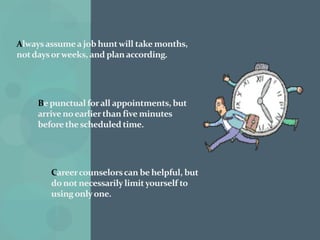
China HartAlways assume a job hunt will take months, not days or weeks, and plan according.Be punctual for all appointments, but arrive no earlier than five minutes before the scheduled time.Career counselors can be helpful, but do not necessarily limit yourself to using only one.
Do not relax just because you have just learned of a dream job. Keep researching, you might find one even better.Expect far more rejections than acceptances. One job expert says you are lucky if you get one “maybe” after following up on your first 20 leads.Follow-up every interview with a thank-you letter., expressing. Interest in the job and highlight one or two of your best qualifications.
Give feedback from your job contacts to career counselors and people in your network so they know about your status and will think of you often.Handshakes are important. Act like you have a high level of energy and look the interviewer in the eye.Information  interviews are a great way of making contacts and learning more about your chosen field, and possibly discovering new job leads.
Job  hunting is a 40-plus-hour-day-week process. Start early , work late and intelligently. Know exactly how to read interview questions and respond as clearly as possible.Leverage the Internet for your Job search, but don’t limit yourself only to that source.
Memorize the name of the interviewer and use it once or twice in the conversation.Network using your best contacts and be prepared to share leads with others, just as they may share with you.Observe the way employees dress in an organization and appear for an interview in slightly more formal attire.
Positive reactions you express  about your school. Former employers, and other organizations will help create a more positive impression for you.Quit worrying every time you receive a rejection. Make each an excuse to develop three more leads.Resumes should be slanted to the job in question, even if you have to create a number of different variations.
Sit alertly during the interview. Ron and Carly Krannich recommend leaning slightly, forward, toward the interviewer.Taking a temporary job may help pay the bills and keep up your morale during a long job search. Over 1.3 million Americans are “temping”.Use all possible sources of job leads: employment services, classified want ads, family friends, and so forth.
Vary your job approach, if necessary. If your letters or resumes are not getting results, try new formats.Write down notes on all contacts and follow-up as soon as you leave an interview.eXamine your job process each week. Sit down and think over what you did. What mistakes  did you make? What seems to work for you?
Your family and friends can be the best sources of job leads. Even though they may not be in the mainstream of your  career field, seek their help.Zero in on potential employers. Research their activities, and during the interview, show that you have studied.

BUS 32/CAOT 32 Team Presentation on PowerPoint

  • 1.
    The ABCs ofJob Hunting
  • 2.
    Presentation Arranged By:TeamLeader: Son Thai TruongGroup Members:Hallie Huber
  • 3.
  • 4.
    China HartAlways assumea job hunt will take months, not days or weeks, and plan according.Be punctual for all appointments, but arrive no earlier than five minutes before the scheduled time.Career counselors can be helpful, but do not necessarily limit yourself to using only one.
  • 5.
    Do not relaxjust because you have just learned of a dream job. Keep researching, you might find one even better.Expect far more rejections than acceptances. One job expert says you are lucky if you get one “maybe” after following up on your first 20 leads.Follow-up every interview with a thank-you letter., expressing. Interest in the job and highlight one or two of your best qualifications.
  • 6.
    Give feedback fromyour job contacts to career counselors and people in your network so they know about your status and will think of you often.Handshakes are important. Act like you have a high level of energy and look the interviewer in the eye.Information interviews are a great way of making contacts and learning more about your chosen field, and possibly discovering new job leads.
  • 7.
    Job huntingis a 40-plus-hour-day-week process. Start early , work late and intelligently. Know exactly how to read interview questions and respond as clearly as possible.Leverage the Internet for your Job search, but don’t limit yourself only to that source.
  • 8.
    Memorize the nameof the interviewer and use it once or twice in the conversation.Network using your best contacts and be prepared to share leads with others, just as they may share with you.Observe the way employees dress in an organization and appear for an interview in slightly more formal attire.
  • 9.
    Positive reactions youexpress about your school. Former employers, and other organizations will help create a more positive impression for you.Quit worrying every time you receive a rejection. Make each an excuse to develop three more leads.Resumes should be slanted to the job in question, even if you have to create a number of different variations.
  • 10.
    Sit alertly duringthe interview. Ron and Carly Krannich recommend leaning slightly, forward, toward the interviewer.Taking a temporary job may help pay the bills and keep up your morale during a long job search. Over 1.3 million Americans are “temping”.Use all possible sources of job leads: employment services, classified want ads, family friends, and so forth.
  • 11.
    Vary your jobapproach, if necessary. If your letters or resumes are not getting results, try new formats.Write down notes on all contacts and follow-up as soon as you leave an interview.eXamine your job process each week. Sit down and think over what you did. What mistakes did you make? What seems to work for you?
  • 12.
    Your family andfriends can be the best sources of job leads. Even though they may not be in the mainstream of your career field, seek their help.Zero in on potential employers. Research their activities, and during the interview, show that you have studied.