© 2013 The McGraw-Hill Companies, Inc. All rights reserved.
Chapter 1
An Introduction to the
Fundamentals of Dynamic
Business Law
1
Copyright © 2016 McGraw-Hill Education. All rights reserved.
© 2013 The McGraw-Hill Companies, Inc. All rights reserved.
Chapter 1 Case Hypothetical
A group of attorneys, judges and law professionals have collaborated
to write a uniform criminal code. The code would create uniformity in
criminal law across the United States, defining what constitutes a
misdemeanor, what constitutes a felony, how crimes are defined, and
what the punishment for particular crimes will be. The code also
proposes that the death penalty be abolished, and that the maximum
punishment for murder be life imprisonment.
Would you favor the adoption and implementation of such a code?
What advantages would result from a uniform criminal code? What
disadvantages would result? What is the likelihood that all states would
favor its adoption and implementation, as opposed to the traditional
practice of each state defining criminal law within its own jurisdiction?
(Reference: http://www.law.upenn.edu/fac/phrobins/intromodpencode.pdf)
2
© 2013 The McGraw-Hill Companies, Inc. All rights reserved.
Business Law
Definition: Enforceable rules of
conduct that govern commercial
relationships
3
© 2013 The McGraw-Hill Companies, Inc. All rights reserved.
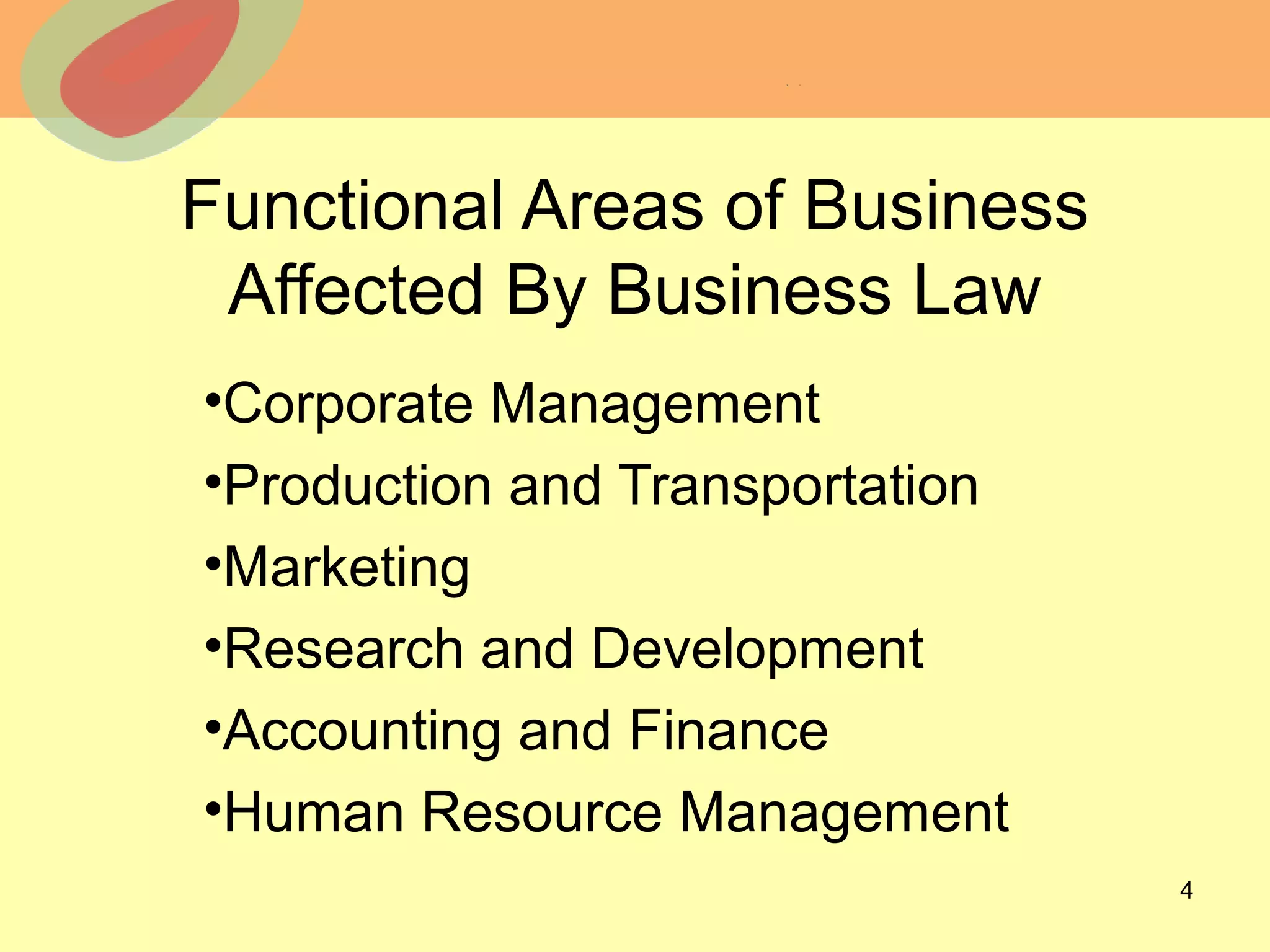
Functional Areas of Business
Affected By Business Law
•Corporate Management
•Production and Transportation
•Marketing
•Research and Development
•Accounting and Finance
•Human Resource Management
4
© 2013 The McGraw-Hill Companies, Inc. All rights reserved.
Purposes of the Law
•Providing order
•Serving as an alternative to altercation
•Facilitating a sense that change is
possible
•Encouraging social justice
•Guaranteeing personal freedoms
•Serving as a moral guide
5
© 2013 The McGraw-Hill Companies, Inc. All rights reserved.
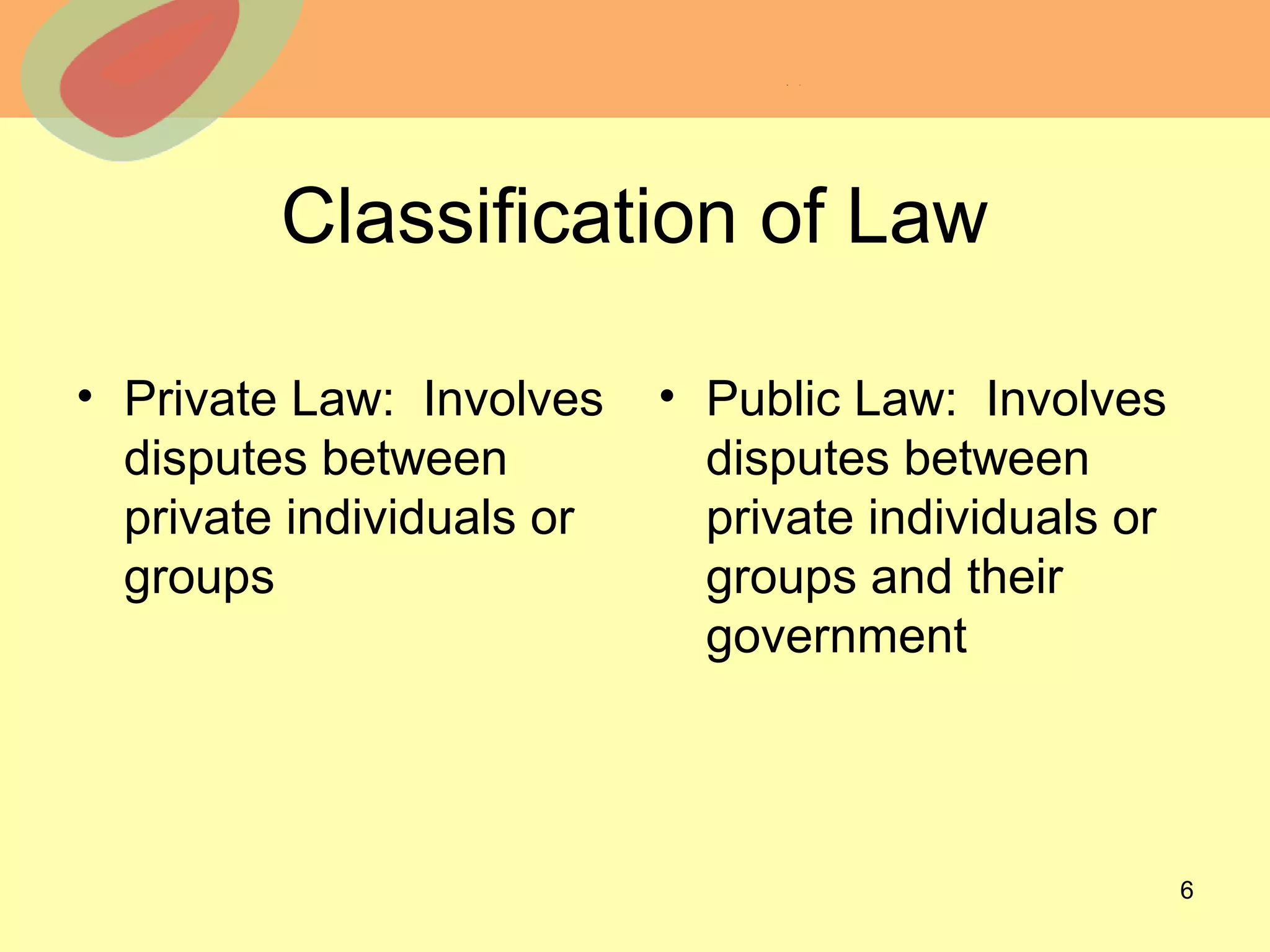
Classification of Law
• Private Law: Involves
disputes between
private individuals or
groups
• Public Law: Involves
disputes between
private individuals or
groups and their
government
6
© 2013 The McGraw-Hill Companies, Inc. All rights reserved.
Classification of Law
• Civil Law: Involves
the rights and
responsibilities
involved in
relationships between
persons and between
persons and their
government
• Criminal Law:
Involves incidents in
which someone
commits an act
against the public as
a whole
7
© 2013 The McGraw-Hill Companies, Inc. All rights reserved.
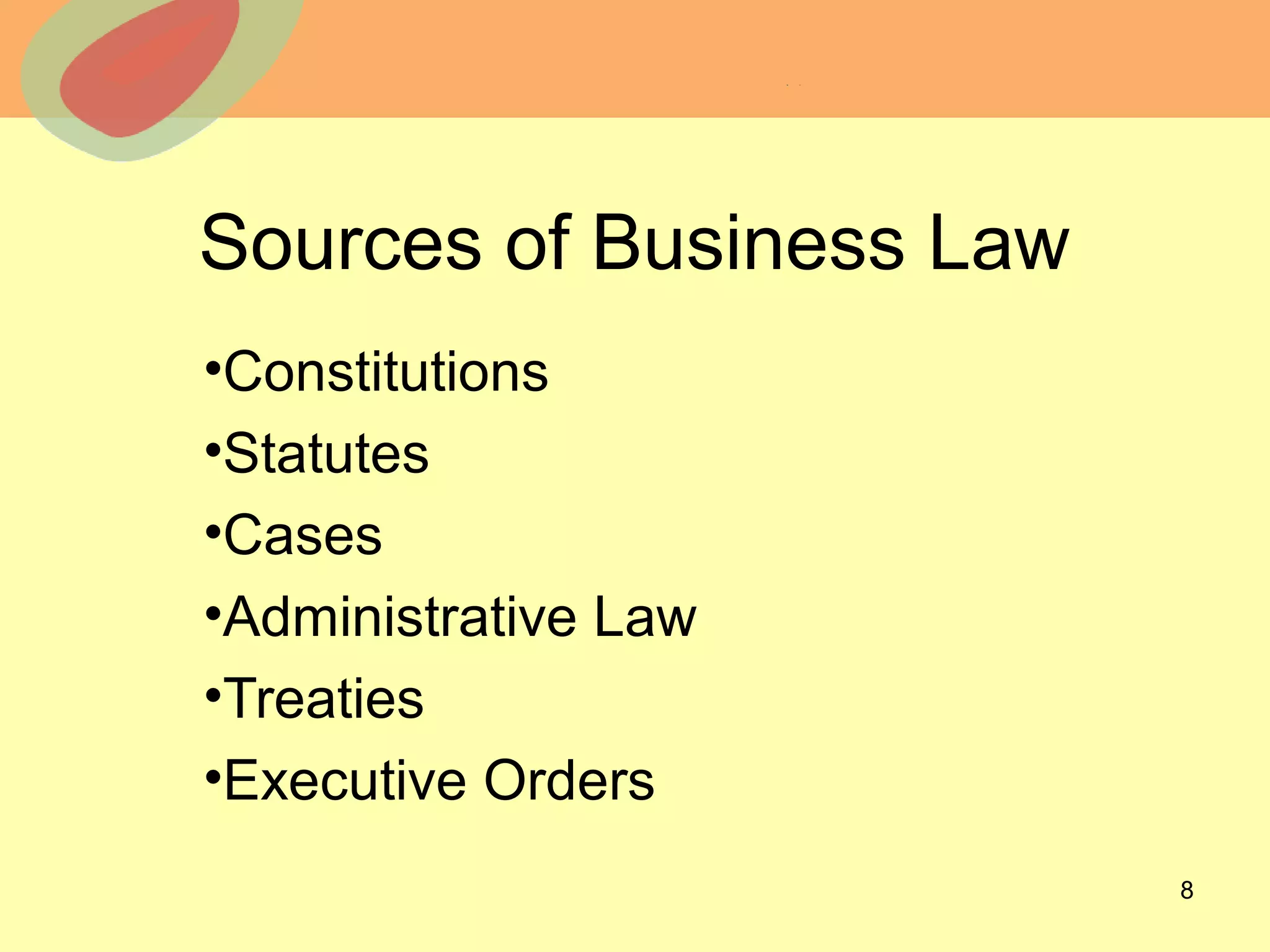
Sources of Business Law
•Constitutions
•Statutes
•Cases
•Administrative Law
•Treaties
•Executive Orders
8
© 2013 The McGraw-Hill Companies, Inc. All rights reserved.
Major Federal Administrative
Agencies (Independent)
•Commodity Futures Trading Commission
•Consumer Product Safety Commission
•Equal Employment Opportunity Commission
•Federal Trade Commission
•Federal Communications Commission
•Interstate Commerce Commission
•National Labor Relations Board
•National Transportation Safety Board
•Nuclear Regulatory Commission
•Securities and Exchange Commission
9
© 2013 The McGraw-Hill Companies, Inc. All rights reserved.
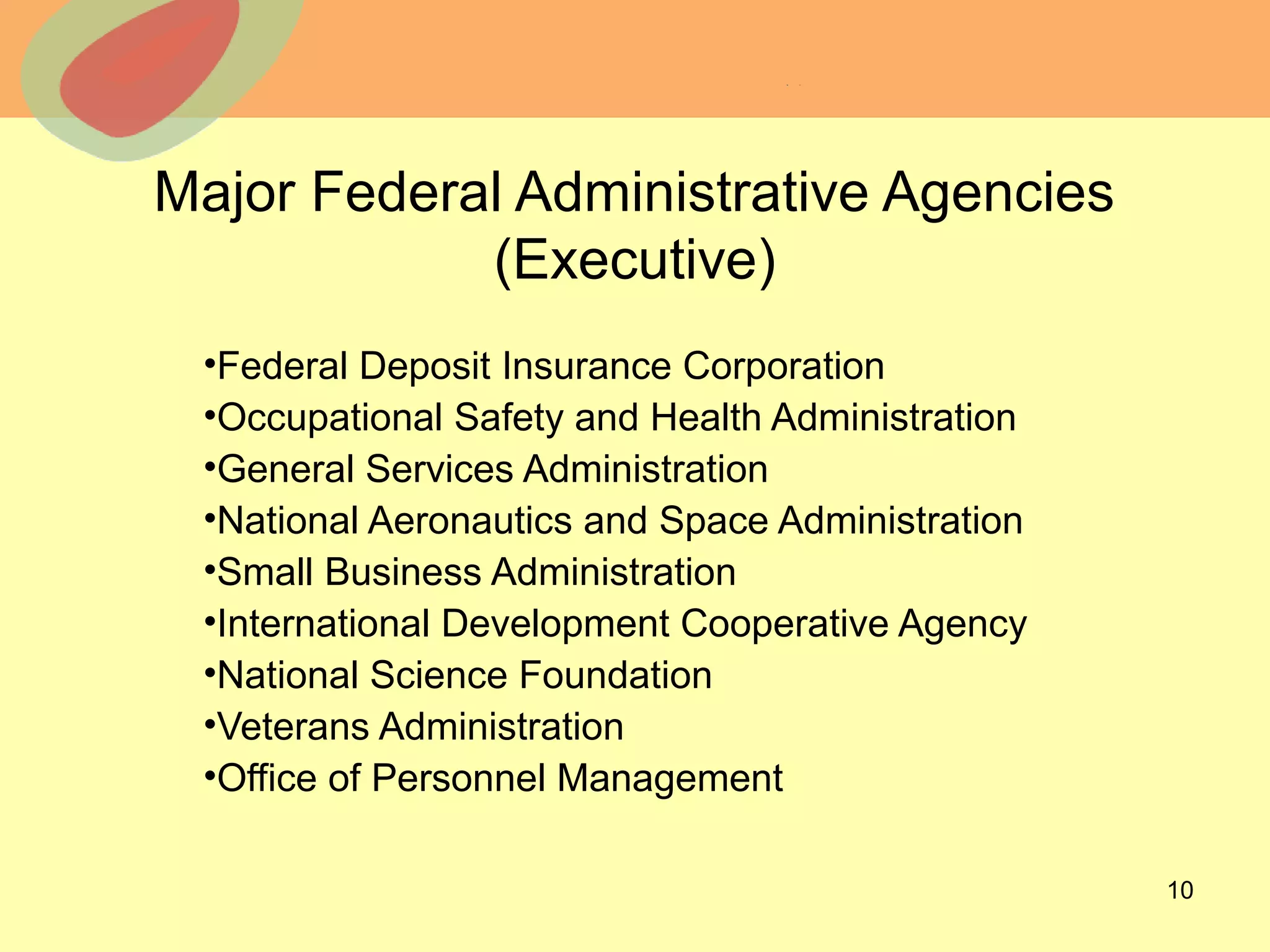
Major Federal Administrative Agencies
(Executive)
•Federal Deposit Insurance Corporation
•Occupational Safety and Health Administration
•General Services Administration
•National Aeronautics and Space Administration
•Small Business Administration
•International Development Cooperative Agency
•National Science Foundation
•Veterans Administration
•Office of Personnel Management
10
© 2013 The McGraw-Hill Companies, Inc. All rights reserved.
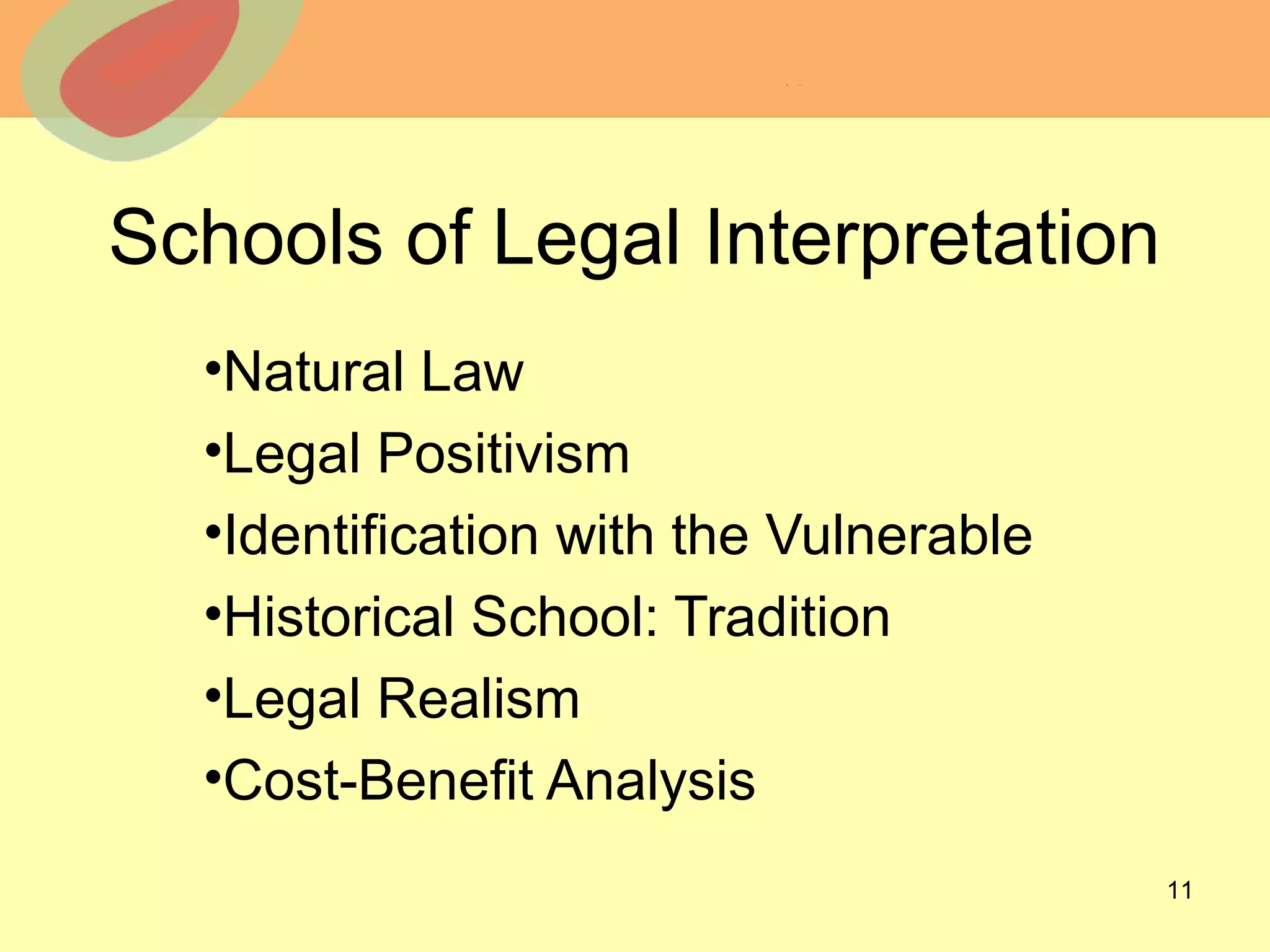
Schools of Legal Interpretation
•Natural Law
•Legal Positivism
•Identification with the Vulnerable
•Historical School: Tradition
•Legal Realism
•Cost-Benefit Analysis
11

BUS 300 Chapter 1

  • 1.
    © 2013 TheMcGraw-Hill Companies, Inc. All rights reserved. Chapter 1 An Introduction to the Fundamentals of Dynamic Business Law 1 Copyright © 2016 McGraw-Hill Education. All rights reserved.
  • 2.
    © 2013 TheMcGraw-Hill Companies, Inc. All rights reserved. Chapter 1 Case Hypothetical A group of attorneys, judges and law professionals have collaborated to write a uniform criminal code. The code would create uniformity in criminal law across the United States, defining what constitutes a misdemeanor, what constitutes a felony, how crimes are defined, and what the punishment for particular crimes will be. The code also proposes that the death penalty be abolished, and that the maximum punishment for murder be life imprisonment. Would you favor the adoption and implementation of such a code? What advantages would result from a uniform criminal code? What disadvantages would result? What is the likelihood that all states would favor its adoption and implementation, as opposed to the traditional practice of each state defining criminal law within its own jurisdiction? (Reference: http://www.law.upenn.edu/fac/phrobins/intromodpencode.pdf) 2
  • 3.
    © 2013 TheMcGraw-Hill Companies, Inc. All rights reserved. Business Law Definition: Enforceable rules of conduct that govern commercial relationships 3
  • 4.
    © 2013 TheMcGraw-Hill Companies, Inc. All rights reserved. Functional Areas of Business Affected By Business Law •Corporate Management •Production and Transportation •Marketing •Research and Development •Accounting and Finance •Human Resource Management 4
  • 5.
    © 2013 TheMcGraw-Hill Companies, Inc. All rights reserved. Purposes of the Law •Providing order •Serving as an alternative to altercation •Facilitating a sense that change is possible •Encouraging social justice •Guaranteeing personal freedoms •Serving as a moral guide 5
  • 6.
    © 2013 TheMcGraw-Hill Companies, Inc. All rights reserved. Classification of Law • Private Law: Involves disputes between private individuals or groups • Public Law: Involves disputes between private individuals or groups and their government 6
  • 7.
    © 2013 TheMcGraw-Hill Companies, Inc. All rights reserved. Classification of Law • Civil Law: Involves the rights and responsibilities involved in relationships between persons and between persons and their government • Criminal Law: Involves incidents in which someone commits an act against the public as a whole 7
  • 8.
    © 2013 TheMcGraw-Hill Companies, Inc. All rights reserved. Sources of Business Law •Constitutions •Statutes •Cases •Administrative Law •Treaties •Executive Orders 8
  • 9.
    © 2013 TheMcGraw-Hill Companies, Inc. All rights reserved. Major Federal Administrative Agencies (Independent) •Commodity Futures Trading Commission •Consumer Product Safety Commission •Equal Employment Opportunity Commission •Federal Trade Commission •Federal Communications Commission •Interstate Commerce Commission •National Labor Relations Board •National Transportation Safety Board •Nuclear Regulatory Commission •Securities and Exchange Commission 9
  • 10.
    © 2013 TheMcGraw-Hill Companies, Inc. All rights reserved. Major Federal Administrative Agencies (Executive) •Federal Deposit Insurance Corporation •Occupational Safety and Health Administration •General Services Administration •National Aeronautics and Space Administration •Small Business Administration •International Development Cooperative Agency •National Science Foundation •Veterans Administration •Office of Personnel Management 10
  • 11.
    © 2013 TheMcGraw-Hill Companies, Inc. All rights reserved. Schools of Legal Interpretation •Natural Law •Legal Positivism •Identification with the Vulnerable •Historical School: Tradition •Legal Realism •Cost-Benefit Analysis 11

Editor's Notes

  • #2 Chapter 1: An Introduction to the Fundamentals of Dynamic Business Law
  • #3 Chapter 1 Case Hypothetical: A group of attorneys, judges and law professionals have collaborated to write a uniform criminal code. The code would create uniformity in criminal law across the United States, defining what constitutes a misdemeanor, what constitutes a felony, how crimes are defined, and what the punishment for particular crimes will be. The code also proposes that the death penalty be abolished, and that the maximum punishment for murder be life imprisonment. Would you favor the adoption and implementation of such a code? What advantages would result from a uniform criminal code? What disadvantages would result? What is the likelihood that all states would favor its adoption and implementation, as opposed to the traditional practice of each state defining criminal law within its own jurisdiction? (Reference: http://www.law.upenn.edu/fac/phrobins/intromodpencode.pdf)
  • #4 Business law consists of enforceable rules of conduct that govern commercial relationships.
  • #5 The “functional” areas of business affected by business law include corporate management, production and transportation, marketing, research and development, accounting and finance, and human resource management.
  • #6 There are several purposes served in having law. Law provides order, serves as an alternative to altercation, facilitates a sense that change is possible, encourages social justice, guarantees personal freedoms, and serves as a moral guide.
  • #7 Law can be classified as either “public” or “private.” Private law involves disputes between private individuals or groups, while public law involves disputes between private individuals or groups and their government.
  • #8 Law can be further classified as either “civil” or “criminal.” Civil law involves the rights and responsibilities in relationships between persons and between persons and their government, while criminal law involves incidents in which someone commits a wrongful act against the public as a whole.
  • #9 Federal and state sources of business law include constitutional law, statutes, judicial decisions, administrative law, treaties, and executive orders.
  • #10 Federal administrative agencies can be classified as either “independent” or “executive.” Major “independent” federal administrative agencies include the Commodity Futures Trading Commission, the Consumer Product Safety Commission, the Equal Employment Opportunity Commission, the Federal Trade Commission, the Federal Communications Commission, the Interstate Commerce Commission, the National Labor Relations Board, the National Transportation Safety Board, the Nuclear Regulatory Commission, and the Securities and Exchange Commission.
  • #11 Major “executive” federal administrative agencies include the Federal Deposit Insurance Corporation, the Occupational Safety and Health Administration, the General Services Administration, the National Aeronautics and Space Administration, the Small Business Administration, the International Development Cooperative Agency, the National Science Foundation, the Veterans Administration, and the Office of Personnel Management.
  • #12 “Schools of legal interpretation” include natural law, legal positivism, identification with the vulnerable, the “historical school” tradition, legal realism, and cost-benefit analysis.