Building a
Change
Management
Office and
the Agile
Organization
BY CAROLYN REID
CSR CONSULTING LLC
3/27/18
The C Level has had a briefing on
Change Management
• People did not adopt the new technology as the did
not understand why and how they were to use it.
• CEO decides they need Organizational Change
Management
Phase 1 of a major project fails
In addition, the company begins to build
a PMO which contains the new CMO
(Change Management Office)
The
Background
2
 Because of the organization’s
history, people doubt the projects
will succeed
 Mode for dealing with saturation –
shut down all or some of the
projects
– Complete project temporary shut
down twice in one year
Change: The Situation
3
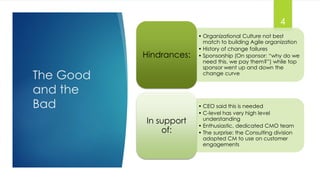
• Organizational Culture not best
match to building Agile organization
• History of change failures
• Sponsorship (On sponsor: “why do we
need this, we pay them?”) while top
sponsor went up and down the
change curve
Hindrances:
• CEO said this is needed
• C-level has very high level
understanding
• Enthusiastic, dedicated CMO team
• The surprise: the Consulting division
adopted CM to use on customer
engagements
In support
of:
The Good
and the
Bad
4
And then a
Merger is
Announced!
5
Change
6
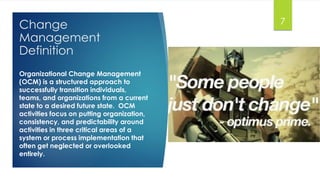
Organizational Change Management
(OCM) is a structured approach to
successfully transition individuals,
teams, and organizations from a current
state to a desired future state. OCM
activities focus on putting organization,
consistency, and predictability around
activities in three critical areas of a
system or process implementation that
often get neglected or overlooked
entirely.
Change
Management
Definition
7
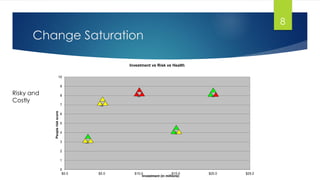
Change Saturation
0
1
2
3
4
5
6
7
8
9
10
$0.0 $5.0 $10.0 $15.0 $20.0 $25.0
Peopleriskscore
Investment (in millions)
Investment vs Risk vs Health
Risky and
Costly
8
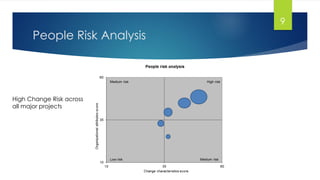
People Risk Analysis
High Change Risk across
all major projects
9
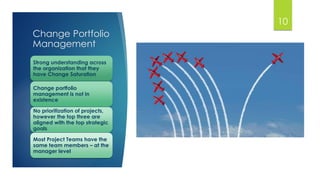
Strong understanding across
the organization that they
have Change Saturation
Change portfolio
management is not in
existence
No prioritization of projects,
however the top three are
aligned with the top strategic
goals
Most Project Teams have the
same team members – at the
manager level
Change Portfolio
Management
10
Largest change
affects all
employees
•Roles, responsibilities, compensation, jobs
•Not an option for stopping or pushing this
one out
Next largest
affects sales
compensation
•One of their most important strategies for
the year
Third largest:
•Across many groups, Major system and
process change
•Phase 1 was a failure
The Change
Portfolio
11
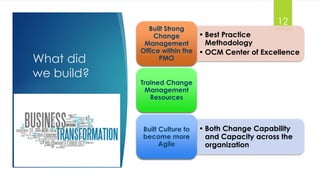
What did
we build?
• Best Practice
Methodology
• OCM Center of Excellence
Built Strong
Change
Management
Office within the
PMO
Trained Change
Management
Resources
• Both Change Capability
and Capacity across the
organization
Built Culture to
become more
Agile
12
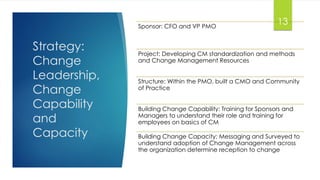
Sponsor: CFO and VP PMO
Project: Developing CM standardization and methods
and Change Management Resources
Structure: Within the PMO, built a CMO and Community
of Practice
Building Change Capability: Training for Sponsors and
Managers to understand their role and training for
employees on basics of CM
Building Change Capacity: Messaging and Surveyed to
understand adoption of Change Management across
the organization determine reception to change
Strategy:
Change
Leadership,
Change
Capability
and
Capacity
13
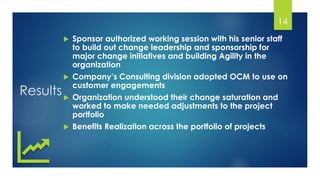
Results
 Sponsor authorized working session with his senior staff
to build out change leadership and sponsorship for
major change initiatives and building Agility in the
organization
 Company’s Consulting division adopted OCM to use on
customer engagements
 Organization understood their change saturation and
worked to make needed adjustments to the project
portfolio
 Benefits Realization across the portfolio of projects
14
15
Thanks!
Contact Info:
 Carolyn Reid
 CSR Consulting LLC
 csreid1@cox.net
 602-882-5292
 Network with me:
https://www.linkedin.com/in/carolynreid/
15

Building change capability and capacity

  • 1.
    Building a Change Management Office and theAgile Organization BY CAROLYN REID CSR CONSULTING LLC 3/27/18
  • 2.
    The C Levelhas had a briefing on Change Management • People did not adopt the new technology as the did not understand why and how they were to use it. • CEO decides they need Organizational Change Management Phase 1 of a major project fails In addition, the company begins to build a PMO which contains the new CMO (Change Management Office) The Background 2
  • 3.
     Because ofthe organization’s history, people doubt the projects will succeed  Mode for dealing with saturation – shut down all or some of the projects – Complete project temporary shut down twice in one year Change: The Situation 3
  • 4.
    • Organizational Culturenot best match to building Agile organization • History of change failures • Sponsorship (On sponsor: “why do we need this, we pay them?”) while top sponsor went up and down the change curve Hindrances: • CEO said this is needed • C-level has very high level understanding • Enthusiastic, dedicated CMO team • The surprise: the Consulting division adopted CM to use on customer engagements In support of: The Good and the Bad 4
  • 5.
    And then a Mergeris Announced! 5
  • 6.
  • 7.
    Organizational Change Management (OCM)is a structured approach to successfully transition individuals, teams, and organizations from a current state to a desired future state. OCM activities focus on putting organization, consistency, and predictability around activities in three critical areas of a system or process implementation that often get neglected or overlooked entirely. Change Management Definition 7
  • 8.
    Change Saturation 0 1 2 3 4 5 6 7 8 9 10 $0.0 $5.0$10.0 $15.0 $20.0 $25.0 Peopleriskscore Investment (in millions) Investment vs Risk vs Health Risky and Costly 8
  • 9.
    People Risk Analysis HighChange Risk across all major projects 9
  • 10.
    Strong understanding across theorganization that they have Change Saturation Change portfolio management is not in existence No prioritization of projects, however the top three are aligned with the top strategic goals Most Project Teams have the same team members – at the manager level Change Portfolio Management 10
  • 11.
    Largest change affects all employees •Roles,responsibilities, compensation, jobs •Not an option for stopping or pushing this one out Next largest affects sales compensation •One of their most important strategies for the year Third largest: •Across many groups, Major system and process change •Phase 1 was a failure The Change Portfolio 11
  • 12.
    What did we build? •Best Practice Methodology • OCM Center of Excellence Built Strong Change Management Office within the PMO Trained Change Management Resources • Both Change Capability and Capacity across the organization Built Culture to become more Agile 12
  • 13.
    Sponsor: CFO andVP PMO Project: Developing CM standardization and methods and Change Management Resources Structure: Within the PMO, built a CMO and Community of Practice Building Change Capability: Training for Sponsors and Managers to understand their role and training for employees on basics of CM Building Change Capacity: Messaging and Surveyed to understand adoption of Change Management across the organization determine reception to change Strategy: Change Leadership, Change Capability and Capacity 13
  • 14.
    Results  Sponsor authorizedworking session with his senior staff to build out change leadership and sponsorship for major change initiatives and building Agility in the organization  Company’s Consulting division adopted OCM to use on customer engagements  Organization understood their change saturation and worked to make needed adjustments to the project portfolio  Benefits Realization across the portfolio of projects 14
  • 15.
    15 Thanks! Contact Info:  CarolynReid  CSR Consulting LLC  csreid1@cox.net  602-882-5292  Network with me: https://www.linkedin.com/in/carolynreid/ 15