BUILDING
APPLICATIONS
WITH AKKA.NET
ANTHONY BROWN
@BRUINBROWN93
Hi, i’m Anthony
university student
me@anthonyjbrown.co.uk
@bruinbrown93
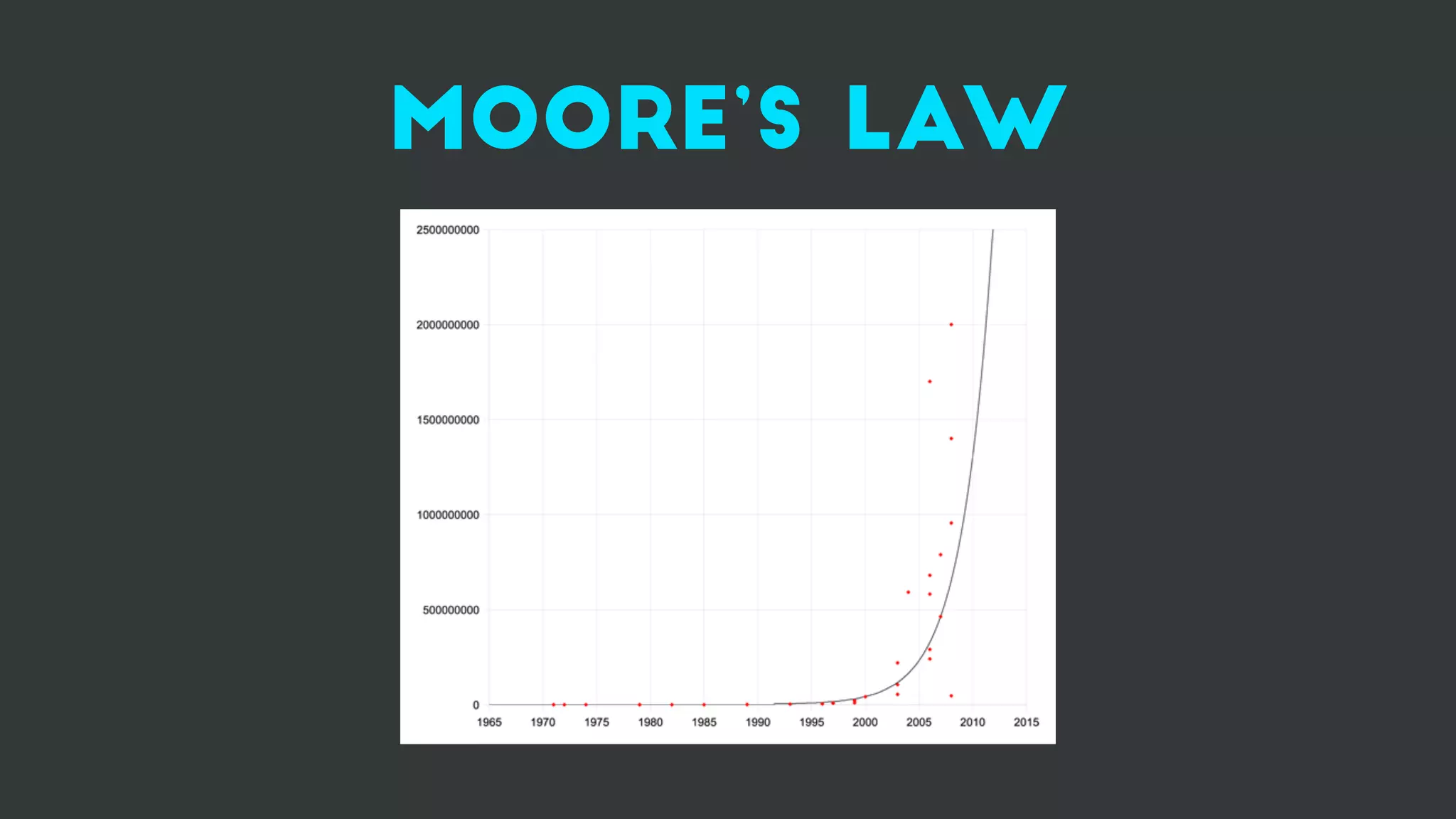
moore’s law
now we need
concurrency…
…but concurrency is hard
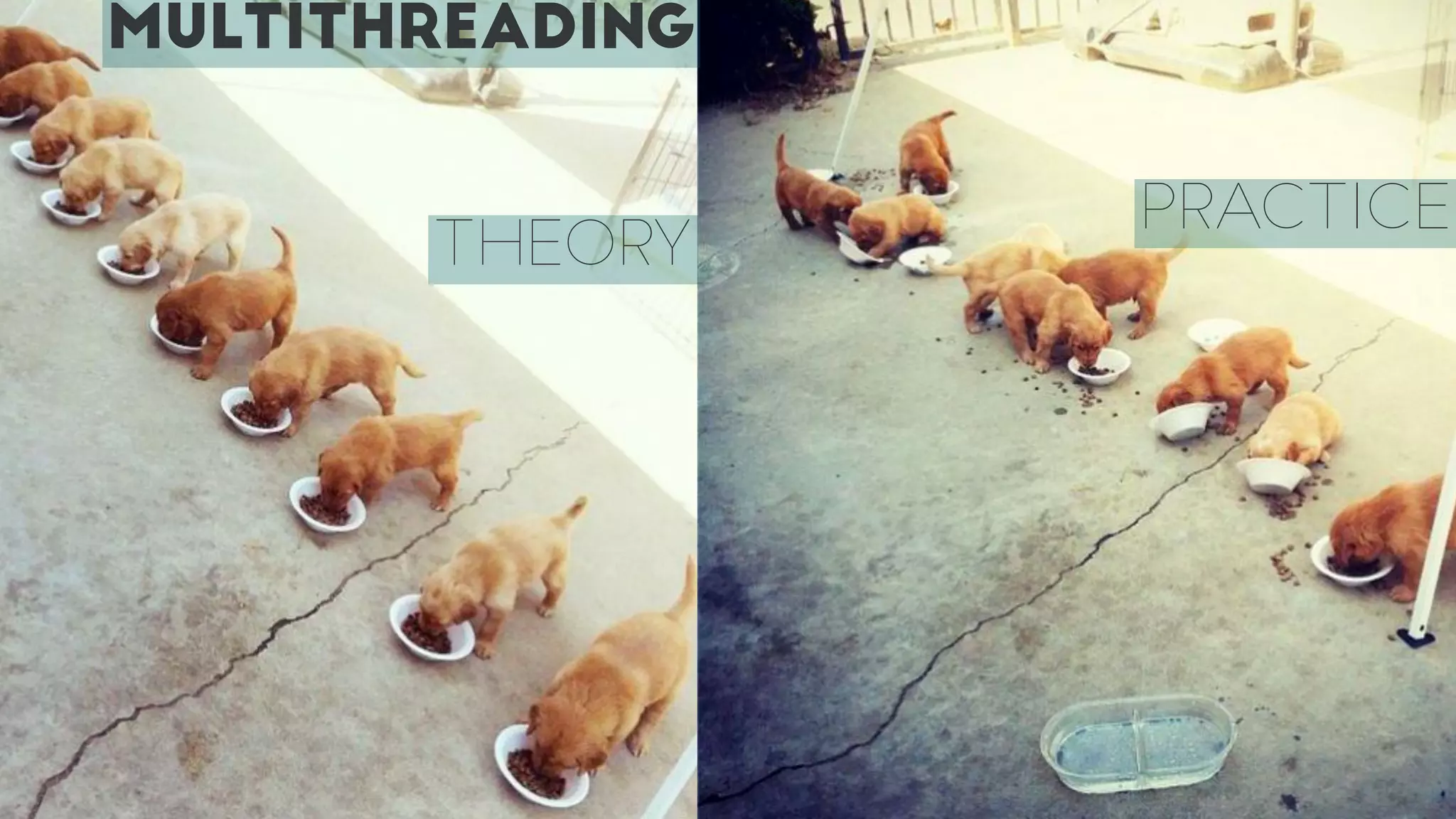
MULTITHREADING
THEORY
PRACTICE
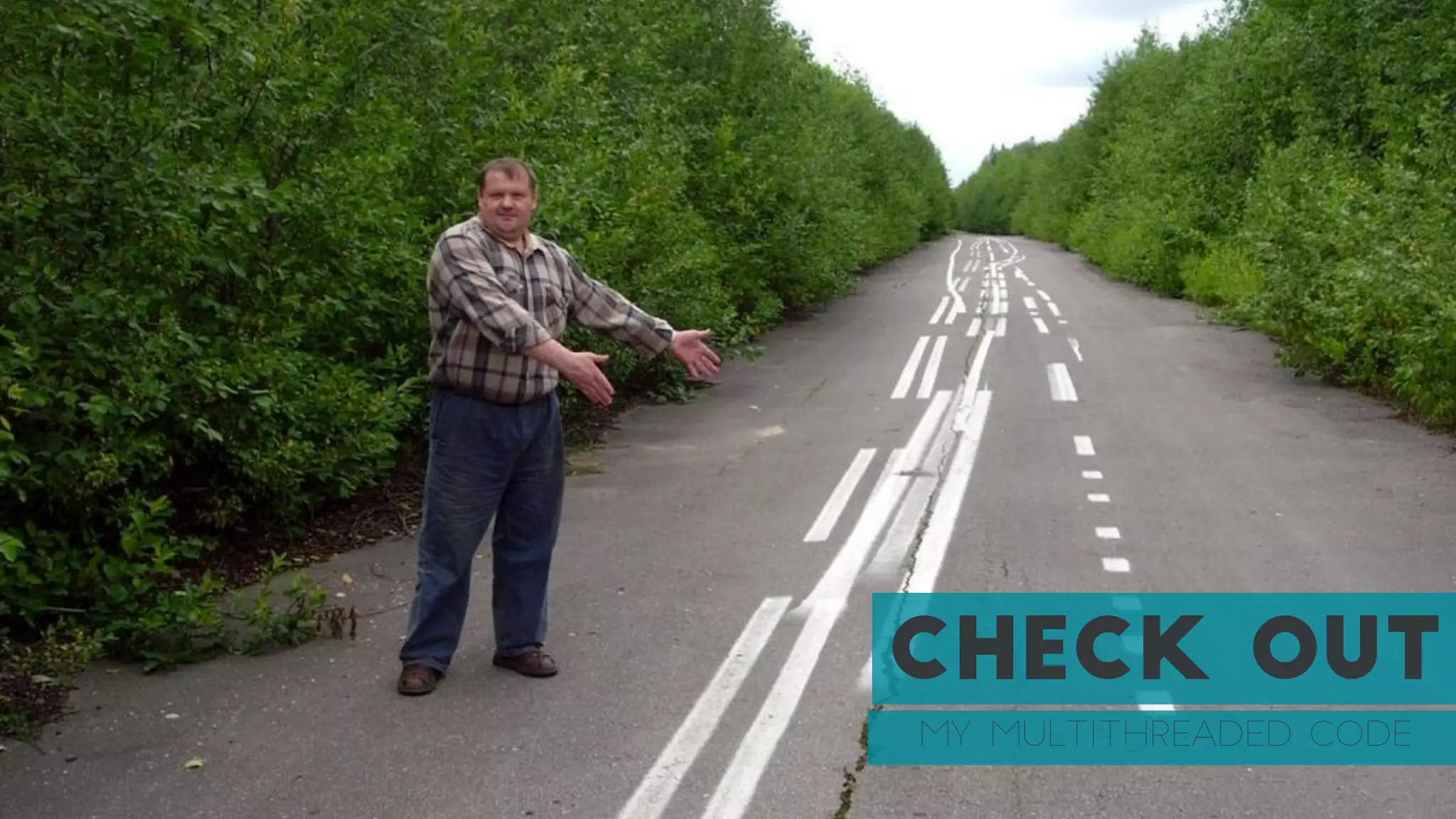
CHECK OUT
MY MULTITHREADED CODE
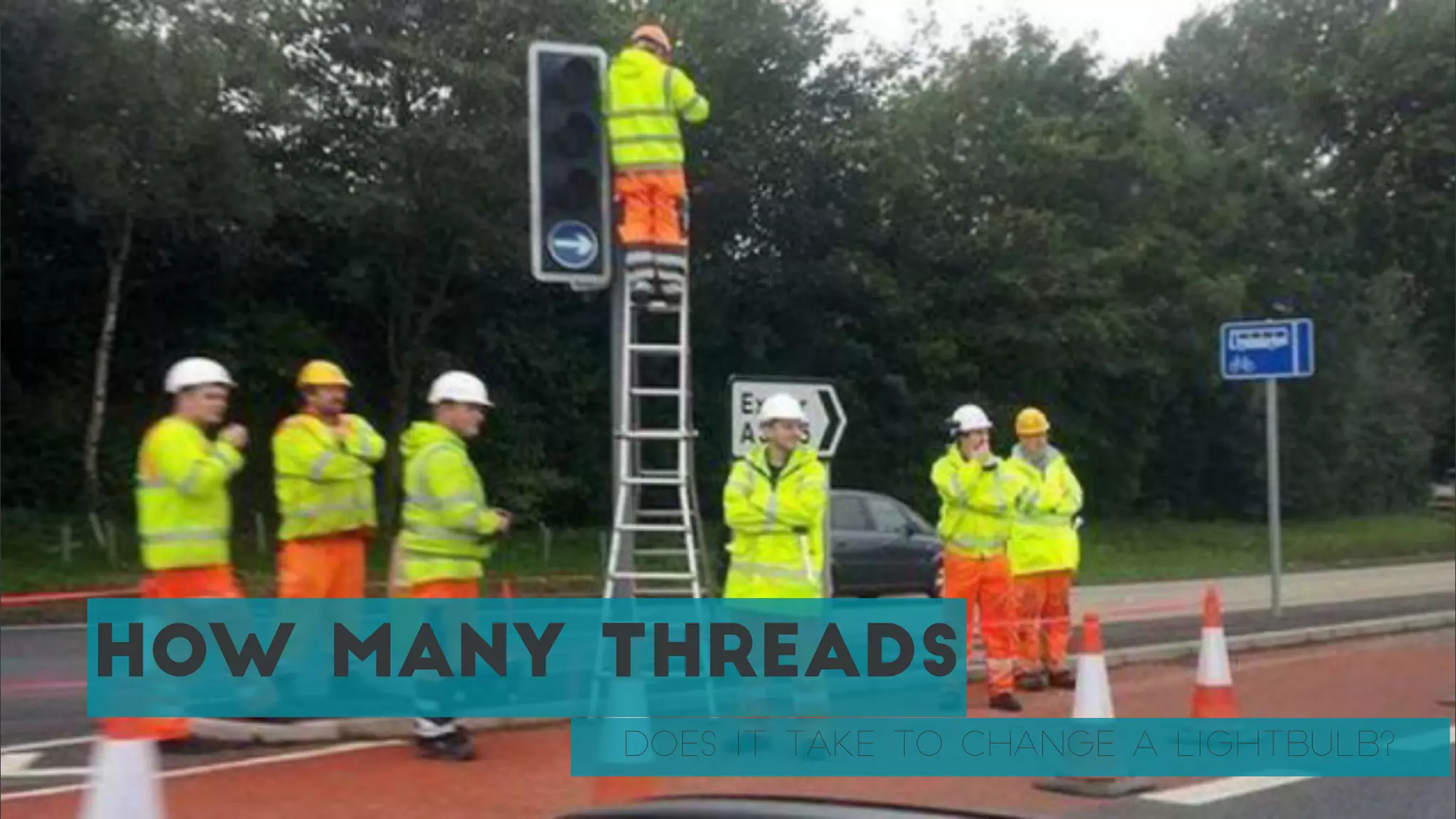
HOW MANY THREADS
DOES IT TAKE TO CHANGE A LIGHTBULB?
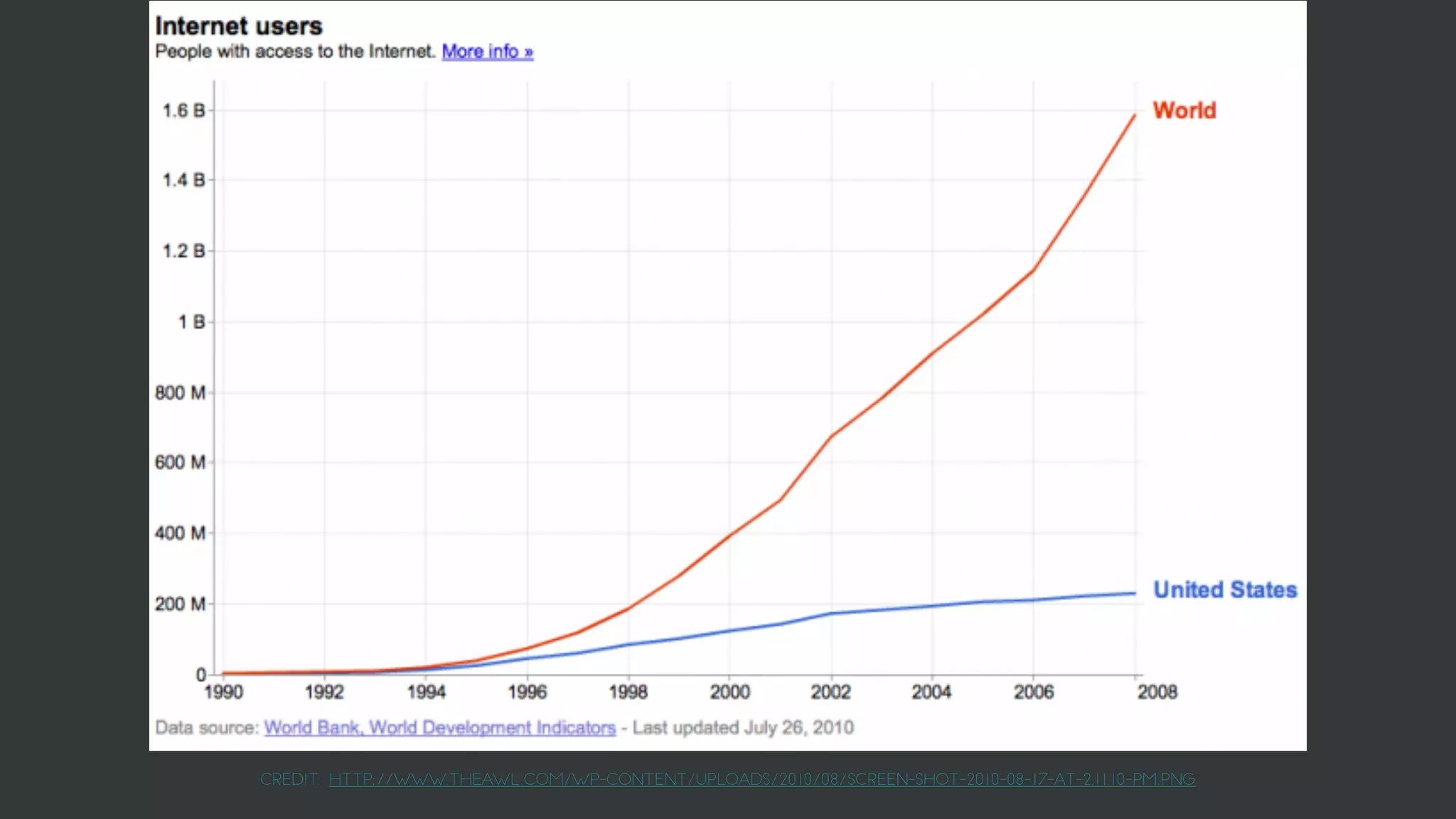
application requirements
have changed
Credit: http://www.theawl.com/wp-content/uploads/2010/08/Screen-shot-2010-08-17-at-2.11.10-PM.png
Common language to define
new style of architecture
Reactive
systems
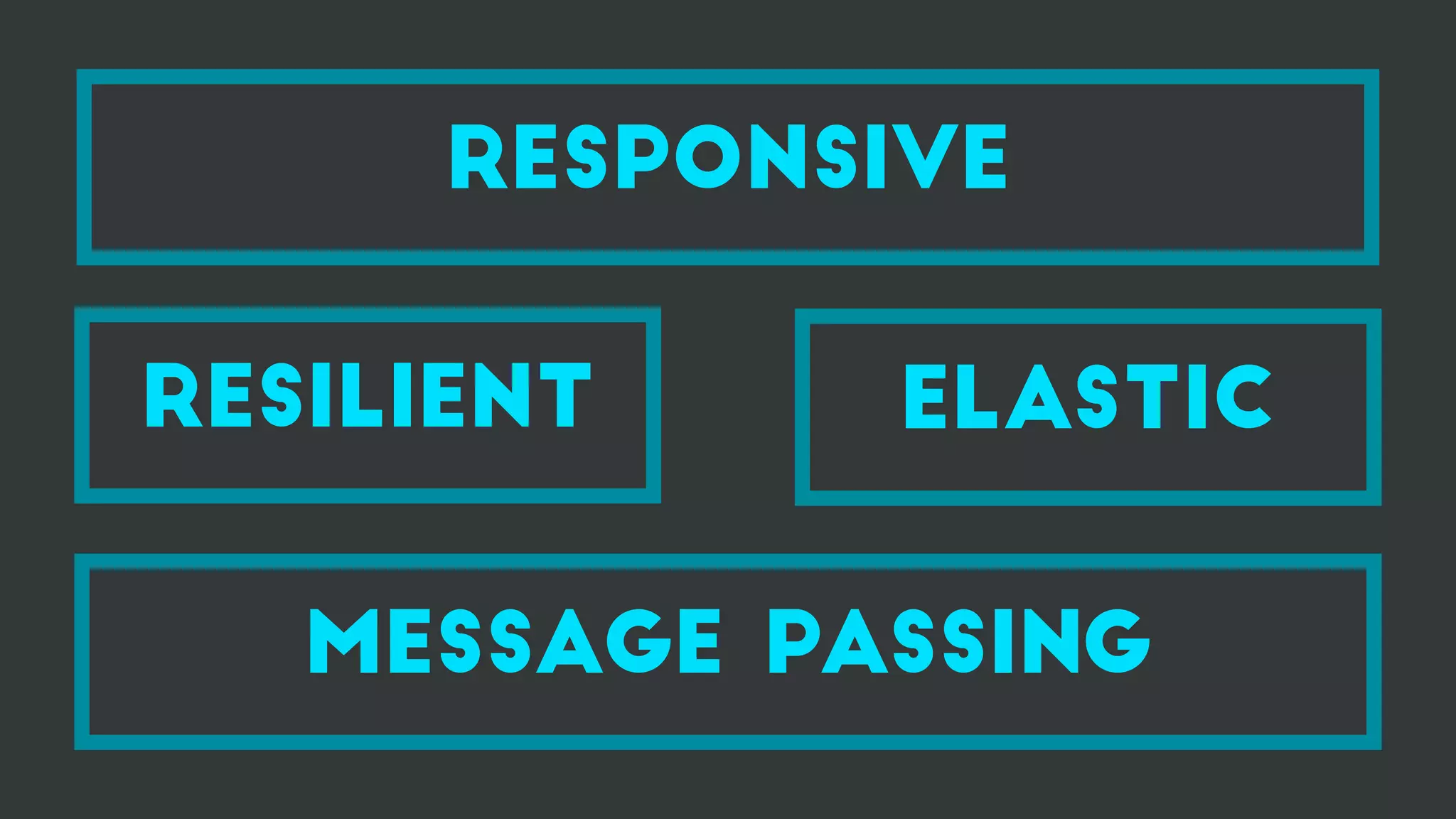
RESPONSIVE
RESILIENT ELASTIC
MESSAGE PASSING
responsive
users want the best possible experience
reactive applications react
to the world around them
Message driven
architecture
decouples components
the actor
model
concurrency
model
STORAGE
isolate mutable state
processing
reacting to changes
Communication
messaging as a requirement
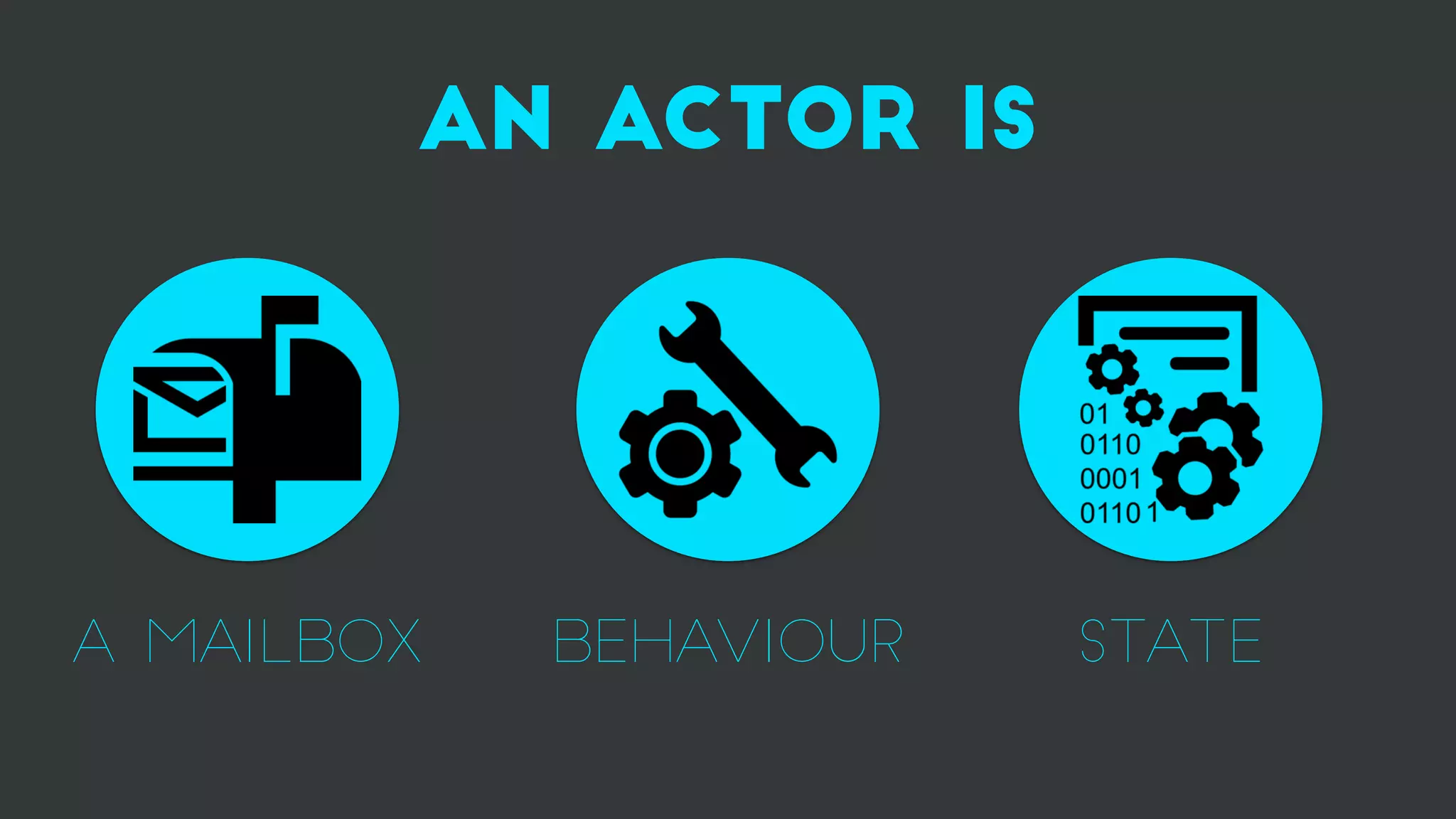
an actor is
A mailbox behaviour state
an actor can…
set it’s behaviour
for the next message
an actor can…
send a finite number
of messages
an actor can…
spawn a finite
number of actors
looking at the
original
erlang
99.9999999% uptime
erlang example
introducing the
akka.net way
step 1
define an actor
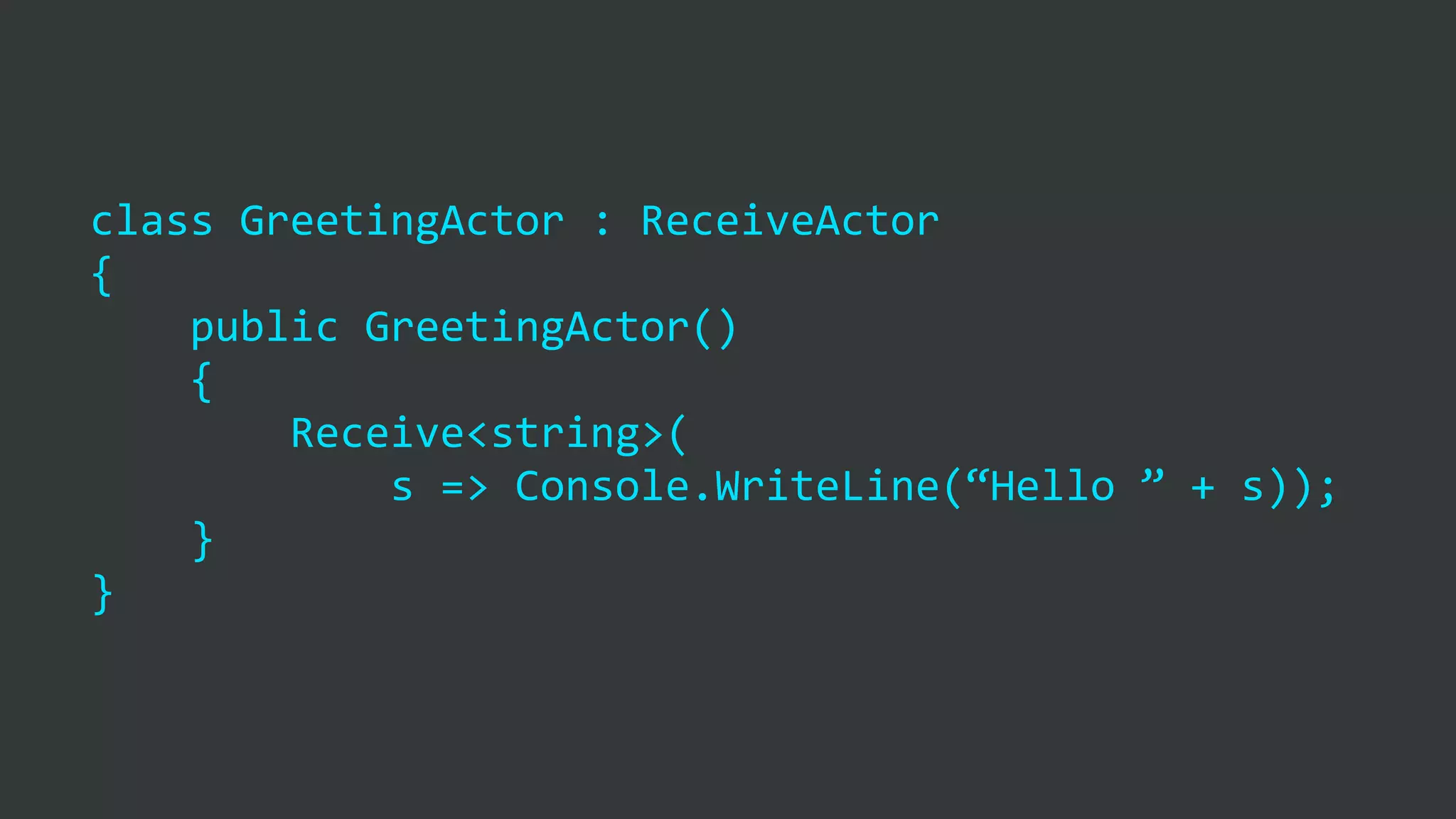
class	
  GreetingActor	
  :	
  ReceiveActor	
  
{	


  public	
  GreetingActor()	


  {	


  Receive<string>(	


  s	
  =>	
  Console.WriteLine(“Hello	
  ”	
  +	
  s));	


  }	
  
}
step 2
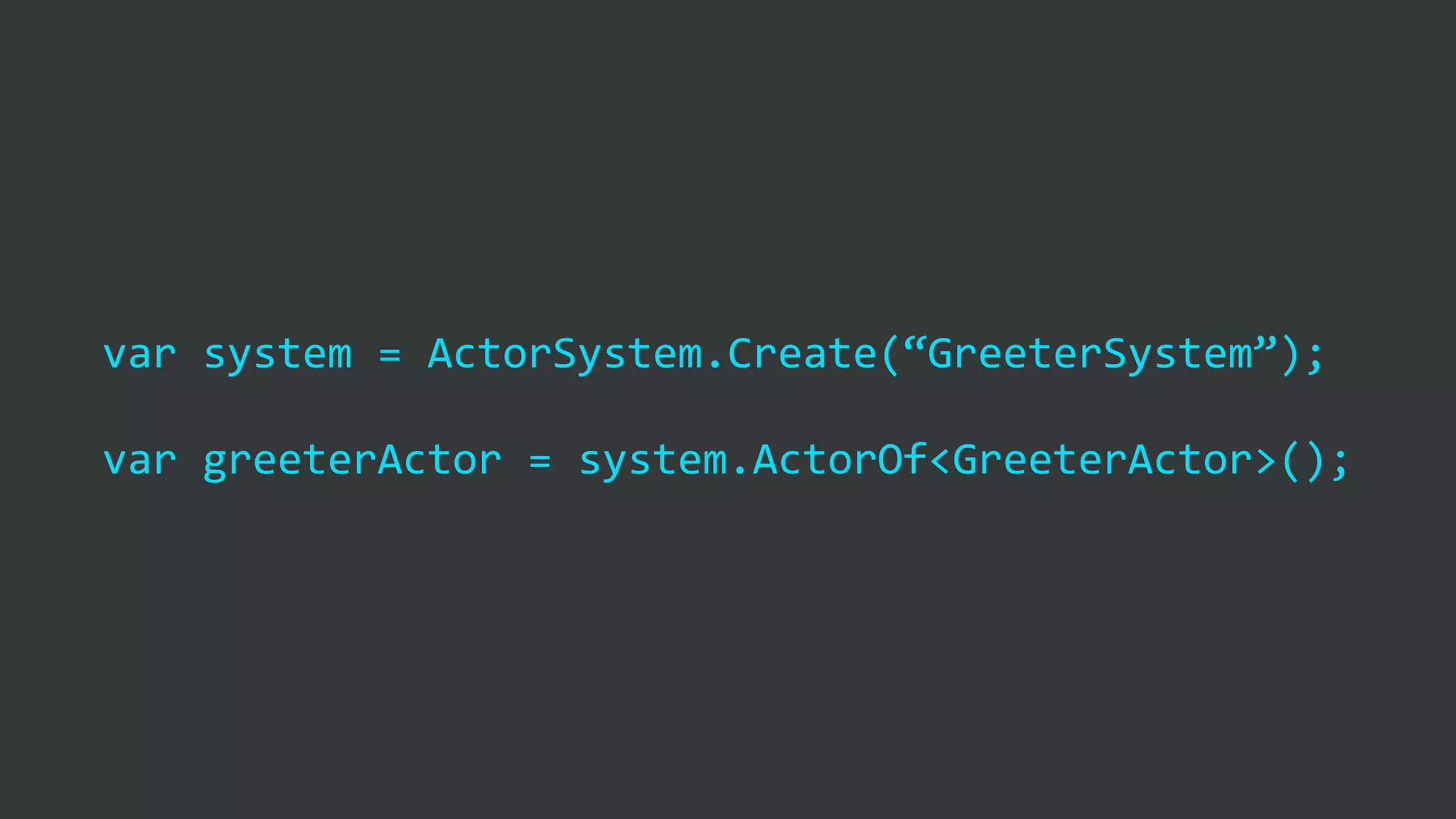
create an actor
var	
  system	
  =	
  ActorSystem.Create(“GreeterSystem”);	
  
var	
  greeterActor	
  =	
  system.ActorOf<GreeterActor>();
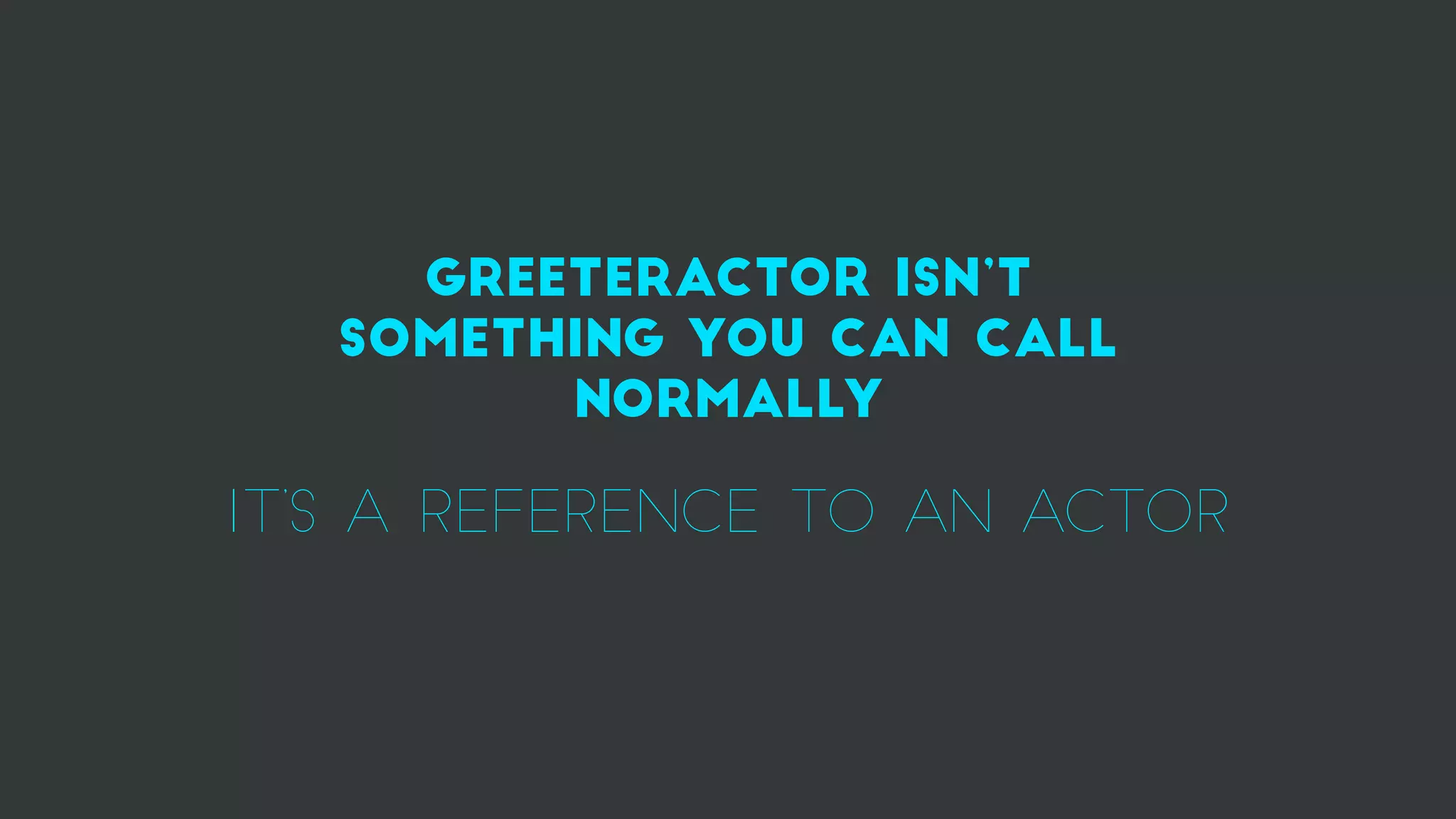
greeteractor isn’t
something you can call
normally
it’s a reference to an actor
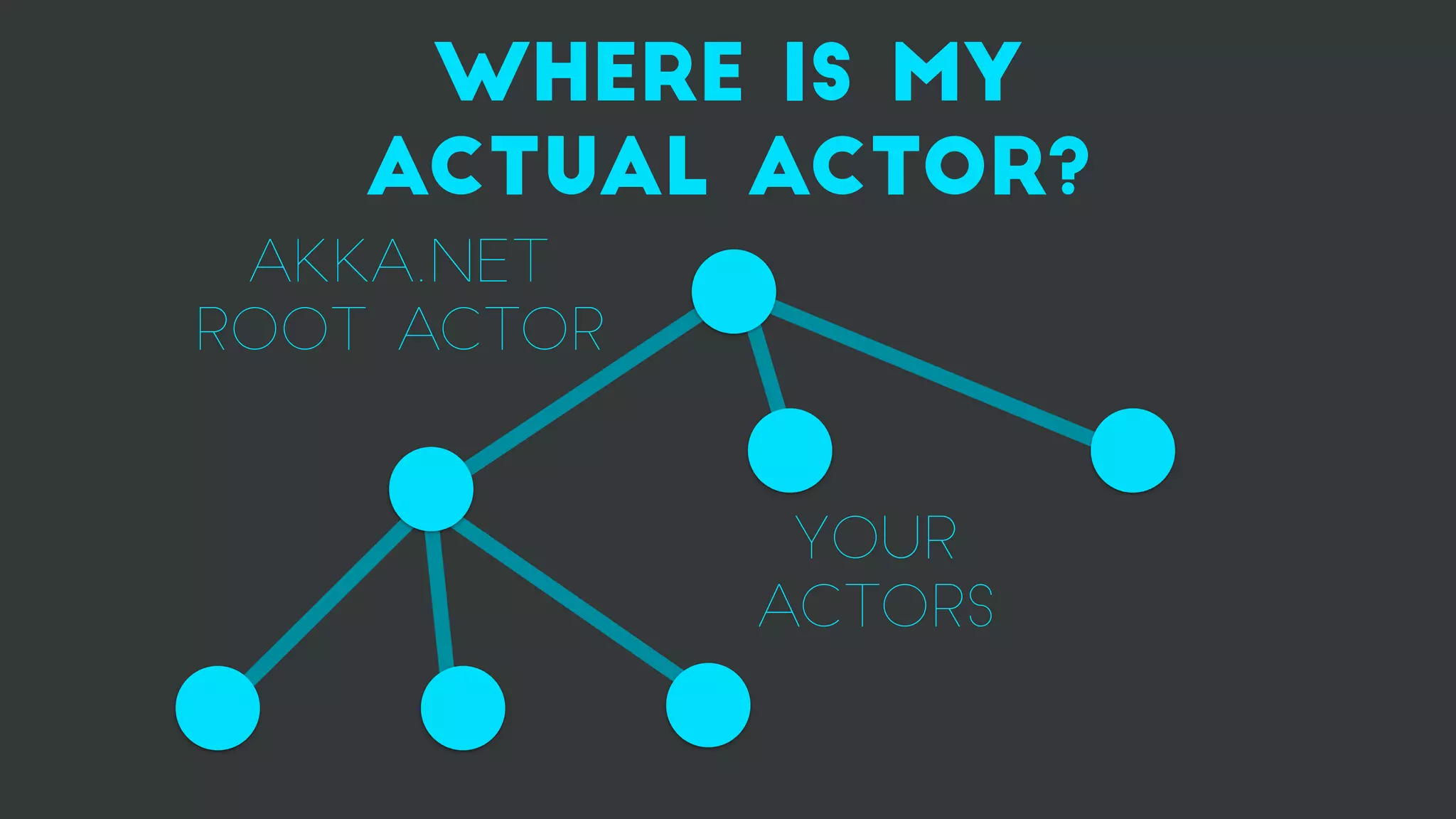
where is my
actual actor?
AKKA.net
root actor
your
actors
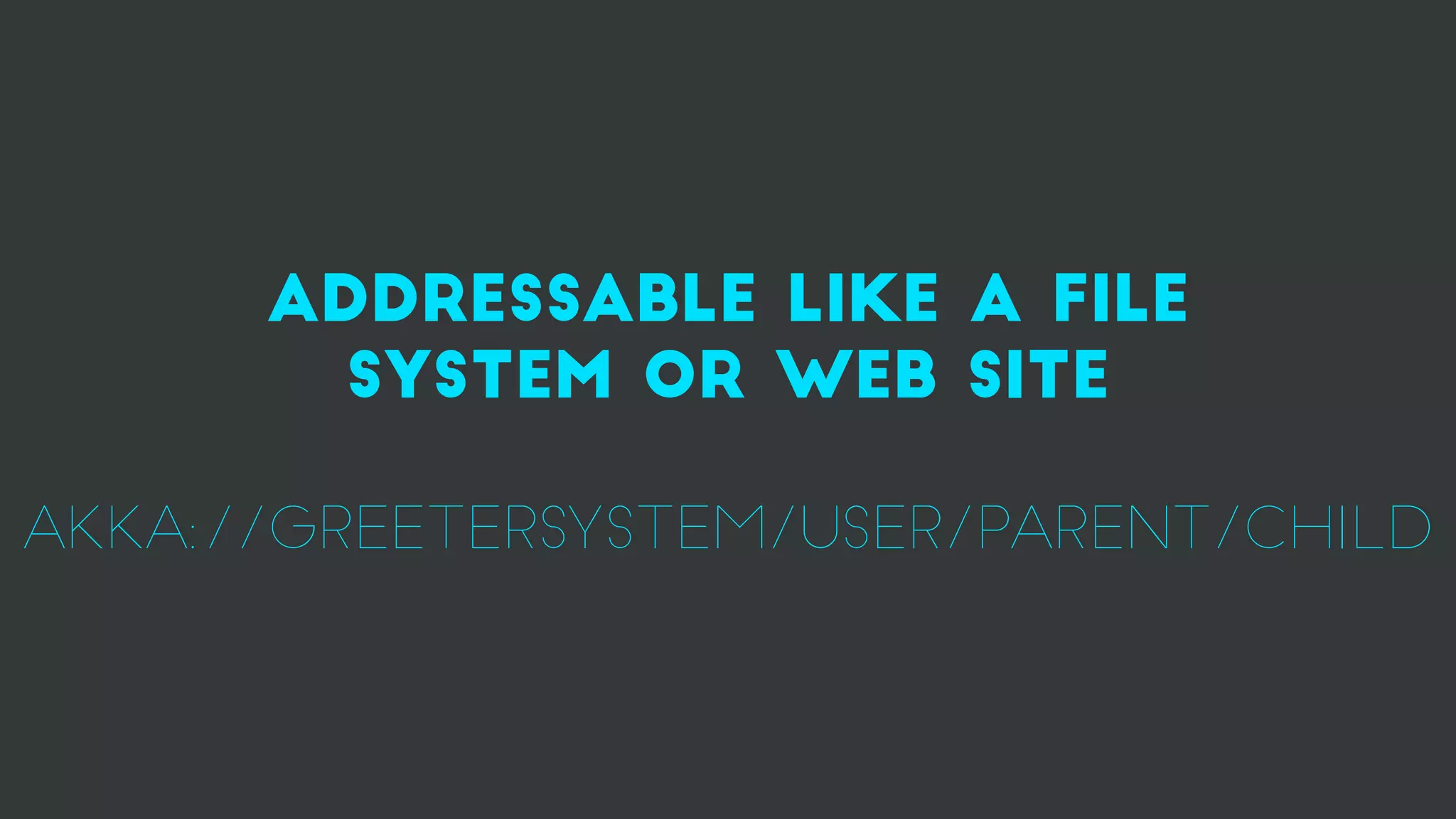
Addressable like a file
system or web site
akka://Greetersystem/user/parent/child
step 3
send a message
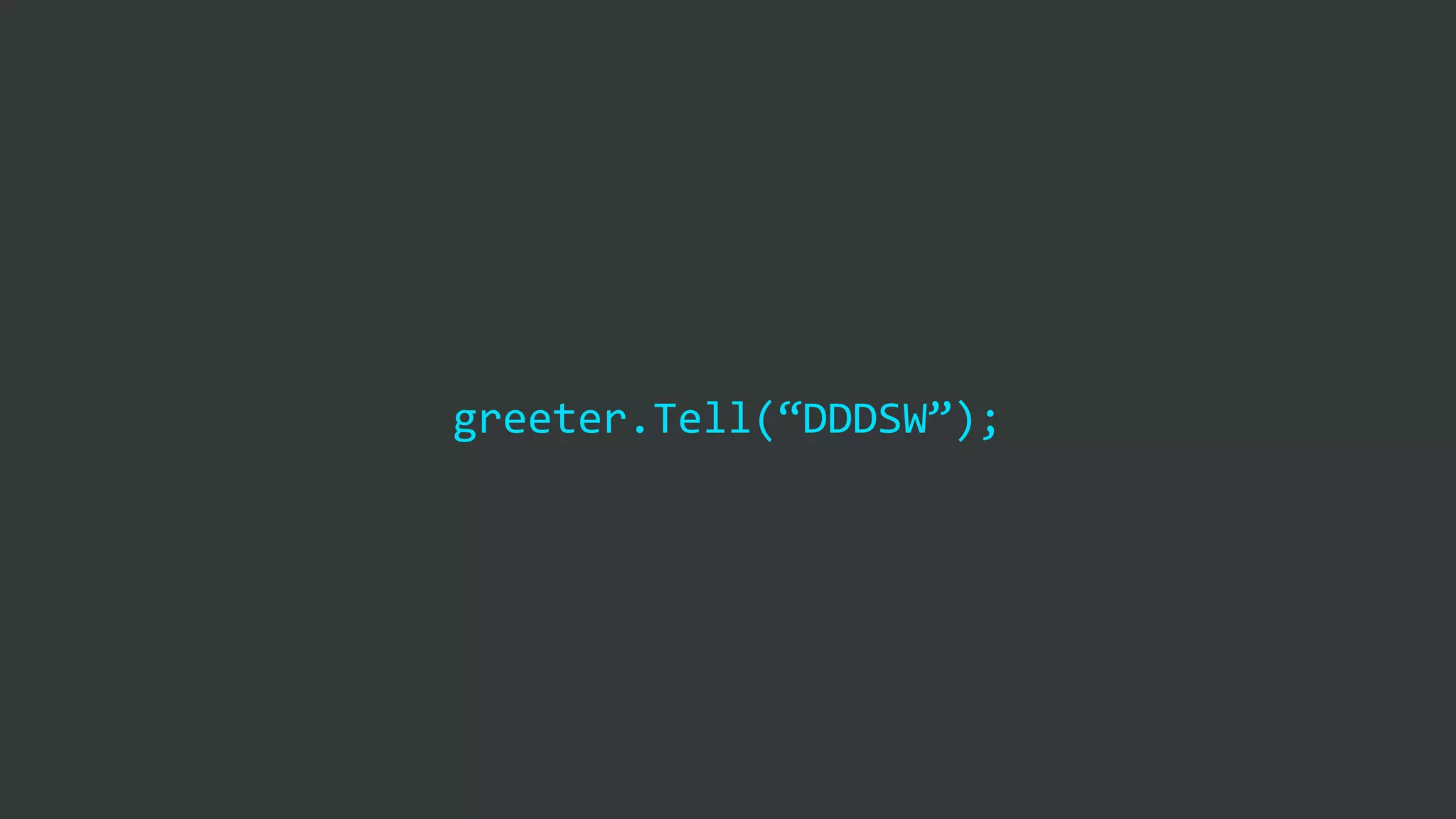
greeter.Tell(“DDDSW”);
step 4
change behaviour
Visual studio
based demo
resilience in
reactive systems
WE want
applications to
ISOLATE ERRORS
SELF HEAL
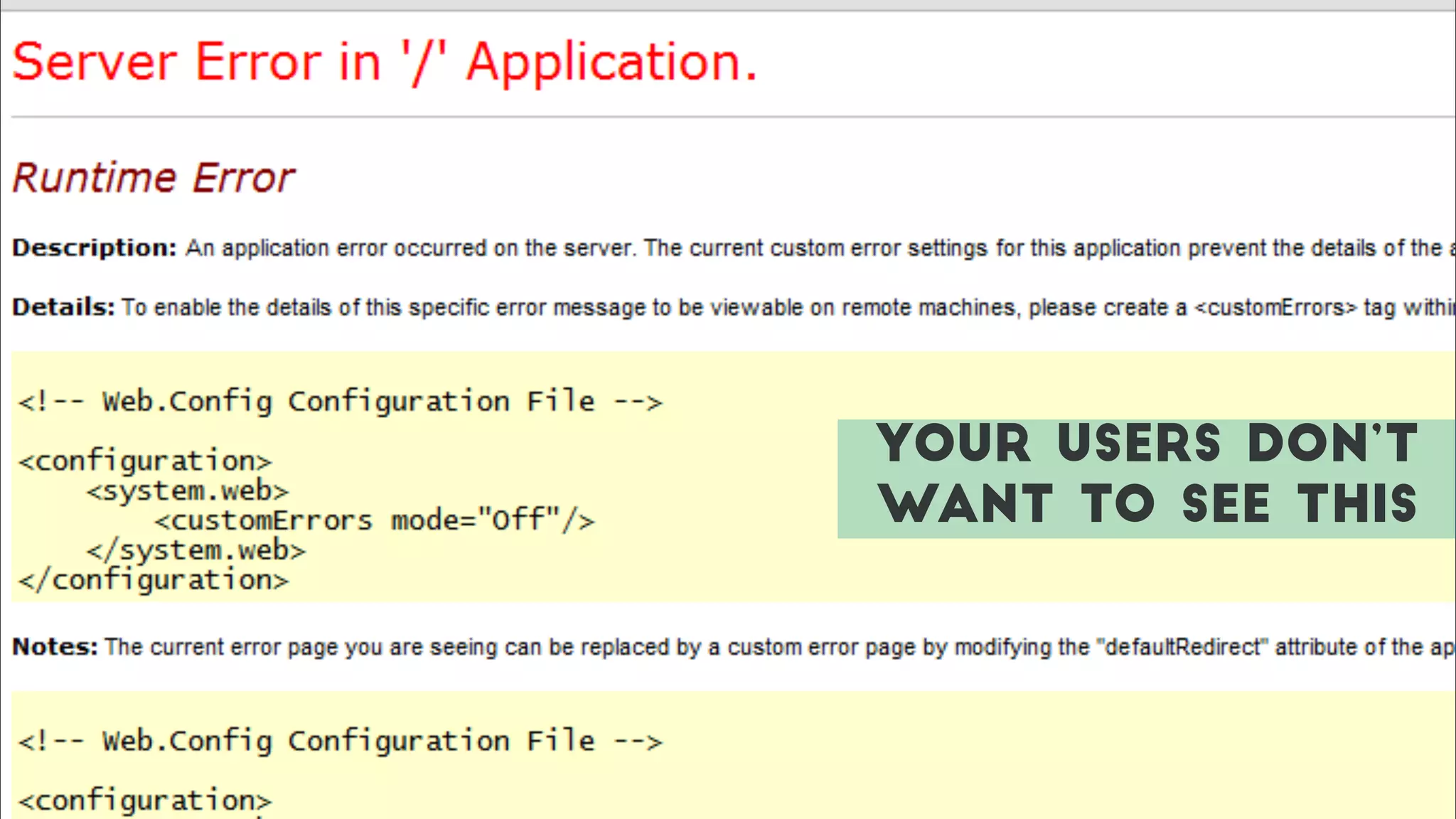
your users don’t
want to see THIS
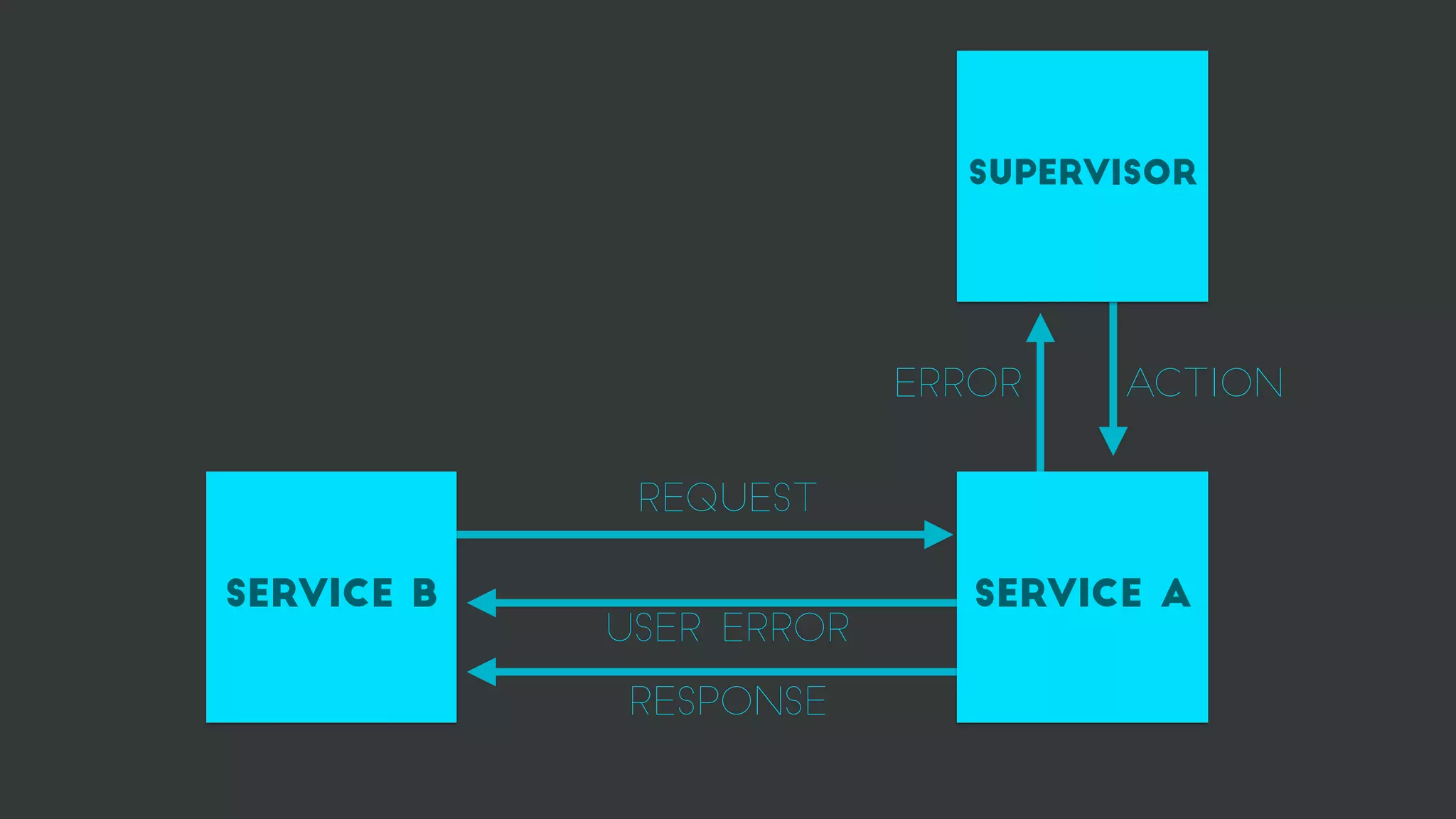
Service aService B
supervisor
Request
Response
user error
error action
scalability in
reactive systems
scale up has a
ceiling
scale out doesn't
and it’s easy
if you share nothing
how do we handle
increased load?
pools of actors
visual studio
based demo
how do we use
akka.net
the internet of
things
what is the Iot?
pointless
A security nightmare
i really don’t want to be facebook
friends with my toaster
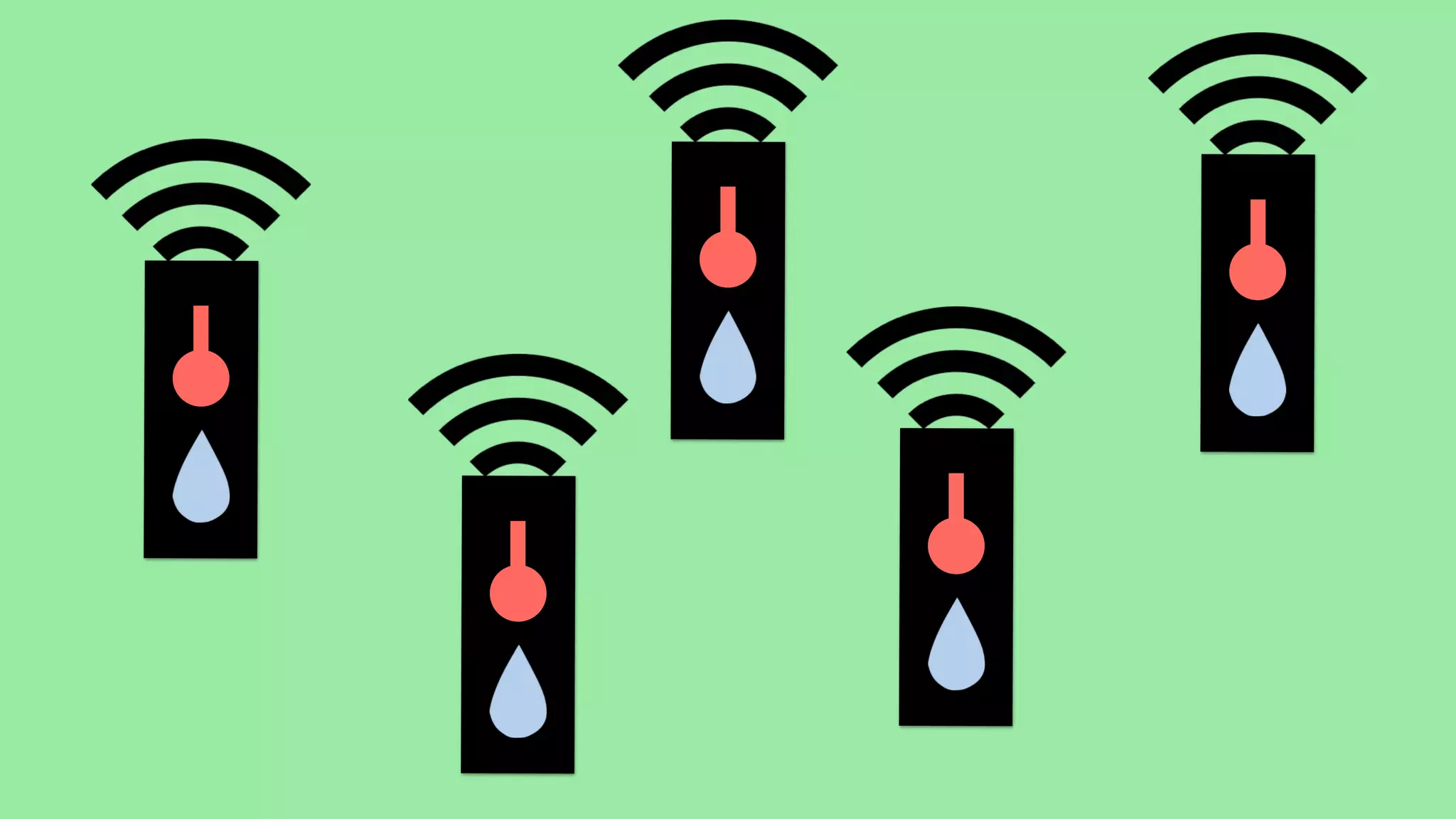
managing farms
some things we
saw
actors are cheap
DON’t worry about having too many
Always take back
pressure seriously
LIBRARIES LIKE POLLY HELP
LET IT CRASH
don’t worry about catching all
exceptions
message passing is
harder to debug
use akka.testkit to comprehensively
test
understand message
delivery guarantees
at most once is default
at least once is an option
IN conclusion
akka.net gives us
lots
Auto-scaling
Service discovery
SELF HEALING
CLUSTERING SUPPORT
CQRS
MESSAGE PASSING LOCATION TRANSPARENCY
CONFIGURATION
MAKES IT EASIER TO
build reactive systems
understand the
difficulties
where next?
WANT TO
contribute?
github.com/akkadotnet/akka.net
gitter.im/akkadotnet/akka.net
want some help?
https://petabridge.com
HTTPS://github.com/petabridge/akka-bootcamp
read the book
http://manning.com/brown2
coming later this year
Q&A

Building applications with akka.net