CHAPTERS

Problem Solving and Critical Thinking                                                                              '·


      Historical Perspectives on Problem Solving
      Critical Thinking
      Summary
      Suggested Readings


      Every day, we encounter hundreds of problems that range in difficulty from deciding
      what cereal to eat for breakfast to planning long-term career goals. Because we face
      so many types of problems, it is often difficult to say with certainty what a problem i ~
      or to know h ow to ca tegori ze them. In additio n , th e sheer ran ge o f problem s we
      encounter makes it very difficult to approach problem solving system at icall y. Word
      problems in algebra, for example, seem to have little in commo n with the ch o ices
      and decisions we face w hen buying a car.
             Loosely, a probl em exists when o ur present state differs from a desired state
      (Bransford & Stein , 198·-i ). Thinking of problem S<.llving in this vVa can he helpful for
      se·e r;ll reasons. First , it emphasi/.es the con ti nu al process of problem so lving. in
      which we move from ;m initial state to a more cll':lrly defined end st:tte . Second.
      thinki ng about proble m solving as a procl'ss nf change from one sut e to another
      helps us underst:md tktt virtually every problem we L'n cou11ter ca n he soln: d h·
      using the sam e general str:Hcg despite <           IPJ):Irent surLtce differe nces
             Eve n though most :1d ul ts possess some form of gencr:tl prohlcm-. t lh-ing st r;lt-
                                                                                            s
      l'g·, it i. not the case that :til prohkms arL· similar to on e ;mother. lbthcr. l'xperts
                 s
      :tgree that probl ems differ ith respec t to h1· much struc ture tl w · pro·i<ie tilL'
      prohiL·m sol'(:r (ll:tye.o.; , 191-ln) . An ill-defined problem h:1 lll<JrL' th :m Oll L' :tCCL' j)t:thlc
                                                                              s
      solution :md no uni-c-rs;tlh- agrcL·d-on str:ncg· for rea chin g it ( Ki tc lll' ner. Jl)x_-; i
      Worldwide ecologictl problems, such as gloh:tl wanning :md o;:o1W <iestructit m . pn )-

                                                                                                           IH5
IH-1             Parr Tltrcl"   Fllst e ring Cognitive Grllwrh
                                                                                                                      . rer s


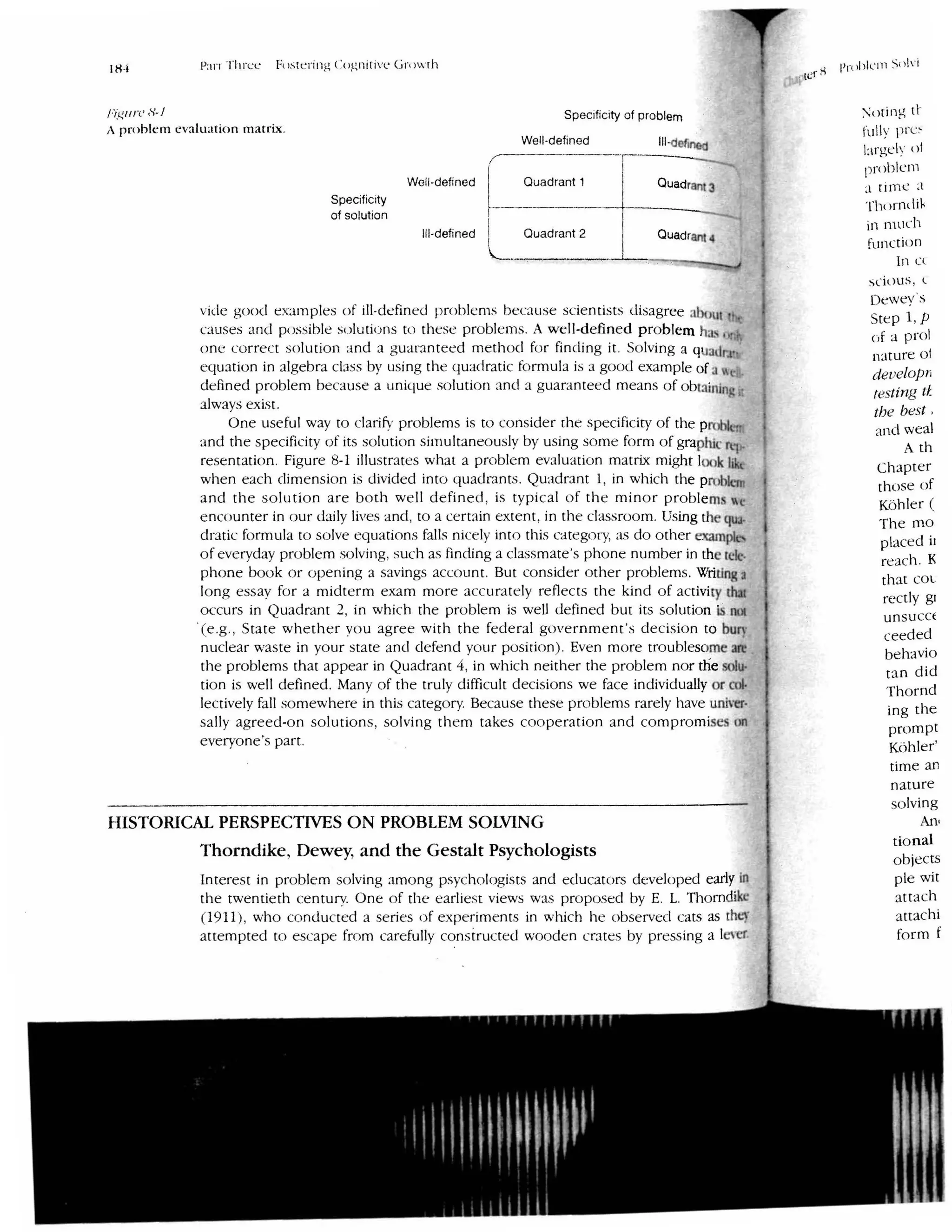
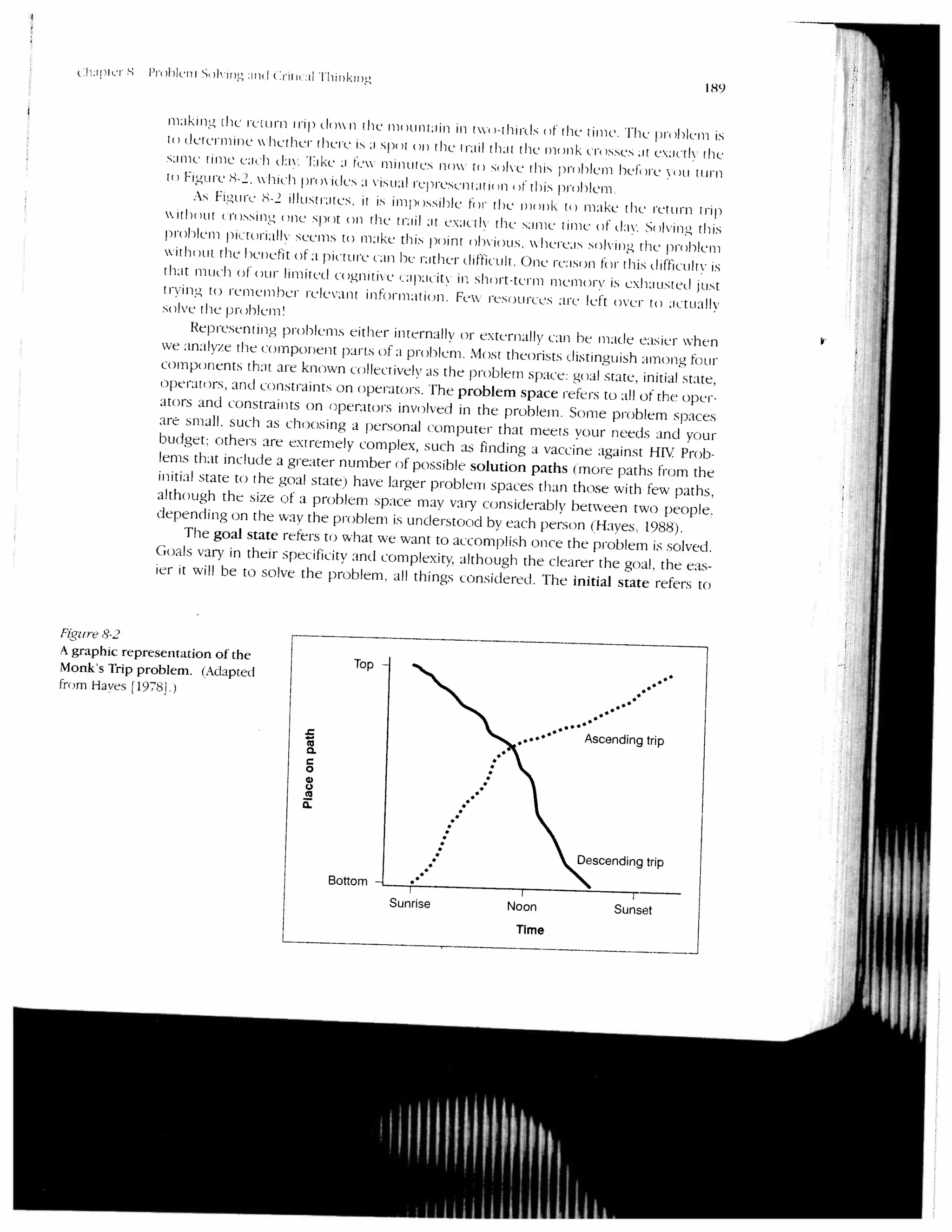
F(t.;ll re 8-1                                                                       Specificity of problem                     oring     tr
A problem evaluation matrix.                                                                                                    fully pre~

                                                                                                               -
                                                                             Well -defined            lll·defil'16d
                                                                                                                                1:rgcly of
                                                                                                                                pn >blcm

                                          Specificity
                                                        Well-defined
                                                                         I~ Q"'dmot1                  OuadrantJ                 :t rime :t
                                                                                                                                Th<>rn(m
                                          of solution
                                                           Ill-defined   L   Quadrant2                Quadrant 4
                                                                                                                                in mud•
                                                                                                                                functiun
                                                                                                                                      In   C<
                                                                                                                                 sdllUS, ~
                                                                                                                                 Dewey's
                  vide good examples of ill-defined problems because scientists disagree al u n                                  Step 1, P
                  causes and possible solutions to these problems. A well-defined problem h ,                                    of a prol
                  one correc t solution and a guaranteed method for finding it. Solving a qu:uJ ~­                               nature of
                  equ::nion in algebra class by using the quadratic fo rmula is a good example of ~t                             developr.
                  defined problem because a unique solution :m d a guaranteed means o f obtainJo .                               testing tf.
                  always exist.                                                                                                  the best,
                       One useful way to clarify problems is to consider the specificity of the pr k:~:                           and weal
                  and the specificity of its solution simultaneously by using some form of graph! 1 .  1                              A th
                  resentation. Figure 8-1 illustrates what a problem evaluation matrix might look likt.                           Chapter
                  when each dimension is divided into quadrants. Quadrant 1, in which the Pmblt..'l!.                             those of
                  and the solution are both well defined , is typical of the min o r proble m, t:                                Kohler (
                  e ncounter in our daily lives and, to a certain extent, in the classroom. Using the qua-                        The mo
                  dr:uic formula to solve equations falls nicely into this category, as do other exampl~                           placed i1
                  o f everyday problem solving, such as finding a classmate's phone number in the tele-                            reac h . K
                  phone book or opening a savings account. But consider other problems. Writing a                                  that COL
                  long essay fo r a midterm exam more acc urately reflects the kind of activiry that                               rectly g1
                  occurs in Quadrant 2, in which the problem is well defined but its solution Is 001                               unsucn
                 '(e.g. , State whether vou agree with the federal government's decision to bur)                                    ceeded
                  nuclear -;vaste in your state and defend your position). Even more troublesome art                                behavio
                  the problems that appear in Quadrant 4, in which neither the problem nor the hr                                   tan did
                  tio n is well defined. Many of the truly difficult decisions we face individually or col-                         Thornd
                  lectively fall somewhere in this category. Because these problems rarely have uni-er-                            ing the
                  sally agreed-on so lutions, solving them takes coo peration and compromi e on                                      prompt
                  everyone's part.                                                                                                   Ki'lhler'
                                                                                                                                     time an
                                                                                                                                     nature
                                                                                                                                     solving
HISTORICAL PERSPECTIVES ON PROBLEM SOLVING                                                                                                  An•
                                                                                                                                     tional
                 Thorndike, Dewey, and the Gestalt Psychologists                                                                     objects
                 Interest in proble m solving among psychologists and educators developed early in                                   ple wit
                 the twentie th centurv. One o f the earliest views was proposed by E. L. Thorndike                                  at tach
                 (1911) , who conducted a series o f experiments in which he observed cats as rhe)'                                   attachi
                 attempted to escape from carefully constructed wooden crates by pressing a lever                                     form f
Bruning schraw ronning_cognitive_psychology_and_pbl

Bruning schraw ronning_cognitive_psychology_and_pbl

  • 1.
    CHAPTERS Problem Solving andCritical Thinking '· Historical Perspectives on Problem Solving Critical Thinking Summary Suggested Readings Every day, we encounter hundreds of problems that range in difficulty from deciding what cereal to eat for breakfast to planning long-term career goals. Because we face so many types of problems, it is often difficult to say with certainty what a problem i ~ or to know h ow to ca tegori ze them. In additio n , th e sheer ran ge o f problem s we encounter makes it very difficult to approach problem solving system at icall y. Word problems in algebra, for example, seem to have little in commo n with the ch o ices and decisions we face w hen buying a car. Loosely, a probl em exists when o ur present state differs from a desired state (Bransford & Stein , 198·-i ). Thinking of problem S<.llving in this vVa can he helpful for se·e r;ll reasons. First , it emphasi/.es the con ti nu al process of problem so lving. in which we move from ;m initial state to a more cll':lrly defined end st:tte . Second. thinki ng about proble m solving as a procl'ss nf change from one sut e to another helps us underst:md tktt virtually every problem we L'n cou11ter ca n he soln: d h· using the sam e general str:Hcg despite < IPJ):Irent surLtce differe nces Eve n though most :1d ul ts possess some form of gencr:tl prohlcm-. t lh-ing st r;lt- s l'g·, it i. not the case that :til prohkms arL· similar to on e ;mother. lbthcr. l'xperts s :tgree that probl ems differ ith respec t to h1· much struc ture tl w · pro·i<ie tilL' prohiL·m sol'(:r (ll:tye.o.; , 191-ln) . An ill-defined problem h:1 lll<JrL' th :m Oll L' :tCCL' j)t:thlc s solution :md no uni-c-rs;tlh- agrcL·d-on str:ncg· for rea chin g it ( Ki tc lll' ner. Jl)x_-; i Worldwide ecologictl problems, such as gloh:tl wanning :md o;:o1W <iestructit m . pn )- IH5
  • 2.
    IH-1 Parr Tltrcl" Fllst e ring Cognitive Grllwrh . rer s F(t.;ll re 8-1 Specificity of problem oring tr A problem evaluation matrix. fully pre~ - Well -defined lll·defil'16d 1:rgcly of pn >blcm Specificity Well-defined I~ Q"'dmot1 OuadrantJ :t rime :t Th<>rn(m of solution Ill-defined L Quadrant2 Quadrant 4 in mud• functiun In C< sdllUS, ~ Dewey's vide good examples of ill-defined problems because scientists disagree al u n Step 1, P causes and possible solutions to these problems. A well-defined problem h , of a prol one correc t solution and a guaranteed method for finding it. Solving a qu:uJ ~­ nature of equ::nion in algebra class by using the quadratic fo rmula is a good example of ~t developr. defined problem because a unique solution :m d a guaranteed means o f obtainJo . testing tf. always exist. the best, One useful way to clarify problems is to consider the specificity of the pr k:~: and weal and the specificity of its solution simultaneously by using some form of graph! 1 . 1 A th resentation. Figure 8-1 illustrates what a problem evaluation matrix might look likt. Chapter when each dimension is divided into quadrants. Quadrant 1, in which the Pmblt..'l!. those of and the solution are both well defined , is typical of the min o r proble m, t: Kohler ( e ncounter in our daily lives and, to a certain extent, in the classroom. Using the qua- The mo dr:uic formula to solve equations falls nicely into this category, as do other exampl~ placed i1 o f everyday problem solving, such as finding a classmate's phone number in the tele- reac h . K phone book or opening a savings account. But consider other problems. Writing a that COL long essay fo r a midterm exam more acc urately reflects the kind of activiry that rectly g1 occurs in Quadrant 2, in which the problem is well defined but its solution Is 001 unsucn '(e.g. , State whether vou agree with the federal government's decision to bur) ceeded nuclear -;vaste in your state and defend your position). Even more troublesome art behavio the problems that appear in Quadrant 4, in which neither the problem nor the hr tan did tio n is well defined. Many of the truly difficult decisions we face individually or col- Thornd lectively fall somewhere in this category. Because these problems rarely have uni-er- ing the sally agreed-on so lutions, solving them takes coo peration and compromi e on prompt everyone's part. Ki'lhler' time an nature solving HISTORICAL PERSPECTIVES ON PROBLEM SOLVING An• tional Thorndike, Dewey, and the Gestalt Psychologists objects Interest in proble m solving among psychologists and educators developed early in ple wit the twentie th centurv. One o f the earliest views was proposed by E. L. Thorndike at tach (1911) , who conducted a series o f experiments in which he observed cats as rhe)' attachi attempted to escape from carefully constructed wooden crates by pressing a lever form f