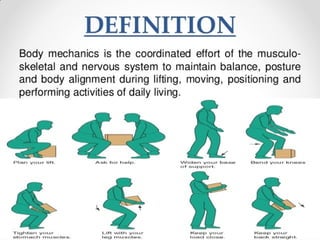
Body mechanics is the efficient use of the body
as a machine, and as a means of locomotion ,it is
directly related to the function of bones, joints,
muscles, nerves and brain to maintain posture
balance.
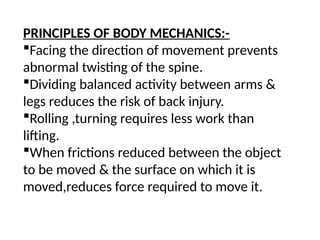
PRINCIPLES OF BODY MECHANICS:-
Facing the direction of movement prevents
abnormal twisting of the spine.
Dividing balanced activity between arms &
legs reduces the risk of back injury.
Rolling ,turning requires less work than
lifting.
When frictions reduced between the object
to be moved & the surface on which it is
moved,reduces force required to move it.
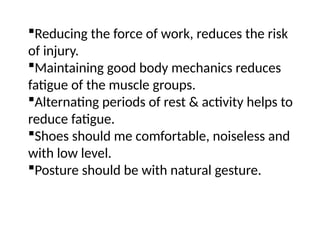
Reducing the force of work, reduces the risk
of injury.
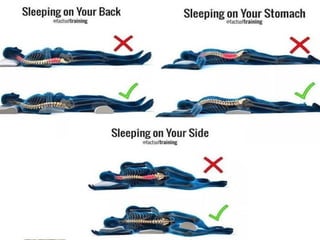
Maintaining good body mechanics reduces
fatigue of the muscle groups.
Alternating periods of rest & activity helps to
reduce fatigue.
Shoes should me comfortable, noiseless and
with low level.
Posture should be with natural gesture.
PRINCIPLES FOR CORRECT BODY
MECHANICS
• STANDING
• SITTING
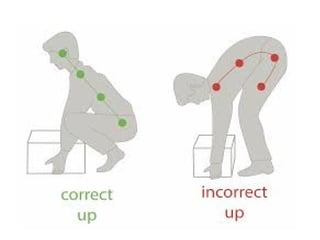
• BENDING (STOOPING)
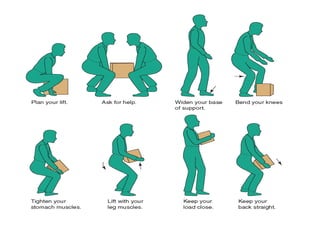
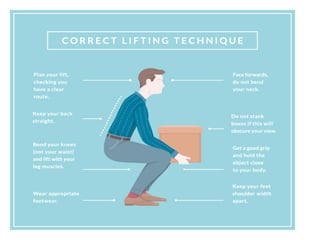
• LIFTING WEIGHTS
• CARRYING
• PUSHING
• PULLING
• REACHING
• WHILE WORKING IN STANDING POSITION
• WHILE SHIFTING THE PATIENT FROM BED TO CHAIR
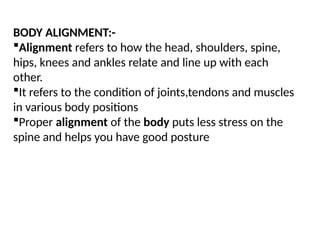
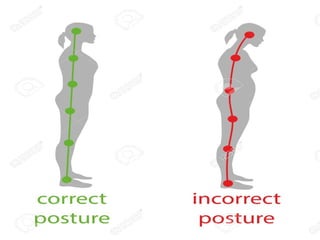
BODY ALIGNMENT:-
Alignment refers to how the head, shoulders, spine,
hips, knees and ankles relate and line up with each
other.
It refers to the condition of joints,tendons and muscles
in various body positions
Proper alignment of the body puts less stress on the
spine and helps you have good posture
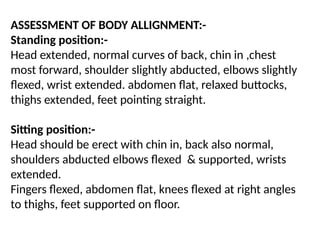
ASSESSMENT OF BODY ALLIGNMENT:-
Standing position:-
Head extended, normal curves of back, chin in ,chest
most forward, shoulder slightly abducted, elbows slightly
flexed, wrist extended. abdomen flat, relaxed buttocks,
thighs extended, feet pointing straight.
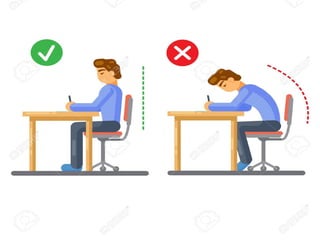
Sitting position:-
Head should be erect with chin in, back also normal,
shoulders abducted elbows flexed & supported, wrists
extended.
Fingers flexed, abdomen flat, knees flexed at right angles
to thighs, feet supported on floor.
MOBILITY AND
IMMOBILITY
MOBILITY:-
Mobility is defined as the ability to move freely,
easily, rhythmically and purposefully in the
environment.
IMMOBILITY:-
Immobility is the state of not being able to move
around.
FACTORS AFFECTING MOBILITY:-
AGE:-
It greatly affects the activity levels.Generally as people
grow older, they slow down.
ENERGY LEVEL:-
It varies greatly among individuals. Individual
demonstrates different energy levels at different times.
LIFESTYLE:-
People learn early in life often from families .Some
people participate in physical activity regularly in an
effort to maintain or to improve their health.
FEAR AND PAIN:-
The mobility can also be limited because of
fear or pain, a pt recovering from surgery may
be reluctant to move for fear of opening the
incision.
DISABILITY:-
A disability is a persistent mental or physical
weakness that prevents a person from carring
out the normal activities of life.
HAZARDS ASSOCIATED WITH IMMOBILITY:-
Hypostatic pneumonia. (pneumonia that
usually results from the collection of fluid in
the dorsal region of the lungs.)
Pulmonary embolism(Pulmonary
embolism (PE) is a blockage of an artery in the
lungs by a substance that has traveled from
elsewhere in the body through the
bloodstream)
Thrombophlebitis
Orthostatic hypotension
Pressure ulcers or pressure sore
Decreased peristalsis with constipation.
Urinary stasis with renal calculi formation.
Contractures or muscle atrophy
Altered fluid & electrolyte status.
POSTURAL ABNORMALITIES
Abnormal posturing refers to rigid body movements and
chronic abnormal positions of the body.
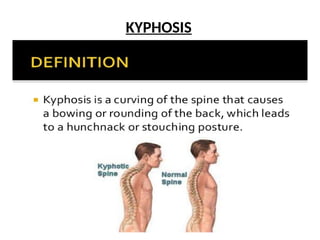
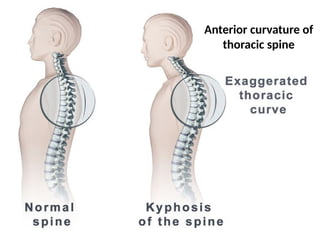
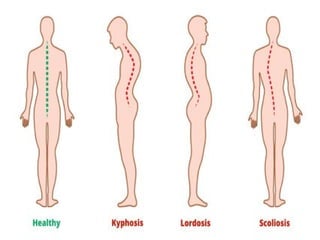
KYPHOSIS
Anterior curvature of
thoracic spine
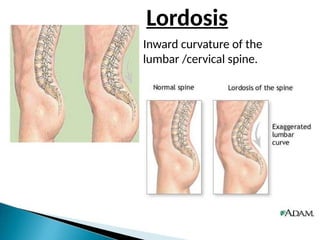
Lordosis
Inward curvature of the
lumbar /cervical spine.
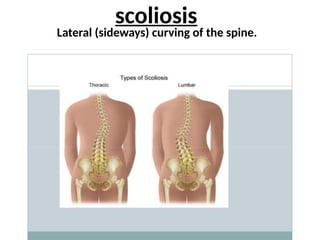
Lateral (sideways) curving of the spine.
scoliosis
THANK YOU

bodymechanics 1.pptx DIFFERENT MECHANICS

  • 2.
    Body mechanics isthe efficient use of the body as a machine, and as a means of locomotion ,it is directly related to the function of bones, joints, muscles, nerves and brain to maintain posture balance.
  • 5.
    PRINCIPLES OF BODYMECHANICS:- Facing the direction of movement prevents abnormal twisting of the spine. Dividing balanced activity between arms & legs reduces the risk of back injury. Rolling ,turning requires less work than lifting. When frictions reduced between the object to be moved & the surface on which it is moved,reduces force required to move it.
  • 6.
    Reducing the forceof work, reduces the risk of injury. Maintaining good body mechanics reduces fatigue of the muscle groups. Alternating periods of rest & activity helps to reduce fatigue. Shoes should me comfortable, noiseless and with low level. Posture should be with natural gesture.
  • 7.
    PRINCIPLES FOR CORRECTBODY MECHANICS • STANDING • SITTING • BENDING (STOOPING) • LIFTING WEIGHTS • CARRYING • PUSHING • PULLING • REACHING • WHILE WORKING IN STANDING POSITION • WHILE SHIFTING THE PATIENT FROM BED TO CHAIR
  • 11.
    BODY ALIGNMENT:- Alignment refersto how the head, shoulders, spine, hips, knees and ankles relate and line up with each other. It refers to the condition of joints,tendons and muscles in various body positions Proper alignment of the body puts less stress on the spine and helps you have good posture
  • 12.
    ASSESSMENT OF BODYALLIGNMENT:- Standing position:- Head extended, normal curves of back, chin in ,chest most forward, shoulder slightly abducted, elbows slightly flexed, wrist extended. abdomen flat, relaxed buttocks, thighs extended, feet pointing straight. Sitting position:- Head should be erect with chin in, back also normal, shoulders abducted elbows flexed & supported, wrists extended. Fingers flexed, abdomen flat, knees flexed at right angles to thighs, feet supported on floor.
  • 16.
  • 17.
    MOBILITY:- Mobility is definedas the ability to move freely, easily, rhythmically and purposefully in the environment. IMMOBILITY:- Immobility is the state of not being able to move around.
  • 18.
    FACTORS AFFECTING MOBILITY:- AGE:- Itgreatly affects the activity levels.Generally as people grow older, they slow down. ENERGY LEVEL:- It varies greatly among individuals. Individual demonstrates different energy levels at different times. LIFESTYLE:- People learn early in life often from families .Some people participate in physical activity regularly in an effort to maintain or to improve their health.
  • 19.
    FEAR AND PAIN:- Themobility can also be limited because of fear or pain, a pt recovering from surgery may be reluctant to move for fear of opening the incision. DISABILITY:- A disability is a persistent mental or physical weakness that prevents a person from carring out the normal activities of life.
  • 20.
    HAZARDS ASSOCIATED WITHIMMOBILITY:- Hypostatic pneumonia. (pneumonia that usually results from the collection of fluid in the dorsal region of the lungs.) Pulmonary embolism(Pulmonary embolism (PE) is a blockage of an artery in the lungs by a substance that has traveled from elsewhere in the body through the bloodstream) Thrombophlebitis Orthostatic hypotension
  • 21.
    Pressure ulcers orpressure sore Decreased peristalsis with constipation. Urinary stasis with renal calculi formation. Contractures or muscle atrophy Altered fluid & electrolyte status.
  • 22.
    POSTURAL ABNORMALITIES Abnormal posturingrefers to rigid body movements and chronic abnormal positions of the body.
  • 23.
  • 24.
  • 25.
    Lordosis Inward curvature ofthe lumbar /cervical spine.
  • 26.
    Lateral (sideways) curvingof the spine. scoliosis
  • 28.