Body Image andBody Image and
Eating DisordersEating Disorders
ULV Counseling CenterULV Counseling Center
January 27, 2009January 27, 2009
What is Body ImageWhat is Body Image
 How you see yourself when you look inHow you see yourself when you look in
the mirror or when you picture yourselfthe mirror or when you picture yourself
in your mind.in your mind.
 What you believe about your ownWhat you believe about your own
appearance.appearance.
 How you feel about your bodyHow you feel about your body
 How you feel in your bodyHow you feel in your body
Body ImageBody Image
 NegativeNegative
 Distorted perceptionDistorted perception
of one’s bodyof one’s body
 Feelings of beingFeelings of being
unattractiveunattractive
 Feelings of shame,Feelings of shame,
self-consciousness,self-consciousness,
and anxiety aboutand anxiety about
one’s bodyone’s body
 PositivePositive
 A realistic perceptionA realistic perception
of one’s bodyof one’s body
 Appreciation of one’sAppreciation of one’s
natural body shapenatural body shape
 Understanding thatUnderstanding that
one’s value as aone’s value as a
person is not basedperson is not based
on one’s physicalon one’s physical
appearanceappearance
What is Your Body Image?What is Your Body Image?
 Do you often rely on clothes or cosmetics toDo you often rely on clothes or cosmetics to
try to cover up the “flaws” in yourtry to cover up the “flaws” in your
appearance?appearance?
 Do your feelings about your looks get in theDo your feelings about your looks get in the
way of accepting yourself or enjoying yourway of accepting yourself or enjoying your
everyday life?everyday life?
 Do you spend a lot of time worrying aboutDo you spend a lot of time worrying about
what others think of your looks?what others think of your looks?
 Do you spend a lot of time, effort, or moneyDo you spend a lot of time, effort, or money
trying to achieve physical perfection?trying to achieve physical perfection?
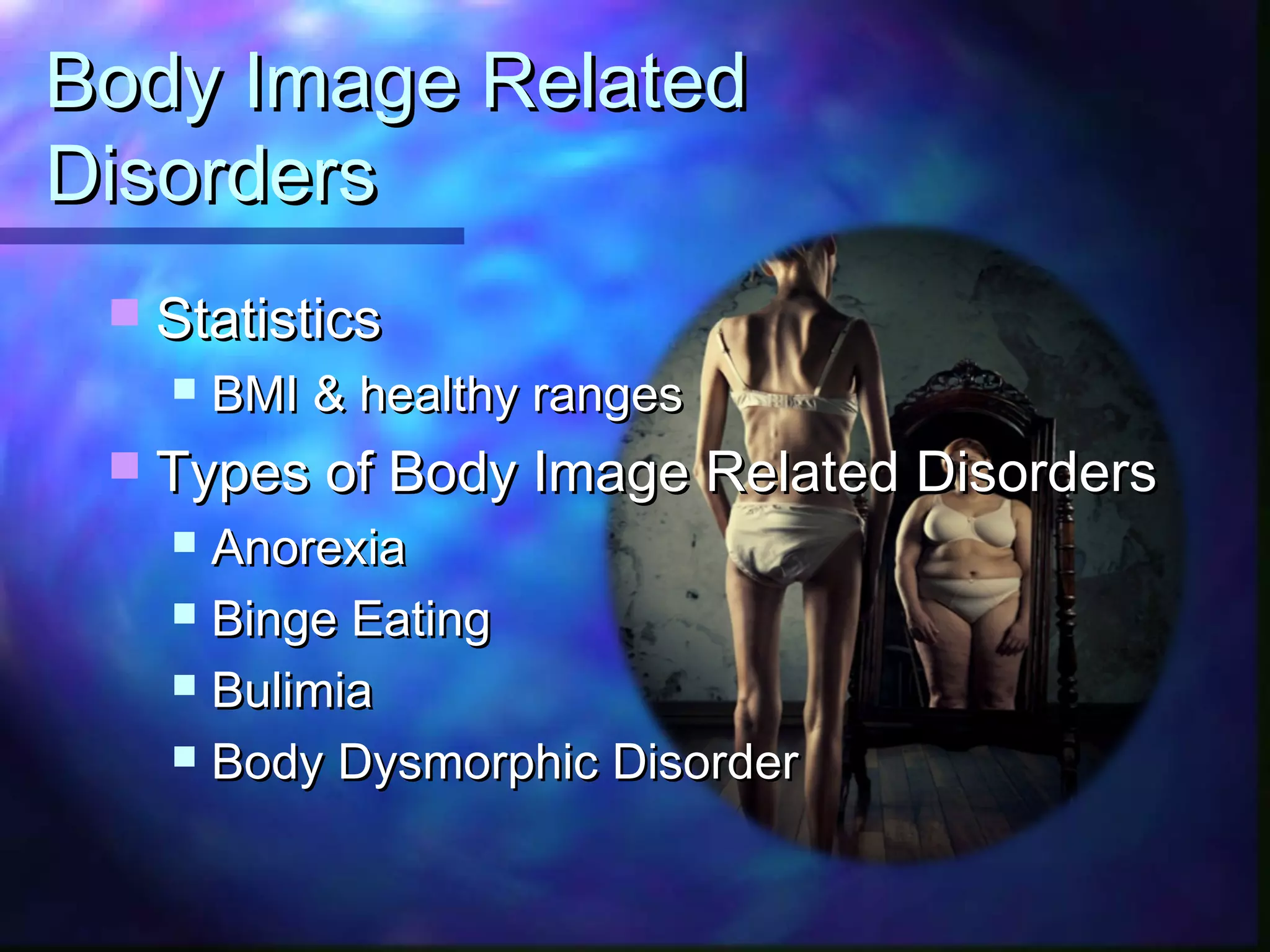
Body Image RelatedBody Image Related
DisordersDisorders
 StatisticsStatistics
 BMI & healthy rangesBMI & healthy ranges
 Types of Body Image Related DisordersTypes of Body Image Related Disorders
 AnorexiaAnorexia
 Binge EatingBinge Eating
 BulimiaBulimia
 Body Dysmorphic DisorderBody Dysmorphic Disorder
Body Image RelatedBody Image Related
DisordersDisorders
 What Causes Body Image RelatedWhat Causes Body Image Related
Disorders?Disorders?
 Psychological factorsPsychological factors
 Interpersonal factorsInterpersonal factors
 Social factorsSocial factors
 Biological factorsBiological factors
 Eating Disorders on CampusesEating Disorders on Campuses
Role of the MediaRole of the Media
 Role of the MediaRole of the Media
 Cultural obsession with slendernessCultural obsession with slenderness
 Unrealistic portrayalsUnrealistic portrayals
 How the media influences our livesHow the media influences our lives
 Being a critical viewerBeing a critical viewer
 Promotion of healthier body imagePromotion of healthier body image
messages in the mediamessages in the media
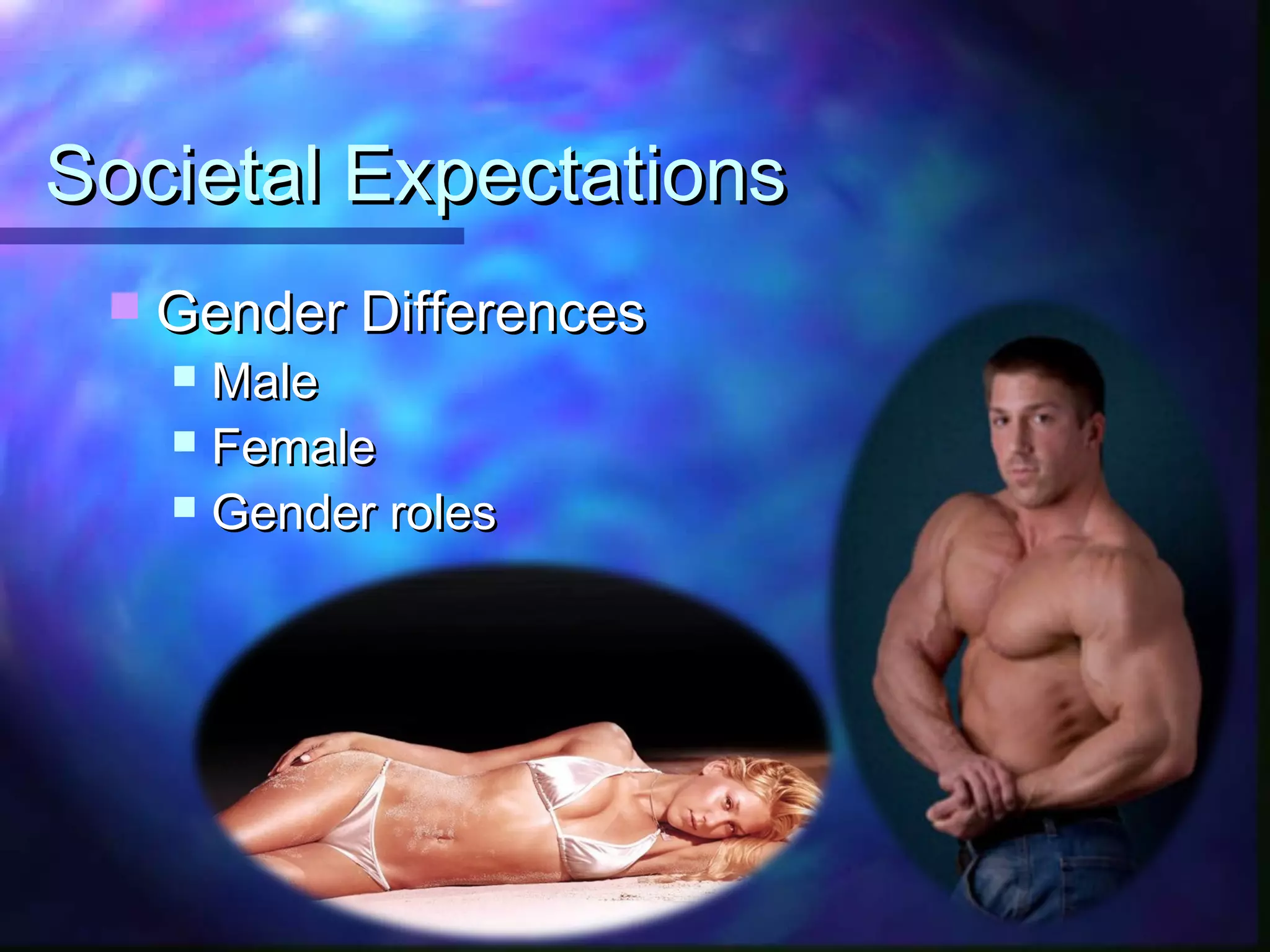
Societal ExpectationsSocietal Expectations
 Gender DifferencesGender Differences
 MaleMale
 FemaleFemale
 Gender rolesGender roles
How to Help FriendsHow to Help Friends
and Familyand Family
 Remember an eating disorder is not aRemember an eating disorder is not a
problem but an attempted solution to aproblem but an attempted solution to a
problemproblem
 Accept what we do and do not haveAccept what we do and do not have
power overpower over
 Use “I” statementsUse “I” statements
 Be authenticBe authentic
 Don’t focus on eating or weightDon’t focus on eating or weight
How to Help FriendsHow to Help Friends
and Familyand Family
 Our feelings may be a reflection of howOur feelings may be a reflection of how
she/he is feelingshe/he is feeling
 The role of empathyThe role of empathy
 Keep trying, maintain hopeKeep trying, maintain hope
 Send messages of love and notSend messages of love and not
rejectionrejection
 Get support for yourselfGet support for yourself
Improving Body ImageImproving Body Image
 10 “Will-Powers”10 “Will-Powers”
 Note Card ActivityNote Card Activity
 Treatment and ReferralsTreatment and Referrals
Treatment is available, and recovery is possible!Treatment is available, and recovery is possible!

Body Image Workshop

  • 1.
    Body Image andBodyImage and Eating DisordersEating Disorders ULV Counseling CenterULV Counseling Center January 27, 2009January 27, 2009
  • 2.
    What is BodyImageWhat is Body Image  How you see yourself when you look inHow you see yourself when you look in the mirror or when you picture yourselfthe mirror or when you picture yourself in your mind.in your mind.  What you believe about your ownWhat you believe about your own appearance.appearance.  How you feel about your bodyHow you feel about your body  How you feel in your bodyHow you feel in your body
  • 3.
    Body ImageBody Image NegativeNegative  Distorted perceptionDistorted perception of one’s bodyof one’s body  Feelings of beingFeelings of being unattractiveunattractive  Feelings of shame,Feelings of shame, self-consciousness,self-consciousness, and anxiety aboutand anxiety about one’s bodyone’s body  PositivePositive  A realistic perceptionA realistic perception of one’s bodyof one’s body  Appreciation of one’sAppreciation of one’s natural body shapenatural body shape  Understanding thatUnderstanding that one’s value as aone’s value as a person is not basedperson is not based on one’s physicalon one’s physical appearanceappearance
  • 4.
    What is YourBody Image?What is Your Body Image?  Do you often rely on clothes or cosmetics toDo you often rely on clothes or cosmetics to try to cover up the “flaws” in yourtry to cover up the “flaws” in your appearance?appearance?  Do your feelings about your looks get in theDo your feelings about your looks get in the way of accepting yourself or enjoying yourway of accepting yourself or enjoying your everyday life?everyday life?  Do you spend a lot of time worrying aboutDo you spend a lot of time worrying about what others think of your looks?what others think of your looks?  Do you spend a lot of time, effort, or moneyDo you spend a lot of time, effort, or money trying to achieve physical perfection?trying to achieve physical perfection?
  • 5.
    Body Image RelatedBodyImage Related DisordersDisorders  StatisticsStatistics  BMI & healthy rangesBMI & healthy ranges  Types of Body Image Related DisordersTypes of Body Image Related Disorders  AnorexiaAnorexia  Binge EatingBinge Eating  BulimiaBulimia  Body Dysmorphic DisorderBody Dysmorphic Disorder
  • 6.
    Body Image RelatedBodyImage Related DisordersDisorders  What Causes Body Image RelatedWhat Causes Body Image Related Disorders?Disorders?  Psychological factorsPsychological factors  Interpersonal factorsInterpersonal factors  Social factorsSocial factors  Biological factorsBiological factors  Eating Disorders on CampusesEating Disorders on Campuses
  • 7.
    Role of theMediaRole of the Media  Role of the MediaRole of the Media  Cultural obsession with slendernessCultural obsession with slenderness  Unrealistic portrayalsUnrealistic portrayals  How the media influences our livesHow the media influences our lives  Being a critical viewerBeing a critical viewer  Promotion of healthier body imagePromotion of healthier body image messages in the mediamessages in the media
  • 8.
    Societal ExpectationsSocietal Expectations Gender DifferencesGender Differences  MaleMale  FemaleFemale  Gender rolesGender roles
  • 9.
    How to HelpFriendsHow to Help Friends and Familyand Family  Remember an eating disorder is not aRemember an eating disorder is not a problem but an attempted solution to aproblem but an attempted solution to a problemproblem  Accept what we do and do not haveAccept what we do and do not have power overpower over  Use “I” statementsUse “I” statements  Be authenticBe authentic  Don’t focus on eating or weightDon’t focus on eating or weight
  • 10.
    How to HelpFriendsHow to Help Friends and Familyand Family  Our feelings may be a reflection of howOur feelings may be a reflection of how she/he is feelingshe/he is feeling  The role of empathyThe role of empathy  Keep trying, maintain hopeKeep trying, maintain hope  Send messages of love and notSend messages of love and not rejectionrejection  Get support for yourselfGet support for yourself
  • 11.
    Improving Body ImageImprovingBody Image  10 “Will-Powers”10 “Will-Powers”  Note Card ActivityNote Card Activity  Treatment and ReferralsTreatment and Referrals Treatment is available, and recovery is possible!Treatment is available, and recovery is possible!

Editor's Notes

  • #8 How the media influences our lives View video clips: Dove commercial (Evolution), Killing Us Softly