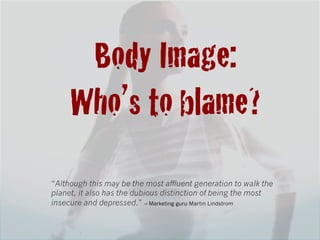
Body Image:!
     Who’s to blame?!
“Although this may be the most affluent generation to walk the
planet, it also has the dubious distinction of being the most
insecure and depressed.” – Marketing guru Martin Lindstrom
Some stats…
  A 2006 National Youth Cultures of Eating Study found that
   close to 20% of adolescent Australian girls use fasting for 2 or
   more days to lose weight. 13% use vomiting. Others use
   slimming pills, chewing but not swallowing food, smoking and
   laxatives.

  Girls as young as eight years old are being admitted to
   hospital with eating disorders.

  1 in 4 twelve year old girls in Australia would like to have
   cosmetic surgery. (AAP August 2007)
                         ,

  A 20% increase in inquiries from teenage girls for plastic
   surgery was reported in 2008. (Sunday mail, Brisbane)
Plastic Surgery…
Statistics show that increasing numbers of adolescent girls are
seeking plastic surgery and cosmetic procedures such as botox
injections.
  Priyanka, at age 16, after being told by her boyfriend that she didn’t
   look ‘hot’ enough, underwent breast enlargement. Now 18, Priyanka
   says she is more confident that she was at 16, and besides “I look
   great in my swimsuit”.
                                           Article in India Today, 2007

  Amy, 18 years old, performed well in her final year of high school, so
   her parents bought her a special gift: fake breasts! “I just felt as
   though I wouldn’t be complete without them.. I could have gotten a
   new car, but I’d much rather have bigger breasts. Now, I feel like a
   real woman.”
                                                   Cosmopolitan 2004
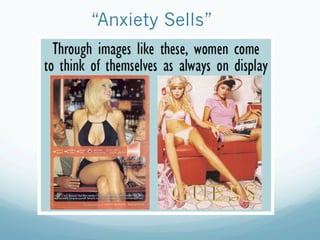
Anxiety Sells!
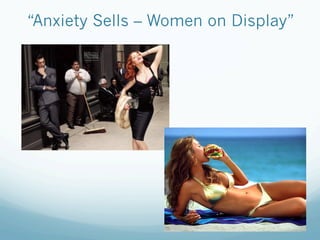
  Anxiety is good for business, because it keeps girls (and
  women) purchasing.

  Repeated exposure to unrealistic images of female
  bodies has produced a massive market for beauty
  products, diet and weight-loss products and programs, as
  well as a pre-occupation with appearances.

  Many young girls feel they have to be slim to be popular.
  Concerns about looks intensify as girls grow up.
  Marketers know this, they use experts such as cultural
  anthropologists and child psychologists. They know girls’
  lives intimately and which buttons to press.
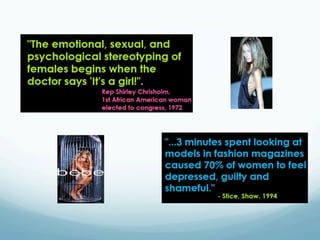
“Anxiety Sells”
“Anxiety Sells – Women on Display”
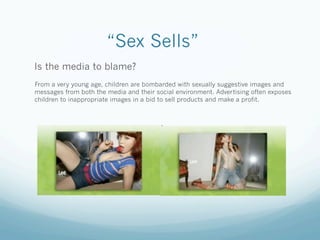
“Sex Sells”
Is the media to blame?
From a very young age, children are bombarded with sexually suggestive images and
messages from both the media and their social environment. Advertising often exposes
children to inappropriate images in a bid to sell products and make a profit.
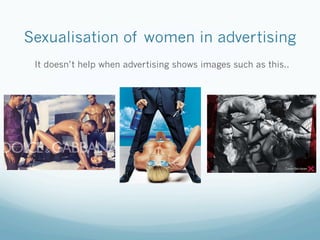
Sexualisation of women in advertising
 It doesn’t help when advertising shows images such as this..
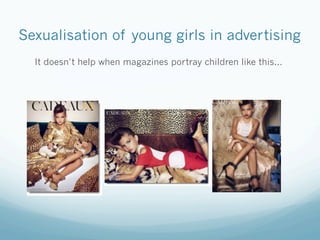
Sexualisation of young girls in advertising
  It doesn’t help when magazines portray children like this...
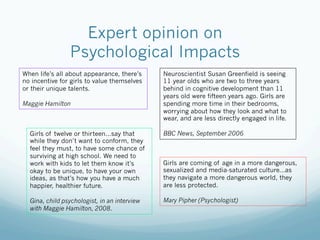
Expert opinion on
                Psychological Impacts
When life’s all about appearance, there’s     Neuroscientist Susan Greenfield is seeing
no incentive for girls to value themselves    11 year olds who are two to three years
or their unique talents.                      behind in cognitive development than 11
                                              years old were fifteen years ago. Girls are
Maggie Hamilton                               spending more time in their bedrooms,
                                              worrying about how they look and what to
                                              wear, and are less directly engaged in life.

  Girls of twelve or thirteen…say that        BBC News, September 2006
  while they don’t want to conform, they
  feel they must, to have some chance of
  surviving at high school. We need to
  work with kids to let them know it’s        Girls are coming of age in a more dangerous,
  okay to be unique, to have your own         sexualized and media-saturated culture...as
  ideas, as that’s how you have a much        they navigate a more dangerous world, they
  happier, healthier future.                  are less protected.

  Gina, child psychologist, in an interview   Mary Pipher (Psychologist)
  with Maggie Hamilton, 2008.
Body Hatred!?!
Tania Andrusiac (who wrote “Adproofing your
kids”) describes our culture as “allergic to body
diversity”, and creates problems “that only
consumption can solve”.

She says “This epidemic of body hatred makes
a few select people very rich, and so many of us
very sad.”
Is anyone doing anything about this?
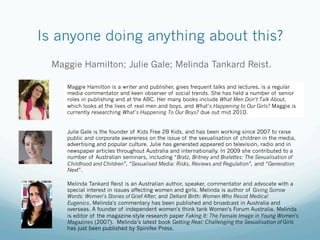
  Maggie Hamilton; Julie Gale; Melinda Tankard Reist.

     Maggie Hamilton is a writer and publisher, gives frequent talks and lectures, is a regular
     media commentator and keen observer of social trends. She has held a number of senior
     roles in publishing and at the ABC. Her many books include What Men Don’t Talk About,
     which looks at the lives of real men and boys, and What’s Happening to Our Girls? Maggie is
     currently researching What’s Happening To Our Boys? due out mid 2010.


     Julie Gale is the founder of Kids Free 2B Kids, and has been working since 2007 to raise
     public and corporate awareness on the issue of the sexualisation of children in the media,
     advertising and popular culture. Julie has generated appeared on television, radio and in
     newspaper articles throughout Australia and internationally. In 2009 she contributed to a
     number of Australian seminars, including “Bratz, Britney and Bralettes: The Sexualisation of
     Childhood and Children”, “Sexualised Media: Risks, Reviews and Regulation”, and “Generation
     Next”.

     Melinda Tankard Reist is an Australian author, speaker, commentator and advocate with a
     special interest in issues affecting women and girls. Melinda is author of Giving Sorrow
     Words: Women's Stories of Grief After; and Defiant Birth: Women Who Resist Medical
     Eugenics. Melinda's commentary has been published and broadcast in Australia and
     overseas. A founder of independent women's think tank Women's Forum Australia, Melinda
     is editor of the magazine-style research paper Faking It: The Female Image in Young Women's
     Magazines (2007).  Melinda’s latest book Getting Real: Challenging the Sexualisation of Girls
     has just been published by Spinifex Press.
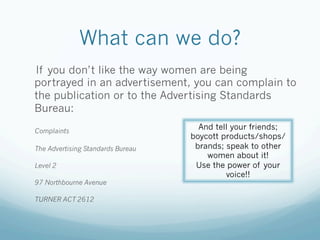
What can we do?
If you don’t like the way women are being
portrayed in an advertisement, you can complain to
the publication or to the Advertising Standards
Bureau:

Complaints
                                     And tell your friends;
                                   boycott products/shops/
The Advertising Standards Bureau    brands; speak to other
                                       women about it!
Level 2                             Use the power of your
                                            voice!!
97 Northbourne Avenue

TURNER ACT 2612

Body image

  • 1.
    Body Image:! Who’s to blame?! “Although this may be the most affluent generation to walk the planet, it also has the dubious distinction of being the most insecure and depressed.” – Marketing guru Martin Lindstrom
  • 2.
    Some stats…   A2006 National Youth Cultures of Eating Study found that close to 20% of adolescent Australian girls use fasting for 2 or more days to lose weight. 13% use vomiting. Others use slimming pills, chewing but not swallowing food, smoking and laxatives.   Girls as young as eight years old are being admitted to hospital with eating disorders.   1 in 4 twelve year old girls in Australia would like to have cosmetic surgery. (AAP August 2007) ,   A 20% increase in inquiries from teenage girls for plastic surgery was reported in 2008. (Sunday mail, Brisbane)
  • 3.
    Plastic Surgery… Statistics showthat increasing numbers of adolescent girls are seeking plastic surgery and cosmetic procedures such as botox injections.   Priyanka, at age 16, after being told by her boyfriend that she didn’t look ‘hot’ enough, underwent breast enlargement. Now 18, Priyanka says she is more confident that she was at 16, and besides “I look great in my swimsuit”. Article in India Today, 2007   Amy, 18 years old, performed well in her final year of high school, so her parents bought her a special gift: fake breasts! “I just felt as though I wouldn’t be complete without them.. I could have gotten a new car, but I’d much rather have bigger breasts. Now, I feel like a real woman.” Cosmopolitan 2004
  • 4.
    Anxiety Sells!   Anxietyis good for business, because it keeps girls (and women) purchasing.   Repeated exposure to unrealistic images of female bodies has produced a massive market for beauty products, diet and weight-loss products and programs, as well as a pre-occupation with appearances.   Many young girls feel they have to be slim to be popular. Concerns about looks intensify as girls grow up. Marketers know this, they use experts such as cultural anthropologists and child psychologists. They know girls’ lives intimately and which buttons to press.
  • 5.
  • 6.
    “Anxiety Sells –Women on Display”
  • 7.
    “Sex Sells” Is themedia to blame? From a very young age, children are bombarded with sexually suggestive images and messages from both the media and their social environment. Advertising often exposes children to inappropriate images in a bid to sell products and make a profit.
  • 8.
    Sexualisation of womenin advertising It doesn’t help when advertising shows images such as this..
  • 9.
    Sexualisation of younggirls in advertising It doesn’t help when magazines portray children like this...
  • 10.
    Expert opinion on Psychological Impacts When life’s all about appearance, there’s Neuroscientist Susan Greenfield is seeing no incentive for girls to value themselves 11 year olds who are two to three years or their unique talents. behind in cognitive development than 11 years old were fifteen years ago. Girls are Maggie Hamilton spending more time in their bedrooms, worrying about how they look and what to wear, and are less directly engaged in life. Girls of twelve or thirteen…say that BBC News, September 2006 while they don’t want to conform, they feel they must, to have some chance of surviving at high school. We need to work with kids to let them know it’s Girls are coming of age in a more dangerous, okay to be unique, to have your own sexualized and media-saturated culture...as ideas, as that’s how you have a much they navigate a more dangerous world, they happier, healthier future. are less protected. Gina, child psychologist, in an interview Mary Pipher (Psychologist) with Maggie Hamilton, 2008.
  • 12.
    Body Hatred!?! Tania Andrusiac(who wrote “Adproofing your kids”) describes our culture as “allergic to body diversity”, and creates problems “that only consumption can solve”. She says “This epidemic of body hatred makes a few select people very rich, and so many of us very sad.”
  • 13.
    Is anyone doinganything about this? Maggie Hamilton; Julie Gale; Melinda Tankard Reist. Maggie Hamilton is a writer and publisher, gives frequent talks and lectures, is a regular media commentator and keen observer of social trends. She has held a number of senior roles in publishing and at the ABC. Her many books include What Men Don’t Talk About, which looks at the lives of real men and boys, and What’s Happening to Our Girls? Maggie is currently researching What’s Happening To Our Boys? due out mid 2010. Julie Gale is the founder of Kids Free 2B Kids, and has been working since 2007 to raise public and corporate awareness on the issue of the sexualisation of children in the media, advertising and popular culture. Julie has generated appeared on television, radio and in newspaper articles throughout Australia and internationally. In 2009 she contributed to a number of Australian seminars, including “Bratz, Britney and Bralettes: The Sexualisation of Childhood and Children”, “Sexualised Media: Risks, Reviews and Regulation”, and “Generation Next”. Melinda Tankard Reist is an Australian author, speaker, commentator and advocate with a special interest in issues affecting women and girls. Melinda is author of Giving Sorrow Words: Women's Stories of Grief After; and Defiant Birth: Women Who Resist Medical Eugenics. Melinda's commentary has been published and broadcast in Australia and overseas. A founder of independent women's think tank Women's Forum Australia, Melinda is editor of the magazine-style research paper Faking It: The Female Image in Young Women's Magazines (2007).  Melinda’s latest book Getting Real: Challenging the Sexualisation of Girls has just been published by Spinifex Press.
  • 14.
    What can wedo? If you don’t like the way women are being portrayed in an advertisement, you can complain to the publication or to the Advertising Standards Bureau: Complaints And tell your friends; boycott products/shops/ The Advertising Standards Bureau brands; speak to other women about it! Level 2 Use the power of your voice!! 97 Northbourne Avenue TURNER ACT 2612