BLOOD COLLECTION
Blood collection, or the collection of blood,
usually involves the removal of blood and it
comes in many different forms. It's also a
common term in blood sampling for laboratory
analysis.
Types of blood collection
•Arterial Sampling
•Venipuncture Sampling
•Fingerprik Sampling/capillary
sampling/Skin puncture
Types of blood collected
 Arterial blood: blood flowing through arteries.
 Venous blood: blood flowing through veins.
 Capillary blood: combination of arterial and
venous blood.
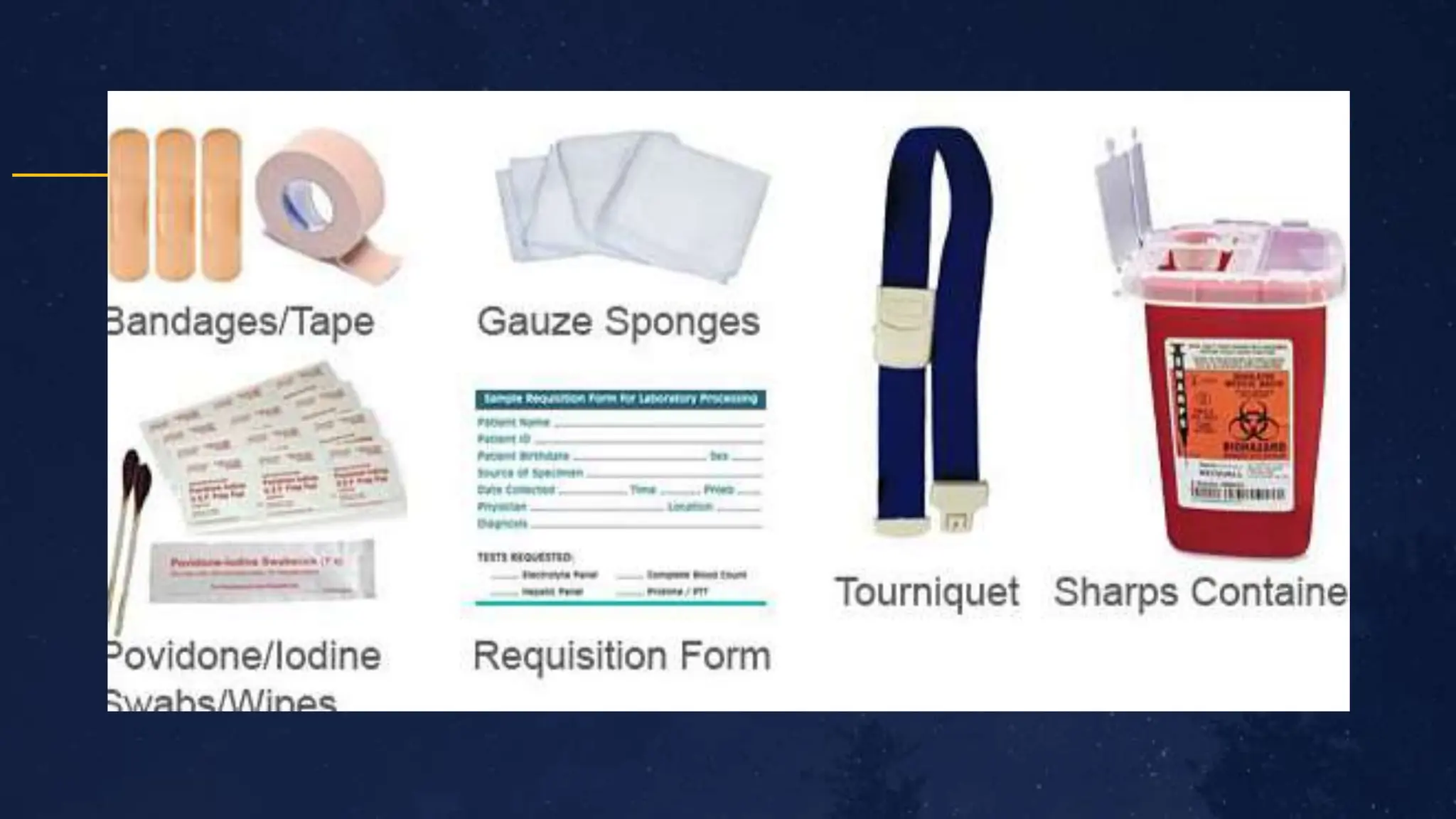
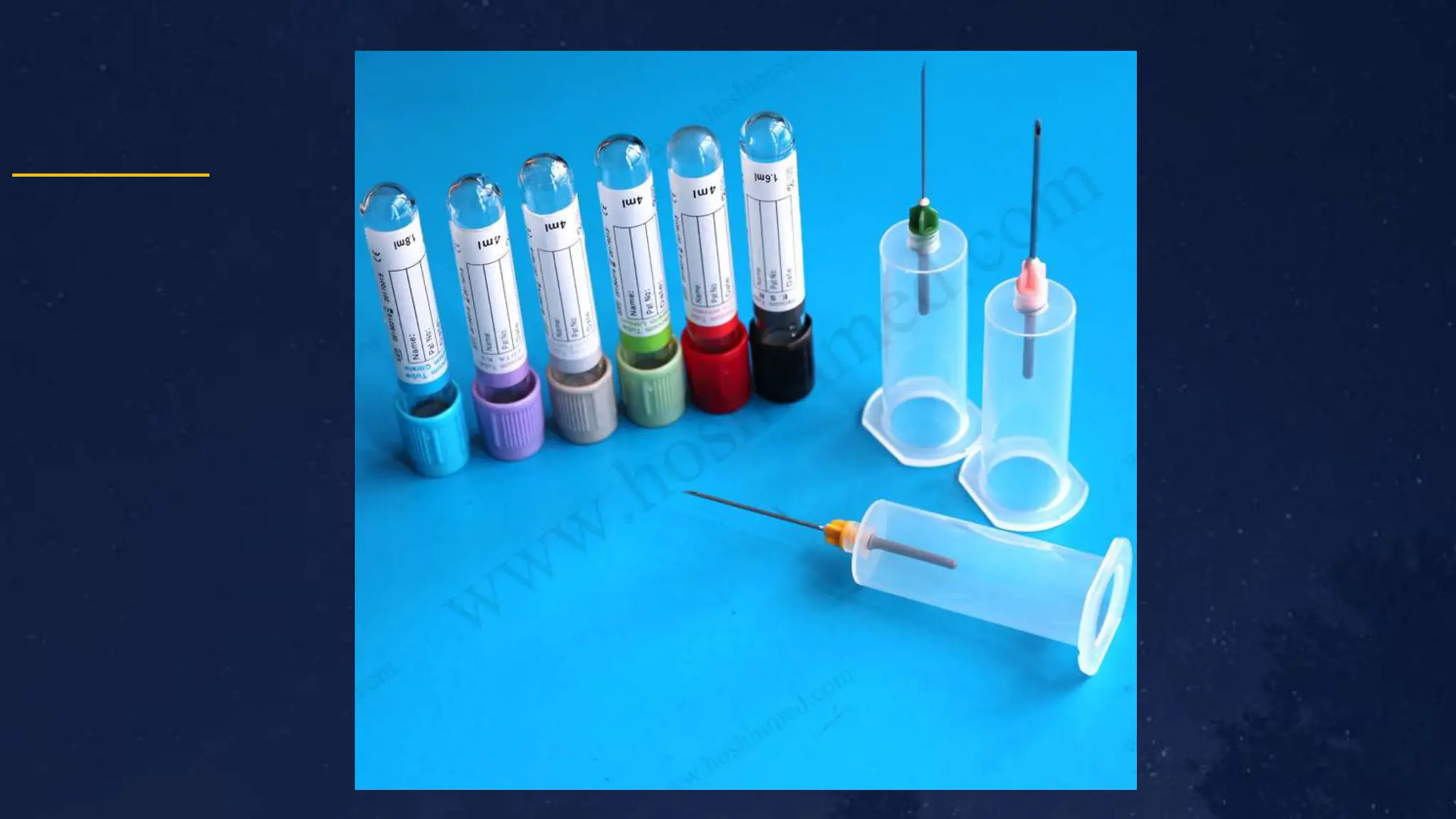
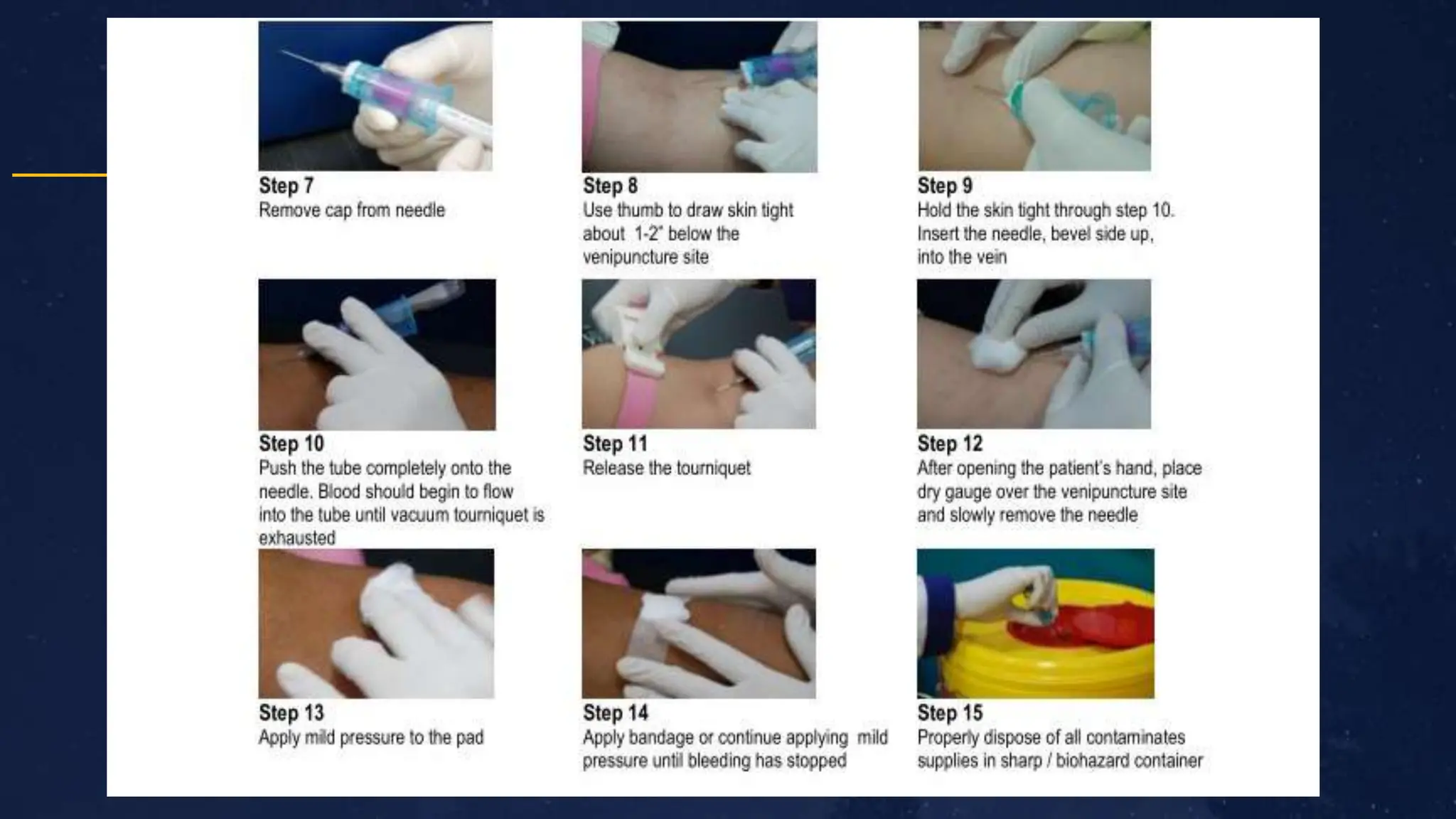
Equipments used for blood collection
Venipuncture method
o Collection from veins
o Easy method comparing to arterial puncture
o sample collected using: vacutainers, indwelling
catheters, butterfly winged, syringe.
o Site: medial cubital vein, cephalic, basilic, hand, wrist
ankle.
 Inappropriate site for veinpuncture:
 Edematous area
 Scarred, burns, sugery
 blood transfused area of arm
 sites above iv cannula
 fistulas and grafts
 Blood clot
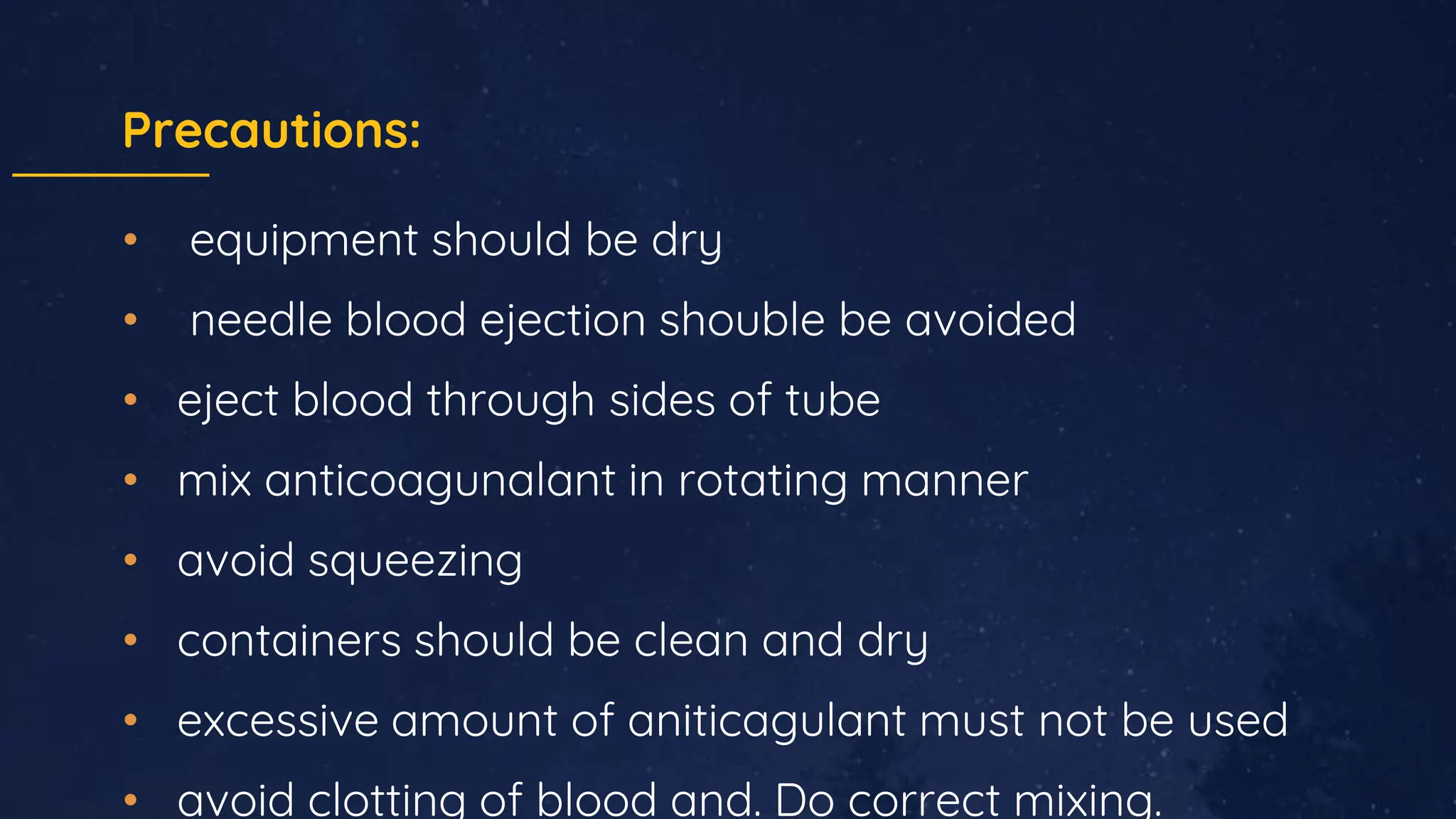
Venipuncture: by vacutainer / evacuated
tube
Advantages:
 it is collected with a minimal pressure hence avoid
hemolysis,and collapse of veins.
Precautions:
• equipment should be dry
• needle blood ejection shouble be avoided
• eject blood through sides of tube
• mix anticoagunalant in rotating manner
• avoid squeezing
• containers should be clean and dry
• excessive amount of aniticagulant must not be used
• avoid clotting of blood and. Do correct mixing.
Complications occurs due to:
•Patient misidentification
•Improper angle of insertion
•Improper vein selection
Complications:
 Hematoma
 collapse of vein
 infection
 expessive bleeding
 fainting of patient
 Allergy
 Thrombosis of vein
Venipuncture :by syringe
✩ 1. Place a sheathed needle on the syringe.
✩ 2. Remove the cap and turn the bevel up.
✩ 3. Pull the skin tight with your thumb or index finger just
below the puncture site.
✩ 4. Holding the needle in line with the vein, use a quick, small
thrust to penetrate the skin and vein in one motion.
✩ 5. Draw the desired amount of blood by pulling back slowly
on the syringe stopper. Release the tourniquet.
✩ 6. Place a gauze pad over the puncture site and quickly
✩ 7. Immediately apply pressure. Ask the patient to apply
pressure to the gauze for at least 2 minutes.
✩ 8. When bleeding stops, apply a fresh bandage, gauze or
tape.
✩ 9. Transfer blood drawn into the appropriate tubes as soon
as possible using a Blood Transfer Device.
✩ 10. Gently invert tubes containing an additive 5-8 times.
✩ 11. Dispose of the syringe and needle as a unit into an
appropriate sharps container.
Venipuncture:by butterfly winged tube
• Used for persons with small, tiny, fragile veins.
• Therefore gauze size is available in very small size.
• Expensive method for blood collection.
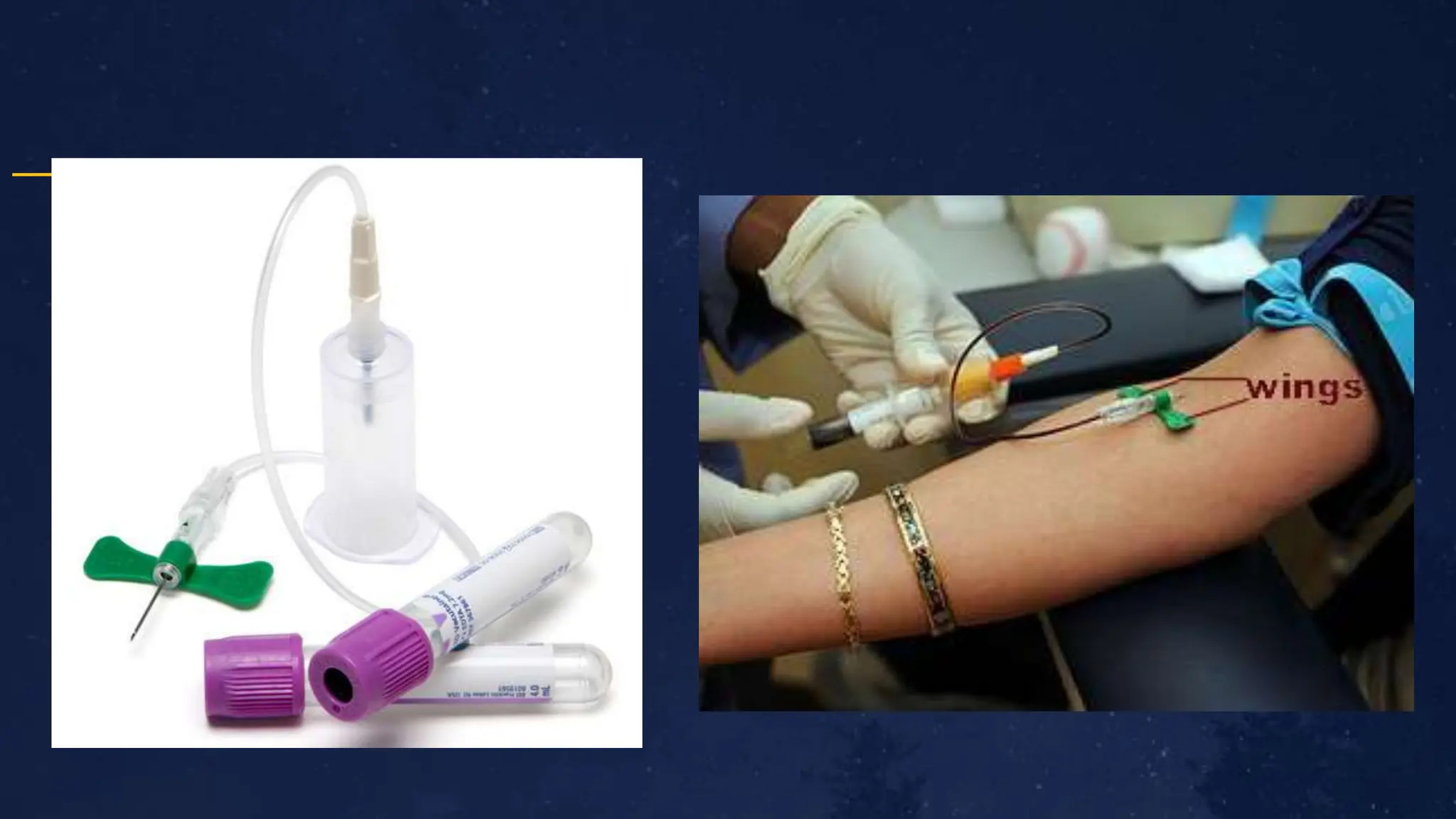
• spl adapter is necessary for the attachment of the vaccum
collection syatem.
Procedure :
✩ Aseptically attach the syringe to the needle or butterfly setup,
making sure the plunger is pushed all the way in.
✩ Perform the venipuncture procedure
✩ Blood will appear in the hub of the needle if the position is correct.
Disadvantages:
✩ Because of small needle size blood collection is slower.
✩ Cannot be applicable in using in blood banks.
Advantages:
✩ Butterfly needles are ideal for people with small or spastic
(rolling) veins and can even be inserted into the tiny veins
of the hand, foot, heel.
✩ Butterfly needles are ideal for people who are hesitant
about needles because they are less threatening.
Indwelling catheters:
o Used for both arterial and veni puncture.
o They are surgically inserted.
o Arterial cathetersa are palced mainly in radial artery.
o Venus catherters are placed mainly in cephalic vein.
o Advantages:
o Admisistration of of drugs, bood products, providing
parential nutition.
Arterial puncture method
• More difficult to perform.
• Due to increased pressure, bleeding stopping is difficult.
• This method is mainly used to measure O2,Co2 and PH.
• They are mainly done at brachial, femoral, radial arteries.
Complications:
• Hemorrhage
• Hematoma.... these 2 occur mainly in brachial and femoral
artery than in radial artery.
• Fainting of patient
Skin puncture/Finger prik method
 Used to collect small amount of blood.
 Capillay blood mainy contains venous and arterial
blood.
 blood parasites, glucose estimation, blood smear prep,
rbc wbc reticulocyte count etc.
 Sites: finger tip, ear lobe. big tie and heel in infants.
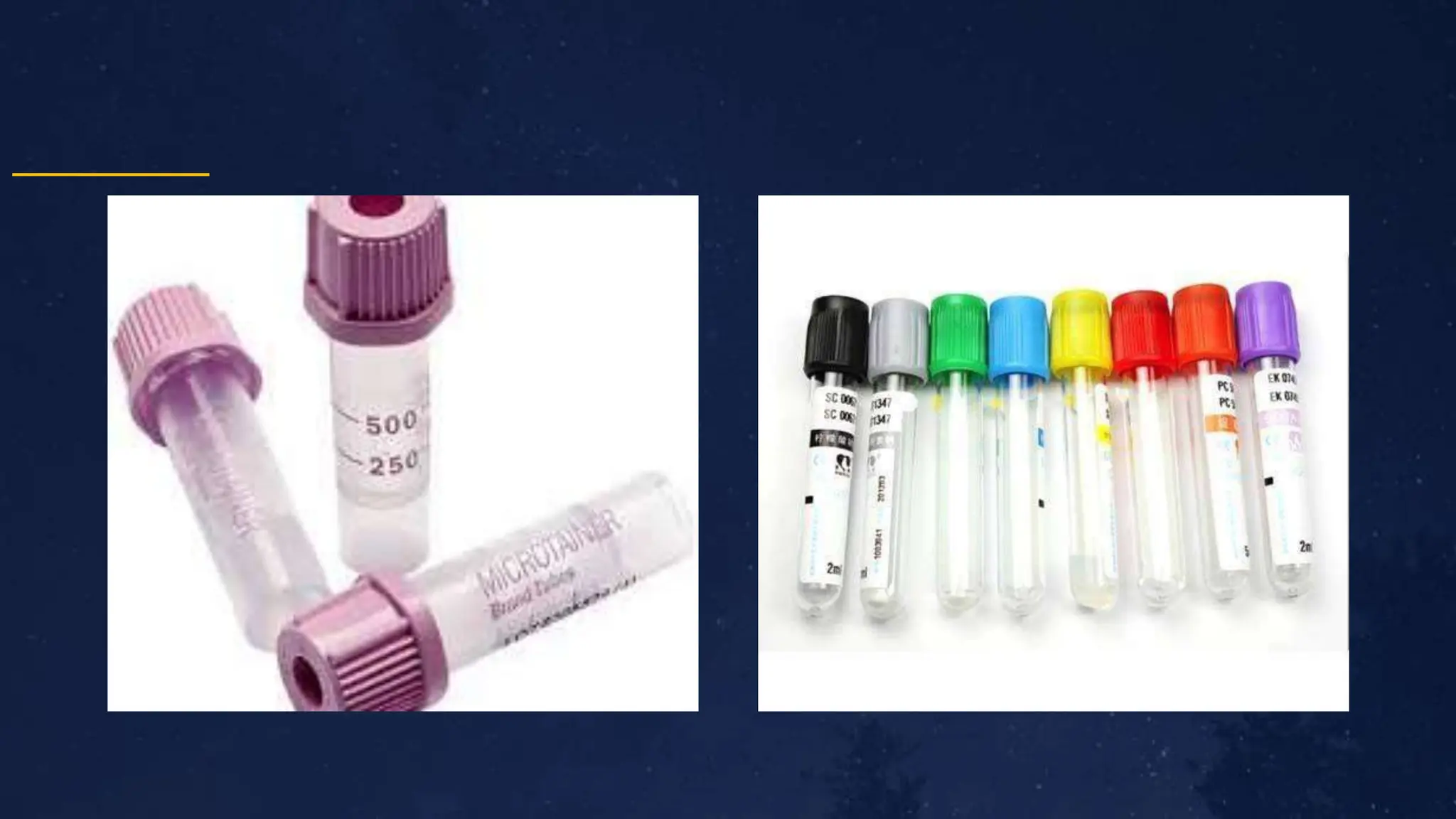
 Capillary punctures require different devices than the
typical venipuncture equipment. They include lancets,
microcontainer tubes, microhematocrit tubes and
Precautions:
o Dont squeeze
o Assure alcohol is dried
o Dont apply lancet in scares. injured area
Procedure:
Skin puncture : by microtainer
THANK YOU☺️

Blood collection.pptx

  • 1.
  • 2.
    Blood collection, orthe collection of blood, usually involves the removal of blood and it comes in many different forms. It's also a common term in blood sampling for laboratory analysis.
  • 3.
    Types of bloodcollection •Arterial Sampling •Venipuncture Sampling •Fingerprik Sampling/capillary sampling/Skin puncture
  • 4.
    Types of bloodcollected  Arterial blood: blood flowing through arteries.  Venous blood: blood flowing through veins.  Capillary blood: combination of arterial and venous blood.
  • 5.
    Equipments used forblood collection
  • 18.
  • 19.
    o Collection fromveins o Easy method comparing to arterial puncture o sample collected using: vacutainers, indwelling catheters, butterfly winged, syringe. o Site: medial cubital vein, cephalic, basilic, hand, wrist ankle.
  • 20.
     Inappropriate sitefor veinpuncture:  Edematous area  Scarred, burns, sugery  blood transfused area of arm  sites above iv cannula  fistulas and grafts  Blood clot
  • 21.
  • 23.
    Advantages:  it iscollected with a minimal pressure hence avoid hemolysis,and collapse of veins.
  • 24.
    Precautions: • equipment shouldbe dry • needle blood ejection shouble be avoided • eject blood through sides of tube • mix anticoagunalant in rotating manner • avoid squeezing • containers should be clean and dry • excessive amount of aniticagulant must not be used • avoid clotting of blood and. Do correct mixing.
  • 25.
    Complications occurs dueto: •Patient misidentification •Improper angle of insertion •Improper vein selection
  • 26.
    Complications:  Hematoma  collapseof vein  infection  expessive bleeding  fainting of patient  Allergy  Thrombosis of vein
  • 27.
    Venipuncture :by syringe ✩1. Place a sheathed needle on the syringe. ✩ 2. Remove the cap and turn the bevel up. ✩ 3. Pull the skin tight with your thumb or index finger just below the puncture site.
  • 28.
    ✩ 4. Holdingthe needle in line with the vein, use a quick, small thrust to penetrate the skin and vein in one motion. ✩ 5. Draw the desired amount of blood by pulling back slowly on the syringe stopper. Release the tourniquet. ✩ 6. Place a gauze pad over the puncture site and quickly
  • 29.
    ✩ 7. Immediatelyapply pressure. Ask the patient to apply pressure to the gauze for at least 2 minutes. ✩ 8. When bleeding stops, apply a fresh bandage, gauze or tape. ✩ 9. Transfer blood drawn into the appropriate tubes as soon as possible using a Blood Transfer Device.
  • 30.
    ✩ 10. Gentlyinvert tubes containing an additive 5-8 times. ✩ 11. Dispose of the syringe and needle as a unit into an appropriate sharps container.
  • 32.
    Venipuncture:by butterfly wingedtube • Used for persons with small, tiny, fragile veins. • Therefore gauze size is available in very small size. • Expensive method for blood collection. • spl adapter is necessary for the attachment of the vaccum collection syatem.
  • 34.
    Procedure : ✩ Asepticallyattach the syringe to the needle or butterfly setup, making sure the plunger is pushed all the way in. ✩ Perform the venipuncture procedure ✩ Blood will appear in the hub of the needle if the position is correct.
  • 36.
    Disadvantages: ✩ Because ofsmall needle size blood collection is slower. ✩ Cannot be applicable in using in blood banks.
  • 37.
    Advantages: ✩ Butterfly needlesare ideal for people with small or spastic (rolling) veins and can even be inserted into the tiny veins of the hand, foot, heel. ✩ Butterfly needles are ideal for people who are hesitant about needles because they are less threatening.
  • 38.
    Indwelling catheters: o Usedfor both arterial and veni puncture. o They are surgically inserted. o Arterial cathetersa are palced mainly in radial artery. o Venus catherters are placed mainly in cephalic vein. o Advantages: o Admisistration of of drugs, bood products, providing parential nutition.
  • 39.
  • 40.
    • More difficultto perform. • Due to increased pressure, bleeding stopping is difficult. • This method is mainly used to measure O2,Co2 and PH. • They are mainly done at brachial, femoral, radial arteries.
  • 41.
    Complications: • Hemorrhage • Hematoma....these 2 occur mainly in brachial and femoral artery than in radial artery. • Fainting of patient
  • 42.
  • 43.
     Used tocollect small amount of blood.  Capillay blood mainy contains venous and arterial blood.  blood parasites, glucose estimation, blood smear prep, rbc wbc reticulocyte count etc.  Sites: finger tip, ear lobe. big tie and heel in infants.  Capillary punctures require different devices than the typical venipuncture equipment. They include lancets, microcontainer tubes, microhematocrit tubes and
  • 44.
    Precautions: o Dont squeeze oAssure alcohol is dried o Dont apply lancet in scares. injured area
  • 45.
  • 47.
    Skin puncture :by microtainer
  • 49.