Hyper-Ledger
Overview
by Pad Kankipati
Presenters
Pad Kankipati
VP of Architecture, Loyal Health
Pratik Patel
IBM - Lead Developer Advocate
Pad Kankipati
HyperLedger Fabric
• Hyperledger fabric is a blockchain framework hosted by Linux
Foundation
• Permissioned distributed ledger technology platform(DLT)
• Supports smart-contracts authored in general programming
languages like go, java and node.js’
• Pluggable consensus protocol
• IBM and Azure have implemented Hyperledger fabric blockchain
framework
• Permissioned or permission-less blockchain
Permissionless blockchain
• Anyone can participate, and everyone is
anonymous
• No trust other than the state of the blockchain
• Typically employ a “mined” currency or transaction
fee (gas) to incentivize
• High cost of participation using Byzantine fault
tolerant consensus like Proof-of-Work (POW)
Permissioned Blockchain
• Operate among known, identified and vetted
participants,
• Secures interactions among the group with a common
goal but may not fully trust each other
• Relies on the identities of the participants
• Does not require mining
• All transactions and participant identities are recorded,
reducing the risk of malicious code injection
Smart Contract (Chaincode)
• It is the business logic of the blockchain application
• Many smart contracts can run concurrently in a network
• They could be deployed dynamically
• Application code should be treated as untrusted
• Many smart contracts follow order-execute architecture, eg. Ethereum, using Solidity
• Validates and orders transactions and propagate to all peers
• Each peer will execute the transactions sequentially
• Fabric uses execute-order-validate
• Executes a transaction to check for correctness
• Order transactions via a consensus protocol, and
• Validates the transactions against policy before committing to the ledger
Modular elements
• Ordering service - establishes consensus on the order of transactions and
then broadcast to peers
• Membership service - responsible for associating entities in the network
with identities (crypto)
• Peer-to-peer gossip service (channel) - responsible for disseminating
blocks from ordering service to other peers
• Smart contracts (chaincode) - run within the container environment (eg.
Docker) for isolation. Does not have access to the ledger state
• The ledger configured to support DBMS
• Pluggable endorsement and validation policy independently configured by
application
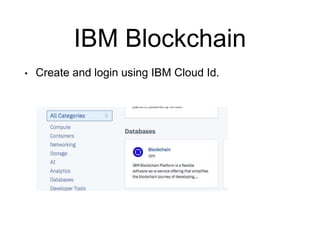
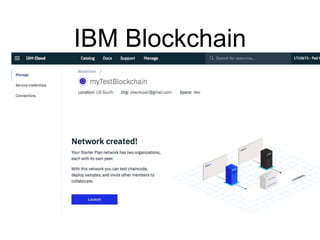
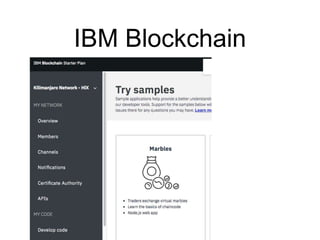
IBM Blockchain
• Create and login using IBM Cloud Id.
IBM Blockchain
IBM Blockchain
IBM Blockchain
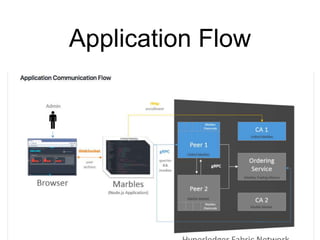
Application Flow
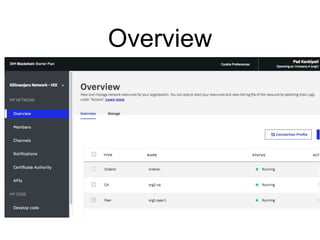
Overview
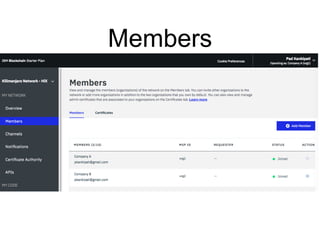
Members
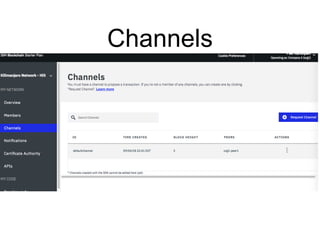
Channels
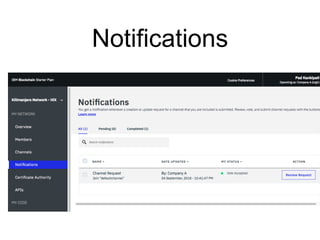
Notifications
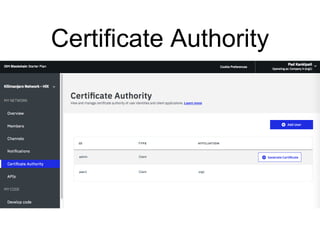
Certificate Authority
Develop code
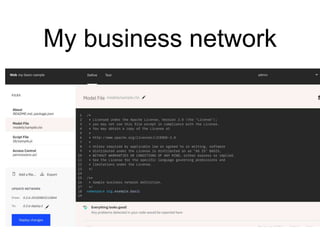
My business network
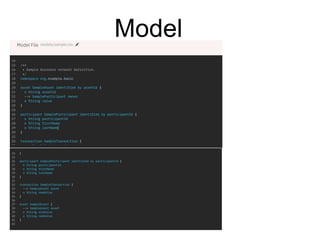
Model
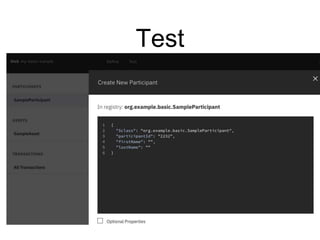
Test
YOUR PRIZE FOR
FINISHING
THE WORKSHOP
JOIN US FOR A DRINK OR
TWO AT
MURPH’S (downstairs)
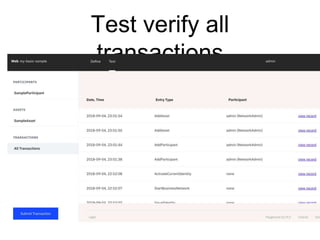
Test verify all
transactions

BlockchainConf.tech - Hyperledger overview

  • 1.
  • 2.
    Presenters Pad Kankipati VP ofArchitecture, Loyal Health Pratik Patel IBM - Lead Developer Advocate Pad Kankipati
  • 3.
    HyperLedger Fabric • Hyperledgerfabric is a blockchain framework hosted by Linux Foundation • Permissioned distributed ledger technology platform(DLT) • Supports smart-contracts authored in general programming languages like go, java and node.js’ • Pluggable consensus protocol • IBM and Azure have implemented Hyperledger fabric blockchain framework • Permissioned or permission-less blockchain
  • 4.
    Permissionless blockchain • Anyonecan participate, and everyone is anonymous • No trust other than the state of the blockchain • Typically employ a “mined” currency or transaction fee (gas) to incentivize • High cost of participation using Byzantine fault tolerant consensus like Proof-of-Work (POW)
  • 5.
    Permissioned Blockchain • Operateamong known, identified and vetted participants, • Secures interactions among the group with a common goal but may not fully trust each other • Relies on the identities of the participants • Does not require mining • All transactions and participant identities are recorded, reducing the risk of malicious code injection
  • 6.
    Smart Contract (Chaincode) •It is the business logic of the blockchain application • Many smart contracts can run concurrently in a network • They could be deployed dynamically • Application code should be treated as untrusted • Many smart contracts follow order-execute architecture, eg. Ethereum, using Solidity • Validates and orders transactions and propagate to all peers • Each peer will execute the transactions sequentially • Fabric uses execute-order-validate • Executes a transaction to check for correctness • Order transactions via a consensus protocol, and • Validates the transactions against policy before committing to the ledger
  • 7.
    Modular elements • Orderingservice - establishes consensus on the order of transactions and then broadcast to peers • Membership service - responsible for associating entities in the network with identities (crypto) • Peer-to-peer gossip service (channel) - responsible for disseminating blocks from ordering service to other peers • Smart contracts (chaincode) - run within the container environment (eg. Docker) for isolation. Does not have access to the ledger state • The ledger configured to support DBMS • Pluggable endorsement and validation policy independently configured by application
  • 8.
    IBM Blockchain • Createand login using IBM Cloud Id.
  • 9.
  • 10.
  • 11.
  • 12.
  • 13.
  • 14.
  • 15.
  • 16.
  • 17.
  • 18.
  • 19.
  • 20.
  • 21.
  • 22.
    YOUR PRIZE FOR FINISHING THEWORKSHOP JOIN US FOR A DRINK OR TWO AT MURPH’S (downstairs)
  • 23.