Andrew Black
CMS 332 Spring 2012
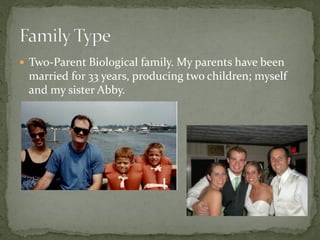
 Two-Parent Biological family. My parents have been
 married for 33 years, producing two children; myself
 and my sister Abby.
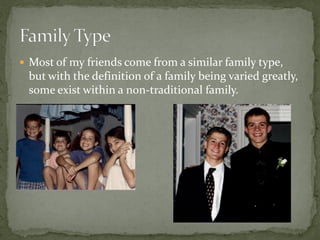
 Most of my friends come from a similar family type,
 but with the definition of a family being varied greatly,
 some exist within a non-traditional family.
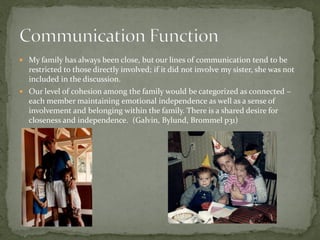
 My family has always been close, but our lines of communication tend to be
  restricted to those directly involved; if it did not involve my sister, she was not
  included in the discussion.
 Our level of cohesion among the family would be categorized as connected –
  each member maintaining emotional independence as well as a sense of
  involvement and belonging within the family. There is a shared desire for
  closeness and independence. (Galvin, Bylund, Brommel p31)
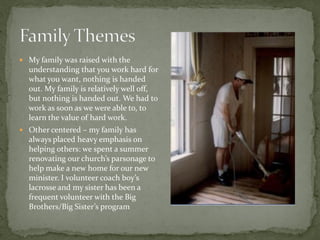
 My family was raised with the
  understanding that you work hard for
  what you want, nothing is handed
  out. My family is relatively well off,
  but nothing is handed out. We had to
  work as soon as we were able to, to
  learn the value of hard work.
 Other centered – my family has
  always placed heavy emphasis on
  helping others: we spent a summer
  renovating our church’s parsonage to
  help make a new home for our new
  minister. I volunteer coach boy’s
  lacrosse and my sister has been a
  frequent volunteer with the Big
  Brothers/Big Sister’s program
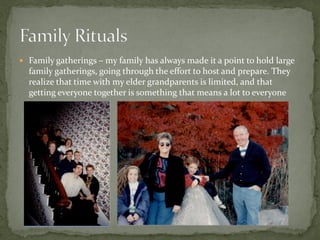
 Family gatherings – my family has always made it a point to hold large
  family gatherings, going through the effort to host and prepare. They
  realize that time with my elder grandparents is limited, and that
  getting everyone together is something that means a lot to everyone
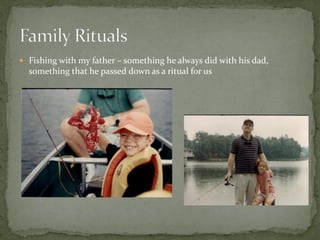
 Fishing with my father – something he always did with his dad,
  something that he passed down as a ritual for us
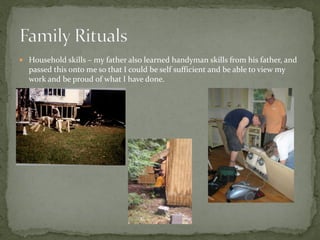
 Household skills – my father also learned handyman skills from his father, and
  passed this onto me so that I could be self sufficient and be able to view my
  work and be proud of what I have done.
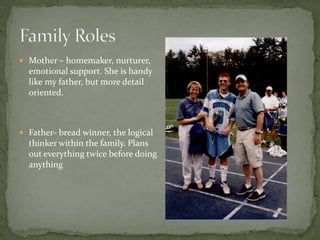
 Mother – homemaker, nurturer,
  emotional support. She is handy
  like my father, but more detail
  oriented.


 Father- bread winner, the logical
  thinker within the family. Plans
  out everything twice before doing
  anything
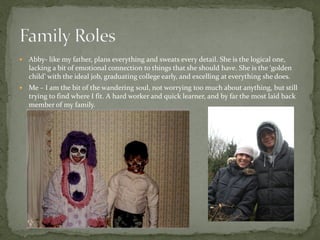
   Abby- like my father, plans everything and sweats every detail. She is the logical one,
    lacking a bit of emotional connection to things that she should have. She is the ‘golden
    child’ with the ideal job, graduating college early, and excelling at everything she does.
   Me – I am the bit of the wandering soul, not worrying too much about anything, but still
    trying to find where I fit. A hard worker and quick learner, and by far the most laid back
    member of my family.
 Decisions were made by both mother and father. Daily
 decisions were made by my mother as my father was
 frequently away on business Large decisions were
 discussed between the two of them. My sister and I
 knew that if we wanted something small, we would ask
 my father, and anything slightly more, my mother. But
 never to ask them both. If one says no, asking the
 other would always yield the question, ‘did you ask
 your mother/father’
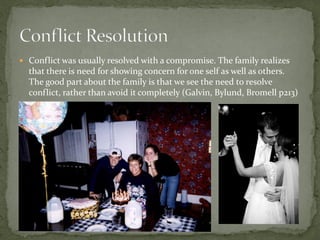
 Conflict was usually resolved with a compromise. The family realizes
  that there is need for showing concern for one self as well as others.
  The good part about the family is that we see the need to resolve
  conflict, rather than avoid it completely (Galvin, Bylund, Bromell p213)
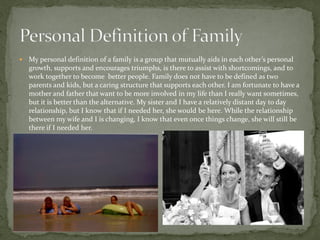
   My personal definition of a family is a group that mutually aids in each other’s personal
    growth, supports and encourages triumphs, is there to assist with shortcomings, and to
    work together to become better people. Family does not have to be defined as two
    parents and kids, but a caring structure that supports each other. I am fortunate to have a
    mother and father that want to be more involved in my life than I really want sometimes,
    but it is better than the alternative. My sister and I have a relatively distant day to day
    relationship, but I know that if I needed her, she would be here. While the relationship
    between my wife and I is changing, I know that even once things change, she will still be
    there if I needed her.
 ‘Family Communication: Cohesion and Change’
 Galvin, Bylund, Brommel. Pearson, 2012.

Black family collage

  • 1.
  • 2.
     Two-Parent Biologicalfamily. My parents have been married for 33 years, producing two children; myself and my sister Abby.
  • 3.
     Most ofmy friends come from a similar family type, but with the definition of a family being varied greatly, some exist within a non-traditional family.
  • 4.
     My familyhas always been close, but our lines of communication tend to be restricted to those directly involved; if it did not involve my sister, she was not included in the discussion.  Our level of cohesion among the family would be categorized as connected – each member maintaining emotional independence as well as a sense of involvement and belonging within the family. There is a shared desire for closeness and independence. (Galvin, Bylund, Brommel p31)
  • 5.
     My familywas raised with the understanding that you work hard for what you want, nothing is handed out. My family is relatively well off, but nothing is handed out. We had to work as soon as we were able to, to learn the value of hard work.  Other centered – my family has always placed heavy emphasis on helping others: we spent a summer renovating our church’s parsonage to help make a new home for our new minister. I volunteer coach boy’s lacrosse and my sister has been a frequent volunteer with the Big Brothers/Big Sister’s program
  • 6.
     Family gatherings– my family has always made it a point to hold large family gatherings, going through the effort to host and prepare. They realize that time with my elder grandparents is limited, and that getting everyone together is something that means a lot to everyone
  • 7.
     Fishing withmy father – something he always did with his dad, something that he passed down as a ritual for us
  • 8.
     Household skills– my father also learned handyman skills from his father, and passed this onto me so that I could be self sufficient and be able to view my work and be proud of what I have done.
  • 9.
     Mother –homemaker, nurturer, emotional support. She is handy like my father, but more detail oriented.  Father- bread winner, the logical thinker within the family. Plans out everything twice before doing anything
  • 10.
    Abby- like my father, plans everything and sweats every detail. She is the logical one, lacking a bit of emotional connection to things that she should have. She is the ‘golden child’ with the ideal job, graduating college early, and excelling at everything she does.  Me – I am the bit of the wandering soul, not worrying too much about anything, but still trying to find where I fit. A hard worker and quick learner, and by far the most laid back member of my family.
  • 11.
     Decisions weremade by both mother and father. Daily decisions were made by my mother as my father was frequently away on business Large decisions were discussed between the two of them. My sister and I knew that if we wanted something small, we would ask my father, and anything slightly more, my mother. But never to ask them both. If one says no, asking the other would always yield the question, ‘did you ask your mother/father’
  • 12.
     Conflict wasusually resolved with a compromise. The family realizes that there is need for showing concern for one self as well as others. The good part about the family is that we see the need to resolve conflict, rather than avoid it completely (Galvin, Bylund, Bromell p213)
  • 13.
    My personal definition of a family is a group that mutually aids in each other’s personal growth, supports and encourages triumphs, is there to assist with shortcomings, and to work together to become better people. Family does not have to be defined as two parents and kids, but a caring structure that supports each other. I am fortunate to have a mother and father that want to be more involved in my life than I really want sometimes, but it is better than the alternative. My sister and I have a relatively distant day to day relationship, but I know that if I needed her, she would be here. While the relationship between my wife and I is changing, I know that even once things change, she will still be there if I needed her.
  • 14.
     ‘Family Communication:Cohesion and Change’ Galvin, Bylund, Brommel. Pearson, 2012.