Biopsychosocial Model
of Mental Health
This presentation will explore the Biopsychosocial Model of Mental Health, explain how it
helps professionals understand and treat mental health holistically, discuss its limitations and
highlight the importance of reducing stigma by encouraging more open and supportive
conversations about mental health.
Created by AL. JIM 223240181
Lesson objectives
By the end of this lesson, you should be able to:
Define the Biopsychosocial Model
Explain what it is and how mental
health professionals use it to ensure
proper medical evaluation and
diagnosis
Understand Mental
Health through the
Biopsychosocial Model
Identify Limitations of
the Biopsychosocial
Model
Practice ways to
reduce the stigma
attached to Mental
Health
Introduction to Mental Health
Mental health is a state of overall well-
being that enables people to cope with
life’s stresses, realise their potential,
work, learn productivity, build
relationships and contribute to society.
It exists on a continuum influenced by
biological, psychological, social and
environmental factors with risks and
protective elements shaping outcomes
(World Health Organization, 2022)
Figure1
Mental health stereotypes and strategies to
overcome them. From Salamon,M. (2023,
December 1)
What is the Biopsychosocial Model
The biopsychosocial model explains health by considering
biological, psychological and social factors and their
interactions. Biological factors include genetics and physical
health, psychological factors involve thoughts, emotions and
behaviors and social factors are the cultural and
socioeconomical status of the individual and their support
network. The model emphasizes patient self-awareness,
relationship with providers and life context using the four
‘Ps’ (predisposing, precipitating , perpetuating and protective
factors) to guide holistic care. It helps providers understand
overlapping influences on well-being and informs more
effective treatment (Ure, Botha & Moletsane, 2023, pp. 2-9).
Figure 2
International Society of Physical and
Rehabilitation Medicine. (2024)
How the Biopsychosocial Model
Impact Mental Health
The biopsychosocial model promotes a holistic approach to
mental health by addressing biological, psychological and
social factors together rather than focusing solely on one aspect.
Mental health professionals using this model consider medical
history, family history, genetics, social context and
psychological factors during assessments. This approach
ensures that underlying medical or social issues contributing to
mental health symptoms such as depression caused by an
underactive thyroid are identified and treated, leading to more
effective, comprehensive care (Marschall, 2023).
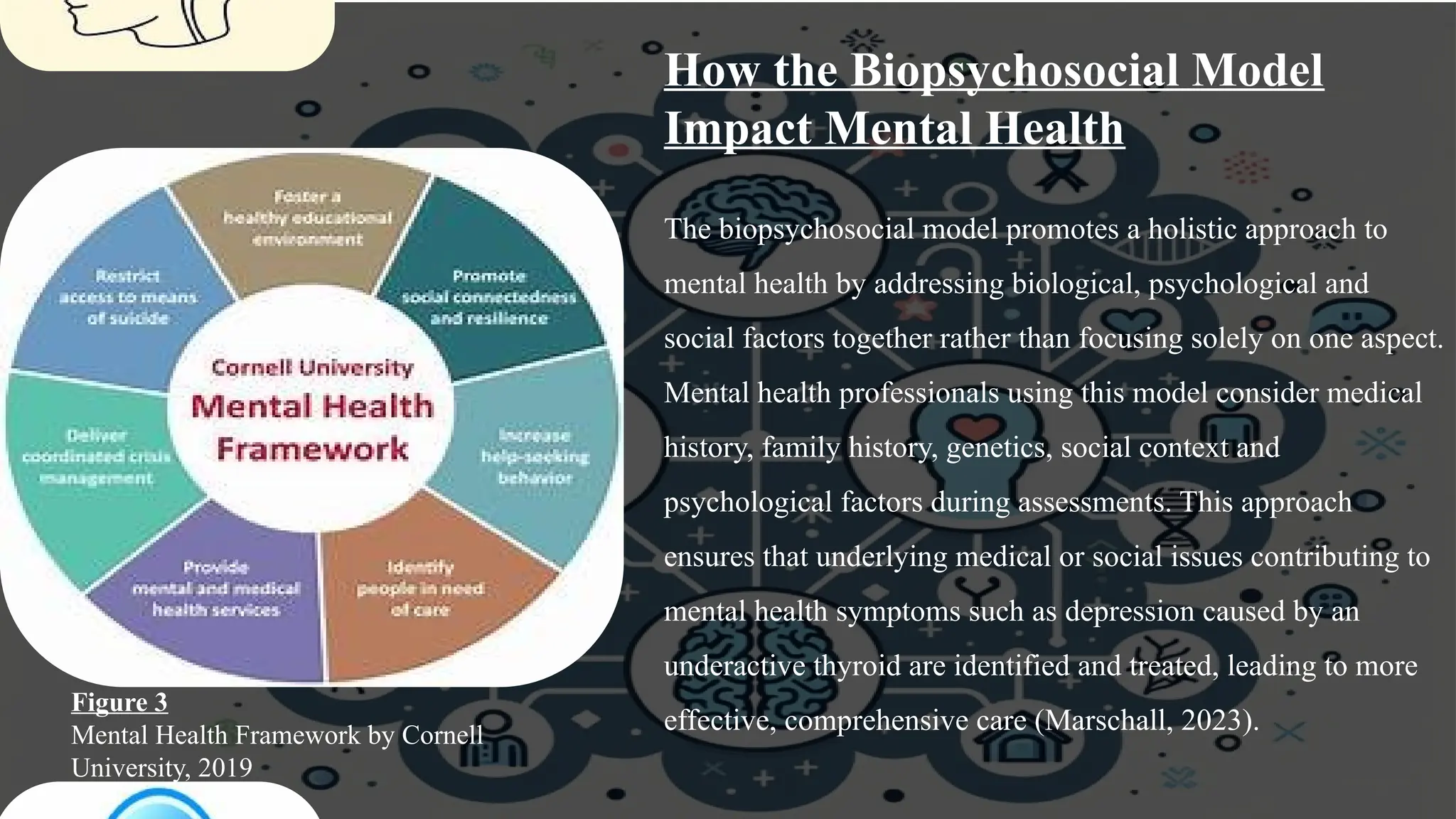
Figure 3
Mental Health Framework by Cornell
University, 2019
How the Biopsychosocial Model
Impact Mental Health
https://youtu.be/uUpjDdx93Sw?si=JeO_VwrZIOIhtd-C
F
Figure 4
Fritsch, (2024)
Limitations of the
Biopsychosocial Model
The Biopsychosocial model is time consuming
and costly. It requires extensive information about
an individual’s socioeconomic, cultural, religious
and psychological background. The model lacks
strong theoretical and scientific support and the
complex interactions between biological,
psychological and social factors can make
analysis and application difficult (Dr Gupta,
2023).
Figure 5
Biopsychosocial model image
by Myasotis Memories
Importance of educating and
Reducing Stigma
The stigma around mental health prevents people
from seeking help, leading to untreated conditions
and poorer quality of life. By reducing stigma
individuals feel safer to talk openly, access
support and receive treatment without fear of
judgement. The South African Federation for
Mental Health (SAFMH) highlights that stigma
remains one of the biggest barriers faced by
people with psychosocial disabilities in South
Africa and calls a strong anti-stigma interventions
to ensure access to care and dignity for all
(SAFMH, 2023).
Figure 6
Coolminds. (2023)
Educate yourself & others about mental
health
Be a positive mental health role model
Encourage equality between physical and
mental illness
Talk openly about mental health
Don’t use disrespectful terms when you
talk about people or mental health
https://pin.it/35tfgfoKD
Ways to reduce stigma attached
to mental health
Figure 6
Coolminds. (2023)
Summary of the lesson
• Mental Health
- What is mental health
• Biopsychosocial Model
- What is the Biopsychosocial Model
- How does it Impact Mental Health
- Limitations of the Biopsychosocial
Model
• Importance of educating and reducing
stigma
- Ways to reduce the stigma attached to
mental health
References
Figure 1: Salamon, M. (2023, December 1). Blasting through mental health misperceptions: Fight back against
pervasive stereotypes with these liberating strategies. Harvard Women’s Health Watch. Harvard Health
Publishing. https://www.health.harvard.edu/mind-and-mood/blasting-through-mental-health-misperceptions
Figure 2: International Society of Physical and Rehabilitation Medicine. (2024). Functional Neurological
Disorders – Empowering Clinicians in 2024 [Image]. ISPRM Sydney 2024.
https://www.isprmsydney2024.com/wp-content/uploads/2024/05/ISPRM-FND-presentation-handout.pdf
Figure 3: Mental Health Framework by Cornell University, (2019), https://share.google/DaG0shOwyqSjlfEhM
Figure 4: Fritsch, X. IIII. (2024, August 14). Biopsychosocial approach to mental health Venn diagram A Bet
[Online post]
Figure 5: Myasotis Memories. (n.d.). Biopsychosocial model [Image]. Pinterest. https://pin.it/1y7vfWOGo
Figure 6 : Coolminds. (2023). Template CM Mobile [Image]. Coolminds.
https://www.coolmindshk.com/wp-content/uploads/2023/05/Template-CM-Mobile-imageThumbnail-1080x1080-
1.png
References
Gupta, N. (2023). Models of Health Psychology pptx. SlideShare, pp. 15.
https://www.slideshare.net/slideshow/biopsychosocial-models/249917274
Marschall, A. (2023, July 16). Understanding the biopsychosocial model of health and wellness: A holistic
approach to well-being. Verywell Mind.
https://www.verywell.com/understanding-the-biopsychosocial-model-7549226
South African Federation for Mental Health. (2023). Shattering stigma: Sparking conversation.
https://www.safmh.org/pdam
Ure, G., Botha, K., & Moletsane, M. (2023). [Online Textbook]. Origins and Causes of Psychopathology (pp. 2-
9). In Understanding Psychopathology (4th ed.). Oxford University Press Southern Africa
World Health Organization. (2022, June 17). Mental health. World Health Organization. https://www.who.int

Biopsychosocial Model of Mental Health.pptx

  • 1.
    Biopsychosocial Model of MentalHealth This presentation will explore the Biopsychosocial Model of Mental Health, explain how it helps professionals understand and treat mental health holistically, discuss its limitations and highlight the importance of reducing stigma by encouraging more open and supportive conversations about mental health. Created by AL. JIM 223240181
  • 2.
    Lesson objectives By theend of this lesson, you should be able to: Define the Biopsychosocial Model Explain what it is and how mental health professionals use it to ensure proper medical evaluation and diagnosis Understand Mental Health through the Biopsychosocial Model Identify Limitations of the Biopsychosocial Model Practice ways to reduce the stigma attached to Mental Health
  • 3.
    Introduction to MentalHealth Mental health is a state of overall well- being that enables people to cope with life’s stresses, realise their potential, work, learn productivity, build relationships and contribute to society. It exists on a continuum influenced by biological, psychological, social and environmental factors with risks and protective elements shaping outcomes (World Health Organization, 2022) Figure1 Mental health stereotypes and strategies to overcome them. From Salamon,M. (2023, December 1)
  • 4.
    What is theBiopsychosocial Model The biopsychosocial model explains health by considering biological, psychological and social factors and their interactions. Biological factors include genetics and physical health, psychological factors involve thoughts, emotions and behaviors and social factors are the cultural and socioeconomical status of the individual and their support network. The model emphasizes patient self-awareness, relationship with providers and life context using the four ‘Ps’ (predisposing, precipitating , perpetuating and protective factors) to guide holistic care. It helps providers understand overlapping influences on well-being and informs more effective treatment (Ure, Botha & Moletsane, 2023, pp. 2-9). Figure 2 International Society of Physical and Rehabilitation Medicine. (2024)
  • 5.
    How the BiopsychosocialModel Impact Mental Health The biopsychosocial model promotes a holistic approach to mental health by addressing biological, psychological and social factors together rather than focusing solely on one aspect. Mental health professionals using this model consider medical history, family history, genetics, social context and psychological factors during assessments. This approach ensures that underlying medical or social issues contributing to mental health symptoms such as depression caused by an underactive thyroid are identified and treated, leading to more effective, comprehensive care (Marschall, 2023). Figure 3 Mental Health Framework by Cornell University, 2019
  • 6.
    How the BiopsychosocialModel Impact Mental Health https://youtu.be/uUpjDdx93Sw?si=JeO_VwrZIOIhtd-C F Figure 4 Fritsch, (2024)
  • 7.
    Limitations of the BiopsychosocialModel The Biopsychosocial model is time consuming and costly. It requires extensive information about an individual’s socioeconomic, cultural, religious and psychological background. The model lacks strong theoretical and scientific support and the complex interactions between biological, psychological and social factors can make analysis and application difficult (Dr Gupta, 2023). Figure 5 Biopsychosocial model image by Myasotis Memories
  • 8.
    Importance of educatingand Reducing Stigma The stigma around mental health prevents people from seeking help, leading to untreated conditions and poorer quality of life. By reducing stigma individuals feel safer to talk openly, access support and receive treatment without fear of judgement. The South African Federation for Mental Health (SAFMH) highlights that stigma remains one of the biggest barriers faced by people with psychosocial disabilities in South Africa and calls a strong anti-stigma interventions to ensure access to care and dignity for all (SAFMH, 2023). Figure 6 Coolminds. (2023)
  • 9.
    Educate yourself &others about mental health Be a positive mental health role model Encourage equality between physical and mental illness Talk openly about mental health Don’t use disrespectful terms when you talk about people or mental health https://pin.it/35tfgfoKD Ways to reduce stigma attached to mental health Figure 6 Coolminds. (2023)
  • 10.
    Summary of thelesson • Mental Health - What is mental health • Biopsychosocial Model - What is the Biopsychosocial Model - How does it Impact Mental Health - Limitations of the Biopsychosocial Model • Importance of educating and reducing stigma - Ways to reduce the stigma attached to mental health
  • 11.
    References Figure 1: Salamon,M. (2023, December 1). Blasting through mental health misperceptions: Fight back against pervasive stereotypes with these liberating strategies. Harvard Women’s Health Watch. Harvard Health Publishing. https://www.health.harvard.edu/mind-and-mood/blasting-through-mental-health-misperceptions Figure 2: International Society of Physical and Rehabilitation Medicine. (2024). Functional Neurological Disorders – Empowering Clinicians in 2024 [Image]. ISPRM Sydney 2024. https://www.isprmsydney2024.com/wp-content/uploads/2024/05/ISPRM-FND-presentation-handout.pdf Figure 3: Mental Health Framework by Cornell University, (2019), https://share.google/DaG0shOwyqSjlfEhM Figure 4: Fritsch, X. IIII. (2024, August 14). Biopsychosocial approach to mental health Venn diagram A Bet [Online post] Figure 5: Myasotis Memories. (n.d.). Biopsychosocial model [Image]. Pinterest. https://pin.it/1y7vfWOGo Figure 6 : Coolminds. (2023). Template CM Mobile [Image]. Coolminds. https://www.coolmindshk.com/wp-content/uploads/2023/05/Template-CM-Mobile-imageThumbnail-1080x1080- 1.png
  • 12.
    References Gupta, N. (2023).Models of Health Psychology pptx. SlideShare, pp. 15. https://www.slideshare.net/slideshow/biopsychosocial-models/249917274 Marschall, A. (2023, July 16). Understanding the biopsychosocial model of health and wellness: A holistic approach to well-being. Verywell Mind. https://www.verywell.com/understanding-the-biopsychosocial-model-7549226 South African Federation for Mental Health. (2023). Shattering stigma: Sparking conversation. https://www.safmh.org/pdam Ure, G., Botha, K., & Moletsane, M. (2023). [Online Textbook]. Origins and Causes of Psychopathology (pp. 2- 9). In Understanding Psychopathology (4th ed.). Oxford University Press Southern Africa World Health Organization. (2022, June 17). Mental health. World Health Organization. https://www.who.int