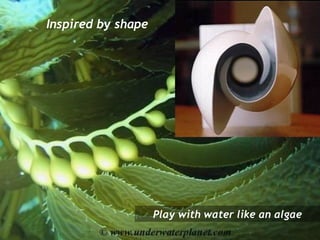
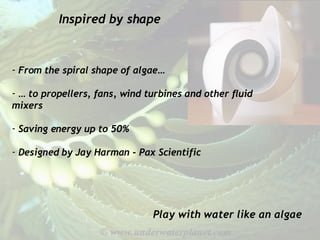
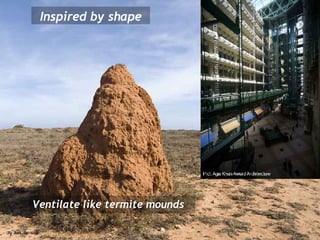
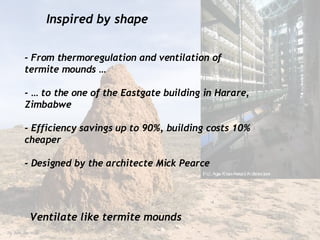
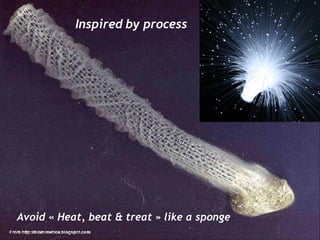
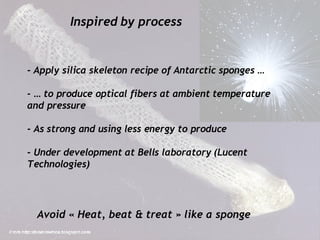
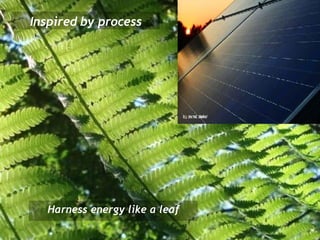
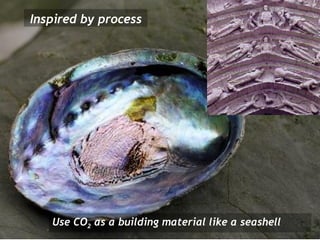
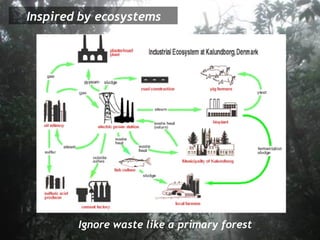
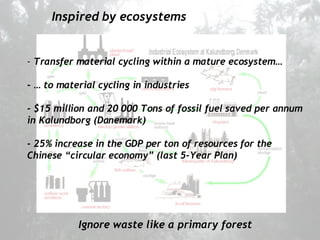
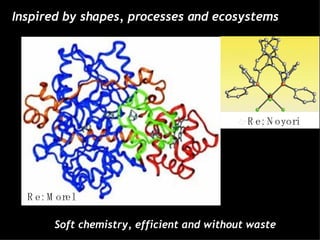
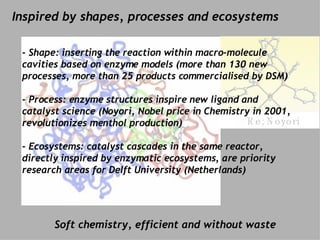
The document discusses various examples of biomimicry, where nature inspires sustainable solutions. It describes how algae inspire efficient fluid mixers that can save up to 50% energy. Termite mounds ventilate buildings with up to 90% efficiency savings. Antarctic sponges inspire stronger optical fibers produced at ambient temperatures. Leaves harness light twice as efficiently for photovoltaics. Seashells use CO2 from smokestacks as building material. Primary forests demonstrate waste-free material cycling that saves fossil fuels. Enzymes inspire soft chemistry without waste through shapes, processes, and ecosystems.



![[Challenge:Future] From sideline to spotlight](https://cdn.slidesharecdn.com/ss_thumbnails/challengefuture-from-sideline-to-spotlight1273-130301044604-phpapp02-thumbnail.jpg?width=640&height=640&fit=bounds)


