HOMOLOGOUS AND ANALOGOUS
ORGANS
Submitted by :- PRATIK TRIPATHY
Signature of the Internal Examiner Signature of the External Examiner
 HOMOLOGOUS
ORGANS:
The organs found in different
organisms which have a common
origin and same basic structure but
differ in the functions they carry out
are called homologous organs. These
structures have the same origin and
basic structure but differ in the
functions they perform. Examples of
homologous organs include the
forelimbs of a man, the forelimbs of a
cat, the flippers of a whale, and the
wings of a bat.
 ANALOGOUS ORGANS:
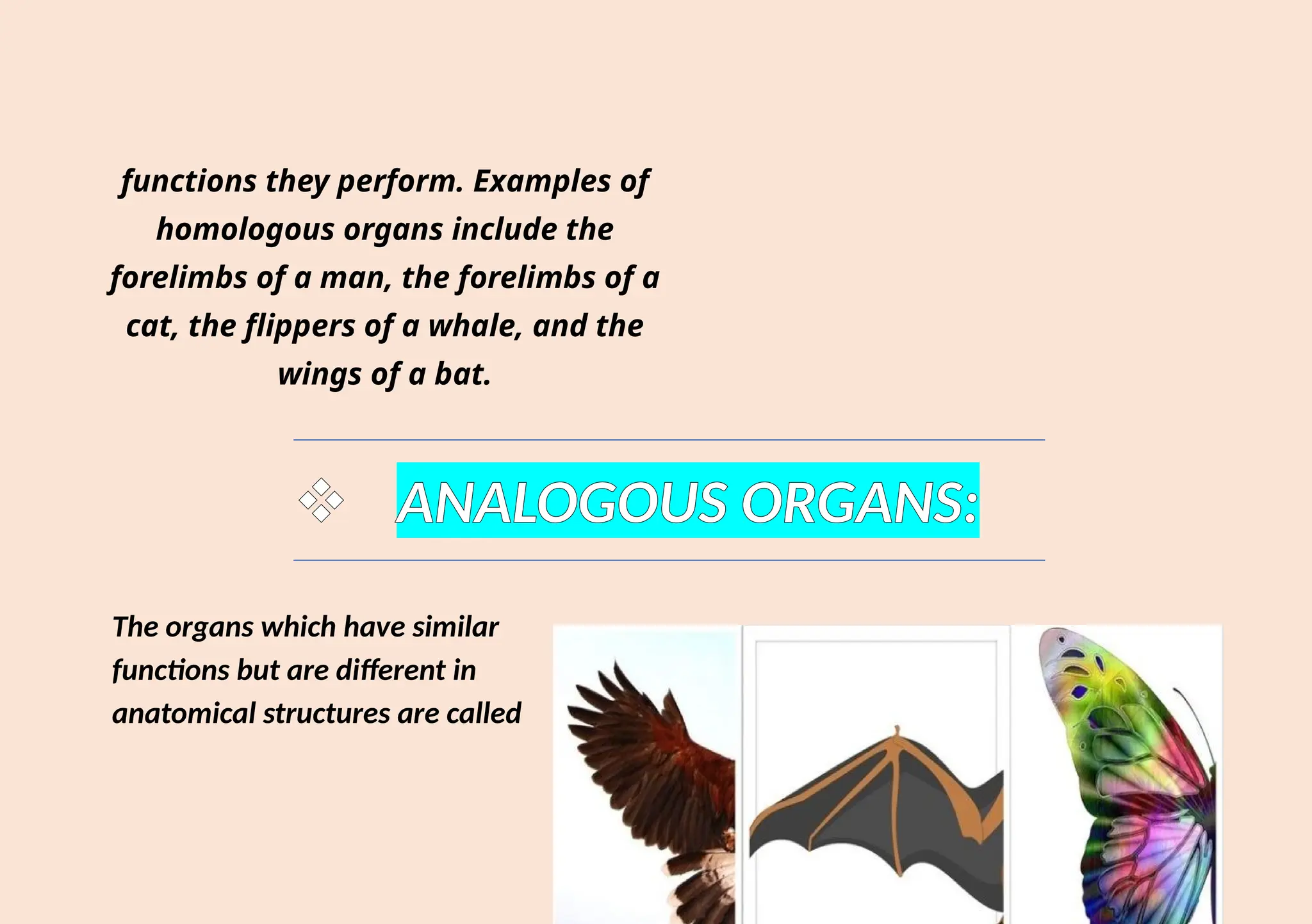
The organs which have similar
functions but are different in
anatomical structures are called
analogous organs. Examples of
analogous organs are as follows:
 Wings of an insect and bird.
 Pectoral fins of shark and
flippers of dolphin.
 Eyes of
mammal and octopus.
Thorns of Bougainvillea
and tendrilof Cucurbita
Thorns of Bougainvillea and
tendrils of Cucurbita are modified
branches, present
in axil of leaves Tendrils help the
plant in climbing, while thorns
protect the plants from predators
(functionally different). This
makes them
homologous structures.
Forelimb of man, whale, bat,
cheetah
Whales, bats, cheetah and human
share similarities in the pattern of
bones of forelimbs. Though these
forelimbs perform different functions
in these animals, they have similar
anatomical structure in their
forelimbs. Hence, in these animals,
the same structure developed along
different directions due to adaptions
to different needs. This is divergent
evolution and these structures are
homologous organs.
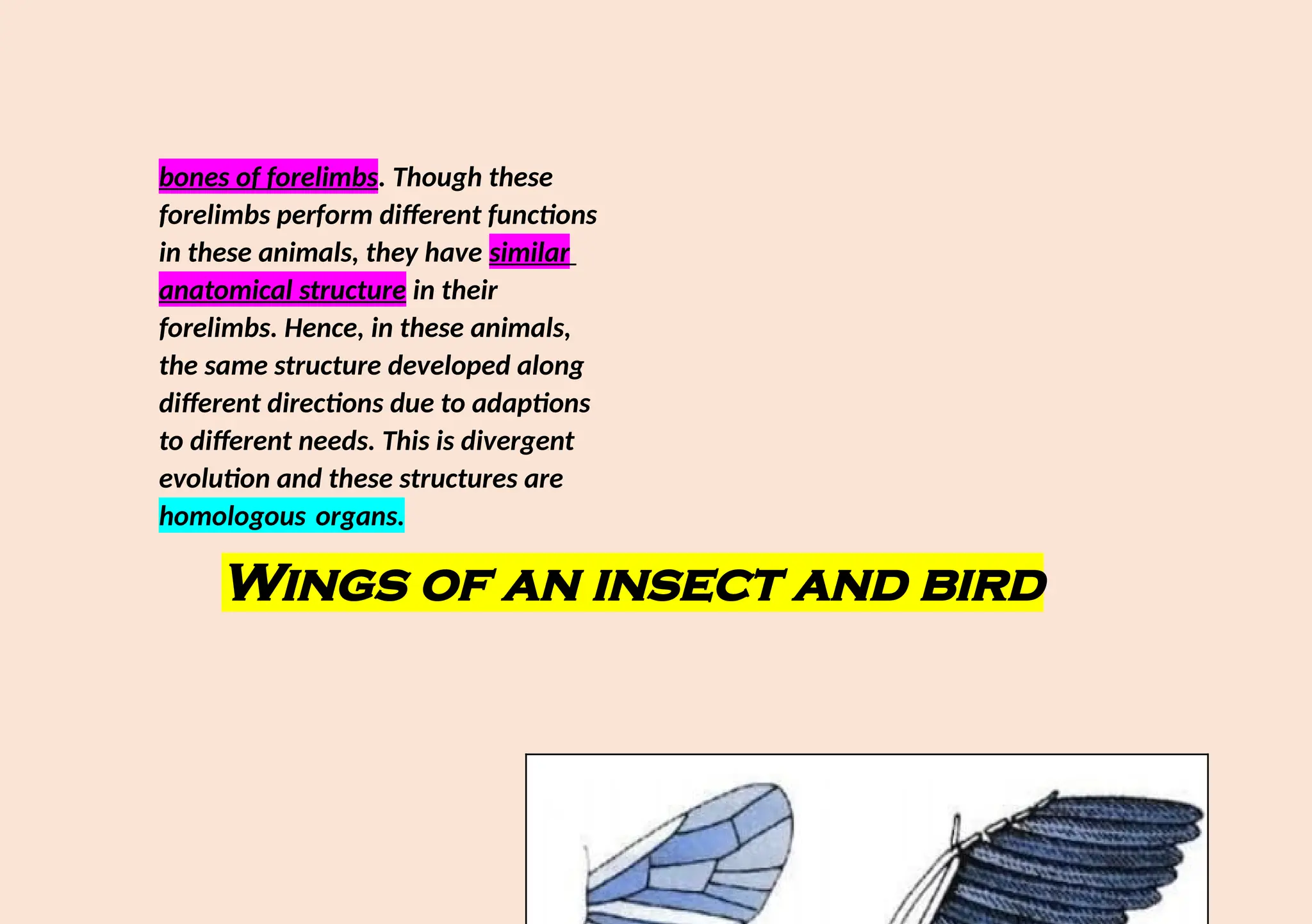
Wings of an insect and bird
The wings of a bird and the
wings of an insect are
analogous structures and
represent convergent
evolution. Both serve the
same function and are
similar in structure, but
each
evolved independently.
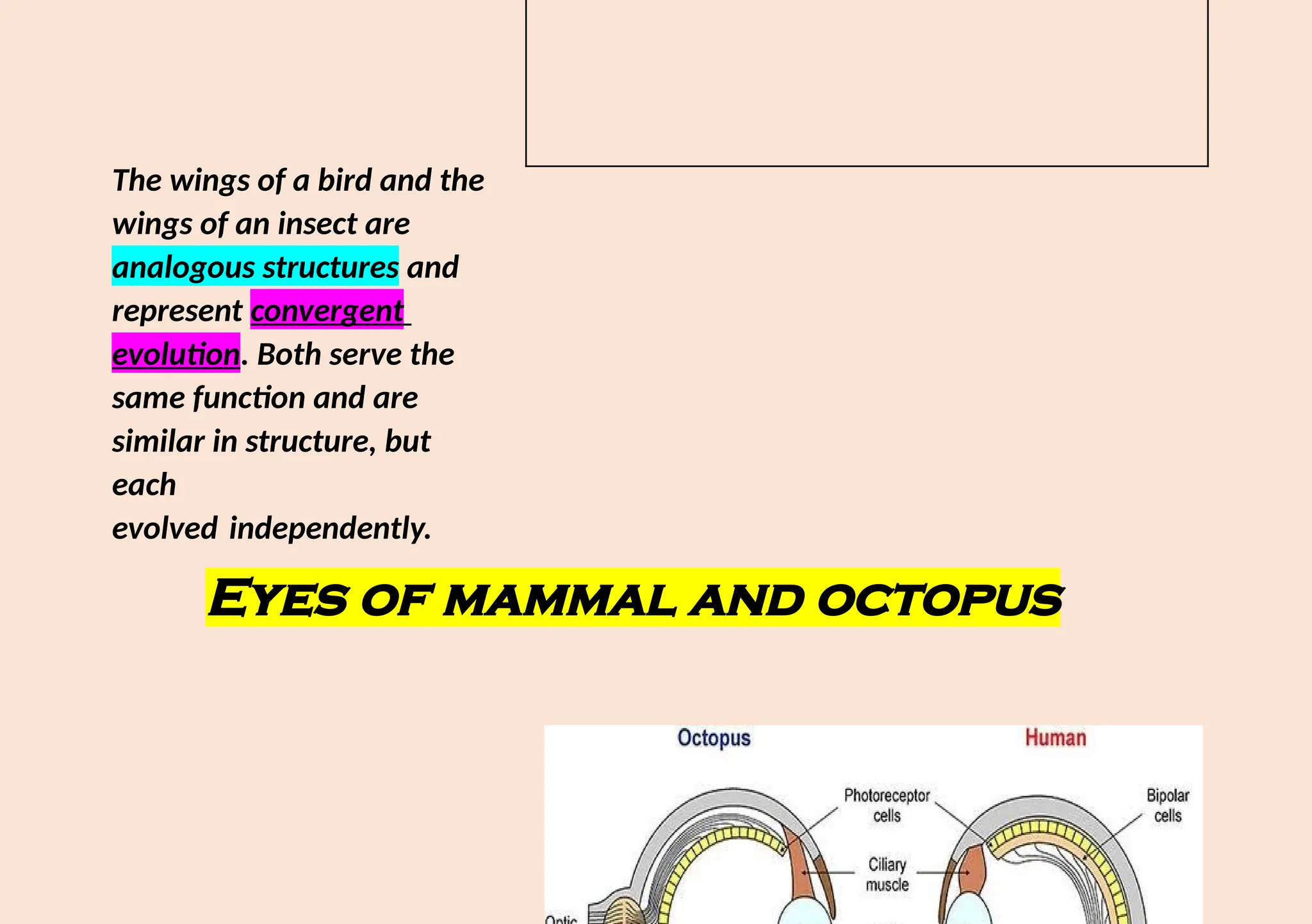
Eyes of mammal and octopus
The eyes of octopus and
those of mammals show
convergent evolution.
They are different in origin
and structures which have
evolved for the same
function and hence have
similarity. They are thus
analogous structures
Pectoral fins of shark and
flippers of dolphin
Pectoral fins of sharks
and flippers of dolphins
are analogous organs.
Pectoral fins of sharks
are not pentadactyle.
The flippers of dolphins
are pentadactyle.
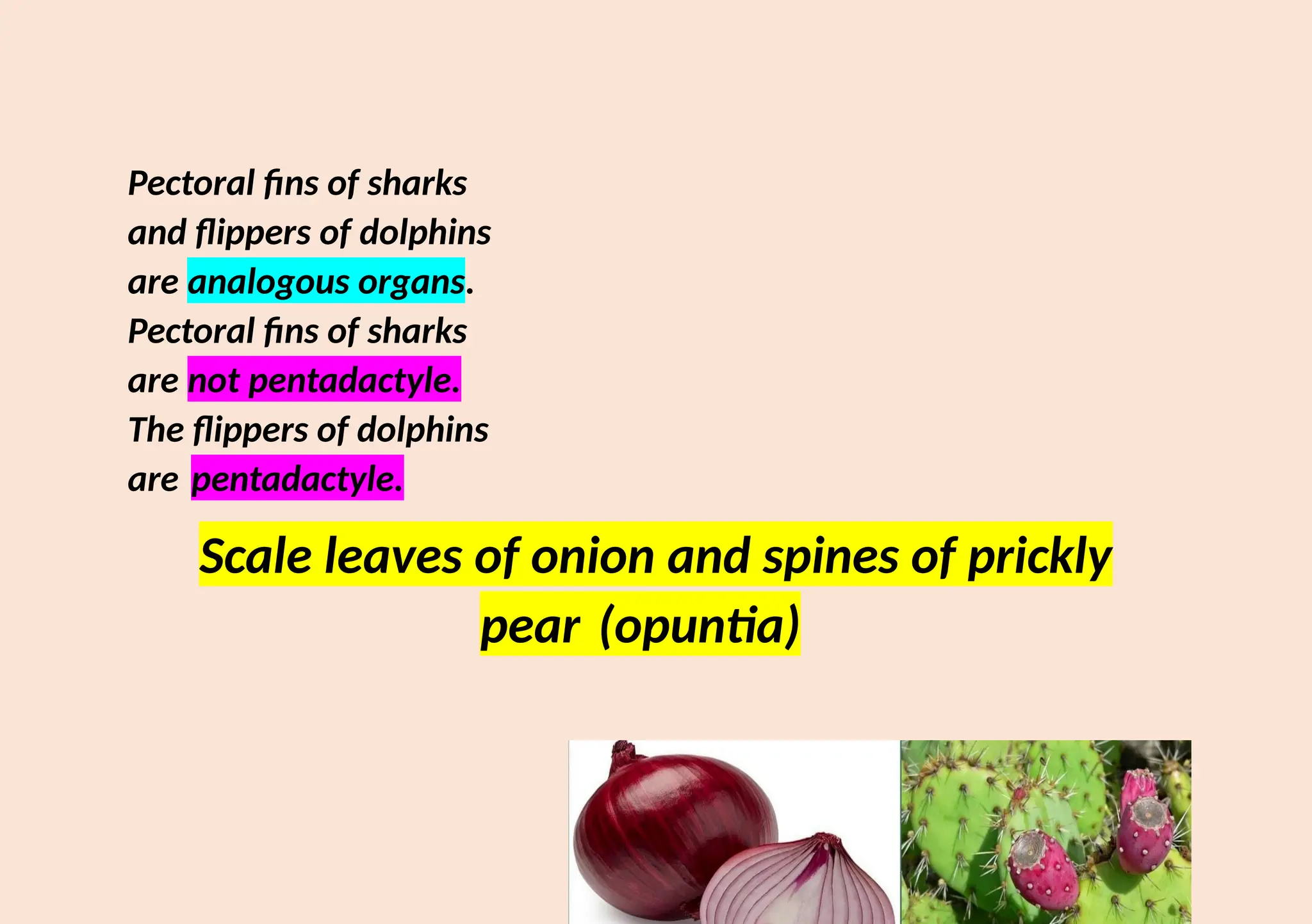
Scale leaves of onion and spines of prickly
pear (opuntia)
Both the scale leaves and spines
are modifications of leaves but are
structurally and functionally
different. Scale leaves of onion are
thick and fleshy and store food. On
the other hand spines of cactus are
defensive organs. This makes them
homologous structures.

BIOLOGY FLASHCARD for class 12 practical

  • 1.
    HOMOLOGOUS AND ANALOGOUS ORGANS Submittedby :- PRATIK TRIPATHY Signature of the Internal Examiner Signature of the External Examiner
  • 2.
     HOMOLOGOUS ORGANS: The organsfound in different organisms which have a common origin and same basic structure but differ in the functions they carry out are called homologous organs. These structures have the same origin and basic structure but differ in the
  • 3.
    functions they perform.Examples of homologous organs include the forelimbs of a man, the forelimbs of a cat, the flippers of a whale, and the wings of a bat.  ANALOGOUS ORGANS: The organs which have similar functions but are different in anatomical structures are called
  • 4.
    analogous organs. Examplesof analogous organs are as follows:  Wings of an insect and bird.  Pectoral fins of shark and flippers of dolphin.  Eyes of mammal and octopus. Thorns of Bougainvillea and tendrilof Cucurbita
  • 5.
    Thorns of Bougainvilleaand tendrils of Cucurbita are modified branches, present in axil of leaves Tendrils help the plant in climbing, while thorns protect the plants from predators (functionally different). This makes them homologous structures. Forelimb of man, whale, bat, cheetah Whales, bats, cheetah and human share similarities in the pattern of
  • 6.
    bones of forelimbs.Though these forelimbs perform different functions in these animals, they have similar anatomical structure in their forelimbs. Hence, in these animals, the same structure developed along different directions due to adaptions to different needs. This is divergent evolution and these structures are homologous organs. Wings of an insect and bird
  • 7.
    The wings ofa bird and the wings of an insect are analogous structures and represent convergent evolution. Both serve the same function and are similar in structure, but each evolved independently. Eyes of mammal and octopus
  • 8.
    The eyes ofoctopus and those of mammals show convergent evolution. They are different in origin and structures which have evolved for the same function and hence have similarity. They are thus analogous structures Pectoral fins of shark and flippers of dolphin
  • 9.
    Pectoral fins ofsharks and flippers of dolphins are analogous organs. Pectoral fins of sharks are not pentadactyle. The flippers of dolphins are pentadactyle. Scale leaves of onion and spines of prickly pear (opuntia)
  • 10.
    Both the scaleleaves and spines are modifications of leaves but are structurally and functionally different. Scale leaves of onion are thick and fleshy and store food. On the other hand spines of cactus are defensive organs. This makes them homologous structures.