Bioinformatics for Omics Data Methods and Protocols 1st Edition Maria V. Schneider
Bioinformatics for Omics Data Methods and Protocols 1st Edition Maria V. Schneider
Bioinformatics for Omics Data Methods and Protocols 1st Edition Maria V. Schneider
Bioinformatics for Omics Data Methods and Protocols 1st Edition Maria V. Schneider
Bioinformatics for Omics Data Methods and Protocols 1st Edition Maria V. Schneider
1.
Visit https://ebookultra.com todownload the full version and
explore more ebooks
Bioinformatics for Omics Data Methods and
Protocols 1st Edition Maria V. Schneider
_____ Click the link below to download _____
https://ebookultra.com/download/bioinformatics-for-
omics-data-methods-and-protocols-1st-edition-maria-v-
schneider/
Explore and download more ebooks at ebookultra.com
2.
Here are somesuggested products you might be interested in.
Click the link to download
Plant Bioinformatics Methods and Protocols 3rd Edition
David Edwards
https://ebookultra.com/download/plant-bioinformatics-methods-and-
protocols-3rd-edition-david-edwards/
Cell Penetrating Peptides Methods and Protocols 1st
Edition Maria Lindgren
https://ebookultra.com/download/cell-penetrating-peptides-methods-and-
protocols-1st-edition-maria-lindgren/
Statistical Methods for Microarray Data Analysis Methods
and Protocols 1st Edition Andrei Y. Yakovlev
https://ebookultra.com/download/statistical-methods-for-microarray-
data-analysis-methods-and-protocols-1st-edition-andrei-y-yakovlev/
Integrating Omics Data 1st Edition George C. Tseng
https://ebookultra.com/download/integrating-omics-data-1st-edition-
george-c-tseng/
3.
Data Mining forBioinformatics Applications 1st Edition He
Zengyou
https://ebookultra.com/download/data-mining-for-bioinformatics-
applications-1st-edition-he-zengyou/
Java Methods Object Oriented Programming and Data
Structures Third AP 3rd AP Edition Maria Litvin
https://ebookultra.com/download/java-methods-object-oriented-
programming-and-data-structures-third-ap-3rd-ap-edition-maria-litvin/
Ubiquitin Proteasome Protocols 1st Edition Maria Gaczynska
https://ebookultra.com/download/ubiquitin-proteasome-protocols-1st-
edition-maria-gaczynska/
Feature Selection and Ensemble Methods for Bioinformatics
Algorithmic Classification and Implementations 1st Edition
Oleg Okun
https://ebookultra.com/download/feature-selection-and-ensemble-
methods-for-bioinformatics-algorithmic-classification-and-
implementations-1st-edition-oleg-okun/
Data Mining Multimedia Soft Computing and Bioinformatics
1st Edition Sushmita Mitra
https://ebookultra.com/download/data-mining-multimedia-soft-computing-
and-bioinformatics-1st-edition-sushmita-mitra/
5.
Bioinformatics for OmicsData Methods and Protocols
1st Edition Maria V. Schneider Digital Instant Download
Author(s): Maria V. Schneider, Sandra Orchard (auth.), Bernd Mayer (eds.)
ISBN(s): 9781617790263, 1617790265
Edition: 1
File Details: PDF, 39.09 MB
Year: 2011
Language: english
7.
Me t ho d s i n Mo l e c u l a r Bi o l o g y ™
Series Editor
John M. Walker
School of Life Sciences
University of Hertfordshire
Hatfield, Hertfordshire, AL10 9AB, UK
For other titles published in this series, go to
www.springer.com/series/7651
9.
Bioinformatics for OmicsData
Methods and Protocols
Edited by
Bernd Mayer
emergentecbiodevelopmentGmbH,Vienna,Austria
v
Preface
This book discussesthe multiple facets of “Bioinformatics for Omics Data,” an area of
research that intersects with and integrates diverse disciplines, including molecular biol-
ogy, applied informatics, and statistics, among others. Bioinformatics has become a default
technology for data-driven research in the Omics realm and a necessary skill set for the
Omics practitioner. Progress in miniaturization, coupled with advancements in readout
technologies, has enabled a multitude of cellular components and states to be assessed
simultaneously, providing an unparalleled ability to characterize a given biological pheno-
type. However, without appropriate processing and analysis, Omics data add nothing to
our understanding of the phenotype under study. Even managing the enormous amounts
of raw data that these methods generate has become something of an art.
Viewed from one perspective, bioinformatics might be perceived as a purely technical
discipline. However, as a research discipline, bioinformatics might more accurately be viewed
as “[molecular] biology involving computation.” Omics has triggered a paradigm shift in
experimental study design, expanding beyond hypothesis-driven approaches to research that
is basically explorative. At present, Omics is in the process of consolidating various interme-
diate forms between these two extremes. In this context, bioinformatics for Omics data
serves both hypothesis generation and validation and is thus much more than mere data
management and processing. Bioinformatics workflows with data interpretation strategies
that reflect the complexity of biological organization have been designed. These approaches
interrogate abundance profiles with regulatory elements, all expressed as interaction net-
works, thus allowing a one-step (descriptive) embodiment of wide-ranging cellular pro-
cesses. Here, the seamless transition to computational Systems Biology becomes apparent,
the ultimate goal of which is representing the dynamics of a phenotype in quantitative mod-
els capable of predicting the emergence of higher order molecular procedures and functions
that arise from the interplay of basic molecular entities that constitute a living cell.
Bioinformatics for Omics data is certainly embedded in a highly complex technologi-
cal and scientific environment, but it is also a component and driver of one of the most
exciting developments in modern molecular biology. Thus, while this book seeks to pro-
vide practical guidelines, it hopefully also conveys a sense of fascination associated with
this research field.
This volume is structured in three parts. Part I provides central analysis strategies,
standardization, and data management guidelines, as well as fundamental statistics for
analyzing Omics profiles. Part II addresses bioinformatics approaches for specific Omics
tracks, spanning genome, transcriptome, proteome, and metabolome levels. For each
track, the conceptual and experimental background is provided, together with specific
guidelines for handling raw data, including preprocessing and analysis. Part III presents
examples of integrated Omics bioinformatics applications, complemented by case studies
on biomarker and target identification in the context of human disease.
I wish to express my gratitude to all authors for their dedication in providing excellent
chapters, and to John Walker, who initiated this project. As for any omissions or errors,
the responsibility is mine. In any case, enjoy reading.
Vienna, Austria Bernd Mayer
13.
vii
Contents
Preface . .. . . . . . . . . . . . . . . . . . . . . . . . . . . . . . . . . . . . . . . . . . . . . . . . . . . . . . . . . . v
Contributors . . . . . . . . . . . . . . . . . . . . . . . . . . . . . . . . . . . . . . . . . . . . . . . . . . . . . . . . ix
Part I Omics Bioinformatics Fundamentals
1 Omics Technologies, Data and Bioinformatics Principles . . . . . . . . . . . . . . . . . . . 3
Maria V. Schneider and Sandra Orchard
2 Data Standards for Omics Data: The Basis of Data Sharing and Reuse . . . . . . . . . 31
Stephen A. Chervitz, Eric W. Deutsch, Dawn Field, Helen Parkinson,
John Quackenbush, Phillipe Rocca-Serra, Susanna-Assunta Sansone,
Christian J. Stoeckert, Jr., Chris F. Taylor, Ronald Taylor,
and Catherine A. Ball
3 Omics Data Management and Annotation . . . . . . . . . . . . . . . . . . . . . . . . . . . . . . 71
Arye Harel, Irina Dalah, Shmuel Pietrokovski, Marilyn Safran,
and Doron Lancet
4 Data and Knowledge Management in Cross-Omics Research Projects . . . . . . . . . 97
Martin Wiesinger, Martin Haiduk, Marco Behr, Henrique Lopes de
Abreu Madeira, Gernot Glöckler, Paul Perco, and Arno Lukas
5 Statistical Analysis Principles for Omics Data . . . . . . . . . . . . . . . . . . . . . . . . . . . . 113
Daniela Dunkler, Fátima Sánchez-Cabo, and Georg Heinze
6 Statistical Methods and Models for Bridging Omics Data Levels . . . . . . . . . . . . . 133
Simon Rogers
7 Analysis of Time Course Omics Datasets . . . . . . . . . . . . . . . . . . . . . . . . . . . . . . . 153
Martin G. Grigorov
8 The Use and Abuse of -Omes . . . . . . . . . . . . . . . . . . . . . . . . . . . . . . . . . . . . . . . . 173
Sonja J. Prohaska and Peter F. Stadler
Part II Omics Data and Analysis Tracks
9 Computational Analysis of High Throughput Sequencing Data . . . . . . . . . . . . . . 199
Steve Hoffmann
10 Analysis of Single Nucleotide Polymorphisms in Case–Control Studies . . . . . . . . 219
Yonghong Li, Dov Shiffman, and Rainer Oberbauer
11 Bioinformatics for Copy Number Variation Data . . . . . . . . . . . . . . . . . . . . . . . . . 235
Melissa Warden, Roger Pique-Regi, Antonio Ortega,
and Shahab Asgharzadeh
12 Processing ChIP-Chip Data: From the Scanner to the Browser . . . . . . . . . . . . . . 251
Pierre Cauchy, Touati Benoukraf, and Pierre Ferrier
13 Insights Into Global Mechanisms and Disease by Gene Expression Profiling . . . . 269
Fátima Sánchez-Cabo, Johannes Rainer, Ana Dopazo,
Zlatko Trajanoski, and Hubert Hackl
14.
viii Contents
14 Bioinformaticsfor RNomics . . . . . . . . . . . . . . . . . . . . . . . . . . . . . . . . . . . . . . . . 299
Kristin Reiche, Katharina Schutt, Kerstin Boll,
Friedemann Horn, and Jörg Hackermüller
15 Bioinformatics for Qualitative and Quantitative Proteomics . . . . . . . . . . . . . . . . . 331
Chris Bielow, Clemens Gröpl, Oliver Kohlbacher, and Knut Reinert
16 Bioinformatics for Mass Spectrometry-Based Metabolomics . . . . . . . . . . . . . . . . . 351
David P. Enot, Bernd Haas, and Klaus M. Weinberger
Part III Applied Omics Bioinformatics
17 Computational Analysis Workflows for Omics Data Interpretation . . . . . . . . . . . . 379
Irmgard Mühlberger, Julia Wilflingseder, Andreas Bernthaler,
Raul Fechete, Arno Lukas, and Paul Perco
18 Integration, Warehousing, and Analysis Strategies of Omics Data . . . . . . . . . . . . . 399
Srinubabu Gedela
19 Integrating Omics Data for Signaling Pathways, Interactome Reconstruction,
and Functional Analysis . . . . . . . . . . . . . . . . . . . . . . . . . . . . . . . . . . . . . . . . . . . . 415
Paolo Tieri, Alberto de la Fuente, Alberto Termanini,
and Claudio Franceschi
20 Network Inference from Time-Dependent Omics Data . . . . . . . . . . . . . . . . . . . . 435
Paola Lecca, Thanh-Phuong Nguyen, Corrado Priami, and Paola Quaglia
21 Omics and Literature Mining . . . . . . . . . . . . . . . . . . . . . . . . . . . . . . . . . . . . . . . 457
Vinod Kumar
22 Omics–Bioinformatics in the Context of Clinical Data . . . . . . . . . . . . . . . . . . . . . 479
Gert Mayer, Georg Heinze, Harald Mischak, Merel E. Hellemons,
Hiddo J. Lambers Heerspink, Stephan J.L. Bakker, Dick de Zeeuw,
Martin Haiduk, Peter Rossing, and Rainer Oberbauer
23 Omics-Based Identification of Pathophysiological Processes . . . . . . . . . . . . . . . . . 499
Hiroshi Tanaka and Soichi Ogishima
24 Data Mining Methods in Omics-Based Biomarker Discovery . . . . . . . . . . . . . . . . 511
Fan Zhang and Jake Y. Chen
25 Integrated Bioinformatics Analysis for Cancer Target Identification . . . . . . . . . . . 527
Yongliang Yang, S. James Adelstein, and Amin I. Kassis
26 Omics-Based Molecular Target and Biomarker Identification . . . . . . . . . . . . . . . . 547
Zgang–Zhi Hu, Hongzhan Huang, Cathy H. Wu, Mira Jung,
Anatoly Dritschilo, Anna T. Riegel, and Anton Wellstein
Index . . . . . . . . . . . . . . . . . . . . . . . . . . . . . . . . . . . . . . . . . . . . . . . . . . . . . . . . . . . . . 573
15.
ix
Contributors
S. James Adelstein• Harvard Medical School, Harvard University, Boston, MA, USA
Shahab Asgharzadeh • Department of Pediatrics and Pathology, Keck School
of Medicine, Childrens Hospital Los Angeles, University of Southern California,
Los Angeles, CA, USA
Stephan J.L. Bakker • Department of Nephrology, University Medical Center
Groningen, Groningen, The Netherlands
Catherine A. Ball • Department of Genetics, Stanford University School of Medicine,
Stanford, CA, USA
Marco Behr • emergentec biodevelopment GmbH, Vienna, Austria
Touati Benoukraf • Université de la Méditerranée, Marseille, France;
Centre d’Immunologie de Marseille-Luminy, Marseille, France;
CNRS, UMR6102, Marseille, France; Inserm, U631, Marseille, France
Andreas Bernthaler • emergentec biodevelopment GmbH, Vienna, Austria
Chris Bielow • AG Algorithmische Bioinformatik, Institut für Informatik,
Freie Universität Berlin, Berlin, Germany
Pierre Cauchy • Inserm, U928, TAGC, Marseille, France; Université de la
Méditerranée, Marseille, France
Jake Y. Chen • Indiana University School of Informatics, Indianapolis, IN, USA
Stephen A. Chervitz • Affymetrix, Inc., Santa Clara, CA, USA
Irina Dalah • Department of Molecular Genetics, Weizmann Institute of Science,
Rehovot, Israel
Eric W. Deutsch • Institute for Systems Biology, Seattle,WA, USA
Ana Dopazo • Genomics Unit, Centro Nacional de Investigaciones Cardiovasculares,
Madrid, Spain
Anatoly Dritschilo • Lombardi Cancer Center, Georgetown University,
Washington, DC, USA
Daniela Dunkler • Section of Clinical Biometrics, Center for Medical Statistics,
Informatics and Intelligent Systems, Medical University of Vienna, Vienna, Austria
David P. Enot • BIOCRATES life sciences AG, Innsbruck, Austria
Raul Fechete • emergentec biodevelopment GmbH, Vienna, Austria
Pierre Ferrier • Centre d’Immunologie de Marseille-Luminy (CIML), Marseille,
France
Dawn Field • NERC Centre for Ecology and Hydrology, Oxford, UK
Claudio Franceschi • ‘L Galvani’ Interdept Center, University of Bologna,
Bologna, Italy
Alberto de la Fuente • CRS4 Bioinformatica, Parco Tecnologico SOLARIS, Pula, Italy
Srinubabu Gedela • Stanford University School of Medicine, Stanford, CA, USA
Gernot Glöckler • emergentec biodevelopment GmbH, Vienna, Austria
Martin G. Grigorov • Nestlé Research Center, Lausanne, Switzerland
Clemens Gröpl • Ernst-Moritz-Arndt-Universität Greifswald, Greifswald, Germany
Bernd Haas • BIOCRATES life sciences AG, Innsbruck, Austria
16.
x Contributors
Jörg Hackermüller• Bioinformatics Group, Department of Computer Science,
University of Leipzig, Leipzig, Germany; Fraunhofer Institute for Cell Therapy
and Immunology, Leipzig, Germany
Hubert Hackl • Division for Bioinformatics, Innsbruck Medical University,
Innsbruck, Austria
Martin Haiduk • emergentec biodevelopment GmbH, Vienna, Austria
Arye Harel • Department of Molecular Genetics, Weizmann Institute of Science,
Rehovot, Israel
Georg Heinze • Section of Clinical Biometrics, Center for Medical Statistics,
Informatics and Intelligent Systems, Medical University of Vienna, Vienna, Austria
Merel E. Hellemons • Department of Nephrology, University Medical Center
Groningen, Groningen, The Netherlands
Steve Hoffmann • Interdisciplinary Center for Bioinformatics and The Junior
Research Group for Transcriptome Bioinformatics in the LIFE Research Cluster,
University Leipzig, Leipzig, Germany
Friedemann Horn • Fraunhofer Institute for Cell Therapy and Immunology, Leipzig,
Germany; Institute of Clinical Immunology, University of Leipzig, Leipzig, Germany
Zhang-Zhi Hu • Lombardi Cancer Center, Georgetown University, Washington
DC, USA
Hongzhan Huang • Center for Bioinformatics Computational Biology, University
of Delaware, Newark, DE, USA
Mira Jung • Lombardi Cancer Center, Georgetown University, Washington, DC, USA
Amin I. Kassis • Harvard Medical School, Harvard University, Boston, MA, USA
Oliver Kohlbacher • Eberhard-Karls-Universität Tübingen, Tübingen, Germany
Vinod Kumar • Computational Biology, Quantitative Sciences, GlaxoSmithKline,
King of Prussia, PA, USA
Hiddo J. Lambers Heerspink • Department of Nephrology, University Medical
Center Groningen, Groningen, The Netherlands
Doron Lancet • Department of Molecular Genetics, Weizmann Institute of Science,
Rehovot, Israel
Paola Lecca • The Microsoft Research – University of Trento Centre for
Computational and Systems Biology, Povo, Trento, Italy
Yonghong Li • Celera Corporation, Alameda, CA, USA
Henrique Lopes de Abreu Madeira • emergentec biodevelopment GmbH, Vienna,
Austria
Arno Lukas • emergentec biodevelopment GmbH, Vienna, Austria
Gert Mayer • Department of Internal Medicine IV (Nephrology and Hypertension),
Medical University of Innsbruck, Innsbruck, Austria
Harald Mischak • mosaiques diagnostics GmbH, Hannover, Germany
Irmgard Mühlberger • emergentec biodevelopment GmbH, Vienna, Austria
Thanh-Phuong Nguyen • The Microsoft Research – University of Trento Centre
for Computational and Systems Biology, Povo, Trento, Italy
Rainer Oberbauer • Medical University of Vienna and KH Elisabethinen Linz,
Vienna, Austria
Soichi Ogishima • Department of Bioinformatics, Medical Research Institute,
Tokyo Medical and Dental University, Tokyo, Japan
17.
xi
Contributors
Sandra Orchard •EMBL-European Bioinformatics Institute, Wellcome Trust
Genome Campus, Hinxton,Cambridge, UK
Antonio Ortega • Department of Electrical Engineering, Viterbi School
of Engineering, University of Southern California, Los Angeles, CA, USA
Helen Parkinson • EMBL-EBI, Wellcome Trust Genome Campus, Hinxton,
Cambridge, UK
Paul Perco • emergentec biodevelopment GmbH, Vienna, Austria
Shmuel Pietrokovski • Department of Molecular Genetics, Weizmann Institute
of Science, Rehovot, Israel
Roger Pique-Regi • Department of Human Genetics, University of Chicago,
Chicago, IL, USA
Corrado Priami • The Microsoft Research – University of Trento Centre
for Computational and Systems Biology, Povo, Trento, Italy
Sonja J. Prohaska • Department of Computer Science and Interdisciplinary Center
for Bioinformatics, University of Leipzig, Leipzig, Germany
John Quackenbush • Department of Biostatistics, Dana-Farber Cancer Institute,
Boston, MA, USA
Paola Quaglia • The Microsoft Research – University of Trento Centre for
Computational and Systems Biology, Povo, Trento, Italy
Johannes Rainer • Bioinformatics Group, Division Molecular Pathophysiology,
Medical University Innsbruck, Innsbruck, Austria
Kristin Reiche • Fraunhofer Institute for Cell Therapy and Immunology, Leipzig,
Germany
Knut Reinert • AG Algorithmische Bioinformatik, Institut für Informatik,
Freie Universität Berlin, Berlin, Germany
Anna T. Riegel • Lombardi Cancer Center, Georgetown University,
Washington, DC, USA
Phillipe Rocca-Serra • EMBL-EBI, Wellcome Trust Genome Campus, Hinxton,
Cambridge, UK
Simon Rogers • Inference Research Group, Department of Computing Science,
University of Glasgow, Glasgow, UK
Peter Rossing • Steno Diabetes Center Denmark, Gentofte, Denmark
Marilyn Safran • Department of Molecular Genetics, Weizmann Institute of Science,
Rehovot, Israel
Fátima Sánchez-Cabo • Genomics Unit, Centro Nacional de Investigaciones
Cardiovasculares, Madrid, Spain
Susanna-Assunta Sansone • EMBL-EBI, Wellcome Trust Genome Campus, Hinxton,
Cambridge, UK
Maria V. Schneider • EMBL-European Bioinformatics Institute, Wellcome Trust
Genome Campus, Hinxton, Cambridge, UK
Katharina Schutt • Fraunhofer Institute for Cell Therapy and Immunology, Leipzig,
Germany; Institute of Clinical Immunology, University of Leipzig, Leipzig, Germany
Dov Shiffman • Celera Corporation, Alameda, CA, USA
Peter F. Stadler • Department of Computer Science and Interdisciplinary Center for
Bioinformatics, University of Leipzig, Leipzig, Germany
18.
xii Contributors
Christian J.Stoeckert Jr • Department of Genetics and Center for Bioinformatics,
University of Pennsylvania School of Medicine, Philadelphia, PA, USA
Hiroshi Tanaka • Department of Computational Biology, Graduate School
of Biomedical Science, Tokyo Medical and Dental University, Tokyo, Japan
Chris F. Taylor • EMBL-EBI, Wellcome Trust Genome Campus, Hinxton,
Cambridge, UK
Ronald Taylor • Computational Biology Bioinformatics Group,
Pacific Northwest National Laboratory, Richland, WA, USA
Alberto Termanini • ‘L Galvani’ Interdept Center, University of Bologna,
Bologna, Italy
Paolo Tieri • ‘L Galvani’ Interdept Center, University of Bologna, Bologna, Italy
Zlatko Trajanoski • Division for Bioinformatics, Innsbruck Medical University,
Innsbruck, Austria
Kerstin Boll • Fraunhofer Institute for Cell Therapy and Immunology, Leipzig,
Germany; Institute of Clinical Immunology, University of Leipzig, Leipzig, Germany
Melissa Warden • Department of Pediatrics and Pathology, Keck School of Medicine,
Childrens Hospital Los Angeles, University of Southern California, Los Angeles,
CA, USA
Klaus M. Weinberger • BIOCRATES life sciences AG, Innsbruck, Austria
Anton Wellstein • Lombardi Cancer Center, Georgetown University, Washington,
DC, USA
Martin Wiesinger • emergentec biodevelopment GmbH, Vienna, Austria
Julia Wilflingseder • Medical University of Vienna and KH Elisabethinen Linz,
Vienna, Austria
Cathy H. Wu • Center for Bioinformatics Computational Biology,
University of Delaware, Newark, DE, USA
Yongliang Yang • Department of Radiology, Harvard Medical School,
Harvard University, Boston, MA, USA; Center of Molecular Medicine,
Department of Biological Engineering, Dalian University of Technology,
Dalian, China
Dick de Zeeuw • Department of Nephrology, University Medical Center Groningen,
Groningen, The Netherlands
Fan Zhang • Indiana University School of Informatics, Indianapolis, IN, USA
4 Schneider andOrchard
techniques that can handle extremely complex biological samples
in large quantities (e.g. high throughput) with high sensitivity
and specificity. Next generation analytical tools require improved
robustness, flexibility and cost efficiency. All of these aspects are
being continuously improved, potentially enabling institutes such
as the Wellcome Trust Sanger Sequencing Centre (see Note 1) to
generate thousands of millions of base pairs per day, rather
than the current output of 100 million per day (http:/
/www.
yourgenome.org/sc/nt).
However, all this data production makes sense only if one is
equipped with the necessary analytical resources and tools to
understand it. The evolution of the laboratory techniques has
therefore to occur in parallel with a corresponding improvement
in analytical methodology and tools to handle the data. The phrase
Omics – a suffix signifying the measurement of the entire comple-
ment of a given level of biological molecules and information –
encompasses a variety of new technologies that can help explain
both normal and abnormal cell pathways, networks, and processes
via the simultaneous monitoring of thousands of molecular com-
ponents. Bioinformaticians use computers and statistics to perform
extensive Omics-related research by searching biological databases
and comparing gene sequences and proteins on a vast scale to
identify sequences or proteins that differ between diseased and
healthy tissues, or more general between different phenotypes.
“Omics” spans an increasingly wide range of fields, which now
range from genomics (the quantitative study of protein coding
genes, regulatory elements and noncoding sequences), transcrip-
tomics (RNA and gene expression), proteomics (e.g. focusing on
protein abundance), and metabolomics (metabolites and meta-
bolic networks) to advances in the era of post-genomic biology
and medicine: pharmacogenomics (the quantitative study of how
genetics affects a host response to drugs), physiomics (physiologi-
cal dynamics and functions of whole organisms) and in other fields:
nutrigenomics (a rapidly growing discipline that focuses on iden-
tifying the genetic factors that influence the body’s response to
diet and studies how the bioactive constituents of food affect gene
expression), phylogenomics (analysis involving genome data and
evolutionary reconstructions, especially phylogenetics) and inter-
actomics (molecular interaction networks). Though in the remain-
der of this chapter we concentrate on an isolated few examples of
Omics technologies, much of what is said, for
example about data
standardisation, data sharing, storage and analysis requirements
are true for all of these different technological fields.
There are already large amounts of data generated by these
technologies and this trend is increasing, for example second
and third generation sequencing technologies are leading to an
exponential increase in the amount of sequencing data available.
From a computational point of view, in order to address the
24.
5
Omics Technologies, Dataand Bioinformatics Principles
complexity of these data, understand molecular regulation and
gain the most from such comprehensive set of information,
knowledge discovery – the process of automatically searching
large volumes of data for patterns – is a crucial step. This process
of bioinformatics analysis includes: (1) data processing and
molecule (e.g. protein) identification, (2) statistical data analysis,
(3) pathway analysis, and (4) data modelling in a system wide
context. In this chapter we will present some of these analytical
methods and discuss ways in which data can be made accessible to
both the specialised bioinformatician, but in particular to the
research scientist.
There are a variety of definitions of the term HT; however we can
loosely apply this term to cases where automation is used to
increase the throughput of an experimental procedure. HT tech-
nologies exploit robotics, optics, chemistry, biology and image
analysis research. The explosion in data production in the public
domain is a consequence of falling equipment prices, the opening
of major national screening centres and new HT core facilities at
universities and other academic institutes. The role of bioinfor-
matics in HT technologies is of essential importance.
High-Throughput Sequencing (HTS) technologies are used not
only for traditional applications in genomics and metagenomics
(see Note 2), but also for novel applications in the fields of tran-
scriptomics, metatranscriptomics (see Note 3), epigenomics (see
Note 4), and studies of genome variation (see Note 5). Next gen-
eration sequencing platforms allow the determination of the
sequence data from amplified single DNA fragments and have
been developed specifically to lend themselves to robotics and par-
allelisation. Current methods can directly sequence only relatively
short (300–1,000 nucleotides long) DNA fragments in a single
reaction. Short-read sequencing technologies dramatically reduce
the sequencing cost. There were initial fears that the increase in
quantity might result in a decrease in quality, and improvements
in accuracy and read length are being looked for. However, despite
this, these advances have significantly reduced the cost of several
sequencing applications, such as resequencing individual genomes
(2) readout assays (e.g. ChIP-seq (3) and RNAseq (4)).
The transcriptome is the set of all messenger RNA (mRNA) mol-
ecules, or “transcripts”, produced in one or a population of cells.
Several methods have been developed in order to gain expression
information at high throughput level.
2.
Materials
2.1. Genomics
High-Throughput
Technologies
2.2. Transcriptomics
High-Throughput
Technologies
25.
6 Schneider andOrchard
Global gene expression analysis has been conducted either by
hybridization with oligonucleotide microarrays, or by counting
of sequence tags. Digital transcriptomics with pyrophosphatase
based ultra-high throughput DNA sequencing of ditags repre-
sents a revolutionary approach to expression analysis, which gen-
erates genome-wide expression profiles. ChIP-Seq is a technique
that combines chromatin immunoprecipitation with sequencing
technology to identify and quantify in vivo protein–DNA interac-
tions on a genome-wide scale. Many of these applications are
directly comparable to microarray experiments, for example
ChIP-chip and ChIP-Seq are for all intents and purposes the same
(5). The most recent increase in data generation in this evolving
field is due to novel cycle-array sequencing methods (see Note 6),
also known as next-generation sequencing (NGS), more com-
monly described as second-generation sequencing which are
already being used by technologies such as next-generation
expressed-sequence-tag sequencing (see Note 7).
Proteomics is the large-scale study of proteins, particularly their
expression patterns, structures and functions, and there are vari-
ous HT techniques applied to this area. Here we explore two
main proteomics fields: Mass Spectrometry HT and Protein–
Protein Interactions (PPIs).
Mass spectrometry is an important emerging method for the
characterization of proteins. It is also a rapidly developing field
which is currently moving towards large-scale quantification of
specific proteins in particular cell types under defined conditions.
The rise of gel-free protein separation techniques, coupled with
advances in MS instrumentation sensitivity and automation, has
provided a foundation for high throughput approaches to the
study of proteins. The identification of parent proteins from
derived peptides now relies almost entirely on the software of
search engines, which can perform in silico digests of protein
sequence to generate peptides. Their molecular mass is then
matched to the mass of the experimentally derived protein
fragments.
Studying protein–protein interactions provides valuable insights
into many fields by helping precisely understand a protein’s role
inside a specific cell type, with many of the techniques commonly
used to experimentally determine protein interactions lending
themselves to high throughput methodologies. Complementation
assays (e.g. 2-hybrid) measure the oligomerisation-assisted com-
plementation of two fragments of a single protein which when
united result in a simple biological readout – the two protein frag-
ments are fused to the potential bait/prey interacting partners
respectively. This methodology is easily scalable to HT since it can
2.3. Proteomics
High-Throughput
Technologies
2.3.1. Mass Spectrometry
High-Throughput
Technologies
2.3.2. Interactomics HT
Technologies
26.
7
Omics Technologies, Dataand Bioinformatics Principles
yield very high numbers of coding sequences assayed in a
relatively
simple experiment and a wide variety of interactions can be
detected and characterised following one single, commonly used
protocol. However, the proteins are being expressed in an alien
cell system with a loss of temporal and physiological control of
expression patterns, resulting in a large number of false-positive
interactions. Affinity-based assays, such as affinity chromatogra-
phy, pull-down and coimmunoprecipitation, rely on the strength
of the interaction between two entities. These techniques can be
used on interactions which form under physiological conditions,
but are only as good as the reagents and techniques used to iden-
tify the participating proteins. High throughput mass spectrom-
etry is increasingly used for the rapid identification of the
participants in an affinity complex. Physical methods depend on
the properties of molecules to enable measurement of an interac-
tion, as typified by techniques such as X-ray crystallography and
enzymatic assays. High quality data can be produced but highly
purified proteins are required, which has always proved a rate
limiting step. Availability of automated chromatography systems
and custom robotic systems that streamline the whole process,
from cell harvesting and lysis through to sample clarification and
chromatography has changed this, and increasing amounts of
data are being generated by such experiments.
It is now largely the case that high throughput methods exist for
all or most of the Omics domains. The challenge now is to
prevent
bottlenecks appearing in the storing, annotation, and analysis of
the data. First the data which is required to describe both – how
an experiment was performed and the results generated by it –
must be defined. A place to store that information must be identi-
fied, a means by which it will be gathered has to be agreed upon,
and ways in which the information will be queried, retrieved and
analysed must also be decided. Data in isolation is of limited use,
so ideally the data format chosen should be appropriate to enable
the combination and comparison of multiple datasets, both
in-house and with other groups working in the same area. HT
data is increasingly used in a broader context beyond the indi-
vidual project; consequently it is becoming more important to
standardise and share this information appropriately and to pre-
interpret it for the scientists who are not involved with the experi-
ment, whilst still making the raw data available for those who
wish to perform their own analyses.
In high throughput research, knowledge discovery starts by
collecting, selecting and cleaning the data in order to fill a data-
base. A database is a collection of files (archive) of consistent data
that are stored in a uniform and efficient manner. A relational
database consists of a set of tables, each storing records (instances).
2.4. Challenges in HT
Technologies
2.5. Bioinformatics
Concepts
27.
8 Schneider andOrchard
A record is represented as a set of attributes which define a property
of a record. Attributes can be identified by their name and store a
value. All records in a table have the same number and type of
attributes. Database design is a crucial step in which the data
requirements of the application have first to be defined (concep-
tual design), including the entities and their relationships. Logical
design is the implementation of the database using database
management systems, which ensure that the process is scalable.
Finally the physical design phase estimates the workload and
refines the database design accordingly. It is during this phase that
table designs are optimized, indexing is implemented and cluster-
ing approaches are optimized. These are fundamental in order to
obtain fast responses to frequent queries without jeopardising the
database integrity (e.g. redundancy). Primary or archived data-
bases contain information directly deposited by submitters and
give an exact representation of their published data, for example
DNA sequences, DNA and protein structures and DNA and pro-
tein expression profiles. Secondary or derived databases are so-
called because they contain the results of analysis on the primary
resources, including information on sequence patterns or motifs,
variants and mutations and evolutionary relationships.
The fundamental characteristic of a database record is a
unique identifier. This is crucial in biology given the large num-
ber of situations where a single entity has many names, or one
name refers to multiple entities. To some extent, this problem can
be overcome by the use of an accession number, a primary key
derived by a reference database to describe the appearance of that
entity in that database. For example, using the UniProtKB pro-
tein sequence database accession number of human p53 gene
products (P04637) gives information on the sequence of all the
isoforms of these proteins, gene and protein nomenclature as well
as a wealth of information about its function and role in a cell.
More than one protein sequence database exists, and the vast
majority of protein sequences exist in all of these. Fortunately
resources to translate between these multiple accession numbers
now exist, for example the Protein Identifier Cross-Reference
(PICR) Service at the European Bioinformatics Institute (EBI)
(see Note 8).
The Omics fields share with all of biology the challenge of
handling ever-increasing amounts of complex information effec-
tively and flexibly. Therefore a crucial step in bioinformatics is to
choose the appropriate representation of the data. One of the
simplest but most efficient approaches has been the use of
controlled vocabularies (CVs), which provide a standardised
dictionary of terms for representing and managing information.
Ontologies are structure CVs. An excellent example of this
methodology is the Gene Ontology (GO) that describes gene
products in terms of their associated biological processes, cellular
28.
9
Omics Technologies, Dataand Bioinformatics Principles
components and molecular functions in a species independent
manner. Substantial effort has been, and continues to be, put into
the development and maintenance of the ontologies themselves;
the annotation of gene products, which entails making associa-
tions between the ontologies and the genes and gene products
across databases; and the development of tools that facilitate the
creation, maintenance and use of ontologies. The hierarchical
nature of these CVs enable more meaningful queries to be made,
for example searching either a microarray or proteomics experi-
ment for expression patterns on the brain, enable experiments
annotated to the cortex to be included because the BRENDA tis-
sue CV recognises the cortex as “part-of” the brain (http:/
/www.
ebi.ac.uk/ontology-lookup/browse.do?ontName=BTO). Use of
these CVs have been encouraged, and even made mandatory, by
many groups such as the Microarray Expression Data group
(MGED) which recommends the use of the MGED ontology (6)
for the description of key experimental concepts and, where pos-
sible, ontologies developed by other communities for describing
terms such as anatomy, disease and chemical compounds.
Clustering methods are used to identify patterns in the data,
in other words to recognise what is similar, to identify what is dif-
ferent, and from there to know when differences are meaningful.
These three steps are not trivial at all; proteins for example exhibit
rich evolutionary relationships and complex molecular interac-
tions and hence present many challenges for computational
sequence analysis. Sequence similarity refers to the degree to
which nucleotide or protein sequences are related. The extent of
similarity between two sequences can be based on percent
sequence identity (the extent to which two (nucleotide or amino
acid) sequences are invariant) and/or conservation (changes at a
specific position of an amino acid or nucleotide sequence that
preserve the physicochemical properties of the original residue).
The applications of sequence similarity searching are numerous,
ranging from the characterization of newly sequenced genomes,
through phylogenetics, to species identification in environmental
samples. However, it is important to keep in mind that identify-
ing similarity between sequences (e.g. nucleotide or amino acid
sequences) is not necessarily equivalent to identifying other pro
perties of such sequences, for example their function.
It is obvious that without bioinformatics it is impossible to make
sense of the huge data produced in Omics research. If we look at
the increase of the EMBL Nucleotide Sequence Database
(EMBL-Bank), the Release 105 on 27-AUG-2010 contained
3. Methods
29.
10 Schneider andOrchard
195,241,608 sequence entries comprising 292,078,866,691
nucleotides. This translated to a total of 128 GB compressed and
831 GB uncompressed data. Bioinformatics does not only have
to provide the structures in which to store the information, but
also store it in such a way that is retrievable, and comparable not
only to similar data but also to other types of information.
The challenges and concepts bioinformatics as a discipline
currently encompasses do not essentially differ from those listed
by (7), they have merely expanded to meet the challenges imposed
by the volume of data produced. These include:
1. A precise, predictive model of transcription initiation and ter-
mination: the ability to predict where and when transcription
will occur in a genome (fundamental for HTS and
proteomics);
2. A precise, predictive model of RNA splicing/alternative splic-
ing: the ability to predict the splicing pattern of any primary
transcript in any tissue (fundamental for transcriptomics and
proteomics);
3. Precise, quantitative models of signal transduction pathways:
ability to predict cellular responses to external stimuli
(required in proteomics and pathways analysis);
4. Determination of effective protein:DNA, protein:RNA and
protein:protein recognition codes (important for recognition
of interactions among the various types of molecules);
5. Accurate ab initio protein structure prediction (required for
proteomics and pathways analysis);
6. Rational design of small molecule inhibitors of proteins
(chemogenomics);
7. Mechanistic understanding of protein evolution: understand-
ing exactly how new protein functions evolve (comparative
genomics);
8. Mechanistic understanding of speciation: molecular details of
how speciation occurs (comparative genome sequences,
sequence variation);
9. Continued development of effective gene ontologies – sys-
tematic ways to describe the functions of any gene or protein
(genomics, transcriptomics, and proteomics).
The above list summarises general concepts required for mul-
tiple Omics data sources. Next we describe issues which are spe-
cifictooneparticularfield,butmayhavedownstreamconsequences
in other areas.
Here we will explore two major challenges in genomics: de novo
sequencing assembly and genome annotation.
3.1. The Role
of Bioinformatics
in Genomics
30.
11
Omics Technologies, Dataand Bioinformatics Principles
A critical stage in de novo genome sequencing is the assembly
of shotgun reads, in other words putting together fragments
randomly extracted from the sample to form a set of contiguous
sequences and contigs that represent the DNA in the sample.
Algorithms are available for whole genome shotgun fragment
assembly, including Atlas (8), Arachne (9), Celera (10), PCAP
(11), Phrap (http:/
/www.phrap.org) and Phusion (12). All these
programmes rely on the overlap-layout-consensus approach (13)
where all the reads are compared to each other in a pair-wise fash-
ion. However, this approach presents several disadvantages, espe-
cially in the case of next-generation microread sequencing.
EDENA (14) is the only microread assembler developed using
computation of pairwise overlaps. Included reads, i.e. reads which
align over their whole length onto another read, have to be
removed from the graph; this means that mixed-length sequenc-
ing cannot be performed directly with an overlap graph. Short
reads are either simply mapped onto long read contigs or they are
assembled separately (Daniel Zerbino personal communication).
The use of a sequence graph to represent an assembly was
introduced by (15). Idury and Waterman presented an assembly
algorithm for an alternative sequencing technique, sequencing by
hybridisation, where an oligoarray could detect all the k nucle-
otide words, also known as k-mers, present in a given genome.
Pevzner et al. (16) expanded on this idea, proposing a slightly
different formalisation of the sequence graph, called the de Bruijn
graph, whereby the k-mers are represented as arcs and overlap-
ping k-mers join at their tips, and consecutively presented algo-
rithms to build and correct errors in the de Bruijn graph (13), use
paired-end reads (16) or short reads (17). Zerbino and Birney
(18) developed a new set of algorithms, collectively called
“Velvet,” to manipulate de Bruijn graphs for genomic sequence
assembly for the de novo assembly of microreads. Several studies
have used Velvet (19–22). Other analytical software adopting the
use of the de Bruijn graph are ALLPATHS (23) and SHORTY
(24) specialised in localising the use of paired-end reads, whereas
the ABySS (25, 26) successfully parallelised the construction of
the de Bruijn graph, thus removing practical memory limitations
on assemblies. The field of de novo assembly of NGS reads is
constantly evolving and there is not yet a firm process or best
practise set in place.
Genome annotation is the process of marking the genes and other
biological features in a DNA sequence. It consists of two main
steps: (1) Gene Finding: identifying elements on the genome and
(2) adding biological information to these elements. There are
automatic annotation tools to perform all this by computer analy-
sis, as opposed to manual annotation which involves human
expertise. Ideally, these approaches coexist and complement each
3.1.1. De Novo Genome
Sequencing
3.1.2.
Genome Annotation
31.
12 Schneider andOrchard
other in the same annotation pipeline. The basic level of
annotation
uses BLAST to find similarities, and annotates genomes based on
that. However, nowadays more and more additional information
is added to the annotation platform. Structural annotation con-
sists of the identification of genomic elements: ORFs and their
localisation, gene structure, coding regions and location of regu-
latory motifs. Functional annotation consists in attaching biologi-
cal information to genomic elements: biochemical function,
biological function, involved regulation and interactions and
expression. These steps may involve both biological experiments
and in silico analysis and are often initially performed in related
databases, usually protein sequence databases such as UniProtKB,
and transferred back onto the genomic sequence.
A variety of software tools have been developed to permit
scientists to view and share genome annotations. The additional
information allows manual annotators to disentangle discrepan-
cies between genes that have been given conflicting annotation.
For example, the Ensembl genome browser relies on both curated
data sources as well as a range of different software tools in their
automated genome annotation pipeline (27). Genome annota-
tion remains a major challenge for many genome projects. The
identification of the location of genes and other genetic control
elements is frequently described as defining the biological “parts
list” for the assembly and normal operation of an organism.
Researchers are still at an early stage in the process of delineating
this parts list, as well as trying to understand how all the parts
“fit together”.
Both microarray and proteomics experiments provide long lists of
transcripts (mRNA and proteins respectively) co-expressed at any
one time and the challenge is to give biological relevance to these
lists. Several different computational algorithms have been devel-
oped and can be usefully applied at various steps of the analytical
pipeline. Clustering methods are used to order and visualise the
underlying patterns in large scale expression datasets showing
similar patterns that can therefore be grouped according to their
co-regulation/co-expression (e.g. specific developmental times
or cellular/tissue locations). This indicates (1) co-regulated tran-
scripts which might be functionally related and (2) the clusters
represent a natural structure of the data. Transcripts can also be
grouped by their known – or predicted function.
A resource commonly used for this is the GO ontology
(http://www.geneontology.org). There are several bioinformat-
ics tools for calculating the number of significantly enriched GO
terms, for example: (1) GO miner (http://discover.nci.nih.gov/
gominer) generates a summary of GO terms that are significantly
enriched in a user input list of protein accession numbers when
compared to a reference database like UniProtKB/SwissProt;
3.2. The Role
of Bioinformatics
in Transcriptomics
32.
13
Omics Technologies, Dataand Bioinformatics Principles
(2) GO slims which are subsets of GO terms from the whole
Gene Ontology and are particularly useful for giving a summary
of the results of GO annotation of a genome, microarrays and
proteomics (http:/
/amigo.geneontology.org/cgi-bin/amigo/
go.cgi).
The use of different bioinformatics approaches to determine the
presence of a gene or open reading frame (ORF) in those genomes
can lead to divergent ORF annotations (even for data generated
from the same genomic sequences). It is therefore crucial to use
the correct dataset for protein sequence translations. One method
for confirming a correct protein sequence is mass spectrometry
based proteomics, in particular by de novo sequencing which
does not rely on pre-existing knowledge of a protein sequence.
However, historically, there has initially been no method for pub-
lishing these protein sequences, except as long lists reported
directly with the article or included on the publisher’s website as
supplementary information. In either case, these lists are typically
provided as PDF or spreadsheet documents with a custom-made
layout, making it practically impossible for computer programmes
to interpret them, or efficiently query them. A solution to this
problem is provided by the PRIDE database (http:/
/www.ebi.ac.
uk/pride) which provides a standards compliant, public reposi-
tory for mass spectrometry based proteomics, giving access to
experimental evidence that a transcribed gene product does exist,
as well as the pattern of tissues in which it is expressed (28).
The annotation of protein functional information largely
relies on manual curation, namely biologists reading the scientific
literature and transferring the information to computational
records – a process in which the UniProtKB curators have lead
the way for many years. The many proteins for which functional
information is not available, however, rely on selected informa-
tion being transferred from closely related orthologues in other
species. A number of protein signature databases now exist, which
create algorithms to recognise these closely related protein fami-
lies or domains within proteins. These resources have been com-
bined in a single database, Interpro (http:/
/www.ebi.ac.uk/
interpro) and the tool InterProScan (see Note 9) (http:/
/www.
ebi.ac.uk/Tools/InterProScan) is available for any biologist
wishing to perform their own automated protein (or gene) anno-
tation (29).
Protein–protein interactions are generally represented in graphi-
cal networks with nodes corresponding to the proteins and edges
to the interactions. Although edges can vary in length most net-
works represent undirected and only binary interactions.
Bioinformatics tools and computational biology efforts into graph
theory methods have and continue to be part of the knowledge
3.3. The Role
of Bioinformatics
in Proteomics
3.3.1.
Protein Annotation
3.3.2. Protein–Protein
Interaction Analysis and
Comparative Interactomics
33.
14 Schneider andOrchard
discovery process in this field. Analysis of PPI networks involves
many challenges, due to the inherent complexity of these net-
works, high noise level characteristic of the data, and the presence
of unusual topological phenomena. A variety of data-mining and
statistical techniques have been applied to effectively analyze PPI
data and the resulting PPI networks. The major challenges for
computational analysis of PPI networks remain:
1. Unreliability of large scale experiments;
2. Biological redundancy and multiplicity: a protein can have
several different functions; or a protein may be included in
one or more functional groups. In such instances overlapping
clusters should be identified in the PPI networks, however
since conventional clustering methods generally produce
pairwise disjoint clusters, they may not be effective when
applied to PPI networks;
3. Two proteins with different functions frequently interact with
each other. Such frequent connections between the proteins
in different functional groups expand the topological com-
plexity of the PPI networks, posing difficulties to the detec-
tion of unambiguous partitions.
Intensive research trying to understand and characterise the
structural behaviours of such systems from a topological perspec-
tive have shown that features such as small-world properties (any
two nodes can be connected via a short path of a few links), scale-
free degree distributions (power-law degree distribution indicat-
ing that a few hubs bind numerous small nodes), and hierarchical
modularity (hierarchical organization of modules) suggests that a
functional module in a PPI network represents a maximal set of
functionally associated proteins. In other words, it is composed of
those proteins that are mutually involved in a given biological
process or function. In this model, the significance of a few hub
nodes is emphasized, and these nodes are viewed as the determi-
nants of survival during network perturbations and as the essen-
tial backbone of the hierarchical structure.
The information retrieved from HT interactomics data could
be very valuable as a means to obtain insights into a systems evolu-
tion (e.g. by comparing the organization of interaction networks
and by analyzing their variation and conservation). Likewise, one
could learn whether and how to extend the network information
obtained experimentally in well-characterised model systems onto
different organisms. Cesareni et al. (30) concluded that, despite
the recent completion of several high throughput experiments
aimed at the description of complete interactomes, the available
interaction information is not yet of sufficient coverage and qual-
ity to draw any biologically meaningful conclusion from the com-
parison of different interactomes. The development of more
34.
15
Omics Technologies, Dataand Bioinformatics Principles
accurate experimental and informatics approaches is required to
allow us to study network evolution.
The massive amounts of data produced in Omics experiments can
help us gain insights into underlying biological processes only if
they are carefully recorded and stored in databases, where they
can be queried, compared and analyzed. Data has to be stored in
a structured and standardized format that enables data sharing
between multiple resources, as well as common tool development
and the ability to merge data sets generated by different tech-
nologies. Omics is very much technology driven, and all instru-
ment and software manufacturers initially produce data in their
own proprietary formats, often then tying customers into a lim-
ited number of downstream analytical instruments. Efforts have
been ongoing for many years to develop and encourage the devel-
opment of common formats to enable data exchange and stan-
dardized methods for the annotation of such data to allow dataset
comparison.
These efforts were spear-headed by the transcriptomics
community, who developed the MIAME standards (Minimum
Information About a Microarray Experiment, http:/
/www.mged.
org/Workgroups/MIAME/miame.html) (31). The MIAME
standards describe the set of information sufficient to interpret a
microarray experiment and its results unambiguously, to enable
verification of the data and potentially to reproduce the experi-
ment itself. Their lead was soon followed by the proteomics
community with the MIAPE standards (Minimum Information
About a Proteomics Experiment, http:/
/www.psidev.info/index.
php?q=node/91), the interaction community (MIMIx, http:/
/
imex.sourceforge.net/MIMIx) and many others. This has resulted
in the development of tools which can combine datasets, for
example it is possible to import protein interaction data into the
visualisation tool Cytoscape (http:/
/www.cytoscape.org) in a
common XML format (PSI-MI) and overlay this with expression
data from a microarray experiment.
Below we will follow the three Omics fields we described above.
It would be impossible to list all the databases dealing with these
data, however as the European Bioinformatics Institute hosts one
of the most comprehensive sets of bioinformatics databases and
also actively coordinates or is involved in setting standards and
their implementation, it serves as exemplar for databases that are
at the state of the art for standards, technologies and integration
of the data. A list of major Institutes and their databases is pro-
vided at the end of this chapter (see Note 18).
The genome is a central concept at the heart of biology. Since the
first complete genome was sequenced in the mid-1990s, over 800
3.4. Storing Omics
Data Appropriately
3.5. Exploring Omics
Data in Bioinformatics
3.5.1. Genomics
35.
16 Schneider andOrchard
more have been sequenced, annotated, and submitted to the
public databases. New ultra-high throughput sequencing tech-
nologies are now beginning to generate complete genome
sequence at an accelerating rate, both to gap-fill portions of the
taxonomy where no genome sequence has yet been deciphered
(e.g. the GEBA project, http:/
/www.jgi.doe.gov/programs/
GEBA, which aims to sequence 6,000 bacteria from taxonomi-
cally distinct clades), and to generate data for variation in popula-
tions of species of special interest (e.g. the 1000 Genomes Project
inhuman,http:/
/www.1000genomes.org,andthe1001Genomes
Project in Arabidopsis, http:/
/www.1001genomes.org). In addi-
tion, modern sequencing technologies are increasingly being used
to generate data for gene regulation and expression on a genome-
wide scale. The vast amount of information associated with the
genomic sequence demands a way to organise and access it (see
Note 19). A successful example of this is the genome browser
Ensembl.
Ensembl (http:/
/www.ensembl.org) is a joint project
between the EBI and the Wellcome Trust Sanger Institute that
annotates chordate genomes (i.e. vertebrates and closely related
invertebrates with a notochord such as sea squirt). Gene sets
from model organisms such as yeast and fly are also imported
for comparative analysis by the Ensembl “compara” team. Most
annotation is updated every 2 months; however, the gene sets are
determined about once a year. A new browser, http:/
/www.
ensemblgenomes.org, has now been set up to access non-
chordates genomes from bacteria, plants, fungi, metazoa and
protists.
Ensembl provides genes and other annotation such as regula-
tory regions, conserved base pairs across species, and mRNA pro-
tein mappings to the genome. Ensembl displays many layers of
genome annotation into a simplified view for the ease of the user.
The Ensembl gene set reflects a comprehensive transcript set
based on protein and mRNA evidence in UniProt and NCBI
RefSeq databases (see Note 10). These proteins and mRNAs are
aligned against a genomic sequence assembly imported from a
relevant sequencing centre or consortium. Transcripts are clus-
tered into the same gene if they have overlapping coding
sequence. Each transcript is given a list of mRNAs and proteins
it is based upon.
Ensembl utilises BioMart, a query optimised database for effi-
cient data mining described below, and the application of a com-
parative analysis pipeline: Compara. The Ensembl Compara
multi-species database stores the results of genome-wide species
comparisons calculated for each data release including: (1)
Comparative genomics: Whole genome alignments and Synteny
regions and (2) Comparative proteomics: Orthologue predictions
and Paralogue predictions.
36.
17
Omics Technologies, Dataand Bioinformatics Principles
Ensembl Compara includes GeneTrees, a comprehensive
gene orientated phylogenetic resource. It is based on a computa-
tional pipeline to handle clustering, multiple alignment, and tree
generation, including the handling of large gene families.
Ensembl also imports variations including Single Nucleotide
Polymorphisms and insertion-deletion mutations (Indels) and
their flanking sequence from various sources. These sequences are
aligned to the reference sequence. Variation positions are calcu-
lated in this way along with any effects on transcripts in the area.
The majority of variations are obtained from NCBI dbSNP. For
human, other sources include Affymetrix GeneChip Arrays, The
European Genome-phenome Archive, and whole genome align-
ments of individual sequences from Venter (32), Watson (33) and
Celera individuals (34). Sources for other species include Sanger
re-sequencing projects for mouse, and alignments of sequences
from the STAR consortium for rat. Ancestral alleles from dbSNP
were determined through a comparison study of human and
chimpanzee DNA (35).
There is a wide range of HT transcriptomics data: single and dual
channel microarray-based experiments measuring mRNA, miRNA
and generally non-coding RNA. One can also include non-array
techniques such as serial analysis of gene expression (SAGE).
There are three main public repositories on microarray based
studies: ArrayExpress (36), Gene Expression Omnibus (37), and
CIBEX (38). Here we describe the EBI microarray repository,
ArrayExpress, which consists of three components:
the ArrayExpress Repository – a public archive of functional
●
●
genomics experiments and supporting data,
the ArrayExpress Warehouse – a database of gene expression
●
●
profiles and other bio-measurements,
the ArrayExpress Atlas – a new summary database and meta-
●
●
analytical tool of ranked gene expression across multiple
experiments and different biological conditions.
The Warehouse and Atlas allow users to query for differen-
tially expressed genes by gene names and properties, experimental
conditions and sample properties, or a combination of both (39).
The latest developed ArrayExpress Atlas of Gene Expression
(http:/
/www.ebi.ac.uk/microarray-as/atlas) allows the user to
query for condition-specific gene expression across multiple data
sets. The user can query for a gene or a set of genes by name,
synonym, Ensembl identifier, GO term or, alternatively, for a bio-
logical sample property or condition, (e.g. tissue type, disease
name, developmental stage, compound name or identifier).
Queries for both genes and conditions are also possible (e.g. the
user can query for all “DNA repair” genes up-regulated in
3.5.2.
Transcriptomics
37.
18 Schneider andOrchard
“cancer” which returns a list of “experiment, condition, gene”
triplets each with a P-value and an up/down arrow characterising
the significance and direction of a gene’s differential expression in
a particular condition in an experiment).
ArrayExpress accepts data generated on all array-based tech-
nologies, including gene expression, protein array, ChIP-chip and
genotyping. More recently, data from transcriptomic and related
applications of uHTS technologies such as Illumina (SOLEXA
Ltd, Saffron Walden, UK), and 454 Life Sciences (Roche,
Branford, Connecticut) are also accepted. For Solexa data FASTQ
files, sample annotation and processed data files corresponding to
transcription values per genomic location are submitted and
curated to the emerging standard MINSEQE (http:/
/www.mged.
org/minseqe) and instrument-level data are stored in the
European Short Read Archive (http:/
/www.ebi.ac.uk/embl/
Documentation/ENA-Reads.html).TheArrayExpressWarehouse
now includes gene expression profiles from in situ gene expres-
sion measurements, as well as other molecular measurement data
from metabolomics and protein profiling technologies. Where in
situ and array-based gene expression data are available for the
same gene, these are displayed in the same view and links are pro-
vided to the multispecies 4DXpress database of in situ gene
expression (39).
The Gene Expression Atlas provides a statistically robust
framework for integration of gene expression experiment results
across different platforms at a meta-analytical level. It also repre-
sents a simple interface for identifying strong differential expres-
sion candidate genes in conditions of interest. The Atlas also
integrates ontologies for high quality annotation of gene and
sample attributes and builds new gene expression summarised
views, with the aim to provide analysis of putative signalling path-
way targets, discovery of correlated gene expression patterns and
the identification of condition/tissue-specific patterns of gene
expression. A list of URLs to bioinformatics relevant resources to
transcriptomics can be found in Subheading 4 (see Note 20).
A list of proteomics relevant bioinformatics resources can be
found in Note 21.
Translated proteins and their co-translational modification or
PTM (post-translated modifications) are the backbone of pro-
teomics (28). UniProt is the most comprehensive data repository
on protein sequence and functional annotation. It is maintained
by a collaboration of the Swiss Institute of Bioinformatics (SIB),
the Protein Information Resource (PIR), and the EBI. It has four
components, each of them optimized for different user profiles:
1. UniProt Knowledgebase (UniProtKB) comprises two sec-
tions: UniProtKB/Swiss-Prot and UniProtKB/TrEMBL.
3.5.3.
Proteomics
3.5.3.1. Protein Sequence
and Functional Annotation
38.
19
Omics Technologies, Dataand Bioinformatics Principles
(a) UniProtKB/Swiss-Prot contains high quality annotation
extracted from the literature and computational analyses
curated by experts. Annotations include, amongst oth-
ers: protein function(s), protein domains and sites, PTMs,
subcellular location(s), tissue specificity, structure, inter-
actions, and diseases associated with deficiencies or
abnormalities.
(b) UniProtKB/TrEMBL contains the translations of all
coding sequences (CDS) present in the EMBL/
GenBank/DDJB nucleotide sequence databases, exclud-
ing some types of data such as pseudogenes. UniProtKB/
TrEMBL records are annotated automatically based on
computational analyses.
2. UniProt Reference Clusters (UniRef), which provides clus-
tered sets of all sequences from the UniProtKB database and
selected UniProt Archive records to obtain complete cover-
age of sequences at different resolutions (100, 90, and 50%
sequence identity), while hiding redundant sequences.
3. UniProt archive (UniParc) is a repository that reflects the his-
tory of all protein sequences.
4. UniProt Metagenomic and Environmental Sequences data-
base (UniMES) contains data from metagenomic projects
such as the Global Ocean Sampling Expeditions.
UniProtKB includes cross-references from over 120 external
databases, including Gene Ontology (GO), InterPro (protein
families and domains), PRIDE (Protein identification data),
IntEnz (enzyme) (see Note 11), OMIM (the Online Mendelian
Inheritance in Man database) (see Note 12), Interaction data-
bases (e.g. IntAct, DIP, Mint, see Note 21), Ensembl, several
genomic databases from potential pathogens (e.g. EchoBase,
Ecogene, LegioList, see Note 13), the European Hepatitis C
Virus database (http:/
/euhcvdb.ibcp.fr/euHCVdb) and others.
Several repositories have been established to store protein and
peptide identifications derived from MS, the main method for the
identification and quantification of proteins (28). There are two
main repositories for MS data in proteomics:
The Proteomics IDEntifications database (PRIDE,
●
● http:/
/
www.ebi.ac.uk/pride)
Peptidome (
●
● http:/
/www.ncbi.nlm.nih.gov/peptidome)and a
number of related resources such as PeptideAtlas (http:/
/
www.peptideatlas.org) and the Global Proteomics Machine
(http:/
/www.thegpm.org/GPMDB), which take deposited
raw data for reanalysis in their own pipeline.
These all serve as web-based portals for data mining, data visu-
alisation, data sharing, and cross-validation resources in the field.
3.5.3.2. Mass
Spectrometry Repositories
39.
20 Schneider andOrchard
The proteomics identifications (PRIDE) database has been built
to turn publicly available data, buried in numerous academic pub-
lications, into publicly accessible data. PRIDE is fully compliant
to the standards released by the HUPO-PSI and also makes
extensive use of CVs such as Taxonomy, the BRENDA Tissue
Ontology and Gene Ontology, thus direct access to PRIDE data
organised by species, tissue, sub-cellular location, disease state
and project name can be obtained via the “Browse Experiments”
menu item. PRIDE remains the most complete database in terms
of metadata associated with peptide identifications, since it con-
tains numerous experimental details of the protocols followed by
the submitters (28). The detailed metadata in PRIDE has enabled
analyses of large datasets which have proven to yield very interest-
ing information for the field (28).
PRIDE uses Tranche (see Note 14) to allow the sharing of
massive data files, currently including search engine output files
and binary raw data from mass spectrometers that can be accessed
via a hyperlink from PRIDE. As a member of the Proteome
Exchange consortium PRIDE will make both the annotated
meta-raw spectral data available, via Tranche to related analytical
pipelines such as PeptideAtlas (see Note 15) and The Global
Proteome Machine (see Note 16).
Both the number of laboratories producing PPI data and the size
of such experiments continues to increase and a number of repos-
itories exist to collect this data (see Note 22). Here we explore
IntAct, a freely available, open source database system and analy-
sis tools for molecular interaction data derived from literature or
direct user submissions. IntAct follows a deep curation model,
capturing a high level of detail from the experimental reports on
the full text of the publication. Queries may be performed on the
website with the initial presentation of the data as a list of binary
interaction evidences. Users can access the individual evidences
that describe the interaction of two specific molecules, thus allow-
ing users to filter result sets (e.g. by interaction detection method)
to only retain user-defined evidences. For convenience, evidence
pertaining to the same interactors is grouped together in the
binary interaction evidence table. Downloads of any datasets are
available in both PSI-MI XML and tab-delineated MITAB for-
mat, providing end users with the highest level of details without
compromising the integrity and simplicity of access to the data
(40). IntAct is also involved in a major data exchange collabora-
tion driven by the major public interaction data providers (listed
at the end of this Chapter): The International Molecular Exchange
Consortium (IMEx, http:/
/imex.sourceforge.net) partners share
curation efforts and exchange completed records on molecular
interaction data. Curation has been aligned to a common
standard,
as detailed in the curation manual of the individual databases and
3.5.3.3. Protein–Protein
Interactions and
Interactomics
40.
21
Omics Technologies, Dataand Bioinformatics Principles
summarised in the joint curation manual available at http:/
/imex.
sourceforge.net. IMEx partner databases request the set of mini-
mum information about a molecular interaction experiment
(MIMIx) to be provided with each data deposition (41).
The use of common data standards encourages the develop-
ment of tools utilising this format. For example Cytoscape (http:/
/
www.cytoscape.org) resembles an open source bioinformatics
software platform for visualising molecular interaction networks
and integrating these interactions with gene expression profiles
and other state data, in which data from resources such as IntAct
can be visualised and combined with other datasets.
The value of the information obtained from comparing net-
works depends heavily on both the quality of the data used to
assemble the networks themselves and the coverage of these net-
works (30, 42). The most comprehensive studies are in
Saccharomyces cerevisiae; however, it should be noted that two
comparable, “comprehensive” experiments, performed in parallel
by two different groups using the same approach (tandem affinity
purification technology) ended up with fewer than 30% of the
interactions discovered by each group in common (43), suggest-
ing that coverage is far from complete.
In the Omics several efforts have been and continue to be made in
order to create computational tools for integrating Omics data. These
need to address three different aspects of the integration (44):
1. To identify the network scaffold by delineating the connec-
tions that exist between cellular components;
2. To decompose the network scaffold into its constituent parts
in an attempt to understand the overall network structure;
3. To develop cellular or system models to simulate and predict
the network behaviour that gives rise to particular cellular
phenotypes.
As we have seen in the previous section here are significant
challenges to modern post-genomics data sets:
1. Many technological platforms, both hardware and software,
are available for several Omics data types, but some of these
are prone to introducing technical artefacts;
2. Standardized data representations are not always adopted,
which complicates cross-experiment comparisons;
3. Data-quality, context and lab-to-lab variations represent
another important hurdle that must be overcome in genome-
scale science.
Obviously the spread of Omics data in wide variety of formats
represents a challenge for encompassing the technical hitches in
integrating and migrating across platforms. One of the important
3.6. Integration
of Omics Data
41.
22 Schneider andOrchard
techniques often used is XML. XML is used to provide a
document
markup language that is easier to learn, retrieve, store and trans-
mit. It is semantically richer than HTML (45). Here we present
three different infrastructures which have been used and repre-
sent different ways of integration of Omics data: BioMart, Taverna
and the BII Infrastructure.
BioMart is a query-oriented DBMS developed jointly by the
Ontario Institute for Cancer Research and the EBI: BioMart
(http:/
/www.biomart.org) is particularly suited for providing
“data mining” like searches of complex descriptive data. It can be
used with any type of data as shown by some of the resources cur-
rently powered by BioMart: Ensembl, UniProt, InterPro, HGNC,
RatGenomeDatabase,ArrayExpressDW,HapMap,GermOnLine,
PRIDE, PepSeeker, VectorBase, HTGT and Reactome.
BioMart comes with an “out of the box” website that can be
installed, configured and customised according to user require-
ments. Further access is provided by graphical and text based
applications or programmatically using web services or API writ-
ten in Perl and Java. BioMart has built-in support for query opti-
misation and data federation and in can also be configured to
work as a DAS 1.5 Annotation server. The process of converting
a data source into BioMart format is fully automated by the tools
included in the package. Currently supported RDBMS platforms
are MySQL, Oracle and Postgres. BioMart is completely Open
Source, licenced under the LGPL, and freely available to anyone
without restrictions (46).
The Taverna workbench (http:/
/taverna.sourceforge.net) is a
free software tool for designing and executing workflows, cre-
ated by the myGrid project (http:/
/www.mygrid.org.uk/tools/
taverna), and funded through OMII-UK (http:/
/www.omii.
ac.uk). Taverna allows users to integrate many different software
tools, including web services from many different domains.
Bioinformatics services include those provided by the National
Centre for Biotechnology Information, The EBI, the DNA
Databank of Japan, SoapLab, BioMOBY and EMBOSS (see
Note 17).
Effectively, Taverna allows a scientist with limited computa-
tional background and technical resource support to construct
highly complex analyses over public and private data and compu-
tational resources, all from a standard PC, UNIX box or Apple
computer. A successful example of using Taverna in Omics is
demonstrated by the work of Li et al. (47) where the authors
describe an example of a workflow involving the statistical identi-
fication of differentially expressed genes from microarray data fol-
lowed by the annotation of their relationships to cellular processes.
They show that Taverna can be used by data analysis experts as a
3.6.1. BioMart
3.6.2. Taverna
42.
23
Omics Technologies, Dataand Bioinformatics Principles
generic tool for composing ad hoc analyses of quantitative data
by combining the use of scripts written in the R programming
language with tools exposed as services in workflows (47).
As we have seen, it is now possible to run complex multi-assay
studies through a variety of Omics technologies, for example
determining the effect on a number of subjects, of a compound
by characterising a metabolic profile (by mass spectroscopy), mea-
suring tissue specific protein and gene expression (by mass spec-
trometry and DNA microarrays, respectively), and conducting
conventional histological analysis. It is essential that such com-
plex metadata (i.e. sample characteristics, study design, assay exe-
cution, sample-data relationships) are reported in a standard
manner to correctly interpret the final results (data) that they
contextualise. Relevant EBI systems, such as ArrayExpress,
PRIDE and ENA-Reads (The European Nucleotide Archive
(ENA) accepts data generated by NGS methodologies such as
454, Illumina and ABI SOLiD) are built to store microarray-
based, proteomics and NGS-based experiments, respectively.
However, these systems have different submission and download
formats, and diverse representations of the metadata and termi-
nologies used. Nothing yet exists to archive metabolomics-based
assays and other conventional biomedical/environmental assays.
The BioInv Index (BioInvestigation Index, http:/
/www.ebi.
ac.uk/net-project/projects.html) infrastructure (BII) aims to fill
this gap. BII infrastructure aims to be a single entry point for
those researchers willing to deposit their multi-assay studies and
datasets, and/or easily download similar datasets. This infrastruc-
ture allows commonly representing and storing the experimental
metadata of biological, biomedical and environmental studies.
Although relying on other EBI production systems, the BII infra-
structure shields the users from their diverse formats and ontologies,
by progressively implementing in the editor tool integrative cross-
domain “standards” such as MIBBI, OBO Foundry and ISA-TAB.
A prototype instance is up and running at http:/
/www.ebi.ac.uk/
bioinvindex/home.seam.
1. Wellcome Trust Sanger Sequencing Centre: The Sanger
Institute is a genome research institute primarily funded by
the Wellcome Trust. The Sanger uses large-scale sequencing,
informatics and analysis of genetic variation to further improve
our understanding of gene function in health and disease and
to generate data and resources of lasting value to biomedical
research, see http:/
/www.sanger.ac.uk.
3.6.3. BII Infrastructure
4.
Notes
43.
24 Schneider andOrchard
2. Metagenomics: The term indicates the study of metagenomes,
genetic material recovered directly from environmental sam-
ples. It is also used generically for environmental genomics,
ecogenomics or community genomics. Metagenomics data
can be submitted and stored in appropriate databases (see
http:/
/www.ncbi.nlm.nih.gov/Genbank/metagenome.html
and http:/
/www.ebi.ac.uk/genomes/wgs.html).
3. Metatranscriptomics: This term refers to studies where micro-
bial gene expression in the environment is accessed (e.g.
pyrosequencing) directly from natural microbial assemblages.
4. Epigenomics: Understanding the large numbers of variations
in DNA methylation and chromatin modification by exploit-
ing omics techniques. There are various recent efforts in this
direction (i.e. http:/
/www.heroic-ip.eu).
5. Studies of genome variation: Clear examples on the advances
on this front come from the large-scale human variation data-
bases which archive and provide access to experimental data
resulting from HT genotyping and sequencing technologies.
The European Genotype Archive (http:/
/www.ebi.ac.uk/
ega/page.php) provides dense genotype data associated with
distinct individuals. Another relevant projects on this front is
ENCODE (http:/
/www.genome.gov/10005107), the
Encyclopedia Of DNA Elements, which aims to identify all
functional elements in the human genome sequence.
6. Cycle-array sequencing methods: also known as NGS: Cycle-
array methods generally involve multiple cycles of some
enzymatic manipulation of an array of spatially separated
oligonucleotide features. Each cycle only queries one or a
few bases, but an enormous number of features are processed
in parallel. Array features can be ordered or randomly
dispersed.
7. Next generation expressed-sequence-tag sequencing: ESTs
are small pieces of DNA sequence (200–500 nucleotides
long) that are generated by sequencing of an expressed gene.
Bits of DNA that represent genes expressed in certain cells,
tissues, or organs from different organisms are sequenced and
use as “tags” to fish a gene out of a portion of chromosomal
DNA by matching base pairs. Characterising transcripts
through sequences rather than hybridization to a chip has its
advantages (i.e. the sequencing approach does not require
the knowledge of the genome sequence as a prerequisite, as
the transcript sequences can be compared to the closest anno-
tated reference sequence in the public database using stan-
dard computational tools).
8. The PICR service reconciles protein identifiers across multiple
source databases (http:/
/www.ebi.ac.uk/tools/picr).
44.
25
Omics Technologies, Dataand Bioinformatics Principles
9. InterPro/InterProScan: InterPro is a database of protein
families, domains, regions, repeats and sites in which identifi-
able features found in known proteins can be applied to new
protein sequences (http:/
/www.ebi.ac.uk/interpro/index.
html). InterPro combines a number of databases (referred to
as member databases) that use different methodologies and a
varying degree of biological information on well-character-
ised proteins to derive protein signatures. By uniting the
member databases, InterPro capitalises on their individual
strengths, producing a powerful integrated database and
diagnostic tool: InterProScan. InterProScan is a sequence
search package that combines the individual search methods
of the member databases and provides the results in a consis-
tent format: The user can choose among text, raw, HTML or
XML. The results display potential GO terms and the InterPro
entry relationships where applicable (http:/
/www.ebi.ac.uk/
Tools/InterProScan).
10. NCBI RefSeq databases: The Reference Sequence (RefSeq)
database is a non-redundant collection of richly annotated
DNA, RNA, and protein sequences from diverse taxa, see
http:/
/www.ncbi.nlm.nih.gov/RefSeq.
11. IntEnz: Integrated relational Enzyme database is a freely
available resource focused on enzyme nomenclature (http:/
/
www.ebi.ac.uk/intenz).
12. OMIM: the Online Mendelian Inheritance in Man database
(http:/
/www.ncbi.nlm.nih.gov/omim).
13. Genomic databases from potential pathogens: EchoBase is a
database that curates new experimental and bioinformatic
information about the genes and gene products of the model
bacterium Escherichia coli K-12 strain MG1655; http:/
/www.
york.ac.uk/res/thomas.
Ecogene database contains updated information about the
E. coli K-12 genome and proteome sequences, including
extensive gene bibliographies; http:/
/ecogene.org.
LegioList is a database dedicated to the analysis of the
genomes of Legionella pneumophila strain Paris (endemic in
France), strain Lens (epidemic isolate), strain Philadelphia 1,
and strain Corby; http:/
/genolist.pasteur.fr/LegioList.
14. Tranche: Tranche is a free and open source file sharing tool
that facilitates the storage of large amounts of data, see
https:/
/trancheproject.org.
15. PeptideAtlas: PeptideAtlas (http:/
/www.peptideatlas.org) is a
multi-organism, publicly accessible compendium of peptides
identified in a large set of tandem mass spectrometry pro-
teomics experiments.
45.
26 Schneider andOrchard
16. The Global Proteome Machine: Open-source, freely available
informatics system for the identification of proteins using tan-
dem mass spectra of peptides derived from an enzymatic
digest of a mixture of mature proteins, for more see http:/
/
www.thegpm.org.
17. EMBOSS: EMBOSS is “The European Molecular Biology
Open Software Suite”. It is a free, Open Source software
analysis package especially designed for the needs of the
molecular biology user community. EMBOSS automatically
copes with data in a variety of formats and allows transparent
retrieval of sequence data from the web, see http:/
/emboss.
sourceforge.net/what.
18. Selected projects, organisations and institutes relevant in
Omics
http:/
/www.ebi.ac.uk
http:/
/www.ncbi.nlm.nih.gov
http:/
/www.bii.a-star.edu.sg
http:/
/www.ibioinformatics.org
http:/
/www.bioinformatics.org.nz
http:/
/www.isb-sib.ch
http:/
/www.igb.uci.edu
http:/
/www.uhnres.utoronto.ca/centres/proteomics
http:/
/www.humanvariomeproject.org
http:/
/www.expasy.org/links.html
http:/
/bioinfo.cipf.es
http:/
/www.bcgsc.ca
http:/
/www.blueprint.org
http:/
/www.cmbi.kun.nl/edu/webtutorials
http:/
/newscenter.cancer.gov/sciencebehind
http:/
/www.genome.gov/Research
http:/
/cmgm.stanford.edu
19. Genomics related resources
Genomes Pages at the EBI: http:/
/www.ebi.ac.uk/genomes
http:/
/www.ensembl.org/index.html,
http:/
/www.ensemblgenomes.org
Caenorhabditis elegans (and some other nematodes): http:/
/
www.wormbase.org
Database for Drosophila melanogaster: http:/
/flybase.org
Mouse Genome Informatics: http:/
/www.informatics.jax.org
Rat Genome Database: http:/
/rgd.mcw.edu
28 Schneider andOrchard
Protein information Resources: http:/
/pir.georgetown.edu
Gene Ontology (GO) annotations to proteins: http:/
/www.
ebi.ac.uk/GOA/index.html
The Peptidase database: http:/
/merops.sanger.ac.uk
Molecular Class-Specific Information System (MCSIS) proj-
ect: http:/
/www.gpcr.org
PROWL (Mass spectrometry and Gaseous Ion Chemistry):
http:/
/prowl.rockefeller.edu
Protein fingerprinting: http:/
/www.bioinf.manchester.ac.uk/
dbbrowser/PRINTS/index.php
Protein families: http:/
/pfam.sanger.ac.uk
Domain Prediction: http:/
/hydra.icgeb.trieste.it/~kristian/
SBASE
Protein domain families: http:/
/prodom.prabi.fr/prodom/
current/html/home.php
Protein families, domains and regions: http:/
/www.ebi.ac.
uk/interpro/index.html
Simple Modular Architecture Research Tool: http:/
/smart.
embl-heidelberg.de
Integrated Protein Knowledgebase: http:/
/pir.georgetown.
edu/iproclass
TIGRFAMS: http:/
/www.jcvi.org/cms/research/projects/
tigrfams/overview
Protein databank: http:/
/www.rcsb.org/pdb/home/home.do
PRIDE: http:/
/www.ebi.ac.uk/pride
Protein Data Bank in Europe: http:/
/www.ebi.ac.uk/pdbe
Peptidome: http:/
/www.ncbi.nlm.nih.gov/peptidome
PeptideAtlas: http:/
/www.peptideatlas.org
Global Proteomics Machine: http:/
/www.thegpm.org/
GPMDB/index.html
22. Protein–protein interaction databases
IntAct: http:/
/www.ebi.ac.uk/intact/main.xhtml
IMEx: http:/
/imex.sourceforge.net
DIP: http:/
/dip.doe-mbi.ucla.edu
MINT: http:/
/mint.bio.uniroma2.it/mint
MPact: http:/
/mips.gsf.de/genre/proj/mpact
MatrixDB: http:/
/matrixdb.ibcp.fr
MPIDB: http:/
/www.jcvi.org/mpidb
BioGRID: http:/
/www.thebiogrid.org
48.
29
Omics Technologies, Dataand Bioinformatics Principles
Acknowledgements
The authors would like to thank Dr. Gabriella Rustici and
Dr. Daniel Zerbino for useful insights and information on tran-
scriptomics and genome assembly respectively. The authors would
also like to thank Dr. James Watson for useful comments to the
manuscript.
References
1. Knasmüller, S. et al. (2008) Use of conven-
tional and -omics based methods for health
claims of dietary antioxidants: A critical over-
view. Br J Nutr 99, ES3–52.
2. Hillieret, L.W. et al. (2008) Whole-genome
sequencing and variant discovery in C. elegans.
Nat Methods 5, 183–88.
3. Johnson, D.S. et al. (2007) Genome-wide
mapping of in vivo protein–DNA interactions.
Science 316, 1441–42.
4. Mortazavi, A. et al. (2008) Mapping and
quantifying mammalian transcriptomes by
RNA-Seq. Nat Methods 5, 621–8.
5. Rustici, G. et al. (2008) Data storage and
analysis in ArrayExpress and Expression
Profiler. Curr Protoc Bioinformatics 7, 7–13.
6. Whetzel, P.L. et al. (2006) The MGED
Ontology: A resource for semantics-based
description of microarray experiments.
Bioinformatics 22, 866–73.
7. Burge, C., Birney, E., and Fickett, J. (2002)
Top 10 future challenges for bioinformatics.
Genome Technol 17, 1–3.
8. Havlak, P. et al. (2004) The Atlas genome
assembly system. Genome Res 14, 721–32.
9. Batzoglou, S. et al. (2002) ARACHNE: A
whole genome shotgun assembler. Genome
Res 12, 177–89.
10. Myers, E.W. et al. (2000) A whole-genome
assembly of Drosophila. Science 287,
2196–204.
11. Huang, X. et al. (2003) PCAP: A whole-
genome assembly program. Genome Res 13,
2164–70.
12. Mullikin, J.C., and Ning, Z. (2003) The
Phusion assembler. Genome Res 13, 81–90.
13. Pevzner, P.A., Tang, H., and Waterman, M.S.
(2001) An Eulerian path approach to DNA
fragment assembly. Proc Natl Acad Sci USA
14, 9748–53.
14. Hernandez, D. et al. (2008) De novo bacte-
rial genome sequencing: Millions of very short
reads assembled on a desktop computer.
Genome Res 18, 802–9.
15. Idury, R., and Waterman, M. (1995) A new
algorithm for DNA sequence assembly.
J Comput Biol 2, 291–306.
16. Pevzner, P., and Tang, H. (2001) Fragment
assembly with double-barrelled data.
Bioinformatics 17, S225–33.
17. Chaisson, M.J., and Pevzner, P.A. (2008)
Short read fragment assembly of bacterial
genomes. Genome Res 18, 324–30.
18. Zerbino, D.R., and Birney, E. (2008) Velvet:
Algorithms for de novo short read assembly
using de Bruijn graphs. Genome Res 18,
821–9.
19. Ossowski, S. et al. (2008) Sequencing of nat-
ural strains of Arabidopsis thaliana with short
reads. Genome Res 18, 2024–33.
20. Farrer, R.A. et al. (2009) De novo assembly of
the Pseudomonas syringae pv. syringae B728a
genome using Illumina/Solexa short sequence
reads. FEMS Microbiol Lett 1, 103–11.
21. Wakaguri, H. et al. (2008) DBTSS: Database
of transcription start sites, progress report.
Nucleic Acids Res 36, D97–101.
22. Chen, X. et al. (2009) High throughput
genome-wide survey of small RNAs from the
parasitic protists Giardia intestinalis and
Trichomonas vaginalis. Genome Biol Evol 1,
165–75.
23. Butler, J. et al. (2008) ALLPATHS: De novo
assembly of whole-genome shotgun micro-
reads. Genome Res 18, 810–20.
24. Chen, J., and Skiena, S. (2007) Assembly for
double-ended short-read sequencing technol-
ogies. In ‘Advances in Genome Sequencing
Technology and Algorithms’, edited by
E. Mardis, S. Kim, and H. Tang. Artech
House Publishers, Boston.
25. Simpson, J.T. et al. (2009) ABySS: A parallel
assembler for short read sequence data.
Genome Res 9, 1117–23.
49.
30 Schneider andOrchard
26. Jackson, B.G., Schnable, P.S., and Aluru, S.
(2009) Parallel short sequence assembly of tran-
scriptomes. BMC Bioinformatics 10, S1–14.
27. Spudich, G., Fernandez-Suarez, X.M., and
Birney, E. (2007) Genome browsing with
Ensembl: A practical overview. Brief Funct
Genomic Proteomic 6, 202–19.
28. Vizcaíno, J.A. et al. (2009) A guide to the
Proteomics Identifications Database proteom-
ics data repository. Proteomics 9, 4276–83.
29. Hunter, S. et al. (2009) InterPro: The inte-
grative protein signature database. Nucleic
Acids Res 37, 211–15.
30. Cesareni, G. et al. (2005) Comparative inter-
atcomics. FEBS Lett 579, 1828–33.
31. Brazma, A. et al. (2001) Minimum informa-
tionaboutamicroarrayexperiment(MIAME)-
toward standards for microarray data. Nat
Genet 29, 365–71.
32. Levy, S. et al. (2007) The diploid genome
sequence of an individual human. PLoS Biol
5, 2113–44.
33. Wheeler, D.A. et al. (2008) The complete
genome of an individual by massively parallel
DNA sequencing. Nature 452, 872–76.
34. Venter, J.C. et al. (2001) The sequence of the
human genome. Science 291, 1304–51.
35. Spencer, C.C. et al. (2006) The influence of
recombination on human genetic diversity.
PLoS Genet 2, e148.
36. Brazma, A. et al. (2003) ArrayExpress – A pub-
lic repository for microarray gene expression
data at the EBI. Nucleic Acids Res 31, 68–71.
37. Edgar, R., Domrachev, M., and Lash, A.E.
(2002) Gene Expression Omnibus: NCBI
gene expression and hybridization array data
repository. Nucleic Acids Res 30, 207–10.
38. Ikeo, K. et al. (2003) CIBEX: Center for
information biology gene expression database.
C R Biol 326, 1079–82.
39. Parkinson, H. et al. (2009) ArrayExpress
update – From an archive of functional
genomics experiments to the atlas of gene
expression. Nucleic Acids Res 37, 868–72.
40. Aranda, B. et al. (2009) The IntAct molecular
interaction database. Nucleic Acid Res. 1–7
doi:10.1093/nar/gkp878.
41. Orchard, O. et al. (2007) The minimum
information required for reporting a molecu-
lar interaction experiment (MIMIx). Nat
Biotechnol 25, 894–8.
42. Kiemer, L., and Cesareni, G. (2007)
Comparative interactomics: Comparing apples
and pears? Trends Biotechnol 25, 448–54.
43. Kiemer, L. et al. (2007) WI-PHI: A weighted
yeast interactome enriched for direct physical
interactions. Proteomics 7, 932–43.
44. Joyce, A.R., and Palsson, B.Ø. (2006) The
model organism as a system: Integrating ‘omics’
data sets. Nat Rev Mol Cell Biol 7, 198–210.
45. Akula, S.P. et al. (2009) Techniques for inte-
grating -omics Data. Bioinformation 3, 284–6.
46. Haider, S. et al. (2009) BioMart Central
Portal – Unified access to biological data.
Nucleic Acids Res 1, W23–27.
47. Li, P. et al. (2008) Performing statistical
analyses on quantitative data in Taverna work-
flows: An example using R and maxdBrowse
to identify differentially-expressed genes from
microarray data. BMC Bioinformatics 9, 334.
—Ah! mon petit,dit Blondet, je te croyais plus fort! Non, ma
parole d'honneur, en regardant ton front, je te douais d'une
omnipotence semblable à celle des grands esprits, tous assez
puissamment constitués pour pouvoir considérer toute chose dans sa
double forme. Mon petit, en littérature, chaque idée a son envers et
son endroit; et personne ne peut prendre sur lui d'affirmer quel est
l'envers. Tout est bilatéral dans le domaine de la pensée. Les idées
son binaires. Janus est le mythe de la critique et le symbole du
génie. Il n'y a que Dieu de triangulaire! Ce qui met Molière et
Corneille hors ligne, n'est-ce pas la faculté de faire dire oui à Alceste
et non à Philinte, à Octave et à Cinna. Rousseau, dans la Nouvelle-
Héloïse, a écrit une lettre pour et une lettre contre le duel, oserais-tu
prendre sur toi de déterminer sa véritable opinion? Qui de nous
pourrait prononcer entre Clarisse et Lovelace, entre Hector et
Achille? Quel est le héros d'Homère? quelle fut l'intention de
Richardson? La critique doit contempler les œuvres sous tous leurs
aspects. Enfin nous sommes de grands rapporteurs.
—Vous tenez donc à ce que vous écrivez? lui dit Vernou d'un air
railleur. Mais nous sommes des marchands de phrases, et nous
vivons de notre commerce. Quand vous voudrez faire une grande et
belle œuvre, un livre enfin, vous pourrez y jeter vos pensées, votre
âme, vous y attacher, le défendre; mais des articles lus aujourd'hui,
oubliés demain, ça ne vaut à mes yeux que ce qu'on les paye. Si
vous mettez de l'importance à de pareilles stupidités, vous ferez
donc le signe de la croix et vous invoquerez l'Esprit saint pour écrire
un prospectus!
Tous parurent étonnés de trouver à Lucien des scrupules et
achevèrent de mettre en lambeaux sa robe prétexte pour lui passer
la robe virile des journalistes.
—Sais-tu par quel mot s'est consolé Nathan après avoir lu ton
article? dit Lousteau.
—Comment le saurais-je?
53.
—Nathan s'est écrié:—Lespetits articles passent, les grands
ouvrages restent! Cet homme viendra souper ici dans deux jours, il
doit se prosterner à tes pieds, baiser ton ergot, et te dire que tu es
un grand homme.
—Ce serait drôle, dit Lucien.
—Drôle! reprit Blondet, c'est nécessaire.
—Mes amis, je veux bien, dit Lucien un peu gris; mais comment
faire?
—Eh! bien, dit Lousteau, écris pour le journal de Merlin trois
belles colonnes où tu te réfuteras toi-même. Après avoir joui de la
fureur de Nathan, nous venons de lui dire qu'il nous devrait bientôt
des remercîments pour la polémique serrée à l'aide de laquelle nous
allions faire enlever son livre en huit jours. Dans ce moment-ci, tu
es, à ses yeux, un espion, une canaille, un drôle; après-demain tu
seras un grand homme, une tête forte, un homme de Plutarque!
Nathan t'embrassera comme son meilleur ami. Dauriat est venu, tu
as trois billets de mille francs: le tour est fait. Maintenant il te faut
l'estime et l'amitié de Nathan. Il ne doit y avoir d'attrapé que le
libraire. Nous ne devons immoler et poursuivre que nos ennemis. S'il
s'agissait d'un homme qui eût conquis un nom sans nous, d'un talent
incommode et qu'il fallût annuler, nous ne ferions pas de réplique
semblable; mais Nathan est un de nos amis, Blondet l'avait fait
attaquer dans le Mercure pour se donner le plaisir de répondre dans
les Débats. Aussi la première édition du livre s'est-elle enlevée!
—Mes amis, foi d'honnête homme, je suis incapable d'écrire deux
mots d'éloge sur ce livre...
—Tu auras encore cent francs, dit Merlin, Nathan t'aura déjà
rapporté dix louis, sans compter un article que tu peux faire dans la
Revue de Finot, et qui te sera payé cent francs par Dauriat et cent
francs par la Revue: total, vingt louis!
—Mais que dire? demanda Lucien.
54.
—Voici comment tupeux t'en tirer, mon enfant, répondit Blondet
en se recueillant. L'envie, qui s'attache à toutes les belles œuvres,
comme le ver aux beaux et bons fruits, a essayé de mordre sur ce
livre, diras-tu. Pour y trouver des défauts, la critique a été forcée
d'inventer des théories à propos de ce livre, de distinguer deux
littératures: celle qui se livre aux idées et celle qui s'adonne aux
images. Là, mon petit, tu diras que le dernier degré de l'art littéraire
est d'empreindre l'idée dans l'image. En essayant de prouver que
l'image est toute la poésie, tu te plaindras du peu de poésie que
comporte notre langue, tu parleras des reproches que nous font les
étrangers sur le positivisme de notre style, et tu loueras monsieur de
Canalis et Nathan des services qu'ils rendent à la France en
déprosaïsant son langage. Accable ta précédente argumentation en
faisant voir que nous sommes en progrès sur le dix-huitième siècle.
Invente le Progrès (une adorable mystification à faire aux
bourgeois)! Notre jeune littérature procède par tableaux où se
concentrent tous les genres, la comédie et le drame, les
descriptions, les caractères, le dialogue, sortis par les nœuds
brillants d'une intrigue intéressante. Le roman, qui veut le sentiment,
le style et l'image, est la création moderne la plus immense. Il
succède à la comédie qui, dans les mœurs modernes, n'est plus
possible avec ses vieilles lois; il embrasse le fait et l'idée dans ses
inventions qui exigent et l'esprit de La Bruyère et sa morale incisive,
les caractères traités comme l'entendait Molière, les grandes
machines de Shakspeare et la peinture des nuances les plus
délicates de la passion, unique trésor que nous aient laissé nos
devanciers. Aussi le roman est-il bien supérieur à la discussion froide
et mathématique, à la sèche analyse du dix-huitième siècle. Le
roman, diras-tu sentencieusement, est une épopée amusante. Cite
Corinne, appuie-toi sur madame de Staël. Le dix-huitième siècle a
tout mis en question, le dix-neuvième est chargé de conclure: aussi
conclut-il par des réalités; mais par des réalités qui vivent et qui
marchent; enfin il met en jeu la passion, élément inconnu à Voltaire.
Tirade contre Voltaire. Quant à Rousseau, il n'a fait qu'habiller des
raisonnements et des systèmes. Julie et Claire sont des entéléchies,
elles n'ont ni chair ni os. Tu peux démancher sur ce thème et dire
55.
que nous devonsà la paix, aux Bourbons, une littérature jeune et
originale, car tu écris dans un journal Centre droit. Moque-toi des
faiseurs de systèmes. Enfin tu peux t'écrier par un beau mouvement:
Voilà bien des erreurs, bien des mensonges chez notre confrère! et
pourquoi? pour déprécier une belle œuvre, tromper le public et
arriver à cette conclusion: Un livre qui se vend ne se vend pas. Proh
pudor! lâche Proh pudor! ce juron honnête anime le lecteur. Enfin
annonce la décadence de la critique! Conclusion: Il n'y a qu'une
seule littérature, celle des livres amusants. Nathan est entré dans
une voie nouvelle, il a compris son époque et répond à ses besoins.
Le besoin de l'époque est le drame. Le drame est le vœu du siècle
où la politique est un mimodrame perpétuel. N'avons-nous pas vu en
vingt ans, diras-tu, les quatre drames de la Révolution, du Directoire,
de l'Empire et de la Restauration? De là, tu roules dans le
dithyrambe de l'éloge, et la seconde édition s'enlève; car, samedi
prochain, tu feras une feuille dans notre Revue, et tu la signeras de
Rubempré en toutes lettres. Dans ce dernier article, tu diras: Le propre
des belles œuvres est de soulever d'amples discussions. Cette
semaine tel journal a dit telle chose du livre de Nathan, tel autre lui
a vigoureusement répondu. Tu critiques les deux critiques C. et L., tu
me dis en passant une politesse à propos de mon article des Débats,
et tu finis en affirmant que l'œuvre de Nathan est le plus beau livre
de l'époque. C'est comme si tu ne disais rien, on dit cela de tous les
livres. Tu auras gagné quatre cents francs dans ta semaine, outre le
plaisir d'écrire la vérité quelque part. Les gens sensés donneront
raison ou à C. ou à L. ou à Rubempré, peut-être à tous trois! La
mythologie, qui certes est une des plus grandes inventions
humaines, a mis la Vérité dans le fond d'un puits, ne faut-il pas des
seaux pour l'en tirer? tu en auras donné trois pour un au public?
Voilà, mon enfant. Marche! Lucien fut étourdi, Blondet l'embrassa
sur les deux joues en lui disant:—Je vais à ma boutique.
Chacun s'en alla à sa boutique; car, pour ces hommes forts, le
journal était une boutique. Tous devaient se revoir le soir aux
Galeries-de-Bois, où Lucien irait signer son traité chez Dauriat.
Florine et Lousteau, Lucien et Coralie, Blondet et Finot dînaient au
56.
Palais-Royal, où DuBruel traitait le directeur du Panorama-
Dramatique.
—Ils ont raison! s'écria Lucien quand il fut seul avec Coralie, les
hommes doivent être des moyens entre les mains des gens forts.
Quatre cents francs pour trois articles! Doguereau me les donnait à
peine pour un livre qui m'a coûté deux ans de travail.
—Fais de la critique, dit Coralie, amuse-toi! Est-ce que je ne suis
pas ce soir en Andalouse, demain ne me mettrai-je pas en
bohémienne, un autre jour en homme? Fais comme moi, donne-leur
des grimaces pour leur argent, et vivons heureux.
Lucien, épris du paradoxe, fit monter son esprit sur ce mulet
capricieux, fils de Pégase et de l'ânesse de Balaam. Il se mit à
galoper dans les champs de la pensée pendant sa promenade au
Bois, et découvrit des beautés originales dans la thèse de Blondet. Il
dîna comme dînent les gens heureux, il signa chez Dauriat un traité
par lequel il lui cédait en toute propriété le manuscrit des
Marguerites sans y apercevoir aucun inconvénient; puis il alla faire
un tour au journal, où il brocha deux colonnes, et revint rue de
Vendôme. Le lendemain matin, il se trouva que les idées de la veille
avaient germé dans sa tête, comme il arrive chez tous les esprits
pleins de séve dont les facultés ont encore peu servi. Lucien éprouva
du plaisir à méditer ce nouvel article, il s'y mit avec ardeur. Sous sa
plume se rencontrèrent les beautés que fait naître la contradiction. Il
fut spirituel et moqueur, il s'éleva même à des considérations neuves
sur le sentiment et l'image en littérature. Ingénieux et fin, il
retrouva, pour louer Nathan, ses premières impressions à la lecture
du livre au cabinet littéraire de la cour du Commerce. De sanglant et
âpre critique, de moqueur comique, il devint poète en quelques
phrases finales qui se balancèrent majestueusement comme un
encensoir chargé de parfums vers l'autel.
—Cent francs, Coralie! dit-il en montrant les huit feuillets de
papier écrits pendant qu'elle s'habillait.
57.
Dans la verveoù il était, il fit à petites plumées l'article terrible
promis à Blondet contre Châtelet et madame de Bargeton. Il goûta
pendant cette matinée l'un des plaisirs secrets les plus vifs des
journalistes, celui d'aiguiser l'épigramme, d'en polir la lame froide qui
trouve sa gaîne dans le cœur de la victime, et de sculpter le manche
pour les lecteurs. Le public admire le travail spirituel de cette
poignée, il n'y entend pas malice, il ignore que l'acier du bon mot
altéré de vengeance barbote dans un amour-propre fouillé
savamment, blessé de mille coups. Cet horrible plaisir, sombre et
solitaire, dégusté sans témoins, est comme un duel avec un absent,
tué à distance avec le tuyau d'une plume, comme si le journaliste
avait la puissance fantastique accordée aux désirs de ceux qui
possèdent des talismans dans les contes arabes. L'épigramme est
l'esprit de la haine, de la haine qui hérite de toutes les mauvaises
passions de l'homme, de même que l'amour concentre toutes ses
bonnes qualités. Aussi n'est-il pas d'homme qui ne soit spirituel en
se vengeant, par la raison qu'il n'en est pas un à qui l'amour ne
donne des jouissances. Malgré la facilité, la vulgarité de cet esprit en
France, il est toujours bien accueilli. L'article de Lucien devait mettre
et mit le comble à la réputation de malice et de méchanceté du
journal; il entra jusqu'au fond de deux cœurs, il blessa grièvement
madame de Bargeton, son ex-Laure, et le baron Châtelet, son rival.
—Eh! bien, allons faire une promenade au Bois, les chevaux sont
mis, et ils piaffent, lui dit Coralie; il ne faut pas se tuer.
—Portons l'article sur Nathan chez Hector. Décidément le journal
est comme la lance d'Achille qui guérissait les blessures qu'elle avait
faites, dit Lucien en corrigeant quelques expressions.
Les deux amants partirent et se montrèrent dans leur splendeur
à ce Paris qui, naguère, avait renié Lucien, et qui maintenant
commençait à s'en occuper. Occuper Paris de soi quand on a compris
l'immensité de cette ville et la difficulté d'y être quelque chose,
causa d'enivrantes jouissances qui grisèrent Lucien.
—Mon petit, dit l'actrice, passons chez ton tailleur presser tes
habits ou les essayer s'ils sont prêts. Si tu vas chez tes belles
58.
madames, je veuxque tu effaces ce monstre de De Marsay, le petit
Rastignac, les Ajuda-Pinto, les Maxime de Trailles, les Vandenesse,
enfin tous les élégants. Songe que ta maîtresse est Coralie! Mais ne
me fais pas de traits, hein?
Deux jours après, la veille du souper offert par Lucien et Coralie à
leurs amis, l'Ambigu donnait une pièce nouvelle dont le compte
devait être rendu par Lucien. Après leur dîner, Lucien et Coralie
allèrent à pied de la rue de Vendôme au Panorama-Dramatique, par
le boulevard du Temple du côté du café Turc, qui, dans ce temps-là,
était un lieu de promenade en faveur. Lucien entendit vanter son
bonheur et la beauté de sa maîtresse. Les uns disaient que Coralie
était la plus belle femme de Paris, les autres trouvaient Lucien digne
d'elle. Le poète se sentit dans son milieu. Cette vie était sa vie. Le
Cénacle, à peine l'apercevait-il. Ces grands esprits qu'il admirait tant
deux mois auparavant, il se demandait s'ils n'étaient pas un peu
niais avec leurs idées et leur puritanisme. Le mot de jobards, dit
insouciamment par Coralie, avait germé dans l'esprit de Lucien, et
portait déjà ses fruits. Il mit Coralie dans sa loge, flâna dans les
coulisses du théâtre où il se promenait en sultan, où toutes les
actrices le caressaient par des regards brûlants et par des mots
flatteurs.
—Il faut que j'aille à l'Ambigu faire mon métier, dit-il.
A l'Ambigu, la salle était pleine. Il ne s'y trouva pas de place pour
Lucien. Lucien alla dans les coulisses et se plaignit amèrement de ne
pas être placé. Le régisseur, qui ne le connaissait pas encore, lui dit
qu'on avait envoyé deux loges à son journal, et l'envoya promener.
—Je parlerai de la pièce selon ce que j'en aurai entendu, dit
Lucien d'un air piqué.
—Êtes-vous bête? dit la jeune première au régisseur, c'est
l'amant de Coralie!
Aussitôt le régisseur se retourna vers Lucien et lui dit:—Monsieur,
je vais aller parler au directeur.
59.
Ainsi les moindresdétails prouvaient à Lucien l'immensité du
pouvoir du journal et caressaient sa vanité. Le directeur vint et
obtint du duc de Rhétoré et de Tullia, le premier sujet, qui se
trouvaient dans une loge d'avant-scène, de prendre Lucien avec eux.
Le duc y consentit en reconnaissant Lucien.
—Vous avez réduit deux personnes au désespoir, lui dit le jeune
homme en lui parlant du baron Châtelet et de madame de Bargeton.
—Que sera-ce donc demain? dit Lucien. Jusqu'à présent mes
amis se sont portés contre eux en voltigeurs, mais je tire à boulet
rouge cette nuit. Demain, vous verrez pourquoi nous nous moquons
de Potelet. L'article est intitulé: Potelet de 1811 à Potelet de 1821.
Châtelet sera le type des gens qui ont renié leur bienfaiteur en se
ralliant aux Bourbons. Après avoir fait sentir tout ce que je puis, j'irai
chez madame de Montcornet.
Lucien eut avec le jeune duc une conversation étincelante
d'esprit; il était jaloux de prouver à ce grand seigneur combien
mesdames d'Espard et de Bargeton s'étaient grossièrement
trompées en le méprisant; mais il montra le bout de l'oreille en
essayant d'établir ses droits à porter le nom de Rubempré, quand,
par malice, le duc de Rhétoré l'appela Chardon.
—Vous devriez, lui dit le duc, vous faire royaliste. Vous vous êtes
montré homme d'esprit, soyez maintenant homme de bon sens. La
seule manière d'obtenir une ordonnance du roi qui vous rende le
titre et le nom de vos ancêtres maternels, est de la demander en
récompense des services que vous rendrez au Château. Les Libéraux
ne vous feront jamais comte! Voyez-vous, la Restauration finira par
avoir raison de la Presse, la seule puissance à craindre. On a déjà
trop attendu, elle devrait être muselée. Profitez de ses derniers
moments de liberté pour vous rendre redoutable. Dans quelques
années, un nom et un titre seront en France des richesses plus sûres
que le talent. Vous pouvez ainsi tout avoir: esprit, noblesse et
beauté, vous arriverez à tout. Ne soyez donc en ce moment libéral
que pour vendre avec avantage votre royalisme.
60.
Le duc priaLucien d'accepter l'invitation à dîner que devait lui
envoyer le ministre avec lequel il avait soupé chez Florine. Lucien fut
en un moment séduit par les réflexions du gentilhomme, et charmé
de voir s'ouvrir devant lui les portes des salons d'où il se croyait à
jamais banni quelques mois auparavant. Il admira le pouvoir de la
pensée. La Presse et l'esprit étaient donc le moyen de la société
présente. Lucien comprit que peut-être Lousteau se repentait de lui
avoir ouvert les portes du temple, il sentait déjà pour son propre
compte la nécessité d'opposer des barrières difficiles à franchir aux
ambitions de ceux qui s'élançaient de la province vers Paris. Un
poète serait venu vers lui comme il s'était jeté dans les bras
d'Étienne, il n'osait se demander quel accueil il lui ferait. Le jeune
duc aperçut chez Lucien les traces d'une méditation profonde et ne
se trompa point en en cherchant la cause: il avait découvert à cet
ambitieux, sans volonté fixe, mais non sans désir, tout l'horizon
politique comme les journalistes lui avaient montré en haut du
Temple, ainsi que le démon à Jésus, le monde littéraire et ses
richesses. Lucien ignorait la petite conspiration ourdie contre lui par
les gens que blessait en ce moment le journal, et dans laquelle
monsieur de Rhétoré trempait. Le jeune duc avait effrayé la société
de madame d'Espard en leur parlant de l'esprit de Lucien. Chargé
par madame de Bargeton de sonder le journaliste, il avait espéré le
rencontrer à l'Ambigu-Comique. Ni le monde, ni les journalistes
n'étaient profonds, ne croyez pas à des trahisons ourdies. Ni l'un ni
les autres ils n'arrêtent de plan; leur machiavélisme va pour ainsi
dire au jour le jour, et consiste à toujours être là, prêts à tout, prêts
à profiter du mal comme du bien, à épier les moments où la passion
leur livre un homme. Pendant le souper de Florine, le jeune duc avait
reconnu le caractère de Lucien, il venait de le prendre par ses
vanités, et s'essayait sur lui à devenir diplomate.
Lucien, la pièce jouée, courut à la rue Saint-Fiacre y faire son
article sur la pièce. Sa critique fut, par calcul, âpre et mordante; il se
plut à essayer son pouvoir. Le mélodrame valait mieux que celui du
Panorama-Dramatique; mais il voulait savoir s'il pouvait, comme on
le lui avait dit, tuer une bonne et faire réussir une mauvaise pièce.
61.
Le lendemain, endéjeunant avec Coralie, il déplia le journal, après
lui avoir dit qu'il y éreintait l'Ambigu-Comique. Lucien ne fut pas
médiocrement étonné de lire, après son article sur madame de
Bargeton et sur Châtelet, un compte-rendu de l'Ambigu si bien
édulcoré durant la nuit, que, tout en conservant sa spirituelle
analyse, il en sortait une conclusion favorable. La pièce devait
remplir la caisse du théâtre. Sa fureur ne saurait se décrire; il se
proposa de dire deux mots à Lousteau. Il se croyait déjà nécessaire,
et se promettait de ne pas se laisser dominer, exploiter comme un
niais. Pour établir définitivement sa puissance, il écrivit l'article où il
résumait et balançait toutes les opinions émises à propos du livre de
Nathan pour la Revue de Dauriat et de Finot. Puis, une fois monté, il
brocha l'un de ses articles Variétés dus au petit journal. Dans leur
première effervescence, les jeunes journalistes pondent des articles
avec amour et livrent ainsi très-imprudemment toutes leurs fleurs.
Le directeur du Panorama-Dramatique donnait la première
représentation d'un vaudeville, afin de laisser à Florine et à Coralie
leur soirée. On devait jouer avant le souper. Lousteau vint chercher
l'article de Lucien, fait d'avance sur cette petite pièce, dont il avait vu
la répétition générale, afin de n'avoir aucune inquiétude relativement
à la composition du numéro. Quand Lucien lui eut lu l'un de ces
petits charmants articles sur les particularités parisiennes, qui firent
la fortune du journal, Étienne l'embrassa sur les deux yeux et le
nomma la providence des journaux.
—Pourquoi donc t'amuses-tu à changer l'esprit de mes articles?
dit Lucien, qui n'avait fait ce brillant article que pour donner plus de
force à ses griefs.
—Moi! s'écria Lousteau.
—Eh! bien, qui donc a changé mon article?
—Mon cher, répondit Étienne en riant, tu n'es pas encore au
courant des affaires. L'Ambigu nous prend vingt abonnements, dont
neuf seulement sont servis au directeur, au chef d'orchestre, au
régisseur, à leurs maîtresses et à trois copropriétaires du théâtre.
Chacun des théâtres du boulevard paye ainsi huit cents francs au
62.
journal. Il ya pour tout autant d'argent en loges données à Finot,
sans compter les abonnements des acteurs et des auteurs. Le drôle
se fait donc huit mille francs aux boulevards. Par les petits théâtres,
juge des grands! Comprends-tu? Nous sommes tenus à beaucoup
d'indulgence.
—Je comprends que je ne suis pas libre d'écrire ce que je
pense....
—Eh! que t'importe, si tu y fais tes orges, s'écria Lousteau.
D'ailleurs, mon cher, quel grief as-tu contre le théâtre? il te faut une
raison pour échiner la pièce d'hier. Échiner pour échiner, nous
compromettrions le journal. Quand le journal frapperait avec justice,
il ne produirait plus aucun effet. Le directeur t'a-t-il manqué?
—Il ne m'avait pas réservé de place.
—Bon, fit Lousteau. Je montrerai ton article au directeur, je lui
dirai que je t'ai adouci, tu t'en trouveras mieux que de l'avoir fait
paraître. Demande-lui demain des billets, il t'en signera quarante en
blanc tous les mois, et je te mènerai chez un homme avec qui tu
t'entendras pour les placer; il te les achètera tous à cinquante pour
cent de remise sur le prix des places. On fait sur les billets de
spectacle le même trafic que sur les livres. Tu verras un autre
Barbet, un chef de claque, il ne demeure pas loin d'ici, nous avons le
temps, viens?
—Mais, mon cher, Finot fait un infâme métier à lever ainsi sur les
champs de la pensée des contributions indirectes. Tôt ou tard...
—Ah! çà, d'où viens-tu? s'écria Lousteau. Pour qui prends-tu
Finot? Sous sa fausse bonhomie, sous cet air Turcaret, sous son
ignorance et sa bêtise, il y a toute la finesse du marchand de
chapeaux dont il est issu. N'as-tu pas vu dans sa cage, au Bureau du
journal, un vieux soldat de l'Empire, l'oncle de Finot? Cet oncle est
non-seulement un honnête homme, mais il a le bonheur de passer
pour un niais. Il est l'homme compromis dans toutes les transactions
pécuniaires. A Paris, un ambitieux est bien riche quand il a près de
lui une créature qui consent à être compromise. Il est en politique
63.
comme en journalismeune foule de cas où les chefs ne doivent
jamais être mis en cause. Si Finot devenait un personnage politique,
son oncle deviendrait son secrétaire et recevrait pour son compte les
contributions qui se lèvent dans les bureaux sur les grandes affaires.
Giroudeau, qu'au premier abord on prendrait pour un niais, a
précisément assez de finesse pour être un compère indéchiffrable. Il
est en vedette pour empêcher que nous ne soyons assommés par
les criailleries, par les débutants, par les réclamations, et je ne crois
pas qu'il y ait son pareil dans un autre journal.
—Il joue bien son rôle, dit Lucien, je l'ai vu à l'œuvre.
Étienne et Lucien allèrent dans la rue du Faubourg-du-Temple, où
le rédacteur en chef s'arrêta devant une maison de belle apparence.
—Monsieur Braulard y est-il? demanda-t-il au portier.
—Comment monsieur? dit Lucien. Le chef des claqueurs est donc
monsieur?
—Mon cher, Braulard a vingt mille livres de rente, il a la griffe des
auteurs dramatiques du boulevard qui tous ont un compte courant
chez lui, comme chez un banquier. Les billets d'auteur et de faveur
se vendent. Cette marchandise, Braulard la place. Fais un peu de
statistique, science assez utile quand on n'en abuse pas. A cinquante
billets de faveur par soirée à chaque spectacle, tu trouveras deux
cent cinquante billets par jour; si, l'un dans l'autre, ils valent
quarante sous, Braulard paye cent vingt-cinq francs par jour aux
auteurs et court la chance d'en gagner autant. Ainsi, les seuls billets
des auteurs lui procurent près de quatre mille francs par mois, au
total quarante-huit mille francs par an. Suppose vingt mille francs de
perte, car il ne peut pas toujours placer ses billets.
—Pourquoi?
—Ah! les gens qui viennent payer leurs places au bureau passent
concurremment avec les billets de faveur qui n'ont pas de places
réservées. Enfin le théâtre garde ses droits de location. Il y a les
jours de beau temps, et de mauvais spectacles. Ainsi, Braulard
gagne peut-être trente mille francs par an sur cet article. Puis il a ses
64.
claqueurs, autre industrie.Florine et Coralie sont ses tributaires; si
elles ne le subventionnaient pas, elles ne seraient point applaudies à
toutes les entrées et leurs sorties.
Lousteau donnait cette explication à voix basse en montant
l'escalier.
—Paris est unsingulier pays, dit Lucien en trouvant l'intérêt
accroupi dans tous les coins.
Une servante proprette introduisit les deux journalistes chez
monsieur Braulard. Le marchand de billets, qui siégeait sur un
fauteuil de cabinet, devant un grand secrétaire à cylindre, se leva en
voyant Lousteau. Braulard, enveloppé d'une redingote de molleton
gris, portait un pantalon à pied et des pantoufles rouges absolument
comme un médecin ou comme un avoué. Lucien vit en lui l'homme
du peuple enrichi: un visage commun, des yeux gris pleins de
finesse, des mains de claqueur, un teint sur lequel les orgies avaient
passé comme la pluie sur les toits, des cheveux grisonnants, et une
voix assez étouffée.
—Vous venez, sans doute, pour mademoiselle Florine, et
monsieur pour mademoiselle Coralie, dit-il, je vous connais bien.
Soyez tranquille, monsieur, dit-il à Lucien, j'achète la clientèle du
Gymnase, je soignerai votre maîtresse et je l'avertirai des farces
qu'on voudrait lui faire.
—Ce n'est pas de refus, mon cher Braulard, dit Lousteau; mais
nous venons pour les billets du journal à tous les théâtres des
boulevards: moi comme rédacteur en chef, monsieur comme
rédacteur de chaque théâtre.
—Ah, oui, Finot a vendu son journal. J'ai su l'affaire. Il va bien,
Finot. Je lui donne à dîner à la fin de la semaine. Si vous voulez me
faire l'honneur et le plaisir de venir, vous pouvez amener vos
épouses, il y aura noces et festins, nous avons Adèle Dupuis,
Ducange, Frédéric Du Petit-Méré, mademoiselle Millot ma maîtresse,
nous rirons bien! nous boirons mieux!
—Il doit être gêné, Ducange, il a perdu son procès.
—Je lui ai prêté dix mille francs, le succès de Calas va me les
rendre; aussi l'ai-je chauffé! Ducange est un homme d'esprit, il a des
moyens... Lucien croyait rêver en entendant cet homme apprécier
les talents des auteurs.—Coralie a gagné, lui dit Braulard de l'air d'un
juge compétent. Si elle est bonne enfant, je la soutiendrai
É
67.
secrètement contre lacabale à son début au Gymnase. Écoutez?
Pour elle, j'aurai des hommes bien mis aux galeries qui souriront et
qui feront de petits murmures afin d'entraîner l'applaudissement.
Voilà un manége qui pose une femme. Elle me plaît, Coralie, et vous
devez être content d'elle, elle a des sentiments. Ah! je puis faire
chuter qui je veux...
—Mais pour les billets? dit Lousteau.
—Hé! bien, j'irai les prendre chez monsieur, vers les premiers
jours de chaque mois. Monsieur est votre ami, je le traiterai comme
vous. Vous avez cinq théâtres, on vous donnera trente billets; ce
sera quelque chose comme soixante-quinze francs par mois. Peut-
être désirez-vous une avance? dit le marchand de billets en revenant
à son secrétaire et tirant sa caisse pleine d'écus.
—Non, non, dit Lousteau, nous garderons cette ressource pour
les mauvais jours...
—Monsieur, reprit Braulard en s'adressant à Lucien, j'irai travailler
avec Coralie ces jours-ci, nous nous entendrons bien.
Lucien ne regardait pas sans un étonnement profond le cabinet
de Braulard où il voyait une bibliothèque, des gravures, un meuble
convenable. En passant par le salon, il en remarqua l'ameublement
également éloigné de la mesquinerie et du trop grand luxe. La salle
à manger lui parut être la pièce la mieux tenue, il en plaisanta.
—Mais Braulard est gastronome, dit Lousteau. Ses dîners, cités
dans la littérature dramatique, sont en harmonie avec sa caisse.
—J'ai de bons vins, répondit modestement Braulard. Allons, voilà
mes allumeurs, s'écria-t-il en entendant des voix enrouées et le bruit
de pas singuliers dans l'escalier.
En sortant, Lucien vit défiler devant lui la puante escouade des
claqueurs et des vendeurs de billets, tous gens à casquettes, à
pantalons mûrs, à redingotes râpées, à figures patibulaires,
bleuâtres, verdâtres, boueuses, rabougries, à barbes longues, aux
yeux féroces et patelins tout à la fois, horrible population qui vit et
68.
foisonne sur lesboulevards de Paris, qui, le matin, vend des chaînes
de sûreté, des bijoux en or pour vingt-cinq sous, et qui claque sous
les lustres le soir, qui se plie enfin à toutes les fangeuses nécessités
de Paris.
—Voilà les Romains! dit Lousteau en riant, voilà la gloire des
actrices et des auteurs dramatiques. Vu de près, ça n'est pas plus
beau que la nôtre.
—Il est difficile, répondit Lucien en revenant chez lui, d'avoir des
illusions sur quelque chose à Paris. Il y a des impôts sur tout, on y
vend tout, on y fabrique tout, même le succès.
Les convives de Lucien étaient Dauriat, le directeur du Panorama,
Matifat et Florine, Camusot, Lousteau, Finot, Nathan, Hector Merlin
et madame du Val-Noble, Félicien Vernou, Blondet, Vignon, Philippe
Bridau, Mariette, Giroudeau, Cardot et Florentine, Bixiou. Il avait
invité ses amis du Cénacle. Tullia la danseuse, qui, disait-on, était
peu cruelle pour du Bruel, fut aussi de la partie, mais sans son duc,
ainsi que les propriétaires des journaux où travaillaient Nathan,
Merlin, Vignon et Vernou. Les convives formaient une assemblée de
trente personnes, la salle à manger de Coralie ne pouvait en contenir
davantage.
Vers huit heures, au feu des lustres allumés, les meubles, les
tentures, les fleurs de ce logis prirent cet air de fête qui prête au
luxe parisien l'apparence d'un rêve. Lucien éprouva le plus
indéfinissable mouvement de bonheur, de vanité satisfaite et
d'espérance en se voyant le maître de ces lieux, il ne s'expliquait
plus ni comment ni par qui ce coup de baguette avait été frappé.
Florine et Coralie, mises avec la folle recherche et la magnificence
artiste des actrices, souriaient au poète de province comme deux
anges chargés de lui ouvrir les portes du palais des Songes. Lucien
songeait presque. En quelques mois sa vie avait si brusquement
changé d'aspect, il était si promptement passé de l'extrême misère à
l'extrême opulence, que par moments il lui prenait des inquiétudes
comme aux gens qui, tout en rêvant, se savent endormis. Son œil
exprimait néanmoins à la vue de cette belle réalité une confiance à
69.
laquelle des envieuxeussent donné le nom de fatuité. Lui-même, il
avait changé. Heureux tous les jours, ses couleurs avaient pâli, son
regard était trempé des moites expressions de la langueur; enfin,
selon le mot de madame d'Espard, il avait l'air aimé. Sa beauté y
gagnait. La conscience de son pouvoir et de sa force perçait dans sa
physionomie éclairée par l'amour et par l'expérience. Il contemplait
enfin le monde littéraire et la société face à face, en croyant pouvoir
s'y promener en dominateur. A ce poète, qui ne devait réfléchir que
sous le poids du malheur, le présent parut être sans soucis. Le
succès enflait les voiles de son esquif, il avait à ses ordres les
instruments nécessaires à ses projets: une maison montée, une
maîtresse que tout Paris lui enviait, un équipage, enfin des sommes
incalculables dans son écritoire. Son âme, son cœur et son esprit
s'étaient également métamorphosés: il ne songeait plus à discuter
les moyens en présence de si beaux résultats. Ce train de maison
semblera si justement suspect aux économistes qui ont pratiqué la
vie parisienne, qu'il n'est pas inutile de montrer la base, quelque
frêle qu'elle fût, sur laquelle reposait le bonheur matériel de l'actrice
et de son poète. Sans se compromettre, Camusot avait engagé les
fournisseurs de Coralie à lui faire crédit pendant au moins trois mois.
Les chevaux, les gens, tout devait donc aller comme par
enchantement pour ces deux enfants empressés de jouir, et qui
jouissaient de tout avec délices. Coralie vint prendre Lucien par la
main et l'initia par avance au coup de théâtre de la salle à manger,
parée de son couvert splendide, de ses candélabres chargés de
quarante bougies, aux recherches royales du dessert, et au menu,
l'œuvre de Chevet. Lucien baisa Coralie au front en la pressant sur
son cœur.
—J'arriverai, mon enfant, lui dit-il, et je te récompenserai de tant
d'amour et de tant de dévouement.
—Bah! dit-elle, es-tu content?
—Je serais bien difficile.
—Eh! bien, ce sourire paye tout, répondit-elle en apportant par
un mouvement de serpent ses lèvres aux lèvres de Lucien.
70.
Ils trouvèrent Florine,Lousteau, Matifat et Camusot en train
d'arranger les tables de jeu. Les amis de Lucien arrivaient. Tous ces
gens s'intitulaient déjà les amis de Lucien. On joua de neuf heures à
minuit. Heureusement pour lui, Lucien ne savait aucun jeu; mais
Lousteau perdit mille francs et les emprunta à Lucien qui ne crut pas
pouvoir se dispenser de les prêter, car son ami les lui demanda. A
dix heures environ, Michel, Fulgence et Joseph se présentèrent.
Lucien, qui alla causer avec eux dans un coin, trouva leurs visages
assez froids et sérieux, pour ne pas dire contraints. D'Arthez n'avait
pu venir, il achevait son livre. Léon Giraud était occupé par la
publication du premier numéro de sa Revue. Le Cénacle avait envoyé
ses trois artistes qui devaient se trouver moins dépaysés que les
autres au milieu d'une orgie.
—Eh! bien, mes enfants, dit Lucien en affichant un petit ton de
supériorité, vous verrez que le petit farceur peut devenir un grand
politique.
—Je ne demande pas mieux que de m'être trompé, dit Michel.
—Tu vis avec Coralie en attendant mieux? lui demanda Fulgence.
—Oui, reprit Lucien d'un air qu'il voulait rendre naïf. Coralie avait
un pauvre vieux négociant qui l'adorait, elle l'a mis à la porte. Je suis
plus heureux que ton frère Philippe qui ne sait comment gouverner
Mariette, ajouta-t-il en regardant Joseph Bridau.
—Enfin, dit Fulgence, tu es maintenant un homme comme un
autre, tu feras ton chemin.
—Un homme qui pour vous restera le même en quelque situation
qu'il se trouve, répondit Lucien.
Michel et Fulgence se regardèrent en échangeant un sourire
moqueur que vit Lucien, et qui lui fit comprendre le ridicule de sa
phrase.
—Coralie est bien admirablement belle, s'écria Joseph Bridau.
Quel magnifique portrait à faire!
71.
—Et bonne, réponditLucien. Foi d'homme, elle est angélique;
mais tu feras son portrait; prends-la, si tu veux, pour modèle de ta
Vénitienne amenée au vieillard.
—Toutes les femmes qui aiment sont angéliques, dit Michel
Chrestien.
En ce moment Raoul Nathan se précipita sur Lucien avec une
furie d'amitié, lui prit les mains et les lui serra.
—Mon bon ami, non-seulement vous êtes un grand homme, mais
encore vous avez du cœur, ce qui est aujourd'hui plus rare que le
génie, dit-il. Vous êtes dévoué à vos amis. Enfin, je suis à vous à la
vie, à la mort, et n'oublierai jamais ce que vous avez fait cette
semaine pour moi.
Lucien, au comble de la joie en se voyant pateliné par un homme
dont s'occupait la Renommée, regarda ses trois amis du Cénacle
avec une sorte de supériorité. Cette entrée de Nathan était due à la
communication que Merlin lui avait faite de l'épreuve de l'article en
faveur de son livre, et qui paraissait dans le journal du lendemain.
—Je n'ai consenti à écrire l'attaque, répondit Lucien à l'oreille de
Nathan, qu'à la condition d'y répondre moi-même. Je suis des
vôtres.
Il revint à ses trois amis du Cénacle, enchanté d'une circonstance
qui justifiait la phrase de laquelle avait ri Fulgence.
—Vienne le livre de d'Arthez, et je suis en position de lui être
utile. Cette chance seule m'engagerait à rester dans les journaux.
—Y es-tu libre? dit Michel.
—Autant qu'on peut l'être quand on est indispensable, répondit
Lucien avec une fausse modestie.
Vers minuit, les convives furent attablés, et l'orgie commença.
Les discours furent plus libres chez Lucien que chez Matifat, car
personne ne soupçonna la divergence de sentiments qui existait
entre les trois députés du Cénacle et les représentants des journaux.
72.
Ces jeunes esprits,si dépravés par l'habitude du Pour et du Contre,
en vinrent aux prises, et se renvoyèrent les plus terribles axiomes de
la jurisprudence qu'enfantait alors le journalisme. Claude Vignon, qui
voulait conserver à la critique un caractère auguste, s'éleva contre la
tendance des petits journaux vers la personnalité, disant que plus
tard les écrivains arriveraient à se déconsidérer eux-mêmes.
Lousteau, Merlin et Finot prirent alors ouvertement la défense de ce
système, appelé dans l'argot du journalisme la blague, en soutenant
que ce serait comme un poinçon à l'aide duquel on marquerait le
talent.
—Tous ceux qui résisteront à cette épreuve seront des hommes
réellement forts, dit Lousteau.
—D'ailleurs, s'écria Merlin, pendant les ovations des grands
hommes, il faut autour d'eux, comme autour des triomphateurs
romains, un concert d'injures.
—Eh! dit Lucien, tous ceux de qui l'on se moquera croiront à leur
triomphe!
—Ne dirait-on pas que cela te regarde? s'écria Finot.
—Et nos sonnets! dit Michel Chrestien, ne nous vaudraient-ils pas
le triomphe de Pétrarque?
—L'or (Laure) y est déjà pour quelque chose, dit Dauriat dont le
calembour excita des acclamations générales.
—Faciamus experimentum in anima vili, répondit Lucien en
souriant.
—Eh! malheur à ceux que le Journal ne discutera pas, et
auxquels il jettera des couronnes à leur début! Ceux-là seront
relégués comme des saints dans leur niche, et personne n'y fera plus
la moindre attention, dit Vernou.
—On leur dira comme Champcenetz au marquis de Genlis, qui
regardait trop amoureusement sa femme:—Passez, bonhomme, on
vous a déjà donné, dit Blondet.
73.
Welcome to ourwebsite – the ideal destination for book lovers and
knowledge seekers. With a mission to inspire endlessly, we offer a
vast collection of books, ranging from classic literary works to
specialized publications, self-development books, and children's
literature. Each book is a new journey of discovery, expanding
knowledge and enriching the soul of the reade
Our website is not just a platform for buying books, but a bridge
connecting readers to the timeless values of culture and wisdom. With
an elegant, user-friendly interface and an intelligent search system,
we are committed to providing a quick and convenient shopping
experience. Additionally, our special promotions and home delivery
services ensure that you save time and fully enjoy the joy of reading.
Let us accompany you on the journey of exploring knowledge and
personal growth!
ebookultra.com



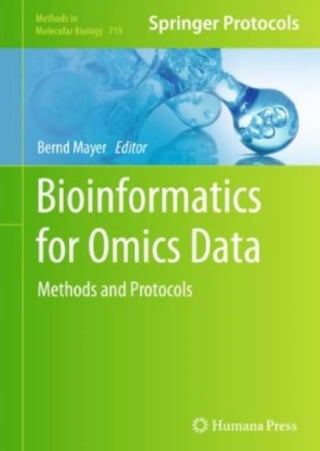



![v
Preface
This book discusses the multiple facets of “Bioinformatics for Omics Data,” an area of
research that intersects with and integrates diverse disciplines, including molecular biol-
ogy, applied informatics, and statistics, among others. Bioinformatics has become a default
technology for data-driven research in the Omics realm and a necessary skill set for the
Omics practitioner. Progress in miniaturization, coupled with advancements in readout
technologies, has enabled a multitude of cellular components and states to be assessed
simultaneously, providing an unparalleled ability to characterize a given biological pheno-
type. However, without appropriate processing and analysis, Omics data add nothing to
our understanding of the phenotype under study. Even managing the enormous amounts
of raw data that these methods generate has become something of an art.
Viewed from one perspective, bioinformatics might be perceived as a purely technical
discipline. However, as a research discipline, bioinformatics might more accurately be viewed
as “[molecular] biology involving computation.” Omics has triggered a paradigm shift in
experimental study design, expanding beyond hypothesis-driven approaches to research that
is basically explorative. At present, Omics is in the process of consolidating various interme-
diate forms between these two extremes. In this context, bioinformatics for Omics data
serves both hypothesis generation and validation and is thus much more than mere data
management and processing. Bioinformatics workflows with data interpretation strategies
that reflect the complexity of biological organization have been designed. These approaches
interrogate abundance profiles with regulatory elements, all expressed as interaction net-
works, thus allowing a one-step (descriptive) embodiment of wide-ranging cellular pro-
cesses. Here, the seamless transition to computational Systems Biology becomes apparent,
the ultimate goal of which is representing the dynamics of a phenotype in quantitative mod-
els capable of predicting the emergence of higher order molecular procedures and functions
that arise from the interplay of basic molecular entities that constitute a living cell.
Bioinformatics for Omics data is certainly embedded in a highly complex technologi-
cal and scientific environment, but it is also a component and driver of one of the most
exciting developments in modern molecular biology. Thus, while this book seeks to pro-
vide practical guidelines, it hopefully also conveys a sense of fascination associated with
this research field.
This volume is structured in three parts. Part I provides central analysis strategies,
standardization, and data management guidelines, as well as fundamental statistics for
analyzing Omics profiles. Part II addresses bioinformatics approaches for specific Omics
tracks, spanning genome, transcriptome, proteome, and metabolome levels. For each
track, the conceptual and experimental background is provided, together with specific
guidelines for handling raw data, including preprocessing and analysis. Part III presents
examples of integrated Omics bioinformatics applications, complemented by case studies
on biomarker and target identification in the context of human disease.
I wish to express my gratitude to all authors for their dedication in providing excellent
chapters, and to John Walker, who initiated this project. As for any omissions or errors,
the responsibility is mine. In any case, enjoy reading.
Vienna, Austria Bernd Mayer](https://image.slidesharecdn.com/13698-250224053558-3b158fc4/85/Bioinformatics-for-Omics-Data-Methods-and-Protocols-1st-Edition-Maria-V-Schneider-11-320.jpg)