UNIT 4: BIODIVERSITY OF
ANIMALS:
INVERTEBRATES
C. TISSUES
• Animal body plans also vary
according to the organization of the
animal’s tissues:
–Tissues are collections of
specialized cells
• During development, 3 germ layers
develop into tissues & organs of
animal embryo
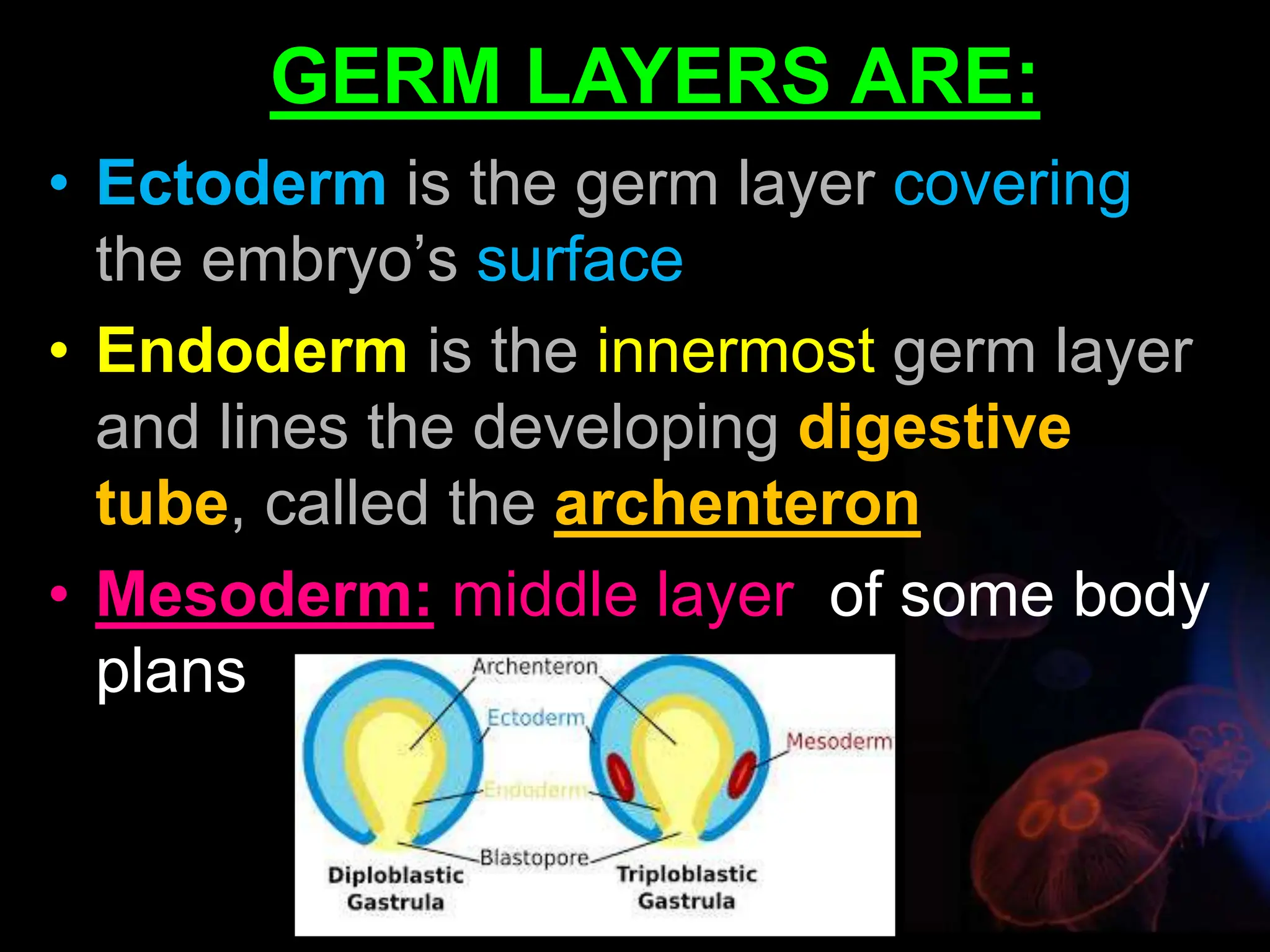
• Ectoderm is the germ layer covering
the embryo’s surface
• Endoderm is the innermost germ layer
and lines the developing digestive
tube, called the archenteron
• Mesoderm: middle layer of some body
plans
GERM LAYERS ARE:
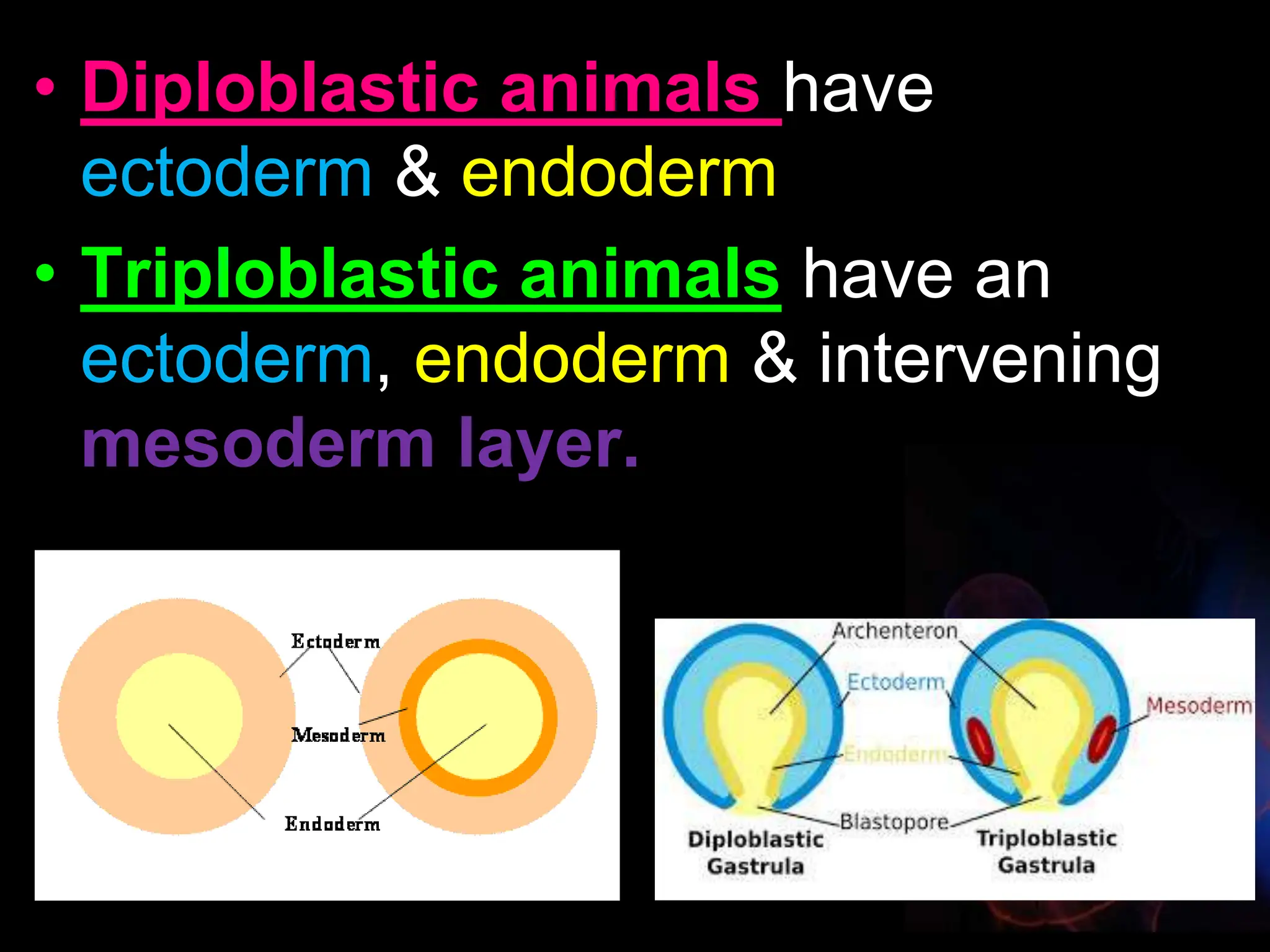
• Diploblastic animals have
ectoderm & endoderm
• Triploblastic animals have an
ectoderm, endoderm & intervening
mesoderm layer.
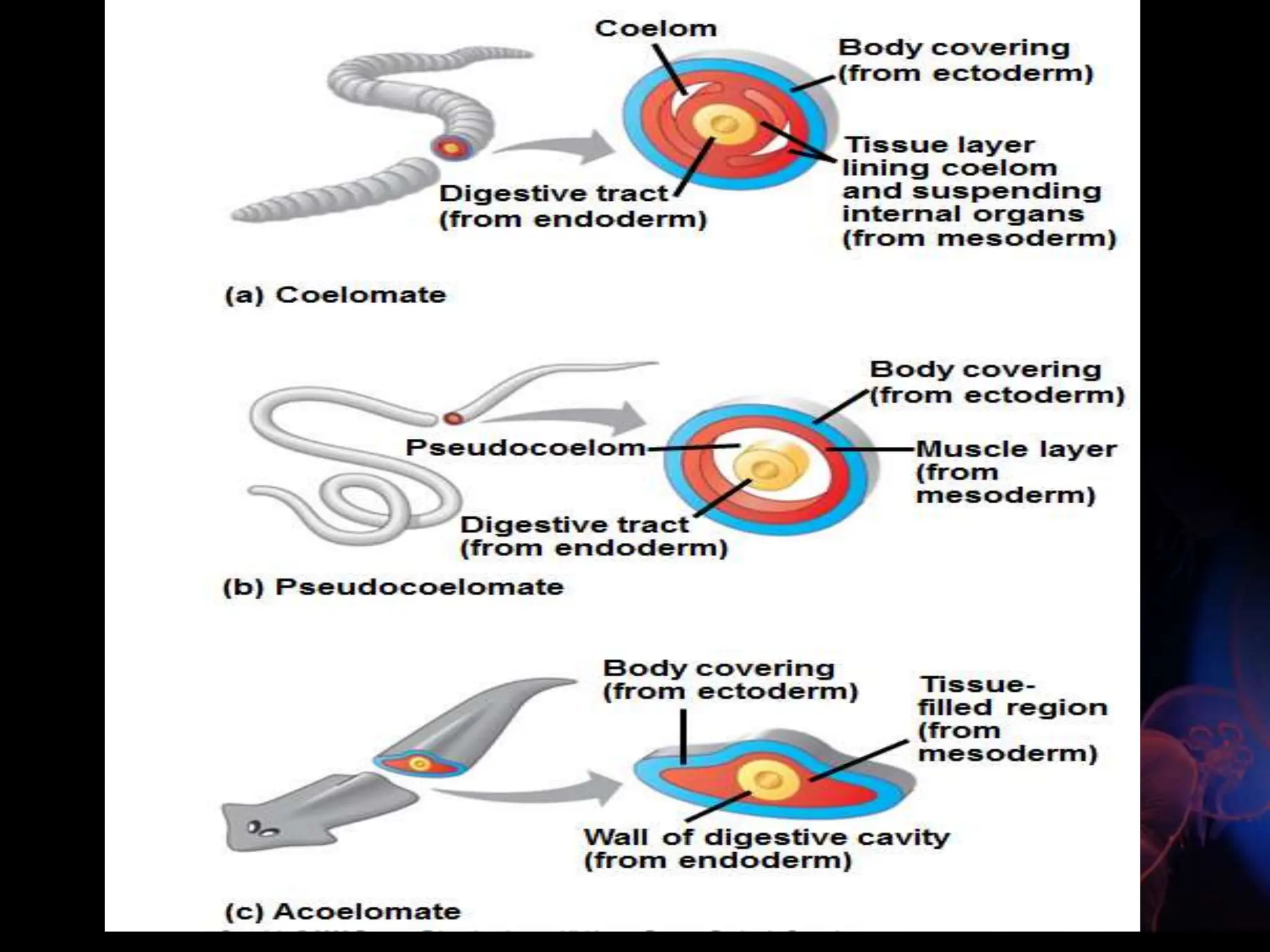
D. BODY CAVITIES
• Most triploblastic animals possess a body
cavity
• A true body cavity  coelom & derived from
mesoderm
– Coelomates  animals that possess true coelom
• A pseudocoelom  body cavity derived from
mesoderm & endoderm
– Triploblastic animals that possess pseudocoelom
 pseudocoelomates
• Triploblastic animals  lack body cavity 
acoelomates
BIODIVERSITY OF ANIMALS INVERTEBRATES Lecture 2.ppt

BIODIVERSITY OF ANIMALS INVERTEBRATES Lecture 2.ppt

  • 1.
    UNIT 4: BIODIVERSITYOF ANIMALS: INVERTEBRATES
  • 2.
    C. TISSUES • Animalbody plans also vary according to the organization of the animal’s tissues: –Tissues are collections of specialized cells • During development, 3 germ layers develop into tissues & organs of animal embryo
  • 3.
    • Ectoderm isthe germ layer covering the embryo’s surface • Endoderm is the innermost germ layer and lines the developing digestive tube, called the archenteron • Mesoderm: middle layer of some body plans GERM LAYERS ARE:
  • 4.
    • Diploblastic animalshave ectoderm & endoderm • Triploblastic animals have an ectoderm, endoderm & intervening mesoderm layer.
  • 5.
    D. BODY CAVITIES •Most triploblastic animals possess a body cavity • A true body cavity  coelom & derived from mesoderm – Coelomates  animals that possess true coelom • A pseudocoelom  body cavity derived from mesoderm & endoderm – Triploblastic animals that possess pseudocoelom  pseudocoelomates • Triploblastic animals  lack body cavity  acoelomates