Definition
•The Association forOperations Management
(APICS) defines a bill of material as “a listing of
all the subassemblies, intermediates, parts, and
raw materials that go into making the parent
assembly showing the quantities of each
required to make an assembly.”
3.
There are threeimportant points:
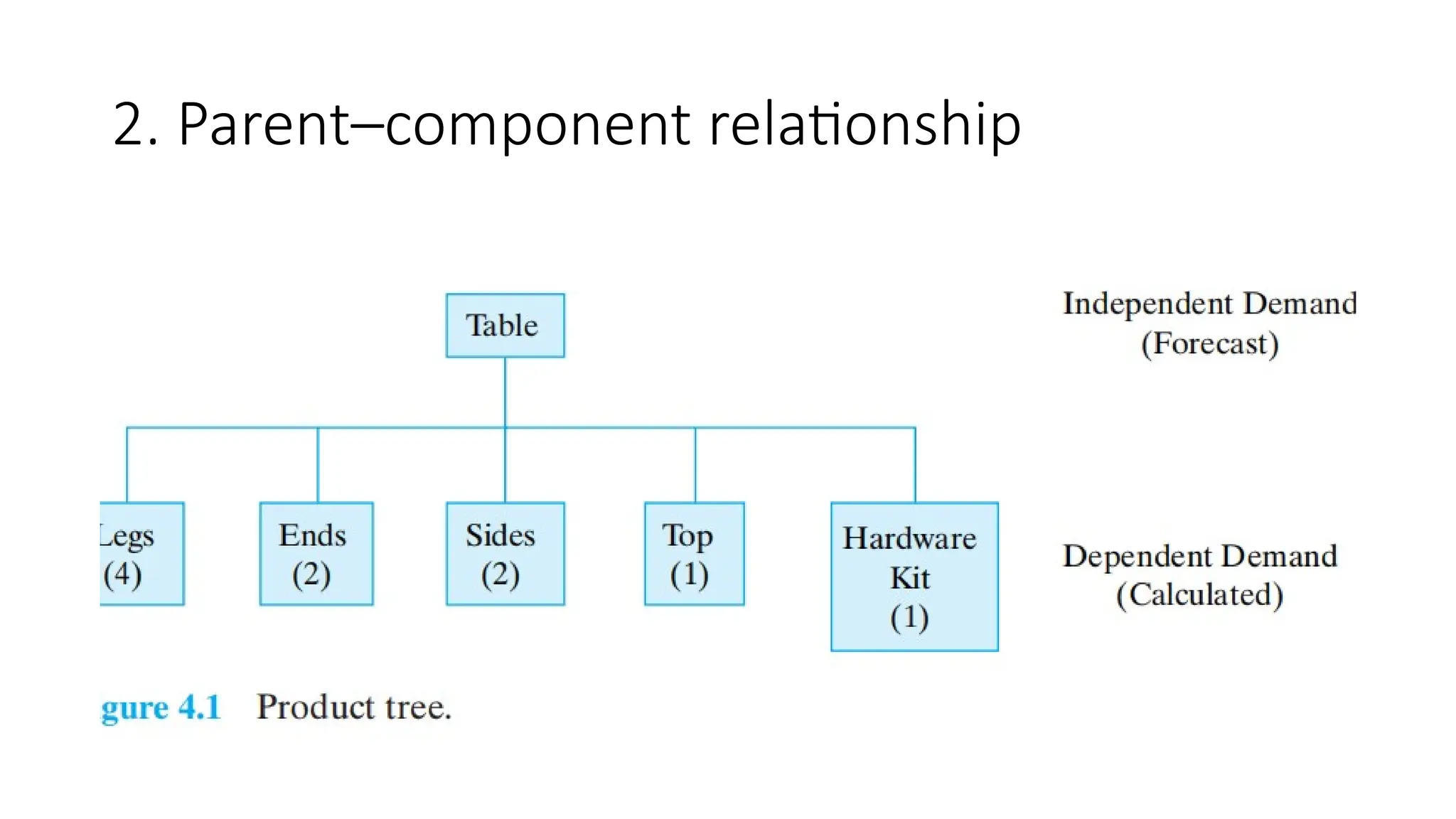
1. The bill of material shows all the parts required
to make one of the item.
2. Each part or item has only one part number
3. A part is defined by its form, fit, or function.
Bills of MaterialStructure
Bills of material structure refers to the overall
design for the arrangement of bills of material
files. Different departments in a company use bills
of material for a variety of purposes.
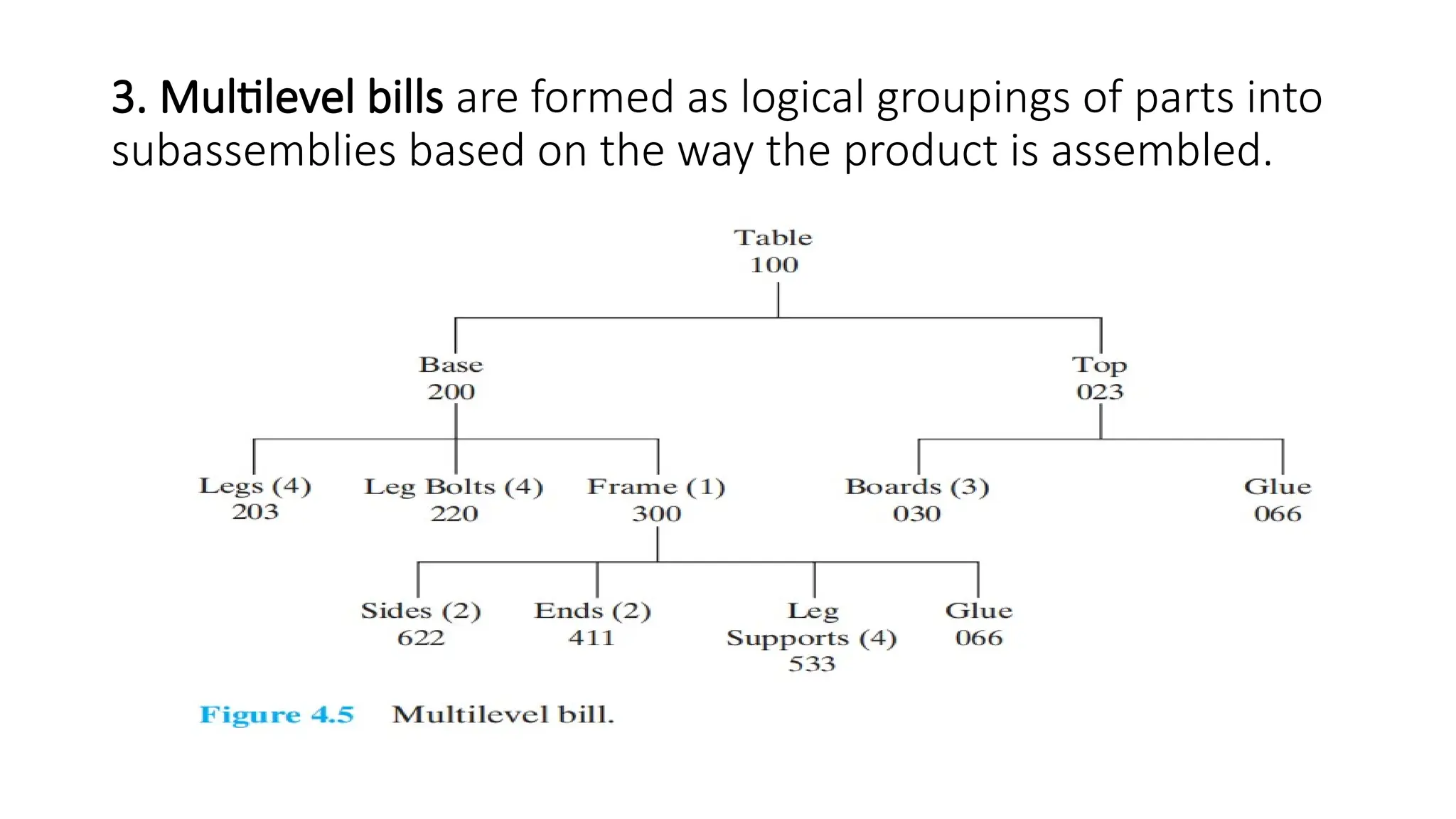
3. Multilevel billsare formed as logical groupings of parts into
subassemblies based on the way the product is assembled.
9.
Uses for Billsof Material
The bill of material is one of the most widely used documents
in a manufacturing company. Some major uses are as follows:
• Product definition. The bill specifies the components
needed to make the product.
• Engineering change control. Product design engineers
sometimes change the design of a product and the
components used. These changes must be recorded and
controlled. The bill provides the method for doing so.
• Service parts. Replacement parts needed to repair a broken
component are determined from the bill of material.
10.
• Planning. Billsof material define what materials have to be scheduled
to make the end product. They define what components have to be
purchased or made to satisfy the master production schedule.
• Order entry. When a product has a very large number of options
(e.g., cars), the order-entry system very often configures the end
product bill of materials. The bill can also be used to price the product.
• Manufacturing. The bill provides a list of the parts needed to make or
assemble a product.
• Costing. Product cost is usually broken down into direct material,
direct labor, and overhead. The bill provides not only a method of
determining direct material but also a structure for recording direct
labor and distributing overhead