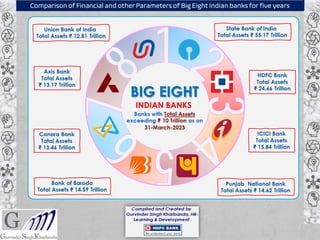
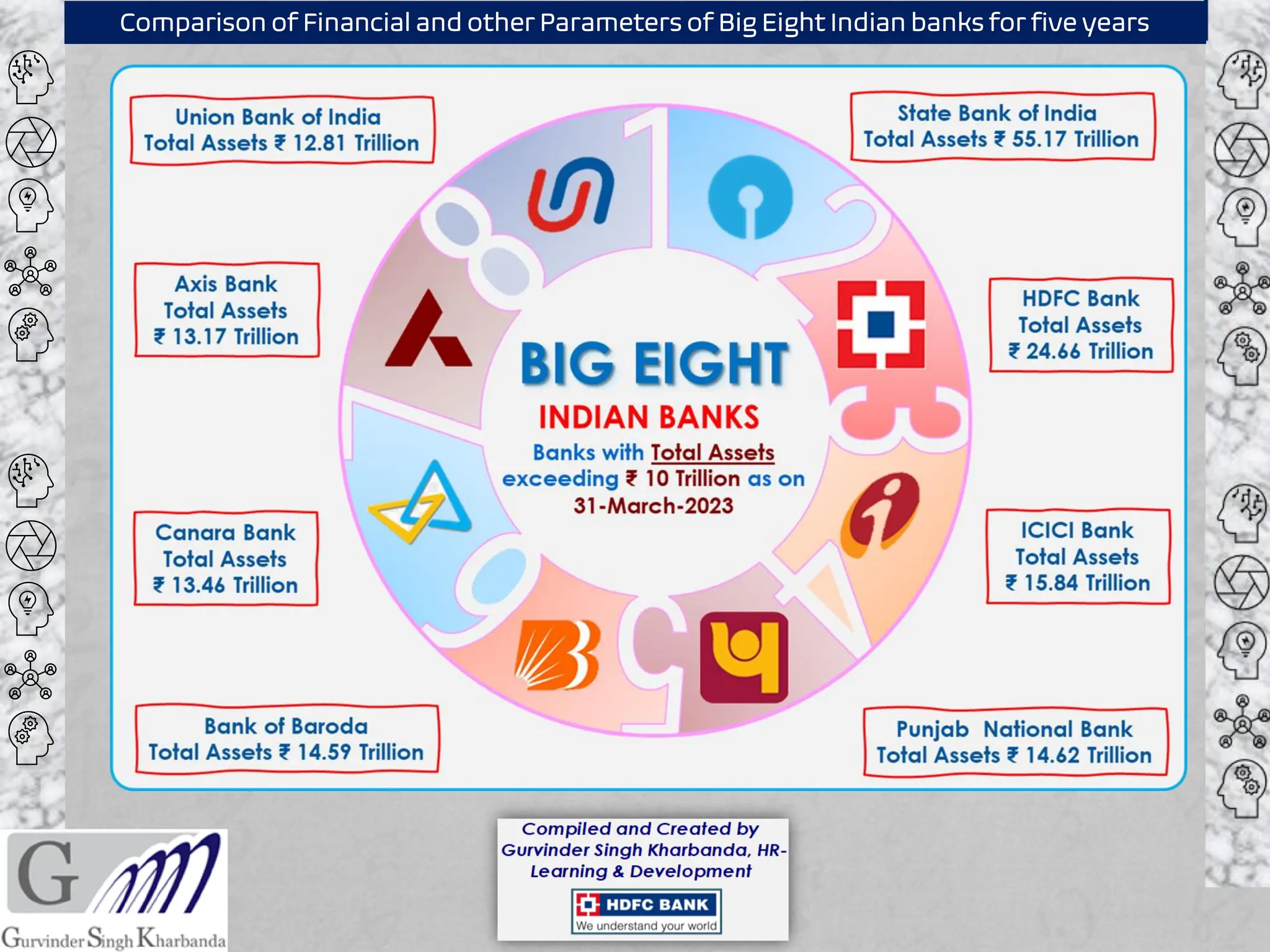
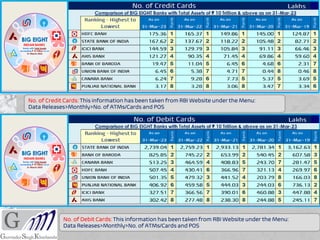
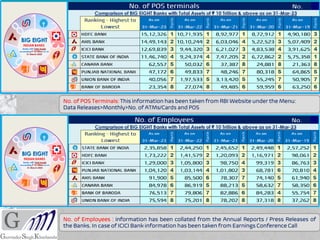
Comparison of Financial and other Parameters of Big Eight Indian banks for five years
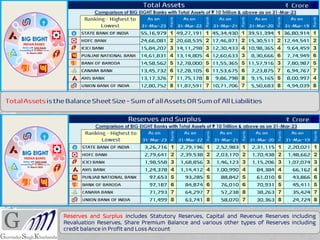
Reserves and Surplus includes Statutory Reserves, Capital and Revenue Reserves including
Revaluation Reserves, Share Premium Balance and various other types of Reserves including
credit balance in Profit and Loss Account
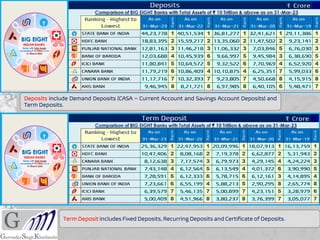
Deposits include Demand Deposits (CASA – Current Account and Savings Account Deposits) and
Term Deposits.
Term Deposit includes Fixed Deposits, Recurring Deposits and Certificate of Deposits.
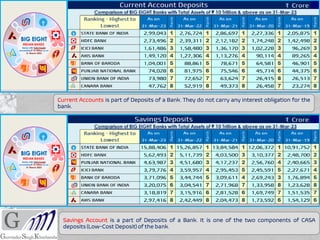
Current Accounts is part of Deposits of a Bank. They do not carry any interest obligation for the
bank.
Savings Account is a part of Deposits of a Bank. It is one of the two components of CASA
deposits (Low-Cost Deposit) of the bank.
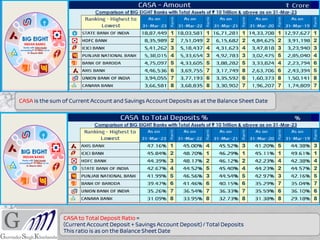
CASA is the sum of Current Account and Savings Account Deposits as at the Balance Sheet Date
CASA to Total Deposit Ratio =
{Current Account Deposit + Savings Account Deposit} / Total Deposits
This ratio is as on the Balance Sheet Date
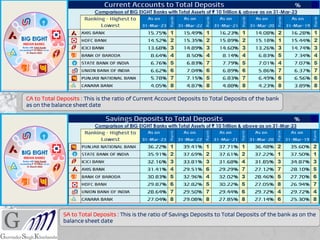
SA to Total Deposits : This is the ratio of Savings Deposits to Total Deposits of the bank as on the
balance sheet date
CA to Total Deposits : This is the ratio of Current Account Deposits to Total Deposits of the bank
as on the balance sheet date
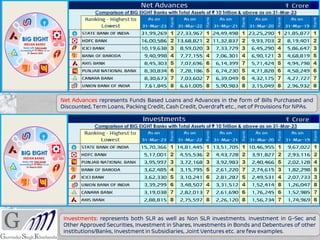
Net Advances represents Funds Based Loans and Advances in the form of Bills Purchased and
Discounted, Term Loans, Packing Credit, Cash Credit, Overdraft etc., net of Provisions for NPAs.
Investments: represents both SLR as well as Non SLR investments. Investment in G-Sec and
Other Approved Securities, Investment in Shares, Investments in Bonds and Debentures of other
institutions/Banks, Investment in Subsidiaries, Joint Ventures etc. are few examples.
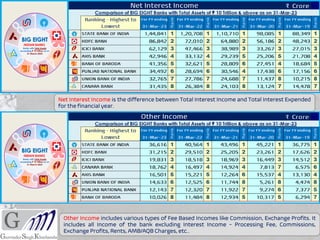
Net Interest Income is the difference between Total Interest Income and Total Interest Expended
for the financial year.
Other Income includes various types of Fee Based Incomes like Commission, Exchange Profits. It
includes all Income of the bank excluding Interest Income - Processing Fee, Commissions,
Exchange Profits, Rents, AMB/AQB Charges, etc..
Net Revenue is the Sum of Net Interest Income and Other Income. NET REVENUE = Net Interest
Income + Other Income
Operating Costs include all
expenses of the Bank for FY
excluding a) Interest Expended
and b) Provisions.
In respect of Axis Bank, Operating Cost
[FY2023] includes Exceptional Item
pertaining to acquisition of Citi Bank’s
Consumer Businesses
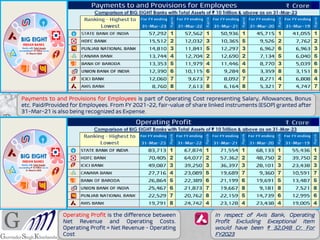
Payments to and Provisions for Employees is part of Operating Cost representing Salary, Allowances, Bonus
etc. Paid/Provided for Employees. From FY 2021-22, fair-value of share linked instruments (ESOP) granted after
31-Mar-21 is also being recognized as Expense.
Operating Profit is the difference between
Net Revenue and Operating Costs.
Operating Profit = Net Revenue - Operating
Cost
In respect of Axis Bank, Operating
Profit Excluding Exceptional Item
would have been ₹ 32,048 Cr. For
FY2023
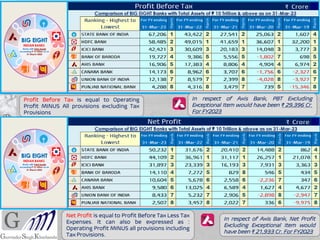
Profit Before Tax is equal to Operating
Profit MINUS All provisions excluding Tax
Provisions
Net Profit is equal to Profit Before Tax Less Tax
Expenses. It can also be expressed as :
Operating Profit MINUS all provisions including
Tax Provisions.
In respect of Axis Bank, PBT Excluding
Exceptional Item would have been ₹ 29,396 Cr.
For FY2023
In respect of Axis Bank, Net Profit
Excluding Exceptional Item would
have been ₹ 21,933 Cr. For FY2023
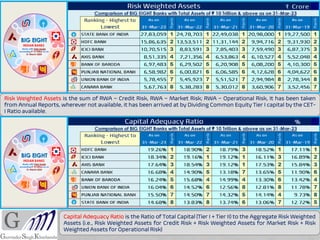
Risk Weighted Assets is the sum of RWA – Credit Risk, RWA – Market Risk; RWA – Operational Risk, It has been taken
from Annual Reports, wherever not available, it has been arrived at by Dividing Common Equity Tier I capital by the CET-
I Ratio available.
Capital Adequacy Ratio is the Ratio of Total Capital (Tier I + Tier II) to the Aggregate Risk Weighted
Assets (i.e., Risk Weighted Assets for Credit Risk + Risk Weighted Assets for Market Risk + Risk
Weighted Assets for Operational Risk)
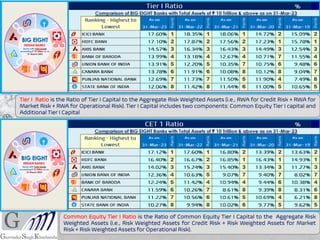
Tier I Ratio is the Ratio of Tier I Capital to the Aggregate Risk Weighted Assets (i.e., RWA for Credit Risk + RWA for
Market Risk + RWA for Operational Risk). Tier I Capital includes two components: Common Equity Tier I capital and
Additional Tier I Capital
Common Equity Tier I Ratio is the Ratio of Common Equity Tier I Capital to the Aggregate Risk
Weighted Assets (i.e., Risk Weighted Assets for Credit Risk + Risk Weighted Assets for Market
Risk + Risk Weighted Assets for Operational Risk).
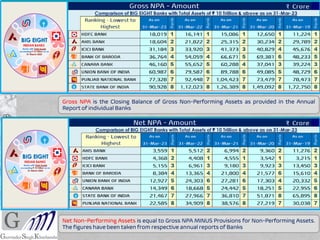
Gross NPA is the Closing Balance of Gross Non-Performing Assets as provided in the Annual
Report of individual Banks
Net Non-Performing Assets is equal to Gross NPA MINUS Provisions for Non-Performing Assets.
The figures have been taken from respective annual reports of Banks
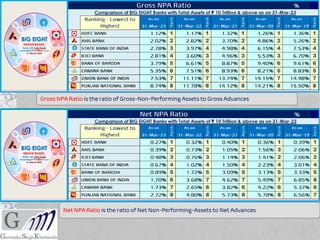
Gross NPA Ratio is the ratio of Gross-Non-Performing Assets to Gross Advances
Net NPA Ratio is the ratio of Net Non-Performing-Assets to Net Advances
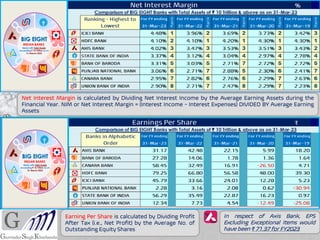
Net Interest Margin is calculated by Dividing Net Interest Income by the Average Earning Assets during the
Financial Year. NIM or Net Interest Margin = (Interest Income - Interest Expenses) DIVIDED BY Average Earning
Assets
Earning Per Share is calculated by Dividing Profit
After Tax (i.e., Net Profit) by the Average No. of
Outstanding Equity Shares
In respect of Axis Bank, EPS
Excluding Exceptional Items would
have been ₹ 71.37 for FY2023
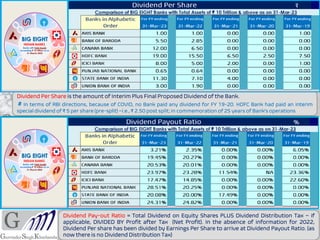
Dividend Per Share is the amount of Interim Plus Final Proposed Dividend of the Bank.
# In terms of RBI directions, because of COVID, no Bank paid any dividend for FY 19-20. HDFC Bank had paid an interim
special dividend of ₹ 5 per share (pre-split) –i.e., ₹ 2.50 post split; in commemoration of 25 years of Bank’s operations
Dividend Pay-out Ratio = Total Dividend on Equity Shares PLUS Dividend Distribution Tax – if
applicable, DIVIDED BY Profit after Tax (Net Profit). In the absence of information for 2022,
Dividend Per share has been divided by Earnings Per Share to arrive at Dividend Payout Ratio. (as
now there is no Dividend Distribution Tax)
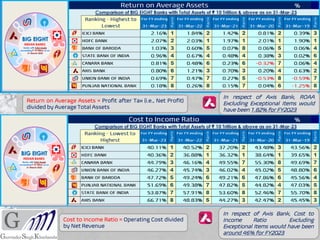
Cost to Income Ratio = Operating Cost divided
by Net Revenue
Return on Average Assets = Profit after Tax (i.e., Net Profit)
divided by Average Total Assets
In respect of Axis Bank, ROAA
Excluding Exceptional Items would
have been 1.82% for FY2023
In respect of Axis Bank, Cost to
Income Ratio Excluding
Exceptional Items would have been
around 46% for FY2023
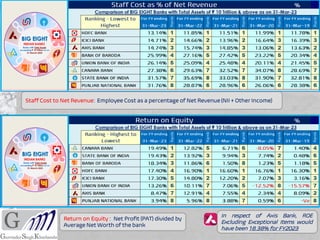
Return on Equity : Net Profit (PAT) divided by
Average Net Worth of the bank
Staff Cost to Net Revenue: Employee Cost as a percentage of Net Revenue (NII + Other Income)
In respect of Axis Bank, ROE
Excluding Exceptional Items would
have been 18.38% for FY2023
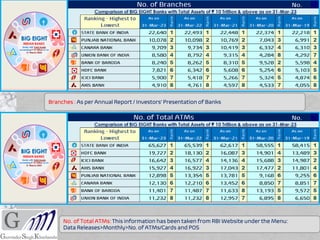
Branches : As per Annual Report / Investors’ Presentation of Banks
No. of Total ATMs: This information has been taken from RBI Website under the Menu:
Data Releases>Monthly>No. of ATMs/Cards and POS
No. of Credit Cards: This information has been taken from RBI Website under the Menu:
Data Releases>Monthly>No. of ATMs/Cards and POS
No. of Debit Cards: This information has been taken from RBI Website under the Menu:
Data Releases>Monthly>No. of ATMs/Cards and POS
No. of POS Terminals: This information has been taken from RBI Website under the Menu:
Data Releases>Monthly>No. of ATMs/Cards and POS
No. of Employees : information has been collated from the Annual Reports / Press Releases of
the Banks. In case of ICICI Bank information has been taken from Earnings Conference Call
BIGEIGHT_INDIAN_BANKS and their analysis.pdf

BIGEIGHT_INDIAN_BANKS and their analysis.pdf

  • 1.
    Comparison of Financialand other Parameters of Big Eight Indian banks for five years
  • 2.
    Reserves and Surplusincludes Statutory Reserves, Capital and Revenue Reserves including Revaluation Reserves, Share Premium Balance and various other types of Reserves including credit balance in Profit and Loss Account
  • 3.
    Deposits include DemandDeposits (CASA – Current Account and Savings Account Deposits) and Term Deposits. Term Deposit includes Fixed Deposits, Recurring Deposits and Certificate of Deposits.
  • 4.
    Current Accounts ispart of Deposits of a Bank. They do not carry any interest obligation for the bank. Savings Account is a part of Deposits of a Bank. It is one of the two components of CASA deposits (Low-Cost Deposit) of the bank.
  • 5.
    CASA is thesum of Current Account and Savings Account Deposits as at the Balance Sheet Date CASA to Total Deposit Ratio = {Current Account Deposit + Savings Account Deposit} / Total Deposits This ratio is as on the Balance Sheet Date
  • 6.
    SA to TotalDeposits : This is the ratio of Savings Deposits to Total Deposits of the bank as on the balance sheet date CA to Total Deposits : This is the ratio of Current Account Deposits to Total Deposits of the bank as on the balance sheet date
  • 7.
    Net Advances representsFunds Based Loans and Advances in the form of Bills Purchased and Discounted, Term Loans, Packing Credit, Cash Credit, Overdraft etc., net of Provisions for NPAs. Investments: represents both SLR as well as Non SLR investments. Investment in G-Sec and Other Approved Securities, Investment in Shares, Investments in Bonds and Debentures of other institutions/Banks, Investment in Subsidiaries, Joint Ventures etc. are few examples.
  • 8.
    Net Interest Incomeis the difference between Total Interest Income and Total Interest Expended for the financial year. Other Income includes various types of Fee Based Incomes like Commission, Exchange Profits. It includes all Income of the bank excluding Interest Income - Processing Fee, Commissions, Exchange Profits, Rents, AMB/AQB Charges, etc..
  • 9.
    Net Revenue isthe Sum of Net Interest Income and Other Income. NET REVENUE = Net Interest Income + Other Income Operating Costs include all expenses of the Bank for FY excluding a) Interest Expended and b) Provisions. In respect of Axis Bank, Operating Cost [FY2023] includes Exceptional Item pertaining to acquisition of Citi Bank’s Consumer Businesses
  • 10.
    Payments to andProvisions for Employees is part of Operating Cost representing Salary, Allowances, Bonus etc. Paid/Provided for Employees. From FY 2021-22, fair-value of share linked instruments (ESOP) granted after 31-Mar-21 is also being recognized as Expense. Operating Profit is the difference between Net Revenue and Operating Costs. Operating Profit = Net Revenue - Operating Cost In respect of Axis Bank, Operating Profit Excluding Exceptional Item would have been ₹ 32,048 Cr. For FY2023
  • 11.
    Profit Before Taxis equal to Operating Profit MINUS All provisions excluding Tax Provisions Net Profit is equal to Profit Before Tax Less Tax Expenses. It can also be expressed as : Operating Profit MINUS all provisions including Tax Provisions. In respect of Axis Bank, PBT Excluding Exceptional Item would have been ₹ 29,396 Cr. For FY2023 In respect of Axis Bank, Net Profit Excluding Exceptional Item would have been ₹ 21,933 Cr. For FY2023
  • 12.
    Risk Weighted Assetsis the sum of RWA – Credit Risk, RWA – Market Risk; RWA – Operational Risk, It has been taken from Annual Reports, wherever not available, it has been arrived at by Dividing Common Equity Tier I capital by the CET- I Ratio available. Capital Adequacy Ratio is the Ratio of Total Capital (Tier I + Tier II) to the Aggregate Risk Weighted Assets (i.e., Risk Weighted Assets for Credit Risk + Risk Weighted Assets for Market Risk + Risk Weighted Assets for Operational Risk)
  • 13.
    Tier I Ratiois the Ratio of Tier I Capital to the Aggregate Risk Weighted Assets (i.e., RWA for Credit Risk + RWA for Market Risk + RWA for Operational Risk). Tier I Capital includes two components: Common Equity Tier I capital and Additional Tier I Capital Common Equity Tier I Ratio is the Ratio of Common Equity Tier I Capital to the Aggregate Risk Weighted Assets (i.e., Risk Weighted Assets for Credit Risk + Risk Weighted Assets for Market Risk + Risk Weighted Assets for Operational Risk).
  • 14.
    Gross NPA isthe Closing Balance of Gross Non-Performing Assets as provided in the Annual Report of individual Banks Net Non-Performing Assets is equal to Gross NPA MINUS Provisions for Non-Performing Assets. The figures have been taken from respective annual reports of Banks
  • 15.
    Gross NPA Ratiois the ratio of Gross-Non-Performing Assets to Gross Advances Net NPA Ratio is the ratio of Net Non-Performing-Assets to Net Advances
  • 16.
    Net Interest Marginis calculated by Dividing Net Interest Income by the Average Earning Assets during the Financial Year. NIM or Net Interest Margin = (Interest Income - Interest Expenses) DIVIDED BY Average Earning Assets Earning Per Share is calculated by Dividing Profit After Tax (i.e., Net Profit) by the Average No. of Outstanding Equity Shares In respect of Axis Bank, EPS Excluding Exceptional Items would have been ₹ 71.37 for FY2023
  • 17.
    Dividend Per Shareis the amount of Interim Plus Final Proposed Dividend of the Bank. # In terms of RBI directions, because of COVID, no Bank paid any dividend for FY 19-20. HDFC Bank had paid an interim special dividend of ₹ 5 per share (pre-split) –i.e., ₹ 2.50 post split; in commemoration of 25 years of Bank’s operations Dividend Pay-out Ratio = Total Dividend on Equity Shares PLUS Dividend Distribution Tax – if applicable, DIVIDED BY Profit after Tax (Net Profit). In the absence of information for 2022, Dividend Per share has been divided by Earnings Per Share to arrive at Dividend Payout Ratio. (as now there is no Dividend Distribution Tax)
  • 18.
    Cost to IncomeRatio = Operating Cost divided by Net Revenue Return on Average Assets = Profit after Tax (i.e., Net Profit) divided by Average Total Assets In respect of Axis Bank, ROAA Excluding Exceptional Items would have been 1.82% for FY2023 In respect of Axis Bank, Cost to Income Ratio Excluding Exceptional Items would have been around 46% for FY2023
  • 19.
    Return on Equity: Net Profit (PAT) divided by Average Net Worth of the bank Staff Cost to Net Revenue: Employee Cost as a percentage of Net Revenue (NII + Other Income) In respect of Axis Bank, ROE Excluding Exceptional Items would have been 18.38% for FY2023
  • 20.
    Branches : Asper Annual Report / Investors’ Presentation of Banks No. of Total ATMs: This information has been taken from RBI Website under the Menu: Data Releases>Monthly>No. of ATMs/Cards and POS
  • 21.
    No. of CreditCards: This information has been taken from RBI Website under the Menu: Data Releases>Monthly>No. of ATMs/Cards and POS No. of Debit Cards: This information has been taken from RBI Website under the Menu: Data Releases>Monthly>No. of ATMs/Cards and POS
  • 22.
    No. of POSTerminals: This information has been taken from RBI Website under the Menu: Data Releases>Monthly>No. of ATMs/Cards and POS No. of Employees : information has been collated from the Annual Reports / Press Releases of the Banks. In case of ICICI Bank information has been taken from Earnings Conference Call