BIAS
Ma. Ayessa Nicole T. Asino
WHAT IS BIASED WRITING?
BIASED in writing can be defined as a prejudice against something an author is
writing about. Favoritism for something an author is writing about. An author
letting feelings or emotions cloud his/her objectivity with regard to something
he/she is writing about.
WHAT IS UNBIASED WRITING?
UNBIASED towards all members of the potential audience, it is important that the author
uses language that does not stereotype or unfairly categorize any group of people or
individuals. Even if the use of unbiased language is a mistake, that mistake which may
seem small on paper, can have much larger implications and consequences.
WHEN DOES AN AUTHOR BECOME BIAS?
An AUTHOR, becomes biased when he/she persuades the reader to believe in
his/her own stand on the issue by giving inaccurate information or fake impression
even with or without the intention of misleading the readers.
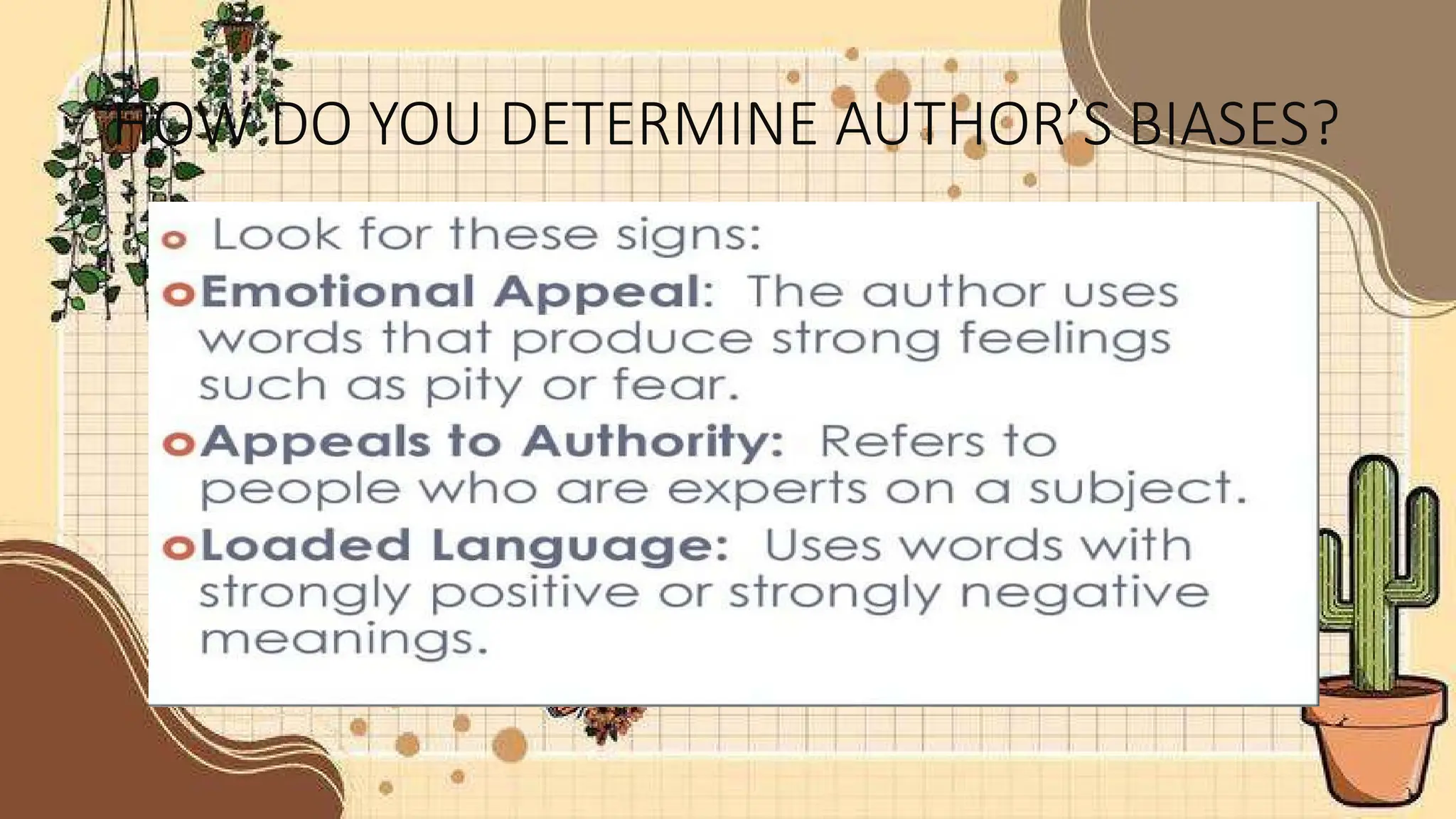
HOW DO YOU DETERMINE AUTHOR’S BIASES?
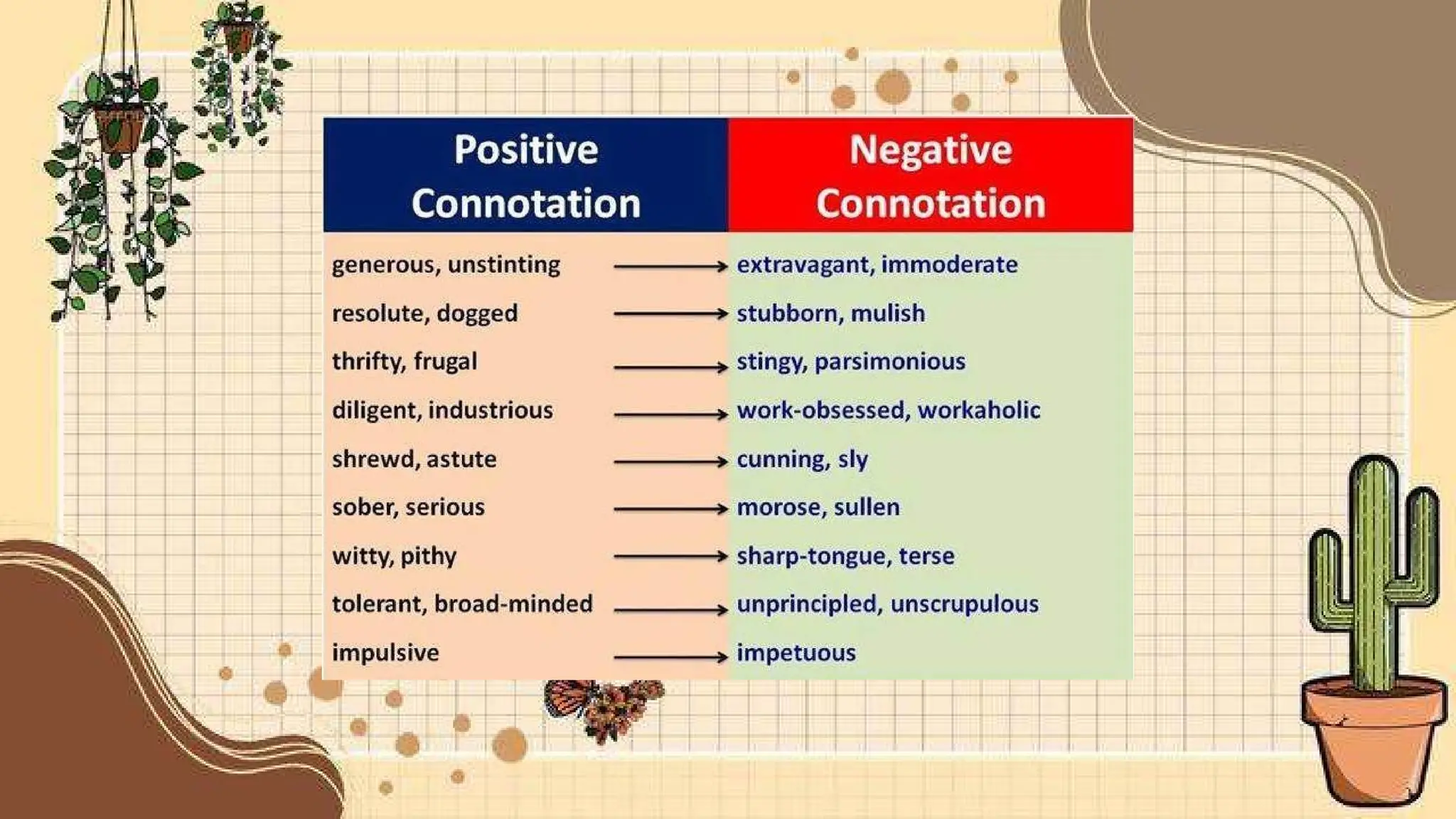
POSITIVE AND NEGATIVE
CONNOTATION
But first…
WHAT IS CONNOTATION?
CONNOTATION is the use of a word to propose a dissimilar link than it’s accurate
meaning which known as denotation. For example, pink is a color, but it is also a
word used to describe a feeling of shyness or happiness, as in: “ She’s feeling pink”.
POSITIVE CONNOTATION?
NEGATIVE CONNOTATION?
~ POSITIVE CONNOTATION – are associations that are good or affirmative and
make one think and feel good things when reading those words.
~ NEGATIVE CONNOTATION- a words that evokes a negative emotional
response.
BIAS_powerpoint presentation 2nd quarter.pptx

BIAS_powerpoint presentation 2nd quarter.pptx

  • 1.
  • 2.
    WHAT IS BIASEDWRITING? BIASED in writing can be defined as a prejudice against something an author is writing about. Favoritism for something an author is writing about. An author letting feelings or emotions cloud his/her objectivity with regard to something he/she is writing about.
  • 3.
    WHAT IS UNBIASEDWRITING? UNBIASED towards all members of the potential audience, it is important that the author uses language that does not stereotype or unfairly categorize any group of people or individuals. Even if the use of unbiased language is a mistake, that mistake which may seem small on paper, can have much larger implications and consequences.
  • 4.
    WHEN DOES ANAUTHOR BECOME BIAS? An AUTHOR, becomes biased when he/she persuades the reader to believe in his/her own stand on the issue by giving inaccurate information or fake impression even with or without the intention of misleading the readers.
  • 5.
    HOW DO YOUDETERMINE AUTHOR’S BIASES?
  • 6.
  • 7.
    WHAT IS CONNOTATION? CONNOTATIONis the use of a word to propose a dissimilar link than it’s accurate meaning which known as denotation. For example, pink is a color, but it is also a word used to describe a feeling of shyness or happiness, as in: “ She’s feeling pink”.
  • 8.
    POSITIVE CONNOTATION? NEGATIVE CONNOTATION? ~POSITIVE CONNOTATION – are associations that are good or affirmative and make one think and feel good things when reading those words. ~ NEGATIVE CONNOTATION- a words that evokes a negative emotional response.