SAP Automation
Roadmap
How to align people, processes
and technology for success
Andrew Hayden, Sr. Product Marketing Mgr.
Tammy Lake, Solutions Engineer
Today’s speakers
Andrew Hayden
Sr. Product Marketing
Manager
Tammy Lake
Solutions Engineer
Questions
Agenda
• Automation Center of Excellence
• Aligning your organization for
automation
• Best practices for automation
success
The
Automation
COE
The Automation COE
• Development and Structure
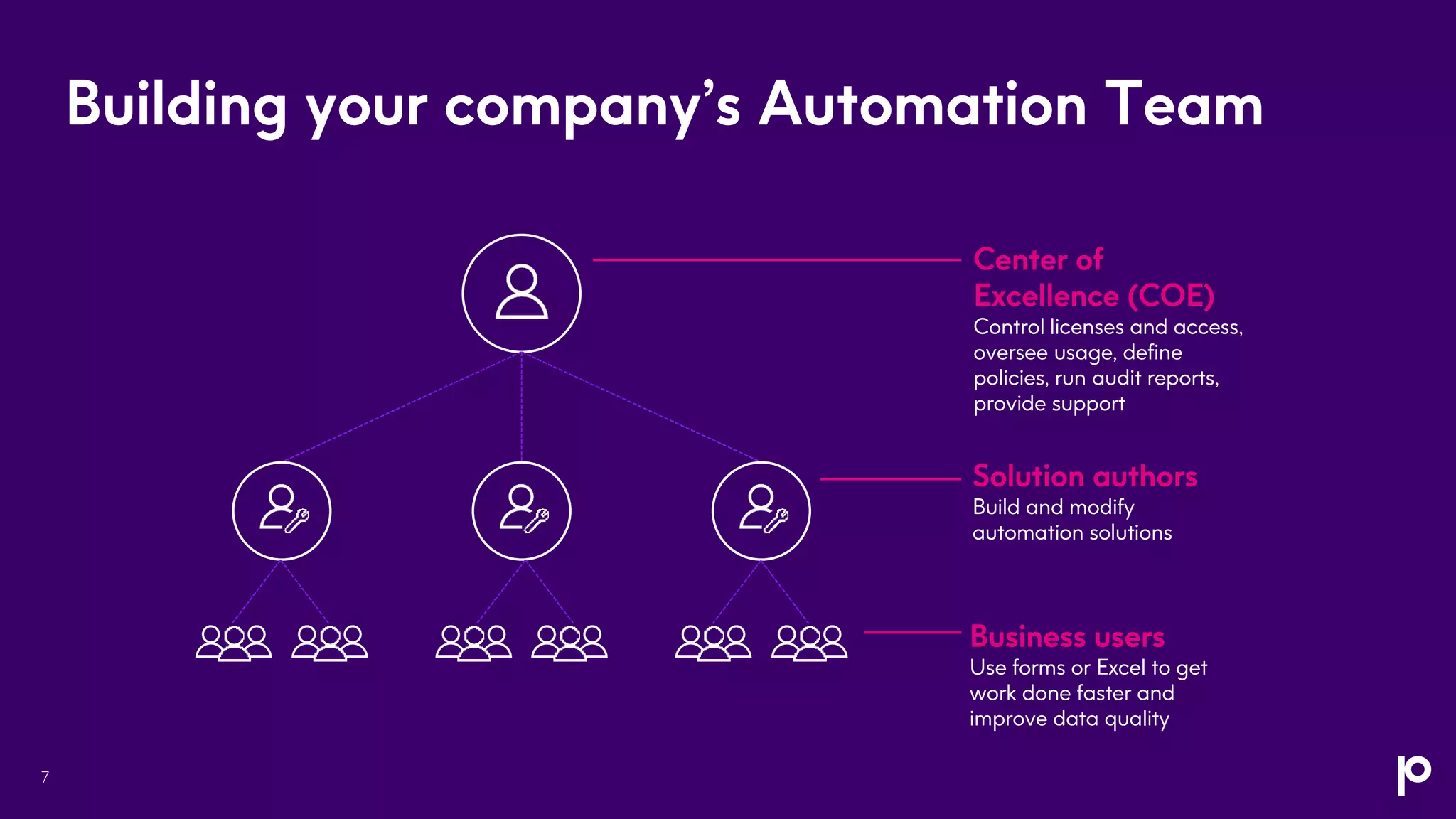
Building your company’s Automation Team
7
Center of
Excellence (COE)
Control licenses and access,
oversee usage, define
policies, run audit reports,
provide support
Solution authors
Build and modify
automation solutions
Business users
Use forms or Excel to get
work done faster and
improve data quality
The Automation COE
• Development and Structure
• Scaling
Be more agile
Flexible, extensible solutions
architecture
• Support different process and data needs in
one solution
• Start small and expand your automation
footprint over time
• Modify solutions quickly and easily without
technical IT resources or expensive SI
engagements
Aligning your
organization for
automation
Automation and
your organization
• Process owners
Automation and
your organization
• Process owners
• Solution development
Automation and
your organization
• Process owners
• Solution development
• Applying technology
Best practices
for automation
success
Automation success
• Examples
Business process automation requirements
User friendly
User adoption and
acceptance
Smart Capabilities
Automation steps using
rules, error handling,
scheduling
Flexible/Accurate
Quickly adapt to new or
changing requirements
while maintaining data
accuracy
Scalability
Ability to support multiple
business units and use
cases
Automation success
• Outcomes: successes and failures
Questions
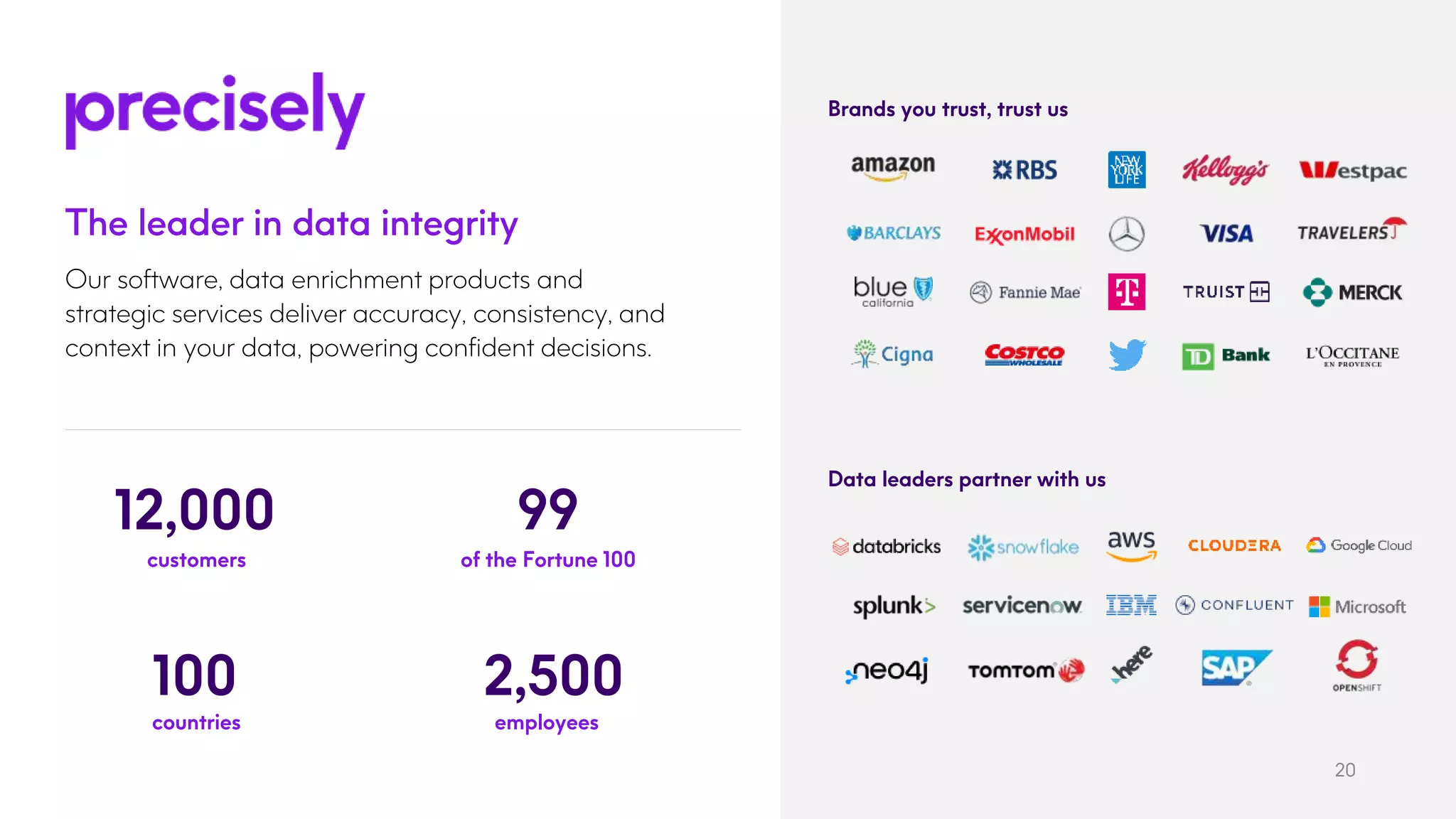
The leader in data integrity
Our software, data enrichment products and
strategic services deliver accuracy, consistency, and
context in your data, powering confident decisions.
of the Fortune 100
99
countries
100 2,500
employees
customers
12,000
Brands you trust, trust us
Data leaders partner with us
20
Tap into the user
community, anytime,
anywhere.
• Leverage expertise from other
users and employees worldwide
• Access online training modules
• Customize pre built templates &
scripts
Best Practices for SAP Automation - A Roadmap for Building Success from the Inside

Best Practices for SAP Automation - A Roadmap for Building Success from the Inside

Editor's Notes

  • #8 Note to sales: Use this slide to explain that Studio and Evolve are designed to enable people without SAP programming skills to build solutions, enabling organizations to scale up their automation efforts while still maintaining tight controls of what users can do. This is a big differentiator against heavy-lift technical MDM products like SAP MDG.
  • #13 Answer: What we have learned from our customers, and I have personally seen in my previous life in IT was when the tool being used to automate business processes requires technical knowledge, the project often starts with the business training technical resources from internal IT or outside consultants on the current business process. The technical resources then takes what they have learned from the business and develops a solution. When the business is not empowered to automate their processes, several things could be possible. See if any of these sound familiar in your organization:   If there are exceptions or human judgement steps that are not documented, the business may leave out key steps during process training. Throughout the project, the business may also start to realize new possibilities not previously available and want to change the requirements to include more automation. This can lead to new requirements adding more time to the project and possibly requiring portions of the new solution to be revised or eliminated often referred to as Scope Creep. When the technical resource is not involved in the business process, there is also the possibility that they misunderstand some of the business process requirements. That can lead to frustration on both sides when solutions need to be modified to better align with requirements which results in additional time to complete the project. Lastly, when the tools require technical knowledge, all future process changes require technical expertise and that often means the project for requirement changes are added to the technical resource’s backlog. Sometimes that results in a significant time delay to get started due to other priorities and projects already in process. Also, the technical resources, especially in the case of outside consultants, may no longer be with the organization and the technical expertise is no longer exists. If outside consultants are brought in, often future projects mean new consultants, so once again the business is required to train them on the process before the project can start.   One key where we’ve seen success is when the business is empowered with self-service tools. They are the subject matter experts on their business process and the data in the process, they understand the requirements, and when they are empowered with self-service tools, they can significantly reduce the time to value for creating and updating their business process automation solutions.