Human Resource Management (HRM)
An Overview
Concept of
HRM
• Human Resource Management (HRM) refers
to the strategic approach of managing an
organization's workforce. It involves the
effective utilization of human resources to
achieve organizational goals and objectives.
Objectives of HRM
1. Attract and Retain Talent: HRM aims to attract and retain skilled and
motivated employees who contribute to the success of the organization.
2. Employee Development: It focuses on enhancing the skills and
capabilities of employees through training and development programs.
3. Maintain a Positive Work Environment: HRM strives to create a positive
workplace culture and foster employee satisfaction.
Functions of HRM
• 1. Recruitment and Selection: Identifying,
attracting, and hiring the right talent for the
organization.
• 2. Training and Development: Providing
employees with the necessary skills and
knowledge to perform their jobs effectively.
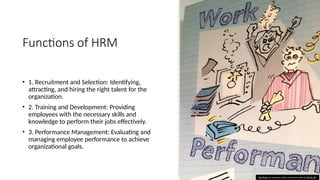
• 3. Performance Management: Evaluating and
managing employee performance to achieve
organizational goals.
This Photo by Unknown author is licensed under CC BY-NC-ND.
Functions of HRM (contd.)
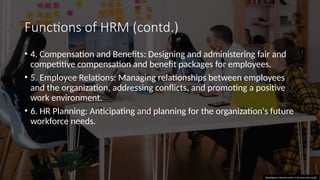
• 4. Compensation and Benefits: Designing and administering fair and
competitive compensation and benefit packages for employees.
• 5. Employee Relations: Managing relationships between employees
and the organization, addressing conflicts, and promoting a positive
work environment.
• 6. HR Planning: Anticipating and planning for the organization's future
workforce needs.
This Photo by Unknown author is licensed under CC BY.
Functions of
HRM (contd.)
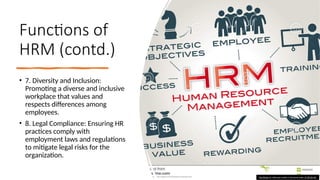
• 7. Diversity and Inclusion:
Promoting a diverse and inclusive
workplace that values and
respects differences among
employees.
• 8. Legal Compliance: Ensuring HR
practices comply with
employment laws and regulations
to mitigate legal risks for the
organization.
This Photo by Unknown author is licensed under CC BY-SA-NC.
Importance of HRM
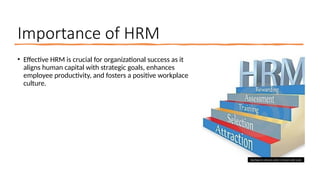
• Effective HRM is crucial for organizational success as it
aligns human capital with strategic goals, enhances
employee productivity, and fosters a positive workplace
culture.
This Photo by Unknown author is licensed under CC BY.
Conclusion
• In conclusion, Human Resource
Management is a strategic function
that plays a vital role in managing
and developing an organization's
most valuable asset – its people.

best possiblehuman resource HRM trial.pptx

  • 1.
    Human Resource Management(HRM) An Overview
  • 2.
    Concept of HRM • HumanResource Management (HRM) refers to the strategic approach of managing an organization's workforce. It involves the effective utilization of human resources to achieve organizational goals and objectives.
  • 3.
    Objectives of HRM 1.Attract and Retain Talent: HRM aims to attract and retain skilled and motivated employees who contribute to the success of the organization. 2. Employee Development: It focuses on enhancing the skills and capabilities of employees through training and development programs. 3. Maintain a Positive Work Environment: HRM strives to create a positive workplace culture and foster employee satisfaction.
  • 4.
    Functions of HRM •1. Recruitment and Selection: Identifying, attracting, and hiring the right talent for the organization. • 2. Training and Development: Providing employees with the necessary skills and knowledge to perform their jobs effectively. • 3. Performance Management: Evaluating and managing employee performance to achieve organizational goals. This Photo by Unknown author is licensed under CC BY-NC-ND.
  • 5.
    Functions of HRM(contd.) • 4. Compensation and Benefits: Designing and administering fair and competitive compensation and benefit packages for employees. • 5. Employee Relations: Managing relationships between employees and the organization, addressing conflicts, and promoting a positive work environment. • 6. HR Planning: Anticipating and planning for the organization's future workforce needs. This Photo by Unknown author is licensed under CC BY.
  • 7.
    Functions of HRM (contd.) •7. Diversity and Inclusion: Promoting a diverse and inclusive workplace that values and respects differences among employees. • 8. Legal Compliance: Ensuring HR practices comply with employment laws and regulations to mitigate legal risks for the organization. This Photo by Unknown author is licensed under CC BY-SA-NC.
  • 8.
    Importance of HRM •Effective HRM is crucial for organizational success as it aligns human capital with strategic goals, enhances employee productivity, and fosters a positive workplace culture. This Photo by Unknown author is licensed under CC BY.
  • 9.
    Conclusion • In conclusion,Human Resource Management is a strategic function that plays a vital role in managing and developing an organization's most valuable asset – its people.