Top 15 Best Databases for Web Applications
Source: https://proquantic.com/
Importance of databases in Web Applications
Increases speed, reduced latency
• Slow databases mean slow web applications.
• A study by Google found that even a 1-second delay in
the page's load time can reduce the conversion rate by
7%.
• Optimized databases ensure that the queries are
executed in milliseconds.
Future proof web apps with scalability
• Scalability: With the growth of your business, the volumes
of data generated grow too. A robust database can
handle billions of requests without any downtime.
• Security: A secure database, in this case, will protect your
web applications from Unauthorized access, SQL injection
attacks, Ransomware threats.
Facilitates Compliance and Data Integrity
• Frameworks like HIPAA and GDPR also require strict
security measures to ensure the protection of sensitive
information.
• Security: A secure database, in this case, will protect your
web applications from Unauthorized access, SQL injection
attacks, Ransomware threats.
Types of Databases for Web Applications
SQL vs NoSQL Differences
• Differences based on data structure
• Differences based on scalability
• Differences based on query language
• Differences based on concistency vs availbility
Overview of SQL database
• Structured database: SQL databases the data into
columns and rows and enforces relationships through
foreign and primary keys. This approach ensures easy
querying and data integrity.
• ACID compliance: SQL databases are compliant to ACID
properties - Atomicity, Consistency, Isolation, and
Durability. These factors make the databases reliable for
the applications who require consistency in transaction.
Overview of NoSQL database
• Flexible Schema: NoSQL databases never enforce a strict
schema. This flexibility enables developers to modify and
store data without any predefined structure, making them
ideal for dynamic applications like social media platforms,
IoT data storage, and CMS.
• High scalability: NoSQL databases are ideal for distributed
architectures, which makes them scalable. They use
horizontal scaling, where the data is divided across
various nodes, ensuring the effective and efficient
handling of high-user traffic and large datasets.
What are the key factors for choosing a database?
Performance and scalability
• Vertical and horizontal scaling for accommodating dynamic growth
• Optimal load balancing for efficient traffic distribution
• Automated indexing for rapid execution
• The most ideal databases: MongoDB, Cassandra for high-speed
distributed applications; MySQL and PostgreSQL for transactional
systems.
Data protection and security
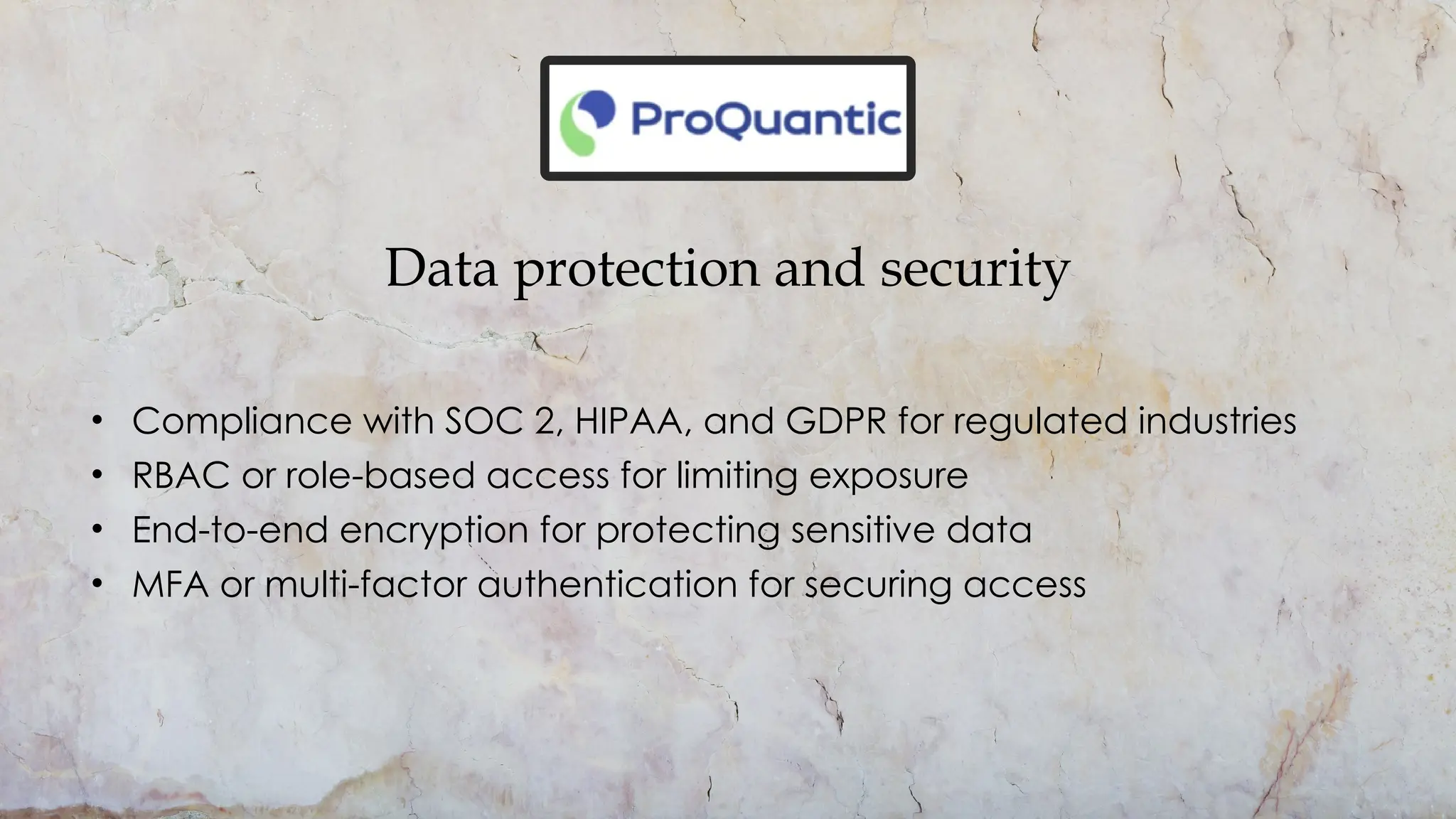
• Compliance with SOC 2, HIPAA, and GDPR for regulated industries
• RBAC or role-based access for limiting exposure
• End-to-end encryption for protecting sensitive data
• MFA or multi-factor authentication for securing access
Economical
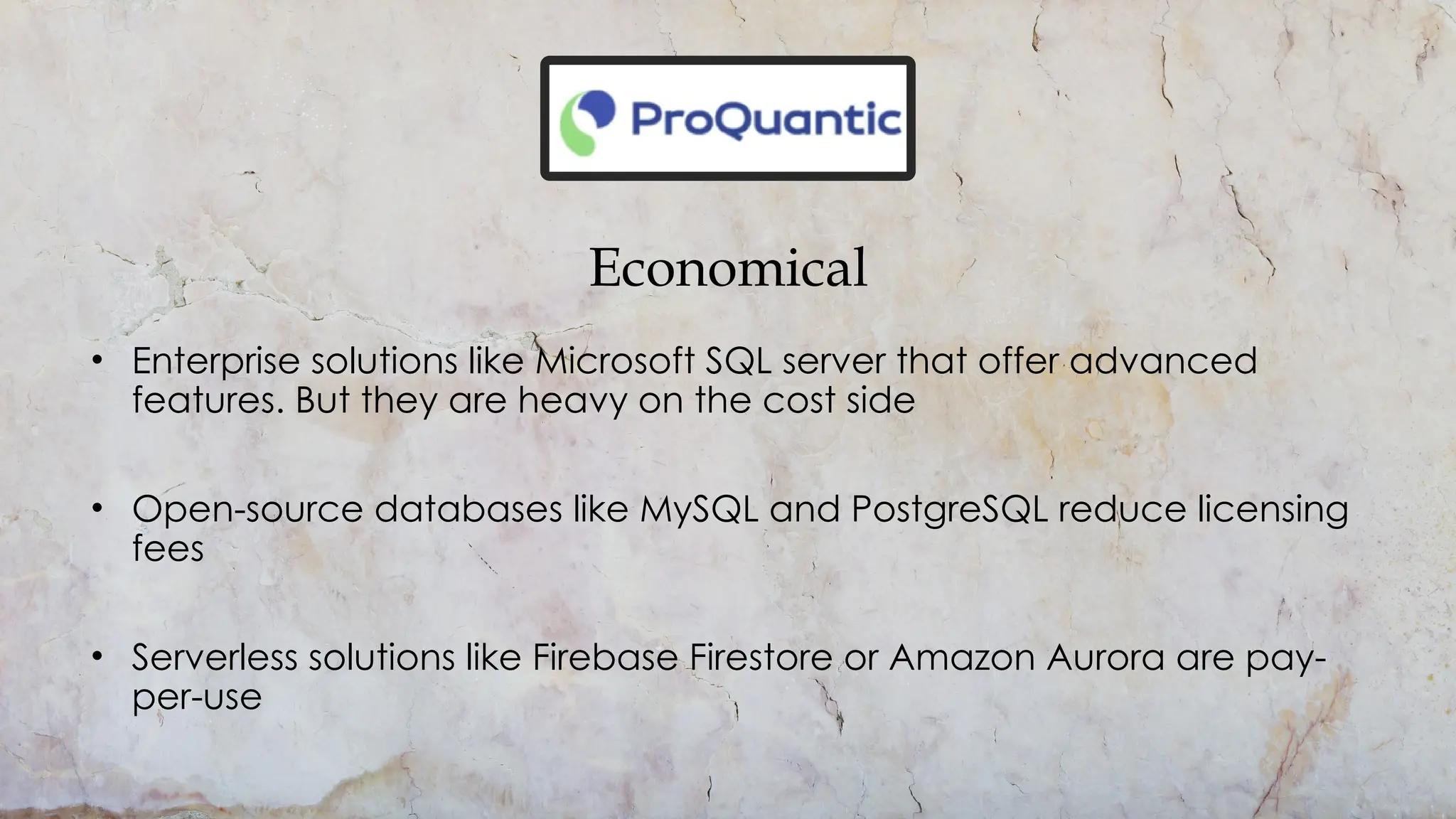
• Enterprise solutions like Microsoft SQL server that offer advanced
features. But they are heavy on the cost side
• Open-source databases like MySQL and PostgreSQL reduce licensing
fees
• Serverless solutions like Firebase Firestore or Amazon Aurora are pay-
per-use
Easy to integrate
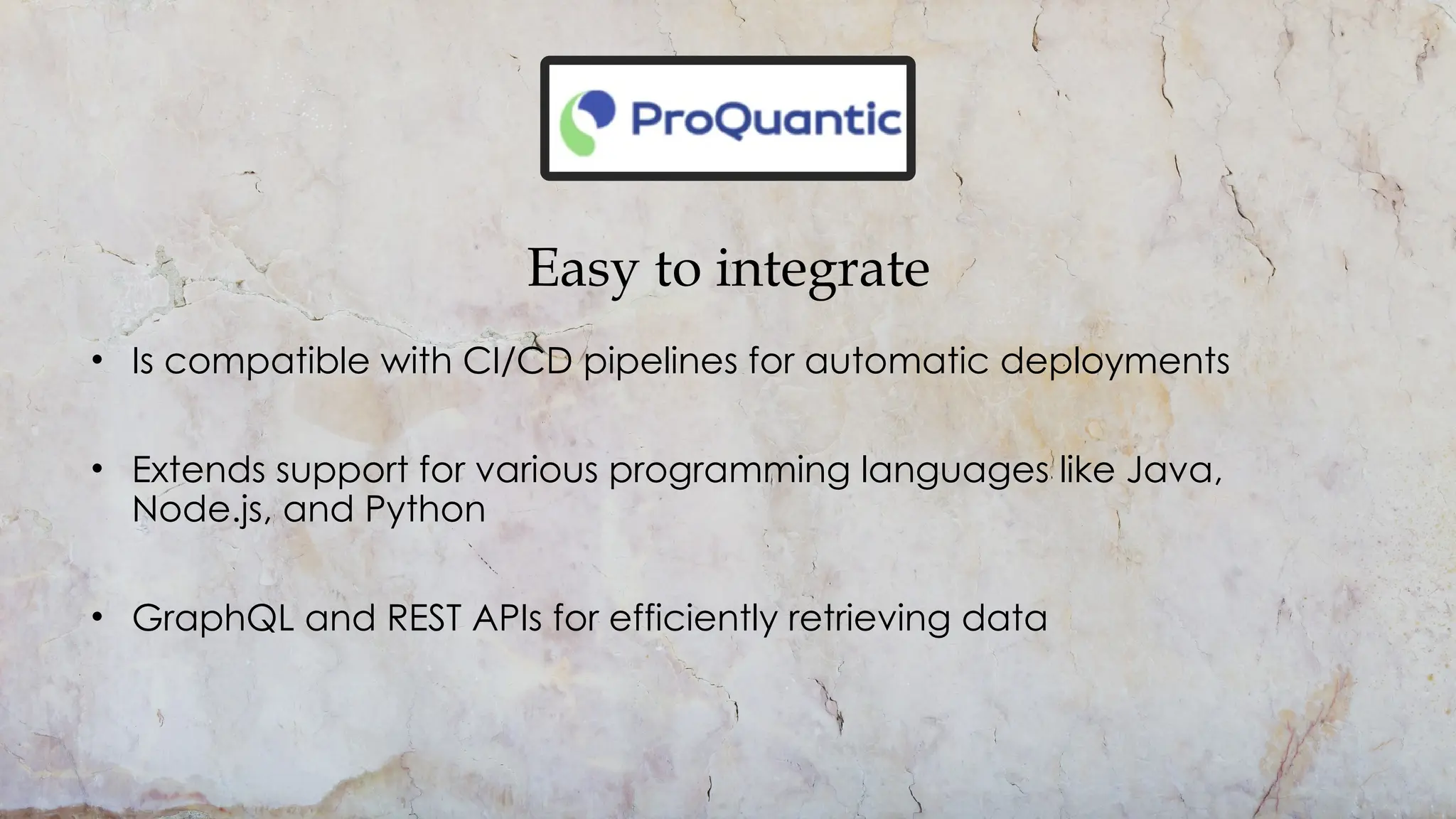
• Is compatible with CI/CD pipelines for automatic deployments
• Extends support for various programming languages like Java,
Node.js, and Python
• GraphQL and REST APIs for efficiently retrieving data
On-Premises hosting Vs Cloud
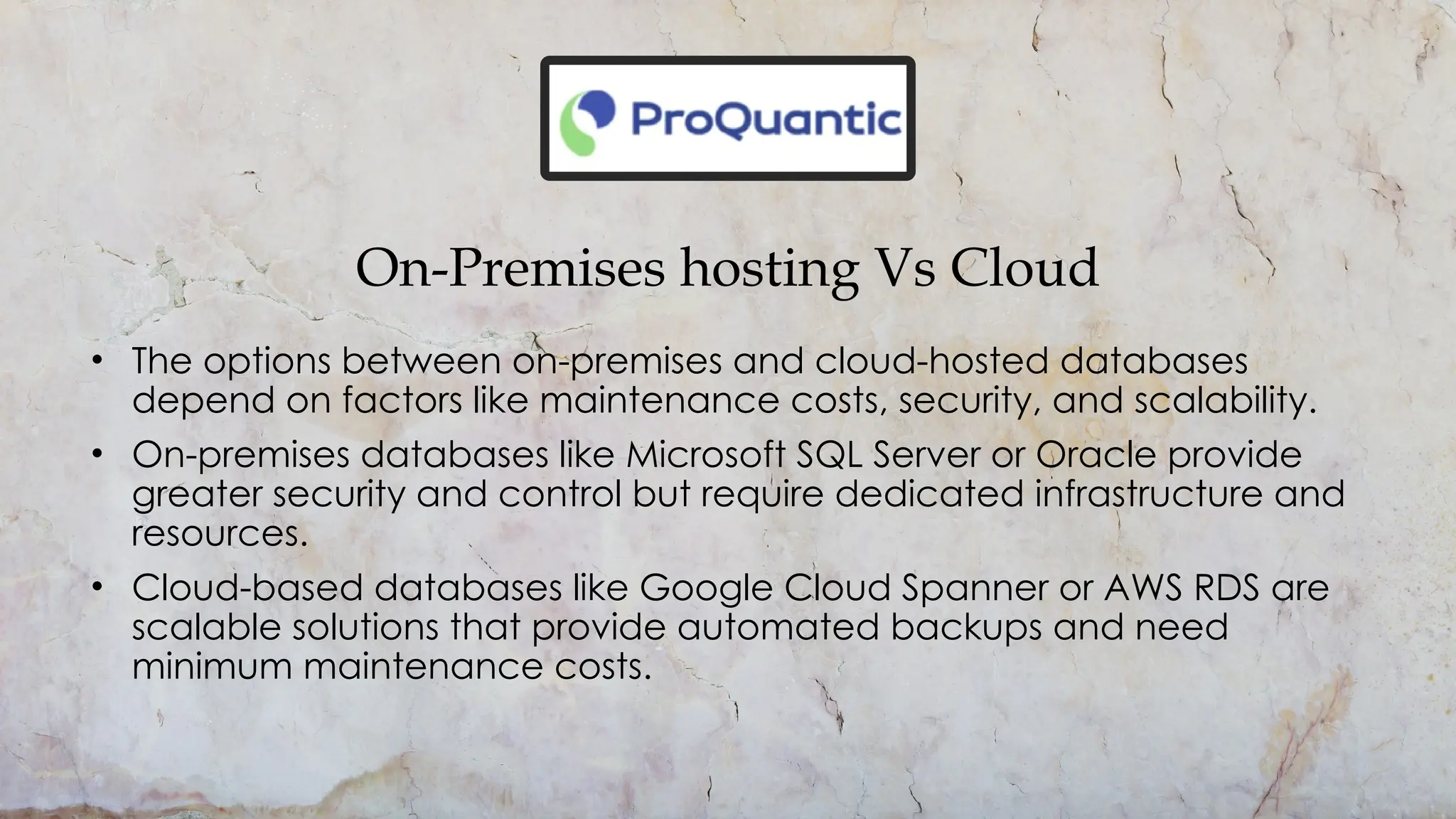
• The options between on-premises and cloud-hosted databases
depend on factors like maintenance costs, security, and scalability.
• On-premises databases like Microsoft SQL Server or Oracle provide
greater security and control but require dedicated infrastructure and
resources.
• Cloud-based databases like Google Cloud Spanner or AWS RDS are
scalable solutions that provide automated backups and need
minimum maintenance costs.
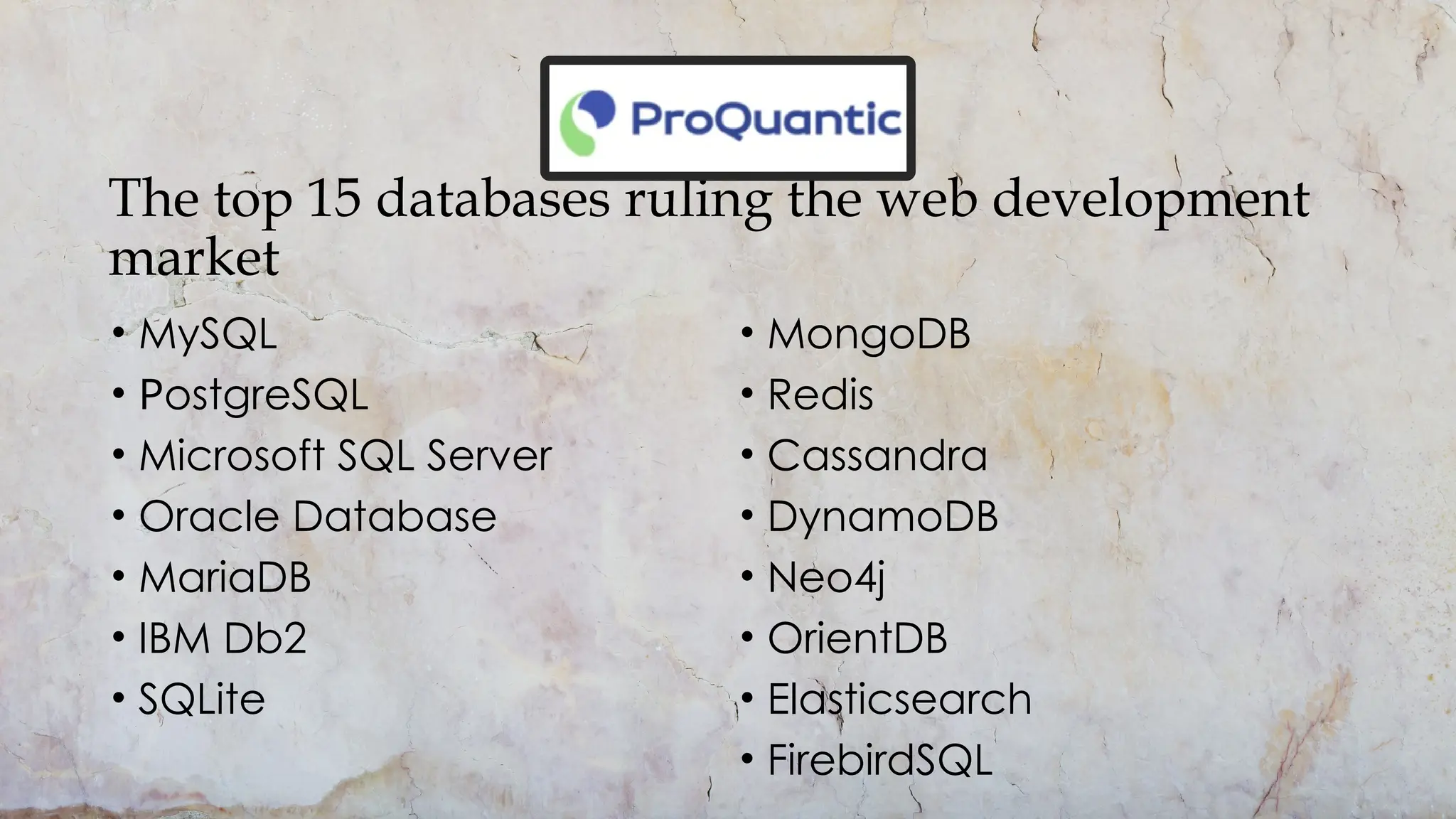
The top 15 databases ruling the web development
market
• MySQL
• PostgreSQL
• Microsoft SQL Server
• Oracle Database
• MariaDB
• IBM Db2
• SQLite
• MongoDB
• Redis
• Cassandra
• DynamoDB
• Neo4j
• OrientDB
• Elasticsearch
• FirebirdSQL
Best practices for database security and performance
• Always optimize queries for rapid loading.
• Protection from cyber threats and SQL injections
• Disaster and backup recovery strategies
What to expect from web application databases
• Database automation powered by AI
• Serverless databases will be on the rise
• The adoption of multi-cloud databases will continue to rise
Thank You!

Best 15 Databases for Web Applications in 2025

  • 1.
    Top 15 BestDatabases for Web Applications Source: https://proquantic.com/
  • 2.
    Importance of databasesin Web Applications
  • 3.
    Increases speed, reducedlatency • Slow databases mean slow web applications. • A study by Google found that even a 1-second delay in the page's load time can reduce the conversion rate by 7%. • Optimized databases ensure that the queries are executed in milliseconds.
  • 4.
    Future proof webapps with scalability • Scalability: With the growth of your business, the volumes of data generated grow too. A robust database can handle billions of requests without any downtime. • Security: A secure database, in this case, will protect your web applications from Unauthorized access, SQL injection attacks, Ransomware threats.
  • 5.
    Facilitates Compliance andData Integrity • Frameworks like HIPAA and GDPR also require strict security measures to ensure the protection of sensitive information. • Security: A secure database, in this case, will protect your web applications from Unauthorized access, SQL injection attacks, Ransomware threats.
  • 6.
    Types of Databasesfor Web Applications
  • 7.
    SQL vs NoSQLDifferences • Differences based on data structure • Differences based on scalability • Differences based on query language • Differences based on concistency vs availbility
  • 8.
    Overview of SQLdatabase • Structured database: SQL databases the data into columns and rows and enforces relationships through foreign and primary keys. This approach ensures easy querying and data integrity. • ACID compliance: SQL databases are compliant to ACID properties - Atomicity, Consistency, Isolation, and Durability. These factors make the databases reliable for the applications who require consistency in transaction.
  • 9.
    Overview of NoSQLdatabase • Flexible Schema: NoSQL databases never enforce a strict schema. This flexibility enables developers to modify and store data without any predefined structure, making them ideal for dynamic applications like social media platforms, IoT data storage, and CMS. • High scalability: NoSQL databases are ideal for distributed architectures, which makes them scalable. They use horizontal scaling, where the data is divided across various nodes, ensuring the effective and efficient handling of high-user traffic and large datasets.
  • 10.
    What are thekey factors for choosing a database?
  • 11.
    Performance and scalability •Vertical and horizontal scaling for accommodating dynamic growth • Optimal load balancing for efficient traffic distribution • Automated indexing for rapid execution • The most ideal databases: MongoDB, Cassandra for high-speed distributed applications; MySQL and PostgreSQL for transactional systems.
  • 12.
    Data protection andsecurity • Compliance with SOC 2, HIPAA, and GDPR for regulated industries • RBAC or role-based access for limiting exposure • End-to-end encryption for protecting sensitive data • MFA or multi-factor authentication for securing access
  • 13.
    Economical • Enterprise solutionslike Microsoft SQL server that offer advanced features. But they are heavy on the cost side • Open-source databases like MySQL and PostgreSQL reduce licensing fees • Serverless solutions like Firebase Firestore or Amazon Aurora are pay- per-use
  • 14.
    Easy to integrate •Is compatible with CI/CD pipelines for automatic deployments • Extends support for various programming languages like Java, Node.js, and Python • GraphQL and REST APIs for efficiently retrieving data
  • 15.
    On-Premises hosting VsCloud • The options between on-premises and cloud-hosted databases depend on factors like maintenance costs, security, and scalability. • On-premises databases like Microsoft SQL Server or Oracle provide greater security and control but require dedicated infrastructure and resources. • Cloud-based databases like Google Cloud Spanner or AWS RDS are scalable solutions that provide automated backups and need minimum maintenance costs.
  • 16.
    The top 15databases ruling the web development market • MySQL • PostgreSQL • Microsoft SQL Server • Oracle Database • MariaDB • IBM Db2 • SQLite • MongoDB • Redis • Cassandra • DynamoDB • Neo4j • OrientDB • Elasticsearch • FirebirdSQL
  • 17.
    Best practices fordatabase security and performance • Always optimize queries for rapid loading. • Protection from cyber threats and SQL injections • Disaster and backup recovery strategies
  • 18.
    What to expectfrom web application databases • Database automation powered by AI • Serverless databases will be on the rise • The adoption of multi-cloud databases will continue to rise
  • 19.