Bell's palsy
Mr. Abhijeet M. Mahale.
Assistant Professor.
DEFINITION
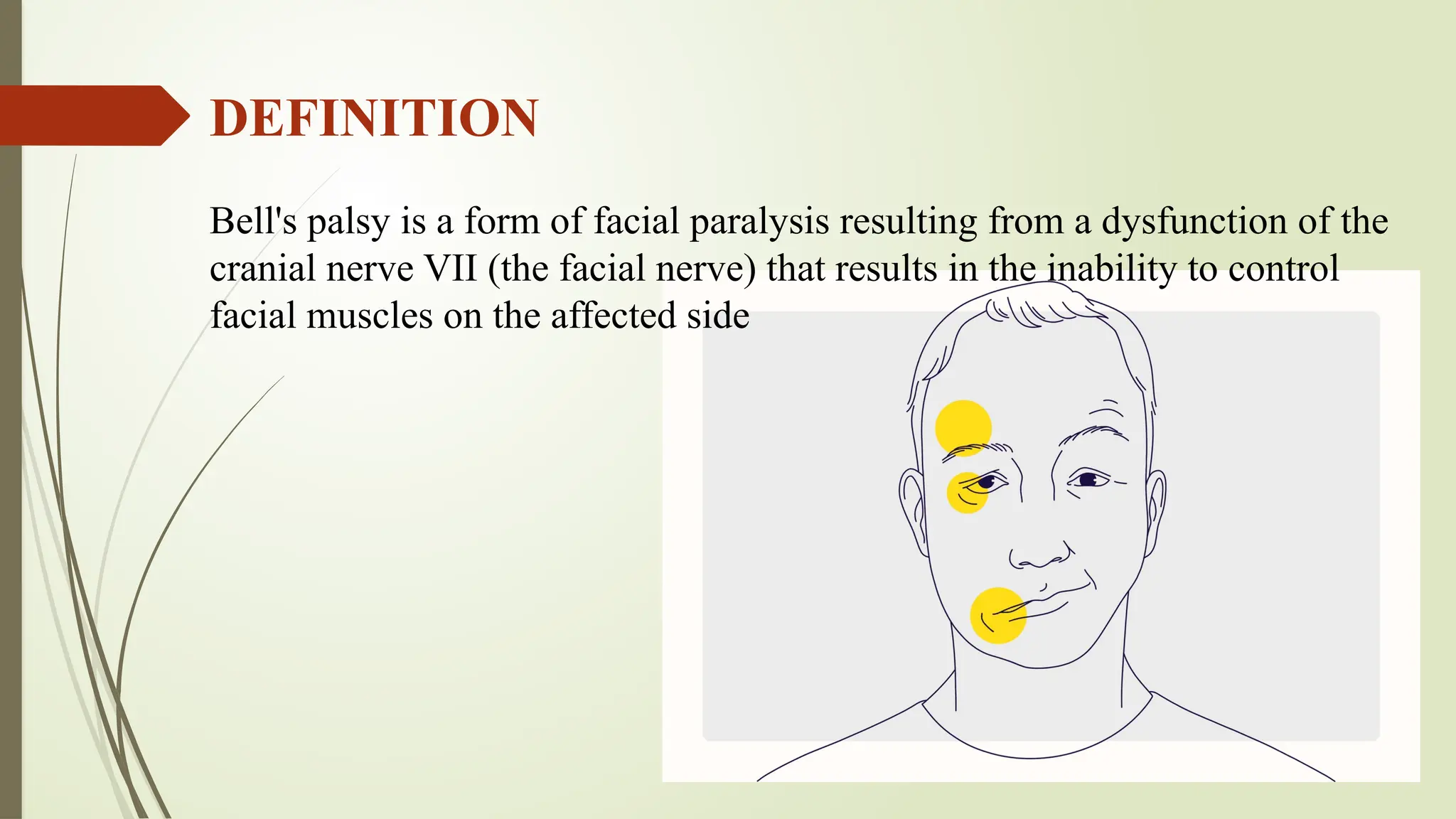
Bell's palsy is a form of facial paralysis resulting from a dysfunction of the
cranial nerve VII (the facial nerve) that results in the inability to control
facial muscles on the affected side
ETIOLOGY
 Other conditions that may cause Bell's palsy include:
 HIV infection
 Lyme disease(It is a bacterial infection you get from the
bite of an infected tick.)
 Middle ear infection
 Sarcoidosis
CLINICAL MANIFESTATIONS
 Symptoms are almost always on one side of the face only. They may
range from mild to severe.
 The face will feel stiff or pulled to one side, and may look different
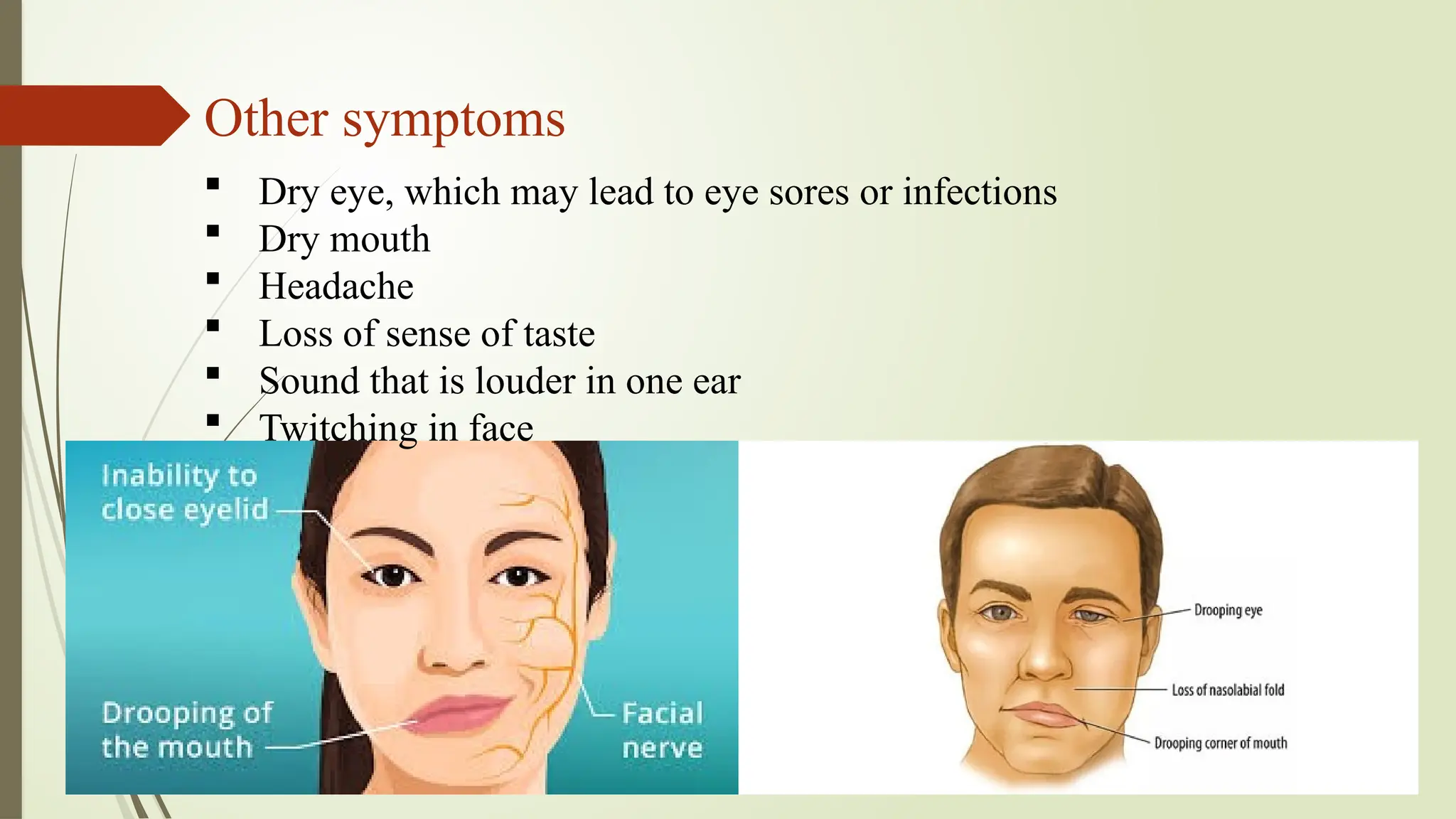
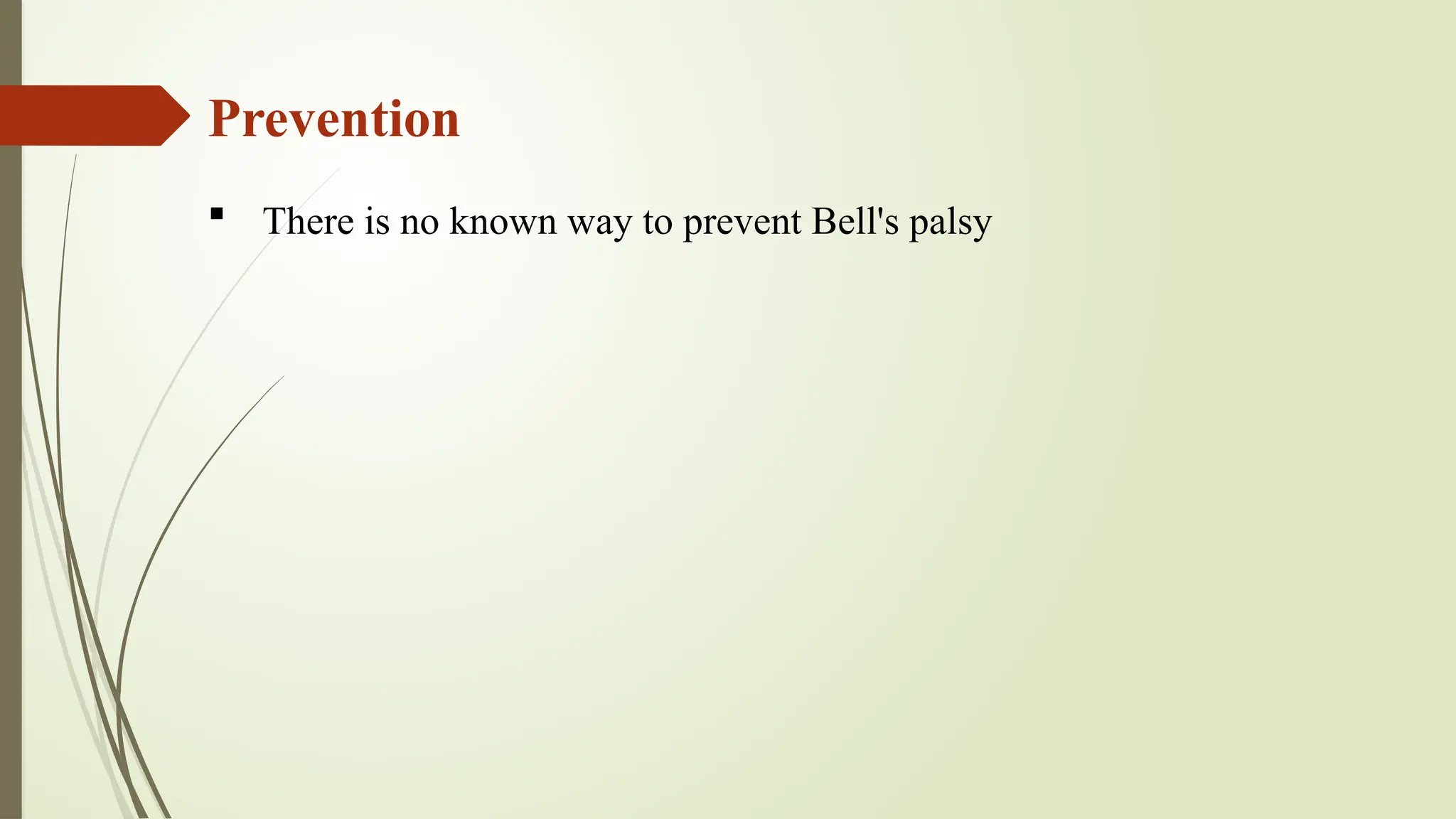
 Difficulty in closing one eye
 Difficulty in eating and drinking; food falls out of one side of the mouth
 Drooling due to lack of control over the muscles of the face
 Drooping of the face, such as the eyelid or corner of the mouth
 Problems in smiling or making facial expressions
 Twitching or weakness of the muscles in the face
Other symptoms
 Dry eye, which may lead to eye sores or infections
 Dry mouth
 Headache
 Loss of sense of taste
 Sound that is louder in one ear
 Twitching in face
DIAGNOSTIC STUDIES
 Bell's palsy can be diagnosed just by taking a health history and doing
a complete physical examination.
 If it is doubtful that a brain tumor is causing your symptoms, you may
need:
 CT scan of the head
 Magnetic resonance imaging (MRI) of the head
CONTD..
 Electromyography (EMG): It is a test that checks the health of the muscles
and the nerves that control the muscles
 Nerve conduction test Nerve conduction velocity (NCV): It is a test to see
how fast electrical signals move through a nerve
MEDICAL MANAGEMENT
 Lubricating eye drops or eye ointments to keep the surface
of the eye moist.
 Advice to wear an eye patch while you sleep.
 Corticosteroids may reduce swelling around the facial
nerve.
 Antivirals(such as acyclovir)
 Mild analgestics to releive pain
 Physiotherapy can be beneficial to some individuals with Bell’s palsy as it
helps to maintain muscle tone of the affected facial muscles and stimulate
the facial nerve.
Complications
 Excess drying of the eye surface, leading to eye sores
or infections.
Prevention
 There is no known way to prevent Bell's palsy
ThankYou

Bell's Palsy, unit - VI for Nursing.pptx

  • 1.
    Bell's palsy Mr. AbhijeetM. Mahale. Assistant Professor.
  • 2.
    DEFINITION Bell's palsy isa form of facial paralysis resulting from a dysfunction of the cranial nerve VII (the facial nerve) that results in the inability to control facial muscles on the affected side
  • 3.
    ETIOLOGY  Other conditionsthat may cause Bell's palsy include:  HIV infection  Lyme disease(It is a bacterial infection you get from the bite of an infected tick.)  Middle ear infection  Sarcoidosis
  • 4.
    CLINICAL MANIFESTATIONS  Symptomsare almost always on one side of the face only. They may range from mild to severe.  The face will feel stiff or pulled to one side, and may look different  Difficulty in closing one eye  Difficulty in eating and drinking; food falls out of one side of the mouth  Drooling due to lack of control over the muscles of the face  Drooping of the face, such as the eyelid or corner of the mouth  Problems in smiling or making facial expressions  Twitching or weakness of the muscles in the face
  • 5.
    Other symptoms  Dryeye, which may lead to eye sores or infections  Dry mouth  Headache  Loss of sense of taste  Sound that is louder in one ear  Twitching in face
  • 6.
    DIAGNOSTIC STUDIES  Bell'spalsy can be diagnosed just by taking a health history and doing a complete physical examination.  If it is doubtful that a brain tumor is causing your symptoms, you may need:  CT scan of the head  Magnetic resonance imaging (MRI) of the head
  • 7.
    CONTD..  Electromyography (EMG):It is a test that checks the health of the muscles and the nerves that control the muscles  Nerve conduction test Nerve conduction velocity (NCV): It is a test to see how fast electrical signals move through a nerve
  • 8.
    MEDICAL MANAGEMENT  Lubricatingeye drops or eye ointments to keep the surface of the eye moist.  Advice to wear an eye patch while you sleep.  Corticosteroids may reduce swelling around the facial nerve.  Antivirals(such as acyclovir)  Mild analgestics to releive pain
  • 9.
     Physiotherapy canbe beneficial to some individuals with Bell’s palsy as it helps to maintain muscle tone of the affected facial muscles and stimulate the facial nerve.
  • 10.
    Complications  Excess dryingof the eye surface, leading to eye sores or infections.
  • 11.
    Prevention  There isno known way to prevent Bell's palsy
  • 12.