Behavioral Health and Primary Care David Eisenman MD and John Luo MD Departments of Medicine and Psychiatry
Behavioral Health and Primary Care Understand barriers to integration of behavioral health and primary care Implications in caring for patients Steps to improve care
Barriers between Primary Care and Behavioral Health Historical Conceptual Patient Provider Practice Health Plan Population/Community/Policy
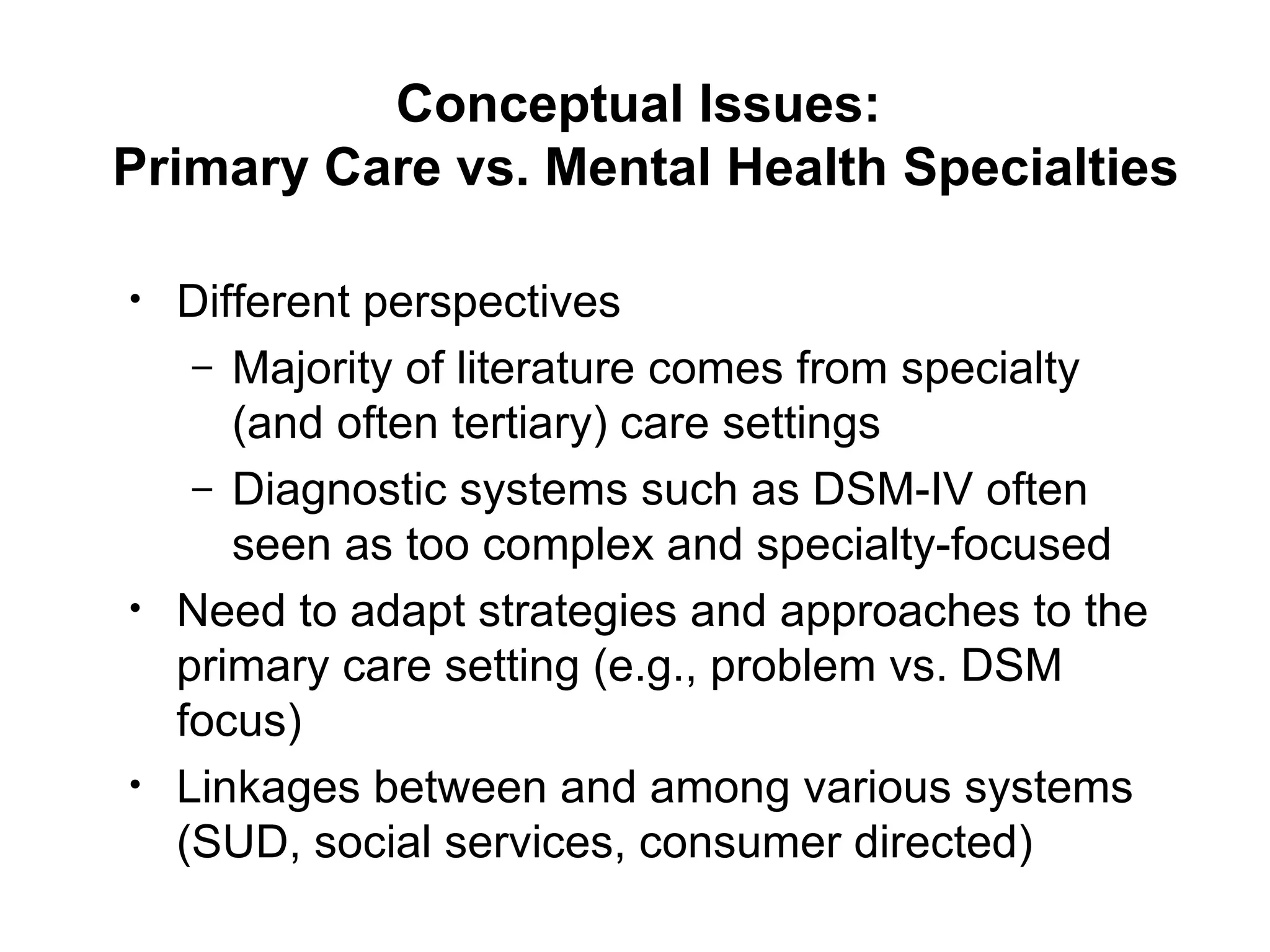
Conceptual Issues:  Primary Care vs. Mental Health Specialties Different perspectives Majority of literature comes from specialty (and often tertiary) care settings Diagnostic systems such as DSM-IV often seen as too complex and specialty-focused Need to adapt strategies and approaches to the primary care setting (e.g., problem vs. DSM focus) Linkages between and among various systems (SUD, social services, consumer directed) , etc.)
Provider Barriers Time Interest Tools  Training
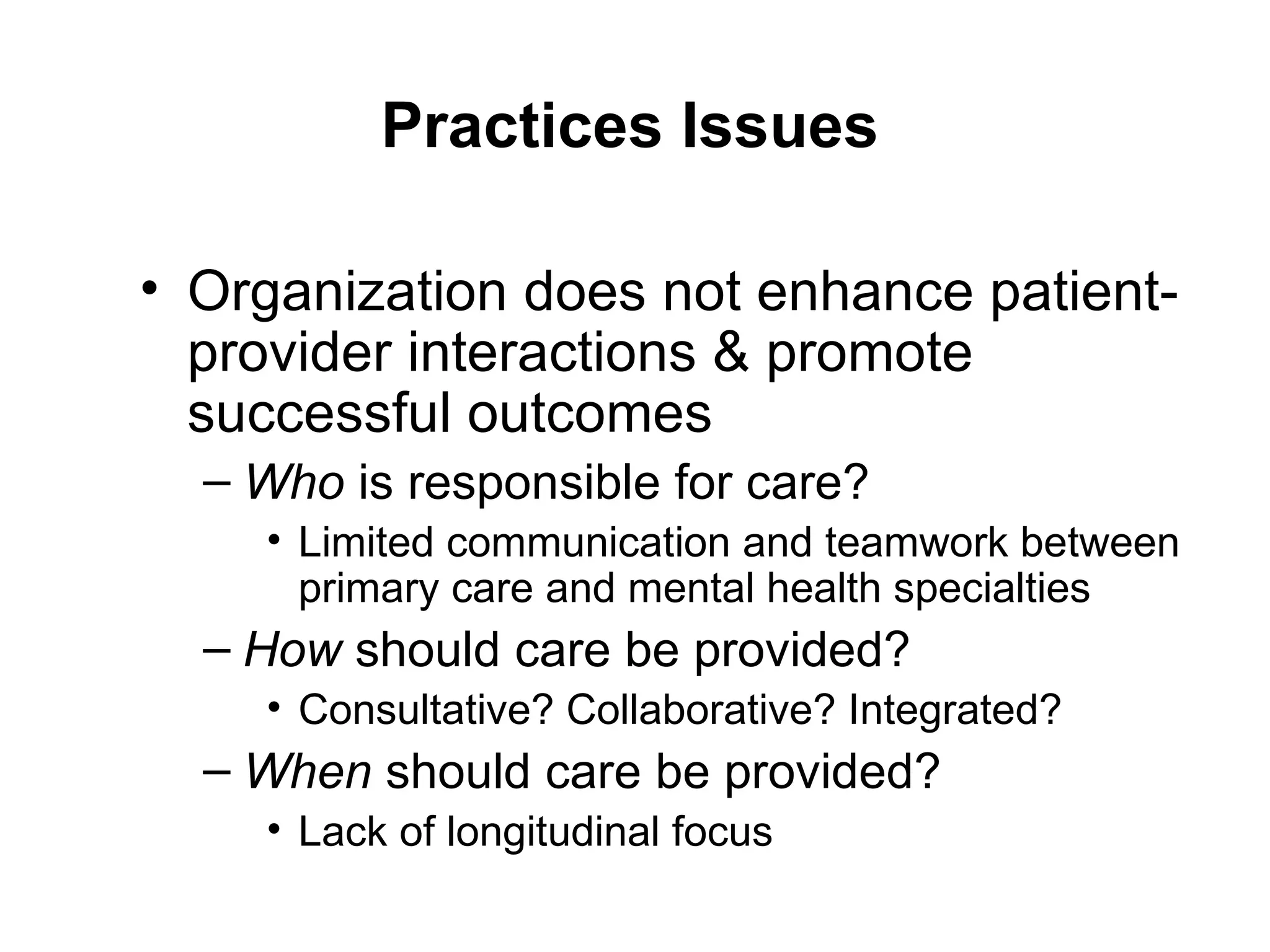
Practices Issues Organization does not enhance patient-provider interactions & promote successful outcomes Who  is responsible for care? Limited communication and teamwork between primary care and mental health specialties How  should care be provided? Consultative? Collaborative? Integrated? When  should care be provided? Lack of longitudinal focus
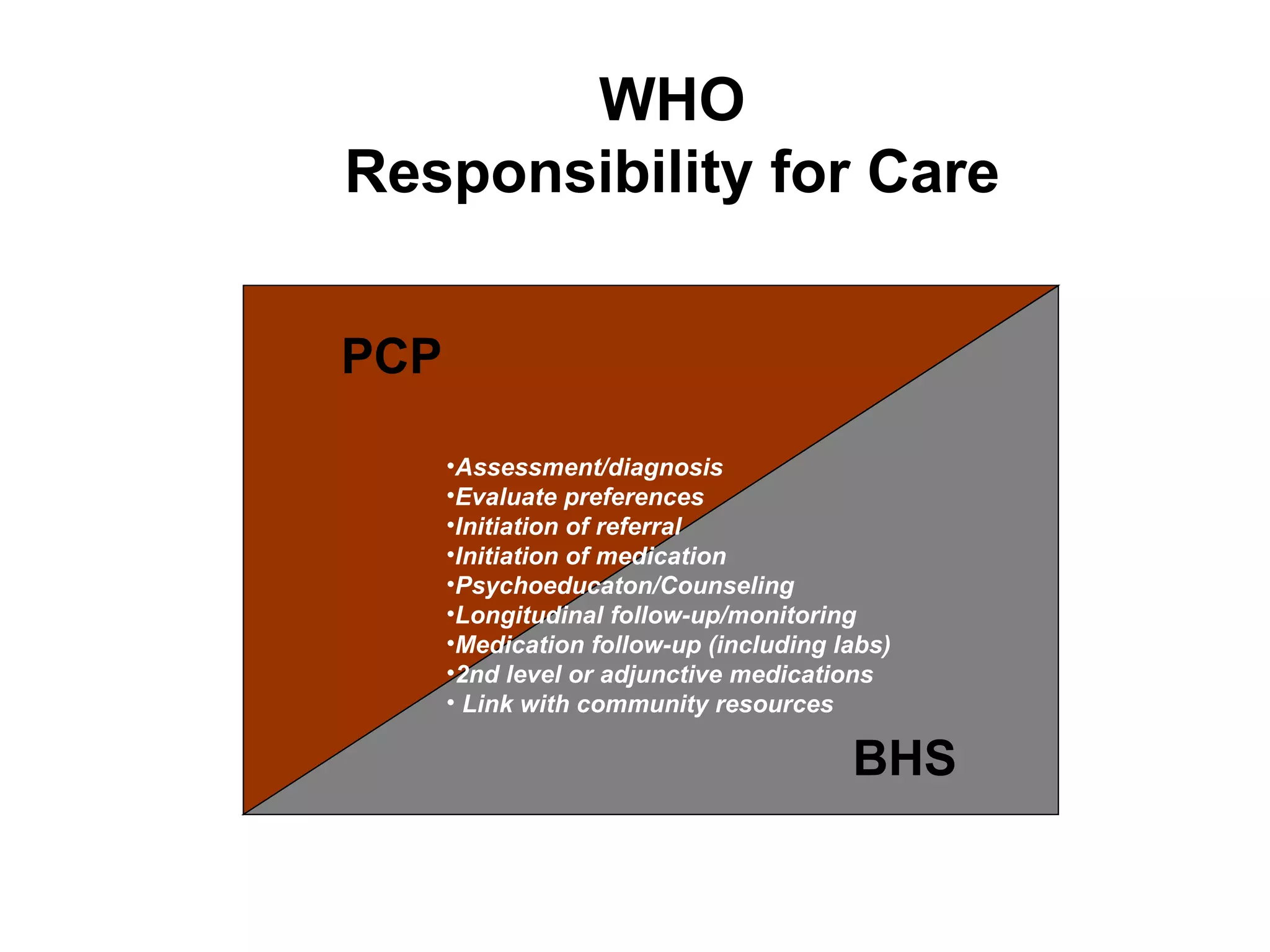
WHO Responsibility for Care PCP BHS Assessment/diagnosis Evaluate preferences Initiation of referral Initiation of medication Psychoeducaton/Counseling Longitudinal follow-up/monitoring Medication follow-up (including labs) 2nd level or adjunctive medications Link with community resources
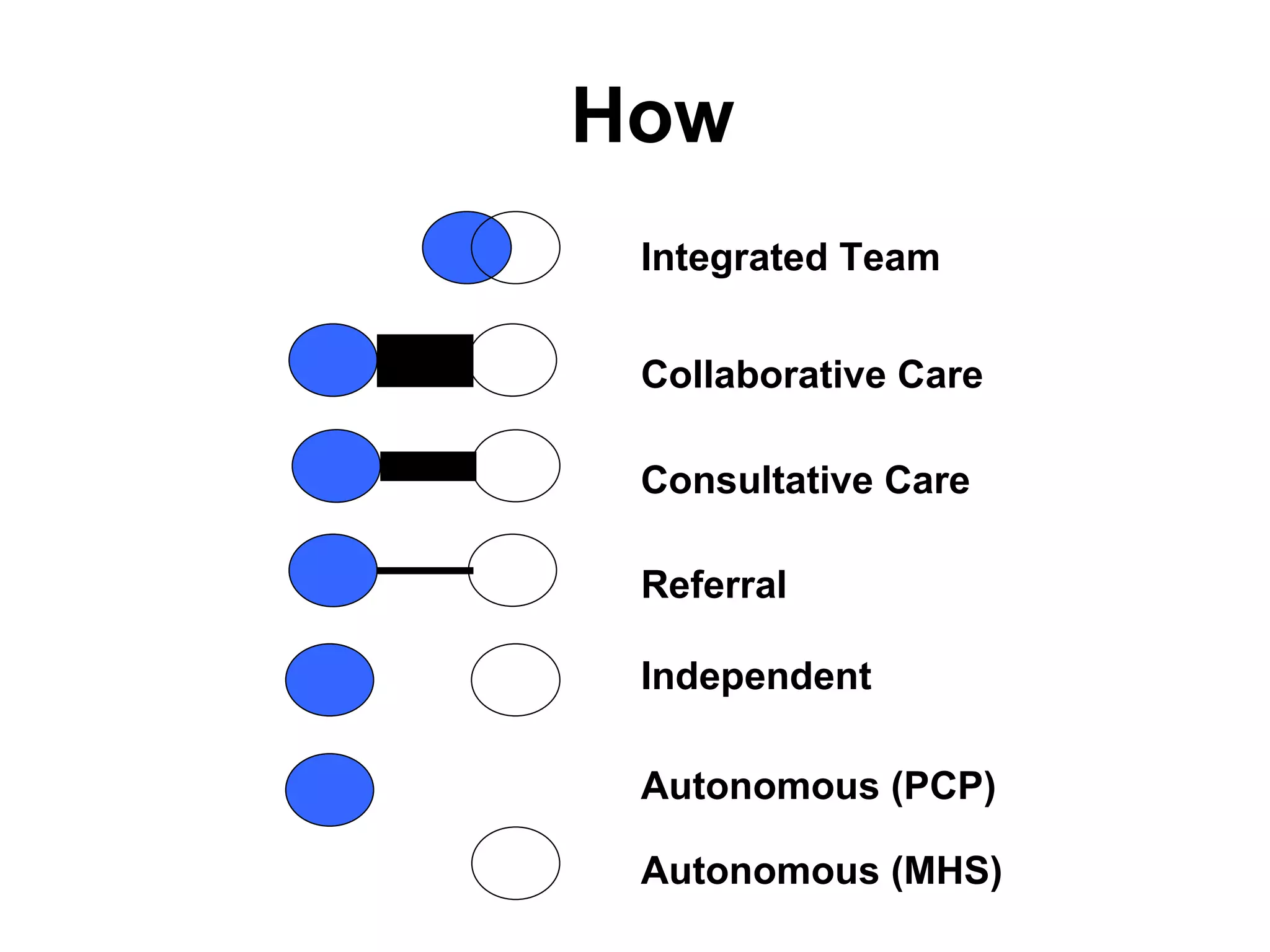
Referral Consultative Care Collaborative   Care Integrated   Team Independent Autonomous (PCP) Autonomous (MHS) How
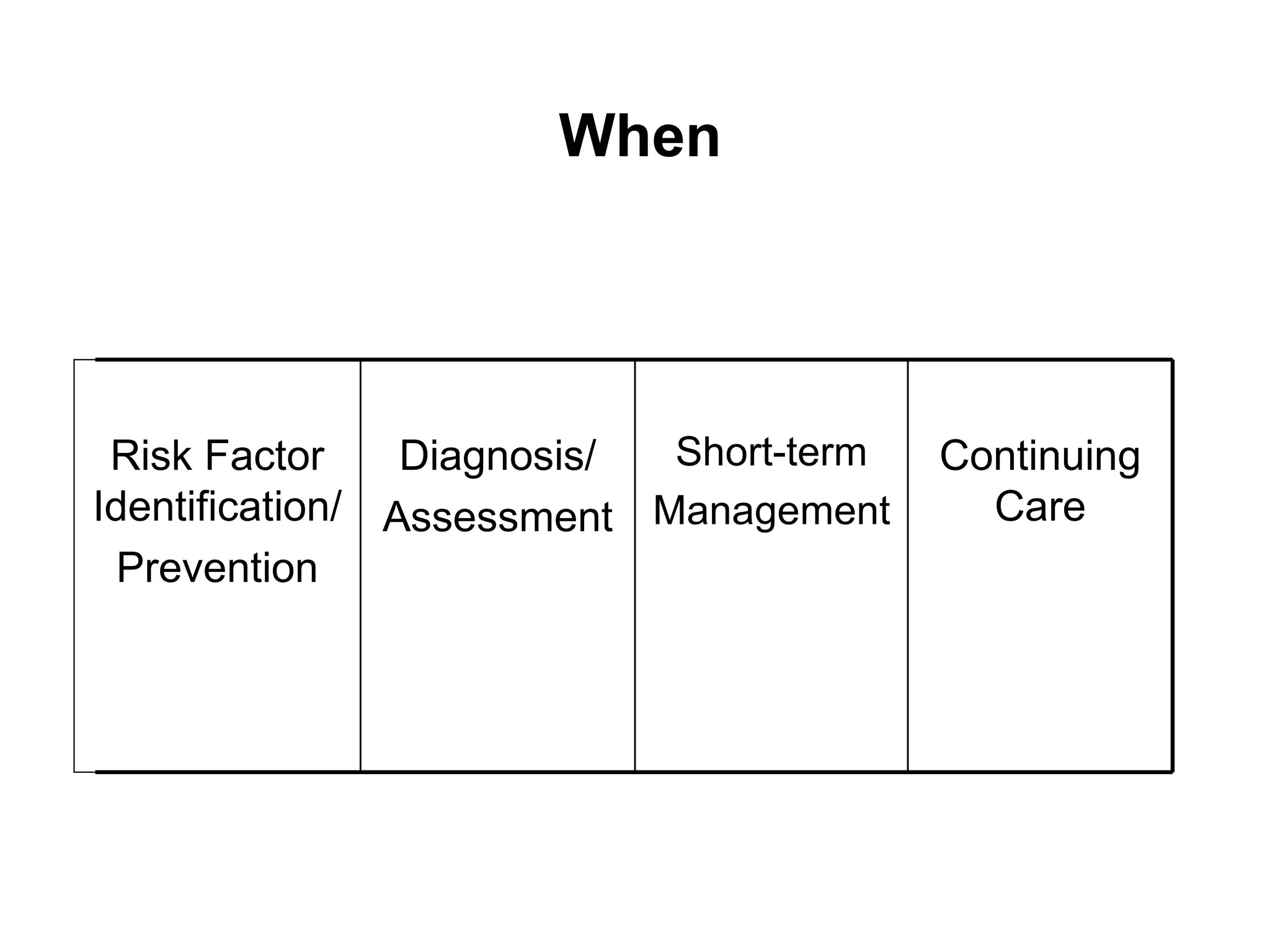
When Continuing Care Short-term Management Diagnosis/ Assessment Risk Factor Identification/ Prevention
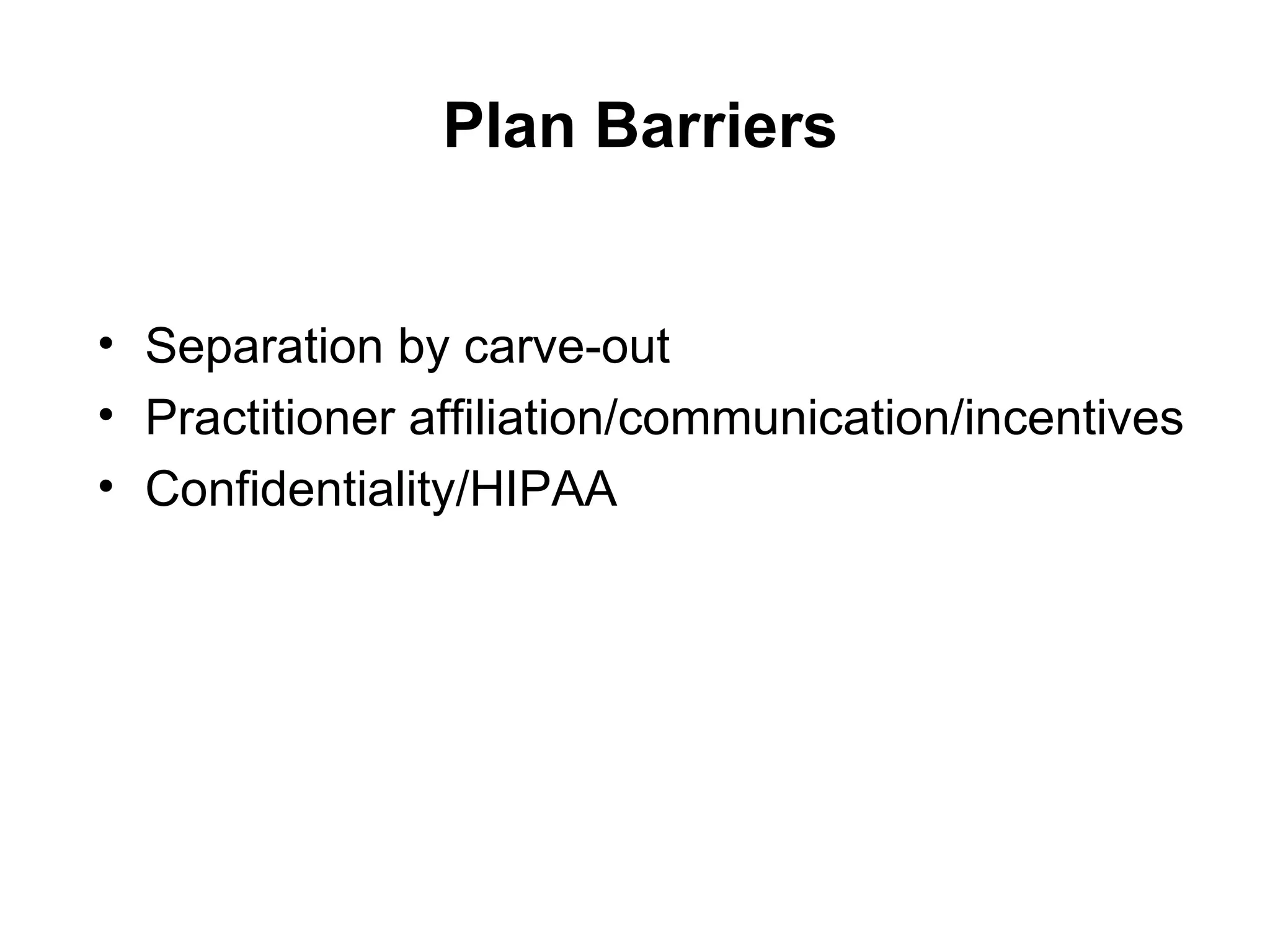
Plan Barriers Separation by carve-out Practitioner affiliation/communication/incentives Confidentiality/HIPAA
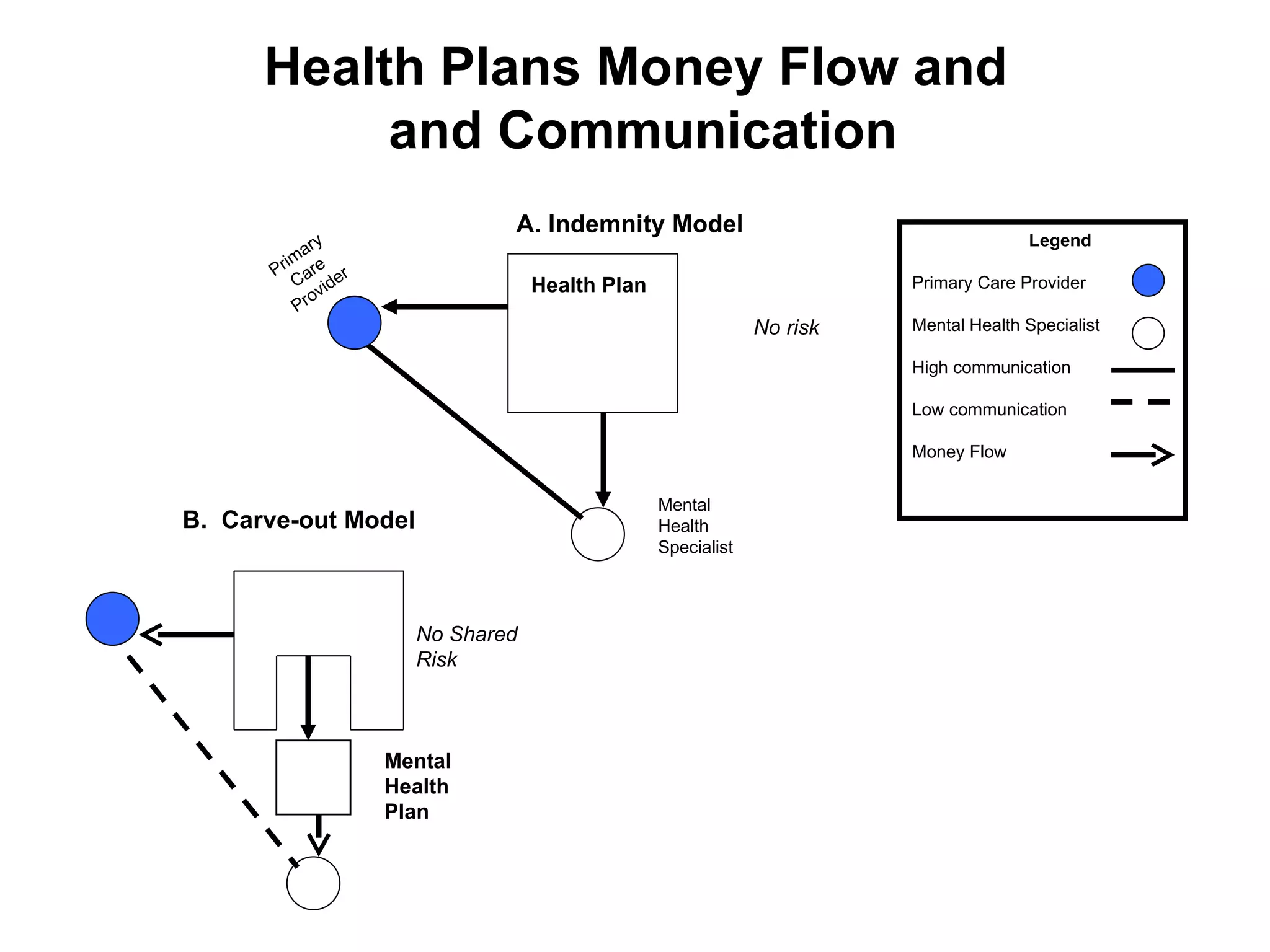
Health Plans Money Flow and  and Communication No risk Health Plan A. Indemnity Model Mental  Health  Plan B.  Carve-out Model No Shared Risk Primary Care Provider Mental Health  Specialist Legend Primary Care Provider Mental Health Specialist High communication Low communication Money Flow
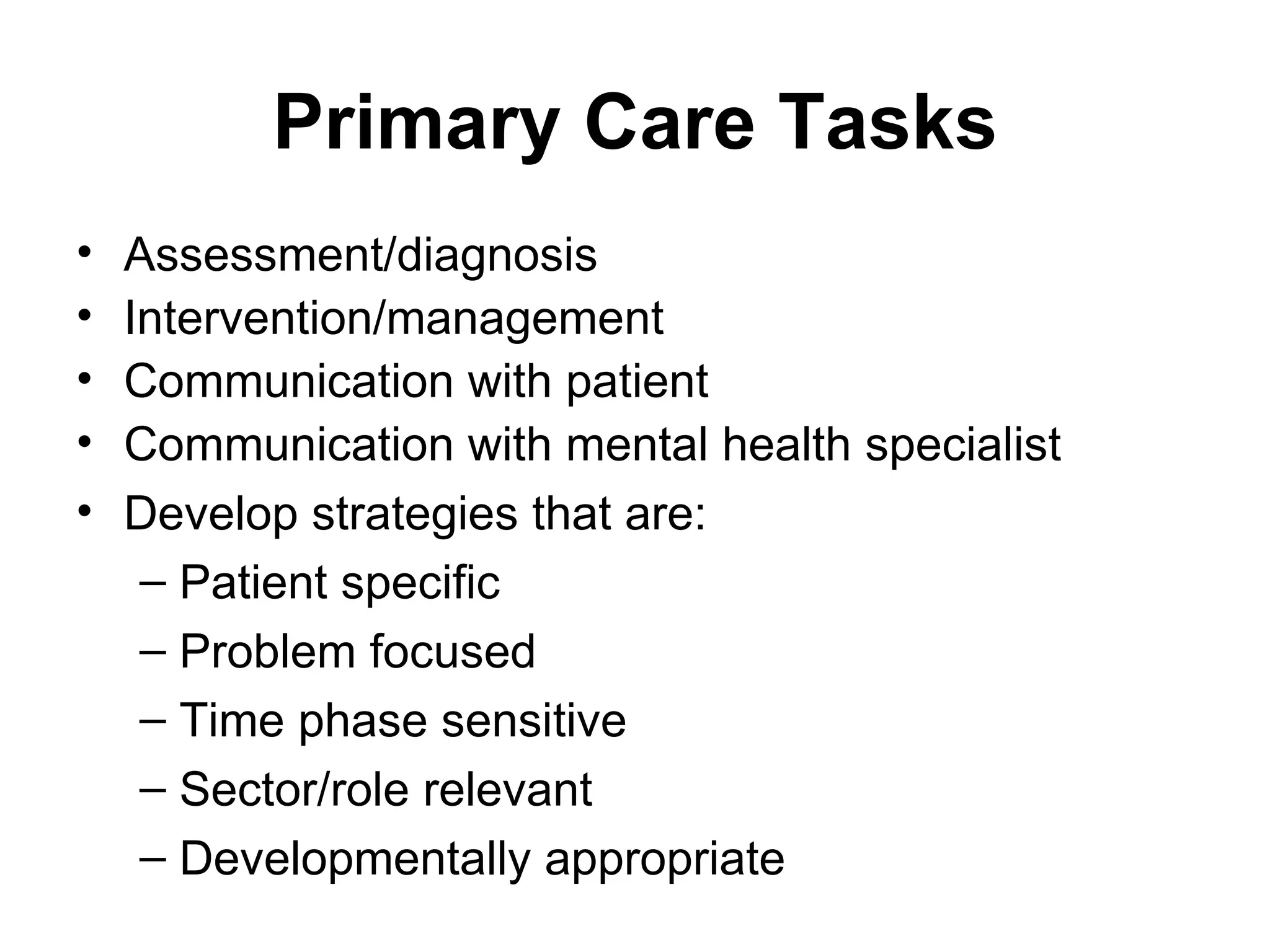
Primary Care Tasks Assessment/diagnosis Intervention/management Communication with patient Communication with mental health specialist Develop strategies that are: Patient specific Problem focused Time phase sensitive Sector/role relevant Developmentally appropriate
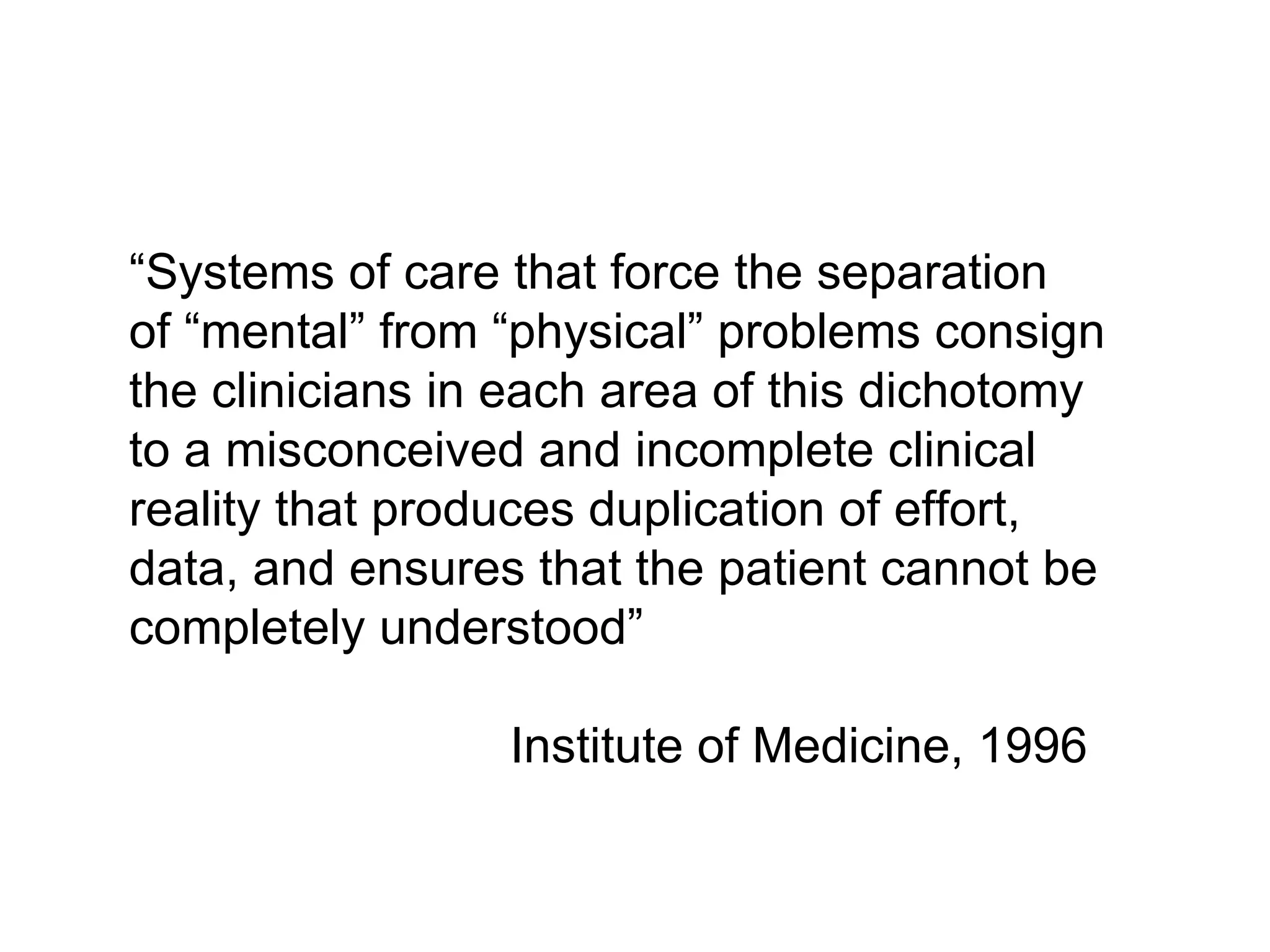
“ Systems of care that force the separation  of “mental” from “physical” problems consign  the clinicians in each area of this dichotomy to a misconceived and incomplete clinical reality that produces duplication of effort, data, and ensures that the patient cannot be completely understood” Institute of Medicine, 1996

Behavioral Health Systems Lecture

  • 1.
    Behavioral Health andPrimary Care David Eisenman MD and John Luo MD Departments of Medicine and Psychiatry
  • 2.
    Behavioral Health andPrimary Care Understand barriers to integration of behavioral health and primary care Implications in caring for patients Steps to improve care
  • 3.
    Barriers between PrimaryCare and Behavioral Health Historical Conceptual Patient Provider Practice Health Plan Population/Community/Policy
  • 4.
    Conceptual Issues: Primary Care vs. Mental Health Specialties Different perspectives Majority of literature comes from specialty (and often tertiary) care settings Diagnostic systems such as DSM-IV often seen as too complex and specialty-focused Need to adapt strategies and approaches to the primary care setting (e.g., problem vs. DSM focus) Linkages between and among various systems (SUD, social services, consumer directed) , etc.)
  • 5.
    Provider Barriers TimeInterest Tools Training
  • 6.
    Practices Issues Organizationdoes not enhance patient-provider interactions & promote successful outcomes Who is responsible for care? Limited communication and teamwork between primary care and mental health specialties How should care be provided? Consultative? Collaborative? Integrated? When should care be provided? Lack of longitudinal focus
  • 7.
    WHO Responsibility forCare PCP BHS Assessment/diagnosis Evaluate preferences Initiation of referral Initiation of medication Psychoeducaton/Counseling Longitudinal follow-up/monitoring Medication follow-up (including labs) 2nd level or adjunctive medications Link with community resources
  • 8.
    Referral Consultative CareCollaborative Care Integrated Team Independent Autonomous (PCP) Autonomous (MHS) How
  • 9.
    When Continuing CareShort-term Management Diagnosis/ Assessment Risk Factor Identification/ Prevention
  • 10.
    Plan Barriers Separationby carve-out Practitioner affiliation/communication/incentives Confidentiality/HIPAA
  • 11.
    Health Plans MoneyFlow and and Communication No risk Health Plan A. Indemnity Model Mental Health Plan B. Carve-out Model No Shared Risk Primary Care Provider Mental Health Specialist Legend Primary Care Provider Mental Health Specialist High communication Low communication Money Flow
  • 12.
    Primary Care TasksAssessment/diagnosis Intervention/management Communication with patient Communication with mental health specialist Develop strategies that are: Patient specific Problem focused Time phase sensitive Sector/role relevant Developmentally appropriate
  • 13.
    “ Systems ofcare that force the separation of “mental” from “physical” problems consign the clinicians in each area of this dichotomy to a misconceived and incomplete clinical reality that produces duplication of effort, data, and ensures that the patient cannot be completely understood” Institute of Medicine, 1996