

Behavioral Dentistry
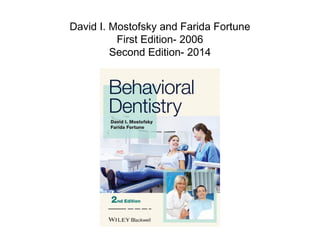
David I. Mostofsky and Farida Fortune
First Edition- 2006
Second Edition- 2014
Why we have to approach this study?
• Most oral diseases are preventable, but to
prevent them, we must broaden our
understanding of human behavior and
the socio-ecological milieu in which they
occur
• the obvious considerations that must be
taken into account for pediatric,
geriatric, and special needs patients,
different, but hardly unique, challenges
routinely require resolution
• There was never a serious consideration
that the oft-quoted witty definition of
dental practice could be axiomatically
defined by three words: drill, fill, and bill
Part I Biobehavioral
Processes
1 Cultural Issues in Dental
Education
Vishal R. Aggarwal and Farida
Fortune
• Populations are becoming increasingly
heterogeneous, migrating longer distances,
and bringing with them different cultural
expectations and needs
• The cultural heterogeneity impacts on the
management of oro-dental diseases, including
etiological risk factors (related to harmful
lifestyle habits) through behavioral differences
displayed by patients from different cultures
• Training a dental workforce that is culturally
and linguistically competent and that values
the behavioral and psychosocial needs of
multicultural populations is important
• A dental workforce that will not only have the
potential to reduce oral health inequalities,
but also to deliver any communication,
training, and clinical management with
understanding, respect, and dignity needs to
be developed
2 Oral Health and Quality of
Life
Marita R. Inglehart
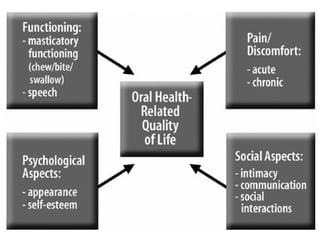
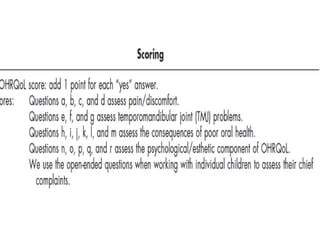
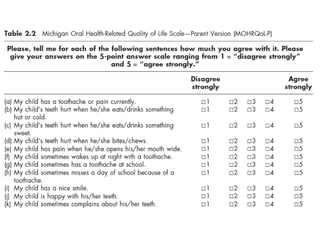
• Oral health-related quality of life (OHRQoL)
refers to
- how patients’ oral health affects their
ability to function (e.g., chew and speak),
their psychological and social well-being,
and whether they experience pain/discomfort
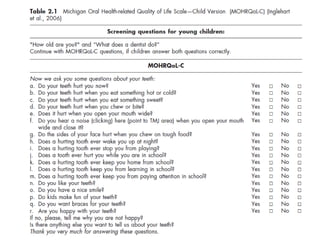
• Several valid and reliable OHRQoL scales are
available to assess children’s and adults’
OHRQoL
• OHRQoL can guide clinicians to gain a better
understanding of their patients’ oral health-
related experiences and thus can increase the
degree to which clinicians engage in patient-
centered care
• OHRQoL scales offer researchers an
opportunity to assess subjects’ OHRQoL as a
valuable outcome measure in basic science,
clinical, and behavioral research
• OHRQoL is a useful concept for dental
educators because it focuses students on
gaining a better understanding of their
patients’ oral health-related experiences and
care
• A review of OHRQoL research shows that this
concept can be useful in communicating oral
health-related concerns to persons outside of
the profession;
• it shows the power of adaptation and
acceptance of patients who lack access to care,
and it points to the need for a differentiated
approach when assessing OHRQoL
3 Stress and Inflammation
Annsofi Johannsen and Anders
Gustafsson
• Psychosocial stress has been associated with
poor oral hygiene and smoking, and they
seem to have a synergistic effect
• Stressors have a detrimental effect on chronic
immune-mediated inflammatory diseases,
including periodontitis and also on the
immune system
• Stress seems to have a hyperinflammatory effect
rather than a hypoinflammatory effect
• Clinical implications are obvious as it is important
for members in the dental team to be aware of
how stress can influence patient compliance and
response to treatment
4 Saliva in Health and
Disease
Mahvash Navazesh
• Multiple medical conditions and medications
can impact the quality and quantity of saliva,
leading to diminished quality of life
• Xerostomia is subjective complaint of dry
mouth. Salivary gland hypofunction is
objective evidence of low saliva flow rates.
• Gene therapy may in the future be used for the
management of radiation-induced salivary gland
hypofunction.
• Fungal infection and dental caries are the most
common complications of chronic salivary gland
hypofunction.
• Oral healthcare providers can play a significant
role in early detection of signs and symptoms of
salivary gland hypofunction
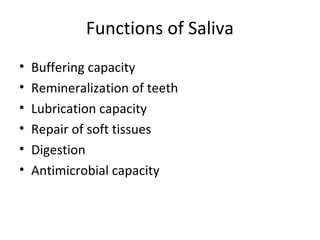
Functions of Saliva
• Buffering capacity
• Remineralization of teeth
• Lubrication capacity
• Repair of soft tissues
• Digestion
• Antimicrobial capacity
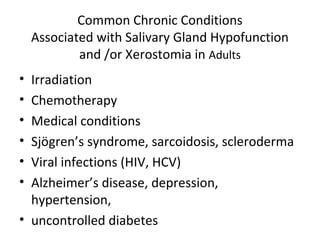
Common Chronic Conditions
Associated with Salivary Gland Hypofunction
and /or Xerostomia in Adults
• Irradiation
• Chemotherapy
• Medical conditions
• Sjögren’s syndrome, sarcoidosis, scleroderma
• Viral infections (HIV, HCV)
• Alzheimer’s disease, depression,
hypertension,
• uncontrolled diabetes
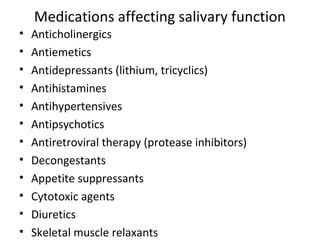
Medications affecting salivary function
• Anticholinergics
• Antiemetics
• Antidepressants (lithium, tricyclics)
• Antihistamines
• Antihypertensives
• Antipsychotics
• Antiretroviral therapy (protease inhibitors)
• Decongestants
• Appetite suppressants
• Cytotoxic agents
• Diuretics
• Skeletal muscle relaxants
Signs associated with Chronic Salivary Gland
Hypofunction
•Dry, chapped lips; desiccated, dry, and fissured tongue
•Fungal infection (angular cheilitis/ pseudomembranous and
erythematous candidiasis)
•Dental caries (cervical and root caries in articular)
•Gingivitis
•Mucositis
•Traumatic oral lesions
Symptoms
• None (Often it may be asymptomatic)
• Difficulty swallowing, chewing, speaking, licking
stamps, wearing lipsticks
• Bad taste, bad breath
• Sore mouth, lips, tongue
• Burning mouth, lips, tongue
• Difficulty wearing removable intra oral
prostheses
• Frequent need to sip water with food
• Frequent awakening at night with dry mouth
• Dry mouth, nose, throat
5 Surface EMG Biofeedback
in Assessment and Functional
Muscle Reeducation
Bruce Mehler
• Surface electromyography (sEMG) is a painless
and noninvasive method of monitoring muscle
activity and resting tonus that can be used both
in assessment and training applications
• Biofeedback techniques may be applied both for
general relaxation training and in retraining of
functional patterns of muscle activation.
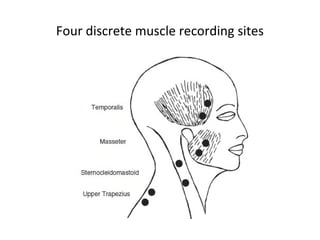
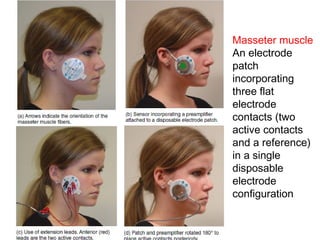
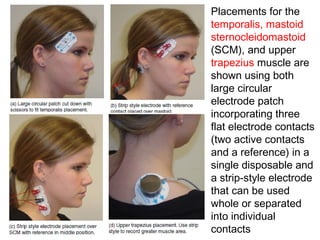
Four discrete muscle recording sites
Masseter muscle
An electrode
patch
incorporating
three flat
electrode
contacts (two
active contacts
and a reference)
in a single
disposable
electrode
configuration
Placements for the
temporalis, mastoid
sternocleidomastoid
(SCM), and upper
trapezius muscle are
shown using both
large circular
electrode patch
incorporating three
flat electrode contacts
(two active contacts
and a reference) in a
single disposable and
a strip-style electrode
that can be used
whole or separated
into individual
contacts
6 Hypnosis in Dentistry
Bruce Peltier
• The dental appointment is an ideal situation
for hypnosis
• Myths and misunderstandings prevent
dentists, hygienists, and assistants from using
hypnotic methods
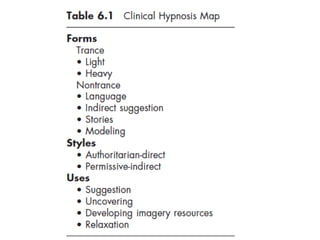
• There are several useful forms of hypnosis
which include trance (aware) and nontrance
experiences, hypnotic language, distraction,
metaphor (repeat more or less similar), and
indirect suggestion
• Many hypnotic techniques are easy to
learn and use in everyday dental practice
• Dental practitioners owe it to their
patients to utilize them
Hypnotic interventions can add to
clinical practice(Holroyd, 1987):
in the following ways
•enhanced rapport
•increased suggestibility
•positive use of attention and awareness
•utilization of dissociation
•access to the mind–body relationship
•use of imagery
•responsiveness to the doctor’s messages
Myths
• Myth #1: Hypnosis Is a Trance State
• Myth #2: Hypnosis Involves Loss of Control
• Myth #3: Hypnosis Is Dangerous
• Myth #4: The Doctor Must Possess an
Elaborate Set of Skills and Must Exercise Them
Charismatically
Part II Anxiety, Fear, and
Pain
7 Environmental,
Emotional, and Cognitive
Determinants
of Dental Pain
Daniel W. McNeil, Alison M.
Vargovich, John T. Sorrell, and Kevin
E. Vowles
• Acute Orofacial pain shares similarities but
also has unique aspects, relative to other
forms of bodily pain
• The experience and expression of Orofacial
pain is determined by a multitude of factors
that can be conceptualized across
environmental, emotional, and cognitive
domains
Environmental Determinants
• Dental Personnel- dentist is stimuli for fear
• Relationships with Oral Healthcare Providers
and Communications
• Distraction- shifting the pat’s attention from
pain
• Predictability- Pat’s ability to predict pain
• Controllability- Pat’s ability to control his mind
Emotional Determinants
• Mowrer’s Two-Factor Theory- CR and UCR
• Davey’s Model- Latent inhibition
• Fear-Avoidance Model
• Expectancy Model for Fear- expectation for
anxiety
• Acceptance-Based Models- Acceptance and
Commitment therapy
CR- Conditioned Response, UCR- Unconditioned Response
Commitment- agreement to do something in future
Cognitive Determinants
• The cognitive-evaluative component
includes attentional processes,
anticipation, and memory for past
experiences of pain (Peyron et al., 1999)
• Dental patients with a tendency to
catastrophize may focus intently on
(potential) pain and may worry excessively
prior to treatment about pain
• Catastrophize- a sudden disaster that
causes many people to suffer
Individual Differences
• Individuals with variants of the melanocortin-1
receptor (MC1R) gene, which are associated
with red hair color,
• seem to have greater pain sensitivity and
reduced sensitivity to general and cutaneous
local anesthesia, and
• therefore require more medication to produce
adequate anesthesia (Liem et al., 2004, 2005).
Gender, Culture, and Lifespan Issues
• Younger individuals are more likely to report
pain, while older adults of high SES
are less likely to report pain (Pau, Croucher,
& Marcenes, 2003).
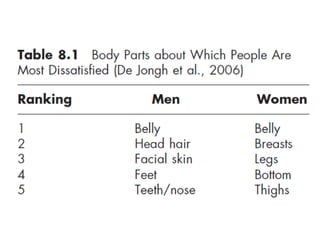
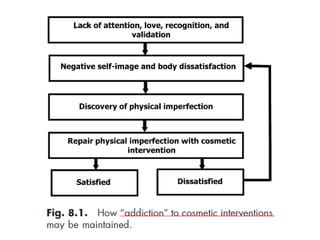
8 Cosmetic Dentistry:
Concerns with Facial
Appearance and
Body Dysmorphic Disorder
Ad De Jongh
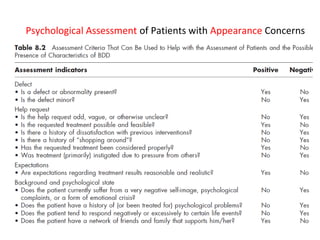
Psychological Assessment of Patients with Appearance Concerns
9 Chronic Orofacial Pain:
Biobehavioral Perspectives
Samuel F. Dworkin and Richard
Ohrbach
perspectives= point of view
• Defining pain: An unpleasant sensory
and emotional experience associated
with actual or potential tissue damage or
described in terms of such damage
• Biobehavioral perspectives on TMD: The
most important chronic orofacial pain
conditions dentists encounter
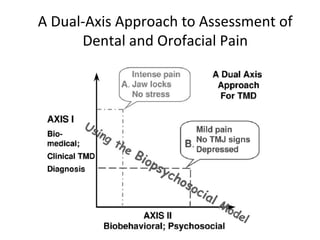
A Dual-Axis Approach to Assessment of
Dental and Orofacial Pain
12 Dental Fear and Anxiety
Associated with Oral Health
Care:
Conceptual and Clinical
Issues
Daniel W. McNeil and Cameron L.
Randall
10 Chairside Techniques for
Reducing Dental Fear
Ronald W. Botto, Evelyn Donate-
Bartfield, and Patricia Nihill
• Dental care-related fear and anxiety are
influenced by how and when a patient utilizes
dental treatment
• Fears and anxieties about dental treatment
can develop via a number of mechanisms and
manifest in diverse ways; they are highly
individualized, complex phenomena which in
extreme forms can meet criteria for Specific
Phobia
• Dental care-related fear and anxiety are
prevalent global public health concerns that
impact oral health, systemic health,
psychological/emotional health, and quality of
life
• Appropriate and comprehensive assessment of
dental care-related fear and anxiety is critical for
understanding an individual patient’s experience,
and necessary for successful reduction of the
aversive states
• Dental fear contributes greatly to
avoidance of dental care.
• Discussing a patient’s fear actually helps
reduce their anxiety
• Four A’s of interacting with an anxious
patient: Ask, Assess, Acknowledge,
Address
• Extremely anxious dental patients may
require referral to a mental healthcare
provider for more complex behavioral
interventions
• Ethical issues associated with addressing
dental fear are examined
• Etiology of Dental Care- Related Fear and Anxiety
- Conditioning
- Social Learning
- Biological influence
- Cognitive Factors
- Personality
- Pain Related Factors
- Classification of Patients
Treatment:
Non-Relaxation-Based Techniques
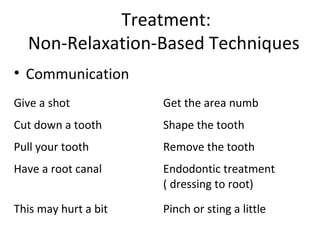
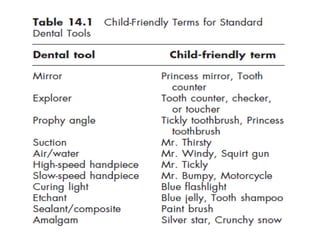
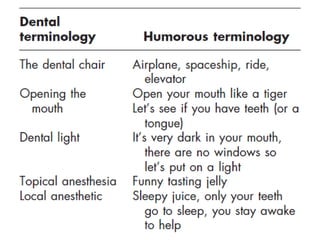
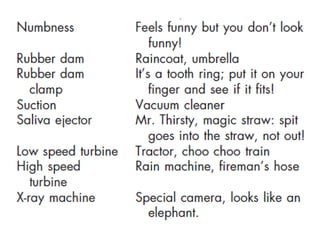
• Communication
Give a shot Get the area numb
Cut down a tooth Shape the tooth
Pull your tooth Remove the tooth
Have a root canal Endodontic treatment
( dressing to root)
This may hurt a bit Pinch or sting a little
Distraction
• The purpose of distraction techniques is
to refocus the patient’s attention away
from the potentially painful stimulus or
procedure
• “jiggling” of the patient’s cheek during
the administration of local anesthesia
• children is asking them to hold their leg
up in the air
Quasi-Relaxation-Based Techniques
• relaxation indirectly
• simply asked to relax and reduce the
muscle tension in the measured area
Guided Imagery
• ask the patient about particularly
pleasant, relaxing scenes they would like
to imagine
• the patient is asked to get relaxed, close
their eyes, engage in slow regular
breathing, and begin imagining the scene
in as much detail as possible
Relaxation-Based Technique
• Progressive relaxation-
• Modified systematic desensitization,
- from lower level to higher level
• Hypnosis- it needs formal training
Brief Relaxation Training
Procedure for Use
in Dentistry
Ronald W. Botto
(appendix)
Steps of Relaxation
Procedure
• Rapport
• Relaxation
• Suggestion
• Mental Image
• Dental Treatment
• End of Relaxation
• Removing Relaxation
Patient Instructions
• A good distraction technique is breath control.
• Tell the patient to concentrate on breathing
through their nose rather than their mouth
and to breathe according to your instructions
Removing Relaxation
• All right, as I count feel the energy returning
5 . . . feel the energy returning . . .
4 . . . energy flowing back into our body . .
3 . . . energy returning . . .
2 . . . Waking up . ..
1—WIDE AWAKE, FULLY ALERT.
Any remaining drowsiness will quickly pass
11 Sleep and Awake
Bruxism
Alan G. Glaros and Cody Hanson
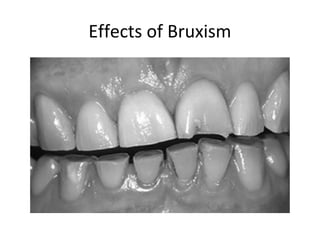
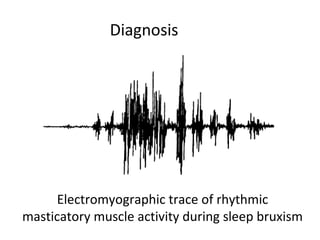
• Sleep bruxism, characterized by rhythmic
masticatory muscle activity and grinding sounds,
appears throughout life and occurs in about 8.0–
8.4% of adults. Tooth wear is the most common
effect of sleep bruxism
• Awake bruxism is characterized by clenching and
can produce pain in the masticatory muscles and
temporomandibular joint. Awake bruxism occurs
very frequently in adults, especially those
reporting masticatory muscle pain
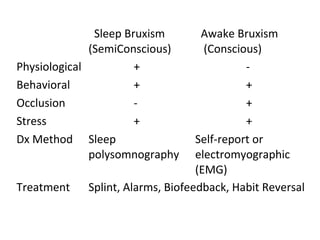
Sleep Bruxism
(SemiConscious)
Awake Bruxism
(Conscious)
Physiological + -
Behavioral + +
Occlusion - +
Stress + +
Dx Method Sleep
polysomnography
Self-report or
electromyographic
(EMG)
Treatment Splint, Alarms, Biofeedback, Habit Reversal
Effects of Bruxism
Electromyographic trace of rhythmic
masticatory muscle activity during sleep bruxism
Diagnosis
Part III Changing
Behaviors
13 Behavior Management
in Dentistry: Thumb
Sucking
Raymond G. Miltenberger and John
T. Rapp
• Thumb sucking, common in young
children, often causes dental problems
when it persists for years
• Thumb sucking persists in most cases
because it modulates arousal or provides
sensory stimulation
• Successful treatments must work in the
absence of the parent as thumb sucking
often occurs when the child is alone
• Successful treatments involve response
prevention, management of co-varying
behaviors, consequence procedures, and
combination procedures
Treatment for Thumb Sucking
• Antecedent Intervention-
Response Prevention, Response Covariation
• Consequent Intervention-
Response Cost, Aversive Taste Treatment,
Contingent Auditory Stimulation
• Combination Intervention-
14 Management of
Children’s Distress and
Disruptions during
Dental Treatment
Keith D. Allen and Dustin P.
Wallace
• It is often the real or perceived
unpleasantness of the dental situation
that generates a child’s desire to escape;
this leads, in turn, to distress and
disruptive behavior
• The key to good behavior management
is the creation of a pleasant experience
for the child by minimizing fear, anxiety,
and discomfort.
• Dentists can control many variables that
directly and significantly influence
behavior through the
use of clear communication,
frequent praise,
modeling,
engaging distractions,
brief breaks
Positive Approaches to Behavior Management
• Reduction of Discomfort
• Parent Presence in Operatory
• Modeling
• Effective Communication
• Distraction
• Reinforcement of Good Behavior
• Scheduled Breaks
17 Drooling and Tongue
Protrusion
Jan J. W. Van der Burg, Robert
Didden, and Giulio E. Lancioni
• Blasco and Allaire (1992) define drooling
as “the unintentional loss of saliva and
other contents from the mouth
Tongue Protrusion: Definition,
Prevalence, and Cause
• often defined as the tongue sticking out of
the mouth
• tongue protrusion may be observed in
individuals with ID (Intellectual Disability)
• For drooling, five types of behavioral
procedures have been shown to be
effective:
(a) instruction, prompting, and positive
social reinforcement;
(b) negative social reinforcement and other
decelarative procedures;
(c) cueing techniques;
(d) microswitch-based techniques, and
(e) self-management procedures
Instruction, Prompting, and Positive
Social Reinforcement
• the child is instructed to wipe the face
whenever the chin is wet or is prompted to
swallow if the trainer spots saliva on the
child’s lip or before beginning to talk..
• After that- positive remark is given,
occasionally paired with a token or an
edible
Negative Social Reinforcement and
Other
Decelarative Procedures
• Contingent upon the occurrence of
drooling, a negative stimulus such as a
verbal warning or a time-out is given
• The most intrusive overcorrection
procedure was used: contingent upon
drooling, a verbal reprimand was given
and the child was prompted to wipe his or
her chin 50 times
Cueing Techniques
• An electronic cueing device emits visual,
auditory, or tactile cues (i.e., antecedent
stimuli) to increase the frequency of
swallowing or wiping the mouth and chin
• an auditory cue from a buzzer on the table
was presented contingent upon the
occurrence of drooling
Microswitch-Based Techniques
• consisted of a pressure microswitch, an
amplified MP3 for musical stimulation,and
an electronic control system, all
embedded in the napkin that the
participant wore
Self-Management
Teaching the child
•to self-monitor and self-evaluate his/her
physical appearance,
•to self-initiate an appropriate response,
•to self-reinforce both appropriate responses
and appropriate physical appearance
• Treatment: his teacher would hold the
child’s head so that eye contact was
assured and imitated the child’s behavior
• Later on, the teacher refrained from
imitation but gave a physical prompt
(grasping the child’s cheek) each time the
child showed the target behavior
• This prompt was eventually modified in
that the teacher touched the child’s chin
lightly with her index finger
23 The Use of Humor in
Pediatric Dentistry
Ari Kupietzky and Joseph Shapira
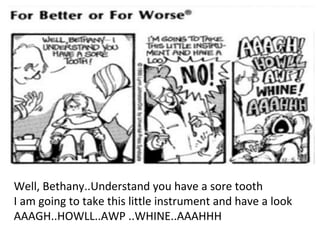
Well, Bethany..Understand you have a sore tooth
I am going to take this little instrument and have a look
AAAGH..HOWLL..AWP ..WHINE..AAAHHH
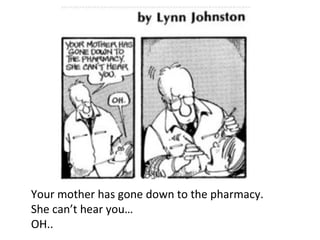
Your mother has gone down to the pharmacy.
She can’t hear you…
OH..
15 Stress, Coping, and
Periodontal Disease
Gernot Wimmer and Walther
Wegscheider
• Stress may have a negative impact on
general health.
• It has been assumed that psychological
stresses and psychosocial factors may
play a role in the development of chronic
diseases like periodontitis.
• Individual stress coping strategies may
exert influence on the onset, development,
and severity of periodontal disease.
• Definition of Stress Coping: The mode of
confronting stressors and dealing with
them or the efforts made to overcome
difficulties, stress, and stressful situations
is termed coping
• Inadequate stress coping strategies might
modulate the impact of stress and may be
considered as potential risk factor for
periodontal disease
• Refer stressed patients to
- appropriate specialists for psychological-
psychiatric support, stress management, or
addiction counseling
• This would be an additional step toward
minimizing risk factors for periodontal
disease
Different Types of Stress Coping
1. Resigned coping- Avoidance, escape, social
withdrawal, resignation, self-pity, rumination
2. Active coping- Response control, situation
control, minimization, positive self-instruction
3. Distractive coping- Distraction, search for
self-affirmation, substitute gratification, need for
social support
4. Defensive coping- Averting blame, accusation of
self, playing down in comparison with others
5. Coping with aggression and drug use -Aggression,
drug use
16 Self-Efficacy Perceptions
in Oral Health Behavior
Anna-Maija Syrjälä
• Dental self-efficacy—a person’s
conception about his/her ability to perform
oral self-care—is important in changing
oral health behavior
• Sources of dental self-efficacy are the
model received from home and school, a
dentist’s support, one’s own experience in
managing oral self-care, and emotional
experiences in dental care
In order to improve patients’ dental self-efficacy,
•the dentist –
- provides information concerning oral health,
- offers positive feedback to patients,
- gives support to patients,
- provides models of oral health behavior, and
- creates a secure, peaceful atmosphere
• It is important to improve parents’ dental
self-efficacy, which in turn is related to the
oral health behavior of their children
• Motivational interviewing is a useful
method for improving self-efficacy and
changing health behavior.
Kakudate et al. (2009)
Six steps
cognitive behavioral approach to improving
periodontal patients’ self-care.
• The first step – identifying the
problem, during which information about
knowledge, obstacles, and beliefs related
to oral self-care is gathered in an interview
• The second step includes creating
commitment and confidence so the
patient can change his/her behavior
• The third step includes increasing
awareness of the patient’s behavior..
Self-monitoring of daily brushing and
interdental cleaning is used to improve the
patient’s consciousness of her/ his behavior
• The fourth step includes developing and
implementation the action plan.
• On the basis of the patient’s behavior, oral
hygiene reported in the diary, and the
status of oral hygiene, a short term plan
for action with gradual degrees, is
developed
• The fifth step includes evaluation of the plan:
Has the patient achieved the action plan?
- Success in achieving the plan is praised and
support is given
• The sixth step includes maintaining the
change and preventing a relapse.
There are high-risk situations, such as
traveling and long working hours, which may
cause a relapse in maintaining the acquired
behavior
Part IV Professional
Practice
18 Listening
Bruce Peltier
• Good listening is essential to an effective
practice.
• Hearing and listening are not
synonymous.
• Most dental practices would benefit from
better listening skills.
• Common barriers to good listening can be
identified and modulated.
The most
powerful impact on patient satisfaction
• having a calm manner
• saying reassuring things
• taking seriously what the patient had to
say
• telling the patient what was to be done
• encouraging the patient to ask questions
There are two kinds of barriers to effective
listening in dental practice
• The first is structural and global.
• The second consists of specific, personal
micro-behaviors that get in the way
Facilitating responses are helpful to encourage
the speaker (Patient)
• “Tell me more.”
• “Wow.”
• “Huh.”
• “That’s really interesting.”
• “I didn’t know that.”
• “Say more.”
• “Go on.”
• “Really?”
• “That makes a lot of sense.”
• and finally, “That’s right.”
• While listening, notice how people present
their message, combine this observation
with the situation and context along with
your prior knowledge of the patient, and
guess at what they might be feeling
• We speak with more than our mouths.
We listen with more than our ears.
—(Mister) Fred Rogers (2005, p. 79)
What to Do?
• First, decide who you are as a dentist.
Choose your identity
• Are you a restorative technician or a doctor?
Are you a sales person or a healer?
• Is it your goal in life to achieve a high rate of
“treatment plan acceptance” or do you have
more important professional goals?
- The answer to these questions will
determine your stance on listening
Second, make a commitment to
self-improvement
• Put yourself on a lifelong program
• Examine your attitude.
• Figure out how selfcentered or even
narcissistic you are.
• Decide whether you want to be more
interested in other people and what they
think and feel.
• Become more quiet
• Listen more than you talk.
• Stop trying to change or influence people
without their permission or specific
request. (People generally dislike
unsolicited advice.)
• Stop competing in conversations.
• Don’t draw attention to yourself.
• Pay attention to others.
• You already know how you think.
• Figure out how others think
19 Interpersonal
Communication Training in
Dental Education
Toshiko Yoshida and Kazuhiko
Fujisaki
• The five main factors that influence the
development of communication training are
(1) the learner’s level, needs, and readiness;
(2) the goal setting for the program;
(3) the use of appropriate teaching methods
encouraging active learning;
(4) the availability of quality resources; and
(5) the evaluation of the performance of the
students
• Role-playing with peers and role-playing with
non-computer-simulated patients (SPs) are
two major teaching methods to encourage
active learning
• A successful training program using SPs needs
to ensure that the SPs are trained to
guarantee quality performance, that robust
cases are developed, and that the facilitators
are trained for their roles
20 Biopsychosocial
Considerations in Geriatric
Dentistry
Georgia Dounis and David Cappelli
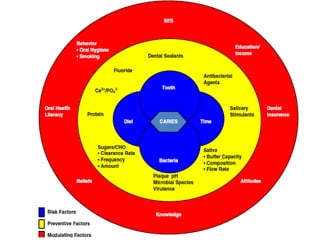
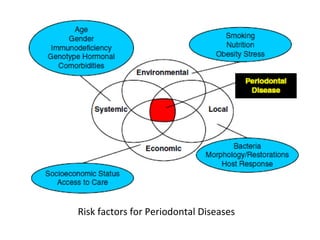
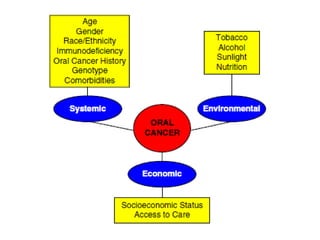
Risk factors for Periodontal Diseases
21 Health Behavior and
Dental Care of Diabetics
Mirka C. Niskanen and Matti L.
E. Knuuttila
• To achieve good health behavior in oral
and diabetes care, collaboration between
diabetic patient, dentist, and other medical
professionals is highly recommended.
• There is a bidirectional link between
diabetes and periodontal infection:
periodontitis might have a negative impact
on metabolic control and progression of
complications, while poorly controlled
diabetes and diabetic complications
increase the risk of periodontal infections
• Dentist should be aware of the special features
in the treatment of diabetic patients, such as
how to handle emergency situations, the need
for sterile, anti-traumatic treatment, and the use
of prophylactic antibiotics
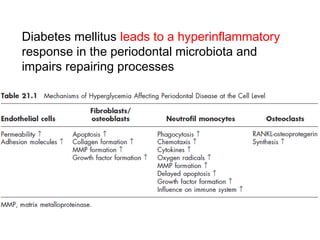
Diabetes mellitus leads to a hyperinflammatory
response in the periodontal microbiota and
impairs repairing processes
Diabetes self-care practices
• Insulin therapy
• Assessment of glycemic control
• Medical nutrition therapy
• Physical activity and smoking cessation
• Regular foot care examinations
• Oral care
• Regular controls
Emergency Situations in Dental Clinic
• Hypoglycemia- insulin overdose and lack of
food intake- problems with conversation,
incoherence, lethargy, uncooperativeness,
mood changes, hunger, nausea, sweating,
tachycardia, stomach symptoms, and cold
and wet skin
• Hyperglycemia-
Hyperglycemia:
instead, is not acutely life-threatening
• It is caused by neglect of insulin therapy or by a
greater need for insulin.
• Symptoms include thirst, hunger, and urination
with significant weight loss a couple of days
before a hyperglycemic emergency.
• Other symptoms are itching, fatigue, headache,
abdominal pain, nausea, vomiting, and mental
stupor
22 Oral Health Promotion
with People with Special
Needs
Paul Glassman
• Oral health professionals need to communicate with
and work with caregivers instead of the individual in
many circumstances
• This may require understanding and working with
the residential facility where the individual lives and
one or more organizations responsible for providing
medical and social services for the individual
• People with special needs can face
informational, physical, behavioral, and
organizational barriers to having good oral
health
• Oral health professionals who understand
how to address these barriers can make a
difference in the oral health of the most
vulnerable and underserved members of
our society
four primary barriers:
• Information obstacles: Does the individual or
their caregivers understand what needs to be
done?
• Physical obstacles: Can the individual or
their caregivers physically perform needed
procedures?
• Behavioral obstacles: Is the individual resistant
to performing or having someone else perform
preventive procedures?
• Organizational obstacles: Is there a system in
the home, community, or facility where the
individual resides that can support and help
Some simple and direct techniques that caregivers
can use to improve communication include
the following
• Establish eye contact.
• Use simple declarative sentences.
• Use words and phrases that are perceived
as helping not giving orders.
• Speak in a calm but friendly and firm voice
• using the individual’s name frequently.
• Give one instruction at a time.
• Offer choices whenever possible
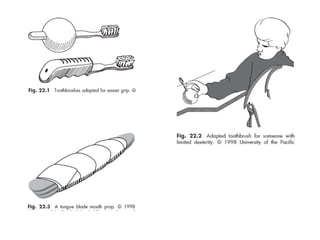
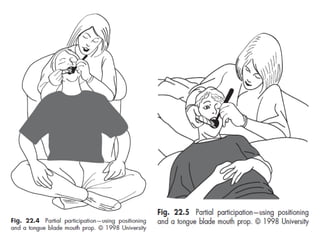
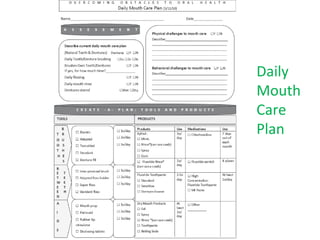
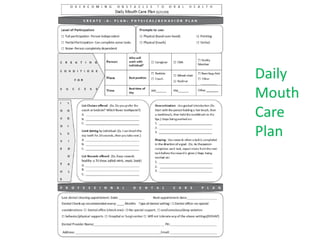
Daily
Mouth
Care
Plan
25 Role of Dentists as Oral
Physicians in Physical and
Mental Health
Donald B. Giddon and Ruth
Hertzman-Miller
• Sigmund Freud(1961), the father of
psychoanalysis described the early
development of an infant’s worldview as
centered first on the mouth as the source of
pain and pleasure
• an infant learns to distinguish objects
accessible to the mouth from the mother
(Jean Piaget 1952)
• Consistent with Maslow’s theory of the
hierarchy of needs (Maslow, 1943), the
mouth is also invested in satisfying
psychosocial as well as physical needs
• These include satisfying the basic needs
for survival by intake of food, water, and
socialization, as well as the more complex
need for love
24 Work Stress, Burnout
Risk, and Engagement in
Dental Practice
Ronald C. Gorter
For Dentist
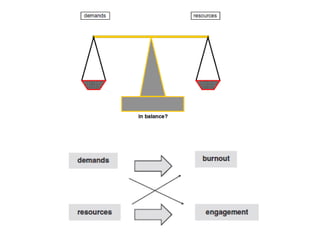
• Demands from the dental environment,
when not adequately coped with, may
result in professional burnout
• Stimulating aspects from working as a
dentist relate strongly to positive
engagement and have a buffering effect
on burnout risk
• A strong relation exists between burnout
risk and physical complaints.
• How dental students cope with study
stress may be indicative for how they cope
with professional demands later in their
career
• Since experiencing stress is highly
determined by the interaction between the
person and the environment, individually
tailored prevention measures are an
adequate means to prevent burnout.
• Job demands refer to those aspects of a job that
require sustained physical and/or psychological effort
and are therefore associated with certain physiological
and/or psychological costs.
• Job resources refer to the physical, psychological,
social, or organizational aspects of a job that
(a) may reduce the negative effects of
job demands,
(b) are functional in achieving work goals, and
(c) stimulate personal growth, learningand development
(Hakanen, Schaufeli, & Ahola, 2008)
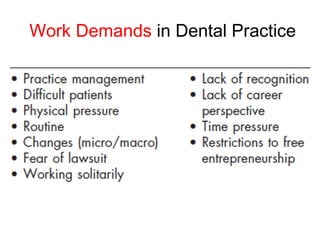
Work Demands in Dental Practice
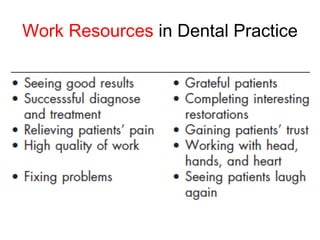
Work Resources in Dental Practice
Burnout profiles of dentists
• The treadmill walker: This dentist is caught in the
daily, repetitive routine of dental practice. He
can see no way out and is resigned to his fate.
He can see few career options, and he feels that
his professional development is at an end.
• The crushed idealist: The crushed idealist is the
disillusioned dentist. His image of dental practice
has been crushed by the reality of clinical
practice and can see no way forward in his
career.
Burnout profiles of dentists
• The frantic runner: This type of dentist
tries to pack more and more into an
already busy schedule. He has the
tendency to become physically and
emotionally exhausted.
• The disgusted dentist: This dentist has
come to dislike every aspect of dental
practice. He realized at an early stage in
his career that he had chosen the wrong
profession. He finds it difficult to interact
with his patients and yearns for retirement.
Burnout profiles of dentists
• The depressed dentist: This type of dentist
is miserable and unhappy. He finds no
rest from his depressed state whether at
home or at work. He neglects his family,
colleagues, and patients and finds little
satisfaction in any aspect of his lifestyle.
Burnout Prevention
• Identification and acknowledgment of work
demands
• Learning to relax
• Time management and organizational of work
• Realistic professional expectations
• Social skills
• Healthy lifestyle
• Collegial Contacts
• Dental Schools
Bring Back Blocs
• Designing is Dentist’s responsibility
• Forces analysis is essential to Prosthesis Success
• Patient- Dentists Relationship & Emotional Control
is playing vital role on-
Clinic Success, Patient’s Respect, Dentist’s Relax
• Geriatric Dentistry-1998
• Dental Implant- 2005-2010…..
• Biomaterial-2016….
• Behavioral Dentistry- 2018…..
• Sport Dentistry ??? Special Needs Dentistry ?? Dental
Allergy??
• MPS…8 Branches:..Complete, Partial, Gero, Oral & Max Pro,
Dental Material, Dental Implant, Biomaterial, Occlusion
Behavioral dentistry

Behavioral dentistry

  • 1.
  • 2.
    David I. Mostofskyand Farida Fortune First Edition- 2006 Second Edition- 2014
  • 3.
    Why we haveto approach this study? • Most oral diseases are preventable, but to prevent them, we must broaden our understanding of human behavior and the socio-ecological milieu in which they occur
  • 4.
    • the obviousconsiderations that must be taken into account for pediatric, geriatric, and special needs patients, different, but hardly unique, challenges routinely require resolution
  • 5.
    • There wasnever a serious consideration that the oft-quoted witty definition of dental practice could be axiomatically defined by three words: drill, fill, and bill
  • 6.
  • 7.
    1 Cultural Issuesin Dental Education Vishal R. Aggarwal and Farida Fortune
  • 8.
    • Populations arebecoming increasingly heterogeneous, migrating longer distances, and bringing with them different cultural expectations and needs • The cultural heterogeneity impacts on the management of oro-dental diseases, including etiological risk factors (related to harmful lifestyle habits) through behavioral differences displayed by patients from different cultures
  • 9.
    • Training adental workforce that is culturally and linguistically competent and that values the behavioral and psychosocial needs of multicultural populations is important • A dental workforce that will not only have the potential to reduce oral health inequalities, but also to deliver any communication, training, and clinical management with understanding, respect, and dignity needs to be developed
  • 10.
    2 Oral Healthand Quality of Life Marita R. Inglehart
  • 11.
    • Oral health-relatedquality of life (OHRQoL) refers to - how patients’ oral health affects their ability to function (e.g., chew and speak), their psychological and social well-being, and whether they experience pain/discomfort
  • 12.
    • Several validand reliable OHRQoL scales are available to assess children’s and adults’ OHRQoL • OHRQoL can guide clinicians to gain a better understanding of their patients’ oral health- related experiences and thus can increase the degree to which clinicians engage in patient- centered care
  • 13.
    • OHRQoL scalesoffer researchers an opportunity to assess subjects’ OHRQoL as a valuable outcome measure in basic science, clinical, and behavioral research • OHRQoL is a useful concept for dental educators because it focuses students on gaining a better understanding of their patients’ oral health-related experiences and care
  • 14.
    • A reviewof OHRQoL research shows that this concept can be useful in communicating oral health-related concerns to persons outside of the profession; • it shows the power of adaptation and acceptance of patients who lack access to care, and it points to the need for a differentiated approach when assessing OHRQoL
  • 19.
    3 Stress andInflammation Annsofi Johannsen and Anders Gustafsson
  • 20.
    • Psychosocial stresshas been associated with poor oral hygiene and smoking, and they seem to have a synergistic effect • Stressors have a detrimental effect on chronic immune-mediated inflammatory diseases, including periodontitis and also on the immune system
  • 21.
    • Stress seemsto have a hyperinflammatory effect rather than a hypoinflammatory effect • Clinical implications are obvious as it is important for members in the dental team to be aware of how stress can influence patient compliance and response to treatment
  • 23.
    4 Saliva inHealth and Disease Mahvash Navazesh
  • 24.
    • Multiple medicalconditions and medications can impact the quality and quantity of saliva, leading to diminished quality of life • Xerostomia is subjective complaint of dry mouth. Salivary gland hypofunction is objective evidence of low saliva flow rates.
  • 25.
    • Gene therapymay in the future be used for the management of radiation-induced salivary gland hypofunction. • Fungal infection and dental caries are the most common complications of chronic salivary gland hypofunction. • Oral healthcare providers can play a significant role in early detection of signs and symptoms of salivary gland hypofunction
  • 26.
    Functions of Saliva •Buffering capacity • Remineralization of teeth • Lubrication capacity • Repair of soft tissues • Digestion • Antimicrobial capacity
  • 27.
    Common Chronic Conditions Associatedwith Salivary Gland Hypofunction and /or Xerostomia in Adults • Irradiation • Chemotherapy • Medical conditions • Sjögren’s syndrome, sarcoidosis, scleroderma • Viral infections (HIV, HCV) • Alzheimer’s disease, depression, hypertension, • uncontrolled diabetes
  • 28.
    Medications affecting salivaryfunction • Anticholinergics • Antiemetics • Antidepressants (lithium, tricyclics) • Antihistamines • Antihypertensives • Antipsychotics • Antiretroviral therapy (protease inhibitors) • Decongestants • Appetite suppressants • Cytotoxic agents • Diuretics • Skeletal muscle relaxants
  • 29.
    Signs associated withChronic Salivary Gland Hypofunction •Dry, chapped lips; desiccated, dry, and fissured tongue •Fungal infection (angular cheilitis/ pseudomembranous and erythematous candidiasis) •Dental caries (cervical and root caries in articular) •Gingivitis •Mucositis •Traumatic oral lesions
  • 30.
    Symptoms • None (Oftenit may be asymptomatic) • Difficulty swallowing, chewing, speaking, licking stamps, wearing lipsticks • Bad taste, bad breath • Sore mouth, lips, tongue • Burning mouth, lips, tongue • Difficulty wearing removable intra oral prostheses • Frequent need to sip water with food • Frequent awakening at night with dry mouth • Dry mouth, nose, throat
  • 31.
    5 Surface EMGBiofeedback in Assessment and Functional Muscle Reeducation Bruce Mehler
  • 32.
    • Surface electromyography(sEMG) is a painless and noninvasive method of monitoring muscle activity and resting tonus that can be used both in assessment and training applications • Biofeedback techniques may be applied both for general relaxation training and in retraining of functional patterns of muscle activation.
  • 33.
    Four discrete musclerecording sites
  • 34.
    Masseter muscle An electrode patch incorporating threeflat electrode contacts (two active contacts and a reference) in a single disposable electrode configuration
  • 35.
    Placements for the temporalis,mastoid sternocleidomastoid (SCM), and upper trapezius muscle are shown using both large circular electrode patch incorporating three flat electrode contacts (two active contacts and a reference) in a single disposable and a strip-style electrode that can be used whole or separated into individual contacts
  • 36.
    6 Hypnosis inDentistry Bruce Peltier
  • 37.
    • The dentalappointment is an ideal situation for hypnosis • Myths and misunderstandings prevent dentists, hygienists, and assistants from using hypnotic methods • There are several useful forms of hypnosis which include trance (aware) and nontrance experiences, hypnotic language, distraction, metaphor (repeat more or less similar), and indirect suggestion
  • 38.
    • Many hypnotictechniques are easy to learn and use in everyday dental practice • Dental practitioners owe it to their patients to utilize them
  • 39.
    Hypnotic interventions canadd to clinical practice(Holroyd, 1987): in the following ways •enhanced rapport •increased suggestibility •positive use of attention and awareness •utilization of dissociation •access to the mind–body relationship •use of imagery •responsiveness to the doctor’s messages
  • 40.
    Myths • Myth #1:Hypnosis Is a Trance State • Myth #2: Hypnosis Involves Loss of Control • Myth #3: Hypnosis Is Dangerous • Myth #4: The Doctor Must Possess an Elaborate Set of Skills and Must Exercise Them Charismatically
  • 42.
    Part II Anxiety,Fear, and Pain
  • 43.
    7 Environmental, Emotional, andCognitive Determinants of Dental Pain Daniel W. McNeil, Alison M. Vargovich, John T. Sorrell, and Kevin E. Vowles
  • 44.
    • Acute Orofacialpain shares similarities but also has unique aspects, relative to other forms of bodily pain • The experience and expression of Orofacial pain is determined by a multitude of factors that can be conceptualized across environmental, emotional, and cognitive domains
  • 45.
    Environmental Determinants • DentalPersonnel- dentist is stimuli for fear • Relationships with Oral Healthcare Providers and Communications • Distraction- shifting the pat’s attention from pain • Predictability- Pat’s ability to predict pain • Controllability- Pat’s ability to control his mind
  • 46.
    Emotional Determinants • Mowrer’sTwo-Factor Theory- CR and UCR • Davey’s Model- Latent inhibition • Fear-Avoidance Model • Expectancy Model for Fear- expectation for anxiety • Acceptance-Based Models- Acceptance and Commitment therapy CR- Conditioned Response, UCR- Unconditioned Response Commitment- agreement to do something in future
  • 47.
    Cognitive Determinants • Thecognitive-evaluative component includes attentional processes, anticipation, and memory for past experiences of pain (Peyron et al., 1999) • Dental patients with a tendency to catastrophize may focus intently on (potential) pain and may worry excessively prior to treatment about pain • Catastrophize- a sudden disaster that causes many people to suffer
  • 48.
    Individual Differences • Individualswith variants of the melanocortin-1 receptor (MC1R) gene, which are associated with red hair color, • seem to have greater pain sensitivity and reduced sensitivity to general and cutaneous local anesthesia, and • therefore require more medication to produce adequate anesthesia (Liem et al., 2004, 2005).
  • 49.
    Gender, Culture, andLifespan Issues • Younger individuals are more likely to report pain, while older adults of high SES are less likely to report pain (Pau, Croucher, & Marcenes, 2003).
  • 50.
    8 Cosmetic Dentistry: Concernswith Facial Appearance and Body Dysmorphic Disorder Ad De Jongh
  • 53.
    Psychological Assessment ofPatients with Appearance Concerns
  • 54.
    9 Chronic OrofacialPain: Biobehavioral Perspectives Samuel F. Dworkin and Richard Ohrbach perspectives= point of view
  • 55.
    • Defining pain:An unpleasant sensory and emotional experience associated with actual or potential tissue damage or described in terms of such damage • Biobehavioral perspectives on TMD: The most important chronic orofacial pain conditions dentists encounter
  • 56.
    A Dual-Axis Approachto Assessment of Dental and Orofacial Pain
  • 58.
    12 Dental Fearand Anxiety Associated with Oral Health Care: Conceptual and Clinical Issues Daniel W. McNeil and Cameron L. Randall
  • 59.
    10 Chairside Techniquesfor Reducing Dental Fear Ronald W. Botto, Evelyn Donate- Bartfield, and Patricia Nihill
  • 60.
    • Dental care-relatedfear and anxiety are influenced by how and when a patient utilizes dental treatment • Fears and anxieties about dental treatment can develop via a number of mechanisms and manifest in diverse ways; they are highly individualized, complex phenomena which in extreme forms can meet criteria for Specific Phobia
  • 61.
    • Dental care-relatedfear and anxiety are prevalent global public health concerns that impact oral health, systemic health, psychological/emotional health, and quality of life • Appropriate and comprehensive assessment of dental care-related fear and anxiety is critical for understanding an individual patient’s experience, and necessary for successful reduction of the aversive states
  • 62.
    • Dental fearcontributes greatly to avoidance of dental care. • Discussing a patient’s fear actually helps reduce their anxiety • Four A’s of interacting with an anxious patient: Ask, Assess, Acknowledge, Address
  • 63.
    • Extremely anxiousdental patients may require referral to a mental healthcare provider for more complex behavioral interventions • Ethical issues associated with addressing dental fear are examined
  • 64.
    • Etiology ofDental Care- Related Fear and Anxiety - Conditioning - Social Learning - Biological influence - Cognitive Factors - Personality - Pain Related Factors - Classification of Patients
  • 65.
    Treatment: Non-Relaxation-Based Techniques • Communication Givea shot Get the area numb Cut down a tooth Shape the tooth Pull your tooth Remove the tooth Have a root canal Endodontic treatment ( dressing to root) This may hurt a bit Pinch or sting a little
  • 66.
    Distraction • The purposeof distraction techniques is to refocus the patient’s attention away from the potentially painful stimulus or procedure • “jiggling” of the patient’s cheek during the administration of local anesthesia • children is asking them to hold their leg up in the air
  • 67.
    Quasi-Relaxation-Based Techniques • relaxationindirectly • simply asked to relax and reduce the muscle tension in the measured area
  • 68.
    Guided Imagery • askthe patient about particularly pleasant, relaxing scenes they would like to imagine • the patient is asked to get relaxed, close their eyes, engage in slow regular breathing, and begin imagining the scene in as much detail as possible
  • 69.
    Relaxation-Based Technique • Progressiverelaxation- • Modified systematic desensitization, - from lower level to higher level • Hypnosis- it needs formal training
  • 70.
    Brief Relaxation Training Procedurefor Use in Dentistry Ronald W. Botto (appendix)
  • 71.
    Steps of Relaxation Procedure •Rapport • Relaxation • Suggestion • Mental Image • Dental Treatment • End of Relaxation • Removing Relaxation
  • 72.
    Patient Instructions • Agood distraction technique is breath control. • Tell the patient to concentrate on breathing through their nose rather than their mouth and to breathe according to your instructions
  • 73.
    Removing Relaxation • Allright, as I count feel the energy returning 5 . . . feel the energy returning . . . 4 . . . energy flowing back into our body . . 3 . . . energy returning . . . 2 . . . Waking up . .. 1—WIDE AWAKE, FULLY ALERT. Any remaining drowsiness will quickly pass
  • 74.
    11 Sleep andAwake Bruxism Alan G. Glaros and Cody Hanson
  • 75.
    • Sleep bruxism,characterized by rhythmic masticatory muscle activity and grinding sounds, appears throughout life and occurs in about 8.0– 8.4% of adults. Tooth wear is the most common effect of sleep bruxism • Awake bruxism is characterized by clenching and can produce pain in the masticatory muscles and temporomandibular joint. Awake bruxism occurs very frequently in adults, especially those reporting masticatory muscle pain
  • 76.
    Sleep Bruxism (SemiConscious) Awake Bruxism (Conscious) Physiological+ - Behavioral + + Occlusion - + Stress + + Dx Method Sleep polysomnography Self-report or electromyographic (EMG) Treatment Splint, Alarms, Biofeedback, Habit Reversal
  • 77.
  • 78.
    Electromyographic trace ofrhythmic masticatory muscle activity during sleep bruxism Diagnosis
  • 79.
  • 80.
    13 Behavior Management inDentistry: Thumb Sucking Raymond G. Miltenberger and John T. Rapp
  • 81.
    • Thumb sucking,common in young children, often causes dental problems when it persists for years • Thumb sucking persists in most cases because it modulates arousal or provides sensory stimulation
  • 82.
    • Successful treatmentsmust work in the absence of the parent as thumb sucking often occurs when the child is alone • Successful treatments involve response prevention, management of co-varying behaviors, consequence procedures, and combination procedures
  • 83.
    Treatment for ThumbSucking • Antecedent Intervention- Response Prevention, Response Covariation • Consequent Intervention- Response Cost, Aversive Taste Treatment, Contingent Auditory Stimulation • Combination Intervention-
  • 84.
    14 Management of Children’sDistress and Disruptions during Dental Treatment Keith D. Allen and Dustin P. Wallace
  • 85.
    • It isoften the real or perceived unpleasantness of the dental situation that generates a child’s desire to escape; this leads, in turn, to distress and disruptive behavior • The key to good behavior management is the creation of a pleasant experience for the child by minimizing fear, anxiety, and discomfort.
  • 86.
    • Dentists cancontrol many variables that directly and significantly influence behavior through the use of clear communication, frequent praise, modeling, engaging distractions, brief breaks
  • 87.
    Positive Approaches toBehavior Management • Reduction of Discomfort • Parent Presence in Operatory • Modeling • Effective Communication • Distraction • Reinforcement of Good Behavior • Scheduled Breaks
  • 89.
    17 Drooling andTongue Protrusion Jan J. W. Van der Burg, Robert Didden, and Giulio E. Lancioni
  • 90.
    • Blasco andAllaire (1992) define drooling as “the unintentional loss of saliva and other contents from the mouth
  • 91.
    Tongue Protrusion: Definition, Prevalence,and Cause • often defined as the tongue sticking out of the mouth • tongue protrusion may be observed in individuals with ID (Intellectual Disability)
  • 92.
    • For drooling,five types of behavioral procedures have been shown to be effective: (a) instruction, prompting, and positive social reinforcement; (b) negative social reinforcement and other decelarative procedures; (c) cueing techniques; (d) microswitch-based techniques, and (e) self-management procedures
  • 93.
    Instruction, Prompting, andPositive Social Reinforcement • the child is instructed to wipe the face whenever the chin is wet or is prompted to swallow if the trainer spots saliva on the child’s lip or before beginning to talk.. • After that- positive remark is given, occasionally paired with a token or an edible
  • 94.
    Negative Social Reinforcementand Other Decelarative Procedures • Contingent upon the occurrence of drooling, a negative stimulus such as a verbal warning or a time-out is given • The most intrusive overcorrection procedure was used: contingent upon drooling, a verbal reprimand was given and the child was prompted to wipe his or her chin 50 times
  • 95.
    Cueing Techniques • Anelectronic cueing device emits visual, auditory, or tactile cues (i.e., antecedent stimuli) to increase the frequency of swallowing or wiping the mouth and chin • an auditory cue from a buzzer on the table was presented contingent upon the occurrence of drooling
  • 96.
    Microswitch-Based Techniques • consistedof a pressure microswitch, an amplified MP3 for musical stimulation,and an electronic control system, all embedded in the napkin that the participant wore
  • 97.
    Self-Management Teaching the child •toself-monitor and self-evaluate his/her physical appearance, •to self-initiate an appropriate response, •to self-reinforce both appropriate responses and appropriate physical appearance
  • 98.
    • Treatment: histeacher would hold the child’s head so that eye contact was assured and imitated the child’s behavior • Later on, the teacher refrained from imitation but gave a physical prompt (grasping the child’s cheek) each time the child showed the target behavior • This prompt was eventually modified in that the teacher touched the child’s chin lightly with her index finger
  • 99.
    23 The Useof Humor in Pediatric Dentistry Ari Kupietzky and Joseph Shapira
  • 102.
    Well, Bethany..Understand youhave a sore tooth I am going to take this little instrument and have a look AAAGH..HOWLL..AWP ..WHINE..AAAHHH
  • 103.
    Your mother hasgone down to the pharmacy. She can’t hear you… OH..
  • 104.
    15 Stress, Coping,and Periodontal Disease Gernot Wimmer and Walther Wegscheider
  • 105.
    • Stress mayhave a negative impact on general health. • It has been assumed that psychological stresses and psychosocial factors may play a role in the development of chronic diseases like periodontitis. • Individual stress coping strategies may exert influence on the onset, development, and severity of periodontal disease.
  • 106.
    • Definition ofStress Coping: The mode of confronting stressors and dealing with them or the efforts made to overcome difficulties, stress, and stressful situations is termed coping • Inadequate stress coping strategies might modulate the impact of stress and may be considered as potential risk factor for periodontal disease
  • 107.
    • Refer stressedpatients to - appropriate specialists for psychological- psychiatric support, stress management, or addiction counseling • This would be an additional step toward minimizing risk factors for periodontal disease
  • 108.
    Different Types ofStress Coping 1. Resigned coping- Avoidance, escape, social withdrawal, resignation, self-pity, rumination 2. Active coping- Response control, situation control, minimization, positive self-instruction 3. Distractive coping- Distraction, search for self-affirmation, substitute gratification, need for social support 4. Defensive coping- Averting blame, accusation of self, playing down in comparison with others 5. Coping with aggression and drug use -Aggression, drug use
  • 109.
    16 Self-Efficacy Perceptions inOral Health Behavior Anna-Maija Syrjälä
  • 110.
    • Dental self-efficacy—aperson’s conception about his/her ability to perform oral self-care—is important in changing oral health behavior • Sources of dental self-efficacy are the model received from home and school, a dentist’s support, one’s own experience in managing oral self-care, and emotional experiences in dental care
  • 111.
    In order toimprove patients’ dental self-efficacy, •the dentist – - provides information concerning oral health, - offers positive feedback to patients, - gives support to patients, - provides models of oral health behavior, and - creates a secure, peaceful atmosphere
  • 112.
    • It isimportant to improve parents’ dental self-efficacy, which in turn is related to the oral health behavior of their children • Motivational interviewing is a useful method for improving self-efficacy and changing health behavior.
  • 113.
    Kakudate et al.(2009) Six steps cognitive behavioral approach to improving periodontal patients’ self-care. • The first step – identifying the problem, during which information about knowledge, obstacles, and beliefs related to oral self-care is gathered in an interview
  • 114.
    • The secondstep includes creating commitment and confidence so the patient can change his/her behavior
  • 115.
    • The thirdstep includes increasing awareness of the patient’s behavior.. Self-monitoring of daily brushing and interdental cleaning is used to improve the patient’s consciousness of her/ his behavior
  • 116.
    • The fourthstep includes developing and implementation the action plan. • On the basis of the patient’s behavior, oral hygiene reported in the diary, and the status of oral hygiene, a short term plan for action with gradual degrees, is developed
  • 117.
    • The fifthstep includes evaluation of the plan: Has the patient achieved the action plan? - Success in achieving the plan is praised and support is given
  • 118.
    • The sixthstep includes maintaining the change and preventing a relapse. There are high-risk situations, such as traveling and long working hours, which may cause a relapse in maintaining the acquired behavior
  • 119.
  • 120.
  • 121.
    • Good listeningis essential to an effective practice. • Hearing and listening are not synonymous. • Most dental practices would benefit from better listening skills. • Common barriers to good listening can be identified and modulated.
  • 122.
    The most powerful impacton patient satisfaction • having a calm manner • saying reassuring things • taking seriously what the patient had to say • telling the patient what was to be done • encouraging the patient to ask questions
  • 123.
    There are twokinds of barriers to effective listening in dental practice • The first is structural and global. • The second consists of specific, personal micro-behaviors that get in the way
  • 124.
    Facilitating responses arehelpful to encourage the speaker (Patient) • “Tell me more.” • “Wow.” • “Huh.” • “That’s really interesting.” • “I didn’t know that.” • “Say more.” • “Go on.” • “Really?” • “That makes a lot of sense.” • and finally, “That’s right.”
  • 125.
    • While listening,notice how people present their message, combine this observation with the situation and context along with your prior knowledge of the patient, and guess at what they might be feeling • We speak with more than our mouths. We listen with more than our ears. —(Mister) Fred Rogers (2005, p. 79)
  • 126.
    What to Do? •First, decide who you are as a dentist. Choose your identity • Are you a restorative technician or a doctor? Are you a sales person or a healer? • Is it your goal in life to achieve a high rate of “treatment plan acceptance” or do you have more important professional goals? - The answer to these questions will determine your stance on listening
  • 127.
    Second, make acommitment to self-improvement • Put yourself on a lifelong program • Examine your attitude. • Figure out how selfcentered or even narcissistic you are. • Decide whether you want to be more interested in other people and what they think and feel. • Become more quiet
  • 128.
    • Listen morethan you talk. • Stop trying to change or influence people without their permission or specific request. (People generally dislike unsolicited advice.) • Stop competing in conversations. • Don’t draw attention to yourself. • Pay attention to others. • You already know how you think. • Figure out how others think
  • 129.
    19 Interpersonal Communication Trainingin Dental Education Toshiko Yoshida and Kazuhiko Fujisaki
  • 130.
    • The fivemain factors that influence the development of communication training are (1) the learner’s level, needs, and readiness; (2) the goal setting for the program; (3) the use of appropriate teaching methods encouraging active learning; (4) the availability of quality resources; and (5) the evaluation of the performance of the students
  • 131.
    • Role-playing withpeers and role-playing with non-computer-simulated patients (SPs) are two major teaching methods to encourage active learning • A successful training program using SPs needs to ensure that the SPs are trained to guarantee quality performance, that robust cases are developed, and that the facilitators are trained for their roles
  • 132.
    20 Biopsychosocial Considerations inGeriatric Dentistry Georgia Dounis and David Cappelli
  • 134.
    Risk factors forPeriodontal Diseases
  • 136.
    21 Health Behaviorand Dental Care of Diabetics Mirka C. Niskanen and Matti L. E. Knuuttila
  • 137.
    • To achievegood health behavior in oral and diabetes care, collaboration between diabetic patient, dentist, and other medical professionals is highly recommended. • There is a bidirectional link between diabetes and periodontal infection: periodontitis might have a negative impact on metabolic control and progression of complications, while poorly controlled diabetes and diabetic complications increase the risk of periodontal infections
  • 138.
    • Dentist shouldbe aware of the special features in the treatment of diabetic patients, such as how to handle emergency situations, the need for sterile, anti-traumatic treatment, and the use of prophylactic antibiotics
  • 139.
    Diabetes mellitus leadsto a hyperinflammatory response in the periodontal microbiota and impairs repairing processes
  • 140.
    Diabetes self-care practices •Insulin therapy • Assessment of glycemic control • Medical nutrition therapy • Medical nutrition therapy • Physical activity and smoking cessation • Regular foot care examinations • Oral care • Regular controls
  • 141.
    Emergency Situations inDental Clinic • Hypoglycemia- insulin overdose and lack of food intake- problems with conversation, incoherence, lethargy, uncooperativeness, mood changes, hunger, nausea, sweating, tachycardia, stomach symptoms, and cold and wet skin • Hyperglycemia-
  • 142.
    Hyperglycemia: instead, is notacutely life-threatening • It is caused by neglect of insulin therapy or by a greater need for insulin. • Symptoms include thirst, hunger, and urination with significant weight loss a couple of days before a hyperglycemic emergency. • Other symptoms are itching, fatigue, headache, abdominal pain, nausea, vomiting, and mental stupor
  • 143.
    22 Oral HealthPromotion with People with Special Needs Paul Glassman
  • 144.
    • Oral healthprofessionals need to communicate with and work with caregivers instead of the individual in many circumstances • This may require understanding and working with the residential facility where the individual lives and one or more organizations responsible for providing medical and social services for the individual
  • 145.
    • People withspecial needs can face informational, physical, behavioral, and organizational barriers to having good oral health • Oral health professionals who understand how to address these barriers can make a difference in the oral health of the most vulnerable and underserved members of our society
  • 146.
    four primary barriers: •Information obstacles: Does the individual or their caregivers understand what needs to be done? • Physical obstacles: Can the individual or their caregivers physically perform needed procedures? • Behavioral obstacles: Is the individual resistant to performing or having someone else perform preventive procedures? • Organizational obstacles: Is there a system in the home, community, or facility where the individual resides that can support and help
  • 149.
    Some simple anddirect techniques that caregivers can use to improve communication include the following • Establish eye contact. • Use simple declarative sentences. • Use words and phrases that are perceived as helping not giving orders. • Speak in a calm but friendly and firm voice • using the individual’s name frequently. • Give one instruction at a time. • Offer choices whenever possible
  • 150.
  • 152.
    25 Role ofDentists as Oral Physicians in Physical and Mental Health Donald B. Giddon and Ruth Hertzman-Miller
  • 153.
    • Sigmund Freud(1961),the father of psychoanalysis described the early development of an infant’s worldview as centered first on the mouth as the source of pain and pleasure • an infant learns to distinguish objects accessible to the mouth from the mother (Jean Piaget 1952)
  • 154.
    • Consistent withMaslow’s theory of the hierarchy of needs (Maslow, 1943), the mouth is also invested in satisfying psychosocial as well as physical needs • These include satisfying the basic needs for survival by intake of food, water, and socialization, as well as the more complex need for love
  • 155.
    24 Work Stress,Burnout Risk, and Engagement in Dental Practice Ronald C. Gorter For Dentist
  • 156.
    • Demands fromthe dental environment, when not adequately coped with, may result in professional burnout • Stimulating aspects from working as a dentist relate strongly to positive engagement and have a buffering effect on burnout risk • A strong relation exists between burnout risk and physical complaints.
  • 157.
    • How dentalstudents cope with study stress may be indicative for how they cope with professional demands later in their career • Since experiencing stress is highly determined by the interaction between the person and the environment, individually tailored prevention measures are an adequate means to prevent burnout.
  • 158.
    • Job demandsrefer to those aspects of a job that require sustained physical and/or psychological effort and are therefore associated with certain physiological and/or psychological costs. • Job resources refer to the physical, psychological, social, or organizational aspects of a job that (a) may reduce the negative effects of job demands, (b) are functional in achieving work goals, and (c) stimulate personal growth, learningand development (Hakanen, Schaufeli, & Ahola, 2008)
  • 160.
    Work Demands inDental Practice
  • 161.
    Work Resources inDental Practice
  • 162.
    Burnout profiles ofdentists • The treadmill walker: This dentist is caught in the daily, repetitive routine of dental practice. He can see no way out and is resigned to his fate. He can see few career options, and he feels that his professional development is at an end. • The crushed idealist: The crushed idealist is the disillusioned dentist. His image of dental practice has been crushed by the reality of clinical practice and can see no way forward in his career.
  • 163.
    Burnout profiles ofdentists • The frantic runner: This type of dentist tries to pack more and more into an already busy schedule. He has the tendency to become physically and emotionally exhausted. • The disgusted dentist: This dentist has come to dislike every aspect of dental practice. He realized at an early stage in his career that he had chosen the wrong profession. He finds it difficult to interact with his patients and yearns for retirement.
  • 164.
    Burnout profiles ofdentists • The depressed dentist: This type of dentist is miserable and unhappy. He finds no rest from his depressed state whether at home or at work. He neglects his family, colleagues, and patients and finds little satisfaction in any aspect of his lifestyle.
  • 165.
    Burnout Prevention • Identificationand acknowledgment of work demands • Learning to relax • Time management and organizational of work • Realistic professional expectations • Social skills • Healthy lifestyle • Collegial Contacts • Dental Schools
  • 166.
    Bring Back Blocs •Designing is Dentist’s responsibility • Forces analysis is essential to Prosthesis Success • Patient- Dentists Relationship & Emotional Control is playing vital role on- Clinic Success, Patient’s Respect, Dentist’s Relax
  • 167.
    • Geriatric Dentistry-1998 •Dental Implant- 2005-2010….. • Biomaterial-2016…. • Behavioral Dentistry- 2018….. • Sport Dentistry ??? Special Needs Dentistry ?? Dental Allergy?? • MPS…8 Branches:..Complete, Partial, Gero, Oral & Max Pro, Dental Material, Dental Implant, Biomaterial, Occlusion